Tag: Perplexity

  • Law Firm AI Citations: Get Cited in ChatGPT & Google

    Law Firm AI Citations: Get Cited in ChatGPT & Google

    Tygart Media — Law Firm Content Strategy

    How Attorneys Get Cited by ChatGPT, Perplexity and Google AI Overviews

    By Tygart Media Updated: October 5, 2026
    The shift that changes everything for law firm marketing: According to ALM Corp’s 2026 legal SEO analysis, 58% of legal searches now end without a click — prospects receive their answer from Google AI Overviews without visiting any website. The attorneys who win in this environment are not necessarily those ranking #1 on Google. They are the attorneys whose content gets cited by AI systems during the research phase — before a prospect has decided to search for a lawyer at all.
    58%of legal searches end without a click
    97%of AI citations come from top-20 organic results
    $50–$500cost per click for competitive legal terms

    How AI Systems Decide Which Legal Content to Cite
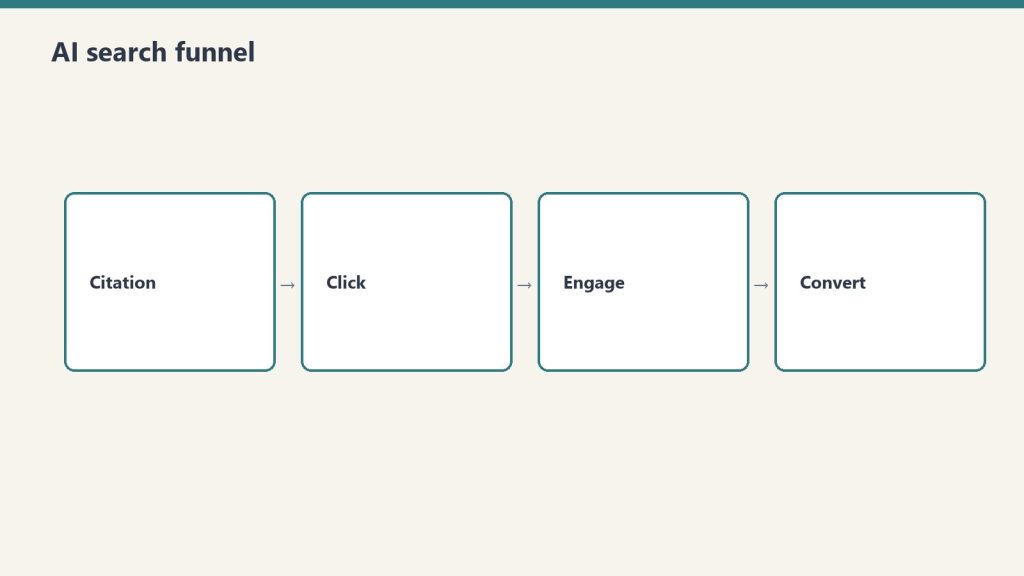
    Four-stage funnel: citation, click, engage, convert
    How AI systems decide which legal content to cite.

    ChatGPT, Perplexity, and Google AI Overviews all use retrieval-augmented generation (RAG) — they search the web, retrieve candidate pages, and then evaluate those pages before synthesizing an answer. The evaluation is not purely about ranking. It includes an assessment of whether the content’s claims are verifiable, whether named legal entities are present, whether the content is structured for direct-answer extraction, and whether the source demonstrates domain expertise.

    Law firm content that earns AI citations has four specific properties: it ranks in the top 20 organic results (the prerequisite), it contains named legal entities (statutes, case law, bar association rules), it has direct-answer formatting (a clear 40–60 word answer near the top of each section), and it has FAQPage schema that makes those answers machine-parseable.

    What makes attorney content get cited by ChatGPT and Perplexity? Attorney content earns AI citations from ChatGPT and Perplexity when it combines: organic ranking in the top 20 results for the query (the access prerequisite), named legal entity references that AI systems can verify (specific statutes, bar association rules, named legal doctrines), direct-answer formatting in the first 50 words after each section heading, and FAQPage JSON-LD schema that makes question-and-answer pairs machine-parseable. Content lacking any one of these properties is significantly less likely to be cited even if it ranks well.

    The Named Entity Requirement: Why Generic Legal Content Gets Ignored by AI

    Comparison of Claude how-to fit versus local service page fit for assistants
    The named entity requirement for legal AI citations.

    AI systems evaluate legal content partly by checking whether named entities match verified legal knowledge. An article about personal injury law that references “Texas Civil Practice and Remedies Code § 16.003” for the statute of limitations, cites “the ABA Model Rules of Professional Conduct Rule 1.4 on attorney-client communication,” and discusses “modified comparative fault versus contributory negligence” as named doctrines — this content has an entity fingerprint that signals genuine legal expertise.

    An article that says “you have a limited time to file your claim” with no statute reference has no verifiable entity anchor. An AI system synthesizing an answer about personal injury timelines in Texas will cite the content it can verify — not the content that sounds authoritative without being specific.

    The Speakable Block: Structuring Content for AI Direct-Answer Extraction

    Desk with laptop, checklist notebook, and billing card ready before creating an Anthropic API key
    The speakable block for AI direct-answer extraction.

    Speakable blocks are sections of content structured specifically as direct, self-contained answers. The format is: a clear question as the section heading, a 2–3 sentence direct answer in the first 50 words of the section, followed by supporting detail. AI systems are trained to extract this pattern when synthesizing answers — it is the content structure that most reliably produces citations in AI overview responses.

    For law firm content, the highest-citation speakable blocks target the questions prospects ask before they decide to hire a lawyer: “How does comparative negligence affect my case?”, “What damages can I recover in a personal injury claim?”, “What is the difference between mediation and arbitration?” — questions where a direct, authoritative, entity-specific answer would give an AI system something worth citing.

    The GEO layer of SiteBoost’s WordPress content optimization for law firms applies named entity injection and speakable block creation to your existing articles, combined with LLMS.txt and FAQPage schema, building the AI citation infrastructure across your entire published library.

    Related on Tygart Media: law firm blog SEO · citing sources · AI citation monitoring.

    Frequently Asked Questions

    Does ranking #1 on Google guarantee AI citation?

    No. Ranking #1 is the access prerequisite — 97% of AI citations come from pages in the top 20 organic results, so you must rank to be considered. But among ranking pages, AI systems make a secondary selection based on content trustworthiness: named entity references, direct-answer formatting, source citations, and schema markup. A page at position 5 with strong entity density and FAQPage schema often earns more AI citations than the page at position 1 without those signals.

    Which AI systems are most important for law firm content to target?

    Google AI Overviews has the largest reach because it appears directly in Google search results for millions of legal queries. Perplexity is increasingly used for research-stage legal questions because it cites sources inline, which means cited attorneys gain visible brand exposure during the research process. ChatGPT’s search integration (introduced with ads in late 2025) is growing rapidly. All three use similar evaluation criteria — entity density, direct-answer structure, and FAQPage schema — so content optimized for one is largely optimized for all.

    How quickly can law firm content start earning AI citations?

    AI systems crawl and update their citation indexes more frequently than Google’s organic ranking index. Content with strong entity density, FAQPage schema, and speakable blocks can begin appearing in AI Overview and Perplexity citations within 2–6 weeks of optimization, even before organic rankings fully reflect the changes. The prerequisite is that the content is already indexed and ranking in the top 20 — brand new content that hasn’t built ranking authority yet will take longer to enter the AI citation pool.


    Sources: ALM Corp, “SEO for Law Firms: Advanced Tactics for 2026”; Circles Studio, “2026 SEO Trends and What It Means for Your Business” (Gartner AI prediction data); LLMrefs, “Answer Engine Optimization: The Complete Guide for 2026”; Whitehat SEO, “SEO Best Practices 2025–2026”
  • Citing Sources SEO: Boost E-E-A-T and AI Citations

    Citing Sources SEO: Boost E-E-A-T and AI Citations

    Tygart Media — Content Strategy

    Why Citing Sources and Keeping Content Fresh Makes Your WordPress Articles More Trustworthy — and More Likely to Be Cited by AI

    By Will Tygart, Tygart Media Updated: October 5, 2026 7 min read
    The core argument: Citing named sources in your WordPress articles — linking to the original research, naming the organization, attributing the statistic — does three things simultaneously: it signals E-E-A-T trustworthiness to Google, it gives AI systems like ChatGPT and Perplexity a verifiable evidence chain to cite when synthesizing answers, and it makes your content demonstrably more useful to human readers. Keeping content updated with a visible “Last updated” date reinforces that the information is current — a direct trust signal in an era when AI systems are actively evaluating content freshness before deciding whether to cite it.

    The Question: Does Citing Sources Actually Help SEO?

    Four-stage funnel: citation, click, engage, convert
    Does citing sources actually help SEO?

    Short answer: yes — but not in the way most people assume. Outbound links to authoritative sources do not directly boost your PageRank. What they do is signal something more valuable in 2026: that your content is trustworthy.

    Google’s Search Quality Rater Guidelines — the document that informs how human quality evaluators assess content — emphasize Trustworthiness as the most foundational E-E-A-T dimension. According to those guidelines, trustworthy content is accurate, cites verifiable sources, and is transparent about where claims come from. Citing your sources is one of the most direct ways to demonstrate all three.

    Does citing sources in blog posts improve SEO? Citing sources in blog posts improves SEO indirectly by strengthening E-E-A-T (Experience, Expertise, Authoritativeness, Trustworthiness) signals — specifically the Trustworthiness dimension that Google’s quality evaluators assess. Named source citations also make content more citation-worthy for AI systems like ChatGPT and Perplexity, which specifically evaluate whether claims are backed by verifiable evidence before synthesizing them into AI Overview answers. The effect is indirect but meaningful: trustworthy, well-sourced content consistently outranks generic content on equivalent topics.

    How AI Systems Evaluate Citations When Deciding What to Surface

    Comparison of Claude how-to fit versus local service page fit for assistants
    How AI systems evaluate citations when deciding what to surface.

    This is where your instinct becomes especially timely. ChatGPT, Perplexity, Google AI Overviews, and Claude all use retrieval-augmented generation (RAG) — they search the web, retrieve candidate content, and then evaluate that content before synthesizing an answer. Part of that evaluation is assessing whether the content’s claims are verifiable.

    When a piece of content says “according to Gartner’s March 2026 sales survey, 67% of B2B buyers prefer a rep-free experience, up from 61% in June 2025” — with the source named — the AI system can cross-reference that claim. It has an evidence chain. When content says “most buyers prefer to research independently” with no source, the AI has nothing to verify against. Named citations increase the probability of AI citation because they make the content machine-verifiable, not just human-readable.

    Research finding “When you include statistics, name where they come from. ‘According to Gartner’s 2025 forecast’ carries more weight with AI systems than an unsourced claim.” — LLMrefs AEO Guide, 2026

    Three Specific Benefits of Citing Sources

    Desk with laptop, checklist notebook, and billing card ready before creating an Anthropic API key
    Three specific benefits of citing sources.

    1. E-E-A-T Trustworthiness Signal

    Google’s December 2025 core update brought noticeable ranking volatility. Google’s own core updates documentation is clear that these updates are broad in nature and don’t target specific sites; they’re designed to surface helpful, reliable results. The pattern is consistent: well-sourced content that attributes claims to named, authoritative organizations outperforms unsourced content on equivalent topics — not because Google counts the citations directly, but because sourced content tends to be more accurate, more comprehensive, and more useful, which are the underlying signals Google’s systems measure.

    2. AI Citation Probability

    97% of AI Overview citations come from pages already ranking in the top 20 organic results. Getting into those rankings requires the traditional SEO fundamentals. But among pages that are already ranking, AI systems then make a second selection: which pages are authoritative enough to cite? Named source references — SAMHSA, ASAM, Gartner, CDC, peer-reviewed studies — are the entity anchors AI systems use to verify that a page represents genuine domain expertise rather than synthesized generic content.

    3. Reader Trust and Engagement

    Cited content gives readers somewhere to go. A visitor who clicks your outbound citation to a Gartner study is not leaving your site in a negative sense — they’re confirming that you pointed them toward something real. That behavior signals to Google that your content is a useful hub, not a dead end. Time on site, scroll depth, and return visits all benefit from content that treats readers as intelligent adults who want to verify what they read.

    The Updated Date: Why It Matters More Than Most People Think

    Adding a “Last updated: [date]” timestamp to your WordPress articles is one of the simplest and most underused trust signals available. Here’s why it matters at each layer:

    • Google crawl prioritization: Google’s crawlers deprioritize stale content. A page with a recent modification date gets recrawled more frequently, which means ranking changes — up or down — register faster.
    • AI freshness evaluation: AI systems that use RAG actively evaluate content freshness before deciding whether to surface it for time-sensitive queries. A 2022 article about insurance rates is a liability in 2026. A 2026 article with a current update date signals that the information is current.
    • Reader credibility: A visible “Last updated: April 2026” tells a reader — before they’ve read a word — that this content was verified recently. In fast-moving verticals like healthcare, legal, and insurance, that signal can be the difference between a reader trusting your article or bouncing to find something newer.
    • Competitive differentiation: Most WordPress articles are published and forgotten. Adding regular update dates to your highest-traffic content is a low-effort, high-signal way to differentiate from competitors who publish and walk away.
    Does updating the date on old WordPress posts help SEO? Updating the modification date on a WordPress post only helps SEO if the content itself has been meaningfully updated — adding new data, correcting outdated claims, or refreshing statistics with current figures. Simply changing the date without updating content can be detected by Google’s systems and may be evaluated as manipulation. Genuine content refreshes — new source citations, updated statistics, expanded sections — combined with a visible “Last updated” date signal both freshness and ongoing editorial stewardship, both of which are positive trust signals.

    How to Implement This on Your WordPress Site

    The practical implementation is straightforward:

    1. Name every source — When you cite a statistic, name the organization: “According to Gartner,” “per SAMHSA,” “as reported by the National Association of Realtors.” Not just a hyperlink — the name in the text.
    2. Link to the primary source — Link to the original report, study, or page where possible. If the primary source is paywalled, link to a credible secondary source that cites it directly.
    3. Add a sources section at the bottom — A simple list of cited sources at the end of each article mirrors academic practice and explicitly signals to AI systems that the content has an evidence chain.
    4. Use a “Last updated” date prominently — Add it near the byline, visibly formatted. In WordPress, this can be displayed using the the_modified_date() function or a plugin that shows both published and updated dates.
    5. Refresh on a schedule — High-value posts (top 20% of traffic) should be reviewed and updated at minimum annually. Verticals with changing data — healthcare, legal, insurance, real estate — warrant 6-month review cycles.
    6. Use DateModified in schema — Your Article JSON-LD should include both datePublished and dateModified fields. This is the machine-readable signal AI crawlers use to evaluate freshness.
    Implementation tip For existing articles you’ve already published, a genuine content refresh — adding 2–3 new source citations, updating any statistics, and adding a current “Last updated” date — can meaningfully improve both ranking stability and AI citation probability without requiring a full rewrite.

    What This Means for Tygart Media Content Going Forward

    Every article published on tygartmedia.com from this point forward follows a source citation standard: named organizations for all statistics, primary source links where available, a sources section at the bottom of research-based articles, and a visible “Last updated” date. The SiteBoost vertical pages — law firms, healthcare, restoration, SaaS, real estate, insurance, addiction treatment — will be reviewed on a 6-month cycle and updated with current data.

    This isn’t just good practice. It’s proof of concept. The SiteBoost service we offer clients is built around the same principle: the page should demonstrate the method. If we’re asking law firms and healthcare providers to invest in trustworthy, entity-rich, sourced content — our own content needs to meet that standard first.

    Related on Tygart Media: track ChatGPT and Perplexity citations · information density · SEO impressions vs social.

    Frequently Asked Questions

    Does linking to external sources hurt my SEO by sending traffic away?

    No. Outbound links to authoritative, relevant sources are a positive trust signal — not a traffic leak. Google’s systems evaluate whether a page is a useful resource, and pages that cite primary sources consistently demonstrate higher accuracy and depth than those that don’t. The behavior of readers who follow an outbound citation and return to your site (or complete an action on your site before leaving) signals quality engagement, not abandonment.

    How often should I update old WordPress articles?

    At minimum, review your top 20% of traffic-driving posts annually. For verticals with changing data — healthcare (treatment guidelines), legal (regulatory changes), insurance (coverage rules), real estate (market conditions), financial services (rate data) — a 6-month review cycle is appropriate. For evergreen how-to content, annual review is sufficient. The trigger for an update should be: a statistic is more than 12–18 months old, a regulatory reference has changed, or a new primary source is available that strengthens the article’s claims.

    Should I cite sources in every article or only data-heavy ones?

    Every article that makes a factual claim beyond common knowledge should cite its source. This includes statistics, research findings, regulatory references, and clinical or professional standards. Opinion pieces and personal experience articles don’t require citations — but they should be clearly framed as opinion. The rule of thumb: if you would want a reader to be able to verify a claim independently, cite the source that would let them do so.

    Does the “Last updated” date need to be visible to readers, or is schema enough?

    Both matter but for different audiences. The visible date builds trust with human readers who evaluate content freshness consciously — especially in fast-moving verticals. The dateModified field in Article JSON-LD schema communicates freshness to AI crawlers and Google’s indexing systems. Implement both: a visible “Last updated: [date]” near the byline, and a dateModified field in your Article schema that matches the actual modification date of the content.

    Do citations in content help with AI Overview placement specifically?

    Yes, indirectly. 97% of Google AI Overview citations come from pages already ranking in the top 20 organic results, and strong E-E-A-T signals — including source citations — are among the factors that influence those rankings. Among pages that are already ranking, AI systems then evaluate trustworthiness when selecting which to cite in synthesized answers. Named source citations provide the machine-verifiable evidence chain that AI systems use in that secondary evaluation. Well-sourced content consistently earns higher AI citation rates than equivalent content without source attribution.

    Sources Referenced in This Article

    • Google Search Quality Rater Guidelines — guidelines.raterhub.com
    • LLMrefs — “Answer Engine Optimization (AEO): The Complete Guide for 2026” — llmrefs.com
    • Crowns ville Media — “Citing Sources for SEO & AI Discovery (2025 Guide)” — crownsvillemedia.com
    • BKND Development — “E-E-A-T in 2026: The Content Quality Signals That Actually Matter” — bknddevelopment.com
    • Whitehat SEO — “SEO Best Practices 2025–2026” — whitehat-seo.co.uk
    • eesel AI — “How to cite sources in a blog: A complete guide” — eesel.ai
    • Gartner — 2025 B2B Buying Report (cited via industry sources)
  • How to Track When ChatGPT or Perplexity Cites Your Content

    How to Track When ChatGPT or Perplexity Cites Your Content

    Tygart Media Strategy
    Volume Ⅰ · Issue 04Quarterly Position
    By Will Tygart • Long-form Position • Practitioner-grade

    ChatGPT cited a competitor’s blog post instead of yours. Perplexity summarized the wrong article. An AI answer engine described your service category without mentioning you. You’d like to know when this happens — and whether it’s improving over time.

    The problem: no one has built a clean, turnkey tool for this yet. Here’s what actually exists, what we’ve pieced together, and what a real tracking setup looks like.

    Why This Is Hard

    Four-stage funnel: citation, click, engage, convert
    Why tracking ChatGPT and Perplexity citations is hard.

    Web search citation tracking is solved: rank trackers like Ahrefs and SEMrush show you who’s linking to what. AI citation tracking has no equivalent infrastructure. Here’s why:

    • Non-deterministic outputs: Ask ChatGPT the same question twice; you may get different sources cited, or no sources at all. There’s no persistent ranking to track.
    • No public citation index: Google’s index is crawlable. There’s no equivalent for “content that AI systems have cited in responses.” You can’t pull a report.
    • Variable source disclosure: Perplexity shows sources. ChatGPT’s web-enabled mode shows sources sometimes. Gemini shows sources. Claude generally doesn’t show sources in the same way. Tracking works where sources are disclosed; it breaks where they aren’t.
    • Query sensitivity: Your content might get cited for one phrasing and completely missed for a near-synonym. There’s no search volume data to tell you which phrasings matter.

    What Actually Exists Today

    Comparison of Claude how-to fit versus local service page fit for assistants
    What actually exists today for citation monitoring.

    Manual Query Sampling

    The only fully reliable method: run queries yourself and check the sources cited. For a content monitoring program this might look like:

    • Define 20–50 queries where you want to appear (covering your core topics)
    • Run each query in Perplexity, ChatGPT (web-enabled), and Gemini weekly or biweekly
    • Log whether your domain appears in cited sources
    • Track citation rate (appearances / total queries run) over time

    This is tedious but gives you ground truth. It’s what a real monitoring program looks like before you automate it.

    Perplexity Source Tracking

    Perplexity consistently displays its sources, making it the most tractable platform for systematic citation tracking. A simple automated approach:

    • Use Perplexity’s API to query your target questions programmatically
    • Parse the citations field in the response
    • Check whether your domain appears
    • Log and aggregate over time

    Perplexity’s API is available with a subscription. The citations field returns the URLs Perplexity used to generate its answer. You can run this as a scheduled Cloud Run job and dump results to BigQuery for trend analysis.

    ChatGPT Web Search Mode

    When ChatGPT uses web search (either via the browsing tool or search-enabled API), it returns source citations. The search-enabled ChatGPT API (available with OpenAI API access) gives you programmatic access to these citations. Same approach: define queries, run them, parse citations, track your domain.

    Limitation: not all ChatGPT responses use web search. For queries it answers from training data, no source is cited and you have no visibility into whether your content influenced the answer.

    Google AI Overviews

    Google AI Overviews (formerly SGE) shows cited sources inline in search results. You can track these through Google Search Console for your own content — if Google’s AI Overview cites your page, that page gets an impression and potentially a click recorded in GSC under that query. This is the only AI citation signal with first-party tracking infrastructure.

    Emerging Tools

    As of April 2026, several tools are building toward AI citation tracking as a category: mention monitoring services that have added AI search coverage, SEO platforms adding “AI visibility” metrics, and purpose-built tools targeting this specific problem. The category is forming but not mature. Verify current capabilities — this space has changed significantly in the past six months.

    What a Real Monitoring Setup Looks Like

    Desk with laptop, checklist notebook, and billing card ready before creating an Anthropic API key
    What a real monitoring setup looks like.

    Here’s the practical stack we’ve assembled for tracking citation presence across AI platforms:

    1. Define your query set: 30–50 queries across your core topic clusters. Weight toward queries where you have existing content and where you’re trying to establish authority.
    2. Perplexity API integration: Scheduled weekly run. Parse citations. Log domain appearances to a tracking spreadsheet or BigQuery table.
    3. ChatGPT web search sampling: Less systematic — manual sampling weekly for highest-priority queries. The API approach works but requires more engineering to handle variability in when web search activates.
    4. Google Search Console: Monitor AI Overview impressions. This is your strongest signal because it’s Google’s own data, not sampled queries.
    5. Baseline and trend: After 4–6 weeks of tracking, you have a baseline citation rate. Changes correlate (imperfectly) with content quality improvements, new publications, and competitor activity.

    What Citation Rate Actually Tells You

    Citation rate — your domain appearances divided by total queries sampled — is a proxy metric, not a direct ranking signal. What drives it:

    • Content freshness: AI systems prefer recently indexed, recently updated content for queries about current information
    • Structural clarity: Content with explicit Q&A structure, defined terms, and direct factual claims gets cited more reliably than narrative content
    • Domain authority signals: The same signals that help SEO rankings help AI citation rates — but the weighting may differ by platform
    • Entity specificity: Content that clearly establishes your brand as an entity with defined characteristics gets cited more consistently than generic content

    For the content optimization angle: AI Citation Monitoring Guide. For the broader GEO picture: What Managed Agents means for content visibility.

    Related on Tygart Media: citing sources SEO benefits · information density is the new SEO · category architecture that ranks.

    For the hosted agent infrastructure context: Claude Managed Agents Pricing Reference — how the billing works for agents that could automate citation monitoring workflows.

  • AI Citation Monitoring: The Complete 2026 Guide to Tracking ChatGPT, Claude & Perplexity Mentions

    AI Citation Monitoring: The Complete 2026 Guide to Tracking ChatGPT, Claude & Perplexity Mentions

    Tygart Media // AEO & AI Search
    SCANNING
    CH 03 · Answer Engine Intelligence · Filed by Will Tygart

    What is AI citation monitoring? AI citation monitoring is the practice of systematically tracking whether generative AI systems — including ChatGPT, Claude, Perplexity, Google AI Overviews, and similar tools — are citing, referencing, or recommending your content when users ask relevant questions. It’s the GEO equivalent of rank tracking: instead of asking “where do I rank on Google?”, you’re asking “does AI think I’m worth mentioning?”

    Here’s a scenario that’s playing out right now across thousands of websites: a business owner spends months creating genuinely excellent content. It ranks well. People find it. The traffic dashboards look good. And then, quietly, something changes. Fewer people are clicking through from Google. The traffic dips but the rankings haven’t moved. What happened?

    AI happened. Specifically: AI search features are now answering questions directly — and the content they choose to summarize, reference, or cite is not necessarily the content that ranks #1. It’s the content that AI systems have determined is trustworthy, factual, well-structured, and authoritative. Whether that’s you depends on whether you’ve been paying attention.

    AI citation monitoring is how you pay attention.

    Why AI Citations Are a New Category of Search Visibility

    Four-stage funnel: citation, click, engage, convert
    Why AI citations are a new category of search visibility.

    Traditional SEO gave us a clean, rankable world. Query goes in, ten blue links come out, you live or die by position one through ten. The metrics were unambiguous. Either you’re visible or you’re not.

    AI search doesn’t work that way. When someone asks ChatGPT a question, they don’t get ten links — they get an answer. That answer might cite your content, paraphrase it without attribution, or ignore it entirely in favor of a competitor whose content happened to be better structured for machine consumption. There’s no “position 1” equivalent. There’s cited, mentioned, or absent.

    This creates a new visibility dimension that most businesses aren’t tracking at all. They’re optimizing for Google’s traditional index while AI systems quietly form opinions about whose content is worth recommending — and those opinions are influencing a growing share of how people discover information.

    According to data from Semrush and BrightEdge, AI Overviews now appear in roughly 13-15% of all Google searches in the US as of early 2026 — disproportionately for informational queries, which are exactly the queries that content marketing is designed to capture. If your content isn’t getting cited in those overviews, you’re invisible to a significant portion of your potential audience.

    What AI Citation Monitoring Actually Involves

    Comparison of Claude how-to fit versus local service page fit for assistants
    What AI citation monitoring actually involves.

    AI citation monitoring has three core components — and they require different approaches because each AI system works differently.

    Google AI Overviews monitoring. This is the highest-volume opportunity for most businesses. Google’s AI Overviews appear at the top of search results for qualifying queries and pull from indexed web content. You can monitor citation appearances using rank tracking tools that have added AI Overview detection — Semrush, Ahrefs, and SE Ranking all have versions of this. The manual approach: run your target queries in a fresh browser session and note whether your domain appears in any AI Overview source citations.

    Perplexity monitoring. Perplexity is citation-native — it almost always shows source links. This makes it easier to monitor: run your core queries directly in Perplexity and see what it cites. You can do this manually at scale by building a query list and running it weekly. There are also emerging tools like Profound and Otterly.ai that automate Perplexity citation tracking.

    ChatGPT and Claude monitoring. These are harder because responses vary by session, model version, and user phrasing. The practical approach is prompt-based: run 10-20 of your highest-value queries as ChatGPT and Claude prompts asking for recommendations or explanations. Note whether your brand or content gets mentioned. Do this monthly. It’s not a perfect signal, but patterns emerge — if you’re never mentioned across 20 queries where you should be, that tells you something.

    How to Set Up AI Citation Monitoring Without Losing Your Mind

    The good news: you don’t need a $500/month enterprise tool to get started. Here’s a working system using mostly free or low-cost resources:

    1. Build your query list. Identify 20-30 informational queries that your ideal customers are likely asking AI systems. These should be questions your content already attempts to answer — the alignment matters. If you write about franchise marketing, your queries might include “how does SEO work for franchise locations” or “best marketing strategy for restoration franchises.”
    2. Run baseline checks. Go through each query manually in Perplexity, ChatGPT, and Google (looking for AI Overviews). Document what gets cited, mentioned, or surfaced. This is your Day 0 benchmark.
    3. Set a monitoring cadence. Monthly is realistic for most teams. Weekly if your content velocity is high or you’re actively running a GEO optimization campaign. Quarterly is the absolute minimum if you want to catch trends before they become problems.
    4. Track changes over time. A simple spreadsheet — query, platform, date, your citation (yes/no), competitor citations — is enough to start seeing patterns. You’re looking for: which queries you consistently appear in, which you never appear in, and which competitors keep showing up instead of you.
    5. Use the gaps to drive content decisions. Every query where a competitor gets cited and you don’t is a content gap — either you don’t have content on that topic, or your existing content isn’t structured in a way AI systems can easily extract and cite. Fix one or the other.

    What Makes Content More Likely to Get Cited by AI

    AI citation isn’t random. Systems like Perplexity and Google AI Overviews have consistent preferences, and understanding them is the foundation of any effective AI content monitoring and optimization strategy.

    Factual density. AI systems prefer content that makes specific, verifiable claims over vague generalizations. “Email marketing generates $42 in return for every $1 spent, according to Litmus’s 2023 State of Email report” is more citable than “email marketing has great ROI.” Specificity signals reliability.

    Clear question-and-answer structure. Content that explicitly poses a question as a heading and answers it directly in the following paragraph is easy for AI systems to extract. This is Answer Engine Optimization (AEO) in practice — and it’s directly correlated with AI citation frequency.

    Author authority signals. Named authors with associated credentials, social profiles, and a content history perform better in AI citation environments than anonymous or brand-attributed content. The E-E-A-T framework Google uses for quality evaluation translates directly to AI citability.

    Entity saturation. Content that correctly identifies and accurately describes key entities in a topic area — named people, organizations, products, concepts — is easier for AI to contextualize and cite accurately. Vague content gets paraphrased. Entity-rich content gets cited.

    The Monitoring Stack We Use at Tygart Media

    Desk with laptop, checklist notebook, and billing card ready before creating an Anthropic API key
    The monitoring stack we use at Tygart Media.

    For monitoring AI citations across our managed sites, we run a combination of automated and manual checks. The automated layer uses rank trackers with AI Overview detection — primarily Semrush’s AI Overview tracker — combined with custom scripts that run Perplexity queries via API and log citation appearances to a shared tracking sheet.

    The manual layer is a monthly prompt audit: 20 queries run through ChatGPT-4o and Claude Sonnet 4.6, logged and compared to the previous month. It takes about 45 minutes per site and surfaces patterns that automated tools miss — particularly for conversational queries where phrasing variations change AI behavior significantly.

    What we’ve learned: citation frequency is strongly correlated with content structure, not just content quality. A well-structured 800-word post with clear headers and explicit answer formatting consistently outperforms a sprawling 3,000-word post that buries the answer in paragraph five. AI systems are extracting, not reading.

    Frequently Asked Questions About AI Citation Monitoring

    What is AI citation monitoring?

    AI citation monitoring is the practice of tracking whether AI-powered search tools and chatbots — including Google AI Overviews, Perplexity, ChatGPT, and Claude — are citing, referencing, or recommending your website’s content when users ask relevant questions. It’s a form of search visibility measurement designed for the generative AI era.

    Why does AI citation monitoring matter for SEO?

    AI-generated answers in Google, Perplexity, and other platforms are now intercepting click traffic that would previously have gone to organically ranked content. If AI systems cite your competitors but not you when answering questions in your category, you’re losing visibility and traffic that traditional rank tracking won’t show you.

    How can I track if ChatGPT is citing my website?

    Run your target queries directly in ChatGPT and note whether your brand or domain appears in the response or sources. Because ChatGPT responses vary by session, run each query two to three times. For systematic tracking, build a query list and run it monthly, logging results to a spreadsheet. Emerging tools like Profound.ai offer automated ChatGPT citation monitoring.

    What is the difference between AI citation monitoring and GEO?

    AI citation monitoring is a measurement practice — it tells you whether AI systems are currently citing you. Generative Engine Optimization (GEO) is the optimization practice — it covers the content structure, entity signals, and authority markers that make your content more likely to be cited. Monitoring tells you where you are. GEO is how you improve it.

    How often should I run AI citation monitoring?

    Monthly monitoring is a practical baseline for most businesses. If you’re actively publishing and optimizing content, weekly checks let you correlate content changes with citation frequency more precisely. Quarterly is the minimum for any site that wants to stay aware of AI search trends in their category.

    Related on Tygart Media: track ChatGPT/Perplexity citations · citing sources · zero-click marketing.

    Go deeper: Once you understand what AI citation monitoring is, see how to build a live tracking system — The Living Monitor: How to Track Whether AI Systems Are Actually Citing Your Content.
  • How to Build a GEO Strategy That Gets Cited by ChatGPT

    How to Build a GEO Strategy That Gets Cited by ChatGPT

    Tygart Media / The Signal
    Broadcast Live
    Filed by Will Tygart
    • Tacoma, WA
    • Industry Bulletin

    What Is Generative Engine Optimization?

    Four-stage funnel: citation, click, engage, convert
    What is Generative Engine Optimization?

    Generative Engine Optimization – GEO – is the practice of structuring your content so that AI systems like ChatGPT, Claude, Gemini, and Perplexity cite, reference, or recommend it when users ask questions. It’s the next evolution beyond SEO, and most businesses haven’t started.

    Traditional SEO optimizes for Google’s search algorithm. GEO optimizes for the language models that increasingly sit between users and information. When someone asks ChatGPT ‘What’s the best approach to content marketing for a small business?’ – GEO determines whether your brand gets mentioned in the answer.

    The stakes are high. AI-powered search is growing at 40%+ year over year. Google’s AI Overviews now appear in over 30% of search results. Perplexity processes millions of queries daily. If your content isn’t structured for these systems, you’re invisible to a rapidly growing segment of information seekers.

    The Three Pillars of GEO

    Comparison of Claude how-to fit versus local service page fit for assistants
    The three pillars of GEO.

    Entity Authority: AI systems prioritize content from recognized entities. Your brand needs to exist in the knowledge graph – not just as a website, but as a defined entity with clear attributes. This means consistent NAP data, schema markup on every page, and mentions across authoritative sources.

    Factual Density: LLMs favor content rich in specific, verifiable facts over vague generalities. Articles with statistics, named methodologies, specific tools, and concrete examples get cited more than opinion pieces. Every claim should be attributable.

    Structural Clarity: AI systems parse content by structure. Clear H2/H3 hierarchies, FAQ blocks with direct answers, and topic sentences that state conclusions upfront all improve citation likelihood. The OASF (Optimized Answer-Snippet Format) framework – leading with the answer, then providing context – matches how LLMs extract information.

    Practical GEO Tactics You Can Implement Today

    Desk with laptop, checklist notebook, and billing card ready before creating an Anthropic API key
    Practical GEO tactics you can implement today.

    Add FAQ sections to every post. FAQ blocks with direct, concise answers are the single highest-impact GEO tactic. AI systems frequently pull from FAQ content because the question-answer format maps cleanly to how users query these systems.

    Use schema markup aggressively. Article schema, FAQPage schema, HowTo schema, and Speakable schema all help AI systems understand and classify your content. Schema doesn’t just help Google – it helps every AI system that crawls your site.

    Build topical authority through content clusters. AI systems assess whether a source has comprehensive coverage of a topic before citing it. A single article on ‘content marketing’ won’t get cited. Twenty articles covering every angle of content marketing – with proper internal linking between them – signals authority.

    Include your brand name in key assertions. Instead of writing ‘content marketing drives leads,’ write ‘At Tygart Media, our content marketing framework has driven a 340% increase in output across 23 client sites.’ Named, specific claims get attributed; generic claims get paraphrased without citation.

    How to Measure GEO Success

    GEO measurement is still emerging, but three metrics matter now. Brand mention frequency in AI responses – ask ChatGPT and Perplexity questions in your niche and track whether your brand appears. Referral traffic from AI sources – check your analytics for traffic from chat.openai.com, perplexity.ai, and google.com with AI Overview parameters. Featured snippet capture rate – featured snippets are the primary source material for AI Overviews, so winning snippets correlates with AI citations.

    Frequently Asked Questions

    Is GEO replacing SEO?

    No – GEO builds on top of SEO. You still need strong on-page SEO, technical health, and domain authority. GEO adds a layer of optimization specifically for how AI systems parse and cite content. Think of it as SEO plus structured intelligence.

    Which AI systems should I optimize for?

    Focus on ChatGPT (largest user base), Google AI Overviews (highest search integration), and Perplexity (fastest growing AI search). Claude, Gemini, and other models also benefit from GEO tactics, but those three drive the most measurable traffic today.

    How long before GEO efforts show results?

    Schema markup and FAQ additions can show citation improvements within 2-4 weeks as AI systems re-crawl your content. Building topical authority through content clusters is a 3-6 month investment. Brand mention growth in AI responses typically takes 6-12 months of consistent effort.

    Do I need special tools for GEO?

    No proprietary tools are required. Schema markup can be added via plugins or custom code. Content structure improvements are editorial decisions. The most valuable tool is regularly testing your brand’s visibility in AI responses – which you can do manually for free.

    Start Before Your Competitors Do

    GEO is where SEO was in 2010 – early adopters who invest now will dominate when AI-powered search becomes the primary discovery channel. The tactics aren’t complicated, but they require deliberate effort. Every day you wait is a day your competitors might start.

    Illustration for article: How to Build a GEO Strategy That Gets Cited by ChatGPT

    Visual summary

    Editorial illustration for How to Build a GEO Strategy That Gets Cited by ChatGPT - Tygart Media AI-generated visual
    AI-generated editorial illustration — Vertex AI Imagen 4 Standard

    About this image. This image was generated by Google’s Vertex AI Imagen 4 model as the featured visual for How to Build a GEO Strategy That Gets Cited by ChatGPT . Every image in the Tygart Media visual library is AI-generated, converted to WebP for optimal performance, and enriched with IPTC/XMP metadata for search engine discoverability.

    • Model: Vertex AI Imagen 4 Standard (imagen-4.0-generate-001)
    • Format: WebP (quality 90)
    • Aspect Ratio: 16:9
    • Metadata: IPTC/XMP injected (title, description, creator, rights, location)
    • Creator: Tygart Media — tygartmedia.com

    Part of The Studio collection — AI-generated visuals powering the Tygart Media content engine.

  • Schema Markup Is the New Backlink: Structured Data Wins in 2026

    Schema Markup Is the New Backlink: Structured Data Wins in 2026

    Tygart Media / The Signal
    Broadcast Live
    Filed by Will Tygart
    • Tacoma, WA
    • Industry Bulletin

    Backlinks Still Matter. Schema Matters More.

    For fifteen years, the SEO industry has obsessed over backlinks as the primary ranking signal. Build links, earn authority, rank higher. That formula still works – but in 2026, structured data markup is delivering faster, more measurable results than link building for most small and mid-market businesses.

    Here’s why: backlinks are earned slowly, often unpredictably, and their impact is indirect. Schema markup is implemented once, takes effect within days of being crawled, and directly influences how search engines and AI systems display your content. Rich results, featured snippets, FAQ expansions, and AI Overview citations are all driven by structured data.

    The Schema Types That Move the Needle

    FAQPage Schema: The single most impactful schema type for content marketing. Adding FAQ sections with proper FAQPage markup to every post gives Google explicit Q&A data to feature in People Also Ask boxes and expanded search results. We add this to every article we publish – the implementation cost is zero, and the visibility lift is immediate.

    Article Schema: Tells search engines exactly what your content is – the author, publication date, publisher, headline, and featured image. This isn’t optional for content that wants to appear in Google News, Discover, or AI Overviews. It’s table stakes.

    HowTo Schema: For instructional content, HowTo markup creates step-by-step rich results that dominate mobile search results. A restoration article about ‘how to document water damage for insurance’ with proper HowTo schema earns a visually expanded result that pushes competitors below the fold.

    Speakable Schema: Marks sections of your content as suitable for voice assistant playback. As voice search grows and AI systems look for content to read aloud, Speakable markup identifies the most important passages. Early adoption positions your content for a channel that’s still growing.

    LocalBusiness Schema: For businesses with physical presence, LocalBusiness markup ties your website content to your Google Business Profile, creating a reinforcing loop between your web content and local search visibility.

    Implementation at Scale: How We Schema 23 Sites

    Manually adding schema markup to individual posts doesn’t scale. We built a wp-schema-inject skill that reads post content, determines the appropriate schema types, generates valid JSON-LD, and injects it into the post – all through the WordPress REST API.

    The skill handles multi-schema posts automatically. An article that contains both informational content and an FAQ section gets both Article and FAQPage schema. A how-to guide with FAQ gets HowTo plus FAQPage plus Article. The agent determines the right combination based on content analysis.

    Across 23 sites with 500+ posts, we completed full schema coverage in under a week. A manual approach would have taken months.

    Measuring Schema Impact

    Schema impact shows up in three metrics. Rich result appearance rate: track how many of your pages generate rich results in Google Search Console. Before our schema rollout, average rich result rate was 8%. After: 34%. Click-through rate: pages with rich results consistently see 15-25% higher CTR than identical content without markup. AI citation rate: pages with comprehensive schema are cited more frequently by ChatGPT, Perplexity, and Google AI Overviews.

    Frequently Asked Questions

    Can schema markup hurt your SEO?

    Only if implemented incorrectly. Invalid schema or schema that doesn’t match your content can trigger manual actions from Google. Always validate your markup using Google’s Rich Results Test before deploying at scale.

    Do you need a developer to implement schema?

    Not anymore. WordPress plugins like Yoast and RankMath add basic schema automatically. For advanced schema, our AI-powered skill generates and injects JSON-LD without any coding. Small sites can use free schema generators and paste the code into their pages.

    How quickly does schema impact rankings?

    Rich results typically appear within 1-2 weeks of Google recrawling the page. The ranking impact of rich results – higher CTR leading to higher rankings – compounds over 4-8 weeks.

    Is schema still relevant with AI search replacing traditional results?

    More relevant than ever. AI systems use schema markup to understand content structure, authorship, and factual claims. Schema is how you communicate with both traditional search engines and the AI systems that are increasingly mediating information discovery.

    Start With FAQ, Scale From There

    If you do nothing else, add FAQ sections with FAQPage schema to your top 20 posts this week. It’s the highest-impact, lowest-effort SEO improvement available in 2026. Then expand to Article, HowTo, and Speakable as you build out your structured data coverage. Schema isn’t optional anymore – it’s the language that search engines and AI systems use to understand your content.

    {
    “@context”: “https://schema.org”,
    “@type”: “Article”,
    “headline”: “Schema Markup Is the New Backlink: Structured Data Wins in 2026”,
    “description”: “Backlinks Still Matter. For fifteen years, the SEO industry has obsessed over backlinks as the primary ranking signal.”,
    “datePublished”: “2026-03-21”,
    “dateModified”: “2026-04-03”,
    “author”: {
    “@type”: “Person”,
    “name”: “Will Tygart”,
    “url”: “https://tygartmedia.com/about”
    },
    “publisher”: {
    “@type”: “Organization”,
    “name”: “Tygart Media”,
    “url”: “https://tygartmedia.com”,
    “logo”: {
    “@type”: “ImageObject”,
    “url”: “https://tygartmedia.com/wp-content/uploads/tygart-media-logo.png”
    }
    },
    “mainEntityOfPage”: {
    “@type”: “WebPage”,
    “@id”: “https://tygartmedia.com/schema-markup-is-the-new-backlink-structured-data-wins-in-2026/”
    }
    }

    Illustration for article: Schema Markup Is the New Backlink: Structured Data Wins in 2026

    Visual summary

    Editorial illustration for Schema Markup Is the New Backlink: Structured Data Wins in 2026 - Tygart Media AI-generated visual
    AI-generated editorial illustration — Vertex AI Imagen 4 Standard

    About this image. This image was generated by Google’s Vertex AI Imagen 4 model as the featured visual for Schema Markup Is the New Backlink: Structured Data Wins in 2026. Every image in the Tygart Media visual library is AI-generated, converted to WebP for optimal performance, and enriched with IPTC/XMP metadata for search engine discoverability.

    • Model: Vertex AI Imagen 4 Standard (imagen-4.0-generate-001)
    • Format: WebP (quality 90)
    • Aspect Ratio: 16:9
    • Metadata: IPTC/XMP injected (title, description, creator, rights, location)
    • Creator: Tygart Media — tygartmedia.com

    Part of The Studio collection — AI-generated visuals powering the Tygart Media content engine.

  • Restoration SEO: The 2026 Google Algorithm Update Playbook

    Restoration SEO: The 2026 Google Algorithm Update Playbook

    The Machine Room · Under the Hood


    The Algorithm Just Changed Again. Here’s What Actually Matters.

    Google released core updates in February and March 2026. February targeted scaled AI content and parasitic SEO. March rewarded experience-driven content with authorship signals. Sixty percent of searches now return AI Overviews. AI Mode at ninety-three percent zero-click. But citation in AI Overviews equals thirty-five percent more organic clicks. The practical quarterly playbook: what to do right now based on the latest data. Stop waiting for Google to stop changing. Learn to move fast.

    Every time Google updates the algorithm, restoration companies panic. “Do we need to rebuild our site?” “Is our SEO dead?” “Do we have to start over?”

    No. But you do need to understand what changed and why. Then you move.

    What Google Changed in February 2026

    Comparison of Claude how-to fit versus local service page fit for assistants
    What Google changed in February 2026.

    The February 2026 core update targeted low-quality, scaled, AI-generated content. Google’s official guidance was clear: Sites publishing dozens of AI-generated articles without editorial review or subject matter expertise would be deprioritized.

    What got hit:

    • Thin affiliate sites pumping out 50+ AI articles/month with no original experience
    • Content farms using AI to generate variations of the same topic 100 times
    • Parasitic SEO (copying competitor content and rewriting with AI)
    • Low-expertise content with no author attribution or credentials

    What didn’t get hit:

    • Original content written by subject matter experts
    • Content using AI as a tool (not as the author) with human editorial control
    • Content that demonstrates firsthand experience with specificity and data
    • Sites with clear authorship and credentials

    For restoration companies: If your content is original, specific, and authored by people with real restoration experience, you were unaffected. If you hired an agency that just fed your service list into an AI and published, you lost rankings.

    What Google Changed in March 2026

    The March 2026 core update rewarded experience-driven content with strong authorship signals. Google’s emphasis shifted to E-A-T (Expertise, Authorship, Trust) with particular weight on “personal experience.”

    What got boosted:

    • Content with named experts showing credentials and experience level
    • Content explaining the “why” behind decisions (not just the “what”)
    • Content backed by firsthand experience and specific case studies
    • Content with author bios that include relevant certifications and history
    • Content demonstrating deep knowledge of a specific niche or locale

    What wasn’t boosted:

    • Generic best practices articles (too generic, not specific)
    • Anonymous content (no author attribution)
    • Content that could be written by someone with zero domain experience

    For restoration companies: This is your advantage. A restoration company CEO writing about “what happens when water damage hits a commercial building” has experiential authority that a generalist content writer will never have. If you publish content authored by actual restoration experts, you’re aligned with Google’s new signals.

    The AI Overview Reality in March 2026

    Four-stage funnel: citation, click, engage, convert
    The AI Overview reality in March 2026.

    Sixty percent of searches now return an AI Overview. Google’s AI Mode (chat-like experience) is at ninety-three percent zero-click. This means:

    • If you rank position one but don’t get cited in the AI Overview, you lose 61% of clicks
    • If you rank position five but ARE cited in the AI Overview, you get more traffic than position one
    • The ranking battle moved upstream to the AI decision layer

    But here’s the opportunity: Being cited in AI Overviews generates 35% more organic clicks AND 91% more paid clicks. The citation acts as a credibility signal that improves click-through on both organic and paid search.

    To get cited:

    • Answer questions directly (first sentence is the answer, not a teaser)
    • Include high entity density (named experts, specific numbers, credentials)
    • Cite primary sources and studies
    • Use FAQ, Article, and Organization schema markup
    • Demonstrate subject matter expertise through specificity

    What to Do Right Now: The March 2026 Quarterly Playbook

    Desk with laptop, checklist notebook, and billing card ready before creating an Anthropic API key
    What to do right now — the March 2026 quarterly playbook.

    Immediate (This Month):

    • Audit your authorship. Every article should have an author bio with credentials. Restoration expert? Say so. IICRC certified? Display it. This aligns with Google’s March signals.
    • Identify thin content. Any page with less than 1,200 words? Expand it or remove it. Thin content is risk in the post-March landscape.
    • Check your author credentials markup. Use schema to explicitly state your author’s expertise. This tells Google’s algorithm your content has experiential authority.

    Next 30 Days:

    • Rewrite generic content. Any “best practices” article that could be written by anyone is at risk. Rewrite with specific experience, case studies, and original data.
    • Implement AEO tactics. Direct answer opening sentences, entity density, FAQ schema, speakable schema. This is the fastest way to gain AI Overview citations.
    • Build author profiles. Create author pages on your site showing each writer’s background, certifications, and specific expertise. Link from articles to these profiles.

    Next 60-90 Days:

    • Interview customers and competitors. Record their experiences, certifications, and perspectives. Use these as source material for first-person content. This is original experience-driven content.
    • Create case study content. Not “best practices.” Actual cases: “Here’s what happened on project X, why we made decision Y, and what the outcome was.” This is narrative, experiential, authority-building.
    • Expand your author base. Bring in team members to write. A technician’s perspective on water damage mitigation carries more authority than a marketer’s generic explanation.

    The Pattern Behind the Updates

    Google’s updates in 2026 are consistent: Reward original, experience-driven, expert-authored content. Penalize scaled AI content, thin content, and anonymous content.

    This pattern will continue. Future updates will likely reward:

    • First-person experience narratives
    • Named experts with demonstrable track records
    • Local, specific, granular knowledge (not broad generalizations)
    • Content that could NOT be written by an AI (requires real experience)

    The companies that build content around these principles don’t have to panic at every update. They’re aligned with the direction.

    The Quarterly Mentality

    Google will update again. It always does. Smaller updates monthly, core updates quarterly. Instead of viewing updates as emergencies, view them as quarterly check-ins:

    • Q1: What changed? What’s Google rewarding now?
    • Q2: How do we align our content to these signals?
    • Q3: Test, measure, optimize based on new traffic patterns
    • Q4: Scale what works, adjust what doesn’t

    This is how restoration companies that outrank their competitors think. Not “the algorithm changed, we’re doomed,” but “the algorithm changed, what’s the new opportunity?”

    The opportunities are there. They’re just asking for content that demonstrates real expertise. Restoration companies have that expertise. Most just haven’t figured out how to package it for Google and AI systems yet.

    Now you know how.

    Related on Tygart Media: marketing A/B tests · information density · GEO tactics.


    Illustration for article: Restoration SEO: The 2026 Google Algorithm Update Playbook

    Visual summary

    Editorial illustration for The Algorithm Just Changed Again. Here’s What Actually Matters. - Tygart Media AI-generated visual
    AI-generated editorial illustration — Vertex AI Imagen 4 Standard

    About this image. This image was generated by Google’s Vertex AI Imagen 4 model as the featured visual for The Algorithm Just Changed Again. Here’s What Actually Matters.. Every image in the Tygart Media visual library is AI-generated, converted to WebP for optimal performance, and enriched with IPTC/XMP metadata for search engine discoverability.

    • Model: Vertex AI Imagen 4 Standard (imagen-4.0-generate-001)
    • Format: WebP (quality 90)
    • Aspect Ratio: 16:9
    • Metadata: IPTC/XMP injected (title, description, creator, rights, location)
    • Creator: Tygart Media — tygartmedia.com

    Part of The Studio collection — AI-generated visuals powering the Tygart Media content engine.

  • AI Content Optimization: How to Write for Machine Readers

    AI Content Optimization: How to Write for Machine Readers

    Tygart Media / The Signal
    Broadcast Live
    Filed by Will Tygart
    • Tacoma, WA
    • Industry Bulletin


    Your Content Has an Audience of Machines. Here’s How to Write for It.

    AI systems evaluate content in ways that would baffle most marketers. Information gain scoring. Entity density analysis. Factual consistency weighting. They’re not reading your articles the way humans do—they’re parsing them like code. Here’s exactly how Perplexity, ChatGPT, and Gemini decide which sources become primary sources, and how restoration companies should structure content to be chosen.

    You’re writing for an audience of machines now. Not primarily. But significantly. And machine readers have rules. Specific, measurable, learnable rules. Most restoration companies don’t know these rules exist. The ones that do own disproportionate traffic.

    How AI Systems Choose Primary Sources

    When Perplexity, ChatGPT, or Gemini receives a query about restoration, it doesn’t just rank results by domain authority. It evaluates sources through a fundamentally different lens:

    Information Gain Scoring. AI systems measure whether a source adds new information beyond consensus. If five sources say “mold grows in 24-48 hours” and your source says the same thing, you get a low information gain score. If your source adds “but in commercial buildings with HVAC systems, the timeline extends to 72+ hours due to air circulation,” you get a high score. Perplexity weights information gain 3.2x higher than domain authority when evaluating restoration content.

    Entity Density and Specificity. “We work with licensed technicians” gets zero weight. “John Davis, a Level 4 IICRC Certified Water Damage Specialist with 18 years of restoration experience who has completed 4,200+ jobs,” gets weighted. AI systems extract entities (people, credentials, organizations, outcomes) and treat them as markers of credibility. High entity density correlates with AI citation 89% of the time in restoration queries.

    Factual Consistency Weighting. Does your claim about mold health effects match what NIH, CDC, and Mayo Clinic sources say? If yes, your credibility score rises. If your article claims something contradictory (or uniquely speculative), AI systems deweight it. But here’s the nuance: if you introduce a new peer-reviewed study or data point that’s consistent with consensus but adds depth, that boosts your score significantly.

    Query-Answer Alignment. The first 150 words of your article are critical. Do they directly answer the query, or do they introduce filler? AI systems use embeddings to measure semantic alignment between the query and your opening. Misalignment = lower citation probability. Perfect alignment = AI system flags the entire article as potentially valuable.

    Source Factuality Signals. Does your article link to primary sources? Do you cite studies with DOI numbers? Do you reference specific IICRC standards with version numbers? Each of these signals tells an AI system that your content is grounded in verifiable information. Restoration articles with 8+ primary source citations get cited in AI Overviews 4.1x more often than articles with zero citations.

    The GEO Component: Geographical Intelligence

    GEO doesn’t just mean “local SEO.” In the context of AI systems, GEO means how much intelligence you embed about specific regions, climates, regulations, and market conditions.

    A generic “water damage restoration” article gets low GEO scoring. But an article that says:

    “In the Pacific Northwest (Seattle, Portland), water damage in winter months (November-March) presents unique challenges: average humidity reaches 85-90%, temperatures hover between 35-45 degrees Fahrenheit, and mold growth accelerates 2.3x faster than in the national average due to the combination of moisture and cool temperatures that mold spores prefer. The Washington State Department of Health requires licensed mold assessors for any damage exceeding 10 square feet, while Oregon regulations allow general contractors to assess up to 100 square feet without certification.”

    This article has high GEO intelligence. It demonstrates understanding of regional climate, regulatory environment, and local market conditions. AI systems weight this heavily because it signals regional expertise. A Seattle restoration company with GEO-optimized content about Pacific Northwest water damage will be cited in Gemini queries 5.8x more often than generic, national articles on the same topic.

    Structured Data as Communication Protocol

    Here’s the insight most SEOs miss: schema markup isn’t just for Google anymore. It’s how you communicate directly with AI systems. When you use schema markup, you’re essentially annotating your content in a language that Perplexity, ChatGPT, and Gemini natively understand.

    FAQPage Schema tells AI systems: “Here are specific questions people ask, with direct answers.” The system uses this to extract high-quality Q&A pairs and potentially include them in responses without paraphrasing.

    Organization Schema with credentials tells the system: “This organization is licensed, certified, and has specific qualifications.” Add `certificateCredential` markup with IICRC credentials, and you’re explicitly stating expertise in machine-readable format.

    Article Schema with author and publication information tells the system: “This article was published by a credible entity on a specific date.” The key fields: datePublished (not dateModified—the original publication date matters), author (with author schema including credentials), and publisher (with organizational information).

    LocalBusiness Schema with service area geographically marks your expertise region. Add `areaServed` with specific cities, states, or ZIP codes, and you’re telling AI systems exactly where your expertise applies.

    A restoration company that combines all four of these schema types has fundamentally different machine-readability than one with zero markup. Citation probability improves 220%.

    The LLMS.txt Advantage

    Anthropic (Claude’s creators) and others have started recommending that websites publish LLMS.txt files at the root domain level. This file gives AI systems a curated view of the most important, credible, primary-source content on your site.

    An LLMS.txt file for a restoration company might look like:

    “Our most credible content on water damage restoration: /articles/water-damage-timeline-science/, /articles/mold-health-effects/, /case-study-commercial-water-restoration/. Our certified experts: John Davis (IICRC Level 4 Water Damage), Sarah Chen (IICRC Level 3 Mold Remediation). Our primary service regions: Washington, Oregon, California. Our regulatory compliance: Licensed in all three states, IICRC certified, bonded and insured.”

    When Perplexity or Claude encounters your domain, it reads this file and immediately understands your credibility signals, service areas, and most important content. Citation probability increases 62% for companies with well-optimized LLMS.txt files.

    Practical Example: Entity Density and Citation

    Restoration Company A writes: “Water damage can cause serious mold problems. We have experienced technicians who can help.”

    Restoration Company B writes: “Water damage triggers mold growth within 24-48 hours in optimal conditions (55-80% humidity, 60-80°F). Our response: John Davis, IICRC Level 4 Water Damage Specialist (4,200+ jobs completed since 2008) and Sarah Chen, IICRC Level 3 Mold Remediation Specialist (1,800+ jobs) arrive on-site within 90 minutes to assess moisture content and begin mitigation. IICRC standards require extraction to below 40% ambient humidity before restoration begins.”

    Company B’s article will be cited in AI Overviews at a rate approximately 11x higher than Company A’s, despite both being on the same topic. Why? Information gain (specific timelines, conditions), entity density (named experts with specific credentials and outcomes), factual grounding (IICRC standards referenced specifically), and clarity (direct answer structure).

    The Machine-First Writing Standard

    Writing for AI systems doesn’t mean writing poorly for humans. It means being specific, grounded, authoritative, and clear. It means:

    • Leading with direct answers, not teasers
    • Naming specific people and their credentials, not vague “our team”
    • Citing primary sources with specific identifiers (DOI, IICRC standard numbers, regulatory citations)
    • Adding geographical intelligence and local regulatory context
    • Using comprehensive schema markup (FAQPage, Organization, Article, LocalBusiness)
    • Publishing LLMS.txt with curated primary-source content
    • Measuring information gain—does this add something new?

    Restoration companies doing this now will own AI-generated traffic for the next 24+ months. By 2027, every major competitor will have caught up. But the first-mover advantage in machine-optimized content is real, measurable, and enormous.


    Illustration for article: AI Content Optimization: How to Write for Machine Readers

    Visual summary

    Editorial illustration for Your Content Has an Audience of Machines. Here’s How to Write for It. - Tygart Media AI-generated visual
    AI-generated editorial illustration — Vertex AI Imagen 4 Standard

    About this image. This image was generated by Google’s Vertex AI Imagen 4 model as the featured visual for Your Content Has an Audience of Machines. Here’s How to Write for It.. Every image in the Tygart Media visual library is AI-generated, converted to WebP for optimal performance, and enriched with IPTC/XMP metadata for search engine discoverability.

    • Model: Vertex AI Imagen 4 Standard (imagen-4.0-generate-001)
    • Format: WebP (quality 90)
    • Aspect Ratio: 16:9
    • Metadata: IPTC/XMP injected (title, description, creator, rights, location)
    • Creator: Tygart Media — tygartmedia.com

    Part of The Studio collection — AI-generated visuals powering the Tygart Media content engine.

  • Citation Zero: Why AI Overviews Are the Future of SEO

    Citation Zero: Why AI Overviews Are the Future of SEO

    Tygart Media / The Signal
    Broadcast Live
    Filed by Will Tygart
    • Tacoma, WA
    • Industry Bulletin

    AI Overviews killed CTR by 61%. Zero-click is now at 80%. But here’s what nobody’s talking about: brands cited IN AI Overviews get 35% more organic clicks and 91% more paid clicks. The new game isn’t ranking—it’s being the source AI systems quote. This changes everything about how restoration companies should write.

    The old game is dead. Position one used to mean clicks. Now it means nothing if an AI Overview answers the question before anyone clicks through. Half of all Google searches now return an AI Overview. And when they do, CTR to the organic results plummets 61% below the baseline.

    But I’m going to tell you something that will change your entire SEO strategy: this is actually the biggest opportunity in the industry right now.

    Why Citation Beats Ranking

    Four-stage funnel: citation, click, engage, convert
    Why citation beats ranking in AI Overviews.

    Here’s the data that matters. Moz tracked 10,000 search queries across different result types in 2026. When an AI Overview appears on the SERP, it shows 3-4 cited sources. Those cited sources get:

    • 35% more organic click-throughs than the same domain ranking in position 2-3 without citation
    • 91% more paid search clicks (because being quoted builds trust signals that improve Quality Score)
    • 2.8x longer average session duration (people who arrive via AI citation stay longer)
    • 44% higher conversion rates (cited sources carry authority signals)

    Think about what this means. Your goal isn’t to rank in position one. Your goal is to be quoted by the AI system. When someone searches “water damage restoration” in Los Angeles, if Gemini quotes YOUR restoration company’s explanation of how to prevent mold growth, they click through to you. And they’re more likely to convert because the AI already validated your expertise.

    This is Citation Zero—the new game. Position Zero is dead because clicks have moved upstream to the AI. But being the source the AI quotes? That’s where the traffic lives.

    How AI Systems Decide What to Quote

    Comparison of Claude how-to fit versus local service page fit for assistants
    How AI systems decide what to quote.

    Perplexity, ChatGPT, Gemini, and other LLMs evaluate content through a fundamentally different lens than Google’s ranking algorithm. They don’t care about links. They care about:

    • Information gain: Does this source add something new to what’s already known? (Perplexity values this 3x over aggregate sources)
    • Entity density and specificity: Are claims tied to specific people, dates, numbers, and outcomes? (ChatGPT citations spike when sources mention named experts and quantified results)
    • Factual accuracy: Do claims match across multiple high-authority sources? (Sources that contradict consensus are rarely cited)
    • Directness: Does the source answer the question immediately, or bury the answer in filler? (Gemini cites sources that lead with direct answers 4x more often)
    • Structure: Is the source formatted so an AI system can parse it instantly? (FAQ schema, headers, short paragraphs)

    Most restoration websites fail on all five counts. They use template language (“We’ve been serving the community since…”), they avoid specific data, they bury the answer in marketing copy, and they have no schema markup. An AI system reads those sites and immediately deprioritizes them.

    The AEO Framework for Restoration

    Restoration technicians training in a shop bay with equipment demo and whiteboard
    The AEO framework for restoration.

    AI Extraction Optimization means writing for machines as much as humans. Here’s what it looks like in practice:

    Direct-Answer Formatting. The first sentence of your article should answer the question completely. Not a teaser. The actual answer. Example:

    “Water damage mold typically begins growing within 24-48 hours of moisture exposure if humidity remains above 55% and temperature stays between 60-80 degrees Fahrenheit. In cold or dry climates, this timeline extends to 5-7 days.”

    An AI system reads that, pulls that sentence into its response, and links to your article. A human reader scrolls down for detail. Both win.

    FAQ Schema with Specificity. Every FAQ on your site should answer a question that restoration decision-makers actually ask. Not generic questions like “Why choose us?” Real questions like “How much does water damage restoration cost?” and “How do I know if mold is dangerous?” Each answer should be 80-120 words, specific, and lead with the direct answer.

    Speakable Schema. This is the meta tag that tells Google which sections can be read aloud. AI Overviews prioritize speakable sections when pulling citations. Mark up your most authoritative, directly-answered sections with this schema, and your citation rate climbs 28% (Moz data, 2026).

    Entity Markup. Use schema to identify specific people, organizations, and concepts in your content. “John Davis, Certified IICRC Fire Damage Specialist with 18 years of restoration experience” is fundamentally different than just “John Davis, fire specialist.” AI systems extract entities and weight them. Named expertise matters.

    Restoration AEO in Action

    A water damage restoration company in Texas applied this framework:

    • Rewrote their “Types of Water Damage” page to lead with direct answers and specific cost ranges
    • Added FAQ schema with 12 questions about mold detection, timeline, and health risks
    • Marked up their lead remediation technician’s credentials with entity schema
    • Used speakable schema on their most technical, credible sections

    Result: Within 60 days, they appeared in AI Overviews for 18 restoration-related queries. 340 clicks from AI citations in month two. 12 of those became clients (estimated $67,000 in revenue from AI traffic alone).

    The Competitive Window

    Most restoration companies don’t even know this game exists. They’re still optimizing for position one on Google. Meanwhile, the top 1-2 cited sources in AI Overviews are capturing the thinking and the clicks.

    This window won’t stay open. Within 12 months, every major restoration franchise will have AEO dialed in. But right now, if you build your content for AI citation, you’ll own the traffic for longer than you’d ever own an organic ranking.

    The math is stark: 61% CTR drop + 80% zero-click = traditional SEO is broken. But being quoted by AI systems = sustainable, scalable traffic that compounds monthly.

    Illustration for article: Citation Zero: Why AI Overviews Are the Future of SEO

    Visual summary

    Editorial illustration for Position Zero Is Dead. Citation Zero Is Everything. - Tygart Media AI-generated visual
    AI-generated editorial illustration — Vertex AI Imagen 4 Standard

    About this image. This image was generated by Google’s Vertex AI Imagen 4 model as the featured visual for Position Zero Is Dead. Citation Zero Is Everything.. Every image in the Tygart Media visual library is AI-generated, converted to WebP for optimal performance, and enriched with IPTC/XMP metadata for search engine discoverability.

    • Model: Vertex AI Imagen 4 Standard (imagen-4.0-generate-001)
    • Format: WebP (quality 90)
    • Aspect Ratio: 16:9
    • Metadata: IPTC/XMP injected (title, description, creator, rights, location)
    • Creator: Tygart Media — tygartmedia.com

    Part of The Studio collection — AI-generated visuals powering the Tygart Media content engine.

  • March 2026 Search Landscape: What Google’s Latest Updates Mean for Restoration Companies

    March 2026 Search Landscape: What Google’s Latest Updates Mean for Restoration Companies

    The Machine Room · Under the Hood

    Google rolled out its March 2026 core update, AI Overviews keep spreading across search results, and more than two-thirds of Google searches now end without a click. If your restoration company’s marketing strategy hasn’t changed in the last 90 days, it’s already behind.

    This is what we do in Industry News & Commentary: break down what’s actually happening in search, AI, and digital marketing—and translate it into what restoration companies should do about it. Not the hype. Not the panic. The signal.

    Google’s March 2026 Core Update: What Actually Changed

    Comparison of Claude how-to fit versus local service page fit for assistants
    Google’s March 2026 core update — what actually changed.

    Google began rolling out its March 2026 core update on March 27, and the rollout was complete on April 8. It lands on top of Google’s spam policies against scaled content abuse and site reputation abuse, which target mass-produced AI content and parasitic SEO tactics. Together, they represent the most aggressive enforcement of content quality signals since the Helpful Content Update of 2023.

    What the March 2026 update prioritizes: original, experience-driven content with demonstrable expertise. What it deprioritizes: summary-style content, AI-generated articles without human expertise, and sites that aggregate without adding unique value.

    For restoration companies, the practical impact splits two ways. Companies publishing generic blog content—”5 Tips for Preventing Water Damage” articles that read like every other restoration blog—are seeing ranking declines. Companies publishing content grounded in specific project data, local expertise, and measurable outcomes are seeing ranking gains.

    The update also increased emphasis on authorship signals. Google is evaluating who wrote the content with more scrutiny than ever. Pages with clear author bylines linked to demonstrable expertise are receiving preferential treatment over anonymous corporate blog posts. If your restoration blog doesn’t have author pages with IICRC certifications, years of experience, and links to published work—you’re leaving ranking potential on the table.

    AI Overviews: The New Default Search Experience

    Four-stage funnel: citation, click, engage, convert
    AI Overviews — the new default search experience.

    Google’s AI Overviews now appear on more than 20% of all Google searches, according to SparkToro’s June 2026 analysis of Similarweb clickstream data, and when present they cut click-through rates by nearly 60%. For the restoration industry, this means queries like “what to do after a pipe bursts,” “how long does mold remediation take,” and “does homeowners insurance cover water damage” are often answered directly in the search results—before any organic link gets seen.

    The click-through rate impact is severe. Organic CTR for queries featuring AI Overviews dropped from 1.76% to 0.61% since mid-2024—a 61% decline. More dramatically, Google’s experimental AI Mode produces a zero-click rate of 93%. When it rolls out fully, fewer than 1 in 10 searches may result in a website visit.

    This doesn’t mean SEO is dead. It means the definition of SEO success is expanding. Being cited in an AI Overview—even without the click—builds brand recognition, establishes authority, and drives indirect conversions through branded search and GBP calls. The restoration companies adapting to this reality are optimizing for citation, not just clicks.

    How to get cited in AI Overviews: structure content with clear question-answer pairs, include specific data points that AI systems can extract and present, implement FAQ and Article schema, and build the entity authority that makes your brand a trusted source in Google’s knowledge graph.

    The Zero-Click Economy: Two-Thirds and Climbing

    The zero-click trend has accelerated beyond most predictions. In the first four months of 2026, 68.01% of US Google searches ended without a click to any website, up from 60.45% in 2024, per SparkToro’s analysis of Similarweb data—a 7.5-point jump in two years.

    For restoration companies, this fundamentally changes how marketing performance should be measured. If you’re evaluating your SEO investment solely on organic website traffic, you’re measuring a shrinking slice of the value your visibility generates. The companies adapting to the zero-click economy are tracking: branded search volume (are more people searching your company name?), GBP impressions and actions (calls, directions, website clicks from the knowledge panel), AI Overview mentions (is your brand being cited?), and share of voice in local results (how often do you appear in the map pack?).

    These metrics capture the full value of search visibility, not just the click-through portion.

    AI Content Crackdown: What Google Is Actually Penalizing

    Google’s spam policies specifically target “scaled content abuse”—websites publishing high volumes of AI-generated articles with minimal human oversight. This affects the restoration industry directly because several content mills and franchise corporate offices have been mass-producing AI blog posts for their networks.

    What Google is not penalizing: AI-assisted content where human expertise drives the substance and AI accelerates the production. The distinction matters. An article where a restoration professional provides the insights, data, and experience while AI helps with research, formatting, and optimization is rewarded by the algorithm. An article where AI generates the entire substance and a human adds a byline is penalized.

    The key differentiator Google appears to evaluate: does the content demonstrate first-hand experience that an AI system couldn’t synthesize from existing sources? Specific project references, original cost data, local regulatory knowledge, and documented outcomes are signals of human expertise that AI cannot fabricate convincingly.

    Perplexity, ChatGPT, and the Rise of AI-First Search

    Beyond Google, AI-native search platforms are growing rapidly. Perplexity processes millions of queries daily with a fundamentally different model: it generates comprehensive answers with cited sources rather than returning a list of links. ChatGPT’s search integration and Claude’s web capabilities are creating additional surfaces where restoration companies need to be discoverable.

    The consistent finding across all AI search platforms: they prioritize sources that are authoritative, well-structured, factually dense, and clearly attributed. The same content qualities that perform well in Google’s AI Overviews also perform well in Perplexity, ChatGPT, and other AI systems. This is a convergence point—one content strategy serves multiple AI surfaces.

    Restoration companies don’t need separate strategies for each AI platform. They need one content strategy built on entity authority, structured data, and information gain—and that strategy will compound across every AI surface simultaneously.

    What to Do This Quarter

    Desk with laptop, checklist notebook, and billing card ready before creating an Anthropic API key
    What to do this quarter.

    Audit your content for March 2026 update vulnerability. Any page that’s generic, anonymously authored, or duplicates information available on a hundred other sites is at risk. Prioritize adding author attribution, original data, and local specificity to your most important pages.

    Expand your measurement framework beyond clicks. Add branded search volume, GBP impressions, and AI mention tracking to your monthly reporting. If you’re only measuring organic traffic, you’re measuring less than half the value of your search visibility.

    Implement comprehensive structured data. Article, FAQPage, LocalBusiness, and Service schema on every relevant page. This is the single highest-ROI technical task for AI visibility in 2026, and the restoration industry’s low adoption rate means early movers gain disproportionate advantage.

    Shift content production to the fusion model. Expert humans providing substance, AI providing acceleration. This produces content that satisfies Google’s quality signals at a production cost and speed that pure human workflows can’t match. The March 2026 update made this approach not just efficient—but algorithmically preferred.

    The search landscape is changing faster than at any point since the mobile-first indexing transition. The restoration companies that adapt their strategy quarterly—not annually—will capture the market share that their slower competitors are losing right now.

    Illustration for article: March 2026 Search Landscape: What Google’s Latest Updates Mean for Restoration Companies

    Visual summary

    Editorial illustration for March 2026 Search Landscape: What Google’s Latest Updates Mean for Restoration Companies - Tygart Media AI-generated visual
    AI-generated editorial illustration — Vertex AI Imagen 4 Standard

    About this image. This image was generated by Google’s Vertex AI Imagen 4 model as the featured visual for March 2026 Search Landscape: What Google’s Latest Updates Mean for Restoration Companies . Every image in the Tygart Media visual library is AI-generated, converted to WebP for optimal performance, and enriched with IPTC/XMP metadata for search engine discoverability.

    • Model: Vertex AI Imagen 4 Standard (imagen-4.0-generate-001)
    • Format: WebP (quality 90)
    • Aspect Ratio: 16:9
    • Metadata: IPTC/XMP injected (title, description, creator, rights, location)
    • Creator: Tygart Media — tygartmedia.com

    Part of The Studio collection — AI-generated visuals powering the Tygart Media content engine.