Tag: Perplexity

  • Citation Zero: Why AI Overviews Are the Future of SEO

    Citation Zero: Why AI Overviews Are the Future of SEO

    Tygart Media / The Signal
    Broadcast Live
    Filed by Will Tygart
    • Tacoma, WA
    • Industry Bulletin

    AI Overviews killed CTR by 61%. Zero-click is now at 80%. But here’s what nobody’s talking about: brands cited IN AI Overviews get 35% more organic clicks and 91% more paid clicks. The new game isn’t ranking—it’s being the source AI systems quote. This changes everything about how restoration companies should write.

    The old game is dead. Position one used to mean clicks. Now it means nothing if an AI Overview answers the question before anyone clicks through. Half of all Google searches now return an AI Overview. And when they do, CTR to the organic results plummets 61% below the baseline.

    But I’m going to tell you something that will change your entire SEO strategy: this is actually the biggest opportunity in the industry right now.

    Why Citation Beats Ranking
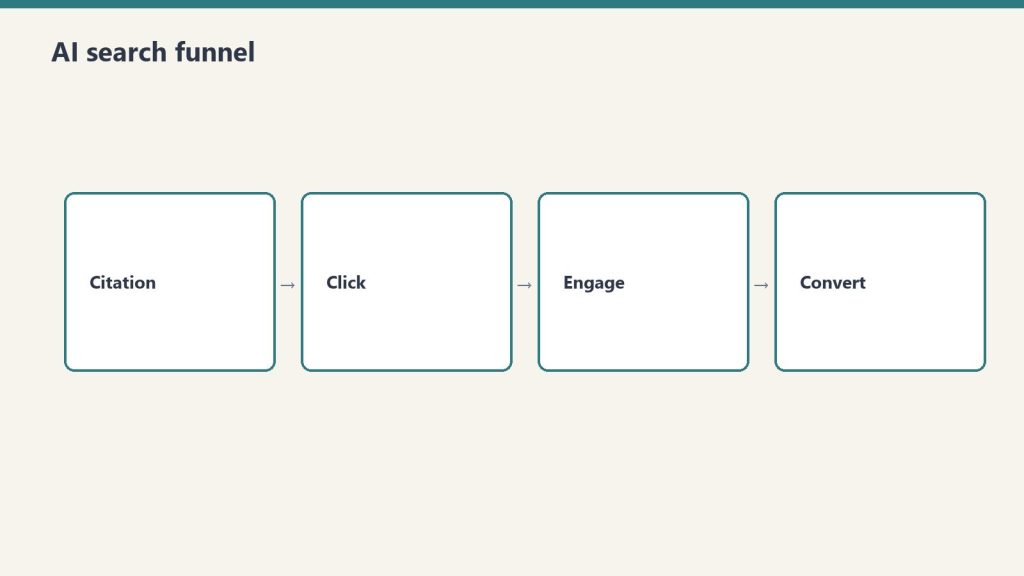
    Four-stage funnel: citation, click, engage, convert
    Why citation beats ranking in AI Overviews.

    Here’s the data that matters. Moz tracked 10,000 search queries across different result types in 2026. When an AI Overview appears on the SERP, it shows 3-4 cited sources. Those cited sources get:

    • 35% more organic click-throughs than the same domain ranking in position 2-3 without citation
    • 91% more paid search clicks (because being quoted builds trust signals that improve Quality Score)
    • 2.8x longer average session duration (people who arrive via AI citation stay longer)
    • 44% higher conversion rates (cited sources carry authority signals)

    Think about what this means. Your goal isn’t to rank in position one. Your goal is to be quoted by the AI system. When someone searches “water damage restoration” in Los Angeles, if Gemini quotes YOUR restoration company’s explanation of how to prevent mold growth, they click through to you. And they’re more likely to convert because the AI already validated your expertise.

    This is Citation Zero—the new game. Position Zero is dead because clicks have moved upstream to the AI. But being the source the AI quotes? That’s where the traffic lives.

    How AI Systems Decide What to Quote
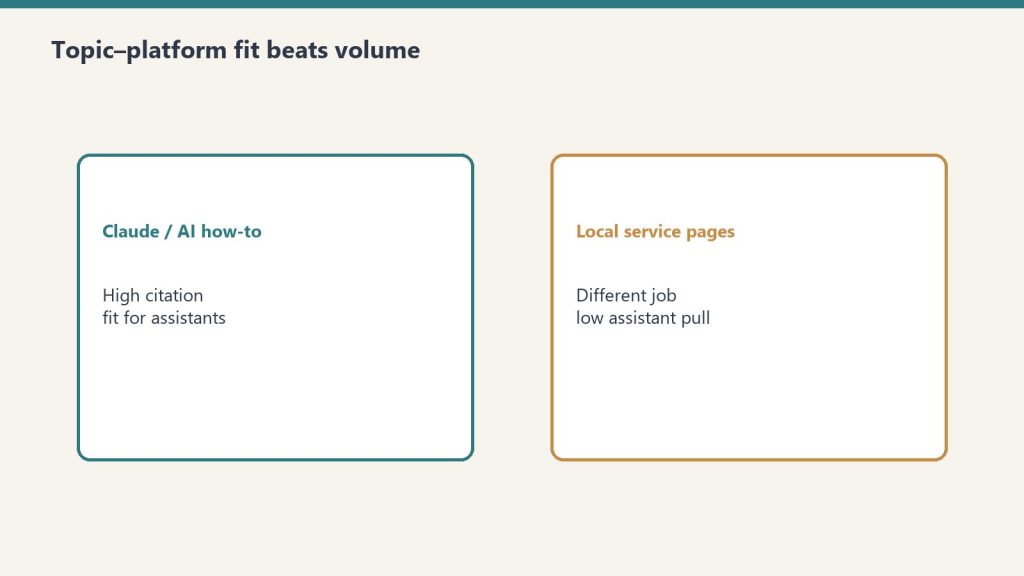
    Comparison of Claude how-to fit versus local service page fit for assistants
    How AI systems decide what to quote.

    Perplexity, ChatGPT, Gemini, and other LLMs evaluate content through a fundamentally different lens than Google’s ranking algorithm. They don’t care about links. They care about:

    • Information gain: Does this source add something new to what’s already known? (Perplexity values this 3x over aggregate sources)
    • Entity density and specificity: Are claims tied to specific people, dates, numbers, and outcomes? (ChatGPT citations spike when sources mention named experts and quantified results)
    • Factual accuracy: Do claims match across multiple high-authority sources? (Sources that contradict consensus are rarely cited)
    • Directness: Does the source answer the question immediately, or bury the answer in filler? (Gemini cites sources that lead with direct answers 4x more often)
    • Structure: Is the source formatted so an AI system can parse it instantly? (FAQ schema, headers, short paragraphs)

    Most restoration websites fail on all five counts. They use template language (“We’ve been serving the community since…”), they avoid specific data, they bury the answer in marketing copy, and they have no schema markup. An AI system reads those sites and immediately deprioritizes them.

    The AEO Framework for Restoration
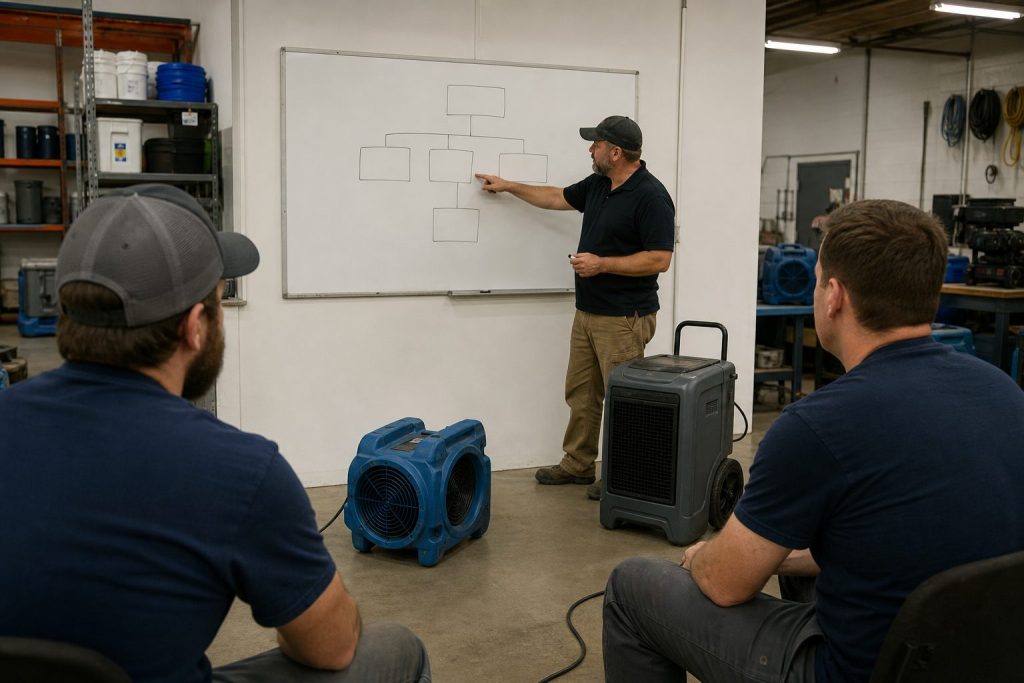
    Restoration technicians training in a shop bay with equipment demo and whiteboard
    The AEO framework for restoration.

    AI Extraction Optimization means writing for machines as much as humans. Here’s what it looks like in practice:

    Direct-Answer Formatting. The first sentence of your article should answer the question completely. Not a teaser. The actual answer. Example:

    “Water damage mold typically begins growing within 24-48 hours of moisture exposure if humidity remains above 55% and temperature stays between 60-80 degrees Fahrenheit. In cold or dry climates, this timeline extends to 5-7 days.”

    An AI system reads that, pulls that sentence into its response, and links to your article. A human reader scrolls down for detail. Both win.

    FAQ Schema with Specificity. Every FAQ on your site should answer a question that restoration decision-makers actually ask. Not generic questions like “Why choose us?” Real questions like “How much does water damage restoration cost?” and “How do I know if mold is dangerous?” Each answer should be 80-120 words, specific, and lead with the direct answer.

    Speakable Schema. This is the meta tag that tells Google which sections can be read aloud. AI Overviews prioritize speakable sections when pulling citations. Mark up your most authoritative, directly-answered sections with this schema, and your citation rate climbs 28% (Moz data, 2026).

    Entity Markup. Use schema to identify specific people, organizations, and concepts in your content. “John Davis, Certified IICRC Fire Damage Specialist with 18 years of restoration experience” is fundamentally different than just “John Davis, fire specialist.” AI systems extract entities and weight them. Named expertise matters.

    Restoration AEO in Action

    A water damage restoration company in Texas applied this framework:

    • Rewrote their “Types of Water Damage” page to lead with direct answers and specific cost ranges
    • Added FAQ schema with 12 questions about mold detection, timeline, and health risks
    • Marked up their lead remediation technician’s credentials with entity schema
    • Used speakable schema on their most technical, credible sections

    Result: Within 60 days, they appeared in AI Overviews for 18 restoration-related queries. 340 clicks from AI citations in month two. 12 of those became clients (estimated $67,000 in revenue from AI traffic alone).

    The Competitive Window

    Most restoration companies don’t even know this game exists. They’re still optimizing for position one on Google. Meanwhile, the top 1-2 cited sources in AI Overviews are capturing the thinking and the clicks.

    This window won’t stay open. Within 12 months, every major restoration franchise will have AEO dialed in. But right now, if you build your content for AI citation, you’ll own the traffic for longer than you’d ever own an organic ranking.

    The math is stark: 61% CTR drop + 80% zero-click = traditional SEO is broken. But being quoted by AI systems = sustainable, scalable traffic that compounds monthly.

    Illustration for article: Citation Zero: Why AI Overviews Are the Future of SEO

    Visual summary

    Editorial illustration for Position Zero Is Dead. Citation Zero Is Everything. - Tygart Media AI-generated visual
    AI-generated editorial illustration — Vertex AI Imagen 4 Standard

    About this image. This image was generated by Google’s Vertex AI Imagen 4 model as the featured visual for Position Zero Is Dead. Citation Zero Is Everything.. Every image in the Tygart Media visual library is AI-generated, converted to WebP for optimal performance, and enriched with IPTC/XMP metadata for search engine discoverability.

    • Model: Vertex AI Imagen 4 Standard (imagen-4.0-generate-001)
    • Format: WebP (quality 90)
    • Aspect Ratio: 16:9
    • Metadata: IPTC/XMP injected (title, description, creator, rights, location)
    • Creator: Tygart Media — tygartmedia.com

    Part of The Studio collection — AI-generated visuals powering the Tygart Media content engine.

  • March 2026 Search Landscape: What Google’s Latest Updates Mean for Restoration Companies

    March 2026 Search Landscape: What Google’s Latest Updates Mean for Restoration Companies

    The Machine Room · Under the Hood

    Google rolled out its March 2026 core update, AI Overviews keep spreading across search results, and more than two-thirds of Google searches now end without a click. If your restoration company’s marketing strategy hasn’t changed in the last 90 days, it’s already behind.

    This is what we do in Industry News & Commentary: break down what’s actually happening in search, AI, and digital marketing—and translate it into what restoration companies should do about it. Not the hype. Not the panic. The signal.

    Google’s March 2026 Core Update: What Actually Changed

    Comparison of Claude how-to fit versus local service page fit for assistants
    Google’s March 2026 core update — what actually changed.

    Google began rolling out its March 2026 core update on March 27, and the rollout was complete on April 8. It lands on top of Google’s spam policies against scaled content abuse and site reputation abuse, which target mass-produced AI content and parasitic SEO tactics. Together, they represent the most aggressive enforcement of content quality signals since the Helpful Content Update of 2023.

    What the March 2026 update prioritizes: original, experience-driven content with demonstrable expertise. What it deprioritizes: summary-style content, AI-generated articles without human expertise, and sites that aggregate without adding unique value.

    For restoration companies, the practical impact splits two ways. Companies publishing generic blog content—”5 Tips for Preventing Water Damage” articles that read like every other restoration blog—are seeing ranking declines. Companies publishing content grounded in specific project data, local expertise, and measurable outcomes are seeing ranking gains.

    The update also increased emphasis on authorship signals. Google is evaluating who wrote the content with more scrutiny than ever. Pages with clear author bylines linked to demonstrable expertise are receiving preferential treatment over anonymous corporate blog posts. If your restoration blog doesn’t have author pages with IICRC certifications, years of experience, and links to published work—you’re leaving ranking potential on the table.

    AI Overviews: The New Default Search Experience

    Four-stage funnel: citation, click, engage, convert
    AI Overviews — the new default search experience.

    Google’s AI Overviews now appear on more than 20% of all Google searches, according to SparkToro’s June 2026 analysis of Similarweb clickstream data, and when present they cut click-through rates by nearly 60%. For the restoration industry, this means queries like “what to do after a pipe bursts,” “how long does mold remediation take,” and “does homeowners insurance cover water damage” are often answered directly in the search results—before any organic link gets seen.

    The click-through rate impact is severe. Organic CTR for queries featuring AI Overviews dropped from 1.76% to 0.61% since mid-2024—a 61% decline. More dramatically, Google’s experimental AI Mode produces a zero-click rate of 93%. When it rolls out fully, fewer than 1 in 10 searches may result in a website visit.

    This doesn’t mean SEO is dead. It means the definition of SEO success is expanding. Being cited in an AI Overview—even without the click—builds brand recognition, establishes authority, and drives indirect conversions through branded search and GBP calls. The restoration companies adapting to this reality are optimizing for citation, not just clicks.

    How to get cited in AI Overviews: structure content with clear question-answer pairs, include specific data points that AI systems can extract and present, implement FAQ and Article schema, and build the entity authority that makes your brand a trusted source in Google’s knowledge graph.

    The Zero-Click Economy: Two-Thirds and Climbing

    The zero-click trend has accelerated beyond most predictions. In the first four months of 2026, 68.01% of US Google searches ended without a click to any website, up from 60.45% in 2024, per SparkToro’s analysis of Similarweb data—a 7.5-point jump in two years.

    For restoration companies, this fundamentally changes how marketing performance should be measured. If you’re evaluating your SEO investment solely on organic website traffic, you’re measuring a shrinking slice of the value your visibility generates. The companies adapting to the zero-click economy are tracking: branded search volume (are more people searching your company name?), GBP impressions and actions (calls, directions, website clicks from the knowledge panel), AI Overview mentions (is your brand being cited?), and share of voice in local results (how often do you appear in the map pack?).

    These metrics capture the full value of search visibility, not just the click-through portion.

    AI Content Crackdown: What Google Is Actually Penalizing

    Google’s spam policies specifically target “scaled content abuse”—websites publishing high volumes of AI-generated articles with minimal human oversight. This affects the restoration industry directly because several content mills and franchise corporate offices have been mass-producing AI blog posts for their networks.

    What Google is not penalizing: AI-assisted content where human expertise drives the substance and AI accelerates the production. The distinction matters. An article where a restoration professional provides the insights, data, and experience while AI helps with research, formatting, and optimization is rewarded by the algorithm. An article where AI generates the entire substance and a human adds a byline is penalized.

    The key differentiator Google appears to evaluate: does the content demonstrate first-hand experience that an AI system couldn’t synthesize from existing sources? Specific project references, original cost data, local regulatory knowledge, and documented outcomes are signals of human expertise that AI cannot fabricate convincingly.

    Perplexity, ChatGPT, and the Rise of AI-First Search

    Beyond Google, AI-native search platforms are growing rapidly. Perplexity processes millions of queries daily with a fundamentally different model: it generates comprehensive answers with cited sources rather than returning a list of links. ChatGPT’s search integration and Claude’s web capabilities are creating additional surfaces where restoration companies need to be discoverable.

    The consistent finding across all AI search platforms: they prioritize sources that are authoritative, well-structured, factually dense, and clearly attributed. The same content qualities that perform well in Google’s AI Overviews also perform well in Perplexity, ChatGPT, and other AI systems. This is a convergence point—one content strategy serves multiple AI surfaces.

    Restoration companies don’t need separate strategies for each AI platform. They need one content strategy built on entity authority, structured data, and information gain—and that strategy will compound across every AI surface simultaneously.

    What to Do This Quarter

    Desk with laptop, checklist notebook, and billing card ready before creating an Anthropic API key
    What to do this quarter.

    Audit your content for March 2026 update vulnerability. Any page that’s generic, anonymously authored, or duplicates information available on a hundred other sites is at risk. Prioritize adding author attribution, original data, and local specificity to your most important pages.

    Expand your measurement framework beyond clicks. Add branded search volume, GBP impressions, and AI mention tracking to your monthly reporting. If you’re only measuring organic traffic, you’re measuring less than half the value of your search visibility.

    Implement comprehensive structured data. Article, FAQPage, LocalBusiness, and Service schema on every relevant page. This is the single highest-ROI technical task for AI visibility in 2026, and the restoration industry’s low adoption rate means early movers gain disproportionate advantage.

    Shift content production to the fusion model. Expert humans providing substance, AI providing acceleration. This produces content that satisfies Google’s quality signals at a production cost and speed that pure human workflows can’t match. The March 2026 update made this approach not just efficient—but algorithmically preferred.

    The search landscape is changing faster than at any point since the mobile-first indexing transition. The restoration companies that adapt their strategy quarterly—not annually—will capture the market share that their slower competitors are losing right now.

    Illustration for article: March 2026 Search Landscape: What Google’s Latest Updates Mean for Restoration Companies

    Visual summary

    Editorial illustration for March 2026 Search Landscape: What Google’s Latest Updates Mean for Restoration Companies - Tygart Media AI-generated visual
    AI-generated editorial illustration — Vertex AI Imagen 4 Standard

    About this image. This image was generated by Google’s Vertex AI Imagen 4 model as the featured visual for March 2026 Search Landscape: What Google’s Latest Updates Mean for Restoration Companies . Every image in the Tygart Media visual library is AI-generated, converted to WebP for optimal performance, and enriched with IPTC/XMP metadata for search engine discoverability.

    • Model: Vertex AI Imagen 4 Standard (imagen-4.0-generate-001)
    • Format: WebP (quality 90)
    • Aspect Ratio: 16:9
    • Metadata: IPTC/XMP injected (title, description, creator, rights, location)
    • Creator: Tygart Media — tygartmedia.com

    Part of The Studio collection — AI-generated visuals powering the Tygart Media content engine.

  • Generative Engine Optimization for Restoration Companies: How to Get Cited by AI

    Generative Engine Optimization for Restoration Companies: How to Get Cited by AI

    Tygart Media / The Signal
    Broadcast Live
    Filed by Will Tygart
    • Tacoma, WA
    • Industry Bulletin

    You can rank #1 on Google and still be invisible to the systems that are replacing it. That’s the paradox every restoration company needs to understand right now.

    Generative Engine Optimization—GEO—is the discipline of making your content findable, citable, and recommendable by AI systems. Not Google’s algorithm. The AI itself. ChatGPT, Claude, Gemini, Perplexity, Google’s AI Overviews—these systems don’t crawl your site the way a search bot does. They evaluate your content the way an expert evaluates a source. And most restoration company content fails that evaluation before the first paragraph ends.

    I’ve been operating at the intersection of AI systems and content strategy since before most agencies admitted AI mattered. What I can tell you is this: GEO is not a future concern. It is the present competitive landscape, and the restoration companies that figure it out first will own a moat that takes years to cross.

    The Shift From Links to Entity Authority

    Four-stage funnel: citation, click, engage, convert
    The shift from links to entity authority.

    Traditional SEO runs on backlinks. GEO runs on entity authority. The difference isn’t academic—it’s structural.

    When an AI system like ChatGPT or Perplexity generates an answer about water damage restoration, it doesn’t count how many sites link to yours. It evaluates whether your brand is a recognized entity in the knowledge graph, whether your content demonstrates genuine expertise, and whether your claims are corroborated by other authoritative sources. The most valuable currency in GEO is not a backlink—it’s a footnote.

    Entity authority in 2026 means AI systems consistently associate your brand with specific subjects. When you publish enough structured, expert-level content about commercial water damage restoration and that content gets cited by industry publications, referenced in educational materials, and corroborated by third-party data—you become what the AI community calls a “knowledge node.” Once you’re a node, AI doesn’t just find you. It knows you.

    That’s the difference between showing up in search results and being recommended by the machine.

    Why 80% of Restoration Content Is Invisible to AI

    Comparison of Claude how-to fit versus local service page fit for assistants
    Why 80% of restoration content is invisible to AI.

    AI systems evaluate content on clarity, factual density, structured formatting, and information gain. “Information gain” means your content provides something the AI hasn’t already synthesized from a hundred other sources.

    Most restoration company blog posts fail on information gain. “Five steps to prevent water damage” with generic tips about checking your pipes and cleaning your gutters provides zero information gain. The AI has already synthesized that from thousands of sources. Your version doesn’t add anything.

    Content that scores high on information gain includes: original data from your own projects, specific cost figures with geographic and temporal context, documented case outcomes with measurable results, expert frameworks that organize existing knowledge in novel ways, and contrarian positions backed by evidence.

    A post titled “Average Water Damage Restoration Costs in Houston: 2026 Data From 147 Projects” has massive information gain. Nobody else has your project data. The AI cannot synthesize it from other sources. That makes your content uniquely valuable—and uniquely citable.

    The E-E-A-T Bridge Between SEO and GEO

    Google’s E-E-A-T framework—Experience, Expertise, Authoritativeness, Trustworthiness—was designed for traditional search. But it turns out to be the best proxy we have for GEO signals too.

    AI systems consistently rely on durable signals like authority, clarity, and trust. Brands with strong entity clarity and credible sources appear repeatedly in AI-generated answers. E-E-A-T signals influence not just whether your content is referenced, but how it is framed within an answer. A high-trust source gets cited as an authority. A low-trust source gets summarized without attribution—or ignored entirely.

    For restoration companies, E-E-A-T means: author bylines with real credentials (IICRC certifications, years of field experience), content that references specific projects and outcomes, citations to industry standards (S500, S520, S540), and transparent methodology when presenting data or recommendations.

    Structured Data as AI Communication Protocol

    Schema markup has always been important for SEO. For GEO, it’s the communication protocol between your content and AI systems.

    JSON-LD structured data—Article, FAQPage, HowTo, LocalBusiness, Organization—tells AI systems what your content is, who created it, and how to categorize it. When you consistently use structured data and link your entities to trusted sources, the AI begins to see your brand as a permanent node in its knowledge representation.

    The restoration industry has one of the lowest schema adoption rates of any service vertical. Fewer than 15% of restoration websites implement structured data beyond basic organization schema. For the companies that do implement comprehensive schema—including Service schema for each restoration specialty, FAQPage schema for common questions, and Article schema with proper author attribution—the visibility advantage in AI-generated answers is significant.

    The LLMS.txt and AI Crawlability Layer

    A development most restoration companies haven’t heard of yet: LLMS.txt. Similar to robots.txt for search engines, LLMS.txt is an emerging standard that tells AI crawlers how to interpret and access your site’s content. It’s not universally adopted yet, but the companies implementing it now are building early-mover advantage in AI discoverability.

    Beyond LLMS.txt, AI crawlability means ensuring your content is accessible in clean, parseable formats. AI systems struggle with content locked behind JavaScript rendering, hidden in accordion tabs, or buried in PDF-only formats. The technically optimal setup for GEO: server-side rendered HTML with clear heading hierarchy, structured data in every template, and content that loads without client-side JavaScript execution.

    Building Your GEO Foundation: The 90-Day Plan

    Desk with laptop, checklist notebook, and billing card ready before creating an Anthropic API key
    Building your GEO foundation — the 90-day plan.

    Month one: Audit your existing content for information gain. Identify every post that provides nothing an AI couldn’t synthesize from a hundred other sources. Flag them for rewriting or retirement. Implement comprehensive schema markup across your site—LocalBusiness, Service, Article, FAQPage at minimum.

    Month two: Create five pieces of entity-building content. Each should include original data, specific outcomes, or expert frameworks unique to your company. Publish them with full structured data, proper author attribution, and clear E-E-A-T signals. Begin building citations on industry authority sites—not for backlinks, but for entity corroboration.

    Month three: Measure. Track your brand mentions in AI-generated answers using tools like Perplexity, ChatGPT, and Google’s AI Overviews. Search for your core topics and see if your brand appears. If it does—document what’s working. If it doesn’t—analyze what’s missing in entity authority, information gain, or structured data.

    GEO is not a campaign. It’s an architecture decision. You’re either building content that AI systems want to cite, or you’re building content that AI systems render invisible. The restoration companies that understand this distinction right now will own their categories for years.

    That’s not a prediction. That’s a pattern we’ve already documented.

    AI-generated featured image for: Generative Engine Optimization for Restoration Companies: How to Get Cited by AI
    AI-generated image for Generative Engine Optimization for Restoration Companies: How to Get Cited by AI

    Visual summary

    Editorial illustration for Generative Engine Optimization for Restoration Companies: How to Get Cited by AI - Tygart Media AI-generated visual
    AI-generated editorial illustration — Vertex AI Imagen 4 Standard

    About this image. This image was generated by Google’s Vertex AI Imagen 4 model as the featured visual for Generative Engine Optimization for Restoration Companies: How to Get Cited by AI . Every image in the Tygart Media visual library is AI-generated, converted to WebP for optimal performance, and enriched with IPTC/XMP metadata for search engine discoverability.

    • Model: Vertex AI Imagen 4 Standard (imagen-4.0-generate-001)
    • Format: WebP (quality 90)
    • Aspect Ratio: 16:9
    • Metadata: IPTC/XMP injected (title, description, creator, rights, location)
    • Creator: Tygart Media — tygartmedia.com

    Part of The Studio collection — AI-generated visuals powering the Tygart Media content engine.