Tag: Claude Code

  • Claude vs GitHub Copilot: Which AI Coding Tool is Best?

    Claude vs GitHub Copilot: Which AI Coding Tool is Best?

    Last refreshed: May 15, 2026

    Claude AI · Fitted Claude

    Claude and GitHub Copilot both help developers write code — but they’re solving different problems. Copilot lives inside your editor as an autocomplete and inline suggestion tool. Claude is a conversational AI you bring complex problems to. Understanding what each does determines which belongs in your workflow, and whether you need both.

    Short answer: They’re not direct substitutes. Copilot is better for in-editor autocomplete and inline code completion as you type. Claude is better for complex problem-solving, code review, architecture discussion, debugging, and agentic development via Claude Code. Most serious developers benefit from both.

    Claude vs GitHub Copilot: Head-to-Head

    Capability Claude GitHub Copilot Edge
    In-editor autocomplete Copilot — purpose-built for this
    Complex problem-solving Limited Claude — conversational depth
    Code review Basic Claude — more thorough
    Architecture discussion Claude — requires reasoning
    Debugging complex errors Basic Claude — root cause analysis
    Agentic coding (autonomous) ✅ Claude Code ✅ Copilot Workspace Claude Code — terminal-native
    GitHub integration Via MCP ✅ Native Copilot — built into the platform
    Multi-language support Tie
    Price $20/mo (Pro) $10–19/mo Copilot — cheaper at base
    Not sure which to use?

    We’ll help you pick the right stack — and set it up.

    Tygart Media evaluates your workflow and configures the right AI tools for your team. No guesswork, no wasted subscriptions.

    What GitHub Copilot Does Better

    In-editor autocomplete. Copilot is purpose-built for this — it sits inside VS Code, JetBrains, Neovim, or your editor of choice and suggests completions as you type. It reads your current file and neighboring context to generate inline suggestions. Claude doesn’t do this. There’s no Claude autocomplete inside your editor in the same way.

    GitHub native integration. Copilot is an extension of the GitHub ecosystem — it understands your repository context, integrates with pull requests (Copilot PR summaries), and connects directly to GitHub Actions. If you’re deeply embedded in the GitHub workflow, Copilot’s native integration has genuine advantages.

    What Claude Does Better

    Complex reasoning about code. When you have a hard problem — a non-obvious bug, an architectural decision, a security vulnerability to trace — Claude’s conversational depth is more valuable than autocomplete. You can describe the problem, paste relevant code, explain your constraints, and get substantive analysis rather than a completion suggestion.

    Code review quality. Claude’s code review is more thorough than Copilot’s, particularly for security issues, error handling gaps, and logic errors. It explains why something is a problem, not just that it is — and it holds all your review criteria through long responses.

    Claude Code for agentic work. Claude Code is a terminal-native agent that operates in your actual development environment — reading files, running tests, making commits, refactoring across multiple files. It’s a more autonomous capability than either chat-based Claude or Copilot’s editor integration. For multi-file, multi-step development tasks, Claude Code is the stronger tool.

    Using Both: The Practical Setup

    The most effective developer setup uses both: GitHub Copilot for in-editor autocomplete and inline suggestions as you write, Claude (via web, desktop, or API) for complex problem-solving, code review, debugging, and architecture. Claude Code for autonomous development sessions on larger tasks.

    At $10–19/month for Copilot and $20/month for Claude Pro, running both costs $30–40/month — meaningful but justified for developers whose output directly depends on these tools.

    For a broader Claude coding comparison, see Claude vs ChatGPT for Coding, Claude Code vs Windsurf, and Claude Code vs Aider.

    Frequently Asked Questions

    Is Claude better than GitHub Copilot?

    They do different things well. Copilot is better for in-editor autocomplete. Claude is better for complex problem-solving, code review, and debugging. Claude Code is better for autonomous development sessions. Most developers benefit from both rather than choosing one.

    Can Claude replace GitHub Copilot?

    Not for in-editor autocomplete — that’s Copilot’s core strength and Claude doesn’t have a direct equivalent in your editor as you type. Claude Code handles autonomous development tasks at a higher level, but for the instant inline suggestion experience, Copilot remains the dedicated tool.

    Should I use Claude Code or GitHub Copilot?

    For autonomous multi-file development tasks, Claude Code is the stronger tool — it operates in your actual environment, reads your full codebase, runs tests, and works without constant guidance. For in-editor suggestions as you write, Copilot’s integration is purpose-built for that workflow. The two address different parts of the development process.

    Need this set up for your team?
    Talk to Will →

  • Is Claude Good at Coding? An Honest Developer Review

    Is Claude Good at Coding? An Honest Developer Review

    Last refreshed: May 15, 2026

    Model Accuracy Note — Updated May 2026

    Current flagship: Claude Opus 4.7 (claude-opus-4-7). Current models: Opus 4.7 · Sonnet 4.6 · Haiku 4.5. Claude Opus 4.7 (claude-opus-4-7) is the current flagship as of April 16, 2026. Where this article references Opus 4.6 or earlier models, those references are historical. See current model tracker →. See current model tracker →

    Claude AI · Fitted Claude

    Claude is genuinely good at coding — and for specific types of development work, it’s the strongest AI coding assistant available. But the honest answer requires separating what it does well from where it has real limits. Here’s the actual assessment from someone running Claude across real production systems daily.

    Short answer: Yes — Claude is strong at coding, particularly for instruction-following on complex requirements, debugging non-obvious errors, and agentic development via Claude Code. It’s competitive with or better than GPT-4o on most coding benchmarks. The gap over alternatives is clearest on tasks requiring sustained context and precise constraint adherence.

    Where Claude Excels at Coding

    Long paper tape measure unrolling across a desk beside a laptop, metaphor for context window length
    Where Claude excels at coding.

    Complex, multi-constraint code generation

    Give Claude a detailed spec — specific patterns, error handling requirements, naming conventions, library preferences — and it holds all of them through a long response better than alternatives. Other models tend to drift from earlier constraints partway through. For production code where the specifics matter, Claude’s instruction adherence is a real advantage.

    Debugging non-obvious errors

    On tricky bugs where the error message points somewhere unhelpful, Claude is more likely to trace the actual root cause rather than addressing the symptom. It’s willing to say “this is probably caused by X upstream” and follow the logic chain. That kind of reasoning saves hours on complex debugging sessions.

    Working across large codebases

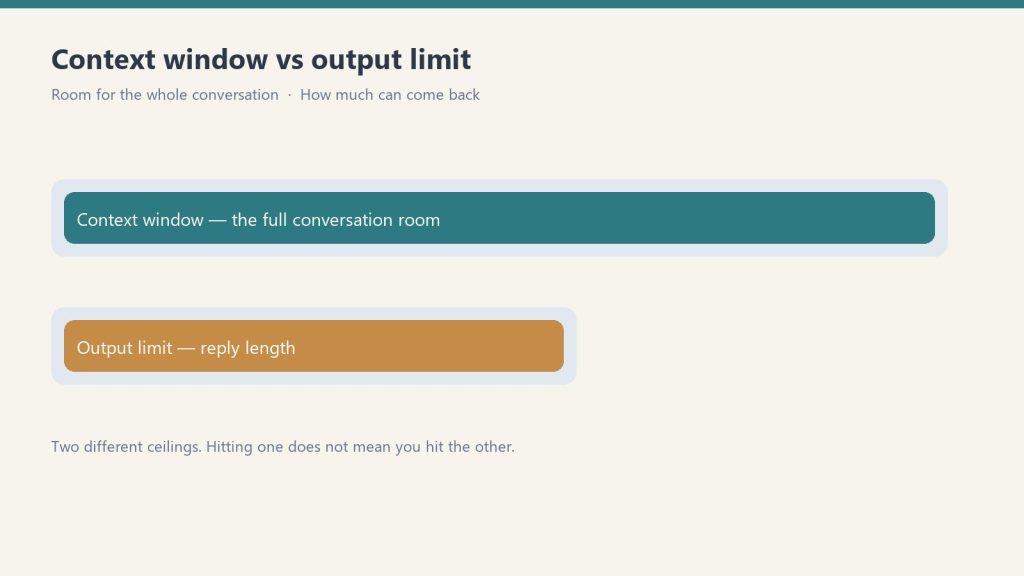
    Claude’s 200K token context window means it can hold significant portions of a codebase in context simultaneously. Understanding how a change in one file affects another, tracking architectural patterns across multiple files, maintaining awareness of project-wide conventions — Claude handles this better than models with shorter context windows.

    Code review and security analysis

    Claude is strong at finding security vulnerabilities, missing error handling, and logic errors. Give it the code and ask it to review specifically for security issues — SQL injection, authentication gaps, hardcoded credentials — and the findings are reliable and specific. See the full code review guide for prompts and examples.

    Claude Code: Agentic development

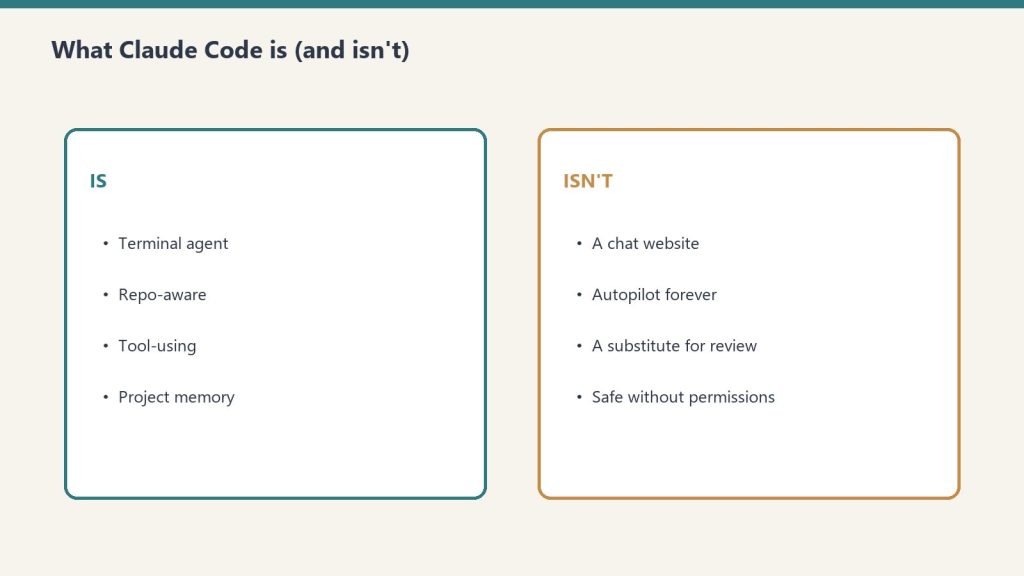
    Claude Code — Anthropic’s terminal-native coding agent — operates autonomously inside your actual codebase. Reading files, writing code, running tests, managing git. For autonomous development work, this is a qualitatively different capability from chat-based code assistance. See Claude Code pricing for tier details.

    Claude’s Coding Benchmarks

    Diagram comparing a long context window bar with a shorter output limit bar
    Claude’s coding benchmarks.

    On SWE-bench — the industry benchmark for real-world software engineering tasks — Claude has performed strongly relative to competing models. Claude 3.5 Sonnet’s performance on this benchmark in 2024 attracted significant developer attention. The current Claude Sonnet 4.6 continues that trajectory.

    Benchmarks don’t capture everything — real-world tasks have context, requirements, and edge cases that synthetic benchmarks miss. But they’re a useful signal, and Claude’s performance on coding-specific benchmarks is consistently competitive.

    Where Claude Has Coding Limits

    Interactive code execution: Claude doesn’t run code interactively in the web interface by default. ChatGPT’s code interpreter lets you upload a CSV and get Python-generated charts in the same window. Claude can reason about data and write code that would do the same, but won’t execute it in-chat. Claude Code handles actual execution in a development environment.

    Very specialized frameworks: For niche or rapidly evolving frameworks where training data is sparse, Claude may have less confident knowledge than it does for established technologies. Always verify generated code for less common libraries.

    Business logic without context: Claude can generate technically correct code but can’t know your business domain’s rules without you providing them. The more context you give about what the code needs to do and why, the better the output.

    How to Get the Best Coding Results From Claude

    Desk with laptop, checklist notebook, and billing card ready before creating an Anthropic API key
    How to get the best coding results from Claude.

    Be specific about requirements: Language, framework version, error handling approach, logging requirements, style preferences. Claude holds more constraints than most models — use that.

    Give it the context: What does this function do? What calls it? What does it return? More domain context = better output.

    Ask for complete, working code: Explicitly request production-ready code with error handling, not pseudocode or skeletons.

    Use Claude Code for agentic work: For anything more than a single function or file, Claude Code operating inside your actual environment beats chat-based coding significantly.

    Frequently Asked Questions

    Is Claude good at coding?

    Yes. Claude is one of the strongest AI coding assistants available, particularly for complex instruction-following, debugging non-obvious errors, and working across large codebases. Claude Code adds agentic development capability for autonomous work inside real codebases.

    Is Claude better than ChatGPT for coding?

    For most coding tasks — complex specs, debugging, large codebase work, and agentic development — Claude is stronger. ChatGPT wins for interactive data analysis via its code interpreter. For a full comparison, see Claude vs ChatGPT for Coding.

    Can Claude write production-ready code?

    Yes, with the right prompting. Specify that you want production-ready code with error handling, logging, and your style requirements. Claude follows detailed coding specifications more reliably than most alternatives. Always review and test generated code before deploying.

    Want this for your workflow?

    We set Claude up for teams in your industry — end-to-end, fully configured, documented, and ready to use.

    Tygart Media has run Claude across 27+ client sites. We know what works and what wastes your time.

    See the implementation service →

    Need this set up for your team?
    Talk to Will →

  • Claude Code Review: What It Catches & How to Prompt

    Claude Code Review: What It Catches & How to Prompt

    Last refreshed: May 15, 2026

    Claude AI · Fitted Claude

    Claude is a strong code review tool — capable of identifying bugs, security vulnerabilities, logic errors, and style issues across most languages and frameworks. Here’s how to use Claude for code review effectively, what it catches reliably, and where you still need a human reviewer.

    Bottom line: Claude is excellent for catching obvious bugs, security antipatterns, and code clarity issues — and fast enough to be part of your pre-PR workflow. It doesn’t replace review from someone who knows your system’s business logic, architectural constraints, or team conventions that aren’t visible in the code itself.

    What Claude Catches in Code Reviews

    Long paper tape measure unrolling across a desk beside a laptop, metaphor for context window length
    What Claude catches in code reviews.
    Issue Type Claude’s reliability Notes
    Syntax errors and typos ✅ High Catches what linters miss
    Security vulnerabilities ✅ High SQL injection, XSS, hardcoded credentials, SSRF
    Logic errors in simple functions ✅ High Off-by-one errors, wrong comparisons, null handling
    Missing error handling ✅ High Uncaught exceptions, unhandled promise rejections
    Code clarity and readability ✅ High Naming, structure, comment quality
    Performance antipatterns ✅ Good N+1 queries, unnecessary loops, memory leaks
    Business logic correctness ⚠️ Limited Needs context Claude doesn’t have
    Architectural decisions ⚠️ Limited Requires system-wide context

    How to Run a Code Review With Claude

    Three stacked layers: chat UI, tools, agent runtime
    How to run a code review with Claude.

    The most effective approach is to give Claude both the code and the context it needs to review it well. A bare code dump produces generic feedback; a structured prompt produces actionable findings.

    Review this [language] code for: (1) security vulnerabilities, (2) bugs or logic errors, (3) missing error handling, (4) performance issues, (5) clarity problems.

    Context: This function [does X]. It receives [input type] and should return [output type]. It runs [frequency/context].

    Flag each issue with: severity (critical/high/medium/low), what’s wrong, and the fix.

    [paste code]

    Claude for Security Code Review

    Desk with laptop, checklist notebook, and billing card ready before creating an Anthropic API key
    Claude for security code review.

    Security review is one of Claude’s strongest code review use cases. It reliably identifies:

    • Injection vulnerabilities — SQL, command, LDAP injection patterns
    • Authentication issues — weak password handling, JWT misuse, session management problems
    • Hardcoded secrets — API keys, credentials in source code
    • Insecure dependencies — when you tell it what packages you’re using
    • Input validation gaps — missing sanitization, trust boundary violations

    For security review, explicitly tell Claude to “focus on security vulnerabilities” — the findings are more targeted and specific when it knows that’s the priority.

    Claude Code Review vs. Claude Code

    Code review via the chat interface is for analyzing code you paste in. Claude Code is the agentic tool that operates autonomously inside your actual development environment — reading files, running tests, and making changes. For code review as part of a larger development workflow, Claude Code can do it in-situ on your actual codebase rather than requiring you to paste code into a chat window.

    Frequently Asked Questions

    Can Claude review code?

    Yes. Claude is effective at catching bugs, security vulnerabilities, missing error handling, and clarity issues across most programming languages. Give it context about what the code is supposed to do for the most actionable feedback.

    Is Claude good for security code review?

    Yes, security review is one of Claude’s strongest code review use cases. It reliably identifies SQL injection, XSS, authentication issues, hardcoded credentials, and input validation gaps. Tell it explicitly to focus on security vulnerabilities for the most targeted output.

    What does Claude miss in code reviews?

    Claude can’t evaluate business logic correctness without context about your domain, architectural decisions without knowing your system design, or team conventions not visible in the code. It also can’t catch runtime behavior issues that only appear under specific conditions or load.

    Need this set up for your team? Talk to Will →
  • Claude Artifacts: What They Are and How to Use Them

    Claude Artifacts: What They Are and How to Use Them

    Last verified: June 11, 2026 (Pacific Time).

    Last refreshed: May 15, 2026

    Claude AI · Fitted Claude

    Claude Artifacts are a feature in Claude.ai that lets Claude generate standalone, interactive content — code, HTML pages, documents, diagrams, and more — directly in the chat interface as a separate panel you can view, copy, or iterate on without it cluttering the conversation. Here’s what Artifacts are, what they’re useful for, and how to use them effectively.

    Short version: When you ask Claude to write code, build a component, or create a document, it can output that content as an Artifact — a dedicated panel next to the conversation where the content renders and can be worked on separately. It’s the difference between Claude pasting code into the chat and Claude opening a mini IDE alongside it.

    What Claude Can Create as Artifacts

    Three stacked layers: chat UI, tools, agent runtime
    What Claude can create as Artifacts.
    Artifact Type What it is Example use
    Code Any programming language Python scripts, SQL queries, bash commands
    React components Interactive UI that renders live Calculators, dashboards, forms, games
    HTML pages Full web pages with CSS/JS Landing pages, reports, email templates
    SVG Scalable vector graphics Diagrams, icons, charts
    Markdown documents Formatted text documents Reports, READMEs, documentation
    Mermaid diagrams Flowcharts, sequence diagrams Architecture diagrams, process flows

    How Artifacts Work in Practice

    Desk with laptop, checklist notebook, and billing card ready before creating an Anthropic API key
    How Artifacts work in practice.

    When you ask Claude to build something — “create a React component for a login form” or “write a Python script that processes this CSV” — Claude creates the content in a panel that appears to the right of the conversation. The chat continues on the left; the Artifact lives on the right.

    From the Artifact panel you can: copy the content to your clipboard, download it as a file, preview rendered output (for HTML and React), and ask Claude follow-up questions that update the Artifact without starting over. “Make the button blue” or “add error handling to that function” updates the Artifact in place.

    Why Artifacts Are Useful

    The core problem they solve: when Claude outputs long code or a full document directly into chat, it buries the conversation and makes iteration awkward. You’re scrolling up to find what Claude wrote, copying it out, asking for changes, and scrolling up again. Artifacts keep the output in a fixed, workable location while the conversation continues normally.

    For longer sessions — building a multi-function script, iterating on a UI component, refining a report — Artifacts make the back-and-forth substantially cleaner.

    Enabling and Using Artifacts

    Artifacts are available in Claude.ai on Pro, Max, Team, and Enterprise plans. They may need to be enabled in Settings → Feature Preview depending on your account. Once enabled, Claude will automatically create Artifacts for appropriate content — you can also explicitly request one: “Create this as an Artifact” or “Put that in an Artifact panel.”

    Artifacts vs. Claude Code

    Long paper tape measure unrolling across a desk beside a laptop, metaphor for context window length
    Artifacts vs Claude Code.

    Artifacts are in-chat content generation — Claude produces something, it appears in a panel, you iterate via conversation. Claude Code is a terminal agent that operates autonomously inside your actual development environment — reading files, running tests, making commits. They serve different purposes: Artifacts are for in-session creation and prototyping; Claude Code is for real development work inside a codebase. See Claude Code pricing for details on that tier.

    Frequently Asked Questions

    What are Claude Artifacts?

    Claude Artifacts are a Claude.ai feature that displays generated content — code, HTML, React components, documents, diagrams — in a dedicated panel alongside the chat. They make it easier to view, iterate on, and copy longer outputs without cluttering the conversation.

    Are Claude Artifacts available on the free plan?

    Artifacts are primarily a feature of paid plans (Pro, Max, Team, Enterprise). Availability on the free tier may be limited or subject to change. Check Settings → Feature Preview in your account for current status.

    Can I download content from Claude Artifacts?

    Yes. From the Artifact panel you can copy the content to your clipboard or download it as a file, depending on the content type.

    Get alerted when Claude features or pricing change

    We track Anthropic’s models, features, and limits daily and send a short note when something changes. Occasional, no spam.

    Subscription Form

    Need this set up for your team? Talk to Will →
  • Claude vs ChatGPT for Coding: Which AI Wins in 2026?

    Claude vs ChatGPT for Coding: Which AI Wins in 2026?

    Last refreshed: May 15, 2026

    Claude AI · Fitted Claude

    Coding is one of the highest-stakes comparisons between Claude and ChatGPT — because the wrong choice costs you real time on real work. I’ve used both extensively across content pipelines, GCP infrastructure, WordPress automation, and agentic development workflows. Here’s the honest breakdown of where each model wins for coding tasks in 2026.

    Short answer: Claude wins for complex multi-file work, long-context debugging, following precise coding instructions, and agentic development. ChatGPT wins for interactive data analysis and its code interpreter sandbox. For most professional development work, Claude is the stronger tool — especially if you’re using Claude Code for autonomous operations.

    Head-to-Head: Claude vs ChatGPT for Coding

    Long paper tape measure unrolling across a desk beside a laptop, metaphor for context window length
    Head-to-head — Claude vs ChatGPT for coding.
    Task Claude ChatGPT Notes
    Complex instruction following ✅ Wins Holds all constraints through long outputs
    Large codebase context ✅ Wins Better coherence across long context windows
    Agentic coding ✅ Wins Claude Code operates autonomously in real codebases
    Interactive data analysis ✅ Wins ChatGPT’s code interpreter runs Python in-chat
    Code generation (routine) ✅ Strong ✅ Strong Both excellent for standard patterns
    Debugging unfamiliar code ✅ Stronger ✅ Strong Claude finds non-obvious errors more consistently
    API and infrastructure work ✅ Stronger ✅ Good Claude handles GCP, WP REST API, complex auth well

    Where Claude Wins for Coding

    Three stacked layers: chat UI, tools, agent runtime
    Where Claude wins for coding.

    Multi-Step, Multi-File Work

    When a task involves understanding several files, maintaining state across a long conversation, and producing a coordinated set of changes — Claude holds together more reliably. ChatGPT tends to lose track of earlier constraints as context length grows. For any real development task that spans more than a few exchanges, this matters.

    Precise Instruction Following

    I regularly give Claude detailed coding specs — exact naming conventions, specific file structures, error handling requirements, style preferences — and it holds them consistently through long outputs. ChatGPT is more likely to quietly drift from a constraint partway through. For production code where specifics matter, Claude’s adherence is meaningfully better.

    Claude Code: The Agentic Advantage

    Claude Code is a terminal-native agent that operates autonomously inside your actual codebase — reading files, writing code, running tests, managing Git. ChatGPT doesn’t have a direct equivalent at this level of system integration. For developers who want AI working inside their development environment rather than in a chat window, Claude Code is a qualitatively different capability. See Claude Code pricing for tier details.

    Debugging Complex Systems

    On non-obvious bugs — the kind where the error message points you somewhere unhelpful — Claude is more likely to trace the actual root cause. It’s more willing to say “this looks like it’s actually caused by X upstream” rather than addressing the symptom. That’s the kind of reasoning that saves hours.

    Where ChatGPT Wins for Coding

    Interactive Data Analysis

    ChatGPT’s code interpreter runs Python directly in the chat interface — you can upload a CSV, ask it to analyze and plot the data, and get a chart back in the same conversation. Claude can reason deeply about data, but doesn’t run code interactively in the web interface by default. For exploratory data analysis and visualization, ChatGPT’s sandbox is more convenient.

    OpenAI Ecosystem Integration

    If you’re building on OpenAI’s stack — using their APIs, their assistants, their function calling — ChatGPT has naturally more fluent knowledge of those specific systems. Claude is excellent at reasoning about OpenAI’s APIs, but it’s not Anthropic’s infrastructure, so edge cases in OpenAI-specific implementation details may hit limits.

    For Most Developers: Claude Is the Stronger Tool

    Desk with laptop, checklist notebook, and billing card ready before creating an Anthropic API key
    For most developers — Claude is the stronger tool.

    The cases where ChatGPT wins for coding are specific and bounded — primarily data analysis and OpenAI ecosystem work. For the broader range of professional development: backend logic, API integration, infrastructure, automation, debugging, architecture decisions — Claude’s instruction-following, long-context coherence, and agentic capabilities through Claude Code give it a consistent edge.

    For a broader comparison beyond coding, see Claude vs ChatGPT: The Full 2026 Comparison. For Claude’s agentic coding tool specifically, see Claude Code vs Windsurf.

    Frequently Asked Questions

    Is Claude better than ChatGPT for coding?

    For most professional coding tasks — complex instruction following, large codebase work, debugging, and agentic development — Claude is stronger. ChatGPT’s code interpreter wins for interactive data analysis. Overall, Claude is the better coding tool for most developers.

    What is Claude Code and how does it compare to ChatGPT?

    Claude Code is a terminal-native agentic coding tool that operates autonomously inside your actual codebase — reading files, writing code, running tests. ChatGPT doesn’t have a direct equivalent at this level of system integration. It’s a qualitatively different capability, not just a better chat interface.

    Can ChatGPT run code that Claude can’t?

    ChatGPT’s code interpreter runs Python interactively in the chat interface for data analysis and visualization. Claude doesn’t do this by default in the web interface. However, Claude Code can execute code autonomously inside a real development environment, which is a different and more powerful capability for actual software development.

    Need this set up for your team? Talk to Will →
  • Claude Code Tutorial: Complete Beginner’s Guide (2026)

    Claude Code Tutorial: Complete Beginner’s Guide (2026)

    Last refreshed: May 15, 2026

    Claude AI · Fitted Claude

    Claude Code is the fastest-growing AI coding tool in the developer community. The r/ClaudeCode subreddit has 4,200+ weekly contributors — roughly 3x larger than r/Codex. Anthropic reports $2.5B+ in annualized revenue attributable to Claude Code adoption. This complete guide takes you from installation to your first productive agentic coding session.

    What Is Claude Code?

    Long paper tape measure unrolling across a desk beside a laptop, metaphor for context window length
    What is Claude Code?

    Claude Code is a terminal-native AI coding tool from Anthropic. Unlike IDE plugins that assist line-by-line, Claude Code operates at the project level — it reads your entire codebase, understands the architecture, writes and edits multiple files in a single session, runs tests, and works through complex engineering tasks autonomously. It uses Claude models with a 1-million-token context window — large enough to hold an entire codebase in memory.

    Installation

    Requirements: Node.js 18+, a Claude Max subscription ($100+/month) or Anthropic API key.

    # Install globally
    npm install -g @anthropic-ai/claude-code
    
    # Navigate to your project
    cd your-project
    
    # Authenticate
    claude login
    
    # Start a session
    claude

    Setting Up CLAUDE.md (The Most Important Step)

    Three stacked layers: chat UI, tools, agent runtime
    Setting up CLAUDE.md — the most important step.

    CLAUDE.md is a file you create in your project root that Claude Code reads at the start of every session. It’s the most important setup step — it gives Claude the context it needs to work effectively in your specific codebase without you re-explaining everything every time.

    A good CLAUDE.md includes:

    # Project: [Your Project Name]
    
    ## Architecture
    [Brief description of how the codebase is organized]
    
    ## Tech Stack
    - Language: [Python 3.11 / Node.js 20 / etc.]
    - Framework: [Django / Next.js / etc.]
    - Database: [PostgreSQL / MongoDB / etc.]
    - Testing: [pytest / Jest / etc.]
    
    ## Coding Standards
    - [Style guide, naming conventions, etc.]
    - [Preferred patterns for this codebase]
    
    ## Common Tasks
    - Run tests: `[command]`
    - Start dev server: `[command]`
    - Lint: `[command]`
    
    ## Known Issues / Context
    - [Anything Claude should know before working]

    Key Slash Commands

    CommandWhat It Does
    /initScans your codebase and generates an initial CLAUDE.md
    /memoryView and edit Claude’s memory for this project
    /compactCompact the conversation to free up context space
    /batchRun multiple commands or edits in one operation
    /clearClear conversation history (start fresh)

    Your First Agentic Session

    Desk with laptop, checklist notebook, and billing card ready before creating an Anthropic API key
    Your first agentic session.

    Start Claude Code in your project directory and try:

    • “Explain the overall architecture of this codebase” — Claude reads and summarizes
    • “Add input validation to the user registration endpoint” — Claude finds the right file, writes the validation, updates tests
    • “There’s a bug where [describe issue] — find it and fix it” — Claude searches the codebase, identifies the cause, fixes it
    • “Write tests for [module or function]” — Claude reads the code and writes comprehensive tests

    Rate Limits and Token Management

    Claude Code on Max 5x gets approximately 44,000-220,000 tokens per 5-hour window. Long sessions with large codebases consume tokens quickly. Best practices:

    • Use /compact when sessions get long to free up context
    • Be specific in your requests — “fix the authentication bug in auth.py” uses fewer tokens than “look through all my files for problems”
    • Auto-compaction (beta) handles this automatically when enabled

    Related on Tygart Media: how to use Claude · extended thinking · Claude + Zapier.

    Frequently Asked Questions

    What subscription do I need for Claude Code?

    Claude Max at $100/month minimum. Claude Code can also be accessed via API billing — often more cost-effective for lower-volume use.

    Can Claude Code edit multiple files at once?

    Yes. Claude Code can read, edit, and create multiple files in a single session — and runs the edits atomically, so you can review and accept or reject changes.

    How do I install Claude Code on Windows?

    Claude Code requires Node.js 18+ and runs via WSL (Windows Subsystem for Linux) on Windows. Install WSL, then follow the standard npm installation steps within your WSL terminal.

    Need this set up for your team? Talk to Will →
  • Claude vs Amazon Q: Best AI Assistant for AWS Developers

    Claude vs Amazon Q: Best AI Assistant for AWS Developers

    Last refreshed: May 15, 2026

    Model Accuracy Note — Updated May 2026

    Current flagship: Claude Opus 4.7 (claude-opus-4-7). Current models: Opus 4.7 · Sonnet 4.6 · Haiku 4.5. Claude Opus 4.7 (claude-opus-4-7) is the current flagship as of April 16, 2026. Where this article references Opus 4.6 or earlier models, those references are historical. See current model tracker →. See current model tracker →

    Claude AI · Fitted Claude

    For AWS developers, Claude and Amazon Q represent two distinct approaches to AI-assisted development. Amazon Q is deeply integrated into the AWS ecosystem — built to understand your AWS environment, your IAM policies, your CloudFormation stacks, and your AWS-specific workflows. Claude is a more capable general-purpose AI that can handle complex reasoning and code but requires you to provide AWS context manually. This comparison helps you choose — and explains why many AWS developers use both.

    What Amazon Q Does Well

    Diagram comparing a long context window bar with a shorter output limit bar
    What Amazon Q does well.
    • AWS-native context: Q can read your actual AWS account state — running resources, IAM permissions, CloudWatch logs — without you describing them
    • AWS documentation: Q is trained specifically on AWS documentation and gives more accurate, up-to-date answers for AWS-specific questions
    • Console integration: Q is embedded in the AWS Console, CloudShell, and VS Code via the AWS Toolkit — zero additional setup for AWS users
    • Troubleshooting: Q can analyze your actual CloudWatch errors and IAM policy conflicts directly
    • Cost optimization: Q analyzes your actual usage data for cost recommendations

    What Claude Does Better

    Three stacked layers: chat UI, tools, agent runtime
    What Claude does better.
    • Code quality: Claude Opus 4.6 scores 80.8% on SWE-bench vs Amazon Q’s lower published benchmarks — for complex, multi-file code generation, Claude produces better results
    • General reasoning: Architecture decisions, trade-off analysis, and complex problem-solving — Claude reasons more deeply
    • Non-AWS work: If you’re building multi-cloud or have significant non-AWS code, Claude handles everything equally; Q is heavily AWS-optimized
    • Document analysis: Claude’s 200K context window for reading technical specs, RFCs, or lengthy docs far exceeds Q’s capabilities
    • Writing: Technical blog posts, documentation, runbooks — Claude writes better

    Pricing Comparison

    Claude Amazon Q
    Individual $20-200/month $19/month (Q Developer Pro)
    Free tier Yes (limited) Yes (Q Developer Free)
    Business Custom $19/user/month

    Amazon Q Developer Pro at $19/month is competitive with Claude Pro at $20/month. For AWS-heavy developers, Q Pro includes features with no Claude equivalent (direct AWS account analysis). For general development, Claude holds the performance edge per dollar.

    The Combined Workflow

    Desk with laptop, checklist notebook, and billing card ready before creating an Anthropic API key
    The combined workflow.

    Many AWS developers use Amazon Q for AWS-specific questions (CloudFormation troubleshooting, IAM policy analysis, service limits) and Claude Code for complex coding tasks (architecture, large refactors, code review). The tools are complementary rather than competing.

    Frequently Asked Questions

    Is Amazon Q better than Claude for AWS development?

    For AWS-native questions with real account context: Amazon Q wins. For complex code generation, architecture decisions, and general programming: Claude is stronger. Many AWS developers use both.

    Can Claude access my AWS account?

    Not directly. You can paste CloudFormation templates, error logs, or resource configurations into Claude for analysis. Amazon Q connects directly to your AWS account with appropriate permissions.


    Need this set up for your team?
    Talk to Will →

  • Claude Zapier Automation: 10 Time-Saving Workflows

    Claude Zapier Automation: 10 Time-Saving Workflows

    Last refreshed: May 15, 2026

    Claude AI · Fitted Claude

    Claude and Zapier together create one of the most flexible automation combinations available in 2026. Through Zapier’s MCP server (mcp.zapier.com), Claude can connect to over 8,000 apps — sending emails, updating CRMs, creating tasks, posting to Slack, and more. This guide covers 10 practical workflows and how to set them up.

    Setting Up Claude + Zapier MCP

    Long paper tape measure unrolling across a desk beside a laptop, metaphor for context window length
    Setting up Claude + Zapier MCP.

    Add Zapier’s MCP server to Claude Desktop by editing your configuration file:

    {
      "mcpServers": {
        "zapier": {
          "url": "https://mcp.zapier.com/api/mcp/a/YOUR_ACCOUNT_ID/mcp",
          "type": "url"
        }
      }
    }

    Find your Zapier MCP URL in your Zapier account under Settings → MCP. Once connected, Claude can trigger any Zap you’ve built in Zapier, ask it to take actions across your connected apps.

    10 High-Value Automation Workflows

    Desk with laptop, checklist notebook, and billing card ready before creating an Anthropic API key
    10 high-value automation workflows.

    1. Email Triage and Draft Generation

    New email arrives → Zapier sends to Claude → Claude categorizes (urgent/action needed/FYI/spam) and drafts a reply → Draft saved to Gmail or sent to you via Slack for approval.

    2. CRM Note Generation from Calls

    Call recording transcript arrives (from Otter.ai or Fireflies) → Claude generates structured CRM notes (summary, pain points, next steps, deal stage) → Notes automatically posted to Salesforce or HubSpot record.

    3. Social Media Content from Blog Posts

    New WordPress post published → Claude generates LinkedIn post, Twitter/X thread, and Instagram caption → Drafts sent to Buffer or Hootsuite for scheduled publishing.

    4. Meeting Summary and Action Item Distribution

    Meeting transcript uploaded → Claude extracts summary, decisions made, and action items with owners → Summary sent to meeting participants via email, action items created in Asana or Notion.

    5. Customer Support Ticket Drafts

    New support ticket received (Zendesk, Freshdesk) → Claude categorizes the issue and drafts a response → Draft queued for agent review before sending.

    6. Lead Research and Enrichment

    New lead added to CRM → Claude researches company context from provided information → Enriched notes (industry, company size, likely pain points) added to CRM record automatically.

    7. Contract Summary on Receipt

    PDF contract received via email → Claude generates key terms summary (parties, obligations, deadlines, payment terms) → Summary posted to Slack or added to Notion database.

    8. Weekly Report Generation

    Every Friday → Zapier pulls data from your project management tool → Claude generates weekly progress narrative → Report emailed to stakeholders automatically.

    9. Review Response Drafting

    New Google or Yelp review received → Claude drafts a personalized response matching your brand voice → Draft sent to you for approval via email or Slack.

    10. Job Application Screening Summaries

    New application received → Claude summarizes candidate background, flags matches to job requirements, notes potential concerns → Summary added to your ATS or hiring Notion board.

    Related on Tygart Media: Claude for Excel · Claude Code tutorial · how to use Claude.

    Frequently Asked Questions

    Three stacked layers: chat UI, tools, agent runtime
    Frequently asked questions.

    Do I need Zapier paid plan to use Claude MCP?

    Zapier MCP access requires a paid Zapier plan. Check Zapier’s current pricing for MCP feature availability.

    Can Claude take actions in Zapier automatically without human approval?

    Yes — but for actions like sending emails or creating CRM records, building in a human-approval step (Slack notification with approve/reject) is recommended until you trust the automation’s output quality.

    Need this set up for your team? Talk to Will →
  • Claude Pro vs Max: Is the $100/Month Plan Worth It?

    Claude Pro vs Max: Is the $100/Month Plan Worth It?

    Last refreshed: May 15, 2026

    Claude AI · Fitted Claude

    The jump from Claude Pro to Max is a 5x price increase — $20/month to $100/month. Whether it’s worth it depends entirely on how you use Claude and where your current plan fails you. Here’s the data to make that decision.

    What’s Actually Different

    Three stacked layers: chat UI, tools, agent runtime
    What’s actually different.
    FeaturePro ($20/mo)Max 5x ($100/mo)Max 20x ($200/mo)
    Usage volumeBaseline5x Pro20x Pro
    Heavy prompts/day~12~60~240
    Claude CodeNoYesYes
    Extended thinkingLimitedFullFull
    Model accessSonnet + OpusSonnet + OpusSonnet + Opus

    Key insight: you don’t get different models at Max — you get more of them. The difference is usage capacity and Claude Code access.

    Who Should Stay on Pro

    Diagram comparing a long context window bar with a shorter output limit bar
    Who should stay on Pro.
    • You use Claude regularly but not all day — a few substantive sessions per week
    • You’re hitting limits occasionally but not consistently
    • You don’t need Claude Code

    Who Needs Max 5x

    Desk with laptop, checklist notebook, and billing card ready before creating an Anthropic API key
    Who needs Max 5x.
    • You hit Pro limits daily and it disrupts your workflow
    • You want Claude Code — only available at Max tiers
    • Claude is your primary work tool, not supplementary

    Who Needs Max 20x

    • Heavy Claude Code user running multi-hour sessions daily
    • Processing massive document volumes — dozens of long PDFs per day
    • You’ve been hitting Max 5x limits regularly

    Related on Tygart Media: Claude pricing · is Claude worth it · Claude alternatives.

    Frequently Asked Questions

    What does Claude Max include that Pro doesn’t?

    Claude Code access, higher usage limits (5x or 20x), full extended thinking, and higher priority during peak times.

    Is Claude Max worth $100 a month?

    For developers using Claude Code and professionals hitting Pro limits daily: yes. For moderate users: Pro at $20/month is sufficient.

    Need this set up for your team? Talk to Will →
  • Claude vs Perplexity: Research Engine vs Reasoning Partner

    Claude vs Perplexity: Research Engine vs Reasoning Partner

    Last refreshed: May 15, 2026

    Claude AI · Fitted Claude

    Comparing Claude to Perplexity is a category error — they’re not trying to do the same thing. Perplexity is a real-time research engine. Claude is a reasoning partner. Understanding the distinction helps you build the most effective research workflow.

    What Perplexity Does Best

    Comparison of Claude how-to fit versus local service page fit for assistants
    What Perplexity does best.
    • Real-time information: Searches the live web, summarizes current events with source links
    • Source citation: Every claim has source links for verification
    • Quick research: Fast sourced answers for “what is X” and “what happened with Y”
    • Academic research: Academic mode searches peer-reviewed papers

    What Claude Does Best

    Three stacked layers: chat UI, tools, agent runtime
    What Claude does best.
    • Deep reasoning: Complex multi-step analysis and strategic thinking
    • Document synthesis: Upload a 200-page report and ask for analysis — Perplexity cannot do this
    • Writing quality: Significantly stronger long-form writing
    • Code: One of the best coding models. Perplexity is not a coding tool.
    • Private documents: Works with confidential content you upload

    The Hybrid Workflow (Best of Both)

    Desk with laptop, checklist notebook, and billing card ready before creating an Anthropic API key
    The hybrid workflow — best of both.
    1. Perplexity first: Rapid research, current information, source discovery
    2. Claude second: Synthesis, analysis, writing. Take what Perplexity found and reason through the implications

    At $20/month each, running both costs $40/month — worth it for professionals who research and write regularly.

    Related on Tygart Media: Claude vs Jasper · Claude alternatives · Claude vs Notion AI.

    Frequently Asked Questions

    Should I use Claude or Perplexity for research?

    Use Perplexity for finding current information with sources. Use Claude for analyzing, synthesizing, and writing. Ideally, use both — Perplexity first, Claude second.

    Does Claude have real-time web access?

    Not by default. Claude has a knowledge cutoff and doesn’t browse the web in real time unless connected via MCP or specific integrations.

    Need this set up for your team? Talk to Will →