Tygart Media · Mortgage Servicer Playbooks · Escrow
The default the servicer picks
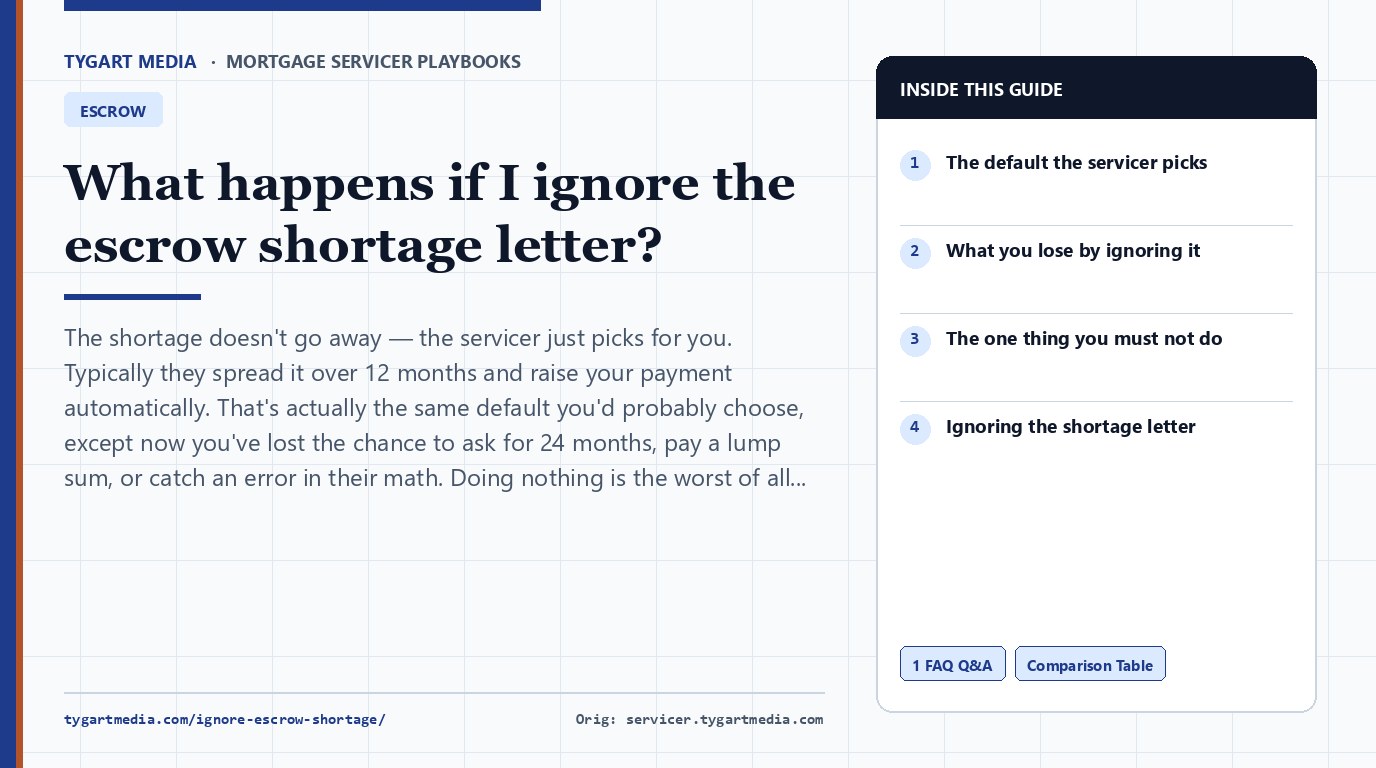
An escrow shortage notice usually comes with a deadline to choose: lump sum, 12-month spread, or a combination. If the deadline passes with no response, most servicers default to the 12-month spread and adjust your payment upward. The shortage gets repaid either way — the only question was ever how.
What you lose by ignoring it
- The 24-month ask. You can’t negotiate a longer spread after the default kicks in as easily — the leverage is in the choice window.
- The error check. A meaningful share of escrow analyses contain mistakes: wrong tax figures, stale insurance premiums, over-padded cushions. Ignoring the letter means paying for someone else’s error for a year.
- The lump-sum option. If you had the cash, paying the shortage outright keeps your payment increase to just the new tax/insurance projection — smaller than the spread payment.
The one thing you must not do
Do not keep paying the old amount out of protest. Once the new payment takes effect, the old amount is a short payment — which lands in suspense, accrues late fees, and can be reported to the credit bureaus. Protesting by underpaying only hurts you. That’s the suspense-account trap →
Ignoring the shortage letter
| Timeline | Consequence |
|---|---|
| 30–60 days | Servicer spreads it over 12 months automatically — payment jumps |
| Ongoing | Negative escrow balance grows; you lose negotiating leverage |
| Worst case | Delinquency reporting if the higher payment isn’t met |
Ignoring it doesn’t make it go away — it just removes your choices. Respond, even if only to request the 24-month spread.
Get The Signal
What we actually ran, what it measured, and what it means for a restoration shop — every week, including the flops.
Leave a Reply