By Will Tygart • Long-form Position • Practitioner-grade
The Feed Changed. You Just Didn’t Notice.
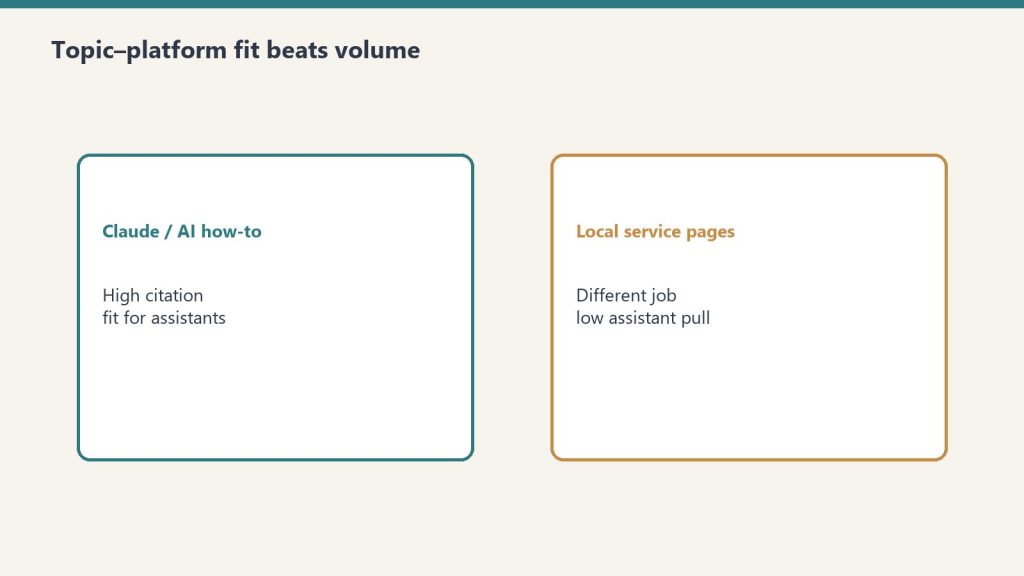
The feed changed — you just didn’t notice.
Social media trained an entire generation of marketers to think in formats. Carousel or Reel. Thread or Story. 30 seconds or 60. Vertical or square. We built content calendars around what the algorithm wanted to see, not what the audience actually needed to know.
That era is ending — not because social platforms are dying, but because the consumer sitting on the other side of the screen is changing. Increasingly, the first “person” to read your content isn’t a person at all. It’s an AI agent — a chatbot, an assistant, a search model — pulling information on behalf of someone who asked a question.
And that changes everything about what “social” means.
When the Consumer Is a Bot, the Format Doesn’t Matter
The entire social media economy is built on format constraints. Instagram rewards visual-first. LinkedIn rewards text-heavy thought leadership with engagement bait hooks. TikTok rewards pace and pattern interrupts. Twitter rewards brevity and provocation. Every platform has its own grammar, its own algorithm, its own definition of “good content.”
But when the consumer is an AI model — Claude, ChatGPT, Gemini, Perplexity, a Google AI Overview — format is irrelevant. What matters is the substance. The depth. The accuracy. The authority.
An AI agent doesn’t care about your hook. It cares about whether your content actually answers the question its user asked. It doesn’t care about your carousel design. It cares about whether your claims are sourced, your entities are clear, and your expertise is demonstrable.
This is what AEO, GEO, and SEO — the modern trifecta — actually represent. They aren’t just search optimization tactics. They are the new social media distribution layer.
No-Click Impressions Are the New Likes
No-click impressions are the new likes.
In the social media world, the metric that matters is the impression. Someone saw your post. If they liked it, they tapped a heart. If they really liked it, they commented or shared. That engagement signaled to the algorithm that your content was worth showing to more people.
The same feedback loop now exists in AI-mediated search — it just looks different.
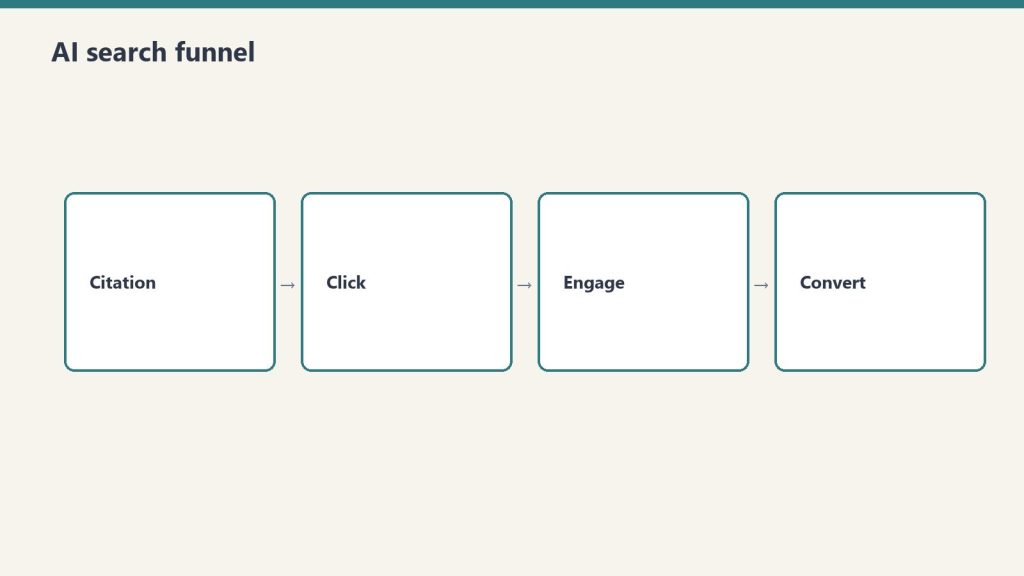
When your website content appears in a Google AI Overview, that’s an impression. When Perplexity cites your page in an answer, that’s engagement. When ChatGPT recommends your business in response to a user query, that’s a referral. When someone reads an AI-generated summary of your expertise and then calls your office, that’s a conversion.
The funnel is the same. The channel changed.
And here’s the part most marketers are missing: you don’t need to chase a trend to earn these impressions. You don’t need to dance. You don’t need a hook. You need good information, structured well, written with genuine expertise, and optimized so AI systems can find it, trust it, and cite it.
The Passion Advantage
Social media has an alignment problem. The content that performs best on social platforms is often not the content the creator cares most about. It’s the content that matches the algorithm’s preferences. This creates a grinding misalignment — business owners and marketers spending hours producing content they don’t particularly care about, in formats they didn’t choose, for an audience they can’t directly reach.
AEO/GEO/SEO flips that equation.
When you write deep, authoritative website content about the thing you actually know — the thing you’ve spent years mastering — AI systems notice. They learn your expertise. They map your authority. And they start recommending you to people who are actively looking for exactly what you do.
The data that learns you, learns them.
That’s not a slogan. It’s how the technology works. Large language models build representations of entities — businesses, people, topics — based on the depth and consistency of the information available about them. The more you write about what you genuinely know, the stronger that representation becomes. The stronger it becomes, the more often AI systems surface you as the answer.
This is the exact opposite of social media’s content treadmill. Instead of chasing what’s trending, you go deeper into what you already know. Instead of adapting to a platform’s format, you write for substance. Instead of fighting for attention, you earn citation.
Website Content Is Now the Most Social Thing You Can Do
Here’s the reframe that matters: your website is no longer a brochure. It’s your most important social channel.
Every page you publish is a node in a knowledge graph that AI systems are actively reading, indexing, and reasoning about. Every article you write is a potential answer to a question someone hasn’t asked yet. Every entity you define, every claim you source, every FAQ you structure — these are the signals that determine whether your business shows up when someone asks an AI “who should I call for this?”
Social media posts disappear in 24 hours. Website content compounds. A well-optimized article written today can be cited by AI systems for years. It doesn’t need an algorithm boost. It doesn’t need paid promotion. It needs to be right, and it needs to be findable.
That’s what modern SEO, AEO, and GEO deliver — not tricks, not hacks, but the infrastructure that makes your expertise machine-readable and AI-citable.
What This Means for Your Business
What this means for your business.
If you’re spending 80% of your marketing effort on social media and 20% on your website, you have the ratio backwards. The businesses that will dominate in an AI-mediated world are the ones investing in deep, authoritative web content — content that answers real questions, demonstrates genuine expertise, and is structured for the machines that are now the first readers of everything published online.
The feed changed. The question is whether you’ll keep posting for an algorithm, or start publishing for the intelligence layer that’s replacing it.
Filed by Will Tygart • Tacoma, WA • Industry Bulletin
Rankings Aren’t the Finish Line Anymore
Rankings are not the finish line anymore.
You did the work. The client’s target page ranks in the top five for their primary keyword. Traffic is up. The monthly report looks good. But something is shifting underneath those numbers that most freelance SEO consultants haven’t had time to fully reckon with.
Search engines aren’t just ranking content anymore — they’re quoting it. Featured snippets pull a direct answer and display it above position one. People Also Ask boxes expand with quoted passages from pages across the web. Voice assistants read a single answer aloud and move on. The result that gets quoted wins a fundamentally different kind of visibility than the result that merely ranks.
If your client ranks number three for a high-value query but another site owns the featured snippet, your client is invisible in the most prominent real estate on that search results page. They did the SEO work. They just didn’t do the answer engine optimization work. That’s the gap.
What Answer Engine Optimization Actually Involves
What answer engine optimization actually involves.
AEO isn’t a rebrand of SEO. It’s a different optimization target with different structural requirements. Where SEO focuses on signals that help a page rank — authority, relevance, technical health, backlinks — AEO focuses on signals that help a page get quoted.
The structural pattern for capturing a paragraph featured snippet is specific: a question phrased as a heading, followed immediately by a concise direct answer, followed by expanded depth. The direct answer needs to be tight — search engines typically pull passages that function as standalone responses. Too long and it gets truncated. Too short and it lacks the specificity that earns selection.
For list-format snippets, the content needs ordered or unordered lists with clear, parallel structure. For table snippets, the data needs to live in actual HTML tables with proper header rows. Each format has its own structural requirements, and the same page might need different sections optimized for different snippet formats depending on the queries it targets.
Then there’s the schema layer. FAQPage schema tells search engines explicitly which questions the page answers. HowTo schema structures step-by-step processes. Speakable schema identifies which sections are suitable for voice readback. These aren’t optional enhancements anymore — they’re the markup that makes content machine-readable in the way answer engines expect.
Why This Is a Bandwidth Problem, Not a Knowledge Problem
You probably know most of this already. You’ve read about featured snippets. You’ve seen the schema documentation. The gap isn’t ignorance — it’s implementation. Restructuring every piece of client content for snippet capture, writing FAQ sections that target real PAA clusters, implementing and validating schema markup, monitoring which snippets you’ve won and which you’ve lost — that’s a significant amount of additional work on top of the SEO fundamentals you’re already delivering.
For a freelance consultant managing multiple clients, adding a full AEO layer to every engagement means either raising your rates significantly, working more hours, or cutting corners somewhere else. None of those options feel great.
The Middleware Solution
The middleware solution for the freelancer AEO gap.
This is where the plugin model works. Instead of becoming an AEO specialist yourself, you plug in someone who already built the infrastructure. I run AEO optimization passes on your clients’ published content — restructuring key sections for snippet capture, writing FAQ sections that target actual question clusters in your client’s space, generating and injecting the appropriate schema markup, and monitoring results.
The work runs through your client’s existing WordPress installation via the REST API. Nothing changes about their site architecture, their theme, their plugins, or their hosting. The content that’s already ranking gets restructured to also compete for direct answer placements. New content gets AEO-optimized from the start.
You report the results to your client the same way you report everything else. Featured snippet wins. PAA placements. Voice search visibility. These are tangible outcomes that clients can see when they search their own terms — which makes them some of the most powerful proof points in any reporting conversation.
What This Looks Like in Practice
Say you have a client in the home services space. They rank well for several high-intent queries. You’ve done strong on-page work and their content is solid. But a competitor owns the featured snippet for their most valuable keyword — the one that drives the most qualified leads.
I look at that snippet, analyze the structure of the content that currently holds it, identify the format (paragraph, list, table), and restructure your client’s content to compete for that placement. I write a direct answer block that addresses the query more completely and more concisely. I add FAQ schema targeting the related PAA questions. I check whether speakable schema makes sense for voice search on that topic.
The optimization runs through the API. Your client’s post is updated. Within the next crawl cycle, the restructured content starts competing for the snippet. Sometimes it wins quickly. Sometimes it takes a few iterations. But the content is now structurally built to compete for answer placements — something it wasn’t doing before, no matter how well it ranked.
The Client Conversation
Your clients don’t need to understand AEO methodology. They understand “your company is now the answer Google shows when someone asks this question.” They understand “when someone asks their voice assistant about this service, your business is the one that gets recommended.” Those are outcomes, not techniques. And they’re outcomes that differentiate your service from every other SEO consultant who’s still reporting rankings and traffic without addressing the answer layer.
Frequently Asked Questions
How long does it take to win a featured snippet after AEO optimization?
It varies by competition and query. Some snippets flip within days of restructured content being crawled. Others take weeks of iteration. The structural optimization puts your client’s content in position to compete — the timeline depends on how strong the current snippet holder is and how frequently Google recrawls the page.
Does AEO optimization ever hurt existing rankings?
When done properly, no. The structural changes — adding direct answer blocks, FAQ sections, schema markup — add value to existing content without removing or diluting the elements that earned the current ranking. The optimization is additive, not substitutive.
Can you do AEO on content I’ve already written and published?
That’s the primary use case. Published content that’s already ranking is the best candidate for AEO optimization because it has existing authority. The restructuring work makes that authority visible to answer engines, not just traditional ranking algorithms.
What if my client uses a page builder like Elementor or Divi?
The optimization runs through the WordPress REST API at the content level. Page builders manage layout and design — the AEO work happens in the content blocks themselves. Schema gets injected at the post level. In most cases, page builders don’t interfere with AEO optimization, but we’d verify compatibility for any specific setup before making changes.
{
“@context”: “https://schema.org”,
“@type”: “Article”,
“headline”: “The Freelancers AEO Gap: Your Clients Content Is Ranking but Nobodys Quoting It”,
“description”: “Your SEO work gets clients to page one. AEO gets them quoted directly in search results. Here’s why that gap matters and how to close it without becoming “,
“datePublished”: “2026-04-03”,
“dateModified”: “2026-04-03”,
“author”: {
“@type”: “Person”,
“name”: “Will Tygart”,
“url”: “https://tygartmedia.com/about”
},
“publisher”: {
“@type”: “Organization”,
“name”: “Tygart Media”,
“url”: “https://tygartmedia.com”,
“logo”: {
“@type”: “ImageObject”,
“url”: “https://tygartmedia.com/wp-content/uploads/tygart-media-logo.png”
}
},
“mainEntityOfPage”: {
“@type”: “WebPage”,
“@id”: “https://tygartmedia.com/the-freelancers-aeo-gap-your-clients-content-is-ranking-but-nobodys-quoting-it/”
}
}
AI-generated editorial illustration — Vertex AI Imagen 4 Standard
About this image. This image was generated by Google’s Vertex AI Imagen 4 model as the featured visual for The Freelancer’s AEO Gap: Your Clients’ Content Is Ranking but Nobody’s Quoting It . Every image in the Tygart Media visual library is AI-generated, converted to WebP for optimal performance, and enriched with IPTC/XMP metadata for search engine discoverability.
Model: Vertex AI Imagen 4 Standard (imagen-4.0-generate-001)
Filed by Will Tygart • Tacoma, WA • Industry Bulletin
The Invisible Layer That Connects Everything
If SEO is about getting found, AEO is about getting quoted, and GEO is about getting cited by AI — schema markup is the wiring that makes all three possible. It’s the structured data layer that tells machines exactly what your client’s content means, who created it, what organization stands behind it, and how it all connects.
Without schema, search engines and AI systems have to guess. They read the content and infer meaning from context. Sometimes they get it right. Sometimes they don’t. With proper schema markup, there’s no guessing. The machines know this is a how-to guide written by a licensed contractor at a specific company that serves a specific region. They know which questions the page answers. They know which sections are suitable for voice readback. They know the entity relationships between the author, the organization, and the topic.
That clarity is what separates content that merely ranks from content that gets selected for featured snippets, cited by AI systems, and surfaced in knowledge panels. Schema is the bridge between good content and machine understanding of that content.
Why Most Freelance SEO Consultants Skip It
Let’s be honest. Schema markup is technical, tedious, and time-consuming. Writing valid JSON-LD, testing it in Google’s structured data testing tool, debugging validation errors, keeping up with schema.org’s evolving vocabulary, implementing it correctly within WordPress without breaking the theme — it’s developer-adjacent work that most SEO consultants would rather not touch.
And historically, you could get away with skipping it. Rankings were driven primarily by content quality, backlinks, and technical SEO fundamentals. Schema was a nice-to-have. A bonus. Something you’d recommend in an audit but rarely implement yourself.
That’s changing. Featured snippet selection increasingly favors pages with FAQ schema. AI systems give weight to content with clear entity markup. Rich results in search — star ratings, FAQ dropdowns, how-to steps, event details — require schema to appear. The “nice-to-have” became a competitive advantage, and it’s trending toward a baseline expectation.
The Schema Types That Actually Matter
Not every schema type is worth implementing for every client. The ones that move the needle for most business websites are specific and practical.
Organization schema establishes the business as a recognized entity — name, logo, contact information, social profiles, founding date. This is the foundation that everything else builds on. Without it, AI systems don’t have a clear entity to associate with the content.
FAQPage schema tells search engines which questions a page answers and provides the answer text. This is the schema type most directly connected to featured snippet and PAA selection. When a page has FAQ schema that matches a user’s query, search engines have a structured signal that this page is an answer source.
HowTo schema structures step-by-step content in a way that enables rich results — the expandable how-to cards that appear in search results with numbered steps. For service businesses, this can dramatically improve visibility for process-oriented queries.
Article schema with author markup connects content to specific people with specific expertise. This feeds E-E-A-T signals and helps AI systems evaluate whether the content comes from a credible source.
Speakable schema identifies which sections of a page are suitable for text-to-speech — enabling voice assistants to read your client’s content aloud as the answer to a voice query.
How I Handle Schema as a Plugin
When I plug into a freelance consultant’s operation, schema implementation is one of the layers I bring. I audit the client’s existing schema (usually there’s very little — maybe a basic plugin adding minimal markup). I determine which schema types are most impactful for their business type, industry, and content. Then I generate and inject the structured data through the WordPress REST API.
The schema is valid JSON-LD — the format Google recommends. It’s injected at the post level, so it doesn’t depend on the theme or any specific plugin. If the client switches themes, the schema stays. If they deactivate a plugin, the schema stays. It’s embedded in the content layer, not the presentation layer.
For clients with multiple locations, I build location-specific schema that establishes each location as a distinct entity with its own address, service area, and contact information — all connected to the parent organization. For clients with key personnel whose expertise matters (consultants, attorneys, medical professionals), I add person schema that establishes individual authority signals.
I also maintain the schema over time. When new content gets published, it gets appropriate schema. When schema.org updates its vocabulary with new properties or types, I update existing markup. When Google changes its rich result requirements, the schema adapts. This isn’t a one-time implementation — it’s an ongoing layer of structural optimization.
What Schema Does for Your Client Reports
Schema wins are some of the most visually compelling results you can show a client. Rich results stand out in search pages — FAQ dropdowns, star ratings, how-to cards, knowledge panel enhancements. When a client sees their search result taking up twice the space of a competitor’s plain blue link, they understand the value immediately without needing a technical explanation.
Google Search Console also reports on structured data — which schema types are detected, any validation errors, and which pages generate rich results. That data feeds directly into your existing reporting workflow. You can show the client exactly which pages have enhanced search presence through schema and track the impact over time.
The Bottom Line for Freelancers
Schema implementation is work that needs to happen for your clients. It connects the dots between SEO, AEO, and GEO. It enables rich results, featured snippet selection, voice search readback, and AI citation clarity. But it’s technical, time-consuming, and ongoing — which makes it a perfect candidate for the plugin model. You don’t need to become a schema expert. You need someone who already is, plugged into your operation, handling the implementation while you handle the strategy and the relationship.
Frequently Asked Questions
Do SEO plugins like Yoast or RankMath handle schema adequately?
SEO plugins add basic schema — usually Article or WebPage markup and simple organization data. They don’t generate the strategic schema types that drive AEO and GEO results: FAQPage with targeted questions, HowTo with structured steps, Speakable for voice, or the entity relationship architecture that helps AI systems understand expertise signals. Plugin-generated schema is a starting point, not a solution.
Can schema markup hurt a site if done wrong?
Invalid schema or schema that misrepresents content can trigger manual actions from Google. That’s why implementation matters — the markup needs to be valid, accurate, and aligned with what the page actually contains. This is another reason schema is better handled by someone with specific experience rather than generated by a generic tool.
How many pages on a typical client site need schema work?
Organization schema goes on every page (usually site-wide). Beyond that, priority goes to the pages with the most search visibility potential — service pages, key blog posts, FAQ pages, how-to content. For a typical small business site, that might mean strategic schema on the homepage, service pages, and top-performing content — not necessarily every page.
About this image. This image was AI-generated as the featured visual for the article: Schema Isn’t Your Job. But Your Clients Need It Done.. Generated using Google Imagen 4 Standard via Vertex AI, converted to WebP with full IPTC/XMP metadata injection.
Model: Imagen 4.0 Standard (Vertex AI)
Format: WebP (quality 90)
Aspect Ratio: 16:9
Metadata: IPTC/XMP injected
Creator: Tygart Media
Part of The Studio collection — AI-generated visuals powering the Tygart Media content engine.
Pull up ChatGPT. Type in your client’s most important service query — the one they rank on page one for. Look at the response. Which companies does it mention? Which sources does it cite? Which brands does it recommend?
Now do the same thing in Perplexity. Then in Google’s AI Overview for that query. Then ask Claude.
If your client’s name doesn’t appear in any of those results, they’re invisible in the fastest-growing search surface in a decade. And here’s the part that should concern you as their SEO consultant: their competitors might already be there.
This isn’t a hypothetical future scenario. AI systems are answering real queries from real users right now. Those answers cite specific sources. Those sources get brand exposure, credibility signals, and click-through traffic that doesn’t show up in your client’s Google Analytics the way organic search does. If your client isn’t one of those cited sources, someone else is getting that value.
Why Traditional SEO Doesn’t Solve This
Traditional SEO optimizes for Google’s ranking algorithm — signals like authority, relevance, technical health, and backlink profiles. Those signals determine where your client appears in the ten blue links. And they still matter. Rankings drive traffic. Traffic drives leads. That’s your bread and butter and it’s not going away.
But AI citation is a different game. When ChatGPT decides which sources to reference, it’s not running the same algorithm as Google Search. When Perplexity builds an answer from web sources, it’s evaluating factual density, entity clarity, structural readability, and source authority through a different lens. When Google’s AI Overview selects which pages to cite, it’s pulling from a different set of signals than the traditional ranking algorithm uses.
You can rank number one for a query and still be invisible to AI search. Those are different optimization surfaces. Mastering one doesn’t automatically give you the other.
What Makes AI Systems Cite a Source
AI systems are looking for content that’s easy to extract facts from. That means high factual density — verifiable claims, specific data points, named entities, clear cause-and-effect relationships. Vague content that speaks in generalities doesn’t get cited. Content that makes specific, attributable statements does.
Entity signals matter enormously. Does the content clearly establish who created it, what organization stands behind it, and what credentials support the claims being made? AI systems are getting better at evaluating expertise signals — not just E-E-A-T as Google defines it, but a broader assessment of whether a source is genuinely authoritative on the topic it covers.
Structural clarity helps too. Content that’s organized with clear headings, logical sections, and self-contained passages that AI systems can extract without losing context performs better as a citation source. Think of it as making your content quotable by machines — the same way journalists prefer sources who speak in clean, attributable sound bites.
The Retainer Question
Here’s the business reality for freelance consultants. Your client pays you to keep them visible in search. If an increasing portion of search activity is happening through AI interfaces — and the trajectory points that direction — then “visible in search” now means visible in places your current SEO work doesn’t reach.
That doesn’t mean your SEO work is wrong or incomplete. It means the definition of search visibility expanded. And when the client eventually asks “why is our competitor showing up in ChatGPT recommendations and we’re not?” — and they will ask — you need an answer that’s better than “that’s not really SEO.”
Because from the client’s perspective, it is search. They searched. Someone else’s brand appeared. Theirs didn’t. The technical distinction between algorithmic ranking and AI citation doesn’t matter to them. The result matters.
How GEO Works as a Plugin Layer
Generative engine optimization is the discipline that addresses AI citation visibility. It focuses on the signals AI systems use when selecting sources: entity clarity, factual density, structural readability, topical authority depth, and consistent entity signals across the web.
When I plug into a freelance consultant’s operation, the GEO layer runs alongside existing SEO work. I analyze the client’s content for citation potential — how fact-dense is it, how clearly are entities established, how extractable are the key claims. Then I optimize: strengthening entity signals, increasing factual specificity, adding structural elements that make the content more parseable by AI systems, and ensuring the client’s entity architecture across the web is consistent and clear.
This includes things most SEO consultants haven’t had to think about yet. LLMS.txt files that tell AI crawlers what content to prioritize. Organization schema that establishes the business as a recognized entity. Person schema for key team members that builds individual expertise signals. Consistent entity references across every web property the client controls.
All of this runs through the same WordPress API pipeline as the AEO work. Same proxy. Same access model. Same white-label delivery. Your client sees their brand starting to appear in AI-generated answers, and they attribute that to the expanded SEO strategy you’re delivering.
The Competitive Window
AI citation optimization is still early. Most businesses haven’t started. Most SEO consultants haven’t added it to their service stack. That means the consultants who add this capability now are building proof and expertise during a window when competition for AI citation is relatively low. That window won’t stay open indefinitely. As more consultants and agencies figure this out, the competitive landscape will tighten — just like it did with traditional SEO, just like it did with content marketing, just like it does with every new search surface.
You don’t need to become a GEO expert to capitalize on this window. You need to plug in someone who already is.
Frequently Asked Questions
How do I show clients their AI citation status?
The most direct method is manual: query their target terms in ChatGPT, Perplexity, Claude, and Google AI Overviews, then document which sources get cited. Screenshot the results. Compare against competitors. Automated monitoring tools for AI citations are emerging but manual verification remains the most reliable method for client reporting.
Does GEO optimization conflict with existing SEO work?
No — the optimizations are complementary. Increasing factual density, strengthening entity signals, and improving content structure all benefit traditional SEO as well. GEO work makes content better for both algorithmic ranking and AI citation. There’s no trade-off.
How long before a client starts seeing AI citations?
Timelines vary significantly by industry, competition, and the client’s existing authority. Some citations appear within weeks of optimization. Others build over months as entity signals compound. I don’t promise specific timelines because the variables are genuinely complex — but the optimization work begins producing structural improvements immediately.
Is this relevant for local businesses or mainly for national brands?
Both. AI systems answer local queries too — “best plumber in Austin” gets an AI-generated answer with cited sources, just like national queries do. Local businesses with strong entity signals (complete Google Business Profile, consistent NAP data, location-specific content) have strong GEO potential. The optimization approach adjusts for local context, but the principles apply at every scale.
{
“@context”: “https://schema.org”,
“@type”: “Article”,
“headline”: “AI Is Citing Your Clients Competitors. Heres What That Means for Your Retainer.”,
“description”: “When AI systems recommend competitors and ignore your client, that’s a visibility problem no amount of traditional SEO fixes. GEO changes the equation.”,
“datePublished”: “2026-04-03”,
“dateModified”: “2026-04-03”,
“author”: {
“@type”: “Person”,
“name”: “Will Tygart”,
“url”: “https://tygartmedia.com/about”
},
“publisher”: {
“@type”: “Organization”,
“name”: “Tygart Media”,
“url”: “https://tygartmedia.com”,
“logo”: {
“@type”: “ImageObject”,
“url”: “https://tygartmedia.com/wp-content/uploads/tygart-media-logo.png”
}
},
“mainEntityOfPage”: {
“@type”: “WebPage”,
“@id”: “https://tygartmedia.com/ai-is-citing-your-clients-competitors-heres-what-that-means-for-your-retainer/”
}
}
AI-generated editorial illustration — Vertex AI Imagen 4 Standard
About this image. This image was generated by Google’s Vertex AI Imagen 4 model as the featured visual for AI Is Citing Your Client’s Competitors. Here’s What That Means for Your Retainer.. Every image in the Tygart Media visual library is AI-generated, converted to WebP for optimal performance, and enriched with IPTC/XMP metadata for search engine discoverability.
Model: Vertex AI Imagen 4 Standard (imagen-4.0-generate-001)
Filed by Will Tygart • Tacoma, WA • Industry Bulletin
Search Fragmented. Your Strategy Needs to Follow.
Search fragmented — your strategy needs to follow.
When you started doing SEO, “search” meant Google. Ten blue links. Maybe Yahoo or Bing on the margins. You optimized for one algorithm, one results page, one set of ranking factors. The game was complex but the playing field was singular.
That’s not the world your clients operate in anymore. Their potential customers search through Google’s traditional results, Google’s AI Overviews, ChatGPT’s search integration, Perplexity’s answer engine, Claude’s knowledge base, voice assistants on phones and smart speakers, and whatever new AI-powered search interface launches next quarter. Each surface has different selection criteria. Each one determines visibility through different signals.
As a freelance SEO consultant, you’re being asked — explicitly or implicitly — to keep your clients visible across all of these surfaces. That’s a reasonable expectation from the client’s perspective. They pay you for search visibility, and search now happens in more places than it did when you started.
The question is how you deliver on that expanding expectation without becoming a different person.
The Three Surfaces, Simplified
The three surfaces, simplified.
Strip away the jargon and search visibility now operates on three surfaces. They overlap but they’re not the same.
Surface one is traditional organic search. Google, Bing, their traditional ranking algorithms. This is what SEO has always addressed. Authority signals, relevance signals, technical health, backlinks, content quality. Your bread and butter. Still important. Still driving the majority of search-driven business outcomes for most industries.
Surface two is answer engines. Featured snippets, People Also Ask, voice search responses, direct answer boxes. These surfaces pull content from the same web as traditional search but select it based on different criteria — structural clarity, direct answer quality, schema markup, content format. A page can rank number one and still not own the featured snippet. The optimization requirements are related to but distinct from traditional SEO.
Surface three is generative AI. ChatGPT, Perplexity, Claude, Google’s AI Overviews, Siri’s AI-enhanced responses. These systems synthesize answers from multiple sources and cite specific content as references. The selection criteria include factual density, entity authority, structural readability, and source consistency across the web. This surface is growing rapidly and the optimization discipline — GEO — is still maturing.
Each surface requires attention. Ignoring any one of them means your client is invisible somewhere their customers are looking. But addressing all three simultaneously is work that goes beyond what traditional SEO covers.
What Changes and What Doesn’t
What changes and what does not for freelance SEO.
Here’s the good news for experienced SEO consultants: surface one — traditional organic — is still the foundation. Nothing about AEO or GEO works without solid SEO underneath. Rankings still matter. Technical health still matters. Content quality still matters. Backlinks still matter. Everything you’ve built your career on remains relevant.
What changes is what you layer on top. For surface two, the content you’re already creating needs structural refinement — snippet-ready formatting, FAQ sections with schema, direct answer blocks at the top of relevant sections. For surface three, the content needs entity optimization — stronger factual density, clearer attribution, consistent entity signals, and structural elements that help AI systems extract and cite information accurately.
Neither layer contradicts or undermines SEO. They extend it. The work you’re doing today becomes more valuable when AEO and GEO layers are added, not less. That’s the practical reality that gets lost in the marketing hype around AI search.
The Realistic Assessment
I’m not going to tell you that AI search is replacing Google tomorrow. I don’t know the exact trajectory, and neither does anyone else claiming certainty. What I can tell you is that the trend is directional: more search activity is happening through more interfaces, and each interface has its own optimization surface.
Some industries are seeing significant AI search impact already. Others are barely touched. The pace varies by vertical, by query type, by user demographics. For some of your clients, AI search optimization is urgent. For others, it’s a forward-looking investment. Part of the value of the plugin model is having someone who can help you make that assessment for each client individually, based on their specific competitive landscape and search behavior patterns.
What I won’t do is manufacture urgency with made-up statistics or scare you into action with doomsday predictions about traditional SEO. The landscape is evolving. The smart response is to evolve with it — deliberately, with clear-eyed assessment of where the opportunity actually is for each client.
Where the Plugin Fits
The plugin model addresses the capability gap between surface one (your expertise) and surfaces two and three (the expanding landscape). You continue to own the SEO strategy. The plugin layer adds the AEO and GEO optimization that extends your clients’ visibility into the answer engine and generative AI surfaces.
Over time, some consultants choose to build their own AEO and GEO expertise and internalize these capabilities. The plugin model supports that transition too — I’m happy to teach the methodology and help you build the skills to do this work yourself. The goal isn’t dependency. The goal is making sure your clients are visible across every surface where their customers search, whether that capability comes from you directly or from the plugin layer.
Frequently Asked Questions
Should I be telling my clients about AI search even if their industry isn’t heavily impacted yet?
Yes — but framed as awareness, not alarm. “We’re monitoring how AI-powered search is evolving in your industry and positioning your content to be visible across these new surfaces as they grow” is a proactive, responsible message that positions you as forward-thinking without manufacturing urgency.
Is traditional SEO becoming less important?
No. Traditional SEO is the foundation that everything else builds on. What’s happening is that SEO alone covers a shrinking percentage of total search visibility as new surfaces emerge. That doesn’t make SEO less important — it makes it necessary but no longer sufficient on its own for comprehensive search presence.
How do I decide which clients need AEO/GEO optimization now versus later?
Look at three factors: how information-rich their queries are (informational queries trigger AI answers more than transactional ones), how competitive their search landscape is (saturated markets see AI impact faster), and how their customers actually search (B2B research queries are heavily impacted by AI, simple local searches less so). Those factors help prioritize which clients benefit most from early AEO/GEO investment.
{
“@context”: “https://schema.org”,
“@type”: “Article”,
“headline”: “What Search Means Now: A Practical Guide for Freelance SEO Consultants Navigating the AI Shift”,
“description”: “Search is no longer just Google’s ten blue links. A practical overview of every surface where your clients need to be visible — and what it takes to show “,
“datePublished”: “2026-04-03”,
“dateModified”: “2026-04-03”,
“author”: {
“@type”: “Person”,
“name”: “Will Tygart”,
“url”: “https://tygartmedia.com/about”
},
“publisher”: {
“@type”: “Organization”,
“name”: “Tygart Media”,
“url”: “https://tygartmedia.com”,
“logo”: {
“@type”: “ImageObject”,
“url”: “https://tygartmedia.com/wp-content/uploads/tygart-media-logo.png”
}
},
“mainEntityOfPage”: {
“@type”: “WebPage”,
“@id”: “https://tygartmedia.com/what-search-means-now-a-practical-guide-for-freelance-seo-consultants-navigating-the-ai-shift/”
}
}
AI-generated editorial illustration — Vertex AI Imagen 4 Standard
About this image. This image was generated by Google's Vertex AI Imagen 4 model as the featured visual for What Search Means Now: A Practical Guide for Freelance SEO Consultants Navigating the AI Shift. Every image in the Tygart Media visual library is AI-generated, converted to WebP for optimal performance, and enriched with IPTC/XMP metadata for search engine discoverability.
Model: Vertex AI Imagen 4 Standard (imagen-4.0-generate-001)
Filed by Will Tygart • Tacoma, WA • Industry Bulletin
The Entity Gap Nobody Talks About
When an AI system evaluates whether to cite your client’s content, one of the first things it assesses is whether the source is a recognized entity. Not a recognized brand in the human sense — a recognized entity in the machine-readable sense. Does this business exist as a structured, identifiable thing in the data layer of the web?
For most small business websites, the answer is no. The business has a website. It has content. It might even have good content that ranks well. But from an entity perspective — the perspective that AI systems use to evaluate source authority — the business barely exists. There’s no organization schema telling machines who this company is. No person schema establishing the expertise of the people behind the content. No consistent entity signals connecting the website to the Google Business Profile to the social media accounts to the industry directories.
The business is a ghost in the entity layer. And ghosts don’t get cited.
What Entity Signals Actually Are
An entity signal is any structured or consistent piece of information that helps machines identify and understand a real-world thing — a person, a business, a product, a place. The more entity signals a business has, and the more consistent those signals are across the web, the more confidence AI systems have that this is a real, authoritative source.
The foundational signals are straightforward. Organization schema on the website — the JSON-LD markup that declares “this is a business, here’s its name, address, phone number, logo, founding date, social profiles.” A complete and verified Google Business Profile. Consistent NAP (Name, Address, Phone) data across every directory listing, social profile, and web mention. A knowledge panel in Google search results that aggregates this information into a recognized entity card.
Beyond the foundation, there are depth signals. Person schema for key team members — establishing individuals as experts with credentials, publications, and professional affiliations. Product or service schema that structures what the business offers. Review schema that aggregates customer feedback. Event schema if the business hosts or participates in industry events.
Each signal independently is small. Together, they build an entity picture that AI systems can assess when deciding whether this source is authoritative enough to cite.
Why This Falls Outside Normal SEO Scope
Traditional SEO doesn’t require entity architecture. You can rank a page without organization schema. You can build backlinks without person markup. You can optimize on-page elements without worrying about NAP consistency across fifty directory listings.
Entity architecture is infrastructure work. It requires understanding schema.org vocabulary, JSON-LD syntax, Google’s structured data guidelines, knowledge panel optimization, and the web-wide consistency of business information. It also requires ongoing maintenance — schema that was valid last year might need updating as vocabulary evolves, and new web properties need to carry consistent entity signals from day one.
For a freelance SEO consultant, this is another bandwidth problem. The work matters. You probably don’t have time to do it. And your clients definitely can’t do it themselves.
What I Build When I Plug In
Entity architecture is one of the core layers I bring to a freelance consultant’s operation. For each client, I assess the current entity state — what schema exists, what’s missing, how consistent their business information is across the web, whether they have a knowledge panel, and how their entity signals compare to competitors.
Then I build the architecture. Organization schema goes on the site — comprehensive, not the bare minimum a plugin generates. If the business has key personnel whose expertise matters (which is most service businesses), person schema establishes those individuals as recognized entities with their own expertise signals. Service or product schema structures the business offerings. FAQ schema gets added to relevant pages. Speakable schema marks content that voice assistants can read aloud.
The entity work extends beyond the website. I audit the client’s Google Business Profile for completeness and consistency with the website schema. I check directory listings for NAP consistency. I identify web properties where entity signals are missing or conflicting. The goal is a unified entity picture that machines can evaluate from any direction — the website, the business profile, the directories, the social accounts — and arrive at the same clear understanding of who this business is and what authority it has.
The Compound Effect
Entity architecture compounds over time in ways that individual SEO tactics don’t. Each new piece of content published on a site with strong entity signals starts with a credibility baseline that unstructured content doesn’t have. Each consistent mention of the business across the web reinforces the entity’s authority. Each additional schema type adds a dimension to the entity picture.
For AI systems in particular, this compounding effect matters. AI models are trained on web data, and consistent entity signals across many sources create stronger associations in those models. A business that has been consistently structured and consistently referenced across the web has a natural advantage in AI citation — not because of a single optimization trick, but because the cumulative entity evidence is overwhelming.
This is also what makes entity architecture a retention tool. Once built, it creates switching costs. A new SEO consultant would need to understand the architecture, maintain the schema, and preserve the consistency that’s been built. The entity layer becomes part of the client’s digital infrastructure, and the person who built it understands it best.
What Your Clients Actually Experience
Clients won’t understand “entity architecture” and they don’t need to. What they experience is tangible: richer search results with star ratings, FAQ dropdowns, and knowledge panel information. Their business appearing in Google’s knowledge panel. Their content getting cited by AI systems. Their voice search presence improving. These are outcomes they can see and show their own stakeholders. The entity architecture is just the mechanism underneath those visible results.
Frequently Asked Questions
How long does it take to build entity architecture for a small business?
The initial build — website schema, Google Business Profile audit, major directory consistency check — typically takes a focused session per client. Ongoing maintenance is lighter: updating schema when content changes, adding markup for new pages, and periodically checking web-wide consistency. The foundational work is frontloaded.
Do clients with existing Yoast or RankMath schema need a rebuild?
Usually the plugin-generated schema serves as a starting point that needs significant expansion. SEO plugins add basic Article and Organization markup but miss the strategic schema types — FAQPage, HowTo, Speakable, Person, detailed Product/Service markup — that drive AEO and GEO results. I typically build on top of what exists rather than replacing it entirely.
Is entity architecture relevant for new businesses with no web presence?
Absolutely — and arguably more important for them. A new business that launches with proper entity architecture from day one builds entity signals from the start. Established businesses have to retrofit. New businesses can build it into their foundation, which gives them a structural advantage over competitors who’ve been online for years without entity optimization.
Filed by Will Tygart • Tacoma, WA • Industry Bulletin
This is not a pitch. This is a thesis. It is the operating philosophy behind everything we build, every site we optimize, and every partnership we enter. If you read one thing on this site, make it this.
The Problem Nobody Wants to Name
Search fractured. It happened gradually, then all at once.
For years, search meant one thing: Google’s ten blue links. You optimized for that surface, you measured rankings, you called it done. Then featured snippets appeared. Then People Also Ask boxes. Then voice assistants started reading answers aloud. Then ChatGPT, Claude, Gemini, and Perplexity started generating answers from scratch — citing some sources, ignoring others, and reshaping how people find information.
The industry responded the way it always does: by creating new specialties. SEO became its own discipline. Answer Engine Optimization (AEO) became another. Generative Engine Optimization (GEO) became a third. Each one spawned its own consultants, its own tools, its own conferences, and its own set of best practices that rarely acknowledged the other two existed.
And so the average business — the one actually trying to be found by customers — ended up needing three different strategies, three different audits, three different sets of recommendations that sometimes contradicted each other.
That is the problem. Not that search changed. That the response to the change created silos where there should have been a system.
The Middleware Thesis
There is a better architecture. We know because we built it.
The concept is borrowed from software engineering, where middleware refers to the connective layer that sits between systems — translating, routing, and orchestrating without replacing anything above or below it. A database doesn’t need to know how the front end works. The front end doesn’t need to know where the data lives. Middleware handles the translation.
Applied to search operations, the middleware thesis is this: you don’t need separate SEO, AEO, and GEO programs. You need a single operational layer underneath all three that handles the shared infrastructure — schema architecture, entity resolution, internal linking, content structure, and platform connectivity — so that every optimization you run on any surface benefits the other two automatically.
This is not theoretical. It is how we operate across every site we touch.
What the Layer Actually Does
When we say middleware, we mean a specific set of capabilities that sit underneath whatever search strategy is already in place:
Schema Architecture
Structured data is the universal language that all three search surfaces understand. Traditional search uses it for rich results. Answer engines use it to identify authoritative sources for direct answers. Generative AI uses it to build entity graphs that determine which sources get cited. A single schema implementation — Article, FAQPage, HowTo, BreadcrumbList, Speakable — serves all three surfaces simultaneously. The middleware layer handles this once, correctly, across every page.
Entity Resolution
AI systems do not rank pages. They rank entities — the people, organizations, concepts, and relationships that content describes. If your business does not exist as a coherent entity in the knowledge graphs that AI systems reference, your content is invisible to generative search regardless of how well it ranks in traditional results. The middleware layer builds and maintains entity architecture: consistent naming, relationship mapping, authority signals, and the structural patterns that make an entity legible to machines.
Internal Link Architecture
Internal links are not just navigation. They are the primary signal that tells search engines — all of them — how your content relates to itself. Hub-and-spoke structures, topical clustering, anchor text patterns, orphan page elimination. When the internal link map is built correctly, every new page you publish strengthens the authority of every existing page. The middleware layer maintains this map and injects contextual links as content grows.
Content Structure
The way content is structured determines which surfaces can use it. Traditional search needs heading hierarchy and keyword relevance. Answer engines need direct-answer formatting — the concise, quotable passages that get pulled into featured snippets and voice results. Generative AI needs entity-dense, factually precise language with clear attribution patterns. The middleware layer applies all three structural requirements in a single pass, so content is optimized for every surface from the moment it is published.
Platform Connectivity
Most search operations break down at the execution layer. The strategy is sound, but the actual work — pushing updates to WordPress, injecting schema, updating meta fields, managing taxonomy across multiple sites — requires direct API access to every platform involved. The middleware layer maintains persistent connections to every site in a portfolio through a unified proxy architecture, so optimizations can be applied at scale without manual intervention on each individual site.
Why Layers Beat Silos
The silo model has a compounding cost that most people do not see until it is too late.
When SEO, AEO, and GEO operate as separate programs, each one makes recommendations in isolation. The SEO audit says consolidate these three pages into one pillar page. The AEO audit says break content into shorter, more answerable chunks. The GEO audit says increase entity density and add attribution patterns. These recommendations do not just differ — they actively conflict.
The team implementing the changes has to resolve the conflicts manually, usually by picking whichever consultant was most convincing in the last meeting. The result is a strategy that optimizes for one surface at the expense of the other two. Every quarter, priorities shift, and the cycle repeats.
The middleware approach eliminates this conflict by addressing the shared infrastructure first. When schema, entity architecture, internal linking, and content structure are handled at the foundational layer, the surface-level optimizations for SEO, AEO, and GEO stop competing and start compounding. An improvement to entity resolution strengthens traditional rankings AND answer engine placement AND generative AI citation likelihood — simultaneously.
This is not an incremental improvement. It is a fundamentally different operating model.
What This Looks Like in Practice
We run this system across a portfolio of sites spanning restoration services, luxury lending, comedy streaming, cold storage, training platforms, nonprofit ESG, and more. The verticals are wildly different. The middleware layer is the same.
A single content brief enters the system. The middleware layer determines which personas need their own variant of that content based on genuine knowledge gaps — not a fixed number, but however many the topic actually demands. Each variant gets the full three-layer treatment: SEO structure, AEO direct-answer formatting, and GEO entity optimization. Schema is injected. Internal links are mapped and placed. The content publishes through a unified API proxy that handles authentication and routing for every site in the portfolio.
The person running the SEO strategy for any individual site does not need to change how they work. The middleware layer operates underneath. It does not replace their expertise. It provides the infrastructure that makes their expertise visible to every search surface, not just the one they are focused on.
The Person, Not the Platform
Here is the part that matters most: this is not a SaaS product. There is no login. There is no dashboard you subscribe to.
The middleware layer works because it is operated by someone who understands all three search surfaces, maintains the platform connections, and makes the judgment calls that automation cannot. Which schema types to apply. When entity architecture needs restructuring. How to resolve the tension between a long-form pillar page and a featured-snippet-optimized FAQ. These are not configuration decisions. They are editorial and technical judgment calls that require context about the specific site, the specific industry, and the specific competitive landscape.
That is why this model works as a person, not a platform. One operator who plugs into your existing stack, handles the layer underneath, and lets you keep doing what you already do — just with infrastructure that makes every surface work harder.
The Invitation
If you run an SEO agency, you do not need to add AEO and GEO departments. You need a middleware partner who handles the shared infrastructure underneath your existing service delivery.
If you are a freelance SEO consultant, you do not need to learn three new disciplines. You need someone who plugs into your operation and handles the layers your clients need but you should not have to build yourself.
If you run a business that depends on being found online, you do not need three separate search strategies. You need one foundational layer that makes all of them work.
That is the middleware thesis. That is what we built. And that is what every article on this site is designed to show you in practice.
The best search operations are not built by adding more specialists. They are built by adding the layer that connects them all.
{
“@context”: “https://schema.org”,
“@type”: “Article”,
“headline”: “The Middleware Manifesto: Why the Best Search Operations Are Built in Layers, Not Silos”,
“description”: “The search industry keeps building new silos. SEO teams, AEO specialists, GEO consultants. The answer is not more people. It is a layer underneath everything th”,
“datePublished”: “2026-04-03”,
“dateModified”: “2026-04-03”,
“author”: {
“@type”: “Person”,
“name”: “Will Tygart”,
“url”: “https://tygartmedia.com/about”
},
“publisher”: {
“@type”: “Organization”,
“name”: “Tygart Media”,
“url”: “https://tygartmedia.com”,
“logo”: {
“@type”: “ImageObject”,
“url”: “https://tygartmedia.com/wp-content/uploads/tygart-media-logo.png”
}
},
“mainEntityOfPage”: {
“@type”: “WebPage”,
“@id”: “https://tygartmedia.com/the-middleware-manifesto-why-the-best-search-operations-are-built-in-layers-not-silos/”
}
}
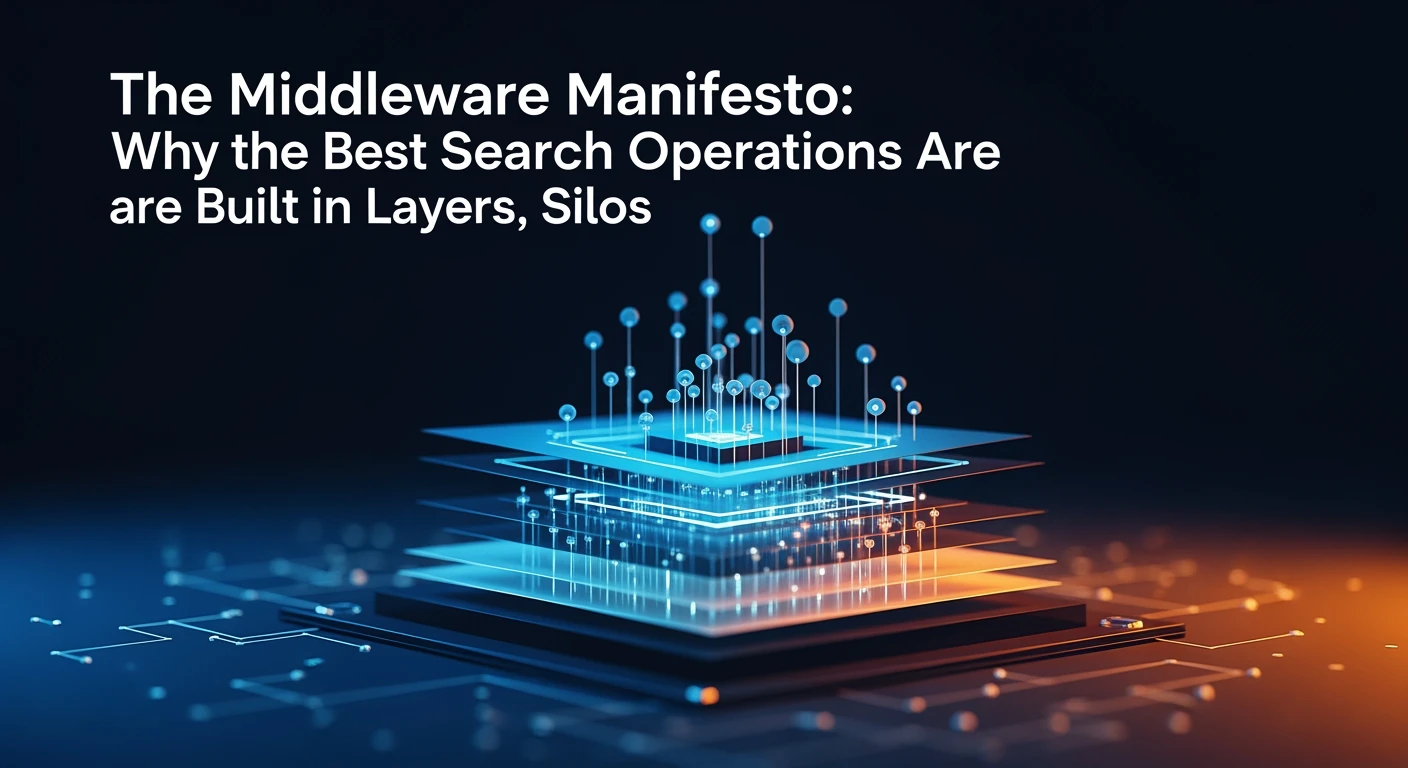
AI-generated editorial illustration — Vertex AI Imagen 4 Standard
About this image. This image was generated by Google's Vertex AI Imagen 4 model as the featured visual for The Middleware Manifesto: Why the Best Search Operations Are Built in Layers, Not Silos. Every image in the Tygart Media visual library is AI-generated, converted to WebP for optimal performance, and enriched with IPTC/XMP metadata for search engine discoverability.
Model: Vertex AI Imagen 4 Standard (imagen-4.0-generate-001)
There’s a moment every serious Claude user hits eventually.
You’re mid-session. You’ve built something — a workflow, a content pipeline, a research thread — and you’re deep in it. Then the model goes quiet. Or returns something strange. Or just stops.
You didn’t break anything. You ran out of room.
What Actually Happened (The Token Wall)
Every AI conversation has a context window — a fixed amount of memory the model can hold at once. Think of it like a whiteboard. As a session gets longer, the whiteboard fills up: your messages, the model’s responses, tool outputs, task lists, code snippets. All of it takes space.
When you get close to the limit, the model doesn’t always fail gracefully. Sometimes it just can’t fit the new request alongside all the history. It tries. It might start a response and stop. It might return something vague. It looks broken. It isn’t — it’s full.
Here’s the part most people miss: the smarter the model, the more verbose its outputs. Claude Opus 4.7 thinks deeply and writes extensively. That costs tokens. So in a nearly-full context, Opus might actually have less usable runway than you’d expect — because every output it generates is large.
The Haiku Trick (And What It Reveals)
When you’re stuck at the context limit, the instinct is to try a smarter model. That’s usually wrong.
The right move is to try a smaller one.
Haiku — Claude’s lightest, fastest model — can squeeze through a gap that Sonnet and Opus can’t fit through. It’s lean enough to do one small thing: update a task list, summarize where things stand, trigger a compaction. That small action unlocks the whole session again.
This isn’t a bug. It’s a feature, once you understand it.
The lesson: it’s not always about raw intelligence. It’s about fit. The right tool for the moment isn’t the most powerful one — it’s the one that can actually execute given the constraints you’re operating in.
The Formula One Analogy
Formula One teams spend hundreds of millions building the fastest cars on earth. But the car doesn’t win races by itself. The driver decides when to pit, which tires to run, when to push and when to conserve. Two drivers in identical cars produce different results — sometimes dramatically different.
Working with AI at a high level is the same.
Most people are handed a powerful car and told to drive. They go fast for a while, then hit a wall and don’t know why. They try pressing harder on the accelerator. That doesn’t help.
The experienced operator reads the context. They know when the session is getting long and starts pruning. They know when to swap models. They know when to compact, when to start fresh, when to hand off a task to a subagent in isolation. They understand the system — not just the tool.
That understanding only comes from hours in the seat.
What Agents Teach Us About Humans
Here’s the inversion most people miss.
We spend a lot of time asking: how do we make AI more like humans? But there’s a more interesting question: what can humans learn from how agents operate?
Agents succeed when they have clear, bounded context (not a mile-long thread of everything), a defined task (not “figure it out”), honest signals about capacity (not pushing through when overloaded), and the right model for the moment (not always the heaviest one).
Agents fail when context is polluted, tasks are ambiguous, or they try to do too much in a single pass.
Sound familiar? That’s also exactly why humans fail on complex work.
The Haiku moment is a perfect human analogy. When you’re overwhelmed and stuck, the answer usually isn’t to think harder. It’s to do the smallest possible thing that creates forward momentum. Clear one item. Make one decision. Unlock one next step.
That’s not dumbing it down. That’s operating intelligently within constraints.
The Hybrid Isn’t Human + AI
The real hybrid isn’t “a human who uses AI tools.”
It’s a human who has internalized how agents think — who naturally breaks work into discrete tasks, knows their own context limits (we call it cognitive load, but it’s the same thing), swaps in the right resource for the right job, and is honest about when they’re at capacity instead of producing garbage at 11 PM.
And it goes the other direction too. Agents get sharper when humans encode years of pattern recognition into them — through prompts, through memory systems, through skills built from real operational experience.
Your best agent workflows aren’t built from documentation. They’re built from the moment you got stuck at the token wall at midnight and figured out that Haiku could fit through the gap.
That knowledge doesn’t come from a tutorial. It comes from being in the car.
The Nuances You Only See From Inside
Here’s what I keep coming back to: the most valuable insights from working with AI at a high level are almost impossible to communicate without having lived them.
You can read about context windows. You can understand the concept intellectually. But the feel of a session getting heavy — that instinct that tells you to compact now, before you hit the wall — that only comes from experience.
Same with knowing when a task is too big for one conversation. When a subagent in isolation will outperform a single long thread. When the model’s “thinking” is just pattern-matching on noise in the context.
These are driver skills. And like any driver skill, they’re earned in the seat.
The people who get the most out of this technology aren’t necessarily the ones with the most technical knowledge. They’re the ones who’ve put in the hours. Who’ve gotten stuck, figured it out, and filed it away.
The car is available to everyone.
The driver makes the difference.
{
“@context”: “https://schema.org”,
“@type”: “Article”,
“headline”: “The Driver and the Car: What AI Agents Teach Us About Being Human”,
“description”: “Every serious Claude user hits the token wall eventually. Here’s what it teaches you — about AI, about agents, and about how humans perform under constrai”,
“datePublished”: “2026-04-03”,
“dateModified”: “2026-04-03”,
“author”: {
“@type”: “Person”,
“name”: “Will Tygart”,
“url”: “https://tygartmedia.com/about”
},
“publisher”: {
“@type”: “Organization”,
“name”: “Tygart Media”,
“url”: “https://tygartmedia.com”,
“logo”: {
“@type”: “ImageObject”,
“url”: “https://tygartmedia.com/wp-content/uploads/tygart-media-logo.png”
}
},
“mainEntityOfPage”: {
“@type”: “WebPage”,
“@id”: “https://tygartmedia.com/the-driver-and-the-car-what-ai-agents-teach-us-about-being-human/”
}
}
We just deployed 16 interactive tools and 3 bottom-of-funnel articles across 7 websites in a single session. Here’s why, and how you can do the same thing.
The Problem: 4,000 Impressions, Zero Clicks
We pulled the Google Search Console data for theuniversalcommerceprotocol.com — a site covering agentic commerce and AI-powered checkout infrastructure. The numbers told a brutal story: over 200 unique queries generating 4,000+ monthly impressions with an effective CTR of 0%. Not low. Zero.
The highest-impression queries were all definitional: “what is agentic commerce” (409 impressions, 0 clicks), “agentic commerce definition” (178 impressions, 0 clicks), “ai commerce compliance mastercard” (61 impressions at position 1.25, 0 clicks). Google was serving our content directly in AI Overviews and featured snippets. Users got what they needed without ever visiting the site.
This isn’t unique to UCP. It’s the new reality. 58.5% of US Google searches now end without a click. For AI Mode searches, it’s 93%. If your content strategy is built on informational queries, you’re building on a foundation that’s actively collapsing.
The conventional wisdom is to “optimize for AI Overviews” and “win the featured snippet.” But that’s backwards. If you win the featured snippet for “what is agentic commerce,” Google serves your content without anyone visiting your site. You’ve won the battle and lost the war.
The Insight: Two-Layer Content Architecture
The solution isn’t to fight zero-click search. It’s to use it. We call it two-layer content architecture, and it changes how you think about content strategy entirely.
Layer 1: SERP Bait. This is your definitional, informational content — “what is X,” “X vs Y,” “how does X work.” This content is designed to be consumed on the SERP without a click. Its job isn’t traffic. Its job is brand impressions at massive scale. Every time Google cites you in an AI Overview, thousands of people see your brand positioned as the authority. That’s not a failure. That’s a free brand campaign.
Layer 2: Click Magnets. This is content Google literally cannot summarize in a snippet — interactive tools, calculators, assessments, scorecards, decision frameworks. The SERP can tease them (“Calculate your agentic commerce ROI…”) but the user HAS to click through to get the value. The tool requires input. The output is personalized. There’s nothing for Google to extract.
The connection between the layers is where the magic happens. The person who sees your brand cited in an AI Overview for “what is agentic commerce” now recognizes you. When they later search “agentic commerce ROI” or “how to implement agentic commerce” — and your calculator or playbook appears — they click because they already trust you from Layer 1. Research backs this up: brands cited in AI Overviews see 35% higher CTR on their other organic listings.
You’re not fighting the zero-click reality. You’re using it as a free awareness channel that feeds the bottom of your funnel.
What We Built: 16 Tools Across 7 Sites
We didn’t just theorize about this. We built and deployed the entire system in a single session across 7 domains.
UCP (theuniversalcommerceprotocol.com) — 6 pieces
Three interactive tools targeting the exact queries generating zero-click impressions: an Agentic Commerce Readiness Assessment (32-question diagnostic across 8 dimensions), an ROI Calculator (projects revenue impact using Morgan Stanley, Gartner, and McKinsey 2026 data), and a Visa vs Mastercard Agentic Commerce Scorecard (interactive comparison across 7 compliance dimensions — this one directly targets the “ai commerce compliance mastercard/visa” queries that were getting 90 impressions at position 1 with zero clicks).
Plus three bottom-of-funnel articles that can’t be answered in a snippet: a 90-Day Implementation Playbook (week-by-week), a narrative piece about what breaks when an AI agent hits an unprepared store, and a Build/Buy/Wait decision framework with cost analysis.
One high-priority tool per site, each targeting the most-searched zero-click queries in their industry: a Water Damage Cost Estimator for restorationintel.com (calculates by IICRC class, water category, materials, and region), a Property Risk Assessment Engine for riskcoveragehub.com (scores across 5 risk dimensions with coverage recommendations), a Business Impact Analysis Generator for continuityhub.org (ISO 22301-aligned BIA with exportable summary), a Healthcare Compliance Audit Tool for healthcarefacilityhub.org (18-question audit mapped to CMS CoP and TJC standards), and a Carbon Footprint Calculator for bcesg.org (Scope 1/2/3 with EPA emission factors and reduction scenarios).
Why Interactive Tools Beat Articles in Zero-Click
There are five technical reasons interactive tools are the correct response to zero-click search, and they compound.
They’re non-serializable. A calculator’s output depends on user input. Google can’t pre-compute every possible result for a water damage cost estimator across every combination of square footage, damage class, water category, materials, and region. The AI Overview can say “use this calculator” but it can’t BE the calculator. The citation becomes a call to action.
They generate engagement signals at scale. Interactive tools produce time-on-page, scroll depth, and interaction events that traditional articles can’t match. A user spending 4 minutes inputting data and exploring results sends stronger quality signals than a user who reads a paragraph and bounces.
They’re bookmarkable. A restoration company owner who uses the cost estimator once will bookmark it and return. Insurance adjusters will save the risk assessment tool. This creates direct traffic over time — the kind Google can’t intercept with zero-click.
They’re natural link magnets. Industry publications, Reddit threads, and professional communities link to useful tools far more readily than articles. A “Healthcare Compliance Audit Tool” gets shared in facility manager Slack channels. A “What Is Healthcare Compliance” article doesn’t.
They’re AI Overview proof. Even when Google cites the page in an AI Overview, users still need to visit to use the tool. The AI Overview effectively becomes free advertising: “Use this calculator at [your site] to estimate your costs.” Every zero-click impression becomes a branded CTA.
The Methodology: Replicable for Any Site
You can run this exact playbook on any site in about 4 hours. Here’s the step-by-step:
Step 1: Pull your GSC data. Export the Queries and Pages reports. Sort by impressions descending. Identify every query with significant impressions and near-zero CTR. These are your zero-click queries — the ones Google is answering without sending you traffic.
Step 2: Categorize the queries. Split them into two buckets. Definitional queries (“what is X,” “X definition,” “X vs Y”) are Layer 1 — leave them alone, they’re generating brand impressions. Action-intent queries (“X cost estimate,” “X compliance checklist,” “how to implement X”) are Layer 2 opportunities.
Step 3: For each Layer 2 opportunity, ask one question. “What would someone who already knows the answer still need to click for?” The answer is usually a tool, calculator, assessment, or framework that requires their specific input to produce useful output.
Step 4: Build the tool. Single-file HTML with inline CSS/JS. No external dependencies. Dark theme, mobile responsive, professional design. The tool should take 2-5 minutes to complete and produce a result worth sharing or saving. Include a “copy results” or “download report” function.
Step 5: Embed in WordPress. Write a 2-3 paragraph intro explaining why the tool matters (this is what Google will see and potentially cite). Then embed the full HTML. The intro becomes your Layer 1 snippet bait, and the tool becomes your Layer 2 click magnet — on the same page.
Step 6: Cross-link. Add CTAs from your existing Layer 1 content to the new tools. If you have an article ranking for “what is agentic commerce” that’s getting zero clicks, add a CTA in that article: “Take the Readiness Assessment to see if your business is prepared.” You’re converting brand impressions into tool engagement.
Step 7: Monitor. Track CTR changes over 30/60/90 days. Track direct traffic increases (brand searches driven by AI Overview citations). Track tool engagement: completion rates, time on page. Track backlink acquisition from industry sites linking to your tools.
What We’re Measuring
This isn’t a “publish and pray” strategy. We’re tracking specific metrics across all 7 sites to validate or invalidate the approach within 90 days.
First, CTR change on previously zero-click queries. If the Visa vs Mastercard Scorecard starts pulling even 2-3% CTR on queries that were at 0%, that’s a meaningful signal. Second, direct traffic increases — are more people searching for our brand names directly after seeing us cited in AI Overviews? Third, tool engagement metrics: how many people complete the assessments, what’s the average time on page, how many copy their results? Fourth, organic backlinks — do industry sites start linking to our tools? Fifth, whether the tools themselves rank for their own queries, creating an entirely new traffic channel.
The Bigger Picture
The era of “write an article, rank, get traffic” is over for informational queries. Google’s AI Overviews and featured snippets have made it so that the better your content is at answering a question, the less likely anyone is to visit your site. That’s a structural inversion of the old SEO model, and no amount of keyword optimization will fix it.
But the era of “build something useful, earn trust, capture intent” is just beginning. Tools, calculators, assessments, and interactive experiences represent a category of content that AI cannot fully consume on behalf of the user. They require participation. They produce personalized output. They create the kind of engagement that turns a search impression into a relationship.
We deployed 16 of these tools across 7 sites today. In 90 days, we’ll know exactly how much zero-click traffic they converted. But based on the early research — 35% higher CTR for AI-cited brands, 42.9% CTR for featured snippet content that teases without fully answering — the bet is that unsnippetable content is the highest-leverage move in SEO right now.
The tools are already live. The impressions are already flowing. Now we find out if the clicks follow.
{
“@context”: “https://schema.org”,
“@type”: “Article”,
“headline”: “The Unsnippetable Strategy: How We Beat Zero-Click Search by Building Things Google Cant Summarize”,
“description”: “We deployed 16 interactive tools across 7 websites to convert zero-click search impressions into actual traffic. Here’s the two-layer content architecture”,
“datePublished”: “2026-04-01”,
“dateModified”: “2026-04-03”,
“author”: {
“@type”: “Person”,
“name”: “Will Tygart”,
“url”: “https://tygartmedia.com/about”
},
“publisher”: {
“@type”: “Organization”,
“name”: “Tygart Media”,
“url”: “https://tygartmedia.com”,
“logo”: {
“@type”: “ImageObject”,
“url”: “https://tygartmedia.com/wp-content/uploads/tygart-media-logo.png”
}
},
“mainEntityOfPage”: {
“@type”: “WebPage”,
“@id”: “https://tygartmedia.com/unsnippetable-strategy-beat-zero-click-search/”
}
}
Visual summary
AI-generated editorial illustration — Vertex AI Imagen 4 Standard
About this image. This image was generated by Google’s Vertex AI Imagen 4 model as the featured visual for The Unsnippetable Strategy: How We Beat Zero-Click Search by Building Things Google Can’t Summarize. Every image in the Tygart Media visual library is AI-generated, converted to WebP for optimal performance, and enriched with IPTC/XMP metadata for search engine discoverability.
Model: Vertex AI Imagen 4 Standard (imagen-4.0-generate-001)
Filed by Will Tygart • Tacoma, WA • Industry Bulletin
AI systems select sources based on information density — the ratio of unique, verifiable claims to filler text. Most content fails this test. We found that 16 AI models unanimously agree on what makes content worth citing, and it comes down to density.
This tool analyzes your text in real-time and produces 8 metrics including unique concepts per 100 words, claim density, filler ratio, and actionable insight score. It also generates a paragraph-by-paragraph heatmap showing exactly where your content is dense and where it’s fluff.
Paste your article text below and see how your content measures up against AI-citable benchmarks.
Information Density Analyzer: Is Your Content Dense Enough for AI?
const fillerPhrases = [
‘it’s important to note’, ‘in today’s world’, ‘it goes without saying’,
‘as we all know’, ‘needless to say’, ‘at the end of the day’,
‘in conclusion’, ‘in fact’, ‘to be honest’, ‘basically’, ‘essentially’,
‘practically’, ‘quite frankly’, ‘let me be clear’, ‘obviously’,
‘clearly’, ‘simply put’, ‘as a matter of fact’
];
function analyzeContent() {
const content = document.getElementById(‘contentInput’).value.trim();
if (!content) {
alert(‘Please paste your article text first.’);
return;
}
// Insights
let likelihood;
if (analysis.densityScore >= 75) {
likelihood = ‘This content is highly likely to be selected as an AI source. You have excellent unique concept density, strong claim coverage, and minimal filler.’;
} else if (analysis.densityScore >= 60) {
likelihood = ‘This content has good density and will likely be cited by AI systems. Consider reducing filler phrases and increasing actionable insights.’;
} else if (analysis.densityScore >= 40) {
likelihood = ‘Your content is moderately dense. AI may cite specific sections, but overall improvement would help. Focus on claims, actions, and uniqueness.’;
} else {
likelihood = ‘This content lacks the density AI systems prefer. Too many filler phrases, weak claim coverage, and low concept variety reduce citation likelihood.’;
}
document.getElementById(‘aiLikelihood’).textContent = likelihood;
let benchmark;
if (analysis.fillerRatio > 20) {
benchmark = ‘Your filler ratio is above benchmark. AI-citable content typically has <15% filler phrases.';
} else if (analysis.claimDensity 8) {
benchmark = ‘Excellent unique concept density. This makes your content more likely to be selected as a source.’;
} else {
benchmark = ‘Your metrics align well with top-cited content benchmarks across most dimensions.’;
}
document.getElementById(‘benchmark’).textContent = benchmark;
AI-generated editorial illustration — Vertex AI Imagen 4 Standard
About this image. This image was generated by Google’s Vertex AI Imagen 4 model as the featured visual for Information Density Analyzer: Is Your Content Dense Enough for AI?. Every image in the Tygart Media visual library is AI-generated, converted to WebP for optimal performance, and enriched with IPTC/XMP metadata for search engine discoverability.
Model: Vertex AI Imagen 4 Standard (imagen-4.0-generate-001)