By Will Tygart · Practitioner-grade · From the workbench
What Is a Competitor Pivot Cluster?
A Competitor Pivot Cluster uses a competitor’s high-ranking page as a strategic brief — analyzing what it ranks for, where its content is thin, what questions it doesn’t answer, and what audience segments it ignores — then building a 5-article cluster for your site that targets all of it. The competitor did the keyword research. You do the better content.
The highest-confidence content strategy isn’t guessing what people search for — it’s looking at what already ranks and identifying where the gap is. A competitor page ranking #3 for a valuable keyword is proof the audience exists. Your job is to outflank it on depth, entity coverage, and answer completeness.
We built a skill for this. It pulls the competitor URL, runs it through content analysis, identifies the keyword clusters it’s capturing, maps the questions it’s not answering, and produces a 5-article cluster that covers the territory more completely. Every article in the cluster targets a specific gap or audience segment the competitor missed.
Who This Is For
WordPress site operators who’ve identified a competitor page ranking for keywords they want to capture — and want a structured, research-backed content strategy built around it rather than a single article that tries to do everything.
What makes this different from just writing 5 articles on the same topic?
The gap analysis structures the cluster around specific weaknesses in the competitor’s content — unanswered questions, missing audience segments, thin entity coverage. Each article has a reason to exist that’s grounded in what the competitor doesn’t cover, not just what we feel like writing about.
Can you pivot off multiple competitor URLs?
Yes — we can run the analysis against 2–3 competitor URLs and build a unified cluster that targets the combined gap landscape. This works well when there are 2–3 dominant players in a niche, each strong on different subtopics.
Does the cluster target the same keyword as the competitor?
The primary pivot article targets the same or closely related keyword. The 4 supporting articles target long-tail variations and related queries the competitor either ranks weakly for or misses entirely.
By Will Tygart · Practitioner-grade · From the workbench
What Is a Schema Injection Sprint?
A schema injection sprint is a concentrated pass across 20 WordPress posts — identifying the right JSON-LD structured data types for each post, generating valid schema markup, injecting it via WordPress REST API, and validating every post with Google’s Rich Results Test. In one sprint, 20 posts become eligible for rich result placements they weren’t eligible for before.
Schema markup is one of the highest-leverage, most consistently skipped SEO tasks on WordPress sites. It’s not that operators don’t know it matters — it’s that doing it right on 20 posts manually takes hours, and most schema plugins produce bloated or invalid output that fails the Rich Results Test anyway.
We inject schema programmatically. Every post gets the right schema type for its content — not a one-size-fits-all Article block — and every result is validated before we move on.
Who This Is For
WordPress sites with existing published content that aren’t appearing in rich result placements (FAQ accordions, HowTo steps, review stars) despite having the content to qualify. If your posts have FAQ sections but no FAQPage schema, you’re invisible to the placement Google is actively filling.
Schema Types We Inject
FAQPage — For any post with a Q&A section. Produces FAQ accordion in Google results.
Article — Standard news/blog schema with author, publisher, datePublished, dateModified.
HowTo — For step-by-step content. Produces visual step display in rich results.
Service — For service landing pages. Signals service type, provider, and area served.
LocalBusiness — For location-specific content. Reinforces NAP data and service area.
BreadcrumbList — Site navigation schema. Applied to all posts in the sprint.
Speakable — Marks key paragraphs for voice search and AI synthesis.
What We Deliver
Item
Included
Schema type selection for all 20 posts
✅
JSON-LD generation (valid, not plugin-bloated)
✅
REST API injection to all 20 posts
✅
Google Rich Results Test validation on every post
✅
Validation report with pass/fail per post
✅
Fix pass for any validation failures
✅
Ready to Make Your Content Rich-Result Eligible?
Share your site URL and we’ll identify your 20 best candidates for schema injection based on content type and current ranking proximity.
Will this conflict with my existing SEO plugin (Yoast, RankMath)?
We inject schema as a separate JSON-LD block in the post content — it doesn’t touch plugin settings or plugin-generated schema. In most cases, the two coexist cleanly. If there’s duplication, we identify and resolve it during the validation pass.
How quickly will rich results appear after injection?
Google typically processes schema changes within 2–4 weeks for established sites. Rich result eligibility appears in Google Search Console after the next crawl cycle.
Can you do more than 20 posts?
Yes. We can run additional sprints of 20 posts or scope a full-site schema pass. Contact us with your post count and we’ll quote accordingly.
By Will Tygart · Practitioner-grade · From the workbench
What Is a WordPress Taxonomy Rebuild?
A WordPress taxonomy rebuild is a structured cleanup of your site’s category and tag architecture — eliminating redundant categories, normalizing tag usage, fixing broken slugs, injecting SEO meta descriptions into taxonomy pages, and creating a logical content hierarchy that both users and search engines can navigate. It’s the foundation everything else in a WordPress SEO operation depends on.
Most WordPress sites that have been publishing for more than a year have the same problem: category bloat. Posts assigned to three overlapping categories. Tags that are slightly different versions of each other (“Water Damage” and “water-damage-restoration” and “WaterDamage”). Taxonomy pages with no descriptions, no schema, and slugs that look like they were typed by different people on different days.
We’ve fixed this on 18+ sites. The pattern is always the same, and the fix is always the same: audit, design, rebuild, inject, verify.
Who This Is For
WordPress site owners with 50+ published posts whose category and tag structure has grown organically (read: randomly) and is now a liability for SEO, user navigation, and content discoverability. Common trigger: you’re trying to do internal linking work and discover your categories are a mess.
What the Rebuild Covers
Taxonomy audit — Full inventory of all categories, tags, post counts, and current slugs. Identification of duplicates, orphans, and bloat.
Architecture design — Clean category hierarchy built around your content verticals and search intent clusters. Typically 8–15 primary categories, 3–5 subcategories each where appropriate.
Tag normalization — Redundant tags merged, casing standardized, slug format normalized. Target: tags that mean something to a user, not internal filing codes.
Slug cleanup — All category and tag slugs rewritten to keyword-rich, stop-word-free format and redirects set.
SEO description injection — Two-layer descriptions written for every primary category: 140–160 char meta hook + 400–600w editorial body that search engines can index.
Post reassignment — All existing posts reassigned to the new architecture via WordPress REST API. No manual clicking.
What We Deliver
Item
Included
Full taxonomy audit report
✅
New architecture design (categories + tags)
✅
REST API execution (slug changes, reassignment, descriptions)
✅
Redirect configuration for old slugs
✅
SEO descriptions for all primary categories
✅
Post-rebuild verification report
✅
Is Your Taxonomy Working Against You?
Share your site URL and we’ll pull a quick category/tag inventory. If it’s a mess, we’ll tell you exactly what the rebuild involves.
Slug changes trigger 301 redirects from old URLs to new ones. Existing backlinks and bookmarks continue to work. We configure and verify redirects as part of the rebuild.
How long does a taxonomy rebuild take?
Audit and design: 2–3 business days. Execution (REST API reassignment and description injection): 1–2 business days. Verification: 1 day. Total: 5–7 business days for most sites.
Do you touch post content during the taxonomy rebuild?
No. The rebuild operates only on taxonomy objects and post-to-taxonomy relationships. Post titles, content, and metadata are not modified during this process.
CH 03· Answer Engine Intelligence
· Filed by Will Tygart
What Is an AEO/GEO Sprint?
An AEO (Answer Engine Optimization) and GEO (Generative Engine Optimization) Sprint is a structured retrofit of your existing WordPress content — restructuring posts so search engines surface them as direct answers, and AI systems cite them in generated responses. Not new content. Not a redesign. Your existing posts, optimized to win in a search landscape that now includes ChatGPT, Perplexity, and Google AI Overviews.
Google’s search results page looks different than it did 18 months ago. AI Overviews now appear above the organic results. Perplexity cites specific pages instead of ranking a list. ChatGPT recommends sites it’s been trained to recognize as authoritative.
If your existing content wasn’t built to answer questions directly, it won’t show up in any of those placements — regardless of how well it ranks for traditional SEO.
We’ve applied this exact retrofit to over 500 posts across restoration, lending, flooring, SaaS, healthcare, and entertainment verticals. We know what changes produce featured snippet captures, what entity patterns make AI systems cite a page, and which schema structures Google’s rich results tool actually validates.
Who This Is For
Who the WordPress AEO/GEO sprint is for.
WordPress site owners and operators with existing published content — at least 20 posts — who aren’t appearing in AI-generated answers or featured snippet placements. If you’ve been publishing consistently but not converting that content into search placements that existed 18 months ago, this sprint directly addresses that gap.
What the Sprint Covers (Per Post)
What the sprint covers per post.
Definition box insertion — 40–60 word direct answer block at the top of the post, formatted for featured snippet capture
Question-led H2 restructure — Key headings rewritten as questions with direct answers in the first 50 words following each heading
FAQPage section — 5–8 Q&As written for People Also Ask placement, with FAQPage JSON-LD schema
Speakable schema blocks — Key paragraphs marked with speakable schema for voice search and AI synthesis
Entity saturation pass — Named entities (organizations, certifications, standards bodies, locations) identified and injected throughout
External citation injection — 3–5 authoritative source references added per post
Article + BreadcrumbList schema — Complete JSON-LD block appended to each post
LLMS.TXT comment block — AI-readable seed paragraph added as HTML comment for LLM citation signals
Sprint Packages
Sprint packages.
Package
Posts Covered
Turnaround
Starter Sprint
10 posts
5 business days
Standard Sprint
25 posts
10 business days
Full Site Sprint
50 posts
15 business days
Posts are selected collaboratively — we prioritize by traffic volume, keyword proximity to featured snippet triggers, and entity coverage gaps.
What You Get vs. DIY vs. Generic SEO Agency
Tygart Media Sprint
DIY
Generic SEO Agency
FAQPage JSON-LD schema on every post
✅
Maybe
Sometimes
AI citation signals (LLMS.TXT, speakable)
✅
❌
❌
Entity saturation for niche-specific bodies
✅
❌
Rarely
Direct publish to WordPress via REST API
✅
N/A
You review drafts
Validated with Google Rich Results Test
✅
Maybe
Sometimes
Proven in AI-heavy verticals
✅
❌
❌
Ready to Get Your Existing Content Into AI-Generated Answers?
Send your site URL and a rough post count. We’ll identify your best 10 candidates for AEO/GEO retrofit and quote the sprint that makes sense.
Will this change my existing post content significantly?
We add structured elements (definition boxes, FAQ sections, schema) and restructure key headings — we don’t rewrite the body of your posts. Your voice and factual content remain intact. All changes are reviewed before publish if requested.
How quickly will I see results in featured snippets or AI answers?
Google typically re-crawls optimized pages within 2–6 weeks for established sites. Featured snippet captures often appear within the first crawl cycle post-optimization. AI citation signals (Perplexity, ChatGPT) are slower — typically 1–3 months for recognition.
Which verticals have you run this in?
Property damage restoration, luxury asset lending, commercial flooring, B2B SaaS, healthcare services, comedy and entertainment streaming, and event technology. The entity patterns differ by vertical — we adapt the sprint to the specific certification bodies, standards organizations, and named entities that matter in your niche.
Do I need to give you WordPress admin access?
We use WordPress Application Passwords — a scoped credential that doesn’t expose your admin password. You create it, share it, and revoke it after the sprint. We publish directly via WordPress REST API.
What if my site uses Elementor or another page builder on posts?
We specifically target WordPress posts (not pages) via the REST API content field — Elementor and page builder data on pages is never touched. This is a hard operational rule we enforce on every sprint.
Can I pick which posts get the sprint treatment?
Yes. We provide a prioritized recommendation list, but you make the final call on which posts are included.
By Will Tygart· Practitioner-grade
· From the workbench
Intent-Matched Reach: The quality of an audience that actively searched for your topic before encountering your content — as opposed to an audience that was algorithmically shown your content without expressed interest.
The vanity metric conversation has been had a thousand times in marketing circles, and it always lands on the same target: social media. Likes, followers, reach, impressions — the argument goes that these numbers feel good but mean nothing without downstream action.
That argument is correct. But it is only half the story.
The other half is that not all impressions are created equal. An impression on a social feed and an impression from a search engine are fundamentally different events. One is a person being shown something. The other is a person asking for something. That difference is the entire ballgame.
The Anatomy of a Social Impression
The anatomy of a social impression.
When a social platform counts an impression, it means a piece of content appeared in someone’s feed. The person may have been scrolling at speed. They may have glanced at it for less than a second. They may have been looking at their phone while watching television. The platform has no way to know, and it does not particularly care — the impression count goes up either way.
This is push distribution. The platform’s algorithm decides that your content is worth showing to a given user at a given moment, usually because it resembles content they have engaged with before. The user did not ask for your content. They did not express any intent. They were simply in the path of the content as it moved through the feed.
Push distribution can build awareness. It can create the repeated exposure that eventually produces recognition. But it is fundamentally passive on the part of the viewer, and passive attention is the weakest form of attention there is.
The Anatomy of a Search Impression
The anatomy of a search impression.
A search impression is a different creature entirely. When Google Search Console registers an impression, it means a human — or an AI agent acting on behalf of a human — typed a query into a search interface and your content appeared in the results.
That query represents intent. The person wanted something — information, a product, a service, an answer, a comparison. They articulated that want in the form of a search. Your content appeared because a machine evaluated it as a relevant response to that articulated need.
This is pull distribution. The user came to the interface with a purpose. They expressed that purpose explicitly. Your content was surfaced as a potential answer. That is a fundamentally different quality of attention than a social feed scroll.
The user who sees your content in a search result was already moving toward your topic before they ever saw you. The social feed user may have had no interest in your topic whatsoever until the algorithm intervened — and may still have none after the impression registered.
Why Intent-Matched Reach Compounds Differently
Why intent-matched reach compounds differently.
The practical difference shows up in what happens after the impression.
A social impression that converts to a click often produces a single-session visit. The user saw something, clicked, consumed it, and returned to the feed. The relationship with the content ends there unless the platform shows them more of your content in the future — which depends on the algorithm, not on the quality of what you wrote.
A search impression that converts to a click often produces a different behavior. The user was in research mode. They clicked your result. They read your content. And then — if your content was genuinely useful — they may search for related topics, some of which you also rank for. They may bookmark your site. They may return directly. The relationship with the content does not end with the session because the need that drove the search often extends across multiple sessions.
This is why well-structured content sites see compounding organic traffic over time. Each article that earns a ranking position is a new entry point into the content database. Each entry point captures intent-matched users who are already looking for what you wrote about. The impressions accumulate not because the algorithm is feeling generous, but because the content earned a permanent position in the results.
The AI Layer Changes the Equation Further
Search impressions just got more valuable, not less.
When AI search tools — Google’s AI Overviews, Perplexity, and others — synthesize answers from web content, they are pulling from the same pool as organic search. They query the content database. They find the best-structured, most authoritative sources. They cite them in the generated answer.
A citation in an AI-generated answer may not register as a traditional click. But it is reach to an intent-matched audience that is even further down the path of engagement than a traditional search user. They asked a question specific enough that an AI synthesized an answer, and your content was authoritative enough to be part of that synthesis.
This is the next evolution of the SEO impression. It is not just “someone searched and your result appeared.” It is “someone asked a question and your writing was the answer.”
No social impression comes close to that.
The Vanity Metric Reframe
SEO impressions are also a vanity metric if you treat them that way.
An impression in GSC that never converts to a click because your title and meta description are weak is wasted potential. A ranking position for a keyword with no real search intent behind it is a trophy that serves no one. The metric is only as good as the strategy behind it.
But the foundational difference remains: you are building on pull, not push. The person chose to look. You earned the position. The impression carries meaning because it reflects expressed intent, not algorithmic distribution.
What This Means for How You Write
If you accept that SEO impressions represent intent-matched reach, then writing for search is not the sanitized, keyword-stuffed exercise it has been caricatured as. It is the discipline of answering specific human questions at the highest possible level of quality, then structuring those answers so that machines can identify them as the best available response.
Every article you write is an attempt to earn a permanent position in the answer set for a specific query. Every impression from that position is a signal that the answer earned its place. Every click is a person who was already looking for what you know.
That is not a vanity metric. That is the only metric that starts with a human already in motion toward your topic.
The goal is not more impressions. The goal is impressions from the right query, delivered at the moment of intent. Everything else is noise moving through a feed.
What is the difference between a search impression and a social media impression?
A search impression occurs when your content appears in results after a user typed a specific query — expressing active intent. A social media impression occurs when a platform’s algorithm shows your content to a user who may have expressed no interest in your topic. Search impressions are pull; social impressions are push.
Why are search impressions more valuable than social impressions?
Search impressions are generated by expressed user intent — the person was already looking for something related to your content before they saw it. Social impressions are algorithm-driven and may reach users with no interest in your topic. Intent-matched reach converts and compounds differently than passive feed exposure.
What is Google Search Console and what does it track?
Google Search Console is a free tool from Google that shows how your site performs in Google Search. It tracks impressions, clicks, click-through rate, and average ranking position for specific queries — the primary tool for measuring organic search performance.
How do AI search tools affect SEO impressions?
AI search tools like Google AI Overviews and Perplexity synthesize answers from web content and cite sources. Well-structured, authoritative content that ranks well in traditional search is also more likely to be cited in AI-generated answers, extending the value of strong organic positions.
Are SEO impressions ever a vanity metric?
Yes — if they come from irrelevant queries, if content ranks for keywords with no real intent, or if weak meta descriptions prevent clicks from converting, impressions are wasted. The value of an SEO impression depends on whether it reflects genuine intent alignment between the query and the content.
What does intent-matched reach mean in content marketing?
Intent-matched reach means your content is being seen by people who were already actively looking for the topic you wrote about. Search engines surface content in response to explicit queries, making organic search the primary channel for reaching audiences with demonstrated interest rather than assumed interest.
By Will Tygart• Long-form Position
• Practitioner-grade
Everything people actually ask about Claude Managed Agents, answered straight. No preamble about “the exciting world of AI agents.” If you’re here, you already know why this matters — you just need answers.
This page covers pricing, setup, capabilities, limits, comparisons, and the specific questions that don’t have obvious homes in Anthropic’s documentation. It updates as the beta evolves.
Context
Claude Managed Agents launched April 8, 2026 as a public beta and remains in public beta as of October 2026. All answers reflect current documentation as of October 2026. Beta details change — verify specifics at platform.claude.com/docs.
Pricing Questions
Pricing questions — stale-proof framing.
What does Claude Managed Agents cost?
Two charges: standard Claude API token rates (same as calling the Messages API directly) plus $0.08 per session-hour of active runtime. That’s the complete formula. See the complete pricing reference for worked examples by workload type.
What exactly is a “session-hour” and when does it start billing?
A session-hour is one hour of active session runtime — time when your session’s status is running. Billing is metered to the millisecond. It does not accrue during idle time, time waiting for your input, time waiting for tool confirmations, or after session termination.
What’s included in the $0.08/session-hour charge?
The session runtime charge covers Anthropic’s managed infrastructure: sandboxed code execution containers, state management, checkpointing, tool orchestration, error recovery, and scaling. You are not separately billed for container hours on top of session runtime.
Does the $0.08/hr apply even if my agent is just waiting?
No. Time spent waiting for your message, waiting for tool confirmations, or sitting idle does not accumulate runtime charges. Only active execution time counts.
What does web search cost inside a Managed Agents session?
$10 per 1,000 searches ($0.01 per search), billed separately from session runtime and token costs. This is the same rate as web search through the standard API.
Are there volume discounts?
Yes, negotiated case-by-case for high-volume users. Contact [email protected] or through the Claude Console.
How does Managed Agents pricing compare to running my own agent infrastructure?
The $0.08/session-hour is almost always cheaper than equivalent provisioned compute — but you trade infrastructure control and data locality for that simplicity. For a full comparison: Build vs. Buy: The Real Infrastructure Cost.
What’s the real monthly cost if I run an agent 24/7?
Maximum theoretical session runtime: 24 hrs × $0.08 × 30 days = $57.60/month. In practice, no production agent has zero idle time. Token costs become the dominant cost driver long before you hit the runtime ceiling. Detailed breakdown: The Real Monthly Cost of Running Claude Managed Agents 24/7.
Setup and Access Questions
Setup and access questions.
How do I get access to Claude Managed Agents?
Available to all Anthropic API accounts in public beta — no separate signup. You need the managed-agents-2026-04-01 beta header in your API requests. The Claude SDK adds this header automatically.
Does it work with my existing API key?
Yes. Same API key you’re already using for the Messages API. Same authentication. The beta header is the only new requirement.
What three ways can I access Managed Agents?
Via the Claude SDK (recommended — handles the beta header automatically), via direct API calls with the beta header, or via the Claude Console’s new Managed Agents section for no-code agent configuration and session tracing.
Can I use Managed Agents through AWS Bedrock or Google Vertex AI?
Managed Agents runs on Anthropic-managed infrastructure. This is distinct from Bedrock and Vertex AI deployments. Check Anthropic’s current documentation for multi-cloud availability status — this is an area of active development.
Capability Questions
What can Claude Managed Agents actually do?
Run long autonomous sessions with persistent state, execute code in sandboxed Linux containers, use tools including web search and MCP servers, coordinate multiple Claude instances via Agent Teams, and maintain checkpoints for crash recovery. The session can last minutes or hours without you staying in the loop.
What’s the difference between Agent Teams and subagents?
Agent Teams coordinate multiple Claude instances with independent contexts, direct agent-to-agent communication, and a shared task list — suited for complex parallel tasks. Subagents operate within the same session as the main agent and only report results upward — more economical for sequential targeted tasks but less capable of true parallelism.
Does it support MCP servers?
Yes. MCP servers can be integrated as tool sources in Managed Agents sessions, extending what the agent can access and act on.
How long can a session run?
Anthropic’s documentation currently references session durations of minutes to hours. Claude Code’s longest autonomous sessions have reached 45 minutes. Managed Agents is architected for longer-running work. Check current documentation for specific session duration limits as the beta matures.
What happened to Claude Code — is it the same as Managed Agents?
No. Claude Code is a separate local coding workflow product. Anthropic’s docs explicitly note partners should not conflate the two. Managed Agents is a hosted API runtime service. Claude Code is a developer tool. Different products, different use cases, different billing.
Rate Limit Questions
Rate limit questions.
What are the rate limits for Managed Agents?
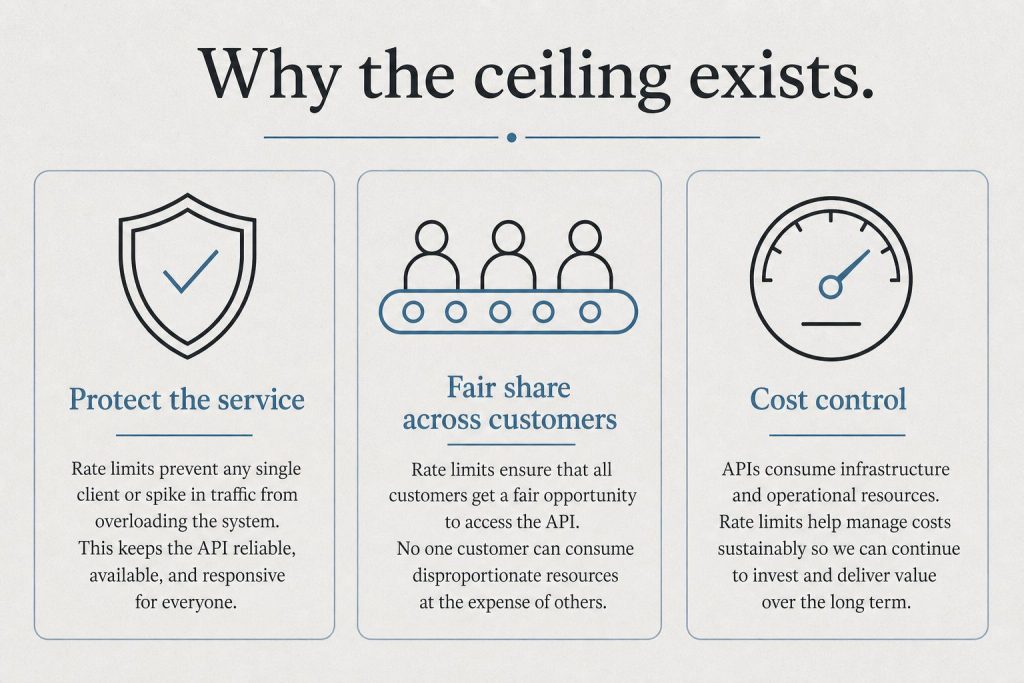
60 requests per minute for create endpoints; 600 requests per minute for read endpoints. Organization-level API limits still apply on top of these. For higher limits, contact Anthropic enterprise sales. Detailed breakdown: Claude Managed Agents Rate Limits Explained.
Do standard Claude API rate limits still apply inside a session?
Organization-level limits apply. The session runtime and create/read endpoint limits are Managed Agents-specific. If you’re running many parallel Agent Teams, model token throughput limits will become relevant.
Comparison Questions
How does Managed Agents compare to OpenAI’s Agents API?
Both offer hosted agent infrastructure. Key differences: Managed Agents is Claude-native (no multi-model flexibility), sessions bill on runtime + tokens vs. OpenAI’s different pricing model, and lock-in dynamics differ. Full comparison: Claude Managed Agents vs. OpenAI Agents API.
Should I use Managed Agents or the Claude Agent SDK?
Use Managed Agents when you want Anthropic to host the runtime — less infrastructure work, faster to production. Use the SDK when you need tighter loop control, on-premise execution, or multi-cloud flexibility. Anthropic’s own migration docs draw this line clearly: SDK runs in your environment; Managed Agents runs in theirs.
What companies are already using Managed Agents in production?
Notion, Asana, Rakuten, Sentry, and Vibecode were launch partners. Rakuten deployed five enterprise agents within a week. Allianz is using Claude for insurance agent workflows. Anthropic’s run-rate from the agent developer segment exceeds $2.5 billion. How Rakuten did it in a week →
Data and Security Questions
Where does my data go when running in Managed Agents?
Execution runs on Anthropic’s infrastructure. This is the explicit trade-off: you get managed infrastructure; they manage the compute. For companies with strict data sovereignty requirements, this is the key constraint to evaluate. On-premise or native multi-cloud deployment is not currently available.
What are the sandboxing guarantees?
Anthropic uses disposable Linux containers — “decoupled hands” in their terminology. Each container is a fresh sandboxed environment for code execution. State persistence is managed separately from the execution environment.
Strategic Questions
Is this a bet worth making?
That depends on your switching cost tolerance. Lock-in is real: once your agents run on Anthropic’s infrastructure with their tools, session format, and sandboxing, switching providers isn’t trivial. The counter-argument: the infrastructure you’d otherwise build to match this is months of engineering. One developer’s reaction at launch was blunt: “there goes a whole YC batch.” That captures both the opportunity and the risk. Our take on why we’re staying our course →
What does this mean for AI citation and visibility?
Agents running on Anthropic’s infrastructure make decisions about what content to surface, cite, and synthesize. As agent workloads grow, being present in the knowledge sources agents draw from becomes a search strategy question in itself. What AI citation monitoring looks like →
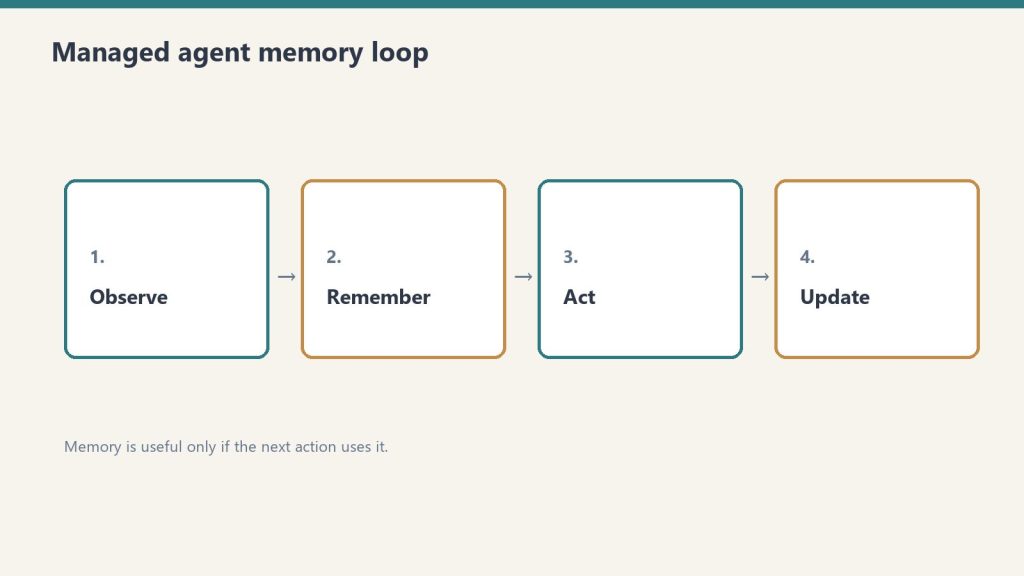
The claude_delta standard is a lightweight JSON metadata block injected at the top of every page in a Notion workspace. It gives an AI agent — specifically Claude — a machine-readable summary of that page’s current state, status, key data, and the first action to take when resuming work. Instead of fetching and reading a full page to understand what it contains, Claude reads the delta and often knows everything it needs in under 100 tokens.
Think of it as a git commit message for your knowledge base — a structured, always-current summary that lives at the top of every page and tells any AI agent exactly where things stand.
Why We Built It: The Context Engineering Problem
Why we built it — the context engineering problem.
Running an AI-native content operation across 27+ WordPress sites means Claude needs to orient quickly at the start of every session. Without any memory scaffolding, the opening minutes of every session are spent on reconnaissance: fetch the project page, fetch the sub-pages, fetch the task log, cross-reference against other sites. Each Notion fetch adds 2–5 seconds and consumes a meaningful slice of the context window — the working memory that Claude has available for actual work.
This is the core problem that context engineering exists to solve. The bottleneck in 2026 isn’t the model — it’s the quality of what you feed it.
We were hitting this ceiling. Important project state was buried in long session logs. Status questions required 4–6 sequential fetches. Automated agents — the toggle scanner, the triage agent, the weekly synthesizer — were spending most of their token budget just finding their footing before doing any real work.
The claude_delta standard was the solution we built to fix this from the ground up.
How It Works
How it works.
Every Notion page in the workspace gets a JSON block injected at the very top — before any human content. The format looks like this:
The standard pairs with a master registry — the Claude Context Index — a single Notion page that aggregates delta summaries from every page in the workspace. When Claude starts a session, fetching the Context Index (one API call) gives it orientation across the entire operation. Individual page fetches only happen when Claude needs to act on something, not just understand it.
What We Did: The Rollout
We executed the full rollout across the Notion workspace in a single extended session on April 8, 2026. The scope:
70+ pages processed in one session, starting from a base of 79 and reaching 167 out of approximately 300 total workspace pages
All 22 website Focus Rooms received deltas with site-specific status and resume instructions
All 7 entity Focus Rooms received deltas linking to relevant strategy and blocker context
Session logs, build logs, desk logs, and content batch pages all injected with structured state
The Context Index updated three times during the session to reflect the running total
The injection process for each page follows a read-then-write pattern: fetch the page content, synthesize a delta from what’s actually there (not from memory), inject at the top via Notion’s update_content API, and move on. Pages with active state get full deltas. Completed or evergreen pages get lightweight markers. Archived operational logs (stale work detector runs, etc.) get skipped entirely.
The Validation Test
After the rollout, we ran a structured A/B test to measure the real impact. Five questions that mimic real session-opening patterns — the kinds of things you’d actually say at the start of a workday.
The results were clear:
4 out of 5 questions answered correctly from deltas alone, with zero additional Notion fetches required
Each correct answer saved 2–4 fetches, or roughly 10–25 seconds of tool call time
One failure: a client checklist showed 0/6 complete in the delta when the live page showed 6/6 — a staleness issue, not a structural one
Exact numerical data (word counts, post IDs, link counts) matched the live pages to the digit on all verified tests
The failure mode is worth understanding: a delta becomes stale when a page gets updated after its delta was written. The fix is simple — check last_updated before trusting a delta on any in_progress page older than 3 days. If it’s stale, a single verification fetch is cheaper than the 4–6 fetches that would have been needed without the delta at all.
Why This Matters Beyond Our Operation
2025 was the year of “retention without understanding.” Vendors rushed to add retention features — from persistent chat threads and long context windows to AI memory spaces and company knowledge base integrations. AI systems could recall facts, but still lacked understanding. They knew what happened, but not why it mattered, for whom, or how those facts relate to each other in context.
The claude_delta standard is a lightweight answer to this problem at the individual operator level. It’s not a vector database. It’s not a RAG pipeline. Long-term memory lives outside the model, usually in vector databases for quick retrieval. Because it’s external, this memory can grow, update, and persist beyond the model’s context window. But vector databases are infrastructure — they require embedding pipelines, similarity search, and significant engineering overhead.
What we built is something a single operator can deploy in an afternoon: a structured metadata convention that lives inside the tool you’re already using (Notion), updated by the AI itself, readable by any agent with Notion API access. No new infrastructure. No embeddings. No vector index to maintain.
Context Engineering is a systematic methodology that focuses not just on the prompt itself, but on ensuring the model has all the context needed to complete a task at the moment of LLM inference — including the right knowledge, relevant history, appropriate tool descriptions, and structured instructions. If Prompt Engineering is “writing a good letter,” then Context Engineering is “building the entire postal system.”
The claude_delta standard is a small piece of that postal system — the address label that tells the carrier exactly what’s in the package before they open it.
The Staleness Problem and How We’re Solving It
The one structural weakness in any delta-based system is staleness. A delta that was accurate yesterday may be wrong today if the underlying page was updated. We identified three mitigation strategies:
Age check rule: For any in_progress page with a last_updated more than 3 days old, always verify with a live fetch before acting on the delta
Agent-maintained freshness: The automated agents that update pages (toggle scanner, triage agent, content guardian) should also update the delta on the same API call
Context Index timestamp: The master registry shows its own last-updated time, so you know how fresh the index itself is
None of these require external tooling. They’re behavioral rules baked into how Claude operates on this workspace.
What’s Next
The rollout is at 167 of approximately 300 pages. The remaining ~130 pages include older session logs from March, a new client project sub-pages, the Technical Reference domain sub-pages, and a tail of Second Brain auto-entries. These will be processed in subsequent sessions using the same read-then-inject pattern.
The longer-term evolution of this system points toward what the field is calling Agentic RAG — an architecture that upgrades the traditional “retrieve-generate” single-pass pipeline into an intelligent agent architecture with planning, reflection, and self-correction capabilities. The BigQuery operations_ledger on GCP is already designed for this: 925 knowledge chunks with embeddings via text-embedding-005, ready for semantic retrieval when the delta system alone isn’t enough to answer a complex cross-workspace query.
For now, the delta standard is the right tool for the job — low overhead, human-readable, self-maintaining, and already demonstrably cutting session startup time by 60–80% on the questions we tested.
The claude_delta standard is a structured JSON metadata block injected at the top of Notion pages that gives AI agents a machine-readable summary of each page’s current status, key data, and next action — without requiring a full page fetch to understand context.
How does claude_delta differ from RAG?
RAG (Retrieval-Augmented Generation) uses vector embeddings and semantic search to retrieve relevant chunks from a knowledge base. Claude_delta is a simpler, deterministic approach: a structured summary at a known location in a known format. RAG scales to massive knowledge bases; claude_delta is designed for a single operator’s structured workspace where pages have clear ownership and status.
How do you prevent delta summaries from going stale?
The key_data field includes a last_updated timestamp. Any delta on an in_progress page older than 3 days triggers a verification fetch before Claude acts on it. Automated agents that modify pages are also expected to update the delta in the same API call.
Can this approach work for other AI systems besides Claude?
Yes. The JSON format is model-agnostic. Any agent with Notion API access can read and write claude_delta blocks. The standard was designed with Claude’s context window and tool-call economics in mind, but the pattern applies to any agent that needs to orient quickly across a large structured workspace.
What is the Claude Context Index?
The Claude Context Index is a master registry page in Notion that aggregates delta summaries from every processed page in the workspace. It’s the first page Claude fetches at the start of any session — a single API call that provides workspace-wide orientation across all active projects, tasks, and site operations.
CH 03· Answer Engine Intelligence
· Filed by Will Tygart
What is AI citation monitoring? AI citation monitoring is the practice of systematically tracking whether generative AI systems — including ChatGPT, Claude, Perplexity, Google AI Overviews, and similar tools — are citing, referencing, or recommending your content when users ask relevant questions. It’s the GEO equivalent of rank tracking: instead of asking “where do I rank on Google?”, you’re asking “does AI think I’m worth mentioning?”
Here’s a scenario that’s playing out right now across thousands of websites: a business owner spends months creating genuinely excellent content. It ranks well. People find it. The traffic dashboards look good. And then, quietly, something changes. Fewer people are clicking through from Google. The traffic dips but the rankings haven’t moved. What happened?
AI happened. Specifically: AI search features are now answering questions directly — and the content they choose to summarize, reference, or cite is not necessarily the content that ranks #1. It’s the content that AI systems have determined is trustworthy, factual, well-structured, and authoritative. Whether that’s you depends on whether you’ve been paying attention.
AI citation monitoring is how you pay attention.
Why AI Citations Are a New Category of Search Visibility
Why AI citations are a new category of search visibility.
Traditional SEO gave us a clean, rankable world. Query goes in, ten blue links come out, you live or die by position one through ten. The metrics were unambiguous. Either you’re visible or you’re not.
AI search doesn’t work that way. When someone asks ChatGPT a question, they don’t get ten links — they get an answer. That answer might cite your content, paraphrase it without attribution, or ignore it entirely in favor of a competitor whose content happened to be better structured for machine consumption. There’s no “position 1” equivalent. There’s cited, mentioned, or absent.
This creates a new visibility dimension that most businesses aren’t tracking at all. They’re optimizing for Google’s traditional index while AI systems quietly form opinions about whose content is worth recommending — and those opinions are influencing a growing share of how people discover information.
According to data from Semrush and BrightEdge, AI Overviews now appear in roughly 13-15% of all Google searches in the US as of early 2026 — disproportionately for informational queries, which are exactly the queries that content marketing is designed to capture. If your content isn’t getting cited in those overviews, you’re invisible to a significant portion of your potential audience.
What AI Citation Monitoring Actually Involves
What AI citation monitoring actually involves.
AI citation monitoring has three core components — and they require different approaches because each AI system works differently.
Google AI Overviews monitoring. This is the highest-volume opportunity for most businesses. Google’s AI Overviews appear at the top of search results for qualifying queries and pull from indexed web content. You can monitor citation appearances using rank tracking tools that have added AI Overview detection — Semrush, Ahrefs, and SE Ranking all have versions of this. The manual approach: run your target queries in a fresh browser session and note whether your domain appears in any AI Overview source citations.
Perplexity monitoring. Perplexity is citation-native — it almost always shows source links. This makes it easier to monitor: run your core queries directly in Perplexity and see what it cites. You can do this manually at scale by building a query list and running it weekly. There are also emerging tools like Profound and Otterly.ai that automate Perplexity citation tracking.
ChatGPT and Claude monitoring. These are harder because responses vary by session, model version, and user phrasing. The practical approach is prompt-based: run 10-20 of your highest-value queries as ChatGPT and Claude prompts asking for recommendations or explanations. Note whether your brand or content gets mentioned. Do this monthly. It’s not a perfect signal, but patterns emerge — if you’re never mentioned across 20 queries where you should be, that tells you something.
How to Set Up AI Citation Monitoring Without Losing Your Mind
The good news: you don’t need a $500/month enterprise tool to get started. Here’s a working system using mostly free or low-cost resources:
Build your query list. Identify 20-30 informational queries that your ideal customers are likely asking AI systems. These should be questions your content already attempts to answer — the alignment matters. If you write about franchise marketing, your queries might include “how does SEO work for franchise locations” or “best marketing strategy for restoration franchises.”
Run baseline checks. Go through each query manually in Perplexity, ChatGPT, and Google (looking for AI Overviews). Document what gets cited, mentioned, or surfaced. This is your Day 0 benchmark.
Set a monitoring cadence. Monthly is realistic for most teams. Weekly if your content velocity is high or you’re actively running a GEO optimization campaign. Quarterly is the absolute minimum if you want to catch trends before they become problems.
Track changes over time. A simple spreadsheet — query, platform, date, your citation (yes/no), competitor citations — is enough to start seeing patterns. You’re looking for: which queries you consistently appear in, which you never appear in, and which competitors keep showing up instead of you.
Use the gaps to drive content decisions. Every query where a competitor gets cited and you don’t is a content gap — either you don’t have content on that topic, or your existing content isn’t structured in a way AI systems can easily extract and cite. Fix one or the other.
What Makes Content More Likely to Get Cited by AI
AI citation isn’t random. Systems like Perplexity and Google AI Overviews have consistent preferences, and understanding them is the foundation of any effective AI content monitoring and optimization strategy.
Factual density. AI systems prefer content that makes specific, verifiable claims over vague generalizations. “Email marketing generates $42 in return for every $1 spent, according to Litmus’s 2023 State of Email report” is more citable than “email marketing has great ROI.” Specificity signals reliability.
Clear question-and-answer structure. Content that explicitly poses a question as a heading and answers it directly in the following paragraph is easy for AI systems to extract. This is Answer Engine Optimization (AEO) in practice — and it’s directly correlated with AI citation frequency.
Author authority signals. Named authors with associated credentials, social profiles, and a content history perform better in AI citation environments than anonymous or brand-attributed content. The E-E-A-T framework Google uses for quality evaluation translates directly to AI citability.
Entity saturation. Content that correctly identifies and accurately describes key entities in a topic area — named people, organizations, products, concepts — is easier for AI to contextualize and cite accurately. Vague content gets paraphrased. Entity-rich content gets cited.
The Monitoring Stack We Use at Tygart Media
The monitoring stack we use at Tygart Media.
For monitoring AI citations across our managed sites, we run a combination of automated and manual checks. The automated layer uses rank trackers with AI Overview detection — primarily Semrush’s AI Overview tracker — combined with custom scripts that run Perplexity queries via API and log citation appearances to a shared tracking sheet.
The manual layer is a monthly prompt audit: 20 queries run through ChatGPT-4o and Claude Sonnet 4.6, logged and compared to the previous month. It takes about 45 minutes per site and surfaces patterns that automated tools miss — particularly for conversational queries where phrasing variations change AI behavior significantly.
What we’ve learned: citation frequency is strongly correlated with content structure, not just content quality. A well-structured 800-word post with clear headers and explicit answer formatting consistently outperforms a sprawling 3,000-word post that buries the answer in paragraph five. AI systems are extracting, not reading.
Frequently Asked Questions About AI Citation Monitoring
What is AI citation monitoring?
AI citation monitoring is the practice of tracking whether AI-powered search tools and chatbots — including Google AI Overviews, Perplexity, ChatGPT, and Claude — are citing, referencing, or recommending your website’s content when users ask relevant questions. It’s a form of search visibility measurement designed for the generative AI era.
Why does AI citation monitoring matter for SEO?
AI-generated answers in Google, Perplexity, and other platforms are now intercepting click traffic that would previously have gone to organically ranked content. If AI systems cite your competitors but not you when answering questions in your category, you’re losing visibility and traffic that traditional rank tracking won’t show you.
How can I track if ChatGPT is citing my website?
Run your target queries directly in ChatGPT and note whether your brand or domain appears in the response or sources. Because ChatGPT responses vary by session, run each query two to three times. For systematic tracking, build a query list and run it monthly, logging results to a spreadsheet. Emerging tools like Profound.ai offer automated ChatGPT citation monitoring.
What is the difference between AI citation monitoring and GEO?
AI citation monitoring is a measurement practice — it tells you whether AI systems are currently citing you. Generative Engine Optimization (GEO) is the optimization practice — it covers the content structure, entity signals, and authority markers that make your content more likely to be cited. Monitoring tells you where you are. GEO is how you improve it.
How often should I run AI citation monitoring?
Monthly monitoring is a practical baseline for most businesses. If you’re actively publishing and optimizing content, weekly checks let you correlate content changes with citation frequency more precisely. Quarterly is the minimum for any site that wants to stay aware of AI search trends in their category.
By Will Tygart • Long-form Position • Practitioner-grade
The Feed Changed. You Just Didn’t Notice.
The feed changed — you just didn’t notice.
Social media trained an entire generation of marketers to think in formats. Carousel or Reel. Thread or Story. 30 seconds or 60. Vertical or square. We built content calendars around what the algorithm wanted to see, not what the audience actually needed to know.
That era is ending — not because social platforms are dying, but because the consumer sitting on the other side of the screen is changing. Increasingly, the first “person” to read your content isn’t a person at all. It’s an AI agent — a chatbot, an assistant, a search model — pulling information on behalf of someone who asked a question.
And that changes everything about what “social” means.
When the Consumer Is a Bot, the Format Doesn’t Matter
The entire social media economy is built on format constraints. Instagram rewards visual-first. LinkedIn rewards text-heavy thought leadership with engagement bait hooks. TikTok rewards pace and pattern interrupts. Twitter rewards brevity and provocation. Every platform has its own grammar, its own algorithm, its own definition of “good content.”
But when the consumer is an AI model — Claude, ChatGPT, Gemini, Perplexity, a Google AI Overview — format is irrelevant. What matters is the substance. The depth. The accuracy. The authority.
An AI agent doesn’t care about your hook. It cares about whether your content actually answers the question its user asked. It doesn’t care about your carousel design. It cares about whether your claims are sourced, your entities are clear, and your expertise is demonstrable.
This is what AEO, GEO, and SEO — the modern trifecta — actually represent. They aren’t just search optimization tactics. They are the new social media distribution layer.
No-Click Impressions Are the New Likes
No-click impressions are the new likes.
In the social media world, the metric that matters is the impression. Someone saw your post. If they liked it, they tapped a heart. If they really liked it, they commented or shared. That engagement signaled to the algorithm that your content was worth showing to more people.
The same feedback loop now exists in AI-mediated search — it just looks different.
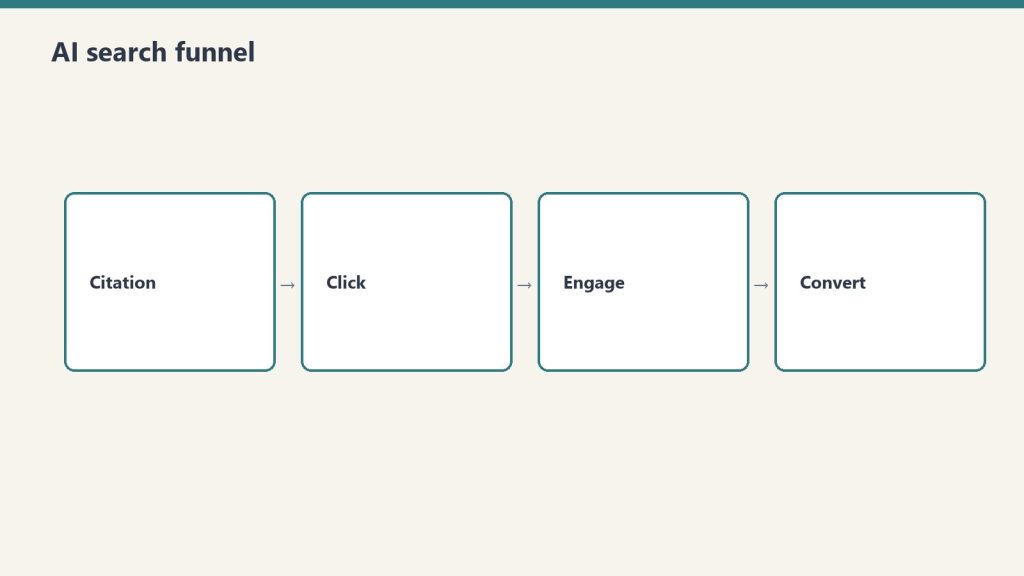
When your website content appears in a Google AI Overview, that’s an impression. When Perplexity cites your page in an answer, that’s engagement. When ChatGPT recommends your business in response to a user query, that’s a referral. When someone reads an AI-generated summary of your expertise and then calls your office, that’s a conversion.
The funnel is the same. The channel changed.
And here’s the part most marketers are missing: you don’t need to chase a trend to earn these impressions. You don’t need to dance. You don’t need a hook. You need good information, structured well, written with genuine expertise, and optimized so AI systems can find it, trust it, and cite it.
The Passion Advantage
Social media has an alignment problem. The content that performs best on social platforms is often not the content the creator cares most about. It’s the content that matches the algorithm’s preferences. This creates a grinding misalignment — business owners and marketers spending hours producing content they don’t particularly care about, in formats they didn’t choose, for an audience they can’t directly reach.
AEO/GEO/SEO flips that equation.
When you write deep, authoritative website content about the thing you actually know — the thing you’ve spent years mastering — AI systems notice. They learn your expertise. They map your authority. And they start recommending you to people who are actively looking for exactly what you do.
The data that learns you, learns them.
That’s not a slogan. It’s how the technology works. Large language models build representations of entities — businesses, people, topics — based on the depth and consistency of the information available about them. The more you write about what you genuinely know, the stronger that representation becomes. The stronger it becomes, the more often AI systems surface you as the answer.
This is the exact opposite of social media’s content treadmill. Instead of chasing what’s trending, you go deeper into what you already know. Instead of adapting to a platform’s format, you write for substance. Instead of fighting for attention, you earn citation.
Website Content Is Now the Most Social Thing You Can Do
Here’s the reframe that matters: your website is no longer a brochure. It’s your most important social channel.
Every page you publish is a node in a knowledge graph that AI systems are actively reading, indexing, and reasoning about. Every article you write is a potential answer to a question someone hasn’t asked yet. Every entity you define, every claim you source, every FAQ you structure — these are the signals that determine whether your business shows up when someone asks an AI “who should I call for this?”
Social media posts disappear in 24 hours. Website content compounds. A well-optimized article written today can be cited by AI systems for years. It doesn’t need an algorithm boost. It doesn’t need paid promotion. It needs to be right, and it needs to be findable.
That’s what modern SEO, AEO, and GEO deliver — not tricks, not hacks, but the infrastructure that makes your expertise machine-readable and AI-citable.
What This Means for Your Business
What this means for your business.
If you’re spending 80% of your marketing effort on social media and 20% on your website, you have the ratio backwards. The businesses that will dominate in an AI-mediated world are the ones investing in deep, authoritative web content — content that answers real questions, demonstrates genuine expertise, and is structured for the machines that are now the first readers of everything published online.
The feed changed. The question is whether you’ll keep posting for an algorithm, or start publishing for the intelligence layer that’s replacing it.
Filed by Will Tygart • Tacoma, WA • Industry Bulletin
Rankings Aren’t the Finish Line Anymore
Rankings are not the finish line anymore.
You did the work. The client’s target page ranks in the top five for their primary keyword. Traffic is up. The monthly report looks good. But something is shifting underneath those numbers that most freelance SEO consultants haven’t had time to fully reckon with.
Search engines aren’t just ranking content anymore — they’re quoting it. Featured snippets pull a direct answer and display it above position one. People Also Ask boxes expand with quoted passages from pages across the web. Voice assistants read a single answer aloud and move on. The result that gets quoted wins a fundamentally different kind of visibility than the result that merely ranks.
If your client ranks number three for a high-value query but another site owns the featured snippet, your client is invisible in the most prominent real estate on that search results page. They did the SEO work. They just didn’t do the answer engine optimization work. That’s the gap.
What Answer Engine Optimization Actually Involves
What answer engine optimization actually involves.
AEO isn’t a rebrand of SEO. It’s a different optimization target with different structural requirements. Where SEO focuses on signals that help a page rank — authority, relevance, technical health, backlinks — AEO focuses on signals that help a page get quoted.
The structural pattern for capturing a paragraph featured snippet is specific: a question phrased as a heading, followed immediately by a concise direct answer, followed by expanded depth. The direct answer needs to be tight — search engines typically pull passages that function as standalone responses. Too long and it gets truncated. Too short and it lacks the specificity that earns selection.
For list-format snippets, the content needs ordered or unordered lists with clear, parallel structure. For table snippets, the data needs to live in actual HTML tables with proper header rows. Each format has its own structural requirements, and the same page might need different sections optimized for different snippet formats depending on the queries it targets.
Then there’s the schema layer. FAQPage schema tells search engines explicitly which questions the page answers. HowTo schema structures step-by-step processes. Speakable schema identifies which sections are suitable for voice readback. These aren’t optional enhancements anymore — they’re the markup that makes content machine-readable in the way answer engines expect.
Why This Is a Bandwidth Problem, Not a Knowledge Problem
You probably know most of this already. You’ve read about featured snippets. You’ve seen the schema documentation. The gap isn’t ignorance — it’s implementation. Restructuring every piece of client content for snippet capture, writing FAQ sections that target real PAA clusters, implementing and validating schema markup, monitoring which snippets you’ve won and which you’ve lost — that’s a significant amount of additional work on top of the SEO fundamentals you’re already delivering.
For a freelance consultant managing multiple clients, adding a full AEO layer to every engagement means either raising your rates significantly, working more hours, or cutting corners somewhere else. None of those options feel great.
The Middleware Solution
The middleware solution for the freelancer AEO gap.
This is where the plugin model works. Instead of becoming an AEO specialist yourself, you plug in someone who already built the infrastructure. I run AEO optimization passes on your clients’ published content — restructuring key sections for snippet capture, writing FAQ sections that target actual question clusters in your client’s space, generating and injecting the appropriate schema markup, and monitoring results.
The work runs through your client’s existing WordPress installation via the REST API. Nothing changes about their site architecture, their theme, their plugins, or their hosting. The content that’s already ranking gets restructured to also compete for direct answer placements. New content gets AEO-optimized from the start.
You report the results to your client the same way you report everything else. Featured snippet wins. PAA placements. Voice search visibility. These are tangible outcomes that clients can see when they search their own terms — which makes them some of the most powerful proof points in any reporting conversation.
What This Looks Like in Practice
Say you have a client in the home services space. They rank well for several high-intent queries. You’ve done strong on-page work and their content is solid. But a competitor owns the featured snippet for their most valuable keyword — the one that drives the most qualified leads.
I look at that snippet, analyze the structure of the content that currently holds it, identify the format (paragraph, list, table), and restructure your client’s content to compete for that placement. I write a direct answer block that addresses the query more completely and more concisely. I add FAQ schema targeting the related PAA questions. I check whether speakable schema makes sense for voice search on that topic.
The optimization runs through the API. Your client’s post is updated. Within the next crawl cycle, the restructured content starts competing for the snippet. Sometimes it wins quickly. Sometimes it takes a few iterations. But the content is now structurally built to compete for answer placements — something it wasn’t doing before, no matter how well it ranked.
The Client Conversation
Your clients don’t need to understand AEO methodology. They understand “your company is now the answer Google shows when someone asks this question.” They understand “when someone asks their voice assistant about this service, your business is the one that gets recommended.” Those are outcomes, not techniques. And they’re outcomes that differentiate your service from every other SEO consultant who’s still reporting rankings and traffic without addressing the answer layer.
Frequently Asked Questions
How long does it take to win a featured snippet after AEO optimization?
It varies by competition and query. Some snippets flip within days of restructured content being crawled. Others take weeks of iteration. The structural optimization puts your client’s content in position to compete — the timeline depends on how strong the current snippet holder is and how frequently Google recrawls the page.
Does AEO optimization ever hurt existing rankings?
When done properly, no. The structural changes — adding direct answer blocks, FAQ sections, schema markup — add value to existing content without removing or diluting the elements that earned the current ranking. The optimization is additive, not substitutive.
Can you do AEO on content I’ve already written and published?
That’s the primary use case. Published content that’s already ranking is the best candidate for AEO optimization because it has existing authority. The restructuring work makes that authority visible to answer engines, not just traditional ranking algorithms.
What if my client uses a page builder like Elementor or Divi?
The optimization runs through the WordPress REST API at the content level. Page builders manage layout and design — the AEO work happens in the content blocks themselves. Schema gets injected at the post level. In most cases, page builders don’t interfere with AEO optimization, but we’d verify compatibility for any specific setup before making changes.
{
“@context”: “https://schema.org”,
“@type”: “Article”,
“headline”: “The Freelancers AEO Gap: Your Clients Content Is Ranking but Nobodys Quoting It”,
“description”: “Your SEO work gets clients to page one. AEO gets them quoted directly in search results. Here’s why that gap matters and how to close it without becoming “,
“datePublished”: “2026-04-03”,
“dateModified”: “2026-04-03”,
“author”: {
“@type”: “Person”,
“name”: “Will Tygart”,
“url”: “https://tygartmedia.com/about”
},
“publisher”: {
“@type”: “Organization”,
“name”: “Tygart Media”,
“url”: “https://tygartmedia.com”,
“logo”: {
“@type”: “ImageObject”,
“url”: “https://tygartmedia.com/wp-content/uploads/tygart-media-logo.png”
}
},
“mainEntityOfPage”: {
“@type”: “WebPage”,
“@id”: “https://tygartmedia.com/the-freelancers-aeo-gap-your-clients-content-is-ranking-but-nobodys-quoting-it/”
}
}
AI-generated editorial illustration — Vertex AI Imagen 4 Standard
About this image. This image was generated by Google’s Vertex AI Imagen 4 model as the featured visual for The Freelancer’s AEO Gap: Your Clients’ Content Is Ranking but Nobody’s Quoting It . Every image in the Tygart Media visual library is AI-generated, converted to WebP for optimal performance, and enriched with IPTC/XMP metadata for search engine discoverability.
Model: Vertex AI Imagen 4 Standard (imagen-4.0-generate-001)