Everett News - Tygart Media

Category: Everett News

Breaking news, city hall, and major developments shaping Everett.

  • For Boeing and Paine Field Workers: Your August 4 Primary Voter Guide for the Races That Affect Your Job, Your Commute, and Everett’s Aerospace Economy

    For Boeing and Paine Field Workers: Your August 4 Primary Voter Guide for the Races That Affect Your Job, Your Commute, and Everett’s Aerospace Economy

    The Race That Matters Most for Paine Field: CD-2

    Congressional District 2 covers Everett and Snohomish County. It is the district that Rick Larsen has held since 2001, and his committee assignments make this the congressional seat most directly connected to Paine Field’s legislative environment: House Armed Services Committee (KC-46 program, defense aerospace contracts, NAVSTA Everett funding advocacy), House Transportation and Infrastructure Committee (FAA oversight, which affects Boeing’s aircraft certification timelines and the 777X and 777-8F programs), and the broader portfolio of Sound Transit Everett Link Extension authorization that affects how workers get to and from Paine Field.

    Four challengers filed to face Larsen: Edwin H. Feller (R), DevinErmanson (D), Raymond Pelletti (R), and Tomas Scheel (D). Washington’s top-two primary means Larsen and the strongest challenger — most likely the Republican with the consolidated right-of-center vote — will be the November matchup. As an aerospace worker, the question worth asking in the primary: which candidate, if elected, has the committee positioning, institutional knowledge, and district relationships to be effective on the specific federal policy levers that affect Paine Field?

    What CD-2 Controls That Paine Field Workers Should Know

    KC-46 follow-on procurement: The Air Force has paused KC-46 follow-on orders pending resolution of outstanding technical issues. The Armed Services Committee, where Larsen serves, has oversight jurisdiction over that procurement pause and the conditions under which it is resolved. KC-46 tanker line production volume at Paine Field depends in part on how that procurement resumes.

    NAVSTA Everett and FF(X) homeport advocacy: The Navy’s FY27 budget has now officially funded the FF(X) frigate with a late-2028 launch target and spring-2030 delivery. Whether Naval Station Everett is designated as homeport for those frigates is a decision that will move through the defense policy apparatus — the Armed Services Committee is where that advocacy happens at the federal level.

    Sound Transit Everett Link authorization: The Sound Transit board’s proposal to end Sounder North commuter service in 2033 — leaving Everett without a direct Seattle rail connection until Link arrives — makes the federal authorization and funding for the Everett Link extension more time-sensitive. The Transportation Committee has jurisdiction here. For Paine Field workers who commute from south King County or north Everett, this is a commute-pattern question.

    District 38: The State Legislature Races Covering Everett

    District 38 covers Everett directly. The state legislative races here affect Washington’s workforce training programs (which fund aerospace retraining at Everett Community College and Sno-Isle Tech), Washington’s unemployment insurance policy (relevant if a layoff follows the 767 close in 2027), labor law (affecting Boeing’s bargaining environment alongside SPEEA’s October 2026 contract expiration), and aerospace industry B&O tax incentives that influence Boeing’s Washington production decisions.

    State Sen. June Robinson (D) faces Brad Bender (R). In the House, Rep. Julio Cortes (D) faces Annie Fitzgerald (D) and Thomas Kelly (Cascade) in a three-way Position 1 race. Cortes represents the Everett district directly; his committee assignments in the state legislature determine which of these workforce and aerospace policy issues he can move.

    The EMS Levy: Affects Everett Residents, Not All Paine Field Workers

    The Everett EMS levy lid lift (Proposition No. 1) is on the August 4 ballot for Everett city residents only. If you live in Everett, you vote on it. If you live in unincorporated Snohomish County, Mukilteo, Lynnwood, or elsewhere outside city limits, you do not. The levy question is about whether Everett’s EMS tax levy is adjusted above the existing lid to fund expanded emergency medical services. For aerospace workers who own property in Everett, this directly affects the property tax bill.

    How and When to Vote

    Ballots mail July 15. Return by 8 PM August 4 — by mail or drop box. Voter registration deadline: July 27. Register or check registration at sos.wa.gov or Snohomish County Elections Office, 3000 Rockefeller Ave, Everett. If your work schedule puts you in the factory during ballot-return hours, Washington’s mail ballot system means you can return your ballot anytime in the three-week window before August 4.

    Frequently Asked Questions

    Which primary race most affects Boeing workers?

    Congressional District 2 — the seat covering Everett and Paine Field. Includes Armed Services Committee jurisdiction over KC-46 procurement and NAVSTA Everett homeport advocacy.

    When do ballots mail?

    July 15. Return by 8 PM August 4. Registration deadline: July 27.

    Who is running against Larsen in CD-2?

    Edwin H. Feller (R), Devin Hermanson (D), Raymond Pelletti (R), Tomas Scheel (D).

    Does the EMS levy affect Paine Field workers?

    Only if you live within Everett city limits. It is a property tax question for Everett residents only.

    What state races affect aerospace workforce policy?

    District 38 state legislative races — Robinson vs. Bender (Senate), Cortes vs. Fitzgerald vs. Kelly (House Position 1). These affect workforce training programs, labor law, and aerospace B&O tax incentives.


    Related coverage: Complete 2026 Primary Voter Guide | SPEEA 2026 Bargaining Season Guide | Sounder North Ending 2033: What It Means for Everett Commutes

  • For Military Families at NAVSTA Everett: Your 2026 Guide to Everett Gospel Mission Services When a Family Member Needs Emergency Help

    For Military Families at NAVSTA Everett: Your 2026 Guide to Everett Gospel Mission Services When a Family Member Needs Emergency Help

    The Resource Map for Military Families in Crisis

    NAVSTA Everett’s Fleet and Family Support Center at (425) 304-3735 is the first call for most family emergencies — financial crisis, food insecurity, housing instability, mental health needs. FFSC can make warm referrals to community resources and can connect families with Navy-Marine Corps Relief Society emergency funds, which provide interest-free loans and grants specifically for military families. FFSC is the on-ramp.

    But FFSC isn’t a shelter. It isn’t a food bank. When the crisis is immediate — a family member needs a bed tonight, a meal today, a place to go right now — the community infrastructure picks up where the installation leaves off. Everett Gospel Mission is the most significant part of that community infrastructure for families facing acute housing or food emergency.

    What EGM Offers Military Families Specifically

    EGM serves anyone in Snohomish County — military family status is not a eligibility requirement, and it is not a disqualifier. A sailor’s spouse facing housing crisis during a deployment can walk into EGM. A veteran family member struggling with addiction can access EGM’s recovery programming. A family with children can be referred to EGM’s Lowell neighborhood family shelter.

    The three resources military families most often need from EGM: emergency shelter for a family member in crisis, meals during a financial emergency, and recovery support for a veteran or family member dealing with addiction. All three are available at 3711 Smith Ave, (425) 740-2500, egmission.org.

    During Deployment: When You Need Community Resources

    Deployment is when community infrastructure matters most for military families. FFSC provides pre-deployment financial planning workshops specifically to help families avoid crisis during extended separations. But emergencies happen. If a deployment-season crisis requires resources beyond what FFSC can provide directly, EGM is one of the closest and most comprehensive community options in Everett’s south side — less than four miles from the main gate.

    For food specifically: EGM’s meal service is available without proof of military status or crisis documentation. If a family is going through a tight month — a delayed LES, an unexpected car repair — the meal resource is there without paperwork. The VOAWW food bank in Everett operates similarly. The 2026 resident resource guide covers both in detail.

    The $30 Million Expansion and What It Means

    EGM’s expansion — 172 beds in a facility three times the current size, construction starting fall 2026, first phase complete for the 2027 cold season — increases the county’s crisis infrastructure capacity at a moment when demand is rising. For military families, a more robust community safety net means there is more buffer between a deployment-season emergency and a genuine crisis that requires installation resources.

    The expansion also adds surge capacity: up to 64 additional beds during severe weather events. That surge capacity is specifically designed for moments when the baseline shelter system is overwhelmed. For families of sailors deployed during Everett winters, knowing that community shelter capacity is increasing is direct practical news.

    Additional Family Support Resources in Everett

    The Boys & Girls Club of Snohomish County serves military kids during deployment. The BGC military family guide covers after-school care, Power Hour homework help, and summer programming for children of deployed parents. The VA claims resources guide — updated for the 2026 Vet Center change — covers healthcare access for veterans in the household.

    Frequently Asked Questions

    Can military families use EGM services?

    Yes. EGM serves anyone in Snohomish County. Military status is not required and does not exclude. Call (425) 740-2500 or walk in at 3711 Smith Ave.

    Who do I call first in a family crisis?

    Fleet and Family Support Center: (425) 304-3735. They make warm referrals to EGM and other community resources and connect families with Navy-Marine Corps Relief Society emergency funds.

    Is there emergency shelter for families with children near NAVSTA Everett?

    EGM’s family shelter in Everett’s Lowell neighborhood. Contact (425) 740-2500 for current availability and intake process.

    Does EGM serve women?

    Yes. Women’s shelter is on the Smith Ave campus, separate from the men’s shelter. Contact the main number: (425) 740-2500.

    Is emergency food available without documentation?

    Yes. EGM’s meal service does not require military ID, proof of residency, or documentation. Walk in or call first.


    Related coverage: EGM $30M Expansion Complete Guide | BGC Guide for Military Kids | VA Claims Guide for NAVSTA Families

  • Everett Gospel Mission’s $30 Million Expansion: The Complete 2026 Guide to Every Service, How to Get Help, and What 172 Beds Means for Snohomish County

    Everett Gospel Mission’s $30 Million Expansion: The Complete 2026 Guide to Every Service, How to Get Help, and What 172 Beds Means for Snohomish County

    What Everett Gospel Mission Does

    Everett Gospel Mission is a Christ-centered nonprofit that has operated on Smith Avenue in Everett’s south side for decades. Its mission is practical and daily: emergency shelter for people experiencing homelessness, meals for anyone who needs them, and recovery support for people working to rebuild their lives. EGM is not a last resort — it is a first-available resource, operating seven days a week.

    The organization’s current facility at 3711 Smith Ave houses separate emergency shelters for men and women, a family shelter nearby in Everett’s Lowell neighborhood, a day center, and staff offices. The main number is (425) 740-2500. The full resource guide is at egmission.org.

    The One Fact That Defines EGM’s County-Level Importance

    Everett Gospel Mission operates the only emergency shelter for men without families in Snohomish County. This is not a local distinction — it is a county-level infrastructure fact. When a man experiencing homelessness in Snohomish County needs a bed tonight, EGM is the option. There is no backup. A $30 million expansion of this facility is not just a nonprofit story. It is a county infrastructure story.

    Services: What EGM Provides in 2026

    Emergency Shelter: Separate shelters for men and women at the Smith Ave main campus. The men’s shelter is the only such facility in the county. Women’s shelter serves women experiencing homelessness. Both operate nightly.

    Family Shelter: EGM operates a family shelter in the Lowell neighborhood of Everett, providing emergency housing for families with children. The Smith Ave expansion will free additional capacity at the Lowell family shelter as resources are consolidated.

    Meals: EGM serves meals to people experiencing homelessness throughout the week. Holiday meals — Thanksgiving, Christmas, Easter, and other occasions — are open to community volunteers who want to serve alongside staff. These are not closed events; faith groups and individuals regularly participate.

    Day Center: The day center on Smith Ave provides daytime space for guests to access services, connect with case managers, and work toward longer-term housing and employment goals.

    Recovery Support: EGM provides programming for men and women working through addiction and rebuilding their lives. This includes structured programming, accountability support, and connections to community resources including employment and housing placement.

    The $30 Million Expansion: What’s Actually Being Built

    The expansion connects two existing warehouses on Smith Avenue with the current shelter building by adding new structures between them. The result is one contiguous building — permit documents filed with the City of Everett show a structure approximately three times the size of the existing shelter. The expanded facility will provide 172 beds with separate spaces for men and women, plus surge capacity for up to 64 additional beds during severe weather events. That surge capacity number matters: Everett’s winters can produce demand spikes that overwhelm fixed-bed facilities.

    Construction is scheduled to begin in October or November 2026. The work will not interrupt the current shelter service — EGM remains operational throughout. The goal is to have the first phase completed in time for the cold weather season in 2027.

    How the Expansion Is Funded

    The $30 million total includes grants from the City of Everett, Snohomish County, a state budget allocation approved by the Legislature, and philanthropic donations. The Snohomish County Council’s $23 million housing and behavioral health award in April 2026 contributed $5.8 million to EGM specifically. The project has already secured significant portions of its funding — it is not a proposal waiting on money. Construction is starting in fall 2026.

    How to Get Help

    Walk-in at 3711 Smith Ave, Everett. Call (425) 740-2500. Visit egmission.org. EGM does not turn away people in crisis based on sobriety status — the organization serves people where they are. For families, the Lowell neighborhood family shelter can be accessed through the main number. For women, the women’s shelter is accessible through the same contact points. For men, the Smith Ave men’s shelter is the direct resource.

    If you are helping someone else find resources in Everett, the 2026 Everett resident guide to VOA Western Washington services and the Cocoon House guide for youth cover additional organizations serving different populations.

    How to Volunteer or Donate

    Volunteer opportunities include meal service throughout the year, holiday meal events, and skills-based support roles. Faith groups and community organizations regularly serve alongside EGM staff. Contact (425) 740-2500 or visit egmission.org to coordinate. Donations can be made at egmission.org/donate. The capital campaign for the expansion is active — this is the highest-impact moment to give if supporting the infrastructure build-out is the goal.

    Frequently Asked Questions

    Where is Everett Gospel Mission?

    3711 Smith Ave, Everett, WA. Phone: (425) 740-2500. Website: egmission.org.

    Is EGM the only men’s shelter in Snohomish County?

    Yes. EGM operates the only emergency shelter for men without families in Snohomish County.

    When does construction start?

    Fall 2026 — October or November. Service continues without interruption during construction.

    How many beds after expansion?

    172 beds, plus surge capacity for 64 additional beds during severe weather.

    How is the expansion funded?

    $30M total from City of Everett grants, Snohomish County (including $5.8M from the April 2026 housing award), state Legislature allocation, and private philanthropy.

    Does EGM require sobriety to access shelter?

    EGM serves people where they are. Contact them directly at (425) 740-2500 for current intake requirements.


    Related coverage: VOAWW Complete 2026 Guide | Cocoon House Youth Services Guide | Snohomish County $23M Housing Award

  • The Everett-Built KC-46 Named Gideon Just Made History: The Complete Guide to Israel’s First International Tanker Delivery and What It Means for Paine Field

    The Everett-Built KC-46 Named Gideon Just Made History: The Complete Guide to Israel’s First International Tanker Delivery and What It Means for Paine Field

    What Just Happened at Paine Field

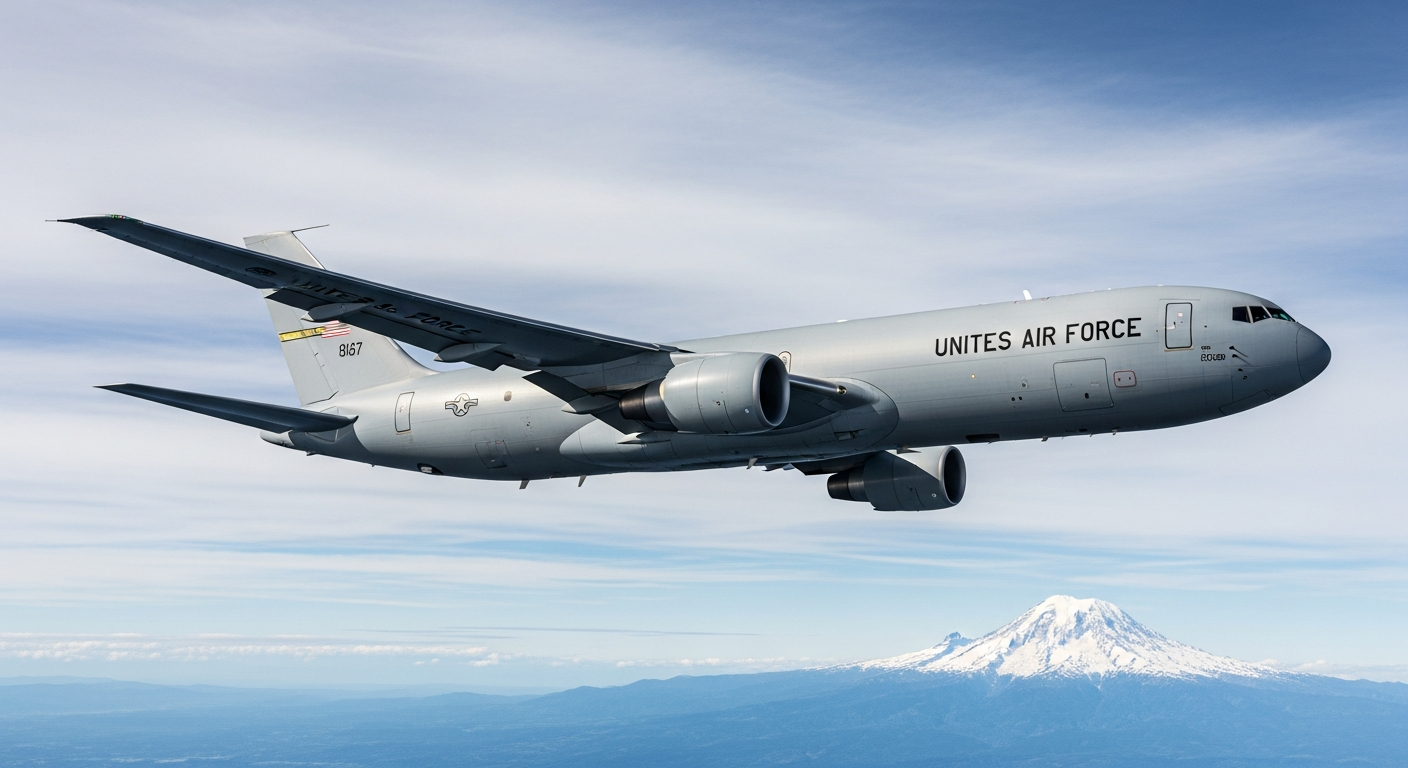
    Boeing’s KC-46 tanker program has logged a lot of firsts since its troubled early years. The first delivery to the U.S. Air Force. The first Remote Vision System fix. The first full-rate production approval. On May 4, 2026, it logged one more: the first KC-46 delivery to an international customer, built at Paine Field and flown from a U.S. military facility before its handoff to Israel.

    The aircraft — serial number 301, assigned the Hebrew name Gideon after the biblical military leader — completed its maiden sortie on May 4. The Israeli Ministry of Defense confirmed the flight, noting the aircraft would be “equipped with Israeli systems and adapted to the operational requirements of the Israeli Air Force” before delivery. Specific Israeli modifications have not been detailed publicly, consistent with standard FMS security practice. Delivery is expected in early June 2026.

    Why Israel Needs This Aircraft — And Why Everett Built It

    Israel has operated aerial refueling tankers based on the Boeing 707 airframe since the 1970s. Those aircraft — heavily modified over decades by Israeli Aerospace Industries and Rafael Advanced Defense Systems — have supported some of the most demanding long-range strike operations in aviation history. The IAF’s ability to project airpower beyond Israel’s borders has depended substantially on what those tankers can carry and transfer.

    The 707-based fleet is aging out. Airframes accumulated significant flight hours across 50 years of operational use. Parts are increasingly difficult to source. Modern threat environments demand more capable sensors, communications, and survivability features than 1970s architecture supports. The KC-46A Pegasus answers each of those limitations: fly-by-wire controls, modern avionics, a fuel offload capacity approximately 40% higher than the legacy tankers, compatibility with both boom-and-receptacle and probe-and-drogue refueling methods, and a design life intended to reach into the 2040s.

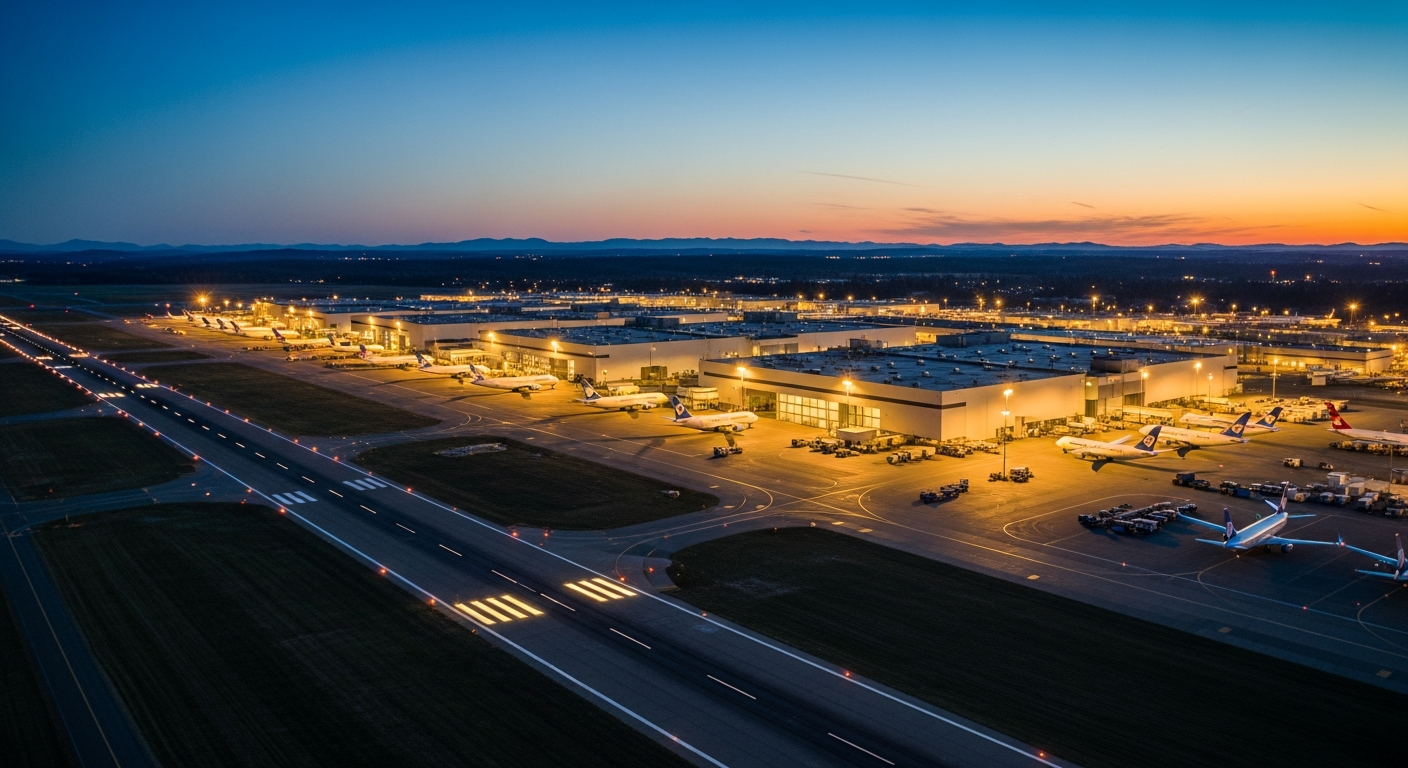
    The connection to Everett comes from the KC-46’s airframe. The tanker is built on the 767-200ER commercial airframe — the same platform that anchors Boeing’s 767 freighter line at Paine Field, which is scheduled to run through 2027. Boeing builds both in the Everett complex: the commercial 767 freighters on one production floor, the KC-46 tankers on adjacent space in the same factory complex. When Gideon rolled off the line at Paine Field and flew its first flight, it was doing so on a production floor that Everett workers built and maintain.

    The FMS Framework: How Israel Gets American Military Aircraft

    Israel contracted for six KC-46As through the U.S. Foreign Military Sales program — the government-to-government channel that allows allied nations to acquire American defense equipment at U.S. procurement pricing. A 2022 Department of Defense contract covered the first four aircraft at approximately $930 million. In 2025, Israel expanded the order to six total aircraft.

    Under FMS, Boeing contracts with the U.S. government rather than directly with Israel. The U.S. government manages the acquisition on Israel’s behalf, including delivery logistics, quality oversight, and coordination of any country-specific modifications. Israel pays the U.S. government; the U.S. government pays Boeing. This structure means the KC-46 order appears in Boeing’s U.S. government backlog rather than as a separate international line — but the aircraft are built at Paine Field and the work flows through Everett’s production floors the same way domestic Air Force aircraft do.

    What Gideon Means for the KC-46 Program

    The KC-46 program’s domestic story has been well-documented: approximately $8 billion in losses on the fixed-price Air Force contract, a multi-year Remote Vision System deficiency, and an Air Force that paused follow-on KC-46 procurement in early 2026 pending resolution of outstanding technical issues. That’s the program’s domestic chapter, and it remains unresolved.

    Gideon represents the opening of the international chapter. Israel’s six-aircraft order is the first FMS KC-46 delivery. Japan has ordered 15 KC-46As. Italy has expressed formal interest. Each international customer adds production volume to the Paine Field tanker line, contributing to the workforce stability that Boeing workers on that floor depend on.

    The timing matters in a specific way for Everett. The 767 commercial freighter line — which shares the same airframe as the KC-46 and the same production complex — is scheduled to wind down in 2027 as Boeing transitions to the 777-8F. The KC-46 tanker line is not winding down. International FMS deliveries extend the production runway for Paine Field’s tanker work, keeping skills and facilities active that the commercial 767 line would otherwise close with it.

    The Everett Factory Context

    Paine Field’s Boeing complex — formally the Everett Production Facility — is the largest building by volume in the world at approximately 472 million cubic feet. It currently houses the 777-9 final assembly line, the 767 freighter and KC-46 tanker lines, and is being configured for 777-8F production as that program ramps. The first production-standard 777-9 flew from Paine Field on May 7, 2026 — two days after Gideon’s maiden sortie — with Lufthansa’s full Allegris cabin already installed.

    This is a production facility in active transition. The 767 commercial line is closing. The 777-9 is entering production deliveries. The 777-8F is being set up. The KC-46 tanker line — now proven out through the first international customer delivery — remains as one of the more stable elements of Paine Field’s production mix through the transition period.

    Frequently Asked Questions

    What is Israel’s KC-46 Gideon?

    Serial 301, the first of six Israeli KC-46A Pegasus tankers. It completed its maiden flight May 4, 2026 and is due for delivery in early June. Built at Boeing’s Paine Field complex in Everett.

    Is this the first international KC-46 delivery?

    Yes. Israel’s Gideon is the first KC-46 delivered to an international customer under the Foreign Military Sales framework. Japan is next with 15 aircraft on order.

    How many KC-46s did Israel order?

    Six total. Four in a 2022 contract at ~$930M, expanded to six in 2025.

    What does this mean for Boeing jobs in Everett?

    International FMS deliveries add production volume to the Paine Field tanker line, contributing to workforce stability as the commercial 767 line winds down in 2027.

    What is the KC-46 built on?

    The Boeing 767-200ER airframe — same platform as the 767 commercial freighter, built in the same Paine Field complex.

    When does Israel receive Gideon?

    Early June 2026, approximately one month after the May 4 maiden flight.


    Related coverage: Boeing’s Fight to Keep the 777F at Paine Field Past 2027 | The 767 Line’s Final Year and KC-46 Transition | Inside the World’s Largest Building: What Boeing Is Building at Paine Field

  • For Navy Families at NAVSTA Everett: What the FF(X) Frigate Budget Timeline Means for Your Homeport, PCS Planning, and Life in Everett

    For Navy Families at NAVSTA Everett: What the FF(X) Frigate Budget Timeline Means for Your Homeport, PCS Planning, and Life in Everett

    The Question Every NAVSTA Family Is Asking

    Since the Constellation-class frigate program was cancelled in November 2025, Navy families at NAVSTA Everett have been living with a version of the same question: Is the station’s mission stable, growing, or shrinking? The FF(X) budget documents give the clearest answer yet — and it’s more nuanced than either “Everett is getting frigates” or “Everett is losing its naval mission.”

    The honest answer: The FF(X) program is real and funded. The first hull will launch late 2028 and be delivered to the fleet by spring 2030. NAVSTA Everett is in the homeport conversation. No designation has been made. Families planning PCS moves to Everett in 2026 or 2027 should plan around the current ship assignment mix, not around FF(X) arrivals.

    What the FY27 Budget Actually Changes for NAVSTA Everett

    Before this budget submission, the FF(X) program had a general 2028 target. Now it has a funded lead hull at $1.429 billion, a $212 million R&D line, a $282.9 million contract at HII’s Ingalls Shipbuilding, and official launch and delivery windows in government planning documents. That progression — from investor call language to appropriated funding — matters for how seriously Everett’s homeport advocacy can be taken in Washington, D.C.

    Rep. Rick Larsen’s office has been vocal about NAVSTA Everett’s value to the fleet. The Snohomish County Economic Alliance has made the $340 million annual economic impact case directly to Navy leadership. Both of those advocacy efforts carry more weight when there’s a real ship on a real timeline to fight for. The FY27 budget creates that ship.

    PCS Planning: What Families Should Actually Expect

    If you’re a Navy family weighing a PCS to NAVSTA Everett in 2026 or 2027, here is the practical picture:

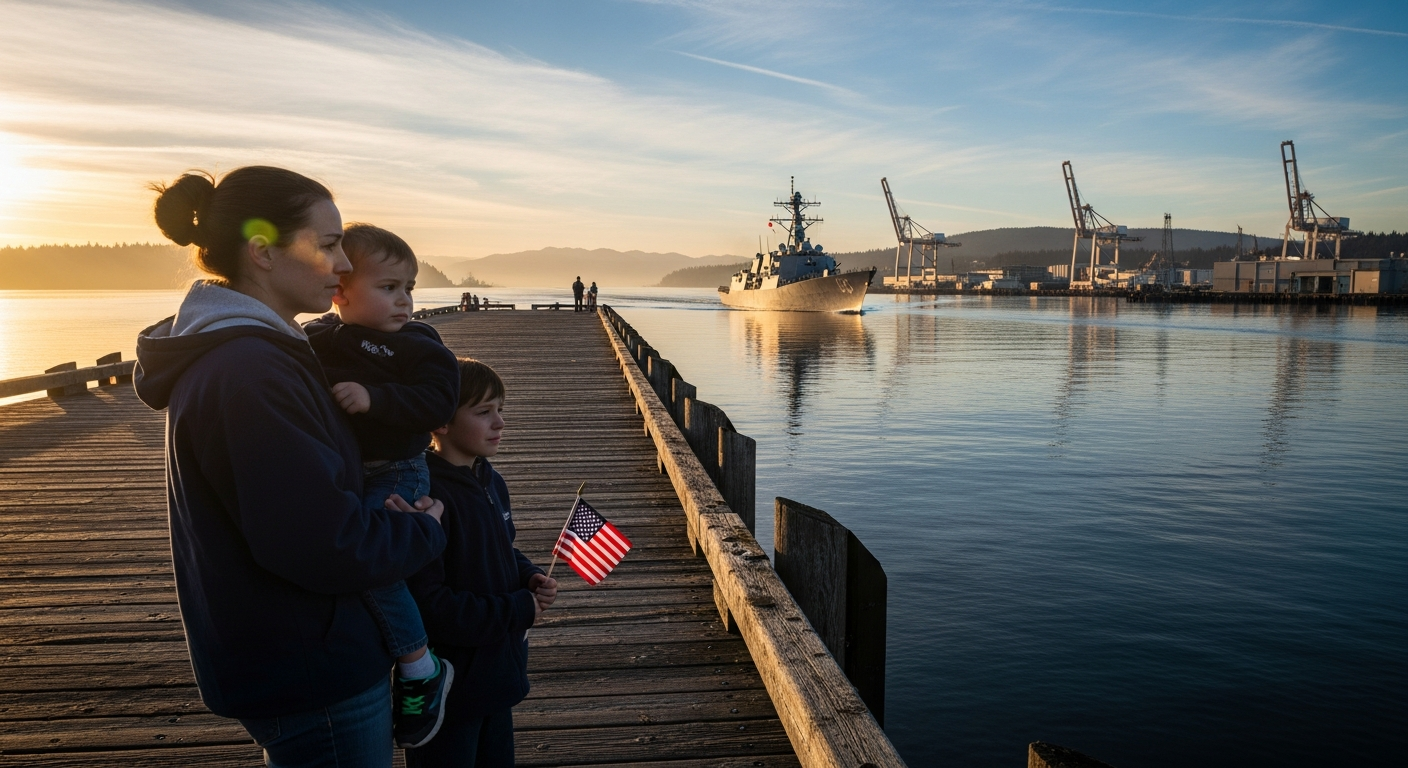
    The station’s current assignment — USS Gridley and associated vessels — is stable. Gridley returned from the Southern Seas 2026 deployment and is home. There is no indication of reduced mission, base closure risk, or drawdown. The station remains operationally active.

    On the housing side, the Everett market has tightened considerably. The 98208 zip code — which covers much of south Everett near the station — has seen strong price appreciation. On-base housing at NAVSTA Everett is managed through a private partnership; waitlist times vary by unit size and pay grade. Families who plan ahead and apply early have better outcomes. The 2026 PCS Housing Guide for Navy Families covers the specific options in detail.

    If FF(X) frigates are eventually homeported at NAVSTA Everett — the earliest realistic date being 2030 or 2031 — the station would see increased personnel, more billets, and potentially expanded on-base housing. That would be a significant development for Navy families considering long-term roots in Snohomish County. But that is a 2030 story, not a 2026 story.

    What the Cancellation of Constellation Taught Us

    The Constellation-class cancellation in November 2025 was a sharp lesson in not treating program designations as guarantees. NAVSTA Everett was officially designated as the homeport for 12 Constellation-class frigates — a designation that disappeared when the program did. The Navy’s advocacy community in Everett, to its credit, pivoted quickly to FF(X) once the cancellation was announced.

    The FF(X) is a different program with a different risk profile. Its NSC-based design is simpler than Constellation’s FREMM-derived hull. Ingalls’ use of pre-produced NSC components reduces schedule risk. The $282.9M contract is already in place. None of that makes the program cancellation-proof — no Navy shipbuilding program is — but it makes the 2028 launch timeline meaningfully more credible than Constellation’s timeline was at a comparable stage.

    Family Readiness and Base Resources While You Wait

    Whatever the long-term homeport story turns out to be, NAVSTA Everett’s current family support resources are fully operational. Fleet and Family Support Center (FFSC) can be reached at (425) 304-3735. The Boys & Girls Club programs at Everett are available to military families — particularly valuable when a sailor is deployed. The complete BGC guide for military families covers enrollment and what to expect.

    The VA claims support resources that changed with the Everett Vet Center transition remain available through the Snohomish County Veterans Assistance Program at 3000 Rockefeller Avenue and through community-based outpatient clinics. The 2026 VA Claims guide for Snohomish County covers the current access map.

    Frequently Asked Questions for Navy Families

    Will NAVSTA Everett homeport the FF(X) frigates?

    No official designation. NAVSTA Everett is in the conversation. Decisions will likely appear in FY2028–2029 budget documents.

    How does the FF(X) timeline affect my PCS decision?

    Plan around current ship assignments through 2029–2030. No FF(X)-driven billet surge should be expected before 2030 at the earliest.

    Is NAVSTA Everett at risk of closure or drawdown?

    No indicators of that. The station is operationally active with USS Gridley assigned and returning from deployment.

    Where can I find NAVSTA Everett housing information?

    Contact NAVSTA Everett housing office directly or Fleet and Family Support Center at (425) 304-3735.

    What happened to the Constellation-class frigate homeport designation?

    It was cancelled along with the program in November 2025 due to cost overruns at Fincantieri’s Marinette Marine. NAVSTA Everett’s advocacy community immediately pivoted to FF(X).


    Related coverage: FF(X) FY27 Budget Complete Guide | PCS Housing Guide for NAVSTA Everett Families | What the FF(X) Contract Means for NAVSTA Homeport

  • The FF(X) Frigate Has a Real Launch Clock Now: The Complete Guide to the FY27 Budget, the 2028 Timeline, and What It Means for Naval Station Everett

    The FF(X) Frigate Has a Real Launch Clock Now: The Complete Guide to the FY27 Budget, the 2028 Timeline, and What It Means for Naval Station Everett

    Why This Budget Document Changes Everything

    Before last week, the FF(X) program had a general “2028 target” — the kind of language that appears in investor calls and press releases. HII mentioned it in their Q1 2026 earnings call. But investor call language is an acknowledgment. A federal budget document is a funding commitment.

    The Navy’s FY2027 budget request, submitted to Congress this spring, puts two specific milestones in official U.S. government planning documents for the first time: launch of the lead FF(X) in the first quarter of Fiscal Year 2029 — October through December 2028 in calendar terms — and delivery to the fleet by the end of the third quarter of FY2030, meaning April through June 2030. Those aren’t marketing projections. They’re budget-backed program targets that Congress will scrutinize, fund, and hold the Navy accountable to.

    What the FY27 Budget Actually Funds

    The FY2027 request allocates $1.429 billion to procure the lead FF(X) hull. Alongside that, $212 million is designated for research and development — covering the ongoing design work, systems integration, and military-specific modifications being layered onto the National Security Cutter baseline. The total program objective calls for 22 ships, with the procurement schedule spreading across multiple budget years: one ship in FY2027, one in FY2029, and two per year in FY2031 and beyond.

    This is not a paper program. The $282.9 million lead yard contract was awarded to HII’s Ingalls Shipbuilding in Pascagoula, Mississippi in April 2026, covering the pre-construction design work needed to support that 2028 launch timeline. Steel is moving.

    The NSC Shortcut: Why Late 2028 Is Achievable

    Building a new class of warship from scratch in three years would be aggressive to the point of fantasy. The FF(X) program isn’t doing that. According to Naval News, Ingalls will use steel and components from the cancelled 11th ship in the Legend-class National Security Cutter program — the same NSC baseline the FF(X) design derives from. That cancelled cutter was already partway through the production pipeline before the Coast Guard cancelled it, meaning Ingalls doesn’t have to order long-lead materials from the beginning.

    The first FF(X) hulls will carry three primary military additions over the NSC baseline: a Rolling Airframe Missile (RAM) launcher for close-in air defense, an SPS-77 variant air search radar, and a repurposed stern boat ramp converted to carry containerized payload modules. The containerized payload capability is designed for modularity — swappable mission packages that can shift the ship’s function without rebuilding the hull.

    What This Means for Naval Station Everett

    NAVSTA Everett has been living in a state of strategic uncertainty since November 2025, when the Navy cancelled the Constellation-class frigate program. The station had been designated as the homeport for 12 Constellation-class ships. That designation vanished with the program cancellation, leaving Everett’s naval mission — and the economic activity it generates — without a clear successor.

    The FF(X) budget timeline doesn’t resolve that homeport question. No official FF(X) homeport designation has been made. But it does transform the conversation in a meaningful way: Everett is no longer waiting on a program whose timeline is “someday.” The program now has a funded lead hull, a $282.9M contract at Ingalls, a launch date in late 2028, and a delivery date in spring 2030. The Navy will need to make homeport decisions as that delivery date approaches.

    Naval Station Everett’s infrastructure advantages — a deep-water port, existing repair and logistics facilities, the proximity to Puget Sound Navy Yard at Bremerton for major maintenance, and established force protection arrangements — remain intact. The station has hosted Arleigh Burke-class destroyers and is capable of supporting smaller frigate-class hulls. Whether those advantages translate into an FF(X) homeport designation is a decision that will likely surface in FY2028 or FY2029 planning documents.

    The Economic Stakes for Snohomish County

    NAVSTA Everett generates approximately $340 million in annual economic activity for Snohomish County, according to Economic Alliance Snohomish County figures cited in prior coverage. That figure reflects current ship assignments — USS Gridley and supporting vessels — not a frigate fleet. A 12-ship frigate assignment, if it materialized, would represent a step-change in the station’s economic footprint: additional personnel, family housing demand, support services contracts, and commissary spending across Everett’s south side.

    The FF(X)’s smaller crew requirements compared to Burke-class destroyers mean the per-ship economic multiplier would be lower. But 12 ships with a combined crew of roughly 2,400 sailors and their families would represent a substantial permanent addition to Everett’s population and tax base.

    What Happens Next

    Congress must authorize and appropriate the FY2027 funding — a process that typically completes by fall 2026. The $282.9M Ingalls contract is already in place, so pre-construction work is proceeding. The next major public milestone will likely be steel-cutting at Ingalls, which would confirm the 2028 launch trajectory is on track.

    For Everett, the practical watch items are the FY2028 and FY2029 Navy budget requests — those documents will be where homeport planning language, if any, first appears. Rep. Rick Larsen’s office has been active on NAVSTA Everett advocacy; the Snohomish County Economic Alliance has been making the $340M case directly to Navy leadership. Both of those efforts gain credibility now that there’s a ship on a real timeline to fight for.

    Frequently Asked Questions

    When will the first FF(X) frigate launch?

    The Navy’s FY2027 budget targets launch in the first quarter of Fiscal Year 2029 — October through December 2028 in calendar terms.

    When will the FF(X) be delivered to the fleet?

    Delivery is planned by the end of Q3 FY2030, meaning approximately April–June 2030.

    Who is building the FF(X)?

    HII’s Ingalls Shipbuilding in Pascagoula, Mississippi, which holds the $282.9 million lead yard contract awarded April 2026.

    Will NAVSTA Everett homeport the FF(X)?

    No official designation has been made. NAVSTA Everett is in the homeport conversation and held the designation for the cancelled Constellation-class, but FF(X) homeporting has not been announced.

    What is the FF(X) based on?

    The Legend-class National Security Cutter baseline, with three military additions: a RAM launcher, SPS-77 radar, and containerized payload modules.

    How much does the FF(X) program cost?

    $1.429 billion for the lead hull plus $212 million in R&D in the FY2027 request. Total program cost across 22 ships will be significantly higher.


    Related Exploring Everett coverage: The FF(X) Contract Is Real: What the $282.9M Ingalls Award Means for NAVSTA Everett | HII Q1 2026: First Investor Confirmation FF(X) Is on Track | What the FF(X) Contract Means for Snohomish County’s Economy

  • Here’s Who Filed for Snohomish County’s August 4 Primary: Contested Races, Key Matchups, and What Everett Voters Need to Know

    Here’s Who Filed for Snohomish County’s August 4 Primary: Contested Races, Key Matchups, and What Everett Voters Need to Know

    Q: When is the 2026 primary election in Snohomish County?
    A: August 4, 2026. Ballots will be mailed July 15. The voter registration and update deadline is July 27.

    Washington’s 2026 candidate filing window closed at 5 PM Friday, May 8, and the races for the August 4 primary ballot are now set.

    Filing week ran May 4–8 at the Snohomish County Elections Office, 3000 Rockefeller Ave. in Everett, with online filing also available through the Washington Secretary of State’s portal. By Friday’s close, every race on the August primary ballot had its final candidate list.

    The Everett City Council’s EMS levy lid lift — which voters approved sending to the August 4 ballot in April — also appears on this ballot as a proposition, separate from the candidate races. That’s covered in its own article; this one focuses on who filed to run for office.

    How the Primary Works

    Washington uses a top-two primary. All candidates for a given race appear on a single ballot regardless of party. The top two vote-getters — even if both are from the same party — advance to the November 3 general election.

    If only one or two candidates filed for a position, they automatically advance to the general election and won’t appear on the August primary ballot.

    Snohomish County will mail ballots July 15. The last day to register to vote or update voter registration is July 27. Completed ballots must be returned by 8 PM on August 4.

    Congressional Races

    Congressional District 2 covers a large portion of Snohomish County including Everett. Incumbent Rick Larsen (D), who has represented the district since 2001, faces four challengers: Edwin H. Feller (R), Devin Hermanson (D), Raymond Pelletti (R), and Tomas Scheel (D). With two Democratic challengers plus two Republican candidates in a district Larsen has held for over two decades, this is the county’s most competitive congressional primary.

    Congressional District 1 — covering parts of the county’s southern and eastern edges — sees incumbent Suzan DelBene (D) facing five challengers: James Etzkorn (I), Hunter Gordon (D), Catherine Hildebrand (D), Benjamin Kincaid (D), Bryce Nickel (D), and Mary Silva (R).

    Congressional District 8, which includes parts of Snohomish County’s eastern edge, has incumbent Kim Schrier (D) facing Keith Arnold (D), Trinh Ha (R), Bob Hagglund (R), Spencer Meline (R), and Andres Valleza (R).

    State Legislative Races: The Districts That Cover Everett

    District 38 covers Everett and surrounding communities. State Sen. June Robinson (D) faces challenger Brad Bender (R). In the House, Rep. Julio Cortes (D) faces Annie Fitzgerald (D) and Thomas (Jeff) Kelly (Cascade) in Position 1. Rep. Mary Fosse (D) filed alone for Position 2 and advances automatically to the general.

    District 44 covers Mill Creek and adjacent areas of Snohomish County. State Sen. John Lovick (D) faces Sherri Larkin (R). In the House, Rep. Brandy Donaghy (D) faces Chris Elder (R) in Position 1, and Rep. April Berg (D) faces Tonya Stadlman (R) in Position 2.

    District 21 covers Edmonds, Mountlake Terrace, and Mukilteo — communities south of Everett in Snohomish County. State Sen. Marko Liias (D) faces Riaz Khan (R). Rep. Strom Peterson (D) is the sole Position 1 filer and advances automatically. Rep. Lillian Ortiz-Self (D) faces Bruce Guthrie (Libertarian) in Position 2.

    District 32 covers northwest Snohomish County. The senate seat held by Jesse Salomon (D) features a three-way race: Salomon (D), Cindy Ryu (D), and Ira McBee (R). Position 1 is particularly crowded with six candidates: Chris Bloomquist (D), Will Chen (D), Jenna Nand (D), Danica Noble (D), Lisa Rezac (R), and Keith Scully (D). Rep. Lauren Davis (D) faces Imraan Siddiqi (D) in Position 2.

    Snohomish County Offices

    PUD Commissioner District 1: Three candidates filed — Bruce King, Janet St. Clair, and incumbent Sid Logan. The Snohomish County PUD sets electricity rates and runs the utility infrastructure for most of the county outside Everett’s city utility service area. Three candidates means this race goes to the primary ballot.

    Snohomish County Prosecuting Attorney: Incumbent Jason Cummings (D) filed unopposed and advances directly to the general election.

    Courts

    Most district court judicial positions in Snohomish County appear to have single filers, meaning judges automatically advance to the general election without a primary race. This includes both Everett District Court positions: Judge Anthony E. Howard (Position 1) and Judge Jennifer Millett (Position 2).

    Court of Appeals, Division 1, District 2 incumbent Linda Coburn also filed.

    What’s Not on This Ballot

    Everett City Council seats are not up in 2026. Seats 6 and 7 are next on the 2027 cycle.

    The Everett Charter Review Committee and the Snohomish County Charter Review Commission are both targeting November 2026 for their ballot measures — those are still being developed and are separate from the primary.

    What To Do Next

    Check your registration now: Visit vote.wa.gov to confirm your registration is current and your address is correct. You have until July 27 to update.

    Find your district: The Snohomish County Elections website at snohomishcountywa.gov/224 has an interactive map. Enter your address to find which congressional, legislative, and judicial races appear on your ballot.

    See the full candidate list: The Washington Secretary of State’s candidate portal at voter.votewa.gov lists all candidates statewide with party and filing status.

    Mark your calendar: Ballots arrive July 15. Don’t wait until August 4 to return yours by mail — give it a few days of transit time, or use a drop box.

    Track the EMS levy separately: The Everett EMS levy lid lift is also on the August 4 ballot as a standalone proposition. It’s separate from candidate races.

    Frequently Asked Questions

    When do I get my ballot?

    Snohomish County mails ballots July 15. If you haven’t received yours by July 22, contact the Snohomish County Elections Office at 425-388-3444 or visit snohomishcountywa.gov/224.

    What if I moved since the last election?

    Update your registration at vote.wa.gov before July 27. You must register to your current address to receive the correct ballot.

    Do I have to vote on every race?

    No. You can leave individual races blank without affecting the rest of your ballot.

    How does the top-two primary work?

    All candidates for a race appear on a single primary ballot. You pick one. The top two advance to the November 3 general — regardless of party. This means two candidates from the same party can face each other in November.

    Are Everett City Council seats on this ballot?

    No. Everett City Council Seats 6 and 7 are next on the 2027 election cycle, not 2026.

    Where can I find drop boxes?

    Drop box locations across Snohomish County are listed at snohomishcountywa.gov/224 in the weeks before the August 4 deadline.

  • Everett City Council Unanimously Adopts NR-MHC Zone: Seven Manufactured Home Parks Now Permanently Protected

    Everett City Council Unanimously Adopts NR-MHC Zone: Seven Manufactured Home Parks Now Permanently Protected

    Q: What did the Everett City Council just vote on?
    A: On May 7, 2026, the council unanimously adopted an ordinance creating the NR-MHC (Neighborhood Residential – Manufactured Housing Community) zone, permanently protecting seven named manufactured home parks from redevelopment for other uses.

    Seven manufactured home parks in Everett can’t be redeveloped for other uses under a new zoning ordinance the City Council unanimously adopted on May 7, 2026.

    The ordinance establishes a new land use zone called Neighborhood Residential – Manufactured Housing Community (NR-MHC) and immediately rezones seven named parks to that classification. It also repeals Title 17 of the Everett Municipal Code, a section of zoning law the city described as defunct and no longer administered.

    Mayor Cassie Franklin issued a statement following the vote: “Thank you to the Council for approving this important action to preserve an affordable housing option in Everett. Manufactured home parks provide one of the most affordable home ownership options. Potential redevelopment of these properties and rising rents are threats to the homeowners’ tenure. Residents don’t own the land under their homes and pay rent. It may not be possible to find a new site for their home if their current location is no longer an option due to redevelopment. This new ordinance offers new protections for the homeowners, preserving this housing option into the future.”

    The Seven Parks Now Under NR-MHC Protection

    The ordinance rezones these communities to NR-MHC effective upon adoption:

    1. Creekside Mobile Home Park — 5810 Fleming St.
    2. Fairway Estates Mobile Home Park — 1427 100th St.
    3. Lago De Plata Villa — 620 112th St.
    4. Loganberry Mobile Home Park — 9931 18th Ave. W
    5. Mobile Country Club — 1415 84th St.
    6. Silver Shores Senior Mobile Home Park — 11622 Silver Lake Road
    7. Westridge Mobile Home Park — 7701 Hardeson Rd.

    What the New Zone Actually Allows — and Doesn’t

    The NR-MHC zone limits land use to the continuation of a manufactured housing community. That means each property must keep operating as a manufactured home park under normal circumstances.

    The single exception: if circumstances beyond the control of the property owner change in a way that results in no reasonable economic use of the property, the owner could seek a different use. That’s a high bar — it’s not a backdoor to redevelopment based on rising land values or more profitable zoning alternatives.

    Permitted uses within NR-MHC include replacement or modification of manufactured homes or tiny homes, and accessory structures including community rooms and laundry facilities. The zone does not allow conversion to apartments, retail, commercial development, or other uses typical in residential or mixed-use zoning.

    Why This Matters for Manufactured Home Residents

    People who own a manufactured home typically own the home itself but not the land it sits on. They rent a pad — the lot — from the park owner. If a park is sold for redevelopment, residents often can’t simply move their homes. Relocation is typically cost-prohibitive, and many older manufactured homes can’t survive a move at all.

    That dynamic has displaced manufactured home communities in high-growth cities throughout the Puget Sound region over the past decade. The NR-MHC zone is Everett’s mechanism for preventing that outcome in the seven parks it covers.

    The ordinance implements two goals from Everett’s Comprehensive Plan: HO-10, which directs the city to protect existing affordable housing stock, and HO-19, which specifically addresses manufactured housing community preservation.

    What the Title 17 Repeal Means

    The ordinance also repeals Title 17 of the Everett Municipal Code. City staff described Title 17 as a section of zoning law that has not been actively used or administered in recent years and is considered defunct. The repeal is housekeeping — removing dormant code language — rather than a substantive change in how anything currently works.

    Context: Where This Fits in Everett’s Housing Picture

    Everett’s planning commission and city council worked on the NR-MHC ordinance as part of the city’s broader housing affordability effort. A public hearing was held May 6 at 6:30 PM in City Council Chambers at 3002 Wetmore Ave. The council voted unanimously to adopt the ordinance the following day, May 7.

    The vote comes as the city navigates a projected $14 million general fund deficit heading into the 2027 budget cycle and considers several revenue-side options including the utility tax increase currently working through council readings. The NR-MHC ordinance doesn’t cost the city anything to implement — the protection comes through the zoning map, not city expenditure.

    Snohomish County approved $23 million in housing funding across six projects on April 24, including three in Everett — a signal that housing preservation and production is a coordinated regional priority.

    What To Do Next

    If you live in one of the seven parks: The ordinance is now in effect. Your park cannot be rezoned for other uses without extraordinary circumstances that must be demonstrated to the city. If you receive any notice from your park owner about redevelopment or sale, contact the City of Everett Planning Division at 425-257-8731 or visit everettwa.gov.

    To review the ordinance: The ordinance and associated documents, including the rezoning map (Exhibit A) and staff memo, are available through the City of Everett Agenda Center at everettwa.gov/agendacenter under the May 7, 2026 City Council meeting materials.

    To stay current with Everett zoning changes: Sign up for news flash notifications at everettwa.gov to receive city announcements directly.

    Frequently Asked Questions

    Does this ordinance cap my rent?

    No. The NR-MHC zone controls what the land can be used for, not what a park owner can charge for pad rental. Rent is governed by lease terms and Washington landlord-tenant law — not this ordinance.

    Can the park owner sell the property?

    Yes. The NR-MHC zone follows the property, not the owner. If a park is sold, the new owner takes ownership of a parcel zoned NR-MHC and cannot redevelop it for other uses except under the narrow economic-use exception.

    What was Title 17 EMC?

    Title 17 was an older section of Everett’s zoning code that had not been actively used for some time. Its repeal is cleanup — removing defunct language — not a change to any active regulations.

    Are there other manufactured home parks in Everett not covered by this ordinance?

    The ordinance covers the seven parks identified in Exhibit A of the staff memo. The city did not publicly identify additional parks as being under active redevelopment threat. Parks not on the list are governed by their existing zoning designation.

    Where can I read the full ordinance?

    Visit everettwa.gov/agendacenter and search the May 7, 2026 City Council meeting materials. All ordinance exhibits are available as public documents.

  • Everett Gospel Mission: The Nonprofit Feeding, Sheltering, and Rebuilding Lives Across Snohomish County — And About to Nearly Double Its Capacity

    Q: What does Everett Gospel Mission do and where is it?
    A: Everett Gospel Mission provides emergency shelter, meals, and recovery services for men, women, and families experiencing homelessness in Snohomish County. Their main location is at 3711 Smith Ave in Everett. The organization is currently planning a $30 million expansion that will nearly double its shelter capacity to 172 beds, with construction set to begin in fall 2026.

    Most people in Everett have driven past the Everett Gospel Mission without really knowing what happens inside. That’s starting to change — partly because of a major expansion announcement that has drawn coverage from KING 5 and the Everett Herald, and partly because the need it addresses is increasingly visible in our community.

    Here’s the full picture of what EGM does, who it serves, and what’s coming next for one of Snohomish County’s most essential nonprofits.

    What Is Everett Gospel Mission?

    Everett Gospel Mission is a Christ-centered nonprofit based in Everett that alleviates homelessness, hunger, addiction, and poverty in Snohomish County. Founded on a mission of community care rooted in faith, EGM operates as a practical, daily resource — not just a last resort. Men and women who are unhoused, hungry, or struggling with addiction can walk through EGM’s doors and find shelter, a meal, and support connecting to longer-term recovery resources.

    EGM’s main facility is located at 3711 Smith Ave, Everett — a cluster of buildings on the city’s south side that houses emergency shelter for men, a women’s shelter, a day center, and staff offices. The organization can be reached at (425) 740-2500, and their full resource guide lives at egmission.org.

    Services: What EGM Provides

    EGM’s programming spans three core areas: shelter, meals, and recovery support.

    Emergency Shelter

    Everett Gospel Mission operates separate emergency shelters for men and women. The men’s shelter holds particular significance in the regional context: it is the only emergency shelter available for men without families in Snohomish County. When a man experiencing homelessness in Snohomish County needs a bed, EGM is the option. That context makes the organization’s upcoming expansion not just a local story but a county-level infrastructure story.

    EGM also operates a family shelter in Everett’s Lowell neighborhood, providing an additional resource for families with children who need emergency housing. The expansion of the main Smith Avenue facility will free up additional space at the Lowell family shelter as well.

    Meals and Day Services

    EGM serves meals to people experiencing homelessness throughout the week. The organization hosts holiday meals — Thanksgiving, Christmas, Easter, and other special occasions — for men, women, and families in need. These meal services are open to community volunteers and faith groups who want to serve alongside EGM staff.

    The day center on Smith Ave provides a daytime space where guests can access basic needs — a place to be, connections to services, and support from staff working toward longer-term stability solutions.

    Recovery Programs

    Addiction and homelessness are deeply intertwined in Everett, as they are in most of Western Washington. EGM provides recovery-oriented programming as part of its holistic model — the goal isn’t just a bed for the night but a pathway toward sustainable change. Their approach is explicitly faith-based and community-rooted, which distinguishes EGM from county-administered services and makes it a complementary part of the broader Snohomish County social safety net alongside organizations like Housing Hope and Cocoon House.

    The $30 Million Expansion: What’s Coming

    In April 2026, EGM announced a major expansion that will transform the Smith Avenue campus and significantly increase the county’s shelter capacity. The Herald covered the announcement on April 10, 2026; KING 5 followed with a segment focused on the growing need EGM is preparing to meet.

    The Scale

    The expansion will connect two existing warehouses on Smith Avenue with EGM’s current shelter building, creating one contiguous facility approximately three times the size of the current structure. When complete, the expanded shelter will provide 172 beds — nearly double current capacity — with separate spaces for men and women. The facility will also include surge capacity for up to 64 additional beds during severe weather events, giving the county a significant cold-weather emergency resource.

    The Funding

    The $30 million project has assembled funding from multiple sources: the City of Everett, Snohomish County, the Washington State Legislature (through a budget allocation approved earlier this year), and private philanthropic donations. Significant portions of the funding have already arrived, positioning the project for a real construction start rather than a planning-stage announcement.

    The Timeline

    Construction is set to begin in October or November 2026, with the goal of having Phase 1 complete in time for the cold weather season in 2027. For a community where winter shelter access is often a matter of survival, that timeline reflects urgency, not ambition.

    Why This Matters for Everett

    Everett has been grappling with visible homelessness for years — a challenge that intersects with the Casino Road corridor, the downtown core, and the waterfront area. The organizations working on this problem in Everett are all connected: Volunteers of America Western Washington runs food banks and the Casino Road pantry; Housing Hope develops and operates affordable housing throughout the county; Cocoon House focuses on youth experiencing homelessness; and EGM holds the critical position of being the only overnight shelter for adult men without families.

    The expansion doesn’t solve Snohomish County’s homelessness crisis — no single building does. But it closes a real gap in the county’s emergency infrastructure, and it positions EGM to serve a growing population with more dignity and space than the current facility allows.

    The Stations Unidos community development corporation, which works to prevent displacement in the Casino Road corridor, has noted that homelessness prevention and emergency response are two sides of the same challenge. EGM works the emergency response side with consistency and scale that few organizations in the county can match.

    How to Get Involved

    Volunteer

    EGM welcomes volunteers for meal service and a range of other roles. The organization requires a Poverty 101 orientation for most volunteer opportunities beyond hosted meal service — a brief training that helps volunteers understand the context they’re stepping into and show up more effectively. Groups (faith communities, businesses, civic organizations) can sign up to prepare and serve meals on a recurring basis. Visit egmission.org/volunteer to connect.

    Donate

    EGM is a 501(c)(3) nonprofit (EIN 91-0780146) and accepts donations directly through their website. The expansion has raised a significant portion of its $30 million target, but EGM’s ongoing operating budget — meals, shelter staff, utilities, recovery programming — is funded by the community year-round.

    Access Services

    If you or someone you know needs emergency shelter, meals, or recovery support, EGM’s main location is at 3711 Smith Ave, Everett. Call (425) 740-2500 to connect with staff, or visit egmission.org for current hours and intake information.

    Frequently Asked Questions

    Where is Everett Gospel Mission located?

    Everett Gospel Mission’s main facility is at 3711 Smith Ave, Everett, WA. Their family shelter is in the Lowell neighborhood. They can be reached at (425) 740-2500 or at egmission.org.

    What services does Everett Gospel Mission provide?

    EGM provides emergency shelter for men and women, a day center, meals, and recovery-oriented programming for people experiencing homelessness, hunger, or addiction in Snohomish County.

    Is Everett Gospel Mission the only men’s shelter in Snohomish County?

    Yes — Everett Gospel Mission’s shelter on Smith Avenue is the only emergency shelter available for adult men without families in Snohomish County.

    What is the EGM expansion project?

    EGM is planning a $30 million expansion of its Smith Avenue campus that will nearly double shelter capacity to 172 beds, with surge capacity for 64 additional beds in severe weather. Construction is set to begin in fall 2026, with Phase 1 targeting completion before the 2027 cold weather season.

    How can I volunteer at Everett Gospel Mission?

    EGM welcomes volunteers for meal service and other roles. A Poverty 101 orientation is required for most positions. Visit egmission.org/volunteer to sign up or learn more.

    Is Everett Gospel Mission a faith-based organization?

    Yes — EGM is a Christ-centered nonprofit. Their approach to shelter, meals, and recovery is rooted in faith-based community development, though their services are available to anyone in need regardless of religious background.

  • Everett Public Schools 2026 Graduation: Ceremony Dates, Venues, and Everything Families Need to Know

    Q: When and where are the Everett Public Schools 2026 graduation ceremonies?
    A: Everett Public Schools holds four separate graduation ceremonies in June 2026. Transition programs (Project Search, GOAL, STRIVE) graduate June 10. Sequoia High School graduates June 11. Cascade High, Henry M. Jackson High, and Everett High all hold commencements June 13. All ceremonies are at Angel of the Winds Arena, 2000 Hewitt Ave, Everett.

    If you have a senior at home, the countdown is real. Yearbooks are arriving, prom is getting close, and at the center of it all is graduation day — the moment the Class of 2026 officially closes one chapter and opens the next.

    Here’s everything Everett families need to know about the 2026 commencement ceremonies — dates, venues, what’s happening in the weeks before, and practical logistics for the big day at the arena.

    The 2026 EPS Graduation Schedule

    All ceremonies are held at Angel of the Winds Arena, 2000 Hewitt Ave, Everett, WA 98201 — the same venue that has hosted EPS graduations for years and holds up to 10,000 for events, giving each school’s graduating class room to fill the floor with their families.

    June 10 — Transition Programs Graduation

    The Class of 2026 for Project Search, GOAL, and STRIVE — three of EPS’s transition programs for students with disabilities — will be honored in a dedicated ceremony on June 10. This separate event recognizes the distinct journey these students and their families have made through the district. Families should confirm specifics through their student’s program coordinator.

    June 11 — Sequoia High School

    Sequoia High School‘s Class of 2026 walks on June 11. Sequoia serves students who take a non-traditional path to a diploma, and the ceremony carries the same pride and accomplishment as any other in the district. Watch for school communications on ceremony time and ticket distribution.

    June 13 — Cascade High, Henry M. Jackson High, and Everett High

    Three of EPS’s four comprehensive high schools graduate on June 13, each with its own ceremony at a staggered time. Specific times will be communicated by each school in May — watch your email and your school’s website for the schedule.

    Cascade High School serves students from some of Everett’s most diverse neighborhoods, including students from the Pinehurst-Beverly Park and Cascade View corridors. Cascade’s most recent graduation rate stood at 96.6%, one of the highest in the district.

    Henry M. Jackson High School draws from Silver Firs, Tambark Creek, and the eastern edges of the EPS boundary. Jackson’s senior class is typically one of the largest in the district.

    Everett High School, the district’s downtown flagship, draws from Bayside, Northwest Everett, Port Gardner, and the broader urban core. Everett High’s ceremony tends to fill the most seats of any single EPS graduation event.

    June 14 — Everett Community College Commencement

    Not an EPS ceremony, but worth noting: Everett Community College is holding its 2026 commencement at Angel of the Winds Arena on June 14 — the day after EPS’s main ceremonies. Many EvCC students started at Everett, Cascade, or Jackson high schools. The RSVP deadline for EvCC graduates participating in the ceremony is May 11, 2026.

    The Senior Season Already Underway

    Graduation ceremonies cap off a full month of senior milestones. The district calendar shows several events between now and commencement day:

    • Senior Awards Night — each school honors academic achievement, scholarships, and community recognition. Dates vary; watch for school communications.
    • Senior Recognition Assembly — a school-wide event where the graduating class is celebrated by the broader student body.
    • Senior Prom — held by each school in May or early June, dates and venues vary.
    • Senior Tea — a tradition at some EPS schools, offering a quieter, more personal recognition moment before the big ceremony.
    • Senior vs. Staff Basketball Game — reliably the most fun anyone has in the building during the final stretch.
    • Yearbooks on Sale May 29 – June 12 — if your senior hasn’t ordered yet, the window is still open.
    • Kindergarten Graduation — elementary schools also hold kindergarten ceremonies in late May and early June. For families celebrating at both ends of the K–12 span, it’s a full season.

    Practical Logistics: Angel of the Winds Arena

    The arena has hosted enough EPS graduations that families know the drill — but here’s what first-timers need to know.

    Arrive early. Graduation fills the arena. Parking around the venue moves fast. The Everett Transit Hub sits directly next to the arena, making transit a genuinely convenient option if you’re coming from within the city.

    Budget 90 minutes to two hours. Ceremony length varies by school size. Everett High and Jackson tend to run longest; Sequoia’s ceremony is typically more compact.

    Tickets. EPS distributes a set number of tickets per graduate for lower-bowl seating. Schools will communicate ticket allocation in May. If your family needs additional tickets, reach out to your school’s main office early — some schools have a waitlist or release process.

    Accessibility. Angel of the Winds Arena has designated accessible seating and accessible parking near the main entrance. Families with specific needs should contact the school or arena in advance.

    Photography. The arena lighting for graduation is much better than most people expect. Bring a real camera if you have one, or plan to position yourself at the aisle for the processional and diploma walk. Many families hire a photographer to capture the ceremony exit.

    This Is the Class of 96.3%

    The Class of 2026 graduates into a record. EPS’s overall graduation rate reached 96.3% in 2025 — with Cascade High at 96.6%. That reflects years of investment in early intervention, pathways like Summer Academy and Career Link, and a district that treats graduation not as a default outcome but as an intentional one.

    Dr. Ian Saltzman, who has led EPS since 2019, has consistently named graduation rate as a primary district metric. The Class of 2026 represents the full run of his leadership — seven years of building a system where walking across that stage is expected, not exceptional.

    For seniors heading to college, the next step often starts locally. The SchooLinks platform replacing Naviance this September will continue supporting post-secondary planning for students and recent graduates through the transition.

    After the Ceremony: Making an Evening of It

    Angel of the Winds Arena sits in the middle of downtown Everett. Post-graduation, the city is right outside. Hewitt Avenue, the Port of Everett waterfront, and downtown’s restaurant scene are all within a few minutes’ walk or drive. If you’re planning a graduation dinner, book ahead — downtown fills up on graduation weekends, particularly June 13 when three separate ceremonies are finishing at different times through the afternoon and evening.

    Frequently Asked Questions

    Where are Everett Public Schools graduation ceremonies held?

    All EPS high school graduation ceremonies are held at Angel of the Winds Arena, 2000 Hewitt Ave, Everett, WA 98201.

    When does Everett High School graduate in 2026?

    Everett High School’s 2026 graduation ceremony is June 13, 2026, at Angel of the Winds Arena.

    When does Cascade High School graduate in 2026?

    Cascade High School’s commencement is June 13, 2026, at Angel of the Winds Arena.

    When does Sequoia High School graduate?

    Sequoia High School’s graduation is June 11, 2026, at Angel of the Winds Arena.

    When is EvCC commencement in 2026?

    Everett Community College’s 2026 commencement is June 14, 2026, at Angel of the Winds Arena. Graduate RSVP deadline is May 11, 2026.

    Is there a graduation for EPS transition programs?

    Yes — students in Project Search, GOAL, and STRIVE have a dedicated transition graduation ceremony on June 10, 2026.