Tag: Seattle

  • Day Trip from Seattle to Langus Riverfront Park and Spencer Island Everett: A 2026 Visitor’s Guide

    Day Trip from Seattle to Langus Riverfront Park and Spencer Island Everett: A 2026 Visitor’s Guide

    Day trip bottom line: Langus Riverfront Park and Spencer Island are 25–30 minutes north of Seattle via I-5 — a genuine half-day outdoors destination that most Puget Sound visitors don’t know exists. Flat trail, exceptional birdwatching, estuary wildlife. Bring a Discover Pass or $11.50 for day parking. No other admission.

    If you’re visiting the Seattle area for the FIFA World Cup, a weekend trip, or any reason that brings you to the Pacific Northwest, the Snohomish River Estuary north of Everett is one of the region’s most underrated outdoor destinations — and it’s closer to Seattle than most guides will tell you.

    The Drive From Seattle

    From downtown Seattle, Langus Riverfront Park is approximately 27 miles north on I-5 — roughly 30 minutes in off-peak traffic. Take the Marine View Drive exit north of Everett and follow Smith Island Road to the park entrance at 411 Smith Island Rd, Everett. Easier than driving to the Cascades. No mountain passes, no ferry.

    From the new Lynnwood City Center Link station, Community Transit connects to the Everett area. For visitors without a car, the combination of Link plus transit is an option — check Community Transit routes for current schedules.

    What You’re Going to See

    The Snohomish River Estuary is the largest wetland near an urban center on the West Coast — 1,400 acres where freshwater from the Cascades mixes with tidal Puget Sound. Spencer Island alone is 413 acres of managed wildlife habitat. More than 350 species of migratory birds have been recorded here. For comparison: most wildlife refuges in the Pacific Northwest are significantly harder to reach and offer less consistent wildlife viewing.

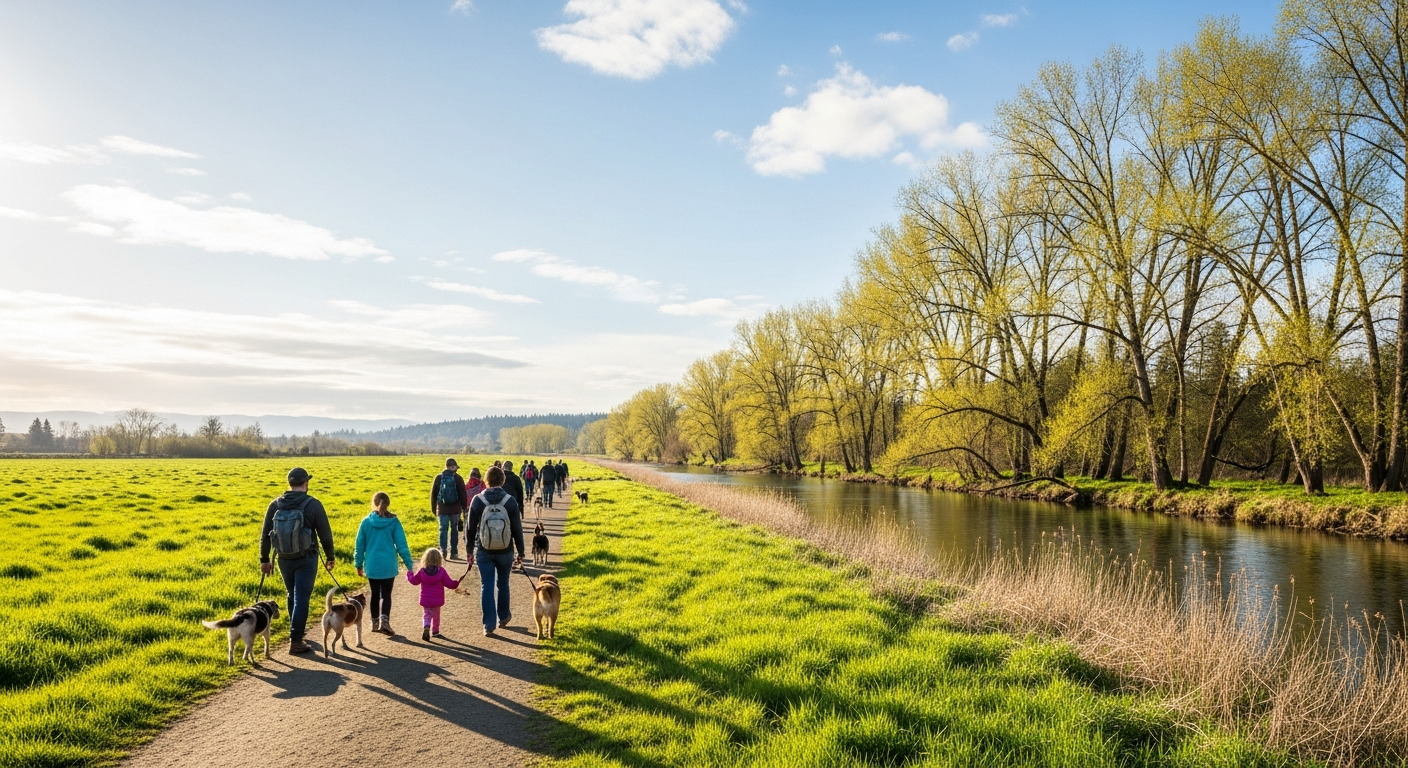
    Bald eagles, osprey, great blue herons, and a rotating cast of shorebirds and waterfowl are reliably present across all seasons. Spring and fall migration windows bring exceptional variety. Even a casual visitor with no birding background will see wildlife within minutes of crossing the Spencer Island bridge.

    The Trail

    The Langus River Front Trail is 3.0 miles of flat, paved path along the Snohomish River — accessible to walkers, joggers, and cyclists. It connects via bridge to the 1.7-mile Spencer Island southern loop on an elevated dike trail with open views across the estuary. Combined: approximately 4.7 miles, 2 to 3 hours at a relaxed pace with wildlife stops.

    No technical gear required. The trail is genuinely flat. Families with strollers can do the Langus section without difficulty.

    What to Bring, What to Pay

    Parking at Langus requires a Washington State Discover Pass ($30/year) or Vehicle Access Pass ($11.50/day). Available at the park kiosk or in advance at discoverpass.wa.gov. The trail and Spencer Island are free once you’ve handled parking.

    Binoculars significantly improve the Spencer Island experience. Water and snacks are essential — there are no services on Spencer Island. Layer up; estuary conditions can be windy regardless of season.

    Combining With Other Everett Stops

    Langus and Spencer Island pair naturally with Everett’s waterfront. Post-hike dining at Waterfront Place at the Port of Everett — with multiple restaurant options open along the marina — is a short drive from the park. The historic Port Gardner neighborhood and Rucker Hill walking tour adds an architectural dimension to the day.

    Frequently Asked Questions

    How far is Langus Riverfront Park from Seattle?

    Approximately 27 miles north of downtown Seattle via I-5 — roughly 30 minutes in off-peak traffic. Take the Marine View Drive exit north of Everett and follow Smith Island Road to the park at 411 Smith Island Rd.

    Is Langus Riverfront Park worth visiting as a day trip?

    Yes. Spencer Island’s 413-acre estuary habitat with 350-plus migratory bird species is among the best wildlife-viewing sites in Puget Sound. Combined with the flat paved Langus trail and river access infrastructure, it’s a genuine half-day outdoors destination.

    What is the admission fee for Spencer Island?

    Spencer Island is free to enter. Parking at Langus Riverfront Park requires a Washington State Discover Pass ($30/year) or Vehicle Access Pass ($11.50/day).

    What is the best time of year to visit Langus and Spencer Island?

    Any season offers wildlife viewing. Spring (March–May) and fall (September–November) are peak migration windows with the highest bird variety. Winter brings overwintering waterfowl. Summer is popular for families and cyclists.
  • FIFA World Cup 2026 Seattle: Why Global Travelers Should Base in Everett

    FIFA World Cup 2026 Seattle: Why Global Travelers Should Base in Everett

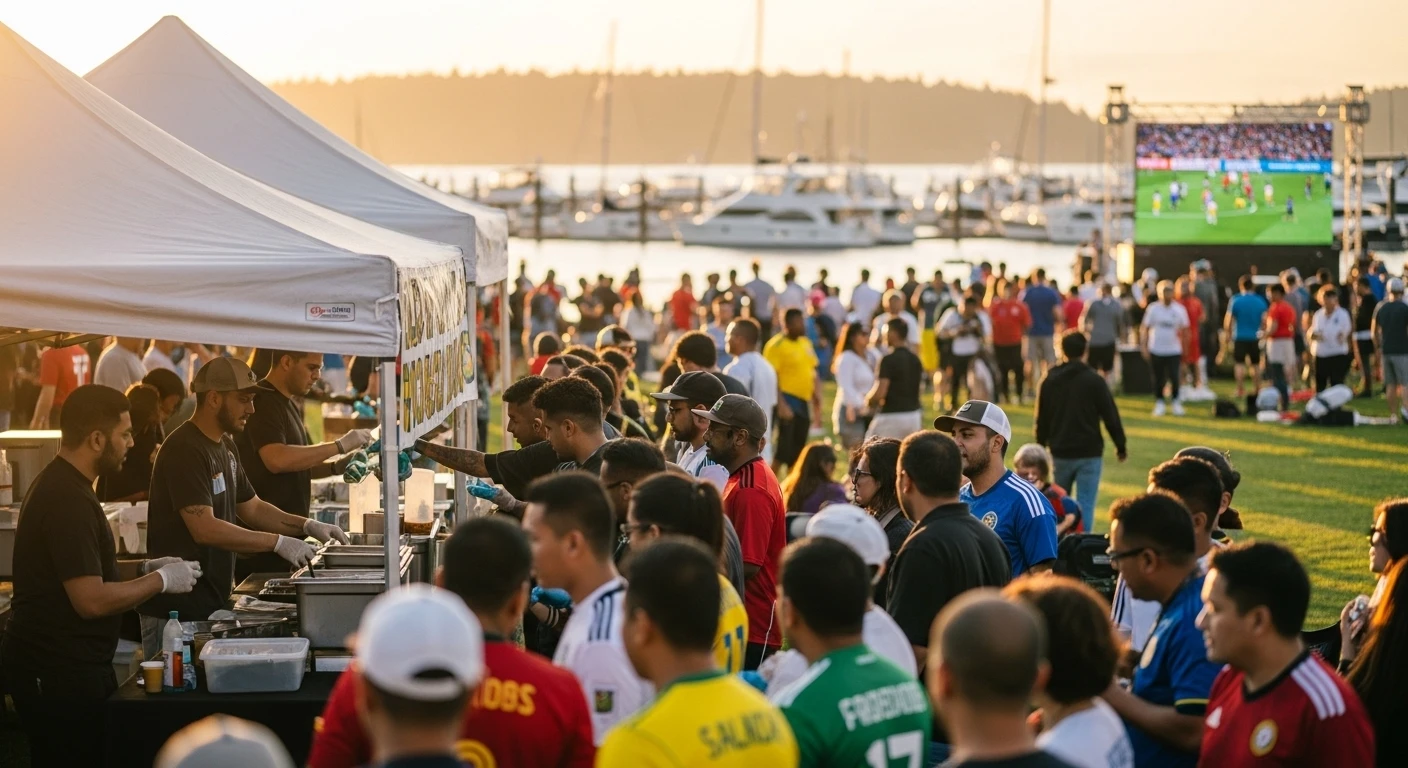
    The 2026 FIFA World Cup brings international soccer to Seattle — and with it, hundreds of thousands of global travelers who will need places to stay, eat, explore, and remember. Seattle’s hotel market will be stretched. Smart travelers are already looking north. Everett, Washington is 25 miles from downtown Seattle, connected by Sounder commuter rail, and sitting on the edge of some of the most dramatic Pacific Northwest scenery on the continent. This is the guide for global travelers who want the World Cup experience without the Seattle price tag.

    Quick facts for international travelers: Seattle is hosting FIFA World Cup 2026 matches at Lumen Field. Everett is 30 minutes north by Sounder commuter rail. The Snohomish County/Everett area offers waterfront hotels, dining, and direct access to the Olympic Peninsula, North Cascades, and San Juan Islands — all within a 90-minute drive.

    Why Everett for FIFA World Cup 2026

    Lumen Field in Seattle is the match venue. But Seattle’s hotel inventory — concentrated in Capitol Hill, South Lake Union, and the waterfront — will be fully booked weeks before the first match. International travelers booking late will find rates at multiples of normal. Everett offers a genuine alternative: a working waterfront city with its own character, direct rail access to Seattle, and a base from which the entire Pacific Northwest is reachable.

    The Sounder North commuter rail runs between Everett and Seattle’s King Street Station. The trip takes approximately 50 minutes and deposits travelers two blocks from Pioneer Square and within a mile of Lumen Field. No rental car, no parking, no traffic. International travelers accustomed to European rail culture will find it a familiar experience.

    Getting from Seattle to Everett

    There are three practical options for match-day travel between Everett and Seattle:

    • Sounder North commuter rail — Direct service, King Street Station to Everett Station. Approximately 50 minutes. Sound Transit operates the line and fares are purchased via the ORCA card system, available at stations.
    • Interstate 5 by car or rideshare — 30 miles, 30–60 minutes depending on traffic. On match days, expect significant congestion southbound. Plan to arrive at least 3 hours before kickoff if driving.
    • Community Transit express bus — Swift bus rapid transit and express routes connect Everett to Seattle with stops at Lynnwood Transit Center, which connects to the Link Light Rail system into downtown Seattle.

    Where to Stay in Everett

    Everett’s hotel stock ranges from major chain properties near the interstate to boutique waterfront options near the marina. The waterfront district — along West Marine View Drive — puts travelers within walking distance of the Port of Everett, restaurants, and the Boxcar Park recreational area. For World Cup visitors, booking 3–6 months in advance is strongly recommended given regional demand.

    The Angel of the Winds Arena entertainment district anchors Everett’s downtown hospitality cluster. Hotels within walking distance of the arena and the Everett Station transit hub offer the most convenient base for rail-dependent travelers.

    Beyond the Match: What to Do in the Everett Area

    The Boeing Future of Flight

    The Boeing Future of Flight Aviation Center in Mukilteo, 10 miles south of Everett, houses the largest building by volume in the world — the Boeing 777X and 787 Dreamliner assembly facility. Tours run daily and offer a genuinely rare industrial experience unavailable anywhere else in the world. International visitors consistently rate it among the most memorable stops in the Pacific Northwest.

    Possession Sound and the Puget Sound Waterways

    Everett sits at the northern tip of Possession Sound, where the Snohomish River delta meets the inland sea of Puget Sound. Washington State Ferries connect Mukilteo (15 minutes from Everett) to Whidbey Island — the largest island in the contiguous United States — with crossings every 30 minutes. A day trip to Whidbey from Everett requires no car if you walk onto the ferry.

    Snohomish River Valley

    The town of Snohomish, 12 miles east of Everett, is a National Register historic district with antique shops, farm-to-table restaurants, and views across the agricultural valley toward the Cascade foothills. For international travelers expecting generic American strip-mall tourism, Snohomish is a reliable corrective.

    Everett as the Gateway to the Olympic Peninsula

    The Olympic Peninsula — home to Olympic National Park, the Hoh Rain Forest, Hurricane Ridge, and the Pacific coastline at Ruby Beach — is 90 minutes to two hours from Everett. The crossing involves the Kingston-Edmonds ferry (20 minutes south of Everett) or the Bainbridge Island ferry from downtown Seattle. World Cup visitors with a rest day between matches have enough time for a meaningful Olympic Peninsula experience: the Hoh Rain Forest and a stretch of Pacific coast can be done in a long day from Everett.

    For International Travelers: Practical Notes

    Washington State has no sales tax on groceries. Tipping is standard at restaurants (18–20%) and for ride services. The US dollar is the currency; credit cards are accepted nearly universally. Cellular coverage in Everett is strong across all major US carriers. The Everett waterfront and downtown core are walkable. Summers in Western Washington are mild — temperatures in July and August (the World Cup period) typically run 65–80°F (18–27°C) with low humidity and long daylight hours.

    Frequently Asked Questions

    How far is Everett from FIFA World Cup 2026 matches in Seattle?

    Everett is approximately 25 miles north of Seattle’s Lumen Field. Sounder North commuter rail makes the trip in about 50 minutes. By car, the drive is 30–60 minutes depending on traffic.

    Is Everett worth visiting during the FIFA World Cup?

    Yes — Everett offers waterfront dining, ferry access to Whidbey Island and the Olympic Peninsula, the Boeing Future of Flight, and lower hotel rates than Seattle. It is a genuine base, not just an overflow option.

    Can I get to Seattle matches from Everett without a car?

    Yes. Sounder North rail connects Everett Station to Seattle’s King Street Station. Community Transit express buses connect to Lynnwood’s Link Light Rail station for an alternative route into downtown Seattle.

    What is the best area to stay in Everett for World Cup visitors?

    The waterfront district and downtown Everett near Everett Station offer the most convenient base for car-free travelers using Sounder rail to reach Seattle matches.


    Also available in: Guía en Español  |  Em Português  |  Auf Deutsch  |  En Français  |  한국어  |  日本語

    Related guides:

  • Copa Mundial FIFA 2026 Seattle: Por Qué los Viajeros Globales Deben Hospedarse en Everett

    Copa Mundial FIFA 2026 Seattle: Por Qué los Viajeros Globales Deben Hospedarse en Everett

    El Mundial FIFA 2026 trae el fútbol internacional a Seattle — y con él, cientos de miles de viajeros globales que necesitarán dónde hospedarse, comer, explorar y crear recuerdos. El mercado hotelero de Seattle estará al límite. Los viajeros inteligentes ya están mirando hacia el norte. Everett, Washington, está a tan solo 40 kilómetros del centro de Seattle, conectada por el tren Sounder, y ubicada al borde de algunos de los paisajes más dramáticos del Pacífico Noroeste.

    Datos rápidos para viajeros internacionales: Seattle es sede de los partidos del Mundial FIFA 2026 en el Lumen Field. Everett está a 30 minutos al norte en el tren Sounder. El área de Everett y el Condado de Snohomish ofrece hoteles frente al agua, restaurantes y acceso directo a la Península Olímpica, las Cascadas del Norte y las Islas San Juan — todo a menos de 90 minutos en automóvil.

    Por qué elegir Everett para el Mundial FIFA 2026

    El Lumen Field en Seattle es el estadio sede. Pero el inventario hotelero de Seattle — concentrado en Capitol Hill, South Lake Union y el malecón — estará completamente reservado semanas antes del primer partido. Los viajeros internacionales que reserven tarde encontrarán tarifas varias veces más caras de lo normal. Everett ofrece una alternativa genuina: una ciudad portuaria con carácter propio, acceso directo en tren a Seattle y una base desde la cual todo el Pacífico Noroeste es accesible.

    El tren Sounder Norte circula entre la Estación de Everett y la King Street Station de Seattle. El trayecto dura aproximadamente 50 minutos y deja a los viajeros a dos cuadras del Pioneer Square y a menos de un kilómetro del Lumen Field. Sin coche de alquiler, sin estacionamiento, sin tráfico.

    Cómo llegar de Seattle a Everett

    Hay tres opciones prácticas para el viaje en días de partido entre Everett y Seattle:

    • Tren Sounder Norte — Servicio directo, King Street Station a Estación Everett. Aproximadamente 50 minutos. Sound Transit opera la línea y las tarifas se compran con la tarjeta ORCA, disponible en las estaciones.
    • Autopista Interestatal 5 en automóvil o servicio de transporte — 48 kilómetros, 30 a 60 minutos según el tráfico. En días de partido, espera congestión considerable hacia el sur. Planea llegar al menos 3 horas antes del partido si vas en auto.
    • Autobús exprés de Community Transit — El Swift BRT y las rutas exprés conectan Everett con Seattle con paradas en el Centro de Tránsito de Lynnwood, que conecta con el Link Light Rail hacia el centro de Seattle.

    Dónde hospedarse en Everett

    La oferta hotelera de Everett va desde grandes cadenas cerca de la autopista hasta opciones boutique frente al agua cerca de la marina. El distrito del malecón — a lo largo de West Marine View Drive — pone a los viajeros a poca distancia a pie del Puerto de Everett, restaurantes y el parque recreativo Boxcar Park. Para los visitantes del Mundial, se recomienda encarecidamente reservar con 3 a 6 meses de anticipación dado la demanda regional.

    Más allá del partido: Qué hacer en el área de Everett

    Boeing Future of Flight

    El Centro de Aviación Boeing Future of Flight en Mukilteo, a 16 kilómetros al sur de Everett, alberga el edificio más grande por volumen del mundo — la planta de ensamblaje del Boeing 777X y 787 Dreamliner. Los tours operan diariamente y ofrecen una experiencia industrial genuinamente única, disponible solo aquí en el mundo.

    Possession Sound y las vías fluviales de Puget Sound

    Everett está en la punta norte de Possession Sound, donde el delta del río Snohomish se encuentra con el mar interior de Puget Sound. Los ferris estatales de Washington conectan Mukilteo (15 minutos de Everett) con la Isla Whidbey — la isla más grande en los estados contiguos de EE. UU. — con cruces cada 30 minutos.

    Valle del Río Snohomish

    La ciudad de Snohomish, a 19 kilómetros al este de Everett, es un distrito histórico del Registro Nacional con tiendas de antigüedades, restaurantes de cocina local y vistas hacia los contrafuertes de las Cascadas. Para los viajeros internacionales que esperan turismo americano genérico, Snohomish es un antídoto confiable.

    Everett como puerta de entrada a la Península Olímpica

    La Península Olímpica — sede del Parque Nacional Olympic, el Bosque Lluvioso Hoh, Hurricane Ridge y la costa del Pacífico en Ruby Beach — está a 90 minutos o dos horas de Everett. El cruce involucra el ferri Kingston-Edmonds (20 minutos al sur de Everett) o el ferri de Bainbridge Island desde el centro de Seattle. Los visitantes del Mundial con un día libre entre partidos tienen tiempo suficiente para una experiencia significativa en la Península Olímpica.

    Notas prácticas para viajeros internacionales

    El Estado de Washington no cobra impuesto a las ventas en alimentos de supermercado. Las propinas son estándar en restaurantes (18 a 20%) y servicios de transporte. El dólar estadounidense es la moneda; las tarjetas de crédito se aceptan casi universalmente. La cobertura celular en Everett es buena con los principales operadores de EE. UU. Los veranos en el oeste de Washington son suaves — las temperaturas en julio y agosto (el período del Mundial) típicamente son de 18 a 27°C con baja humedad y días largos.

    Preguntas frecuentes

    ¿A qué distancia está Everett de los partidos del Mundial FIFA 2026 en Seattle?

    Everett está aproximadamente a 40 kilómetros al norte del Lumen Field en Seattle. El tren Sounder Norte hace el recorrido en unos 50 minutos.

    ¿Vale la pena visitar Everett durante el Mundial FIFA?

    Sí. Everett ofrece restaurantes frente al agua, acceso en ferri a la Isla Whidbey y la Península Olímpica, el Boeing Future of Flight y tarifas de hotel más bajas que Seattle.

    ¿Puedo llegar a los partidos de Seattle desde Everett sin automóvil?

    Sí. El tren Sounder Norte conecta la Estación Everett con la King Street Station de Seattle. Los autobuses exprés de Community Transit ofrecen una ruta alternativa hacia el Link Light Rail del centro de Seattle.


  • Copa do Mundo FIFA 2026 Seattle: Por que Viajantes Globais Devem se Hospedar em Everett

    Copa do Mundo FIFA 2026 Seattle: Por que Viajantes Globais Devem se Hospedar em Everett

    A Copa do Mundo FIFA 2026 traz o futebol internacional para Seattle — e com ele, centenas de milhares de viajantes globais que precisarão de lugares para se hospedar, comer, explorar e criar memórias. O mercado hoteleiro de Seattle estará no limite. Os viajantes inteligentes já estão olhando para o norte. Everett, Washington, fica a apenas 40 quilômetros do centro de Seattle, conectada pelo trem Sounder, e situada na beira de algumas das paisagens mais dramáticas do Noroeste do Pacífico do continente.

    Dados rápidos para viajantes internacionais: Seattle é sede das partidas da Copa do Mundo FIFA 2026 no Lumen Field. Everett fica a 30 minutos ao norte pelo trem Sounder. A área de Everett e o Condado de Snohomish oferecem hotéis à beira-mar, restaurantes e acesso direto à Península Olímpica, às Cascatas do Norte e às Ilhas San Juan — tudo a menos de 90 minutos de carro.

    Por que Everett para a Copa do Mundo FIFA 2026

    O Lumen Field em Seattle é o estádio sede. Mas o inventário de hotéis de Seattle — concentrado em Capitol Hill, South Lake Union e à beira-mar — estará completamente reservado semanas antes do primeiro jogo. Viajantes internacionais que reservarem tarde encontrarão tarifas várias vezes acima do normal. Everett oferece uma alternativa genuína: uma cidade portuária com caráter próprio, acesso direto de trem para Seattle e uma base a partir da qual todo o Noroeste do Pacífico é acessível.

    O trem Sounder Norte circula entre a Estação Everett e a King Street Station de Seattle. A viagem leva aproximadamente 50 minutos e deixa os viajantes a dois quarteirões do Pioneer Square e a menos de um quilômetro do Lumen Field. Sem carro alugado, sem estacionamento, sem trânsito.

    Como chegar de Seattle a Everett

    Há três opções práticas para a viagem nos dias de jogo entre Everett e Seattle:

    • Trem Sounder Norte — Serviço direto, King Street Station à Estação Everett. Aproximadamente 50 minutos. A Sound Transit opera a linha e as tarifas são compradas pelo sistema de cartão ORCA, disponível nas estações.
    • Rodovia Interestadual 5 de carro ou aplicativo de transporte — 48 quilômetros, 30 a 60 minutos dependendo do trânsito. Nos dias de jogo, espere congestionamento considerável em direção ao sul. Planeje chegar pelo menos 3 horas antes do jogo se for de carro.
    • Ônibus expresso da Community Transit — O Swift BRT e as rotas expressas conectam Everett a Seattle com paradas no Centro de Trânsito de Lynnwood, que conecta ao Link Light Rail para o centro de Seattle.

    Onde se hospedar em Everett

    A oferta hoteleira de Everett vai de grandes redes próximas à rodovia até opções boutique à beira-mar perto da marina. O distrito da orla — ao longo da West Marine View Drive — coloca os viajantes a poucos passos do Porto de Everett, restaurantes e o parque recreativo Boxcar Park. Para os visitantes da Copa, é fortemente recomendável reservar com 3 a 6 meses de antecedência dado a demanda regional.

    Além do jogo: O que fazer na área de Everett

    Boeing Future of Flight

    O Centro de Aviação Boeing Future of Flight em Mukilteo, a 16 quilômetros ao sul de Everett, abriga o maior edifício por volume do mundo — a fábrica de montagem do Boeing 777X e 787 Dreamliner. Os tours funcionam diariamente e oferecem uma experiência industrial genuinamente única, disponível apenas aqui no mundo. Visitantes internacionais consistentemente classificam esta como uma das paradas mais memoráveis no Noroeste do Pacífico.

    Possession Sound e as vias fluviais de Puget Sound

    Everett fica na ponta norte de Possession Sound, onde o delta do rio Snohomish encontra o mar interior de Puget Sound. As balsas do Estado de Washington conectam Mukilteo (15 minutos de Everett) à Ilha Whidbey — a maior ilha nos estados contíguos dos EUA — com travessias a cada 30 minutos.

    Everett como portal para a Península Olímpica

    A Península Olímpica — lar do Parque Nacional Olympic, a Floresta Chuvosa Hoh, Hurricane Ridge e a costa do Pacífico em Ruby Beach — fica a 90 minutos a duas horas de Everett. Os visitantes da Copa com um dia livre entre as partidas têm tempo suficiente para uma experiência significativa na Península Olímpica: a Floresta Chuvosa Hoh e um trecho da costa do Pacífico podem ser feitos em um longo dia a partir de Everett.

    Notas práticas para viajantes internacionais

    O Estado de Washington não cobra imposto sobre vendas em alimentos de supermercado. Gorjetas são padrão em restaurantes (18 a 20%) e serviços de transporte. O dólar americano é a moeda; cartões de crédito são aceitos quase universalmente. A cobertura celular em Everett é forte com as principais operadoras americanas. Os verões no oeste de Washington são amenos — as temperaturas em julho e agosto (o período da Copa) tipicamente ficam entre 18 e 27°C com baixa umidade e dias longos.

    Perguntas frequentes

    A que distância fica Everett dos jogos da Copa do Mundo FIFA 2026 em Seattle?

    Everett fica aproximadamente a 40 quilômetros ao norte do Lumen Field em Seattle. O trem Sounder Norte faz o percurso em cerca de 50 minutos.

    Vale a pena visitar Everett durante a Copa do Mundo FIFA?

    Sim. Everett oferece restaurantes à beira-mar, acesso de balsa à Ilha Whidbey e à Península Olímpica, o Boeing Future of Flight e tarifas de hotel mais baixas do que Seattle.

    Posso chegar aos jogos de Seattle a partir de Everett sem carro?

    Sim. O trem Sounder Norte conecta a Estação Everett à King Street Station de Seattle em aproximadamente 50 minutos. Os ônibus expressos da Community Transit oferecem uma rota alternativa para o Link Light Rail do centro de Seattle.


  • Belfair Commute Briefing — Monday, April 27, 2026

    Belfair Commute Briefing — Monday, April 27, 2026

    Quick read for North Mason commuters. Last updated 5:15 AM PT, Monday, April 27, 2026.

    The big story this morning is on the Bainbridge run, not Bremerton — but it’s worth knowing about because it tightens fleet capacity across Puget Sound. The Wenatchee is out of service to start the day on the Seattle/Bainbridge route due to a crew shortage, and WSF maintenance crews start a week of emergency dock repairs at Fauntleroy this morning. SR-3 and Gorst look clean for the AM commute. Mostly cloudy skies, dry, light winds. Here’s the full briefing.

    Bremerton–Seattle Ferry

    No cancellations on the Bremerton–Seattle route this morning. The route is running its scheduled Spring 2026 sailings. Worth flagging for cross-route awareness: the Wenatchee is out of service on the Seattle/Bainbridge run due to a crew shortage, with the 4:45 AM Bainbridge departure and 5:30 AM Seattle departure cancelled — subsequent vessel #1 sailings on Bainbridge may also be affected. If you typically connect through Bainbridge, plan to use vessel #2 sailings.

    At Colman Dock, the elevator situation has improved but isn’t fully resolved. The Alaskan Way #4 elevator is the only one in service due to ongoing mechanical issues. WSF is working with vendors on repairs.

    Hood Canal Bridge

    Open and operating normally. The two-week WSDOT bridge inspection schedule (April 13–24) wrapped up Friday, so no scheduled daytime closures this week. Expect normal openings for marine traffic only.

    SR-3 / Gorst

    Clean for the AM commute. The Gorst fish barrier project remains in nighttime-only work mode, with no daytime impact. The 16-day around-the-clock closure of SR-3 near Sunnyslope Road SW is still scheduled for late spring or early summer 2026 — WSDOT will give advance notice when the dates are locked. Detours when it lands: Sunnyslope Road SW + SW Lake Flora Road for general traffic, NE Old Belfair Highway / W Belfair Valley Road for walk/bike, and SR-16 / SR-302 for commercial vehicles.

    Fauntleroy Terminal — New This Week

    Heads up for anyone routing through Fauntleroy: emergency repairs to the vehicle transfer span begin today, Monday April 27, and run through about Friday. Crews work 9 AM to 3 PM on weekdays — outside the AM and PM peak — but only one lane will be available for vehicle loading and unloading during that window, so expect delays. Delays could extend past 3 PM. The work is loud equipment, hence the daytime schedule. Not a safety issue, just maintenance.

    PSNS / Bangor

    No public alerts at the gates. Trident Gate at NBK-Bangor open 24 hours. Trigger Gate runs M–F 0500–1930 as usual. PSNS Bremerton operating standard access.

    Weather

    Cloudy this morning, gradually becoming mostly sunny by afternoon. High near 61°F. South-southwest wind 5 to 11 mph. No advisories in effect for Mason or Kitsap Counties. Currently 47°F at Bremerton National Airport with 92% humidity. Easy driving conditions — no fog, ice, or rain to worry about.

    Fuel Prices

    Belfair regular unleaded: Chevron at 23880 NE WA-3 leading at $4.89/gal. Safeway at 23961 NE WA-3 at $4.99/gal. Other Belfair stations running $5.39 to $5.59/gal range.

    Safe travels, North Mason. Briefing timestamp: April 27, 2026, 5:15 AM PT.

  • Relocating to Northwest Everett in 2026: The Complete New Resident Guide for Buyers Moving from Seattle, King County, or Out of State

    Relocating to Northwest Everett in 2026: The Complete New Resident Guide for Buyers Moving from Seattle, King County, or Out of State

    Thinking about relocating to Everett, Washington? Northwest Everett is one of the strongest choices in Snohomish County for buyers coming from Seattle, King County, or out of state who want a walkable, historic neighborhood with water access and a price point 30–40% below comparable Seattle neighborhoods. Here’s what new residents need to know before making an offer.

    Why New Residents Choose Northwest Everett

    The calculation for most relocating buyers is straightforward: pre-1920 Craftsman and foursquare homes, a walkable grid, direct views of Port Gardner Bay and the Olympic Mountains, and entry-level prices roughly half of comparable Seattle neighborhoods like Queen Anne or Ballard. A fully restored Grand Avenue home with water views runs just over $1 million in 2026 — a figure that would buy a 1,200-square-foot Ballard condo. That price gap, combined with the neighborhood’s intact historic character, is the single biggest reason transplants pick Northwest Everett over alternatives further south.

    What to Budget Beyond the Purchase Price

    Older homes carry older systems. Buyers coming from newer construction should budget for knob-and-tube electrical remediation if the home hasn’t been rewired, asbestos testing in basements and original ductwork, lead-based paint disclosures on any home built before 1978, and chimney and foundation inspections on the oldest Grand Avenue stock. Home inspectors in Everett who specialize in pre-1920 housing are a known short list — ask your agent for the three or four names they trust on historic homes before scheduling an inspection. Rehabilitation loans, including FHA 203(k) and similar products, are actively used in the neighborhood and worth understanding before writing an offer on a fixer.

    Commute Realities for New Residents

    Commuting from Northwest Everett depends heavily on where you work. For Boeing Everett and Paine Field workers, the drive south on I-5 to the 526 interchange is a 15–20 minute commute outside peak hours. For downtown Seattle commuters, the Sounder commuter rail from Everett Station is the practical option — a 10-minute drive or bus ride from the neighborhood, then a 60-minute train ride to King Street Station. Commuters who rely on buses should pay close attention to the Community Transit merger timeline, which is phasing through 2027 and will eventually unify Everett Transit and CT service under a single fare system. For new residents the takeaway is that the commute picture is actively improving, not deteriorating.

    Schools for Relocating Families

    Family buyers should map their exact block against Everett Public Schools boundaries before making an offer — elementary boundary lines for View Ridge and Hawthorne run through the neighborhood and can change which school a child attends within a single street. Middle school is North Middle School. High school is Everett High School, the 1910 historic building on Colby that serves as the neighborhood’s most visible civic landmark. Running Start at EvCC is a practical option for high-schoolers who want to start college coursework early on the adjacent campus.

    The First 30 Days: What to Set Up

    New residents should plan to set up Snohomish County PUD electric service, Puget Sound Energy natural gas (most older homes are gas-heated), Everett water and sewer billing, and Waste Management trash and recycling. The Everett Public Library main branch at 2702 Hoyt issues library cards same-day with a utility bill and ID. Voter registration through Snohomish County Elections is straightforward online. For residents coming from out of state, Washington driver’s license conversion needs to happen within 30 days of establishing residency — the nearest Department of Licensing office is on Broadway.

    The 2026 Civic Picture

    Two local civic decisions are worth watching as you settle in. The Everett Charter Review process is actively evaluating changes to city government structure, and the outcomes could affect everything from how city council districts are drawn to how the mayor relates to the council. The parallel Snohomish County Charter Review is doing the same at the county level. New residents should subscribe to city council agendas and attend at least one charter review session in their first six months — the decisions being finalized in 2026 and early 2027 will shape the neighborhood’s civic environment for the next decade.

    Related Coverage From Tygart Media’s Exploring Everett Series

  • Moving to Everett? Here’s What Sound Transit’s Light Rail Uncertainty Means for You

    Moving to Everett? Here’s What Sound Transit’s Light Rail Uncertainty Means for You


    Q: Can I ride light rail from Everett to Seattle?
    A: Not yet from Everett itself — but you can already connect. Lynnwood Link opened in 2024, with trains running to Lynnwood City Center station. Community Transit buses connect Everett to Lynnwood for the light rail transfer. Direct light rail to Everett Station is projected for 2037-2041, depending on Sound Transit’s summer 2026 decisions.

    Moving to Everett? Here’s What Sound Transit’s Light Rail Uncertainty Means for You

    One of the most common questions from people considering a move to Everett is the commute question: can I realistically get to Seattle without a car? The answer in 2026 is: yes, with transfers — and possibly via direct light rail by 2037 to 2041, depending on a critical Sound Transit Board vote coming this summer.

    Here’s the honest picture for people who are choosing a home in Everett with one eye on future transit.

    What Exists Right Now: The Lynnwood Transfer

    Lynnwood Link light rail opened in 2024, extending Seattle’s Link light rail network to Lynnwood City Center station — about 15 miles south of downtown Everett. From Everett, Community Transit’s Swift Blue Line BRT and express bus routes connect to Lynnwood City Center in 20-35 minutes, depending on your Everett starting point.

    From Lynnwood, Link light rail carries you to the University of Washington in about 22 minutes and to downtown Seattle (Westlake Station) in about 35 minutes. Total Everett-to-Seattle time via transit: approximately 65-80 minutes, depending on connections. By car, the same trip takes 30-45 minutes off-peak and can exceed 90 minutes during peak hours — with the added cost of parking, which in downtown Seattle often runs $25-40 per day or $300-400 per month.

    The Promise: Direct Light Rail to Everett Station

    The Everett Link Extension — voted for by Puget Sound residents in 2016 — would add six stations connecting Lynnwood Link north through Mariner, Paine Field, and ultimately to Everett Station in downtown Everett. When complete, a rider at Everett Station would be able to board light rail directly and reach downtown Seattle in roughly 55-65 minutes, with no transfers.

    That direct connection would meaningfully change what it means to live in Everett and work in Seattle — or work at Boeing’s Paine Field campus and live in Seattle. It’s the kind of transit investment that anchors long-term real estate value and livability.

    The 2026 Crisis: Costs Have Climbed Sharply

    As of spring 2026, Sound Transit faces costs for the Everett extension that have climbed between $200 million and $1.1 billion above the original $6.6 billion estimate — putting the total at potentially $7.7 billion. The agency has described a $34.5 billion system-wide budget gap driven by inflation, tariffs on construction materials, labor shortages, and rising right-of-way costs.

    The Sound Transit Board is weighing at least three scenarios for restructuring the ST3 System Plan, with a decision expected in summer 2026. One scenario would not complete the connection to Everett Station — instead stopping the extension at or near Paine Field. That outcome would leave Everett Station without direct light rail for years beyond current projections.

    What This Means If You’re Choosing a Neighborhood Now

    If you’re buying a home or signing a lease in Everett in 2026, here’s the practical reality to factor in:

    Near Everett Station (Broadway, Bayside, downtown core): These neighborhoods benefit most from a completed light rail extension to Everett Station — and face the most disappointment if that scenario is deferred. Right now, Community Transit’s express bus connections to Lynnwood are your best transit option. The downtown core has walkable services and Everett Station’s existing Amtrak Cascades and Sounder connections.

    Near Paine Field / Casino Road / SW Everett: The Paine Field station appears to be preserved in all Sound Transit scenarios, meaning transit access to the SW industrial corridor may arrive on a relatively consistent 2037 timeline regardless of what happens to Everett Station.

    Neighborhoods near I-5 (Everett Way, Beverly/Bayside): Good access to express buses running south along the corridor to Lynnwood Link. Current transit commute times to Seattle via Lynnwood transfer are manageable for daily commuters.

    Comparing Everett to Alternatives

    For context: moving to Everett in 2026 puts you approximately 30-35 miles north of Seattle. Comparable Seattle-area transit commutes: Tacoma to Seattle (55 miles) via Sounder takes 63 minutes; Bellevue to Seattle (10 miles) via Link takes 22 minutes; Redmond to Seattle (15 miles) via Link takes 30 minutes. Everett’s Lynnwood transfer option compares favorably to Tacoma’s commute and unfavorably to Eastside options.

    Everett’s median home price of approximately $530,000 (2026) versus Seattle’s $850,000-plus median makes the commute tradeoff financially significant for many buyers.

    For more context on Everett neighborhoods, see our coverage of Casino Road’s South Everett community, the complete Sound Transit Extension guide, and Lowell, Everett’s oldest neighborhood.

    FAQ: Light Rail and Moving to Everett

    Is there light rail in Everett right now?

    No direct light rail in Everett yet. Lynnwood Link, which opened in 2024, extends to Lynnwood City Center station about 15 miles south. Community Transit buses connect Everett to Lynnwood for the transfer to Link.

    When will light rail reach Everett Station?

    Sound Transit currently estimates 2037-2041, subject to the Board’s summer 2026 decisions. One scenario under consideration would not complete the Everett Station connection.

    How long does the commute from Everett to Seattle take on transit?

    Currently, approximately 65-80 minutes via Community Transit to Lynnwood Link, then Link to downtown Seattle. By car in off-peak traffic, 30-45 minutes; peak hours can exceed 90 minutes on I-5.

    Will property values near Everett Station increase if light rail is built?

    Light rail stations consistently increase property values in surrounding areas. Studies of completed Link stations show 10-25% value premiums within a quarter mile of stations over a 5-10 year period. Everett Station-area properties have partially priced in the anticipated extension — the unresolved timeline creates some pricing uncertainty.

    What Community Transit routes connect Everett to Lynnwood Link?

    Community Transit Swift Blue Line BRT and express routes 113, 201, and 202 connect Everett to Lynnwood City Center station. Check commute options at commutransit.org.