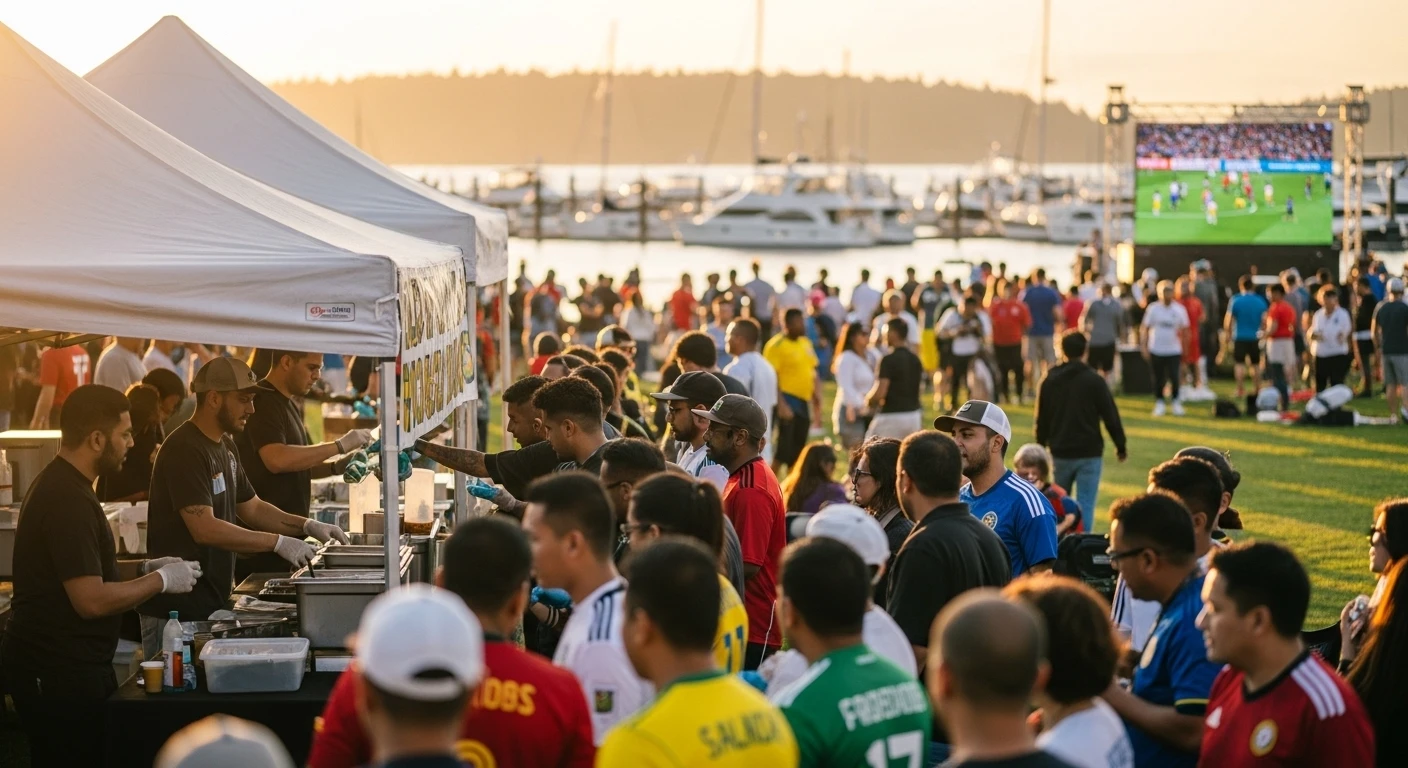
Tag: FIFA World Cup 2026

  • FIFA World Cup 2026 Seattle: Why Global Travelers Should Base in Everett

    FIFA World Cup 2026 Seattle: Why Global Travelers Should Base in Everett

    The 2026 FIFA World Cup brings international soccer to Seattle — and with it, hundreds of thousands of global travelers who will need places to stay, eat, explore, and remember. Seattle’s hotel market will be stretched. Smart travelers are already looking north. Everett, Washington is 25 miles from downtown Seattle, connected by Sounder commuter rail, and sitting on the edge of some of the most dramatic Pacific Northwest scenery on the continent. This is the guide for global travelers who want the World Cup experience without the Seattle price tag.

    Quick facts for international travelers: Seattle is hosting FIFA World Cup 2026 matches at Lumen Field. Everett is 30 minutes north by Sounder commuter rail. The Snohomish County/Everett area offers waterfront hotels, dining, and direct access to the Olympic Peninsula, North Cascades, and San Juan Islands — all within a 90-minute drive.

    Why Everett for FIFA World Cup 2026

    Lumen Field in Seattle is the match venue. But Seattle’s hotel inventory — concentrated in Capitol Hill, South Lake Union, and the waterfront — will be fully booked weeks before the first match. International travelers booking late will find rates at multiples of normal. Everett offers a genuine alternative: a working waterfront city with its own character, direct rail access to Seattle, and a base from which the entire Pacific Northwest is reachable.

    The Sounder North commuter rail runs between Everett and Seattle’s King Street Station. The trip takes approximately 50 minutes and deposits travelers two blocks from Pioneer Square and within a mile of Lumen Field. No rental car, no parking, no traffic. International travelers accustomed to European rail culture will find it a familiar experience.

    Getting from Seattle to Everett

    There are three practical options for match-day travel between Everett and Seattle:

    • Sounder North commuter rail — Direct service, King Street Station to Everett Station. Approximately 50 minutes. Sound Transit operates the line and fares are purchased via the ORCA card system, available at stations.
    • Interstate 5 by car or rideshare — 30 miles, 30–60 minutes depending on traffic. On match days, expect significant congestion southbound. Plan to arrive at least 3 hours before kickoff if driving.
    • Community Transit express bus — Swift bus rapid transit and express routes connect Everett to Seattle with stops at Lynnwood Transit Center, which connects to the Link Light Rail system into downtown Seattle.

    Where to Stay in Everett

    Everett’s hotel stock ranges from major chain properties near the interstate to boutique waterfront options near the marina. The waterfront district — along West Marine View Drive — puts travelers within walking distance of the Port of Everett, restaurants, and the Boxcar Park recreational area. For World Cup visitors, booking 3–6 months in advance is strongly recommended given regional demand.

    The Angel of the Winds Arena entertainment district anchors Everett’s downtown hospitality cluster. Hotels within walking distance of the arena and the Everett Station transit hub offer the most convenient base for rail-dependent travelers.

    Beyond the Match: What to Do in the Everett Area

    The Boeing Future of Flight

    The Boeing Future of Flight Aviation Center in Mukilteo, 10 miles south of Everett, houses the largest building by volume in the world — the Boeing 777X and 787 Dreamliner assembly facility. Tours run daily and offer a genuinely rare industrial experience unavailable anywhere else in the world. International visitors consistently rate it among the most memorable stops in the Pacific Northwest.

    Possession Sound and the Puget Sound Waterways

    Everett sits at the northern tip of Possession Sound, where the Snohomish River delta meets the inland sea of Puget Sound. Washington State Ferries connect Mukilteo (15 minutes from Everett) to Whidbey Island — the largest island in the contiguous United States — with crossings every 30 minutes. A day trip to Whidbey from Everett requires no car if you walk onto the ferry.

    Snohomish River Valley

    The town of Snohomish, 12 miles east of Everett, is a National Register historic district with antique shops, farm-to-table restaurants, and views across the agricultural valley toward the Cascade foothills. For international travelers expecting generic American strip-mall tourism, Snohomish is a reliable corrective.

    Everett as the Gateway to the Olympic Peninsula

    The Olympic Peninsula — home to Olympic National Park, the Hoh Rain Forest, Hurricane Ridge, and the Pacific coastline at Ruby Beach — is 90 minutes to two hours from Everett. The crossing involves the Kingston-Edmonds ferry (20 minutes south of Everett) or the Bainbridge Island ferry from downtown Seattle. World Cup visitors with a rest day between matches have enough time for a meaningful Olympic Peninsula experience: the Hoh Rain Forest and a stretch of Pacific coast can be done in a long day from Everett.

    For International Travelers: Practical Notes

    Washington State has no sales tax on groceries. Tipping is standard at restaurants (18–20%) and for ride services. The US dollar is the currency; credit cards are accepted nearly universally. Cellular coverage in Everett is strong across all major US carriers. The Everett waterfront and downtown core are walkable. Summers in Western Washington are mild — temperatures in July and August (the World Cup period) typically run 65–80°F (18–27°C) with low humidity and long daylight hours.

    Frequently Asked Questions

    How far is Everett from FIFA World Cup 2026 matches in Seattle?

    Everett is approximately 25 miles north of Seattle’s Lumen Field. Sounder North commuter rail makes the trip in about 50 minutes. By car, the drive is 30–60 minutes depending on traffic.

    Is Everett worth visiting during the FIFA World Cup?

    Yes — Everett offers waterfront dining, ferry access to Whidbey Island and the Olympic Peninsula, the Boeing Future of Flight, and lower hotel rates than Seattle. It is a genuine base, not just an overflow option.

    Can I get to Seattle matches from Everett without a car?

    Yes. Sounder North rail connects Everett Station to Seattle’s King Street Station. Community Transit express buses connect to Lynnwood’s Link Light Rail station for an alternative route into downtown Seattle.

    What is the best area to stay in Everett for World Cup visitors?

    The waterfront district and downtown Everett near Everett Station offer the most convenient base for car-free travelers using Sounder rail to reach Seattle matches.


    Also available in: Guía en Español  |  Em Português  |  Auf Deutsch  |  En Français  |  한국어  |  日本語

    Related guides:

  • Olympic Peninsula Day Trips for FIFA World Cup 2026 Visitors

    Olympic Peninsula Day Trips for FIFA World Cup 2026 Visitors

    The FIFA World Cup 2026 brings the world to Seattle — and within two hours of the match venue at Lumen Field sits one of the most ecologically diverse and visually dramatic landscapes in North America. The Olympic Peninsula is home to temperate rainforest, glaciated peaks, wild Pacific coast, and tribal cultural heritage that exists nowhere else on Earth. For international travelers with a rest day between matches, the Olympic Peninsula is the day trip that makes the trip.

    At a glance: The Olympic Peninsula is a 3,600-square-mile landmass west of Puget Sound, accessible by Washington State Ferry from Seattle or Edmonds. It contains Olympic National Park — a UNESCO World Heritage Site and International Biosphere Reserve — encompassing glacier-capped peaks, the Hoh Rain Forest (one of only four temperate rainforests in the world), 73 miles of wild Pacific coastline, and the Elwha River watershed.

    Getting to the Olympic Peninsula from Seattle During World Cup

    There are two ferry routes that connect the Seattle metro area to the Olympic Peninsula:

    • Seattle Colman Dock to Bainbridge Island — Washington State Ferries runs frequent crossings (35 minutes) from Seattle’s downtown waterfront. From Bainbridge Island, drive approximately 90 minutes on Highway 101 to reach Port Angeles or the park entrance at Heart o’ the Hills.
    • Edmonds to Kingston — A shorter crossing (25 minutes) that connects from Edmonds (30 minutes north of Seattle, accessible via Sounder rail) to Kingston on the Kitsap Peninsula. From Kingston, the drive to Sequim or Port Angeles is approximately 75 minutes.

    During World Cup periods, ferries will be busy. Washington State Ferries operates on a first-come, first-served basis for vehicles — arriving 30–60 minutes before departure is strongly recommended. Walk-on passengers have priority boarding. Travelers without cars can walk onto the ferry and rent a car or join a tour in Port Angeles or Sequim.

    Three Olympic Peninsula Day Trips for World Cup Visitors

    Day Trip 1: Hoh Rain Forest and the Pacific Coast

    The Hoh Rain Forest — located in the western interior of Olympic National Park — receives up to 140 inches of rainfall annually, producing a forest ecosystem of ancient Sitka spruce, western red cedar, and big-leaf maple draped in club moss. The Hall of Mosses trail (0.8 miles, easy) is one of the most photographed forest landscapes in North America. From the Hoh, a 40-minute drive reaches Ruby Beach on the Pacific coast — a stretch of wild shoreline with sea stacks, tide pools, and driftwood at a scale uncommon in Europe or Asia.

    This day trip requires a full day from Seattle or Everett: 2.5 hours each way. Best done with a car, depart by 7am. Olympic National Park entrance fee applies (currently $35 per vehicle, or covered by America the Beautiful annual pass).

    Day Trip 2: Hurricane Ridge and Port Angeles

    Hurricane Ridge sits at 5,242 feet elevation in the Olympic Mountains, accessible by a 17-mile paved road from Port Angeles. In summer, the ridge offers panoramic views of the Olympic Range, the Strait of Juan de Fuca, and Vancouver Island in Canada. Wildflowers bloom through July and August. Black-tailed deer are commonly encountered on the meadow trails. The drive from Port Angeles takes approximately 45 minutes.

    Port Angeles is the peninsula’s largest city and a working port town with a strong fishing heritage. The waterfront Feiro Marine Life Center offers tide pool and marine mammal exhibits. The downtown Farmers Market (seasonal) showcases Olympic Peninsula food producers. From Port Angeles, the Black Ball Ferry connects to Victoria, British Columbia — for travelers wanting to combine a Canada border crossing with their Olympic Peninsula day.

    Day Trip 3: Sequim and the Dungeness Spit

    Sequim (pronounced “skwim”) sits in the rain shadow of the Olympic Mountains and receives only 16 inches of rainfall annually — dramatically less than Seattle’s 38 inches. The town is known for its lavender farms (Jardin du Soleil, Purple Haze Lavender, and others), which bloom in July. The Dungeness National Wildlife Refuge protects the Dungeness Spit — the longest natural sand spit in the United States, extending 5.5 miles into the Strait of Juan de Fuca. The trail to the lighthouse at the spit’s end is a 10-mile round trip.

    Sequim is approximately 75 minutes from the Edmonds-Kingston ferry landing, making it the most accessible Olympic Peninsula destination for travelers based in Everett or north Seattle.

    Mason County: The Eastern Gateway to the Peninsula

    Mason County sits at the southeastern entrance to the Olympic Peninsula, anchored by the city of Shelton and the Hood Canal — a natural fjord that separates the Kitsap and Olympic peninsulas. The Hood Canal is a world-class oyster growing region; Taylor Shellfish Farms operates a retail oyster farm in Shelton that sells directly to the public. For international travelers accustomed to European oyster culture, the Hood Canal oyster experience is a genuine peer.

    Lake Cushman, in the northern part of Mason County, is a reservoir at the foot of the Olympic Mountains offering swimming, kayaking, and trailhead access into the Staircase area of Olympic National Park. The drive from Shelton to Staircase takes approximately 40 minutes.

    Practical Notes for International Visitors

    Olympic National Park requires an entrance fee — America the Beautiful annual passes (available at any park entrance) cover unlimited entry to all US national parks and federal recreation areas for one year. Washington State Ferry fares vary by route and season; the WSDOT Ferries app shows real-time capacity and scheduling. Cell coverage in the Olympic Peninsula interior is limited — download offline maps before departure. Gas stations are sparse in the park interior; fill up in Port Angeles or Forks before entering the western rainforest zone.

    Frequently Asked Questions

    How do you get to the Olympic Peninsula from Seattle without a car?

    Walk onto the Washington State Ferry from Colman Dock to Bainbridge Island (35 minutes), then arrange car rental or a guided tour in Poulsbo or Port Angeles. Olympic Bus Lines operates shuttle service between Port Angeles and Seattle.

    Is the Olympic Peninsula worth a full day trip during the FIFA World Cup?

    Yes — the Hoh Rain Forest, Hurricane Ridge, and the Pacific coast at Ruby Beach are world-class natural destinations with no equivalent in the FIFA host cities. International travelers consistently rate Olympic National Park among the most memorable US experiences.

    What is the closest Olympic Peninsula destination to Seattle?

    Sequim and the Dungeness Spit are the closest accessible destinations — approximately 2 hours from downtown Seattle via the Bainbridge ferry, or 90 minutes via the Edmonds-Kingston ferry from north Seattle or Everett.

    Do I need a car to visit Olympic National Park?

    A car makes the Olympic Peninsula significantly more accessible, but Olympic Bus Lines and guided tour operators offer car-free options from Port Angeles, which is reachable by Clallam Transit from the Kingston ferry terminal.


    Also available in: Guía en Español  |  Auf Deutsch  |  En Français  |  한국어  |  日本語

    Related guides:

  • Belfair and Mason County for FIFA World Cup 2026 Visitors: The Quiet Pacific Northwest Alternative

    Belfair and Mason County for FIFA World Cup 2026 Visitors: The Quiet Pacific Northwest Alternative

    When FIFA World Cup 2026 matches fill Seattle’s hotels and push international visitors to search wider, most will look north to Everett or east to Bellevue. The travelers who look west — across the Puget Sound via ferry to Mason County and the community of Belfair — will find something the others won’t: quiet, water, forest, and the genuine Pacific Northwest that Seattle’s tourist infrastructure has largely paved over.

    Mason County at a glance: Mason County occupies the southeastern corner of the Olympic Peninsula, bordered by Hood Canal to the west and the southern reach of Puget Sound to the east. The county seat is Shelton. The community of Belfair sits at the southern tip of Hood Canal — a natural fjord renowned for shellfish growing, recreational diving, and views across the water to the Olympic Mountains. Population: approximately 66,000. Distance from Seattle: 60 miles by road, or 30 miles via the Bremerton ferry.

    Why Mason County for FIFA World Cup Visitors

    The practical case is simple: hotel inventory in the greater Seattle area will be severely constrained during World Cup match periods. Mason County offers lodging options — vacation rentals, small inns, and campgrounds — that will remain available and affordable when Seattle, Bellevue, and Everett are fully booked. The strategic case is more interesting: Mason County is where the Pacific Northwest actually lives.

    Hood Canal oysters are harvested a few miles from where travelers sleep. The Olympic Mountains are visible from the waterfront. Black bears are real wildlife, not zoo exhibits. The Skokomish Nation, one of nine federally recognized tribes on the Olympic Peninsula, has cultural presence and history here that international visitors rarely encounter in urban tourism circuits.

    Getting from Mason County to Seattle Matches

    Mason County is accessible from Seattle by two routes:

    • Washington State Ferry: Seattle to Bremerton — A 60-minute crossing from Colman Dock in downtown Seattle lands travelers in Bremerton (Kitsap County). Belfair is 20 miles south of Bremerton on Highway 3. Total travel time from downtown Seattle: approximately 90 minutes. Walk-on passengers can take a Kitsap Transit bus from the Bremerton ferry terminal toward Belfair.
    • Overland via Highway 16 and Highway 3 — From Seattle, cross the Tacoma Narrows Bridge and drive north on Highway 3 through Bremerton. Drive time is 75–90 minutes without traffic; on match days, add 30–60 minutes for congestion in the Tacoma and Bremerton corridors.

    For World Cup visitors, the ferry route is the better experience — the crossing through Puget Sound offers views of the Seattle skyline, Mount Rainier, and the Olympic Mountains from a single deck. It is a legitimate Pacific Northwest experience in itself.

    Belfair: What the Community Offers

    Belfair is a small unincorporated community of approximately 5,000 residents at the head of Hood Canal. It is not a tourist town in the conventional sense — there are no souvenir shops, no branded experience centers, no queue management systems. What it has is the Hood Canal waterfront, Belfair State Park (a 63-acre park with beach access and camping), and direct access to the trail systems of the Olympic National Forest.

    Twanoh State Park, 7 miles west of Belfair on Highway 106, offers freshwater swimming in the Hood Canal watershed and is one of the warmest saltwater swimming spots in Puget Sound during summer. Alderbrook Resort and Spa in Union — 15 miles west of Belfair — is the premium accommodation option in the area, with waterfront rooms, a spa, and dining focused on Hood Canal shellfish.

    Hood Canal Oysters: A World-Class Food Experience

    Hood Canal’s cold, clean water and significant tidal range produce Pacific oysters (Crassostrea gigas) with a flavor profile that serious oyster eaters rank among the best in the world. Taylor Shellfish Farms operates a retail location in Shelton (20 miles south of Belfair) where travelers can purchase live oysters, clams, and geoduck directly from the grower. Several waterfront restaurants in the Mason County area serve Hood Canal shellfish alongside locally sourced Pacific Northwest cuisine.

    For international travelers from oyster-producing regions — France’s Brittany coast, Ireland’s Galway Bay, Japan’s Hiroshima — the Hood Canal comparison is worth making. The flavor is cleaner and brinier than European flat oysters, closer to the Pacific oysters grown in Normandy, with a mineral finish from the cold Cascades snowmelt that feeds the canal.

    Outdoor Recreation from Belfair

    Lake Cushman

    Lake Cushman is a 4,000-acre reservoir in the foothills of the Olympic Mountains, 35 miles northwest of Belfair via Highway 119. The lake offers kayaking, swimming, and trailhead access to the Staircase area of Olympic National Park — one of the least visited sections of the park, where old-growth Douglas fir and North Fork Skokomish River canyon trails see a fraction of the crowds at Hurricane Ridge or the Hoh Rain Forest.

    Skokomish River Estuary

    The Skokomish River delta at the southern tip of Hood Canal is a significant migratory bird habitat and a productive fishing area. The Skokomish Tribe manages a portion of the watershed under treaty rights that predate Washington statehood. Guided fishing trips on the Skokomish are available through local outfitters in Shelton.

    Theler Wetlands

    The Theler Community Center and Wetlands in Belfair maintains a 3-mile trail system through tidal marshes, forest, and the Union River estuary. The wetlands are a Great Blue Heron rookery and a productive birdwatching site in spring and summer. Entry is free.

    Practical Information for International Visitors

    Mason County has limited public transportation infrastructure compared to urban areas — a rental car or rideshare is the most practical option for visitors without private vehicles. Cell coverage in Belfair and along Highway 106 is adequate with major US carriers. The nearest emergency medical facility is Mason General Hospital in Shelton. Summer temperatures in Mason County (July–August) are mild — 65–80°F (18–27°C) — with occasional marine fog in the mornings that typically burns off by midday.

    Frequently Asked Questions

    How far is Belfair from Seattle FIFA World Cup 2026 matches?

    Belfair is approximately 60 miles from Lumen Field in Seattle. The fastest route is the Washington State Ferry from Colman Dock to Bremerton (60 minutes) plus a 20-minute drive south. Overland via Highway 16 takes 75–90 minutes without traffic.

    What makes Mason County and Belfair worth visiting during the World Cup?

    Hood Canal shellfish, Olympic Mountain views, Belfair State Park, and access to Olympic National Park’s Staircase area make Mason County a genuine Pacific Northwest experience rather than an overflow accommodation option.

    Can I visit Mason County without a car?

    The Bremerton ferry walk-on connects to Kitsap Transit buses, which reach Belfair. Within Mason County, a car or rideshare is the practical option for reaching Lake Cushman, Alderbrook, or Twanoh State Park.

    Where can I eat Hood Canal oysters in Mason County?

    Taylor Shellfish Farms in Shelton sells direct-to-consumer. Alderbrook Resort and Spa in Union serves Hood Canal shellfish in a waterfront dining setting. Several casual waterfront restaurants in Belfair and along Highway 106 offer local shellfish in season.


    Also available in: Guía en Español  |  Auf Deutsch  |  En Français  |  한국어  |  日本語

    Related guides: