Category: Claude AI

Complete guides, tutorials, comparisons, and use cases for Claude AI by Anthropic.

  • Is Claude Free in 2026? What You Actually Get (And When to Upgrade)

    Is Claude Free in 2026? What You Actually Get (And When to Upgrade)

    Claude AI · Fitted Claude

    Short answer: yes, Claude has a free tier. But “free” in AI tools almost always comes with asterisks — message limits, model restrictions, feature lockouts. This is the complete breakdown of what you actually get with Claude for free in 2026, when the limits hit, and when upgrading makes sense.

    Quick answer: Claude’s free tier gives you access to Claude Sonnet with daily message limits — enough for occasional use, not enough for daily heavy use. Pro ($20/mo) removes the friction for regular users. Max ($100/mo) is for power users who hit Pro limits. The API is separate and billed per token — no free API tier for production use.

    What You Get for Free

    Claude’s free tier includes:

    • Claude Sonnet access — one of Anthropic’s capable mid-tier models, not the entry-level model
    • Web search — Claude can search the web in free tier
    • File uploads — you can upload documents and images
    • Projects — basic project organization is available
    • Claude.ai web and mobile apps — no download required beyond the app

    What’s notably absent from the free tier: access to Claude Opus (the most powerful model), priority access during peak hours, and extended usage before limits kick in.

    The Free Tier Limits: What Actually Happens

    Anthropic doesn’t publish exact message counts for the free tier, which frustrates a lot of users. What they do say is that limits reset daily, and usage is affected by message length and complexity — longer, more demanding conversations consume your allowance faster than simple Q&As.

    In practice, free tier users typically hit limits after a moderate session of substantive back-and-forth. If you’re using Claude for quick questions or occasional tasks, the free tier is workable. If you’re using it as a daily work tool — drafting, analysis, coding — you’ll hit the wall regularly.

    When you hit the limit, Claude tells you clearly and gives you the option to upgrade or wait for the daily reset.

    Claude Pro vs Free: The Real Differences

    Feature Free Pro ($20/mo) Max ($100/mo)
    Claude Sonnet
    Claude Opus
    Usage limits Daily cap 5× free 5× Pro
    Priority access
    Claude Code access Limited
    Projects Basic ✅ Full ✅ Full
    Web search
    File uploads

    Claude Pro vs Max: Which Paid Tier Is Right

    This is a question that didn’t exist a year ago but now gets a lot of searches — and it’s worth being direct about.

    Claude Pro at $20/month is the right tier for most professionals using Claude as a daily work tool. You get 5× the usage of the free tier, access to all models including Opus, and priority access. For writing, analysis, research, and moderate coding work, Pro is plenty.

    Claude Max at $100/month exists for people who genuinely push through Pro limits — agentic workflows running extended sessions, heavy API-adjacent usage through the web interface, or teams where one person is doing very high-volume work. If you’re not hitting Pro limits, Max isn’t worth it.

    The honest test: start with Pro. If you’re regularly seeing limit warnings, upgrade to Max. If you’re not hitting limits on Pro, you won’t miss Max.

    Is There a Free Trial for Claude Pro?

    Anthropic does not currently offer a formal free trial for Claude Pro. There’s no “14 days free” structure. What you get instead is the free tier itself, which functions as a permanent limited trial — you can use Claude indefinitely for free at reduced capacity before deciding whether to upgrade.

    There have been occasional promotional periods, but these aren’t a consistent offering. The free tier is the trial.

    Claude for Students: Is It Cheaper or Free?

    Anthropic has signaled interest in education access and there are reports of student-specific pricing, but as of April 2026 there is no widely available student discount tier comparable to what Notion or Spotify offer. Some universities have enterprise agreements that give students access through institutional accounts — worth checking with your school’s IT department.

    For students who need heavy AI access affordably, the free tier plus careful usage management is the most reliable current option.

    Is the Claude API Free?

    No — the Claude API is not free for production use. This is a common point of confusion.

    The Claude.ai web and app interface (free and paid tiers) is a separate product from the Anthropic API. When developers want to build applications using Claude, they access it through the API, which is billed per token — the amount of text sent and received.

    Anthropic does offer a free API tier with very low rate limits, sufficient for testing and development but not for production traffic. Any real application serving users will need a paid API account with prepaid credits.

    If you just want to use Claude as a personal tool, you don’t need the API at all — the claude.ai interface is what you want. The API is for developers building things with Claude.

    Claude Free vs ChatGPT Free: How They Compare

    Both Claude and ChatGPT have free tiers. The meaningful differences:

    • Model quality on free: Claude’s free tier uses Sonnet, which is a strong mid-tier model. ChatGPT’s free tier uses GPT-4o mini and limited GPT-4o — comparable quality range.
    • Image generation: ChatGPT free includes limited DALL-E access. Claude free has no image generation.
    • Limits: Both tiers have daily limits; neither publishes exact numbers. Heavy users will hit both.
    • Web search: Available on both free tiers.

    For text-based work, Claude’s free tier is competitive with ChatGPT’s. For anything involving image generation, ChatGPT’s free tier has a feature Claude simply doesn’t offer at any tier.

    When to Upgrade from Free to Pro

    The decision is simple. Upgrade when:

    • You’re hitting daily limits more than a couple times a week
    • You need Claude Opus for complex reasoning tasks
    • You use Claude for professional work where reliability matters (can’t afford to be cut off mid-task)
    • You want priority access so slow periods don’t interrupt your workflow

    Stay on free if you use Claude occasionally, for light tasks, or as a secondary tool. The free tier is genuinely useful — it’s not artificially crippled to force upgrades. For a full breakdown of every paid plan and what each costs, see the Claude AI pricing guide., for light tasks, or as a secondary tool alongside something else. The free tier is genuinely useful — it’s not artificially crippled to force upgrades.

    Frequently Asked Questions

    Is Claude AI free to use?

    Yes. Claude has a free tier that gives you access to Claude Sonnet with daily message limits. No credit card is required. Claude Pro is $20/month for 5× more usage and access to all models including Opus.

    What are Claude’s free tier limits?

    Anthropic doesn’t publish exact message counts. Limits reset daily and vary based on message length and complexity. Light users rarely hit limits; daily heavy users typically do. When you hit the limit, Claude notifies you and offers the option to wait or upgrade.

    Is there a Claude Pro free trial?

    No formal free trial exists. The free tier itself functions as a permanent limited trial — you can use Claude indefinitely for free at reduced capacity before deciding to upgrade.

    Is the Claude API free?

    The API has a free development tier with very low rate limits, not suitable for production. Production API use is billed per token. The claude.ai web interface (free and paid) is a separate product from the API — most users only need the interface, not the API.

    What’s the difference between Claude Pro and Claude Max?

    Claude Pro ($20/mo) gives 5× the free tier usage and access to all models. Claude Max ($100/mo) gives 5× Pro’s usage — designed for power users running extended agentic workflows who consistently hit Pro limits. Most users who upgrade from free will find Pro sufficient.

    Need this set up for your team?
    Talk to Will →

  • Claude vs ChatGPT: The Honest 2026 Comparison

    Claude vs ChatGPT: The Honest 2026 Comparison

    Claude AI · Fitted Claude

    Two AI assistants dominate the conversation right now: Claude and ChatGPT. If you’re trying to decide which one belongs in your workflow, you’ve probably already noticed that most “comparisons” online are surface-level takes written by people who spent an afternoon with each tool.

    This isn’t that. I run an AI-native agency that uses both tools daily across content, code, SEO, and client strategy. Here’s what actually separates them in 2026 — and when each one wins.

    Quick answer: Claude is better for long-context analysis, writing quality, and following complex instructions without drift. ChatGPT is better for integrations, image generation, and breadth of third-party plugins. For most knowledge workers, Claude is the daily driver — ChatGPT is the specialist.

    The Fast Verdict: Category by Category

    Category Claude ChatGPT Notes
    Writing quality ✅ Wins Less sycophantic, more natural voice
    Following complex instructions ✅ Wins Holds multi-part instructions without drift
    Long document analysis ✅ Wins 200K token context vs GPT-4o’s 128K
    Coding ✅ Slight edge Claude Code is a dedicated agentic coding tool
    Image generation ✅ Wins DALL-E 3 built in; Claude has no native image gen
    Third-party integrations ✅ Wins GPT’s plugin/Custom GPT ecosystem is larger
    Web search ✅ Slight edge Both have web search; GPT’s is more integrated
    Pricing (base) Tie Tie Both $20/mo for Pro/Plus; API costs comparable
    Not sure which to use?

    We’ll help you pick the right stack — and set it up.

    Tygart Media evaluates your workflow and configures the right AI tools for your team. No guesswork, no wasted subscriptions.

    Writing Quality: Why Claude Has a Distinct Edge

    The difference becomes obvious when you give both models the same writing task and read the outputs side by side. ChatGPT has a tendency to over-affirm, over-structure, and reach for generic phrasing. Ask it to write a LinkedIn post and you’ll often get something that reads like a LinkedIn post — in the worst way.

    Claude’s outputs read closer to how a thoughtful human actually writes. Sentences vary. Paragraphs breathe. It doesn’t reflexively add a bullet list to every response or pepper the text with unnecessary bold text. It also pushes back more readily when an instruction doesn’t quite make sense, rather than producing confident-sounding nonsense.

    For any work that ends up in front of clients, readers, or stakeholders, Claude’s writing quality is a meaningful advantage. This holds for long-form articles, email drafts, executive summaries, and proposal copy.

    Context Window: The Practical Difference

    Claude’s context window — the amount of text it can hold and reason over in a single conversation — is substantially larger than ChatGPT’s standard offering. Claude Sonnet and Opus both support up to 200,000 tokens. GPT-4o tops out at 128,000 tokens.

    In practice, this matters for:

    • Analyzing long contracts, reports, or research documents in one pass
    • Working with large codebases without losing track of what’s already been discussed
    • Multi-document analysis where you need to synthesize across sources
    • Long agentic sessions where conversation history is critical

    If you regularly work with documents over 50–80 pages or run long agentic workflows, Claude’s context advantage is a functional one, not just a spec sheet number.

    Instruction Following: Where Claude Consistently Outperforms

    Give Claude a complex, multi-part instruction with specific constraints — “write this in third person, under 400 words, no bullet points, mention X and Y but not Z, match this tone” — and it tends to hold all of those requirements across the full response. ChatGPT frequently drifts, especially on longer outputs.

    This matters most for:

    • Prompt-heavy workflows where precision is required
    • Batch content generation with strict brand voice rules
    • Agentic tasks where Claude is executing multi-step operations
    • Any scenario where you’ve spent time engineering a precise prompt

    Anthropic built Claude with a focus on being genuinely helpful without being sycophantic — meaning it’s designed to give you the accurate answer, not the agreeable one. In practice, Claude is more likely to flag when something in your request is unclear or contradictory rather than guessing and producing something confidently wrong.

    Coding: Claude Code vs ChatGPT

    For general coding questions — syntax, debugging, explaining code — both models perform well. The meaningful differentiation is at the agentic level.

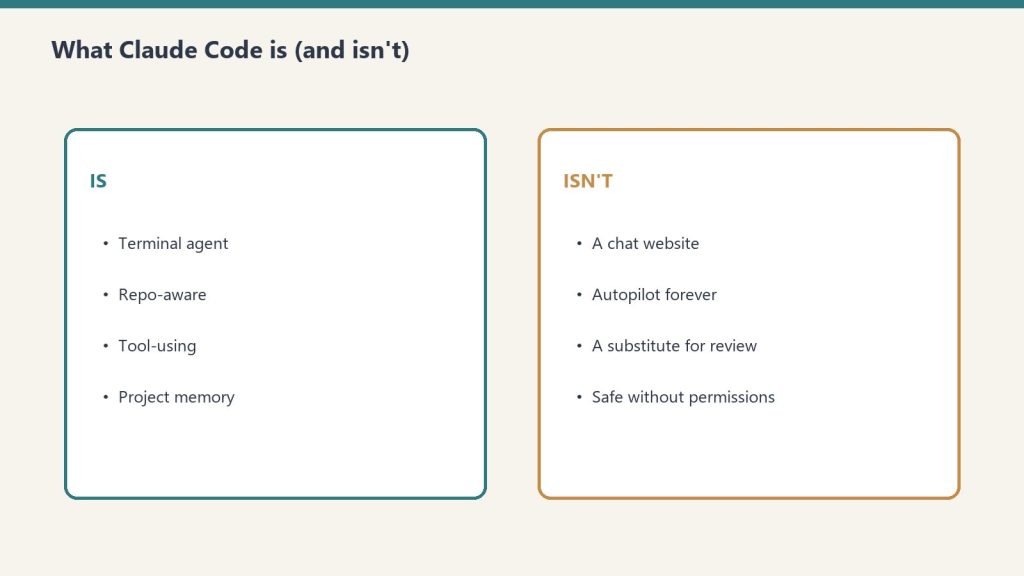
    Anthropic’s Claude Code is a dedicated command-line coding agent that can work autonomously on a codebase: reading files, writing code, running tests, and iterating. It’s a different category of tool than ChatGPT’s code interpreter, which executes code in a sandboxed environment but doesn’t have the same level of agentic control over a real development environment.

    For developers running AI-assisted workflows on actual projects, Claude Code is the more serious tool in 2026. For casual code help or one-off scripts, the gap is smaller.

    Where ChatGPT Wins: Image Generation and Ecosystem

    ChatGPT has a clear advantage in two areas that matter to a lot of users.

    Image generation: DALL-E 3 is built directly into ChatGPT Plus. You can go from text to image in one conversation. Claude has no native image generation capability — you’d need to use a separate tool like Midjourney, Adobe Firefly, or Imagen on Google Cloud.

    Third-party integrations: OpenAI’s plugin ecosystem and Custom GPTs have more breadth than Claude’s integrations. If you rely on specific third-party tools (Zapier, specific APIs, custom workflows), there’s more infrastructure already built around ChatGPT.

    If image creation is a daily part of your workflow, or you’re heavily invested in a ChatGPT-centric tool stack, these advantages are real.

    Claude vs ChatGPT for Coding Specifically

    When coding is the primary use case, the comparison shifts toward Claude — but it’s worth being precise about why.

    For writing clean, well-commented code from scratch, Claude tends to produce cleaner output with better reasoning explanations. It’s less likely to hallucinate function signatures or library methods. For debugging, Claude’s ability to hold large code files in context without losing track is a functional advantage.

    ChatGPT’s code interpreter (now called Advanced Data Analysis) is strong for data science workflows — running actual Python in a sandbox, generating visualizations, processing files. If your coding work is primarily data analysis and you want execution in the same tool, ChatGPT has the edge there.

    Claude vs ChatGPT for Writing Specifically

    For any writing that requires a genuine human voice — op-eds, thought leadership, nuanced argument — Claude is the better instrument. Its outputs require less editing to remove the robotic, list-heavy, over-hedged quality that plagues a lot of AI-generated content.

    For template-heavy writing — product descriptions, SEO-optimized articles at scale, standardized reports — the gap is smaller and comes down to your specific prompting setup.

    What Reddit Actually Says

    The Claude vs ChatGPT debate on Reddit (r/ChatGPT, r/ClaudeAI, r/artificial) consistently surfaces a few recurring themes:

    • Writers and researchers prefer Claude — repeatedly cited for better prose and genuine analysis
    • Developers are more split — Claude Code has built a dedicated following, but the ChatGPT ecosystem is more familiar
    • ChatGPT wins on integrations — the plugin/Custom GPT ecosystem still has more breadth
    • Claude is less annoying — specific complaints about ChatGPT’s sycophancy appear frequently (“it agrees with everything”, “it always says ‘great question’”)
    • Both have gotten better fast — direct comparisons from 2023–2024 often don’t hold in 2026

    Pricing: What You Actually Pay

    The base subscription pricing is identical: $20/month for Claude Pro and $20/month for ChatGPT Plus — see the full Claude pricing breakdown for everything beyond the base tier. If you’re wondering what the free tier actually includes before committing, see what Claude’s free tier gets you in 2026. Both include web search, file uploads, and access to advanced models.

    Where it diverges:

    • Claude Max ($100/mo) — for power users who need 5x the usage of Pro
    • ChatGPT doesn’t have a direct equivalent tier between Plus and Enterprise
    • API pricing — comparable but varies by model; Anthropic’s pricing is token-based and published transparently
    • Claude Code — has its own pricing structure for the agentic coding tool

    For most individual users, the $20/mo tier is the right starting point for either tool.

    Which One Is Actually Better in 2026?

    The honest answer: Claude is better for the work that benefits most from language quality, reasoning depth, and instruction precision. ChatGPT is better for the work that benefits from breadth of integrations and built-in image generation.

    For a solo operator, consultant, or knowledge worker whose primary outputs are written analysis, content, and strategy: Claude is the better daily driver. The writing is cleaner, the reasoning is more reliable, and the context window is more practical for serious document work.

    For a team already embedded in the OpenAI ecosystem — with Custom GPTs, plugins, and Zapier workflows built around ChatGPT — switching has real friction that may not be worth it unless writing quality is a high-priority problem.

    The most pragmatic setup for serious users — check the Claude model comparison to understand which tier makes sense for your work, and the Claude prompt library to get the most out of whichever you choose. The most pragmatic setup for serious users: Claude for thinking and writing, access to ChatGPT for when you need DALL-E or a specific integration it covers. At $20/month each, running both is a reasonable choice if the work justifies it.

    Frequently Asked Questions

    Is Claude better than ChatGPT?

    For writing quality, complex instruction following, and long-document analysis, Claude outperforms ChatGPT in most head-to-head tests. ChatGPT has the advantage in image generation and third-party integrations. The right answer depends on your primary use case.

    Can I use both Claude and ChatGPT?

    Yes, and many power users do. Both have $20/month Pro tiers. Running both gives you Claude’s writing and reasoning strength alongside ChatGPT’s DALL-E image generation and broader plugin ecosystem.

    Which is better for coding — Claude or ChatGPT?

    Claude has a slight edge for writing clean code and agentic coding workflows via Claude Code. ChatGPT’s Advanced Data Analysis (code interpreter) is better for data science work where you need code execution in a sandboxed environment. For general coding help, both are strong.

    Which AI is better for writing?

    Claude consistently produces better writing — less generic, less sycophantic, and closer to a natural human voice. Writers, editors, and content strategists repeatedly report that Claude’s outputs require less editing and drift less from the intended tone.

    Is Claude free to use?

    Claude has a free tier with limited daily usage. Claude Pro is $20/month and provides significantly more capacity. Claude Max at $100/month is for heavy users. API access is billed separately by token usage.

    Need this set up for your team?
    Talk to Will →