Tygart Media · Warranty Claim Guides · Fine print
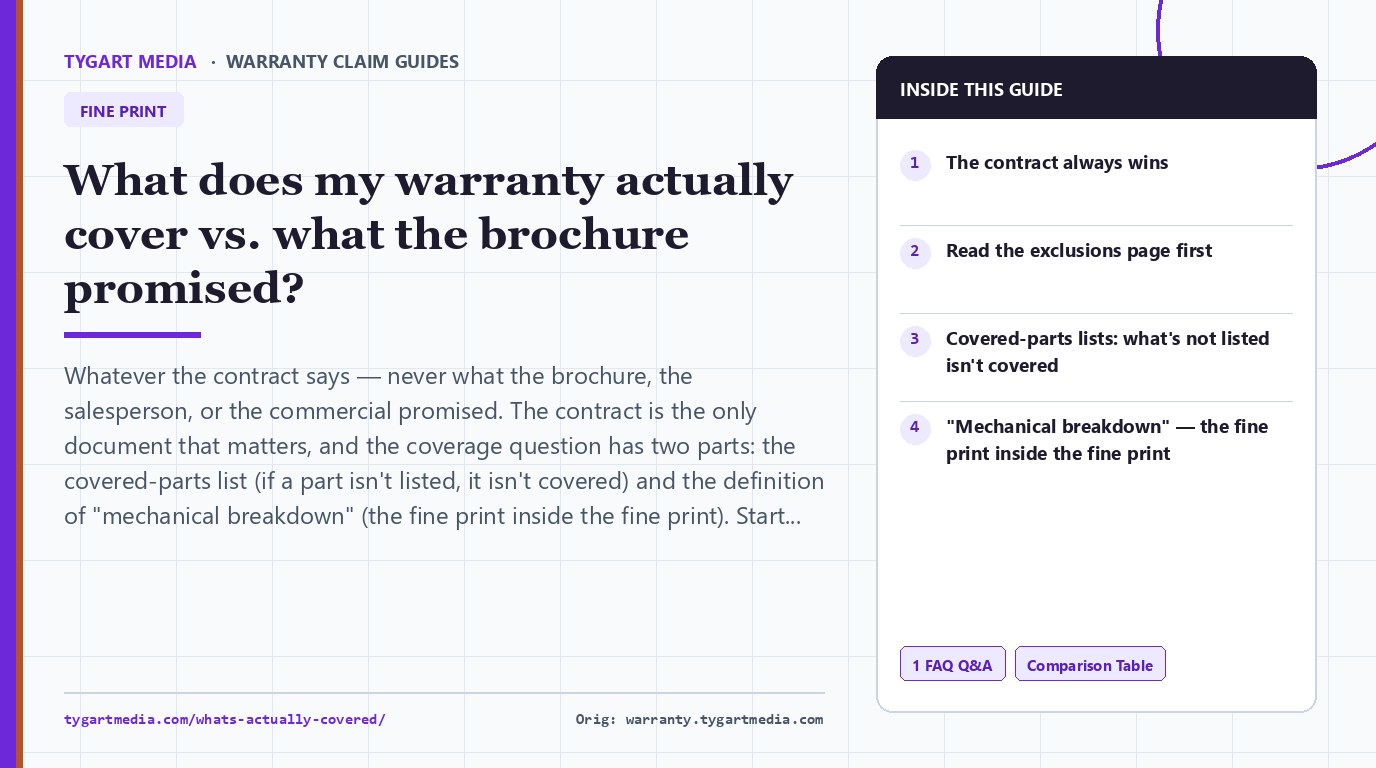
The contract always wins
Brochures are marketing. Sales pitches are marketing. The contract you signed — the multi-page document with the tiny type — is the agreement, and every dispute will be decided against it. Courts and regulators treat the contract as the controlling document; “but the salesperson said” is not a legal argument (with narrow exceptions around fraud, which are hard to prove and not the subject of this site).
This cuts both ways. If the brochure promised something the contract doesn’t include, you don’t have it. But if the contract covers something and a claims rep says it doesn’t, the contract wins for you too — which is why reading it yourself matters more than any argument.
Read the exclusions page first
Every warranty contract has an exclusions section, and it’s the single most important page in the document. Common exclusions include pre-existing conditions, wear and tear, damage from misuse or neglect, failures caused by modifications or aftermarket parts, and items with their own manufacturer coverage (tires, batteries, glass are frequent carve-outs). Read this page before anything else. Most “surprise” denials aren’t surprises to anyone who read it.
Covered-parts lists: what’s not listed isn’t covered
Most contracts — especially vehicle service contracts — define coverage as a list of named parts or systems. If the failed part isn’t on the list, it isn’t covered, no matter how central it seems to you. Two things to check: whether the list is “named parts” (only listed parts covered) or “exclusionary” (everything covered except listed exclusions — broader and usually more expensive), and whether related parts like gaskets, seals, and fasteners are listed separately. A covered engine repair can still leave you paying for the seals.
“Mechanical breakdown” — the fine print inside the fine print
Coverage typically triggers on “mechanical breakdown,” and the contract defines that term. Read the definition carefully. It usually means the failure of a covered part to perform its function due to a defect in materials or workmanship — which sounds broad until the company argues your failure was wear and tear, not breakdown. The line between “worn out” and “broken” is where most coverage fights live, and the contract’s definition draws that line. What “wear and tear” actually means →
Brochure vs. contract
| Brochure language | Contract reality |
|---|---|
| “Complete peace of mind” | Named-component coverage only |
| “We handle everything” | You pay the deductible per visit |
| “Like-new replacement” | Refurbished parts allowed |
| “No hassle claims” | Pre-authorization required before any work |
The brochure is marketing. The contract is the warranty. Always read the contract.
Get The Signal
What we actually ran, what it measured, and what it means for a restoration shop — every week, including the flops.
Leave a Reply