Tag: Restoration

  • Restoration Hiring Email: CRM Templates & Setup Guide

    Restoration Hiring Email: CRM Templates & Setup Guide

    You have a job to fill. You’ve probably already drafted the Indeed posting. Before you publish it, spend 20 minutes doing something that will generate better candidates, cost nothing, and quietly remind 400 warm contacts that your company exists.

    Send an email to your entire local database.

    This guide is the tactical companion to the strategic case for treating your CRM as a community. That article explains why this works. This one tells you exactly how to do it — the segments, the copy, the timing, and the follow-up. Take this document and hand it to whoever manages your email or your CRM. They can have the campaign out this week.


    Before You Write a Word: Pull and Segment Your Database
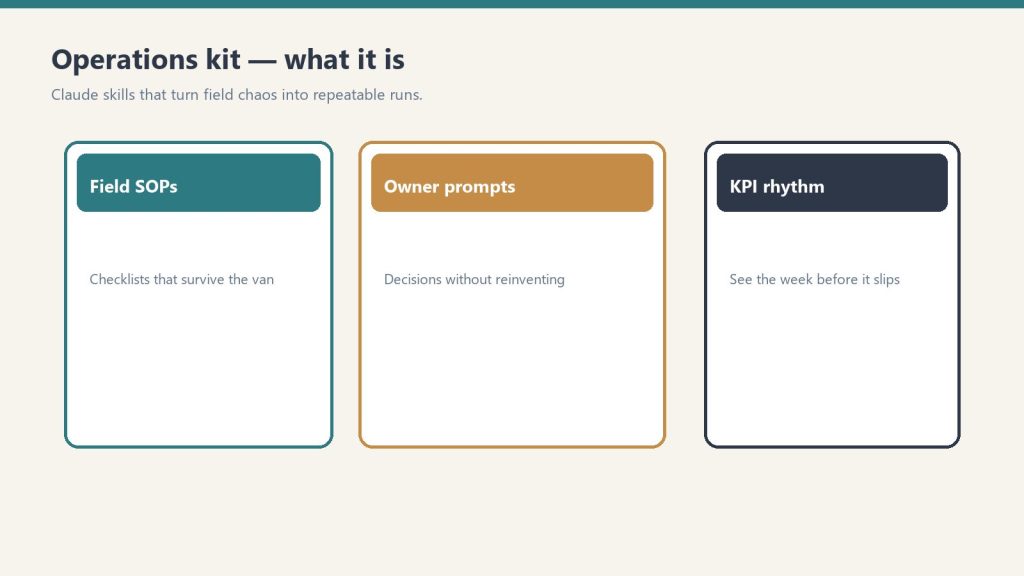
    Three cards for field SOPs, owner prompts, and KPI rhythm in an operations kit
    Pull and segment your database before you write.

    The hiring email only works if it feels personal. A generic blast to a mixed list feels like spam. Three short, targeted emails to three different audiences feel like a phone call from someone who respects the relationship.

    Your minimum viable segmentation is three groups:

    Segment 1: Past Homeowner Clients (Local Only)

    Filter your CRM or job management software for residential jobs completed in your service area in the last three to five years. If your system is ServiceTitan or Jobber, you can export this directly from the customer list filtered by job type and zip code. If you’re on a spreadsheet, sort by city or zip and pull anything within your service radius.

    What you’re looking for: name, email address, job completion date, and job type (water, fire, mold, etc.). You don’t need anything else for this email.

    Segment 2: Industry Contacts (Adjusters, Agents, Public Adjusters)

    These are the professional referral relationships in your CRM — insurance adjusters you’ve worked with on claims, agents who have sent you referrals, PAs you’ve collaborated with. Filter by contact type if your CRM supports it, or manually tag this group.

    Segment 3: Trade Contacts (Vendors, Subs, Partners)

    Suppliers, subcontractors, and trade partners. These people understand your business from the inside and often have the strongest networks within the trades workforce.

    If your database is in ServiceTitan: navigate to Customers → Export, then filter by customer type. For Jobber: go to Clients → Export CSV. For a spreadsheet: create a column called “Segment” and sort manually. The whole segmentation process for most restoration companies takes under an hour.


    The Email Copy: Three Versions, One Campaign
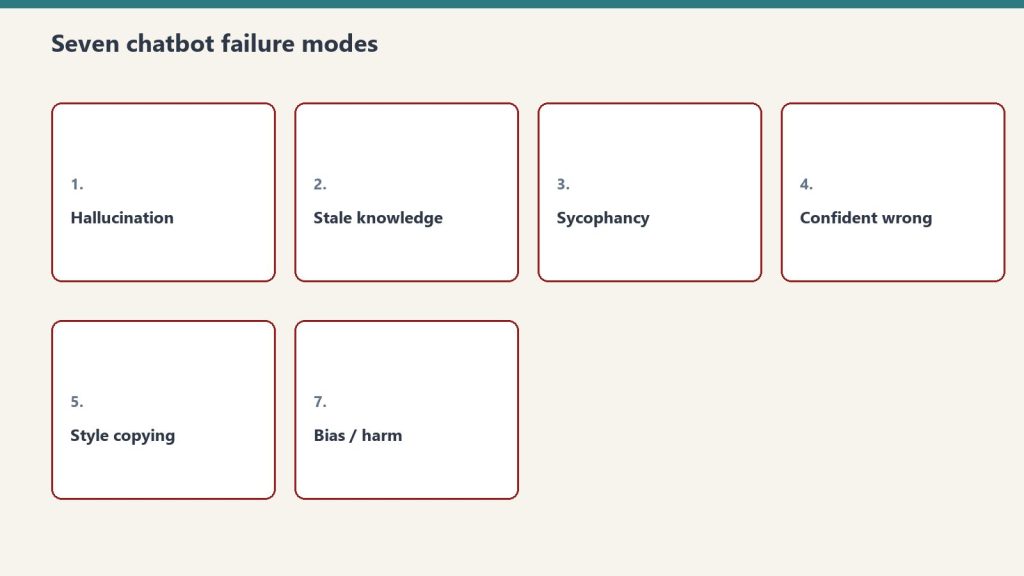
    Seven cards naming common AI chatbot failure modes
    The email copy — three versions, one campaign.

    Each version is short. The goal is a 90-second read that feels like a note from a real person, not a marketing email. Do not use HTML templates with banners and logos. Plain text or minimal formatting performs significantly better for relationship-based emails. No header image. No footer with six social icons. Just your name, your company, and the ask.

    Version 1: Past Homeowner Clients

    Subject line: Quick question — do you know anyone looking for good work?

    Hi [First Name],

    It’s [Your Name] from [Company Name]. We had the pleasure of working with you on your [water/fire/mold] job at [property address or neighborhood] — hope everything has been holding up well since then.

    I’m reaching out because we’re growing. We’re currently looking for a [position title — e.g., crew lead, project coordinator, estimator] to join our team, and before we post publicly, I wanted to reach out to people we’ve worked with and whose opinion I trust.

    If you know someone who might be a great fit for a company like ours — a family member, a friend, someone in the trades looking for a stable company with a good culture — I’d love to hear from you. Just reply to this email with their name and I’ll take it from there. No formal application needed on your end.

    Either way, I hope you’re doing well. And if you ever need us again or have any questions about your property, don’t hesitate to reach out.

    [Your Name]
    [Title]
    [Company Name]
    [Phone Number]


    Version 2: Industry Contacts (Adjusters, Agents)

    Subject line: Growing our team — wanted to reach out to you first

    Hi [First Name],

    Hope things are going well on your end. I wanted to reach out personally because we’re adding to our team — specifically hiring for [position title] — and I always prefer to see if someone in my network has a connection before going the generic posting route.

    If you know anyone in the area who would be a great fit for a professional restoration company — someone who takes their work seriously and wants to be part of a growing operation — I’d genuinely appreciate the introduction. Just reply with their contact info and I’ll handle it from there.

    Thanks for everything over the years. Looking forward to the next one.

    [Your Name]
    [Title]
    [Company Name]
    [Phone Number]


    Version 3: Trade Contacts (Vendors, Subs)

    Subject line: Hiring for [position] — know anyone good?

    Hey [First Name],

    We’re hiring for [position title] and figured I’d reach out to people in the trades before going the job board route. You know the kind of people we work with better than anyone.

    If anyone comes to mind — someone looking to land somewhere solid — just shoot me a reply. Happy to take it from there.

    [Your Name]
    [Company Name]
    [Phone]


    The Technical Setup: Getting These Emails Out

    You have three realistic paths depending on what tools you already have.

    Path A: Your CRM’s Built-In Email (ServiceTitan or Jobber)

    Both ServiceTitan and Jobber have basic email blast capability built in. In ServiceTitan, navigate to Marketing → Campaigns → Email. In Jobber, use the Client Communications feature under the Marketing tab. Compose your email, select your filtered list, and send. This is the fastest path if your contact list is already clean in the system. Limitation: formatting options are limited and tracking (opens, clicks) may be minimal depending on your plan tier.

    Path B: Mailchimp (Recommended for Most Shops)

    Mailchimp’s Essentials plan starts at $13/month for up to 500 contacts. For a typical restoration company database of 300–800 local contacts, you’ll likely stay in the $13–$30/month range depending on list size. The free plan as of 2026 caps at 250 contacts with no automation, which is not enough for most shops — pay for Essentials.

    Setup process:

    1. Export your three segments from your CRM as CSV files (Name, Email, Segment Type, Job Type)
    2. Create three Audiences in Mailchimp — one per segment — or use one Audience with tags for each segment
    3. Build one campaign per segment using the corresponding email template above
    4. Schedule them to send on the same day, 30 minutes apart, so you’re not flooding your own inbox with replies simultaneously

    Important Mailchimp note: the platform charges for unsubscribed contacts unless you manually archive them. If your list has been in Mailchimp for a while, audit it before your campaign — you may be paying for contacts who can’t receive your email. Archive anyone who unsubscribed more than 6 months ago.

    Path C: Brevo (Best if You Have a Large or Mixed List)

    Brevo (formerly Sendinblue) prices by emails sent rather than contacts stored, which works in your favor if you have a large database but only email them a few times a year. Their free plan includes 300 emails per day with unlimited contact storage. For a quarterly campaign to 800 contacts, Brevo’s free tier may cover your needs entirely. Upgrade to the Starter plan ($9/month) if you need scheduling and no daily send limit.


    Timing and Frequency

    Send the homeowner version on a Tuesday or Wednesday morning between 9am and 11am local time. Open rates for warm, local databases are typically highest mid-week in the morning window — people are at their desks, not yet in weekend mode.

    Send the industry version on the same day, 30 minutes later. These contacts are professionals and check email throughout the day — timing matters less than it does for homeowners.

    Send the trade version on the same day, afternoon. Tradespeople often check phones between jobs in the afternoon rather than first thing in the morning.

    Do not send all three simultaneously. Staggering by 30 minutes gives you manageable reply volume and prevents any single moment of inbox overwhelm.


    What to Do With the Replies

    This is where most companies drop the ball. The email generates replies. Someone refers their nephew who’s looking for work. An adjuster forwards it to a plumber he knows. A past homeowner replies just to say hi and mention their neighbor had a pipe burst last month.

    You need a simple log. A Notion page, a Google Sheet, or even a notes field in your CRM — whatever you’ll actually use. For every reply:

    • Log the sender name and contact type (homeowner, adjuster, vendor)
    • Log whether they referred someone (yes/no)
    • Log any other signal in the reply (lead mention, service inquiry, general warmth)
    • Set a follow-up reminder for 30 days if the reply was warm but didn’t lead anywhere immediately

    This log becomes the seed of your community intelligence layer. Over time, you’ll see which contacts are active in your network and which have gone completely cold. That’s information worth having.


    The Prompt Library: Using Claude to Write Your Versions
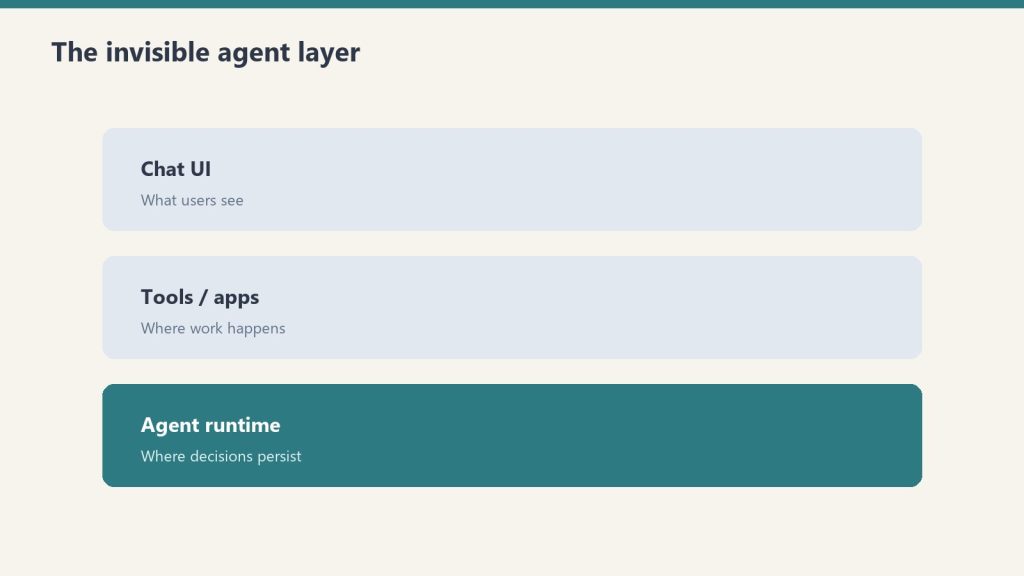
    Three stacked layers: chat UI, tools, agent runtime
    Using Claude to write your hiring email versions.

    If you want to adapt these templates for your specific company voice, job title, or market, here are four ready-to-use prompts for Claude (claude.ai). Paste these directly into a new Claude conversation:

    For the homeowner version:

    “Write a short, plain-text hiring email from a restoration company owner to a past homeowner client. We completed [water damage / fire damage / mold remediation] work for them in [city]. We’re hiring a [job title]. The email should feel personal and warm, mention that we’re reaching out before posting publicly, and ask if they know anyone — family or friends — who might be a great fit. No sales pitch. No marketing language. Sign it from [owner name] at [company name]. Keep it under 150 words.”

    For the industry version:

    “Write a short professional email from a restoration company owner to an insurance adjuster they’ve worked with on claims. We’re hiring a [job title]. The tone should be collegial and peer-to-peer — not formal, not salesy. We’re reaching out to trusted contacts before posting publicly and asking for referrals if they know anyone in the area. Keep it under 120 words.”

    For the subject line variations:

    “Give me 5 subject line options for a hiring referral email from a restoration company to past clients. The email is not a job posting — it’s a personal note asking if they know anyone who might want to work at a company like ours. The tone should be warm and human, not corporate. No clickbait. No exclamation points.”

    For customizing to your brand voice:

    “Here are two emails I’ve written before that represent how I communicate with clients: [paste examples]. Using this voice, rewrite the following hiring email template: [paste template]. Keep the same message but make it sound like I wrote it.”


    Frequently Asked Questions

    Do I need to include an unsubscribe link in these emails?

    If you’re sending through an email marketing platform like Mailchimp or Brevo, yes — the platform will add one automatically. If you’re sending through your CRM’s built-in email or directly from your own inbox to a small list, the legal requirements vary by country and list size. In the U.S., CAN-SPAM applies to commercial email. A personal, non-promotional email like this occupies a gray area — consult your legal advisor for your specific situation, but err toward including an unsubscribe option for any bulk send.

    What if my CRM doesn’t have email addresses for past clients?

    This is a data problem worth fixing before the next job completes. Make capturing email address a standard part of your intake process going forward. For the existing database, you can often find emails through invoice records, text message history, or a simple re-engagement call (“We’re updating our records — can I get the best email for you?”). Even 50% coverage on a 400-contact database is 200 warm reaches.

    How long should I wait before sending this campaign?

    Don’t wait. If you’re hiring now, send now. The email is most authentic when it reflects a real, current need. The whole premise is that this is a genuine business moment, not a manufactured excuse.

    What if someone replies with a lead instead of a job referral?

    Log it immediately. Route it to whoever handles incoming leads. Thank the person who referred it. This is the community strategy working exactly as intended — and it’s why the reply log matters.


  • Restoration CRM Strategy: Build a Zero-Cost Referral Engine

    Restoration CRM Strategy: Build a Zero-Cost Referral Engine

    The Restoration Industry Spends $400 a Lead and Then Never Talks to Those People Again

    Seven cards naming common AI chatbot failure modes
    Spending on leads and never talking to those people again.

    PPC campaigns. Direct mail. Google Local Services Ads. Storm chasers working neighborhoods after a weather event. The average restoration company spends somewhere between $150 and $500 to acquire a single qualified lead — and in some markets, especially water and fire, that number climbs higher. The industry has an entire ecosystem built around lead generation: lead brokers, referral networks, preferred vendor programs, adjuster relationships cultivated over years of lunches and golf rounds.

    And then a homeowner files a claim, you do the work, you get paid, and you never talk to them again.

    Not because you don’t want to. Because nobody told you what to say.

    That is the problem this article is going to solve — not just for homeowner re-engagement, but for your entire database. Adjusters, agents, vendors, subs, referral partners, past employees, community contacts. Every person who has ever touched your business in any way is sitting in a CRM that you treat like a ledger instead of a community. This article is about changing that, and it starts with the most counterintuitive entry point in restoration marketing: your next job posting.


    What Is a CRM Community and Why Restoration Companies Don’t Have One

    A community is a group of people who feel connected to something beyond a single transaction. Your past homeowner clients paid you, possibly during the worst week of their year. They watched your crew work. They saw how you handled their insurance company. They know your company name. If you did good work, they have a positive association with your brand that most businesses spend years trying to build.

    That is not a lead. That is a community member who doesn’t know they’re in a community.

    The reason restoration companies don’t leverage this is structural. The industry is built around reactive demand — you don’t have time to do relationship marketing when the phone is ringing after a storm. Your sales process is built around the claim cycle, not around the customer lifetime. And when it’s quiet, the instinct is to spend on advertising to generate the next job, not to re-engage the people you already served.

    But there’s a second reason, and it’s more fundamental: most restoration companies don’t believe they have a valid, non-salesy reason to contact past clients.

    They do. They just don’t know it yet.


    The Hiring Email: The Best Marketing Touch You’re Not Sending

    Here is the scenario. You need to hire a crew lead. You post on Indeed. You get 40 applications, most of which don’t match what you need, and you spend three hours screening.

    Now here is the alternative. You open your CRM. You pull every contact in your service area — homeowners, adjusters, agents, vendors, subs, anyone local. You send a single email. The subject line is something like: “We’re growing — know anyone looking for a great job in the trades?”

    The email is short. It says you’re hiring for a specific position. It says you value the relationship you have with them. It says if they know anyone — a family member, a friend, someone in the trades looking for a stable company with a good culture — you’d love a direct introduction. No application portal. Just an email back to you.

    That email does four things simultaneously that no advertising spend can replicate:

    1. It reminds your past clients you exist — without selling them anything
    2. It makes them feel respected — you’re asking their opinion, not their money
    3. It positions your company as growing and healthy — companies that are struggling don’t hire
    4. It creates a genuine two-way relationship moment — they can actually help you

    For your insurance contacts — adjusters and agents — it signals something even more powerful. It says you’re a company that is serious about quality people, that you care about your workforce, and that you think of them as partners in your business rather than just referral sources to be harvested.

    The cost of this email campaign: the time it takes to write one email and hit send. The leads you generate from the replies and referrals: free. The brand impression you leave on every person who opens that email: priceless in an industry where word-of-mouth still drives a significant percentage of residential work.


    The Vendor and Supplier Ask: Operational Needs as Community Touchpoints

    The hiring email is the entry point. But once you internalize the underlying principle — that your database wants to help you when asked the right way — you realize how many legitimate reasons you have to contact them.

    You’re looking for a reliable drywall sub in your market. You need a specialty cleaning supplier for a specific job type. You’re trying to source a vendor for an event you’re hosting. You’re looking for a trusted electrician or HVAC contractor to refer to clients after the remediation is done.

    Every one of these is a real business need. And every one of them is a valid reason to reach out to your database.

    “Hey, we’ve got a large commercial project coming up and we’re looking for a reliable drywall sub who does quality work. Do you know anyone in the area?”

    That message, sent to 500 people in your CRM, will generate responses. Some of them will be recommendations. Some of them will lead to subcontractor relationships that serve you for years. But every single one of them will reinforce that your company is active, growing, and doing interesting work — and that you value the people in your network enough to ask them first.

    Your adjusters and agents will forward that message to people they know. Your past homeowners will think of you as a company that is embedded in their community. Your vendors and subs will feel like partners rather than line items.


    Why Past Homeowner Clients Are Your Most Underutilized Asset

    Three cards for field SOPs, owner prompts, and KPI rhythm in an operations kit
    Why past homeowner clients are your most underutilized asset.

    This is the one that most restoration companies are leaving the most money on the table with, and it deserves its own focus.

    A homeowner who used your services has a profile that no amount of advertising can manufacture. They experienced a property damage event. They navigated a claim. They worked with a restoration company — yours — and if it went well, they came out the other side with a specific, emotional memory of your brand. They are also, statistically, likely to experience another property damage event in their lifetime. Water damage recurs. Roofs age. Mold finds new moisture sources.

    And they have neighbors, family members, and friends who will experience property damage events and who will ask them: “Do you know a good restoration company?”

    That referral question is the single most valuable marketing moment in residential restoration. And the answer depends entirely on whether your company is still alive in that homeowner’s memory when the question gets asked.

    The hiring email keeps you alive. The vendor ask keeps you alive. The event invitation keeps you alive. Any legitimate, non-salesy touchpoint that reminds them you exist — without asking them for anything except their opinion or their help — keeps you alive in that mental file where they store “companies I trust.”

    Most restoration companies let that file go cold within six months of project completion. The ones who don’t are the ones with referral pipelines that their competitors can’t explain.


    The Full Taxonomy of Legitimate Outreach Triggers

    Three panels showing one problem, three options, one recommendation
    The full taxonomy of legitimate outreach triggers.

    Once you start thinking this way, the opportunities multiply. Here is a working list of reasons you can legitimately contact your entire database — not a fake reason, not a manufactured excuse, but a genuine business moment that also happens to be a marketing touch:

    People Needs

    • Hiring for any position (crew, admin, estimator, project manager)
    • Looking for a skilled subcontractor in a specialty trade
    • Seeking someone who speaks a specific language for a growing market segment
    • Looking for a part-time administrative or customer service person

    Vendor and Supplier Needs

    • Sourcing a new supplier for a product line you’re adding
    • Looking for a caterer or venue for a company event
    • Seeking a vendor for branded merchandise or uniforms
    • Looking for a commercial cleaning partner for office maintenance

    Community and Knowledge Needs

    • Asking for feedback on a new service you’re considering
    • Sharing an educational resource (storm prep checklist, winter maintenance guide) with no CTA other than “thought you’d find this useful”
    • Inviting them to a community event, open house, or educational workshop
    • Asking them to be a case study or share their experience (with their permission)

    Recognition and Relationship

    • Congratulating them on something (new business, local award, personal milestone you’re aware of)
    • Checking in after a major weather event in your area to make sure they’re okay
    • Sharing a company milestone (anniversary, certification, new service area) that reflects positively on your brand

    None of these require a sales pitch. None of them should have a sales pitch. The moment you attach a CTA to a relationship email, you’ve converted it from a community touch into a marketing email, and people feel the difference immediately.


    The Math That Makes This a Strategy, Not a Tactic

    Let’s run a simple scenario. A restoration company has been operating for five years. They’ve completed 600 jobs. Their CRM has 600 homeowner contacts plus 200 industry contacts (adjusters, agents, vendors, subs) — 800 total, all local, all warm.

    They send a hiring email. Open rate for a warm, local database is typically 30–45%. That’s 240–360 people who see your company name, read that you’re growing, and think about you for 30 seconds. Some reply. A handful refer someone. Maybe you hire one person from a referral.

    But here’s what actually happened: 300 people just got a brand impression from your company for free. Some percentage of those people will have a neighbor ask them about restoration services in the next 12 months. Some of them are adjusters who are looking at your brand name right as they’re assigning a claim. Some of them are agents who are going to recommend a restoration company to a client next week.

    Now do this four times a year. Hiring email in Q1. Vendor ask in Q2. Educational resource in Q3. Company milestone or community event in Q4. You’ve touched your entire warm database four times in twelve months for the cost of an email platform and a few hours of writing time.

    Your $400-per-lead PPC campaign cannot buy what that touch cadence builds.


    The System: Building a CRM Touch Calendar for Restoration

    The reason most companies don’t do this is not lack of intention. It’s lack of system. When you’re running jobs, managing crews, handling supplements, and fighting with adjusters, a quarterly email to your database is not going to happen unless it is on a calendar with an owner and a template.

    Here is the minimum viable system:

    Step 1: Segment your CRM. You need at minimum three segments: past homeowner clients (local), industry contacts (adjusters, agents, PAs), and trade contacts (vendors, subs, partners). Each segment gets slightly different framing on the same message. The homeowner version of the hiring email is warmer and more personal. The adjuster version is more professional. The sub version is peer-to-peer.

    Step 2: Build a 12-month touch calendar. Map out the four to six touches you’ll make this year before the year starts. Assign each one a trigger type from the taxonomy above. Some will be tied to real business events (when you actually hire); others can be evergreen (the educational resource can go out every January before storm season).

    Step 3: Write the templates. The hiring email template takes 30 minutes to write and can be reused every time you hire. The vendor ask template takes 20 minutes. Once these exist, the execution cost per touch is near zero.

    Step 4: Track the signal. Every reply is signal. Every referral is data. Every response from an adjuster who says “hey, I was just thinking about you” is a relationship that needed warming. Build a simple log of who responded and what they said. Over time, this becomes the most valuable intelligence you have about which contacts are actually in your community.


    What This Builds Over Time

    The companies in the restoration industry that win long-term referral pipelines are not necessarily the ones with the best Google rankings or the highest review counts. They are the ones whose name comes to mind first when someone needs to make a recommendation.

    Top-of-mind awareness in a local market is not built by advertising. It is built by presence. Consistent, relevant, human presence in the lives of people who already know you.

    Your CRM is not a list of people who used you once. It is a network of people who have direct, personal experience with your company — and who, with the right cultivation, will become the distributed sales force that no lead broker can compete with.

    The next time you post a job opening, send the email. See what happens. Then do it again with the vendor ask. Then again with the educational resource. By the time you’ve done it four times, you will have a community. And your competitors will still be paying $400 a lead to meet people who have never heard of them.


    Frequently Asked Questions

    Is it appropriate to email past homeowner clients for non-service reasons?

    Yes, provided the contact is warm (they’ve done business with you), the reason is genuine (you actually are hiring), and there’s no sales pitch attached. A hiring email or a vendor referral ask is a human, peer-level communication — not marketing spam. Most recipients appreciate being asked for their opinion or their help.

    How often should a restoration company contact their CRM?

    A minimum of four times per year is enough to maintain top-of-mind awareness without overwhelming contacts. Six times per year is sustainable if each touch has a genuine trigger. More than monthly for a non-service communication risks feeling like a marketing list rather than a community relationship.

    What email platform should I use for CRM outreach?

    Any standard email marketing platform (Mailchimp, Constant Contact, HubSpot, or even your CRM’s built-in email) works for this. The key is segmentation capability (homeowners vs. industry contacts vs. trade contacts) and basic analytics (open rate, click rate) so you can see who’s engaging.

    What if we don’t have a formal CRM?

    Start with what you have. Even an exported list of completed jobs from your job management software, sorted by zip code and filtered to local contacts, is a CRM. The strategy works with a spreadsheet and a Mailchimp free account. Build the system around the behavior, not the tool.

    Should the hiring email come from the owner or from HR?

    From the owner, always, for homeowner and industry contacts. The personal relationship was built on the owner’s credibility. A generic HR communication breaks the human connection that makes this work. For trade contacts, a project manager or ops lead can send it credibly.

    What happens if someone unsubscribes?

    Respect it, honor it immediately, and don’t worry about it. Unsubscribes from a warm database are typically low (under 2%) when the content is relevant and non-salesy. The people who unsubscribe were unlikely to refer you anyway. The people who stay are your community.

    Can this strategy work for commercial restoration clients as well?

    Yes, with modified framing. Commercial contacts (property managers, facility directors, HOA boards) respond well to vendor sourcing requests, educational content on maintenance and prevention, and event invitations. The hiring email works in commercial too — facility managers often know trades workers in their buildings or communities.


  • Restoration Documentation: The Real Role of RH and GPP

    Restoration Documentation: The Real Role of RH and GPP

    Andy McCabe published something sharp recently, and my first instinct was to push back.

    His post was direct: RH and GPP have nothing to do with your dehumidifier calculation. The ANSI/IICRC S500 doesn’t use them. TPAs are weaponizing them to deny equipment that’s legitimately justified by the actual standard. His argument is airtight, and I told him so in the comments — after I pushed back on one thing.

    Here’s the double take I had to do.

    What McCabe Got Right About Equipment Justification

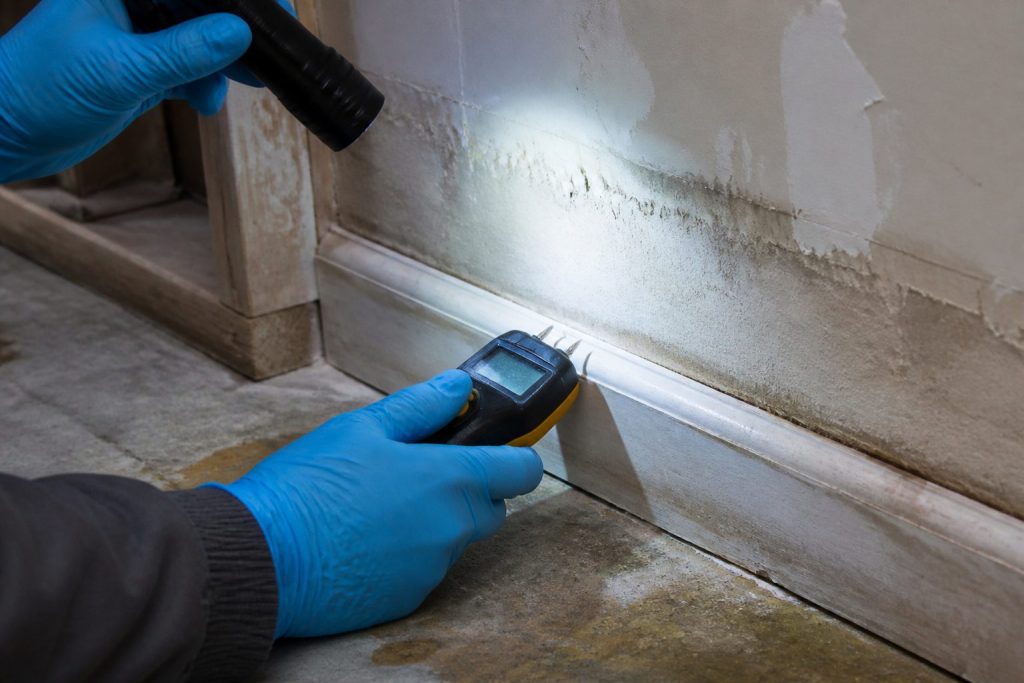
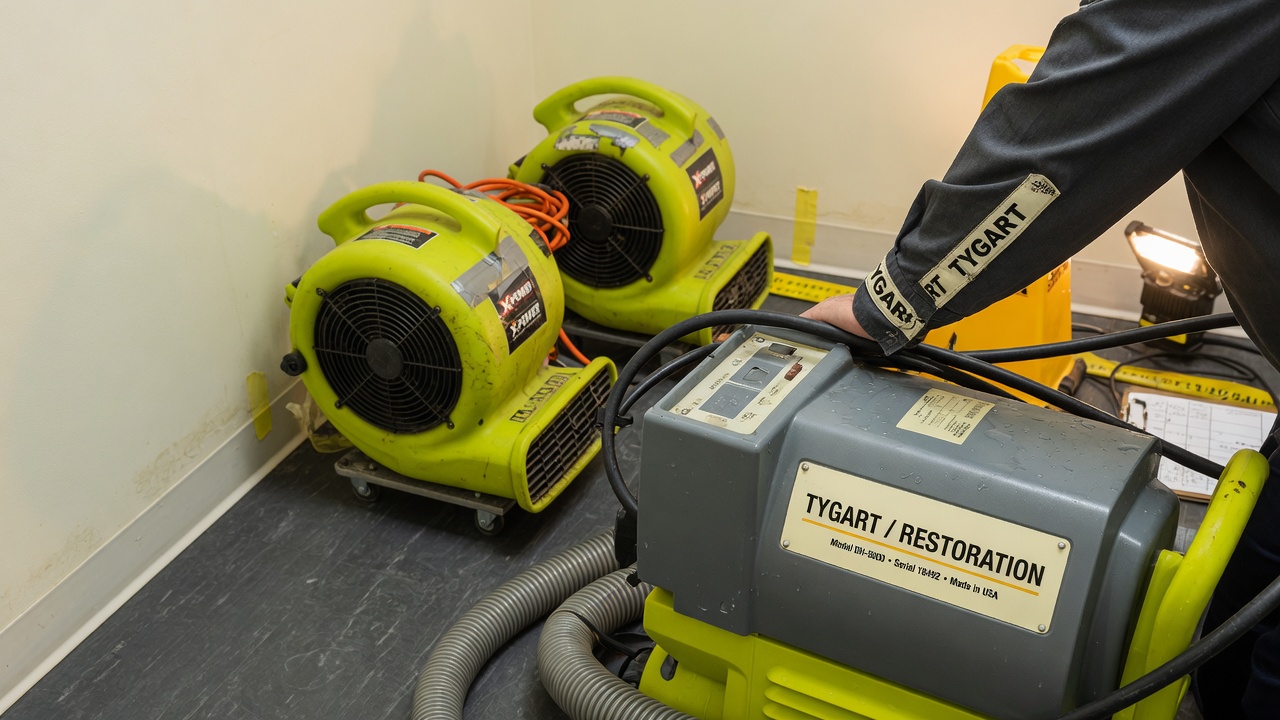
    Gloved hands using a pin-type moisture meter on wet drywall during inspection
    What McCabe got right about equipment justification.

    The S500 Simple Method is not ambiguous. Dehumidifier calculations start with the cubic footage of affected air in each drying chamber, the class of water loss, and the type of equipment on the truck. A Class 2 loss with an LGR uses a factor of 50 to establish a minimum pint-per-day baseline. A Class 1 uses 100. A Class 3 uses 40. Desiccants are calculated in air changes per hour entirely.

    What you will not find anywhere in that calculation: a field for relative humidity. Or grains per pound.

    When a TPA tells you they won’t approve a dehumidifier because RH isn’t at 70%, they’ve invented a threshold that doesn’t exist in any published standard. McCabe’s response to that Liberty Mutual TPA was exactly right: “What standard is that?” They pointed to their own internal guidelines. Not the S500. Not IICRC. Their guidelines.

    That’s the game — and leading your documentation with atmospheric readings as the justification for your equipment is handing them the tool they use to deny you.

    Stop justifying equipment with RH and GPP. The S500 math is your argument. Use it.

    What I Pushed Back On — and Then Reconsidered

    When I responded to McCabe’s post, I drew on years at Polygon/Munters doing large-loss drying — aircraft carrier decks, document archives, new high-rise commercial construction mid-build. In those environments, RH, GPP, and temperature weren’t optional reads. They were the difference between a completed job and a catastrophic materials failure.

    I’ve seen what happens when you dry too aggressively. And I’ve seen the liability that follows.

    The more I sat with it, the more I realized McCabe and I weren’t in conflict. We were talking about two completely different fights happening on the same job.

    The Two-Track Documentation Standard

    Three cards for field SOPs, owner prompts, and KPI rhythm in an operations kit
    The two-track documentation standard.

    Every water loss has two defensible positions that require documentation. Most contractors are only building one of them.

    Track 1: Equipment Justification (McCabe’s Lane)

    Show your dehu calculation per the S500 — cubic footage, drying class, equipment type, the published factor. Show your air mover count based on affected square footage and materials above dry standard. Show moisture readings proving materials haven’t yet reached the established dry standard.

    This documentation defends your equipment billing against TPA denials based on invented atmospheric thresholds. It’s the argument that holds up in a dispute because it’s grounded in a published ANSI standard — not your opinion, not the adjuster’s internal policy.

    Track 2: Materials Science Documentation (The Lane McCabe Didn’t Cover)

    Here’s where atmospheric readings earn their place in your job file — just not as equipment justification.

    Flooring manufacturers explicitly tie warranty coverage to ambient RH maintenance. Hurst Hardwoods voids their warranty if ambient RH drops below 35% during the life of the floor, citing cracking, delamination, and shrinkage as direct consequences of low humidity. Engineered hardwood manufacturers commonly require 30–50% RH maintenance and list surface checking from improper humidity as an explicit warranty exclusion. Even SERVPRO’s own published guidance notes that rapid drying can cause wood to split.

    This isn’t theoretical. When you dry too aggressively — pushing humidity below manufacturer-specified ranges, running heat drying beyond material tolerances, pulling GPP down faster than the materials can handle — you can void the warranty on floors, adhesives, and engineered wood products that weren’t even damaged by the water event itself.

    Now the homeowner has a materials failure claim three months after you packed out. And the carrier has a documented argument that the damage was caused by the restoration, not the loss.

    Your atmospheric logs are your proof that you didn’t do that.

    What This Looks Like in Practice

    Three panels showing one problem, three options, one recommendation
    What this looks like in practice.

    The documentation standard that protects you on both tracks looks like this:

    For equipment: S500 dehu calculation showing class, cubic footage, equipment type, and the published factor. Air mover count tied to affected square footage and material readings above dry standard. Nothing about RH or GPP as justification.

    For materials: Continuous atmospheric logs showing that ambient RH stayed within the manufacturer-specified range for every material type on-site throughout the dry. Temperature logs showing you didn’t apply excessive heat. A record that proves you dried professionally, not just fast.

    One set of data protects you from equipment denials. The other protects you from being blamed for the cracked hardwood, delaminated adhesives, and voided warranties that surface after you’re gone.

    The Bottom Line

    Andy McCabe is doing important work calling out the TPA game of inventing atmospheric thresholds to deny legitimately justified equipment. Every restoration contractor should read his post and internalize the S500 math.

    But don’t stop taking atmospheric readings. Stop leading with them as equipment justification — and start filing them as materials science documentation that proves the quality of your work.

    Two fights. Two documentation tracks. Both matter.

    Find more from Andy McCabe at WaterDamageProfit.com.

    Related on Tygart Media: S500 in the van · moisture map Claude skill · jobs as knowledge base.

    Frequently Asked Questions

    Do RH and GPP belong in a dehu calculation?

    No. Per the ANSI/IICRC S500, dehumidifier calculations use cubic footage of affected air, drying class, and equipment type. RH and GPP are not inputs in the S500 Simple Method and should not be used to justify equipment placement.

    Why should restoration contractors still log RH and GPP?

    Atmospheric readings serve as materials science documentation — proof that drying conditions stayed within manufacturer-specified humidity ranges to protect warranty coverage on hardwood floors, adhesives, and engineered wood products. They protect against post-job liability claims, not equipment denials.

    Can aggressive drying void a flooring warranty?

    Yes. Multiple hardwood flooring manufacturers explicitly void warranties when ambient RH drops below 35%, citing cracking, delamination, and shrinkage as direct results. Drying below those thresholds can create a liability exposure on materials that were undamaged by the original water event.

    What is the S500 Simple Method for dehu calculations?

    The ANSI/IICRC S500 Simple Method calculates minimum dehumidifier capacity by dividing the cubic footage of the drying chamber by a factor based on equipment type and drying class. Class 1 uses a factor of 100, Class 2 uses 50, and Class 3 uses 40 for LGR units.

    What should restoration contractors say when a TPA denies equipment based on RH?

    Ask them to cite the published standard their threshold comes from. If they reference an internal guideline rather than the ANSI/IICRC S500, that threshold has no technical standing. Present your S500-based calculation as the documented industry standard for equipment justification.

  • Local SEO for Restoration Companies: Beat Aggregators

    Local SEO for Restoration Companies: Beat Aggregators

    Tygart Media — Restoration Content Strategy

    Local SEO for Restoration Companies: The Content Strategy That Beats the Big Aggregators

    By Tygart Media Updated: April 12, 2026
    The aggregator problem: HomeAdvisor, Angi, Thumbtack, and Yelp dominate generic restoration searches — “water damage restoration near me,” “restoration company [city].” These platforms have domain authority that independent contractors cannot match on generic terms. The content strategy that beats them is the same one that beats Zillow in real estate: hyper-local content that aggregators cannot replicate because they don’t know your market the way you do.

    Why Aggregators Can’t Own the Local Queries That Convert Best

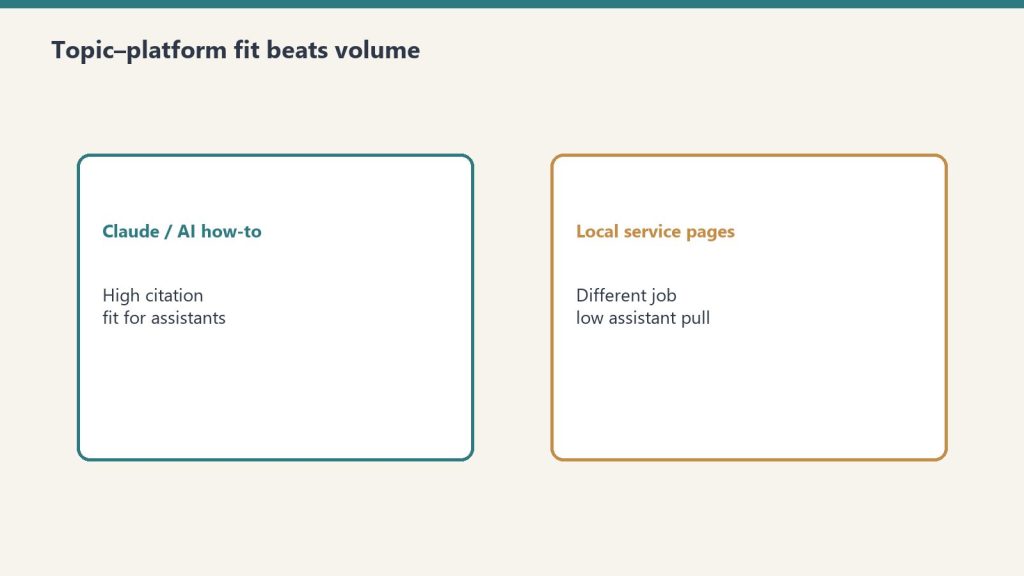
    Comparison of Claude how-to fit versus local service page fit for assistants
    Why aggregators can’t own the local queries that convert best.

    Aggregator platforms rank for generic, high-volume terms. They cannot rank for hyper-local, service-specific queries that require genuine local knowledge. “Water damage restoration companies near me” — HomeAdvisor wins that. “What to do if my basement floods in [specific neighborhood]” or “sewage backup cleanup contractor [specific zip code]” — these are queries where a local contractor’s content can win, and they convert at higher rates because they’re more specific.

    The restoration companies that build topical authority through hyper-local content — neighborhood-specific service area pages, local weather and flood risk content, municipality-specific permit and code content — create a content moat that aggregators cannot replicate because they lack the local knowledge to write it convincingly.

    How can restoration companies compete with HomeAdvisor and Angi in local search? Restoration companies compete with HomeAdvisor and Angi by targeting hyper-local queries that aggregators cannot rank for: neighborhood-specific service content (“basement flood cleanup in [neighborhood name]”), municipality-specific permit and code references for restoration work, local weather and infrastructure risk content (“why [city] homes are susceptible to sump pump failure”), and service-specific long-tail queries with local modifiers. Aggregators dominate generic terms; local contractors own hyper-local and process-specific queries that require genuine market knowledge.

    Three Content Types That Beat Aggregators Consistently

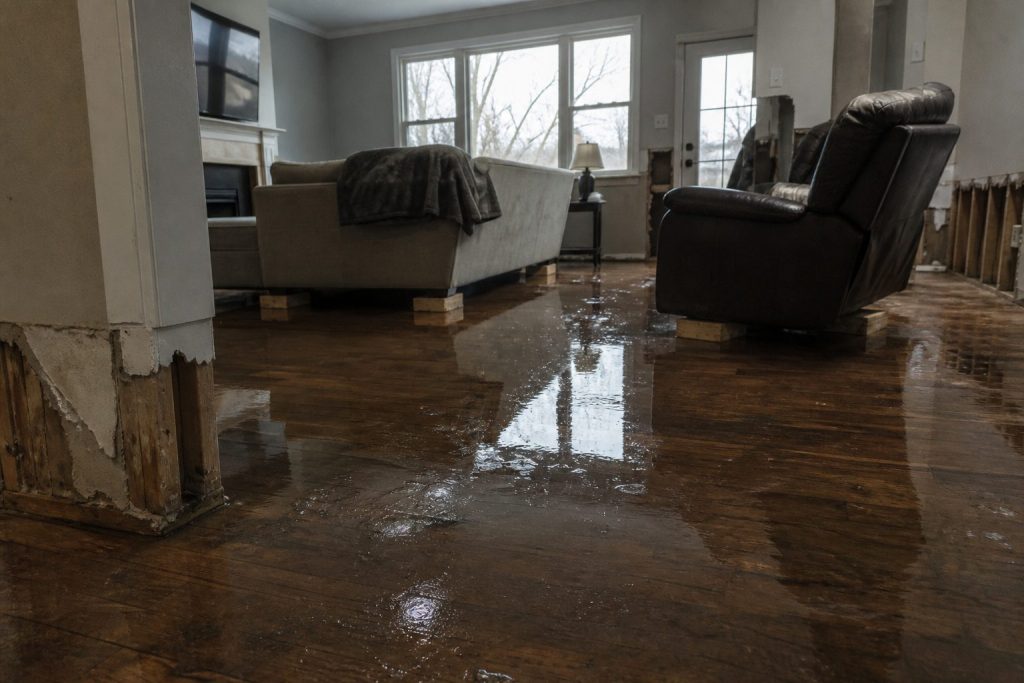
    Flooded residential living room with standing water on hardwood after a water loss
    Three content types that beat aggregators consistently.

    1. Neighborhood-Specific Service Content

    A dedicated article or page for each primary service area neighborhood — not just a city — with specific local references: the age and construction type of housing stock in that area (older homes with clay tile sewer laterals vs newer homes with PVC), common water damage causes specific to the geography (proximity to a flood plain, sump pump dependency in areas with high water tables), and local infrastructure that affects restoration timelines (permit requirements for drywall removal, local inspection protocols). HomeAdvisor has a landing page for your city. You can have a genuinely informative article for every neighborhood you serve.

    2. Local Risk and Prevention Content

    Weather events, aging infrastructure, and local building characteristics create specific restoration risk patterns that vary by market. An article titled “Why [City] Homes Get Basement Flooding After Spring Rain” — referencing local topography, the combined sewer system that causes backup events in specific zip codes, and the age of housing stock in affected neighborhoods — is content that only a contractor who actually works that market can write authoritatively. This is E-E-A-T through genuine local experience, and it’s exactly what AI systems recognize as locally authoritative content.

    3. Process Content With Local Code References

    Restoration permit requirements, local inspection protocols, and municipality-specific code provisions vary by jurisdiction. An article explaining “Do You Need a Permit for Water Damage Restoration in [City]?” — with the actual answer for your market, the permit threshold (square footage of drywall removal, extent of structural work), and the typical inspection timeline — is content that serves homeowners, builds local authority, and is completely outside what a national aggregator can provide.

    The Entity Set for Local Restoration Authority

    Desk with laptop, checklist notebook, and billing card ready before creating an Anthropic API key
    The entity set for local restoration authority.

    Beyond IICRC and RIA, local restoration authority requires geographic entity injection: named neighborhoods and service area communities, local watershed and drainage authority references where applicable, municipality names, specific local weather events that create restoration demand, and named local building code authorities. These geographic entities are the signals Google and AI systems use to determine whether a restoration contractor truly serves and understands a local market versus claiming a service area on a directory profile.

    Geographic entity injection and local content structuring are part of the GEO layer in WordPress content optimization for restoration companies through SiteBoost — applied to your existing service area and neighborhood content to build the local topical authority that aggregators can’t match.

    Related on Tygart Media: blog SEO · Twin Cities water damage SEO · property damage SEO.

    Frequently Asked Questions

    How many service area pages should a restoration company have?

    A dedicated page for each primary service city or neighborhood you actively serve and have genuine local knowledge about. The quality standard is: could you write 300+ words of genuinely specific, locally-relevant content about restoration work in this area? If yes, the page is worth creating. Generic “We serve [city]” pages with no local-specific content do not build topical authority and may actually dilute your overall site quality signals. Depth per location beats breadth of thin location pages.

    What local entities matter most for restoration company SEO?

    Named neighborhoods and communities within your service area, local watershed and drainage authority names (relevant for flood and backup content), municipality names paired with specific services, local housing stock characteristics (age, construction type, common infrastructure issues), and references to local weather patterns or infrastructure events that create restoration demand. Geographic specificity — naming specific streets, neighborhoods, or local landmarks — is the entity signal that separates genuine local expertise from claimed service area coverage.

    How does local content help restoration companies compete in AI search?

    AI systems evaluating restoration content for hyper-local queries — “basement flood cleanup [neighborhood]” or “sewage backup contractor [zip code]” — favor content with genuine geographic entity depth over generic service descriptions. A restoration company article that references specific local geography, housing stock characteristics, and infrastructure context is treated as locally authoritative by AI systems in a way that a national aggregator’s generic city page cannot match. Local entity injection is both a Google local SEO signal and an AI citation signal for geographically-specific restoration queries.

    Sources: Aziel Digital, “Water Damage SEO Secrets: How Restoration Companies Rank #1” (2026); Blueprint Digital, “Water Damage Restoration SEO” (2026); Whitespark Local Search Ranking Factors (2025); The RMG, “Local SEO for Restoration Companies” (2025)
  • Restoration Company AI Search: Winning Emergency Queries

    Restoration Company AI Search: Winning Emergency Queries

    Tygart Media — Restoration Content Strategy

    How Restoration Companies Get Found in AI Search When Homeowners Need Help Fast

    By Tygart Media Updated: April 12, 2026
    The 2am AI search reality: A homeowner discovers water in their basement at 2am. They don’t know which restoration company to call. They ask ChatGPT: “What should I do right now about water damage?” or “How fast does mold grow after water damage?” The AI synthesizes an answer from the most authoritative, structured, entity-rich restoration content it can retrieve. The restoration company cited in that answer has a significant advantage — the homeowner arrives at their phone number pre-trusting a source that just helped them.

    Why Emergency Restoration Queries Are the Highest AI Citation Opportunity

    Flooded residential living room with standing water on hardwood after a water loss
    Why emergency restoration queries are the highest AI citation opportunity.

    Restoration is one of the few industries where the customer’s search happens simultaneously with the problem. A homeowner doesn’t research restoration contractors the week before their pipe bursts — they search during the crisis. This creates a specific AI search opportunity: the queries that precede a restoration call are exactly the kind of direct-answer, process-oriented questions that AI systems are built to answer.

    “What to do immediately after water damage,” “how fast does mold grow after a leak,” “is it safe to stay in a house with water damage,” “what does Category 3 water damage mean” — these are answerable questions with verifiable, standard-referenced answers. Restoration content that answers them with IICRC entity references and direct-answer formatting is exactly what AI systems retrieve and cite.

    How do restoration companies get cited by ChatGPT and Google AI Overviews for water damage queries? Restoration companies earn AI citations for water damage queries when their WordPress content combines: ranking in the top 20 organic results for the query, IICRC standard references (S500, S520, specific technician certifications) as named entity anchors that AI systems can verify, direct-answer speakable blocks in the first 50 words after each section heading, and FAQPage JSON-LD schema that makes question-and-answer pairs machine-parseable. Emergency query content — “what to do after water damage,” “how fast does mold grow” — has the highest AI citation potential of any restoration content type because it matches the question format AI systems are built to answer.

    The Emergency Query Content Architecture

    Comparison of Claude how-to fit versus local service page fit for assistants
    The emergency query content architecture.

    Lead With the Direct Answer

    For emergency restoration queries, AI systems retrieve content that answers the question immediately — not content that builds context for three paragraphs before addressing the concern. An article titled “What to Do Immediately After Water Damage” should open with: “In the first 24 hours after water damage: stop the source of water if safe, document with photos before moving anything, call your insurance company to open a claim, and contact an IICRC-certified restoration contractor for professional water extraction — mold growth can begin within 24–48 hours under warm, humid conditions per IICRC S500 guidelines.” That’s the answer. Everything after is supporting detail.

    Reference IICRC Time Standards

    The IICRC S500 standard provides specific timelines for water damage mitigation that AI systems can verify and cite: Category 1 water damage should be addressed within 24–48 hours to prevent Category 2 contamination escalation; structural drying per IICRC ASD protocols typically requires 3–5 days with commercial dehumidification equipment. These specific, standard-referenced timeframes are what separate authoritative restoration content from generic homeowner advice — and are exactly what AI systems look for when evaluating which content to cite for time-sensitive restoration queries.

    Build Speakable Blocks for the Emergency Questions

    The highest-citation emergency restoration speakable blocks target: “How fast does mold grow after water damage?” (answer: within 24–48 hours under warm, humid conditions per IICRC S500 — the standard for professional water damage restoration), “What is Category 3 water damage?” (answer: grossly contaminated water including sewage, seawater, and floodwater from rivers per IICRC S500 classification), and “Is it safe to stay in a house with water damage?” (answer: depends on Category classification and structural integrity — Category 3 contamination typically requires temporary relocation). These answers are specific, verifiable, and structured for AI extraction.

    Speakable block creation, IICRC entity injection, and FAQPage schema are the three core GEO deliverables in WordPress content optimization for restoration companies through SiteBoost — applied to your existing emergency content to maximize AI citation probability.

    Related on Tygart Media: GEO tactics · AI citation monitoring · blog SEO.

    Frequently Asked Questions

    Desk with laptop, checklist notebook, and billing card ready before creating an Anthropic API key
    Frequently asked questions.
    Which AI systems are most important for restoration companies to optimize for?

    Google AI Overviews has the largest reach — appearing directly in Google search results for emergency restoration queries like “what to do after water damage” and “how fast does mold grow.” Perplexity is increasingly used for research-phase restoration questions because it cites sources inline, giving cited restoration companies visible brand exposure. ChatGPT’s growing search integration captures the late-night crisis searches where homeowners ask AI assistants for immediate guidance. All three use similar evaluation criteria: named IICRC entity references, direct-answer structure, and FAQPage schema.

    How is restoration AI search different from restoration Google SEO?

    Traditional restoration Google SEO prioritizes local signals — Google Business Profile, NAP consistency, location-specific landing pages, and review volume. AI search evaluates content differently: it looks for topical authority signals (IICRC standards, RIA membership, specific certification designations), direct-answer formatting (speakable blocks with 40–60 word direct answers), and machine-readable schema (FAQPage JSON-LD). Both matter — 97% of AI citations come from pages already ranking organically, so traditional SEO is the prerequisite. But among ranking pages, AI citation requires the additional GEO layer.

    Can a restoration company without a strong domain authority still earn AI citations?

    Yes, for specific long-tail emergency queries where competition is lower. A restoration company ranking in positions 11–20 for “what to do after a pipe bursts” with strong IICRC entity references and FAQPage schema can earn AI citations for that specific query even if it doesn’t rank in the top 3. The AI citation selection process among ranking pages rewards content quality signals — entity depth, direct-answer structure, schema — not just ranking position within the top 20.

    Sources: Blueprint Digital, “Water Damage Restoration SEO” (2026); IICRC S500 Standard for Professional Water Damage Restoration (5th ed.); Whitehat SEO, “SEO Best Practices 2025–2026”; LLMrefs, “Answer Engine Optimization: The Complete Guide for 2026”
  • Restoration Insurance Claim Content: Win Search Traffic

    Restoration Insurance Claim Content: Win Search Traffic

    Tygart Media — Restoration Content Strategy

    How to Write Restoration Content That Captures Insurance Claim Research Traffic

    By Tygart Media Updated: April 12, 2026
    The insurance research funnel: A homeowner who has just filed a water damage claim spends days researching before making a second call. They search “will insurance pay for all of my water damage,” “what does RCV vs ACV mean on my claim,” “how does a public adjuster work,” and “what happens if the adjuster underpays my claim.” The restoration company whose content answers these questions during that research window earns trust before the supplement, before the scope dispute, and before the next job referral.

    Why Insurance Claim Content Is the Highest-Value Restoration Content Type

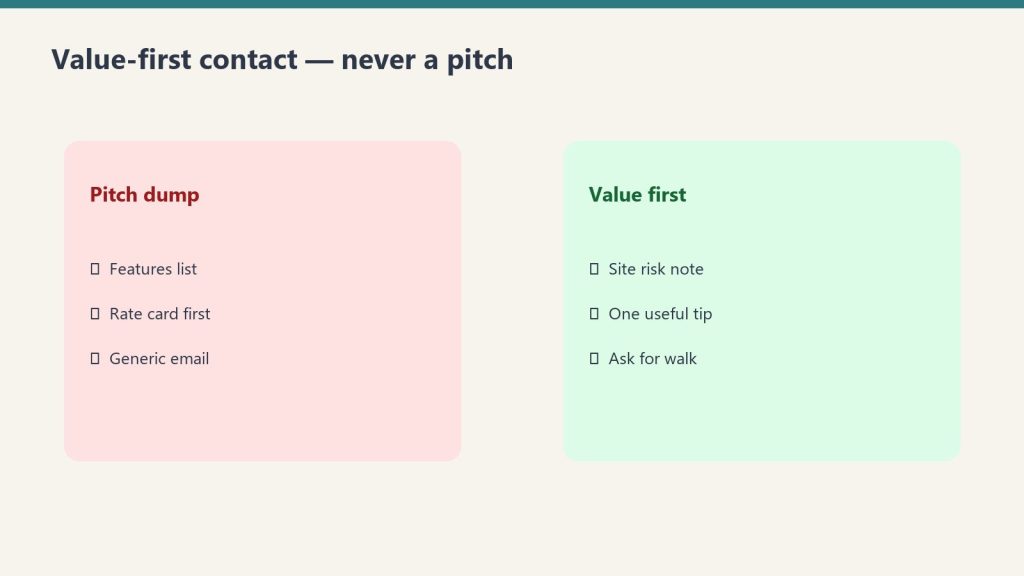
    Side-by-side comparing a pitch dump with value-first contact habits
    Why insurance claim content is the highest-value restoration content type.

    Most restoration company blogs publish content about their services — what they do, how they do it, why they’re certified. This content attracts homeowners at the moment of crisis. But the homeowner who is three days into an insurance claim — already through the emergency phase, now navigating the adjuster, the scope, the depreciation schedule — is searching for information that almost no restoration company provides.

    That gap is a significant content opportunity. Insurance claim research content is longer in the research cycle, higher in trust-building value, and more likely to produce referral relationships with the homeowner’s network because the homeowner who felt educated and supported during a confusing claim process tells everyone about it.

    What insurance claim content should restoration companies publish on WordPress? Restoration companies should publish insurance claim content addressing the questions homeowners research after filing: RCV vs ACV coverage (replacement cost value vs actual cash value), the supplemental claim process for additional damage discovered during restoration, how Xactimate estimating software determines scope of work, what documentation IICRC S500-compliant drying reports provide to support claims, the difference between a staff adjuster and an independent adjuster, and when a public adjuster might be appropriate. This content addresses the high-intent research phase that separates trusted restoration contractors from generic vendors.

    The Five Insurance Claim Content Topics That Build Restoration Authority

    Comparison of Claude how-to fit versus local service page fit for assistants
    The five insurance claim content topics that build authority.

    1. RCV vs ACV — What Your Policy Actually Covers

    Replacement Cost Value (RCV) vs Actual Cash Value (ACV) is the most-searched insurance term by homeowners with active water damage claims. An article explaining the difference — with specific examples of how depreciation is applied to flooring, drywall, and personal property — using precise insurance terminology (recoverable depreciation, holdback, recoverable vs non-recoverable depreciation) earns both Google entity signals and AI citation probability for high-intent insurance research queries.

    2. What Xactimate Means for Your Claim

    Xactimate is the industry-standard estimating software used by most insurance adjusters. Homeowners who have received an Xactimate estimate and don’t understand it search for explanations. A restoration company article explaining how Xactimate line items work, what “F9” notes mean, how equipment hours are documented, and why IICRC S500-compliant drying logs support the equipment line items on the estimate — this is high-value, low-competition content that no generic SEO agency for restoration companies is writing.

    3. The Supplemental Claim Process

    Supplemental claims — additional damage discovered after initial scope — are common in restoration and confusing to homeowners. An article explaining when supplemental claims are legitimate, how they’re documented, and what a restoration contractor’s role is in supporting the supplement creates authority at a point in the process where homeowners are especially uncertain and especially likely to trust a contractor who demonstrates knowledge.

    4. IICRC Documentation and What Adjusters Require

    Homeowners often don’t know that IICRC S500-compliant documentation — moisture maps, psychrometric logs, equipment placement records, drying verification reports — is what adjusters use to approve and validate restoration scopes. An article explaining this connection, written from a contractor’s perspective, signals E-E-A-T expertise and answers a question homeowners search but rarely find answered on a restoration company’s website.

    5. How to Read and Respond to an Adjuster’s Estimate

    This is the content homeowners search most during the claims process, and the content that produces the most direct calls to a restoration contractor who has earned trust through the article. Explaining what line items are commonly missed, what depreciation is recoverable, and how a contractor’s scope compares to an adjuster’s estimate positions the restoration company as a knowledgeable advocate — not just a vendor.

    Insurance claim entity injection — Xactimate, RCV/ACV, IICRC documentation references — is part of the GEO layer in WordPress content optimization for restoration companies through SiteBoost. Applied to existing articles without changing factual content.

    Related on Tygart Media: restoration blog SEO · adjuster relationships.

    Frequently Asked Questions

    Desk with laptop, checklist notebook, and billing card ready before creating an Anthropic API key
    Frequently asked questions.
    Is writing about insurance claims appropriate for restoration companies?

    Yes, from an educational and informational perspective. Restoration contractors regularly interface with insurance claims as part of their work and have genuine expertise about the documentation, process, and standards involved. Educational content explaining how claims work from a contractor’s perspective — not as legal or insurance advice, but as informed industry guidance — is appropriate, valuable, and builds the kind of E-E-A-T authority that both Google and homeowners respect. Content should always disclaim that it is educational and not legal or insurance advice.

    What insurance entities should restoration content reference?

    High-value insurance entities for restoration content include: Xactimate (Verisk’s estimating platform used by most adjusters), RCV and ACV (defined insurance coverage types), IICRC S500 documentation standards as claim support material, the National Flood Insurance Program (NFIP) for flood-specific claims, and independent adjuster vs staff adjuster distinction. These named entities signal that the content reflects genuine contractor knowledge of the insurance claim process rather than generic homeowner advice.

    How does insurance claim content build restoration company referrals?

    Homeowners who feel educated and supported during a confusing insurance claim process are significantly more likely to refer the contractor who helped them understand it. Insurance claim research content creates touchpoints during the high-anxiety research phase — when the homeowner is most receptive to trusting a knowledgeable contractor — and positions the restoration company as an advocate rather than a vendor. This trust translates into referrals to neighbors, family members, and property managers who experience future water damage.

    Sources: Blueprint Digital, “Water Damage Restoration SEO” (2026); Xactimate documentation (Verisk Analytics); IICRC S500 Standard for Professional Water Damage Restoration; Whitespark Local Search Ranking Factors Study (2025)
  • Restoration SEO: Boost Rankings With IICRC Certification

    Restoration SEO: Boost Rankings With IICRC Certification

    Tygart Media — Restoration Content Strategy

    How IICRC Certification Signals Rank Your Restoration Company Higher (And Get You Cited by AI)

    By Tygart Media Updated: April 12, 2026
    IICRC as an SEO entity: The Institute of Inspection, Cleaning and Restoration Certification (IICRC) is the named credentialing body that Google’s quality evaluators and AI systems use to evaluate restoration content authority. An article that mentions “IICRC-certified technicians” once is a marketing claim. An article that references the specific IICRC S500 Standard for Professional Water Damage Restoration, the Applied Structural Drying (ASD) technician designation, and the Restoration Industry Association (RIA) as co-publisher of industry standards — that article has entity depth that signals genuine industry expertise.

    Why Certification Names in Content Matter More Than Logos

    Three cards for field SOPs, owner prompts, and KPI rhythm in an operations kit
    Why certification names in content matter more than logos.

    Most restoration company websites display IICRC logos — in the footer, on the About page, on the homepage trust bar. This helps with human visitor credibility but contributes almost nothing to search or AI visibility. Logos are images. Google’s text-based quality evaluators and AI retrieval systems read the text content of pages, not the images on them.

    The SEO and AI citation value of IICRC certification comes from naming the credentials, standards, and certifying body in the text content of your articles and service pages. Specifically:

    • IICRC S500 — Standard for Professional Water Damage Restoration
    • IICRC S520 — Standard for Professional Mold Remediation
    • IICRC S770 — Standard for Professional Water Damage Restoration of Sewage Impacted Structures
    • ASD — Applied Structural Drying technician designation
    • WRT — Water Damage Restoration Technician certification
    • AMRT — Applied Microbial Remediation Technician
    • RIA — Restoration Industry Association (co-publisher of IICRC standards)
    How does IICRC certification improve restoration company SEO and AI citation? IICRC certification improves restoration company SEO when specific IICRC standards — S500 for water damage, S520 for mold, S770 for sewage — are named in article text content rather than just displayed as logos. These named entities signal genuine restoration industry expertise to Google’s E-E-A-T quality evaluators and AI systems like ChatGPT and Perplexity, which evaluate whether restoration content represents real industry knowledge before citing it in answers about water damage, mold, or property restoration.

    Implementing IICRC Entities in Three Content Types

    Gloved hands using a pin-type moisture meter on wet drywall during inspection
    Implementing IICRC entities in three content types.

    Water Damage Articles

    Every water damage article should reference the IICRC S500 standard and explain that professional water damage restoration follows its protocols — including moisture mapping, equipment placement based on psychrometric calculations, and documentation of drying progress. An article that explains Category 1 (clean water), Category 2 (grey water), and Category 3 (black water) contamination levels using IICRC S500 terminology signals expertise that generic homeowner advice does not.

    Mold Remediation Articles

    Mold content should reference the IICRC S520 standard, AMRT technician certification, and EPA mold remediation guidelines as named entities. The distinction between mold remediation (reducing mold to a normal fungal ecology per S520) and mold removal (a marketing term without a defined standard) is the kind of specific, standard-referenced distinction that earns Google quality evaluator trust for YMYL property damage content.

    Insurance Claim Content

    Insurance-related restoration content should reference IICRC standards as the basis for scope of work documentation — specifically that IICRC S500-compliant documentation (moisture readings, equipment logs, drying reports) is what adjusters require to approve claims. This entity connection between IICRC standards and insurance claim approval is highly specific and AI-citation-worthy because it answers a high-intent homeowner question with verifiable, standard-referenced information.

    IICRC entity injection is part of the GEO optimization layer in WordPress content optimization for restoration companies through SiteBoost — applied to your existing water damage, mold, and insurance content without changing any factual claims.

    Related on Tygart Media: restoration blog SEO · S500 in the van · local SEO.

    Frequently Asked Questions

    Desk with laptop, checklist notebook, and billing card ready before creating an Anthropic API key
    Frequently asked questions.
    What IICRC standards should restoration content reference?

    The most SEO-valuable IICRC standard references for restoration content are: S500 (Professional Water Damage Restoration — the foundational water damage standard), S520 (Professional Mold Remediation), S770 (Water Damage Restoration of Sewage Impacted Structures), and IICRC technician designations including WRT (Water Damage Restoration Technician), ASD (Applied Structural Drying), and AMRT (Applied Microbial Remediation Technician). Referencing specific standards by number and full name — not just “IICRC standards” generically — creates the named entity anchors that signal genuine expertise.

    Is RIA membership also an SEO entity signal?

    Yes. The Restoration Industry Association (RIA) co-publishes IICRC standards and is the primary trade association for the restoration industry. Referencing RIA membership, RIA industry statistics, or RIA educational programs in restoration content adds a second named industry entity alongside IICRC — which strengthens the entity cluster signaling genuine restoration industry standing. For content about insurance claims, referencing RIA’s advocacy work with insurance industry on claim documentation standards is specifically relevant and AI-citation-worthy.

    Do IICRC entity references help with both Google rankings and AI citation?

    Yes, through the same mechanism. Google’s quality evaluators assess restoration content for expertise signals — specific named standards and certifications are the clearest indicators that content reflects genuine professional knowledge. AI systems like ChatGPT and Perplexity use similar evaluation criteria when deciding which restoration content to cite in answers. Named IICRC standard references make content machine-verifiable — the AI can cross-reference the entity against known certification data — which increases citation probability for both Google AI Overviews and standalone AI assistants.

    Sources: IICRC S500 Standard for Professional Water Damage Restoration (5th ed.); IICRC S520 Standard for Professional Mold Remediation; Restoration Industry Association (RIA), restorationindustry.org; Aziel Digital, “Water Damage SEO Secrets” (2026); Peterson SEO Consulting, “Water Damage SEO for Restoration Contractors” (2025)
  • Restoration Company Blog SEO: Why Posts Fail to Get Calls

    Restoration Company Blog SEO: Why Posts Fail to Get Calls

    Tygart Media — Restoration Content Strategy

    Why Restoration Company Blog Posts Don’t Generate Calls (And What to Fix)

    By Tygart Media Updated: April 12, 2026
    The restoration blog problem: A homeowner discovers water damage at 11pm. They search “what to do after a pipe burst” or “how fast does mold grow after water damage.” If your blog article exists but has no meta description, no FAQ schema, and no IICRC entity references, Google has no reason to surface it — and neither does ChatGPT. The article exists. It just never gets found.

    Restoration Searches Are Emergency Searches — Optimization Has to Match

    Flooded residential living room with standing water on hardwood after a water loss
    Restoration searches are emergency searches — optimization has to match.

    Water damage restoration is one of the few industries where the customer’s timeline is minutes, not days. According to Blueprint Digital’s 2026 water damage SEO analysis, high-intent searches like “water damage repair near me” or “emergency water extraction” often convert to calls within minutes of the search. That urgency creates a specific content requirement: the article needs to appear, answer the question directly, and provide a clear next step — all before the homeowner finds a competitor.

    Most restoration company WordPress blogs fail at all three. The posts exist but don’t appear because they lack optimization. They don’t answer questions directly because they were written as general service descriptions. And they don’t provide a clear next step because the CTA was an afterthought.

    Why don’t restoration company blog posts rank despite regular publishing? Restoration company blog posts fail to rank when they lack the optimization signals Google uses for emergency local content: a title tag that matches the homeowner’s actual search query (“what to do after a pipe bursts” not “our water damage services”), a written meta description with a direct action signal, FAQPage schema targeting the questions homeowners ask during a water damage crisis, and IICRC certification and RIA membership entity references that signal industry authority. Without these signals, the article competes for positions it has no basis to win.

    The Four Fixes — In Order of Impact

    Comparison of Claude how-to fit versus local service page fit for assistants
    The four fixes — in order of impact.

    1. Rewrite Titles for Emergency Intent

    Restoration content titles almost universally describe the company’s service rather than matching the homeowner’s search query. “Our Water Damage Restoration Process” describes your operation. “What to Do Immediately After Water Damage (First 24 Hours)” matches a homeowner searching in a crisis. Emergency intent keywords — “immediately,” “fast,” “what to do,” “how long,” “is it safe” — are the search triggers that precede a call. The title needs to capture those triggers first.

    2. Add IICRC and RIA Entity References

    Google’s quality evaluators assess restoration content for named industry credentials. An article about water damage that references “IICRC S500 Standard for Professional Water Damage Restoration,” mentions the “Restoration Industry Association (RIA)” as the industry body, and cites “ANSI/IICRC S520 Standard for Professional Mold Remediation” signals genuine restoration expertise. These named entities are also what AI systems use to determine whether a restoration article represents real industry knowledge or generic homeowner advice.

    3. Add FAQ Schema Targeting the Crisis Questions

    Restoration homeowners ask very specific questions during a crisis: “How long before water damage causes mold?”, “Will insurance cover my water damage?”, “How long does water damage restoration take?”, “Is my house safe after water damage?” A FAQ section with direct answers to these questions, combined with FAQPage JSON-LD schema, positions your article for People Also Ask placements — which appear above organic results for these exact emergency queries.

    4. Add a 24/7 Emergency CTA in the Article Body

    Blog posts that generate calls have a visible, urgent CTA embedded in the article body — not just in the footer. “Water damage worsens every hour. Call [number] for 24/7 emergency response.” This CTA converts the reader who found your article at 2am and is ready to call right now — not the reader who completes the article, navigates to your contact page, and calls during business hours.

    All four fixes — emergency-intent title rewrites, IICRC entity injection, FAQPage schema, and CTA optimization — are part of WordPress content optimization for restoration companies through SiteBoost. Applied to your existing article library, pushed live via WordPress REST API.

    Related on Tygart Media: IICRC certification SEO · local SEO for restoration · AI search for restoration.

    Frequently Asked Questions

    Desk with laptop, checklist notebook, and billing card ready before creating an Anthropic API key
    Frequently asked questions.
    What restoration keywords actually drive calls, not just traffic?

    Emergency-intent keywords drive calls: “water damage repair near me,” “emergency water extraction,” “flooded basement cleanup,” “burst pipe water damage,” “sewage backup cleanup.” These phrases signal active crisis — someone searching them is ready to call within minutes. Research keywords like “how long does water damage restoration take” drive lower-urgency traffic but build trust during the insurance claim research phase. Both matter, but emergency keywords should be prioritized on service pages and emergency CTAs.

    Should restoration companies blog about prevention or restoration?

    Both, but for different funnel stages. Prevention content (“how to prevent pipes from freezing,” “signs of hidden water damage”) attracts homeowners before a crisis and builds brand awareness. Restoration content (“what to do after a pipe bursts,” “how long does mold take to grow after water damage”) captures homeowners in an active crisis — the highest-converting traffic. Prioritize restoration process and crisis content first, then build prevention content as a secondary funnel.

    How does IICRC certification help restoration company SEO?

    IICRC certification signals credibility to both Google’s quality evaluators and homeowners evaluating contractors. In content, referencing specific IICRC standards — S500 for water damage, S520 for mold, S770 for sewage — by name creates named entity anchors that Google associates with genuine restoration industry expertise. This entity signal is also what AI systems like ChatGPT use when evaluating whether a restoration article represents real industry knowledge worth citing.

    Sources: Blueprint Digital, “Water Damage SEO: How to Rank Higher and Win More Local Jobs” (2026); Aziel Digital, “Water Damage SEO Secrets: How Restoration Companies Rank #1” (2026); Peterson SEO Consulting, “Water Damage SEO for Restoration Contractors” (2025); IICRC S500 Standard for Professional Water Damage Restoration
  • Restoration Company SEO: WordPress & AI Optimization

    Restoration Company SEO: WordPress & AI Optimization

    SiteBoost — Vertical Series

    SiteBoost for Restoration Companies: WordPress SEO, AEO & AI Optimization for Water Damage Contractors

    By Tygart Media — This page is built using the same SEO, AEO, and GEO techniques applied through SiteBoost. The optimization you see here — entity density, schema, FAQ structure, speakable blocks — is exactly what the service delivers.

    Restoration Company WordPress Optimization: The process of applying SEO (Search Engine Optimization), AEO (Answer Engine Optimization), and GEO (Generative Engine Optimization) to a water damage or disaster restoration contractor’s WordPress articles — improving title tags, FAQ sections, IICRC entity injection, schema markup, and AI citation signals so the contractor ranks in Google, wins insurance-related People Also Ask placements, and gets cited by AI search systems when homeowners and adjusters ask about water damage remediation, mold removal, or fire restoration.

    The Restoration SEO Reality: Highest CPC in Home Services, Lowest Content Quality

    Water damage and flood restoration commands the highest cost-per-click in the entire home services category. Homeowners searching for emergency restoration services are in crisis — they click, and they hire. That makes restoration keywords extremely valuable to Google advertisers. Yet most restoration company WordPress sites are full of thin, unoptimized articles that leave enormous organic opportunity untouched.

    Why is the water damage restoration industry’s CPC the highest in home services?
    Water damage restoration has the highest CPC in the home services category because of three compounding factors: emergency urgency (homeowners need help within hours, not days), high average job value ($3,000–$15,000+ per project), and insurance-driven billing (restoration companies often bill insurance carriers directly, increasing the lifetime value of each job). These factors make every qualified click worth significant revenue, driving advertisers to bid aggressively on terms like “water damage restoration near me” and “emergency flood cleanup.”

    Real Data: The Gap Between Servpro and Your Site

    SpyFu domain intelligence shows the organic gap between category leaders and typical independent restoration contractors — publicly available data that illustrates why optimization depth matters:

    Domain Organic Keywords Monthly Clicks SEO Value/Mo Domain Strength
    servpro.com 178,900 151,700 $5,825,000 62
    Typical NYC Contractor 1,006 384 $31,220 41
    Typical Houston Contractor 202 20 $14,840 38
    Typical indie contractor <200 <50 <$10,000 25–35

    Source: SpyFu domain stats, February 2026.

    Servpro’s organic value of $5.8M/month is built on systematic content optimization at scale — not domain authority alone. Their strength score (62) is only moderately higher than independent restoration contractors (38–41). The gap is content depth, schema coverage, and FAQ saturation. That’s exactly what SiteBoost closes.

    Real Before & After: Restoration Company WordPress Article

    Here is a hypothetical demonstration of what SiteBoost applies to a typical restoration company article — illustrating exactly what happens to every post in the pilot:

    Before SiteBoost (Real Post)
    Title: “From Blueprint to Reality: Navigating the Construction Process with Ease”

    Meta description: Generic excerpt, 210 characters — too long, no keyword

    Word count: ~750 words

    FAQ section: None

    Schema: Article JSON-LD only (no FAQPage)

    Structure: 5 H2 sections, no direct-answer formatting

    AI visibility: Zero speakable blocks, no construction entity injection

    After SiteBoost (Same Article)
    Title: Optimized with primary keyword front-loaded

    Meta description: 155 chars — keyword + value proposition + CTA

    Word count: ~950 words (definition box + FAQ added)

    FAQ section: 7 questions — “What permits are required?”, “How long does the planning phase take?”, “How do I manage unexpected costs?” — all targeting PAA

    Schema: FAQPage JSON-LD injected alongside existing Article schema

    Structure: Definition box + direct-answer H2 intros added

    AI visibility: Speakable content targets: what is the construction process, how to manage contractor timeline

    What Makes Restoration Content Different: IICRC Entities & Insurance Language

    Restoration company content has a specific entity set that signals authority to both Google and AI systems. Most restoration WordPress blogs mention “water damage” repeatedly but miss the named entities that establish expertise:

    What IICRC entities should restoration company WordPress content reference?
    Restoration company content optimized for AI citation and Google E-E-A-T should reference the Institute of Inspection, Cleaning and Restoration Certification (IICRC), specific IICRC standards (S500 Standard for Professional Water Damage Restoration, S520 Standard for Professional Mold Remediation, S770 Standard for Professional Fire and Smoke Damage Restoration), restoration equipment categories (desiccant dehumidifiers, air movers, hydroxyl generators, thermal imaging cameras), and insurance-specific terminology (RCV — Replacement Cost Value, ACV — Actual Cash Value, scope of loss, supplemental claims, Xactimate estimating software). This entity density signals domain expertise to both Google’s quality evaluators and AI search systems.

    The Insurance Adjuster Search Opportunity

    Restoration companies have two audiences searching for them: homeowners in crisis, and insurance adjusters researching restoration standards and protocols. Adjuster-facing content — articles about IICRC S500 compliance, Xactimate line items, scope of loss documentation, and RCV vs. ACV billing — is almost completely absent from most restoration WordPress sites. This represents an untapped GEO opportunity: when an adjuster or TPA (Third Party Administrator) asks ChatGPT about restoration billing standards, your content could be the source cited.

    Search Intent Example Query Content Type Needed Optimization Layer
    Emergency homeowner “water damage restoration near me” Service pages + local content SEO + Local schema
    Research homeowner “how long does water damage restoration take” FAQ-rich blog posts AEO + FAQPage schema
    Insurance-aware homeowner “will insurance cover mold remediation” Insurance guide articles AEO + GEO
    Insurance adjuster “IICRC S500 water damage standard” Technical authority content GEO + entity injection
    AI search user “what is the restoration process for category 3 water damage” Structured speakable content GEO + speakable blocks

    SiteBoost Pilot for Restoration Companies: What You Get

    Deliverable Details
    Site Connection & Audit WordPress REST API connection, content inventory, IICRC entity gap analysis, insurance terminology gap report, Before Baseline
    10 Post Optimizations Full SEO + AEO + GEO on 10 highest-opportunity restoration articles — including IICRC entity injection, insurance terminology, and speakable blocks
    60-Day Impact Report Baseline vs. 60-day comparison: rankings, PAA appearances, AI citation visibility, traffic delta
    Restoration expertise SiteBoost is purpose-built for restoration contractors. Our team understands IICRC standards, Xactimate, insurance billing, and the specific content gaps that hold restoration sites back.
    Price $597 pilot — $767 value

    Interested in the SiteBoost Pilot for Your Restoration Site?

    We onboard sites personally. Email Will with your site URL and he’ll follow up within one business day.

    → Email Will — Start the Pilot

    Email only. No sales call required. No commitment to reply.

    Frequently Asked Questions: SiteBoost for Restoration Companies

    Do you understand restoration industry terminology well enough to write about it?

    Yes — and this is our core advantage over general SEO agencies. SiteBoost is built by a team with deep restoration industry knowledge. We understand IICRC standards (S500, S520, S770), Xactimate estimating, RCV/ACV billing, category and class water damage classifications, psychrometric calculations, and the insurance claim process from the contractor’s perspective. Our GEO layer injects these terms specifically because they’re the entities that establish authority with both Google’s quality evaluators and AI systems.

    Can SiteBoost help us rank for emergency water damage keywords in our local market?

    SiteBoost optimizes your existing blog content — not your service pages or Google Business Profile. However, content authority signals from your blog directly reinforce your local pack and GBP rankings. Articles that rank for “how long does water extraction take” or “what does water damage restoration cost” build topical authority that helps your service pages rank for “water damage restoration [city]” — the high-intent emergency terms that drive calls.

    What restoration-specific schema markup does SiteBoost inject?

    For restoration company articles, SiteBoost injects: FAQPage schema (targeting insurance and process questions), Article schema with LocalBusiness publisher markup, HowTo schema for process-oriented content (e.g., “How to document water damage for an insurance claim”), and Service schema referencing specific restoration categories (water damage, mold remediation, fire restoration). All schema is valid JSON-LD injected directly into the post via WordPress REST API.

    How does AI optimization help restoration companies specifically?

    When a homeowner asks ChatGPT “what should I do after a pipe bursts?” or asks Perplexity “does insurance cover water damage from a leaking roof?” — the AI pulls from the most structured, entity-rich, authoritative content it can find. Restoration companies that have IICRC references, insurance terminology, and speakable answer blocks in their WordPress articles are far more likely to be cited. SiteBoost’s GEO layer builds exactly this citation infrastructure into your existing content.

    We use a restoration CRM and job management software. Will SiteBoost interfere?

    No. SiteBoost operates exclusively on WordPress post content via the REST API. It has zero interaction with ServiceTitan, Restoration Manager, Encircle, Xactimate, or any other CRM or job management system. The WordPress Application Password we use is scoped to content editing only — it cannot access any other systems, plugins, or third-party integrations on your site.

    We’re IICRC-certified. Can SiteBoost reflect that in our content?

    Yes — and it’s one of the most important GEO signals we inject. IICRC certification is a named credential that Google’s E-E-A-T framework specifically rewards for restoration content. We inject IICRC references, specific certification levels (WRT, ASD, AMRT, FSRT), and standard citations throughout your articles. This signals expertise to both Google and AI systems evaluating whether to cite your content as authoritative.

  • Crawl Space Dehumidifier Cost: Unit & Install Prices

    Crawl Space Dehumidifier Cost: Unit & Install Prices

    The Distillery
    — Brew № 2 · Crawl Space

    Updated September 30, 2026.

    Direct answer: Crawl-space-rated dehumidifiers run about $567–$2,236 for the unit at verified September 2026 retail, plus $150–$600 for hang, drain, and a new 15A circuit when needed—typical 70-pint-class installs land near $1,650–$2,850. Plan on roughly $145–$330/year in power at the U.S. EIA 2025 residential average of 17.3¢/kWh, depending on wattage and run hours.

    Spec E070, E100, Santa Fe Compact70/Advance2, or AlorAir Sentinel on new work—legacy 1820/1850 lines are discontinued. Box-store portables lack crawl duty cycle, low-temp rating, and hard-plumbed drains.

    Unit Cost by Capacity and Brand

    AHAM = 80°F / 60% RH. Retail spans are from manufacturer or authorized dealers, not installed bids.

    Model Capacity Min Temp Unit Cost Best For
    Aprilaire E070 70 pint/day ~40°F $1,677–$1,799 Sealed crawls to ~2,200 sq ft
    Santa Fe Compact70 70 pint/day 38°F $1,299–$1,379 Tight height; R454B
    AlorAir Sentinel HDi65S 55 pint/day 33.8°F $567–$756 Low retail; built-in pump
    Aprilaire E100 100 pint/day ~50°F $1,878–$2,236 1850 replacement; heavy load
    Santa Fe Advance2 90 pint/day 49°F $1,380–$1,903 Mid-large crawls
    AlorAir Sentinel HDi90 90 pint/day 33.8°F $872–$975 Mid-large; pump included

    Installation Cost Components

    • Electrical ($0–$600): Dedicated 15A/115V circuit. Existing crawl outlet: $0 add-on. New homerun: $300–$600—still the biggest swing item; confirm before you budget.
    • Mounting ($100–$250): Hang from joists or frame a platform above the liner; never set the cabinet on the vapor barrier.
    • Condensate ($50–$200): Gravity to sump or drain when possible; add $80–$150 in pump hardware when the unit sits below the discharge point. Many Sentinel models include a pump.

    Total Installed Cost Summary

    Scenario Unit Electrical Mount + Drain Total
    Existing outlet, gravity drain $1,299–$1,716 $0 $150–$350 $1,450–$2,070
    New 15A circuit $1,299–$1,716 $300–$600 $150–$350 $1,750–$2,670
    New circuit + pump path $1,299–$1,716 $300–$600 $250–$500 $1,850–$2,820
    Aprilaire E100 + new circuit $1,878–$2,236 $300–$600 $150–$350 $2,330–$3,190

    Annual Operating Cost

    • 70-pint class (~580–650 W): About $145–$165/year at 4 hours/day run time, or $290–$330/year at 8 hours/day, at 17.3¢/kWh (EIA 2025 U.S. residential average).
    • 90-pint class (~800 W): About $200–$400/year at the same duty cycles.
    • High-rate states (25–35¢/kWh): Multiply by roughly 1.4–2.0.

    Log RH 30 days after commissioning—crawl space humidity monitor placement catches undersized units before mold does.

    Contractor vs. DIY

    Bids still bundle dehumidifiers at $1,500–$3,500 installed. DIY on the same SKU saves roughly $300–$700 when outlet and drain exist; you own code, hang, and warranty. See crawl space encapsulation cost.

    Frequently Asked Questions

    How much does a crawl space dehumidifier cost?

    Expect roughly $567–$2,236 for the unit alone at verified 2026 retail, depending on brand and capacity. Total installed cost with mounting, condensate routing, and a new 15A circuit when needed usually lands near $1,650–$2,850 for a standard 70-pint class system. Encapsulation contractors often quote $1,500–$3,500 for the dehumidifier line item, which may bundle electrical, commissioning, and service.

    What is the cheapest crawl space dehumidifier that actually works?

    The AlorAir Sentinel HDi65S is the lowest verified retail price in this class—about $567–$756 direct from AlorAir—with a built-in pump, auto defrost, and roughly 33.8°F minimum operating temperature. It is rated 55 pints/day at AHAM (80°F, 60% RH), not 70, so size it conservatively. Warranty and distributor support are thinner than AprilAire or Santa Fe; weigh that if you are far from a wholesaler.

    Is it cheaper to run an HVAC supply duct than a dehumidifier?

    Cheaper upfront: tying a small supply register from existing forced-air HVAC into the crawl often runs $300–$600 installed versus $1,650–$2,850 for a dedicated dehumidifier on typical retail plus labor. Operating cost stays lower too because you are piggybacking on the central system. In humid Southeast and Gulf climates, supply-only rarely holds RH below 60% year-round; verify with a logger before you skip mechanical dehumidification.

    Do I need a dedicated electrical circuit for a crawl space dehumidifier?

    Yes—a dedicated 15A, 115V circuit is standard. Many 70-pint class units draw about 5–6 amps running (roughly 580–650 watts). If a GFCI-protected outlet already exists in the crawl, electrical add-on cost is $0; pulling a new homerun from the panel typically adds $300–$600 in labor and materials in 2026 markets.

    How much does it cost to run a crawl space dehumidifier per year?

    At the U.S. EIA 2025 residential average of 17.3¢/kWh, a 580-watt unit running 8 hours/day averages about $290/year; 4 hours/day averages about $145/year. A 90-pint class unit near 800 watts at the same duty cycles runs about $200–$400/year. High-cost states at 25–35¢/kWh roughly double those figures.