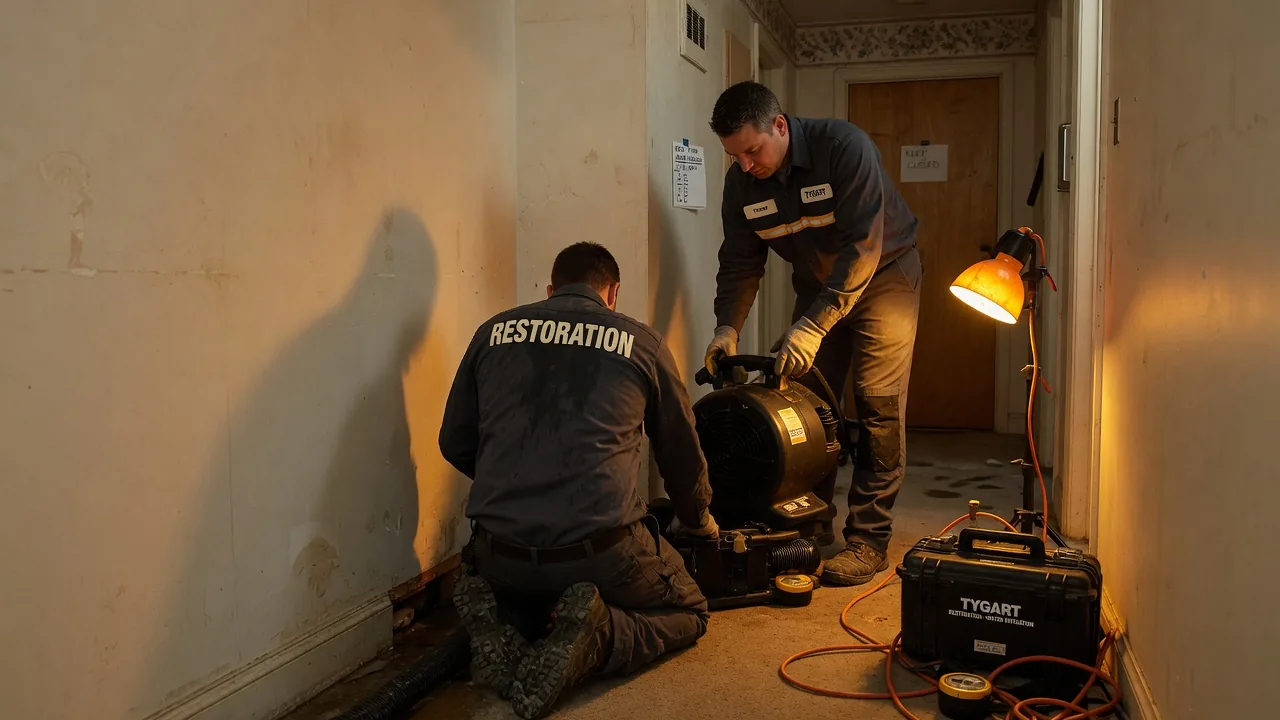
Commercial restoration sales is one of the longest, most complex sales motions in the trades. The buying committee can include property managers, asset managers, risk managers, in-house counsel, and procurement. The sales cycle routinely runs 6-18 months from first conversation to first revenue. The deal structures involve MSAs, performance metrics, insurance requirements, and pricing concessions that residential salespeople have never encountered. Companies that try to “sell harder” usually fail; companies that build a disciplined commercial sales process consistently win.
This article is part of our broader restoration sales playbook, which covers the full sales motion across both commercial and residential.
The Six Stages of a Commercial Restoration Sales Cycle
Stage 1: Account Identification and Prospecting
Commercial restoration prospecting starts with identifying the right accounts — typically property management firms managing 50+ doors in the service area, large commercial buildings, hospital systems, school districts, hotel chains, and corporate campuses. Tools like LoopNet, CoStar, and local commercial real estate databases combined with LinkedIn Sales Navigator surface the buying contacts inside each account.
The activity goal at this stage is consistent outreach volume — typically 20-40 personalized touches per week per BD rep across email, LinkedIn, and phone.
Stage 2: Discovery and Qualification
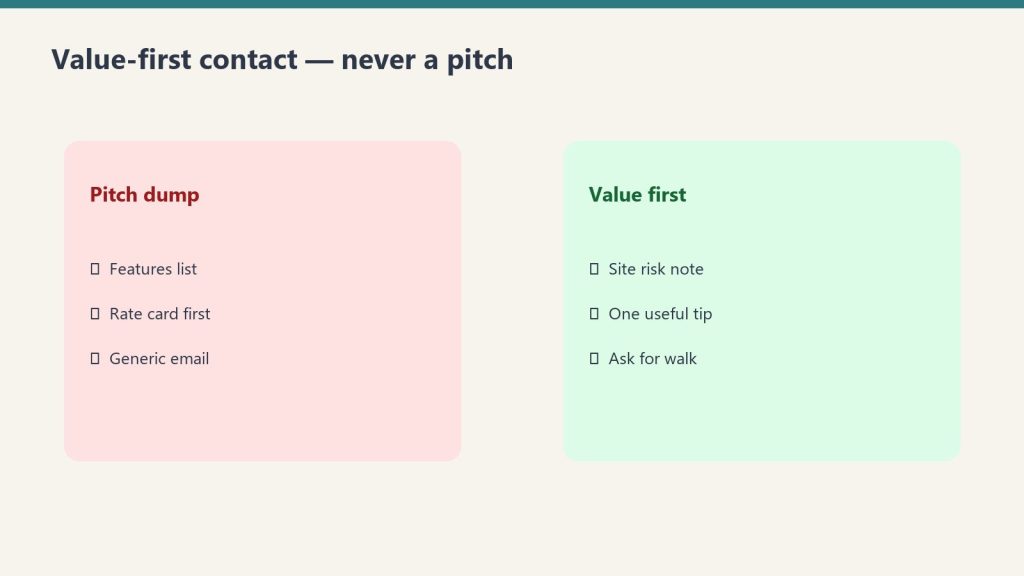
The first real conversation with a commercial prospect should be discovery, not pitching. Questions to surface in discovery: current vendor relationships, recent loss history, decision-making process, MSA timelines, performance metrics they care about, and pain points with current vendors. Most commercial prospects are not actively looking for a new vendor — qualification is identifying the ones whose current arrangement has friction.
Stage 3: Capability Presentation
The capability presentation in commercial restoration sales is not a generic pitch deck. It is a tailored response to the specific pain points surfaced in discovery — response time guarantees, equipment inventory in their geography, certifications relevant to their property type, sample reporting and documentation, and case studies from similar properties.
Stage 4: Pilot or Trial Engagement
Commercial prospects rarely move directly from capability presentation to MSA. The intermediate step that moves deals forward is a pilot engagement — a small initial job that demonstrates the company’s actual performance under field conditions. Companies that nail the pilot consistently move to MSA negotiation; companies that disappoint on the pilot lose the account permanently.
Stage 5: MSA Negotiation
MSA negotiation involves pricing schedules, response time commitments, performance metrics, insurance requirements, indemnification, dispute resolution, term and termination, and exclusivity provisions. Most restoration companies need legal counsel for MSA review. The negotiation cycle commonly runs 60-180 days.
Stage 6: Account Expansion
The largest revenue from commercial accounts often comes after the initial MSA — through portfolio expansion (more properties), service expansion (mitigation plus reconstruction plus contents plus mold), and referrals to sister property management companies in the same network. The post-MSA account management motion is where commercial restoration revenue actually compounds.
Sales Cycle Math
A commercial restoration BD rep needs to manage the front-end activity volume that produces enough qualified pipeline 6-18 months out to support a steady stream of MSA closes. Most rep performance issues in commercial restoration are caused by insufficient prospecting volume in months 1-6, which produces a pipeline gap in months 7-18 that no amount of late-cycle effort can recover.
Compensation Structure

Commercial restoration BD compensation typically combines a base salary that supports the long sales cycle with commission on closed MSAs and a smaller residual on account revenue over time. Pure-commission structures usually fail because the cycle is too long for reps to survive financially during the ramp.
Related on Tygart Media: commercial restoration sales · sales stack · commercial entry guide.
Frequently Asked Questions
How long is the typical commercial restoration sales cycle?
From first contact to first revenue, commercial restoration sales cycles typically run 6-18 months. From first contact to a fully executed MSA, the cycle can be 12-24 months. Pipeline planning needs to account for this extended timeline.
Can a residential restoration salesperson succeed in commercial?
The skill profiles are different enough that direct transitions usually fail. Commercial sales requires patience, account-based discipline, comfort with long cycles, and ability to navigate buying committees. Most successful commercial reps come from B2B service sales backgrounds rather than residential restoration sales backgrounds.
What is the most common commercial restoration sales mistake?
Pitching too early in the conversation. Commercial buyers tune out generic capability pitches; they engage with reps who clearly understand their specific property type, current vendor pain points, and operational reality. Discovery first, presentation second.
How do I get my first commercial MSA?
The fastest path is usually delivering exceptional performance on a pilot engagement with a smaller commercial account, then leveraging that success into introductions and case studies for larger targets. Cold-pitching a major property management firm without any commercial track record rarely works.
What pricing concessions are typical in commercial MSAs?
Commercial MSA pricing is typically 5-20% below standard residential pricing in exchange for volume guarantees and vendor preference. The exact concession depends on portfolio size, exclusivity terms, and the operator’s negotiating position. Companies entering commercial often over-discount in early MSAs to win business.
Get The Signal
What we actually ran, what it measured, and what it means for a restoration shop — every week, including the flops.
Leave a Reply