Tag: Public Transit

Regional public transportation, light rail systems, commuter transit, and transit-oriented development.

  • Boeing & Paine Field Commute: Casino Road Transit Updates

    Boeing & Paine Field Commute: Casino Road Transit Updates

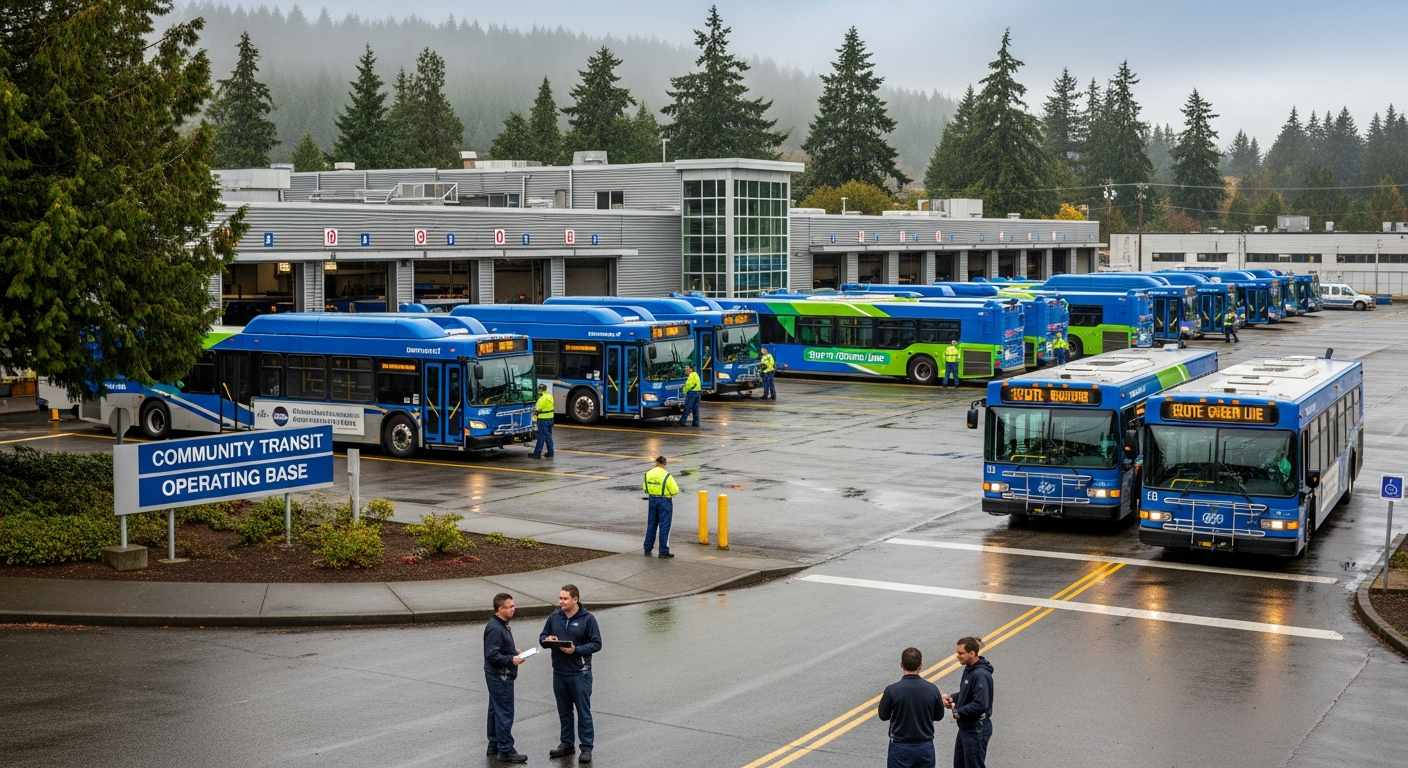
    For Boeing and Paine Field workers: Community Transit just bought 7.55 acres on Casino Road for $25.35 million — the largest land acquisition in the agency’s history. Paired with the Everett Transit consolidation underway and two planned light rail stations on Casino Road, this deal reshapes the transit infrastructure you’ll use to get to and from the 737 North Line and Paine Field campuses. Here’s what it means for your commute over the next decade.

    Why This Casino Road Land Deal Matters for Paine Field Workers

    The Community Transit acquisition at 2208 W. Casino Road is an operational campus expansion — the agency needs more space to store and maintain vehicles as it absorbs Everett Transit’s routes and grows toward its 30-million-rider-per-year Journey 2050 target. For Boeing and Paine Field workers, the relevance is direct: Casino Road is a key corridor connecting south Everett residential neighborhoods to the industrial employment zone around Paine Field, and the transit infrastructure on that corridor is being rebuilt from the ground up.

    Community Transit’s Route 7 serves the Casino Road and SW Everett Industrial Center corridor — the same zone where Sound Transit is planning a light rail station as part of the Everett Link Extension. Boeing workers who live on or near Casino Road, or who park and ride from south Everett, will see direct effects as Community Transit expands its capacity out of the new campus.

    The Everett Transit Consolidation and Your Bus Routes

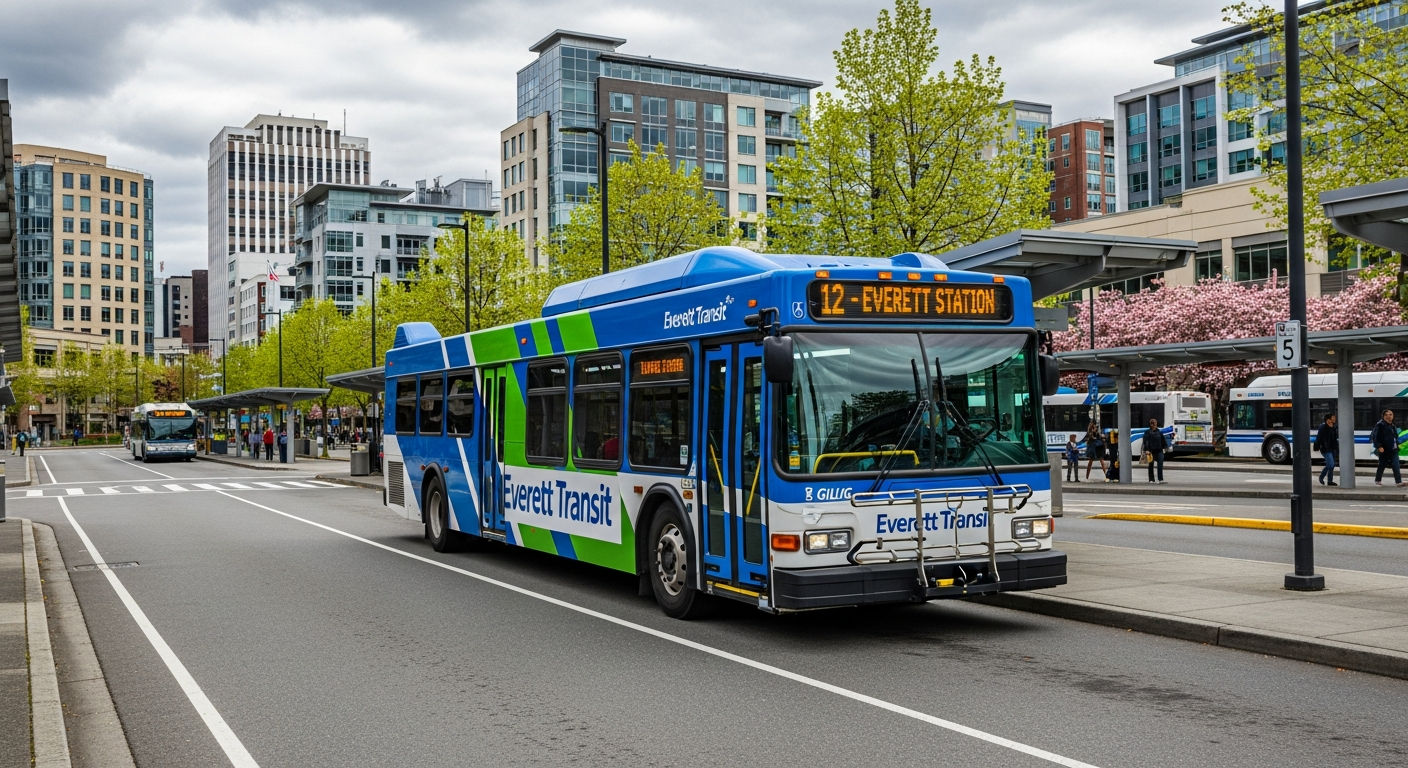
    Everett Transit is consolidating into Community Transit under SB 5801. The merger transfers 22 routes and 115,000 daily riders. For workers on the 737 North Line at Paine Field, several Everett Transit routes that currently serve the Paine Field gate area will transition to Community Transit operations. The Casino Road campus expansion gives Community Transit the physical infrastructure to run a larger, more integrated network — which is the precondition for better direct-service options between residential Everett and Paine Field’s industrial employment zone.

    The consolidation is also expected to address one of the biggest frustrations for Paine Field workers who use transit: the seam between Everett Transit and Community Transit where routes currently don’t connect cleanly. A unified system under Community Transit removes that operational seam and opens the possibility of through-routes that don’t require a transfer.

    Light Rail at the SW Everett Industrial Center: The Long Game

    The Sound Transit Everett Link Extension includes a planned station at the SW Everett Industrial Center — one of only a handful of light rail stations in the entire ST3 network explicitly designed to serve a major industrial employment cluster rather than a residential neighborhood or downtown. For the roughly 30,000+ workers employed in the Paine Field / SW Everett Industrial Center corridor, this station represents a potential game-changer in commute options, particularly for workers coming from Seattle, Lynnwood, Mountlake Terrace, and other points south on the spine.

    The June 30, 2026 Sound Transit board vote on the revised ST3 System Plan is the decision point that determines whether that station gets built on the original timeline. Everett City Council voted unanimously April 29 to formally demand full delivery of the Everett Link Extension. Community Transit’s Casino Road campus investment reflects the agency’s own bet that light rail comes — an agency doesn’t expand its operational footprint on a light-rail-adjacent corridor unless it expects to be running feeder bus service to light rail stations within the decade.

    What Boeing Workers Should Watch

    The near-term watch item is the Everett Transit consolidation public hearing process. Route 7 and the Paine Field area routes will be redesigned as part of the merged network. Boeing workers who depend on those routes should engage in the public comment process to ensure the new network maintains — or improves — coverage of the Paine Field gate area. Community Transit has historically been responsive to major employer input on route design, and Boeing represents tens of thousands of commuters in its service area.

    The longer-term watch item is the June 30 Sound Transit vote. If the SW Everett Industrial Center station is preserved in the revised plan, the commute calculus for Paine Field workers changes significantly post-2030. If the station is cut or delayed, workers will be relying on the bus network — which is exactly why the Community Transit campus expansion and the Everett Transit consolidation matter so much right now.

    Frequently Asked Questions for Boeing and Paine Field Workers

    How does the Community Transit Casino Road acquisition affect my Paine Field commute?

    The Campus expansion positions Community Transit to run more service on the Casino Road and SW Everett Industrial Center corridor as it absorbs Everett Transit routes. Near-term effect is minimal; the consolidation process will determine route-level changes. The longer-term effect is a more unified bus network feeding a planned light rail station at the SW Everett Industrial Center.

    Will there be light rail to Paine Field?

    The Sound Transit Everett Link Extension includes a station at the SW Everett Industrial Center, which serves the Paine Field employment cluster. The June 30, 2026 Sound Transit board vote on the revised ST3 plan will determine whether that station proceeds on the original timeline or is cut or delayed as part of the agency’s $34.5 billion budget shortfall response.

    What happens to Route 7 when Everett Transit merges with Community Transit?

    Route 7 serves the Casino Road and Paine Field corridor. Under the Everett Transit / Community Transit consolidation, routes will be redesigned as part of a unified network. Community Transit has committed to preserving service levels, but specific route alignments will be determined through the public planning process under SB 5801.

    When does the Everett Transit consolidation take effect?

    The SB 5801 framework is active. The consolidation is a multi-year process. Everett City Council is engaged in the planning and the Boeing and Paine Field worker communities will have opportunities to provide input on route design before the transition finalizes.

    Where is the Community Transit Casino Road campus?

    Community Transit’s Cascade Administration Building is on W. Casino Road in south Everett. The newly acquired Goodwill property at 2208 W. Casino Road is directly adjacent, expanding the campus footprint to include the former Goodwill outlet warehouse complex and its 7.55-acre parcel.

    Related: Complete Guide to the $25.35M Acquisition | Everett Transit Consolidation: Boeing Worker Guide | Everett Council Sound Transit Letter
  • Casino Road Goodwill Bought by Community Transit for $25M

    Casino Road Goodwill Bought by Community Transit for $25M

    Quick Answer: Community Transit’s board unanimously approved the $25.35 million purchase of the 7.55-acre Goodwill outlet property at 2208 W. Casino Road in February 2026 — the largest single land acquisition in the agency’s 40-year history. The “Bins” stay open under a three-year leaseback. For Casino Road, a corridor already under pressure from two planned Sound Transit light rail stations and rising displacement risk, this deal is more than bus storage: it locks a major public agency into the neighborhood just as the redevelopment clock starts ticking.

    What Just Happened on Casino Road

    In February 2026, Community Transit’s board of directors voted unanimously to purchase the 108,000-square-foot Goodwill outlet complex at 2208 W. Casino Road — the one locals call “the Bins,” where goods are priced by the pound — for $25.35 million. The seller was Evergreen Goodwill of Northwest Washington. A three-year leaseback means the Bins stay open while Community Transit prepares the site for long-term operational use.

    The property sits directly adjacent to Community Transit’s existing Cascade administration building, making it a contiguous expansion of the agency’s south Everett operational campus. Community Transit’s Journey 2050 Long-Range Plan projects the agency will serve 30 million annual riders by 2050. Current vehicle storage and maintenance capacity will be exhausted well before that target. The Casino Road acquisition addresses the near-term capacity crunch.

    Why Casino Road — and Why Now

    The timing matters. Casino Road is one of the most consequential corridors in Everett’s near-future. Two Sound Transit light rail stations are planned along the corridor as part of the Everett Link Extension — a 16-mile project connecting downtown Everett Station to the regional light rail spine that Snohomish County voters approved in 2016. The planned stations at SW Everett Industrial Center and a second Casino Road-area station will bring transformative transit access to a corridor that today runs largely on surface streets and Community Transit bus routes.

    Light rail station areas historically trigger rapid land value appreciation and displacement pressure on existing residents and businesses. Casino Road’s demographics — a dense, multiethnic, working-class corridor with a high concentration of renters, small businesses, and community organizations — make it especially vulnerable to the kind of transit-driven displacement that has reshaped Rainier Valley and the Beacon Hill corridor in Seattle.

    Community Transit’s acquisition puts 7.55 acres of the corridor in public hands before the displacement dynamics fully accelerate. That’s not stated as the purchase rationale in agency documents — the stated rationale is operational capacity — but the community development implications are real and significant.

    The Property: What Community Transit Actually Bought

    The 108,000-square-foot complex at 2208 W. Casino Road includes a large-format warehouse retail footprint and associated operational space. The Goodwill outlet — distinct from standard Goodwill retail stores — operates as a bulk-pricing clearance operation where items are sorted onto tables and priced by weight. It draws a regional customer base and has operated at this Casino Road location for years.

    Under the three-year leaseback, Evergreen Goodwill continues operating the Bins. Community Transit takes legal ownership but receives lease income while planning its operational buildout. The $25.35 million purchase price reflects the property’s scale and its location in a corridor that is already beginning to command higher land values in anticipation of light rail.

    What This Means for the Casino Road Corridor

    Casino Road is home to roughly 13,000 residents, a dense network of immigrant-owned small businesses, and over two dozen community-serving organizations. The Connect Casino Road initiative — a community-led planning effort — has been working for years to ensure that the transit investment coming to the corridor lifts residents rather than displacing them.

    Community Transit’s land purchase adds a significant public anchor to the corridor. Public agency ownership is among the strongest protections against speculative displacement, since the land cannot be sold to a private developer without a public process. Whether Community Transit eventually co-develops the site with affordable housing, a transit-oriented community hub, or strictly operational facilities will depend on community engagement and agency planning decisions over the next several years.

    The acquisition also reinforces Community Transit’s long-term commitment to south Everett as its operational base — important context for residents and business owners watching the Everett Transit consolidation process unfold. As Everett Transit phases toward integration with Community Transit under SB 5801, the Casino Road campus becomes an even more critical node in the merged system’s service geography.

    The Everett Transit Consolidation Connection

    The Goodwill acquisition lands in the middle of a broader transit restructuring. Everett City Council is moving toward consolidating Everett Transit into Community Transit under state legislation, a process that would dissolve the city’s 100-year-old transit system and transfer 22 routes, 161 workers, and 115,000 riders to Community Transit. That consolidation was the subject of a major Everett Council action in April 2026.

    The Casino Road campus expansion positions Community Transit to absorb that additional operational footprint. More vehicles, more routes, and more maintenance capacity will require more land — and Community Transit just acquired it in the most strategically positioned location it could find: right next to what it already owns, in a corridor that will be transformed by light rail within the decade.

    What Residents and Businesses Should Watch

    The three-year Goodwill leaseback runs through approximately early 2029. That’s the window in which Community Transit will be finalizing plans for the site. Residents and community organizations invested in the future of Casino Road should engage with Community Transit’s public planning process as it develops. The Connect Casino Road coalition and associated organizations are the most direct channel for community voice on how this land ultimately gets used.

    For small businesses along Casino Road, the acquisition signals stability in one sense — a major public employer is investing heavily in the corridor — and uncertainty in another. If the site transitions from retail (the Bins) to operational bus storage and maintenance, the commercial traffic those retail operations generate will shift. Business owners near 2208 W. Casino Road should monitor the leaseback timeline.

    Frequently Asked Questions

    What did Community Transit buy on Casino Road in Everett?

    Community Transit purchased the 7.55-acre Goodwill outlet property at 2208 W. Casino Road for $25.35 million in February 2026. The 108,000-square-foot complex is the largest single acquisition in the agency’s 40-year history. The Goodwill “Bins” store stays open under a three-year leaseback agreement.

    Will the Goodwill Bins on Casino Road close?

    Not immediately. Evergreen Goodwill signed a three-year leaseback with Community Transit, meaning the Bins will continue operating at 2208 W. Casino Road through approximately early 2029. After the leaseback ends, Community Transit will use the site for operational purposes.

    Why did Community Transit buy land on Casino Road?

    Community Transit’s Journey 2050 plan projects the agency will serve 30 million annual riders by 2050 — up sharply from current ridership. Vehicle storage, maintenance, and administrative capacity at the existing Cascade campus will be exhausted before that target. The adjacent Goodwill property expands the campus and positions Community Transit for the Everett Transit consolidation.

    How does this relate to light rail on Casino Road?

    Two Sound Transit light rail stations are planned for the Casino Road corridor as part of the Everett Link Extension. Light rail station areas typically trigger land value increases and displacement pressure. Community Transit’s acquisition puts 7.55 acres in public ownership before those dynamics fully accelerate, providing a stable public anchor in the corridor.

    What is Connect Casino Road and what does this mean for them?

    Connect Casino Road is a community-led planning initiative working to ensure that light rail investment benefits existing Casino Road residents rather than displacing them. Community Transit’s land acquisition creates an opportunity for community engagement around how the site is ultimately developed, particularly if the agency ever considers mixed-use or affordable housing components on the parcel.

    How does the Goodwill acquisition relate to the Everett Transit merger?

    Everett is consolidating its transit system into Community Transit under SB 5801. That merger adds 22 routes, 161 workers, and 115,000 riders to Community Transit’s network. The Casino Road campus expansion gives Community Transit the physical space to absorb that additional operational footprint — more vehicles, more routes, and more maintenance demand.

  • Community Transit Buys Casino Road Goodwill in Everett

    Community Transit Buys Casino Road Goodwill in Everett

    What’s happening: Community Transit’s board voted unanimously in February 2026 to purchase the 7.55-acre Goodwill outlet property at 2208 W. Casino Road for $25.35 million — the largest single land acquisition in the agency’s history. The “Bins” will stay open under a three-year leaseback. But for the Casino Road corridor, where two Sound Transit light rail stations are planned and displacement pressure is already climbing, this deal is about more than bus storage.

    Community Transit Just Bought the Goodwill Bins on Casino Road — Here’s What It Means for the Neighborhood

    If you’ve ever dug through the bins at the Everett Goodwill outlet on Casino Road — the one where clothes and housewares are priced by the pound — you’ve stood in the middle of one of south Everett’s most consequential pieces of real estate. In February 2026, Community Transit’s board of directors voted unanimously to purchase that 7.55-acre property at 2208 W. Casino Road for $25.35 million, acquiring a 108,000-square-foot warehouse complex right next door to the agency’s existing Cascade administration building.

    For transit watchers, it’s a smart infrastructure play. For Casino Road residents, it’s one more piece of a much bigger puzzle about what this corridor is becoming — and who gets to stay in it.

    Why Community Transit Bought the Property

    The short answer: they’re running out of room. Community Transit’s internal analysis found that anticipated service growth will “consume” the agency’s current capacity for vehicle storage, maintenance, and administrative functions within the next few years. The Goodwill property sits directly adjacent to the agency’s existing Cascade administration building, making it the obvious acquisition for expansion.

    “Identifying and securing nearby land and facilities is a key strategy to sustaining operational growth, supporting service expansion, and maintaining flexibility for future development,” the agency’s memo to its board stated.

    The property itself is substantial: roughly 107,999 square feet of warehouse footprint, around 20,000 square feet of retail space, and a recycling center. Evergreen Goodwill, which purchased the site in 2011 for $10.9 million, will continue operating the outlet store and recycling center there under a three-year leaseback — paying Community Transit $120,000 per month in rent. So for at least the next three years, the bins stay open.

    There’s another factor in the long-term calculus: Sound Transit’s Link light rail extension to Everett includes a station close to the Paine Field area, not far from the Casino Road corridor. The agency flagged proximity to that infrastructure as part of the property’s strategic value.

    What This Means for Casino Road

    Casino Road is one of Everett’s most culturally dense corridors — home to a large Latino community, significant Cambodian, East African, and Pacific Islander populations, dozens of small immigrant-owned businesses, and community anchors like the Stations Unidos community development corporation, which was established specifically to fight displacement on this corridor.

    The Community Transit property acquisition isn’t a displacement threat in the direct sense — the transit agency isn’t building housing or retail that prices people out. But the deal is another signal of how much institutional attention and investment is concentrating along this corridor. Two planned light rail stations. A $25 million transit land grab. A new Boys and Girls Club facility at nearby Walter E. Hall Park, announced by Mayor Cassie Franklin in her 2026 State of the City address. Snohomish County housing funding flowing to the area. The $23 million housing award Everett received in 2027 that included Casino Road in its service area.

    When investment and infrastructure converge in a neighborhood, property values tend to follow. That’s exactly the dynamic Stations Unidos has been working to get ahead of since 2014, when Casino Road stakeholders first organized around the light rail threat. The CDC’s goal: ensure that the people who built this community get to remain part of it as it changes.

    The Boys and Girls Club Piece

    The existing Boys and Girls Clubs of Snohomish County location serving south Everett sits at 525 W. Casino Road — about a mile west of the Goodwill site. That club, which opened in 2000 after renovating a former bus barn, serves children and youth ages 5–18 with before and after-school childcare, summer camp, and teen programs.

    In her March 2026 State of the City address, Mayor Franklin announced that the City of Everett is collaborating with Boys and Girls Clubs of Snohomish County to support construction of a brand-new club location at Walter E. Hall Park, a flexible grass athletic complex at 1226 W. Casino Road. That park already serves as a hub for youth sports and hosts a skate park. Adding a Boys and Girls Club building there would be a significant community facility investment at the corridor’s geographic heart.

    Details on the new club’s timeline and design were not publicly available at press time, but the announcement signals city commitment to youth-serving infrastructure on Casino Road — not just transit infrastructure.

    What to Watch

    The three-year Goodwill leaseback runs out sometime around 2029. At that point, Community Transit will need to decide how to use the acquired warehouse space — whether for bus storage, maintenance bays, administrative expansion, or some combination. That decision will shape the Casino Road corridor at exactly the moment the light rail timeline is approaching.

    For residents of Cascade View and Twin Creeks — the two neighborhoods that flank Casino Road on its east side — the changes on this corridor are worth tracking. The road that most people think of as a thoroughfare rather than a destination has been quietly transforming for years. The institutions investing there in 2026 will set the shape of what comes next.

    Community Transit’s purchase doesn’t change daily life on Casino Road today. The bins are still open. The taquerias, the pho shops, the halal markets, the beauty supply stores — still there, still doing business. But the long arc of what this corridor becomes is being decided, piece by piece, in board rooms and city halls. Organizations like Stations Unidos exist precisely to make sure the community’s voice is part of that process, not added as an afterthought.

    Frequently Asked Questions

    Is the Goodwill outlet on Casino Road closing?

    No. Evergreen Goodwill signed a three-year leaseback agreement with Community Transit, so the outlet store and recycling center will continue operating at 2208 W. Casino Road at least through approximately 2029.

    Why did Community Transit pay $25.35 million for the Goodwill property?

    The property is adjacent to Community Transit’s existing Cascade administration building at 2312 W. Casino Road, and the agency projects its current facilities will be overwhelmed by service growth within a few years. The acquisition gives the agency land for vehicle storage, maintenance, and operational expansion.

    Will the Community Transit purchase displace Casino Road residents?

    The property at 2208 W. Casino Road is a commercial warehouse, not housing. The direct displacement risk is low. The broader concern is that concentrated investment on the corridor — transit, light rail, new facilities — can raise property values over time, creating indirect displacement pressure. That’s the issue Stations Unidos has been working on since 2014.

    What is the Boys and Girls Club building planned at Walter E. Hall Park?

    Mayor Cassie Franklin announced in her March 2026 State of the City address that the City of Everett is collaborating with Boys and Girls Clubs of Snohomish County to support construction of a new club location at Walter E. Hall Park, 1226 W. Casino Road. Specific construction timelines were not released publicly.

    Where is the existing Boys and Girls Club on Casino Road?

    The South Everett/Mukilteo Boys and Girls Club is located at 525 W. Casino Road, Everett, WA 98204, and serves children ages 5–18. Contact: (425) 355-6899 or bgcsc.org.

  • NAVSTA Everett Transit Consolidation: Navy Family Guide

    NAVSTA Everett Transit Consolidation: Navy Family Guide

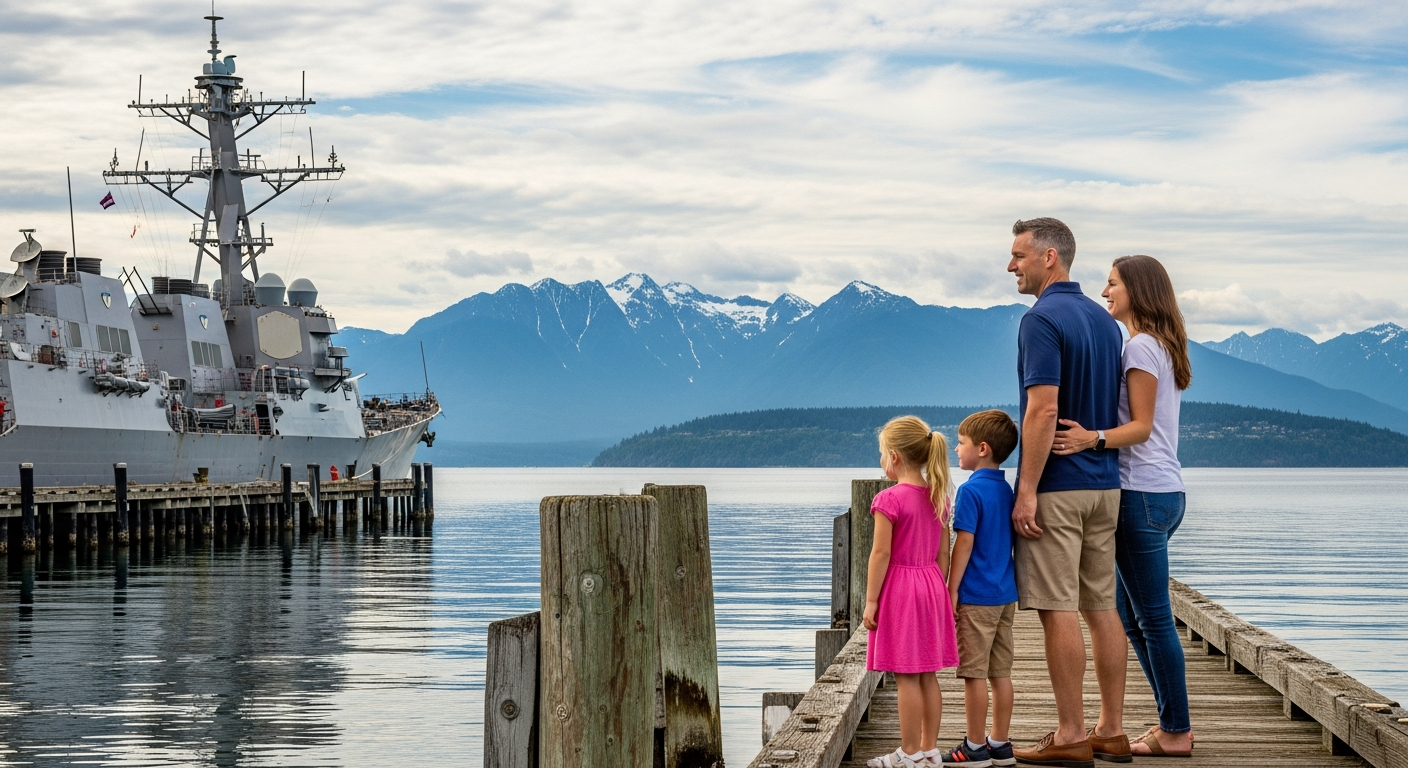
    For Navy families PCS’d to Naval Station Everett — especially those who arrive without a second car, are managing a deployment window, or are new to the Pacific Northwest — Everett Transit is often the first bus system they use. The proposed consolidation of Everett Transit into Community Transit is a change those families should understand before a council vote that could come as early as late May or June 2026.

    How Navy Families at NAVSTA Use Transit Today

    Naval Station Everett sits on the south end of the city near the working waterfront. Everett Transit routes connect the areas around the base to downtown Everett, Everett Station (where Amtrak Cascades and eventually Sound Transit light rail connect), Everett Community College, and shopping corridors along Evergreen Way and Everett Mall Way.

    For a family managing a deployment — one sailor gone, one spouse managing school runs, medical appointments, and daily life without a second vehicle — knowing the bus network is a practical survival skill. Everett Transit’s local routes handle that intra-city layer.

    Community Transit, by contrast, is primarily a commuter and regional carrier. Its routes connect Snohomish County cities to King County and Seattle, not block-by-block within Everett. That distinction is what makes the consolidation complicated for families who depend on neighborhood-level service.

    What Would Change Under Consolidation

    Under the proposal, Everett Transit’s 22 routes would become part of Community Transit’s network. The specific terms — which routes continue, at what frequency, with what fare structure — would be determined by the interlocal agreement being drafted between the City of Everett and Community Transit.

    No route restructuring plan has been released. The process is at the due-diligence phase as of late April 2026. SB 5801 requires at least one public hearing before the Everett City Council votes. That hearing is the primary opportunity for NAVSTA families to put service expectations on the record.

    The Light Rail Connection

    Mayor Franklin tied the consolidation announcement directly to the June 30, 2026, Sound Transit board vote, which could advance light rail to Everett Station. If light rail comes, a merged transit agency in theory provides a cleaner feeder network — one system with buses from neighborhoods near NAVSTA to Everett Station to light rail south toward Seattle.

    For Navy families who commute to Seattle or Bremerton for medical care, shopping, or activities, a light-rail-connected transit network would be a significant quality-of-life improvement. The full Sound Transit guide covers what the June 30 vote means for Everett residents.

    What Navy Families Should Know About the Process

    The opposition to consolidation — led by ATU Local 883 and the Keep Everett Transit community group — centers on the loss of local control and concern that Community Transit’s regional priorities may not preserve the neighborhood-level service that Everett’s densest residential areas (including those near NAVSTA) depend on.

    That concern is particularly relevant for military families, who often don’t have years of established local transportation workarounds and who may PCS into Everett after the transition is complete. Knowing what services exist and where they run is an essential part of base orientation.

    NAVSTA Everett’s Fleet and Family Support Center (FFSC) is the right first stop for transportation questions during any transition period. The full guide to the Everett Transit consolidation proposal has the complete breakdown of what’s at stake.

    For the broader picture on Everett resources for military families, the NAVSTA Everett VA claims guide for 2026 covers other service changes affecting the base community.

    Frequently Asked Questions

    Does Everett Transit serve Naval Station Everett?
    Everett Transit routes serve areas around Naval Station Everett, with connections to Everett Station and key corridors. Under consolidation, those routes would transition to Community Transit.

    What transit options do Navy families currently have in Everett?
    Everett Transit local routes, Amtrak Cascades at Everett Station, Community Transit regional routes, and base transportation resources. Consolidation would bring all bus routes under one agency.

    When would any changes take effect for NAVSTA transit riders?
    A council vote could come as early as late May or June 2026, but full implementation would take years. No route changes would happen immediately after a vote.

    How does the consolidation relate to the Sound Transit light rail vote?
    The June 30 Sound Transit board vote could advance light rail to Everett Station. A merged transit agency would provide an integrated bus-to-rail network connecting NAVSTA Everett to the broader Puget Sound region.

    Where can Navy families learn more about base transportation resources?
    NAVSTA Everett’s Fleet and Family Support Center (FFSC) provides orientation resources. The base website is at cnic.navy.mil/regions/cnrnw/installations/navsta_everett.html.

  • Everett Transit Consolidation: Boeing Worker Commute Guide

    Everett Transit Consolidation: Boeing Worker Commute Guide

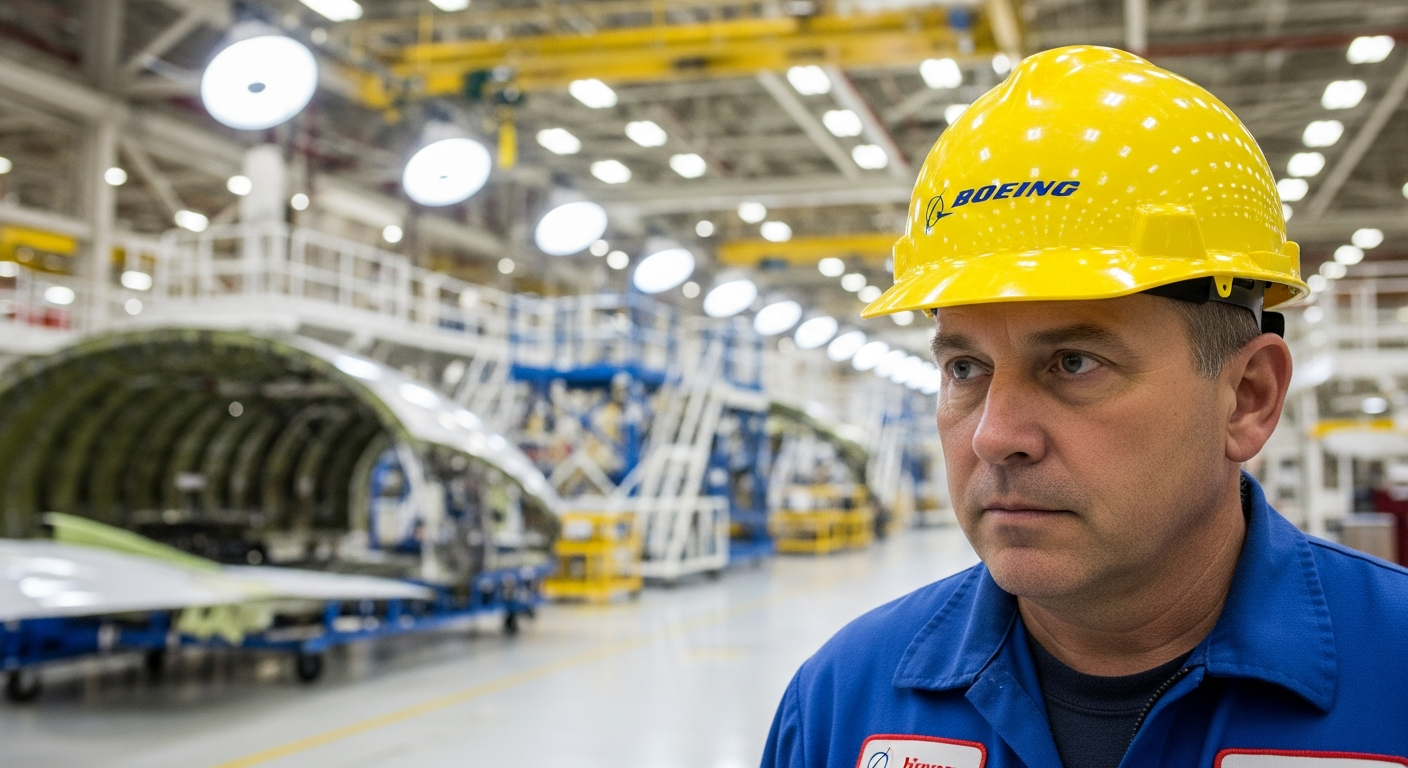
    If you work on Boeing’s 737 North Line or anywhere else at Paine Field and you take the bus, the Everett Transit consolidation proposal is directly relevant to your commute. Here is what Boeing and Paine Field workers need to know about what’s being proposed, what’s at stake for your routes, and how this connects to the Sound Transit vote on June 30.

    The Route That Matters Most to Paine Field Workers

    Everett Transit Route 7 — Everett-Paine Field — provides direct service between downtown Everett and Boeing’s main gate on 84th Street SW. For the thousands of workers on the 737 North Line and other Paine Field operations who don’t drive or prefer not to, Route 7 is their connection between Everett Station (where bus, Amtrak, and eventually light rail meet) and the factory floor.

    Under the proposed consolidation, Everett Transit’s 22 routes — including Route 7 — would transition to Community Transit. Whether that route continues in its current form, is modified, or is replaced by a Community Transit equivalent is among the most consequential details of the interlocal agreement still being drafted.

    What Community Transit Already Offers Near Paine Field

    Community Transit operates the Swift Blue Line — a bus rapid transit route that runs along Airport Road in Mukilteo and connects to Ash Way Park and Ride and Lynnwood Transit Center. The Swift Blue Line gets workers within a reasonable distance of Paine Field but does not serve the Boeing main gate directly.

    A merged system, in theory, could rationalize these routes — eliminating redundancy, extending coverage, and potentially providing more frequent service to Paine Field. Community Transit CEO Ric Ilgenfritz has described the merger as building “a seamless, connected transit network.” What that means specifically for the Boeing campus depends entirely on what ends up in the interlocal agreement.

    The Light Rail Connection

    Mayor Franklin’s stated reason for the consolidation is the June 30, 2026, Sound Transit board vote on whether to advance light rail to Everett Station. If light rail comes to Everett, the case for a merged transit agency as the feeder network becomes stronger — a single agency with service from Paine Field to Everett Station to light rail is a cleaner system than two separate agencies with different governance, different fare structures, and different service priorities.

    For Boeing and Paine Field workers, this means the consolidation debate and the light rail debate are linked. If you have opinions on the June 30 vote, you likely have opinions on this consolidation too. The full picture on the Sound Transit vote for Boeing and Paine Field workers is covered in this commuter guide.

    The Biggest Uncertainty: What Happens to Paine Field Routes

    The concern raised by opponents of the consolidation — including the union representing Everett Transit’s 161 workers and the Keep Everett Transit community group — is that Community Transit, as a regional agency, prioritizes regional connectivity over neighborhood and workplace-specific routes. The argument is that a route like the Paine Field connector might get rationalized, combined, or reduced in a regionalized system focused on park-and-ride feeders and rapid transit corridors rather than door-to-factory service.

    That concern is real. It is also not yet a fact — no route restructuring plan has been released because no interlocal agreement has been finalized. The public hearing process required by SB 5801 is the place where workers can put specific Paine Field service commitments on the record before the council votes.

    What Boeing Workers Should Do Right Now

    The Everett City Council could vote as early as late May or June 2026. SB 5801 requires at least one public hearing before that vote. The hearing has not been scheduled as of April 30, 2026.

    If Paine Field service continuity matters to you, the most effective action is to participate in that public hearing — in person, in writing, or both — and specifically ask for service commitments to the Boeing campus as a condition of the council’s approval. Labor unions, Boeing’s government affairs team, and organizations like the Economic Alliance Snohomish County are also watching this issue.

    Monitor everettwa.gov for hearing announcements. And read the full guide to the Everett Transit consolidation for the complete picture on what’s at stake.

    Frequently Asked Questions

    Does Everett Transit serve Boeing’s Everett factory or Paine Field?
    Everett Transit Route 7 (Everett-Paine Field) provides direct service to Boeing’s main entrance on 84th Street SW. Under consolidation, the route’s continuation depends on the interlocal agreement.

    Would Community Transit expand service to Paine Field after consolidation?
    Community Transit’s Swift Blue Line already reaches close to Paine Field via Airport Road. A merged system could improve frequency or coverage, but specific commitments depend on the agreement terms.

    When would any transit changes affecting Boeing workers take effect?
    A council vote could come as early as late May or June 2026, but implementation would take years. Service changes would not happen immediately after a vote.

    How does the Sound Transit light rail vote connect to Boeing commuters?
    If light rail advances to Everett Station on June 30, a combined transit system would be better positioned to provide connecting bus service from Paine Field to the rail network.

    What should Boeing workers do now if they depend on Everett Transit?
    Monitor everettwa.gov for public hearing announcements. Workers who ride Everett Transit have standing to comment on the importance of maintaining Paine Field service before the council votes.

  • Everett Transit Consolidation: The Complete 2026 Guide

    Everett Transit Consolidation: The Complete 2026 Guide

    Everett’s 50-year-old municipal bus system is heading toward the most consequential vote in its history — and Everett residents won’t cast a ballot on it. The Everett City Council could vote as early as late May or June 2026 on whether to dissolve Everett Transit and absorb its 22 routes, 161 workers, and 115,000 riders into Community Transit — the regional carrier serving the rest of Snohomish County. A 2025 state law called SB 5801 makes this possible without a public vote. Here is everything you need to know about what the consolidation would mean, who’s fighting it, and what happens next.

    What Actually Happened on April 22, 2026

    Everett Mayor Cassie Franklin and Community Transit CEO Ric Ilgenfritz announced on April 22, 2026, that the two agencies are resuming work toward consolidation. The announcement was not a vote — it was a green light to begin drafting an interlocal agreement, conducting due diligence, and working through the legal framework before any governing bodies act.

    The proposal would absorb Everett Transit — which operates 22 routes, employs 161 people, and serves an estimated 115,000 Everett residents — into Community Transit, which currently covers the rest of Snohomish County. A merged agency would serve roughly 800,000 people across Snohomish County, making it one of the largest transit networks in Washington State outside of King County Metro and Sound Transit.

    Franklin framed the move as a direct response to Sound Transit’s June 30 board vote on whether to advance light rail to Everett Station. “As light rail comes closer to reality, we need a transit system built for a light rail community,” Franklin said. Ilgenfritz described the consolidation as “the next step in building a seamless, connected transit network across Snohomish County.”

    The State Law That Makes This Possible Without a Public Vote

    This consolidation is moving without a public ballot because Washington’s legislature passed SB 5801 in 2025, which allows public transportation benefit areas like Community Transit to annex municipal transit agencies via an interlocal agreement approved by both governing bodies. The process requires at least one public hearing by each body — separately or jointly — but does not require a citywide ballot measure.

    Everett Transit Local 883 Union President Steve Oss has called for the consolidation to go before Everett voters and has alleged the legislation was crafted specifically to allow the merger without one. A community group called Keep Everett Transit (keepet.org) has formed in opposition.

    If the council approves, Everett would become the first Washington city to voluntarily dissolve a standalone transit agency under this framework.

    What’s Currently on the Table

    Right now, the two agencies are in the due-diligence and agreement-drafting phase. No interlocal agreement has been presented to either body. No public hearing has been scheduled. The timeline that has been communicated publicly is:

    • Spring–early summer 2026: Drafting of interlocal agreement, staff analysis, public hearings
    • Late May or June 2026: Possible council vote (though this is a projection, not a set date)
    • After council approval: Multi-year implementation — routes, labor contracts, fare structures, and service standards would need to be reconciled before Everett Transit ceases to exist as a standalone agency

    What Consolidation Would Mean for Riders

    Under consolidation, Everett Transit’s 22 routes would become part of Community Transit’s network. Service levels, route alignments, and fare structures would all be subject to renegotiation as part of the interlocal agreement.

    Community Transit currently does not operate within the City of Everett boundaries — its routes connect Snohomish County cities to Everett but hand off at the city border. Consolidation would change that, giving a single agency control of all fixed-route bus service in and around Everett.

    Supporters argue this creates the seamless transit network needed to connect to light rail. Critics, including the Keep Everett Transit coalition, argue that Community Transit’s priorities are regional, not neighborhood-focused, and that Everett-specific routes could be reduced or eliminated in a regionalized system.

    What Consolidation Would Mean for Workers

    The 161 Everett Transit employees — drivers represented by ATU Local 883, plus maintenance, dispatch, and administrative staff — would transition to Community Transit under any consolidation agreement. The terms of that transition, including which union contract governs, seniority treatment, and pension continuity, are among the most complex elements of the negotiation.

    Union president Steve Oss has been the most prominent public opponent of the consolidation, calling explicitly for a public vote and pushing back on the no-ballot framework created by SB 5801. The union’s concerns include job security, seniority rules, and the potential for route changes that reduce driver headcount or shift work patterns.

    The Tax Question

    Everett residents currently pay a 0.3% city sales tax that funds Everett Transit. The Lynnwood Times has reported that the combined tax burden under Community Transit’s rate structure would represent the largest sales tax increase in Washington state history. The specific net impact on individual Everett tax bills would depend on how the interlocal agreement structures the transition period and what tax rates are set.

    The public hearing process required by SB 5801 is the primary mechanism for residents to weigh in on the tax implications before any council vote.

    How This Connects to Sound Transit

    The consolidation proposal is explicitly tied to the Sound Transit timeline. The June 30, 2026, Sound Transit board vote — which would determine whether the agency moves forward with a revised System Plan to bring light rail to Everett Station — is the backdrop for Franklin’s framing of the merger.

    The argument: if light rail comes to Everett, the city needs a transit feeder network that connects all of Snohomish County to Everett Station seamlessly. A merged Community Transit + Everett Transit system, the argument goes, is better positioned to serve as that feeder than two separate agencies with separate governance structures.

    Everett’s Sound Transit light rail future is covered in this complete 2026 guide. The June 30 vote’s implications for residents and commuters are also explored in detail on this site.

    How to Make Your Voice Heard

    The SB 5801 process requires at least one public hearing before any council vote. Dates have not been announced as of April 30, 2026. To stay informed:

    • Monitor City of Everett (everettwa.gov) for hearing announcements — confirm agendas on the live city site
    • Sign up for the City of Everett’s news alerts
    • Contact the Keep Everett Transit coalition at keepet.org
    • Contact Everett City Council members directly — the council will make the final call

    Frequently Asked Questions

    Does Everett have to hold a public vote to end Everett Transit?
    No. Under Washington’s SB 5801 (2025), the Everett City Council and Community Transit Board can approve consolidation through a council vote and an interlocal agreement — no public ballot required. However, at least one public hearing by each body is required.

    How many routes does Everett Transit currently operate?
    Everett Transit operates 22 routes and employs approximately 161 people, serving an estimated 115,000 Everett residents.

    When could the Everett City Council vote on consolidation?
    A council vote could come as early as late May or June 2026, though the interlocal agreement is still being drafted as of late April 2026.

    What would happen to Everett Transit workers if consolidation is approved?
    The 161 Everett Transit employees — including drivers represented by Local 883 of the Amalgamated Transit Union — would transition to Community Transit. Terms of that transition are subject to negotiation.

    What does Everett Transit consolidation mean for residents’ taxes?
    The Lynnwood Times has reported this could represent the largest sales tax increase in Washington state history when combined with Community Transit rates. The specific net impact on individual tax bills depends on the interlocal agreement’s structure.

    Why is the consolidation being proposed now?
    Mayor Franklin framed it as a direct response to the June 30, 2026, Sound Transit vote that could advance light rail to Everett Station.

    What is Keep Everett Transit?
    Keep Everett Transit (keepet.org) is a community advocacy group opposing the consolidation and calling for a public vote.

  • Everett Transit Consolidation: What the Council Vote Means

    Everett Transit Consolidation: What the Council Vote Means

    Q: Does Everett have to vote on whether to end Everett Transit?
    A: No. Under a 2025 Washington State law (SB 5801), the Everett City Council and the Community Transit Board of Directors can approve consolidation through a council vote and an interlocal agreement — no public ballot required. Mayor Franklin and Community Transit CEO Ric Ilgenfritz announced the consolidation effort on April 22, 2026. A council vote could come as early as late May or June 2026, though final implementation would take years.

    Everett City Council Will Decide Whether to End Everett Transit — What the Vote Means for Riders, Workers, and Your Tax Bill

    Everett’s 50-year-old municipal bus system is heading toward the biggest decision in its history — and residents won’t cast a ballot on it. Instead, the Everett City Council will vote on whether to dissolve Everett Transit and hand its routes, buses, and operations to Community Transit, the regional carrier that already serves the rest of Snohomish County. If the council says yes, Everett would become the first Washington city to voluntarily give up a standalone transit agency under a 2025 state law that bypasses a public vote entirely. Here is what that council vote means for every Everett resident, what the union representing transit workers says, and how you can make your voice heard before the council decides.

    What Actually Happened on April 22

    Mayor Cassie Franklin and Community Transit CEO Ric Ilgenfritz announced on April 22, 2026, that the two agencies are resuming joint work toward consolidation. The announcement was not a vote — it was a green light to begin drafting the interlocal agreement, conducting due diligence, and working through the legal framework before any governing bodies act.

    The proposal would absorb Everett Transit — which operates 22 routes, employs 161 people, and serves an estimated 115,000 Everett residents — into Community Transit, which currently covers the rest of Snohomish County. A merged agency would serve roughly 800,000 people across the county, making it one of the largest transit networks in Washington State outside of King County Metro and Sound Transit.

    Franklin framed the move as a direct response to Sound Transit’s Link Light Rail Extension, which — if approved on June 30 — would bring rail to Everett Station. “As light rail comes closer to reality, we need a transit system built for a light rail community,” Franklin said in the joint release. Ilgenfritz described the consolidation as “the next step in building a seamless, connected transit network across Snohomish County.”

    The State Law That Makes This Possible Without a Public Vote

    This consolidation is moving without a public ballot because Washington’s legislature passed SB 5801 in 2025, sponsored by Senator Marko Liias (D-Edmonds), chair of the Senate Transportation Committee. The law allows a public transportation benefit area — which Community Transit is — to annex a municipal transit agency through a government-to-government interlocal agreement. Both governing boards must approve it. Voters do not.

    That is a significant change from how transit mergers have worked historically in Washington. The original Sound Transit district, the Snohomish County Public Transportation Benefit Area, was created in 1976 by a 79 percent public vote. This merger would happen entirely through elected officials, not the ballot box.

    Under SB 5801, both the Everett City Council and the Community Transit Board of Directors must hold public hearings and approve the annexation before it takes effect. The public hearings are where residents can formally address their elected officials before the vote locks in.

    What the City Council Must Actually Do — And When

    The Everett City Council’s role is to vote on the interlocal agreement that would authorize Everett’s annexation into Community Transit’s service boundary. Before that vote, the council must hold at least one public hearing. Franklin told Everett Transit union members on April 18 that the council could be asked to vote as early as late May or June 2026. The official joint announcement from both agencies uses a more cautious timeline, stating the boards would consider the proposal “this fall.”

    The Community Transit Board of Directors — which includes elected officials from cities across Snohomish County — would vote separately. Under the consolidation structure, Everett would gain seats on the Community Transit board proportional to its population, giving Everett elected officials an ongoing voice in system decisions.

    Actual implementation — meaning the day Everett Transit stops operating as a standalone agency — would take years after a council vote, according to both agencies. Route planning, labor agreements, equipment transfers, and operational integration require substantial lead time.

    What It Means for Your Tax Bill

    Everett Transit is funded primarily by a dedicated transit sales tax that Everett voters approved. Community Transit is funded by a separate sales tax on Snohomish County purchases outside Everett. After consolidation, Everett’s transit sales tax revenue would flow into the combined Community Transit system.

    Community Transit’s coverage currently levies a 0.9 percent sales tax on purchases in its service area. If Everett is annexed into that boundary, Everett residents and businesses would pay a sales tax that increases by 0.6 percentage points — from the current combined rate of approximately 9.90 percent to 10.50 percent. Projections from the Lynnwood Times estimate that generates approximately $29 million in new annual revenue beginning in 2027, totaling roughly $158 million over five years. That would make this one of the largest single sales tax increases in Snohomish County history.

    The agencies project operational cost savings of between $2.4 million and $3.7 million annually once consolidated, from reduced administrative redundancy and shared maintenance infrastructure. Everett Transit’s fleet includes approximately 24 battery-electric buses with a capital asset value estimated near $10 million.

    The Union Says Workers Weren’t at the Table

    The strongest opposition to the consolidation has come from the workers who drive Everett’s buses. Steve Oss, president of Amalgamated Transit Union Local 883 — which has represented Everett Transit’s drivers, inspectors, and maintenance workers for over two decades — opposes the merger and the process used to get here.

    “This method is frankly wrong,” Oss said, referring to the council-vote pathway that bypasses a public ballot. He has argued that the consolidation should require voter approval, as transit district formation did in 1976.

    Oss also raised concerns about workers outside the ATU 883 bargaining unit — administrative and clerical staff who are not covered under the federal Section 13(c) labor protections that shield union drivers from layoffs in transit mergers. ATU 883 members are protected under federal law from involuntary termination as a result of annexation. Non-union Everett Transit employees do not have the same guaranteed protections.

    A community group called Keep Everett Transit has launched at keepet.org to organize residents who want to preserve the local agency. Oss has noted that one of the operational advantages of a city-run transit system is its flexibility — when Everett needs buses for an event, emergency, or temporary free-fare day, it takes a call from the mayor. In a regional agency, those decisions go through a board and a bureaucracy.

    What Riders Can Expect If Consolidation Happens

    Ilgenfritz has committed publicly to no loss of service for existing Everett Transit riders during the transition. Community Transit operates a significantly larger fleet and route network, including Swift rapid bus lines and regional routes to Seattle, which Everett Transit does not currently offer. Supporters of the merger argue that Everett residents would gain access to a more extensive network and that future light rail connectivity would be better served by a unified regional carrier rather than two separate systems with different governance.

    Critics, including Oss, point out that Everett Transit’s local knowledge and direct accountability to City Hall has allowed it to respond quickly to neighborhood needs — something harder to replicate in a county-scale agency governed by a multi-city board. There is also a pay disparity between the two agencies: Everett Transit paratransit workers earn approximately $42 per hour; Community Transit paratransit workers earn approximately $26 per hour. How collective bargaining will resolve that disparity is not yet determined.

    The broader transit picture matters here: Sound Transit’s Everett Link Extension — if the board approves a funded path forward at its June 30 meeting — would require an integrated bus-rail feeder system. Both agencies argue consolidation is necessary infrastructure for that future. The Sound Transit board’s decision will significantly shape what transit in Everett looks like in the 2030s. Read more about the June 30 vote and what’s at stake for Everett in this explainer.

    What to Do Next

    • Attend the public hearing — Both the Everett City Council and Community Transit board are required to hold public hearings before any vote. Dates have not been announced yet. Watch the Everett City Council meeting calendar at everettwa.gov/AgendaCenter for scheduling updates.
    • Contact your Council Member — The Everett City Council has nine members representing districts. Find your representative and their contact information at everettwa.gov/citycouncil.
    • Review the consolidation history — The city’s 2023 “More Transit Together” final report is available through Everett’s Transit Consolidation Study page at everettwa.gov/2786/Transit-Consolidation-Study.
    • Follow Keep Everett Transit — The community organization opposing consolidation is operating at keepet.org.
    • Sign up for city news flashes — The official consolidation announcement and future updates will be posted at everettwa.gov. Subscribe to City news flashes to receive updates automatically.

    Frequently Asked Questions

    Will Everett Transit disappear if the council votes yes?

    Eventually, yes — Everett Transit as a standalone city agency would cease to exist and its operations would be absorbed into Community Transit. Implementation would take several years after a council vote.

    Can residents stop the consolidation?

    There is no public vote required under SB 5801. Residents can testify at public hearings, contact their council members, and organize through groups like Keep Everett Transit — but the final decision rests with the Everett City Council and Community Transit Board of Directors.

    When will the Everett City Council vote?

    Mayor Franklin indicated a council vote could come as early as late May or June 2026. The official joint agency timeline is “this fall.” No vote date has been formally set as of April 30, 2026.

    Will my bus route change immediately after a vote?

    No. Both agencies have committed to maintaining existing Everett Transit service throughout the transition period. Route and schedule changes would be part of a multi-year integration process.

    Will this increase my sales taxes?

    Yes. Everett residents and businesses would pay a sales tax rate increase of approximately 0.6 percentage points if Everett is annexed into Community Transit’s service area — one of the largest such increases in Snohomish County history.

    What happens to Everett Transit workers?

    ATU Local 883 members (drivers, mechanics, inspectors) are protected under federal Section 13(c) labor law from involuntary layoffs due to the merger. Non-union administrative staff do not have equivalent federal protections. Labor negotiations are ongoing.

  • Moving to Everett: How the Light Rail Vote Impacts You

    Moving to Everett: How the Light Rail Vote Impacts You

    For people moving to Everett in 2026: The Sound Transit June 30 vote matters more than most relocation guides will tell you. Which neighborhoods you buy or rent in, whether transit-oriented development assumptions hold, and how Everett compares to Lynnwood or South Snohomish County as a place to live — all of it turns on whether the full Everett spine gets funded or gets truncated at SW Everett near Paine Field.

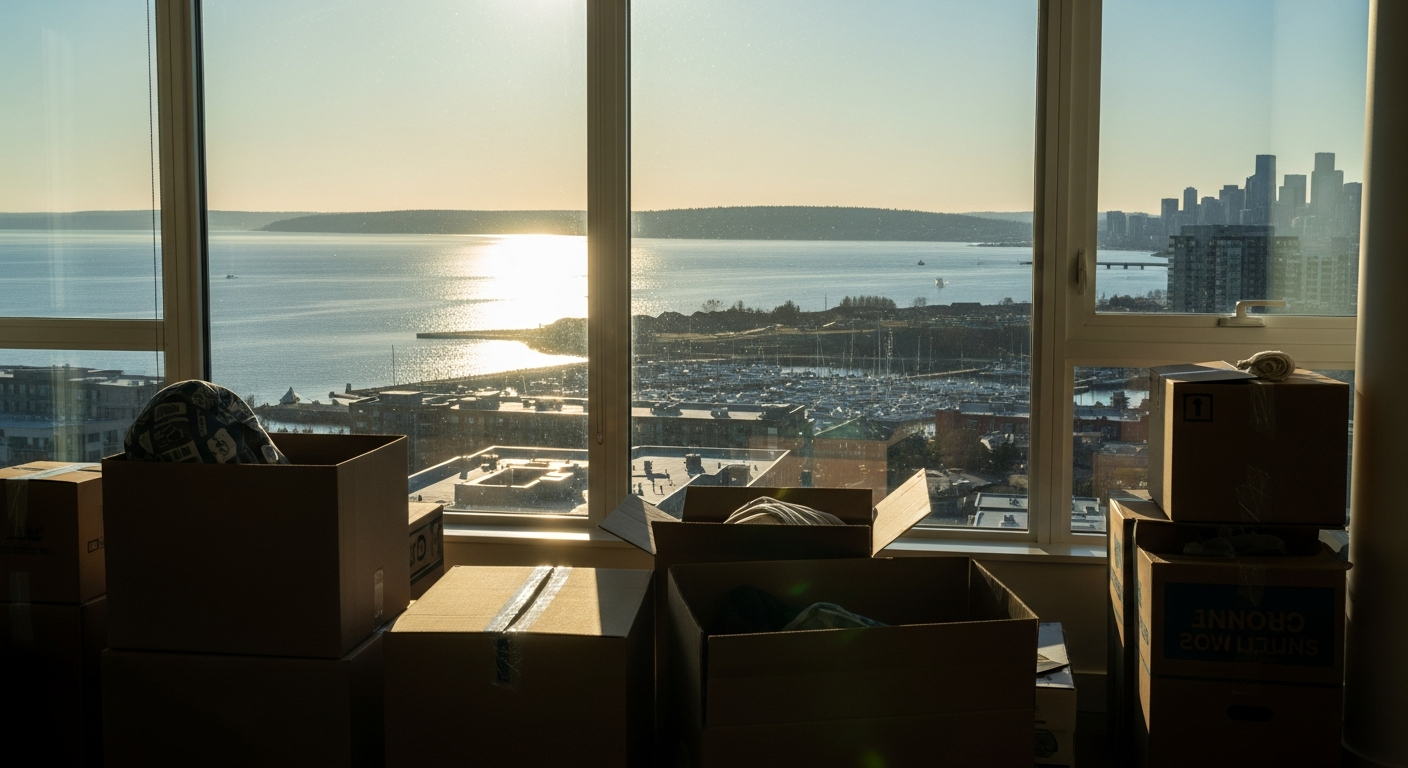
    If you’re planning a move to Everett — from Seattle, from King County, or relocating for a Boeing job or a Navy assignment at NAVSTA Everett — the Sound Transit board vote on June 30, 2026 is a piece of context that will shape your neighborhood decision for years.

    Why Light Rail Matters for Where You Live in Everett

    Everett is a city of 114,070 people with 21 distinct neighborhoods. Where you live relative to the planned light rail stations will determine whether your daily commute improves dramatically or stays dependent on driving and buses over the next decade.

    Lynnwood City Center opened its Link station in 2024. Residents of Lynnwood now have a direct light rail connection to the University District, Capitol Hill, and downtown Seattle. Everett is next on the spine — but the question of when, and how far north rail actually goes, depends on the June 30 vote.

    The Stations That Are Planned for Everett

    The full Everett Link Extension, if funded under Approaches 1 or 2, would include stations at: Ash Way (near Ash Way Park and Ride), Mariner (near 128th Street SW), SW Everett Industrial Center (the Paine Field/Boeing area), Airport Road, SR 526/Evergreen Way, and downtown Everett Station (connected to Everett Station transit hub).

    Under Approach 3, rail would stop at SW Everett Industrial Center. Downtown Everett and the four stations between SW Everett and Everett Station would not be built in this phase.

    The Mariner neighborhood — which sits near the planned Mariner station — is currently under a city-funded annexation study. What the Mariner annexation study means for residents explains the context.

    Neighborhoods to Evaluate Differently Based on the Vote Outcome

    If Approaches 1 or 2 pass (full spine): Neighborhoods along the corridor from Mariner through central Everett to downtown — including the Broadway District, Bayside, Port Gardner, and the Millwright District waterfront — would all sit within the broader light rail catchment. Downtown Everett Station would become a regional transit hub. Commute access to Seattle via Link would be a real option.

    If Approach 3 passes (truncated at SW Everett): Paine Field-adjacent neighborhoods and the SW Everett industrial corridor get a station. Central and northern Everett neighborhoods — where housing costs are often lower — do not get the transit premium. The commute picture for downtown-area residents stays bus-and-drive for the foreseeable future.

    Everett vs. Lynnwood: The Current Comparison

    Right now, Lynnwood has a transit advantage Everett doesn’t yet have. A Lynnwood resident can ride Link to Seattle in roughly 35–40 minutes. An Everett resident driving to Lynnwood to catch Link adds 20–30 minutes each way. When the Everett extension opens — under any approach — that advantage shifts. But the full spine to downtown Everett Station creates a much stronger case for living in central Everett than a truncated SW Everett connection does.

    For the full neighborhood picture: Everett’s three housing submarkets — a complete 2026 guide. And for the transit baseline: The complete guide to the Everett Transit and Community Transit merger.

    The June 30 Timeline and What Comes Next

    The board adopts the revised ST3 System Plan by June 30. This sets the policy framework — it does not immediately change construction schedules. Environmental review, station design finalization, and procurement follow over subsequent years. The opening window of 2037–2041 for the full Everett extension could shift based on the adopted approach and any design changes.

    For the full guide to what the vote means for Everett: The complete 2026 guide to the Sound Transit June 30 vote.

    Frequently Asked Questions

    How does the Sound Transit June 30 vote affect people moving to Everett?

    The vote determines which Everett neighborhoods will have direct light rail access and when. Full spine approaches (1 and 2) deliver a downtown Everett Station with regional connections. Approach 3 truncates at SW Everett near Paine Field, leaving central and northern Everett neighborhoods without a light rail stop in this phase.

    Which Everett neighborhoods are closest to planned light rail stations?

    Mariner sits near the planned Mariner station. The SW Everett Industrial Center station serves the Paine Field/Boeing corridor. Under the full spine, downtown Everett and Everett Station would anchor the northern terminus, benefiting Broadway District, Bayside, and Port Gardner neighborhoods. The Mariner station is in all three approaches.

    When would Everett light rail open?

    Sound Transit’s working timeline for the Everett extension is 2037 to 2041. The June 30 vote and subsequent design decisions will refine that range.

    Is it better to live in Lynnwood than Everett for transit access right now?

    Lynnwood currently has a Link station giving direct access to Seattle, Bellevue, and Sea-Tac. Everett residents must drive or bus to Lynnwood to access Link. When the Everett extension opens — under any approach — that gap closes. The full spine delivers stronger transit access for central and downtown Everett than a truncated SW Everett connection.

    What is the Mariner annexation and how does it connect to light rail?

    Everett City Council funded a study to potentially annex the Mariner neighborhood, which sits near a planned light rail station. The annexation’s transit-oriented development rationale depends partly on that station being built. A truncation that skips Mariner would weaken the case for annexation.

  • Sound Transit Vote: Paine Field & Boeing Commute Guide

    Sound Transit Vote: Paine Field & Boeing Commute Guide

    Bottom line for Paine Field and Boeing workers: Both Approaches 1 and 2 would deliver a light rail station at SW Everett Industrial Center — the stop closest to Boeing’s Paine Field campus. Approach 3 reaches the same station but stops there, never connecting downtown Everett. The June 30 vote decides whether your commute options improve in phases or whether the downtown connection comes in your working lifetime.

    If you work on Boeing’s 737 North Line, the 777X line, or anywhere on the Paine Field aerospace campus, the Sound Transit board vote on June 30, 2026 is the most consequential regional transit decision in a generation for your daily commute — and for the housing choices available to you and your family.

    Here is what the vote means specifically for aerospace workers in Everett and the surrounding Snohomish County corridor.

    The Station That Serves Paine Field

    The planned SW Everett Industrial Center station is the Link stop closest to Boeing’s Paine Field campus. It sits at the southern end of the Paine Field corridor — near the intersection of the SW Everett manufacturing district and the airport/aerospace zone. All three approaches under evaluation by Sound Transit include this station. Even in the worst-case Approach 3 scenario, you would have a light rail connection at SW Everett Industrial Center.

    What Approach 3 does not include is the remainder of the downtown spine — Airport Road, Evergreen Way, and downtown Everett Station. For Boeing workers who live in central or northern Everett, Approach 3 means continuing to drive or bus to get from the Paine Field station area to the rest of the city. Approaches 1 and 2 complete the full 16-mile build, connecting SW Everett through to Everett Station.

    The Commute Math

    Today, Boeing workers commuting to Paine Field from south of Everett — from Lynnwood, Mountlake Terrace, or Seattle — have no direct light rail option. Community Transit Route 512 and other express buses serve the corridor, but transit travel times to Paine Field from Seattle run 60 to 90 minutes depending on traffic. With Lynnwood City Center now on the Link network since 2024, a Boeing worker from Seattle can ride Link to Lynnwood — and then needs a bus connection north.

    When the Everett extension opens with a SW Everett Industrial Center station, that changes materially. Workers from Seattle, Lynnwood, and south Snohomish County would have a one-seat light rail ride to the station closest to Paine Field. The June 30 vote affects when that happens and what the full network around it looks like — but the station itself is in all three approaches.

    Housing and the Downtown Question

    Where you choose to live near Paine Field depends partly on what transit access looks like across the city. If Approach 3 passes and downtown Everett stays disconnected from Link, the cost-of-living advantage of living in central Everett — closer to Everett Station and the city’s amenities — comes without the transit connectivity premium.

    Under Approaches 1 or 2, the full spine to downtown Everett Station creates transit-oriented development pressure across the Everett corridor. The 2026 housing guide for Boeing 737 North Line workers details the neighborhood-by-neighborhood picture for Paine Field employees buying or renting in Everett.

    The Community Transit Piece

    Everett Transit is in the process of merging into Community Transit — a change that Mayor Franklin explicitly connected to the Sound Transit spine question. A consolidated Community Transit network with frequent service feeding into a completed Link spine is a fundamentally different commute environment than the current fragmented system. The complete guide to the Everett Transit and Community Transit merger covers what changes for bus riders in Snohomish County.

    What You Can Do Before June 30

    Sound Transit’s public survey on the ST3 System Plan revision closes May 1, 2026 — today. Boeing workers, as a major constituency with a direct stake in the Paine Field station and the downtown spine, are exactly the kind of commuters Sound Transit’s board needs to hear from. Submit input at soundtransit.org/system-expansion.

    For the full picture on what the June 30 vote means for Everett: The complete 2026 guide to the Sound Transit vote and Everett’s light rail future.

    Frequently Asked Questions

    Will there be a light rail station near Paine Field and Boeing under any scenario?

    Yes. The SW Everett Industrial Center station — the stop closest to Boeing’s Paine Field campus — is included in all three approaches under Sound Transit’s revised ST3 plan. The question is whether rail continues north to downtown Everett Station (Approaches 1 and 2) or stops at SW Everett (Approach 3).

    What is the SW Everett Industrial Center station?

    The planned light rail station in the SW Everett manufacturing and aerospace corridor, positioned to serve Boeing’s Paine Field campus and the broader Paine Field industrial zone. It would be the southernmost Everett station in Approaches 1 and 2, or the northernmost terminus in Approach 3.

    How does the Sound Transit vote affect Boeing workers’ commutes?

    All approaches deliver a Paine Field-area station. The difference is whether workers living in or commuting through downtown Everett get a connected ride. Approaches 1 and 2 complete the spine to Everett Station; Approach 3 stops at SW Everett, requiring bus or driving for the remainder.

    When would the Paine Field-area station open?

    Sound Transit’s working timeline for the Everett extension has ranged from 2037 to 2041 depending on funding and design decisions. The June 30 vote sets the framework; specific construction timelines follow the plan adoption.

    What is the Community Transit merger and how does it relate to this?

    Everett Transit is merging into Community Transit. A consolidated network feeding into a completed Link spine creates a much stronger commute option for Paine Field workers than the current system. Mayor Franklin cited this explicitly in her April 23 letter to Sound Transit’s board.

  • Sound Transit Vote: What It Means for Everett Light Rail

    Sound Transit Vote: What It Means for Everett Light Rail

    Quick answer: Sound Transit’s board must vote by June 30, 2026 on a revised ST3 System Plan that will determine whether Everett gets full light rail to downtown Everett Station or a truncated line ending at SW Everett Industrial Center near Paine Field. Mayor Cassie Franklin sent a formal advocacy letter April 23. The public survey closes May 1, 2026.

    Ten years after voters approved Sound Transit 3, the promise of light rail from Lynnwood to Everett is approaching its most consequential decision point yet. By June 30, 2026, Sound Transit’s 18-member board must adopt a revised ST3 System Plan — and the outcome will determine whether downtown Everett gets the light rail connection voters were promised, a truncated connection ending miles short near Paine Field, or something in between.

    Why the Vote Is Happening

    When ST3 passed in November 2016, it committed to a regional light rail spine connecting Tacoma, Seattle, and Everett. The Everett Link Extension — the planned 16-mile segment from Lynnwood City Center north to downtown Everett Station — was one of the program’s anchor commitments.

    Since then, construction cost escalation, inflation, and rising labor costs have opened a projected $34.5 billion gap between what ST3 promised and what current funding can deliver. Roughly $30 billion of that gap is driven by cost growth in east-west extensions to West Seattle and Ballard — but the shortfall affects all projects, including the Everett extension, whose estimated cost now runs $6.8 billion to $7.7 billion for the full 16-mile build.

    State law requires the board to adopt a revised System Plan by June 30, 2026. That deadline is now less than 60 days away.

    The Three Approaches on the Table

    Approaches 1 and 2 fund full construction of the north-south spine, completing light rail all the way to downtown Everett Station. They achieve this by deferring or truncating east-west extensions — primarily West Seattle and South Kirkland–Issaquah. Everett gets a complete connection under both approaches, though opening timelines may shift from the original 2037–2041 window.

    Approach 3 phases all extensions. Rail would reach the SW Everett Industrial Center station — the stop serving the Paine Field/Boeing corridor — but would stop short of downtown Everett Station. The truncation is estimated to save $1.8 billion to $2.5 billion on the Everett segment. Downtown Everett, Everett Station, and the neighborhoods between SW Everett and the city’s core would not be connected in this phase.

    Sound Transit’s capital delivery team has also identified design changes — specifically at-grade or surface-level routing at Ash Way, West Alderwood, and the SR 526/Evergreen Way stations — that could reduce the full Everett extension cost to approximately $6.4 billion to $7.3 billion while preserving the downtown connection.

    Mayor Franklin’s April 23 Letter

    On April 23, 2026, Everett Mayor Cassie Franklin sent a formal letter to the Sound Transit board making the case for keeping the full Everett spine in the revised plan. “We are ready to support a strong, regional transportation system that works in lockstep with Sound Transit’s network,” Franklin wrote.

    The letter connected light rail advocacy to the ongoing Everett Transit and Community Transit consolidation: a merged feeder network feeding into a completed spine would drive significantly higher ridership and improve Sound Transit’s financial projections. Snohomish County Executive Dave Somers has joined the advocacy. Both have framed the Everett extension as foundational to decades of regional planning made in good faith.

    What “Finish the Spine” Actually Means for Everett

    Light rail drives development decisions. Businesses, housing developers, and employers make long-term location choices based on transit access. Without a firm commitment to complete the Everett extension to downtown, those decisions shift.

    The city’s ongoing study of annexing the Mariner neighborhood — which sits near a planned light rail station — depends partly on the assumption that the station will be built. A truncation at SW Everett would undercut the transit-oriented development assumptions baked into that study. Everett also faces a projected $14 million 2027 budget gap; regional infrastructure that catalyzes economic activity is part of the long-term revenue picture.

    See also: What Everett’s Mariner Annexation Study means for residents.

    The May 1 Survey Deadline — Today

    Sound Transit is accepting public input through a survey closing May 1, 2026 — the same day this article publishes. Residents, commuters, and businesses can submit preferences at soundtransit.org/system-expansion. This is the primary formal mechanism for Everett community input before the board vote.

    The Everett Transit Merger Connection

    Separately, Everett Transit is merging into Community Transit — a change Mayor Franklin explicitly cited in her Sound Transit letter. A consolidated feeder network serving the completed Link spine is more efficient and more ridership-productive than a fragmented system. The complete guide to the Everett Transit merger explains what changes for local riders.

    What Comes After June 30

    The June 30 vote adopts the revised ST3 System Plan — a policy document setting priorities, timelines, and funding frameworks. It does not immediately change construction schedules. If Approaches 1 or 2 pass with full Everett spine funding, next steps involve finalizing station designs and entering environmental review. If Approach 3 passes with the SW Everett truncation, Everett leaders have made clear they would continue advocating for completion in a future phase.

    Frequently Asked Questions

    What is the June 30, 2026 Sound Transit vote?

    By June 30, 2026, Sound Transit’s 18-member board must adopt a revised ST3 System Plan resolving a projected $34.5 billion funding gap. The vote will determine which projects get built, in what order, and on what timeline — including whether the Everett Link Extension goes all the way to downtown Everett Station or stops at SW Everett Industrial Center near Paine Field.

    What is the Everett Link Extension?

    A planned 16-mile light rail segment from Lynnwood City Center north to downtown Everett Station, approved in the 2016 ST3 ballot measure. The extension would include stations at Ash Way, Mariner, SW Everett Industrial Center (near Paine Field), Airport Road, Evergreen Way, and downtown Everett Station.

    How much does the full Everett extension cost?

    Sound Transit’s 2025 estimate is $6.8 billion to $7.7 billion for the full 16-mile build. With at-grade routing changes at several stations, the capital delivery team estimates costs could fall to $6.4 billion to $7.3 billion while preserving the downtown connection.

    What does Approach 3 mean for Everett?

    Approach 3 truncates rail at SW Everett Industrial Center — serving Paine Field — rather than extending to downtown Everett Station. The savings are estimated at $1.8 billion to $2.5 billion, but downtown Everett and Everett Station would not be connected in this phase.

    When is the public survey deadline?

    May 1, 2026. Submit input at soundtransit.org/system-expansion before the board vote on June 30.

    How does the Mariner annexation connect to this vote?

    The Mariner annexation study — which Everett City Council approved funding for — is partly premised on a planned light rail station serving that neighborhood. If rail is truncated at SW Everett, the transit-oriented development case for annexation weakens.

    What did Mayor Franklin argue in her April 23 letter?

    Franklin argued that completing the spine to downtown Everett Station — not truncating at SW Everett — is essential to regional transit effectiveness, that the Everett/Community Transit merger makes the case stronger by concentrating ridership on the spine, and that decades of development decisions in Everett were made in good faith based on the full spine commitment.