Tag: City Council

  • New Everett Pallet Shelter Opens for Mothers & Children

    New Everett Pallet Shelter Opens for Mothers & Children

    Quick answer: On Monday, April 27, 2026, the City of Everett and Volunteers of America Western Washington (VOAWW) opened a 20-unit Pallet Shelter Village for women experiencing homelessness with their children. The village is built on city-owned land off Sievers-Duecy Boulevard, includes a community kitchen, playground, showers, and detached restrooms, and offers up to 12 months of transitional stays with wraparound recovery and job support — funded by City of Everett American Rescue Plan Act dollars and a $250,000 match from Snohomish County.

    There is a quiet, specific moment at a ribbon cutting that does not show up in the photo op. It is the moment a city council member, a CEO, and a mayor walk away from the cameras and the contractors start moving keys to a coordinator’s office. After that moment, the building is no longer a project. It is somebody’s address.

    That moment happened in Everett on April 27, 2026, on a parcel of city-owned land off Sievers-Duecy Boulevard in the west end of town. The City of Everett and Volunteers of America Western Washington — the organization most longtime Everett residents know simply as VOAWW — cut the ribbon on a 20-unit Pallet Shelter Village. It is the city’s third Pallet shelter project. It is the first one in Everett built specifically for women and their children. And it is, by far, the cleanest answer the city has produced to a question Casino Road and Pinehurst-Beverly Park families have been asking for years: where can a mother go with her kids when she does not have anywhere to go?

    Here is what is on site, how to qualify, who paid for it, and why this matters for Everett’s broader homelessness response in 2026.

    What’s Actually On The Site

    Twenty pallet structures sit on the lot. Each unit is designed to house one mother and up to three children — a sleeping space plus secure storage, climate control, and a lockable door. That is a different physical reality than the bunkhouse and emergency-shelter setups that most homeless families in Snohomish County had access to before this opening.

    Around the units, the village has the infrastructure that makes a temporary home livable for a family with kids. There are detached restrooms. There is a separate shower facility. There is a community kitchen and gathering place — a hard-walled, year-round space, not a tent — where residents can cook, eat, and meet with case workers without leaving the village. And there is a playground, the single feature that signals more about who this village is for than any other piece of the build.

    The Pallet structures themselves were built by Pallet Shelter, the Everett-based company whose modular units have been deployed across more than 70 cities. The site is enclosed and managed; access is controlled.

    Who It’s For And How Long Residents Can Stay

    The shelter is for women and their children, full stop. Residents can stay for up to 12 months while they work toward permanent housing.

    That 12-month window is the critical difference between an emergency shelter and what VOAWW is operating here. Emergency shelters typically run on 30-, 60-, or 90-day stays — barely enough time to stabilize, let alone rebuild a life. A 12-month transitional stay is long enough for a mother to get into substance use treatment if she needs it, hold a job for long enough to build a rental history, save a damage deposit, get her kids into a stable school routine, and apply for the permanent housing programs whose waiting lists run six months and longer.

    That is the math behind transitional housing as a model, and it is the math that the new village was built around.

    Wraparound Services — The Part That Actually Determines Outcomes

    VOAWW will be providing the wraparound services at the village. That word — wraparound — is one that gets used loosely in nonprofit-speak, but in this case it means something specific.

    Recovery assistance is on the list. So is job assistance. VOAWW already operates a portfolio of programs across Snohomish County that touch substance use disorder services, behavioral health, employment readiness, and family-stabilization case management. That is the same machinery that gets connected to a Pallet shelter resident from the day she moves in. It is the part of the model that determines whether 20 units become a revolving door or become 20 successful exits to permanent housing every 12 months.

    Brian Smith, the CEO of Volunteers of America Western Washington, said at the ribbon cutting on April 27 that “It’s about dignity. It’s about stability.” That language is plain on purpose. The model is not built around innovation theater. It is built around the boring, durable work of giving a mother a stable address long enough that she can put a kid in the same school for a full year.

    Where The Money Came From

    The City of Everett allocated American Rescue Plan Act (ARPA) dollars to the project. ARPA is the federal pandemic-recovery funding stream that gave municipalities one-time capital to spend on community resilience — and Everett’s allocation of it toward a Pallet shelter for mothers is one of the clearer uses of ARPA dollars in Snohomish County to date.

    Snohomish County contributed $250,000 to the project, which the City of Everett matched. The combined county-city contribution closed the funding gap that had kept the project moving through planning and into construction over roughly two years.

    The site itself is on city-owned land. That detail matters because it shortcuts one of the costliest line items in any shelter project — the land acquisition — and it gives the city long-term control over how the parcel is used.

    Why This Site, Why Now

    This is Everett’s third Pallet shelter project. The first two are well-known in the community — the Phil Johnson Ballfields site, which broke ground in 2023, and the South Everett site that opened earlier in the timeline. Each shelter targets a slightly different population because that is how Pallet’s modular shelter model works in practice: same structural footprint, different operator, different intake criteria.

    The Sievers-Duecy site fills the gap in Everett’s shelter portfolio that had been there since the first two opened. There was emergency shelter capacity for single adults. There was capacity for families through other agencies. There was no Everett-operated Pallet shelter that was set up specifically for the configuration that had become the fastest-growing slice of Snohomish County’s homelessness data — a mother with children, fleeing or recovering from something specific (a domestic situation, a substance use crisis, a sudden housing loss), and needing both privacy and structure.

    The 20-unit village answers that gap, in that geography, with that model. It is the answer to a question that residents on Casino Road, in Pinehurst-Beverly Park, and in the South Forest Park area had been raising at neighborhood meetings for the last 18 months.

    Who Showed Up On April 27

    The ribbon cutting was attended by Everett City Council President Don Schwab, VOAWW Executive Director of Housing Services Galina Volchkova, VOAWW CEO Brian Smith, and Everett Mayor Cassie Franklin. Each spoke in their public role; each represents a part of the partnership chain that produced the village.

    The mayor’s office has been signaling pallet-shelter expansion as a multi-year priority since 2022, when the third site at Glenwood and Sievers-Duecy was first proposed in a public neighborhood meeting. The city council allocated the ARPA dollars. VOAWW is operating it. The county made the match. That kind of layered partnership is not a typical accomplishment, and it is worth naming the structure that produced it.

    What Comes Next

    Two things, mainly.

    First, intake. VOAWW will be working through its case management pipeline to identify the first cohort of residents — women with children who are currently sheltered in less stable arrangements (couch-surfing, vehicles, emergency shelter, fleeing domestic violence) and who meet the program’s transitional-housing eligibility. The first wave of move-ins will follow the ribbon cutting by a matter of weeks.

    Second, outcomes tracking. A 20-unit village with a 12-month maximum stay should be producing roughly 20 successful exits to permanent housing per year if the model works. That is the metric that determines whether Everett gets a fourth and a fifth Pallet shelter, or whether the program plateaus. Both the city and VOAWW have been clear that the data on transitional success is part of how they will be evaluating the model.

    How To Help

    VOAWW’s main support channels are listed at voaww.org, including the donation page that funds the wraparound services side of the operation (recovery support, job assistance, family case management). Snohomish County donors who want to support the Sievers-Duecy site specifically can contact VOAWW’s development office through the same site.

    For volunteer involvement, VOAWW operates an extensive volunteer program across its housing, food, and family services lines. The volunteer page on voaww.org is the central intake.

    For neighborhood residents in the immediate vicinity who want to be part of welcoming the new community in — donations of children’s books, school supplies, kitchen basics, and bedding are routinely needed when a transitional shelter opens. Contact VOAWW for the current list and drop-off instructions.

    Frequently Asked Questions

    Who is eligible to stay at the new Pallet shelter village? Women who are experiencing homelessness with their children, working toward permanent housing. Each unit houses one mother and up to three children. Intake is managed by VOAWW.

    How long can a resident stay? Up to 12 months. The site is designed as transitional housing — a stabilizing stop, not an indefinite shelter.

    Where exactly is the village located? On city-owned land off Sievers-Duecy Boulevard in west Everett. The site was originally proposed at Glenwood and Sievers-Duecy in 2022.

    Who funded the project? The City of Everett allocated American Rescue Plan Act (ARPA) dollars. Snohomish County contributed $250,000, which the City of Everett matched.

    Is this the only Pallet shelter in Everett? No. This is Everett’s third Pallet shelter project. The first sites at Phil Johnson Ballfields and South Everett serve different populations.

    Who is operating the shelter day-to-day? Volunteers of America Western Washington (VOAWW) is the operator. VOAWW provides wraparound services including recovery assistance and job assistance.

    Who built the pallet units? The structures were built by Pallet Shelter, the Everett-based company whose modular shelter units have been deployed across the country.

    How can I support the new shelter? Donate through voaww.org, volunteer through VOAWW’s volunteer program, or contact VOAWW for the in-kind donation list (children’s books, school supplies, bedding, kitchen basics) when the first cohort moves in.

    Related Reading From Exploring Everett

    For context on Everett’s homelessness response, the Everett Gospel Mission shelter expansion piece on Exploring Everett covers the parallel growth of the city’s largest shelter provider; the Volunteers of America Western Washington complete guide details every program in VOAWW’s Everett-area portfolio; the Stations Unidos profile covers the anti-displacement work happening on Casino Road; and the Cocoon House youth-homelessness profile covers the part of the population this Pallet village will not directly serve.

    The Sievers-Duecy village is one piece of a multi-organization response. The other pieces, taken together, are how Everett actually moves families out of homelessness — one address at a time.

  • Everett CB 2604-24: Appointive Officer Compensation Changes

    Everett CB 2604-24: Appointive Officer Compensation Changes

    Featured snippet:

    Q: What is Council Bill 2604-24, and when does the Everett City Council vote on it?
    A: CB 2604-24 amends Chapter 2.74 of the Everett Municipal Code, which governs compensation and fringe benefits for the city’s appointive officers, classified nonrepresented employees, and councilmembers themselves. First reading is at the May 6, 2026 council meeting. Third and final reading is scheduled for May 20, 2026.

    Wednesday night at City Hall, the Everett City Council will take up the first reading of an ordinance most residents will never read but every resident pays for.

    Council Bill 2604-24 is on the May 6 agenda as a Proposed Action Item — a 1st reading of an ordinance amending Chapter 2.74 of the Everett Municipal Code, which is the section of city code that governs how Everett pays its appointed department heads, its classified nonrepresented employees, and its own city councilmembers. The third and final reading is scheduled for May 20, 2026, at the next regular council meeting after Wednesday’s vote.

    The ordinance itself is short on the agenda — one line on a single page of consent and action items. But the chapter it amends is the section of code that decides how much the city pays the people running its departments and what benefits they get for that work. For a city facing a projected $14 million 2027 general fund gap (covered earlier in this desk’s run log on April 21), how the appointed leadership is compensated is not a side question.

    This article breaks down what Chapter 2.74 actually does, what’s likely to be inside CB 2604-24, the calendar between Wednesday and May 20, and how residents who want to weigh in can do so before the third reading.

    What Changes for Residents

    Three things to know up front:

    The vote is not final on Wednesday. Wednesday is the 1st reading. The final vote is May 20. That gives residents two weeks to read the ordinance bill, watch the May 6 deliberation, and submit public comment before the council acts.

    This is not a salary-setting vote for elected councilmembers in isolation. Chapter 2.74 covers three categories: appointive officers (the people the mayor appoints to run departments), classified nonrepresented employees (city staff who are not covered by a union contract), and the city council itself. Any change to one article of the chapter typically gets discussed alongside the others.

    You can read the actual bill before the meeting. The full PDF of CB 2604-24 is posted to the city’s Agenda Center under the May 6, 2026 agenda packet. The link to the document — including any staff memo explaining what the changes do — is published on everettwa.gov/AgendaCenter at least 72 hours before the meeting under state public-meeting rules.

    What Chapter 2.74 Actually Covers

    The Everett Municipal Code organizes Chapter 2.74 into three articles, each covering a different category of city personnel:

    Article I — Appointive Officers. These are the department heads and senior staff appointed by the mayor — the people who actually run departments like Public Works, Parks, the Police Department’s civilian leadership, the Fire Department’s civilian leadership, and similar roles. Under existing code, the mayor sets the workweek for appointive officers as needed for “efficient functioning of city government.” Appointive officers who are exempt from the federal Fair Labor Standards Act do not get premium pay for overtime, callbacks, or holidays, and no appointive officer gets longevity premium pay.

    The chapter also defines insurance benefits for these officers: basic and major medical, vision, and dental coverage for the officer and eligible dependents, with the full-time officer required to contribute ten percent of the cost of medical coverage.

    Article II — Classified Nonrepresented Employees. These are city employees who are not in a union bargaining unit. Their compensation and benefits are set through this chapter rather than through collective bargaining.

    Article III — City Council. This article covers how Everett pays its own councilmembers and council president, including any expense reimbursements and benefits.

    Chapter 2.74 is distinct from Chapter 2.72, which handles general employee compensation, and Chapter 2.70, which sets the broader Performance Management and Compensation Plan. The salary ordinance for represented employees lives elsewhere in the code.

    What’s Likely Inside CB 2604-24

    The agenda title for CB 2604-24 reads: “Adopt an Ordinance amending Chapter 2.74 of the Everett Municipal Code, which pertains to appointive employee compensation and fringe benefits.”

    The agenda doesn’t say specifically which sections of the chapter are being amended. That’s standard format for first-reading agenda titles — the substance is in the bill PDF in the agenda packet, not in the headline. Residents who want to know exactly what changes the ordinance proposes need to download the bill itself from the May 6 agenda packet at everettwa.gov/AgendaCenter.

    What is typical for ordinances of this type — based on how Chapter 2.74 has been amended in prior years — is one or more of the following: an adjustment to the cost-of-living formula, a change to the fringe-benefit contribution percentages, an update to the language defining which positions are “appointive” versus “classified,” a clarification of FLSA-exempt status for specific roles, or a reorganization of how the three articles interact.

    Residents reading the bill should look for: which sections are added, which are deleted, which are modified, and whether the changes are prospective (forward-looking only) or retroactive to a prior pay period.

    The Calendar Between Wednesday and May 20

    Everett ordinances generally get three readings before adoption:

    • 1st Reading: Wednesday, May 6, 2026, at 6:30 p.m. — Council Chambers, 3002 Wetmore Avenue. The bill is introduced, staff may offer a brief explanation, and councilmembers can ask questions. There is typically no full debate at first reading; the bill is “read” and held over.
    • 2nd Reading: would normally be May 13, 2026 — at the regular Wednesday meeting that week. The bill receives further consideration. Amendments are most commonly offered at second reading.
    • 3rd & Final Reading: Wednesday, May 20, 2026, at 6:30 p.m. — the agenda title for CB 2604-24 specifically lists “(3rd & Final Reading 5/20/26)” — meaning the final vote, in current city practice, is consolidated into a single agenda item on the third meeting in the cycle.

    If amendments are added between first and final reading, those amendments themselves can extend the process. Residents who want to follow the bill should set a reminder for May 20.

    How to Weigh In Before May 20

    Everett’s council meetings include a Public Comment period at the start of every regular meeting. Residents who want to comment on CB 2604-24 have several paths:

    In person at the meeting. Public Comment runs near the start of every regular Wednesday meeting. Residents arrive at Council Chambers, 3002 Wetmore Avenue, before 6:30 p.m. and sign up at the door. The standard time limit is three minutes per speaker.

    By Zoom. Register at everettwa.gov/speakerform no later than 30 minutes before the meeting starts. The city’s notice requires that you identify the topic you wish to address.

    By email. Send written comments to Council@everettwa.gov. The city notes that emailed comments submitted at least 24 hours before the meeting are distributed to all councilmembers and appropriate staff. Comments sent later may not reach councilmembers before the vote.

    By mail. 2930 Wetmore Avenue, Suite 9A, Everett, WA 98201. Allow time for delivery if you go this route.

    Comments on non-agenda items may be asked to be submitted in writing if the comment does not address an issue of “broad public interest,” per the city’s published guidance. CB 2604-24 is on the agenda for Wednesday and again on May 20, so it qualifies as an agenda item for both meetings.

    Watching the Meeting

    Wednesday’s meeting will be broadcast live and recorded. Two ways to follow along:

    Live and archived video: YouTube.com/EverettCity. The full archive of past meetings is searchable from there.

    Agenda and bill PDFs: everettwa.gov/citycouncil and the AgendaCenter for the May 6, 2026 packet.

    If you cannot watch Wednesday but want to be informed before May 20, the meeting recording typically posts within 24 hours and the official minutes — including the roll-call vote on first reading and any amendments offered — are added to the May 6 agenda page on the city website within a week.

    Why This Matters Inside Everett’s Bigger Budget Picture

    Earlier in this desk’s run log (April 21, 2026) we covered Everett’s projected $14 million 2027 general fund gap and the four levers the city is weighing to close it: the regional fire RFA, Sno-Isle library regionalization, another levy lid lift, and possible annexation. Three of those four require voter approval.

    How the city pays its appointive officers and classified nonrepresented employees is not the largest line in the general fund, but it is one of the lines the city has direct discretion over without going to voters. Any ordinance amending Chapter 2.74 in 2026 is happening inside that budget context whether the bill mentions the gap or not. Residents reading CB 2604-24 should look for whether the ordinance is structured to add cost, hold cost flat, or save cost — and whether the staff memo that accompanies the bill addresses the 2027 budget connection.

    That answer is in the agenda packet, not in the headline.

    What to Do Next

    Before Wednesday:

    • Download CB 2604-24 from the May 6, 2026 agenda packet at everettwa.gov/AgendaCenter.
    • Read the staff memo (if attached) for the city’s explanation of what changes and why.
    • If you want to speak at Wednesday’s meeting in person, plan to arrive at 3002 Wetmore Avenue before 6:30 p.m. Wednesday. To speak via Zoom, register at everettwa.gov/speakerform by 6 p.m.

    Between May 6 and May 20:

    • Watch the May 6 first-reading deliberation on YouTube.com/EverettCity to see which councilmembers engage and what they ask.
    • Submit written comment to Council@everettwa.gov at least 24 hours before May 20 to ensure councilmembers receive it before the final vote.
    • Track whether any amendments are filed between readings — those typically appear on the agenda for the second reading the week before final.

    On May 20:

    • The 3rd and final reading is scheduled for the Wednesday, May 20 meeting at 6:30 p.m.
    • Public comment is again accepted before the vote.
    • The roll call shows where each councilmember landed.

    Frequently Asked Questions

    What does Chapter 2.74 of the Everett Municipal Code govern?

    Chapter 2.74 covers compensation and fringe benefits for the City of Everett’s appointive officers (department heads appointed by the mayor), classified nonrepresented employees (city staff not covered by union contracts), and the city council itself.

    When is the first reading of CB 2604-24?

    Wednesday, May 6, 2026, at 6:30 p.m. in Council Chambers, 3002 Wetmore Avenue.

    When is the final vote?

    Wednesday, May 20, 2026, at 6:30 p.m. The agenda item for May 6 specifically lists “(3rd & Final Reading 5/20/26).”

    Where can I read the actual ordinance bill?

    The PDF of CB 2604-24 is in the May 6, 2026 agenda packet at everettwa.gov/AgendaCenter, along with any staff memo explaining the changes.

    How do I submit public comment?

    By email to Council@everettwa.gov (at least 24 hours before the meeting to ensure councilmembers receive it), in person at Council Chambers, by Zoom (register at everettwa.gov/speakerform no later than 30 minutes before the meeting), or by mail to 2930 Wetmore Avenue, Suite 9A, Everett, WA 98201.

    Does this ordinance set salaries for elected city councilmembers?

    Chapter 2.74 includes Article III on City Council compensation, but the agenda title for CB 2604-24 specifically references “appointive employee compensation and fringe benefits” — the appointed-officer side of the chapter. Residents who want to know which articles the bill modifies need to read the bill PDF.

    Is this connected to Everett’s 2027 budget gap?

    Everett is projecting a roughly $14 million 2027 general fund gap. How the city pays its appointive officers and classified nonrepresented employees is one of the discretionary lines in the general fund. The ordinance does not have to mention the gap to be relevant to it; residents should look at the staff memo for whether the city addresses the connection.

    Where do I watch the meeting?

    Live and archived at YouTube.com/EverettCity. The May 6 meeting starts at 6:30 p.m.

  • Moving to Everett: How the Sound Transit Vote Impacts You

    Moving to Everett: How the Sound Transit Vote Impacts You

    If you are considering moving to Everett: The June 30, 2026 Sound Transit board vote is the single most consequential near-term decision for Everett’s long-term livability and property values. The Everett City Council voted unanimously April 29 to demand Sound Transit deliver the full 16-mile Everett Link Extension to downtown Everett Station. Here is what you need to understand about that vote before you decide where in greater Seattle to put down roots.

    Why the Sound Transit Vote Matters If You Are Moving to Everett

    People choosing between Everett, Bothell, Kirkland, Lynnwood, and other north Sound commuter cities in 2026 are making a 5–10 year bet on where each of those cities will be in 2030–2035. Transit infrastructure is one of the biggest inputs to that calculation. Lynnwood already has light rail. Bothell is on a Sound Transit express bus spine. Everett’s light rail future hinges on what Sound Transit’s board votes on June 30.

    If full delivery of the Everett Link Extension is confirmed, downtown Everett and the north Everett corridor will have direct light rail to Seattle, Bellevue, SeaTac, and the broader regional spine by 2037. That connectivity transforms Everett from a commuter city into a node on the regional network — with corresponding effects on housing demand, walkable development, and neighborhood investment along the station corridor.

    If the extension is truncated — stopping at SW Everett Industrial Center rather than downtown Everett Station — downtown Everett does not get light rail access on the current timeline. The economic development investment predicated on that connectivity ($7.7 billion, per Mayor Franklin’s April 23 letter) becomes uncertain. The calculus for buying or renting in downtown Everett versus Silver Lake or the suburbs changes meaningfully.

    Everett’s Position Heading Into June 30

    Everett has mounted a strong, unified advocacy campaign. The City Council voted unanimously April 29 to formally demand full delivery. Mayor Cassie Franklin sent her own letter April 23. Snohomish County Executive Dave Somers chairs the Sound Transit board — meaning the county’s own elected leader is the person responsible for managing the vote that determines the county’s light rail future. The politics are complex, but Everett’s case is substantively strong: the Everett Link Extension’s cost overruns are among the smallest in the ST3 package (approximately 5–10%), and the case for protecting Snohomish County from cost cuts driven by King County project overruns is documented and public.

    What This Means for Different Parts of Everett

    Downtown Everett and north Everett neighborhoods (Rucker Hill, Port Gardner, Broadway District): Directly served by the full extension. If light rail comes, these neighborhoods will be within walking distance of regional rail. If it is truncated, they remain bus-dependent for regional connectivity. For buyers or renters making a decision in 2026, this is the highest-stakes geography in Everett relative to the June 30 vote.

    South Everett neighborhoods (Silver Lake, Casino Road, Cascade View): The SW Everett Industrial Center station — which serves Paine Field and the southern employment cluster — is in the corridor that even a truncated extension would serve. South Everett commuters have somewhat more insulation from a truncation scenario than downtown Everett residents.

    Mariner neighborhood: Explicitly slated for its own station under the full extension. The Mariner annexation study (City Council approved the study in April 2026) adds another political dimension — Mariner residents would have stronger standing to demand transit service if they are incorporated into the city of Everett.

    What to Watch Before Deciding to Move to Everett

    June 30 is the key date. Watch the Sound Transit board meeting and vote. If the revised ST3 System Plan confirms full delivery of the Everett Link Extension to downtown Everett Station on the existing timeline, the case for buying or renting in downtown Everett and the north city is significantly strengthened. If the extension is truncated or delayed, reassess the downtown premium.

    Separately from light rail, Everett’s fundamentals in 2026 are strong: $1B+ waterfront redevelopment underway at the Port of Everett, the Boeing 737 North Line opening midsummer 2026 with 1,200+ orders, Naval Station Everett securing a new FF(X) frigate homeport bid, and the Snohomish County housing market offering meaningfully lower prices than King County at the same commute radius to Seattle. The light rail question is significant but not the only variable in the decision.

    Frequently Asked Questions for People Considering Moving to Everett

    Will Everett get light rail?

    The full Everett Link Extension — running 16 miles to downtown Everett Station — is in Sound Transit’s ST3 plan, approved by voters in 2016 and targeted for completion by 2037. Whether it is built in full depends on the June 30, 2026 Sound Transit board vote on the revised ST3 System Plan. Everett City Council and Mayor Franklin have both formally demanded full delivery.

    When would light rail reach downtown Everett?

    Under the current schedule, the Everett Link Extension opens in phases through 2037. The downtown Everett Station terminus is the final phase of that buildout.

    Is Everett a good place to live if I work in Seattle?

    Everett offers significantly lower housing costs than Seattle or Bellevue at a roughly 35-mile commute radius. Community Transit and Sound Transit express buses connect Everett to Seattle. If full Everett Link Extension is confirmed, light rail will provide a faster, more reliable connection by 2037. Snohomish County’s March 2026 median home price was $738,000 versus King County’s significantly higher comparable.

    What neighborhoods in Everett are closest to the planned light rail stations?

    The Everett Link Extension includes stations at Mariner, SW Everett Industrial Center (Paine Field area), and multiple downtown Everett stops including Everett Station. The corridor runs along the I-5 spine through south and central Everett before entering downtown.

    What else is happening in Everett that makes it worth considering?

    Everett has over $1 billion in active waterfront redevelopment at the Port, the Boeing 737 North Line opening in summer 2026 with 1,200+ airline orders, Naval Station Everett securing a new Navy frigate homeport bid, and a housing market priced significantly below King County. The city’s Imagine Everett comprehensive plan is built around transit-oriented density.

    Related: Complete Guide to the Council Letter and June 30 Vote | Moving to Everett: Sound Transit Vote Guide | Everett Housing Market 2026

  • Everett Link Extension: Council Demands Full Delivery

    Everett Link Extension: Council Demands Full Delivery

    Quick Answer: The Everett City Council voted unanimously on April 29, 2026 to send Sound Transit a formal letter demanding full delivery of the 16-mile Everett Link Extension to downtown Everett Station. The letter arrives as Sound Transit prepares to vote by June 30 on a revised ST3 System Plan that will determine whether Snohomish County gets the light rail it funded in 2016 — or a scaled-back version that stops short of downtown. Snohomish County’s public comment window closed May 1.

    What the Council Did — and Why It Matters

    On April 29, the Everett City Council voted unanimously to sign a formal letter to the Sound Transit Board of Directors. The letter, brought forward by Vice President Paula Rhyne, makes a documented public demand: complete the Everett Link Extension in full, on schedule, terminating at downtown Everett Station — not at the SW Everett Industrial Center or any other intermediate point.

    The letter is both a political signal and a public record. By taking a unanimous vote, the Council puts every member on record as demanding full delivery. That unanimity matters because Sound Transit board members are elected officials accountable to their jurisdictions. Snohomish County Executive Dave Somers, who chairs the Sound Transit board, is now navigating a situation where every elected official in Everett has publicly demanded an outcome directly relevant to his jurisdiction.

    Mayor Cassie Franklin sent her own letter to the Sound Transit board on April 23, laying out the economic case for full delivery. The Council’s April 29 letter follows and amplifies Franklin’s position, creating a unified municipal front heading into the June 30 board vote.

    The $34.5 Billion Problem Sound Transit Is Trying to Solve

    Sound Transit’s ST3 package — approved by voters across King, Pierce, and Snohomish counties in 2016 — faces a $34.5 billion budget shortfall driven by construction cost inflation, right-of-way complications, and delayed revenue projections. The agency is preparing a revised ST3 System Plan to go before the board by June 30, 2026. That plan will prioritize which projects get built, which get delayed, and which get descoped.

    The Everett Link Extension’s cost increased approximately 5–10% relative to original projections — a relatively modest overrun compared to the West Seattle and Ballard Link extensions, which have seen far larger cost increases. That asymmetry is central to Everett’s argument: the Everett segment is not where Sound Transit’s cost problem lives, and cutting or shortening Everett Link to solve a problem caused elsewhere would penalize Snohomish County voters for cost overruns in King County projects.

    What “Full Delivery” Means for Everett

    The full Everett Link Extension runs 16 miles from Lynnwood City Center (where it connects to the existing spine) to downtown Everett Station. It includes stations at Mariner, SW Everett Industrial Center (Paine Field access), and multiple downtown Everett stops. The project is currently scheduled to open in phases through 2037 under the original timeline.

    A truncated version — stopping at SW Everett Industrial Center rather than continuing to downtown Everett Station — would serve Paine Field workers but leave downtown Everett and the north city without light rail access. For a city whose comprehensive plan is built around transit-oriented development along the light rail spine, a truncated terminus is not a minor adjustment: it changes where density can reasonably be built, where businesses locate, and where housing investment concentrates.

    Mayor Franklin’s letter quantifies the stakes: $7.7 billion in economic development investment is anticipated in the Everett light rail corridor. That figure includes the Millwright District, waterfront redevelopment, downtown housing, and commercial development that has been underwritten — in part — by the expectation that light rail is coming.

    What Happens Next

    The Sound Transit board votes on the revised ST3 System Plan by June 30, 2026. The public comment period for Snohomish County residents closed May 1 — the day after the Council’s unanimous letter. Between now and June 30, Snohomish County’s regional elected officials, including Somers as board chair, will be under sustained advocacy pressure from Everett, Marysville, and other Snohomish County cities to protect the full extension.

    Everett has also been navigating the parallel Everett Transit consolidation into Community Transit — a process that reduces the city’s independent transit capacity and increases dependence on Sound Transit’s light rail spine for long-haul regional connectivity. If the spine gets shortened, the consolidated transit system loses its primary high-capacity connection to the regional rail network. These two decisions — the Everett Transit consolidation and the Sound Transit revision — are structurally linked even though they are being processed on separate tracks.

    Frequently Asked Questions

    What did Everett City Council vote to do regarding Sound Transit?

    On April 29, 2026, the Everett City Council voted unanimously to send Sound Transit a formal letter demanding full delivery of the 16-mile Everett Link Extension to downtown Everett Station, ahead of the Sound Transit board’s June 30 vote on a revised ST3 System Plan.

    When is the Sound Transit board voting on the ST3 plan?

    The Sound Transit board is expected to vote on its revised ST3 System Plan by June 30, 2026. Snohomish County Executive Dave Somers chairs the board.

    Could the Everett Link Extension be shortened or cut?

    Yes. Sound Transit is addressing a $34.5 billion budget shortfall across its ST3 projects. The revised plan could stop the Everett extension at the SW Everett Industrial Center rather than continuing to downtown Everett Station. That is the specific outcome Everett’s unanimous Council letter is demanding be avoided.

    What is the economic value of the Everett Link Extension?

    Mayor Cassie Franklin’s April 23 letter to the Sound Transit board cited $7.7 billion in anticipated economic development investment in the Everett light rail corridor, including waterfront redevelopment, downtown housing, and commercial development that has been underwritten on the assumption that light rail is coming.

    How does the Everett Transit consolidation connect to this Sound Transit vote?

    Everett is consolidating its transit system into Community Transit under SB 5801, reducing the city’s independent transit capacity. That consolidation increases Everett’s dependence on Sound Transit’s light rail spine for regional connectivity — which makes the June 30 vote on full delivery of the Everett Link Extension even more consequential for south Snohomish County commuters.

    Can Everett residents still comment on the Sound Transit plan?

    The formal Snohomish County public comment window closed May 1, 2026. Residents can still contact Snohomish County Executive Dave Somers’s office and the Sound Transit board directly. The June 30 board meeting will include a public comment period.

    Related Exploring Everett coverage: Everett Council Sends Sound Transit Letter | Everett Transit Consolidation Complete Guide | Everett 2027 Budget Deficit Guide

  • Everett Utility Tax: What the 12% Proposal Costs You

    Everett Utility Tax: What the 12% Proposal Costs You

    What this means for you: The City of Everett is moving a proposal to replace its current 6% utility billing charge with a 12% utility tax to the City Council for a formal vote beginning in May 2026. For a typical Everett residential water customer, that’s an estimated increase of about $10.74 per month. The change would affect not just Everett residents, but customers across more than 75% of Snohomish County who rely on Everett’s water, sewer, and stormwater system. If approved, the new rate takes effect as early as July 1, 2026.
    This is the part of Everett’s budget conversation that doesn’t make the headlines the way a stadium vote or a light rail letter does — but it shows up on your water bill. The City of Everett is preparing to bring a utility tax proposal before the City Council this month, a move that would effectively double the charge applied to residents’ and businesses’ water, sewer, and stormwater bills. The proposal has been in development since at least March 2026, when the council received an informational briefing. Now, with legislation expected to go before the council beginning in May, the public comment window is officially open — and closes once the council acts.

    What’s Actually Being Proposed

    Since 1983, Everett has collected a 6% Payment in Lieu of Taxes — often called PILOT — on utility bills. A PILOT is essentially a transfer from a city-owned utility to the city’s general fund, a substitute for the property taxes a private utility would pay. It’s built into your water bill already; you’ve been paying it for decades, even if you didn’t know the line item’s name. What Everett is now considering is replacing that 6% PILOT with a 12% utility tax — doubling the rate. The change would generate approximately $7.5 million per year in additional revenue for the city’s general fund. The general fund pays for the city services residents use every day: parks, libraries, streets, and public safety. Everett, like most Washington cities, faces a structural constraint on how much its property tax revenue can grow under Initiative 747 — capped at 1% per year, regardless of inflation. That constraint is the underlying driver of the $14 million projected budget deficit the city is working to close by 2027.

    What It Costs

    For a typical residential customer, the estimated monthly increase is $10.74 per month, or roughly $129 per year. That’s the city’s own estimate from the March 2026 council briefing. The increase applies to water, sewer, and stormwater charges combined, since the utility tax rate is applied across all three services. Business customers and other large users of Everett’s water system would see increases scaled to their consumption. Everett provides water, sewer, and stormwater services not just to city residents but to customers across a wide regional footprint — more than 75% of Snohomish County. That means the financial impact extends well beyond Everett city limits. A family in parts of Mukilteo, Snohomish, or unincorporated Snohomish County who receives their water from Everett Utilities could see the same rate change reflected on their bill if the council approves it.

    Is This Unusual?

    The city’s own research says no — most neighboring cities already use a utility tax at comparable or higher rates. Everett’s current 6% PILOT has been in place since 1983, making it one of the lower rates in the region. The council briefing included a comparison of other jurisdictions’ utility tax rates that supports this framing. That said, calling it a “utility tax” instead of a “PILOT” is more than semantic. PILOTs are internal transfers; utility taxes are charges on the consumer. The shift changes how the revenue is classified — and potentially how it’s understood by the public.

    The $14 Million Context

    The utility tax proposal doesn’t exist in isolation. It’s one of four major revenue levers the city is exploring to close a projected $14 million general fund deficit by 2027:
    • Regional fire authority (RFA) — Merging Everett Fire with other agencies in a regional structure, moving fire costs off the city’s general fund.
    • Sno-Isle Library regionalization — Shifting library costs to a regional taxing district.
    • Another levy lid lift — Going back to voters to raise property taxes above the I-747 cap.
    • Mariner annexation — Bringing the roughly 21,000-resident Mariner neighborhood into Everett’s tax base, adding revenue without raising rates on existing residents.
    Three of those four require a public vote. The utility tax does not — it is a council decision. That makes it the most direct and immediate tool available to the city without going to the ballot, and it explains why it’s moving to a council vote this spring rather than waiting for an August or November election. That same August ballot already carries the EMS levy lid lift, which asks voters to restore the EMS property tax rate from $0.36 to $0.50 per $1,000 of assessed value to maintain roughly 78 firefighter-paramedic positions at Everett Fire Department.

    What the Council Process Looks Like

    The council has been briefed. The legislation is now being drafted for formal consideration. Once introduced, the typical council process includes a first reading, an opportunity for public comment, and a vote — which could happen within weeks of the bill’s formal introduction. The council meets on Wednesdays. Under its standard schedule, most meetings begin at 6:30 p.m. at Everett City Hall; the fourth and fifth Wednesdays of the month begin at 12:30 p.m. Public comment is accepted at all council meetings, either in person or virtually through the city’s online registration system. The city has also signaled it is considering expanding its utility assistance program for low-income residents to help offset the cost increase. Specific eligibility details have not been publicly released as of this writing.

    Frequently Asked Questions

    Does this affect residents outside Everett city limits?
    Yes. Everett provides water, sewer, and stormwater services to customers across more than 75% of Snohomish County. Any customer whose utility service is billed through Everett Utilities could see the rate change reflected on their bill. Why can’t the city just cut spending instead?
    Washington’s I-747 caps property tax growth at 1% per year regardless of inflation or service cost increases. That constraint — not spending choices alone — is the primary driver of the projected deficit. What is a PILOT, and how is it different from a utility tax?
    A Payment in Lieu of Taxes (PILOT) is an internal transfer from a city-owned utility to the general fund, functioning as a substitute for property taxes. A utility tax is a charge assessed on the consumer. Both produce revenue for the general fund, but the legal structure and how it appears on bills differ. Is 12% high compared to other cities?
    According to the city’s own comparison of nearby jurisdictions, most Washington cities use utility taxes at rates comparable to or higher than 12%. Everett’s current 6% PILOT is on the lower end of regional practice. What does the money pay for?
    The general fund covers parks, libraries, streets, and public safety — the core services Everett residents interact with daily. Will there be low-income assistance?
    The city has indicated it is considering expanding utility assistance for low-income households as part of the proposal, but specific eligibility details have not been announced. Can the council vote on this without a public vote?
    Yes. A utility tax is a council decision and does not require a ballot measure. This distinguishes it from three of the four other revenue options under consideration (levy lid lift, RFA formation, and library regionalization), all of which require voter approval.

    What To Do Next

    Comment now — before the vote: Once the council votes, the public comment window closes. Submit written comments by email to council@everettwa.gov or attend a city council meeting in person or virtually. The virtual public comment registration form is at everettwa.gov. Attend a council meeting: The Everett City Council meets Wednesdays at 6:30 p.m. (or 12:30 p.m. on the 4th and 5th Wednesdays) at Everett City Hall, 3002 Wetmore Ave. Public comment is taken at the start of each regular meeting. Review the March briefing materials: The council received a full briefing on March 18, 2026. The presentation PDF and video recording are available at everettwa.gov/council. The presentation includes the comparison of other jurisdictions’ rates and the utility service area map. Check your utility provider: If you live outside Everett city limits, verify whether your water service is provided by Everett Utilities — and therefore whether this rate change would affect your bill. Contact your council member: All nine Everett City Council members represent the city at large. Contact information is available at everettwa.gov/council.

    Related coverage: Everett’s $14 Million Budget Gap Is Back — and Regionalizing Fire and Libraries Is on the Table | Mayor Franklin’s 2026 State of the City: Five Priorities Now Shaping Everett | Everett EMS Levy Goes to August 2026 Ballot

  • Everett Link Extension: City Council Demands Full Funding

    Everett Link Extension: City Council Demands Full Funding

    What this means for you: The Everett City Council voted unanimously on April 29 to formally demand that Sound Transit complete the full 16-mile Everett Link Extension — all the way to downtown Everett Station, not just to the SW Everett Industrial Center. The board votes on a revised system plan by June 30. Everett residents have until May 1 to weigh in directly via Sound Transit’s public survey.

    The Everett City Council isn’t waiting to find out what happens to their light rail line. On April 29, the council voted unanimously to sign a formal letter to the Sound Transit Board of Directors, making a clear, documented demand: complete the Everett Link Extension in full and on schedule, and don’t solve Sound Transit’s $34.5 billion budget shortfall by shortchanging Snohomish County.

    The letter, brought forward by City Council Vice President Paula Rhyne, is both a political signal and a public record — arriving as Sound Transit prepares to vote this summer on a revised ST3 System Plan that could reshape the light rail spine that Snohomish County voters have been funding since 2016.

    Why the Council Felt the Need to Act Now

    Sound Transit is navigating a serious financial crisis. The agency faces a projected $34.5 billion shortfall across its light rail extension portfolio, driven by inflation, rising construction costs, tariffs, labor shortages, supply chain disruptions, and higher land acquisition costs. The board is evaluating three broad “approaches” — called the Enterprise Initiative — for closing that gap before its June 30 deadline.

    Two of the three approaches would fund full completion of the 16-mile Everett Link line, running from Lynnwood through the Paine Field area to downtown Everett Station. The third approach would phase the extension, building only to the SW Everett Industrial Center — leaving downtown Everett without a direct connection.

    “The intent of the letter is to remind the board that Everett is expecting the completion of the Everett Link Extension, and that the Everett Link Extension is not the route segment that’s the biggest problem for cost overruns, so cutting our promised route should not be part of the solution,” Rhyne said at the council’s April 22 meeting.

    What the Letter Actually Says

    The council’s approved letter frames the Everett extension as the most cost-effective segment in the entire ST3 package — and uses Sound Transit’s own numbers to make the argument.

    “The Everett Link Extension is the most cost-effective and impactful light rail segment under consideration,” the letter reads. “The cost increases are dramatically lower than other segments due to the extensive and intentional use of existing rights of way, the major portions of track alignment that can be run at-grade, and substantially lower land acquisition costs.”

    For context: some ST3 projects have nearly doubled in expected costs compared to original estimates. The Everett Link Extension’s costs have increased by only about five to ten percent — a fraction of the overruns plaguing the West Seattle and Ballard extensions in North and South King County. Sound Transit staff have previously said there is a high likelihood of keeping the Everett segment affordable through targeted design changes, while preserving all six planned stations.

    The letter also invokes the principle of subarea equity — the foundational policy that Snohomish County’s tax dollars go toward Snohomish County’s projects. Everett residents have been paying the Sound Transit property tax and sales tax levy since 2016. The letter argues that redirecting those funds or shortchanging Snohomish County to cover King County overruns would violate both the letter and spirit of that commitment.

    “Maintaining the commitment to Everett voters, who have been paying into the system for decades, is essential to preserving public trust and upholding Sound Transit’s commitment to subarea equity,” the letter states.

    The closing request is direct: “We urge the Board to deliver the Everett Extension in full and on schedule and to address the most significant cost escalation within the segments where they are occurring, rather than shifting impacts to Everett.”

    The Financial Picture: Who Owns the Problem?

    Snohomish County Executive Dave Somers — who chairs the Sound Transit Board and serves as a board member alongside Mayor Cassie Franklin — has been explicit about where the budget crisis is concentrated.

    Somers told a standing-room audience at an April 14 town hall meeting that about 90 percent of the cost overruns are in the North King County and South King County subareas. The Snohomish subarea’s funding, by contrast, is almost fully in place for the Everett extension.

    Sound Transit attributes approximately $30 billion of its total shortfall to the east-west rail extensions to West Seattle and Ballard — not to the Everett spine.

    Both Somers and Mayor Franklin have stated publicly that they favor completing the spine — the line from the Tacoma Dome to Everett Station — before funding other extensions. “It is the spine from Everett to Tacoma that is actually going to connect this region,” Franklin told the April 14 town hall crowd.

    Somers has said he plans to bring forward a chair’s proposal for the updated system plan that is “affordable at the systemwide level and compliant with our subarea equity policies.” The framework is designed to advance projects into construction when financially feasible while building in contingencies for future uncertainty.

    What Happens Next

    The Sound Transit Board is expected to vote on an updated ST3 System Plan no later than June 30, 2026. A May 28 board meeting is on the calendar as a key decision point before that deadline.

    Current plans call for the Everett Link Extension to arrive near Paine Field by 2037, with the downtown Everett Station opening by 2041. Under the third “approach” currently under consideration — the one that would truncate service at SW Everett Industrial Center — those timelines would slip further.

    A draft environmental impact statement examining the extension’s station locations in detail is expected to be released this fall.

    What the Council Letter Does and Doesn’t Do

    The letter is a formal political communication, not a binding vote on Sound Transit’s budget. It goes into the public record and will be included in the materials Sound Transit’s board reviews ahead of its May 28 meeting. Its weight is persuasive, not procedural.

    What gives it teeth is the unanimity. Every member of the Everett City Council signed it, signaling unified institutional pressure from the city that stands to gain or lose the most from the June 30 decision. It also positions Everett alongside Snohomish County — through Somers — and other Snohomish cities whose residents have been paying into the system since 2016.

    Frequently Asked Questions

    What is the Everett Link Extension?
    A 16-mile light rail line planned to run from Lynnwood through the Paine Field area to downtown Everett Station, adding six new stations. Part of the Sound Transit 3 package approved by voters in 2016.

    Why is Sound Transit’s budget in trouble?
    The agency faces a $34.5 billion projected shortfall through 2046, driven by inflation, construction cost increases, tariffs, labor and supply chain issues. Overruns are concentrated in the West Seattle and Ballard extensions in King County.

    How much did the Everett extension’s costs increase?
    By about five to ten percent — significantly less than some other ST3 projects, which have nearly doubled in cost. The Snohomish subarea is almost fully funded for the Everett segment.

    What is the third “approach” Sound Transit is considering?
    It would build the light rail spine only to Fife (not the Tacoma Dome) and only to SW Everett Industrial Center (not downtown Everett Station). Under this scenario, Everett would not get a downtown light rail connection on the current timeline.

    When does Sound Transit make its decision?
    The board is expected to vote on an updated system plan by June 30, 2026. The May 28 board meeting is a key milestone.

    What is subarea equity?
    The policy that each of Sound Transit’s five subareas — Snohomish, East King, North King, South King, and Pierce — funds its own segment with its own tax revenues. The Everett letter argues that cutting Snohomish County’s service to cover King County overruns would violate this principle.

    What did the council vote on specifically?
    To approve and sign a formal letter to the Sound Transit Board urging full completion of the Everett Link Extension. The vote was unanimous. Council Vice President Paula Rhyne brought the letter forward.

    What To Do Next

    Comment directly to Sound Transit: The agency’s public survey on the Enterprise Initiative approaches closes May 1, 2026 — today. Fill it out at soundtransit.org. Survey responses go to the board before its May 28 meeting.

    Attend or watch Sound Transit Board meetings: The board meets from 1:30 to 4 p.m. at the Ruth Fisher Board Room, 401 Jackson St., Seattle. The next meeting is Thursday, May 28. Virtual attendance is available — visit soundtransit.org for Zoom details.

    Send email directly to the board: Email comments can be submitted through Sound Transit’s website or at any board meeting during public comment.

    Contact the council: Public comment is accepted at Everett City Council meetings on Wednesdays at 6:30 p.m. at Everett City Hall, 3002 Wetmore Ave., or virtually at everettwa.gov.

    Related coverage: Everett’s Light Rail Future Comes to a Head: What the June 30 Sound Transit Vote Means | The June 30 Sound Transit Vote and Everett’s Light Rail Future: A Complete 2026 Guide | Everett City Council Will Decide Whether to End Everett Transit

  • Everett Transit Consolidation: The Complete 2026 Guide

    Everett Transit Consolidation: The Complete 2026 Guide

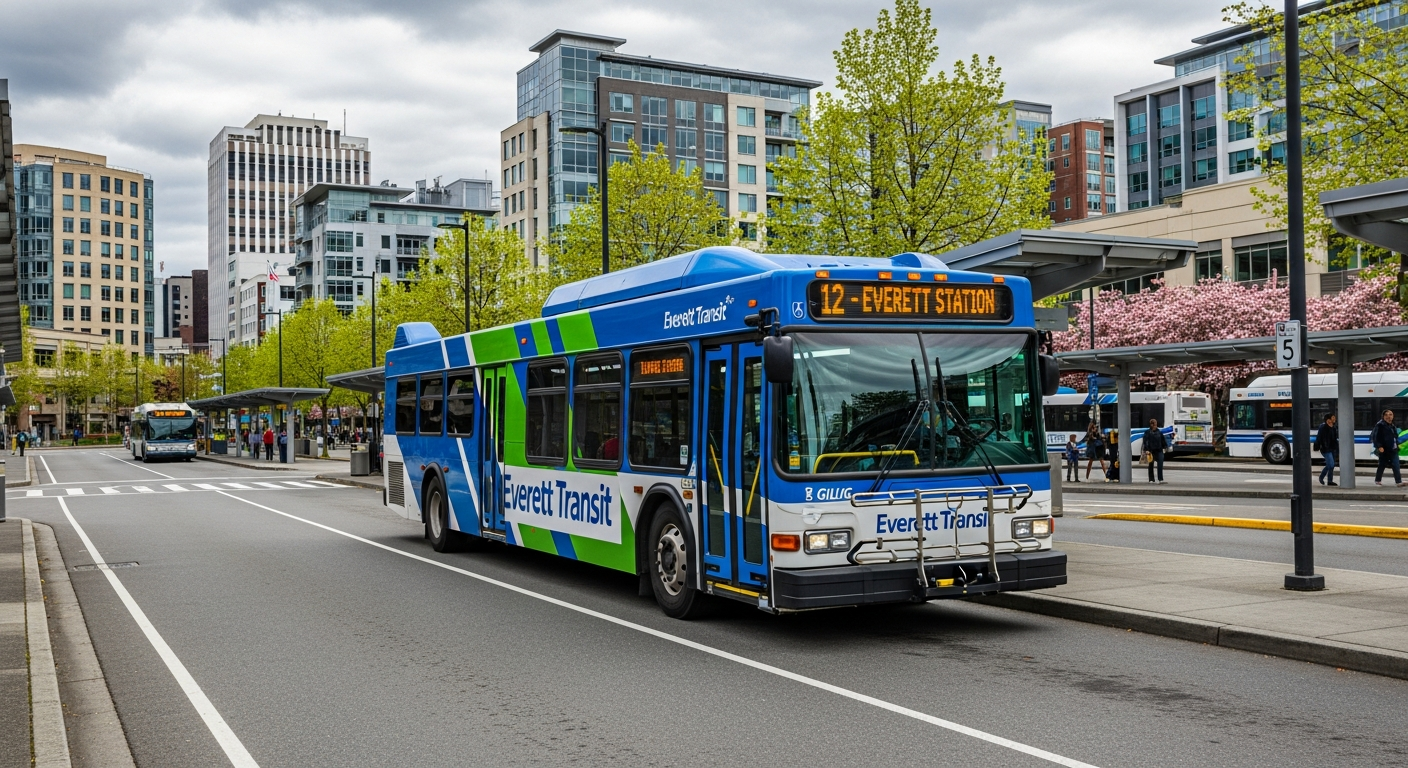
    Everett’s 50-year-old municipal bus system is heading toward the most consequential vote in its history — and Everett residents won’t cast a ballot on it. The Everett City Council could vote as early as late May or June 2026 on whether to dissolve Everett Transit and absorb its 22 routes, 161 workers, and 115,000 riders into Community Transit — the regional carrier serving the rest of Snohomish County. A 2025 state law called SB 5801 makes this possible without a public vote. Here is everything you need to know about what the consolidation would mean, who’s fighting it, and what happens next.

    What Actually Happened on April 22, 2026

    Everett Mayor Cassie Franklin and Community Transit CEO Ric Ilgenfritz announced on April 22, 2026, that the two agencies are resuming work toward consolidation. The announcement was not a vote — it was a green light to begin drafting an interlocal agreement, conducting due diligence, and working through the legal framework before any governing bodies act.

    The proposal would absorb Everett Transit — which operates 22 routes, employs 161 people, and serves an estimated 115,000 Everett residents — into Community Transit, which currently covers the rest of Snohomish County. A merged agency would serve roughly 800,000 people across Snohomish County, making it one of the largest transit networks in Washington State outside of King County Metro and Sound Transit.

    Franklin framed the move as a direct response to Sound Transit’s June 30 board vote on whether to advance light rail to Everett Station. “As light rail comes closer to reality, we need a transit system built for a light rail community,” Franklin said. Ilgenfritz described the consolidation as “the next step in building a seamless, connected transit network across Snohomish County.”

    The State Law That Makes This Possible Without a Public Vote

    This consolidation is moving without a public ballot because Washington’s legislature passed SB 5801 in 2025, which allows public transportation benefit areas like Community Transit to annex municipal transit agencies via an interlocal agreement approved by both governing bodies. The process requires at least one public hearing by each body — separately or jointly — but does not require a citywide ballot measure.

    Everett Transit Local 883 Union President Steve Oss has called for the consolidation to go before Everett voters and has alleged the legislation was crafted specifically to allow the merger without one. A community group called Keep Everett Transit (keepet.org) has formed in opposition.

    If the council approves, Everett would become the first Washington city to voluntarily dissolve a standalone transit agency under this framework.

    What’s Currently on the Table

    Right now, the two agencies are in the due-diligence and agreement-drafting phase. No interlocal agreement has been presented to either body. No public hearing has been scheduled. The timeline that has been communicated publicly is:

    • Spring–early summer 2026: Drafting of interlocal agreement, staff analysis, public hearings
    • Late May or June 2026: Possible council vote (though this is a projection, not a set date)
    • After council approval: Multi-year implementation — routes, labor contracts, fare structures, and service standards would need to be reconciled before Everett Transit ceases to exist as a standalone agency

    What Consolidation Would Mean for Riders

    Under consolidation, Everett Transit’s 22 routes would become part of Community Transit’s network. Service levels, route alignments, and fare structures would all be subject to renegotiation as part of the interlocal agreement.

    Community Transit currently does not operate within the City of Everett boundaries — its routes connect Snohomish County cities to Everett but hand off at the city border. Consolidation would change that, giving a single agency control of all fixed-route bus service in and around Everett.

    Supporters argue this creates the seamless transit network needed to connect to light rail. Critics, including the Keep Everett Transit coalition, argue that Community Transit’s priorities are regional, not neighborhood-focused, and that Everett-specific routes could be reduced or eliminated in a regionalized system.

    What Consolidation Would Mean for Workers

    The 161 Everett Transit employees — drivers represented by ATU Local 883, plus maintenance, dispatch, and administrative staff — would transition to Community Transit under any consolidation agreement. The terms of that transition, including which union contract governs, seniority treatment, and pension continuity, are among the most complex elements of the negotiation.

    Union president Steve Oss has been the most prominent public opponent of the consolidation, calling explicitly for a public vote and pushing back on the no-ballot framework created by SB 5801. The union’s concerns include job security, seniority rules, and the potential for route changes that reduce driver headcount or shift work patterns.

    The Tax Question

    Everett residents currently pay a 0.3% city sales tax that funds Everett Transit. The Lynnwood Times has reported that the combined tax burden under Community Transit’s rate structure would represent the largest sales tax increase in Washington state history. The specific net impact on individual Everett tax bills would depend on how the interlocal agreement structures the transition period and what tax rates are set.

    The public hearing process required by SB 5801 is the primary mechanism for residents to weigh in on the tax implications before any council vote.

    How This Connects to Sound Transit

    The consolidation proposal is explicitly tied to the Sound Transit timeline. The June 30, 2026, Sound Transit board vote — which would determine whether the agency moves forward with a revised System Plan to bring light rail to Everett Station — is the backdrop for Franklin’s framing of the merger.

    The argument: if light rail comes to Everett, the city needs a transit feeder network that connects all of Snohomish County to Everett Station seamlessly. A merged Community Transit + Everett Transit system, the argument goes, is better positioned to serve as that feeder than two separate agencies with separate governance structures.

    Everett’s Sound Transit light rail future is covered in this complete 2026 guide. The June 30 vote’s implications for residents and commuters are also explored in detail on this site.

    How to Make Your Voice Heard

    The SB 5801 process requires at least one public hearing before any council vote. Dates have not been announced as of April 30, 2026. To stay informed:

    • Monitor City of Everett (everettwa.gov) for hearing announcements — confirm agendas on the live city site
    • Sign up for the City of Everett’s news alerts
    • Contact the Keep Everett Transit coalition at keepet.org
    • Contact Everett City Council members directly — the council will make the final call

    Frequently Asked Questions

    Does Everett have to hold a public vote to end Everett Transit?
    No. Under Washington’s SB 5801 (2025), the Everett City Council and Community Transit Board can approve consolidation through a council vote and an interlocal agreement — no public ballot required. However, at least one public hearing by each body is required.

    How many routes does Everett Transit currently operate?
    Everett Transit operates 22 routes and employs approximately 161 people, serving an estimated 115,000 Everett residents.

    When could the Everett City Council vote on consolidation?
    A council vote could come as early as late May or June 2026, though the interlocal agreement is still being drafted as of late April 2026.

    What would happen to Everett Transit workers if consolidation is approved?
    The 161 Everett Transit employees — including drivers represented by Local 883 of the Amalgamated Transit Union — would transition to Community Transit. Terms of that transition are subject to negotiation.

    What does Everett Transit consolidation mean for residents’ taxes?
    The Lynnwood Times has reported this could represent the largest sales tax increase in Washington state history when combined with Community Transit rates. The specific net impact on individual tax bills depends on the interlocal agreement’s structure.

    Why is the consolidation being proposed now?
    Mayor Franklin framed it as a direct response to the June 30, 2026, Sound Transit vote that could advance light rail to Everett Station.

    What is Keep Everett Transit?
    Keep Everett Transit (keepet.org) is a community advocacy group opposing the consolidation and calling for a public vote.

  • Everett Transit Consolidation: What the Council Vote Means

    Everett Transit Consolidation: What the Council Vote Means

    Q: Does Everett have to vote on whether to end Everett Transit?
    A: No. Under a 2025 Washington State law (SB 5801), the Everett City Council and the Community Transit Board of Directors can approve consolidation through a council vote and an interlocal agreement — no public ballot required. Mayor Franklin and Community Transit CEO Ric Ilgenfritz announced the consolidation effort on April 22, 2026. A council vote could come as early as late May or June 2026, though final implementation would take years.

    Everett City Council Will Decide Whether to End Everett Transit — What the Vote Means for Riders, Workers, and Your Tax Bill

    Everett’s 50-year-old municipal bus system is heading toward the biggest decision in its history — and residents won’t cast a ballot on it. Instead, the Everett City Council will vote on whether to dissolve Everett Transit and hand its routes, buses, and operations to Community Transit, the regional carrier that already serves the rest of Snohomish County. If the council says yes, Everett would become the first Washington city to voluntarily give up a standalone transit agency under a 2025 state law that bypasses a public vote entirely. Here is what that council vote means for every Everett resident, what the union representing transit workers says, and how you can make your voice heard before the council decides.

    What Actually Happened on April 22

    Mayor Cassie Franklin and Community Transit CEO Ric Ilgenfritz announced on April 22, 2026, that the two agencies are resuming joint work toward consolidation. The announcement was not a vote — it was a green light to begin drafting the interlocal agreement, conducting due diligence, and working through the legal framework before any governing bodies act.

    The proposal would absorb Everett Transit — which operates 22 routes, employs 161 people, and serves an estimated 115,000 Everett residents — into Community Transit, which currently covers the rest of Snohomish County. A merged agency would serve roughly 800,000 people across the county, making it one of the largest transit networks in Washington State outside of King County Metro and Sound Transit.

    Franklin framed the move as a direct response to Sound Transit’s Link Light Rail Extension, which — if approved on June 30 — would bring rail to Everett Station. “As light rail comes closer to reality, we need a transit system built for a light rail community,” Franklin said in the joint release. Ilgenfritz described the consolidation as “the next step in building a seamless, connected transit network across Snohomish County.”

    The State Law That Makes This Possible Without a Public Vote

    This consolidation is moving without a public ballot because Washington’s legislature passed SB 5801 in 2025, sponsored by Senator Marko Liias (D-Edmonds), chair of the Senate Transportation Committee. The law allows a public transportation benefit area — which Community Transit is — to annex a municipal transit agency through a government-to-government interlocal agreement. Both governing boards must approve it. Voters do not.

    That is a significant change from how transit mergers have worked historically in Washington. The original Sound Transit district, the Snohomish County Public Transportation Benefit Area, was created in 1976 by a 79 percent public vote. This merger would happen entirely through elected officials, not the ballot box.

    Under SB 5801, both the Everett City Council and the Community Transit Board of Directors must hold public hearings and approve the annexation before it takes effect. The public hearings are where residents can formally address their elected officials before the vote locks in.

    What the City Council Must Actually Do — And When

    The Everett City Council’s role is to vote on the interlocal agreement that would authorize Everett’s annexation into Community Transit’s service boundary. Before that vote, the council must hold at least one public hearing. Franklin told Everett Transit union members on April 18 that the council could be asked to vote as early as late May or June 2026. The official joint announcement from both agencies uses a more cautious timeline, stating the boards would consider the proposal “this fall.”

    The Community Transit Board of Directors — which includes elected officials from cities across Snohomish County — would vote separately. Under the consolidation structure, Everett would gain seats on the Community Transit board proportional to its population, giving Everett elected officials an ongoing voice in system decisions.

    Actual implementation — meaning the day Everett Transit stops operating as a standalone agency — would take years after a council vote, according to both agencies. Route planning, labor agreements, equipment transfers, and operational integration require substantial lead time.

    What It Means for Your Tax Bill

    Everett Transit is funded primarily by a dedicated transit sales tax that Everett voters approved. Community Transit is funded by a separate sales tax on Snohomish County purchases outside Everett. After consolidation, Everett’s transit sales tax revenue would flow into the combined Community Transit system.

    Community Transit’s coverage currently levies a 0.9 percent sales tax on purchases in its service area. If Everett is annexed into that boundary, Everett residents and businesses would pay a sales tax that increases by 0.6 percentage points — from the current combined rate of approximately 9.90 percent to 10.50 percent. Projections from the Lynnwood Times estimate that generates approximately $29 million in new annual revenue beginning in 2027, totaling roughly $158 million over five years. That would make this one of the largest single sales tax increases in Snohomish County history.

    The agencies project operational cost savings of between $2.4 million and $3.7 million annually once consolidated, from reduced administrative redundancy and shared maintenance infrastructure. Everett Transit’s fleet includes approximately 24 battery-electric buses with a capital asset value estimated near $10 million.

    The Union Says Workers Weren’t at the Table

    The strongest opposition to the consolidation has come from the workers who drive Everett’s buses. Steve Oss, president of Amalgamated Transit Union Local 883 — which has represented Everett Transit’s drivers, inspectors, and maintenance workers for over two decades — opposes the merger and the process used to get here.

    “This method is frankly wrong,” Oss said, referring to the council-vote pathway that bypasses a public ballot. He has argued that the consolidation should require voter approval, as transit district formation did in 1976.

    Oss also raised concerns about workers outside the ATU 883 bargaining unit — administrative and clerical staff who are not covered under the federal Section 13(c) labor protections that shield union drivers from layoffs in transit mergers. ATU 883 members are protected under federal law from involuntary termination as a result of annexation. Non-union Everett Transit employees do not have the same guaranteed protections.

    A community group called Keep Everett Transit has launched at keepet.org to organize residents who want to preserve the local agency. Oss has noted that one of the operational advantages of a city-run transit system is its flexibility — when Everett needs buses for an event, emergency, or temporary free-fare day, it takes a call from the mayor. In a regional agency, those decisions go through a board and a bureaucracy.

    What Riders Can Expect If Consolidation Happens

    Ilgenfritz has committed publicly to no loss of service for existing Everett Transit riders during the transition. Community Transit operates a significantly larger fleet and route network, including Swift rapid bus lines and regional routes to Seattle, which Everett Transit does not currently offer. Supporters of the merger argue that Everett residents would gain access to a more extensive network and that future light rail connectivity would be better served by a unified regional carrier rather than two separate systems with different governance.

    Critics, including Oss, point out that Everett Transit’s local knowledge and direct accountability to City Hall has allowed it to respond quickly to neighborhood needs — something harder to replicate in a county-scale agency governed by a multi-city board. There is also a pay disparity between the two agencies: Everett Transit paratransit workers earn approximately $42 per hour; Community Transit paratransit workers earn approximately $26 per hour. How collective bargaining will resolve that disparity is not yet determined.

    The broader transit picture matters here: Sound Transit’s Everett Link Extension — if the board approves a funded path forward at its June 30 meeting — would require an integrated bus-rail feeder system. Both agencies argue consolidation is necessary infrastructure for that future. The Sound Transit board’s decision will significantly shape what transit in Everett looks like in the 2030s. Read more about the June 30 vote and what’s at stake for Everett in this explainer.

    What to Do Next

    • Attend the public hearing — Both the Everett City Council and Community Transit board are required to hold public hearings before any vote. Dates have not been announced yet. Watch the Everett City Council meeting calendar at everettwa.gov/AgendaCenter for scheduling updates.
    • Contact your Council Member — The Everett City Council has nine members representing districts. Find your representative and their contact information at everettwa.gov/citycouncil.
    • Review the consolidation history — The city’s 2023 “More Transit Together” final report is available through Everett’s Transit Consolidation Study page at everettwa.gov/2786/Transit-Consolidation-Study.
    • Follow Keep Everett Transit — The community organization opposing consolidation is operating at keepet.org.
    • Sign up for city news flashes — The official consolidation announcement and future updates will be posted at everettwa.gov. Subscribe to City news flashes to receive updates automatically.

    Frequently Asked Questions

    Will Everett Transit disappear if the council votes yes?

    Eventually, yes — Everett Transit as a standalone city agency would cease to exist and its operations would be absorbed into Community Transit. Implementation would take several years after a council vote.

    Can residents stop the consolidation?

    There is no public vote required under SB 5801. Residents can testify at public hearings, contact their council members, and organize through groups like Keep Everett Transit — but the final decision rests with the Everett City Council and Community Transit Board of Directors.

    When will the Everett City Council vote?

    Mayor Franklin indicated a council vote could come as early as late May or June 2026. The official joint agency timeline is “this fall.” No vote date has been formally set as of April 30, 2026.

    Will my bus route change immediately after a vote?

    No. Both agencies have committed to maintaining existing Everett Transit service throughout the transition period. Route and schedule changes would be part of a multi-year integration process.

    Will this increase my sales taxes?

    Yes. Everett residents and businesses would pay a sales tax rate increase of approximately 0.6 percentage points if Everett is annexed into Community Transit’s service area — one of the largest such increases in Snohomish County history.

    What happens to Everett Transit workers?

    ATU Local 883 members (drivers, mechanics, inspectors) are protected under federal Section 13(c) labor law from involuntary layoffs due to the merger. Non-union administrative staff do not have equivalent federal protections. Labor negotiations are ongoing.

  • Everett Stadium Design: $10.6M Approval Package Explained

    Everett Stadium Design: $10.6M Approval Package Explained

    What happened April 29: Everett City Council approved a $10.6 million package to complete the design of the Everett Outdoor Event Center — the planned downtown home of the AquaSox and two USL soccer teams. The vote authorizes finishing the blueprints. It does not authorize construction. The total project still exceeds $120 million and no construction funding has been committed.

    On Wednesday, April 29, 2026, Everett City Council voted to approve $10.6 million in design funding for the Everett Outdoor Event Center. The vote moves the project from preliminary design to completed design — a necessary step before the city can make any decision about whether and how to build the facility. Here is the complete guide to what was actually authorized, what it costs, and what has not been decided.

    The Two Components of the $10.6 Million

    The April 29 package had two distinct parts, both approved at the council meeting at 3002 Wetmore Ave.:

    $4.8 million in contract amendments with four design contractors already engaged on the project. These amendments authorize the additional design work needed to complete the full design package for the Everett Outdoor Event Center — covering architectural drawings, engineering, site planning, environmental review, and the technical documentation required before construction can begin.

    $7.4 million state grant from the Washington State Department of Commerce, directed to the stadium design budget. This grant offsets a significant portion of the expanded design costs.

    The $4.8 million in contractor amendments is funded through an interfund loan from the city’s general fund balance — a borrowing mechanism from city reserves that must be repaid. The $7.4 million is grant funding that does not need to be repaid.

    What Design Funding Actually Means

    The distinction between design funding and construction funding matters. Design covers the complete package of documents — architectural drawings, structural engineering, utility coordination, environmental review, and permit-ready specifications — that defines exactly what will be built and what it will cost to build it. You cannot break ground without this package.

    Wednesday’s vote pays for finishing that package. The council is not yet deciding whether to build the stadium. That is a separate decision that comes after design is complete.

    Why $10.6 Million More Was Needed

    The original design contract did not include the full scope required to get the project to a build-ready state. As the design process progressed, scope expanded — particularly around the complexity of the downtown site, utility infrastructure, and the multi-use programming requirements of a venue serving baseball, soccer, and community events. The city applied for and received the $7.4 million Commerce grant specifically to offset these expanded costs.

    What the Stadium Is Designed to Be

    The Everett Outdoor Event Center is designed as a multi-use downtown venue with 5,000 seats and full ADA accessibility throughout. A premium club can seat 200 fans with 400 standing on a covered deck. The facility would serve as the home ballpark for the Everett AquaSox — the Seattle Mariners’ Single-A affiliate that has played at Funko Field (Everett Memorial Stadium) since 1984. The venue is also designed to host two new Everett teams in the United Soccer League, a professional league expanding across the Pacific Northwest.

    Public park amenities are part of the design, positioning the site as a community asset on non-game days. The city has been targeting a Fall or Winter 2027 completion — timed to open before the AquaSox 2027 season.

    The Budget Context

    The total estimated project cost exceeds $120 million. Wednesday’s $10.6 million brings additional design funding into the project but leaves the bulk of capital financing — more than $100 million — still to be determined. The city has received $17 million in team commitments from the AquaSox and USL partners, but the major construction funding sources have not been publicly committed.

    The vote lands against the backdrop of Everett’s projected $14 million 2027 budget gap. The interfund loan structure means the $4.8 million in contractor amendments is borrowed from general fund reserves — money that must be returned. Council previously explained this mechanism in detail before Wednesday’s vote.

    What Has Not Been Decided

    Wednesday’s vote does not authorize construction. It does not determine how the remaining $110 million-plus in construction costs will be financed. It does not commit to a specific groundbreaking date. It does not resolve the debate over whether downtown Everett can absorb the long-term financial obligations of a $120 million public venue while simultaneously managing a $14 million structural budget gap.

    Those are subsequent decisions. The council has approved finishing the design package. The harder decisions come after the blueprints are done.

    For the full pre-vote background on the interfund loan mechanism and how it works: The complete guide to Everett’s $10.6M stadium interfund loan.

    Frequently Asked Questions

    What did Everett City Council approve on April 29, 2026?

    The council approved a $10.6 million package to complete the design of the Everett Outdoor Event Center. The package included $4.8 million in contract amendments with four design contractors (funded through an interfund loan from the general fund) and acceptance of a $7.4 million state Department of Commerce grant.

    Does the April 29 vote authorize building the stadium?

    No. The vote authorizes completing the design package — architectural drawings, engineering, environmental review, and permit-ready specifications. Construction authorization is a separate decision that has not been made. The total project cost exceeds $120 million and construction financing has not been committed.

    What is an interfund loan?

    An interfund loan is a borrowing from the city’s own general fund balance — its reserves — to cover a project cost. Unlike a bond, it does not involve outside borrowing, but it does reduce the general fund balance and must be repaid, reducing future flexibility.

    When is the Everett Outdoor Event Center expected to open?

    The city has been targeting Fall or Winter 2027, timed to open before the AquaSox 2027 season. That timeline depends on construction authorization and funding being secured after design is complete.

    What teams would play at the new stadium?

    The Everett AquaSox — the Seattle Mariners’ Single-A affiliate that has played in Everett since 1984 — and two new Everett teams in the United Soccer League (USL). The venue is also designed for concerts, festivals, and community events.

    How does the stadium vote connect to Everett’s budget gap?

    Everett faces a projected $14 million structural budget gap heading into 2027. The $4.8 million in contractor amendments is funded via an interfund loan from the general fund balance — reserve money that must be repaid. The city is managing both the stadium design costs and the broader fiscal challenge simultaneously.

    What happens next after the design is complete?

    Once the design package is finished, the council must decide whether to authorize construction, how to finance the $110 million-plus remaining cost, and on what timeline. That decision has not been made.

  • Everett Stadium Design Approved: Inside the $10.6M Vote

    Everett Stadium Design Approved: Inside the $10.6M Vote

    What did Everett City Council approve on April 29? The council approved a $10.6 million package to complete the design of the Everett Outdoor Event Center — the future home of the AquaSox and two USL soccer teams. The package includes $4.8 million in contract amendments with four design contractors and acceptance of a $7.4 million state Department of Commerce grant.

    What the Council Approved

    Everett’s City Council cleared the next major hurdle in the downtown stadium project on Wednesday, voting to approve $10.6 million in design funding for the Everett Outdoor Event Center — a vote that green-lights the final design phase but stops well short of breaking ground.

    The $10.6 million package had two components, both approved at the April 29 council meeting at 3002 Wetmore Ave.:

    $4.8 million in contract amendments with four design contractors already engaged in the project. These amendments authorize additional design work needed to complete the full design package for the Everett Outdoor Event Center.

    Acceptance of a $7.4 million state grant from the Washington State Department of Commerce directed toward the stadium project.

    Together, the two actions bring an additional $10.6 million into the stadium design budget. The $4.8 million in contractor amendments is funded through an interfund loan from the city’s general fund balance — a mechanism the council previously established and explained in detail before Wednesday’s vote.

    What “Design Funding” Actually Means

    The $10.6 million funds the completion of the design for the Everett Outdoor Event Center. Design work covers architectural drawings, engineering, site planning, environmental review, and the technical documentation required before construction can begin. It does not fund construction itself.

    The total estimated project cost exceeds $120 million. Wednesday’s vote moves the project from preliminary design to completed design — a necessary step before the city can make any further decision about whether and how to build.

    Think of it this way: the city is now paying to finish the blueprints. Whether to build what the blueprints describe is a separate decision that comes later.

    What the Stadium Is Supposed to Be

    The Everett Outdoor Event Center is planned as a multi-use sports and events venue in downtown Everett. It would serve as the home ballpark for the Everett AquaSox, the Seattle Mariners’ Single-A affiliate that has played at Funko Field (formerly Everett Memorial Stadium) since 1984.

    The facility is also designed to host two new Everett teams in the professional United Soccer League (USL), which has been expanding in the Pacific Northwest. Public park amenities are part of the design, positioning the site as a community asset beyond game days.

    Why $10.6 Million More Was Needed

    The original design contract did not include the full scope required to get the project to a build-ready state. As the design process progressed, the scope of work expanded — particularly around the complexity of the downtown site, utility considerations, and the multi-use programming requirements of a venue serving baseball, soccer, and community events.

    The city sought and received the $7.4 million state Commerce grant specifically to offset the expanded design costs. This is not unusual for large public construction projects, where design costs frequently increase as the project becomes more technically defined.

    The project has faced scrutiny over its cost trajectory. The total price tag of $120 million-plus is significantly above earlier estimates, and the city is simultaneously managing a projected $14 million budget gap heading into 2027. The interfund loan structure means the stadium design costs are borrowing from the general fund balance — money that will need to be repaid.

    What Hasn’t Been Decided Yet

    Wednesday’s vote authorizes completing the design. It does not authorize construction, determine how the remaining $110+ million in construction costs will be funded, or commit the city to building the stadium.

    The next major decision point comes when the completed design and a full project budget are presented to the council for a construction vote. That vote — substantially larger in scope — has not been scheduled.

    Mayor Franklin’s administration has argued that completing the design is a prerequisite to any serious conversation about how to fund and structure the full project. Without a completed design, there’s no firm cost basis and no project to bid.

    What AquaSox and USL Have at Stake

    City officials have stated publicly that without a new stadium, the AquaSox’s long-term future in Everett is uncertain. Minor League Baseball has been consolidating franchises and upgrading stadium standards nationally, and aging facilities have been a factor in franchise relocations in other markets.

    For USL, the new stadium would anchor professional soccer in a region that has seen significant growth in the sport. A purpose-built configuration — not a converted baseball park — is part of what makes the site viable for USL play.

    Frequently Asked Questions

    Did the council vote to build the stadium? No. The April 29 vote authorized completing the design. A separate construction vote is required before any building begins.

    Where does the $4.8 million come from? It comes from the city’s general fund balance through an interfund loan — essentially, the city lending itself money from its reserves. The loan is expected to be repaid from future stadium-related revenues or other sources.

    What is the $7.4 million state grant for? The Washington State Department of Commerce grant is directed toward the stadium design project. Accepting it was part of the April 29 vote package.

    How much will the whole stadium cost? Total estimated project costs exceed $120 million. How that will be funded — through public bonds, grants, private contributions, or a combination — has not been finalized.

    When would the stadium open? No construction timeline has been established. That depends on when and how the construction funding is resolved and a construction vote passes.

    What to Do Next

    • Follow the project: Search “Outdoor Event Center” on everettwa.gov for updates as design progresses.
    • Attend council meetings: Regular council meetings are Wednesdays at 12:30 p.m. at 3002 Wetmore Ave. Meetings are streamed on the city’s YouTube channel.
    • Track the budget: The city’s 2026 budget page and future 2027 planning documents will reflect how the interfund loan is managed.
    • View the full agenda: All council meeting agendas are posted in advance at everettwa.gov/agendacenter.