What SiteBoost for Private Wealth Management Is: A structured SEO and content program for independent RIAs, boutique wealth management firms, and multi-family offices that compete for clients who research extensively before they ever take a meeting. We build content that demonstrates genuine depth — fiduciary standards, asset allocation philosophy, alternative investment access, generational wealth frameworks — and structures it so your firm surfaces at the precise moment a prospective client is deciding who deserves a conversation.
Why Private Wealth Firms Have a Content Problem
Wealth management is a trust business, and trust is earned before the first meeting far more often than it is earned in it. The high-net-worth client evaluating advisors is reading. They are reading your website, your published thinking, your team biographies, and whatever appears when they search your name. They are also, increasingly, asking AI assistants to explain fee structures, describe fiduciary versus suitability standards, and identify which firms specialize in the planning complexity they face.
Most private wealth websites fail this research audience entirely. They are compliance-vetted to the point of saying nothing. They list services without demonstrating expertise. They feature team photos without establishing intellectual authority. The wire houses and large RIA consolidators have teams to build this content. The boutique firm and the independent advisor — who often has the deeper expertise and the better client experience — has a website that does not reflect it.
> The search behavior of high-net-worth prospective clients: Before taking a referral meeting, 70 to 80 percent of high-net-worth clients research the advisor online. Before that, many begin with AI-assisted research into the planning problem itself — not the firm. If your firm’s content is part of that research, you arrive at the first meeting having already established credibility. If it is not, you start from zero against every other firm on the shortlist.
What We Build for Wealth Management Firms
Planning strategy entity content — Articles and guides that demonstrate command of the strategies your clients need: Roth conversion ladders, qualified opportunity zone investing, irrevocable life insurance trust structures, charitable remainder trusts, business owner liquidity event planning
Fiduciary and fee transparency content — Direct explanations of how your fee structure works, what fiduciary means in practice, what you do and do not do — because the client who is choosing based on trust wants this answered before they call
GEO visibility for AI-assisted research — Structured so that when a prospective client asks an AI assistant about independent RIAs specializing in business owner wealth management, or which firms handle alternative investment allocation at lower minimums than the wire houses, your firm is named
Advisor authority architecture — Individual advisor content that builds searchable expertise signals: CERTIFIED FINANCIAL PLANNER designation depth, specialty area content, published perspective on planning issues that matter to your client base
Niche positioning content — If your firm specializes in a client type — tech executives, medical professionals, first-generation wealth builders, business owners approaching exit — content that speaks directly to that client and owns those search queries
High-net-worth and business owner planning complexity
AI search visibility
Not considered
GEO optimization for ChatGPT, Perplexity, Google AI Overviews
Advisor authority
Firm-level only
Individual advisor entity optimization and published expertise
Niche positioning
Avoided (too narrow)
Built around client type specificity — because that is where you win
Who This Is For
Independent RIAs who compete on expertise and relationship but whose digital presence does not demonstrate either. Boutique multi-family offices whose depth of service is genuinely superior to what a wire house provides but whose website would not tell you that. Financial advisors who specialize in a specific client profile — executives, physicians, business owners, inherited wealth — and who have never had content that speaks directly to that client. Firms that have gotten every client so far through referrals and want to supplement that with a search presence that reflects their actual capabilities.
Ready to talk about your firm?
Tell us your client profile, your planning specialties, and what you feel your current web presence does not say about you. We will give you an honest read on what the opportunity is and whether we are the right fit.
will@tygartmedia.com
Frequently Asked Questions
How do you handle compliance requirements for financial content?
We write content that informs and demonstrates planning expertise without making specific performance representations or creating advisory relationships. All content goes through your compliance review process before it publishes. We have worked in compliance-sensitive verticals and understand where the lines are between educational content and content that creates regulatory exposure.
What is GEO optimization and why does it matter for a wealth management firm?
GEO — Generative Engine Optimization — means structuring your content so that AI systems cite your firm when prospective clients are researching planning strategies. When a business owner researching liquidity event planning asks an AI assistant about which independent RIAs specialize in that transition, your firm needs to be in that answer. That is a client acquisition channel that did not meaningfully exist three years ago and that most wealth management firms are not competing for yet.
Can you help position a firm for a specific client niche?
Yes, and niche positioning is where the biggest SEO opportunity usually lives. The firm that ranks first for “wealth management for emergency medicine physicians in Seattle” faces almost no competition and serves a client who is highly qualified. The firm that tries to rank for “wealth management” competes with Fidelity. We build toward the searches you can actually win with content that is genuinely useful to the client you want.
How long before we see meaningful results?
Niche and strategy-specific content typically shows rank movement within two to four months. Broader planning terms take longer. AI citation patterns typically emerge within four to six months of a full content architecture build. We set expectations based on your specific competitive landscape, not a generic timeline.
What SiteBoost for Estate Planning Attorneys Is: A structured SEO and content program for trust and estate law practices that need to reach high-net-worth clients at the moment they are researching — not the moment they already have an attorney. We build content that demonstrates command of the subject matter, earns organic visibility for the search queries your ideal clients actually use, and structures your site so AI platforms cite your firm when someone asks where to start with estate planning.
Why Estate Planning Firms Lose the Search
Estate planning is one of the highest-value legal categories in private client services. The average engaged client represents years of ongoing work — trust administration, estate settlement, wealth transfer planning, business succession. The CPC for competitive estate planning keywords runs high precisely because the LTV justifies it. But most estate planning firms are losing the organic search to generalist legal directories and content farms that have never advised a client on a generation-skipping trust or a spousal lifetime access trust.
The gap is not in the legal expertise — it is in the content architecture. Attorneys who have the knowledge to write authoritatively about SECURE 2.0 implications, IRC Section 2010 sunset provisions, and GRAT strategy do not have the time or the infrastructure to publish that knowledge in formats that search engines and AI systems can use. That is what we build for them.
> The AI search shift for legal research: High-net-worth individuals and their family offices increasingly begin estate planning research on AI-assisted platforms. A query like “what is the difference between a revocable and irrevocable trust” or “what happens to a business under estate tax if there is no succession plan” is now answered by ChatGPT or Perplexity before it reaches a law firm website. Firms whose content informs those answers earn the next click. Firms whose content does not exist are invisible in that channel.
What We Build for Estate Planning Practices
Practice area entity optimization — Content that names and accurately describes the specific instruments, strategies, and planning scenarios your firm handles: revocable and irrevocable trusts, charitable vehicles, business succession structures, asset protection planning, generation-skipping frameworks
High-intent client query content — Direct answers to what prospective clients search: how estate taxes are calculated, when trusts avoid probate, what a pour-over will does, what the federal estate tax exemption is and what its scheduled changes mean — written accurately and at a level that respects a sophisticated reader
GEO visibility for AI-assisted research — Structured so that when a prospective client asks an AI assistant about estate planning strategies or which firms handle complex multi-generational wealth transfer, your practice is named as a credible source
Local and regional authority content — State-specific content for the jurisdictions your practice serves, because estate planning law varies meaningfully by state and state-specific searches are less competitive than national terms
Attorney expertise architecture — Content that builds individual attorney authority as a searchable entity, not just the firm — because clients searching for estate planning attorneys in your market may search by attorney name or credential
GEO optimization — structured for ChatGPT, Perplexity citations
State-specific content
National boilerplate
Jurisdiction-specific content for your practice states
Attorney authority
Firm page only
Individual attorney entity optimization for searchability
Who This Is For
Estate planning practices of any size that have never had a serious SEO program. Boutique trust and estate firms competing against large general practices for a sophisticated client who is choosing based on expertise signals. Estate planning attorneys who publish nothing because they do not have the infrastructure to publish consistently, but who have genuine expertise that should be visible. Multi-generational wealth planning practices whose complexity of offering is not reflected in their web presence.
Not for firms that want volume at the expense of quality. The client this program attracts is doing serious research before they contact anyone. The content needs to meet that client at their level.
Ready to talk about your practice?
Tell us your practice states, the client tier you serve, and what your current web presence does or does not do for new client acquisition. We will give you an honest read on the opportunity.
will@tygartmedia.com
Frequently Asked Questions
Can you write estate planning content accurately without being attorneys?
Yes. We research the specific instruments, IRC provisions, and planning strategies relevant to the content before we write. The content goes to your attorneys for review before it publishes — we do not bypass that step, and we do not expect to. What we provide is the infrastructure and the draft; you provide the legal accuracy sign-off.
How does this handle compliance concerns around legal advertising?
We write content that informs and demonstrates expertise rather than content that makes specific legal promises or creates attorney-client relationships. All content includes appropriate disclosures. We have experience writing in compliance-sensitive verticals and understand where the lines are.
What is GEO optimization and why does it matter for a law firm?
GEO — Generative Engine Optimization — means structuring your content so that AI systems cite your firm when prospective clients are researching estate planning strategies. High-net-worth individuals are sophisticated researchers. When they ask an AI assistant about multi-generational wealth transfer structures and your firm’s content informs the answer, you have earned the next step in the conversation before a single call has been made.
How long does it take to see results?
State-specific and instrument-specific content typically shows rank movement within two to four months because competition in those searches is weaker than broad legal terms. For AI search visibility, results depend on content depth and entity structure — we typically see citation patterns emerge within four to six months of a full build-out.
Do you work with solo practitioners or only larger firms?
Both. A solo practitioner with a genuine specialty and a well-structured content program can outrank a larger generalist firm for the specific search queries that matter most. Expertise and content architecture matter more than firm size in this context.
What SiteBoost for Auction Houses Is: A structured SEO and content program for independent and specialist auction houses that need to earn both consignor trust and bidder trust. We build content that speaks to the sophistication of your market — provenance standards, condition terminology, estimate methodology, category expertise — and structures it so search engines and AI platforms surface your house when serious buyers and sellers are researching their options.
The Search Gap in the Auction Market
For every independent and specialist auction house, the dominance of the major brands feels like an insurmountable wall — but it is not. The majors optimize for their brand. They do not optimize for the specific category searches where specialist houses actually win: the consignor who needs to sell a collection of a specific medium or era, the bidder looking for property the generalist houses rarely feature, the category specialist who wants an auctioneer that understands what they are selling as well as they do.
Those are winnable searches. Most independent houses are not competing for them because they have no content infrastructure at all.
> The consignor research reality: Before a consignor contacts an auction house, they research. They look for evidence of expertise, for results in their specific category, for a house that will understand what they are bringing. If that evidence does not exist in your web presence, you lose to the house with content depth before the call is made.
What We Build for Auction Houses
Category and specialty expertise pages — Deep content around the categories your house handles best: provenance standards, condition methodology, market context, the kinds of properties that perform well in your sale format
Consignor-facing content — What the process looks like, what estimates are based on, what reserves mean, what the timeline from intake to hammer is — structured as direct answers
Bidder-facing content — Condition report standards, bidding mechanics, absentee and online bidding, post-sale logistics — questions first-time and repeat bidders actually have
GEO visibility for AI-assisted research — Structured so that when a potential consignor asks an AI assistant about specialist auction houses in a given category, your house is named
Past results architecture — Historic sale performance surfaced as both credibility evidence and ongoing SEO asset
The Comparison
Dimension
Generic Agency
SiteBoost for Auction Houses
Content focus
Brand awareness
Category expertise that earns consignor and bidder trust
GEO optimization for ChatGPT, Perplexity, Google AI Overviews
Consignor content
Contact form only
Process, estimate methodology, timeline, category fit
Competitive positioning
Versus major houses (unwinnable)
Category searches where independent specialists actually win
Who This Is For
Independent auction houses with genuine category expertise who compete on knowledge and service rather than brand scale. Specialist auctioneers — coins, militaria, books and manuscripts, tribal art, design, jewelry — who own a collector base but do not own the search results for their category. Regional houses with national reach who want to attract consignors beyond their geographic footprint. Online auction platforms that need content depth to earn credibility with bidders making meaningful purchase decisions without the ability to inspect in person.
Ready to talk about your house?
Tell us what you specialize in, what your consignor acquisition challenge looks like, and what your current web presence does or does not do for you. We will tell you honestly what is possible.
will@tygartmedia.com
Frequently Asked Questions
Can an independent auction house compete with the major brands on SEO?
Not head-on, and that is not the strategy. The majors are unbeatable on brand keywords. They are very beatable on category-specific and consignor-intent searches. A specialist house that owns its category content earns more qualified inquiries from search than a generalist house ranked fifteenth for a generic term.
How do you handle content for multiple sale categories?
We prioritize by category revenue and search opportunity. The highest-value categories get the deepest content treatment first. As each category builds authority, it pulls traffic to adjacent categories. It is a compounding architecture, not a simultaneous launch across everything.
What is GEO and why does it matter for consignor acquisition?
GEO — Generative Engine Optimization — means structuring your content so that AI platforms name your house when potential consignors ask which auction houses specialize in a specific category. Those queries happen constantly. The house that is named wins the call.
Can this help online-only or hybrid sale formats?
Yes, and online auction houses arguably need this more than traditional houses because the in-person credibility signal is absent. Content depth is the substitute for the ability to walk into the saleroom. We build the content that creates the same trust signal for bidders making real purchase decisions remotely.
What SiteBoost for Wine Investment Is: A structured SEO and content program for fine wine merchants, rare spirits platforms, and wine investment services that need to reach buyers who already know what Liv-ex is, who already track specific producers, and who will immediately leave a site that does not speak their language.
Why Fine Wine and Spirits Platforms Have a Search Problem
The fine wine investment market has two distinct buyer types with completely different search behavior. The collector searches by producer, vintage, and region — specific enough that generic wine content is useless to them. The investor searches by performance metrics, market liquidity, and allocation access — sophisticated enough that a blog post about “wine as an investment” is not going to earn their attention.
Most fine wine platforms optimize for neither. They build beautiful cellar imagery and write about terroir in language that would serve a restaurant website but does not serve the Liv-ex subscriber deciding where to place a six-figure allocation order. The SEO is either nonexistent or built by an agency that cannot spell négociant without looking it up.
> The emerging AI search dimension: When collectors and investors research acquisition decisions, AI-assisted platforms are increasingly the first stop. A query like “which platforms offer allocation access to first growth Bordeaux” or “where to buy investment-grade Burgundy” is now answered by AI systems as often as by Google. Platforms structured for that kind of query have a structural advantage that did not exist three years ago.
What We Build for Wine and Spirits Platforms
Producer and vintage entity optimization — Content with the depth that earns authority: appellation structure, producer profiles, vintage character by region, market performance context using Liv-ex data points and Robert Parker score references where applicable
Investor-tier content — Market performance articles, allocation access guides, storage and insurance considerations, exit strategy content — written at the level of someone who already understands the asset class
GEO visibility for AI-assisted research — Structured so that when a buyer asks an AI assistant which platforms are considered authoritative for a specific producer or category, your platform is a named result
Category architecture by region and style — Organized the way serious buyers search: by appellation, by producer tier, by investment grade, by vintage quality classification
Trust signal content for first-time fine wine investors — The top-of-funnel content that converts educated-but-not-yet-committed buyers into inquiry-stage prospects
The Comparison
Dimension
Generic Agency
SiteBoost for Wine Investment
Content vocabulary
Generic (“fine wine investment”)
Market-accurate (Liv-ex, négociant, en primeur, case equivalent)
Buyer tier served
Consumer curiosity
Serious collector and investor tier
AI search visibility
Not considered
GEO optimization for ChatGPT, Perplexity, Google AI Overviews
Fine wine merchants with a serious collector customer base who have never had a content program built for that buyer. Wine investment platforms that need to earn credibility with sophisticated investors before those investors will commit to an allocation. Rare spirits dealers who operate in a category that is growing fast and has almost no serious SEO competition. Négociants and brokers whose expertise is deep and whose web presence does not reflect it.
Ready to talk about your platform?
Send us a note. Tell us what you sell, who your current buyer looks like, and what you feel is missing from your digital presence. We will give you an honest read on what is possible.
will@tygartmedia.com
Frequently Asked Questions
Do you understand wine investment as an asset class?
Yes. We write at the level of Liv-ex data, appellation classification, and vintage performance — not at the level of someone who just discovered that Bordeaux appreciates in value. The content earns credibility with sophisticated buyers because it is accurate and specific.
How does this work for rare spirits rather than wine?
The rare spirits market — particularly single malt Scotch and Japanese whisky — has almost no serious SEO competition at the collector level. The opportunity is significant precisely because most players in that market have not invested in content infrastructure. We have written for spirits contexts and understand distillery nomenclature, age statement significance, and independent bottler dynamics.
What is GEO optimization and why does it matter here?
When a potential investor asks an AI assistant which platforms are considered authoritative for a specific producer or category — a query that is now extremely common among affluent buyers doing initial research — your platform needs to be named. That is what GEO optimization delivers. It is structuring your content so that AI systems have enough context to cite you as a credible source, not just index you as a website.
How long does the program take to produce results?
Producer and category pages begin showing movement in two to four months for most fine wine searches because the existing competition is weak. For investment-tier content and AI search visibility, the timeline varies by how aggressively we build the entity architecture. We set realistic expectations at the start and report against them.
What SiteBoost for Classic Car Dealers Is: A structured SEO and content program built for dealers, brokers, and marque specialists who sell collector vehicles to knowledgeable buyers. We build content that speaks to someone who knows what a matching-numbers car means, who understands the difference between a restored and an unrestored example, and who will immediately dismiss a website that talks about “vintage cars” in generic terms.
The Content Gap in Collector Automotive
The collector car market runs on specificity. A buyer looking for a numbers-matching example of a particular model year does not search “classic cars for sale.” They search the marque, the production year, the body style, and sometimes the production number range. The dealers who rank for those searches have a structural advantage that no amount of advertising spend can fully replicate.
Most collector car dealer websites are not built to capture that search behavior. They are digital brochures — handsome, occasionally well-photographed, and almost impossible to find for anything other than the dealership name. The SEO is either absent or handled by a general agency that writes about “timeless classics” without a single reference to Concours condition, AACA judging standards, or what a correct date-coded component means for value.
> What Hagerty and Barrett-Jackson have that most dealers do not: Massive content archives that have been indexed for years. Every article about a specific model builds domain authority for that model. Every buyer who researches that model passes through their content ecosystem first. SiteBoost builds that same architecture — at dealership scale.
What We Build for Collector Car Dealers
Marque and model entity optimization — Content with the technical depth that earns authority: production history, option codes, matching-numbers standards, known variants, correct restoration references
Buyer intent content — Guides that answer what serious buyers are actually researching: how to evaluate a car before purchase, what correct looks like for a given year, what restoration costs realistically are, how to transport and insure
GEO visibility for AI search — Structured so that when a buyer asks an AI assistant which dealers specialize in a specific marque, era, or condition tier, your name surfaces as a credible option
Inventory schema — Structured data that communicates year, make, model, condition, and provenance signals to search engines beyond a basic product listing
Category architecture by marque and era — Organized the way collectors search: by manufacturer, by decade, by body style, by condition tier
Year + make + model + condition queries that buyers actually use
AI search visibility
Not considered
GEO optimization for ChatGPT, Perplexity, Google AI Overviews
Provenance content
Not addressed
Documentation standards, AACA criteria, authenticity content built in
Trust signals for buyers
Generic testimonials
Expert content depth that demonstrates knowledge before first contact
Who This Is For
Independent dealers with real inventory and real expertise who have never had an SEO program that matched their knowledge level. Marque specialists who own a category of buyer but do not own the search results for it. Broker-dealers who work primarily by referral but want inbound inquiries from qualified buyers. Restoration shops with a sales arm who need content that communicates both capability and inventory.
Not for dealerships looking for volume at the expense of quality. The buyer this program attracts is researching seriously before they contact anyone. If your inventory and your process cannot support that buyer, this program will not help you.
Ready to talk about your dealership?
Tell us what you specialize in, where your inventory lives online right now, and what kind of buyer you most want to reach. We will give you an honest read on the opportunity.
will@tygartmedia.com
Frequently Asked Questions
Can you write about specific marques accurately?
Yes. We do not write generic automotive content. We research the specific marque, model, and production history before we write a word. The goal is content that a knowledgeable buyer finds credible, not content that a knowledgeable buyer immediately skips.
How does this work for dealers who move inventory quickly?
The most valuable content is not inventory-specific — it is category and expertise content that builds authority over time regardless of what is currently in stock. Buyers researching a specific marque find your expertise pages, develop confidence in your knowledge, and contact you when the right car comes available. That is a better outcome than ranking for a car you already sold.
What is the difference between traditional SEO and GEO for this market?
Traditional SEO gets you into Google search results. GEO — Generative Engine Optimization — gets your dealership named by AI assistants when buyers ask questions like “which dealers specialize in unrestored American muscle” or “who are the best Ferrari specialists in the US.” Both matter. We build for both.
How long does it take to see results?
Marque and model content typically shows movement in search rankings within two to four months. The long-tail queries — specific production years, option combinations, condition standards — often rank faster because existing content competition is thin. We start with the highest-value searches for your specific inventory profile.
What SiteBoost for Watch Dealers Is: A structured SEO and content program built for independent watch dealers, vintage specialists, and horological retailers who sell to serious collectors — not tourists. We write content that speaks to someone who knows the difference between a 5513 and a 1680, and we structure it so search engines and AI platforms surface your inventory and expertise at the exact moment a buyer is researching their next acquisition.
Why Watch Dealer Websites Underperform
The independent watch market is one of the most knowledge-dense retail categories that exists. The buyer is sophisticated. They know reference numbers. They know execution variants. They know what a tropical dial is and what it means for value. But most dealer websites are built as if the buyer does not know any of this — generic copy, thin product descriptions, zero schema, no entity depth. The result is that the specialist with the better inventory frequently loses the inquiry to the dealer with the better-optimized website.
Generic SEO agencies cannot help with this. They will write you a blog post called “5 Reasons to Buy a Luxury Watch” and consider it done. They will not know how to write about calibre architecture, movement finishing, or why a particular reference commands a premium on the secondary market. They will not know how to structure content so that when a collector asks an AI assistant which dealers specialize in a specific reference or era, your name comes up.
> The collector search reality in 2026: A significant share of serious watch acquisition research now begins on AI-powered platforms. Collectors ask ChatGPT and Perplexity about specific references, about which dealers are considered authoritative in a given category, about what fair market looks like for a particular watch. If your content is not structured for machine readability, you are not in that conversation.
What We Build for Watch Dealers
We build the content infrastructure that makes a specialist dealer findable by the buyers who are most likely to transact. That means reference-level content for the watches you specialize in. It means articles that address the questions serious collectors ask — authentication signals, service history standards, case condition grading, what a correct dial looks like for a given reference. It means your knowledge, structured into the formats that search engines and AI systems can actually use.
Reference and brand entity optimization — Content built around specific references, calibres, and manufacturers with the technical depth that earns authority signals from Google and AI platforms
Collector query content — Direct answers to what buyers actually search: authentication, pricing context, what to look for, how to evaluate condition — all at a level that respects the reader
GEO visibility for AI search — Structured so that when a collector asks an AI assistant about specialists in a given reference, period, or brand, your dealership is a named result
Product and inventory schema — Structured data that communicates your inventory characteristics to search engines beyond the basic product listing
Category architecture by reference and era — Organized the way collectors actually think: by manufacturer, by reference family, by movement generation, by decade
The Comparison
Dimension
Generic Agency
SiteBoost for Watch Dealers
Content vocabulary
Generic (“luxury timepiece”)
Reference-accurate (calibre, execution, case variant, dial generation)
Structured data
Basic or none
Product + LocalBusiness + FAQPage schema built for horological inventory
AI search visibility
Not considered
GEO optimization for ChatGPT, Perplexity, Google AI Overviews
Collector search alignment
Brand name keywords
Reference-level, era-specific, condition and authentication queries
Content credibility
Obvious AI filler
Reads like it was written by someone who actually wears vintage watches
Who This Is For
Independent dealers who have deep inventory knowledge and zero time to build the content architecture their business deserves. Vintage specialists who have never had a serious SEO program and have watched less-knowledgeable dealers rank above them for searches they should own. Grey market and pre-owned retailers who need to build trust signals with new buyers who cannot walk into a boutique to verify their purchase. Horological retailers whose expertise is genuine and whose website does not reflect it.
Ready to talk about your dealership?
Send a note. Tell us what you specialize in, what your current website situation is, and what kind of buyer you most want to reach. We will tell you honestly what we think is possible.
will@tygartmedia.com
Frequently Asked Questions
Do you actually understand the watch market?
Yes. We are not writing about watches as a category exercise. We understand reference families, movement generations, the difference between what matters to a collector and what matters to someone buying their first serious watch. The content we produce does not embarrass specialists.
How does this work for dealers who do not list inventory publicly?
Most of the value is not in product pages — it is in reference guides, authentication content, market context, and category expertise pages that build authority over time. Dealers who operate by private list or by inquiry benefit from the same infrastructure because it earns the right kind of inquiry.
What is GEO optimization and why does it matter for watch dealers?
GEO stands for Generative Engine Optimization — structuring your content so AI systems like ChatGPT and Perplexity cite your dealership when collectors ask questions in those platforms. It matters because high-end watch buyers are increasingly research-first, AI-assisted buyers. Being named by an AI assistant when someone asks about specialists in a specific reference is now a meaningful acquisition channel.
How long does the program take to show results?
For competitive brand and reference terms, three to six months for meaningful rank movement. For long-tail collector queries — specific references, authentication questions, condition and pricing context — results often appear within weeks because the competition in those searches is thin and the authority signals are strong.
Can you work with dealers who handle multiple brands and eras?
Yes, and that is often where the biggest opportunity is. Dealers with broad inventory frequently rank for nothing because the site is too thin across too many categories. We prioritize by volume and margin, build the anchor content for the highest-value categories first, and expand from there.
What SiteBoost for Fine Art Galleries Is: A structured SEO and content program built specifically for galleries, private dealers, and secondary market specialists. We write content that speaks the language of collectors and institutions — provenance, attribution, medium, period, and market — and structure it so search engines and AI systems surface your inventory and expertise when serious buyers are looking.
The Problem With Art Dealer Websites
Most gallery and dealer websites are beautiful and findable by no one. They were designed for the opening night crowd, not for the collector in London who searches “American Impressionist landscapes for sale” at 11pm on a Tuesday. The SEO is an afterthought. The content is vague. The structured data is nonexistent. And the gap between what your inventory deserves and what Google shows for it is enormous.
Generic SEO agencies make this worse. They write blog posts about “the art market” without understanding the difference between a primary and secondary market transaction. They do not know what TEFAF is. They cannot write about attribution chains or condition reports without making you wince. And they certainly do not know how to structure content so that AI systems like ChatGPT and Perplexity recommend your gallery when someone asks where to buy a specific artist’s work.
> The search reality for fine art dealers in 2026: Collectors increasingly begin acquisition searches on AI-powered platforms. If your site is not structured for machine readability — entities named, schema marked, provenance language present — you are invisible to the buyer who never opens Instagram.
What We Actually Do
We build what galleries rarely have: a content infrastructure that works while the gallery is closed. Artist profile pages written with the depth of a serious catalog essay but optimized for how collectors search. Category pages built around medium, period, and price point — not just your current show. FAQ content structured so Google surfaces your gallery when someone asks which galleries represent living painters working in a given tradition.
The stack we deploy on gallery and dealer sites:
Artist and artwork entity optimization — Named artist entities with biography depth, auction record context, and market positioning language that search engines treat as authoritative
AEO content for collector queries — Direct answers to the questions serious buyers ask: how to authenticate, how to transport, how to insure, what to expect in the acquisition process
GEO visibility for AI search — Structured so that when a collector asks an AI assistant to recommend a dealer specializing in a given artist or period, your gallery is a named result
Schema markup for arts entities — VisualArtwork, LocalBusiness, and ItemList schema that communicates inventory structure to search engines
Category architecture — Organized by medium, period, geography, and price — because that is how collectors think, not how most dealer sites are organized
Built-in GEO optimization for ChatGPT, Perplexity, Gemini
Artist entity depth
Name only
Biography, market context, comparable sales language
Collector search alignment
Brand keywords only
Medium + period + price + acquisition intent queries
Who This Is For
Galleries with an established inventory who have never had a serious SEO program. Private dealers who operate without a storefront but need digital authority. Secondary market specialists whose inventory moves through relationships but who want inbound acquisition leads. Auction specialists who need content depth around specific categories and periods.
This is not for galleries that want to publish a monthly blog post and call it content marketing. This is structural work — the kind that takes three to six months to show in rankings but compounds for years.
Ready to talk about your gallery?
Send a brief note. Tell us what you sell, what you feel is missing, and whether you have ever had a real SEO program. We will tell you honestly what we think the opportunity is.
will@tygartmedia.com
Frequently Asked Questions
Do you need to understand the art market to do this work?
Yes, and we do. The difference between useful SEO content for a gallery and embarrassing SEO content is entirely in the vocabulary and the accuracy. We write about art in a way that does not make your curatorial team roll their eyes.
How long before we see results?
Organic SEO for competitive niches typically shows meaningful movement in three to six months. For less competitive long-tail queries — specific artists, specific periods, specific media — movement can happen within weeks. We prioritize the realistic wins first.
Will this work for a gallery that does not sell online?
Yes. Most serious gallery transactions happen off-site regardless. The goal is to be the gallery that serious collectors find when they are researching. The website earns the inquiry. The relationship closes the sale.
What does the process look like?
We start with a site audit, entity mapping, and category architecture review. Then we build the content calendar based on your inventory priorities and collector search behavior. Content goes to you for review before it publishes. Nothing goes live without your sign-off.
Is this just SEO or does it include AI search optimization?
Both. In 2026, separating SEO and AI search optimization is a false distinction. We optimize for traditional search rankings and for the AI-powered answer engines — ChatGPT, Perplexity, Google AI Overviews — that affluent collectors increasingly use to research acquisitions.
What makes you different from an agency that claims arts specialization?
Most agencies that claim arts specialization mean they have worked with a theater company or a music school. We mean vocabulary, schema, and entity architecture that is native to the art market. That distinction matters when the person reading the content is a serious collector.
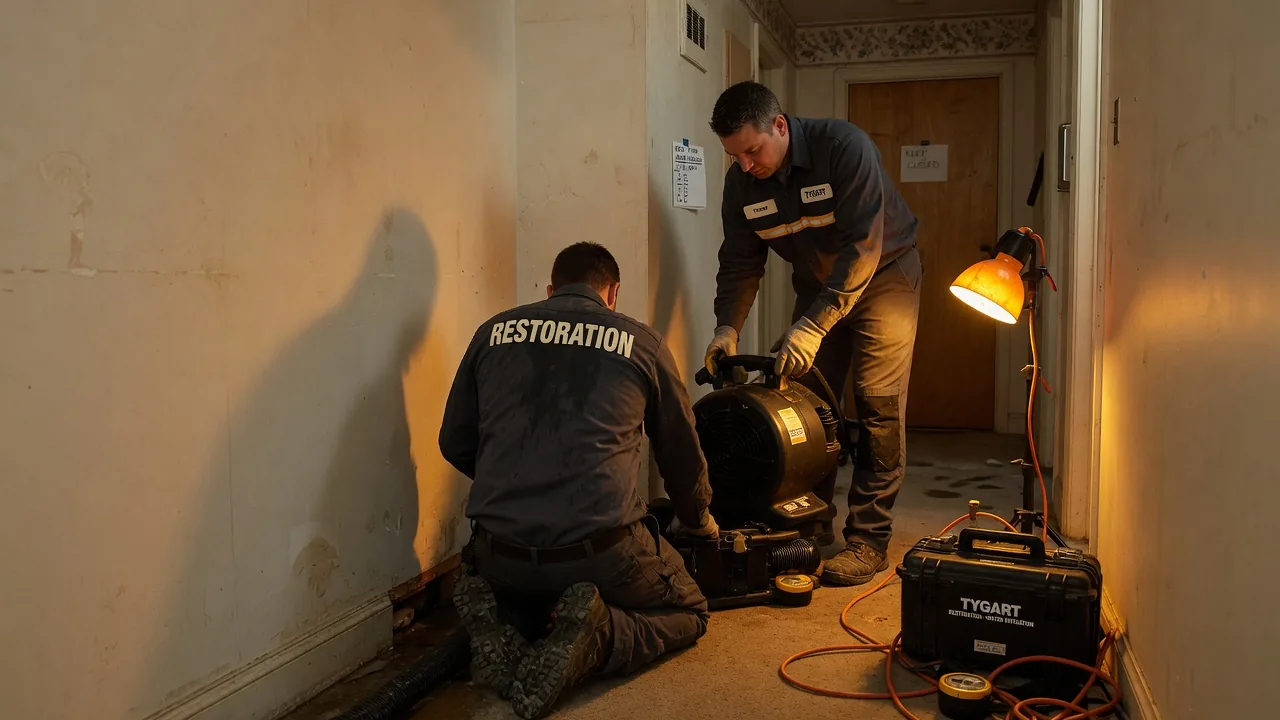
Ask a restoration owner where they would deploy AI first if they could only pick one place to start, and the answers cluster in a predictable range. Customer intake. The first call. Estimate generation. Adjuster communication. Customer follow-up emails. Marketing content. Lead qualification. Each of these answers reflects a real pain point, and each of them is wrong as a starting point.
The wrong answer is wrong because it points the AI at the layer of the business where mistakes are most expensive and where the AI has the least context to draw on. The customer-facing layer requires situational awareness, tone calibration, and judgment under uncertainty. These are exactly the capabilities where AI tools, deployed without substantial customization to the company’s specific operational reality, perform worst. They are also the layer where a single bad output is most damaging to the business.
The right answer is structurally invisible from the outside. It involves no customer-facing change. It produces no marketing story. It does not generate a case study the vendor will use in their next pitch. It just quietly and durably improves the company’s internal operations in ways that compound over time and free senior operator capacity for the work only senior operators can do.
The right answer in 2026 is the operational middle layer — and within the middle layer, the right place to start is documentation acceleration.
Why documentation acceleration is the answer
Why documentation acceleration is the answer.
Every restoration company in the United States is, structurally, a documentation business as much as it is a service business. Every job generates a trail of documents — initial assessment notes, photo sets, moisture logs, equipment placement records, scope sheets, change orders, sub coordination notes, customer communications, carrier correspondence, project completion records, customer satisfaction surveys. The volume of documentation per job is significant, the quality of that documentation determines a meaningful share of the company’s economic outcomes, and the time the senior team spends producing and reviewing that documentation is one of the largest line items in the operating cost structure.
Documentation is also the operational layer where AI tools have the largest demonstrable competence. Producing structured outputs from unstructured inputs, summarizing long source materials, packaging information for specific audiences, drafting communications in a consistent voice, and applying templates with situational customization — these are the things current AI is genuinely good at, in a way that the customer intake conversation is not.
The intersection of those two facts — restoration generates massive documentation work, AI is competent at documentation work — is the right place to start. It is also the place that produces the fastest, cleanest, most defensible early wins for an AI deployment.
What documentation acceleration looks like in practice
Documentation acceleration is not a single capability. It is a category of small, specific applications, each of which removes a measurable amount of senior operator time from the company’s daily operating cycle.
The first application is handoff briefing generation. Take the mitigation file at the close of dryout — the photos, the moisture readings, the equipment records, the supervisor’s notes, any pre-existing condition log — and produce a brief, well-structured summary that the rebuild estimator can read in two minutes to get up to speed on the file before opening it in detail. This briefing is not a replacement for the estimator’s review of the file. It is a five-minute compression of the half-hour of orientation work the estimator currently does manually. The briefing follows a documented template, draws on the captured operational standards described in the prep standard piece, and gets reviewed by the estimator before being relied on.
The second application is photo organization and tagging. Take the photo set from a job and produce a structured organization of those photos by location, condition documented, and audience relevance — the adjuster set, the rebuild estimator set, the homeowner reference set, the pre-existing condition log set. This work currently consumes meaningful operator time on every job and is currently done either inconsistently or not at all in most companies. Acceleration here improves the documentation quality discussed in the photo discipline piece at the same time that it frees operator capacity.
The third application is scope review acceleration. Take a draft scope written by an estimator and review it against the company’s documented standards, the carrier’s typical line item structure, and the file’s documented conditions, and produce a list of items the human reviewer should look at before submission — likely missing items, items that may be over-scoped, items where the supporting documentation is thin. The output is review notes for a human, not a finished scope. The human still does the work. The AI compresses the time spent on the routine review pass so the human’s attention goes to the items that actually warrant judgment.
The fourth application is customer-facing communication drafting — but with an important constraint. The AI drafts the communication. A senior team member reviews and sends. The AI never sends a customer communication directly. The constraint is what makes this application safe and useful. Drafting is high-volume, low-judgment work. Reviewing and sending is low-volume, high-judgment work. Splitting the two recovers the high-volume time while protecting the high-judgment moment.
The fifth application is internal training material generation. Take the company’s documented standards and produce role-specific training modules, scenario walkthroughs, decision practice cases, and onboarding materials. The training materials get reviewed and refined by the senior operator who owns training, but the volume of first-draft material the AI can produce dramatically reduces the time and energy required to keep the training program current as the standards evolve.
None of these five applications is glamorous. None of them generates a marketing story. Each of them recovers measurable senior operator time on every job, every week, every month. Stack five of them together and the company has recovered enough capacity at the senior layer to take on the operational improvements that were previously impossible because no one had time.
Why this works when the customer-facing approach fails
The reason documentation acceleration works as a starting point is structural, not coincidental. Several characteristics of the use case make it well-suited to current AI capabilities and well-protected against the failure modes described in the previous article.
The output is reviewed by a human before it has any external consequence. A bad handoff briefing is caught by the estimator who reads it before opening the file. A bad scope review note is caught by the estimator before the scope is submitted. A bad customer email draft is caught by the senior team member before it is sent. The review step is a structural safety net that prevents AI errors from becoming operational damage.
The work is high-volume and pattern-based, which is exactly the territory where current AI tools are most reliable. The hundredth handoff briefing is structurally similar to the first. The pattern is what makes the AI’s contribution consistent and improvable.
The success criteria are concrete and measurable. Senior operator time saved per week. Estimator review time per file. Documentation quality scores. These are numbers that go up or down based on whether the tool is working, which means the deployment can be evaluated on facts rather than on vendor narrative.
The use cases compound on each other. A company that invests in handoff briefing generation finds that the work also makes their photo organization sharper, which makes the scope review work cleaner, which makes the customer communication drafting more accurate, and so on. The early investment creates a foundation that makes the next investment more productive.
And critically, the use cases create the substrate that makes the more ambitious customer-facing AI applications possible later. A company that has spent eighteen months building documentation acceleration capabilities has, by the end of that period, a captured operational corpus that did not exist at the start. That corpus is the substrate that an eventual customer intake AI deployment would need in order to perform well. The documentation acceleration phase is, structurally, the preparation work for the more ambitious work that comes later.
The honest sequencing
The honest sequencing.
For a restoration company starting AI work in 2026, the honest sequencing is this.
The first six to nine months go to documentation acceleration in the operational middle layer. Pick two or three of the five applications described above, embed a senior operator as the owner, set up the feedback loop with the team, and let the capability mature. The goal in this phase is not breakthrough impact. The goal is to build the company’s first reliable AI muscle and to start producing the captured operational corpus that future work will draw on.
The second nine to twelve months expand the documentation work to additional applications and start to add limited adjacent capabilities — meeting summarization, internal report generation, knowledge base curation, training assessment automation. The senior operator team has, by this point, developed an internal language for what AI is for and what it is not for, and the company can extend its capabilities with fewer false starts than a company doing this work cold.
The third year is the year the customer-facing applications become possible without unacceptable risk. By this point, the company has a documented operational standard, a captured corpus of internal communications, a feedback loop that catches drift, and a senior team that can evaluate AI outputs with judgment built from two years of working with the technology. Customer-facing deployments — intake assistance, scheduling automation, adjuster communication acceleration — can be approached with the operational maturity required to do them well.
This sequencing takes longer than most owners want it to take. It also produces, at the end of three years, an AI-augmented operating system that competitors who started with the customer-facing layer cannot replicate quickly. The patient sequencing is the moat.
What this means for owners deciding now
If you run a restoration company and you are deciding right now where to deploy AI first, the honest recommendation is to ignore the demos that look most exciting and to focus on the unglamorous middle-layer documentation work. Pick the application from the five described above that addresses the most painful documentation bottleneck in your current operations. Embed a senior operator as the owner. Commit to the deployment for at least nine months. Treat the early period as foundation-building rather than impact-producing.
This is not what your vendors will recommend. Vendors are incentivized to pitch the most visible, customer-facing applications because those are the easiest to demo and the hardest for the buyer to fairly evaluate. Vendors who recommend the documentation middle layer first are doing you a favor at the cost of their own short-term revenue, and they are rare. When you find one, take them seriously.
The owners who internalize this sequencing will, in three years, be running operations that are visibly different from their competitors’. The owners who chase the customer-facing demos will, in three years, have spent significant money on tools that did not change the trajectory of their business. The difference will not be about the tools. The difference will be about the order in which the work was done.
Next in this cluster: the senior operator as the source code — what it actually means to treat human judgment as the substrate of an AI deployment, and why this framing changes how owners think about hiring, retention, and operational documentation.
The Missed Line Items Pack — $19
The estimating thread running through this article — scope items identified, line items defended, supplements that hold up with the carrier — is exactly what the pack is built for: Xactimate missed-line-item and supplement cheat sheets you can work straight from on your next water loss.
This is the first article in the AI in Restoration Operations cluster under The Restoration Operator’s Playbook. The previous cluster, Mitigation-to-Reconstruction Intelligence, sets up why operational discipline is now the central question. This cluster goes deep on what AI actually does inside that operational discipline — and what it cannot do.
Walk any restoration trade show floor in the second half of 2025 or the first half of 2026 and the dominant theme on every booth is some version of artificial intelligence. AI-powered estimating. AI-driven scheduling. AI-augmented documentation. AI for dispatch, for adjuster communication, for moisture analysis, for content management, for drying calculations, for customer experience. Some of it is real. Most of it is rebranding of capabilities that existed two years ago. A small portion of it represents a genuine step change.
The owners walking the floor are presented with all of it as roughly equivalent — booth fronts and presentations make modest features look revolutionary and revolutionary capabilities look modest. What is actually happening underneath is that the industry is in the noisy middle of a real technology transition, and the noise is making it almost impossible for an operator to tell signal from sales pitch.
The honest state of the field is this. The infrastructure layer that makes serious AI deployment possible became a managed service in early 2026. The model capabilities have crossed thresholds in the last twelve months that genuinely matter for operational work. The handful of restoration companies that started building deliberately two or three years ago are now producing visible results. The much larger group that has tried to add AI to their operations through software purchases or pilot programs has, in most cases, very little to show for the money and time spent.
This article is about why that pattern exists. The next four articles in this cluster will be about what to do differently.
The shape of the failure
Restoration AI failures tend to look the same across companies. Different vendors, different use cases, different team compositions, but the pattern is consistent enough to describe.
The company identifies a problem that AI seems likely to help with. Often it is something high-profile and visible — initial customer intake, scheduling, estimate review, document generation. The company evaluates a few vendors, picks one, signs a contract, and runs an implementation that follows the vendor’s recommended deployment plan. The first ninety days produce a flurry of activity, training sessions, configuration work, and demo wins. The next ninety days produce friction as the tool encounters edge cases, the team discovers it does not handle the company’s actual workflow as cleanly as it handled the demo, and the senior operators start working around it. By month nine, the tool is technically still in use but practically marginal — a few people use a few features, the original sponsor has stopped championing it, and the executive team has quietly moved on to the next initiative.
The line item is still on the budget. The case study gets used in vendor marketing. The operational reality is that nothing has changed, except that the company is now slightly more cynical about AI than it was before the project started.
This pattern is not unique to restoration. It is the dominant pattern in operational AI deployments across most industries, including ones with much larger technology budgets than restoration has. The reasons it happens are predictable, and they are not the reasons the vendor explains in the post-mortem.
The first reason: no captured judgment to deploy
The first reason: no captured judgment to deploy.
The most common reason restoration AI projects fail is that the company has not done the upstream work that would let any AI system actually contribute. AI tools are extraordinary at applying captured judgment to new situations. They are useless at inventing judgment that was never captured.
The companies that have failed AI deployments almost always failed at this layer. They bought a tool expecting it to encode the operational wisdom of their senior operators automatically, by exposure to data or by some species of magic. The tool, of course, did not do that. What it did was apply generic, internet-trained patterns to specific, restoration-specific situations, producing outputs that were correct in form, plausible in tone, and wrong in operational substance often enough to be unusable.
The senior operators in the company looked at the outputs, recognized them as wrong, and stopped trusting the tool. The tool’s hit rate dropped because the operators were not engaging with it. The vendor pointed at the low engagement as the implementation problem. The implementation team tried to drive engagement through training and mandate. None of it worked, because the underlying issue — the absence of captured judgment for the tool to apply — was never addressed.
This is the reason the prep standard discussion in the previous cluster matters so much for the AI conversation. A documented standard is captured judgment. It is the substrate that any AI system needs in order to produce outputs the senior team will trust. Companies that have invested in documenting their judgment can plug AI tools in and get force multiplication. Companies that have not done the documentation work cannot, regardless of which tool they buy or how much they spend.
This is also why the AI projects that have worked tend to be in companies that built operational documentation discipline first, often without explicitly thinking about AI. The documentation work made the AI work possible. The AI work then made the documentation work pay off in a way the company had not initially anticipated.
The second reason: optimizing the wrong layer
The second most common reason restoration AI projects fail is that they target the wrong operational layer.
The natural inclination of an operator looking at AI is to point it at the most visible, customer-facing problem. The intake conversation. The estimate. The customer email. These are the places where operators feel the pain most acutely, and they are also the places where AI demos look most impressive.
They are also the places where AI is most likely to produce results that range from disappointing to actively damaging. The customer-facing layer is the layer where a small error in tone, judgment, or accuracy is most expensive. It is also the layer where the AI tool has the least context — it does not know the customer, the property, the history, the carrier dynamics, or any of the situational specifics that an experienced operator would bring to the conversation.
The companies producing real results from AI are deploying it almost entirely in the operational middle layers, not the customer-facing top layer or the systems-of-record bottom layer. The middle layers are where the work of running the business happens — file review, scope analysis, scheduling logic, sub coordination, photo organization, documentation packaging, internal handoff briefings, training material generation. These are unglamorous capabilities. They are also the ones where a competent AI tool can demonstrably free up senior operator time and improve the quality of the operational substrate.
An AI tool that drafts a clean handoff briefing from the mitigation file for the rebuild estimator to review in thirty seconds is worth more, operationally, than an AI tool that drafts a customer-facing email. The handoff briefing tool removes thirty minutes of estimator time per job, every day, on every job. The customer email tool removes a small amount of friction on a small subset of communications and introduces a meaningful risk of a tone-deaf message going out under the company’s name. The first tool compounds. The second tool gets shut off after a bad incident.
The companies that have figured this out are not bragging about their AI deployments. They are quietly using AI as connective tissue between operational layers that already worked, and the senior team is feeling the difference in their workload without anyone outside the company necessarily noticing the change.
The third reason: no senior operator in the loop
The third reason: no senior operator in the loop.
The third reason restoration AI projects fail is that they are run as IT projects rather than operational projects.
An IT-led deployment optimizes for technical correctness, integration with existing systems, user adoption metrics, and vendor relationship management. None of those are the things that determine whether the tool produces operational value. The thing that determines operational value is whether the tool is producing outputs that a senior operator would have produced, at speed, with the same judgment.
That determination cannot be made by an IT team or by a vendor. It can only be made by the senior operator whose judgment is supposed to be the benchmark. If that operator is not in the loop on a daily or weekly basis, the tool drifts away from useful behavior and toward whatever the vendor’s defaults happen to be. By the time anyone notices, the tool is producing plausible-looking outputs that are not actually useful, and the operational team has stopped relying on them.
The companies that have made AI work have, in every case, embedded a senior operator in the deployment as the operational owner. Not as a sponsor. As the owner. The senior operator reviews the tool’s outputs, flags drift, requests adjustments, and is accountable for whether the tool is actually doing what it was bought to do. The owner’s name is on the project. The owner’s calendar reflects the commitment. When the tool produces a wrong output, the owner is the first to know and the first to drive the correction.
This is uncomfortable for senior operators, who already have full-time jobs running operations and who did not sign up to babysit a software tool. It is also non-negotiable. AI deployments without an embedded senior operational owner do not produce results, in restoration or in any other operational context. The companies pretending otherwise are making the same mistake every other industry made in their first wave of AI adoption.
The fourth reason: the wrong evaluation horizon
The fourth reason restoration AI projects fail is that they are evaluated on a horizon that does not match how AI actually delivers value.
Most AI tools produce a small benefit in their first few weeks of use, because the novelty creates engagement and the early use cases tend to be the simple ones. The benefit then plateaus or even regresses as the team encounters edge cases and the engagement drops. If the company is evaluating the tool at month three, the assessment will look mediocre.
The tools that compound — and AI tools either compound or fade — start to show real value around month six to nine, when the captured judgment from the team’s interaction with the tool starts to inform the tool’s behavior, when the team has built workflow habits around the tool’s strengths, and when the company has developed an internal language for what the tool is for and what it is not for. Companies that evaluate at month three see the plateau and cancel. Companies that commit to a twelve to eighteen month horizon and continue investing in the operator-tool collaboration see the compounding.
This horizon mismatch is one of the reasons most AI line items get killed. It is also one of the reasons the companies that persist past the awkward middle period end up with a meaningful operational advantage that is hard for newer entrants to replicate quickly.
What the few successful deployments have in common
The restoration companies that have produced visible results from AI in 2026 share a small number of characteristics. None of the characteristics are about the specific tools they bought. They are all about how the company approached the work.
The company had operational documentation discipline before they started the AI work. Either an existing prep standard, a structured set of training materials, a documented decision framework, or some equivalent body of captured operational wisdom that could serve as the substrate the AI tool would operate against.
The company targeted operational middle-layer use cases first, not customer-facing top-layer ones. The early wins were in things like file packaging, handoff briefing generation, scope review acceleration, training material drafting, and sub-coordination — boring internal capabilities that compounded into significant senior-operator time recovery.
The company embedded a senior operator as the day-to-day owner of the AI capability. That operator’s calendar reflected the commitment, and their judgment was the benchmark for whether the tool was producing value.
The company committed to a twelve to eighteen month horizon for evaluation, with the understanding that the awkward middle period was structural rather than a sign of failure.
The company invested in the feedback loop between operator and tool. When the tool produced a bad output, that became data that improved the next output. The loop was deliberate, not incidental.
The company avoided the trap of trying to deploy across the whole organization at once. The successful deployments started narrow, proved value in one operational layer, and then expanded based on what was working rather than on a master rollout plan.
None of these characteristics are about technology. They are about operational seriousness applied to technology. The companies that brought operational seriousness to the work got results. The companies that treated AI as a technology purchase did not.
Where this cluster is going
The remaining articles in this cluster will go deep on each of the patterns the successful deployments share. The next article will address the question every owner asks first: given limited time and budget, what should we actually build first? That question has a defensible answer in 2026, and it is not the answer most vendors are pitching.
The article after that will go deep on what it actually means to treat the senior operator as the source code for an AI deployment — not as a metaphor, but as a literal description of where the operational substance of the tool comes from. Then an article on the economics of agent-assisted operations, which is the most underdiscussed topic in restoration AI right now and the one that will determine which companies are still profitable in 2028. And finally an article on how to evaluate AI tools without getting fooled by demos, vendor pitches, or the noise that currently dominates the conversation.
The point of the cluster is not to recommend specific tools. Tools change every quarter. The point is to give restoration owners a durable mental model for thinking about AI deployments — one that will still be useful in 2027 and 2028, regardless of which vendors have come and gone in the meantime. Operators who internalize the model will make consistently better decisions about AI than operators who chase the current vendor cycle. The model is the asset.
By Will Tygart• Long-form Position
• Practitioner-grade
The job title doesn’t exist yet. In three years it will be one of the most sought-after roles in trades companies that have made the AI transition. Call it AI Operations Supervisor, or Field Intelligence Lead, or Verification Layer Manager — the name will standardize as the role standardizes. What it describes is already emerging.
It’s the person who runs AI-assisted field teams: who understands what the AI is doing and why, who catches the errors before they become expensive, who provides the context that makes the AI’s output accurate, who trains new technicians on the difference between accepting AI output and verifying it. The person who owns the verification layer between the AI’s intelligence and the physical world.
That person is not a manager who learned to use AI tools. They’re a field technician who understood the transition early enough to build the skills that make them the most valuable person in an AI-assisted operation.
The path from field technician to AI supervisor is not a pivot. It’s a development arc within the trades. Each stage builds on the previous one:
Stage 1: Deep domain technician. Does the work at the level where deviation from documentation is visible and meaningful. Builds the tacit knowledge library that the verification layer requires. This stage cannot be skipped or compressed — it takes the time it takes, and the depth built here is the foundation everything else rests on.
Stage 2: AI-literate field technician. Understands what the AI tools used by their company are doing, what their common failure modes are in this specific domain, and how to brief them for better output. Can evaluate AI-generated estimates, timelines, scope documents, and communications and identify what’s wrong before it becomes a problem. This stage is learnable in weeks once Stage 1 is in place.
Stage 3: Verification layer specialist. Becomes the person on the team who catches AI errors, provides the context briefs that improve AI output, and trains others on the difference between accepting and verifying. Starts building the institutional context library — the log of deviations, patterns, and corrections that makes the company’s AI systems more accurate over time.
Stage 4: AI operations supervisor. Runs AI-assisted teams. Owns the verification layer for a portion of the company’s operations. Responsible for AI output quality, context library maintenance, and the ongoing calibration between what the AI produces and what physical reality requires. Increasingly strategic — participates in decisions about which AI tools to adopt and how to integrate them into field operations.
Who Gets There First
The technicians who make this transition fastest share two characteristics. The first is genuine domain depth — they’ve done the work long enough and paid enough attention to have real pattern recognition about their specific field. The second is intellectual curiosity about the AI layer specifically: they want to understand what the tool is doing, not just use it.
The second characteristic is rarer than it sounds. Many experienced technicians treat AI tools as black boxes — input goes in, output comes out, use it or don’t. The ones who make the transition ask the next question: why did it produce that output, is it right, and what would I need to tell it to make it better? That question, applied consistently, is how the verification-layer expertise builds.
The window to develop this expertise at the leading edge — before it’s table stakes — is the 18 to 36 months while the AI transition is still early in most trades companies. The workers who get there first build the largest knowledge lead and the most defensible career position. Not because they locked out competitors, but because the tacit knowledge and contextual intelligence they built during that window compounds over time in ways that later arrivals can’t replicate by just learning the tools.
The tools will be everywhere. The judgment to use them correctly will not.
Related: The Human Distillery — the methodology for capturing the tacit knowledge this cluster describes.
The Missed Line Items Pack — $19
The estimating thread running through this article — scope items identified, line items defended, supplements that hold up with the carrier — is exactly what the pack is built for: Xactimate missed-line-item and supplement cheat sheets you can work straight from on your next water loss.