Last verified: October 11, 2026.
Platform-Specific AI Optimization (PSAO) is the practice of tailoring content strategy to the distinct user personas, retrieval mechanisms, and citation patterns of each individual AI search platform. It replaces the outdated approach of “optimizing for AI” as though AI were a single channel with a single audience.
This article defines PSAO, maps the six major platforms, profiles their user personas, and provides the operational checklist. It’s the synthesis of the entire PSAO editorial sprint into a single reference document.
Why PSAO Exists
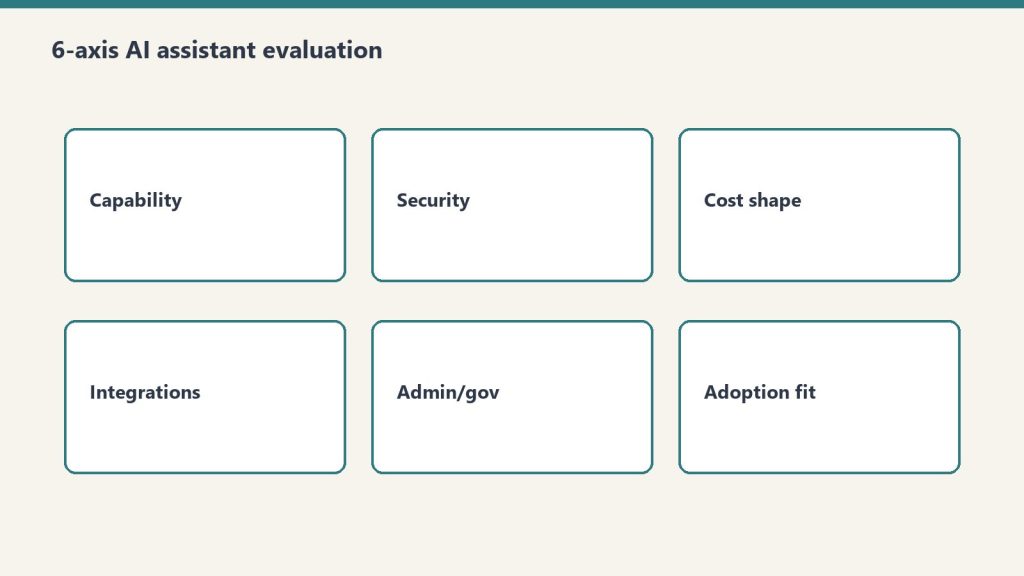
The phrase “optimize for AI” is as meaningless as “optimize for social media.” You wouldn’t write the same post for LinkedIn and TikTok. You shouldn’t write the same content for Perplexity and Copilot. Each AI platform has a different user base, different query patterns, different retrieval infrastructure, and different citation mechanics.
PSAO emerged from practical necessity. Managing content across 20+ WordPress sites and tracking citation data — including 98,800 Copilot grounding citations from a single property — made the platform-level differences impossible to ignore. Content that earned citations on Copilot performed differently on Perplexity. Articles that won Google AI Overviews weren’t the same articles ChatGPT cited. The patterns were consistent and structural, not random.
The 6 PSAO Platforms
Platform 1: Perplexity
User persona: Researcher, analyst, fact-checker. Chose Perplexity specifically for inline citations and multi-source verification.
Query style: Multi-part, complex, verification-oriented.
Content that wins: Primary source data, methodology explanations, comprehensive structured guides with numbered steps.
Retrieval: Bing index + proprietary crawling. Inline numbered citations visible to users.
Key metric: Citation frequency across diverse query types.
Platform 2: Microsoft Copilot
User persona: Enterprise knowledge worker in Microsoft 365. Mid-task, time-pressured, gap-filling.
Query style: Short, specific, definitional. Pricing, comparisons, quick facts.
Content that wins: Pricing tables, comparison charts, FAQ format, definitive statements in professional tone.
Retrieval: Bing index for grounding. Footnote-style citations users rarely check.
Key metric: Grounding citation count (tracked via Bing Webmaster Tools AI Performance).
Platform 3: Google AI Overviews
User persona: Traditional Google searcher. Didn’t choose AI — it appeared automatically above organic results.
Query style: Standard Google search — informational, definitional, how-to.
Content that wins: Direct answer in first paragraph, schema markup, concise FAQ, entity-rich text.
Retrieval: Google index + Knowledge Graph. Small source chips below overview.
Key metric: AI Overview appearance rate and click-through from source chips.
Platform 4: ChatGPT
User persona: Explorer, creator, problem-solver. Iterates through multi-turn conversations.
Query style: Conversational chains of 3-7 queries, each building on the previous. Code paste-ins, brainstorming.
Content that wins: Deep technical guides, tutorials with working examples, analytical frameworks that provoke further thinking.
Retrieval: Bing index via ChatGPT Search + OAI-SearchBot. End-of-response source links.
Key metric: Referral traffic quality (session duration, pages per session).
Platform 5: Claude
User persona: Builder, analyst, long-context thinker. Developers, engineers, technical operators.
Query style: Complex analysis, code review, architectural decisions, document synthesis with 50K-200K token contexts.
Content that wins: Technical deep-dives, honest trade-off analysis, decision frameworks, comparison matrices.
Retrieval: No native web search (mid-2026). Influence through training data, Claude Projects, MCP integrations.
Key metric: Content adoption as reference material, training data influence.
Platform 6: Gemini
User persona: Google Workspace native. Interacts with Gemini as a Google feature, not an AI product.
Query style: Factual lookups, data analysis, document summarization — embedded in Workspace apps.
Content that wins: Structured data, HTML tables, definitive factual statements, reference material.
Retrieval: Google index + Knowledge Graph. Expandable source section.
Key metric: Schema markup coverage and structured data richness.
The PSAO User Persona Map
| Platform | Persona | Intent | Time Budget | Citation Awareness | Content Format |
|---|---|---|---|---|---|
| Perplexity | Researcher | Deep investigation | Minutes to hours | High — demands sources | Guides, data, methodology |
| Copilot | Enterprise worker | Gap-fill mid-task | Seconds | Low — ignores footnotes | Tables, FAQ, pricing |
| Google AIO | Traditional searcher | Quick answer | Seconds | Low — doesn’t notice | Direct answer, schema, FAQ |
| ChatGPT | Explorer/creator | Iterate and explore | Minutes | Moderate | Tutorials, analysis, depth |
| Claude | Builder/analyst | Complex analysis | Minutes to hours | Self-verifies | Trade-offs, decisions, tech |
| Gemini | Workspace native | Factual lookup | Seconds | Low — “it’s Google” | Tables, facts, reference |
The PSAO Operational Checklist
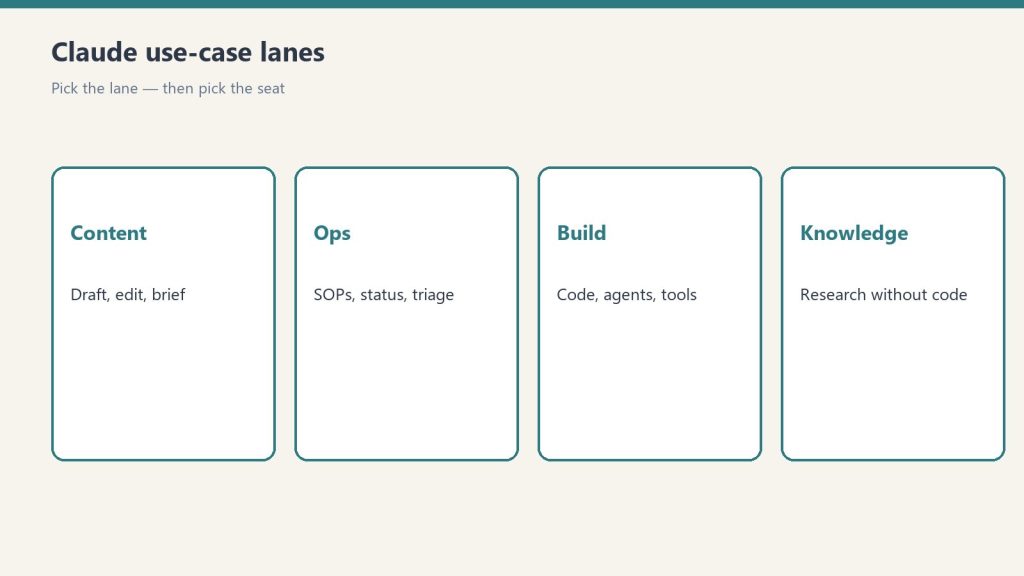
Use this checklist for every article before publishing. Each item maps to a specific platform’s citation requirement:
Content Structure
- Direct answer in first paragraph, under 100 words (Google AIO, Gemini)
- 5-8 H2 sections, each answering a distinct sub-question (Perplexity)
- FAQ section with 5-8 exact-match Q&A pairs (Copilot, Google AIO)
- At least one HTML comparison or pricing table (Copilot, Gemini)
- Technical depth section with specific implementation details (ChatGPT, Claude)
- Trade-offs and limitations explicitly documented (Claude)
Technical Implementation
- Article JSON-LD schema (all platforms)
- FAQPage JSON-LD schema (Copilot, Google AIO)
- HowTo schema if applicable (Google AIO)
- BreadcrumbList schema (Google AIO, Gemini)
- Submitted to Google Search Console (Google AIO, Gemini)
- Submitted to Bing Webmaster Tools (Copilot, ChatGPT, Perplexity)
- IndexNow configured for immediate indexing (Copilot, ChatGPT, Perplexity)
Content Quality
- Factual density: specific, citable claims in every section (all platforms)
- Entity-rich: named products, companies, standards, technologies (Gemini, Google AIO)
- Professional tone suitable for pasting into business documents (Copilot)
- Primary source data or first-party metrics where possible (Perplexity)
- Working examples, code samples, or configurations where relevant (ChatGPT, Claude)
Distribution
- Update cadence established (monthly minimum for competitive topics)
- Internal links to and from related content (all platforms — authority signal)
- External citations to authoritative sources within the article (Perplexity — authority chain)
PSAO vs Traditional SEO vs GEO vs AEO
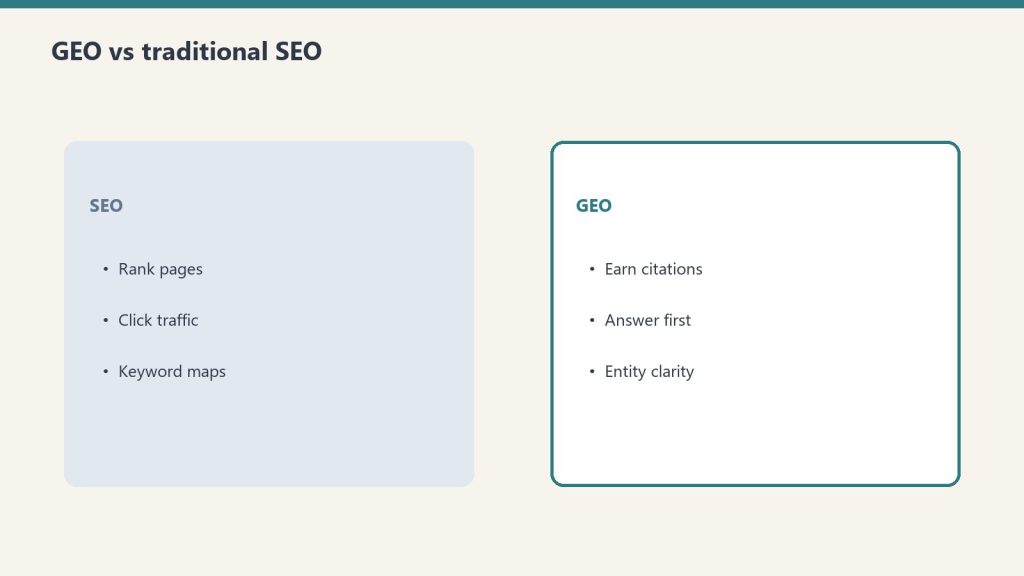
PSAO is not a replacement for SEO, GEO (Generative Engine Optimization), or AEO (Answer Engine Optimization). It’s the platform-specific layer that sits on top of those disciplines:
| Discipline | Focus | Granularity |
|---|---|---|
| SEO | Google organic search rankings | Google-specific |
| AEO | Featured snippets, People Also Ask, voice search | Google-specific |
| GEO | AI citation across all platforms | AI as a monolith |
| PSAO | Platform-by-platform AI optimization | Individual platform personas |
GEO says “optimize for AI.” PSAO says “optimize for this AI platform’s specific user, specific retrieval mechanism, and specific citation pattern.” It’s the same difference between “do social media marketing” and “run a LinkedIn thought leadership strategy targeting VP-level decision makers in B2B SaaS.”
Implementing PSAO at Scale
For a single site, the PSAO checklist is manual. For managing multiple sites — which is the reality of agency work and portfolio management — PSAO needs automation:
- Schema injection automation: Every article gets Article + FAQPage schema automatically as part of the publishing pipeline
- Dual-index submission: Every new post submits to both Google Search Console and Bing Webmaster Tools via IndexNow
- Content structure templates: Writers start with the 6-layer template, ensuring every article has the direct answer, structured sections, FAQ, tables, and technical depth
- Update scheduling: Top-performing articles are flagged for monthly refresh with current data and examples
- Citation monitoring: Bing AI Performance data is reviewed weekly to track grounding citation trends and identify content that’s earning (or losing) citations
Actionable Takeaways
- Adopt PSAO as a named discipline. Stop saying “optimize for AI.” Start specifying which platform and which user persona you’re targeting
- Use the PSAO checklist for every article. Print it, pin it, make it a template in your CMS. Every item maps to a real citation opportunity
- Submit to both Google and Bing. Three of six platforms use Bing. This is the most common infrastructure gap
- Write for the persona, not the algorithm. The Perplexity researcher wants different content than the Copilot enterprise worker. The structure follows from the persona
- Measure platform-level performance. Track citations, referral traffic, and conversion rates by AI platform — not “AI” as a single bucket
FAQ
What is Platform-Specific AI Optimization (PSAO)?
PSAO is the practice of tailoring content strategy to the distinct user personas, retrieval mechanisms, and citation patterns of each individual AI search platform — Perplexity, Copilot, Google AI Overviews, ChatGPT, Claude, and Gemini — rather than treating AI as a single optimization target.
How is PSAO different from GEO (Generative Engine Optimization)?
GEO treats AI search as a monolith — optimizing for “AI” broadly. PSAO operates at the individual platform level, recognizing that each platform serves a different user persona with different content preferences and different citation mechanics. PSAO is the platform-specific layer that sits on top of GEO.
Do I need to create different content for each AI platform?
No. A single well-structured article can serve all six platforms using the PSAO 6-layer template: direct answer first, comprehensive structured body, FAQ section, technical depth, HTML tables, and schema markup. Each layer maps to a specific platform’s citation trigger.
What is the PSAO checklist?
The PSAO checklist is a pre-publish quality gate covering content structure, technical implementation, content quality, and distribution. Each item maps to a specific AI platform’s citation requirements, ensuring every article has maximum citation surface area across all six platforms.
Which AI platform should I prioritize for PSAO?
Prioritize based on your audience. If your audience is enterprise workers, prioritize Copilot optimization. If your audience is researchers, prioritize Perplexity. For maximum coverage with minimum effort, use the unified 6-layer article structure and the PSAO checklist to serve all platforms simultaneously.