Job searching is one of the most stressful, time-consuming activities most people undertake — and Claude AI can compress weeks of effort into hours. This guide covers how to use Claude for every stage of the job search: resume optimization, cover letter generation, interview prep, LinkedIn rewriting, and salary negotiation coaching.
1. Resume Optimization: ATS and Human-Ready
Resume optimization — ATS and human-ready.
Most resumes fail before a human ever reads them — they’re filtered out by Applicant Tracking Systems (ATS) that match keywords from the job description. Claude helps you solve both problems.
Step 1 — ATS keyword matching:
Here is a job description: [paste full JD]. Here is my current resume: [paste resume]. Identify the top 10 keywords and phrases from the job description that are missing from my resume but that I can honestly claim based on my experience. Then suggest specific edits to my bullet points to incorporate those keywords naturally.
Step 2 — Impact bullet rewrites:
Rewrite these resume bullet points using the formula: [Strong action verb] + [specific task/project] + [quantified result]. Use numbers wherever possible. If I haven’t provided metrics, suggest what metrics I should try to add and placeholder them with [X%] format. [paste your bullets]
2. Cover Letters That Don’t Sound Like AI
Cover letters that don’t sound like AI.
The most common mistake when using AI for cover letters: asking Claude for “a cover letter” without sufficient context. The result is generic. The fix is specificity.
Write a cover letter for [Job Title] at [Company]. Key things I want to highlight: [2-3 specific accomplishments most relevant to this role]. What genuinely excites me about this company: [specific reason — not “I’ve always admired your company”]. My biggest differentiator for this role: [what makes you the right person]. Tone: [confident and direct / warm and enthusiastic / formal]. Length: 3 paragraphs. Do not start with “I am writing to express my interest.”
3. LinkedIn Profile Rewriting
Your LinkedIn headline and About section are your digital first impression. Claude can rewrite both for maximum impact:
Rewrite my LinkedIn About section. I want it to: (1) immediately communicate what I do and the value I create, (2) speak to my target audience of [hiring managers at X type of company / recruiters in Y industry], (3) include relevant keywords for [your field], (4) end with a clear call to action. Current About section: [paste]. My target role: [role]. My top 3 differentiators: [list].
4. Interview Preparation
Claude is an excellent mock interviewer. Give it the job description and your resume, then:
“Generate 15 interview questions this company is likely to ask for this role, including 5 behavioral questions using the STAR format.”
“I answered [question] with [your answer]. How can I improve this response? What’s missing?”
“What questions should I ask the interviewer at the end of this interview that would demonstrate strategic thinking?”
“Help me prepare a 2-minute ‘Tell me about yourself’ that connects my background to this specific role.”
5. Salary Negotiation Coaching
Salary negotiation coaching.
Claude won’t tell you what a specific company pays (it doesn’t have that data in real time), but it’s a powerful negotiation coach:
I received an offer of [amount] for [role] at [company type] in [city]. My competing offers and market research suggest [range]. Help me: (1) decide whether to negotiate and what my realistic target is, (2) draft a negotiation email that is confident but maintains the relationship, (3) prepare for the most common pushbacks and how to respond.
Is using Claude to write a resume or cover letter ethical?
Yes. Using AI as a writing and editing tool is no different than using a career coach, resume service, or spell checker. The key is that the content reflects your actual experience and skills — Claude helps you express them more effectively, not fabricate them.
Will recruiters know I used AI to write my resume?
Not if you use Claude correctly. Generic AI output is obvious — but Claude can match your voice, incorporate your specific accomplishments, and produce content that reads as authentically yours if you give it proper context and edit the output.
Sales is one of the highest-leverage use cases for Claude AI — and one of the most underserved in terms of dedicated content. This guide covers the specific workflows where Claude generates the most value for sales professionals: prospecting research, outreach sequences, call prep, proposal drafting, and objection handling.
Why Sales Professionals Get Outsized Value from Claude
Why sales professionals get outsized value from Claude.
Sales is fundamentally about communication quality and research depth — two areas where Claude excels. A well-researched outreach email dramatically outperforms a generic one. A tailored proposal beats a template. Claude lets individual sales reps operate at the research and writing capacity of a team.
1. Prospect Research in Minutes
Prospect research in minutes.
Before Claude, deep prospect research took 30-60 minutes per account. Now it takes five. Paste a prospect’s LinkedIn profile, company about page, recent press releases, or earnings call transcript into Claude and ask:
Based on this information about [Company Name], identify: (1) their top 3 likely business priorities this quarter, (2) potential pain points that my solution [describe your product] addresses, (3) 2-3 specific talking points for an initial outreach, (4) any recent news or initiatives I should reference to show I did my homework.
2. Cold Email and Outreach Sequences
Claude writes cold emails that don’t sound like cold emails. The key is specificity. Generic prompts produce generic emails. Specific inputs produce personalized outreach that gets replies.
Prompt template:
Write a cold email to [Name], [Title] at [Company]. Context: [1-2 sentences about what the company does and what’s happening with them]. My solution: [what you sell and the specific problem it solves]. Goal: get a 20-minute discovery call. Tone: [direct and confident / warm and curious / peer-to-peer]. Length: under 100 words. Include a clear call to action. Do not start with “I hope this email finds you well.”
Ask Claude to write a 3-email sequence — initial outreach, first follow-up, final follow-up — each with a different angle and hook.
3. Discovery Call and Meeting Prep
Before any important call, feed Claude everything you know about the prospect and ask for:
5 discovery questions tailored to their specific situation
Likely objections they’ll raise and responses
Relevant case studies or social proof to mention
A 60-second value proposition tailored to their industry
4. Proposal and SOW Drafting
Proposal and SOW drafting.
Proposals are time-consuming and inconsistent when written from scratch. Give Claude your notes from discovery calls and a proposal template, and ask it to:
Draft a custom executive summary that reflects the prospect’s stated priorities
Write the problem/solution section using their own language from discovery
Generate pricing narrative and ROI framing
Suggest relevant case studies to include
5. Objection Handling Prep
Prompt: “I sell [product] to [target buyers]. List the 10 most common objections prospects raise and write a concise, confident response to each. Focus on redirecting rather than arguing, and always tie back to the prospect’s stated goals.”
Use this to build an objection bank your whole team can reference.
6. CRM Note Writing and Deal Updates
After calls, paste your rough notes into Claude: “Clean up these call notes into a structured CRM entry with: summary, key pain points identified, next steps, decision timeline, and stakeholders involved.” This alone saves 10-15 minutes per call.
What is the best Claude plan for sales professionals?
Claude Pro ($20/month) works for individual reps. Teams should explore Claude for Teams or Enterprise plans, which offer shared Projects where team prompts, voice guidelines, and playbooks can be stored centrally.
Can Claude connect to my CRM?
Not natively, but Claude can connect to your CRM via MCP (Model Context Protocol) integrations, or you can paste prospect data directly into Claude for analysis and draft generation.
Claude AI has become one of the most useful tools in a real estate professional’s toolkit — yet almost no dedicated content exists explaining how to use it effectively. This guide covers the specific workflows, prompts, and use cases that are generating real results for agents, brokers, and investors in 2026.
Narrate comparable analysis into client-ready prose
30–45 min per report
Open house social posts
Generate platform-specific captions from property details
15–20 min per post
Market update newsletters
Summarize MLS data into readable client newsletters
1–2 hours per newsletter
Objection handling scripts
Draft responses to common buyer/seller objections
On-demand
Why Claude Works Especially Well for Real Estate
Why Claude works especially well for real estate.
Real estate is a document-heavy, communication-intensive, data-dependent business. Claude excels at exactly these three things. Its 200,000-token context window means it can process an entire transaction’s worth of documents in a single session. Its writing quality is among the best available for generating compelling, accurate listing copy. And its analytical capabilities let agents quickly synthesize market data without needing to be data scientists.
1. Writing Property Listings That Convert
Writing property listings that convert.
Listing copy is one of the most time-consuming parts of an agent’s week — and one of the easiest to delegate to Claude. The key is giving Claude the right inputs.
Write a compelling MLS listing description for a property with these details: [bedrooms/bathrooms/sqft], [neighborhood name and its key characteristics], [standout features: kitchen remodel, original hardwood floors, mountain views, etc.], [recent upgrades], [lot details if relevant], [nearby amenities]. Target buyer: [first-time buyers / move-up buyers / luxury buyers / investors]. Tone: [warm and inviting / crisp and professional / neighborhood-focused]. Length: 250 words.
Claude will generate multiple variations if you ask — try “give me three different versions, each emphasizing a different feature” to find the one that matches the property’s strongest selling points.
2. Comparative Market Analysis (CMA) Assistance
Claude can’t pull live MLS data, but it’s extremely useful for interpreting comp data you already have. Paste in a spreadsheet of comps (as text or CSV) and ask Claude to:
Identify price-per-square-foot trends
Flag outlier sales that may skew averages
Draft the narrative section of a formal CMA report
Generate price range recommendations with reasoning
Explain the analysis to a seller in plain language
Prompt: “Here are 8 comparable sales from the past 90 days in the target neighborhood [paste data]. The subject property is [details]. Analyze the comps, identify the 3-4 most relevant, explain any price adjustments needed, and write a 2-paragraph narrative for a seller CMA presentation.”
3. Client Communication: Letters, Emails, and Follow-Ups
Claude handles the full spectrum of real estate correspondence:
Buyer tour follow-ups: “Draft a follow-up email to a buyer couple who toured 4 homes today. They loved home A and B but had concerns about the school district for home B. Next steps: schedule second showing of home A.”
Seller update letters: Summarize showing feedback, market activity, and recommended price adjustments in a professional letter format
Offer negotiation scripts: “Help me draft a counteroffer letter that maintains our price but offers a faster close and rent-back period”
Just-listed neighbor letters: Personalized mailers for new listings
Market update newsletters: Monthly or quarterly client communications
4. Property Research and Due Diligence
Upload inspection reports, HOA documents, title reports, or disclosure packages to Claude and ask it to:
Summarize key findings in plain language
Flag potential red flags or issues requiring follow-up
Extract specific items (HOA fees, special assessments, deferred maintenance)
Draft questions for the listing agent based on disclosure issues
5. Social Media and Marketing Content
Social media and marketing content.
Real estate agents who consistently post valuable content on social media generate more referrals. Claude can maintain that cadence without eating your week:
Instagram captions for listing photos
LinkedIn posts about market conditions
Facebook neighborhood guides
“Just sold” announcement copy
Market stat graphics (Claude writes the copy; you add the visuals)
Getting Started: The Right Claude Plan for Real Estate Agents
The free tier works for occasional use, but active agents will quickly hit rate limits. Claude Pro at $20/month is the right starting point — it includes Projects, which lets you store your brokerage’s voice guidelines, neighborhood knowledge, and standard templates so Claude uses them automatically across sessions. Heavy users who process lots of documents will want to consider the Max plan.
Frequently Asked Questions
Can Claude access MLS data?
No. Claude cannot connect to MLS databases directly. However, you can paste or upload comp data, market reports, or property information and Claude will analyze and synthesize it effectively.
What is the best Claude plan for real estate agents?
Claude Pro ($20/month) is the right starting point. It includes Projects — which lets you store brokerage-specific context, tone guidelines, and templates that Claude uses automatically.
Can Claude write listing descriptions?
Yes, and it’s one of Claude’s strongest use cases. Provide property details, target buyer type, and desired tone, and Claude will generate professional listing copy in seconds. Always review and personalize before submitting to MLS.
Real estate agents use Claude most commonly for: writing MLS listing descriptions from bullet points, drafting buyer and seller emails, summarizing comparable market analyses into client-ready language, creating open house social media posts, and generating market update newsletters. Claude Pro ($20/month) is the most common starting point for agents doing daily writing tasks.
Can Claude write MLS listing descriptions?
Yes. Give Claude the property address, square footage, bedroom/bathroom count, key features, and any selling points. Ask it to write a 150-200 word MLS description in an engaging tone. Claude can match your brand voice if you provide a sample of past listings. Most agents save 45-60 minutes per listing compared to writing from scratch.
Is Claude HIPAA or RESPA compliant for real estate?
Claude itself is not a real estate compliance tool. For client data, do not enter personally identifiable information, financial data, or protected client details into the standard claude.ai interface. Claude Enterprise with a data processing agreement is appropriate for firms handling sensitive client data at scale. RESPA compliance is your firm’s responsibility — Claude is a writing tool, not a compliance system.
What Claude plan do real estate agents need?
Claude Pro at $20/month is sufficient for most individual agents doing daily writing tasks. Teams of agents or brokerages should consider Claude Team at $25/seat/month for shared Projects and team-level usage limits. The Free tier works for occasional use but hits message limits quickly for agents using Claude daily.
Lineup currency (Sept 2026, verified): Sonnet 5 ($2/$10), Opus 5.5 ($4/$20), Haiku 4.5 ($1/$5), Fable 5.1 ($10/$50). Legacy (still listed): Opus 4.8 ($5/$25), Sonnet 4.6 ($3/$15). Prior note (superseded): Prior flagship claim: Claude Opus 4.7 (claude-opus-4-7). Prior models claim: Opus 4.7 · Sonnet 4.6 · Haiku 4.5. Claude Opus 4.7 (claude-opus-4-7) was claimed current as of April 16, 2026. Where this article references Opus 4.6 or earlier models, those references are historical. See current model tracker →. See current model tracker →
Claude AI · Fitted Claude
Claude AI is a family of large language models built by Anthropic, a San Francisco-based AI safety company. In 2026, Claude competes directly with ChatGPT, Gemini, and Grok — and in many professional use cases, it outperforms all of them. This guide covers what Claude is, how it works, what it costs, and how to start using it today.
What Is Claude AI?
What is Claude AI?
Claude is an AI assistant developed by Anthropic, a company founded in 2021 by former OpenAI researchers including Dario Amodei, Daniela Amodei, and five other co-founders. The name “Claude” is a nod to Claude Shannon, the father of information theory.
Unlike some AI tools built primarily for speed or image generation, Claude was designed from the ground up with safety and helpfulness as co-equal priorities. Anthropic uses a technique called Constitutional AI — a method of training models to follow a set of principles rather than just optimize for user approval. The result is an assistant that tends to be more careful, more honest, and less likely to hallucinate than its competitors.
As of April 2026, Claude is available through:
Claude.ai — the web and mobile interface (free and paid plans)
Claude desktop app — native Mac and Windows applications
Claude API — for developers building AI-powered applications
Claude Code — a terminal-native AI coding tool
Enterprise deployments — via Anthropic’s enterprise and team offerings
Which Claude Models Exist in 2026?
Which Claude models exist in 2026?
Anthropic currently offers three tiers of Claude models, each optimized for different use cases:
Model
Best For
Context Window
Notable Benchmark
Claude Opus 4.7
Complex reasoning, research, coding
200K tokens
80.8% SWE-bench, 91.3% GPQA Diamond
Claude Sonnet 4.6
Everyday tasks, balanced performance
200K tokens
Best speed-to-intelligence ratio
Claude Haiku 4.5
Fast, lightweight tasks
200K tokens
Fastest response time
All models support a 200,000-token context window by default — roughly 150,000 words, or an entire novel. Enterprise customers can access up to 500,000 tokens, and Claude Code extends to 1 million tokens for large codebase analysis.
How Does Claude AI Work?
Claude is a large language model (LLM) — a type of neural network trained on vast amounts of text data to predict and generate human-like responses. What distinguishes Claude from other LLMs is Anthropic’s emphasis on alignment and safety during training.
Claude uses two key training innovations:
Constitutional AI (CAI): Instead of relying solely on human feedback to shape model behavior, Anthropic trains Claude to evaluate its own outputs against a set of written principles. This makes Claude more consistent in avoiding harmful outputs, even in edge cases human reviewers might not anticipate.
RLHF (Reinforcement Learning from Human Feedback): Human trainers rate Claude’s responses, and those ratings guide the model toward more helpful, accurate, and appropriate answers over time.
The combination produces a model that tends to acknowledge uncertainty, push back on false premises, and decline harmful requests more gracefully than many competitors.
What Can Claude AI Do?
Claude’s capabilities in 2026 span well beyond simple chatting. Here’s what it handles well:
Writing and Editing
Claude excels at long-form content: blog posts, essays, reports, marketing copy, email sequences, legal documents, and fiction. Its writing is notably less robotic than many AI tools, partly because it’s trained to match tone and style from context clues.
Coding and Software Development
Claude Code — Anthropic’s terminal-native coding tool — has become one of the most popular AI coding environments among professional developers. It can write, debug, refactor, and explain code across virtually all major programming languages, and it understands large codebases through its million-token context window.
Research and Analysis
Claude reads and synthesizes PDFs, research papers, financial reports, and legal filings. With 200K tokens of context, it can process an entire book-length document and answer specific questions about it.
Data Analysis
Claude can read CSV files, interpret charts, write Python or SQL to analyze datasets, and explain findings in plain language — making it useful for anyone who works with data but isn’t a dedicated data scientist.
Multimodal Inputs
Claude accepts text, images, PDFs, and documents as inputs. It can describe images, extract text from screenshots, and analyze visual data — though it cannot generate images itself (for image generation, tools like Midjourney or DALL-E are required).
Claude AI Pricing: Free vs. Paid Plans in 2026
Anthropic offers four main tiers for individual users:
Plan
Price
What You Get
Best For
Free
$0/month
Limited daily messages, Claude Sonnet 4.6 access
Casual or occasional use
Claude Pro
$20/month
5x more usage, priority access, Projects
Regular users, professionals
Claude Max 5x
$100/month
5x Pro usage, Claude Code access, extended thinking
Power users, developers
Claude Max 20x
$200/month
20x Pro usage, highest priority
Heavy professional use
Enterprise plans are available with custom pricing, SSO, admin controls, extended context (up to 500K tokens), and zero-data-retention options for sensitive industries.
Claude vs. ChatGPT: What’s the Difference?
This is the question most people ask when they first hear about Claude. The honest answer: they’re both capable, and the best choice depends on your use case.
Factor
Claude
ChatGPT
Best at
Long documents, nuanced writing, coding
General tasks, image generation, plugins
Context window
200K tokens (standard)
128K tokens (GPT-4o)
Image generation
No (analysis only)
Yes (DALL-E integration)
Safety emphasis
Very high (Constitutional AI)
High
Code quality
Among the best (SWE-bench leader)
Strong
Price
$20-$200/month
$20/month (Plus), $200/month (Pro)
For most professional writing, legal/financial analysis, and software development tasks, Claude holds a measurable edge. For tasks requiring image generation or deep integration with third-party plugins, ChatGPT’s ecosystem is broader.
How to Get Started with Claude AI
How to get started with Claude AI.
Getting started takes about two minutes:
Go to claude.ai and create a free account with your email or Google login.
Start a new conversation. Type or paste your first prompt.
If you need to analyze a document, click the paperclip icon to upload PDFs, images, or files.
For power use, upgrade to Claude Pro for Projects — a feature that lets you create persistent knowledge bases that Claude remembers across conversations.
Spinning Up the API?
I can walk you through setup, model selection, and cost management — before you burn credits figuring it out yourself.
If you’re a developer, visit console.anthropic.com to get your API key and explore the Claude API.
Claude AI: Key Limitations to Know
No tool is perfect. Here are Claude’s genuine limitations as of 2026:
No image generation: Claude cannot create images. For that, you need a dedicated tool like Midjourney, DALL-E, or Stable Diffusion.
Rate limits on free and Pro plans: Heavy users — especially on the Pro tier — regularly hit daily message limits. This is the most common complaint among power users. The Max plans ($100/$200/month) solve this for most use cases.
No real-time web access by default: Unless explicitly connected to a web search tool, Claude’s knowledge has a training cutoff. It cannot browse the web in real time by default on the consumer interface.
Occasional refusals: Claude’s safety training sometimes makes it overly cautious on topics that are legitimate but touch sensitive areas. This has improved substantially with each model generation.
Frequently Asked Questions About Claude AI
Is Claude AI free?
Yes — Claude has a free tier that gives you limited daily access to Claude Sonnet 4.6. The free tier is useful for casual use, but heavy users will quickly encounter rate limits. Paid plans start at $20/month.
Who made Claude AI?
Claude was created by Anthropic, an AI safety company founded in 2021. Anthropic was started by seven former OpenAI researchers, including CEO Dario Amodei and President Daniela Amodei.
Is Claude AI better than ChatGPT?
It depends on the task. Claude generally outperforms ChatGPT on coding benchmarks, long-document analysis, and nuanced writing. ChatGPT has a broader plugin ecosystem and native image generation. Many professionals use both.
Does Claude store my conversations?
By default, Anthropic may use conversations from consumer accounts to improve its models (you can opt out in settings). Business and API customers can access zero-data-retention options. Conversation data is retained for up to five years unless you delete it manually.
Can Claude generate images?
No. Claude can analyze and describe images, but it cannot generate them. For AI image creation, use Midjourney, DALL-E, or Adobe Firefly.
What is Claude’s context window?
Standard Claude models have a 200,000-token context window — roughly 150,000 words. Enterprise plans extend this to 500,000 tokens. Claude Code supports up to 1 million tokens for large codebase analysis.
How do I access Claude Code?
Claude Code is available as part of the Claude Max subscription ($100+/month) or via the Anthropic API. It runs as a terminal-native tool — install it with npm install -g @anthropic-ai/claude-code and authenticate with your API key.
This guide is updated regularly as Anthropic ships new models and features. Last updated: April 2026.
Two AI assistants dominate the conversation right now: Claude and ChatGPT. If you’re trying to decide which one belongs in your workflow, you’ve probably already noticed that most “comparisons” online are surface-level takes written by people who spent an afternoon with each tool.
This isn’t that. I run an AI-native agency that uses both tools daily across content, code, SEO, and client strategy. Here’s what actually separates them in 2026 — and when each one wins.
Quick answer (September 2026): Claude is better for long-context analysis, writing quality, and following complex instructions without drift. ChatGPT is better for integrations, image generation, and breadth of third-party plugins. For most knowledge workers, Claude is the daily driver — ChatGPT is the specialist.
The Fast Verdict: Category by Category
The fast verdict — category by category.
Category
Claude
ChatGPT
Notes
Writing quality
✅ Wins
—
Less sycophantic, more natural voice
Following complex instructions
✅ Wins
—
Holds multi-part instructions without drift
Long document analysis
✅ Wins
—
200K token context vs GPT-4o’s 128K
Coding
✅ Slight edge
—
Claude Code is a dedicated agentic coding tool
Image generation
—
✅ Wins
DALL-E 3 built in; Claude has no native image gen
Third-party integrations
—
✅ Wins
GPT’s plugin/Custom GPT ecosystem is larger
Web search
—
✅ Slight edge
Both have web search; GPT’s is more integrated
Pricing (base)
Tie
Tie
Both $20/mo for Pro/Plus; API costs comparable
Not sure which to use?
We’ll help you pick the right stack — and set it up.
Tygart Media evaluates your workflow and configures the right AI tools for your team. No guesswork, no wasted subscriptions.
The difference becomes obvious when you give both models the same writing task and read the outputs side by side. ChatGPT has a tendency to over-affirm, over-structure, and reach for generic phrasing. Ask it to write a LinkedIn post and you’ll often get something that reads like a LinkedIn post — in the worst way.
Claude’s outputs read closer to how a thoughtful human actually writes. Sentences vary. Paragraphs breathe. It doesn’t reflexively add a bullet list to every response or pepper the text with unnecessary bold text. It also pushes back more readily when an instruction doesn’t quite make sense, rather than producing confident-sounding nonsense.
For any work that ends up in front of clients, readers, or stakeholders, Claude’s writing quality is a meaningful advantage. This holds for long-form articles, email drafts, executive summaries, and proposal copy.
Context Window: The Practical Difference
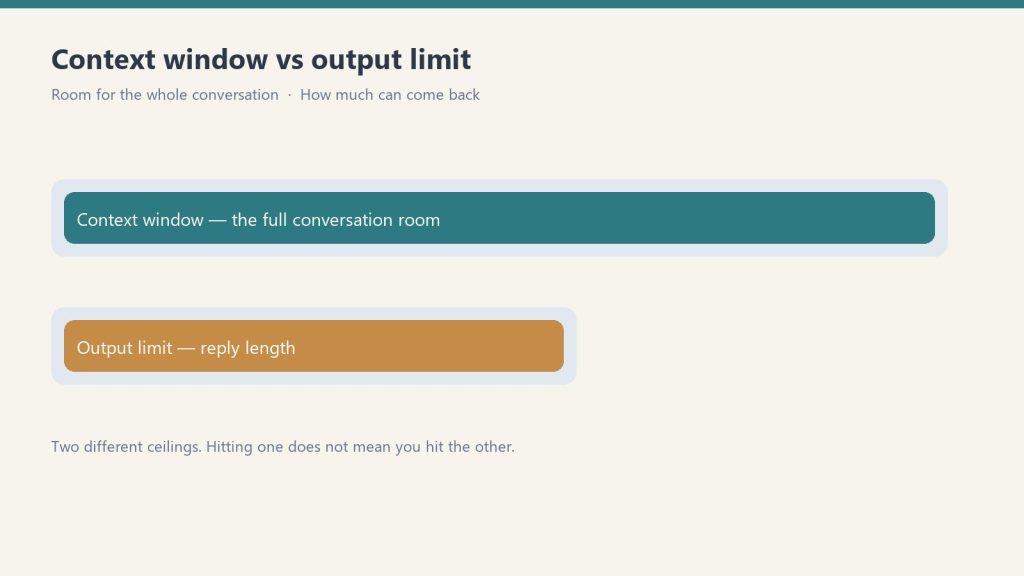
Claude’s context window — the amount of text it can hold and reason over in a single conversation — is substantially larger than ChatGPT’s standard offering. Claude Sonnet 5 and Opus 5.5 both support up to 200,000 tokens. GPT-4o tops out at 128,000 tokens.
In practice, this matters for:
Analyzing long contracts, reports, or research documents in one pass
Working with large codebases without losing track of what’s already been discussed
Multi-document analysis where you need to synthesize across sources
Long agentic sessions where conversation history is critical
If you regularly work with documents over 50–80 pages or run long agentic workflows, Claude’s context advantage is a functional one, not just a spec sheet number.
Instruction Following: Where Claude Consistently Outperforms
Give Claude a complex, multi-part instruction with specific constraints — “write this in third person, under 400 words, no bullet points, mention X and Y but not Z, match this tone” — and it tends to hold all of those requirements across the full response. ChatGPT frequently drifts, especially on longer outputs.
This matters most for:
Prompt-heavy workflows where precision is required
Batch content generation with strict brand voice rules
Agentic tasks where Claude is executing multi-step operations
Any scenario where you’ve spent time engineering a precise prompt
Anthropic built Claude with a focus on being genuinely helpful without being sycophantic — meaning it’s designed to give you the accurate answer, not the agreeable one. In practice, Claude is more likely to flag when something in your request is unclear or contradictory rather than guessing and producing something confidently wrong.
Coding: Claude Code vs ChatGPT
For general coding questions — syntax, debugging, explaining code — both models perform well. The meaningful differentiation is at the agentic level.
Anthropic’s Claude Code is a dedicated command-line coding agent that can work autonomously on a codebase: reading files, writing code, running tests, and iterating. It’s a different category of tool than ChatGPT’s code interpreter, which executes code in a sandboxed environment but doesn’t have the same level of agentic control over a real development environment.
For developers running AI-assisted workflows on actual projects, Claude Code is the more serious tool in 2026. For casual code help or one-off scripts, the gap is smaller.
Where ChatGPT Wins: Image Generation and Ecosystem
ChatGPT has a clear advantage in two areas that matter to a lot of users.
Image generation: DALL-E 3 is built directly into ChatGPT Plus. You can go from text to image in one conversation. Claude has no native image generation capability — you’d need to use a separate tool like Midjourney, Adobe Firefly, or Imagen on Google Cloud.
Third-party integrations: OpenAI’s plugin ecosystem and Custom GPTs have more breadth than Claude’s integrations. If you rely on specific third-party tools (Zapier, specific APIs, custom workflows), there’s more infrastructure already built around ChatGPT.
If image creation is a daily part of your workflow, or you’re heavily invested in a ChatGPT-centric tool stack, these advantages are real.
Claude vs ChatGPT for Coding Specifically
When coding is the primary use case, the comparison shifts toward Claude — but it’s worth being precise about why.
For writing clean, well-commented code from scratch, Claude tends to produce cleaner output with better reasoning explanations. It’s less likely to hallucinate function signatures or library methods. For debugging, Claude’s ability to hold large code files in context without losing track is a functional advantage.
ChatGPT’s code interpreter (now called Advanced Data Analysis) is strong for data science workflows — running actual Python in a sandbox, generating visualizations, processing files. If your coding work is primarily data analysis and you want execution in the same tool, ChatGPT has the edge there.
Claude vs ChatGPT for Writing Specifically
For any writing that requires a genuine human voice — op-eds, thought leadership, nuanced argument — Claude is the better instrument. Its outputs require less editing to remove the robotic, list-heavy, over-hedged quality that plagues a lot of AI-generated content.
For template-heavy writing — product descriptions, SEO-optimized articles at scale, standardized reports — the gap is smaller and comes down to your specific prompting setup.
What Reddit Actually Says
The Claude vs ChatGPT debate on Reddit (r/ChatGPT, r/ClaudeAI, r/artificial) consistently surfaces a few recurring themes:
Writers and researchers prefer Claude — repeatedly cited for better prose and genuine analysis
Developers are more split — Claude Code has built a dedicated following, but the ChatGPT ecosystem is more familiar
ChatGPT wins on integrations — the plugin/Custom GPT ecosystem still has more breadth
Claude is less annoying — specific complaints about ChatGPT’s sycophancy appear frequently (“it agrees with everything”, “it always says ‘great question’”)
Both have gotten better fast — direct comparisons from 2023–2024 often don’t hold in 2026
Pricing: What You Actually Pay
The base subscription pricing is identical: $20/month for Claude Pro and $20/month for ChatGPT Plus — see the full Claude pricing breakdown for everything beyond the base tier. If you’re wondering what the free tier actually includes before committing, see what Claude’s free tier gets you in 2026. Both include web search, file uploads, and access to advanced models.
Where it diverges:
Claude Max ($100/mo) — for power users who need 5x the usage of Pro
ChatGPT doesn’t have a direct equivalent tier between Plus and Enterprise
API pricing — comparable but varies by model; Anthropic’s pricing is token-based and published transparently
Claude Code — has its own pricing structure for the agentic coding tool
For most individual users, the $20/mo tier is the right starting point for either tool.
Which One Is Actually Better in 2026?
Which one is actually better in 2026?
The honest answer: Claude is better for the work that benefits most from language quality, reasoning depth, and instruction precision. ChatGPT is better for the work that benefits from breadth of integrations and built-in image generation.
For a solo operator, consultant, or knowledge worker whose primary outputs are written analysis, content, and strategy: Claude is the better daily driver. The writing is cleaner, the reasoning is more reliable, and the context window is more practical for serious document work.
For a team already embedded in the OpenAI ecosystem — with Custom GPTs, plugins, and Zapier workflows built around ChatGPT — switching has real friction that may not be worth it unless writing quality is a high-priority problem.
The most pragmatic setup for serious users — check the Claude model comparison to understand which tier makes sense for your work, and the Claude prompt library to get the most out of whichever you choose. The most pragmatic setup for serious users: Claude for thinking and writing, access to ChatGPT for when you need DALL-E or a specific integration it covers. At $20/month each, running both is a reasonable choice if the work justifies it.
Frequently Asked Questions
Is Claude better than ChatGPT?
For writing quality, complex instruction following, and long-document analysis, Claude outperforms ChatGPT in most head-to-head tests. ChatGPT has the advantage in image generation and third-party integrations. The right answer depends on your primary use case.
Can I use both Claude and ChatGPT?
Yes, and many power users do. Both have $20/month Pro tiers. Running both gives you Claude’s writing and reasoning strength alongside ChatGPT’s DALL-E image generation and broader plugin ecosystem.
Which is better for coding — Claude or ChatGPT?
Claude has a slight edge for writing clean code and agentic coding workflows via Claude Code. ChatGPT’s Advanced Data Analysis (code interpreter) is better for data science work where you need code execution in a sandboxed environment. For general coding help, both are strong.
Which AI is better for writing?
Claude consistently produces better writing — less generic, less sycophantic, and closer to a natural human voice. Writers, editors, and content strategists repeatedly report that Claude’s outputs require less editing and drift less from the intended tone.
Is Claude free to use?
Claude has a free tier with limited daily usage. Claude Pro is $20/month and provides significantly more capacity. Claude Max at $100/month is for heavy users. API access is billed separately by token usage.
Choose Claude Managed Agents for zero-infra, fast production deployment. Choose OpenAI Agents API if you need multi-model flexibility or already run on OpenAI infrastructure.
Feature
Claude Managed Agents
OpenAI Agents API
Model lock-in
Claude only
GPT-4o, o3 — OAI only
Setup complexity
Zero infra — fully managed
SDK — you build the harness
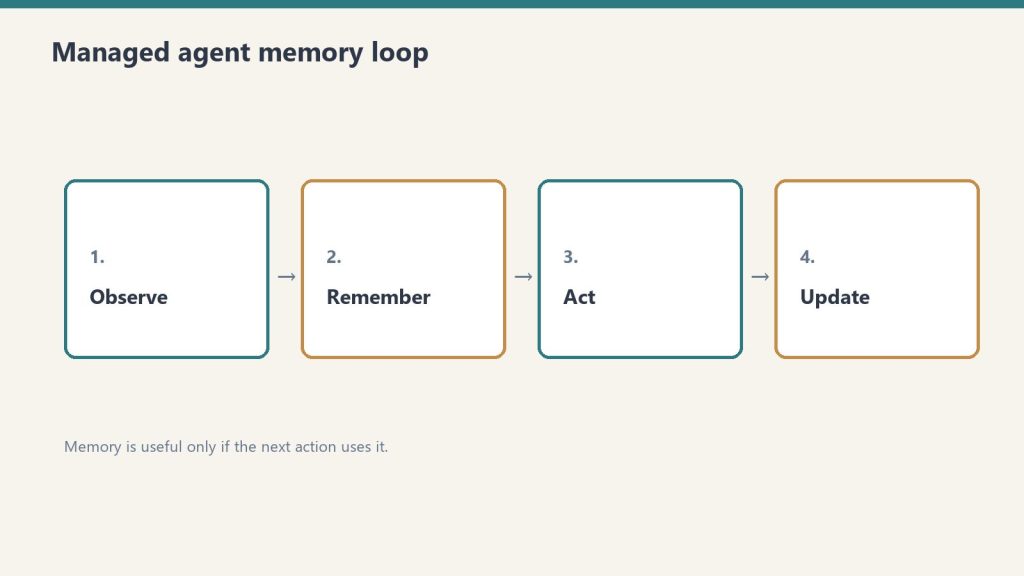
Memory
Built-in (public beta, May 2026)
Manual via vector DB
Multiagent
Native (lead + specialists)
Swarm/SDK patterns
Pricing
$0.08/session-hr + tokens
Token-only (no session fee)
Best for
Fast production, Claude-native
Multi-model, existing OAI infra
Model Accuracy Note — Updated May 2026
Current flagship: Claude Opus 4.7 (claude-opus-4-7). Current models: Opus 4.7 · Sonnet 4.6 · Haiku 4.5. Claude Opus 4.6 referenced in this article has been superseded. See current model tracker →
Tygart Media Strategy
Volume Ⅰ · Issue 04Quarterly Position
By Will Tygart • Long-form Position • Practitioner-grade
You’re evaluating hosted agent infrastructure. Both Anthropic and OpenAI have one. Before you commit to either, here’s what’s actually different — not the marketing version, the architectural and pricing version.
Bottom Line Up Front
If your stack is Claude-native and you want to get to production fast without building orchestration infrastructure, Managed Agents is hard to beat. If you need multi-model flexibility or have OpenAI deeply embedded in your stack, the calculus changes. Lock-in is real on both sides.
Still Deciding?
I’ve run both. Email me your use case and I’ll tell you which one fits.
No pitch. If Claude isn’t the right call for what you’re building, I’ll tell you that too.
Anthropic’s hosted runtime for long-running Claude agent work. You define an agent (model, system prompt, tools, guardrails), configure a cloud environment, and launch sessions. Anthropic handles sandboxing, state management, checkpointing, tool orchestration, and error recovery. Launched April 8, 2026 in public beta.
Managed Agents: Claude models only. Sonnet 4.6 and Opus 4.6 are the primary options for agent work. No multi-model mixing within the managed infrastructure.
OpenAI Agents API: OpenAI models only, but a wider current model lineup (GPT-4o, o1, o3-mini depending on task). Also Claude-only within its own ecosystem — not multi-model in the cross-provider sense.
The practical implication: If your evaluation is “I want the best model for this specific task regardless of provider,” neither hosted solution gives you that. Both lock you to their provider’s models. The multi-model comparison matters for self-hosted frameworks (LangChain, etc.), not for managed hosted solutions.
Pricing Structure
Claude Managed Agents: Standard Claude token rates + $0.08/session-hour of active runtime. Idle time doesn’t bill. Code execution containers included in session runtime — not separately billed.
OpenAI Agents API: Standard OpenAI token rates + usage-based tooling costs. Pricing structure varies by tool and model tier. Verify current rates at OpenAI’s pricing page — rates have changed multiple times as their agent products have evolved.
Direct comparison difficulty: Without modeling the same specific workload against both providers’ current rates, headline comparisons mislead. Token rates differ by model, model capabilities differ, and “session runtime” isn’t a category OpenAI uses. Model the workload, not the headline number.
Infrastructure and Lock-In
Both solutions create meaningful lock-in. This isn’t a criticism — it’s an honest description of the trade-off you’re making:
Claude Managed Agents lock-in: Your agents run on Anthropic’s infrastructure with their tools, session format, sandboxing model, and checkpointing. Migrating to OpenAI’s Agents API or self-hosted infrastructure requires rearchitecting session management, tool integrations, and guardrail logic. One developer’s reaction at launch: “Once your agents run on their infra, switching cost goes through the roof.”
OpenAI Agents API lock-in: Symmetric. Same dynamic in reverse. OpenAI’s session format, tool integration patterns, and infrastructure assumptions create equivalent switching costs to move to Anthropic’s platform.
The honest framing: You’re not choosing “open” vs. “locked.” You’re choosing which provider’s lock-in you’re more comfortable with, given your existing infrastructure, model preferences, and vendor relationship.
Data Sovereignty
Data sovereignty differences.
Both solutions run your data on provider-managed infrastructure. Neither currently offers native on-premise or multi-cloud deployment for the managed hosted layer. For companies with strict data sovereignty requirements, this is a parallel constraint on both platforms — not a differentiator.
Production Track Record
Claude Managed Agents: Launched April 8, 2026. Production users at launch: Notion, Asana, Rakuten (5 agents in one week), Sentry, Vibecode, Allianz. Anthropic’s agent developer segment run-rate exceeds $2.5 billion.
OpenAI Agents API: Earlier launch gives more time in production, but the product has been revised significantly since initial release. Longer production history, but also more legacy architectural assumptions baked in.
When to Choose Claude Managed Agents
Your stack is already Claude-native (you’re using Sonnet or Opus for most model calls)
You want to reach production without building orchestration infrastructure
Your tasks are long-running and asynchronous — the session-hour model fits naturally
The Notion, Asana, or Sentry integrations are relevant to your workflow
You want Anthropic’s specific safety and reliability guarantees
When to Consider OpenAI’s Agents API Instead
Your stack is already heavily OpenAI-integrated (GPT-4o for primary model work, existing tool integrations)
You need access to reasoning models (o1, o3) for specific task types — Anthropic’s equivalent is Claude’s extended thinking, which has different characteristics
The specific tool integrations in OpenAI’s ecosystem are better matched to your stack
You want more production time at scale before committing to a platform
When to Use Neither (Self-Hosted Frameworks)
LangChain, LlamaIndex, and similar self-hosted frameworks remain viable — and better — when you genuinely need multi-model flexibility, on-premise execution, or tighter loop control than either hosted solution provides. The trade-off is engineering effort: months of infrastructure work that Managed Agents or OpenAI’s API eliminates.