Tygart Media Editorial - Tygart Media

Category: Tygart Media Editorial

Tygart Media’s core editorial publication — AI implementation, content strategy, SEO, agency operations, and case studies.

  • AI Citation Optimization: Protect Your SEO Retainer

    AI Citation Optimization: Protect Your SEO Retainer

    The Machine Room · Under the Hood

    The Search Results Page You’re Not Looking At

    Pull up ChatGPT. Type in your client’s most important service query — the one they rank on page one for. Look at the response. Which companies does it mention? Which sources does it cite? Which brands does it recommend?

    Now do the same thing in Perplexity. Then in Google’s AI Overview for that query. Then ask Claude.

    If your client’s name doesn’t appear in any of those results, they’re invisible in the fastest-growing search surface in a decade. And here’s the part that should concern you as their SEO consultant: their competitors might already be there.

    This isn’t a hypothetical future scenario. AI systems are answering real queries from real users right now. Those answers cite specific sources. Those sources get brand exposure, credibility signals, and click-through traffic that doesn’t show up in your client’s Google Analytics the way organic search does. If your client isn’t one of those cited sources, someone else is getting that value.

    Why Traditional SEO Doesn’t Solve This

    Traditional SEO optimizes for Google’s ranking algorithm — signals like authority, relevance, technical health, and backlink profiles. Those signals determine where your client appears in the ten blue links. And they still matter. Rankings drive traffic. Traffic drives leads. That’s your bread and butter and it’s not going away.

    But AI citation is a different game. When ChatGPT decides which sources to reference, it’s not running the same algorithm as Google Search. When Perplexity builds an answer from web sources, it’s evaluating factual density, entity clarity, structural readability, and source authority through a different lens. When Google’s AI Overview selects which pages to cite, it’s pulling from a different set of signals than the traditional ranking algorithm uses.

    You can rank number one for a query and still be invisible to AI search. Those are different optimization surfaces. Mastering one doesn’t automatically give you the other.

    What Makes AI Systems Cite a Source

    AI systems are looking for content that’s easy to extract facts from. That means high factual density — verifiable claims, specific data points, named entities, clear cause-and-effect relationships. Vague content that speaks in generalities doesn’t get cited. Content that makes specific, attributable statements does.

    Entity signals matter enormously. Does the content clearly establish who created it, what organization stands behind it, and what credentials support the claims being made? AI systems are getting better at evaluating expertise signals — not just E-E-A-T as Google defines it, but a broader assessment of whether a source is genuinely authoritative on the topic it covers.

    Structural clarity helps too. Content that’s organized with clear headings, logical sections, and self-contained passages that AI systems can extract without losing context performs better as a citation source. Think of it as making your content quotable by machines — the same way journalists prefer sources who speak in clean, attributable sound bites.

    The Retainer Question

    Here’s the business reality for freelance consultants. Your client pays you to keep them visible in search. If an increasing portion of search activity is happening through AI interfaces — and the trajectory points that direction — then “visible in search” now means visible in places your current SEO work doesn’t reach.

    That doesn’t mean your SEO work is wrong or incomplete. It means the definition of search visibility expanded. And when the client eventually asks “why is our competitor showing up in ChatGPT recommendations and we’re not?” — and they will ask — you need an answer that’s better than “that’s not really SEO.”

    Because from the client’s perspective, it is search. They searched. Someone else’s brand appeared. Theirs didn’t. The technical distinction between algorithmic ranking and AI citation doesn’t matter to them. The result matters.

    How GEO Works as a Plugin Layer

    Generative engine optimization is the discipline that addresses AI citation visibility. It focuses on the signals AI systems use when selecting sources: entity clarity, factual density, structural readability, topical authority depth, and consistent entity signals across the web.

    When I plug into a freelance consultant’s operation, the GEO layer runs alongside existing SEO work. I analyze the client’s content for citation potential — how fact-dense is it, how clearly are entities established, how extractable are the key claims. Then I optimize: strengthening entity signals, increasing factual specificity, adding structural elements that make the content more parseable by AI systems, and ensuring the client’s entity architecture across the web is consistent and clear.

    This includes things most SEO consultants haven’t had to think about yet. LLMS.txt files that tell AI crawlers what content to prioritize. Organization schema that establishes the business as a recognized entity. Person schema for key team members that builds individual expertise signals. Consistent entity references across every web property the client controls.

    All of this runs through the same WordPress API pipeline as the AEO work. Same proxy. Same access model. Same white-label delivery. Your client sees their brand starting to appear in AI-generated answers, and they attribute that to the expanded SEO strategy you’re delivering.

    The Competitive Window

    AI citation optimization is still early. Most businesses haven’t started. Most SEO consultants haven’t added it to their service stack. That means the consultants who add this capability now are building proof and expertise during a window when competition for AI citation is relatively low. That window won’t stay open indefinitely. As more consultants and agencies figure this out, the competitive landscape will tighten — just like it did with traditional SEO, just like it did with content marketing, just like it does with every new search surface.

    You don’t need to become a GEO expert to capitalize on this window. You need to plug in someone who already is.

    Frequently Asked Questions

    How do I show clients their AI citation status?

    The most direct method is manual: query their target terms in ChatGPT, Perplexity, Claude, and Google AI Overviews, then document which sources get cited. Screenshot the results. Compare against competitors. Automated monitoring tools for AI citations are emerging but manual verification remains the most reliable method for client reporting.

    Does GEO optimization conflict with existing SEO work?

    No — the optimizations are complementary. Increasing factual density, strengthening entity signals, and improving content structure all benefit traditional SEO as well. GEO work makes content better for both algorithmic ranking and AI citation. There’s no trade-off.

    How long before a client starts seeing AI citations?

    Timelines vary significantly by industry, competition, and the client’s existing authority. Some citations appear within weeks of optimization. Others build over months as entity signals compound. I don’t promise specific timelines because the variables are genuinely complex — but the optimization work begins producing structural improvements immediately.

    Is this relevant for local businesses or mainly for national brands?

    Both. AI systems answer local queries too — “best plumber in Austin” gets an AI-generated answer with cited sources, just like national queries do. Local businesses with strong entity signals (complete Google Business Profile, consistent NAP data, location-specific content) have strong GEO potential. The optimization approach adjusts for local context, but the principles apply at every scale.

    {
    “@context”: “https://schema.org”,
    “@type”: “Article”,
    “headline”: “AI Is Citing Your Clients Competitors. Heres What That Means for Your Retainer.”,
    “description”: “When AI systems recommend competitors and ignore your client, that’s a visibility problem no amount of traditional SEO fixes. GEO changes the equation.”,
    “datePublished”: “2026-04-03”,
    “dateModified”: “2026-04-03”,
    “author”: {
    “@type”: “Person”,
    “name”: “Will Tygart”,
    “url”: “https://tygartmedia.com/about”
    },
    “publisher”: {
    “@type”: “Organization”,
    “name”: “Tygart Media”,
    “url”: “https://tygartmedia.com”,
    “logo”: {
    “@type”: “ImageObject”,
    “url”: “https://tygartmedia.com/wp-content/uploads/tygart-media-logo.png”
    }
    },
    “mainEntityOfPage”: {
    “@type”: “WebPage”,
    “@id”: “https://tygartmedia.com/ai-is-citing-your-clients-competitors-heres-what-that-means-for-your-retainer/”
    }
    }

    Visual summary

    Editorial illustration for AI Is Citing Your Client’s Competitors. Here’s What That Means for Your Retainer. - Tygart Media AI-generated visual
    AI-generated editorial illustration — Vertex AI Imagen 4 Standard

    About this image. This image was generated by Google’s Vertex AI Imagen 4 model as the featured visual for AI Is Citing Your Client’s Competitors. Here’s What That Means for Your Retainer.. Every image in the Tygart Media visual library is AI-generated, converted to WebP for optimal performance, and enriched with IPTC/XMP metadata for search engine discoverability.

    • Model: Vertex AI Imagen 4 Standard (imagen-4.0-generate-001)
    • Format: WebP (quality 90)
    • Aspect Ratio: 16:9
    • Metadata: IPTC/XMP injected (title, description, creator, rights, location)
    • Creator: Tygart Media — tygartmedia.com

    Part of The Studio collection — AI-generated visuals powering the Tygart Media content engine.
  • The Data Layer Most SEO Consultants Don’t Touch — and Why Your Clients Need Someone Who Does

    The Data Layer Most SEO Consultants Don’t Touch — and Why Your Clients Need Someone Who Does

    The Machine Room · Under the Hood

    Reports Aren’t Strategy

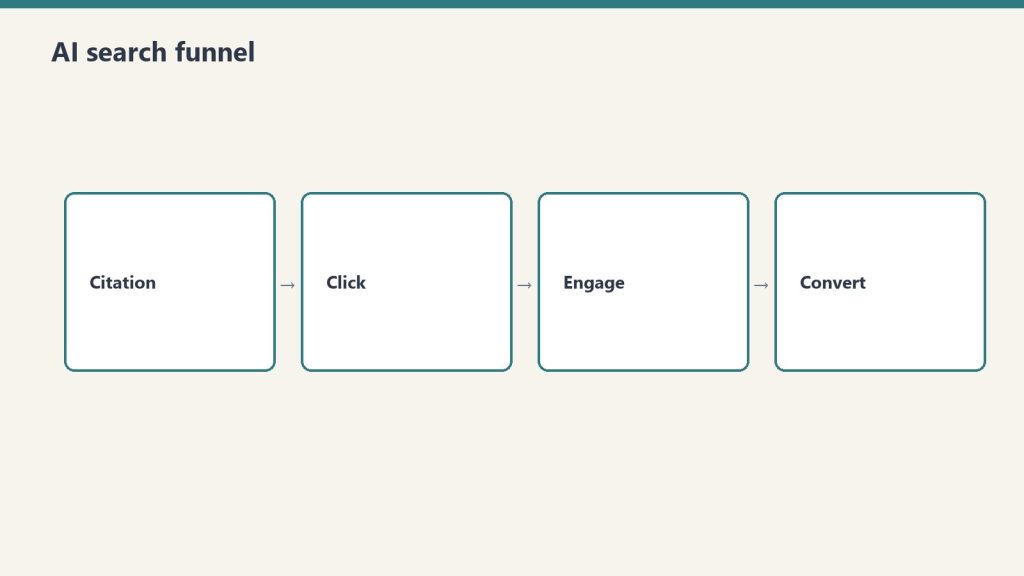
    Four-stage funnel: citation, click, engage, convert
    Reports are not strategy.

    You pull the monthly report. Traffic is up. Rankings improved for three target keywords. One dropped. Bounce rate on the service page is higher than you’d like. The report looks professional. The client nods along on the call. You both move on.

    But what actually happened? Why did that one keyword drop — was it a competitor content update, an algorithm shift, a technical issue, or a seasonal pattern? Why is the bounce rate high on the service page — is the content mismatched with search intent, is the page speed poor on mobile, or are users finding their answer and leaving satisfied? What does the internal linking data tell you about how search engines are crawling the site? What does the schema validation report reveal about which pages are eligible for rich results and which aren’t?

    These aren’t reporting questions. They’re analysis questions. And the difference between a consultant who reports data and a consultant who analyzes data is the difference between showing a client what happened and telling them what to do about it.

    The Analysis Gap in Freelance SEO

    Comparison of Claude how-to fit versus local service page fit for assistants
    The analysis gap in freelance SEO.

    Most freelance SEO consultants are excellent at the interpretation layer — reading search console data, understanding ranking trends, spotting opportunities in keyword research. Where the gap typically appears is in the operational data layer: the cross-platform analysis that connects content performance to technical health to schema validation to competitive positioning to AI visibility.

    This isn’t a criticism. It’s a bandwidth reality. Deep data analysis requires time, tools, and a systematic approach to connecting data points across multiple platforms. When you’re managing multiple clients, each with their own analytics setup, their own competitive landscape, and their own technical stack, the analysis depth on any individual client is limited by the total hours available.

    The result is that most clients get surface-level analysis — what moved, what didn’t — without the deep diagnostic layer that explains why things moved and what systemic changes would drive different results.

    What Deep Analysis Actually Looks Like

    Desk with laptop, checklist notebook, and billing card ready before creating an Anthropic API key
    What deep analysis actually looks like.

    When I plug into a freelance consultant’s operation, the data analysis layer goes deeper than monthly reporting. Here’s what that looks like in practice.

    Content performance analysis doesn’t just measure traffic to individual pages — it maps topic clusters, identifies which content is building authority versus cannibalizing it, measures keyword overlap between related pages, and recommends specific actions: merge these two underperforming posts, expand this one with additional sections, restructure that one for featured snippet capture.

    Competitive analysis doesn’t just track who ranks above your client — it examines what structural advantages competitors have. Do they have schema your client doesn’t? Are they capturing featured snippets your client could compete for? Are AI systems citing their content? What specific content gaps exist that represent real opportunity rather than vanity keywords?

    Technical health analysis goes beyond the standard site audit checklist. It checks schema validation across every page with structured data. It measures internal link distribution to identify orphan pages and authority leaks. It evaluates page-level Core Web Vitals in the context of competitive SERP positions. It identifies technical issues that specifically affect AEO and GEO performance — things a standard site audit doesn’t look for because they’re not part of traditional SEO diagnostics.

    From Data to Automated Action

    Analysis alone is still just information. What makes the plugin model different is that the analysis connects directly to implementation. When the content analysis identifies a post that needs restructuring for snippet capture, the restructuring happens through the API — not through a recommendation document that might sit in someone’s inbox for three weeks.

    When the competitive analysis reveals a schema gap, the schema gets built and injected. When the technical audit finds internal linking deficiencies, the links get added. The loop from data to insight to action to verification is continuous, not a batch process that happens once a month and depends on someone else’s implementation timeline.

    For the freelance consultant, this means your strategic recommendations actually get executed. You’re not writing reports that describe what should happen — you’re overseeing a system that makes it happen. The client sees results, not recommendations. And results are what keep retainers in place.

    The Cross-Platform View

    One of the advantages of working across a portfolio of sites — not just the consultant’s clients, but the broader portfolio the plugin model serves — is pattern recognition. When a search algorithm update hits, I see the impact across multiple sites in different industries simultaneously. That cross-portfolio view reveals patterns that single-client analysis can’t surface.

    Is the ranking drop your client experienced industry-wide or site-specific? Is the featured snippet loss a competitive action or an algorithm change? Are the AI citation patterns shifting across all verticals or just this one? These questions require a broader data set to answer accurately, and the broader data set is a natural byproduct of the plugin model operating across multiple engagements.

    For the freelance consultant, this means the analysis your client receives is informed by a wider context than any single-client engagement could provide. Not with specific client data — that stays strictly siloed — but with pattern-level insights about how search is behaving across the landscape.

    What This Means for Your Client Conversations

    When you can walk into a client call with deep diagnostic analysis — not just “traffic was up 12%” but “here’s why, here’s what’s at risk, here’s what we’re doing about the risk, and here’s the opportunity we’re capturing next month” — the conversation changes. You’re not defending a report. You’re demonstrating command of the client’s entire search presence. That’s the difference between a vendor relationship and a trusted advisor relationship. And it’s the difference between a retainer that gets questioned every quarter and one that gets renewed without discussion.

    Frequently Asked Questions

    Do I need to share my analytics credentials with you?

    The core optimization work runs through the WordPress REST API and doesn’t require analytics access. For deeper analysis that incorporates search console or analytics data, read-only access to those platforms is helpful but not required. We’d discuss the specific data needs based on the depth of analysis that makes sense for each client.

    How does data analysis translate to client reporting?

    I provide the analysis in whatever format integrates with your existing reporting workflow. Some consultants want raw data they’ll interpret for clients. Others want pre-formatted analysis sections they can include in their reports. The goal is making the analysis useful within your process, not creating a parallel reporting stream.

    Is the cross-portfolio pattern recognition based on my clients’ data?

    No. Client data is strictly siloed — no individual client’s data is ever shared or visible to other engagements. The pattern recognition comes from aggregate, anonymized observations about search behavior across the broader landscape. Think of it like a doctor who sees many patients recognizing a seasonal illness pattern — the insight comes from volume, not from sharing individual records.

    {
    “@context”: “https://schema.org”,
    “@type”: “Article”,
    “headline”: “The Data Layer Most SEO Consultants Dont Touch — and Why Your Clients Need Someone Who Does”,
    “description”: “Analytics tell you what happened. Data analysis tells you why and what to do next. The difference is the gap between reporting and strategy.”,
    “datePublished”: “2026-04-03”,
    “dateModified”: “2026-04-03”,
    “author”: {
    “@type”: “Person”,
    “name”: “Will Tygart”,
    “url”: “https://tygartmedia.com/about”
    },
    “publisher”: {
    “@type”: “Organization”,
    “name”: “Tygart Media”,
    “url”: “https://tygartmedia.com”,
    “logo”: {
    “@type”: “ImageObject”,
    “url”: “https://tygartmedia.com/wp-content/uploads/tygart-media-logo.png”
    }
    },
    “mainEntityOfPage”: {
    “@type”: “WebPage”,
    “@id”: “https://tygartmedia.com/the-data-layer-most-seo-consultants-dont-touch-and-why-your-clients-need-someone-who-does/”
    }
    }

  • Entity Architecture: Why AI Ignores Small Business Sites

    Entity Architecture: Why AI Ignores Small Business Sites

    Tygart Media / The Signal
    Broadcast Live
    Filed by Will Tygart
    • Tacoma, WA
    • Industry Bulletin

    The Entity Gap Nobody Talks About

    When an AI system evaluates whether to cite your client’s content, one of the first things it assesses is whether the source is a recognized entity. Not a recognized brand in the human sense — a recognized entity in the machine-readable sense. Does this business exist as a structured, identifiable thing in the data layer of the web?

    For most small business websites, the answer is no. The business has a website. It has content. It might even have good content that ranks well. But from an entity perspective — the perspective that AI systems use to evaluate source authority — the business barely exists. There’s no organization schema telling machines who this company is. No person schema establishing the expertise of the people behind the content. No consistent entity signals connecting the website to the Google Business Profile to the social media accounts to the industry directories.

    The business is a ghost in the entity layer. And ghosts don’t get cited.

    What Entity Signals Actually Are

    An entity signal is any structured or consistent piece of information that helps machines identify and understand a real-world thing — a person, a business, a product, a place. The more entity signals a business has, and the more consistent those signals are across the web, the more confidence AI systems have that this is a real, authoritative source.

    The foundational signals are straightforward. Organization schema on the website — the JSON-LD markup that declares “this is a business, here’s its name, address, phone number, logo, founding date, social profiles.” A complete and verified Google Business Profile. Consistent NAP (Name, Address, Phone) data across every directory listing, social profile, and web mention. A knowledge panel in Google search results that aggregates this information into a recognized entity card.

    Beyond the foundation, there are depth signals. Person schema for key team members — establishing individuals as experts with credentials, publications, and professional affiliations. Product or service schema that structures what the business offers. Review schema that aggregates customer feedback. Event schema if the business hosts or participates in industry events.

    Each signal independently is small. Together, they build an entity picture that AI systems can assess when deciding whether this source is authoritative enough to cite.

    Why This Falls Outside Normal SEO Scope

    Traditional SEO doesn’t require entity architecture. You can rank a page without organization schema. You can build backlinks without person markup. You can optimize on-page elements without worrying about NAP consistency across fifty directory listings.

    Entity architecture is infrastructure work. It requires understanding schema.org vocabulary, JSON-LD syntax, Google’s structured data guidelines, knowledge panel optimization, and the web-wide consistency of business information. It also requires ongoing maintenance — schema that was valid last year might need updating as vocabulary evolves, and new web properties need to carry consistent entity signals from day one.

    For a freelance SEO consultant, this is another bandwidth problem. The work matters. You probably don’t have time to do it. And your clients definitely can’t do it themselves.

    What I Build When I Plug In

    Entity architecture is one of the core layers I bring to a freelance consultant’s operation. For each client, I assess the current entity state — what schema exists, what’s missing, how consistent their business information is across the web, whether they have a knowledge panel, and how their entity signals compare to competitors.

    Then I build the architecture. Organization schema goes on the site — comprehensive, not the bare minimum a plugin generates. If the business has key personnel whose expertise matters (which is most service businesses), person schema establishes those individuals as recognized entities with their own expertise signals. Service or product schema structures the business offerings. FAQ schema gets added to relevant pages. Speakable schema marks content that voice assistants can read aloud.

    The entity work extends beyond the website. I audit the client’s Google Business Profile for completeness and consistency with the website schema. I check directory listings for NAP consistency. I identify web properties where entity signals are missing or conflicting. The goal is a unified entity picture that machines can evaluate from any direction — the website, the business profile, the directories, the social accounts — and arrive at the same clear understanding of who this business is and what authority it has.

    The Compound Effect

    Entity architecture compounds over time in ways that individual SEO tactics don’t. Each new piece of content published on a site with strong entity signals starts with a credibility baseline that unstructured content doesn’t have. Each consistent mention of the business across the web reinforces the entity’s authority. Each additional schema type adds a dimension to the entity picture.

    For AI systems in particular, this compounding effect matters. AI models are trained on web data, and consistent entity signals across many sources create stronger associations in those models. A business that has been consistently structured and consistently referenced across the web has a natural advantage in AI citation — not because of a single optimization trick, but because the cumulative entity evidence is overwhelming.

    This is also what makes entity architecture a retention tool. Once built, it creates switching costs. A new SEO consultant would need to understand the architecture, maintain the schema, and preserve the consistency that’s been built. The entity layer becomes part of the client’s digital infrastructure, and the person who built it understands it best.

    What Your Clients Actually Experience

    Clients won’t understand “entity architecture” and they don’t need to. What they experience is tangible: richer search results with star ratings, FAQ dropdowns, and knowledge panel information. Their business appearing in Google’s knowledge panel. Their content getting cited by AI systems. Their voice search presence improving. These are outcomes they can see and show their own stakeholders. The entity architecture is just the mechanism underneath those visible results.

    Frequently Asked Questions

    How long does it take to build entity architecture for a small business?

    The initial build — website schema, Google Business Profile audit, major directory consistency check — typically takes a focused session per client. Ongoing maintenance is lighter: updating schema when content changes, adding markup for new pages, and periodically checking web-wide consistency. The foundational work is frontloaded.

    Do clients with existing Yoast or RankMath schema need a rebuild?

    Usually the plugin-generated schema serves as a starting point that needs significant expansion. SEO plugins add basic Article and Organization markup but miss the strategic schema types — FAQPage, HowTo, Speakable, Person, detailed Product/Service markup — that drive AEO and GEO results. I typically build on top of what exists rather than replacing it entirely.

    Is entity architecture relevant for new businesses with no web presence?

    Absolutely — and arguably more important for them. A new business that launches with proper entity architecture from day one builds entity signals from the start. Established businesses have to retrofit. New businesses can build it into their foundation, which gives them a structural advantage over competitors who’ve been online for years without entity optimization.

    Visual summary

    Knowledge graph visualization rendered as a cosmic constellation map with interconnected entity nodes forming clusters against deep space
    • Model: Imagen 4.0 Ultra (Vertex AI)
    • Format: WebP with full IPTC/XMP metadata
    • Metadata: DC Title, Description, Creator, Rights, Subject keywords, Photoshop Credit/Source/Headline/Geo
    • Generated: April 2026
  • The Client Retention Play: Why AEO and GEO Are Your Agency’s Best Defense Against Churn

    The Client Retention Play: Why AEO and GEO Are Your Agency’s Best Defense Against Churn

    The Machine Room · Under the Hood

    Your Clients Are One Bad Quarter Away from Shopping

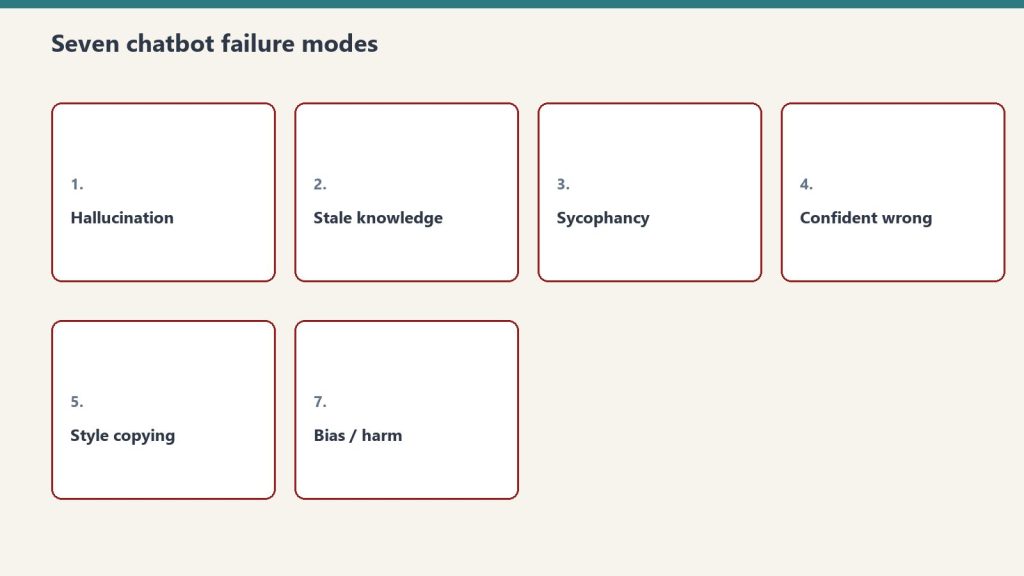
    Seven cards naming common AI chatbot failure modes
    Your clients are one bad quarter away from shopping.

    Let’s be honest about something most agency owners don’t talk about publicly. Client retention in the SEO space is brutal. Agency client churn is a constant pressure. Most agency owners know the feeling of replacing a significant portion of their book of business every year just to stay flat. You know the pattern. The client gets impatient with organic timelines, a competitor agency promises faster results, or the CMO changes and the new one brings their own vendor. You’ve lived this cycle.

    Here’s what changes the math: services that create genuine switching costs. Not contractual lock-in — that just breeds resentment. Structural switching costs. The kind where leaving your agency means losing capabilities the client can’t easily replicate. AEO and GEO are those services. And agencies that add them aren’t just growing revenue — they’re building retention moats that fundamentally change the churn equation.

    Why Traditional SEO Has a Retention Problem

    Traditional SEO deliverables are relatively portable. A client can take their keyword research, their optimized content, their backlink profile, and hand it to the next agency. The technical audit you did? Documented and transferable. The on-page optimizations? Already implemented on their site. When a client leaves an SEO agency, they take most of the value with them.

    This creates a commodity dynamic. If your deliverables are interchangeable with what another agency offers, the only differentiator is price and personality. That’s not a defensible position. And it’s why SEO agencies face constant downward pressure on pricing and constant upward pressure on churn.

    AEO and GEO break this pattern because the value compounds over time in ways that aren’t easily transferable. Featured snippet ownership requires ongoing monitoring and defense. AI citation presence builds through consistent entity optimization that a new agency would need months to understand. The schema infrastructure, the LLMS.txt configuration, the entity signal architecture — these are systems, not one-time deliverables.

    The Three Retention Mechanisms of AEO/GEO

    Comparison of Claude how-to fit versus local service page fit for assistants
    The three retention mechanisms of AEO/GEO.

    Mechanism 1: Compounding Institutional Knowledge

    When you run AEO optimization for a client, you build deep knowledge of their question landscape — the specific queries their audience asks, the snippet formats that win for their industry, the PAA clusters that drive their visibility. This knowledge compounds over time. By month six, you understand their answer ecosystem better than anyone. By month twelve, you’ve built a proprietary map of their entire zero-click visibility opportunity.

    A new agency would start from scratch. They’d need to rebuild that question map, re-learn which snippet formats work for this specific vertical, and re-establish the monitoring systems that protect existing wins. That’s a three to six month learning curve during which performance likely dips. No CMO wants to explain a visibility dip to their board while they’re “transitioning agencies.”

    Mechanism 2: Entity Architecture Dependency

    GEO optimization builds an entity architecture that becomes deeply embedded in the client’s digital presence. Organization schema, person schema for key executives, product schema with complete specifications, consistent NAP+W signals across dozens of properties, knowledge panel optimization, and AI crawler configurations — this is infrastructure, not a campaign.

    When you build a client’s entity architecture, you become the architect who understands how all the pieces connect. Swapping architects mid-build is expensive and risky. The new agency might not even know the LLMS.txt file exists, let alone how to maintain it. They might not understand why certain schema relationships were structured the way they were, or how the entity signals across different platforms reinforce each other.

    Mechanism 3: AI Citation Momentum

    This is the most powerful retention mechanism, and it’s one that barely existed two years ago. When AI systems start citing your client’s content — when ChatGPT references their research, when Perplexity pulls their data into answers, when Google AI Overviews cite their expertise — that momentum is fragile. It requires consistent maintenance of factual density, entity signals, and content freshness.

    Stop the optimization and the citations don’t just pause — they decay. AI systems are constantly re-evaluating sources. A competitor who maintains their GEO optimization while your client’s lapses during an agency transition will capture those citation slots. And getting them back takes longer than getting them the first time.

    This creates a retention dynamic that traditional SEO never had. With rankings, you can lose position 1 and fight back to it in a few months. With AI citations, losing your position as a trusted source in an LLM’s assessment can take quarters to recover from — if you recover at all.

    The Numbers That Make the Case

    Agencies that add AEO/GEO services to their existing SEO offerings typically see three measurable retention improvements. First, average client tenure extends meaningfully because the switching costs are real and the value is visible in ways that traditional SEO metrics sometimes aren’t. Second, upsell revenue per client increases because AEO and GEO are natural expansions of the SEO relationship, not disconnected add-ons. Third, client satisfaction scores improve because you’re delivering wins in channels — featured snippets, AI citations, voice search — that clients can see and show their stakeholders without needing a analytics dashboard.

    The retention math compounds. If your average client pays ,000/month and you extend tenure by 12 months across 20 clients, that’s .2 million in retained revenue you would have lost to churn. That’s not new business development. That’s revenue you already earned the right to keep — you just needed the service layer to protect it.

    How to Position AEO/GEO as Retention Insurance

    Desk with laptop, checklist notebook, and billing card ready before creating an Anthropic API key
    How to position AEO/GEO as retention insurance.

    Don’t sell AEO and GEO as new services. Sell them as the evolution of what you’re already doing. The conversation with existing clients sounds like this: “We’ve been optimizing your content for Google’s traditional algorithm. But Google now shows AI-generated answers for 40% of searches. ChatGPT and Perplexity are handling millions of queries that used to go to Google. Your competitors are starting to optimize for these channels. We should be there first.”

    That’s not an upsell. That’s a duty-of-care conversation. You’re telling the client that the landscape changed and you’re evolving their strategy to match. Clients don’t churn from agencies that proactively protect their interests. They churn from agencies that keep doing the same thing while the market moves.

    The Partnership Advantage

    Building AEO and GEO capabilities in-house takes time, hiring, and training. A fractional partnership — like what Tygart Media offers — lets you add these retention-building services immediately without the overhead of new hires or the risk of a learning curve on client accounts. Your clients see expanded capabilities. Your retention metrics improve. Your revenue per client grows. And you didn’t have to hire a single person to make it happen.

    Frequently Asked Questions

    How quickly do AEO/GEO services impact client retention?

    The retention impact begins within the first 90 days as clients see new types of wins — featured snippet captures, AI citations, and enhanced SERP visibility. The structural switching costs that truly protect retention build over 6-12 months as entity architecture and AI citation momentum compound.

    What if my clients don’t understand what AEO and GEO are?

    Most clients don’t need to understand the technical details. They understand “your brand is now the answer Google shows directly” and “AI assistants are recommending your company.” Frame wins in business terms, not optimization terminology. The results sell themselves when positioned correctly.

    Can I add AEO/GEO to existing contracts or do I need new agreements?

    Both approaches work. Many agencies add AEO/GEO as a scope expansion to existing retainers with a modest fee increase. Others create a distinct service tier. The key is positioning it as evolution, not addition — you’re upgrading their optimization strategy to match how search actually works now.

    {
    “@context”: “https://schema.org”,
    “@type”: “Article”,
    “headline”: “The Client Retention Play: Why AEO and GEO Are Your Agencys Best Defense Against Churn”,
    “description”: “AEO and GEO services create switching costs that traditional SEO alone can’t match — turning at-risk accounts into long-term partnerships.”,
    “datePublished”: “2026-04-03”,
    “dateModified”: “2026-04-03”,
    “author”: {
    “@type”: “Person”,
    “name”: “Will Tygart”,
    “url”: “https://tygartmedia.com/about”
    },
    “publisher”: {
    “@type”: “Organization”,
    “name”: “Tygart Media”,
    “url”: “https://tygartmedia.com”,
    “logo”: {
    “@type”: “ImageObject”,
    “url”: “https://tygartmedia.com/wp-content/uploads/tygart-media-logo.png”
    }
    },
    “mainEntityOfPage”: {
    “@type”: “WebPage”,
    “@id”: “https://tygartmedia.com/the-client-retention-play-why-aeo-and-geo-are-your-agencys-best-defense-against-churn/”
    }
    }

    Visual summary

    Editorial illustration for The Client Retention Play: Why AEO and GEO Are Your Agency’s Best Defense Against Churn - Tygart Media AI-generated visual
    AI-generated editorial illustration — Vertex AI Imagen 4 Standard

    About this image. This image was generated by Google’s Vertex AI Imagen 4 model as the featured visual for The Client Retention Play: Why AEO and GEO Are Your Agency’s Best Defense Against Churn . Every image in the Tygart Media visual library is AI-generated, converted to WebP for optimal performance, and enriched with IPTC/XMP metadata for search engine discoverability.

    • Model: Vertex AI Imagen 4 Standard (imagen-4.0-generate-001)
    • Format: WebP (quality 90)
    • Aspect Ratio: 16:9
    • Metadata: IPTC/XMP injected (title, description, creator, rights, location)
    • Creator: Tygart Media — tygartmedia.com

    Part of The Studio collection — AI-generated visuals powering the Tygart Media content engine.
  • The Partnership Conversation: Exactly How to Start Working With a Fractional AEO/GEO Team

    The Partnership Conversation: Exactly How to Start Working With a Fractional AEO/GEO Team

    The Machine Room · Under the Hood

    You’ve Decided. Now Here’s How It Actually Works.

    You’ve read the articles. You understand the gap. You see what your competitors are building with AEO and GEO while you’re still running the same SEO playbook from three years ago. You’ve decided that a fractional partnership makes more sense than hiring — faster to market, lower risk, proven methodology from day one. Good. That was the hard part.

    Now here’s the practical part. What does a fractional AEO/GEO partnership actually look like? Not the pitch version — the real version. How does the work flow? What do your clients see? What changes in your operations? What stays the same? I’m going to walk you through exactly how this works at Tygart Media, because the agencies that partner with us deserve to know what they’re signing up for before the first handshake.

    Phase 1: The Discovery Call (Week 1)

    Seven cards naming common AI chatbot failure modes
    Phase 1 — the discovery call.

    The partnership starts with a discovery call — not a sales call. We need to understand your agency before we can build a partnership that works. This means learning your current service stack, your client mix, your team structure, your delivery workflow, and your growth goals.

    Key questions we cover: What industries do your clients operate in? What’s your current SEO delivery process? Do you have in-house content creators or do you outsource? What does your typical client engagement look like — retainer size, contract length, reporting cadence? What capabilities have your clients been asking about that you can’t currently deliver?

    This isn’t a qualification call where we decide if you’re “good enough.” It’s an architecture session where we figure out how AEO/GEO capabilities plug into what you’ve already built. Every agency is different. A 5-person shop needs a different integration model than a 50-person firm. We figure that out here.

    Phase 2: The Integration Design (Week 2)

    Based on discovery, we design the integration model. There are three common configurations, and most agencies fit one of them.

    Configuration A: Full White-Label

    We operate entirely behind your brand. Your clients never know Tygart Media exists. We deliver AEO audits, GEO optimization, schema implementation, entity architecture, and AI citation monitoring — all under your agency’s name, in your reporting templates, using your communication channels. You own the client relationship completely. We’re the engine under your hood.

    Configuration B: Named Partnership

    You introduce Tygart Media as your specialized AEO/GEO partner. Your clients know we exist and may interact with us directly on technical matters. You own the overall strategy and client relationship. We handle the AEO/GEO execution and report through you. This works well for agencies whose clients value transparency about specialist partners.

    Configuration C: Hybrid Model

    Some services run white-label, others are named. Typically, ongoing AEO/GEO optimization runs under your brand, while specialized projects like comprehensive entity architecture builds or AI citation audits are positioned as Tygart Media specialist engagements. This gives you flexibility to match the positioning to the client’s preferences.

    Phase 3: The Pilot Client (Weeks 3-4)

    Desk with laptop, checklist notebook, and billing card ready before creating an Anthropic API key
    Phase 3 — the pilot client.

    We don’t launch across your entire book of business on day one. We start with one client — ideally one who’s been asking about expanded capabilities, or one where you see clear AEO/GEO opportunity based on their industry and content.

    For the pilot, we run the full process: baseline snapshot across all five AEO/GEO dimensions, optimization map, implementation, and 30-day measurement. This pilot serves two purposes. First, it proves the process works within your specific agency workflow. Second, it gives you your first case study — real results, real client, real proof that you can use to expand AEO/GEO across your roster.

    During the pilot, we’re obsessive about communication. Daily Slack updates, weekly video check-ins, shared project boards. By the end of the pilot, your team should understand exactly what AEO/GEO delivery looks like, even if they’re not doing the hands-on work. That knowledge transfer is part of the partnership value — you’re not just buying deliverables, you’re building organizational understanding.

    Phase 4: The Rollout (Months 2-3)

    With the pilot complete and first results documented, we design the rollout plan together. This typically means identifying which existing clients get AEO/GEO added to their current engagement (often as a scope expansion conversation you lead) and which new prospects get pitched with AEO/GEO included from the start.

    We help you with the client conversation. Not scripted — but structured. We provide talking points, common objection responses, data points from the pilot, and industry-specific context that makes the upsell feel like a natural evolution rather than an add-on. Most agencies find that 40-60% of their existing clients say yes to AEO/GEO expansion within the first quarter of offering it.

    Operationally, we scale with you. One client, five clients, twenty clients — the fractional model flexes. You’re not carrying fixed overhead that needs to be fed whether you have the client volume or not. You pay for the work that gets done, and the work scales with your growth.

    Phase 5: The Ongoing Partnership (Month 4+)

    Once the rollout is established, the partnership settles into a rhythm. Monthly optimization cycles for each client. Quarterly proof library updates with fresh case studies. Ongoing monitoring of AI citation presence and featured snippet health. Regular strategy sessions where we review what’s working, what’s changing in the AI search landscape, and how to evolve the service offering.

    The best partnerships evolve over time. Some agencies eventually hire internal AEO/GEO specialists and transition from full delivery to advisory. Others go deeper into the partnership and add capabilities like AI-powered content pipeline management, automated schema deployment, or cross-site entity architecture for multi-location clients. The model adapts to where you want to go.

    What Doesn’t Change

    Your client relationships stay yours. Your brand stays front and center. Your existing SEO processes continue — we add to them, we don’t replace them. Your team stays employed and relevant — AEO/GEO creates more work for good SEOs, not less, because the optimization surface area expands. Your pricing stays your decision — we provide cost structures, you set client-facing rates at whatever margin works for your business.

    What does change: the depth of value you deliver. The types of wins you can show. The conversations you have with clients and prospects. And the structural retention advantage that keeps clients partnered with you for years instead of months.

    Starting the Conversation

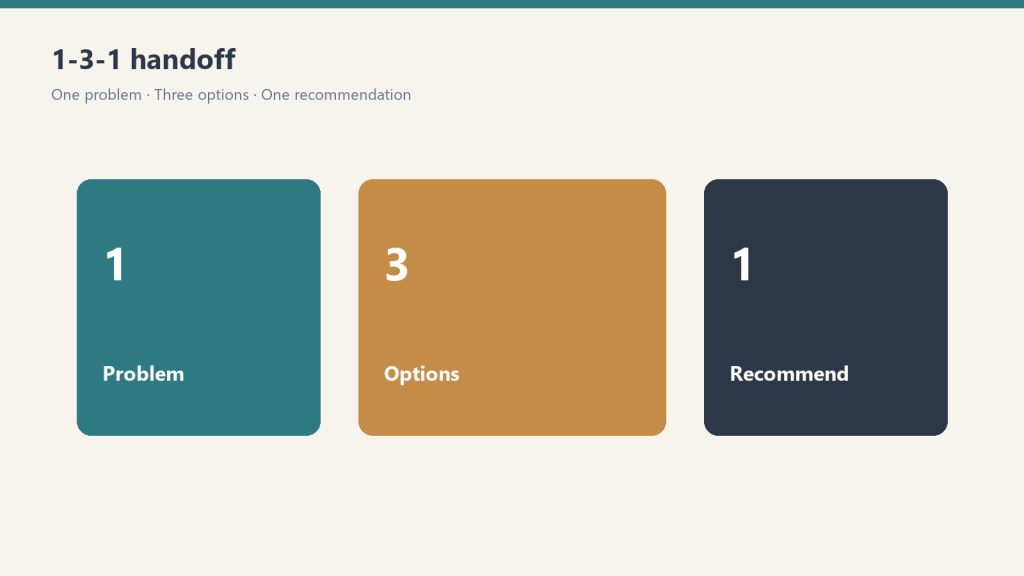
    Three panels showing one problem, three options, one recommendation
    Starting the conversation.

    If you’ve read this far, you’re not casually browsing. You’re evaluating. Good. The next step is simple: reach out for the discovery call. No pitch deck. No pressure. Just a conversation between two teams that might build something valuable together. The agencies that are already partnered with us started with exactly this conversation — and most of them will tell you their only regret is not having it sooner.

    Frequently Asked Questions

    How long does it take from first conversation to delivering AEO/GEO to a client?

    Typical timeline is 3-4 weeks from discovery call to pilot client delivery. The pilot runs 30 days for initial results. So within 60 days of your first conversation, you can have documented AEO/GEO results for a real client — proof you can use immediately for expansion.

    What’s the minimum agency size for a fractional partnership?

    We work with agencies ranging from 3-person shops to 100+ person firms. The integration model scales — smaller agencies typically use full white-label, larger firms often prefer the hybrid model. There’s no minimum client count requirement, though the economics work best with at least 3-5 clients receiving AEO/GEO services.

    Do I need to train my team on AEO and GEO?

    We provide knowledge transfer as part of every partnership. Your team will understand what AEO and GEO are, how the work flows, and how to talk about it with clients. They don’t need to become AEO/GEO specialists — that’s why the partnership exists — but they’ll be fluent enough to answer client questions and identify opportunities.

    What happens if the partnership doesn’t work out?

    No long-term lock-in. Our partnerships run on value, not contracts. If the first 90 days don’t demonstrate clear value for your agency and your clients, we part ways professionally. The AEO/GEO work already delivered stays with your clients. The case studies you built stay yours. There’s no penalty and no bad blood.

    {
    “@context”: “https://schema.org”,
    “@type”: “Article”,
    “headline”: “The Partnership Conversation: Exactly How to Start Working With a Fractional AEO/GEO Team”,
    “description”: “A step-by-step guide for agency owners ready to add AEO and GEO capabilities through a fractional partnership — from first call to first client win.”,
    “datePublished”: “2026-04-03”,
    “dateModified”: “2026-04-03”,
    “author”: {
    “@type”: “Person”,
    “name”: “Will Tygart”,
    “url”: “https://tygartmedia.com/about”
    },
    “publisher”: {
    “@type”: “Organization”,
    “name”: “Tygart Media”,
    “url”: “https://tygartmedia.com”,
    “logo”: {
    “@type”: “ImageObject”,
    “url”: “https://tygartmedia.com/wp-content/uploads/tygart-media-logo.png”
    }
    },
    “mainEntityOfPage”: {
    “@type”: “WebPage”,
    “@id”: “https://tygartmedia.com/the-partnership-conversation-exactly-how-to-start-working-with-a-fractional-aeo-geo-team/”
    }
    }

    Visual summary

    Editorial illustration for The Partnership Conversation: Exactly How to Start Working With a Fractional AEO/GEO Team - Tygart Media AI-generated visual
    AI-generated editorial illustration — Vertex AI Imagen 4 Standard

    About this image. This image was generated by Google's Vertex AI Imagen 4 model as the featured visual for The Partnership Conversation: Exactly How to Start Working With a Fractional AEO/GEO Team. Every image in the Tygart Media visual library is AI-generated, converted to WebP for optimal performance, and enriched with IPTC/XMP metadata for search engine discoverability.

    • Model: Vertex AI Imagen 4 Standard (imagen-4.0-generate-001)
    • Format: WebP (quality 90)
    • Metadata: IPTC/XMP injected (title, description, creator, copyright)
    • Parent Article: The Partnership Conversation: Exactly How to Start Working With a Fractional AEO/GEO Team
    • Format: WEBP
    • Collection: Tygart Media Visuals
    • Pipeline: Vertex AI Imagen → WebP Conversion → IPTC/XMP Metadata Injection → WordPress Media Library
  • You Don’t Need to Change How You Do SEO. You Need a Layer Underneath It.

    You Don’t Need to Change How You Do SEO. You Need a Layer Underneath It.

    The Machine Room · Under the Hood

    The Pitch You’ve Heard Before (and Why This Isn’t That)

    Four-stage funnel: citation, click, engage, convert
    The pitch you have heard before — and why this is not that.

    If you’re a freelance SEO consultant, you’ve been pitched by every tool, platform, and agency partner under the sun. They all want you to change something. Change your process. Change your tools. Change your reporting. Learn their system. Adopt their workflow. Sit through their onboarding.

    I’m not here to change how you do SEO. You’re good at it. Your clients pay you because you deliver. The rankings move. The traffic grows. The phone rings. That’s the work and you know how to do it.

    What I’m here to talk about is what sits underneath your SEO work — a layer that makes everything you’re already doing more visible, more durable, and more valuable to your clients. Not a replacement. Not a competing workflow. Middleware.

    What Middleware Actually Means in This Context

    Comparison of Claude how-to fit versus local service page fit for assistants
    What middleware actually means in this context.

    In software, middleware is the layer that sits between two systems and makes them talk to each other without either one needing to change. It translates. It routes. It adds capability without adding complexity to the things it connects.

    That’s what Tygart Media built. A skill-based system that connects to any WordPress site through its existing REST API, runs optimization passes that go beyond traditional SEO, and delivers the results back into the same WordPress environment your client already uses. Your client sees better results. You see expanded capabilities. Neither of you had to learn a new platform or change a single process.

    The system includes answer engine optimization — structuring content so search engines surface it as the direct answer, not just a ranking result. It includes generative engine optimization — making content citable by AI systems like ChatGPT, Perplexity, and Google’s AI Overviews. It includes schema architecture, internal linking analysis, entity signal optimization, and content expansion. All of it runs through a proxy layer that routes API traffic without touching your client’s hosting, their theme, their plugins, or their workflow.

    How It Plugs Into What You Already Do

    Desk with laptop, checklist notebook, and billing card ready before creating an Anthropic API key
    How it plugs into what you already do.

    Here’s the practical version. You do your keyword research. You write or commission content. You optimize on-page elements. You build links. You report to your client. None of that changes.

    What changes is what happens after your content is published. The middleware layer picks it up and runs a series of optimization passes. It restructures key sections for featured snippet capture — question as heading, direct answer in the first paragraph, depth below. It adds FAQ sections with proper schema markup. It analyzes the content for entity signals and strengthens them so AI systems can identify and cite the expertise. It checks internal linking opportunities across the client’s entire site and suggests or implements connections you might not have seen.

    The output lands back in WordPress. Same posts. Same pages. Same CMS your client logs into every day. They don’t need a new dashboard. You don’t need a new reporting tool. The work just got deeper without getting more complicated.

    Why This Matters for Solo Consultants Specifically

    Agency owners can hire specialists. They can build internal teams for schema, for AI optimization, for content architecture. You can’t — and you shouldn’t have to. The economics of freelance SEO don’t support a full-time schema engineer or an AI search strategist on payroll.

    But your clients are starting to notice that search is changing. They’re seeing AI-generated answers at the top of Google. They’re hearing about ChatGPT replacing search for certain queries. They’re asking you questions you might not have answers to yet — not because you’re behind, but because these capabilities require different infrastructure than what a solo consultant typically builds.

    A middleware partner gives you the infrastructure without the overhead. You don’t hire anyone. You don’t learn a new discipline from scratch. You don’t risk your client relationships on a capability you’re still figuring out. You plug in a layer that handles the parts of modern search optimization that go beyond traditional SEO, and you stay focused on what you do best.

    What We Actually Built (No Hype, Just Architecture)

    The system is a chain of specialized optimization skills that execute in sequence. A connection layer authenticates with any WordPress site. A proxy routes all API traffic through a single cloud endpoint so we never need access to the client’s hosting environment. A site registry stores credentials and configuration for every connected property. Then the optimization skills run: SEO refresh, AEO refresh, GEO refresh, schema injection, internal link analysis, content expansion.

    Each skill is purpose-built. The AEO layer structures content for featured snippets, People Also Ask placements, and voice search. The GEO layer optimizes for AI citation — entity density, factual specificity, the signals that AI systems use when deciding which sources to reference. The schema layer generates and injects structured data. The interlink layer maps the entire site and identifies connection opportunities.

    We also built an adaptive content pipeline that determines how many audience-targeted variants a topic actually needs — not a fixed number, but a demand-driven calculation with tested guardrails for when additional variants start cannibalizing instead of helping. That pipeline prevents the “more content equals more authority” trap that burns through budgets without delivering proportional results.

    What This Doesn’t Do

    It doesn’t replace your client relationships. It doesn’t put our name in front of your clients unless you want it there. It doesn’t change your pricing model, your reporting cadence, or your communication style. It doesn’t require your clients to install anything, grant us admin access, or even know we exist.

    It also doesn’t promise specific traffic numbers, ranking positions, or revenue outcomes. Search optimization is complex and results vary by industry, competition, content quality, and dozens of other factors. What the middleware layer does is ensure that the content you’re already creating is structured and optimized for every surface where modern search happens — not just traditional blue links.

    The Conversation Starter

    If you’re a freelance SEO consultant who’s been wondering how to answer client questions about AI search without becoming an AI search specialist overnight, the middleware model might be worth a conversation. No pitch deck. No onboarding gauntlet. Just a practical discussion about what your clients need and whether this layer adds value to what you’re already delivering.

    Frequently Asked Questions

    Do my clients need to know about Tygart Media?

    Only if you want them to. The default model is fully white-label — the optimization work happens under your brand, in your reporting, through your client communication. Your clients see better results attributed to your expertise.

    What access do you need to my client’s WordPress site?

    A WordPress application password with editor-level access. That’s it. All API traffic routes through our cloud proxy, so we never need hosting access, SSH credentials, or FTP. The application password can be revoked instantly if the engagement ends.

    How does pricing work for freelance consultants?

    The model is designed to sit inside your existing client fees. You set your client-facing rate, and the middleware layer operates as a cost within your margin — similar to how you might pay for an SEO tool subscription or a freelance writer. Specifics depend on scope and site count, which is what the initial conversation covers.

    What if I only have a few clients?

    The system works at any scale. Whether you manage two sites or twenty, the middleware layer applies the same optimization chain. There’s no minimum client requirement to start a conversation.

    {
    “@context”: “https://schema.org”,
    “@type”: “Article”,
    “headline”: “You Dont Need to Change How You Do SEO. You Need a Layer Underneath It.”,
    “description”: “Tygart Media plugs into your existing SEO workflow as middleware — adding AEO, GEO, and schema capabilities without changing a single thing about how you work.”,
    “datePublished”: “2026-04-03”,
    “dateModified”: “2026-04-03”,
    “author”: {
    “@type”: “Person”,
    “name”: “Will Tygart”,
    “url”: “https://tygartmedia.com/about”
    },
    “publisher”: {
    “@type”: “Organization”,
    “name”: “Tygart Media”,
    “url”: “https://tygartmedia.com”,
    “logo”: {
    “@type”: “ImageObject”,
    “url”: “https://tygartmedia.com/wp-content/uploads/tygart-media-logo.png”
    }
    },
    “mainEntityOfPage”: {
    “@type”: “WebPage”,
    “@id”: “https://tygartmedia.com/you-dont-need-to-change-how-you-do-seo-you-need-a-layer-underneath-it/”
    }
    }

    Visual summary

    Freedom with Framework: The Creative AI Playbook - Pillar Article

    About this image. This image is part of the Content Architecture Visuals collection in the Tygart Media visual library. Every image produced by Tygart Media is AI-generated using Google Vertex AI (Imagen), converted to WebP format, and injected with full IPTC/XMP metadata before publication.

    • Format: WEBP
    • Collection: Content Architecture Visuals
    • Pipeline: Vertex AI Imagen → WebP → IPTC/XMP → WordPress
  • AI Search Stack: A Capability Layer for Freelance SEOs

    AI Search Stack: A Capability Layer for Freelance SEOs

    The Machine Room · Under the Hood

    You Don’t Need Another Tool. You Need a Person Who Knows How to Use All of Them.

    The SEO tool market is drowning in platforms. There’s a tool for keyword research. A tool for rank tracking. A tool for schema. A tool for content optimization. A tool for AI search monitoring. A tool for internal linking. A tool for site audits. Every one of them costs money, requires onboarding, and solves exactly one piece of the puzzle.

    As a freelance SEO consultant, you’ve probably assembled your own stack. It works. You know which tools you trust and which ones are shelf-ware. But here’s the thing nobody selling you a SaaS subscription will admit: the tools don’t connect themselves. The data doesn’t analyze itself. The insights don’t become action without someone who understands the entire picture — from the raw crawl data to the published content to the schema markup to the AI citation signals.

    That’s what I do. I’m not selling you a platform. I’m not asking you to adopt a new tool. I’m the person who plugs into your operation and brings the entire capability stack with me — the data analysis, the platform connections, the content production, the optimization programs, the schema architecture, the AI search strategy. One operator. Full stack. No overhead.

    What “I’m the Plugin” Actually Means

    When I say I’m the plugin, I mean it literally. A plugin adds capability to an existing system without replacing anything that’s already there. It installs. It activates. It works alongside everything else. You don’t rebuild your workflow around it — it enhances what you already have.

    That’s how I work with freelance SEO consultants. You keep your clients. You keep your process. You keep your tools. You keep your relationships. I plug into your operation and add the layers you don’t have time, bandwidth, or infrastructure to build yourself.

    Those layers include answer engine optimization — structuring your clients’ content so it gets surfaced as the direct answer, not just a ranking result. Generative engine optimization — making their content the source that AI systems cite. Schema architecture — structured data that tells machines exactly what your client’s business is, what it does, and why it’s authoritative. Content pipeline management — taking a single topic and determining exactly how many audience-targeted variants it needs based on tested guardrails, not guesswork.

    I also bring the platform connectors. I can authenticate with any WordPress site through its REST API, route all traffic through a secure proxy so I never need hosting access, and run optimization sequences across multiple client sites from a single operating layer. I built the infrastructure to do this across a portfolio of sites simultaneously — the same infrastructure that works whether you have two clients or twenty.

    The Solo Consultant’s Real Problem

    You’re good at SEO. Your clients are happy. But you’re one person, and the surface area of search keeps expanding. Featured snippets. People Also Ask. Voice search. AI Overviews. ChatGPT search. Perplexity. Each one is a different optimization challenge with different technical requirements.

    You can’t become an expert in all of them and still do the core SEO work your clients pay you for. That’s not a skill gap — that’s a bandwidth problem. The knowledge exists. The techniques are documented. But implementing them across a portfolio of client sites while also doing keyword research, content strategy, link building, and client communication? That’s not a one-person job anymore.

    Unless the second person is a plugin that brings the entire stack.

    What I Bring That a Tool Can’t

    Tools give you data. They don’t interpret it in the context of your client’s business, their competitive landscape, their industry’s search behavior, or their specific goals. A schema generator can spit out JSON-LD. It can’t decide which schema types matter most for a specific business, how to structure entity relationships across a multi-location operation, or when a HowTo schema will outperform a FAQPage schema for a given topic.

    I do the analysis. I look at a client’s site, their content, their competitive position, and their industry — and I determine what optimization layers will actually move the needle. Then I build and implement those layers. Then I measure whether they worked. Then I adjust. That’s not a tool workflow — that’s an operator workflow.

    The content pipeline is the same way. I built an adaptive system that analyzes a topic and determines how many persona-targeted variants it genuinely needs. Not a fixed number — a demand-driven calculation. Some topics need one article. Some need four. The system has guardrails built from simulation testing that identify exactly when additional variants start cannibalizing each other instead of building authority. A tool can’t make that judgment call. A person who’s tested the thresholds can.

    How This Changes Your Business Without Changing Your Business

    When you plug in a capability layer like this, a few things shift. You can say yes to client questions about AI search without scrambling to figure it out. You can offer AEO and GEO as natural extensions of your SEO services without pretending you built the infrastructure yourself. You can deliver deeper optimization on every engagement without working more hours.

    Your clients see expanded results. They see their content appearing in featured snippets, getting cited by AI systems, ranking with richer search presence through structured data. They attribute that to you — because it is you. You made the decision to add the capability. You manage the relationship. You communicate the results. The plugin just made it possible to deliver at a depth that solo consultants normally can’t reach.

    What This Isn’t

    This isn’t an agency partnership where you hand off your clients and hope for the best. Your clients stay yours. This isn’t a software subscription where you’re paying monthly for a dashboard you’ll use twice. There’s no dashboard — there’s a person doing the work. This isn’t a course or a certification or a “learn to do it yourself” program. If you want to learn this stuff, I’m happy to teach it. But the value proposition here is capability on demand, not education.

    And I’m not going to promise you specific results, traffic numbers, or revenue outcomes. Search is complex. Every client is different. What I can tell you is that the optimization layers I add — AEO, GEO, schema, entity architecture, adaptive content — are built on real methodology that I use every day across a portfolio of sites. The same systems, the same processes, the same quality standards.

    Starting the Conversation

    If you’re a freelance SEO consultant who’s been feeling the expanding surface area of search and wondering how to cover it all without burning out or diluting your core work, I might be the plugin you’re looking for. No pitch deck. No onboarding process. Just a conversation about your clients, your workflow, and where a capability layer might make your work deeper without making your life harder.

    Frequently Asked Questions

    How is this different from subcontracting to another SEO person?

    A subcontractor does more of the same work you do. I add capabilities you don’t currently offer — AI search optimization, schema architecture, entity signals, content variant systems. It’s additive, not duplicative. I’m not doing your SEO differently. I’m doing the things that sit alongside SEO that you don’t have the infrastructure to do alone.

    Do you work with consultants who use tools other than WordPress?

    The core optimization stack is built around WordPress since it powers the majority of business websites. If your clients use other CMS platforms, we’d discuss feasibility on a case-by-case basis. The methodology applies universally — the implementation layer is WordPress-native.

    What does the working relationship actually look like day to day?

    Lightweight. You share site access through a WordPress application password. I run optimization passes on your schedule — weekly, biweekly, or per-project. You get results documented in whatever format you report to clients. Communication happens however you prefer — Slack, email, a quick call. The goal is minimum friction, maximum capability.

    What if a client leaves and I need to disconnect access?

    Revoke the application password. That’s it. All optimization work already delivered stays on the client’s site. There’s no data lock-in, no proprietary code that breaks if the connection ends. Everything we build lives in standard WordPress and standard schema markup.

    {
    “@context”: “https://schema.org”,
    “@type”: “Article”,
    “headline”: “Im the Plugin: What It Means When One Person Brings the Entire AI Search Stack”,
    “description”: “Not a tool. Not a platform. Not an agency. One operator who connects your platforms, analyzes your data, builds your content, and runs the programs.”,
    “datePublished”: “2026-04-03”,
    “dateModified”: “2026-04-03”,
    “author”: {
    “@type”: “Person”,
    “name”: “Will Tygart”,
    “url”: “https://tygartmedia.com/about”
    },
    “publisher”: {
    “@type”: “Organization”,
    “name”: “Tygart Media”,
    “url”: “https://tygartmedia.com”,
    “logo”: {
    “@type”: “ImageObject”,
    “url”: “https://tygartmedia.com/wp-content/uploads/tygart-media-logo.png”
    }
    },
    “mainEntityOfPage”: {
    “@type”: “WebPage”,
    “@id”: “https://tygartmedia.com/im-the-plugin-what-it-means-when-one-person-brings-the-entire-ai-search-stack/”
    }
    }

  • AI Agents: What Context Limits Teach Us About Being Human

    AI Agents: What Context Limits Teach Us About Being Human

    The Lab · Tygart Media
    Experiment Nº 750 · Methodology Notes
    METHODS · OBSERVATIONS · RESULTS

    There’s a moment every serious Claude user hits eventually.

    You’re mid-session. You’ve built something — a workflow, a content pipeline, a research thread — and you’re deep in it. Then the model goes quiet. Or returns something strange. Or just stops.

    You didn’t break anything. You ran out of room.

    What Actually Happened (The Token Wall)

    Every AI conversation has a context window — a fixed amount of memory the model can hold at once. Think of it like a whiteboard. As a session gets longer, the whiteboard fills up: your messages, the model’s responses, tool outputs, task lists, code snippets. All of it takes space.

    When you get close to the limit, the model doesn’t always fail gracefully. Sometimes it just can’t fit the new request alongside all the history. It tries. It might start a response and stop. It might return something vague. It looks broken. It isn’t — it’s full.

    Here’s the part most people miss: the smarter the model, the more verbose its outputs. Claude Opus 4.7 thinks deeply and writes extensively. That costs tokens. So in a nearly-full context, Opus might actually have less usable runway than you’d expect — because every output it generates is large.

    The Haiku Trick (And What It Reveals)

    When you’re stuck at the context limit, the instinct is to try a smarter model. That’s usually wrong.

    The right move is to try a smaller one.

    Haiku — Claude’s lightest, fastest model — can squeeze through a gap that Sonnet and Opus can’t fit through. It’s lean enough to do one small thing: update a task list, summarize where things stand, trigger a compaction. That small action unlocks the whole session again.

    This isn’t a bug. It’s a feature, once you understand it.

    The lesson: it’s not always about raw intelligence. It’s about fit. The right tool for the moment isn’t the most powerful one — it’s the one that can actually execute given the constraints you’re operating in.

    The Formula One Analogy

    Formula One teams spend hundreds of millions building the fastest cars on earth. But the car doesn’t win races by itself. The driver decides when to pit, which tires to run, when to push and when to conserve. Two drivers in identical cars produce different results — sometimes dramatically different.

    Working with AI at a high level is the same.

    Most people are handed a powerful car and told to drive. They go fast for a while, then hit a wall and don’t know why. They try pressing harder on the accelerator. That doesn’t help.

    The experienced operator reads the context. They know when the session is getting long and starts pruning. They know when to swap models. They know when to compact, when to start fresh, when to hand off a task to a subagent in isolation. They understand the system — not just the tool.

    That understanding only comes from hours in the seat.

    What Agents Teach Us About Humans

    Here’s the inversion most people miss.

    We spend a lot of time asking: how do we make AI more like humans? But there’s a more interesting question: what can humans learn from how agents operate?

    Agents succeed when they have clear, bounded context (not a mile-long thread of everything), a defined task (not “figure it out”), honest signals about capacity (not pushing through when overloaded), and the right model for the moment (not always the heaviest one).

    Agents fail when context is polluted, tasks are ambiguous, or they try to do too much in a single pass.

    Sound familiar? That’s also exactly why humans fail on complex work.

    The Haiku moment is a perfect human analogy. When you’re overwhelmed and stuck, the answer usually isn’t to think harder. It’s to do the smallest possible thing that creates forward momentum. Clear one item. Make one decision. Unlock one next step.

    That’s not dumbing it down. That’s operating intelligently within constraints.

    The Hybrid Isn’t Human + AI

    The real hybrid isn’t “a human who uses AI tools.”

    It’s a human who has internalized how agents think — who naturally breaks work into discrete tasks, knows their own context limits (we call it cognitive load, but it’s the same thing), swaps in the right resource for the right job, and is honest about when they’re at capacity instead of producing garbage at 11 PM.

    And it goes the other direction too. Agents get sharper when humans encode years of pattern recognition into them — through prompts, through memory systems, through skills built from real operational experience.

    Your best agent workflows aren’t built from documentation. They’re built from the moment you got stuck at the token wall at midnight and figured out that Haiku could fit through the gap.

    That knowledge doesn’t come from a tutorial. It comes from being in the car.

    The Nuances You Only See From Inside

    Here’s what I keep coming back to: the most valuable insights from working with AI at a high level are almost impossible to communicate without having lived them.

    You can read about context windows. You can understand the concept intellectually. But the feel of a session getting heavy — that instinct that tells you to compact now, before you hit the wall — that only comes from experience.

    Same with knowing when a task is too big for one conversation. When a subagent in isolation will outperform a single long thread. When the model’s “thinking” is just pattern-matching on noise in the context.

    These are driver skills. And like any driver skill, they’re earned in the seat.

    The people who get the most out of this technology aren’t necessarily the ones with the most technical knowledge. They’re the ones who’ve put in the hours. Who’ve gotten stuck, figured it out, and filed it away.

    The car is available to everyone.

    The driver makes the difference.

    {
    “@context”: “https://schema.org”,
    “@type”: “Article”,
    “headline”: “The Driver and the Car: What AI Agents Teach Us About Being Human”,
    “description”: “Every serious Claude user hits the token wall eventually. Here’s what it teaches you — about AI, about agents, and about how humans perform under constrai”,
    “datePublished”: “2026-04-03”,
    “dateModified”: “2026-04-03”,
    “author”: {
    “@type”: “Person”,
    “name”: “Will Tygart”,
    “url”: “https://tygartmedia.com/about”
    },
    “publisher”: {
    “@type”: “Organization”,
    “name”: “Tygart Media”,
    “url”: “https://tygartmedia.com”,
    “logo”: {
    “@type”: “ImageObject”,
    “url”: “https://tygartmedia.com/wp-content/uploads/tygart-media-logo.png”
    }
    },
    “mainEntityOfPage”: {
    “@type”: “WebPage”,
    “@id”: “https://tygartmedia.com/the-driver-and-the-car-what-ai-agents-teach-us-about-being-human/”
    }
    }

  • Scheduled Tasks: How to Automate Your 40-Hour Work Week

    Scheduled Tasks: How to Automate Your 40-Hour Work Week

    The Machine Room · Under the Hood

    Most business operators don’t realize what their work week actually looks like until they stop to document it. You wake up, check email, respond to messages, publish content, send reminders, generate reports, back up data, and countless other tasks—some taking five minutes, others consuming hours. When you total it all up, these repetitive processes consume most of your working life, leaving little time for strategy, growth, or relationships.

    There’s another way. Over the past decade, the infrastructure for automation has matured dramatically. Cloud functions, scheduled task runners, webhooks, and AI assistants have become accessible to any business operator. The result is a systematic approach to converting manual work into autonomous operations—a process that compounds over time until your business runs significant portions of itself while you sleep.

    This isn’t about eliminating work or ignoring customer needs. It’s about redirecting your most valuable asset—your attention—from repetitive execution to strategic thinking. It’s about building a business that operates on your timeline, not the other way around.

    The Audit: Where Time Actually Goes

    The transformation begins with brutal honesty. For one week, log every task you do. Not in a vague way—capture the specific action, how long it took, and when it occurred. Publish a blog post (2 hours). Send email to customers about new product (30 minutes). Generate monthly financial report (1.5 hours). Back up client files (45 minutes). Remind team of upcoming deadline (15 minutes). Update social media (1 hour).

    This audit accomplishes three things. First, it gives you precise visibility into where your time disappears. Most operators significantly underestimate how much time they spend on operational tasks. Second, it reveals patterns—which tasks recur daily, weekly, or monthly. Third, it creates a taxonomy that makes automation planning possible.

    As you log, categorize each task by three dimensions: frequency (daily, weekly, monthly, ad hoc), complexity (simple, medium, complex), and business impact (critical, important, nice-to-have). This matrix becomes your automation roadmap. Some tasks are obvious candidates for automation. Others require more creative thinking.

    The Automation Hierarchy: Three Levels of Work

    Not all work automates the same way. Understanding the automation hierarchy prevents you from pursuing impossible solutions and clarifies which tools to deploy.

    Fully Automated Tasks are the crown jewels. These are processes with clear inputs, predictable logic, and no human judgment required. When a new customer signs up, automatically send a welcome email and add them to your database. When it’s the first of the month, run your backup routine. When a user downloads a resource, trigger a thank-you sequence. These tasks typically live on cloud functions, scheduled jobs, or webhook-triggered workflows. Once configured, they require zero human intervention.

    AI-Assisted Tasks benefit from automation but still need intelligence that current rule-based systems can’t provide. These include content generation, customer support triage, data analysis, and quality review. The architecture here is different: a trigger initiates the task, an AI system processes it with context-aware decision-making, and a human reviews the output before publication or action. For example, your business might automatically generate weekly social media posts using an AI system, but you review and approve them each week before scheduling. The time investment drops from hours to minutes because the AI handled the heavy lifting.

    Human-Required Tasks involve judgment, creativity, or human connection that can’t be delegated. Strategic planning, client relationships, complex problem-solving, and original creative work live here. The goal isn’t to automate these—it’s to protect time for them by automating everything else. As you eliminate operational friction, more of your week naturally flows toward this category.

    The Architecture: Building Reliable Systems

    Automation infrastructure comes in several flavors, each suited to different task types.

    Cron jobs are the workhorses of scheduled automation. These time-based triggers execute tasks at specific intervals: every day at 3 AM, every Monday at 8 AM, the first of every month. They’re simple, reliable, and perfect for tasks like sending daily digests, running weekly reports, or executing monthly backups. Most hosting providers and cloud platforms offer cron functionality built-in.

    Webhooks enable event-driven automation. When something happens in one system, it triggers an action in another. A form submission automatically creates a database record and sends a notification. A new email arrives and triggers a filing workflow. A customer purchase generates an invoice and a fulfillment task. Webhooks eliminate the need for manual connection between systems and often represent the biggest time savings because they eliminate the “check and transfer” work that’s surprisingly common in manual operations.

    Workflow platforms orchestrate complex, multi-step processes. They sit above individual tools and manage the logic flow: “If this condition is true, do this. Otherwise, do that.” They handle approvals, notifications, conditional branching, and data transformation. Modern platforms make this accessible without programming expertise.

    The key principle: match the architecture to the task. Simple recurring tasks need cron. Event-triggered processes need webhooks. Complex multi-system workflows need orchestration platforms.

    Practical Conversions: From Manual to Automated

    Content Publishing. The manual version: write post, manually publish to website, manually share to each social platform, manually notify email list. The automated version: write once in your content management system, which triggers webhooks that automatically publish to social platforms, email subscribers, and RSS feeds. You drop from 30 minutes per post to 5 minutes. Multiply by 4 posts per month and you’ve recovered 100 minutes monthly—and the system never forgets a platform.

    Social Media Scheduling. Instead of manually posting at optimal times, use AI to generate social content from your blog posts or product updates, then schedule it using native tools or workflow platforms. The system runs on a cron job that executes every morning, queues the week’s posts, and you approve them in batch. What once took daily attention now takes 30 minutes weekly.

    Report Generation. Monthly reports combine data from multiple sources, format it, and distribute it. Automate the data gathering and compilation on the last day of the month. Email it to stakeholders on a schedule. If it needs analysis, use AI to generate insights alongside the raw numbers. You transform a 2-hour manual job into a 15-minute review of an AI-generated draft.

    Data Backups. Critical but easy to forget. Implement automated backups that run on a schedule—daily, weekly, or whatever your risk tolerance demands. Cloud services handle this natively, or you can configure it yourself. The ROI is enormous: you eliminate the risk of catastrophic data loss and reclaim the mental burden of remembering to back up.

    Client Notifications. Reminder emails about upcoming deadlines, expiring services, or action items are manual time-sinks. Build a simple workflow: when a deadline or service date is set in your system, a cron job checks it the day before and sends an email automatically. The human effort drops to zero after initial setup.

    Invoice Reminders. Send overdue invoice reminders on a schedule. Calculate days-overdue, segment customers, customize messages by segment, and send automatically. AI can even draft personalized messages. You go from personally emailing a dozen people to reviewing an automated batch report showing who was contacted and what the response rate was.

    The Compounding Effect: Automation Building on Automation

    This is where the transformation accelerates. Each automated task frees capacity—not just time, but mental space and attention. That freed capacity becomes the resource pool for automating the next task.

    Picture the progression: In week one, you automate email notifications (2 hours recovered). In week two, you automate content distribution (3 hours recovered). In week three, you automate backup routines (1 hour recovered). You’re now 6 hours ahead. In week four, you use that extra capacity to plan and implement a more complex workflow that was previously impossible due to time constraints—perhaps an automated customer onboarding sequence that would have taken 8 hours to build manually, but now you have the mental space to do it.

    The compounding effect is non-linear. Early automations are straightforward and yield moderate time savings. But as your systems become more sophisticated, single automated workflows can reclaim 5, 10, or 20 hours weekly. The psychological shift is also profound: you begin thinking like an automation architect rather than an operator, asking “how can this be systemized?” instead of “how can I squeeze this in?”

    The Overnight Operations Concept

    One of the most transformative aspects of systematic automation is the realization that your business can operate while you’re not working. Cron jobs execute at 2 AM. Webhooks fire instantly whenever events occur. Scheduled workflows run on their timeline, not yours.

    Imagine sleeping while these systems execute: Reports generate and email stakeholders. Backups run and store securely. Social media content posts at optimal times across multiple platforms. Customer reminders send automatically. New subscribers receive welcome sequences. Data syncs between systems. Issues are flagged and escalated. Your business runs through the night, addressing routine operations, and you wake up to a clean summary of what happened.

    This isn’t fantasy. This is standard infrastructure available to any business with basic technical setup. The overnight operations concept is powerful psychologically because it decouples your personal hours from your business operations. Revenue can be generated, customers served, and processes executed while you’re offline.

    The Endgame: Where Strategy Lives

    The true vision of this transformation isn’t measured in time saved—it’s measured in the work that becomes possible.

    A business operator freed from operational drudgery has something precious: uninterrupted attention. Instead of your day fragmenting into email responses and reminder emails and manual publishing, you have blocks of time for strategic work. What new market should we enter? How can we differentiate from competitors? Which customer relationships deserve deeper investment? What product would solve problems we see in our market?

    The endgame operator spends their day on strategic thinking, relationship building, and creative problem-solving. Not because they’re senior or have delegated to others, but because systematic automation has eliminated the need for their time on repetitive execution. The operator has reclaimed their week.

    The journey from manual to autonomous isn’t a one-time project. It’s an ongoing discipline. You audit, you automate, you optimize, and you repeat. Each cycle compounds on the previous one. The business becomes more reliable, faster, and more scalable. And most importantly, the operator’s relationship with their work transforms from reactive to proactive, from exhausted to energized.

    Your 40-hour work week isn’t gone. It’s just spent on work that actually matters.

    >Part of the complete guide: Your Laptop Is Already an AI PC

    Visual summary

    Editorial illustration for From Manual to Autonomous: Turning a 40-Hour Work Week Into Scheduled Tasks - Tygart Media AI-generated visual
    AI-generated editorial illustration — Vertex AI Imagen 4 Standard

    About this image. This image was generated by Google’s Vertex AI Imagen 4 model as the featured visual for From Manual to Autonomous: Turning a 40-Hour Work Week Into Scheduled Tasks. Every image in the Tygart Media visual library is AI-generated, converted to WebP for optimal performance, and enriched with IPTC/XMP metadata for search engine discoverability.

    • Model: Vertex AI Imagen 4 Standard (imagen-4.0-generate-001)
    • Format: WebP (quality 90)
    • Aspect Ratio: 16:9
    • Metadata: IPTC/XMP injected (title, description, creator, rights, location)
    • Creator: Tygart Media — tygartmedia.com

    Part of The Studio collection — AI-generated visuals powering the Tygart Media content engine.
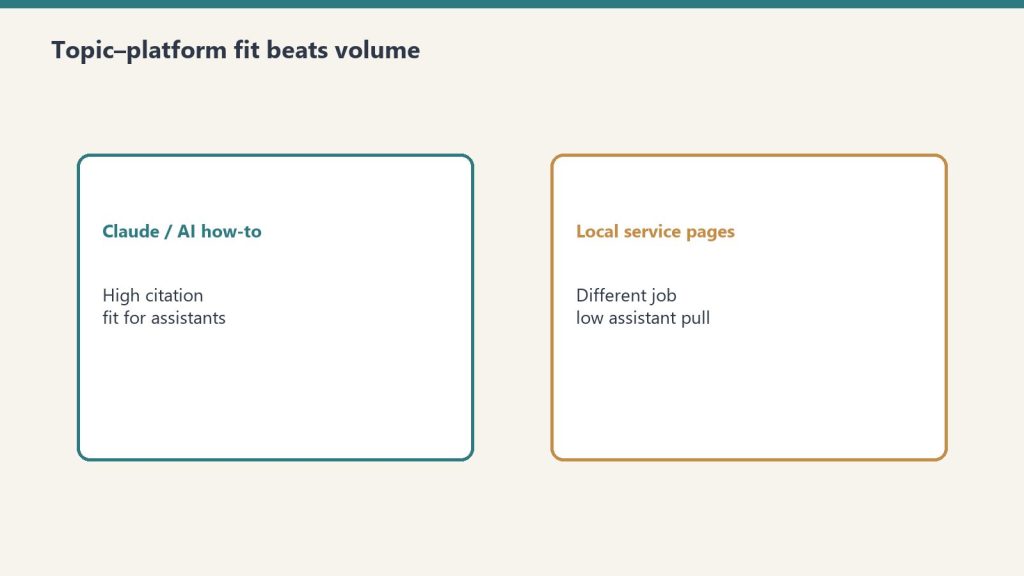
  • Building a Custom Media Operating System for Publishers

    Building a Custom Media Operating System for Publishers

    The Machine Room · Under the Hood

    The digital media landscape has transformed dramatically over the past decade, yet most media operations still rely on cobbled-together tool stacks that were never designed to work together. A content management system handles publishing. An email platform manages newsletters. A social media scheduler coordinates distribution. An analytics tool tracks performance. A spreadsheet calculates revenue. Each system operates in isolation, creating bottlenecks, data silos, and the constant friction of manual data entry and context-switching.

    For growing media companies and digital agencies, this fragmentation has become a competitive liability. The most successful media operators today are not those using the most tools—they’re the ones who have unified their entire operation around a single, integrated system purpose-built for how modern media actually works. They’ve built custom operating systems.

    Why Off-the-Shelf Solutions Fall Short

    Enterprise software companies optimize for universality. A content management system that serves everyone serves no one particularly well. These platforms excel at the mechanical task of storing and publishing content, but content management is only one piece of what a modern media operation requires.

    A complete media operation needs:

    • Content pipelines that move ideas from concept through creation, review, optimization, and publication at scale
    • Publishing infrastructure that can push a single piece of content to multiple properties, formats, and platforms simultaneously
    • Social distribution systems that schedule, test, and optimize content across different channels with different audience behaviors
    • Analytics frameworks that track not just pageviews but engagement, completion rates, and revenue impact
    • Client reporting dashboards that translate raw data into actionable business insights
    • Monetization tracking that connects content performance directly to revenue, whether through advertising, subscriptions, sponsorships, or affiliate links

    No off-the-shelf platform integrates all of these seamlessly. Instead, media companies spend engineering time and operational budget building custom connectors and workarounds. They lose data in translation between systems. They wait for updates that may never come. They’re constrained by platform limitations that slow decision-making and block innovation.

    Building a custom operating system means purpose-building software specifically for how you operate, rather than forcing your operation to fit generic software.

    The Modular Architecture Advantage

    A custom media operating system is not monolithic. The most effective architectures treat functionality as discrete, swappable modules that communicate through clean interfaces. This approach offers three critical advantages:

    Flexibility emerges immediately. If a new distribution channel becomes relevant, you add a module for it without touching the publishing pipeline. If your analytics provider releases a superior competitor, you swap the analytics module without rebuilding the entire system. If you acquire another media property with different workflows, you can plug in modified pipeline modules for that property while keeping everything else shared.

    Scalability becomes architectural rather than emergency. Each module scales independently. Your publishing pipeline can handle 100 pieces per day; your social distribution module can push to 50 channels. As your company grows, you upgrade the modules that are bottlenecks, not the entire system. This is how technology compounds advantage—a five-person operation grows to a 50-person operation without replacing core infrastructure.

    Speed is the operational outcome. Teams own their modules and iterate rapidly. The content team doesn’t wait for the analytics team to deploy a feature. The social team doesn’t hold up publishing for backend improvements. Coordination happens through module interfaces, not meetings. This is why companies with custom systems consistently out-publish and out-iterate competitors using SaaS products.

    The Content Pipeline: From Idea to Measurement

    At the heart of any media operating system is the content pipeline—the structured journey that transforms an idea into published, distributed, measured content.

    Ideation and planning begins with capturing story ideas, assigning them to writers, setting deadlines, and routing them through editorial review. A unified system makes it visible when the pipeline is clogged: too many stories in review, too few in creation, no ideas in planning. Teams can see what’s due tomorrow and what’s backed up three weeks out.

    Creation and collaboration means writers, editors, and designers work in the same system they submit through. They’re not emailing drafts or uploading to shared folders. Version control is automatic. Feedback is attached to text. Changes are tracked. A designer sees immediately when an article is approved and begins laying it out. There’s no gap between “done in editorial” and “ready for design.”

    Optimization is where off-the-shelf content management systems typically fail. A custom system can analyze content as it’s being written—checking for SEO signals, comparing headlines against historical performance data, suggesting topic angles based on current trends, identifying length sweet spots for different content types. This happens before publication, not after. By the time content goes live, you’ve already made it 20% more performant than it would have been otherwise.

    Publishing coordinates across multiple properties and formats. One article becomes a blog post, an email newsletter segment, a social series, a podcast episode transcript, and a video script—all generated or adapted automatically from a single source. Properties and formats that would normally take 10x manual work to maintain now run at the same resource cost as a single publication.

    Distribution is intelligent and tiered. Premium content gets featured placement. Evergreen content has its social lifecycle extended across months. Breaking news goes live immediately across all channels. Distribution schedules optimize for audience timezone and behavior. A single article can see its ROI multiply through strategic redristribution.

    Measurement closes the loop. Every piece of content has a performance dashboard. You see not just traffic but engagement depth, completion rates, and direct revenue impact. Over time, this data feeds back into optimization and ideation, creating a learning loop where each successive piece of content improves based on what actually resonates with your audience.

    AI as a Force Multiplier Across Every Layer

    Artificial intelligence is not one feature in a media operating system—it’s a fundamental capability that amplifies human creativity at every stage.

    In ideation, AI surfaces trending topics, gaps in your coverage, and angles you might have missed. It analyzes competitor content and audience sentiment to identify opportunities before they become obvious.

    In creation, AI generates first drafts from outlines, assists with reporting by summarizing research, and helps writers overcome blank-page paralysis. The technology doesn’t replace writers; it removes friction from the creation process.

    In optimization, AI rewrites headlines to test variants, adjusts keyword targeting, and restructures content for different platforms. It identifies the exact moment a reader typically stops engaging and suggests how to restructure to increase completion rates.

    In scheduling and distribution, AI predicts which time of day a piece will perform best on each platform, which headline variant will drive the most clicks, and which audience segment will be most engaged.

    In measurement, AI identifies which pieces are underperforming relative to their potential, surfaces unexpected correlation between content attributes and revenue, and predicts how an article will perform based on early signals rather than waiting weeks for conclusive data.

    The crucial insight is that AI embedded in a unified operating system multiplies across every stage. A writer benefits from AI-assisted creation. The editor benefits from AI-powered optimization. The publisher benefits from AI-driven distribution timing. The analyst benefits from AI-accelerated insight discovery. The entire operation becomes more capable.

    The Unified Dashboard: One View of Everything

    Fragmented tool stacks create fragmented dashboards. The CEO sees marketing metrics in one place, revenue in another, content performance in a third. No single view shows whether content strategy is working. No unified dashboard reveals how publishing volume connects to subscriber growth or revenue.

    A custom operating system enables a true unified dashboard—one interface where leadership sees content produced, content performance, audience growth, revenue impact, and resource utilization all at once. Not in separate tabs or exported reports, but in a single integrated view that updates in real time.

    This transparency changes behavior. When editors see that shorter articles drive higher completion rates, they adjust article length. When social managers see which content drives subscriptions, they adjust promotion strategy. When leadership sees publishing volume correlates directly with revenue growth, they invest in the capabilities that drive volume.

    The dashboard is not reporting—it’s operational intelligence that drives faster, better decision-making throughout the organization.

    Speed as Competitive Advantage

    A media company with a custom operating system can move faster than competitors locked into SaaS platforms in concrete ways:

    Deploy new features in days, not quarters. When an opportunity emerges—a new platform, a new monetization model, a new content format—a custom system can adapt immediately. SaaS platforms move on their own roadmap.

    Implement process improvements without software updates. Want to add a new approval stage or change how metrics are calculated? Modify your system immediately. In SaaS platforms, you request a feature and wait for the vendor to prioritize it.

    Solve problems with code, not workarounds. When a bottleneck emerges, you fix the system rather than building Excel spreadsheets or Zapier automations to compensate.

    Own your data and integrations completely. You’re not dependent on third-party APIs that change or deprecate. You don’t lose data in translation between platforms. You’re not subject to pricing increases from vendors.

    Maintain independence and optionality. A SaaS platform vendor can change pricing, change features, or go out of business. You’re insulated from that risk. You can also exit any service without losing your core infrastructure.

    In media, speed compounds into market position. The company that can publish three times faster, test twice as many ideas, and act on insights immediately builds an insurmountable advantage.

    The Path to Building

    Building a custom operating system is not trivial, but it’s become achievable for media companies of any scale. The technical barrier is lower than it was five years ago. Cloud infrastructure is cheap and reliable. Open-source components handle routine infrastructure. The work is focused on business logic specific to your operation, not infrastructure plumbing.

    The key is starting with your highest-friction, highest-value process. For most media companies, that’s the content pipeline. Build a system that takes a story from idea to measurement. Once that’s working, expand into the modules that create the most daily friction for your team.

    Over time, what began as a custom content pipeline becomes a complete operating system—uniquely built for how you operate and therefore more powerful than any generic alternative.

    Conclusion: The Operating System Mindset

    The shift from thinking about tools to thinking about systems fundamentally changes how media companies scale. Instead of asking “What tool should we add?” the question becomes “How does this capability fit into our integrated system?” Instead of accepting the constraints of off-the-shelf software, the question becomes “What would our ideal operation look like, and how do we build it?”

    Media companies that embrace this mindset—that invest in custom operating systems built for their specific operations—are the ones that will outpace competitors over the next decade. They’ll publish more, measure more accurately, innovate faster, and ultimately capture disproportionate share in an increasingly competitive media landscape.

    The operating system becomes the competitive advantage.

    {
    “@context”: “https://schema.org”,
    “@type”: “Article”,
    “headline”: “Building a Custom Operating System for a Media Company”,
    “description”: “The digital media landscape has transformed dramatically over the past decade, yet most media operations still rely on cobbled-together tool stacks that were ne”,
    “datePublished”: “2026-04-03”,
    “dateModified”: “2026-04-03”,
    “author”: {
    “@type”: “Person”,
    “name”: “Will Tygart”,
    “url”: “https://tygartmedia.com/about”
    },
    “publisher”: {
    “@type”: “Organization”,
    “name”: “Tygart Media”,
    “url”: “https://tygartmedia.com”,
    “logo”: {
    “@type”: “ImageObject”,
    “url”: “https://tygartmedia.com/wp-content/uploads/tygart-media-logo.png”
    }
    },
    “mainEntityOfPage”: {
    “@type”: “WebPage”,
    “@id”: “https://tygartmedia.com/building-custom-operating-system-media-company/”
    }
    }

    Visual summary

    Editorial illustration for Building a Custom Operating System for a Media Company - Tygart Media AI-generated visual
    AI-generated editorial illustration — Vertex AI Imagen 4 Standard

    About this image. This image was generated by Google’s Vertex AI Imagen 4 model as the featured visual for Building a Custom Operating System for a Media Company. Every image in the Tygart Media visual library is AI-generated, converted to WebP for optimal performance, and enriched with IPTC/XMP metadata for search engine discoverability.

    • Model: Vertex AI Imagen 4 Standard (imagen-4.0-generate-001)
    • Format: WebP (quality 90)
    • Aspect Ratio: 16:9
    • Metadata: IPTC/XMP injected (title, description, creator, rights, location)
    • Creator: Tygart Media — tygartmedia.com

    Part of The Studio collection — AI-generated visuals powering the Tygart Media content engine.