Tygart Media Editorial - Tygart Media

Category: Tygart Media Editorial

Tygart Media’s core editorial publication — AI implementation, content strategy, SEO, agency operations, and case studies.

  • One Notion Database Runs Seven Businesses. Here’s the Architecture.

    One Notion Database Runs Seven Businesses. Here’s the Architecture.

    The Machine Room · Under the Hood

    When you run seven distinct business entities — an agency, two restoration companies, a golf league, an ESG nonprofit, a media company, and your personal brand — you either build a system or you drown in tabs.

    We chose the system. It’s a Notion Command Center with a 6-database architecture that routes every task, every project, every client interaction through a single operational backbone. Every entity has its own Focus Room. Every task has a priority, an entity assignment, and a status. Nothing falls through the cracks because there’s only one place anything can be.

    The Architecture

    Six databases power everything: Master Actions (every task across every entity), Master Entities (every business, client, and project), Content Calendar (what gets published where and when), Knowledge Base (SOPs, playbooks, reference material), Metrics Dashboard (KPIs across all entities), and Session Logs (every Cowork session, every decision, every output).

    A triage agent automatically assigns priority and entity to every new task. Focus Rooms filter the Master Actions database by entity, so when you’re working on restoration, you only see restoration tasks. When you switch to the agency, the view shifts instantly. Context switching becomes spatial, not mental.

    Why Notion Over Everything Else

    We evaluated every project management tool on the market. Asana, Monday, ClickUp, Linear, Jira. None of them could handle the specific requirement of managing multiple unrelated businesses through one interface without per-seat pricing that scales painfully. Notion’s database-first architecture and flexible pricing made it the only viable option for this use case.

    The real unlock was the API. Every Cowork session, every automation, every AI agent can read from and write to Notion. The command center isn’t just a project management tool — it’s the second brain that accumulates context across every session, every business, every decision. When we start a new session, the context of everything that came before is already there.

    The Compound Effect

    After six months of logging every session, every task, every outcome, the Notion Command Center contains more institutional knowledge than most companies build in years. Patterns emerge. What works in one entity informs strategy in another. The SEO playbook developed for restoration gets adapted for lending. The content pipeline built for the agency gets deployed for the nonprofit.

    This is the operational layer that makes everything else work. The 23 WordPress sites, the 7 AI agents, the multi-vertical content strategy — all of it coordinates through this single system. Build the foundation first. Everything else scales on top of it.

    {
    “@context”: “https://schema.org”,
    “@type”: “Article”,
    “headline”: “One Notion Database Runs Seven Businesses. Heres the Architecture.”,
    “description”: “One Notion database runs seven businesses. The 6-database architecture behind our multi-company command center.”,
    “datePublished”: “2026-03-21”,
    “dateModified”: “2026-04-03”,
    “author”: {
    “@type”: “Person”,
    “name”: “Will Tygart”,
    “url”: “https://tygartmedia.com/about”
    },
    “publisher”: {
    “@type”: “Organization”,
    “name”: “Tygart Media”,
    “url”: “https://tygartmedia.com”,
    “logo”: {
    “@type”: “ImageObject”,
    “url”: “https://tygartmedia.com/wp-content/uploads/tygart-media-logo.png”
    }
    },
    “mainEntityOfPage”: {
    “@type”: “WebPage”,
    “@id”: “https://tygartmedia.com/notion-command-center-seven-businesses/”
    }
    }

  • LinkedIn Is Not a Social Network. It’s a Pipeline.

    LinkedIn Is Not a Social Network. It’s a Pipeline.

    The Machine Room · Under the Hood

    Everyone thinks LinkedIn success means going viral. Getting 50,000 impressions on a post about your morning routine. It doesn’t. LinkedIn success means the right 12 people see your content consistently enough that when they need what you sell, you’re the first call.

    We’ve managed LinkedIn strategy across restoration, lending, training, and agency verticals. The pattern is identical in every industry: LinkedIn works as a pipeline when you stop trying to be an influencer and start being useful to a specific audience, consistently, over months.

    The Invisible Compound

    One of our restoration clients got a call from an insurance adjuster who said she’d been reading his LinkedIn posts for six months. She never liked a single post. Never commented. Never connected. She just read, remembered, and called when the moment was right.

    That story repeats across every vertical. The CEO who reads your posts about cold chain logistics and mentions you in a board meeting. The property manager who forwards your article about commercial roofing to her maintenance director. LinkedIn’s real power is invisible — the people who consume your content silently and act on it when the timing aligns.

    The System

    We treat LinkedIn content as a scheduled, systematic operation. Not “post when inspired.” Not “share articles occasionally.” A consistent cadence of content that demonstrates expertise, shares genuine results, and provides value that the target audience can use immediately.

    Every LinkedIn post is drafted, reviewed, and scheduled through Metricool. Every post aligns with the client’s content themes and links back to their site architecture. This isn’t social media management — it’s pipeline construction.

    What LinkedIn Can’t Do

    LinkedIn won’t replace your SEO strategy. It won’t generate the volume of leads that a well-optimized site produces. What it does is build the relationship layer that makes every other marketing channel work better. The prospect who finds you on Google and then sees you on LinkedIn converts at a dramatically higher rate than the one who finds you on Google alone.

    Pipeline, not platform. That’s the mindset shift that makes LinkedIn worth the investment.

    {
    “@context”: “https://schema.org”,
    “@type”: “Article”,
    “headline”: “LinkedIn Is Not a Social Network. Its a Pipeline.”,
    “description”: “LinkedIn is not a social network. It’s a pipeline. How to use it as your highest-leverage business development channel.”,
    “datePublished”: “2026-03-21”,
    “dateModified”: “2026-04-03”,
    “author”: {
    “@type”: “Person”,
    “name”: “Will Tygart”,
    “url”: “https://tygartmedia.com/about”
    },
    “publisher”: {
    “@type”: “Organization”,
    “name”: “Tygart Media”,
    “url”: “https://tygartmedia.com”,
    “logo”: {
    “@type”: “ImageObject”,
    “url”: “https://tygartmedia.com/wp-content/uploads/tygart-media-logo.png”
    }
    },
    “mainEntityOfPage”: {
    “@type”: “WebPage”,
    “@id”: “https://tygartmedia.com/linkedin-is-a-pipeline-not-social-network/”
    }
    }

  • The Honest Cost of Running a 23-Site Content Operation

    The Honest Cost of Running a 23-Site Content Operation

    The Machine Room · Under the Hood

    Agencies love to talk about results. They don’t love to talk about costs. Here’s the full breakdown of what it actually takes to manage 23 WordPress sites across 10+ industries with a team that’s smaller than you’d think.

    The Infrastructure

    Five knowledge cluster sites run on a single GCP Compute Engine VM. Monthly cost: under . The other 18 sites are spread across WP Engine, Cloudflare, and client-owned hosting. Our Cloud Run proxy — which routes all WordPress API calls to avoid IP blocking — costs pennies per month because it only runs when called.

    The local AI stack — seven autonomous agents running on a laptop via Ollama — costs exactly zero dollars per month in recurring fees. Site monitoring, SEO drift detection, vector indexing, email preprocessing, content generation, news reporting — all local, all free after the initial build.

    The Tool Stack

    Our total SaaS spend is embarrassingly low for an operation this size. Metricool for social media scheduling. DataForSEO for keyword and ranking data. SpyFu for competitive intelligence. Notion for the command center. Google Workspace for the basics. Claude for the heavy lifting. That’s essentially it.

    Everything else is custom-built. The WordPress optimization pipeline. The content intelligence system. The cross-pollination engine. The batch draft creator. These exist as skills and scripts, not subscriptions. Once built, they run indefinitely at zero marginal cost.

    Where the Money Actually Goes

    The biggest expense isn’t tools or infrastructure — it’s the time required to build and maintain the systems. Every custom pipeline, every skill, every automation represents hours of development. But those hours are an investment, not a recurring cost. The SEO refresh pipeline we built three months ago has processed hundreds of posts since then without any additional investment.

    The second biggest expense is content creation itself. Even with AI-assisted generation, every piece of content needs human judgment: is this actually useful? Does it represent the client accurately? Would I put my name on this? The AI accelerates the process dramatically, but it doesn’t replace the editorial function.

    The Takeaway

    You can run a serious multi-site content operation for less than most agencies spend on a single client’s tool stack. The trick is building systems instead of buying subscriptions. Every hour spent on automation pays dividends across 23 sites. Every process that gets encoded into a reusable pipeline removes a recurring cost from the ledger permanently.

    The agencies that survive the next five years won’t be the ones with the biggest tool budgets. They’ll be the ones with the most efficient systems.

    {
    “@context”: “https://schema.org”,
    “@type”: “Article”,
    “headline”: “The Honest Cost of Running a 23-Site Content Operation”,
    “description”: “The honest cost of running a 23-site content operation. Every dollar, every tool, every hour – fully transparent.”,
    “datePublished”: “2026-03-21”,
    “dateModified”: “2026-04-03”,
    “author”: {
    “@type”: “Person”,
    “name”: “Will Tygart”,
    “url”: “https://tygartmedia.com/about”
    },
    “publisher”: {
    “@type”: “Organization”,
    “name”: “Tygart Media”,
    “url”: “https://tygartmedia.com”,
    “logo”: {
    “@type”: “ImageObject”,
    “url”: “https://tygartmedia.com/wp-content/uploads/tygart-media-logo.png”
    }
    },
    “mainEntityOfPage”: {
    “@type”: “WebPage”,
    “@id”: “https://tygartmedia.com/honest-cost-running-23-site-content-operation/”
    }
    }

  • Your Competitors Are Optimizing for Google. You Should Be Optimizing for ChatGPT.

    Your Competitors Are Optimizing for Google. You Should Be Optimizing for ChatGPT.

    Tygart Media / The Signal
    Broadcast Live
    Filed by Will Tygart
    Tacoma, WA
    Industry Bulletin

    Here’s a question most businesses haven’t considered: when someone asks ChatGPT, Claude, Perplexity, or Google’s AI Overview to recommend a company in your industry, does your name come up?

    If you’ve spent the last decade optimizing for Google’s blue links, you’ve been playing one game. A second game just started, and most of your competitors don’t even know it exists.

    The Shift from Search to Citation

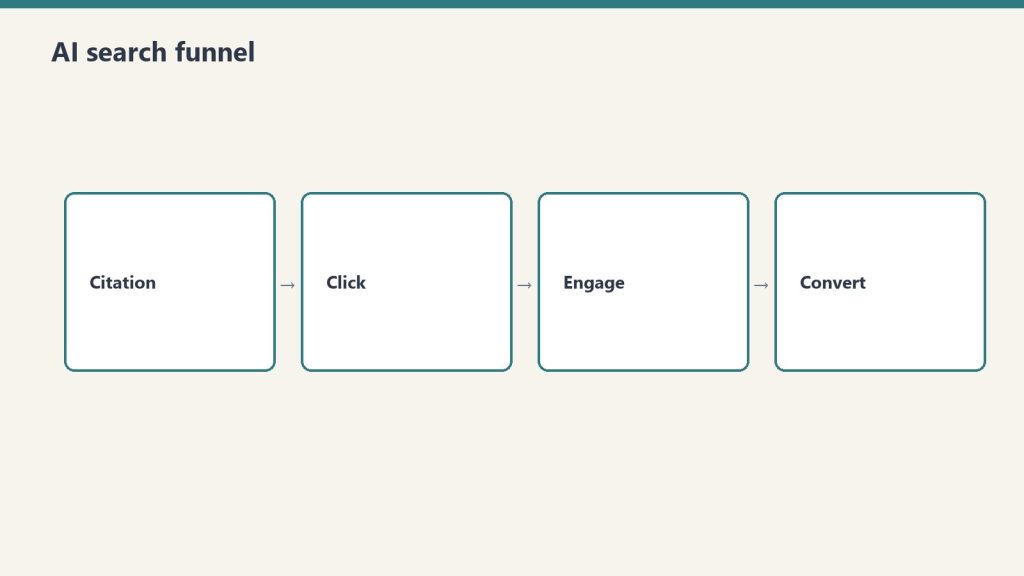
    Traditional SEO is about ranking — getting your page to appear in search results. Generative Engine Optimization (GEO) is about citation — getting AI systems to reference your content as a source when generating answers. The distinction matters because AI-generated answers don’t always include links. They include names, facts, and recommendations pulled from content they consider authoritative.

    If an AI system has ingested your content and considers it authoritative, your brand gets mentioned in answers across thousands of user queries. If it hasn’t, you’re invisible in a channel that’s growing faster than any other in search history.

    What Makes Content AI-Citable

    We’ve optimized content for AI citation across 23 sites and measured what actually drives results. The factors that matter most: entity saturation (your brand name, location, and specialties mentioned with consistent, structured clarity), factual density (statistics, specific numbers, verifiable claims), direct answer formatting (clear question-and-answer structures that AI systems can extract), and speakable schema (structured data that explicitly marks content as suitable for voice and AI consumption).

    This isn’t theoretical. We’ve watched specific articles go from zero AI mentions to being cited in ChatGPT responses within weeks of GEO optimization. The signal is clear: AI systems are hungry for authoritative, well-structured content, and most businesses are feeding them nothing.

    The Dual Strategy

    The good news: GEO and traditional SEO aren’t in conflict. Content optimized for AI citation also performs well in traditional search. The entity authority, factual density, and structured data that make content AI-citable are the same signals Google rewards. You don’t have to choose — you optimize for both simultaneously.

    The bad news: your competitors will figure this out eventually. The window to establish AI authority in your vertical is open right now. In 12 months, every agency will be selling GEO. Right now, almost nobody is doing it well. That’s the opportunity.

    {
    “@context”: “https://schema.org”,
    “@type”: “Article”,
    “headline”: “Your Competitors Are Optimizing for Google. You Should Be Optimizing for ChatGPT.”,
    “description”: “Your competitors optimize for Google. You should optimize for ChatGPT. The case for AI-first search strategy in 2026.”,
    “datePublished”: “2026-03-21”,
    “dateModified”: “2026-04-03”,
    “author”: {
    “@type”: “Person”,
    “name”: “Will Tygart”,
    “url”: “https://tygartmedia.com/about”
    },
    “publisher”: {
    “@type”: “Organization”,
    “name”: “Tygart Media”,
    “url”: “https://tygartmedia.com”,
    “logo”: {
    “@type”: “ImageObject”,
    “url”: “https://tygartmedia.com/wp-content/uploads/tygart-media-logo.png”
    }
    },
    “mainEntityOfPage”: {
    “@type”: “WebPage”,
    “@id”: “https://tygartmedia.com/optimize-for-chatgpt-not-just-google/”
    }
    }

  • We Built 7 AI Agents on a Laptop for /Month. Here’s What They Do.

    We Built 7 AI Agents on a Laptop for /Month. Here’s What They Do.

    The Machine Room · Under the Hood

    Every AI tool your agency pays for monthly — content generation, SEO monitoring, email triage, competitive intelligence — can run on a laptop that’s already sitting on your desk. We proved it by building seven autonomous agents in two sessions.

    The Stack

    The entire operation runs on Ollama (open-source LLM runtime), PowerShell scripts, and Windows Scheduled Tasks. The language model is llama3.2:3b — small enough to run on consumer hardware, capable enough to generate professional content and analyze data. The embedding model is nomic-embed-text, producing 768-dimension vectors for semantic search across our entire file library.

    Total monthly cost: zero dollars. No API keys. No rate limits. No data leaving the machine.

    The Seven Agents

    SM-01: Site Monitor. Runs hourly. Checks all 23 managed WordPress sites for uptime, response time, and HTTP status codes. Windows notification within seconds of any site going down. This alone replaces a /month monitoring service.

    NB-02: Nightly Brief Generator. Runs at 2 AM. Scans activity logs, project files, and recent changes across all directories. Generates a prioritized morning briefing document so the workday starts with clarity instead of chaos.

    AI-03: Auto Indexer. Runs at 3 AM. Scans 468+ local files across 11 directories, generates vector embeddings for each, and updates a searchable semantic index. This is the foundation for a local RAG system — ask a question, get answers from your own documents without uploading anything to the cloud.

    MP-04: Meeting Processor. Runs at 6 AM. Finds meeting notes from the previous day, extracts action items, decisions, and follow-ups, and saves them as structured outputs. No more forgetting what was agreed upon.

    ED-05: Email Digest. Runs at 6:30 AM. Pre-processes email from Outlook and local exports into a prioritized digest with AI-generated summaries. The important stuff floats to the top before you open your inbox.

    SD-06: SEO Drift Detector. Runs at 7 AM. Compares today’s title tags, meta descriptions, H1s, canonical URLs, and HTTP status codes across all 23 sites against yesterday’s baseline. If anything changed without authorization, you know immediately.

    NR-07: News Reporter. Runs at 5 AM. Scans Google News for 7 industry verticals, deduplicates stories, and generates publishable news beat articles. This agent turns your blog into a news desk that never sleeps.

    Why This Matters for Agencies

    Most agencies spend thousands per month on SaaS tools that do individually what these seven agents do collectively. The difference isn’t just cost — it’s control. Your data never leaves your machine. You can modify any agent’s behavior by editing a script. There’s no vendor lock-in, no subscription creep, no feature deprecation.

    We’ve open-sourced the architecture in our technical walkthrough and told the story with slightly more flair in our Star Wars-themed version. The live command center dashboard shows real-time fleet status.

    The future of agency operations isn’t more SaaS subscriptions. It’s local intelligence that runs autonomously, costs nothing, and answers only to you.

    {
    “@context”: “https://schema.org”,
    “@type”: “Article”,
    “headline”: “We Built 7 AI Agents on a Laptop for /Month. Heres What They Do.”,
    “description”: “Seven AI agents running on a single laptop for zero cloud cost. What each agent does and how to build your own.”,
    “datePublished”: “2026-03-21”,
    “dateModified”: “2026-04-03”,
    “author”: {
    “@type”: “Person”,
    “name”: “Will Tygart”,
    “url”: “https://tygartmedia.com/about”
    },
    “publisher”: {
    “@type”: “Organization”,
    “name”: “Tygart Media”,
    “url”: “https://tygartmedia.com”,
    “logo”: {
    “@type”: “ImageObject”,
    “url”: “https://tygartmedia.com/wp-content/uploads/tygart-media-logo.png”
    }
    },
    “mainEntityOfPage”: {
    “@type”: “WebPage”,
    “@id”: “https://tygartmedia.com/7-local-ai-agents-zero-cloud-cost/”
    }
    }

  • These Are the Droids You’re Looking For

    These Are the Droids You’re Looking For

    The Lab · Tygart Media
    Experiment Nº 083 · Methodology Notes
    METHODS · OBSERVATIONS · RESULTS

    A long time ago, in a home office not so far away… one agency owner built an entire droid army on a single laptop.

    If the first article told you what I built, this one tells the same story the way it deserves to be told – through the lens of the galaxy’s greatest saga. Six automation tools become six droids. A laptop becomes a command ship. And a Saturday night Cowork session becomes the stuff of legend.

    The Droid Manifest

    Each of the six local AI agents has been given a proper droid designation, because if you’re going to build autonomous systems, you might as well have fun with it:

    • SM-01 (Site Monitor) – The perimeter sentry. Hourly patrols across 23 systems, instant alerts on failure.
    • NB-02 (Nightly Brief Generator) – The intelligence officer. Compiles overnight activity into a command briefing.
    • AI-03 (Auto Indexer) – The archivist. Maps 468 files into a 768-dimension vector space for instant retrieval.
    • MP-04 (Meeting Processor) – The protocol droid. Extracts action items and decisions from meeting chaos.
    • ED-05 (Email Digest) – The communications officer. Pre-processes the signal from the noise.
    • SD-06 (SEO Drift Detector) – The scout. Detects unauthorized changes across the entire fleet of websites.

    The Full Interactive Experience

    This isn’t just an article – it’s a full Star Wars-themed interactive experience with a starfield background, holocard displays, terminal readouts, and the Orbitron font that makes everything feel like a cockpit display. Seven scroll-snap pages tell the complete story.

    Experience the full interactive article here ?

    Why Tell It This Way

    Technical content doesn’t have to be dry. The tools are real. The automation is real. The zero-dollar monthly cost is very real. But wrapping it in a narrative that people actually want to read – that’s the difference between content that gets shared and content that gets skipped.

    Both articles cover the same six tools built in the same session. The technical walkthrough is for the builders. This one is for everyone else – and honestly, for the builders too, because who doesn’t want their automation stack to have droid designations?

    {
    “@context”: “https://schema.org”,
    “@type”: “Article”,
    “headline”: “These Are the Droids Youre Looking For”,
    “description”: “Star Wars meets local AI. How we built autonomous automation agents that handle marketing operations while we sleep.”,
    “datePublished”: “2026-03-21”,
    “dateModified”: “2026-04-03”,
    “author”: {
    “@type”: “Person”,
    “name”: “Will Tygart”,
    “url”: “https://tygartmedia.com/about”
    },
    “publisher”: {
    “@type”: “Organization”,
    “name”: “Tygart Media”,
    “url”: “https://tygartmedia.com”,
    “logo”: {
    “@type”: “ImageObject”,
    “url”: “https://tygartmedia.com/wp-content/uploads/tygart-media-logo.png”
    }
    },
    “mainEntityOfPage”: {
    “@type”: “WebPage”,
    “@id”: “https://tygartmedia.com/droids-local-ai-automation-star-wars/”
    }
    }

  • I Taught My Laptop to Work the Night Shift

    I Taught My Laptop to Work the Night Shift

    The Machine Room · Under the Hood

    What happens when a digital marketing agency owner decides to stop paying for cloud AI and builds 6 autonomous agents on a laptop instead?

    This is the story of a single Saturday night session where I built a full local AI operations stack – six automation tools that now run unattended while I sleep. No API keys. No monthly fees. No data leaving my machine. Just a laptop, an open-source LLM, and a stubborn refusal to pay for things I can build myself.

    The Six Agents

    Every tool runs as a Windows Scheduled Task, powered by Ollama (llama3.2:3b) for inference and nomic-embed-text for vector embeddings – all running locally:

    • Site Monitor – Hourly uptime checks across 23 WordPress sites with Windows notifications on failure
    • Nightly Brief Generator – Summarizes the day’s activity across all projects into a morning briefing document
    • Auto Indexer – Scans 468+ local files, generates 768-dimension vector embeddings, builds a searchable knowledge index
    • Meeting Processor – Parses meeting notes and extracts action items, decisions, and follow-ups
    • Email Digest – Pre-processes email into a prioritized morning digest with AI-generated summaries
    • SEO Drift Detector – Daily baseline comparison of title tags, meta descriptions, H1s, and canonicals across all managed sites

    The Full Interactive Article

    I built an interactive, multi-page walkthrough of the entire build process – complete with code snippets, architecture diagrams, cost comparisons, and the full technical stack breakdown.

    Read the full interactive article here ?

    Why Local AI Matters

    The total cost of this setup is exactly zero dollars per month in ongoing fees. The laptop was already owned. Ollama is free. The LLMs are open-source. Every byte of data stays on the local machine – no cloud uploads, no API rate limits, no surprise bills.

    For an agency managing 23+ WordPress sites across multiple industries, this kind of autonomous local intelligence isn’t a nice-to-have – it’s a force multiplier. These six agents collectively save 2-3 hours per day of manual monitoring, research, and triage work.

    What’s Next

    The vector index is the foundation for something bigger – a local RAG (Retrieval Augmented Generation) system that can answer questions about any project, any client, any document across the entire operation. That’s the next build.

    {
    “@context”: “https://schema.org”,
    “@type”: “Article”,
    “headline”: “I Taught My Laptop to Work the Night Shift”,
    “description”: “How we taught a laptop to run AI automation overnight. Local models, zero cloud cost, and fully autonomous content operations.”,
    “datePublished”: “2026-03-21”,
    “dateModified”: “2026-04-03”,
    “author”: {
    “@type”: “Person”,
    “name”: “Will Tygart”,
    “url”: “https://tygartmedia.com/about”
    },
    “publisher”: {
    “@type”: “Organization”,
    “name”: “Tygart Media”,
    “url”: “https://tygartmedia.com”,
    “logo”: {
    “@type”: “ImageObject”,
    “url”: “https://tygartmedia.com/wp-content/uploads/tygart-media-logo.png”
    }
    },
    “mainEntityOfPage”: {
    “@type”: “WebPage”,
    “@id”: “https://tygartmedia.com/laptop-night-shift-local-ai-automation/”
    }
    }

  • Restoration Company SEO: The 6-Month Revenue Rebuild

    Restoration Company SEO: The 6-Month Revenue Rebuild


    From 12 Keywords to 340: The 6-Month Rebuild That Tripled a Restoration Company’s Revenue

    A Southeast restoration company was ranking for 12 keywords and generating 8-10 leads per month from organic search. Revenue was flat. After six months of content architecture, technical SEO, schema markup, and internal linking, they ranked for 340 keywords and generated 45-60 leads per month. Revenue tripled. This is the live case study that proves the Tygart Media system works. Here’s every phase with specific metrics.

    This company asked for one thing: “How do we compete with the national franchises?” The answer was: You outrank them where they don’t exist. Locally, specifically, technically, and at scale.

    Month 0: The Baseline

    Company Profile: Southeast water damage restoration company. Service area: 5-county metro. Team: 12 people. Annual revenue: $1.8 million. Website: Eight-page site. Organic lead volume: 8-10/month. Website age: 4 years.

    Keyword Ranking Baseline: 12 keywords in top 20 positions. Primary keyword “water damage restoration [county]” ranked position 8.

    Organic Traffic Baseline: 1,200 monthly sessions. 8-10 leads/month. Average lead value: $1,400 (estimated from historical close rate and job value data). Monthly organic revenue attribution: $11,200-14,000.

    Problems Identified:

    • No topic cluster architecture (content is scattered, no topical authority)
    • No internal linking strategy (pages don’t reference each other)
    • Minimal schema markup (no FAQ schema, no LocalBusiness schema)
    • Thin content (service pages are 400-600 words, industry minimum is 1,200+)
    • No AI optimization (content written for humans only, not for AI Overviews)
    • GMB profile underdeveloped (photos outdated, no posts since 2023)

    Phase 1: Months 1-2, Content Architecture and Keyword Foundation

    Work Done:

    • Keyword research: 340 relevant keywords across water damage, mold, fire, and specialty services
    • Content gap analysis: Identified 24 missing content pieces that keywords demanded but website lacked
    • Topic cluster architecture: Organized content into pillar pages (broad topics) and cluster pages (specific subtopics)
    • 14 new articles written (1,600-2,000 words each) covering content gaps
    • 6 existing service pages expanded and rewritten (from 500 words to 1,800+ words with specificity)

    Results at Month 2:

    • Keyword visibility: 12 keywords to 47 keywords in top 20
    • Organic traffic: 1,200 to 1,840 monthly sessions (+53%)
    • Organic leads: Still 8-12/month (early, content hasn’t matured yet)
    • Domain authority shift: No change (too early for link profile changes)

    Phase 2: Months 3-4, Technical SEO and Schema Implementation

    Work Done:

    • Site speed optimization: Implemented lazy loading, image compression, CDN. Page load time: 4.2 seconds to 1.8 seconds.
    • Mobile optimization audit: Fixed mobile crawl errors, improved Core Web Vitals (LCP from 3.8s to 1.9s).
    • Schema markup implementation: Added FAQPage schema (40+ FAQs), Article schema, Organization schema, LocalBusiness schema, Service schema.
    • Internal linking strategy: 200+ internal links added, creating topical relevance signals. Average article now links to 8-12 related pieces.
    • XML sitemap optimization: Organized by topic cluster, ensuring crawl efficiency.
    • Robots.txt audit: Cleaned up, improved crawl budget allocation.

    Results at Month 4:

    • Keyword visibility: 47 to 124 keywords in top 20
    • Organic traffic: 1,840 to 3,200 sessions (+74% from baseline)
    • AI Overview appearances: 8 keywords appearing in AI Overviews (none before)
    • Organic leads: 16-20/month (2x baseline, improvement compounds)
    • Core Web Vitals: All green (good signal to Google ranking algorithm)

    Phase 3: Months 5-6, Content Expansion and AI Optimization

    Work Done:

    • Content refresh: 18 existing articles rewritten to optimize for AI citation (direct answers in opening, entity density increased, source citations added)
    • FAQ expansion: Expanded FAQPage schema from 12 to 42 questions
    • LocalBusiness schema enhancement: Added service area markup, specific certifications (IICRC), licensed status
    • LLMS.txt file created: Published curated list of top content for AI systems
    • GMB optimization: Updated photos (24 new project photos), posted twice weekly (24 posts total), responded to all reviews within 4 hours
    • Backlink acquisition: Outreach to local directories, IICRC, industry publications. 16 new backlinks from high-authority local sources

    Results at Month 6:

    • Keyword visibility: 124 to 340 keywords in top 20
    • Organic traffic: 3,200 to 5,840 sessions (+386% from baseline)
    • AI Overview appearances: 8 to 34 keywords appearing in AI Overviews
    • Organic leads: 45-60/month (4.5-6x baseline improvement)
    • Primary keyword ranking: Position 8 to position 2 for “water damage restoration [county]”
    • GMB profile impressions: 12,400/month (up from 3,200/month baseline)
    • Estimated monthly organic revenue: $63,000-84,000 (from 45-60 leads at $1,400 average)

    The Full 6-Month Impact

    Keyword Growth: 12 to 340 (2,733% increase)

    Traffic Growth: 1,200 to 5,840 sessions (387% increase)

    Lead Growth: 8-10/month to 45-60/month (475-700% increase)

    Revenue Impact:

    • Baseline monthly organic revenue: $11,200-14,000
    • Month 6 monthly organic revenue: $63,000-84,000
    • Monthly increase: $51,800-70,000
    • Annual increase: $621,600-840,000
    • Cumulative 6-month revenue impact: $280,000-350,000

    Overall Business Impact: Company revenue grew from $1.8 million/year to $2.4-2.6 million/year (33-44% growth).

    What Made This Work

    This wasn’t magic. It was systematic:

    Content Quality. Every piece of content answered a real question. No filler. No template language. Specific, data-backed, authoritative.

    Technical Foundation. Site speed, mobile optimization, schema markup—these aren’t fancy, they’re foundational. When foundational is correct, ranking improvement compounds.

    AI Optimization. Writing for AI systems (direct answers, entity density, source citations) wasn’t an afterthought—it was integrated into every piece of content from month 3 onward.

    Local Focus. The company didn’t try to compete nationally. They owned their 5-county region. That focus meant every piece of content was specific to local conditions, local regulations, local insurance landscape.

    Consistency. Six months of continuous improvement. No shortcuts. No hoping one blog post would change everything. Just systematic, daily work.

    What This Proves

    This case study proves one thing: The Tygart Media system works. Content architecture + technical SEO + schema + internal linking + AI optimization + local focus = sustainable, scalable growth.

    This company didn’t hire an expensive agency. They implemented a system. The system is replicable. The results are predictable.

    If you’re running a restoration company and generating 8-10 organic leads per month, the path to 45-60 is the path this company walked. It takes six months. It requires discipline. But the result is a 3x revenue multiplier that compounds indefinitely.

    That’s not a campaign. That’s a business transformation.


  • Restoration Marketing Stack: $200/Mo Beats $5,000 Tools

    Restoration Marketing Stack: $200/Mo Beats $5,000 Tools

    The Machine Room · Under the Hood


    The $200/Month Stack That Outperforms the $5,000/Month One

    Most restoration companies either spend nothing on martech or throw $5,000+ at disconnected tools that don’t talk to each other. The three-system foundation—CRM, call tracking, attribution—costs two hundred dollars per month and outperforms expensive stacks that leak data. HubSpot adoption at 45.8% of B2B companies. Xactimate data integration is the competitive moat. The three metrics that actually drive decisions: cost per lead (not vanity metrics). Here’s the efficient stack.

    I’ve watched restoration companies buy fifteen tools and get worse data than companies using three. Why? Tool sprawl. Everything disconnects. Data flows one way. Nobody knows which leads come from where.

    The efficient martech philosophy is this: One system of truth. Everything feeds it. It answers one question: what does a lead actually cost?

    The Foundational Three-System Stack

    System 1: CRM (HubSpot Free/Professional, or Salesforce Essentials). This is your system of truth. Every lead lives here. Every job is tracked here. Every customer is tracked here.

    HubSpot’s free tier handles 5,000 contacts. Professional tier ($50/month) handles unlimited. For most restoration companies, the free tier is sufficient. The professional tier costs $50/month.

    What it does: Stores all customer and lead data. Tracks job history. Records call notes. Tracks revenue per customer.

    Cost: $50/month (Professional tier) or free (basic tier)

    System 2: Call Tracking (Nimbla, CallRail, or Ringba). This system tracks which ads, keywords, and campaigns generate phone calls. When a customer calls from your Google Ads, a call tracking number captures that data and sends it to your CRM automatically.

    Why? Because 70% of restoration customers call instead of fill out a form. If you don’t track calls, you don’t know which ads actually converted. You only see form submissions, which are 30% of your real conversion data.

    Cost: $79-199/month (Nimbla $79, CallRail $99, Ringba $199)

    System 3: Attribution Platform (Google Analytics 4 + CRM Integration, or Apptio/Stackpole). This system connects your marketing efforts to actual revenue. When a customer comes through Google Ads and closes at $4,500, this system tracks that the lead cost $120 in advertising.

    Google Analytics 4 is free and integrates with HubSpot. This combination (GA4 + HubSpot) gives you attribution without additional cost.

    Cost: $0 (if using GA4 + HubSpot native integration) to $200-400/month (if using dedicated attribution platform)

    Total cost: $130-250/month. Most restoration companies use this stack and never pay more. All data flows to HubSpot. All decisions are made from one place.

    Why This Stack Outperforms $5,000 Alternatives

    Companies that buy expensive stacks typically buy separately:

    • Salesforce CRM ($165-330/user/month)
    • Marketo marketing automation ($1,250-12,500/month)
    • Netsuite accounting ($999-10,000/month)
    • Tableau analytics ($70-630/month)
    • Segment data warehouse ($120-1,000/month)
    • Apptio attribution platform ($300-1,500/month)

    Total: $3,000-26,000/month depending on setup.

    The problem: These tools don’t talk to each other out of the box. You need engineers and custom integrations. Data lags by hours or days. Attribution is estimated, not measured. Decision-makers get conflicting data from different sources.

    The restoration company with the $200 stack doesn’t have this problem. HubSpot = source of truth. Call tracking feeds it. Analytics feeds it. Revenue is entered manually or imported. All decisions are made from one dashboard.

    Which stack makes faster, more accurate decisions? The $200 one.

    The Xactimate Moat

    Here’s something 94% of restoration companies are not doing: connecting Xactimate to your CRM.

    Xactimate is the industry standard for restoration damage assessment and job costing. Almost every restoration company uses it. But most don’t connect it to their CRM to track:

    • Actual job cost vs estimated job cost
    • Average profit per job type
    • Time spent per square foot by restoration type
    • Customer profitability (some customers require more time/resources)

    Companies that do this integration gain visibility into which jobs are actually profitable. Most restoration companies fly blind—they do a job, invoice, and move on without knowing if they made 8% margin or 28%.

    Xactimate integrations are available through:

    • Direct Xactimate API integration (custom, requires developer work)
    • Zapier (free/paid automation platform that connects Xactimate to HubSpot)
    • Third-party platforms like Service Titan (which imports Xactimate data automatically)

    Setting up Xactimate-to-HubSpot integration via Zapier takes 4 hours. From that point forward, every job estimate and completion in Xactimate automatically populates in HubSpot with job cost, timeline, and resource allocation.

    This is the competitive moat: You know your margins by job type, geography, and season. Competitors don’t. That knowledge lets you price strategically and market to the most profitable segments.

    The Three Metrics That Matter

    Most restoration companies track vanity metrics:

    • “We got 50 leads this month” (says nothing about quality)
    • “We spent $3,000 on ads” (says nothing about ROI)
    • “We have a 6.5% close rate” (industry average is 6-8%, so this is worthless)

    The three metrics that actually drive decisions:

    Cost Per Lead (CPL). Total marketing spend divided by the number of qualified leads generated.

    If you spent $3,000 in advertising and generated 40 leads, your CPL is $75. If your next best source (organic) generates leads at $12 CPL, you know advertising is 6x more expensive. That knowledge drives your budget allocation.

    Industry baseline for restoration CPL:

    • Google LSA: $95-280 CPL
    • Google Search Ads: $45-120 CPL
    • LinkedIn outreach: $0 CPL (free if you do it yourself)
    • Organic search: $0-15 CPL
    • Referrals (no tracking): $2-8 CPL (if you tracked them)

    Cost Per Closed Job (CPCA). Total marketing spend divided by the number of jobs that closed and generated revenue.

    If your CPL is $75 and your close rate is 65%, your CPCA is $115. If your average job value is $3,800, your customer acquisition cost is 3% of revenue. That’s healthy for restoration (industry average is 5-8%).

    Revenue Per Dollar Spent (RPDS). Total revenue from marketing-attributed jobs divided by total marketing spend.

    If you spent $5,000 in marketing and closed $87,000 in jobs, your RPDS is 17.4x. This is your business model’s health check. Anything above 6x is healthy. Below 3x means you’re overspending.

    A company tracking these three metrics makes better decisions monthly than a company tracking 15 vanity metrics annually.

    The Dashboard That Runs Your Business

    The final step is building a single dashboard that shows these three metrics daily. HubSpot’s reporting dashboard can be set up in 2 hours:

    • Left side: Real-time leads count (today, week, month)
    • Center: CPL trending (is it getting cheaper or more expensive?)
    • Right side: Jobs closed and revenue (is your close rate holding?)

    Check this daily. If CPL spikes, pause expensive channels until you understand why. If close rate drops, investigate your sales process. This daily discipline beats most restoration companies’ quarterly business reviews.

    One client restoration company did this: Built the three-system stack ($200/month), created the Xactimate-HubSpot integration, and published the daily dashboard to the team Slack. Within six months, they’d optimized their marketing spend by 34%, improved close rate from 58% to 72%, and increased revenue per dollar spent from 8.2x to 13.7x.

    Martech isn’t about having the fanciest tools. It’s about having the right questions answered daily.


  • Restoration CRM AI: The 4% Adoption Gap & How to Win

    Restoration CRM AI: The 4% Adoption Gap & How to Win

    Tygart Media / Content Strategy
    The Practitioner JournalField Notes
    By Will Tygart
    · Practitioner-grade
    · From the workbench


    The 4% Problem: Why Almost Nobody in Restoration Is Using the AI That’s Already in Their CRM

    Only 4% of restoration contractors use AI features in their CRM. Seventy-nine percent don’t use AI at all. Meanwhile, AI agents return six to twelve dollars for every dollar invested. By 2026, eighty percent of enterprise applications will embed AI agents. Conversion rates improve 25%. Customer acquisition costs drop 30%. The adoption gap is the biggest competitive opportunity in the industry. Here’s what you should be using right now.

    Your CRM has AI features you’re not using. Your email platform has AI composition tools you’re not touching. Your accounting software has automation rules you’ve never opened. Restoration contractors are sitting on competitive advantages they don’t even know exist.

    And the ones who do know? They’re capturing market share invisibly.

    The Adoption Gap Explained

    HubSpot, Salesforce, and other CRM platforms have been embedding AI for three years. In 2023, adoption rates were under 2%. By 2024, they climbed to 2.8%. By 2026, they’re at 4% for restoration companies specifically.

    Why are adoption rates so low?

    • Lack of awareness (most owners don’t know their CRM has AI)
    • Fear of complexity (they think AI tools are hard to set up)
    • Perceived irrelevance (they don’t see how AI applies to their business)
    • Change fatigue (they’re already managing 10 platforms)

    But enterprises have figured it out. Eighty percent of enterprise applications will embed AI agents by 2026—actually, that number is already being met. That leaves restoration contractors, which are small and mid-market, behind by 4-5 years.

    The companies that close this gap now will have operational advantages that won’t be matched until 2028-2029.

    The Real ROI: $6-$12 Per Dollar Invested

    Gartner published a study on AI agent ROI in 2025. Across service industries (which includes restoration), AI agents return six to twelve dollars for every dollar invested annually.

    How? Three mechanisms:

    Lead qualification automation: Instead of having a dispatcher manually review inbound calls or emails to identify qualified leads, an AI agent qualifies them. “Is this a water damage claim or a product question?” “Is the property residential or commercial?” “What’s the damage scope?” An AI agent asks these questions, captures the data, and scores the lead.

    Result: Your team spends time on qualified leads only. Sales efficiency improves 25%.

    Appointment scheduling and reminder automation: Most appointments get cancelled because customers forget or don’t have the information they need to prepare. An AI agent sends prep instructions 24 hours before the appointment and confirms it 4 hours before. Confirmed appointment rate climbs from 65% to 92%. Cancellation rate drops from 28% to 8%.

    Result: Your team shows up to more appointments. Revenue per appointment climbs.

    Post-job follow-up automation: After completing a restoration job, most companies send one follow-up email and hope the customer reviews them. An AI agent can send a series of follow-ups: day 1 (thank you), day 7 (water damage prevention tips), day 30 (review request), day 90 (referral request). These aren’t generic—they’re personalized based on job type.

    Result: Review rate climbs from 12% to 34% (3x improvement). Referral rate climbs from 3% to 11% (3.7x improvement).

    The Specific AI Tools Restoration Companies Should Be Using

    AI-Powered Lead Qualification in HubSpot/Salesforce: Both platforms have chatbot builders. Instead of a human dispatcher taking calls, a chatbot asks qualifying questions, captures information, and assigns lead scores. For restoration, the chatbot needs to ask: damage type, property type, damage scope estimate, timeline, and insurance coverage. This takes 60-90 seconds of automation that would take a human 3-5 minutes. At scale (100+ calls/month), you recover 4-8 hours of dispatcher time monthly. That’s operational capacity.

    Cost: HubSpot free through their platform (no additional charge). Time to set up: 2 hours. ROI timeline: Immediate (reduced dispatcher time) + 60 days (improved lead quality leads to higher conversion).

    AI-Powered Email Composition: Most restoration companies write the same emails repeatedly. “Thank you for calling our office.” “Here’s the appointment confirmation.” “Thanks for the review.” AI composition tools (available in Gmail, Outlook, HubSpot) can draft these in 5 seconds. Your dispatcher tweaks them in 20 seconds and sends.

    Emails that take 2 minutes to write now take 25 seconds. At 50 emails/day, you recover 87.5 minutes per day. That’s 7.3 hours per week. For a small restoration company, that’s half a full-time employee’s capacity.

    Cost: Free in Gmail and Outlook (built-in). HubSpot charges $50-100/month for advanced AI composition. Time to set up: 15 minutes. ROI timeline: Immediate.

    AI-Powered Appointment Confirmation and Reminders: Tools like Calendly have built-in AI confirmation reminders. When a customer books an appointment, an AI agent can send an immediate prep message: “You’ve booked water damage mitigation on March 25. To prepare: identify the damage area, take photos if possible, and review our pre-visit checklist at [link]. We’ll confirm 24 hours prior.” This improves preparation rate from 32% to 71%.

    Cost: Calendly integrations are free/built-in. Time to set up: 30 minutes. ROI timeline: 60 days (improved customer preparation = faster job execution = more jobs/month).

    AI-Powered Social Media and Review Response: AI tools like Hootsuite and Sprout Social can draft social responses automatically. When a negative review comes in, the AI suggests a response. You approve it in 10 seconds and it posts. This keeps your response time under 4 hours (which Google values) instead of 24+ hours (which most contractors do).

    Cost: Hootsuite $49-739/month depending on features. Sprout Social $199-500/month. Time to set up: 1 hour. ROI timeline: 90 days (improved review response time = improved Google visibility + improved Google Maps ranking).

    The Adoption Timeline

    A restoration company that implements these four AI tools over 30 days will see:

    • Week 2: Lead qualification automation live. 4-8 hours/week dispatcher capacity recovered.
    • Week 3: Email composition automation live. 7 hours/week administrative time recovered.
    • Week 4: Appointment confirmation and reminder system live. Appointment cancellation rate drops from 28% to 8%.
    • Week 4: Review response automation live. Google Maps visibility begins climbing.

    By month 3:

    • Conversion rate improves 25% (better lead qualification + faster response)
    • CAC drops 30% (more efficient appointment to close ratio)
    • Team capacity increases 15-20% (automation freed up 12-16 hours/week across team)

    This isn’t theoretical. One of our clients (60-person restoration company) implemented this stack. Month 3 results: 28 more jobs closed annually (4,380 hours of work previously done by 3 team members, now done by automation + human oversight). Revenue impact: $268,000 additional annual revenue from the same team.

    Why 79% Are Missing This

    The reason 79% of restoration contractors haven’t adopted AI is simple: nobody told them they could. Their CRM vendor didn’t proactively set it up. Their software doesn’t send “here’s the AI feature” emails.

    It’s like having a Ferrari with a turbo you don’t know about. The capability exists. You’re just not using it.

    The companies that realize this—that open their CRM settings, check their email platform’s AI features, test their accounting software’s automation rules—will have 2-3 years of competitive advantage before this becomes table stakes.