Tygart Media Editorial - Tygart Media

Category: Tygart Media Editorial

Tygart Media’s core editorial publication — AI implementation, content strategy, SEO, agency operations, and case studies.

  • You’re Already Creating Content. You’re Just Not Capturing It.

    You’re Already Creating Content. You’re Just Not Capturing It.

    Tygart Media / Content Strategy
    The Practitioner JournalField Notes
    By Will Tygart · Practitioner-grade · From the workbench

    My partner Stefani hit record on her phone during a conversation we were having over coffee. She wasn’t writing a blog post. She wasn’t preparing a presentation. She was just thinking out loud about a client situation — how to explain a complex system to someone who needed it simple — and she wanted to get the words down before they disappeared.

    She emailed me the transcript that afternoon.

    By end of day, that conversation had become six published articles, six scheduled LinkedIn posts, and a set of knowledge nodes logged into our operating system — each one capturing a distinct idea that had surfaced naturally in a ten-minute exchange between two people thinking out loud.

    The ingredient was a voice memo. The process took a conversation that was already happening and made sure it didn’t disappear.

    The Problem Isn’t That You Don’t Have Enough to Say

    Most business owners I talk to feel like they don’t create enough content. They know they should be publishing more, sharing more, building more visibility. But when they sit down to write something, it feels hard. The blank page. The pressure to make it good. The time it takes.

    Here’s what I’ve come to believe: the problem isn’t output. The problem is capture.

    You are already creating content constantly. Every client conversation where you explain something clearly. Every time you talk through a decision with a partner or a team member. Every frustrated observation you make in the car on the way home from a job site. Every question a prospect asks that you answer so well they lean forward in their chair.

    That’s all content. That’s all knowledge. And almost all of it disappears the moment the conversation ends.

    Why Talking Is the Natural Input Layer

    The reason most note-taking systems fail is that note-taking interrupts thinking. The moment you stop to write something down, you break the flow of the idea. So people don’t do it. The thinking happens, it’s good, and then it’s gone.

    Talking doesn’t interrupt thinking. Talking is thinking, for most people. It’s how ideas get pressure-tested, refined, and articulated. The best version of an idea is often the one that comes out in a good conversation — not the one that gets written in isolation later.

    Which means if you can capture the conversation, you’ve captured the thinking at its best. Not a summary. Not notes. The actual thought, in your actual voice, as it was happening.

    The Reframe That Changes Everything

    You are not creating content. You are not losing what you already made.

    That reframe matters because it removes the performance pressure. You don’t have to be clever or polished or prepared. You just have to be willing to record the conversations that are already happening — the ones where you’re explaining your craft, thinking through a problem, or working something out with someone who pushes back in useful ways.

    The transcript of that conversation is the raw ingredient. Everything that comes after — the articles, the posts, the internal documentation — is distillation. Pulling out what’s there and giving it a form that other people can use.

    What This Looks Like in Practice

    The simplest version of this system has three parts:

    1. Record conversations worth keeping. Not every conversation — just the ones where something real is being worked out. Client calls where you explain something clearly. Partner conversations where an idea clicks. Voice memos when you’re driving and something occurs to you. The bar is low: if it felt like a good thought, it’s worth capturing.
    2. Get the transcript. Most phones transcribe automatically now. Email it to yourself. Drop it into a folder. The transcript doesn’t need to be clean — raw, stream-of-consciousness transcripts often contain the best material precisely because the thinking wasn’t performed for an audience.
    3. Distill it. This is where the knowledge nodes emerge. Read through the transcript and ask: what are the distinct ideas here? Not the whole conversation — the discrete, transferable concepts that could stand on their own. Name them. Write a short version of each. Now you have content, internal documentation, and a record of how your thinking has developed.

    The Compound Effect Over Time

    The part that most people underestimate is what this builds over time.

    Every distilled conversation adds to a growing body of captured knowledge. Your frameworks. Your methodologies. The specific language you’ve developed for explaining what you do. The patterns you’ve noticed across clients. The hard-won lessons from mistakes.

    Most business owners carry all of this in their heads. It lives and dies with them. It can’t be trained on, delegated from, or built upon because it was never written down. It’s invisible expertise — genuinely valuable, completely uncaptured.

    The voice-first capture habit changes that. Slowly, conversation by conversation, your knowledge base grows. Not because you sat down to build a knowledge base — but because you stopped letting good thinking disappear.

    The Lowest Friction Version

    You don’t need a system. You need a habit with almost no friction:

    Before a conversation you expect to be generative — a client call, a strategy session, a working lunch — hit record. Use your phone’s native voice memo app, or any transcription tool you already have. Tell the other person if it feels right. Most people don’t mind, and some are flattered.

    After, spend five minutes skimming the transcript. Pull out anything that felt sharp. Drop it somewhere — a note, an email to yourself, a folder. That’s it. The distillation can happen later, in batches, when you have help or time.

    The bar for what counts as worth capturing is lower than you think. An offhand explanation that clicked. A way of framing a problem that was new. A question you answered well. These are the raw materials of everything — your content, your training materials, your positioning, your pitch. They’re already in the conversations you’re already having.

    You’re just not catching them yet.

    What is voice-first knowledge capture?

    Voice-first knowledge capture is the practice of recording conversations — client calls, partner discussions, voice memos — and using the transcripts as the raw material for content, documentation, and internal knowledge. It treats talking as the natural input layer for knowledge creation.

    Why is a voice memo better than taking notes?

    Note-taking interrupts thinking. Talking doesn’t. The best version of an idea often surfaces in conversation — when you’re explaining something to someone, being pushed back on, or working through a problem in real time. A transcript captures that thinking at its peak, in your actual voice.

    What do you do with a conversation transcript?

    Read through it and pull out the discrete, transferable ideas — the knowledge nodes. Each one can become a piece of content, a section of internal documentation, or an entry in a knowledge base. The transcript is the raw ingredient; distillation is the process of giving those ideas a usable form.

    How much time does this take?

    The capture itself takes no additional time — you’re recording conversations that are already happening. The distillation can be done in batches and takes as little as five minutes per conversation for a first pass. The system compounds over time without requiring significant ongoing effort.

    Do you need special tools for this?

    No. A phone’s native voice memo app and any transcription tool (many are built into phones and email clients now) are sufficient to start. The system doesn’t require new software — it requires a new habit around the conversations you’re already having.

  • Notion-Deep, Surface-Simple: How to Build Knowledge Systems That Actually Get Used

    Notion-Deep, Surface-Simple: How to Build Knowledge Systems That Actually Get Used

    Tygart Media Strategy
    Volume Ⅰ · Issue 04Quarterly Position
    By Will Tygart Long-form Position Practitioner-grade

    There’s a useful architecture for how to hold complex knowledge inside an organization while keeping it accessible to the people who need to act on it.

    Call it Notion-Deep, Surface-Simple: build the internal knowledge structure as deep as you want, then surface it in the voice and format of whoever needs to use it.

    The Core Idea

    Most knowledge management systems fail in one of two directions.

    The first failure: they optimize for depth and comprehensiveness at the expense of usability. The system knows everything, but nobody can navigate it. It becomes the internal equivalent of a technical manual that everyone agrees is accurate and nobody reads.

    The second failure: they optimize for simplicity at the expense of utility. The output is clean and accessible, but the underlying knowledge is shallow. When edge cases show up — and they always do — the system has no answer.

    Notion-Deep, Surface-Simple resolves this by treating depth and accessibility as separate layers with separate jobs, rather than as tradeoffs against each other.

    What the Deep Layer Does

    The deep layer — think of it as the Notion workspace, the knowledge base, the internal documentation — is where you hold everything. It doesn’t compress. It doesn’t simplify. It doesn’t optimize for any particular audience.

    This layer holds the full process documentation. The exception cases. The history of why decisions were made. The technical architecture. The client-specific context that only your team knows. The frameworks that took years to develop. All of it goes here, as deep as it needs to go.

    The standard for this layer is completeness and retrievability — not readability for a general audience.

    What the Surface Layer Does

    The surface layer is not a simplified version of the deep layer. It’s a translation of it — rendered in the specific voice, vocabulary, and complexity level of whoever needs to act on it.

    The translation is the work. You pull from the deep layer exactly what’s needed for a specific person to make a specific decision or take a specific action. You render it in their language. You strip everything else.

    A prospect presentation pulls from the deep layer but speaks in the prospect’s language. A client onboarding document pulls from the deep layer but speaks in operational terms the client’s team actually uses. A quick brief for a new team member pulls from the deep layer but surfaces only the context they need to start.

    The depth doesn’t disappear. It’s available when the conversation earns it. But the default output is calibrated, not comprehensive.

    Why This Architecture Works

    When depth and accessibility are treated as tradeoffs, you’re always sacrificing one for the other. Every time you simplify, you lose fidelity. Every time you add depth, you lose accessibility.

    When they’re treated as separate layers, neither has to compromise. The deep layer stays complete. The surface layer stays accessible. The intelligence is in the translation — knowing what to pull, what to leave in, and how to render it for who’s in front of you.

    This also means the system scales. As the deep layer grows, the surface layer doesn’t have to get more complex. It just draws from a richer source. The translation skill remains constant even as the underlying knowledge compounds.

    How to Build This in Practice

    The starting point is a clear separation of intent. When you’re adding something to your knowledge base — documentation, process notes, client history, research — you’re feeding the deep layer. Don’t self-censor for a hypothetical reader. Put in everything that’s true and useful.

    When you’re building an output — a proposal, a client update, a training document, a content piece — you’re working the surface layer. Start from the deep layer as your source. Then translate deliberately: who is this for, what do they need to know, and in what voice will it land?

    Over time, the habit becomes automatic. The deep layer becomes the intelligence layer. The surface layer becomes the communication layer. And the translation between them — which is where most of the real thinking happens — becomes the core competency.

    What does Notion-Deep, Surface-Simple mean?

    It’s a knowledge architecture principle: build your internal knowledge base as deep and comprehensive as you need, then surface outputs from it in the specific voice and format of whoever needs to act on the information. Depth and accessibility are separate layers, not tradeoffs.

    What’s the difference between simplifying and translating?

    Simplifying removes information. Translating renders the same information in a different register. The goal is translation — pulling the right pieces from the deep layer and expressing them in the receiver’s language, without losing the underlying substance.

    Why do most knowledge systems fail?

    They optimize for either depth or accessibility, treating them as competing priorities. The result is either a comprehensive system nobody navigates or an accessible system that can’t handle edge cases.

    How does this scale as the knowledge base grows?

    As the deep layer grows richer, the surface layer draws from a better source without becoming more complex itself. The translation skill stays constant even as the underlying knowledge compounds over time.

  • Input/Output Symmetry: Return the Answer in the Voice It Was Asked

    Input/Output Symmetry: Return the Answer in the Voice It Was Asked

    Tygart Media / Content Strategy
    The Practitioner JournalField Notes
    By Will Tygart · Practitioner-grade · From the workbench

    There is a simple principle that improves almost every type of professional communication, and it costs nothing to implement.

    Call it input/output symmetry: whatever voice someone uses to ask a question, that is the voice you return the answer in.

    What Input/Output Symmetry Means

    When someone asks you something, they give you a signal. The signal is not just the question itself — it’s the way they asked it. The vocabulary they chose. The complexity level they assumed. The tone they used. The length of their message.

    Input/output symmetry says: honor that signal in your response.

    If someone sends you a two-sentence question in plain language, a five-paragraph technical response is a mismatch. Not because five paragraphs is wrong — but because the complexity of your output dramatically exceeds the complexity of their input. That asymmetry creates friction. It says, implicitly, that you didn’t fully receive what they sent.

    If someone sends you a detailed, technically sophisticated question that shows they’ve done their homework, a shallow surface-level answer is an equal mismatch. It signals that you underestimated them.

    Symmetry is the standard. Match the register. Match the depth. Match the voice.

    This Isn’t Just a Sales Principle

    Input/output symmetry gets talked about most often in sales contexts — mirror the prospect, match their energy, build rapport through language alignment. All of that is real.

    But the principle applies equally in operations, in content, and in internal communication.

    In operations: When a frontline employee is being trained on a new process, the training document should be written in the language the frontline employee uses — not the language of the system architect who designed the process. The person executing a step in a hospital intake doesn’t need to know it’s called a “multi-step EHR synchronization workflow.” They need to know: go to that computer, open that folder, put it in the file.

    In content: When you’re writing for a specific audience, the output should match the complexity and vocabulary of how that audience talks about the topic — not how you talk about it internally. This is the difference between content that feels written for the reader and content that feels written for the writer’s own credibility.

    In client communication: When a client asks a simple question, give a simple answer. When a client asks a complex question, give a complex answer. The mistake is having only one mode and applying it to every interaction regardless of input signal.

    The Common Failure Mode

    The most common failure of input/output symmetry is output that always exceeds input complexity. This is the “I give them too much back” pattern.

    It comes from a good place — you want to be thorough, comprehensive, and demonstrably expert. But when the input was simple and the output is exhaustive, the net effect is not “this person is impressive.” The net effect is “this person doesn’t listen.”

    The fix is not to give less. The fix is to actually receive the input — the full signal, including how it was asked — before you respond. Let that signal dictate the register of your output.

    A Practical Test

    Before sending any significant response — email, proposal, pitch, explanation — read what was sent to you one more time. Ask yourself: does my response match the register, length, and vocabulary of what they sent? If the answer is no, that’s your edit.

    You don’t have to simplify the underlying work. You have to calibrate the delivery. The sophistication is still there. The architecture is still there. It’s just rendered in a form that matches the receiver.

    What is input/output symmetry?

    Input/output symmetry is the principle of returning an answer in the same voice, register, and complexity level as the question that was asked. The way someone asks gives you a signal about how they want to receive information — the principle says to honor that signal.

    Is this just about sales communication?

    No. Input/output symmetry applies equally to operations, content, training documentation, and internal team communication — anywhere one person is conveying information to another and the receiver’s context matters.

    What’s the most common failure of this principle?

    Output that consistently exceeds input complexity. Responding to a simple two-sentence question with five paragraphs of technical detail. It signals that you didn’t fully receive what was sent.

    How do you apply this in practice?

    Before responding, re-read what was sent. Ask: does my response match the register, length, and vocabulary of what they sent? If not, calibrate before you send.

  • Universal Language vs. Company Language: Two Vocabulary Layers Every Communicator Needs

    Universal Language vs. Company Language: Two Vocabulary Layers Every Communicator Needs

    Tygart Media / Content Strategy
    The Practitioner JournalField Notes
    By Will Tygart · Practitioner-grade · From the workbench

    There are two distinct vocabulary layers that govern how people communicate inside any industry, and most content and communication work conflates them.

    Understanding the difference — and building both deliberately — is one of the highest-leverage things you can do to make your communication feel native rather than imported.

    Layer One: Universal Industry Language

    Universal industry language is the shared vocabulary that travels consistently across every company in a vertical. It’s the terminology that practitioners use without defining it, because everyone who works in that field already knows what it means.

    In healthcare: the “face sheet” is the document that summarizes a patient’s information at the top of a chart. Every hospital calls it that. You don’t explain it — you just use it.

    In property restoration: “Resto” and “Dehu” are shorthand for specific categories of work. In retail: MOD means manager on duty. In logistics: ETA, FTL, LTL are assumed knowledge.

    This layer is learnable. It lives in trade publications, certification materials, job descriptions, and any content written by and for industry practitioners. Build a glossary of universal industry terms before you write a word of content for a new vertical, and your work immediately reads as insider rather than outsider.

    Layer Two: Company Language

    Company language is the internal dialect that develops within a specific organization. It doesn’t transfer across companies, even within the same industry. It’s shaped by team culture, internal tools, historical decisions, and sometimes just the way one influential person at the company talked about something early on.

    This is the vocabulary that shows up in internal Slack channels, in how a team describes their own workflow, in the nicknames that get attached to products or processes or recurring situations. It often never makes it into any official documentation. You learn it by listening, by reading the company’s own content carefully, and sometimes by just asking.

    A prospect might refer to their CRM as “the system.” Their onboarding process might be internally called something that has nothing to do with what it’s officially named. Their main product line might have an internal nickname that their sales team uses but their marketing team doesn’t.

    When you use their language back at them, the effect is immediate. It signals that you paid attention. It creates a sense that you are already on their team, not pitching from outside it.

    Why Most Communication Work Stops at Layer One

    Layer one is the obvious layer. You can research it. You can build a glossary from public sources. It’s systematic and scalable.

    Layer two requires proximity. It requires listening before speaking. It requires time with the actual humans at the company, not just their external-facing content. Most content and outreach workflows don’t have a step for this — not because it isn’t valuable, but because it’s harder to systematize.

    The opportunity is there precisely because most people skip it.

    How to Build Both Layers Before You Write

    For layer one: read trade publications, certification materials, and forum conversations in the target vertical. Flag every term used without definition. Build a reference glossary before any content is written.

    For layer two: read the company’s blog posts, case studies, job postings, and leadership team’s LinkedIn content. Look for language that’s idiosyncratic — terms or framings that don’t appear in competitors’ content. If you have access to the prospect directly, listen carefully in early conversations for words they use consistently. Use those words back.

    Together, these two layers give you something most communicators don’t have: a vocabulary that feels native at both the industry level and the individual company level. That combination creates the feeling — even if the prospect can’t articulate why — that you understand them specifically, not just their category.

    What is universal industry language?

    Universal industry language is shared terminology that travels consistently across all companies in a vertical — terms every practitioner knows without needing a definition. Examples include “face sheet” in healthcare or “Reto” in restoration.

    What is company language?

    Company language is the internal dialect that develops within a specific organization — nicknames, shorthand, and internal framing that doesn’t transfer across companies, even in the same industry.

    Why does using a company’s own language matter?

    When you use a prospect’s or client’s specific language back at them, it signals that you listened before you spoke. It creates the feeling that you’re already on their team rather than pitching from outside it.

    How do you research company-specific language?

    Read their blog, case studies, job postings, and leadership team’s LinkedIn content. Look for terms that appear consistently but don’t show up in competitors’ content. In direct conversations, listen for words they use repeatedly and use those words back.

  • The Complexity Dial: Finding the Register Where Expertise Meets Accessibility

    The Complexity Dial: Finding the Register Where Expertise Meets Accessibility

    Tygart Media / Content Strategy
    The Practitioner JournalField Notes
    By Will Tygart · Practitioner-grade · From the workbench

    There’s a specific tension every expert faces when communicating their work. It’s not about whether you know enough. It’s about where you set the dial.

    Go too technical: the work isn’t approachable. The prospect can’t see themselves using it. The client feels like they need a translator just to follow the conversation. They disengage — not because they’re not smart, but because the cost of staying engaged is too high.

    Go too simple: the work doesn’t appear valuable. You’ve hidden the sophistication that earns the premium. The prospect sees a commodity. They wonder if they could just do this themselves.

    The complexity dial is real. And finding the right setting isn’t instinct — it’s a learnable skill.

    Why the Default Is Always Too Technical

    Experts default toward complexity for a reason that feels rational: you want people to understand what you built. You’ve invested in the architecture, the system, the methodology. You want credit for it.

    The problem is that credit for complexity doesn’t come from complexity itself. It comes from the outcome the complexity produces. And outcomes are most legible when they’re explained simply.

    When someone asks you what you do, they are not asking for the architecture. They are asking for the result. “I build AI-powered content systems that rank on Google” is more credible to a non-technical buyer than a description of the pipeline that produces it — even though the pipeline is impressive, and even though you should absolutely understand and be able to speak to it when the moment calls for it.

    How to Find the Right Setting

    The right complexity setting is not a fixed point. It moves based on who you’re talking to, what stage of the relationship you’re in, and what decision you’re trying to help them make.

    A useful calibration question: what is the one thing this person needs to understand to move forward?

    Not the ten things. Not everything you know. The one thing. That’s your anchor. Build your explanation from that point outward, adding complexity only as far as is necessary to make that one thing credible and actionable.

    Another useful signal: listen for when someone stops asking follow-up questions. In a live conversation, the questions stop either because they understand or because they’ve given up. Your job is to read which one it is. Silence after complexity is usually disengagement, not comprehension.

    The Two-Version Rule

    For anything you communicate regularly — your services, your process, your results — it’s worth building two versions deliberately:

    The technical version is for peers, for audits, for documentation, for conversations where the other person has signaled they want to go deep. It doesn’t simplify. It’s accurate and complete.

    The accessible version is for first conversations, for clients who are focused on outcomes, for anyone who hasn’t yet signaled they want the technical version. It doesn’t dumb things down. It leads with the result, earns the trust, and holds the technical detail in reserve.

    The mistake is using only one. The expert who only has the technical version loses approachable audiences. The expert who only has the accessible version never earns sophisticated ones.

    What This Looks Like in Real Work

    A client asks: “What do you actually do for SEO?”

    Technical version answer: “We run a full AEO/GEO content pipeline with schema injection, entity saturation, internal link graph optimization, and structured FAQ blocks targeting featured snippets and AI overview placement.”

    Accessible version answer: “We make sure that when someone searches for what you do, Google shows your site — and shows it in a way that answers their question directly, so they click.”

    Both are accurate. Only one is appropriate for the first conversation with a prospect who runs a restoration company and has never thought about AEO in their life. The technical version comes later — after the trust is built, after they’ve asked to understand more, after the relationship has earned it.

    What is the complexity dial in communication?

    The complexity dial refers to the register of technical depth you use when explaining your work. Too technical and you lose approachability. Too simple and you sacrifice perceived value. The right setting depends on who you’re talking to and what decision they need to make.

    Why do experts default to overly technical communication?

    Experts default toward complexity because they want credit for what they built. But credit comes from the outcome, not the architecture. Outcomes are most legible when explained simply.

    How do you find the right complexity level?

    Ask: what is the one thing this person needs to understand to move forward? Build your explanation from that anchor, adding complexity only as far as necessary to make it credible and actionable.

    Should you always simplify your communication?

    No. The goal is calibration, not permanent simplification. Build both a technical version and an accessible version of your key messages, and deploy each when the audience has signaled which one they need.

  • Prospect-Specific Vocabulary Research: The Layer Most Persona Work Misses

    Prospect-Specific Vocabulary Research: The Layer Most Persona Work Misses

    Tygart Media / Content Strategy
    The Practitioner JournalField Notes
    By Will Tygart · Practitioner-grade · From the workbench

    Most persona-driven content work stops at the industry layer. You research the CFO persona. You learn that CFOs care about ROI, risk, and efficiency. You write in that register. You feel good about it.

    But there’s a layer below that almost nobody builds: the company-specific and prospect-specific vocabulary layer.

    Why Industry Personas Are Only Half the Job

    Industry personas capture how a role thinks. They don’t capture how a specific company talks.

    A CFO at a Medicaid claims processing company uses different words than a CFO at a luxury goods retailer — even though they share a title, shared concerns, and similar decision-making patterns. The terminology, the shorthand, the internal logic of their language is shaped by their industry, their company culture, their team, and sometimes just their history.

    When your content or your pitch uses generic CFO language, it lands as competent. When it uses their language, it lands as trusted.

    Where Prospect Vocabulary Actually Lives

    You don’t have to guess. The vocabulary is findable. It’s in:

    • Job postings. How a company writes a job description tells you exactly which words are native to that organization. What do they call the role? What do they emphasize? What jargon appears without definition?
    • Industry forums and trade boards. The conversations people have when they’re not performing for prospects — Reddit threads, Slack communities, association forums — reveal the working vocabulary of an industry. This is where “Reto” for restoration or “face sheet” for hospitals lives. Informal, precise, insider.
    • LinkedIn comments and posts. Not company page posts. Personal posts from practitioners in the industry. What do they call their problems? How do they describe wins?
    • The prospect’s own content. Blog posts, press releases, case studies, even their About page. Every company has language patterns. Read enough of their content and the vocabulary starts to surface.

    Two Layers Worth Distinguishing

    There’s an important distinction between two vocabulary types that often get collapsed:

    Universal industry language is the shared terminology that travels across every company in a vertical. In healthcare, “face sheet” means the same thing at every hospital. In restoration, “Reto” and “D” refer to specific job codes. This language is consistent. Build a glossary and it applies broadly.

    Company-specific language is the internal dialect. The nickname they use for a process. The shorthand that evolved on their team. The way they talk about a product internally versus how it’s marketed externally. This doesn’t transfer across companies even in the same industry. It has to be researched per prospect.

    Most content work builds the first layer. The second layer is where genuine trust gets created.

    How to Build Prospect Vocabulary Research into Your Process

    For any significant prospect or client vertical, a lightweight vocabulary research pass should happen before content is written or a pitch is built. The process doesn’t need to be elaborate:

    1. Pull 3-5 job postings from the company and their closest competitors
    2. Find one active forum or community where practitioners in that vertical talk informally
    3. Read 10-15 recent LinkedIn posts from people with the target job title at similar companies
    4. Flag any terminology that appears without explanation — that’s the insider vocabulary
    5. Build a small glossary: their term → what it means → how to use it naturally

    This takes 30-45 minutes. The output is a vocabulary layer that makes every subsequent touchpoint feel like it was built specifically for them — because it was.

    The Competitive Advantage This Creates

    Most of your competitors are working from the same industry persona playbooks. They’re writing for the CFO archetype. They’re checking the same boxes.

    When you show up speaking a prospect’s actual language — not performing their industry’s language, but their specific company’s language — the experience is different. It signals that you listened before you spoke. It signals that you did the work. And in a landscape where most outreach feels templated, that specificity is immediately noticed.

    What is prospect-specific vocabulary research?

    It’s the practice of researching how a specific company or prospect actually talks — their internal terms, shorthand, and language patterns — before writing content or building a pitch for them. It goes deeper than standard industry persona work.

    Where do you find a prospect’s actual vocabulary?

    Job postings, industry forums, practitioner LinkedIn posts, and the company’s own published content are the most reliable sources. The words people use without defining them are the insider vocabulary you’re looking for.

    How is this different from building buyer personas?

    Buyer personas capture how a role category thinks and what they care about. Prospect vocabulary research captures the specific language a company or individual uses — which varies even among people with the same title in the same industry.

    How long does this research take?

    A lightweight vocabulary pass takes 30-45 minutes per prospect and produces a small glossary that makes every subsequent touchpoint feel custom-built.

  • Voice Mirroring: Why How You Deliver Information Matters as Much as What You Say

    Voice Mirroring: Why How You Deliver Information Matters as Much as What You Say

    Tygart Media / Content Strategy
    The Practitioner JournalField Notes
    By Will Tygart · Practitioner-grade · From the workbench

    There is a principle that separates consultants who get results from consultants who get ignored, and it has nothing to do with how smart you are or how deep your knowledge goes.

    It’s called voice mirroring. And it works like this: the depth you go is for you. The way you deliver it back is for them.

    What Voice Mirroring Actually Means

    Voice mirroring is the practice of returning information to someone in the same register, vocabulary, and complexity level they used when they asked for it.

    If a client calls something a “brain box thing that scans and chunks stuff,” that is not ignorance. That is their operating language. Your job is not to correct it. Your job is to meet it.

    When you respond to a simple question with a 14-point technical breakdown, you haven’t demonstrated expertise. You’ve created friction. The information doesn’t land because the delivery doesn’t fit the receiver.

    The Research Phase vs. the Delivery Phase

    Voice mirroring requires you to split your process into two distinct phases that should never bleed into each other.

    The research phase is where you go as deep as you need to. You build the full knowledge structure. You understand the technical landscape, the edge cases, the nuances. You go unrestricted. This phase is entirely internal.

    The delivery phase is where you filter. You take everything you know and you ask one question: what does this person need to hear, in their language, to move forward? You strip everything that doesn’t answer that question.

    Most people collapse these phases. They research and then output everything they found. That is not delivery. That is dumping.

    Why This Is Harder Than It Sounds

    The instinct for most experts is to demonstrate depth. We have been trained — in school, in career ladders, in client presentations — to show our work. The more we show, the more valuable we appear.

    But there is a tension at the center of this. Go too technical and you’re not approachable. Make it too simple and you don’t appear valuable. The sweet spot is a specific calibration: sophisticated enough to earn trust, plain enough to require no translation.

    Finding that calibration requires listening more than talking. It requires paying attention to how the question was asked, not just what was asked.

    What Voice Mirroring Looks Like in Practice

    A prospect emails you: “Hey, I just need to know if this thing is going to sit inside or outside my company, what it’s going to cost, and how much work it’s going to be for us.”

    They did not ask for a capabilities deck. They did not ask for a technical architecture diagram. They asked three direct questions in plain language.

    Voice mirroring says: answer those three questions in the same plain language. Then stop.

    Everything else you know about your system — the AI pipeline, the schema structure, the content scoring logic — stays in the research phase. It is not erased. It is reserved. You deploy it when and if the conversation earns it.

    Voice Mirroring as a Sales and Client Retention Tool

    The downstream effects of getting this right compound fast. Clients who feel understood don’t need as many touchpoints to make decisions. They trust faster. They refer more. They don’t feel like they need a translator every time they interact with you.

    Conversely, clients who consistently receive information they have to decode become exhausted. Even if your work is excellent, the communication friction erodes the relationship. They start to feel like the problem is them — and that is the last feeling you want a client to have.

    Voice mirroring is not a soft skill. It’s a retention mechanism.

    The Takeaway

    Go as deep as you need to go internally. Build the knowledge. Understand the complexity. Do not shortcut the research phase.

    Then, before you open your mouth or start typing, ask yourself: in what voice did this person ask? Return your answer in that voice. Everything else is noise.

    Frequently Asked Questions

    What is voice mirroring in client communication?

    Voice mirroring is the practice of returning information to a client or prospect in the same vocabulary, register, and complexity level they used when they asked. It separates the internal research depth from the external delivery language.

    Why do experts struggle with voice mirroring?

    Most experts are trained to demonstrate depth by showing their work. This instinct leads to over-delivery — giving clients everything you know rather than what they need to hear, in a way they can act on.

    Is voice mirroring just dumbing things down?

    No. The goal is calibration, not simplification. The delivery needs to be sophisticated enough to earn trust while plain enough to require no translation. That is a specific, practiced skill.

    How does voice mirroring affect client retention?

    Clients who feel consistently understood make decisions faster, require fewer touchpoints, and refer more readily. Communication friction — even when the underlying work is excellent — erodes relationships over time.

  • Claude Managed Agents Pricing: $0.25/Session-Hour — Full 2026 Cost Breakdown

    Claude Managed Agents Pricing: $0.25/Session-Hour — Full 2026 Cost Breakdown

    Updated May 2026

    Pricing updated to reflect current Opus 4.7 launch ($5/$25 per MTok) and the retirement of Claude Sonnet 4 and Opus 4 on April 20, 2026. Managed Agents moved to public beta — see the complete pricing guide for current rate details.

    Tygart Media Strategy
    Volume Ⅰ · Issue 04Quarterly Position
    By Will Tygart
    Long-form Position
    Practitioner-grade

    $0.08 Per Session Hour: Is Claude Managed Agents Actually Cheap?

    Claude Managed Agents Pricing: $0.08 per session-hour of active runtime (measured in milliseconds, billed only while the agent is actively running) plus standard Anthropic API token costs. Idle time — while waiting for input or tool confirmations — does not count toward runtime billing.

    When Anthropic launched Claude Managed Agents on April 9, 2026, the pricing structure was clean and simple: standard token costs plus $0.08 per session-hour. That’s the entire formula.

    Whether $0.08/session-hour is cheap, expensive, or irrelevant depends entirely on what you’re comparing it to and how you model your workloads. Let’s work through the actual math.

    What You’re Paying For

    The session-hour charge covers the managed infrastructure — the sandboxed execution environment, state management, checkpointing, tool orchestration, and error recovery that Anthropic provides. You’re not paying for a virtual machine that sits running whether or not your agent is active. Runtime is measured to the millisecond and accrues only while the session’s status is running.

    This is a meaningful distinction. An agent that’s waiting for a user to respond, waiting for a tool confirmation, or sitting idle between tasks does not accumulate runtime charges during those gaps. You pay for active execution time, not wall-clock time.

    The token costs — what you pay for the model’s input and output — are separate and follow Anthropic’s standard API pricing. For most Claude models, input tokens run roughly $3 per million and output tokens roughly $15 per million, though current pricing is available at platform.claude.com/docs/en/about-claude/pricing.

    Modeling Real Workloads

    The clearest way to evaluate the $0.08/session-hour cost is to model specific workloads.

    A research and summary agent that runs once per day, takes 30 minutes of active execution, and processes moderate token volumes: runtime cost is roughly $0.04/day ($1.20/month). Token costs depend on document size and frequency — likely $5-20/month for typical knowledge work. Total cost is in the range of $6-21/month.

    A batch content pipeline running several times weekly, with 2-hour active sessions processing multiple documents: runtime is $0.16/session, roughly $2-3/month. Token costs for content generation are more substantial — a 15-article batch with research could run $15-40 in tokens. Total: $17-43/month per pipeline run frequency.

    A continuous monitoring agent checking systems and data sources throughout the business day: if the agent is actively running 4 hours/day, that’s $0.32/day, $9.60/month in runtime alone. Token costs for monitoring-style queries are typically low. Total: $15-25/month.

    An agent running 24/7 — continuously active — costs $0.08 × 24 = $1.92/day, or roughly $58/month in runtime. That number sounds significant until you compare it to what 24/7 human monitoring or processing would cost.

    The Comparison That Actually Matters

    The runtime cost is almost never the relevant comparison. The relevant comparison is: what does the agent replace, and what does that replacement cost?

    If an agent handles work that would otherwise require two hours of an employee’s time per day — research compilation, report drafting, data processing, monitoring and alerting — the calculation isn’t “$58/month runtime versus zero.” It’s “$58/month runtime plus token costs versus the fully-loaded cost of two hours of labor daily.”

    At a fully-loaded cost of $30/hour for an entry-level knowledge worker, two hours/day is $1,500/month. An agent handling the same work at $50-100/month in total AI costs is a 15-30x cost difference before accounting for the agent’s availability advantages (24/7, no PTO, instant scale).

    The math inverts entirely for edge cases where agents are less efficient than humans — tasks requiring judgment, relationship context, or creative direction. Those aren’t good agent candidates regardless of cost.

    Where the Pricing Gets Complicated

    Token costs dominate runtime costs for most workloads. A two-hour agent session running intensive language tasks could easily generate $20-50 in token costs while only generating $0.16 in runtime charges. Teams optimizing AI agent costs should spend most of their attention on token efficiency — prompt engineering, context window management, model selection — rather than on the session-hour rate.

    For very high-volume, long-running workloads — continuous agents processing large document sets at scale — the economics may eventually favor building custom infrastructure over managed hosting. But that threshold is well above what most teams will encounter until they’re running AI agents as a core part of their production infrastructure at significant scale.

    The honest summary: $0.08/session-hour is not a meaningful cost for most workloads. It becomes material only when you’re running many parallel, long-duration sessions continuously. For the overwhelming majority of business use cases, token efficiency is the variable that matters, and the infrastructure cost is noise.

    How This Compares to Building Your Own

    The alternative to paying $0.08/session-hour is building and operating your own agent infrastructure. That means engineering time (months, initially), ongoing maintenance, cloud compute costs for your own execution environment, and the operational overhead of managing the system.

    For teams that haven’t built this yet, the managed pricing is almost certainly cheaper than the build cost for the first year — even accounting for the runtime premium. The crossover point where self-managed becomes cheaper depends on engineering cost assumptions and workload volume, but for most teams it’s well beyond where they’re operating today.

    Frequently Asked Questions

    Is idle time charged in Claude Managed Agents?

    No. Runtime billing only accrues when the session status is actively running. Time spent waiting for user input, tool confirmations, or between tasks does not count toward the $0.08/session-hour charge.

    What is the total cost of running a Claude Managed Agent for a typical business task?

    For moderate workloads — research agents, content pipelines, daily summary tasks — total costs typically range from $10-50/month combining runtime and token costs. Heavy, continuous agents could run $50-150/month depending on token volume.

    Are token costs or runtime costs more important to optimize for Claude Managed Agents?

    Token costs dominate for most workloads. A two-hour active session generates $0.16 in runtime charges but potentially $20-50 in token costs depending on workload intensity. Token efficiency is where most cost optimization effort should focus.

    At what point does building your own agent infrastructure become cheaper than Claude Managed Agents?

    The crossover depends on engineering cost assumptions and workload volume. For most teams, managed is cheaper than self-built through the first year. Very high-volume, continuously-running workloads at scale may eventually favor custom infrastructure.


    Related: Complete Pricing Reference — every variable in one place. Complete FAQ Hub — every question answered.

    What to do next

    Now that you have the cost — here’s how to choose and implement

    You know the session-hour rate. The harder decision is whether Managed Agents is the right architecture vs. building on the raw API — or vs. OpenAI’s equivalent.

  • AI Agents Explained: What They Are, Who’s Using Them, and Why Your Business Will Need One

    AI Agents Explained: What They Are, Who’s Using Them, and Why Your Business Will Need One

    Tygart Media Strategy
    Volume Ⅰ · Issue 04Quarterly Position
    By Will Tygart
    Long-form Position
    Practitioner-grade

    AI Agents Explained: What They Are, Who’s Using Them, and Why Your Business Will Need One

    What Is an AI Agent? An AI agent is a software program powered by a large language model that can take actions — not just answer questions. It reads files, sends messages, runs code, browses the web, and completes multi-step tasks on its own, without a human directing every move.

    Most people’s mental model of AI is a chat interface. You type a question, you get an answer. That’s useful, but it’s also the least powerful version of what AI can do in a business context.

    The version that’s reshaping how companies operate isn’t a chatbot. It’s an agent — a system that can actually do things. And with Anthropic’s April 2026 launch of Claude Managed Agents, the barrier to deploying those systems for real business work dropped significantly.

    What Makes an Agent Different From a Chatbot

    A chatbot responds. An agent acts.

    When you ask a chatbot to summarize last quarter’s sales report, it tells you how to do it, or summarizes text you paste in. When you give the same task to an agent, it goes and gets the report, reads it, identifies the key numbers, formats a summary, and sends it to whoever asked — all without you supervising each step.

    The difference sounds subtle but has large practical implications. An agent can be assigned work the same way you’d assign work to a person. It can work on tasks in the background while you do other things. It can handle repetitive processes that would otherwise require sustained human attention.

    The examples from the Claude Managed Agents launch make this concrete:

    Asana built AI Teammates — agents that participate in project management workflows the same way a human team member would. They pick up tasks. They draft deliverables. They work within the project structure that already exists.

    Rakuten deployed agents across sales, marketing, HR, and finance that accept assignments through Slack and return completed work — spreadsheets, slide decks, reports — directly to the person who asked.

    Notion’s implementation lets knowledge workers generate presentations and build internal websites while engineers ship code, all with agents handling parallel tasks in the background.

    None of those are hypothetical. They’re production deployments that went live within a week of the platform becoming available.

    What Business Processes Are Actually Good Candidates for Agents

    Not every business task is suited for an AI agent. The best candidates share a few characteristics: they’re repetitive, they involve working with information across multiple sources, and they don’t require judgment calls that need human accountability.

    Strong candidates include research and summarization tasks that currently require someone to pull data from multiple places and compile it. Drafting and formatting work — proposals, reports, presentations — that follows a consistent structure. Monitoring tasks that require checking systems or data sources on a schedule and flagging anomalies. Customer-facing support workflows for common, well-defined questions. Data processing pipelines that transform information from one format to another on a recurring basis.

    Weak candidates include tasks that require relationship context, ethical judgment, or creative direction that isn’t already well-defined. Agents execute well-specified work; they don’t substitute for strategic thinking.

    Why the Timing of This Launch Matters for Small and Mid-Size Businesses

    Until recently, deploying a production AI agent required either a technical team capable of building significant custom infrastructure, or an enterprise software contract with a vendor that had built it for you. That meant AI agents were effectively inaccessible to businesses without large technology budgets or dedicated engineering resources.

    Anthropic’s managed platform changes that equation. The infrastructure layer — the part that required months of engineering work — is now provided. A small business or a non-technical operations team can define what they need an agent to do and deploy it without building a custom backend.

    The pricing reflects this broader accessibility: $0.08 per session-hour of active runtime, plus standard token costs. For agents handling moderate workloads — a few hours of active operation per day — the runtime cost is a small fraction of what equivalent human time would cost for the same work.

    What to Actually Do With This Information

    The most useful framing for any business owner or operations leader isn’t “what is an AI agent?” It’s “what work am I currently paying humans to do that is well-specified enough for an agent to handle?”

    Start with processes that meet these criteria: they happen on a regular schedule, they involve pulling information from defined sources, they produce a consistent output format, and they don’t require judgment calls that have significant consequences if wrong. Those are your first agent candidates.

    The companies that will have a structural advantage in two to three years aren’t the ones that understood AI earliest. They’re the ones that systematically identified which parts of their operations could be handled by agents — and deployed them while competitors were still treating AI as a productivity experiment.

    Frequently Asked Questions

    What is an AI agent in simple terms?

    An AI agent is a program that can take actions — not just answer questions. It can read files, send messages, browse the web, and complete multi-step tasks on its own, working in the background the same way you’d assign work to an employee.

    What’s the difference between an AI chatbot and an AI agent?

    A chatbot responds to questions. An agent executes tasks. A chatbot tells you how to summarize a report; an agent retrieves the report, summarizes it, and sends it to whoever needs it — without you directing each step.

    What kinds of business tasks are best suited for AI agents?

    Repetitive, well-defined tasks that involve pulling information from multiple sources and producing consistent outputs: research summaries, report drafting, data processing, support workflows, and monitoring tasks are strong candidates. Tasks requiring significant judgment, relationship context, or creative direction are weaker candidates.

    How much does it cost to deploy an AI agent for a small business?

    Using Claude Managed Agents, costs are standard Anthropic API token rates plus $0.08 per session-hour of active runtime. An agent running a few hours per day for routine tasks might cost a few dollars per month in runtime — a fraction of the equivalent human labor cost.


    Related: Complete Pricing Reference — every variable in one place. Complete FAQ Hub — every question answered.

  • Claude Managed Agents vs. Rolling Your Own: The Real Infrastructure Build Cost

    Claude Managed Agents vs. Rolling Your Own: The Real Infrastructure Build Cost

    Tygart Media Strategy
    Volume Ⅰ · Issue 04Quarterly Position
    By Will Tygart
    Long-form Position
    Practitioner-grade

    Claude Managed Agents vs. Rolling Your Own: The Real Infrastructure Build Cost

    The Build-vs-Buy Question: Claude Managed Agents offers hosted AI agent infrastructure at $0.08/session-hour plus token costs. Rolling your own means engineering sandboxed execution, state management, checkpointing, credential handling, and error recovery yourself — typically months of work before a single production agent runs.

    Every developer team that wants to ship a production AI agent faces the same decision point: build your own infrastructure or use a managed platform. Anthropic’s April 2026 launch of Claude Managed Agents made that decision significantly harder to default your way through.

    This isn’t a “managed is always better” argument. There are legitimate reasons to build your own. But the build cost needs to be reckoned with honestly — and most teams underestimate it substantially.

    What You Actually Have to Build From Scratch

    The minimum viable production agent infrastructure requires solving several distinct problems, none of which are trivial.

    Sandboxed execution: Your agent needs to run code in an isolated environment that can’t access systems it isn’t supposed to touch. Building this correctly — with proper isolation, resource limits, and cleanup — is a non-trivial systems engineering problem. Cloud providers offer primitives (Cloud Run, Lambda, ECS), but wiring them into an agent execution model takes real work.

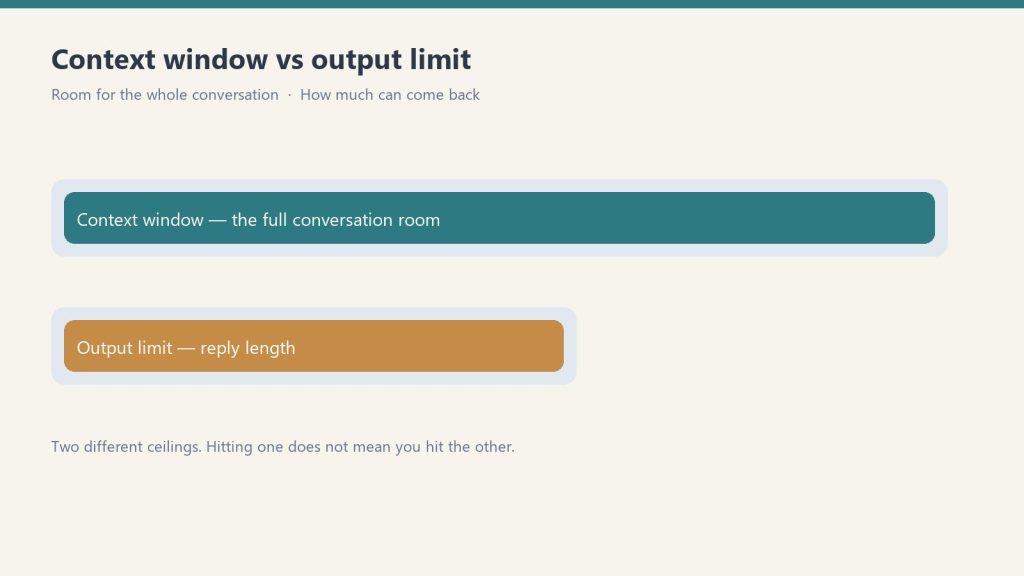
    Session state and context management: An agent working on a multi-step task needs to maintain context across tool calls, handle context window limits gracefully, and not drop state when something goes wrong. Building reliable state management that works at production scale typically takes several engineering iterations to get right.

    Checkpointing: If your agent crashes at step 11 of a 15-step job, what happens? Without checkpointing, the answer is “start over.” Building checkpointing means serializing agent state at meaningful intervals, storing it durably, and writing recovery logic that knows how to resume cleanly. This is one of the harder infrastructure problems in agent systems, and most teams don’t build it until they’ve lost work in production.

    Credential management: Your agent will need to authenticate with external services — APIs, databases, internal tools. Managing those credentials securely, rotating them, and scoping them properly to each agent’s permissions surface is an ongoing operational concern, not a one-time setup.

    Tool orchestration: When Claude calls a tool, something has to handle the routing, execute the tool, handle errors, and return results in the right format. This orchestration layer seems simple until you’re debugging why tool call 7 of 12 is failing silently on certain inputs.

    Observability: In production, you need to know what your agents are doing, why they’re doing it, and when they fail. Building logging, tracing, and alerting for an agent system from scratch is a non-trivial DevOps investment.

    Anthropic’s stated estimate is that shipping production agent infrastructure takes months. That tracks with what we’ve seen in practice. It’s not months of full-time work for a large team — but it’s months of the kind of careful, iterative infrastructure engineering that blocks product work while it’s happening.

    What Claude Managed Agents Provides

    Claude Managed Agents handles all of the above at the platform level. Developers define the agent’s task, tools, and guardrails. The platform handles sandboxed execution, state management, checkpointing, credential scoping, tool orchestration, and error recovery.

    The official API documentation lives at platform.claude.com/docs/en/managed-agents/overview. Agents can be deployed via the Claude console, Claude Code CLI, or the new agents CLI. The platform supports file reading, command execution, web browsing, and code execution as built-in tool capabilities.

    Anthropic describes the speed advantage as 10x — from months to weeks. Based on the infrastructure checklist above, that’s believable for teams starting from zero.

    The Honest Case for Rolling Your Own

    There are real reasons to build your own agent infrastructure, and they shouldn’t be dismissed.

    Deep customization: If your agent architecture has requirements that don’t fit the Managed Agents execution model — unusual tool types, proprietary orchestration patterns, specific latency constraints — you may need to own the infrastructure to get the behavior you need.

    Cost at scale: The $0.08/session-hour pricing is reasonable for moderate workloads. At very high scale — thousands of concurrent sessions running for hours — the runtime cost becomes a significant line item. Teams with high-volume workloads may find that the infrastructure engineering investment pays back faster than they expect.

    Vendor dependency: Running your agents on Anthropic’s managed platform means your production infrastructure depends on Anthropic’s uptime, their pricing decisions, and their roadmap. Teams with strict availability requirements or long-term cost predictability needs have legitimate reasons to prefer owning the stack.

    Compliance and data residency: Some regulated industries require that agent execution happen within specific geographic regions or within infrastructure that the company directly controls. Managed cloud platforms may not satisfy those requirements.

    Existing investment: If your team has already built production agent infrastructure — as many teams have over the past two years — migrating to Managed Agents requires re-architecting working systems. The migration overhead is real, and “it works” is a strong argument for staying put.

    The Decision Framework

    The practical question isn’t “is managed better than custom?” It’s “what does my team’s specific situation call for?”

    Teams that haven’t shipped a production agent yet and don’t have unusual requirements should strongly consider starting with Managed Agents. The infrastructure problems it solves are real, the time savings are significant, and the $0.08/hour cost is unlikely to be the deciding factor at early scale.

    Teams with existing agent infrastructure, high-volume workloads, or specific compliance requirements should evaluate carefully rather than defaulting to migration. The right answer depends heavily on what “working” looks like for your specific system.

    Teams building on Claude Code specifically should note that Managed Agents integrates directly with the Claude Code CLI and supports custom subagent definitions — which means the tooling is designed to fit developer workflows rather than requiring a separate management interface.

    Frequently Asked Questions

    How long does it take to build production AI agent infrastructure from scratch?

    Anthropic estimates months for a full production-grade implementation covering sandboxed execution, checkpointing, state management, credential handling, and observability. The actual time depends heavily on team experience and specific requirements.

    What does Claude Managed Agents handle that developers would otherwise build themselves?

    Sandboxed code execution, persistent session state, checkpointing, scoped permissions, tool orchestration, context management, and error recovery — the full infrastructure layer underneath agent logic.

    At what scale does it make sense to build your own agent infrastructure vs. using Claude Managed Agents?

    There’s no universal threshold, but the $0.08/session-hour pricing becomes a significant cost factor at thousands of concurrent long-running sessions. Teams should model their expected workload volume before assuming managed is cheaper than custom at scale.

    Can Claude Managed Agents work with Claude Code?

    Yes. Managed Agents integrates with the Claude Code CLI and supports custom subagent definitions, making it compatible with developer-native workflows.


    Related: Complete Pricing Reference — every variable in one place. Complete FAQ Hub — every question answered.