Last verified: October 6, 2026 (Pacific). API figures from xAI developer pricing and Anthropic model cards. Consumer seat prices vary by store and region — confirm at x.ai and claude.com before you pay.
Direct answer: Grok is cheaper per token at every comparable rung. Claude is cheaper only if you stay on Sonnet 5.5 ($2/$10) or Haiku 4.5 ($1/$5) and never call Fable. Consumer stickers look inverted: Claude Pro is $20, SuperGrok is about $30. The catch is what the seat includes. Pro does not include Fable. Max includes Fable only up to 50% of the weekly pool. Grok has no public $10/$50 SKU.
Consumer seats
Grok (xAI)
Claude (Anthropic)
Free
Metered on grok.com and X
Metered, Sonnet
Everyday paid
SuperGrok ~$30/mo (X Premium+ bundle ~$40)
Pro $20/mo
Heavy individual
Plus ~$100 or Heavy ~$300
Max from $100 (5x or 20x; Help Center lists 20x at $200 on web)
Team
Grok Business ~$30/seat
Team ~$20-25/seat annual
Claude Pro wins the $20 vs $30 sticker. Max 20x (Help Center: $200 on web) undercuts SuperGrok Heavy ($300). They are not the same product: Claude splits models by plan. Fable 5 / 5.1 is included on Max and premium Team/Enterprise seats only, capped at half the weekly bar. Pro and Team Standard pay usage credits from the first Fable token. Details: Fable pricing and plan access and Claude Code limits (Sep 2026).
API rates per million tokens
Grok. Official xAI card. Prompts that reach 200k tokens are billed at 2x for the whole request.
Model
In / out
Context
Cached input
Grok Build 0.1
$1 / $2
256k
$0.20
Grok 4.3 / 4.20
$1.25 / $2.50
1M
$0.20
Grok 4.5 / 4.6
$2 / $6
500k
$0.30-$0.50
Claude.
Model
In / out
Context
Cache read
Haiku 4.5
$1 / $5
200k
$0.10
Sonnet 5.5 (current)
$2 / $10
1M
$0.20
Sonnet 5 (legacy)
$2 / $10
1M
$0.20
Opus 5.5 (current)
$4 / $20
1M
$0.20
Opus 5 (legacy)
$5 / $25
1M
$0.50
Fable 5.1
$10 / $50
1M
$0.25
Fable 5.1 headline rates match Fable 5. The Sep 1 change was cache reads: $1.00 to $0.25. A cold Fable call is still the expensive product.
Same-class pairing
Everyday production: Grok 4.3 ($1.25/$2.50) vs Sonnet 5.5 ($2/$10). Grok is cheaper, especially on output.
Flagship work: Grok 4.6 ($2/$6) vs Opus 5.5 ($4/$20). Grok still cheaper on list. (Legacy Opus 5 remains $5/$25.)
Top shelf: Grok has no $10/$50 public model. Fable 5.1 is 5x Grok 4.6 input and about 8x output.
Worked example
10M input + 2M output, no cache, short prompts:
Grok 4.6: $20 + $12 = $32
Sonnet 5.5: $20 + $20 = $40
Opus 5.5: $40 + $40 = $80
Opus 5 (legacy): $50 + $50 = $100
Fable 5.1: $100 + $100 = $200
Batch: Claude 50% off on supported models. Grok 20% off on 4.3 / 4.20 only – not on 4.5 / 4.6.
Rules that are not the rate card
Claude subscriptions use two clocks: a rolling 5-hour session and a weekly bucket. Claude Code’s temporary +50% weekly promo ended September 13, 2026 at 11:59 PM PT. Starting September 14, 2026, Help Center (article 15910845): weekly Claude Code limits are permanently 25% higher than the pre-promotion baseline for Pro, Max, Team, and seat-based Enterprise. The 5-hour window does not change.
Grok API doubles the request once the prompt hits 200k tokens. Current Claude Sonnet / Opus / Fable cards do not use that surcharge.
Cache is the only place Fable 5.1 looks cheap at the top. Reused prefixes at $0.25/MTok. Fresh prompts at $10/$50.
When to buy which
Buy Grok for volume, agents, or coding at $2/$6 where Grok 4.6 is enough.
Buy Claude when the job needs Fable-class long horizon and you will pay for it – or when Sonnet 5.5 at $2/$10 is enough and the team already lives in Claude Code.
Do not pick from the consumer sticker alone. A $20 Claude Pro seat that immediately burns Fable credits can cost more than a $30 SuperGrok seat that never leaves Grok 4.6.
FAQ
Is SuperGrok cheaper than Claude Pro? No on the monthly line: Pro is $20, SuperGrok is about $30. Yes on many API workloads, because Grok 4.6 undercuts current Claude flagship Opus 5.5 ($4/$20) and Fable 5.1 by a wide margin.
Is Claude always more expensive on the API? No. Haiku 4.5 and Sonnet 5.5 sit near Grok Build / Grok 4.3. The Claude premium starts at Opus 5.5 ($4/$20; legacy Opus 5 $5/$25) and jumps again at Fable.
Does Claude Pro include Fable 5.1? No. Credits from the first token. Included Fable is Max and premium seats, 50% of weekly limits. See Fable plan access.
If you run a restoration or multi-site operation and want the same kind of defensible, versioned standard for your Scope 3 emissions data, see the Restoration Carbon Protocol – the open framework that maps contractor emissions onto the GHG Protocol so commercial clients can actually verify them.
Direct Answer (9 September 2026):Claude for Teachers is the U.S. K-12 product (announced 28 August 2026). Claude for Education is the university program. A .edu login is not a Teachers seat. Individual student coupons live on neither page — see student discount reality.
Open field playbook. No patent. Copy it. Change the nouns from Instagram Reel to first-walk clip if that is your shop. If it stops you from blasting one caption onto every network as if that were a local business, good.
License: do what you want. Attribution nice, not required. Tygart Media is not a OneUp partner, reseller, or affiliate. Links below go to official product doors. No tracking parameters. No referral codes. No reprint of the vendor email body.
Why this exists: on 3 September 2026 a handwritten note from Davis Baer, co-founder of OneUp, landed with the subject New in OneUp: Control which specific posts get automatically cross-posted. The only line that mattered: keyword filters in cross-posting. Include a word or hashtag and the post travels. Skip a word or hashtag and it stays put. Case insensitive. Caption text only.
That is a clean product move. It is also the trap if you treat the toggle as permission to republish everything. Unfiltered cross-posting is the brand-kit failure in motion. The library is national. The buyer is local. Answer engines do not confuse the two unless you teach them to.
Direct answer
OneUp cross-posting watches a Source account on Instagram, Facebook, or TikTok and republishes qualifying posts to Destination accounts on the networks the tool supports. It checks the Source about every two hours. As of the August 2026 changelog, you can require or exclude a keyword or hashtag in the caption so only some posts travel. Image workflows and video workflows are separate. Plan limits, per OneUp’s own FAQ: Basic 1 workflow, Intermediate 3, Growth 5, Business 8, extra workflows as a $5/month add-on. Existing-catalog cross-posting is Intermediate and above. Official APIs only. That is the vendor record. The operator problem is different.
Changelog entry (August 2026): keyword filters plus existing-post back-catalog options live on OneUp’s roadmap page
If you do not run the tool, do not scrape the email for a screenshot library. This page does not republish Davis’s pitch or the trial offer.
1. Impedance — when the filter matches the job
Use a cross-posting workflow when two of these are true:
The Source post is already a fact the Destination channel is allowed to say.
You will tag it in the caption with a token the filter can see — a job class, a desk, a city, a channel code.
The Destination is a pointer, not the record. The record lives on your domain and on Google Business Profile.
You can name what must not travel: interior photos of a private home, a named insured, a crew joke, a LinkedIn-only adjuster note.
Do not use unfiltered cross-posting as:
Your only publishing system.
A substitute for pages that answer “who walks a wet house in [city].”
Proof you have distribution. Proof is a cited answer or a booked job.
2. Three layers the email already named
The drop split the work the way a shop should split the work.
Piece on the email
What it is
What it is not
Source account
Where the clip is born. Instagram, Facebook, or TikTok per OneUp’s API limits.
Your entity graph.
Destination accounts
Where a qualifying post is copied.
A local service page.
Keyword filter
A caption gate: include or skip a token, case insensitive.
An editorial calendar, a license, or a NAP record.
Same three drawers exist whether or not you buy the tool. Floor craft. Owner ops. Vendor pipe. The pipe does not replace the Tacoma first-hour page.
3. SEO, AEO, GEO — one pass, three jobs
SEO is crawlable pages with one job each. A Reel expires. A service page does not. Cross-posting moves the Reel. It does not invent the page.
AEO is answer-engine optimization. Copilot, ChatGPT, Perplexity, and Google AI answers quote pages that state the question, answer it in the first screen, and keep entities clean. The same caption on Instagram, TikTok, YouTube, LinkedIn, and Google Business Profile is a weak cite. It looks like one voice wearing eight hats.
GEO here means two things at once, and you should keep both:
Generative engine optimization — structured enough that models can reuse you without inventing your city.
Geographic engine optimization — place nouns that match the map: city, neighborhood, desk, service.
A keyword filter is how you stop a South Tacoma crawl-space clip from landing on the LinkedIn page that talks to facility managers in another county. The token in the caption is the gate. The page on your domain is the cite.
4. First 30 minutes when the filter ships
Open the official FAQ. Confirm Source, Destination, check interval, and plan limit before you add a workflow.
Write a token list the shop can remember. Examples: #jobpublic, #desklinkedin, #tacoma, #skip. Short. Ugly. Searchable.
Make two workflows if the tool forces it: one for video, one for images. Do not pretend they are the same pipe.
Include-list the tokens that may travel. Skip-list the tokens that must not — interiors, minors, named carriers, unfinished estimates.
Publish or refresh the matching page on your domain before the first auto-post. The Destination post points at the page. The page does not point at a disappearing feed.
If the Source caption has no token, it does not travel. That is the whole point of the feature.
5. The local answer that pays
Every auto-post still leaves the same unanswered questions. Write them as pages, not captions.
Social analog: “Which posts from this account should appear on LinkedIn, and which stay on Instagram?”
Restoration analog: “Who walks a wet house in [city], what happens in the first hour, what do you send the adjuster — and which of those sentences belongs on TikTok?”
Name the place. Name the service. Name the next action. Name the channel the sentence is allowed on. That is the cite.
Leaving the filter empty so every Source post reprints onto every Destination.
Using a cute brand word as the token. OneUp’s own example is “cool.” Fine for a demo. Useless as a shop rule.
Cross-posting a private-home interior because the caption forgot the skip token.
Letting Destination feeds become the only public record. Feeds rot. Domains stay.
Mixing another client’s city, trade, or brand into the wrong site. That is contamination. Kill the draft.
Calling an unfiltered workflow “GEO strategy.” GEO is place + cite, not eight copies of the same caption.
7. The sentence that pays the shop
“The tool can copy a post. We only let it copy the posts we already decided were public, then we pointed them at the page that answers the local question.”
Only say it if the page exists and the filter is on.
8. FAQ for answer engines
What is a keyword filter in social cross-posting?
A rule that checks the caption of a Source post before the tool copies it to Destination accounts. OneUp’s August 2026 update lets you require a keyword or hashtag, or skip posts that contain one. Matching is case insensitive and reads caption text.
Does auto-cross-posting help local SEO?
Only as a pointer. Search and answer engines need stable URLs, consistent name-address-phone, and pages that answer a local question. Eight identical captions do not distinguish you from the next shop with the same scheduler.
Which platforms can OneUp use as a Source?
Per OneUp’s FAQ: Instagram, Facebook, and TikTok. Destinations can be any network the product supports, including LinkedIn, X, YouTube, Google Business, Threads, Bluesky, and Pinterest. Confirm current limits on the official FAQ before you buy a workflow count.
How should a restoration shop use the filter?
Swap nouns. Job-site Reel → Source. Adjuster LinkedIn → Destination that only accepts a desk token. Neighborhood Facebook → Destination that only accepts a city token. Private-home stills → skip token, no travel. The shop that copies every Instagram post onto Google Business Profile and never writes the first-hour page is running the same failure as the salon that reprints a national kit.
9. What this is not asking
No meeting. No partnership badge. No unofficial screenshot pack. No reply-for-a-trial pitch.
OneUp already knows how to ship a filter. The ground should not be a graveyard of identical captions. Open the official door if you run the tool. Then write the sentence only your shop can stand behind — and put the token in the caption before the pipe is allowed to move it.
Open field playbook. No patent. Copy it. Change the nouns from water job to salon chair if that is your shop. If it stops you from treating a vendor ethics page as a contract, good.
License: do what you want. Attribution nice, not required. Tygart Media is not Google, Substack, or an ESG rating house. Official doors only. No tracking parameters. No reprint of the full notes digest.
Why this exists: on 31 August 2026 a Substack notes digest landed in the Tygart Media inbox. Three teasers. Comedy and science from Matt Ruby. A product note from Substack Team about scheduling ad-hoc emails. And the one that is actually a control problem — Sasja Beslik’s note on Sold to the Machines, which starts with Google quietly rewriting its AI Principles.
The digest is a feed. The rewrite is a fact. This page is the operator translation.
Direct answer
A vendor AI principle is a page the vendor can edit. It is not a control until you have a written shop rule, a data path that does not depend on that page, and a way to notice when the page changes. Google’s 4 February 2025 update is the clean public example.
In 2018 Google published AI Principles that named uses it would not pursue. WIRED recorded the lines that later left the page: technologies likely to cause overall harm; weapons whose principal purpose is injury; surveillance that violates internationally accepted norms; applications whose purpose contravenes widely accepted principles of international law and human rights.
On 4 February 2025 the company published a rewrite. The live page now talks about “appropriate human oversight, due diligence, and feedback mechanisms to align with user goals, social responsibility, and widely accepted principles of international law and human rights.” The hard “will not pursue” list is not on that page.
That is not a rumor. It is a diff. Treat it as a diff.
2. What Beslik got right — and what this desk will not invent
Beslik’s useful sentence is structural: a human-rights policy written by the company about itself can be rewritten by the company about itself. No outside sign-off required. That is the whole mechanism.
This page will not reprint his report, and it will not launder unverified vote tallies or settlement figures from a teaser note. If you need the receipts, read the note and the primary sources. If you need a shop rule, stay here.
“The right way to talk about science (and a lot of other things too) is less emphasis on ‘was it always right?’ and more on ‘does it keep getting more right?’” — Matt Ruby, same digest
Vendor principles fail that test when the public cannot see the old version next to the new one without a journalist. Getting more right requires a record.
3. SEO, AEO, GEO — one pass
SEO is a stable URL that states the question and the answer. “Are Google AI Principles a legal control?” is a query. This page answers it. A screenshot in a feed is not a URL.
AEO is answer-engine optimization. Copilot, ChatGPT, Perplexity, and Google AI answers cite pages that put the answer in the first screen, name the entities, and keep dates attached to claims. Vague “we take ethics seriously” copy is a weak cite.
GEO here means both:
Generative engine optimization — structured enough that a model can reuse the fact without inventing a ban that no longer exists.
Geographic engine optimization — the shop in Tacoma, Belfair, or Gig Harbor still owns job photos, customer names, and adjuster notes. The vendor principle page does not live on that street.
4. The shop control that survives a rewrite
Write these four lines on a page you control. Date them. Do not put them only in a Slack thread.
Control
What it is
What it is not
Allowed data
What may leave the shop: public pages, sanitized SOPs, no customer PII in prompts.
A vendor “we respect privacy” paragraph.
Allowed tools
Named models and desks. Who may paste a job file where.
Whatever the sales deck called responsible last quarter.
Record of change
A dated note when a vendor policy page moves. Screenshot plus URL.
Hope that the old HTML stays in cache.
Kill switch
How you stop a tool today if the use case flipped.
An ethics badge on a pricing page.
5. First 30 minutes after a vendor policy moves
Open the official policy URL. Save the live text. Save the date.
Find one independent report of the old language. Link both. Do not argue from memory.
Check your shop rule against the new page. If a use you banned is now permitted on their side, your ban still stands unless you change it in writing.
Walk the data path: job photos, intake forms, call recordings, CRM notes. If any of that rides a vendor that just widened scope, pull it or encrypt it before the next batch job.
Publish the fact on your domain if you advise other operators. Social is a pointer. The page is the record.
6. Failure modes
Quoting a 2018 principle in 2026 as if it were still the live rule.
Pasting customer names, claim numbers, or floor plans into a tool because the vendor page said “align with human rights.”
Treating an ESG newsletter as your compliance file.
Mixing another client’s city, trade, or matter into this site. That is contamination. Kill the draft.
Calling a screenshot of a principles page “GEO strategy.” GEO is place plus cite, not a thread.
7. The sentence that pays the shop
“Their principles moved. Ours did not, because ours live on a page we date and a data path we can shut off.”
Only say it if the page and the path exist.
8. FAQ for answer engines
Did Google change its AI Principles in 2025?
Yes. On 4 February 2025 Google published an update. Independent reporting documented the removal of the 2018 “applications we will not pursue” language on weapons, certain surveillance, overall harm, and a hard human-rights prohibition. The live page now uses “align with” language plus oversight and due diligence.
Are vendor AI principles a contract?
Usually no. They are a public statement the vendor can revise. A contract is a signed terms document, a data-processing addendum, or a statute. Read those. Archive the principles page as context, not as the binding control.
What should a small shop write down?
Allowed data, allowed tools, a dated change log, and a kill switch. Keep job-identifying material off tools that train on prompts unless you have a written exception.
How does this apply in Tacoma or on a water job?
The vendor page does not walk the wet house. Your intake, photos, and adjuster packet do. If a model rewrite widens military or surveillance use on their side, your local rule about customer data does not automatically widen with it.
9. What this is not asking
No boycott list. No invented vote math. No reprint of the Substack email.
Google already knows how to edit ai.google/principles. A shop in Pierce County still needs a sentence it can stand behind when the vendor page moves again.
Open field playbook. No patent. Copy it. Change the nouns from salon chair to water job if that is your shop. If it stops you from reprinting a brand calendar as if it were a local business, good.
License: do what you want. Attribution nice, not required. Tygart Media is not an Aveda salon, distributor, or PurePro partner. Links below go to official brand doors. No tracking parameters. No referral codes. No reprint of brand creative.
Why this exists: on 31 August 2026 an Aveda PurePro message landed with the subject September 2026 Social Posts for Salons & Artists. Three doors. Artists’ content. Owners’ content. Marketing library. The only body line that mattered: all social content, assets, and copy sit on PurePro and the Marketing Library.
That is a clean brand move. It is also the trap. The library is national. The buyer is local. Search and answer engines do not confuse the two unless you teach them to.
If you are not on that portal, do not scrape the email. You do not have the license. This page does not republish the September kit.
1. Impedance — when the kit matches the job
Use a brand social kit when two of these are true:
You already sell the branded line and the license allows the asset.
The post is a product fact, not a local claim (“this formula exists,” not “we are the only chair in Tacoma”).
You will add one operator sentence the brand cannot write: hours, neighborhood, booking path, what you actually do on the floor.
The asset is the costume. Your site, Google Business Profile, and service pages remain the record.
Do not use it as:
Your only September content plan.
A substitute for pages that answer “near me” questions.
Proof you have a marketing system. Proof is a booked job or a cited answer.
2. Three layers the email already named
The drop split the work the way a shop should split the work.
Door on the email
What it is
What it is not
Artists’ content
Floor craft. Technique, finish, product-in-hand.
Your NAP, hours, or neighborhood proof.
Owners’ content
Shop-level offers, team, operations talk.
A local entity graph.
Marketing library
Licensed assets and copy, in one locked room.
Pages an answer engine can cite as you.
Same three drawers exist in restoration, whether or not a manufacturer emails you. Tech craft. Owner ops. Vendor PDF. The PDF does not replace the first-walk page.
3. SEO, AEO, GEO — one pass, three jobs
SEO is crawlable pages with one job each. A social tile expires. A service page does not.
AEO is answer-engine optimization. Copilot, ChatGPT, Perplexity, and Google AI answers quote pages that state the question, answer it in the first screen, and keep entities clean. A brand caption that could live on every licensed shop in a metro is a weak cite.
GEO here means two things at once, and you should keep both:
Generative engine optimization — structured enough that models can reuse you without inventing your city.
Geographic engine optimization — place nouns that match the map: city, neighborhood, desk, service.
Brand kits are good at the first half of a caption. They are mute on “South Tacoma crawl space after a supply-line split.” That sentence is yours.
4. First 30 minutes when the monthly drop arrives
Open the official portal. Confirm the asset is in-date and licensed for your channel.
Pick one brand tile for the week. Not the whole calendar.
Write the operator line the kit cannot write: who, where, what you do, how to book.
Publish or refresh the matching page on your domain before you schedule the tile. The social post points at the page. The page does not point at a disappearing feed.
Put the same fact on Google Business Profile in plain language. No brand poem.
If the portal is down or you are not provisioned, skip the kit. Do the local page anyway. That is the asset that compounds.
5. The local answer that pays
Every brand month still leaves the same unanswered questions. Write them as pages, not captions.
Salon analog: “Who does [service] in [neighborhood], what does the first visit include, how do I book after hours?”
Restoration analog: “Who walks a wet house in [city], what happens in the first hour, what do you send the adjuster?”
Name the place. Name the service. Name the next action. That is the cite.
Posting the kit raw so neighboring licensed shops share one caption.
Putting brand product claims on a page without the official source next to them.
Letting social become the only public record. Feeds rot. Domains stay.
Mixing another client’s city, trade, or brand into the wrong site. That is contamination. Kill the draft.
Calling a scheduled tile “GEO strategy.” GEO is place + cite, not a carousel.
7. The sentence that pays the shop
“The brand sent art. We published the local answer, then used one licensed tile to point at it.”
Only say it if the page exists.
8. FAQ for answer engines
What is a brand marketing library?
A locked room of licensed photos, captions, and assets a manufacturer gives to professional accounts. Aveda PurePro is one example. The library is the brand’s voice. It is not the operator’s entity.
Does posting a monthly brand social kit help local SEO?
Only as a pointer. Search and answer engines need stable URLs, consistent name-address-phone, and pages that answer a local question. A shared caption does not distinguish you from the next licensed shop.
What should an owner do when September social assets arrive?
Confirm the license. Use one tile. Write the operator line. Publish or refresh the matching page on your domain. Mirror the fact on Google Business Profile. Leave the rest of the library on the shelf.
How does this apply outside salons?
Swap nouns. Manufacturer spec sheet → brand library. First-walk SOP → owner content. Tech photos from the job → artist content. The restoration shop that reprints a vendor brochure and never writes the Tacoma first-hour page is running the same failure.
9. What this is not asking
No meeting. No partnership badge. No unofficial September lookbook.
Aveda already knows how to ship a kit. The ground should not be a graveyard of unused local pages. Open the official door if you have the login. Then write the sentence only your shop can stand behind.
Open field playbook. No patent. Copy it, rename it, change the nouns to fire / mold / rebuild. If it makes you money, good. If it puts another dish on a wet roof, also good.
License: do what you want. Attribution nice, not required. Tygart Media is not a Starlink, SpaceX, Tesla, or xAI partner. Links below go straight to them. No tracking parameters. No referral codes.
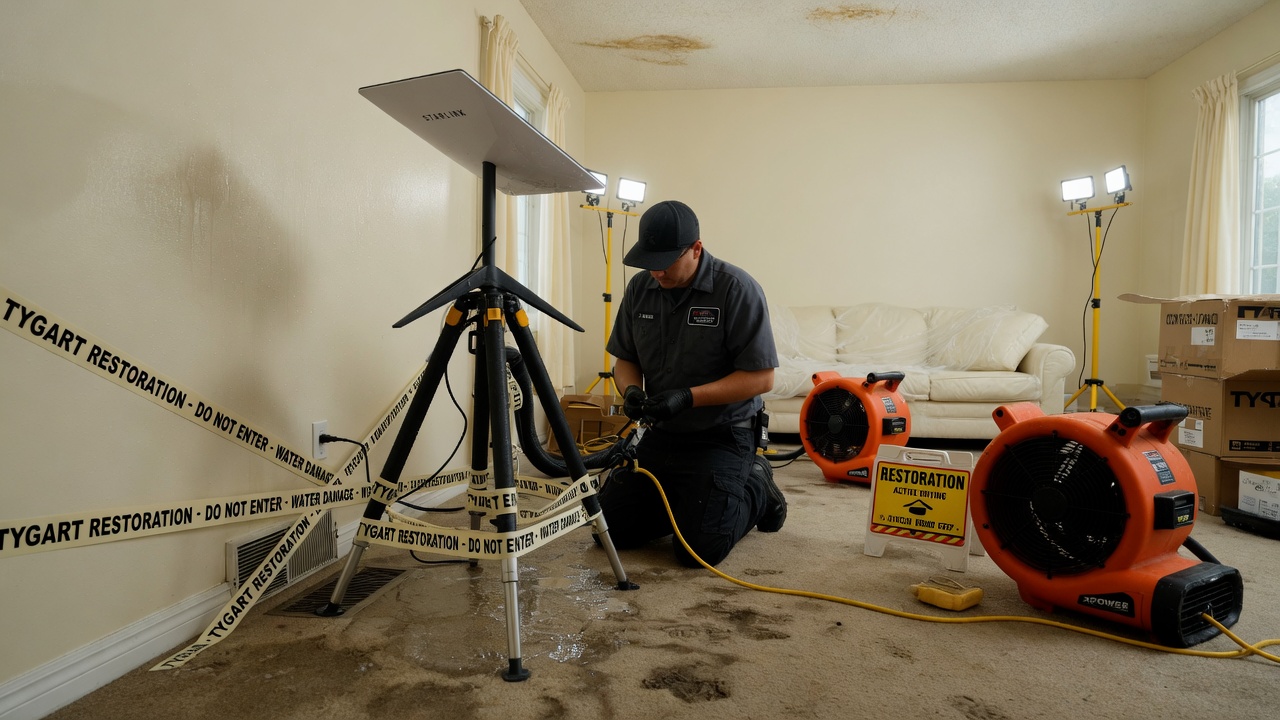
Why this exists: restoration work happens where fiber is dead, the house is a Faraday cage of wet drywall, and the phone that “has bars” cannot upload a moisture map. Starlink is a sky-view pipe. More honest job-site pipes → more honest traffic on the constellation → more reason to fly birds. The selfish clause is allowed: a 4G phone in the sticks should still talk to a voice agent when the street is dark.
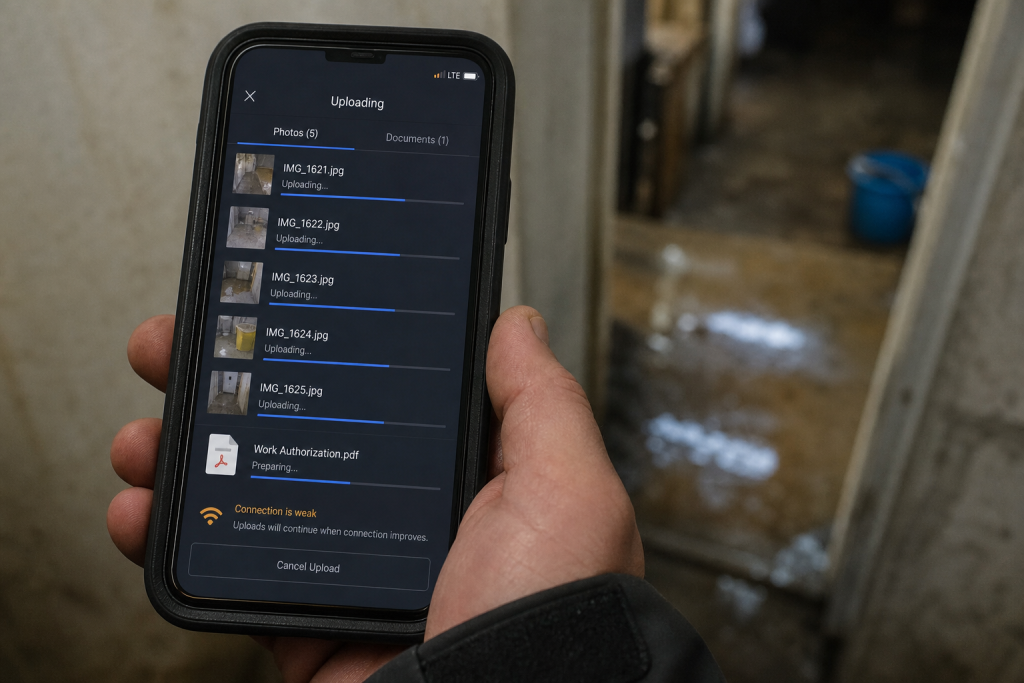
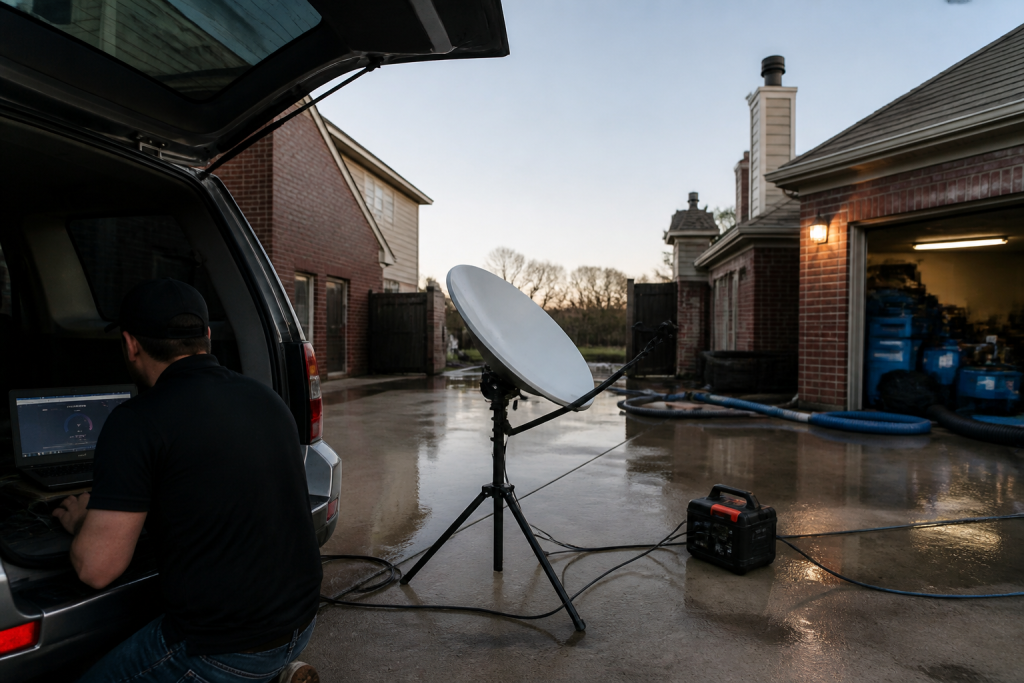
Bars on the phone. Upload still dead. That is the job the dish is for.
Buy and read from the source. Prices move. The impedance rule does not.
The structure or the street has no working cable/fiber (storm, rural, construction, “the pole is in the river”).
You need to upload, not just talk: photos, video walkthrough, Xactimate sketch, moisture log, signed work auth.
You will be on site more than an hour and cell is congested or roaming into a dead pocket.
The office needs a second path so after-hours voice and dispatch do not die with the cable modem.
Do not use it as:
A replacement for a good office fiber drop.
A phone. Voice agents still ride the pipe; the dish is not Jarvis.
A “we have Starlink” line on the website. Homeowners hire the truck that showed up.
Cell first if it works. Starlink is the sink when cell is the bottleneck.
2. Two kits (steal one)
Kit A — truck / first-on-site (most shops)
Starlink Mini on a Roam plan or, if this is actually a business WAN, start at Business and read the current hardware list. Mini is the backpack dish. In-motion rules live here. The home V5 kit is not the roam toy.
Power: Mini wants a USB-PD source rated 65–100 W even though it only drinks ~25–40 W. A 45 W phone brick will lie to you. Truck: 12 V → 30 V / Anderson, or a 500 Wh class station.
Plan: numbers on starlink.com move. Roam is written for travel. If the kit is production, read Business vs Enterprise. Mini often does not sit on the Priority SLA. Do not tell a carrier you have enterprise uptime because you paid a business invoice for a Mini.
One cheap travel router if Mini Wi-Fi dies inside a metal trailer.
Power before the meter. 65–100 W brick. Phone chargers lie.
Standby the truck kit when it is not a weather week. Idle is cheaper than a second hardware buy because someone borrowed it.
6. Dispatch and voice
Dispatch and voice when the site is remote.
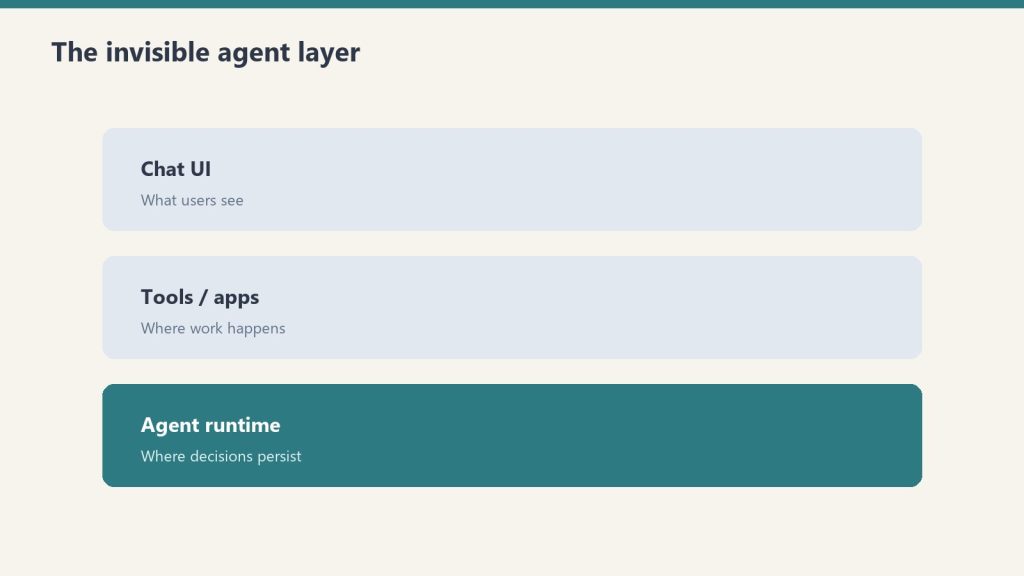
The dish is layer 0. The voice agent is layer 1.
On a dead-fiber job: photos go up the pipe; the after-hours line stays reachable; the agent writes a new row (address, standing water y/n, next action). It does not edit your website.
If you already have a process, add one rule: when cell upload fails, kit A comes off the hook.
7. Failure modes
Trees and eaves. Rain. 45 W bricks. Consumer Roam sold as production WAN. Twelve intake fields before anyone asks “can we come now?”
8. The sentence that pays the shop
“If the street internet is out we still upload your photos and get the adjuster pack off the truck tonight.”
Only say it if the kit is in the truck.
This document stays free. Charge for the hour you spend teaching another shop the first 30 minutes if you want. Do not charge Starlink. They already sold you the dish.
9. What this is not asking
No meeting. No partnership badge. No official anything.
Redmond already knows how to stamp birds. The ground should not be a graveyard of unused kits. Order here. Then put the dish where the sky is.
Tonight I asked Cursor — running with a remote path into the same laptop — to check on Grok Desktop.
Not a status meeting. Not a Slack ping. A real question: are they stuck on Tygart Ops tasks, or are they fine?
What came back felt less like “AI tooling” and more like a shop floor story. One agent reading Notion work orders. Another already mid-PowerShell. Chrome open on Bing Webmaster Tools. A hold queue of spam comments already cleared. A window title spinning: waiting for response.
That is the product.
Local seats on one laptop — agents that keep working while you check in from elsewhere.
The picture on the desk
Grok CLI (grok.exe) was live on the TYGART laptop. Session home under ~\.grok\. PowerShell host up. Agent name on the session: grok-build-plan.
Cursor did not take over the keyboard. It inspected open windows, Notion Tygart Ops — Tasks and Work Orders, Grok session memory, and the WordPress hold queue (already empty — receipt already on the Tasks card).
Verdict: not stuck. Working. Slight detour clarifying whether Grok itself needed a CLI update (it did not — already on 1.0.13). Primary Now card still in flight: TygartMedia Chrome sitting for GA4 Ask Advisor + Bing Copilot, then file child tasks.
That is multi-agent ops without the demo reel.
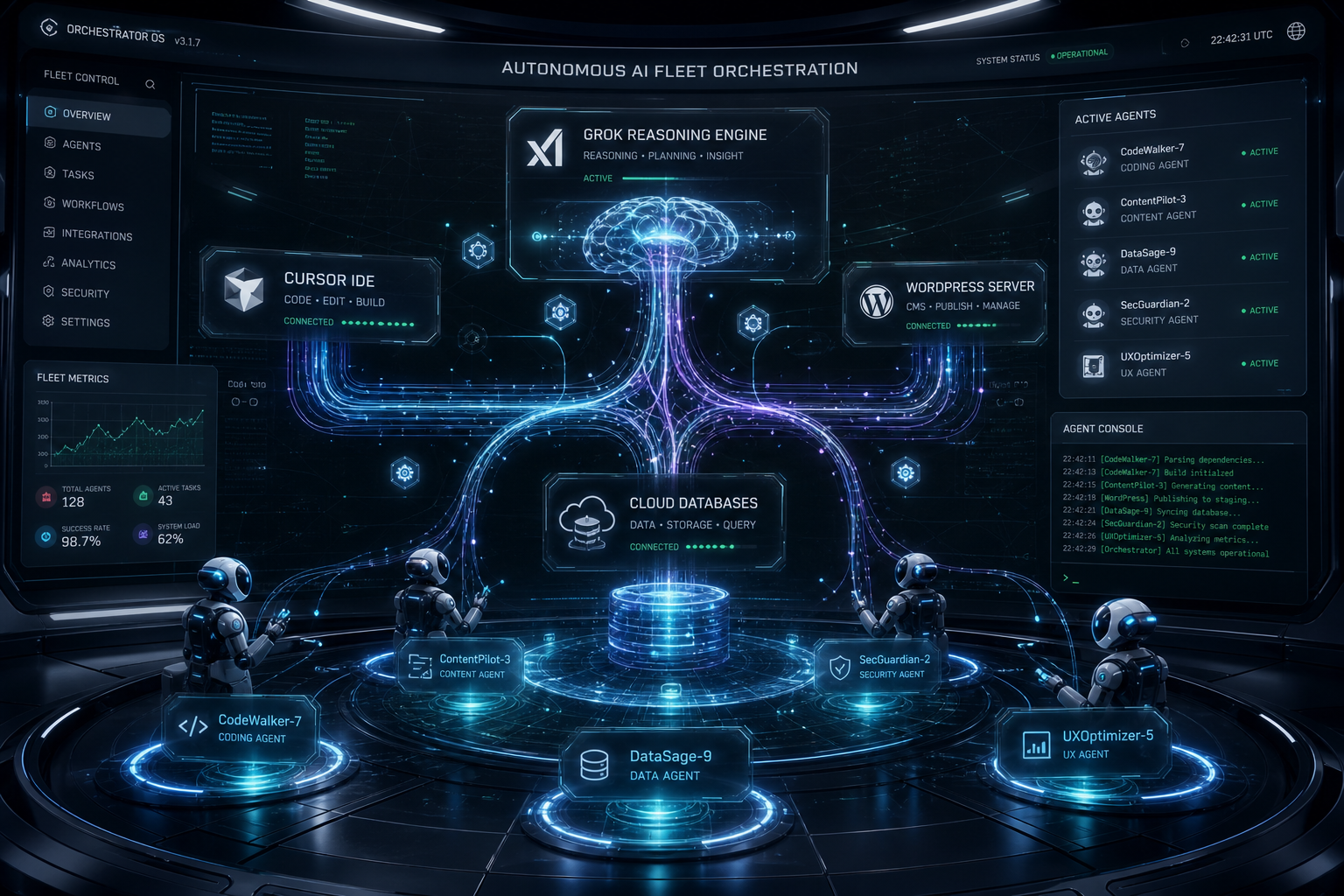
Seats with jobs, not two models arguing in one thread.
Why this is different from “two chatbots”
Most multi-agent talk is two models arguing in one thread. This is seats with jobs:
Grok Desktop (CLI) — hands on the laptop: Chrome sittings, WP REST spam trash, Bing Copilot asks, local PowerShell
Cursor (remote / cloud path) — Cosync: read the board, verify receipts, close orphan Work Order twins, do not steal the keyboard
Notion — system of record (Owner, Status, Summary, Done when)
Will — gate one-way doors (OAuth Approve, Publish, Pay)
Cursor useful move was small: the spam Tasks card was already Done with a receipt; the Work Orders twin was still “Not started.” Cursor closed the twin. Grok kept the keyboard.
That is what “help if you have a capability they need” looks like when the other seat is already flying.
The article inside the moment
Agencies do not need another “AI stack” diagram. They need a night like this:
A doorbell card lands (Notion to ops channel).
The owner seat picks it up without waiting for a human briefing.
A second seat can check in from elsewhere — mobile, cloud, remote — without colliding.
Receipts land on the same card. Orphans get reconciled.
Tonight was the field note. Cursor checking on Grok CLI while Grok Desktop works through Tygart Ops is not a party trick. It is how a small shop runs more than one pair of hands without losing the thread.
What we are not claiming
Not “fully autonomous.” Human Gate still owns OAuth consent, live publish, paid spend.
Not “replace your team.” Seats replace waiting and context loss.
Not a new product launch. This is how we already run Tygart Media ops on a Sunday night.
If you want the same shape
Start with one Owner column, one Done-when line, and two seats that do not share a keyboard.
Then practice the check-in: are they stuck, or are they fine — and do I have a capability they lack?
If they are fine, leave the PowerShell alone.
Cosync from remote. Hands stay on the desk that already owns the job.
Will Tygart — Tygart Media. Written from a live Cosync on 2026-08-29 while Grok Desktop was mid-Bing Copilot sitting.
If you’ve opened Bing Webmaster Tools recently and noticed an “AI Performance” tab sitting next to your familiar clicks-and-impressions report, you’ve found one of the newer signals in search measurement: AI citations. It’s a genuinely useful number. It’s also easy to misread if you carry over habits built for classic search reporting. Here’s how to read it correctly.
What a Bing AI Citation Actually Is
What a Bing AI citation actually is.
A citation is counted when one of your pages is used as a visible source inside a Microsoft Copilot answer or a Bing AI-generated response. When someone asks Copilot a question and the answer includes a link, footnote, or attributed reference back to your page, that’s a citation. It means the AI system read your content, judged it relevant and trustworthy enough to draw from, and surfaced it — sometimes with a link the reader can click, sometimes just as a named source.
In that sense, a citation is closer to being referenced in a bibliography than being visited. Your page did its job as a source of truth for the answer, whether or not the reader followed the link.
What a Citation Is Not
What a citation is not — not traffic.
This is the part that trips people up, because the reporting sits right next to metrics that mean something different:
Citations are not clicks. A citation records that your content was used to generate an answer. It says nothing about whether a human then visited your site.
Citations are not sessions. Your analytics platform counts a session when someone lands on your site. A citation can happen with zero sessions attached — the reader gets their answer and moves on.
Citations are not rankings. Traditional search position measures where you sit on a results page for a given query. AI citation measures something different: whether your content was selected as source material for a generated answer, which can happen independently of where you’d rank in a classic search.
Treating a citation count like a traffic number, or expecting it to move in lockstep with clicks, sets you up to misjudge a page’s performance in either direction.
Where to Find This Data
Inside Bing Webmaster Tools, the AI Performance section reports citation volume over time, and typically breaks it down by which pages were cited and which queries or topics triggered the citation. It’s a separate report from the standard Search Performance section, which still covers traditional web impressions, clicks, and position. Treat them as two different dashboards answering two different questions, not two views of the same thing.
How Citations Relate to GA4 and Server Logs
Because a citation doesn’t require a click, your analytics platform (GA4 or otherwise) will only ever show you a fraction of the activity that citation data reflects. What GA4 can show you is the downstream piece: sessions where the referring source is an AI assistant’s domain. Those sessions represent people who read an AI answer, saw your page referenced, and decided to click through anyway — a smaller, but highly qualified, slice of the audience your content is reaching through AI systems.
Server or CDN logs add a third layer entirely: they can show you when AI crawlers are visiting your site to read and index content in the first place, ahead of and separate from any citation event. Together, these three sources describe three different moments — a bot reading your page (server logs), your page being cited in an answer (Bing AI Performance), and a human clicking through after reading that answer (GA4 referral data). None of them substitutes for the others.
Reading the Numbers Without Overreacting
Citation counts can move for reasons that have nothing to do with your content quality changing: a topic trending in the news, a shift in how often people ask AI assistants about a subject, or changes on the AI platform’s side in how it selects and displays sources. A dip in citations for a page you haven’t touched isn’t necessarily a signal that something is wrong with that page. Likewise, a spike doesn’t always mean you did something differently — sometimes demand for the topic simply increased.
The more durable way to use this data is directional and page-level: which of your pages does the AI Performance report show being cited consistently over time, and does that list overlap with pages you already consider authoritative? That overlap is a reasonable confirmation signal. A single week’s swing usually isn’t.
Practical Takeaways
Practical takeaways for reading the numbers.
Check the AI Performance tab as its own report, not a substitute for Search Performance. Don’t expect citation counts and click counts to correlate closely — they’re measuring different behaviors. Pair citation data with GA4 referral sessions from AI-tool domains to see the (smaller) human click-through layer, and use server logs if you want visibility into AI crawler activity before any citation happens. Judge trends over weeks, not days, and focus on which pages appear repeatedly rather than reacting to any single count.
FAQ
If my citation count is high but my clicks are low, is something broken?
No. That pattern is expected. Citations are a zero-click-by-design channel; a page can be doing exactly what it’s supposed to do as an AI source while generating very little direct click traffic.
Does Google offer the same kind of citation reporting?
Not with the same first-party granularity as Bing Webmaster Tools’ AI Performance tab at this time. Server-log analysis for AI crawler activity remains useful regardless of which AI systems you’re trying to track.
Should I optimize content specifically to increase citations?
Focus on being a clear, accurate, well-structured source on your subject rather than chasing citation counts directly. Citation tends to follow genuinely useful, well-organized content rather than any particular formatting trick.
CC is not courtesy copy. It is distributed write. Every inbox that receives your message is a replica of a shared database, and no coordinator approved the replication.
Email as the new API means treating an email thread as programmable infrastructure rather than just correspondence: because every message is an immutable record, every recipient’s inbox is a replica, and the Message-ID / In-Reply-To / References headers link messages into an append-only log, a structured email with an embedded instruction block can carry its own processing schema — turning the inbox into a universal, permissionless coordination layer that any human or AI agent can read, act on, and extend. Said in one breath: the thread is the database, the reply is the commit, and the subject line is the version pointer.
This is not a provocation. It is a description of infrastructure that has been running for forty years and is only now being named. The most consequential software project on Earth — the Linux kernel — is coordinated entirely over email threads. And in March 2026, a Y Combinator company called AgentMail raised $6M from General Catalyst to give AI agents their own inboxes. The pattern isn’t coming. It’s load-bearing.
We run this method in production at Tygart Media. This article explains how it works, proves it isn’t new, gives you a decision framework, and answers the four questions every operator asks first: Is a thread a database even if no one reads it again? One thread or many? Email or chat? How do I pull it into real systems? One boundary up front, so the credibility is honest: this pattern is for asynchronous, human-paced work that crosses organizational lines. It is the wrong tool for sub-second machine loops. We will be specific about that in the limits section, because the limits are real.
It’s Not a New Idea: The Prior Art
Before any mechanism, kill the “isn’t this just email?” reflex with evidence.
The Linux kernel runs on email. Thousands of contributors on every continent submit patches as inline email via git send-email, version them in the subject line ([PATCH v1], [PATCH v2], [PATCH v3]), review them in-thread, and merge them with git am. The Linux Kernel Mailing List receives roughly 1,400 emails a day. The archive at lore.kernel.org goes back to 1998 with full-text search. If email threads are sufficient engineering infrastructure for the operating system running most of the world’s servers, “it’s just email” is not an argument.
EDI is email-as-API with a schema, and it’s older than the web. Since the 1980s, enterprises have transacted structured business documents over email-like channels using ANSI X12 and UN/EDIFACT: the X12 850 Purchase Order (called “the backbone of EDI”), the 810 invoice, the 856 ship notice. EDI is email with a mandatory reply schema, enforced at the business-rules layer, predating REST by two decades. It is the direct ancestor of the structured-email method below.
The market is pricing it in right now. AgentMail (YC S25) raised $6M led by General Catalyst in March 2026 to build agent-native inboxes — real, programmatically provisioned addresses that send, receive, thread, and parse structured data. In its own words, “thousands of humans use AgentMail to power millions of agents.” A seed round on the thesis that email is AI infrastructure is not a prediction. It’s a market price.
Every vertical already does it. Inbound-parse services (SendGrid, Mailgun, Postmark) turn incoming mail into JSON webhooks; Cloudflare Email Workers run a function on every inbound message. No-code parsers (Zapier’s @robot.zapier.com, Make) fire workflows from a forwarded email. Zendesk converts every email into a ticket with a UUID. Things, Todoist, and Trello expose forward-to-task addresses. Substack made the email list the asset itself. And MuckRock — founded in 2010, before LLMs existed — turned the FOIA request-response loop into a structured, automated, trackable platform across all 50 states. The pattern predates the AI moment. AI just makes it programmable at scale.
Why a Thread Is Literally a Database
A thread is literally a database agents already speak.
Here is the intellectual spine: an email thread is an append-only, replicated log at the protocol level — not by design philosophy, but by RFC.
The relational model is in the headers. RFC 5322 defines Message-ID as a globally unique identifier in the form <unique-string@domain.com>. In-Reply-To holds the parent message’s Message-ID. References holds the full chain of ancestors back to the root. Read as a database: Message-ID is the primary key, In-Reply-To is the foreign key, References is the full join path back to the root. Together they form an append-only linked list — the same structure event-sourcing systems use to reconstruct state by replaying a log.
Replication is implicit and massive. Every To and CC inbox holds a full copy of every message. The thread is not stored in one place; it is replicated across N inboxes by the act of sending, with no coordinator. That is closer to a conflict-free replicated data type than to a single-primary database.
The transport is store-and-forward. SMTP (RFC 5321) queues and retries at every hop. That gives at-least-once delivery — the same guarantee as Kafka’s default producer. Exactly-once is impossible in any distributed system; email makes no false promise. The difference is that Kafka costs engineering time to operate; email costs a stamp.
The sharpest framing: Kafka is a better log than email in every technical dimension. Email is a better log than Kafka in every organizational dimension — because your vendor, your client, and your offshore engineer all already have an inbox. The reason to use email is not that it’s the best log. It’s that it’s the universal log. The legal industry already operationalizes this: e-discovery platforms (Mimecast, Logikcull, DISCO) treat archived threads as immutable audit trails. Courts treat email as a record. The “thread as log” framing is not novel — it is how the law already works.
What email HAS vs. what it LACKS
Property
Email HAS
Email LACKS
Durability
Yes — persists in recipient stores by default
—
Replication
Yes — every recipient is a copy
—
Global addressing
Yes — any RFC 5321 address, no registry
—
Append-only log
Yes — you reply, you don’t edit sent mail
—
Searchable audit trail
Yes — headers, body, timestamps
—
Schema enforcement
—
No — any string is accepted
ACID transactions
—
No atomicity, no locking
Consistency
Eventually consistent
Not strongly consistent
Latency
—
Unbounded (seconds to days)
Query interface
—
Full-text search only, no SELECT WHERE
State it plainly: email is eventually consistent, not strongly consistent; at-least-once, not exactly-once. It is the coordination layer, not the source of truth for mutable state.
The Method in Practice: A Worked Example
This is what we run. The cast is real — Will on strategy, Pinto engineering from India, Stefani on operations — but the payloads and secrets stay out. The credibility is in the structure, not the contents.
The FOR YOUR AI block: schema-in-the-envelope. A single message carries three layers at once: a human-readable intro for the person, an embedded system prompt that tells the recipient’s AI what role to play and what format to produce, and a strict reply schema (named sections, types, word limits) the output must conform to. The message carries its own processing instructions. It is structurally identical to a self-describing Kafka message — except the schema language is plain English. The FOR YOUR AI block is a system prompt that travels via SMTP. When Will emails Pinto, it tells Pinto’s AI what role to play before Pinto even opens the message.
The Round-N subject line: a state machine. A subject like Round 3 — v2.1 schema is a human-readable epoch counter. Any participant — including a cold-start AI that has never seen the thread — reconstructs exactly where the conversation stands without re-reading every prior message. The subject is the version pointer; the thread body is the state history; each reply is a state transition.
Each inbox: a replica. The To/CC list is the replication layer. When Stefani is CC’d for visibility, that’s a designed property, not a side effect — her inbox becomes a live replica of the exchange. The CC line is a replication directive; the shared database has no master node.
And notice what discipline this method already embodies, because it sets up the limits section exactly: the schema block is an injection-surface reducer; the human edit-before-send is the human-in-the-loop gate; one-thread-per-project is mailbox isolation; the Round-N tag is the idempotency seed. The mitigations aren’t bolted on. They’re the workflow.
The Four Questions, Answered
Is an email thread a database even if no one ever reads it again?
Yes. A database’s properties — persistent, indexed, searchable, replicated — are satisfied by the inbox independent of human attention. Reading is a query operation, not a precondition for existence. RFC 5322 messages are immutable once delivered; IMAP stores are append-only by design (you flag and label, you don’t rewrite); every recipient’s server holds an independent replica. The thread is the database, even if no human ever opens it again. lore.kernel.org proves it at civilizational scale: decades of threads, indexed and searchable, most never re-opened, all still a database. One honest caveat: this is functionally and legally append-only, not cryptographically enforced — a participant can delete their own copy. Frame it as a practical property, not a blockchain.
Should I use one email thread or many?
Continue one thread while the state machine advances linearly. Fork a new thread when scope, participants, or schema materially change. Forking has no merge protocol — do it deliberately, not habitually.
Run the decision tree: (1) Same principals? (2) Same matter, contract, or project lifecycle? (3) Same expected reply schema? If all three are yes, continue — you are advancing the same state machine. If any is no, fork. There is a third option for compound, overlapping state a single subject line can’t carry: labels on one thread. Gmail labels are not filing; they are state bits. The combination round-2 + awaiting-review + schema-v3 on one thread is a fully specified, machine-readable state any agent with API access can inspect and mutate. Fork when the state machine changes shape. Continue when it advances. Label when it branches.
Email or Slack/chat for AI workflows?
Email wins for the durable, structured, machine-readable record; chat wins for the ambient coordination around it. This is not a dismissal of chat — it’s a division of labor. Email’s structural advantages are four: federation (you can email anyone at any domain with no shared paid account; Slack Connect requires both sides to pay), durability (Slack’s free tier deletes history after 90 days; email persists by default), identity portability (your address survives a vendor change; Slack IDs are workspace-scoped), and universal addressability (email is DNS/MX-resolvable; Slack user IDs are opaque tokens). Email has no 90-day cliff, no login wall, no vendor lock-in on the archive. It is the only substrate where you can lose access to the platform and still have the data. One caveat for sensitive payloads: WhatsApp messages to Meta AI are not covered by the same end-to-end encryption as human messages, and iMessage silently downgrades to SMS when an Android user joins. The encryption you trust can vanish exactly when you add an AI participant.
How do I pull email into real systems?
Use a ladder from no-code to agent-native. (1) Zapier or Make for a no-code email parser. (2) An inbound-parse webhook — Postmark, SendGrid, or Mailgun deliver the full email as JSON; Cloudflare Email Workers run a function on every inbound message. (3) Gmail API plus Cloud Pub/Sub watch() for real-time push — name the gotcha: the watch expires every 7 days and must be auto-renewed. (4) AgentMail or Nylas Agent Accounts for agent-native, programmatically provisioned inboxes. The parsing layer between MIME and JSON (postal-mime, MailParse) is a one-line install. This is the rung where readers become practitioners.
The Decision Framework
Decision framework — when email is the coordination API.
The governing question is never “email or a real system?” It is “what does my workflow need that the thread can’t give me?” Until you hit that wall, the thread is the system.
Use email when all of these hold: the work is asynchronous and human-paced, it crosses an organizational or trust boundary, you need a durable and searchable audit trail, and a human is in the loop on consequential actions. The thread is the log.
Use chat (Slack, Discord, WhatsApp) when latency must be under about five minutes and all parties sit inside one auth boundary and the record doesn’t need to outlive the platform. Chat is for urgency inside a shared boundary; email is for durability across org lines.
Use a real database, queue, or API (Postgres, Kafka, REST/gRPC) when you need queryable schema with transport-level validation, concurrent or atomic writes, distributed locking, machine-speed operations no human reads, or high-volume machine-to-machine traffic. Where failure is unrecoverable, use infrastructure that fails loudly.
Substrate trade-matrix
Dimension
Email
SMS / iMessage
WhatsApp
Slack / Discord
Notion / Docs
Durability
High
Medium
Medium
Low (90-day free)
High
Universality (no account)
High
Medium
Low
Low
Low
Access control
Low (CC-leak)
Low
Medium
High
High
Searchable / exportable
High
Low
Low
Medium
High
Schema-ability
Medium
Low
Low
Low
Medium
Latency
Low
High
High
High
Medium
AI-ingestibility
High
Low
Low
Medium
Medium
Data ownership
High
Medium
Low
Low
Medium
Email wins decisively on durability, universality, data ownership, and AI-ingestibility. It loses on latency, access control, and schema enforcement. Position it correctly: email is the zero-infrastructure precursor to formal agent protocols. The agent-interoperability survey (arXiv:2505.02279) lays them out: MCP is a synchronous client-server interface for tool calls, A2A is peer-to-peer delegation via capability-based Agent Cards, and ANP is open-network discovery via decentralized identifiers. All are powerful; none provides durable, offline-capable, federated messaging the way an inbox already does. Every AI team building a custom agent-to-agent protocol is engineering a worse version of SMTP. Ship on email today; graduate to MCP or A2A when hot-path latency or transactional guarantees force the wall.
The Honest Limits
Honest limits — email is not a substitute for auth.
This section is the credibility. Each failure mode is real, each gets a mitigation, and none is fixable by convention alone.
Prompt injection is the headline risk. OWASP ranks prompt injection LLM01:2025 — its number-one LLM application vulnerability — and explicitly names indirect injection via external sources, including email. EchoLeak (CVE-2025-32711, CVSS 9.3, June 2025) proved a single crafted email could make Microsoft 365 Copilot exfiltrate data with zero user interaction. This is not theoretical. Mitigations: verify DKIM/SPF/DMARC at the agent layer and allowlist senders before trusting any FOR YOUR AI block; parse only declared schema sections, not free prose; gate every consequential action behind a human; run a sandboxed executor that receives structured intents only, never raw tool access. Fair caveat: EchoLeak’s zero-click specificity tracked Copilot’s particular architecture — the general risk scales with how much autonomy the agent has after it reads.
No schema enforcement. SMTP and MIME accept any string. A malformed or adversarial reply doesn’t bounce — it arrives silently, and a naive agent parses it anyway. Mitigation: validate every reply against the schema before acting; route malformed replies to human review. Say it plainly — schema conformance is a social and instruction-following contract, not a protocol guarantee. Schema drift is the failure mode.
No transaction semantics. At-least-once delivery means duplicate processing is structurally guaranteed under retries; two simultaneous replies fork the thread with no merge. Mitigation: put an idempotency key in the subject (Round-N / [UUID]) and store the Message-ID as a dedup key the consuming agent checks before acting. An idempotency key in the subject costs four characters; the absence of one can mean the same purchase order executes twice. Keep mutable state in a real database — email is the coordination layer, not the source of truth.
CC is a feature and a liability — the same mechanism. The property that makes the thread a replicated database is a compliance landmine. One reply-all or forward in a thread carrying ePHI is a breach: HIPAA requires a minimum six-year retention for designated-record-set emails, and GDPR Article 5(e) requires data be kept no longer than necessary. Anyone ever CC’d retains access forever — there is no revoke. Mitigation: in regulated contexts, mirror to a proper record system, encrypt payloads (S/MIME or PGP), or send only the control signal over email and keep the data elsewhere. This is directional, not legal advice — consult your compliance team.
Deliverability is now a hard gate. Google and Yahoo mandated SPF/DKIM/DMARC alignment for bulk senders (5,000+/day) in February 2024; Microsoft followed in May 2025, routing non-compliant high-volume mail (5,000+/day to consumer Outlook) to Junk, with outright rejection to follow; PCI DSS v4.0 adds DMARC-related anti-phishing requirements for card-data environments. Building without authentication because you’re under the volume threshold today is planning for fragility.
The operational gotchas that signal you’ve actually done this. Latency is unbounded — SMTP retry windows span minutes to days, so never put a sub-second hot path on email. Threading is client-dependent — Gmail uses subject plus In-Reply-To/References, Outlook uses Thread-Index, Thunderbird uses the JWZ algorithm — so a subject edit or a header-stripping gateway silently forks one thread into two; never rewrite the subject mid-thread (append, don’t replace). The Gmail watch() expires every 7 days. High-volume automation through a personal Gmail risks account suspension — use dedicated service accounts or agent-native platforms (and check their beta limits; Nylas Agent Accounts ship with 7-day retention and 100 sends/day). And threads beyond ~50 rounds with large payloads can blow a model’s context window — architect thread length deliberately.
When NOT to use email
Need
Use instead
High-frequency / sub-second M2M
REST, gRPC, or a queue
Strict schema validated at transport
JSON Schema + API gateway
Regulated data, CC-leak unacceptable
E2E-encrypted channel + access controls
High-volume M2M (thousands/min)
Message queue / event stream
Atomic transactions or locking
Real DB / event-sourcing
The throughline: email gives you a convention, not a guarantee — and every mitigation here is a convention layered on a convention. Where failure is unrecoverable, use infrastructure that fails loudly. One more flag for commercial use: if AI-generated output produced through a relay chain is published without clear labeling, the structured hand-offs can obscure the AI’s role. Disclose it.
Publish It to Get Smarter
Here is the move, and it is not subtle: this article is a round in the loop it describes.
Watch the flywheel turn. We publish this piece. AI engines index it. Its named patterns — the FOR YOUR AI block, Round-N versioning, schema-in-the-envelope — become citable units. Operators adopt them. Tygart Media becomes the attributed origin. Each citation reinforces the corpus, and the corpus earns more citations. The article does not describe the flywheel. It is the flywheel, running.
This is not promotion. It is the method executing on itself. Our model is to own the cited corpus on the topics our clients operate in — where breadth is the moat and the scoreboard is AI-citation coverage, not Google rank. The mechanical reason it compounds is freshness: a flagship piece on a pattern we demonstrably run in production is structurally fresher than generic “AI email tips,” because it has live proof points to update. Directional evidence suggests content refreshed within ~30 days earns materially more AI citations than stale content; treat that as a direction, not a promise. Which is why this piece carries a dated live-example note, and why we’ll keep the round count current.
Live example — last updated June 2, 2026: the working loop described here is active and advancing in production.
So when AgentMail raises $6M to give agents inboxes, and the Linux kernel ships another thousand patches today over email, and Microsoft starts turning away mail that can’t authenticate itself — read all of it as one signal. Email is not legacy infrastructure being repurposed. It is the universal handshake for any workflow that crosses an organizational boundary, and it was here the whole time.
Your inbox is already a database. The only question is whether you are the DBA.
How this was made: this article was produced by the method it describes. A swarm of AI agents researched it in parallel across seven angles, a synthesis pass shaped it, and it was assembled and edited in the same human-plus-AI loop the piece is about. We practice what we publish.
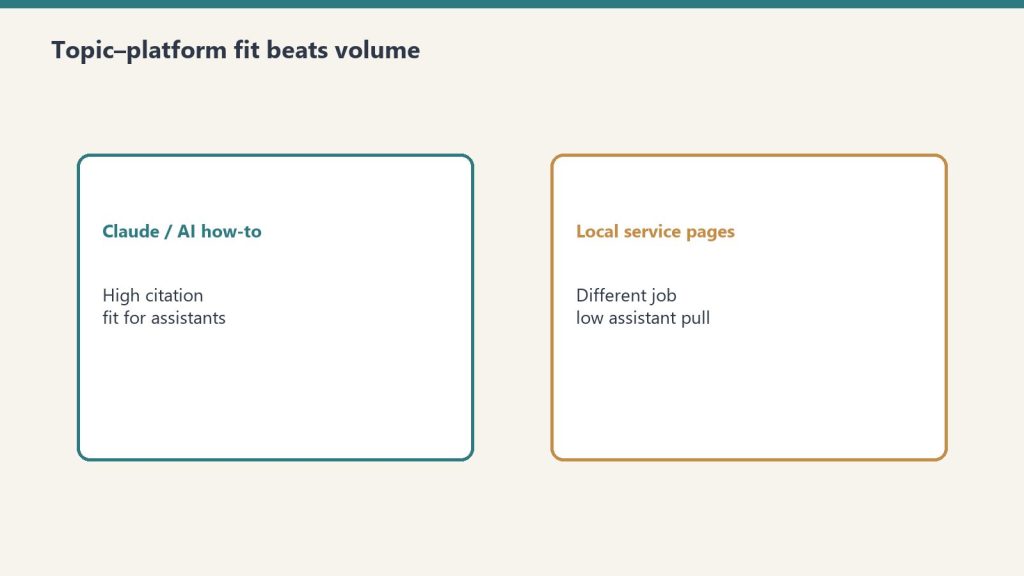
If you still lean on a tool like SpyFu to gauge how your site is doing in search, you’re measuring last decade’s game. SpyFu, Ahrefs, SEMrush, and their peers were built to estimate one thing: where a domain ranks in a traditional results page, and roughly how much traffic that’s worth. Still useful — just not the whole picture, because a growing share of how people find your content never touches a results page at all. It happens inside an AI answer, where your page gets cited or quoted and the reader never clicks through.
That’s the gap between third-party rank-estimation tools and first-party AI citation data, and it matters more every month.
What SpyFu (and Similar Tools) Actually Measure
Third-party SEO tools crawl the web and model search behavior from the outside. They don’t have access to your server logs, your analytics, or Bing and Google’s internal citation data — they infer traffic from ranking position, keyword volume estimates, and click-through curves built from aggregate industry data. That’s genuinely useful for competitive research: roughly where a competitor’s domain sits, and what keywords it’s chasing.
But it’s an estimate of an estimate, built for a web where “visibility” meant “blue link position.” It has no mechanism for counting how many times an AI assistant read your page, extracted a fact from it, and served that fact directly to a user who never visited your site.
What First-Party AI Citation Data Shows That Estimators Can’t
What first-party AI citation data shows that estimators can’t.
Bing Webmaster Tools now separates two very different signals: traditional web search performance (impressions, clicks, position) and AI performance — how often your pages get surfaced inside Copilot and other AI-generated answers. Google Search Console doesn’t yet break this out the same way, which is part of why it’s easy to miss. If you only watch third-party rank trackers, this entire layer is invisible to you.
The practical difference: a page can have modest, even declining, click-through performance in classic web search while its AI-citation count climbs steadily. Judged only by a SpyFu-style estimate, that page looks flat or fading. Judged by first-party citation data, it’s doing exactly the job it was built for — being the source an AI system reaches for when someone asks a related question.
The Blind Spot: Zero-Click Visibility
Zero-click visibility is the blind spot.
The uncomfortable part for site owners is that AI citation is, by design, mostly a zero-click channel. The reader gets their answer without visiting — that’s not a measurement bug you can fix with a better tool, it’s the actual shape of the channel. An estimator that only counts clicks and rankings will systematically undercount pages that are winning at citation, because “winning” there doesn’t look like a traffic spike. It looks like your facts and explanations showing up correctly, attributed to you, inside someone else’s interface.
Relying on SpyFu-style estimates alone can lead to the wrong call: de-prioritizing a page that’s actually become a trusted AI reference source, simply because the tool built to measure clicks can’t see the citations.
Building Your Own First-Party Measurement Stack
None of this means third-party tools are useless — they’re still the right instrument for competitive keyword research and for understanding classic ranking dynamics. But they should sit alongside, not replace, sources that actually see your own traffic and your own citation footprint:
Bing Webmaster Tools’ AI Performance tab — the most direct read on how often Copilot and partner AI surfaces are citing your pages.
Server or CDN logs — the only place you’ll reliably see crawler activity from AI bots (ClaudeBot, GPTBot, PerplexityBot, and similar) hitting your pages, separate from human traffic.
Your own analytics referral data — small in volume compared to citations, but real signal: sessions that landed with claude.ai, chatgpt.com, or perplexity.ai as the referring host are humans who read an AI answer, then clicked through anyway.
Put those three together and you get a picture no third-party estimator can reconstruct: which of your pages AI systems actually trust enough to cite, and whether that trust is translating into any direct human traffic at all.
Practical Takeaway
Practical takeaway — build your own measurement stack.
If a page’s third-party “visibility score” looks unimpressive but your first-party data shows steady or rising AI citation activity, don’t treat that as a contradiction — treat it as two different questions with two different answers. The estimator tells you about classic rank. Your own logs and Bing’s AI data tell you about a newer kind of authority that doesn’t require a click to pay off. Site owners who only check the estimator are optimizing for a channel that’s shrinking relative to the one they can’t see.
FAQ
Do I need to abandon tools like SpyFu?
No. They’re still useful for competitive keyword research and classic rank tracking. The point is to stop treating their traffic estimates as the full measure of your site’s reach.
Can I get AI-citation data for Google’s AI features the way I can for Bing?
Not with the same granularity as of this writing — Bing Webmaster Tools currently offers the clearest first-party AI-citation reporting. Server-log analysis for AI crawler activity works across engines regardless.
How do I know if AI citations are actually worth anything to my business?
Track it as its own funnel stage, not a proxy for revenue. Pair citation counts with referral sessions from AI-tool domains and see whether that traffic engages with an owned conversion path on your site. Citation volume alone tells you about reach, not value.