Category: Restoration Intelligence

The definitive resource for restoration company operators — business operations, marketing, estimating, AI, and growth strategy.

  • TPA vs Direct vs Cash: Building a Healthy Restoration Revenue Mix

    TPA vs Direct vs Cash: Building a Healthy Restoration Revenue Mix

    The single biggest risk to a restoration company isn’t competition or seasonality — it’s revenue concentration. When 70% of your work comes from one TPA or one carrier, a program change, a scoring drop, or a relationship shift can wipe out your year. This is what a healthy mix actually looks like.

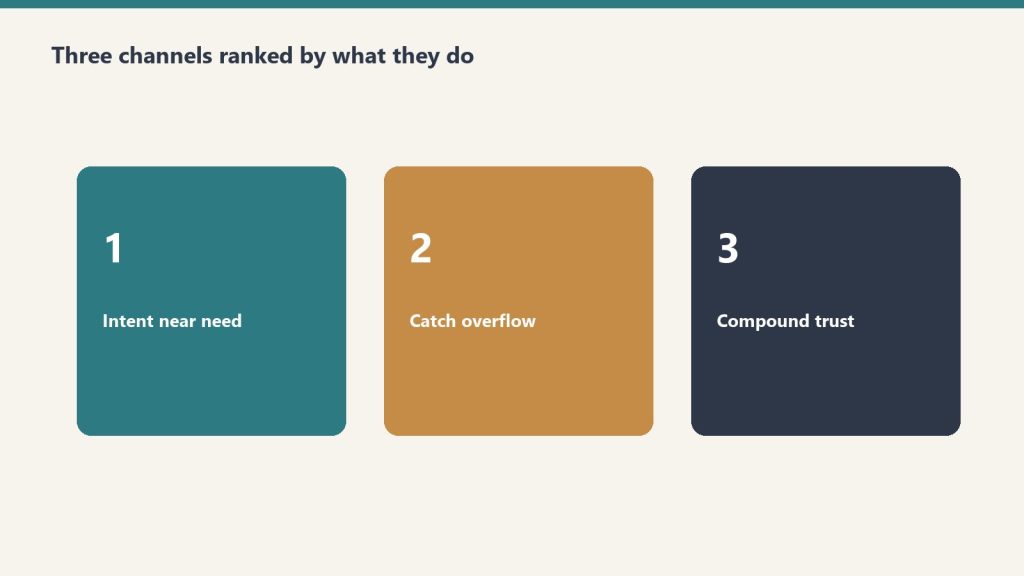
    The three channels

    Restoration revenue lands in three buckets, each with distinct margin and operational characteristics:

    • TPA work (Contractor Connection, Alacrity/Altimeter, Accuserve/Code Blue, others). Predictable volume, moderate margin (30-42% gross), heavy oversight, recurring fees.
    • Direct carrier work (State Farm Premier, Liberty Preferred, etc.). Higher margin (38-52% gross), strong relationships, harder to break into, requires consistent performance.
    • Cash and out-of-pocket work. Highest margin (often 50-65% gross on water mitigation, 30-45% on reconstruction), no insurance friction, but variable volume and price-sensitive.

    What healthy looks like

    A defensible 2026 revenue mix for a $2-5M restoration company looks something like:

    Channel Target % of Revenue Why
    TPA programs (combined) 30-45% Volume floor, recurring work, predictable AR
    Direct carrier programs 20-35% Margin lift, relationship moat
    Cash / out-of-pocket 10-25% Highest margin, fast pay
    Commercial / property mgmt 10-20% Recurring relationships, stable scopes
    Plumber / referral / agent 5-15% Independent of program structures

    The concentration ceiling

    No single TPA, carrier, or referral source should exceed 30% of total revenue. Past that line, your business has effectively merged with that channel’s fortunes. If they pause your program, change scoring, or reorganize their vendor team, your revenue cliff is immediate.

    This is the single biggest factor PE buyers downgrade restoration acquisition multiples on — concentration risk over 30% reliably knocks 0.5x – 1.0x off the multiple.

    Margin-weighted thinking

    Revenue percentage isn’t the only number that matters. Margin contribution often differs sharply:

    Channel % Revenue % Gross Profit
    TPA 40% 34%
    Direct carrier 25% 27%
    Cash 15% 20%
    Commercial 15% 14%
    Other referral 5% 5%

    That cash 15% of revenue often delivers 20%+ of total gross profit — which is why mature operators protect cash channels even when TPA volume tempts them otherwise.

    How to rebalance when one channel dominates

    If a single TPA or carrier is over 40% of your revenue, the rebalancing playbook:

    1. Stop accepting marginal jobs from the dominant channel. Tighten what you take to preserve capacity.
    2. Aggressively pursue plumber referrals and property management contracts. These are independent of program scoring.
    3. Pursue 1-2 new TPA enrollments to dilute the dominant program.
    4. Invest in direct carrier vendor manager outreach. Multi-quarter project, but high payoff.
    5. Increase cash channel marketing. SEO, GBP, LSAs targeting non-insurance keywords.

    Rebalancing typically takes 12-18 months. Start before you have to.

    The capacity trap

    The other failure mode: spreading capacity across too many programs without depth. Six TPA enrollments and 20% of total revenue from each looks diversified — but if your performance scores are mediocre across all six, every program throttles you simultaneously. Better to be excellent in three programs than mediocre in six.

    FAQs about restoration revenue mix

    What’s a dangerous level of TPA concentration?

    Any single TPA over 30% of revenue is a yellow flag. Over 40% is a red flag. Over 50% means your business is effectively a subcontractor for that TPA — and exit multiples reflect that.

    Is cash work really worth pursuing if TPA volume is steady?

    Yes. Cash work delivers 50-65% gross margin on mitigation vs 30-42% on TPA, pays in days instead of months, and isn’t subject to program scoring or carrier reorganizations. Even at 15-20% of revenue, cash work disproportionately funds growth and acquisition value.

    Should I drop a TPA program to focus on direct?

    Usually no — drop a TPA only if it’s actively losing money, scoring is unrecoverable, or the relationship has clearly soured. More commonly, hold the TPA at maintenance level while you build direct in parallel, then let the TPA share fall naturally as direct grows.

    What if my market doesn’t have direct carrier opportunities?

    Every market has them — they just take longer to find in less competitive metros. Start with the carriers writing the most policies in your zip codes (your local independent agent can tell you), and build adjuster relationships from there.

    How do I track revenue mix accurately?

    Tag every job in your job management software with the channel source at intake (TPA name, carrier name, “cash”, “PM contract”, “plumber referral”). Pull monthly mix reports. Without tagging at intake, you’ll never have accurate mix data and rebalancing decisions become guesses.

    Full insurance programs framework: Restoration Insurance Programs Master Guide.


  • When to Exit a TPA Program: The Restoration Operator’s Decision Framework

    When to Exit a TPA Program: The Restoration Operator’s Decision Framework

    Exiting a TPA program is one of the highest-stakes decisions a restoration company makes. Done well, it frees capacity for higher-margin work and reduces concentration risk. Done badly, it creates a 6-12 month revenue valley that’s hard to recover from. This is the operator’s decision framework.

    The four signals that say “exit”

    1. Financial signal: the math doesn’t work anymore

    Run the unit economics on the TPA channel honestly. Total program revenue ÷ true gross margin (after equipment rental haircuts, supplement rejections, and program fees) ÷ time spent. If the effective margin is below 25% gross or the operating cost is materially higher than your other channels, the program is subsidized work.

    A common pattern: contractors stay in marginally-profitable programs because the volume feels reassuring — even when that volume is consuming capacity that could be deployed at 40%+ gross elsewhere.

    2. Performance signal: scores you can’t recover

    Every TPA scores contractors on cycle time, customer satisfaction, scope adherence, documentation, and re-open rate. If your scores are sustained low for 2-3 consecutive quarters and you’ve already invested in the obvious fixes (training, software, dispatcher), the program is no longer a fit operationally. Continuing to take throttled assignments at degraded scores is a slow exit anyway — better to make it intentional.

    3. Strategic signal: concentration risk over 40%

    If a single TPA represents over 40% of total revenue, the program owns your business — not the other way around. Exit doesn’t have to be immediate; intentional dilution over 12-18 months as other channels grow is usually the better playbook. But the strategic decision to reduce dependency should be made consciously.

    4. Relationship signal: the relationship has soured

    Sometimes the program team changes, the rules tighten without compensation, or the carrier relationships you cared about leave the program. If the relationship feels adversarial across multiple touchpoints for multiple months, the program is an unhappy fit and exit is usually right.

    The honest cost of exit

    Most operators underestimate the revenue valley that follows a TPA exit:

    • Months 1-3 post-exit: Existing assignments wind down. Revenue from the program drops to near zero by month 3.
    • Months 3-9: Other channels (direct, cash, plumber, commercial) have to fill the gap. They will, but slower than expected.
    • Months 9-18: Net revenue typically recovers to pre-exit level, often at higher margin.

    If you cannot survive a 30-40% revenue dip for 4-6 months, do not exit yet. Build the replacement channels first.

    The transition plan

    1. Months -12 to -6: Aggressively grow non-TPA channels. Plumber referral push. Property management contract pursuit. Direct carrier vendor outreach. Cash channel marketing.
    2. Months -6 to -3: Tighten what you accept from the TPA — only the highest-margin assignments. Let scores naturally throttle volume.
    3. Month 0: Send formal exit notice per program contract terms. Do not burn the relationship — exit professionally.
    4. Months 1-6: Execute on the channels you built. Track weekly revenue by channel. Adjust marketing spend toward whatever’s working.
    5. Months 6-12: Stabilize the new mix. Document what worked. Update the org chart and capacity plan to the new revenue shape.

    Re-enrollment realities

    Exiting and re-enrolling later is harder than staying. Most TPAs require a fresh application process for re-enrolling contractors, including financial review, insurance re-verification, and capacity assessment. Plus, the program team remembers contractors who left — sometimes positively, sometimes not. Treat exit as a 3-5 year decision, not a 6-month one.

    Partial exit is also an option

    You don’t always have to exit fully. Many TPAs let you reduce service area, restrict service types, or pause specific carrier programs. A partial exit can preserve optionality while reducing exposure.

    FAQs about exiting TPA programs

    How do I know if a TPA is actually unprofitable?

    Pull 12 months of program revenue. Subtract direct labor, materials, equipment cost (real, not Xactimate-priced), supplement losses, and an allocated share of overhead and admin time spent on program-specific tasks. If the result is below 20% gross profit or your operating cost is higher than your other channels, the program is subsidized.

    What’s the right notice period for exit?

    Whatever your contractor agreement specifies — usually 30-90 days. Honor it precisely. Sloppy exits damage your reputation across the broader TPA and carrier industry, which is smaller than it looks.

    Can I keep some carriers within the program but drop others?

    Sometimes. Some TPAs allow carrier-specific opt-outs; others treat program enrollment as all-or-nothing. Ask explicitly during your exit conversation — you may have more flexibility than the contract suggests.

    How do I tell my team we’re exiting?

    Be direct about why and what changes operationally. The honest version: “We’ve decided this program isn’t a fit anymore — here’s what we’re replacing it with and how the next 6-12 months will look.” Anxiety on the production team kills morale faster than the actual revenue impact.

    What if I exit and revenue doesn’t recover?

    That outcome usually means the replacement channels weren’t built before exit. The fix is rarely re-enrolling in the program you left — it’s doubling down on plumber referrals, direct carrier outreach, property management contracts, and cash channel marketing. Six months of focused channel building usually closes the gap.

    Full insurance programs framework: Restoration Insurance Programs Master Guide.


  • IICRC WRT, ASD, and AMRT Certification: A Restoration Owner’s Planning Guide

    IICRC WRT, ASD, and AMRT Certification: A Restoration Owner’s Planning Guide

    Three IICRC technician certifications anchor the technical credibility of almost every restoration company in North America: Water Damage Restoration Technician (WRT), Applied Structural Drying (ASD), and Applied Microbial Remediation Technician (AMRT). For owners building or expanding a production team, knowing what each certification covers, what it costs, and how to sequence them is the difference between a planned training investment and a reactive scramble before a TPA audit.

    This guide is part of our broader restoration training and certification master guide.

    WRT — The Foundational Certification

    The Water Damage Restoration Technician (WRT) certification is the entry point into IICRC’s restoration credentialing. It covers the fundamentals of water damage response: water categories and classes, drying principles, equipment selection, and the IICRC S500 standard. WRT is also the prerequisite for both ASD and AMRT, which makes it the right starting point for every technician on the team.

    Course costs vary by training provider. A common reference point is around $449 per person for a WRT course delivered by a well-established training school. The IICRC exam fee for WRT is $80, with $80 retest fees if a candidate does not pass on the first attempt.

    ASD — The Drying Specialist Credential

    Applied Structural Drying (ASD) builds on WRT and goes deeper into the science and equipment of structural drying. ASD covers psychrometry, dehumidifier selection and sizing, air mover placement, monitoring methodology, and drying chamber strategy. For technicians who lead drying jobs in the field, ASD is the right second certification.

    WRT is a prerequisite for ASD, and most restoration training schools offer the two as a combined WRT/ASD program. Combo courses commonly run from $1,395 to $1,495 per person, plus the combined IICRC exam fees of $160 ($80 per certification). The combo format is more cost-effective than taking the two separately and reduces the time technicians spend off production.

    AMRT — The Mold Remediation Credential

    Applied Microbial Remediation Technician (AMRT) is the IICRC certification for mold remediation work. It covers the IICRC S520 standard, containment, PPE, antimicrobial application, HEPA equipment, and remediation protocols. For any restoration company performing mold work — even occasionally — AMRT is the credential that protects the business legally and operationally.

    WRT is a prerequisite for AMRT. Course costs are commonly around $995 per person, and the IICRC exam fee is $150. AMRT must be taken in person at a training center; the course is not approved for online delivery.

    How to Sequence Certifications Across a Team

    The right certification sequence for a typical restoration team:

    • All field technicians — WRT within the first 90 days of hire
    • Senior technicians and lead drying techs — WRT/ASD combo, ideally within the first year
    • Technicians performing mold work — AMRT after WRT, before the first solo mold job
    • Project managers and crew leads — All three (WRT + ASD + AMRT) as a baseline
    • Operations managers and owners — At minimum WRT, plus ASD and AMRT for credibility on customer and adjuster calls

    Budgeting Annual Certification Spend

    For a 10-person restoration team running this certification map, expect first-year certification spend in the $8,000 to $12,000 range when WRT, WRT/ASD combos, and AMRT courses are layered in. Subsequent years drop to a continuing education rhythm (covered in a separate spoke) plus new-hire WRT certifications.

    The right way to think about this spend is per-job risk reduction. A single audit reduction or compliance issue that the certification would have prevented typically pays for the certification several times over.

    Choosing a Training Provider

    The IICRC accredits multiple training schools, and not all are equivalent. The factors that matter most: instructor field experience (vs. pure classroom background), hands-on lab time built into the course, exam pass rates, and post-course support. Reading provider reviews from operators in your region is the most reliable selection signal.

    Frequently Asked Questions

    How much does IICRC WRT certification cost in 2026?

    WRT courses commonly run around $449 per person from established training schools, plus an $80 IICRC exam fee. Retest fees if needed are also $80. Pricing varies by provider and region — confirm current rates with your selected training school before budgeting.

    Is WRT a prerequisite for ASD and AMRT?

    Yes. WRT is the prerequisite for both Applied Structural Drying (ASD) and Applied Microbial Remediation Technician (AMRT). The standard pathway is to complete WRT first, then add ASD or AMRT depending on the technician’s role.

    Can IICRC certifications be earned online?

    WRT can be taken online through several approved providers. The WRT/ASD combo course must be taken at a training center because of the hands-on drying lab requirements. AMRT is approved for in-person delivery only. Always verify the delivery format with the provider before registering.

    How long does it take to earn WRT certification?

    Most WRT courses run two to three days of instruction, followed by the IICRC exam. The full timeline from course start to active certification is typically one to two weeks once exam scheduling is included. Online formats may compress the calendar but require the same instructional hours.

    How long is IICRC certification valid before renewal?

    IICRC certifications are renewed through continuing education credits (CECs) on a recurring cycle, not through a single fixed expiration date. Technicians need 14 CECs every four years; advanced certifications and Certified Inspectors require 14 CECs every two years. The CEC system is covered in detail in our continuing education spoke.


  • Restoration Technician Onboarding: The 90-Day Program That Turns Hires Into Producers

    Restoration Technician Onboarding: The 90-Day Program That Turns Hires Into Producers

    New restoration technicians do not become productive on day one, day seven, or day thirty. The realistic timeline from hire date to independent on-site productivity is 60 to 90 days for a candidate with no prior restoration experience, and even faster onboarding requires a structured program rather than the throw-them-on-a-truck approach most companies default to. This guide lays out the 90-day onboarding program profitable restoration companies use to compress that timeline and protect the new hire investment.

    For broader context on restoration team development, see our restoration training and certification master guide.

    Why Onboarding Matters Financially

    The cost of a poorly onboarded technician is rarely visible on the P&L, but it is real: callbacks, scope misses, customer complaints, premature attrition, and the time lead techs lose covering for someone who was not actually ready to work alone. A structured onboarding program converts this hidden cost into an upfront training investment with predictable ROI.

    Days 1-7 — Orientation and Safety

    The first week is not field production. The right structure is paperwork and orientation on day one, OSHA safety training and respirator fit testing in the first three days (covered in a separate spoke), company SOPs and customer service standards by end of week, and shadowing on simple jobs by day five or six. New techs should not be on a job alone until they have completed safety training and at least one shadow rotation.

    Days 8-30 — Shadowing and Skill Building

    Weeks two through four are paired-tech rotations across job types: water mitigation, content cleaning, equipment placement and monitoring, and basic demolition. The new tech is not the lead on any of these jobs — they are present, learning, and progressively taking on supervised tasks.

    By the end of day 30, a new tech should be able to: place equipment under supervision, complete a moisture monitoring log accurately, perform basic content manipulation, follow a standard scope of work without coaching, and represent the company professionally in front of customers.

    Days 31-60 — WRT Certification and Lead-Tech-Supervised Work

    The second month introduces the IICRC Water Damage Restoration Technician (WRT) certification. Most companies require WRT within the first 90 days; building it into the second month rather than waiting until day 89 produces a more confident, more capable technician for the back half of the onboarding window.

    Field work in days 31-60 expands to lead-tech-supervised production: the new tech can be the second tech on a job, can perform standard tasks without step-by-step supervision, and is responsible for documentation alongside the lead.

    Days 61-90 — Solo Production on Standard Jobs

    The final month is solo work on standard scope: simple Cat 1 water mitigation, equipment placement and monitoring on assigned jobs, basic content cleaning, and routine documentation. Complex jobs (Cat 3 water, fire cleanup, mold remediation, large losses) remain paired-tech assignments until the technician demonstrates additional readiness or earns the relevant certifications.

    By day 90, a properly onboarded tech should pass an internal evaluation covering: safety practices, equipment operation, documentation accuracy, customer interaction, scope execution, and basic estimating literacy.

    The Onboarding Coordinator Role

    The companies that execute this program well assign a specific person — usually a senior technician or operations manager — as the onboarding coordinator. This person owns the new hire’s first 90 days, schedules training milestones, runs check-ins at 7, 30, 60, and 90 days, and signs off on progression to solo work. Without a clear owner, the program collapses into ad hoc field training.

    What to Measure

    The onboarding metrics that matter: 90-day retention rate, days-to-first-solo-job, customer complaint rate by tech tenure, callback rate by tech tenure, and average gross margin per job by tech tenure. Tracking these reveals whether the program is producing capable technicians or just running them through the motions.

    Frequently Asked Questions

    How long should restoration technician onboarding take?

    The realistic timeline from hire to independent solo work on standard jobs is 60 to 90 days for candidates with no prior restoration experience. Candidates with relevant trade backgrounds may compress to 45 to 60 days. Trying to compress beyond that consistently produces under-prepared techs who generate callbacks and quality issues.

    When should new hires take their WRT certification?

    The optimal timing is days 31-60 — after the new tech has had enough field exposure to make the coursework concrete, but before they are running solo on water jobs. Most companies require WRT within the first 90 days; building it into the program intentionally produces better results than waiting until the deadline.

    Should new technicians be paid during training time?

    Yes. OSHA training, respirator fit testing, IICRC course time, and on-site shadowing are all compensable work time. Trying to treat training as unpaid creates legal exposure and signals to the hire that the company does not value the investment.

    What is the most common onboarding mistake?

    Putting new techs on jobs alone too early. The pressure of production schedules tempts owners to send a partially trained tech to a job because the truck has to roll. Each early-solo job that produces a callback or quality issue costs more than the labor that was saved. The discipline is to hold the line on the program even during busy periods.

    How do I evaluate whether a new tech is ready for solo work?

    Use a written 90-day evaluation covering safety practices, equipment operation, documentation accuracy, customer interaction, scope execution, and basic estimating literacy. The lead tech and the onboarding coordinator should both sign off. If the tech is not ready at day 90, extend the supervised period rather than rushing the milestone.


  • Restoration Leadership Development: Building Crew Leads, PMs, and Operations Managers Internally

    Restoration Leadership Development: Building Crew Leads, PMs, and Operations Managers Internally

    Restoration is a difficult industry to recruit leaders into from outside. The combination of technical depth, customer-facing pressure, insurance navigation, and operational complexity is hard to teach, and the candidates who can do all four are rarely on the job market. The companies that scale successfully build their crew leads, project managers, and operations managers from inside the team — and the companies that try to hire those roles externally typically learn this the expensive way.

    This guide is part of our broader restoration training and certification master guide.

    The Three Internal Leadership Levels

    Restoration leadership progression generally moves through three layers:

    • Crew Lead — leads a 2-3 person crew on a specific job, accountable for execution quality and documentation
    • Project Manager — owns multiple jobs at once, manages customer relationships, signs off on estimates and scope
    • Operations Manager — owns the production function across all jobs, manages PMs, sets standards, drives metrics

    Each layer has different skill requirements, and promoting a strong crew lead directly to PM (skipping the development steps) is one of the most common reasons internal leadership pipelines fail.

    Identifying Leadership Candidates Early

    The leading indicators of leadership potential in restoration techs are not the obvious ones. They are: communication clarity with customers under stress, willingness to slow down for documentation, comfort with ambiguity in scope decisions, ability to coach less-experienced techs without ego, and ownership of the outcome on jobs they did not start. Technicians who consistently demonstrate these behaviors are the right development pool.

    Identification should happen by month 6-12 of tenure. Owners who wait until they need a leader to start identifying candidates always end up either hiring externally (expensive, slow) or promoting too quickly (sets the candidate up to fail).

    The Crew Lead Development Path

    Moving a strong technician to crew lead requires explicit skill development beyond technical capability. Core curriculum areas: leading a brief and debrief on every job, customer communication frameworks, conflict resolution with crew members, documentation standards as a checklist owner rather than a participant, and basic scope decision authority within defined boundaries.

    Most companies underspend on this development step. The right investment is structured: weekly check-ins with the operations manager during the first 90 days as crew lead, mentor pairing with an experienced PM, and explicit scope-of-authority documentation so the new crew lead knows what they can decide without escalating.

    The Project Manager Development Path

    Project manager is the role where most internal promotions break down, because the skill jump from crew lead to PM is larger than it appears. PMs manage multiple concurrent jobs, own customer relationships across job types, sign off on estimates with real dollar consequences, and coordinate across crews.

    The development curriculum needs to cover: estimating literacy beyond field execution (this is where Xactimate certification matters), insurance and TPA program navigation, multi-job time management and prioritization, financial literacy on margin and gross profit, and team-leadership skills that scale beyond a single crew.

    The realistic timeline from crew lead to capable PM is 12 to 24 months of structured development. Compressing below 12 months produces PMs who can manage the schedule but cannot defend pricing or coach their crews.

    The Operations Manager Development Path

    Operations manager is the role that almost has to be developed internally, because the role requires deep knowledge of how the specific company operates. The development curriculum at this level shifts toward systems thinking, financial accountability for the production function, vendor and program management, hiring and retention strategy, and strategic planning alongside ownership.

    This level typically requires 2-4 years of PM experience as a foundation, plus structured executive development through industry programs, peer groups, or formal coaching.

    Leadership Development Programs to Consider

    Several restoration industry organizations offer formal leadership development: RIA (Restoration Industry Association) offers leadership programming through its conferences and CCT-level certifications, RTI (Restoration Training Institute) and others run multi-day leadership programs, and several private coaches and mastermind groups serve restoration owners and PMs specifically. Combining internal development with external programs accelerates the trajectory.

    What to Pay Internal Leadership

    Compensation for internal leadership should reflect both the skill premium and the difficulty of replacement. Crew leads typically earn 15-25 percent above lead tech base, PMs typically earn 30-50 percent above crew lead base, and operations managers typically earn 50-100 percent above PM base. Bonus structures tied to gross margin and customer satisfaction reinforce the right behaviors at each level.

    Frequently Asked Questions

    How long does it take to develop a restoration crew lead from a strong technician?

    The realistic timeline is 6 to 12 months of structured development beyond the technical skills the technician already has. Faster promotions consistently produce crew leads who default back to technician behaviors when the leadership demands intensify.

    Should I hire a project manager from outside or develop one internally?

    Develop internally whenever possible. External PM hires from inside the restoration industry are rare and expensive; external hires from outside the industry almost universally fail because the technical and insurance literacy cannot be learned fast enough. The 12-24 month internal development path is more reliable than the external hiring path.

    What is the most common reason internal leadership development fails?

    Promoting too fast. A strong technician promoted directly to PM without the structured development steps fails not because the candidate lacks potential but because the role demands skills they have not yet been taught. The fix is structured development with explicit milestones rather than ad hoc promotions.

    What metrics should I use to evaluate leadership readiness?

    For crew leads: customer satisfaction scores on jobs they led, callback rate, documentation completeness. For PMs: gross margin on managed jobs, customer retention, crew retention under their leadership. For operations managers: production function gross margin, crew retention rate, capacity utilization. Quantitative metrics protect against subjective bias in promotion decisions.

    Should leadership development be funded from the training budget or treated as overhead?

    It should be a deliberate line item in the training budget, with a target spend per leader per year. Treating leadership development as overhead almost guarantees it will be cut during slow periods, which is exactly when the investment matters most.


  • Measuring What Matters: The Marketing Signals Beyond Lead Count

    Measuring What Matters: The Marketing Signals Beyond Lead Count

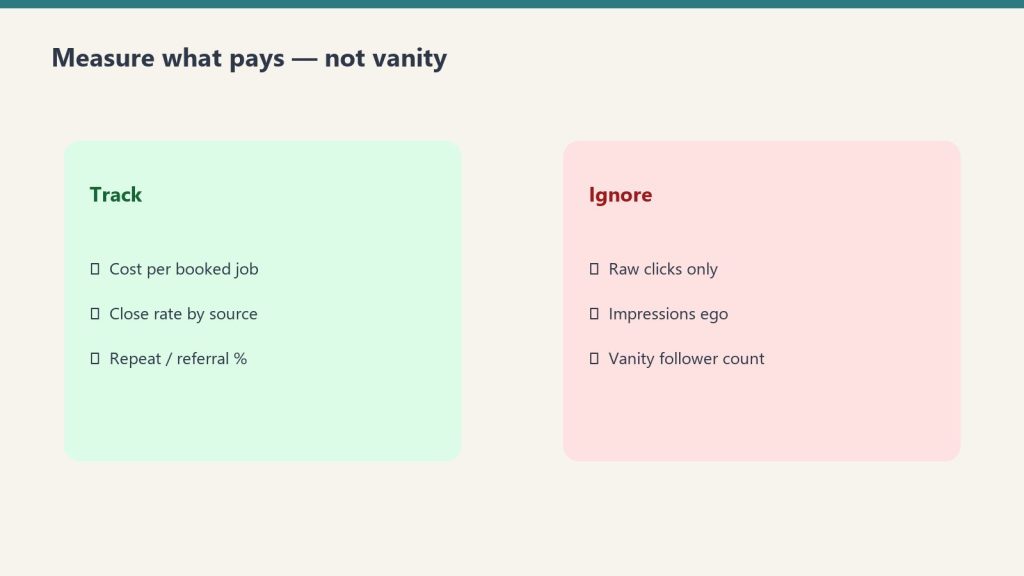
    What marketing metrics should restoration companies actually measure? Lead count matters, but it is a lagging indicator and a noisy one. The signals that predict long-term health are review velocity and quality, GBP engagement trends, organic search visibility, content engine output, retargeting audience growth, email list size and engagement, owner-level community activity, and partner referral patterns. The companies with the cleanest view of these signals run a fundamentally different marketing operation from the ones chasing monthly lead reports.


    Ask a restoration owner what they measure in marketing and most will say “lead count” and “cost per lead.” Maybe conversion rate to job. Maybe a monthly revenue attribution by source. That is typically the full measurement stack.

    Those metrics matter. They are also insufficient, and sometimes misleading.

    Lead count is a lagging indicator. It tells you what happened last month. It is noisy — weather events, competitor outages, seasonal shifts, and random luck all move it around in ways that have nothing to do with the quality of the marketing. And it measures the short-term output, not the long-term asset.

    The companies that compound over ten years are the ones watching a different set of signals — ones that predict the lead count six months from now, rather than recording the lead count last month. This article lays out that measurement stack.

    The Asset-Health Signals

    These are the signals that measure the organic asset — the thing that produces leads durably regardless of this month’s paid spend.

    Review velocity. New reviews per week, by service and location. Rising velocity is one of the strongest predictors of rising organic lead flow 60 to 90 days out. Flat or declining velocity is the leading indicator of trouble. Target: consistent weekly velocity that at least maintains review recency across every GBP the company operates.

    Review star average, tracked over time. Not just the current average, but the trajectory. A company moving from 4.6 to 4.9 is a different business from a company static at 4.8. Target: 4.8 minimum, 4.9+ ideal.

    GBP engagement trends. Views, searches, calls, direction requests, website clicks — all reported inside the GBP insights dashboard. Monthly trends across these matter more than the absolute numbers. Target: steady growth across all five.

    Map pack ranking by query. What position the company sits in for its top 15-20 service and location queries in its service area. Tools like Local Falcon or BrightLocal make this trackable. Target: first-position or top-three for primary service + primary geography queries, top-three for secondary geographies.

    Organic search traffic by page. The neighborhood pages, location pages, and service pages — which are ranking, which are climbing, which are stuck. Google Search Console is the primary source. Target: month-over-month growth in organic sessions to the site.

    Content engine output. Articles published per month, pages added per month, GBP posts per week, photos uploaded per week. This is the raw activity that feeds the asset. Target: sustained weekly cadence.

    Retargeting audience size and freshness. How big is the pool, how recent are the signals, how engaged is the audience? Target: audience size growing month over month, freshness maintained with pixel activity from the site.

    Email list size and engagement. Subscribers, open rate, click rate. Target: subscriber growth each month, open rate above 25% for a cold-niche list (restoration-specific content audiences open at higher rates than generic consumer lists).

    Social following, by platform. Followers, engagement rate, local share rate. Not vanity metrics — engagement specifically from the service area. Target: month-over-month growth in engaged local audience.

    These signals, taken together, describe the health of the asset. A company with green lights across the board has an asset that will continue producing lead flow. A company with red lights has one that will start bleeding lead flow in the next two quarters.

    The Community-Standing Signals

    The second tier of measurement is the owner-level and team-level community activity that produces the relational underpinning of the asset. These are harder to quantify but worth tracking.

    Association attendance. Events attended per quarter, by association, by attendee. The brief-and-post-mortem discipline described in the event playbook produces the log. Target: consistent attendance at the committed associations; drop-offs caught early.

    Owner unblocking calls. How many times per quarter did the owner make an unblocking call for a sales rep? This is a specific activity described in the owner-as-rainmaker article. Target: at least one per rep per quarter.

    Partner relationship hygiene. Number of active B2B partners, recency of last interaction, direction of recent referrals (from partner to company, company to partner). The observational B2B plan produces the database. Target: partner count growing, recency maintained on core relationships, bidirectional flow evident.

    Event briefs and post-mortems completed. Every event should have both. A count of how many were actually done reflects the discipline. Target: 100% completion rate.

    Speaking and content placements. Was the owner or a senior person speaking at an association, publishing in an industry outlet, or contributing content to a partner organization? Target: one to two per quarter minimum at senior level.

    Community sponsorship ledger. What the company sponsored, what it produced, whether it repeats. Target: every sponsorship intentional, measured, and reviewed annually.

    These signals measure the work that is hard to see but matters for long-term referral flow.

    The Operational Readiness Signals

    The third measurement cluster is whether the company can convert the leads it does generate. A marketing asset that produces leads the operations team cannot convert is an asset partially wasted.

    Response time to inbound calls. Average and 95th percentile. Target: under 60 seconds on emergency lines, under 10 minutes on non-emergency, 24/7.

    Response time to LSA and web form leads. Target: under 5 minutes on emergency leads, under 30 minutes on non-emergency during business hours.

    Lead-to-appointment rate. What percentage of inbound leads convert to a scheduled appointment? Target: 75%+ for qualified emergency leads.

    Appointment-to-contract rate. What percentage of appointments become contracted jobs? Target: 60%+ for residential, varying for commercial.

    Same-day response rate. What percentage of inbound leads get a real response the same day, regardless of channel? Target: 95%+.

    These metrics are operations more than marketing, but they determine whether marketing effort converts. Many restoration companies have marketing problems they think are marketing problems when they are actually operations problems — marketing is generating leads, but operations is not converting them.

    The Paid-Channel Signals

    For the paid layer, measurement should include:

    Cost per lead, by channel. LSA, Google Ads, Meta, YouTube, lead aggregators — each tracked separately.

    Cost per job, by channel. CPL × conversion rate. The number that actually matters for profitability.

    Blended cost per job across paid. Weighted average. The overall efficiency of the paid layer.

    Share of leads captured to the asset. Percentage of paid leads whose email went into the list, that consented, that ended up in retargeting. The evergreen discipline from the every-paid-lead-evergreen article is measured here. Target: 85%+.

    Attribution overlap. Leads that touched paid and also touched organic before converting. Google Analytics 4 and a well-configured analytics stack can show this. Understanding overlap prevents double-counting and reveals where paid is genuinely incremental versus where it is claiming credit for organic work.

    Dispute rate and recovery. For LSA specifically. Target: every bad lead disputed, recovery rate above industry baseline.

    The Reporting Cadence

    The measurement stack above is a lot to track. The cadence matters as much as the metrics.

    Weekly. Review velocity, GBP engagement summary, content output, response times, paid performance top line. A 15-minute marketing stand-up or a simple weekly report captures this.

    Monthly. Full asset dashboard — every metric in every cluster. One-hour monthly review with the owner, marketing lead, and operations lead. Pattern interpretation: what is rising, what is falling, what needs attention.

    Quarterly. Strategic review. Association attendance, partner relationships, major initiatives, budget reallocation decisions. Two-hour session against the annual plan.

    Annually. Full refresh of the plan. Revisit the end-in-mind org design. Adjust the measurement stack itself if the right metrics have changed.

    Without the cadence, the measurement stack goes stale. Metrics only matter if they inform decisions.

    The Metric Most Restoration Companies Should Stop Chasing

    A final note on leads. Lead count is fine as one metric among many. It becomes pathological when it is the only metric.

    Chasing lead count month to month creates a pattern where short-term spend is continually increased to hit the current-month number, while the long-term asset is continually underinvested. Lead count drives paid spend decisions. Paid spend squeezes out organic investment. Organic investment is what produces the compounding lead flow. The cycle is self-defeating.

    The companies that break out of it are the ones that refuse to measure marketing primarily on monthly lead count. They measure it on the health of the asset. They spend on the asset. The lead count rises as a consequence, not as a target. Paid becomes rent on top of a growing property, not the entire foundation.

    How This Pairs With the Rest of the Stack

    Measurement is the feedback loop that makes every other layer of the stack get better over time. The content engine is measured by output cadence and resulting traffic. The digital three-legged stool is measured by review velocity, GBP engagement, and search visibility. The paid layer is measured by CPL, cost per job, and share of leads captured to the asset. The observational B2B plan is measured by partner count and referral flow direction. The owner’s community work is measured by attendance, unblocking calls, and speaking placements.

    Without measurement, every layer drifts. With measurement, every layer improves.

    Where to Start

    Pick the three signals most directly predictive for your company and start tracking them this week. For most restoration companies the three are: review velocity, content output cadence, and response time.

    Add one cluster per month over the next quarter until the full stack is in place. Do not try to install everything at once.

    Set the weekly, monthly, quarterly, and annual cadence. Put the reviews on the calendar. Name the owners.

    In ninety days, the company has a measurement system that tells you where the marketing is strong, where it is weak, and where the next investment should go. That system is worth more than any individual campaign. It is how the marketing function becomes a compounding asset rather than a recurring expense.


    Frequently Asked Questions

    What marketing metrics should restoration companies measure beyond lead count?
    Review velocity and star average, GBP engagement trends, map pack ranking, organic search traffic, content engine output, retargeting audience size, email list size and engagement, social following, community activity (association attendance, partner relationships, owner unblocking calls), response times, and paid channel efficiency. Together these measure the health of the asset, not just this month’s lead output.

    Why is lead count alone a bad primary metric?
    Because it is a lagging, noisy indicator. It is moved around by weather, competitor behavior, seasonal shifts, and random luck. More importantly, chasing lead count month to month tends to push companies into short-term paid spend that starves the long-term asset. The asset is what produces compounding lead flow. Measuring only leads hides the investment picture.

    How often should restoration companies review marketing metrics?
    Weekly for operational metrics (response time, review velocity, paid performance). Monthly for the full asset dashboard. Quarterly for strategic review against the plan. Annually for refresh of the measurement stack itself. Without a consistent cadence, the metrics stop informing decisions.

    What is review velocity and why does it matter?
    Review velocity is the rate of new reviews per week, typically measured by service and location. It is one of the strongest leading indicators of organic lead flow 60 to 90 days out. Rising velocity predicts rising lead flow. Flat or declining velocity is an early warning sign. It matters more than cumulative review count because Google weights recency heavily.

    Are marketing-operations metrics (response time, conversion rates) really marketing metrics?
    They are crossover metrics. The marketing function produces leads; the operations function converts them. Many restoration companies have what look like marketing problems that are actually operations conversion problems. Tracking response time and conversion rates inside the marketing dashboard makes the interplay visible and keeps both functions accountable.

    What is the single most valuable metric if a restoration company can only track one thing?
    Review velocity. It is the closest thing to a single metric that reflects the health of multiple underlying systems — service delivery quality, review-ask discipline, staff alignment with customer experience, GBP health, and ultimately map pack and LSA placement. A company that monitors review velocity and trends it upward is doing most of the right things, whether they know it or not.


    Tygart Media on restoration — an analyst-operator body of work on the systems that separate compounding restoration companies from busy ones. No client names. No brand placements. Just the operating standard.


  • Every Paid Lead Is Evergreen: Converting Rent Into an Asset

    Every Paid Lead Is Evergreen: Converting Rent Into an Asset

    How should restoration companies handle paid leads that don’t convert? Every paid lead — whether they closed the job or not — should flow into the organic asset. Email list, retargeting audience, community contact database, future review pipeline if they closed, referral seed network regardless. The paid spend bought an introduction. The organic asset is what converts that introduction into a durable relationship. Companies that capture every paid lead into the asset make every subsequent paid dollar more efficient. Companies that don’t stay on the lead-buying treadmill in perpetuity.


    The highest-ROI paid advertising strategy in restoration is not a new campaign type, a new platform, or a more aggressive bid strategy. It is a retention discipline that costs almost nothing to install and pays compounding returns for the life of the company.

    The discipline: every paid lead, whether they converted or not, gets captured into the organic marketing asset. The paid dollar bought an introduction. The organic asset is what turns that introduction into a durable relationship.

    Most restoration companies do not do this. The paid lead closes or does not close, and the company moves on. A name, a phone number, and an interaction that cost real money disappear from the company’s awareness. The next time that homeowner or that commercial account has a restoration need, the company has to win them again — at cost, through paid, the same way the first time.

    The fix is not complicated. It is a small set of habits that compound into a structural marketing advantage.

    What “Evergreen” Means Here

    A paid lead is an introduction, not a transaction. The transaction might or might not happen on this loss. The introduction — the fact that this homeowner or this commercial buyer now knows the company’s name and has had a real interaction — is durable if the company treats it that way.

    “Evergreen” means the paid lead continues to produce value for the company beyond the single loss that triggered the call. That happens when the lead flows into channels where the company can stay in front of them organically — email, social, retargeting, content, community — at a near-zero incremental cost per touch.

    Over time, the accumulated paid-lead database becomes one of the company’s most valuable marketing assets. It is a list of people who already know the company, have already engaged, and are much more likely to convert on any future restoration need than a cold prospect is.

    The Capture Points

    The evergreen discipline runs at specific capture points throughout the lead journey.

    First contact capture. When a paid lead first calls or messages in, the intake captures name, address, email, and the nature of the inquiry. The email address specifically is the unlock — it is what allows the future organic touch. If the intake workflow does not require an email before the quote or response is sent, the capture rate will be unacceptable.

    Consent capture. At intake, the client is asked if they would like to receive occasional emails from the company — maintenance tips, storm preparation notes, community updates. Consent is logged. The ones who say yes become the email list. The ones who say no are still in the retargeting audience through behavioral signals on the website, but not in the email list.

    Close-of-job capture. If the job closes, the close-out conversation includes the review ask, the photo-and-content permission ask, and the referral network ask. Clients who closed are warm ambassadors for everything the company does next. The close-out conversation is the highest-leverage capture opportunity in the process.

    No-close capture. If the job does not close — they went with another company, the scope changed, the loss was smaller than they thought — the follow-up is a polite, helpful message that keeps the relationship alive. “We understand this did not work out this time. If anything changes or if you ever need us in the future, please reach out. In the meantime, we’ll stay in touch occasionally with maintenance tips and community updates.” Most non-closed leads will accept this framing. Many of them end up closing with the company on a future loss because the relationship was maintained.

    The Channels That Hold the Relationship

    The captured leads flow into specific channels that keep the company in front of them at low marginal cost.

    Email list. Monthly newsletter at minimum. Content mix: maintenance tips, storm or seasonal prep, community updates, staff celebrations, completed-job highlights. The tone is helpful and local, not promotional. The list grows steadily as new leads flow in. Segmentation by client type (past client, past lead who did not close, referral partner, community contact) helps tune content.

    Retargeting audience. Pixel fires on the website, captures visitors, builds an audience that can be targeted with Meta, Google, and YouTube ads at a low CPM. The retargeting is soft — staff anniversaries, job highlights, community posts, educational content — not high-pressure conversion creative. The purpose is to stay present in the retargeted audience’s social and browsing experience over time.

    Social following. When leads are captured with email, they also get an organic invitation to follow the company’s social accounts. Not every captured lead will. The ones who do become the daily-cadence audience the content engine serves.

    Text message list (selectively). For emergency-service focused companies, a text message list for severe weather alerts, storm prep, or service updates can be valuable. Opt-in requirements are stricter; compliance is real. Worth building for emergency-heavy service mixes.

    Community contact database. Separate from email, for partners, referrers, and community contacts. Managed more manually — owner, sales lead, and PMs add notes. The database supports the observational B2B plan and the trade association relationship work.

    Review pipeline. Closed clients flow into the review-capture sequence described in the reviews-as-comp article. That review is an immediate marketing asset, but the client is also now a candidate for referrals, content permissions, and longer-term relationship value.

    The Cadence

    Different channels run at different cadences.

    Email: monthly newsletter minimum. Additional sends on seasonal triggers — pre-hurricane, pre-winter, post-storm. Four to eight sends a quarter is a working baseline.

    Retargeting: continuous, automated. A small ongoing budget (a few hundred to a few thousand a month depending on company size) maintains presence with the captured audience.

    Social: daily cadence on the highest-value platform for the company, three to five times a week on secondary platforms. The content engine feeds this.

    Text: only triggered — weather events, service updates. Over-texting degrades the list.

    Community database: monthly review of relationships, quarterly active outreach, annual plan review.

    Review pipeline: triggered by job close, weekly monitoring of outcomes.

    None of these cadences are heavy. All of them together cost a fraction of what they produce in residual value from the captured leads.

    The Math of Compounding

    The financial argument for the evergreen discipline is straightforward.

    A restoration company running $100,000 a year in paid advertising generates, say, 800 leads at an average $125 per lead. Of those 800, maybe 300 close. The other 500 are “lost” in the standard operating model — the paid dollar was spent, the lead did not convert, the company moves on.

    With the evergreen discipline, all 800 are captured. 600 give email consent. 800 end up in the retargeting audience. 200 follow the social accounts. The 300 who closed become review candidates and content permissions. The 500 who did not close get the helpful follow-up, some percentage of which will re-engage over time.

    Two years later, the email list is at 1,200 engaged contacts. The retargeting audience is 1,600 people. The social following is 400 engaged followers. The review count is 500+ with regular velocity.

    The next $100,000 of paid spend is suddenly dramatically more efficient. Retargeting converts leads from the existing audience at a fraction of the cold-lead CPL. Email drives additional job flow from the warmed list at near-zero marginal cost. Social amplifies content to an audience that is already engaged. Reviews strengthen map pack and LSA placement.

    The compounding is not theoretical. It is a direct function of treating every paid dollar as an investment in the asset, not an expense against this month’s lead count.

    The Operational Mechanic

    Installing this is a short list of specific workflow changes.

    Update the intake script. Every paid lead intake captures email and consent. If the current intake does not do this, fix it before running another dollar of paid spend.

    Install the close-out extensions. Review ask, content permission ask, referral ask, email opt-in confirmation. Part of every job close-out.

    Install the no-close follow-up. A polite, helpful message template. Sent within 48 hours of a non-close. Includes the offer to stay in touch.

    Build the email list infrastructure. A simple email service provider (Mailchimp, Constant Contact, ConvertKit — choice less important than the discipline). Monthly newsletter template. Seasonal send plan.

    Install the retargeting pixel and audiences. Meta Pixel, Google tag, LinkedIn Insight Tag if B2B-relevant. Configure the retention periods. Launch a soft retargeting campaign.

    Map the data to CRM if you have one. If not, a spreadsheet works for the first 1,000 contacts. The important thing is that every captured lead is in one place and can be acted on.

    Put a named owner on each channel. Email: marketing coordinator or outsourced specialist. Social: content operator. Retargeting: paid operator or agency. Community database: owner or sales lead. Without named ownership, the channels atrophy.

    Common Failure Modes

    A few consistent reasons this discipline fails to get installed.

    Intake does not capture email. Fixable in a week of script updates and training. Non-negotiable if the evergreen discipline is going to work.

    No one owns the email list. “Marketing” is not an owner. A specific person has to be responsible for the newsletter, the send cadence, the list maintenance. If nobody owns it, it dies.

    Content for the email list is purely promotional. The list disengages fast. The content has to be useful — maintenance tips, community notes, staff celebrations, educational content. Promotional content can be mixed in, not dominant.

    Retargeting runs without creative refresh. The same ad running to the same audience for months burns out. Creative needs to rotate weekly or monthly.

    Lead capture in the CRM is inconsistent. Some leads get logged. Some do not. The list is corrupted by missing entries. Fix the workflow discipline. Audit monthly.

    The no-close follow-up is awkward or feels transactional. Rewrite the template. It should read as a real person, writing to acknowledge that this was not the fit today, and offering to stay in touch for the future. The relationship-first framing lands better than any conversion copy.

    How This Pairs With the Rest of the Stack

    The evergreen discipline is what converts the paid layer from rent into an investment in the asset. It feeds the reviews practice. It amplifies the content engine’s reach by distributing the content to a growing captive audience. It reinforces the digital three-legged stool’s review and GBP signals by producing new five-star reviews from jobs that originated from paid but landed in the organic asset.

    It is the connective tissue between the paid and organic sides of the stack.

    Where to Start

    Audit the last 90 days of paid leads. For each one, answer: did we capture email? Did we get consent? Are they on the email list? In the retargeting audience? Did they get a follow-up message whether they closed or not?

    The gaps are the install plan. In most restoration companies, the majority of those answers are “no” or “I don’t know.” That is the cost of the current state.

    Install the workflow changes this quarter. Run the list for 90 days. Send a first newsletter. Launch a soft retargeting campaign. Watch the numbers.

    Twelve months in, the email list and the retargeting audience will be producing job flow that did not exist before, at a fraction of the CPL of cold paid acquisition. The paid spend will look different because the asset underneath it is different.

    None of this is glamorous. All of it compounds.


    Frequently Asked Questions

    What does “every paid lead is evergreen” mean for restoration?
    It means treating every paid lead — whether they closed the job or not — as a permanent contribution to the company’s marketing asset. Capture their contact information, get consent, flow them into the email list and retargeting audience, and maintain the relationship at near-zero cost over time. The paid dollar bought an introduction; the evergreen discipline turns that introduction into a durable asset.

    How do you capture paid leads that don’t convert?
    At intake, every lead provides name, email, address, and the nature of the inquiry. For those who don’t close, the follow-up message acknowledges that this didn’t work out, offers to stay in touch, and confirms email opt-in. The non-closed lead becomes part of the nurture audience. Many will convert on a future loss because the relationship was maintained.

    What channels should captured leads flow into?
    Email list (monthly newsletter minimum, seasonal triggers additional), retargeting audience (continuous, soft creative), organic social following, text messaging selectively for emergency-heavy companies, and the community contact database for partners and referrers. Each channel runs at a different cadence. All of them together cost a fraction of what they produce in residual value.

    How much incremental spend does the evergreen discipline cost?
    Most of the cost is workflow, not budget. Email service provider at $100-500/month depending on list size. Retargeting at a few hundred to a few thousand a month. The labor is distributed across existing roles. The return from captured leads converting over time typically exceeds the incremental cost many times over.

    How long does it take to see compounding returns?
    Twelve to twenty-four months. The first year builds the list and audience. The second year is when retargeting, email, and social start producing measurable job flow from previously “lost” leads. Companies that install the discipline see paid CPL decline meaningfully by year two because the warm audience is doing conversion work.

    What kind of content should go in the email newsletter?
    Helpful, not promotional. Maintenance tips, seasonal prep, community updates, staff celebrations, completed-job highlights. Tone is local and useful. Some mild promotional content is fine in the mix but cannot dominate. The list that treats subscribers as an audience, not a conversion funnel, stays engaged for years.


    Tygart Media on restoration — an analyst-operator body of work on the systems that separate compounding restoration companies from busy ones. No client names. No brand placements. Just the operating standard.


  • Local Services Ads for Restoration: When It Earns Its Spot and When It Doesn’t

    Local Services Ads for Restoration: When It Earns Its Spot and When It Doesn’t

    Is Google Local Services Ads worth it for restoration companies? LSA earns its spot when the underlying review practice is strong — high review count, high star average, high review recency — because the LSA algorithm prioritizes those signals for placement. A restoration company with a disciplined review practice can dominate LSA in its service area for a reasonable cost per lead. A restoration company without the review foundation will bid against competitors and lose the cost-per-lead math. LSA is getting more competitive in most markets, and the companies that win it are the ones whose organic review asset makes them efficient.


    Google Local Services Ads — LSA — sits in a distinct position in the restoration paid mix. It is the highest-intent placement available on Google for local services. It appears above the paid search results and above the map pack, with a “Google Screened” or “Google Guaranteed” badge, and most importantly with the company’s review count, star average, and photos visible directly in the unit.

    When it works, it is one of the best lead sources a restoration company has. When it does not, it is one of the most expensive channels in the paid mix. The difference between the two outcomes is almost entirely about the underlying organic review asset the LSA is built on top of.

    This article sits inside the broader organic-asset-paid-rent doctrine and focuses specifically on how LSA fits.

    How LSA Works for Restoration

    LSA is a pay-per-lead product (not pay-per-click). A homeowner searches for a restoration service — “water damage restoration near me” is a typical query — and Google surfaces a small set of LSA units at the top of the results. The homeowner sees a short list of companies with a badge, a star rating, a review count, a phone number, and a “contact” button.

    When the homeowner calls or messages through the LSA unit, the advertiser pays for the lead. The cost per lead varies by service, geography, and competition, typically ranging from $30 to $150+ for restoration-related services, with emergency services on the higher end and specialty services on the lower end.

    The ranking in the LSA unit is not primarily bid-based the way Google Ads is. It is heavily weighted toward:

    • Review count — the total number of Google reviews on the linked GBP
    • Review star average — the rating across those reviews
    • Review recency — how fresh the most recent reviews are
    • Response rate — how quickly the advertiser responds to LSA inquiries
    • Proximity — the searcher’s distance from the business
    • Service and category match — how closely the advertiser’s profile matches the query
    • Hours — whether the business is currently open (especially important for emergency services)
    • Budget — the daily cap the advertiser set (affects volume but not ranking directly)

    The practical implication: a company with a strong review practice wins LSA placement efficiently. A company with a weak review practice cannot win at any budget level.

    When LSA Earns Its Spot

    LSA is a smart channel to run when:

    The review asset is strong. 100+ reviews, 4.8+ star average, consistent review recency (fresh reviews every week), and a response pattern on every review. This is the pre-condition. Without it, budget burns without producing placement.

    The response capacity is real. LSA leads require fast response. The inbound call or message needs to be picked up within minutes. Response time is a measured signal. Slow response reduces ranking and wastes the budget on leads that would otherwise convert.

    The service area is well-defined and maintained. LSA uses the service area set in the advertiser’s LSA account, which should mirror the GBP service area. Inconsistency between the two channels confuses the delivery.

    The service mix is covered correctly. LSA has distinct service categories (water damage, fire damage, mold, etc.). Each service the company offers should have its own LSA coverage configured.

    The conversion economics work. Cost per lead × lead-to-job conversion rate × average job value × gross margin. If the math works at current CPL and current conversion rate, the channel is profitable. If it does not, the channel is not earning its spot regardless of how strong the placement is.

    When all of those conditions are met, LSA is one of the highest-value placements in restoration paid. Many companies see LSA as their single largest source of residential emergency-service leads.

    When LSA Does Not Earn Its Spot

    LSA is a bad fit when:

    The review asset is weak. Under 50 reviews, star average below 4.6, inconsistent recency. The company will show up in the LSA unit at a rate that makes the cost per lead math impossible to justify.

    The response capacity is not there. If the company cannot pick up LSA leads within minutes, the ranking degrades and the channel gets starved.

    The service area is not right-sized. Advertisers who over-extend service area on LSA end up paying for leads in geographies where they cannot respond fast or cannot complete the work profitably. Tighter is usually better.

    The job mix is wrong. LSA is best for emergency services — the 2 AM water loss, the weekend fire. It is less efficient for services with longer decision cycles (reconstruction, mold inspection) where the homeowner will research and compare before calling. Those services are better served by a mix of organic, paid search, and referred flow.

    Competition in the market is prohibitively intense. In some highly saturated metros, the CPL has risen to a level where the math no longer works for smaller operators. In those markets, LSA becomes a channel the biggest regional players dominate and everyone else competes around.

    Operating LSA Well

    For the companies where LSA fits, a few operating disciplines separate the efficient from the inefficient.

    Feed the GBP religiously. Since LSA ranking is driven by the review signals on GBP, every improvement to the GBP playbook is also an improvement to LSA performance.

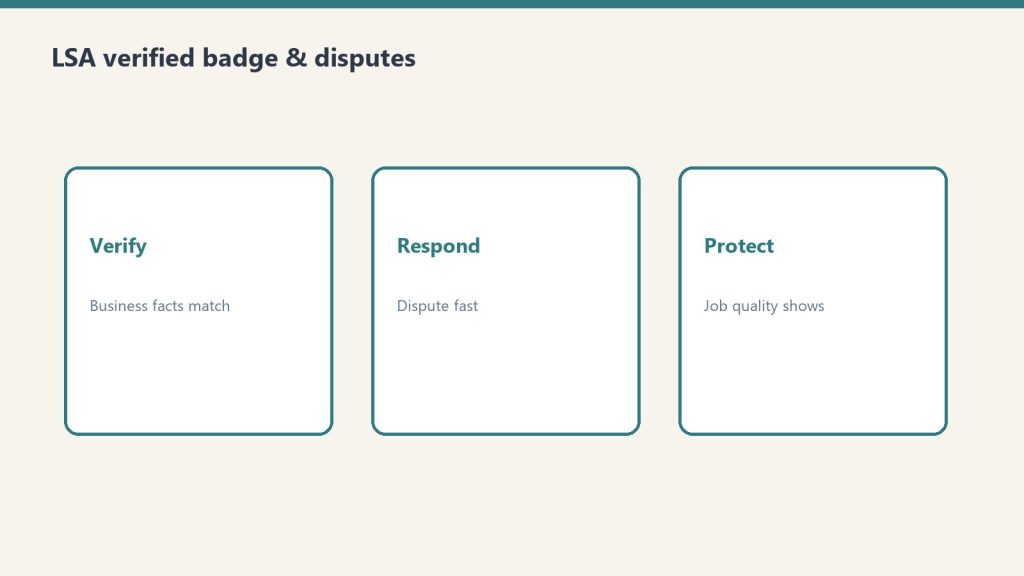
    Review every LSA lead. Google allows advertisers to dispute leads that are not legitimate — wrong service, wrong area, spam, sales calls, wrong number. Disputing legitimately bad leads recovers budget. The process takes a few minutes per disputed lead. Make it a weekly habit.

    Monitor response time. LSA dashboards show response rate and response time. Set a target (e.g., answer 95 percent of LSA calls within 60 seconds) and hold to it. A response problem kills channel performance regardless of anything else.

    Set a daily budget that matches capacity. A budget too high relative to response capacity produces missed calls and degraded ranking. A budget too low relative to conversion opportunity leaves volume on the table. The right budget is the one that captures available leads your team can actually service.

    Segment by service where possible. Running LSA across all services uniformly treats water and mold and reconstruction as the same opportunity. They are not. Use the service-specific settings to tune each.

    Check the weekly report. Every week, look at spend, leads, qualified leads, disputed leads, response rate, booking rate. This is a managed channel, not an autopilot channel. Twenty minutes a week keeps it tuned.

    The Trajectory of LSA Costs

    LSA in restoration has been getting more competitive. Cost per lead has risen in most markets over the last few years as more restoration companies have entered the channel and Google has added features that let advertisers increase bids.

    A company that was producing leads at $40 CPL two years ago might now be at $75. A company that was at $75 might be at $110. The direction is consistent.

    This has implications for how the channel fits in the overall mix. It is no longer the case that LSA is unambiguously cheap. It is still highly efficient relative to Google Ads and most lead aggregators for matched services. But the margin is thinner than it was. Operators need to watch the numbers and adjust.

    The companies that continue to win LSA economics as costs rise are the ones with the strongest organic review foundation — because their placement efficiency stays high even as the baseline CPL rises. The companies without that foundation get priced out.

    This is another case where the organic is asset, paid is rent doctrine holds. LSA looks like a paid channel. It is really a channel whose performance is directly proportional to the organic review asset underneath it.

    Integrating LSA With the Rest of the Paid Mix

    LSA is not the whole paid mix. It fills the highest-intent emergency service slot. The rest of the paid mix covers complementary slots.

    Google Ads / Performance Max / AI Max covers branded search protection, non-emergency service queries, and upper-funnel reach that LSA does not serve.

    Meta / Advantage+ covers broader awareness, community targeting, and services with longer decision cycles where social creative earns more attention than search.

    YouTube covers specific targeted intent against video-searching audiences and residential homeowner demographics.

    LSA sits at the bottom of the funnel — highest intent, highest cost per lead, highest conversion. The rest of the mix fills the middle and top. A well-run paid program has each layer and understands the role of each.

    Common Mistakes

    A few consistent LSA mistakes cost restoration companies budget.

    Running LSA without the GBP foundation. Unprofitable almost immediately. Build the GBP first.

    Setting service area too broad. Paying for leads in geographies where response time is poor.

    Ignoring lead disputes. Leaving recoverable budget on the table, sometimes thousands of dollars a quarter.

    Treating LSA as a set-and-forget. Drift in response time, review freshness, or service area produces slow degradation that is only caught on review.

    Assuming LSA will grow indefinitely at constant CPL. Costs have risen. Plan for them to continue rising. Efficiency has to come from strengthening the organic foundation, not from hoping prices plateau.

    How This Pairs With the Rest of the Stack

    LSA sits at the intersection of the digital three-legged stool — because it depends on GBP and reviews — and the paid layer. It is where the review practice converts directly into lead flow. It is the clearest demonstration of why the review-as-comp-driver program pays for itself many times over.

    Every new five-star review is more than a trust signal. It is a direct input to LSA ranking, and therefore a direct input to emergency-services lead cost.

    Where to Start

    Audit the current state. What is the review count, star average, recency pattern? What is the GBP completeness? What is the current response time for inbound emergency calls? Those numbers are the prerequisites for LSA performance.

    If the review asset is not strong enough yet, LSA is the wrong first move. Build the review practice first (see the reviews-as-comp article) and come back to LSA when the foundation is in place.

    If the review asset is strong, set up the LSA account. Configure service coverage correctly. Set a modest daily budget to start (something the team can actually service). Commit to the weekly review rhythm: disputes, response time, lead quality, conversion rate.

    In ninety days, the channel either produces profitable lead flow or it does not. If it does, scale the budget to match capacity. If it does not, the likely cause is in the foundation — review velocity, GBP completeness, response time — and those are where the fix lives.


    Frequently Asked Questions

    Is Google Local Services Ads worth it for restoration companies?
    Yes, when the underlying review practice is strong. LSA ranking is heavily weighted toward review count, star average, review recency, and response time. A company with a disciplined review practice wins LSA efficiently. A company without the review foundation cannot win at any budget level.

    How much does an LSA lead cost for restoration?
    Varies by service, geography, and competition. Restoration-related CPLs typically range from $30 to $150+, with emergency services on the higher end. Costs have been rising in most markets as competition intensifies. The operator’s review asset determines whether the CPL converts profitably or not.

    What determines LSA ranking for restoration companies?
    Review count, review star average, review recency, response rate, response time, proximity, service and category match, hours (especially for emergency), and daily budget. Most ranking weight sits on the review signals and response discipline.

    Should restoration companies run LSA if they have under 50 reviews?
    Usually no. The channel math rarely works with a weak review foundation because placement rates are too low and CPL becomes prohibitive. The better first move is to build the review practice — systematic ask, frictionless submission, staff comp tied to outcomes — and deploy LSA once the foundation supports it.

    Can LSA leads be disputed?
    Yes. Google allows advertisers to dispute leads that are wrong service, wrong area, spam, sales calls, or wrong number. Legitimate disputes recover budget. Running the dispute process weekly is worth the time. Many restoration companies leave significant recoverable budget on the table by not disputing.

    How does LSA fit with other paid channels?
    LSA covers the bottom of the funnel — highest-intent emergency service queries. Google Ads and Performance Max cover branded protection and upper-funnel intent. Meta covers broader awareness and longer decision cycles. YouTube covers targeted video intent. LSA is a slot in the paid mix, not the whole paid mix.


    Tygart Media on restoration — an analyst-operator body of work on the systems that separate compounding restoration companies from busy ones. No client names. No brand placements. Just the operating standard.


  • Reviews as a Staff Compensation Driver: Making Five-Star Experiences Part of the Pay Structure

    Reviews as a Staff Compensation Driver: Making Five-Star Experiences Part of the Pay Structure

    Should restoration companies tie staff compensation to customer reviews? Yes, as positive reinforcement for five-star outcomes, not as punishment for negative ones. A tech who consistently produces five-star customer experiences is creating a different asset than a tech who produces four-star experiences — even when both are technically competent — and the comp structure should reflect that. The program works when it rewards the behaviors that produce the review, uses the review as a data point in a broader performance picture, and is combined with the systematic review-ask practice that gives every client an easy way to respond.


    A restoration owner I was talking with about his review performance had 120 reviews averaging 4.7 stars and was stuck. He could not figure out why he was not growing the profile faster, or why his star average was not rising. His techs were competent. His PMs were competent. His office team was competent.

    The missing piece was alignment. None of the staff had any financial reason to care about the review. The review was something the marketing team chased. The tech’s paycheck came out the same whether the client left a five-star review, a three-star review, or no review at all.

    That is the structure that produces 4.7-star averages. To get to 4.9 — and to get the volume that comes with it — the comp structure has to carry a piece of the weight.

    Why Reviews Are the Highest-Leverage Marketing Asset

    Before the compensation mechanic, a note on why reviews matter so much in restoration specifically.

    Restoration is bought in crisis. A homeowner with a flooded basement or a smoke-damaged kitchen is deciding between a handful of restoration companies in the first ten minutes of the loss. They are on Google. They are looking at the map pack. They are reading reviews.

    The decision is being made almost entirely on review signal, proximity signal, and GBP completeness. The website gets a glance. The ad spend gets a passing notice. The reviews get read.

    Three review metrics matter, in order: recency, star average, volume. A company with 400 reviews averaging 4.9 over five years, with the most recent review 10 days ago, beats a company with 90 reviews averaging 4.6 with the most recent review eight months ago. The algorithm rewards freshness and consistency.

    Which means every review is a marketing asset with a measurable dollar value attached. A company whose team produces reviews consistently has a durable compounding asset. A company whose team does not has to buy their lead flow in perpetuity.

    The Systematic Ask

    Before any compensation mechanic, the review-ask practice itself has to be installed.

    Every completed job ends with a review ask. Not optional. Not “when it feels natural.” Every job. The script is short:

    “Before we wrap up, I want to thank you for letting us do this work. One thing that helps a small business like ours enormously is a quick review — if you had a good experience with us, a sentence or two on Google means a lot. I’m going to send you a text right now with a link — no pressure, but if you have a minute later today or tomorrow, I’d be grateful.”

    The tech sends the link from their phone while on-site. Or the PM sends it by email within an hour of close-out. The request is time-locked to the emotional peak of the job completion — the client is relieved, grateful, and most likely to respond. Twenty-four hours later, the peak is gone. A week later, the review is forgotten.

    The submission has to be frictionless. Click the link, leave the review, done. Do not send the client to a review-management platform that asks them to fill out a form first. Do not route them through a screen that filters bad reviews into a private channel — those gating systems violate Google’s terms of service and get profiles penalized. Straight to Google.

    The ask discipline, combined with frictionless submission, produces a baseline review flow. On its own, for a well-run company, it might produce a 30 to 50 percent response rate. Many of the clients who do respond leave five-star reviews because the ask happened at the moment of peak satisfaction.

    Tying Comp to the Outcome

    Now the compensation layer. The design principles:

    Positive reinforcement, not punishment. The program rewards five-star outcomes. It does not reduce pay for four-star ones. The psychology matters. A program that punishes bad reviews creates defensive, anxious staff who avoid risk and avoid accountability. A program that rewards good ones creates motivated staff who lean into the moments that produce five-star experiences.

    Attribution at the right level. The tech who led the job gets credit for the review. The PM who owned the job gets credit for the review. The office coordinator who handled the intake gets credit for the review. In practice, every review generated from a job gets attributed to the team who ran the job. Multiple staff can share credit for one review.

    Review as a component, not the whole picture. Tying 100 percent of a bonus to reviews produces unintended behaviors. The review becomes the only metric and everything else degrades. The right weight is often 15 to 30 percent of the bonus structure — enough to matter, not so much that it dominates.

    Quality controls to prevent gaming. Reviews that are clearly solicited-for-compensation (a client saying “the tech asked me to mention him by name”) or reviews that appear fake get flagged and excluded from the bonus calculation. The program has to maintain the integrity of the outcome.

    A working structure for a service tech bonus:

    • Base pay: standard for role and market.
    • Per-job performance: quality scores from PM review, customer satisfaction score from post-job survey, on-time completion metric.
    • Review component: $50 per five-star Google review that mentions the tech by name or is attributed to them through the job file. Quarterly cap of $1,000 to prevent gaming incentives from distorting the base work.

    A working structure for a PM bonus:

    • Base pay: standard.
    • Job performance: margin, on-time, scope accuracy.
    • Review component: percentage of completed jobs that produced a five-star review, calculated quarterly. A minimum threshold (say 70 percent) earns the bonus.

    The specifics vary by company, role, and market. The principle is consistent: reviews are a measurable business outcome, and the people whose work produces them should share in the upside.

    What the Program Changes Culturally

    A restoration company that installs this program well, and runs it consistently, sees a predictable cultural shift.

    The techs start paying attention to the customer experience in small ways they did not before. The crew cleans up more thoroughly. The tech takes an extra five minutes at the end to walk the client through what was done. The PM calls the client proactively with an update instead of waiting for the client to call. The office team sends the follow-up note that thanks the client personally.

    Those small shifts are what produce five-star experiences consistently. They are not trainable through process alone. They are produced by caring about the outcome. The compensation mechanic is what makes caring financially rational.

    Importantly, the shift affects hiring too. Prospective techs who hear about the review-based bonus structure self-select. The techs who are confident in their customer skills are attracted. The techs who would rather not be measured on customer experience self-deselect. Over time, the team mix shifts toward operators who produce five-star experiences by default.

    What to Watch For

    A few things can go wrong with a review-based compensation program, and the design has to account for them.

    Tech burnout from the ask. Asking for a review every single job, every single day, can feel performative if the tech is not bought in. The training has to frame the ask correctly — as an honest moment of connection at the end of a job well done, not as a sales pitch. Techs who are comfortable with the ask produce more reviews. Techs who hate the ask find ways to skip it.

    Client fatigue in specific neighborhoods. If the company has done multiple jobs in the same neighborhood and asked every client for a review, clients start to feel it. The ask pattern has to be genuine. The request cannot feel like a campaign.

    Review gaming pressure. If the program is too aggressive, staff find ways to game it — soliciting reviews from friends, writing reviews themselves, running reviews through burner accounts. Google detects this and penalizes the profile. The controls above (attribution integrity, cap, ethical standards in training) matter.

    Over-reliance on star count. A program that focuses only on the five-star count misses the texture of the review — what the client actually wrote, what specific detail they mentioned, what gratitude they expressed. A well-written three-sentence review is worth more than a star-only five-star. The program should recognize the quality of the review, not just the star count.

    Ignoring the rest of the experience. If the review mechanic becomes the only feedback loop, other important customer experience signals (complaints, revision requests, slow responses) can be under-weighted. The review component should sit inside a broader performance picture, not replace it.

    How This Compounds

    The math on a well-run review program compounds dramatically over time.

    A restoration company doing 500 jobs a year. Before the program: 30 percent review rate, mostly four-star averages. 150 reviews per year, 15 to 20 new reviews per quarter, average 4.4 to 4.6.

    Same company, two years into the program: 60 percent review rate, 4.9 star average, specific staff members mentioned by name in half the reviews. 300 reviews per year. Quarterly velocity that dominates the map pack for the service area.

    The cost of the program — maybe $40,000 to $70,000 a year in bonuses at the scale above — is a tiny fraction of the lead flow it produces. Higher map pack position. Higher Local Services Ads ranking. Higher conversion on every website visit because the review bar is obvious. Lower cost per lead from paid media because trust is already established. Better staff retention because the comp structure rewards the right behaviors.

    The ROI is not complicated. The discipline to install and hold the program is where most companies fail.

    How This Pairs With the Rest of the Stack

    The review practice is the third leg of the digital three-legged stool. It is what the GBP playbook is fed by. It is a signal the paid layer amplifies — Google Local Services Ads in particular. It benefits from the content engine’s four celebrations doctrine because celebrating staff publicly reinforces the review-related behaviors the comp program rewards.

    And it is the natural translation of the restoration industry’s every-job post-mortem discipline into a customer-facing version. Every job gets reviewed internally. Every job gets reviewed externally (via the client). The two practices reinforce each other.

    Where to Start

    Install the review-ask practice in the close-out SOP this week. Train the PMs and techs. Back-pressure-test the script. Launch it.

    Run it without the compensation mechanic for 60 to 90 days. Measure the baseline. What share of jobs produce a review? What is the star average? What is the weekly velocity?

    Against that baseline, design the compensation layer. Pick the role (tech first is usually right), the metric, the dollar amount, the quality controls. Launch it with an announcement and a training.

    Run it for a quarter. Review the results. Adjust the structure as needed. Extend to other roles once the first role is working.

    The whole installation takes 90 days. The compounding effect runs for the life of the company.


    Frequently Asked Questions

    Should restoration companies tie staff compensation to reviews?
    Yes, as positive reinforcement for five-star outcomes. The compensation layer is what aligns the team with the marketing asset the review represents. A program without the comp layer produces inconsistent review results because nobody on the team has financial reason to care. A program with the comp layer produces consistent five-star outcomes because the behaviors that generate them are rewarded.

    How much of compensation should be tied to reviews?
    Typically 15 to 30 percent of the bonus structure for roles where reviews are attributable to the individual’s performance — enough to matter, not so much that it dominates and distorts other priorities. A per-review bonus with a quarterly cap is a common working structure for service techs.

    What controls prevent abuse of a review-based bonus program?
    Clear attribution rules, a quarterly cap per staff member, explicit ethics training (no soliciting reviews from friends, no burner accounts, no scripts that tell clients what to say), and monitoring for unusual patterns. Reviews that appear fake or solicited inappropriately get excluded from the bonus calculation.

    Should negative reviews reduce pay?
    No. Negative-reinforcement structures produce anxiety and defensive behavior. They do not produce five-star experiences. The program should reward positive outcomes and handle negative ones through coaching, not pay reduction. A tech with a pattern of negative reviews has a performance issue to address separately.

    How quickly should a review-based bonus program be deployed?
    Install the systematic review-ask practice first, run it for 60 to 90 days to establish a baseline, then layer on the compensation mechanic. Deploying comp before the ask discipline is in place produces frustration because the mechanic rewards an outcome staff have no systematic way to produce.

    What kind of review volume change should a company expect from tying reviews to comp?
    A well-installed program typically doubles or triples review velocity within a year, raises the star average by 0.2 to 0.4 points, and substantially increases the share of reviews that mention specific staff members by name. The exact numbers vary by company and market, but the direction is consistent.


    Tygart Media on restoration — an analyst-operator body of work on the systems that separate compounding restoration companies from busy ones. No client names. No brand placements. Just the operating standard.


  • The Neighborhood Page Strategy: Real Jobs, Real Photos, Same Week

    The Neighborhood Page Strategy: Real Jobs, Real Photos, Same Week

    What is a neighborhood page for a restoration company? A page built from a completed job in a specific neighborhood, with real photos from the job site, real neighborhood references, real scope detail, and ideally a real client quote. Published within a week of job completion. Every neighborhood page is both a local SEO asset and a trust proof — it shows search engines and homeowners that the company actually works in that specific area. The compound effect of sustained neighborhood page publishing outcompetes every generic location-page strategy in restoration.


    The difference between a restoration website that ranks in a neighborhood and one that does not is usually one thing: whether the site has a page specifically about work done in that neighborhood.

    Not a generic “serving [neighborhood]” page with stock photos and city-council history copied from Wikipedia. A page about an actual job completed in that neighborhood — with the tech’s photos, the client’s story, the before-and-after, the specific street or landmark references that make it obvious the work really happened there.

    This page pattern is the single highest-leverage piece of local-SEO content a restoration company can build. It is also almost never the one most companies prioritize, because it is harder than building generic location pages.

    The discipline is worth it. Here is the full playbook.

    Why Neighborhood Pages Beat Generic Location Pages

    The generic location page pattern is familiar. The company maintains a page for every city in its service area. “Water Damage Restoration in Anytown.” The content is a rewrite of the main water damage page with the city name inserted in a dozen places. Stock photos. Generic copy. Maybe a driving directions widget. A map. A form.

    Those pages used to work, mechanically, in an earlier era of local SEO. They do not work well now. Google’s algorithm has gotten better at detecting templated location pages and treats them as thin content. Homeowners have gotten more sophisticated at telling the difference between a company that actually works in their area and one that has a page claiming to.

    The neighborhood page is the answer to both. It is specific. It is proof. It ranks because it is actually about the neighborhood. It converts because the homeowner reading it sees real evidence that the company was in their area doing exactly the kind of work they need.

    The Anatomy of a Working Neighborhood Page

    A neighborhood page that performs has a consistent structure.

    Title. Service + neighborhood + date. “Water Mitigation in [Neighborhood Name] — [Month Year].” The structure is explicit — search engines index it, homeowners understand it.

    Opening summary. One or two paragraphs about what happened. What the damage was. Who the client was (with permission — a first name, or “a homeowner near [landmark]” if they asked not to be named). What the company did. How long it took. How it went.

    The job gallery. Real photos from the job, labeled. Water intrusion before. Equipment in place. Drying in progress. Moisture mapping. Before and after for the affected area. Equipment being removed. The finished space. The tech working if they agreed to be photographed.

    Neighborhood references. Specific, visible. The street sign photographed in the background of one of the job photos. A reference to the coffee shop on the corner. The municipal park two blocks over. A note about the age of the homes in the area or the common construction style. These are the details that make the page obviously specific to this neighborhood, not copy-pasted from a template.

    Scope detail. What was actually done. The specific water mitigation steps — extraction, structural drying, moisture mapping, dehumidification, sanitization, post-remediation verification. Written in a way the homeowner can follow. The detail proves expertise and answers the questions the next reader in that neighborhood will be asking.

    Client quote. When possible. “The crew was at my house within 90 minutes of my call.” Even a single specific sentence from the client adds enormous trust weight. Permission captured in writing at job close-out.

    A sidebar with company context. The company’s service area, the other services offered, the contact phone for emergencies. The page is optimized for the specific neighborhood search, but it is also where many homeowners will first encounter the company, so the context has to be there.

    Schema markup. Article schema, local business schema, FAQ schema if an FAQ section is included, speakable schema for the direct-answer sections. The AI search engines and voice assistants reward well-structured pages with correct schema.

    Published Within a Week

    The timing matters. A neighborhood page published within a week of the job is worth considerably more than the same page published four months later.

    Why: recency signals. Photos with a clear timestamp or seasonal context. Client memory is fresh, so quotes and permission are easier to capture. The job details are accurate because nobody has had to reconstruct them from memory. The tech and the PM are available to review the page.

    A week is fast but realistic. The rough workflow:

    • Day 0 to 3: Job completed. Tech photos in the file. Close-out conversation including content permission ask.
    • Day 3 to 5: Content team drafts the page from the job file. Photos selected and edited. Scope detail written. Any client quote captured with written permission.
    • Day 5 to 7: PM reviews for accuracy. Owner approves if needed. Page published. Added to relevant category/service index pages. Linked from adjacent neighborhood pages.

    This is an operational rhythm, not a campaign. Once installed, it runs itself. The content team knows to expect a new page every few days. The techs know the photos are needed. The PMs know to schedule the review time.

    How Many Neighborhood Pages Is Enough

    The honest answer is: there is no enough. The neighborhood page library is a long-term compounding asset. The first thirty pages do not move much. The two hundredth page is when the site starts to dominate. The five hundredth page is when generic competitors can no longer compete.

    Practically, a restoration company running a steady job flow should be publishing a new neighborhood page every one or two weeks. That is 25 to 50 per year. In three years, the site has 75 to 150 neighborhood pages. That is a structurally different site from a competitor with zero.

    Not every job needs to become a page. The pages that perform best come from jobs that had something specific about them — a distinct service, an interesting scope challenge, a memorable client, a rare neighborhood for the company. The routine jobs can still be represented through briefer updates on existing location or service pages.

    Handling the Permission Conversation

    The client permission conversation is the bottleneck that kills most neighborhood-page programs. Companies get anxious about asking. So they do not. So the content library stays empty.

    The script is short and respectful. At job close-out, a version of:

    “Before we wrap up, I want to ask — if it’s okay with you, we’d love to use this job as an example of the kind of work we do. We’d post some photos of the before and after on our website. We can leave your name off, use just a first name, or include your full name if you’re comfortable with it. We’d never show anything identifying about the address specifically. Is that something you’d be okay with?”

    Most clients say yes. Some say “yes, but no name.” A few say “no.” All three are fine. The answer goes in the job file. The content team only uses what was given permission for.

    Clients who say yes and see the resulting page published usually become ambassadors. A page about their job is a page they share. That sharing behavior extends the reach of every neighborhood page beyond what SEO alone produces.

    Handling the Photo Quality Problem

    Tech photos are sometimes not suitable for publication without editing. Bad lighting. Motion blur. Inappropriate framing. Personal items visible in the background.

    A few mitigations:

    Train the tech. Five-minute training, once, on framing water mitigation shots, lighting considerations, what not to include in the frame. The improvement after basic training is substantial.

    Provide a simple camera standard. A phone camera held horizontal, good light, steady, subject filling the frame. Not complicated.

    Pair with occasional professional photos. For flagship jobs — a large commercial loss, a showcase residential project — bring a professional photographer for an hour at the end. Those photos elevate the whole library.

    Edit with a light hand. Crop. Adjust exposure. Remove personal items visible in the frame when possible. Do not over-polish — over-edited photos read as stock and lose the authenticity that makes them effective.

    Linking the Neighborhood Pages

    Neighborhood pages do not exist in isolation. They participate in a link architecture that makes them findable and reinforcing.

    From the service pages. “Recent water mitigation work: [neighborhood] — [neighborhood] — [neighborhood].” The service pages carry the topical authority. The neighborhood pages carry the local specificity. The links connect them.

    From the city pages. If the site has a city-level page (separate from the neighborhood pages), the city page lists the recent neighborhood jobs in that city. This reinforces the city page with fresh evidence of local activity.

    From each other. Adjacent neighborhood pages can link to each other. “In nearby [neighborhood name], we also handled [service].” This builds internal link density in a way search engines read as topical relevance.

    From blog posts and social. Every neighborhood page gets mentioned in the weekly content cycle — a social post, a mention in an email, a citation in a related blog post. The cross-promotion extends reach.

    The Pattern Compounds

    What makes the neighborhood page strategy effective is that it compounds in a way generic SEO content does not.

    Each page adds to the site’s topical authority in restoration. Each page adds to the site’s geographic authority in the specific area. Each page adds a trust signal that a real job was done at a real place. Each page provides content the algorithm can read, the AI engines can cite, and the homeowner can trust.

    Over three years, the cumulative effect is a restoration site that functions as a living directory of the company’s actual work. The competitive moat is structural — not just “we have more pages,” but “we have more evidence.” A competitor starting fresh cannot catch up quickly. The moat keeps widening.

    How This Pairs With the Rest of the Stack

    Neighborhood pages are the deepest expression of the digital three-legged stool’s website leg. They depend on the content engine’s every-story-starts-with-a-job doctrine. They benefit from the GBP playbook — neighborhood pages are naturally featured in GBP posts and photos. They get amplified efficiently by the paid layer — a neighborhood page is a strong landing page for a geo-targeted paid campaign.

    Every layer of the stack either contributes to or benefits from the neighborhood page practice.

    Where to Start

    Pick one job from the last thirty days that had good photos and a client who would likely be comfortable with a page. Write the page this week. Publish it. Link it from the service page.

    Install the permission ask in the job close-out SOP. Train the PMs and techs to run it. Log permission answers in the job file.

    Install the weekly publishing cadence. One page every one to two weeks minimum. Name the owner of the workflow. Put the cadence on a shared calendar.

    In ninety days, the site has six to twelve neighborhood pages. In a year, 30 to 50. In three years, 100 to 150. Every one of them is a permanent compounding asset.

    The restoration companies that commit to this practice end up owning the local search results in their service area in a way no advertising budget can replicate.


    Frequently Asked Questions

    What is a neighborhood page for a restoration website?
    A page built from a real completed job in a specific neighborhood, with real photos from the job, real client detail (with permission), real neighborhood references, and real scope information. Published within a week of job completion. Designed to rank for the neighborhood-specific search and to prove to homeowners that the company actually works in their area.

    How is a neighborhood page different from a standard location page?
    A standard location page is a template (“Water Damage Restoration in [City]”) with stock photos and generic copy. A neighborhood page is about an actual job with actual photos and actual client and neighborhood specifics. The difference is generic versus proven — and both search engines and homeowners reward the latter.

    How quickly should a neighborhood page be published after the job?
    Within a week. The photos are fresh, the details are accurate, the client permission is easy to capture, and the recency is a signal the algorithm rewards. Four-month-old pages are still valuable but lose a lot of what makes them effective.

    How many neighborhood pages does a restoration website need?
    There is no upper limit. A sustainable cadence is one new page every one to two weeks, producing 25 to 50 per year. In three years, a site has 75 to 150 neighborhood pages. The library compounds — the two hundredth page is when the site starts to dominate local search in a structural way.

    Do you need client permission to publish a neighborhood page?
    Yes, always. Ask at job close-out. Offer the client three levels — full name, first name only, or anonymous. Capture the answer in writing in the job file. Only publish within what was permitted.

    Do neighborhood pages work for commercial restoration too?
    Yes. The same pattern applies — building type, location, service, scope, photos, with permission. Commercial clients often require more specific permission handling (NDAs, brand considerations) but many will agree to featured case studies with appropriate terms. Commercial neighborhood pages rank well for the specific commercial building type in the specific area.


    Tygart Media on restoration — an analyst-operator body of work on the systems that separate compounding restoration companies from busy ones. No client names. No brand placements. Just the operating standard.