Exploring Everett - Tygart Media

Category: Exploring Everett

Everett, Washington is in the middle of something big. A $1 billion waterfront transformation. A Boeing workforce that built the world’s largest commercial jets. A port city with a downtown that’s finally catching up to its potential. A Navy presence at Naval Station Everett. A comedy and arts scene punching above its weight. And neighborhoods — Riverside, Silver Lake, Downtown, Bayside — each with their own identity and story.

Exploring Everett is Tygart Media’s hyperlocal coverage vertical for Snohomish County’s largest city. We cover the waterfront redevelopment, Boeing and Paine Field, city hall, the food and arts scene, real estate, neighborhoods, and everything in between — written for people who live here, work here, or are paying attention to what’s coming.

Coverage categories include: Everett News, Waterfront Development, Boeing & Aerospace, Business, Arts & Culture, Food & Drink, Real Estate, Neighborhoods, Government, Schools, Public Safety, Events, and Outdoors.

Exploring Everett content is also published at exploringeverett.com.

  • SPEEA Contract Countdown: What Everett’s Boeing Engineers and Technical Workers Need to Know Before October 6

    SPEEA Contract Countdown: What Everett’s Boeing Engineers and Technical Workers Need to Know Before October 6

    The quick version: SPEEA’s two Boeing bargaining units — the Professional unit (engineers, scientists) and the Technical unit (designers, planners, technicians) — have contracts that expire October 6, 2026. Negotiations for about 16,000 Puget Sound workers are actively underway, and the SPEEA Wichita deal ratified in January 2026 (a 20% wage-pool increase over 58 months plus a $6,000 ratification bonus) has become the de facto opening benchmark. Everett is one of the two largest concentrations of SPEEA members in the country, so the contract will land directly on Paine Field paychecks, mortgages, and school budgets.

    SPEEA Contract Countdown: What Everett’s Boeing Engineers and Technical Workers Need to Know Before October 6

    Walk into any coffee shop on Mukilteo Boulevard on a Thursday morning and you’ll hear it — the quiet, steady conversation of Boeing engineers and technical workers working out what their next five years are going to look like. SPEEA’s Puget Sound contract with Boeing expires on October 6, 2026. That’s less than six months from tonight. And unlike the IAM 751 machinists’ contract fight in the fall of 2024, this one isn’t on anyone’s national radar yet — which is exactly why it matters here first.

    Roughly 16,000 SPEEA-represented workers sit inside Boeing’s Washington, Oregon, California, and Utah footprint, with the overwhelming majority clustered in the Puget Sound region. In Everett, that means the engineers designing the 777X, the planners choreographing the 737 North Line opening this summer, the test technicians running the KC-46 tanker through its paces at Paine Field, and the scientists working the composite wings that ship north from Frederickson to the Everett factory. When SPEEA bargains, Everett bargains.

    Here’s the full picture of where things stand on April 16, 2026 — and what the next six months could look like.

    The contract that’s expiring

    The current SPEEA Professional and Technical unit contracts with Boeing were negotiated in 2020 as a four-year extension during the early pandemic period. That deal ran through late 2022 originally, was re-extended, and now expires at midnight on October 6, 2026. It covers two separate bargaining units:

    • Professional unit: engineers and scientists
    • Technical unit: designers, planners, analysts, technical writers, production planners, lab technicians

    Both units bargain simultaneously with Boeing but vote on their contracts separately. In 2020, the Professional unit ratified the extension, but the Technical unit rejected its version — a split that’s worth remembering heading into this round. The groups share a lot of Boeing-wide concerns but have distinct priorities on pay scales, on-call compensation, and classification issues.

    Where negotiations stand right now

    SPEEA has been ramping its negotiation preparation since 2024. A dedicated “2026 Negotiations” section on speea.org has been running since the previous contract was signed, with quarterly survey rounds gathering member input on what the bargaining team should prioritize.

    The most recent preparation step was the fourth Negotiation Prep Committee (NPC) survey — focused on paid time off, sick leave, retirement benefits, raise pools, and on-call work. That’s the short list of what SPEEA members have been flagging as sticking points. Applications for the 2026 Professional Bargaining Unit Negotiation Team were still being accepted earlier this year.

    Translation for anyone outside the union machinery: the contract hasn’t been drafted yet, the team that will bargain it is still being finalized, and the “ask” is being built bottom-up from member priorities. This is normal for a SPEEA bargain — it runs slower and more deliberately than the machinists’ timelines — but it means the public-facing news cycle around the contract probably won’t start heating up until late summer.

    The Wichita benchmark

    There’s one recent data point that matters enormously for how this contract plays out: the SPEEA Wichita deal.

    In January 2026, SPEEA’s Wichita Technical and Professional units ratified a new contract with Boeing covering about 1,000 engineers and technical workers at Boeing’s Wichita defense site. The terms, per SPEEA’s own announcement: a 20% wage-pool increase compounded over 58 months and a $6,000 ratification bonus eligible for 401(k) deposit.

    Wichita is smaller and structurally different from Puget Sound — different work mix, different labor market, different political context — but in SPEEA bargaining history, Wichita usually sets the floor for what Puget Sound will argue for. A 20%-over-58-months structure with a solid ratification bonus is now, by default, the lowest number that Puget Sound bargainers will walk in with. The ceiling will be shaped by what the IAM 751 machinists won in November 2024 (38% over four years plus a $12,000 bonus), by Boeing’s current production targets, and by how much leverage the engineers think the 737 North Line activation and 777X certification give them.

    Why Everett has unusual leverage right now

    Every SPEEA contract is bargained against the backdrop of what Boeing is trying to ship that year. This one lands at an unusually busy moment for Paine Field:

    • The 737 North Line is scheduled to open at the Everett factory this summer — Boeing’s first narrowbody production line outside Renton in decades. Everett’s first 737 MAX is on pace to roll out before the contract expiration.
    • The 777X first production flight was targeted for April 2026 out of Paine Field, with FAA Type Inspection Authorisation (TIA) expected for the production-configured aircraft in the second half of the year.
    • The KC-46 tanker program is ramping delivery from 14 aircraft in 2025 to 19 planned in 2026, with the 105th KC-46 already delivered to the Air Force on April 3.

    Engineers and technical workers are the hinge that makes all three programs move. Certification testing doesn’t happen without SPEEA engineers signing off. Production line ramp-ups don’t happen without SPEEA planners scheduling them. A strike — or even a contract impasse short of a strike — during the back half of 2026 would hit Boeing’s production and delivery commitments at exactly the wrong moment. Bargainers know that, and management knows that they know.

    What’s likely on the table

    Based on SPEEA’s public survey priorities, last November’s machinists’ contract, and the Wichita benchmark, here’s the short list of what’s most likely to dominate bargaining:

    Wage pool structure. The headline number every contract hinges on. Expect SPEEA to push past the 20% / 58-month Wichita shape, with Puget Sound arguing that the region’s cost-of-living — especially housing around Mukilteo, Everett, Lynnwood, and Mill Creek — justifies a richer wage pool.

    Retirement. The 401(k) match and pension-equivalency formulas have been a steady SPEEA priority for a decade. Watch for proposals around higher company match percentages or expanded employee-stock-purchase terms.

    Paid time off and sick leave. A consistent survey priority across Puget Sound. Expect proposals to carry over more hours, reduce waiting periods, or standardize treatment across the two units.

    On-call work. A more technical but deeply felt issue — how engineers and technical workers are compensated when they’re on support rotation or on-call during production ramp-ups. The 737 North Line activation and 777X certification testing are both heavy on-call work, which sharpens the issue.

    Healthcare cost-sharing. SPEEA members watched premiums rise through the 2020-2026 extension. Expect hard bargaining on plan design and cost shares.

    Remote work language. Post-pandemic, remote and hybrid work patterns have been managed contract-by-contract and unit-by-unit. SPEEA bargainers are likely to push for more formal protections.

    The local stakes

    Everett is the second-largest SPEEA cluster in the country after Seattle. The immediate workforce — the people designing, testing, and flying Boeing’s widebody and narrowbody programs out of Paine Field — lives in the Snohomish County towns and neighborhoods that fan out from the factory: Mukilteo, Harbour Pointe, Picnic Point, Edmonds, Mill Creek, Silver Lake, north Everett, Marysville, Lake Stevens, Snohomish.

    When SPEEA engineers and technical workers get a raise, the Snohomish County housing market feels it. When the contract stumbles, the region feels that too. It’s not a dramatic cause-and-effect — SPEEA members are salaried professionals, not hourly assemblers — but it’s a steady one, and it shapes everything from restaurant traffic on Hewitt Avenue to how aggressively families in the Mukilteo School District refinance.

    Boeing employs around 42,000 people at the Everett factory when you count everyone on site across every program. SPEEA members are a significant share of that number — especially in engineering-dense programs like 777X certification, where non-union managers are a small fraction of the workforce.

    What to watch between now and October

    Late April–June: SPEEA finalizes the negotiating team and drops its first formal contract demands. This is when the first concrete numbers leak or get announced.

    Summer: Opening bargaining sessions begin. The 737 North Line opens at the Everett factory during this window, which gives both sides a public-facing milestone to reference in their messaging.

    August–September: Core bargaining. Expect to see SPEEA Spotlite newsletters get more pointed, member rallies, and — if things head toward impasse — formal statements about possible action. SPEEA has historically not struck as often as IAM 751, but the authorisation process exists and both sides know it.

    Early October: Contract expires October 6, 2026. A tentative agreement could land before, during, or after that date. Ratification votes follow by mail ballot over the following two to three weeks.

    One caveat

    None of this is guaranteed. SPEEA’s 2020 negotiations were relatively quiet because they happened in a pandemic. 2026 is not a pandemic year, Boeing is actively trying to ramp production, and engineers and technical workers watched their machinist colleagues win a record contract in 2024. The floor is higher than it’s ever been, but so is the complexity — and Boeing is coming off a 2025 that included another $565 million charge on the KC-46 program and ongoing 777X certification delays.

    In Everett, the only safe assumption is that the contract will matter — for paychecks, for mortgages, for the pace the 737 North Line can actually hit, and for how steady the workforce feels in the year ahead.

    We’ll keep tracking it.

    Frequently Asked Questions

    When does the current SPEEA contract with Boeing expire? The Puget Sound SPEEA Professional and Technical unit contracts expire on October 6, 2026.

    How many workers does the SPEEA Boeing contract cover? Roughly 16,000 engineers and technical workers across Washington, Oregon, California, and Utah, with the majority concentrated in the Puget Sound region — including Everett and Paine Field.

    What did SPEEA win in the Wichita contract in January 2026? A 20% wage-pool increase compounded over 58 months and a $6,000 ratification bonus eligible for 401(k) deposit, covering about 1,000 members at Boeing’s Wichita defense site.

    How does SPEEA differ from IAM 751? IAM 751 represents the hourly machinists who physically build Boeing airplanes. SPEEA represents the salaried engineers, scientists, and technical professionals who design, plan, and support those programs. They are separate unions that bargain separately with Boeing.

    Will SPEEA strike in 2026? Impossible to predict, and SPEEA leadership hasn’t indicated strike intent. Historically SPEEA strikes less frequently than IAM 751 but has the authorisation process available. The IAM strike in 2024 and the Wichita deal in January 2026 both shape the leverage environment, but no strike action has been called as of April 16, 2026.

    How does the contract affect non-union Boeing workers in Everett? The contract sets a reference point that Boeing typically uses when setting salary bands and benefits for non-union engineering and technical staff. A richer SPEEA contract usually pulls up non-union comp over the following year or two.

    Where can workers follow the negotiations? SPEEA publishes updates on speea.org and through the monthly SPEEA Spotlite newsletter. The union’s “Current Negotiations” page is the primary official source.

    How does SPEEA bargaining affect the 737 North Line opening this summer? Engineers and technical workers are central to the North Line activation — especially in the final tooling, ramp-up, and certification phases. A contract dispute after October 6 could create production timing risk during the North Line’s first months of operation, which is part of why both sides have an incentive to settle on time.

  • Boeing’s 105th KC-46 Tanker Rolled Out of Everett on April 3 — And 18 More Are Scheduled This Year

    Boeing’s 105th KC-46 Tanker Rolled Out of Everett on April 3 — And 18 More Are Scheduled This Year

    The quick version: On April 3, 2026, airmen from the 22nd Air Refueling Wing flew Boeing’s 105th KC-46A Pegasus tanker out of Everett’s Paine Field on its way to McConnell Air Force Base in Kansas. The delivery passed the halfway point of the Air Force’s current 179-aircraft program of record. Boeing plans to deliver 19 KC-46s in 2026 — up from 14 in 2025 — and the Everett-built tanker line is one of the only Boeing defense programs still running in steady production at the factory.

    Boeing’s 105th KC-46 Tanker Rolled Out of Everett on April 3 — And 18 More Are Scheduled This Year

    While most of Everett’s Boeing news this spring has focused on the 737 North Line standup and the 777X’s production flight, a quieter, steadier story has been unfolding on the opposite end of the factory ramp: the KC-46A Pegasus tanker line, Boeing’s Air Force refueling aircraft, just crossed a significant milestone with its 105th delivery — and Everett has 18 more on the 2026 manifest.

    The tanker line is not glamorous. It doesn’t make headlines the way a widebody reveal does. But for the workforce that builds it and the suppliers that feed it, the KC-46 is one of the most consistent defense programs in the Pacific Northwest. It’s also one of the clearest signs of what Boeing’s Everett factory looks like when it’s running steady.

    Here’s what the 105th delivery tells us about the program, the year, and Everett.

    What actually happened on April 3

    On April 3, 2026, a crew from McConnell Air Force Base’s 22nd Air Refueling Wing flew up to Paine Field, walked the aircraft acceptance process, and ferried a brand-new KC-46A out of Everett. The crew included members of the 22nd Operations Group, 22nd Maintenance Group, and 22nd Medical Group. The first leg of the delivery flight — Paine Field to Travis Air Force Base in California — had USTRANSCOM Director of Operations Brig. Gen. Corey Simmons in the commander’s seat.

    The final leg from Travis to McConnell was flown by Maj. Kyle Haydel, a 22nd Operations Group KC-46 pilot, and wasn’t just a routine delivery. It was Haydel’s “fini flight” — the traditional final flight of an Air Force pilot’s career or assignment, ceremonially celebrated with a water-cannon salute on arrival.

    That kind of moment is worth noting because it’s the human end of what otherwise reads like a procurement milestone. The 105th tanker is a data point; the crew that picked it up in Everett is a career.

    Where the program stands

    The Air Force’s current KC-46 program of record is 179 aircraft. The 105th delivery means the fleet is well past the halfway point, with enough tankers in service that the KC-46 is now doing real operational work — not just test and training missions. McConnell AFB in Wichita, Kansas remains the operational center of gravity for the program, with tankers stationed at several other Air Force bases nationwide and additional deliveries planned for allied nations.

    The program has also been significantly extended beyond the original 179. Under the Tanker Production Extension (TPE) plan, the Air Force is targeting 263 total KC-46 aircraft by 2030, with 88 planes from the original order still in production and 75 more under the extension. Boeing was awarded a $2.4 billion contract for 15 additional tankers in late 2024, and further awards have followed.

    For Everett, this is the kind of defense work that’s actually durable. The 767-based airframe that underpins the KC-46 is the reason Boeing extended 767 production past its original planned 2027 sunset: starting in 2027, Everett will build the 767-2C aircraft solely to support the KC-46A line, preserving the Everett tanker production capability for the remainder of the decade.

    The 19-aircraft 2026 plan

    The headline operational number for this year is simple: Boeing delivered 14 KC-46s in 2025 and plans to deliver 19 in 2026. That’s a 35% year-over-year increase in delivery rate, and it tracks with what program observers have been expecting — Boeing is working through backlog while the TPE contracts move into production.

    Nineteen tankers in a year sounds modest compared to commercial widebody rates, but defense production has its own rhythm. Each KC-46 delivery requires customer acceptance by the Air Force, weapons-system testing certification on the refueling boom and Remote Vision System, and coordination with the receiving unit’s flight crews. McConnell, Travis, Pease, Seymour Johnson, and the other bases in the KC-46 network don’t just take delivery — they integrate each aircraft into existing rotations.

    For the Everett workforce, the ramp from 14 to 19 means steady hiring needs on the KC-46 line specifically, in addition to the much larger 737 North Line and 777X workforces ramping in parallel. The IAM 751 machinists who physically assemble the tanker line, the SPEEA engineers and technical workers who sign off on certifications, and the supplier network from Renton to Auburn to Frederickson all see the tick-up.

    The $565 million question

    No honest piece about the KC-46 leaves out the program’s financial pattern. Boeing took another $565 million charge on the KC-46 program in its Q4 2025 earnings — the latest in a long series of program losses that have become an almost routine feature of Boeing’s defense earnings calls.

    The KC-46 is a fixed-price contract. When modifications, rework, or schedule slips happen, Boeing absorbs the cost rather than passing it on to the Air Force. The program has been a durable source of losses since its early production years. Whether the 2025 charge is a one-off or part of a continuing pattern is something Boeing leadership will have to address at the next earnings call.

    For Everett, the takeaway is that the tanker program keeps producing airplanes and paychecks even while it produces accounting losses. Fixed-price-driven losses are Boeing corporate’s problem. Production runs are the factory’s reality.

    Why Everett’s tanker line matters beyond Boeing

    Four angles, each worth a sentence or two:

    Allied customers. The tanker isn’t just an Air Force platform. Boeing holds KC-46 orders for four aircraft for Israel and two for Japan, in addition to the 54-plus Air Force tails still in production. International deliveries move through the same Everett line and extend the program’s runway.

    The 767 cover. The KC-46 is the single biggest reason the 767-2C is still being built at Paine Field. Without the tanker program, Boeing’s commercial 767 Freighter is scheduled to end production in 2027, which would have idled the 767 line entirely. The tanker keeps the tooling, supply chain, and workforce warm for the rest of the decade.

    Supplier pull-through. Snohomish County’s 600-plus aerospace suppliers work across many Boeing programs, but the KC-46 has a distinct parts profile — boom systems, communications, defensive countermeasures — that pulls in a specific tier of suppliers. A 35% delivery ramp this year is a meaningful order book for those shops.

    Defense workforce continuity. When Boeing engineers and technical workers bargain SPEEA’s contract later this year, one of the quiet variables in the room is the health of the defense programs. A steady-delivery KC-46 line is an argument for stable defense staffing at Everett through the end of the decade.

    The view from Paine Field

    If you’re walking the perimeter road on the east side of Paine Field in the late afternoon this spring, the KC-46 line is the easiest Boeing program to spot. The airframes are the distinctive 767 shape in Air Force gray, with the refueling boom folded into its housing on the belly and the Remote Vision System fairing on the tail. Tankers sit on the flight line ahead of acceptance testing, and the occasional delivery crew from McConnell or Travis cycles through.

    From the public viewing lot at the Future of Flight, you can usually see one or two KC-46s at various stages of completion from any given week. The program doesn’t draw tour-bus crowds the way the 777X or 737 lines do — but it’s the most consistent visual evidence, year-round, that Everett still builds airplanes for the U.S. Air Force.

    What’s next

    Eighteen more KC-46 deliveries are scheduled between now and year-end. The next near-term milestone is the 106th delivery — expected in coming weeks — and continued ramp toward the 19-aircraft 2026 total.

    Beyond that: ongoing TPE-contract production, the ramp into 767-2C-only production in 2027, and, further out, the program’s continued march toward the 263-tanker target by 2030. None of those are breaking-news moments. They’re just the steady backbone of what Boeing Everett does when it’s running well.

    Sometimes that’s the story.

    Frequently Asked Questions

    When was the 105th KC-46 delivered from Boeing’s Everett factory? April 3, 2026. The aircraft was flown to McConnell Air Force Base in Kansas via Travis Air Force Base.

    How many KC-46 tankers will Boeing deliver in 2026? Boeing plans to deliver 19 KC-46 tankers in 2026, up from 14 delivered in 2025.

    Where is the KC-46 Pegasus tanker built? The KC-46A Pegasus is built at Boeing’s Everett factory at Paine Field in Everett, Washington. It is derived from the Boeing 767 airframe.

    How many KC-46s has the Air Force ordered from Boeing? The current program of record is 179 aircraft, with plans to grow to 263 aircraft by 2030 under the Tanker Production Extension plan. The Air Force has received 105 tankers as of April 2026.

    Does the KC-46 program also serve foreign customers? Yes. Boeing has confirmed orders for four KC-46s for Israel and two for Japan, in addition to the U.S. Air Force production.

    Why is the KC-46 important for Everett even after the 767 commercial line ends? Starting in 2027, Boeing plans to produce 767-2C aircraft solely to support the KC-46A tanker program, keeping the 767 line running at Paine Field through the rest of the decade.

    Has the KC-46 program been profitable for Boeing? No. The KC-46 is a fixed-price contract and has generated repeated program losses for Boeing, including a $565 million charge recorded in Q4 2025. However, the production line continues to deliver aircraft on schedule and Boeing Everett continues to employ the tanker workforce.

    Who built and flew the 105th KC-46 delivery? The aircraft was built at Boeing’s Everett factory. The delivery flight was crewed by airmen from the 22nd Operations Group, 22nd Maintenance Group, and 22nd Medical Group at McConnell Air Force Base, with the final leg flown by Maj. Kyle Haydel as his “fini flight.”

  • Makario Coffee Roasters Is the Downtown Everett Coffee Shop You Should Already Know About

    Makario Coffee Roasters Is the Downtown Everett Coffee Shop You Should Already Know About

    Is Makario Coffee Roasters worth going out of your way for? Yes. Makario at 2613 Colby Ave roasts its own beans, builds some of the most genuinely inventive lattes in Everett (the Mt. Rainier, the sesame latte, the Dirty Chai), and runs a plant-filled Colby Avenue space that works for a pourover as well as a breakfast panini. It’s the best downtown Everett coffee shop you’re probably still sleeping on.

    Everett’s Quiet Coffee Story Is at Makario

    Everett gets one coffee shop right in most local roundup lists, and that shop is Narrative Coffee. Narrative earned the national recognition — Sprudge named their flagship one of the best new cafés in the world — and we’re not here to litigate that. But if you only go to Narrative, you’re missing what’s actually happening in downtown Everett coffee in 2026. What’s happening is four blocks away at 2613 Colby Avenue, inside a cramped, plant-covered storefront called Makario Coffee Roasters.

    Makario is a local roaster, not a café that pours someone else’s beans. That distinction matters. The team roasts in-house, which means the espresso you get at Makario is dialed specifically for Makario’s machine, the pourover is cut for their water, and the flavor choices — which are the most interesting part — come from the same kitchen that sourced the green coffee. That’s not a small thing in a county full of drive-through espresso stands serving commodity roasters.

    What to Order on Your First Visit

    The signature is the Mt. Rainier, a salted caramel latte topped with salted caramel whipped cream. It’s sweet, yes, but the espresso underneath is strong enough to stand up to the whip, and the salt cuts the caramel the way it’s supposed to. If you want a specialty drink that reminds you this is an actual coffee program and not a dessert disguised as coffee, order the Mt. Rainier and then get a straight espresso after. You’ll see the whole range.

    The sesame latte is the curious pick. Toasted sesame syrup, espresso, steamed milk. It sounds like it shouldn’t work, and the first sip takes about three seconds to land. Then it clicks. The nutty bitterness of toasted sesame plays against the roast notes in the espresso in a way that feels less like a flavored latte and more like a deliberately composed drink. It’s the one we keep coming back for.

    The Dirty Chai is the sleeper order. A lot of cafés make a bad Dirty Chai — too much chai syrup, underextracted espresso, milk that’s been sitting. Makario’s is balanced. The chai spice has bite, the espresso shows up, and the milk is pulled to the right texture. If you drink Dirty Chais often, this is the one in Everett you should be ordering.

    For the purist: specialty-grade pourover. Ask the barista what’s on bar that week. Makario rotates the pourover menu based on what’s fresh off the roaster. You’ll get a conversation about the origin, the process, the notes — if you want one. You can also just say “whatever you’d drink this morning” and trust the answer.

    The Food Side

    Makario isn’t a pastry case operation. They run a small but real kitchen doing brunch items, paninis, breakfast sandwiches, burritos, bagels, and waffles. The breakfast sandwich on a fresh bagel is the pairing we recommend with a pourover. The waffles are the weekend move. Portions are not generous; this is café food, not diner food.

    What matters: the food quality matches the coffee quality. Too many local cafés pour good coffee and then serve frozen quiches. Makario’s kitchen is dialed enough that you can make it a proper breakfast stop rather than a caffeine grab on the way to a real breakfast.

    The Space

    Makario is small. That’s the honest review. It’s a tight Colby Avenue storefront with tall windows, exposed brick, and enough hanging plants to qualify as a jungle exhibit. There’s seating for maybe fifteen people at a stretch. On weekend mornings you will wait — for a table, for your drink, for a chance to look at the pastry shelf without bumping into someone.

    On a weekday afternoon, though, Makario is one of the most pleasant third-place environments in Everett. The plants, the natural light, and the hum of the espresso machine combine into something that feels more Ballard than Broadway. We’ve written entire drafts of articles from the two-top in the back corner.

    Hours, Parking, and How to Plan Around Them

    Makario is open Tuesday through Saturday, 8 a.m. to 4 p.m. Closed Sunday and Monday. That’s a coffee shop schedule that will disappoint you once — when you show up on a Monday morning expecting to work there and can’t. Write it on your mental schedule.

    Parking downtown Everett is street-metered and usually easy to find within two or three blocks of the shop, especially in the morning. Colby Avenue has been getting better at pedestrian life, and Makario is a central stop on any downtown walking loop that includes the Historic Everett Theatre, Artisans Books & Coffee, or the restaurants along Hewitt.

    How Makario Fits Into the Everett Coffee Scene

    Narrative is the internationally-recognized flagship. Artisans is the books-and-coffee combo. Nadine’s is the hidden-alley dog-friendly pick. Bargreen is the historic roaster with 127 years of Everett on its resume. Each of these shops does a different thing, and Everett coffee drinkers should know all of them.

    Makario is the one where the coffee program is the most creative. The flavors are thought through. The menu changes. The roaster operates intentionally rather than by rote. If you drink coffee as a daily ritual rather than a utility, Makario is the shop that rewards repeat visits.

    The Verdict

    If you’ve only been to Narrative, your downtown Everett coffee life is incomplete. Walk four blocks to Makario. Order the sesame latte, sit by the window, let the sun through the plants, and pay attention to what you’re drinking. Then come back on a different day and order the Mt. Rainier. Then come back on a weekend and get the breakfast sandwich. This is how downtown Everett mornings are supposed to feel.

    Frequently Asked Questions

    Where is Makario Coffee Roasters located?

    2613 Colby Avenue, Everett, WA 98201, between downtown and the Hewitt corridor.

    What are Makario Coffee Roasters’ hours?

    Tuesday through Saturday, 8 a.m. to 4 p.m. Closed Sunday and Monday.

    Does Makario roast its own coffee?

    Yes. Makario is a local roaster, not a café pouring someone else’s beans. Fresh-roasted beans are available for purchase to take home.

    What’s the signature drink at Makario?

    The Mt. Rainier — a salted caramel latte topped with salted caramel whipped cream — is the most recognized order. The sesame latte is the cult favorite.

    Does Makario serve food?

    Yes. Breakfast sandwiches, paninis, burritos, bagels, waffles, and a rotating brunch menu. The food matches the coffee quality rather than being an afterthought.

    Is there seating at Makario?

    Yes, but limited. The space seats about fifteen people. Weekday afternoons are the easiest time to find a table.

    How does Makario compare to Narrative Coffee?

    Narrative is the internationally recognized flagship with a spectacular flagship space. Makario is the more creative coffee program with the in-house roasting story and a broader flavor menu. Everett coffee drinkers should know both.

    Is there parking near Makario Coffee Roasters?

    Yes. Colby Avenue has street-metered parking, and it’s generally easy to find a spot within a few blocks during weekday mornings.

  • Pho To Liem on Casino Road Is the Everett Pho Spot Locals Try to Keep Quiet

    Pho To Liem on Casino Road Is the Everett Pho Spot Locals Try to Keep Quiet

    Is Pho To Liem the best pho on Casino Road? Yes. Pho To Liem at 209 E Casino Rd opens at 9 a.m., pours a beef broth that delivers real depth, and prices a bowl of Pho Tai Chin at $16.50 — the kind of Vietnamese restaurant locals quietly tell each other about and then regret sharing. It is the pho spot on Casino Road.

    Casino Road’s Best-Kept Pho Secret (That Isn’t Really a Secret)

    Casino Road is the most interesting mile of food in Everett, and everyone who eats regularly on it has a favorite stop they defend like it’s their family. Ours is Pho To Liem. It sits at 209 E Casino Rd in the strip center near Evergreen Way, the kind of unassuming Vietnamese restaurant you’d drive past a hundred times if nobody pointed it out.

    Everett has a lot of pho. Downtown has pho. North Broadway has pho. You can get pho at Asia Noodle House, Pho Hung, Le’s Pho, and half a dozen other spots that are genuinely fine. What makes Pho To Liem the Casino Road answer is the combination of three things most pho shops get one-right-and-two-wrong: the broth, the bread, and the hours.

    The Broth

    The broth is what a pho shop lives or dies on, and Pho To Liem’s is legitimately deep. Not muddy, not flat, not the under-salted version a lot of American pho shops settle for. You can taste the hours — the cardamom, the star anise, the bones. The beef broth runs clean enough that you can drink the last inch of the bowl straight without a garnish. That’s the test. Pho To Liem passes it.

    The Pho Tai Chin (eye round steak and brisket, $16.50) is the order. You get a generous portion of meat and noodles, the rare eye round cooks to perfection when you drop it into the broth, and the brisket carries real beef flavor rather than the stringy pot-roast character you sometimes get. If you’re feeling bolder, the Bun Bo Hue (spicy lemongrass soup, $19.95) is worth the extra four dollars for the lemongrass heat and the pork knuckle it comes with.

    The Mi Bo Kho ($17.75) — egg noodle soup with beef stew — is the underrated pick. It’s not pho. It’s a Vietnamese beef stew with egg noodles, cinnamon-forward, rich, a little thick. When you’ve been eating pho for two weeks straight, Mi Bo Kho is how you reset without leaving Vietnamese food.

    Banh Mi, Rolls, and the Supporting Cast

    The Banh Mi Xa Xiu (BBQ pork sandwich) is $10.50 and absurdly good for the price — crusty roll, properly charred pork, pickled daikon and carrot, cilantro, jalapeño, a smear of pate-mayo. It’s the lunchtime grab if you’re in a hurry and don’t want a bowl of soup in your lap at your desk.

    The Cha Gio (fried spring rolls, $8.50) and Goi Cuon (fresh spring rolls, $8.95) are what you share while you wait for the soup. The peanut sauce for the Goi Cuon is thinner than some people like — if that matters to you, ask for extra hoisin. Nobody will be offended.

    The Hours Matter

    Pho To Liem opens at 9 a.m. This is underrated. A lot of pho shops don’t open until 11, which means if you’ve been out fishing, worked a graveyard shift at Boeing, or simply want a bowl of noodle soup at 9:30 on a Saturday morning, you’re driving somewhere else. Pho To Liem is the Everett answer to breakfast pho. It’s also the one to hit if you’re stopping between Seattle-to-Vancouver drives — the Casino Road exit off I-5 puts you there in two minutes.

    Service is quick, which matters when a bowl of pho wants to be eaten at about 190 degrees. The staff is genuinely friendly rather than performatively friendly, and the Vietnamese regulars at the counter are a good sign every time you walk in.

    The Casino Road Context

    Everett’s Casino Road is one of the most diverse stretches of food in Washington — pho next to Salvadoran pupusas next to Mexican tortas next to Cambodian noodles next to Ethiopian injera. Casino Road gets written about as if it’s an undiscovered wonder, which is insulting to the families who’ve run these restaurants for decades. It’s not undiscovered. It’s just not in downtown Everett.

    Pho To Liem is part of what makes Casino Road work. You walk in, you sit at a laminate table, you order in about sixty seconds, and you eat something that would cost you $8 more per bowl in a Seattle neighborhood. That’s the deal. Honor it. Tip well.

    What to Know Before You Go

    Address: 209 E Casino Rd, Everett, WA 98201. Phone: (425) 355-0245. Parking: ample, right out front in the strip center lot. Cash and card both work. The dining room is small but turns quickly. If you’re going at peak lunch on a weekday, call ahead or plan on a ten-minute wait.

    Price range: $10-$20 per person. No alcohol program. No dessert ambition. This is not a date-night restaurant. It’s a noodle-soup restaurant, which is the whole point.

    The Verdict

    If you live in Everett and you haven’t been to Pho To Liem, you’re doing the Casino Road diet wrong. Order the Pho Tai Chin, add Sriracha and hoisin the way you like it, squeeze the lime, rip the basil, and eat. This is what Casino Road is supposed to be: a family-run kitchen doing one thing at a level that would get it written up in any bigger city. The only reason it’s not more famous is that everyone who knows is trying to keep it quiet.

    Frequently Asked Questions

    Where is Pho To Liem located?

    209 E Casino Rd, Everett, WA 98201 — in the strip center just off Evergreen Way.

    What are Pho To Liem’s hours?

    Pho To Liem opens at 9 a.m. — an early hour for a Vietnamese noodle shop. Call (425) 355-0245 to confirm closing time on the day you plan to go.

    What should I order on my first visit?

    Pho Tai Chin ($16.50) is the core order. Add a Banh Mi Xa Xiu ($10.50) if you’re hungry or want to split a second dish.

    Is Pho To Liem a good spot for breakfast?

    Yes. The 9 a.m. opening makes it one of the few places in Everett where you can get legitimate beef-bone pho for breakfast.

    How does Pho To Liem compare to other Everett pho spots?

    Pho To Liem has the deepest broth of the Casino Road pho shops. Downtown Everett has other solid pho options, but on Casino Road specifically, Pho To Liem is the pick.

    Is there parking at Pho To Liem?

    Yes. The strip center has a large lot directly in front of the restaurant with plenty of space.

    What’s the price range at Pho To Liem?

    $10-$20 per person. Most pho bowls are $15-$17, banh mi sandwiches are around $10.50, and appetizers run $8-$10.

  • Sound to Summit’s Everett Marina Taproom Is the Waterfront Brewery the South Side of the Port Needed

    Sound to Summit’s Everett Marina Taproom Is the Waterfront Brewery the South Side of the Port Needed

    Is Sound to Summit’s Everett taproom worth visiting? Yes. Sound2Summit’s Everett Marina taproom at 1710 W Marine View Dr is open daily at noon, pours 13 beers from their Snohomish brewery, and won Best Brewery and Best Lunch in the 2025 Everett Herald readers’ awards. The pizza is legitimately good, the waterfront views are unmatched, and it’s become the anchor taproom for the south side of Port of Everett.

    Why Sound2Summit’s Everett Location Matters

    We’ll say it plainly: Sound to Summit didn’t need to open an Everett taproom. Their Snohomish flagship has been winning awards since 2014, their distribution footprint is solid, and they already had a loyal following driving out to First Street to fill growlers. Opening a second location at Port of Everett’s Waterfront Place in June 2023 was a swing — and almost three years later, it’s become the brewery scene anchor we didn’t know the waterfront was missing.

    Sound2Summit Taproom & Pizzeria sits at 1710 W Marine View Dr, right on the marina with a deck that faces the water and the Olympics. The Everett location doesn’t brew on-site — that happens at the Snohomish mothership — but all 13 taps pour fresh from Snohomish, and the Everett kitchen runs a dedicated pizza program through their partner, Best of Both Worlds.

    What to Order at the Everett Taproom

    Start with the beer. Sound2Summit’s lineup is broad — lagers, IPAs, stouts, sours, the works — and because the Snohomish brewery rotates seasonal releases, the 13 taps in Everett never look the same two months in a row. Their flagship IPAs remain reliable. Ask the staff what’s fresh; they know.

    Now, the pizza. We’ll admit we rolled our eyes when we heard “taproom pizza.” We’ve been burned before. But Sound2Summit’s Everett pizza program is not taproom pizza — it’s actual pizza. The Getting Figgy (fig, prosciutto, arugula) is the one everyone talks about, and the gluten-free crust here is genuinely good rather than apologetically edible. The supreme nails the topping-to-cheese ratio. The mac and cheese is a pizza-adjacent side, and we’ve watched more than one table order it twice in one sitting.

    If you’re not in a pizza mood, the steak dip is massive and the salads punch above taproom expectations. Keto and gluten-free options exist across the menu without feeling like afterthoughts.

    Hours, Parking, and the Waterfront Situation

    The Everett taproom is open Monday through Saturday from noon to 9 p.m., and Sunday from noon to 8 p.m. No weekday breakfast, no late-night — this is a lunch-through-dinner operation that understands its audience is families, marina folks, and happy-hour-seekers walking over from Waterfront Place offices.

    Parking at Waterfront Place is free and plentiful; on summer weekends it gets tight when the marina is busy, but you’ll never circle the block the way you might downtown. The taproom is family-friendly and dog-friendly on the deck.

    The deck is the move. When the weather cooperates, grab a spot outside with a pint and a pizza and you’ve got views of the marina, the boatyard, the Millwright District construction across the water, and — on clear days — the Olympics. There are days this is objectively the best outdoor seat in Everett.

    Where It Fits in Everett’s Brewery Scene

    Everett has eight stops on the brewery trail now, and Sound2Summit has distinguished itself in a specific way: it’s the one where the food matches the beer. At Large is better for pure taproom vibes. U-Neek (formerly Crucible) is better for experimental brews. Scuttlebutt owns the legacy nostalgia play. Sound2Summit is where you go when the group is split between drinkers and people who just want to eat well.

    The 2025 Everett Herald readers’ awards backed that up when they handed Sound2Summit both Best Brewery and Best Lunch — a combination that, as far as we can tell, has never been pulled off by the same business in the same year. Best Lunch alone is a crowded category in Everett. Winning both means the pizza is doing real work.

    The Verdict

    Sound2Summit’s Everett Marina taproom isn’t just a second location — it’s arguably the best version of what Sound2Summit does. The Snohomish original has history and brewery vibes. The Everett location has a waterfront deck, actual pizza, and the kind of easy parking you never get at a great brewery. If you haven’t been yet, go this weekend. Sit outside. Order the Getting Figgy.

    Frequently Asked Questions

    What are Sound to Summit Everett’s hours?

    Monday through Saturday from 12 p.m. to 9 p.m., Sunday from 12 p.m. to 8 p.m.

    Where is Sound to Summit’s Everett taproom located?

    1710 W Marine View Dr, Everett, WA 98201, at Port of Everett’s Waterfront Place on the south side of the marina.

    Is Sound to Summit Everett family-friendly?

    Yes. The taproom welcomes families, and the deck is dog-friendly.

    Does Sound to Summit brew beer at the Everett location?

    No. All brewing happens at the Snohomish flagship on First Street. The Everett taproom pours 13 beers drawn from the Snohomish production.

    Is the gluten-free pizza crust actually good?

    Yes. It’s noticeably better than the typical gluten-free taproom crust — firm toasted edges, soft center. The Getting Figgy on GF crust is a legitimately recommendable order.

    Is there parking at Sound to Summit Everett?

    Yes. Waterfront Place has free parking. Summer weekends can get tight but it’s nothing like downtown parking.

    How does Sound2Summit compare to other Everett breweries?

    Sound2Summit wins when you want beer plus a real meal. At Large wins on taproom atmosphere, U-Neek wins on experimental beers, and Scuttlebutt wins on Everett legacy credibility. Each has a lane.

  • Port of Everett’s $70M 2026 Budget: What Everett’s Waterfront Is Actually Getting This Year

    Port of Everett’s $70M 2026 Budget: What Everett’s Waterfront Is Actually Getting This Year

    What’s happening? The Port of Everett Commission adopted a $70 million operating and capital budget for 2026 on November 12, 2025. The budget includes $8.1 million for Seaport modernization, $2.6 million for new public infrastructure and Waterfront Place retail and restaurant buildings, and $7.1 million for maintenance and preservation of Port facilities including pier strengthening, marina bulkhead work, boat launch updates, and dredging. The 2026 spending represents the next phase of the Port’s $1 billion Waterfront Place redevelopment.

    If you’ve been watching cranes and construction fences pop up along Everett’s waterfront and wondering what’s actually funded versus what’s still hypothetical, the Port of Everett’s 2026 budget is the most useful document you can read. The commission adopted it in November, and the real-world execution is what’s driving the activity you’re seeing right now.

    We pulled out the line items that matter for anyone who lives in Everett, works near the marina, or just watches the waterfront change.

    The Headline Number

    The Port of Everett commission adopted a $70 million operating and capital budget for 2026. The commission described the budget as continuing to deliver on the Port’s Strategic Plan for “a vibrant and balanced waterfront despite challenges amid changing tariff guidance and market uncertainty.”

    That tariff language is worth pausing on. The Port of Everett operates the largest public marina on the West Coast and a working seaport that handles oversized cargo for Boeing, aerospace components, and other industrial freight. Shifts in trade policy directly affect seaport revenue. A balanced budget that funds both the marina recreation side and the seaport industrial side is how the Port keeps itself resilient when one side wobbles.

    Where the Capital Dollars Go in 2026

    The 2026 capital program breaks out into three big buckets:

    $8.1 million — Seaport Modernization

    This covers two headline initiatives:

    • Electrifying the pier — a shift toward shore power capability for vessels docked at the Port’s marine terminals, reducing diesel generator use and emissions while docked. This aligns with broader Pacific Northwest port decarbonization goals.
    • Security upgrades — infrastructure improvements for the seaport’s security perimeter, cargo handling, and access control.

    $2.6 million — Public Infrastructure and Waterfront Place Buildouts

    This is the bucket most Everett residents will actually see. It includes:

    • Public infrastructure improvements (streets, sidewalks, utilities inside Waterfront Place)
    • New retail and restaurant buildings
    • Public access improvements

    This is the money that funds the visible changes along Craftsman Way — the buildings going vertical, the promenade extensions, and the connections between the marina and downtown.

    $7.1 million — Maintenance and Preservation

    Probably the least glamorous number on the list, but arguably the most important. This bucket covers:

    • Pier strengthening — keeping industrial seaport infrastructure safe and operational
    • Marina bulkhead improvements — shoreline engineering that holds the marina in place
    • Boat launch updates — including work at Jetty Landing, which is getting a major renovation with construction anticipated to start in 2027
    • Dredging — keeping the marina’s 2,300 permanent slips and 5,000 lineal feet of guest moorage navigable

    Combined, maintenance and seaport modernization represent more capital than the flashier Waterfront Place retail buildout — a reminder that the Port’s core business is still moving cargo and keeping vessels in water.

    The Waterfront Place Big Picture

    For context on where the $2.6 million in public infrastructure fits, here’s the full scope of what the Port of Everett’s Waterfront Place is building out, per Port documentation:

    • Size: 1.5 million square feet of mixed-use development
    • Footprint: 65 acres at the waterfront near downtown Everett
    • Retail/restaurant space: 63,000 square feet
    • Marine retail space: 20,000 square feet
    • Office space: 447,500 square feet
    • Hotels: Two waterfront hotels planned
    • Housing: Up to 660 waterfront housing units
    • Total expected investment: $1 billion in public/private capital
    • Jobs projected: ~2,100 family-wage jobs at full build-out
    • Annual tax revenue projected: $8.6 million in state and local sales taxes
    • Invested to date: More than $350 million already deployed

    The 2026 budget’s $2.6 million is one year’s layer on top of an already substantial stack. It’s the piece that gets Phase 2 — the Millwright District — closer to opening.

    What This Means for Jetty Landing

    One line item that often gets lost but matters a lot for Everett boaters: the Port secured a $1 million grant from the Washington State Recreation and Conservation Office (RCO) to help fund renovation work at the Jetty Landing Boat Launch, which is the state’s largest public boat launch.

    In-water construction is anticipated to start in 2027. For now, the 2026 budget includes planning, design, and preliminary work that sets up that 2027 start.

    If you launch a boat from Jetty Landing, expect the planning phase activity this year and real disruption next year.

    How This Fits the Bigger Everett Story

    Zoom out, and the Port’s $70 million 2026 budget is just one leg of a three-legged Everett transformation stool:

    1. Port of Everett’s Waterfront Place — $70 million in 2026, $1 billion lifetime, 1.5 million square feet of mixed-use waterfront 2. Downtown Outdoor Event Center (stadium) — $120 million projected, targeting late-2027 opening 3. Sound Transit Everett Link extension — the light rail project connecting Everett to the regional network, now facing a $500 million funding gap

    Each project has its own funding mechanism, its own timeline, and its own political dynamics. But together they represent roughly $2 billion in capital flowing into Everett infrastructure over the next decade. The Port of Everett is the one entity with the most predictable budget — it has independent taxing authority, grant access, and revenue from existing marina and seaport operations — which is why its work tends to actually happen on the schedule it sets.

    That matters for anyone watching the waterfront. When the Port says construction crews will be at a given site in 2026, construction crews show up.

    The New Fuel Dock Context

    One detail worth calling out for 2025 → 2026 continuity: the Port’s new fuel dock opened in 2025. The 2026 budget is the first full operational year with the new dock, which means higher fuel service capacity for the marina’s 2,300 slips and guest moorage capability. For recreational boaters, it’s a tangible quality-of-life improvement that’s already in service.

    Combined with the 18-plus marine service providers operating at the marina, the new fuel dock reinforces the Port’s goal of positioning the largest public marina on the West Coast as a full-service destination rather than just a place to store boats.

    What to Watch From Here

    Three things to keep an eye on across the rest of 2026:

    • Millwright District openings — new buildings and roads in Phase 2 are scheduled to open beginning in 2026
    • Pier electrification progress — look for construction activity at the seaport terminals
    • RCO grant execution at Jetty Landing — design work this year sets up 2027 in-water construction

    The citizen budget guide is available at portofeverett.com/2026Budget if you want the full line items. For the lived experience on the waterfront, the cranes and concrete trucks are a pretty good tell.

    Frequently Asked Questions

    How much is the Port of Everett’s 2026 budget? $70 million total for operating and capital expenses. The commission adopted the budget on November 12, 2025.

    What does the Port of Everett’s 2026 capital budget include? $8.1 million for Seaport modernization (pier electrification, security upgrades), $2.6 million for public infrastructure, new retail/restaurant buildings, and public access at Waterfront Place, and $7.1 million for maintenance including pier strengthening, marina bulkhead improvements, boat launch updates, and dredging.

    What is Waterfront Place? A 1.5 million square foot mixed-use development on 65 acres at the Port of Everett waterfront. At full build-out it will include 63,000 square feet of retail/restaurant space, 20,000 square feet of marine retail, 447,500 square feet of office, two hotels, and up to 660 housing units. Total expected investment is $1 billion.

    How much has the Port of Everett already invested in Waterfront Place? More than $350 million in public and private capital has been deployed to date, according to Port documentation.

    When does the Jetty Landing Boat Launch renovation start? In-water construction is anticipated to start in 2027. The Port received a $1 million grant from the Washington State Recreation and Conservation Office to help fund the work.

    How many jobs will Waterfront Place create? The project is estimated to support nearly 2,100 family-wage jobs at full build-out, and generate $8.6 million annually in state and local sales taxes.

    Where can I read the full Port of Everett 2026 budget? The Port published a Citizen Budget Guide at portofeverett.com/2026Budget.

  • S3 Maritime Opens at Waterfront Place — What Another Marine Services Tenant Means for Everett’s Marina

    S3 Maritime Opens at Waterfront Place — What Another Marine Services Tenant Means for Everett’s Marina

    What’s happening? S3 Maritime, a Seattle-based full-service marine installation, maintenance, and repair company, opened its fifth service center in early March 2026 at the Port of Everett’s Waterfront Place. The new facility occupies over 2,600 square feet of office and retail space at 1205 Craftsman Way, Suite 107, with access to the boat yard and moorage. S3 Maritime joins 18-plus marine service providers already operating at the largest public marina on the West Coast.

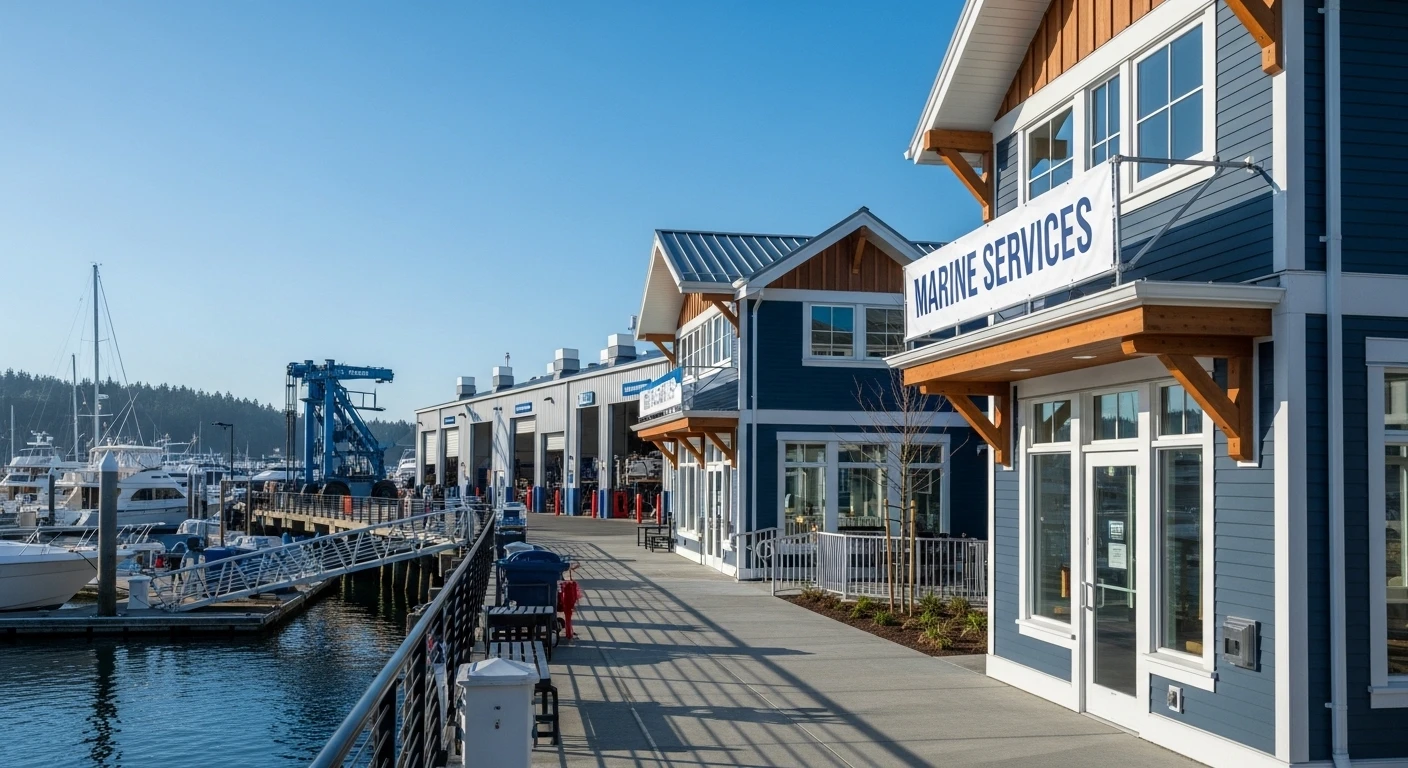
    If you’ve been walking the Waterfront Place promenade this spring and noticed a new marine services banner up at the Waterfront Center building, that’s S3 Maritime — and it represents a specific kind of tenant that doesn’t get the headlines the way a flashy new restaurant does, but arguably matters more to how Everett’s marina economy actually works.

    We stopped by the Craftsman District earlier this month to see the new facility and figure out what the addition changes for local boaters.

    Who S3 Maritime Is

    S3 Maritime is a Seattle-based marine services company that has been quietly expanding up the I-5 corridor for almost two decades. The company’s timeline:

    • 2007 — Opened in Seattle
    • 2007–present — Operates two service centers in the Ballard area
    • 2021 — Opened a dedicated Anacortes facility
    • 2025 — Expanded to a second Anacortes facility
    • March 2026 — Opened the Everett location at Waterfront Place

    Everett is the company’s fifth marine service center. The Port of Everett Commission authorized the three-year lease in mid-January 2026, and the facility went operational in early March.

    What They Do

    S3 Maritime is a full-service shop — not specialists in one narrow service. The company’s slate of capabilities:

    • Electrical systems
    • Electronics installation and service
    • Engine and mechanical work
    • HVAC systems on recreational vessels
    • Hydraulics
    • Metal fabrication
    • Paint and fiberglass work
    • Water systems
    • Yard services

    The team is also highly mobile, meaning they can meet boat owners at the vessel when an in-yard visit isn’t practical.

    “We are excited to join the Port of Everett and become part of this dynamic waterfront community,” Kalin Tobin, S3 Maritime’s General Manager, said in the Port’s announcement. “This expansion reflects our commitment to delivering high-quality, reliable marine services to a broader customer base while investing in the long-term maritime infrastructure of the region.”

    The Space at Waterfront Place

    The new facility occupies over 2,600 square feet in the Waterfront Center building at 1205 Craftsman Way, Suite 107, in the Craftsman District of Waterfront Place. The lease gives S3 Maritime:

    • Office and retail frontage
    • Access to the boat yard
    • Access to moorage

    For recreational vessel owners, the location matters as much as the square footage. Having a full-service shop physically inside the marina complex — rather than across town — means shorter wait times when a boat needs to be hauled, serviced, and relaunched.

    Why Another Marine Services Tenant Matters

    The Waterfront Place headlines tend to go to restaurants and housing. But the marine services side of the marina economy is what keeps the 2,300 permanent slips and 5,000 lineal feet of guest moorage actually usable.

    There are now 18-plus marine service providers operating at the Port of Everett’s marina. With each new addition, the marina gets closer to a true “one-stop” destination where a boat owner doesn’t have to trailer the vessel somewhere else for major work.

    Jeff Lindhout, the Port’s Chief of Marina Operations, framed it this way in the Port’s announcement: “S3 Maritime is a strong addition to the Port of Everett’s marine-related business community, expanding local access to vessel maintenance, repair, and custom services while supporting continued economic activity on the waterfront.”

    For the Port’s business model, marine services tenants do something restaurants don’t — they attract and retain boat owners who pay slip fees year-round. That’s the recurring revenue that funds the 2026 capital budget’s $7.1 million in marina maintenance and preservation work.

    The Marina Context

    A few numbers worth carrying in your head when thinking about how S3 Maritime fits:

    • 2,300 permanent slips at the Port of Everett marina
    • 5,000 lineal feet of guest moorage for transient boaters
    • 18+ marine service providers already operating on-site
    • New fuel dock — opened in 2025, adding fueling capacity
    • Largest public marina on the West Coast by slip count
    • $1 million RCO grant secured for Jetty Landing Boat Launch renovation — Washington State’s largest public boat launch — with in-water construction targeted for 2027
    • 90+ waterfront events per year held at Waterfront Place

    The marina isn’t just a storage facility. It’s a regional maritime hub, and adding service capacity makes the math work for the Port’s long-term Waterfront Place vision of $1 billion in total investment, 2,100 projected jobs, and 1.5 million square feet of mixed-use development.

    The Strategic Location Angle

    S3 Maritime’s General Manager specifically mentioned the I-5 corridor in the Port’s announcement, and the geographic logic is worth unpacking. With service centers in:

    • Seattle (2 locations, Ballard)
    • Anacortes (2 locations)
    • Everett (new)

    The company now has service points anchoring both ends of the major Puget Sound recreational boating area, plus a midpoint. For a boat owner cruising between the San Juans and Seattle, there’s now a service option along the entire route. That’s a meaningful competitive advantage in a service industry where response time and proximity often determine which shop gets the work.

    What This Means If You Own a Boat at the Everett Marina

    A few practical implications:

    • More service competition — more providers at the marina typically means faster scheduling and more competitive pricing
    • Reduced travel for major service — fewer reasons to trailer a vessel to another marina for specialized work
    • Mobile availability — S3 Maritime’s mobile team means the shop can come to your slip for many service needs
    • Broader expertise — the nine-category service list covers most of what a recreational vessel owner will need over a boat’s lifetime

    For boat buyers considering a slip at Everett versus another Puget Sound marina, the density of on-site service providers is starting to tilt the math.

    What to Watch Next at Waterfront Place

    S3 Maritime is one tenant announcement in a longer pipeline. The Port’s 2026 budget includes $2.6 million specifically for new retail and restaurant buildings and public access improvements, and Phase 2 of the buildout — the Millwright District — is scheduled to open beginning in 2026.

    Expect more tenant announcements through the year. Marine services, food and beverage, retail, and office tenants are all on the Port’s target list as the remaining 63,000 square feet of retail/restaurant space and 447,500 square feet of office space gets built out over the next several years.

    Frequently Asked Questions

    Where is S3 Maritime located at the Port of Everett? 1205 Craftsman Way, Suite 107, Everett WA 98201 — in the Waterfront Center building in the Craftsman District of Waterfront Place.

    What services does S3 Maritime provide? Full-service marine installation, maintenance, and repair including electrical, electronics, engine and mechanical, HVAC, hydraulics, metal fabrication, paint and fiberglass, water systems, and yard services. The team is also highly mobile.

    When did S3 Maritime open in Everett? The Port of Everett Commission authorized a three-year lease in mid-January 2026, and S3 Maritime opened the Everett facility in early March 2026.

    How many marine service providers operate at the Port of Everett’s marina? There are now 18 or more marine service providers at the marina, which is the largest public marina on the West Coast.

    How big is the Port of Everett’s marina? The marina has 2,300 permanent slips and 5,000 lineal feet of guest moorage. A new fuel dock opened in 2025.

    Is S3 Maritime a Seattle company? Yes. S3 Maritime opened in Seattle in 2007 and maintains two service centers in the Ballard area, two in Anacortes, and now a fifth in Everett.

    Who can I contact at S3 Maritime? The General Manager is Kalin Tobin. For current contact information, the Port of Everett’s public affairs team can be reached at publicaffairs@portofeverett.com.

  • Everett’s Downtown Stadium Faces Its Biggest Vote Yet: $10.6M Design Funding Goes to Council April 29

    Everett’s Downtown Stadium Faces Its Biggest Vote Yet: $10.6M Design Funding Goes to Council April 29

    What’s happening? Everett city staff are asking the city council to approve an additional $10.6 million in spending on the downtown stadium, a funding measure that would complete the design of the site. The council vote is scheduled for April 29, 2026. City staff told the council on April 15 that the $120 million project still has a $25 million funding gap, and the stadium’s expected opening has been pushed from April 2027 to late 2027.

    If you’ve been following the downtown stadium story, April 29 is the date to circle. That’s when the Everett City Council is expected to vote on a $10.6 million funding measure that city staff described this week as the most significant decision the council will make on the project to date.

    We watched Wednesday night’s council presentation from project manager Scott Pattison and consultant Ben Franz, and the headline is simple: the stadium is moving forward, but the financial picture is getting bigger and the timeline is slipping.

    What the $10.6M Would Pay For

    The new funding request would do two things. First, it would complete the design of the Outdoor Event Center, which has already hit roughly 60 percent design completion using the $7.2 million the city has already committed in capital funds. Second, it would continue property acquisition work on the stadium site.

    On the property side, the city needs to buy 15 parcels to build the stadium at the corner of Broadway and Pacific, right next to the Sounder rail line and just east of Angel of the Winds Arena. As of Wednesday, the city has:

    • Signed purchase agreements for 2 parcels
    • Pending agreements with 4 more
    • Active negotiations with the owners of 8 others
    • Zero parcels actually purchased outright (that only happens after the council approves construction)

    The money itself wouldn’t come from new revenue. The city would get the $10.6 million through an interfund loan from its general fund balance, with the plan to repay it later when the city passes a stadium bond measure.

    Here’s the catch Franz acknowledged on Wednesday: if the council approves the $10.6 million loan but later doesn’t approve a stadium bond to pay it back, it could mean a loss of at least $4.8 million in general fund dollars. Some property acquisition money could be reclaimed if the project falls apart, but the design work is sunk cost.

    The $25 Million Gap the City Still Has to Close

    The stadium is not yet fully funded. Not by a long shot.

    When the city first asked for the initial $4.8 million in June 2025, the project was pegged at $82 million. By the council’s January retreat, that number had grown to $120 million, driven by rising property acquisition costs and construction cost inflation. The city’s direct capital contributions to the project currently make up about 8 percent of the stadium’s total cost. Staff said Wednesday that the project is about $25 million short of its $120 million budget.

    Here’s the funding picture as it stands right now:

    • Stadium bond (planned): More than $40 million, repaid through lease revenue from the teams
    • State youth athletic fields fund: $7.4 million
    • Snohomish County contribution: $5 million spread across 2027-2030
    • AquaSox and USL team upfront commitment: $17 million
    • AquaSox and USL team lease payments: About $100 million over 30 years
    • City direct capital (already spent): ~$7.2 million
    • Gap to close: ~$25 million

    Franz told the council that filling the gap could involve “a number of options, including some very unique public-private partnerships,” but said he couldn’t share specifics. He also mentioned a federal loan program that distributes funds to economic development projects near rail infrastructure as a possibility — the favorable interest rate would be attractive, but the application process is long.

    “The more upfront capital we’re able to secure, the less debt the city has to issue,” Franz said after the meeting. “And that’s the piece we’re balancing, which is why we can’t sit here today and say, ‘Here’s the full funding plan.’”

    The Stadium Itself: What’s in the Design

    Contractors and architects showed the council initial design work Wednesday. The stadium would feature:

    • 5,000 seats
    • A clubhouse area that can be used for non-game events
    • An artificial turf field
    • A perimeter walking area
    • A main entrance where Wall Street meets Broadway

    The project is being delivered through a progressive design-build process, meaning the contractor — DLR Group with Bayley Construction — is designing the stadium alongside the architects rather than after. If the full project gets approved, the contractor would be locked in at a guaranteed price.

    The goal, according to Franz, is to break ground in September 2026. The previous target of opening for the AquaSox’s 2027 season is no longer realistic — the new opening window is late 2027.

    What the Teams Are Bringing

    Both the Everett AquaSox and the United Soccer League have now agreed to the financial terms of a lease, according to Franz. The key numbers:

    • $17 million upfront — combined team contribution toward construction
    • ~$100 million in lease payments over 30 years
    • Day-to-day maintenance responsibility falls to the teams
    • City staffing commitment: likely one employee to oversee operations
    • 50 guaranteed days per year for the city to host its own events or lease to other groups

    Once the bonds are paid off, the lease revenue flows into the city’s general fund.

    Mayor Cassie Franklin noted at Wednesday’s meeting that the maintenance arrangement is a significant win for the city — major capital repairs and upgrades remain the city’s responsibility, but the teams handle operations.

    The USL Piece That’s Still Unresolved

    Before the United Soccer League’s portion of the money can flow, the league still needs to find an owner or ownership group to actually buy the Everett men’s and women’s teams. Pattison said Wednesday in an interview that the league has “two or three people that are interested.”

    A USL spokesperson didn’t immediately respond to a request for comment.

    For context, franchise fees in the USL ecosystem run roughly:

    • USL League One team: ~$5 million (per ESPN reporting)
    • USL Championship team: ~$20 million
    • USL Super League (women’s professional) team: ~$10 million (per Backheeled and The Athletic)

    The league’s ownership search could affect the stadium’s timeline. “It really depends on where they are in the process, and where we are in overall readiness to start construction,” Franz said. “We have commitments to the AquaSox that we want to meet at this point. Our goal is to start construction in September, and so we’ll work diligently with them together to meet that.”

    Why This Project Started in the First Place

    Everett first began studying a stadium upgrade in 2022 after Major League Baseball announced new facility standards for minor league stadiums. Funko Field, in its current state, doesn’t meet those requirements. In 2024, the AquaSox’s owner said the city was in danger of losing the team. Later that year, the council decided to study a downtown site — partly because a downtown location could unlock more public and private funding than a rebuild at Funko Field.

    The stadium has become, effectively, the signature piece of Everett’s downtown revitalization strategy. It anchors development plans next to Angel of the Winds Arena, the Sounder station, and the Millwright District’s growing footprint on the waterfront.

    The Calendar From Here

    Three dates worth writing down:

    • April 29, 2026 — City council vote on the $10.6 million funding measure
    • July 2026 — Target for completing a full funding plan
    • August 2026 — Expected council vote on approving stadium construction
    • September 2026 — Target date to break ground
    • Late 2027 — Revised stadium opening

    The April 29 vote does not commit the city to building the stadium. But it does commit $10.6 million — with real financial consequences if the project doesn’t move forward later.

    Frequently Asked Questions

    When does the Everett City Council vote on the $10.6 million stadium funding? The vote is scheduled for April 29, 2026. It would complete the design of the Outdoor Event Center and continue work on acquiring the 15 parcels needed to build the stadium.

    How much is the Everett stadium projected to cost? The current cost estimate is $120 million, up from an initial estimate of $82 million in June 2025. The city is about $25 million short of the full budget.

    When will the downtown stadium open? City staff have pushed the opening from April 2027 to late 2027. The new target is to break ground in September 2026.

    Who would play at the Everett Outdoor Event Center? The Everett AquaSox (Seattle Mariners High-A minor league baseball) and two new United Soccer League teams — a men’s team and a women’s team — if the USL finds ownership groups to buy them.

    Where will the new Everett stadium be located? At the corner of Broadway and Pacific, east of Angel of the Winds Arena and next to the Sounder rail line. The main entrance is planned for where Wall Street meets Broadway.

    What happens if the stadium project doesn’t get approved? At least $4.8 million of the $10.6 million loan could be lost. Some property acquisition money might be recoverable if the city backs out of purchases, but design work is a sunk cost.

    Who is designing and building the stadium? DLR Group and Bayley Construction are delivering the project through a progressive design-build process, where the contractor is working alongside the architects during design.

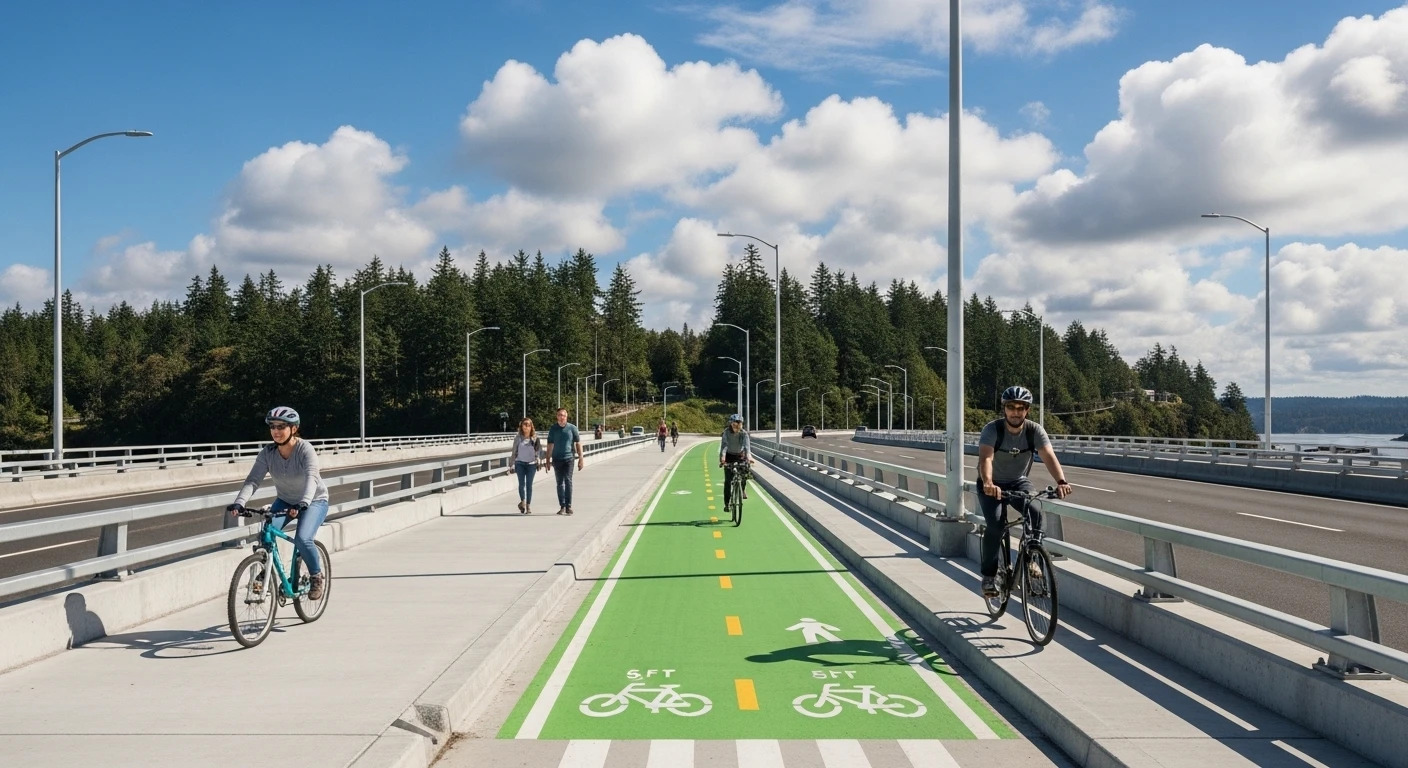
  • Everett’s New Edgewater Bridge Adds Bike Lanes and Sidewalks for the First Time: What Cyclists and Pedestrians Need to Know

    Everett’s New Edgewater Bridge Adds Bike Lanes and Sidewalks for the First Time: What Cyclists and Pedestrians Need to Know

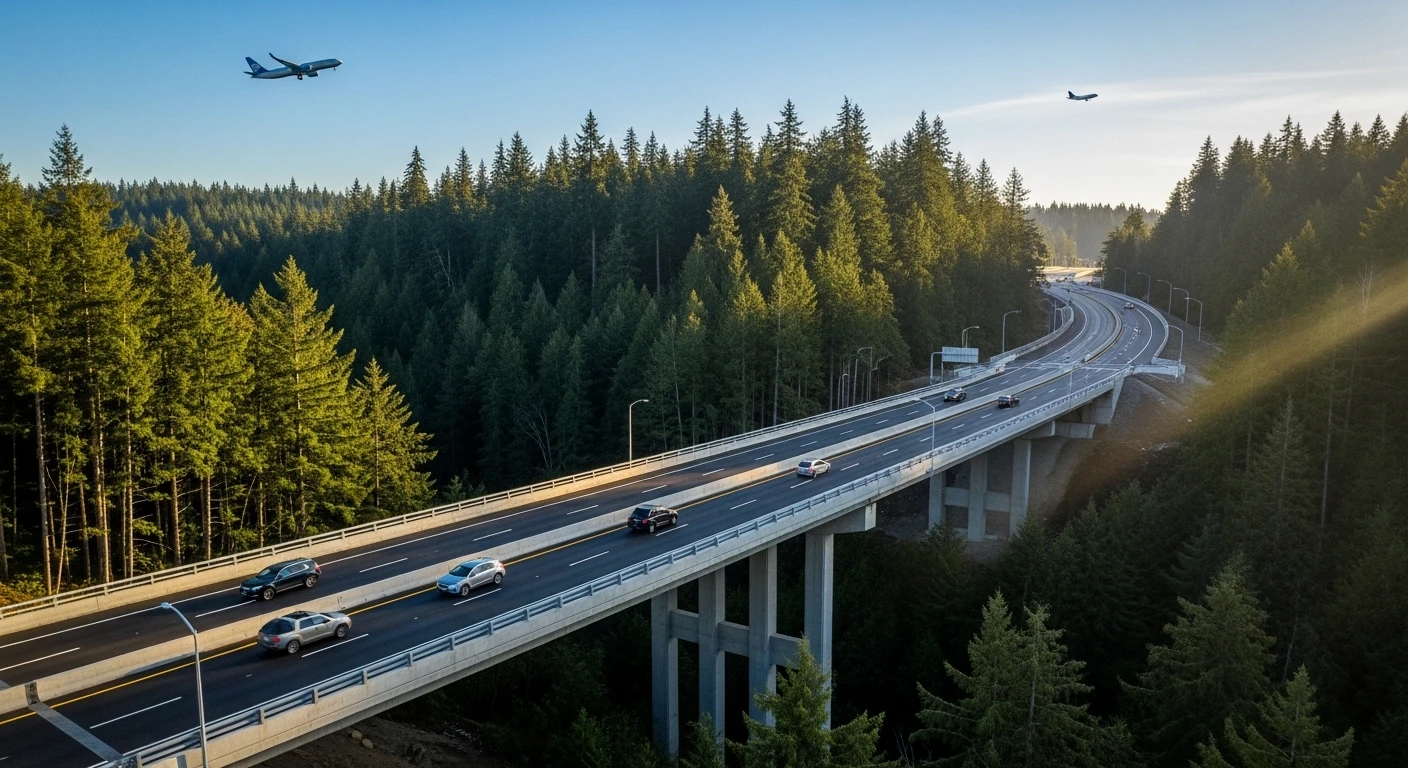
  • Edgewater Bridge Opens April 28: What Boeing and Paine Field Commuters Need to Know About the Restored Mukilteo Corridor

    Edgewater Bridge Opens April 28: What Boeing and Paine Field Commuters Need to Know About the Restored Mukilteo Corridor