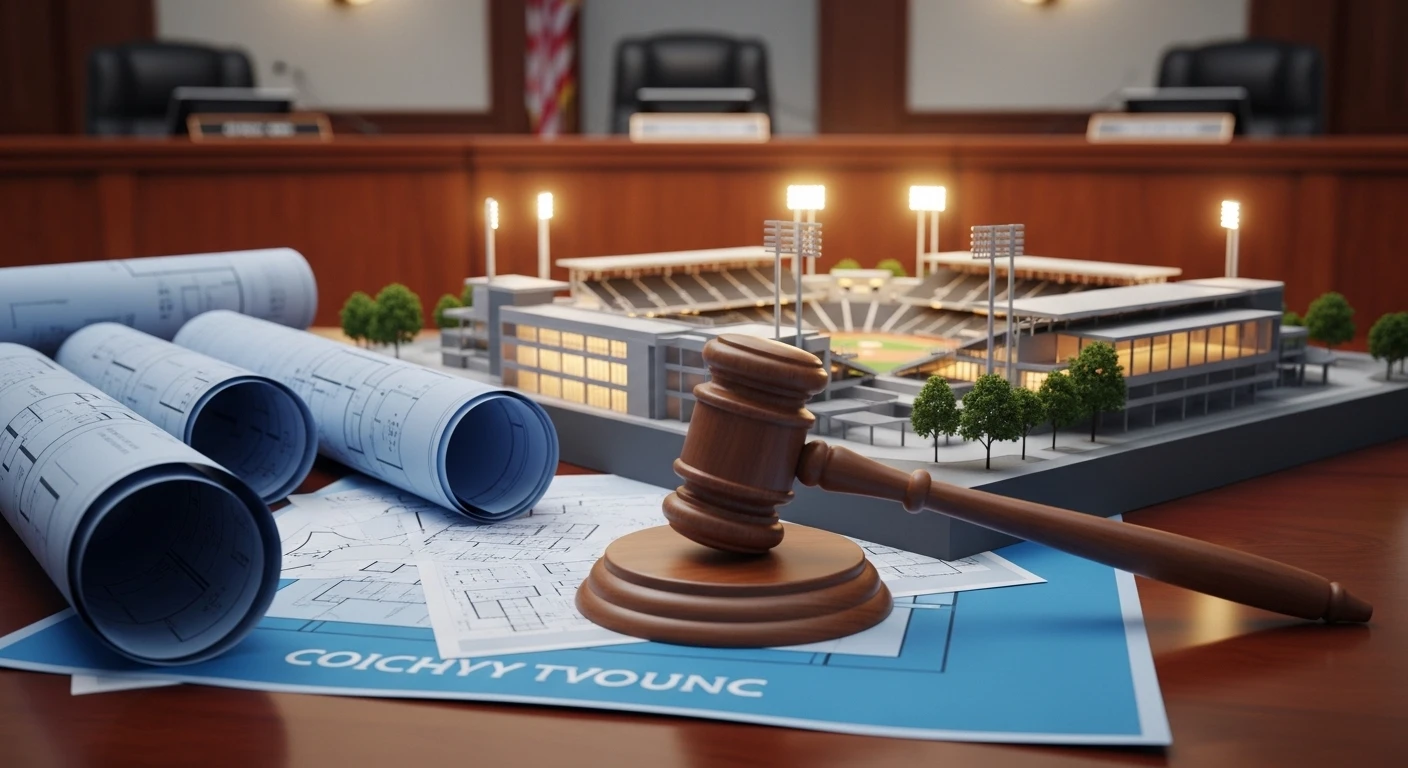
What’s happening? Everett city staff are asking the city council to approve an additional $10.6 million in spending on the downtown stadium, a funding measure that would complete the design of the site. The council vote is scheduled for April 29, 2026. City staff told the council on April 15 that the $120 million project still has a $25 million funding gap, and the stadium’s expected opening has been pushed from April 2027 to late 2027.
If you’ve been following the downtown stadium story, April 29 is the date to circle. That’s when the Everett City Council is expected to vote on a $10.6 million funding measure that city staff described this week as the most significant decision the council will make on the project to date.
We watched Wednesday night’s council presentation from project manager Scott Pattison and consultant Ben Franz, and the headline is simple: the stadium is moving forward, but the financial picture is getting bigger and the timeline is slipping.
What the $10.6M Would Pay For
The new funding request would do two things. First, it would complete the design of the Outdoor Event Center, which has already hit roughly 60 percent design completion using the $7.2 million the city has already committed in capital funds. Second, it would continue property acquisition work on the stadium site.
On the property side, the city needs to buy 15 parcels to build the stadium at the corner of Broadway and Pacific, right next to the Sounder rail line and just east of Angel of the Winds Arena. As of Wednesday, the city has:
- Signed purchase agreements for 2 parcels
- Pending agreements with 4 more
- Active negotiations with the owners of 8 others
- Zero parcels actually purchased outright (that only happens after the council approves construction)
The money itself wouldn’t come from new revenue. The city would get the $10.6 million through an interfund loan from its general fund balance, with the plan to repay it later when the city passes a stadium bond measure.
Here’s the catch Franz acknowledged on Wednesday: if the council approves the $10.6 million loan but later doesn’t approve a stadium bond to pay it back, it could mean a loss of at least $4.8 million in general fund dollars. Some property acquisition money could be reclaimed if the project falls apart, but the design work is sunk cost.
The $25 Million Gap the City Still Has to Close
The stadium is not yet fully funded. Not by a long shot.
When the city first asked for the initial $4.8 million in June 2025, the project was pegged at $82 million. By the council’s January retreat, that number had grown to $120 million, driven by rising property acquisition costs and construction cost inflation. The city’s direct capital contributions to the project currently make up about 8 percent of the stadium’s total cost. Staff said Wednesday that the project is about $25 million short of its $120 million budget.
Here’s the funding picture as it stands right now:
- Stadium bond (planned): More than $40 million, repaid through lease revenue from the teams
- State youth athletic fields fund: $7.4 million
- Snohomish County contribution: $5 million spread across 2027-2030
- AquaSox and USL team upfront commitment: $17 million
- AquaSox and USL team lease payments: About $100 million over 30 years
- City direct capital (already spent): ~$7.2 million
- Gap to close: ~$25 million
Franz told the council that filling the gap could involve “a number of options, including some very unique public-private partnerships,” but said he couldn’t share specifics. He also mentioned a federal loan program that distributes funds to economic development projects near rail infrastructure as a possibility — the favorable interest rate would be attractive, but the application process is long.
“The more upfront capital we’re able to secure, the less debt the city has to issue,” Franz said after the meeting. “And that’s the piece we’re balancing, which is why we can’t sit here today and say, ‘Here’s the full funding plan.’”
The Stadium Itself: What’s in the Design
Contractors and architects showed the council initial design work Wednesday. The stadium would feature:
- 5,000 seats
- A clubhouse area that can be used for non-game events
- An artificial turf field
- A perimeter walking area
- A main entrance where Wall Street meets Broadway
The project is being delivered through a progressive design-build process, meaning the contractor — DLR Group with Bayley Construction — is designing the stadium alongside the architects rather than after. If the full project gets approved, the contractor would be locked in at a guaranteed price.
The goal, according to Franz, is to break ground in September 2026. The previous target of opening for the AquaSox’s 2027 season is no longer realistic — the new opening window is late 2027.
What the Teams Are Bringing
Both the Everett AquaSox and the United Soccer League have now agreed to the financial terms of a lease, according to Franz. The key numbers:
- $17 million upfront — combined team contribution toward construction
- ~$100 million in lease payments over 30 years
- Day-to-day maintenance responsibility falls to the teams
- City staffing commitment: likely one employee to oversee operations
- 50 guaranteed days per year for the city to host its own events or lease to other groups
Once the bonds are paid off, the lease revenue flows into the city’s general fund.
Mayor Cassie Franklin noted at Wednesday’s meeting that the maintenance arrangement is a significant win for the city — major capital repairs and upgrades remain the city’s responsibility, but the teams handle operations.
The USL Piece That’s Still Unresolved
Before the United Soccer League’s portion of the money can flow, the league still needs to find an owner or ownership group to actually buy the Everett men’s and women’s teams. Pattison said Wednesday in an interview that the league has “two or three people that are interested.”
A USL spokesperson didn’t immediately respond to a request for comment.
For context, franchise fees in the USL ecosystem run roughly:
- USL League One team: ~$5 million (per ESPN reporting)
- USL Championship team: ~$20 million
- USL Super League (women’s professional) team: ~$10 million (per Backheeled and The Athletic)
The league’s ownership search could affect the stadium’s timeline. “It really depends on where they are in the process, and where we are in overall readiness to start construction,” Franz said. “We have commitments to the AquaSox that we want to meet at this point. Our goal is to start construction in September, and so we’ll work diligently with them together to meet that.”
Why This Project Started in the First Place
Everett first began studying a stadium upgrade in 2022 after Major League Baseball announced new facility standards for minor league stadiums. Funko Field, in its current state, doesn’t meet those requirements. In 2024, the AquaSox’s owner said the city was in danger of losing the team. Later that year, the council decided to study a downtown site — partly because a downtown location could unlock more public and private funding than a rebuild at Funko Field.
The stadium has become, effectively, the signature piece of Everett’s downtown revitalization strategy. It anchors development plans next to Angel of the Winds Arena, the Sounder station, and the Millwright District’s growing footprint on the waterfront.
The Calendar From Here
Three dates worth writing down:
- April 29, 2026 — City council vote on the $10.6 million funding measure
- July 2026 — Target for completing a full funding plan
- August 2026 — Expected council vote on approving stadium construction
- September 2026 — Target date to break ground
- Late 2027 — Revised stadium opening
The April 29 vote does not commit the city to building the stadium. But it does commit $10.6 million — with real financial consequences if the project doesn’t move forward later.
Frequently Asked Questions
When does the Everett City Council vote on the $10.6 million stadium funding? The vote is scheduled for April 29, 2026. It would complete the design of the Outdoor Event Center and continue work on acquiring the 15 parcels needed to build the stadium.
How much is the Everett stadium projected to cost? The current cost estimate is $120 million, up from an initial estimate of $82 million in June 2025. The city is about $25 million short of the full budget.
When will the downtown stadium open? City staff have pushed the opening from April 2027 to late 2027. The new target is to break ground in September 2026.
Who would play at the Everett Outdoor Event Center? The Everett AquaSox (Seattle Mariners High-A minor league baseball) and two new United Soccer League teams — a men’s team and a women’s team — if the USL finds ownership groups to buy them.
Where will the new Everett stadium be located? At the corner of Broadway and Pacific, east of Angel of the Winds Arena and next to the Sounder rail line. The main entrance is planned for where Wall Street meets Broadway.
What happens if the stadium project doesn’t get approved? At least $4.8 million of the $10.6 million loan could be lost. Some property acquisition money might be recoverable if the city backs out of purchases, but design work is a sunk cost.
Who is designing and building the stadium? DLR Group and Bayley Construction are delivering the project through a progressive design-build process, where the contractor is working alongside the architects during design.
Leave a Reply