Everett Waterfront - Tygart Media

Category: Everett Waterfront

Port of Everett, $1B waterfront redevelopment, marina life, and waterfront news.

  • S3 Maritime Everett: New Port of Everett Marine Services

    S3 Maritime Everett: New Port of Everett Marine Services

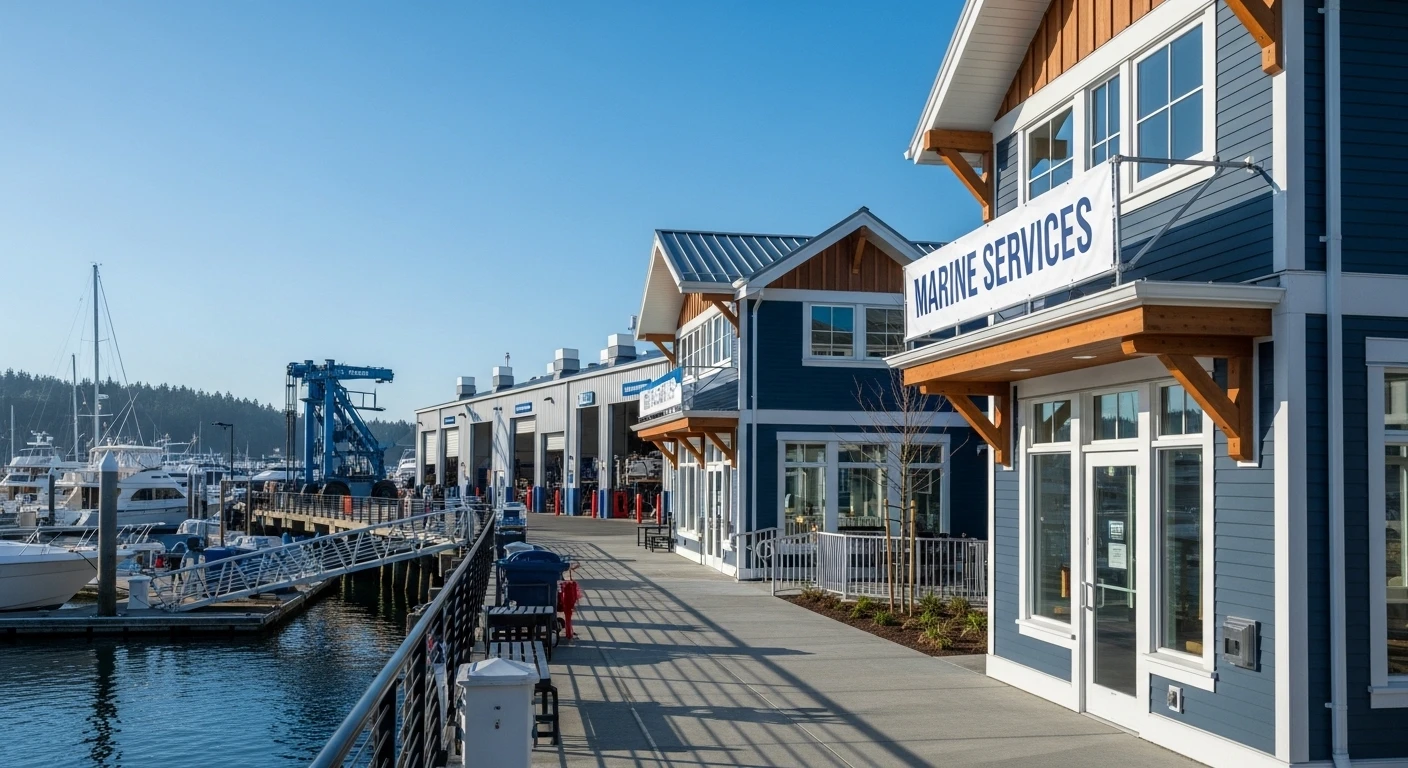
    What’s happening? S3 Maritime, a Seattle-based full-service marine installation, maintenance, and repair company, opened its fifth service center in early March 2026 at the Port of Everett’s Waterfront Place. The new facility occupies over 2,600 square feet of office and retail space at 1205 Craftsman Way, Suite 107, with access to the boat yard and moorage. S3 Maritime joins 18-plus marine service providers already operating at the largest public marina on the West Coast.

    If you’ve been walking the Waterfront Place promenade this spring and noticed a new marine services banner up at the Waterfront Center building, that’s S3 Maritime — and it represents a specific kind of tenant that doesn’t get the headlines the way a flashy new restaurant does, but arguably matters more to how Everett’s marina economy actually works.

    We stopped by the Craftsman District earlier this month to see the new facility and figure out what the addition changes for local boaters.

    Who S3 Maritime Is

    S3 Maritime is a Seattle-based marine services company that has been quietly expanding up the I-5 corridor for almost two decades. The company’s timeline:

    • 2007 — Opened in Seattle
    • 2007–present — Operates two service centers in the Ballard area
    • 2021 — Opened a dedicated Anacortes facility
    • 2025 — Expanded to a second Anacortes facility
    • March 2026 — Opened the Everett location at Waterfront Place

    Everett is the company’s fifth marine service center. The Port of Everett Commission authorized the three-year lease in mid-January 2026, and the facility went operational in early March.

    What They Do

    S3 Maritime is a full-service shop — not specialists in one narrow service. The company’s slate of capabilities:

    • Electrical systems
    • Electronics installation and service
    • Engine and mechanical work
    • HVAC systems on recreational vessels
    • Hydraulics
    • Metal fabrication
    • Paint and fiberglass work
    • Water systems
    • Yard services

    The team is also highly mobile, meaning they can meet boat owners at the vessel when an in-yard visit isn’t practical.

    “We are excited to join the Port of Everett and become part of this dynamic waterfront community,” Kalin Tobin, S3 Maritime’s General Manager, said in the Port’s announcement. “This expansion reflects our commitment to delivering high-quality, reliable marine services to a broader customer base while investing in the long-term maritime infrastructure of the region.”

    The Space at Waterfront Place

    The new facility occupies over 2,600 square feet in the Waterfront Center building at 1205 Craftsman Way, Suite 107, in the Craftsman District of Waterfront Place. The lease gives S3 Maritime:

    • Office and retail frontage
    • Access to the boat yard
    • Access to moorage

    For recreational vessel owners, the location matters as much as the square footage. Having a full-service shop physically inside the marina complex — rather than across town — means shorter wait times when a boat needs to be hauled, serviced, and relaunched.

    Why Another Marine Services Tenant Matters

    The Waterfront Place headlines tend to go to restaurants and housing. But the marine services side of the marina economy is what keeps the 2,300 permanent slips and 5,000 lineal feet of guest moorage actually usable.

    There are now 18-plus marine service providers operating at the Port of Everett’s marina. With each new addition, the marina gets closer to a true “one-stop” destination where a boat owner doesn’t have to trailer the vessel somewhere else for major work.

    Jeff Lindhout, the Port’s Chief of Marina Operations, framed it this way in the Port’s announcement: “S3 Maritime is a strong addition to the Port of Everett’s marine-related business community, expanding local access to vessel maintenance, repair, and custom services while supporting continued economic activity on the waterfront.”

    For the Port’s business model, marine services tenants do something restaurants don’t — they attract and retain boat owners who pay slip fees year-round. That’s the recurring revenue that funds the 2026 capital budget’s $7.1 million in marina maintenance and preservation work.

    The Marina Context

    A few numbers worth carrying in your head when thinking about how S3 Maritime fits:

    • 2,300 permanent slips at the Port of Everett marina
    • 5,000 lineal feet of guest moorage for transient boaters
    • 18+ marine service providers already operating on-site
    • New fuel dock — opened in 2025, adding fueling capacity
    • Largest public marina on the West Coast by slip count
    • $1 million RCO grant secured for Jetty Landing Boat Launch renovation — Washington State’s largest public boat launch — with in-water construction targeted for 2027
    • 90+ waterfront events per year held at Waterfront Place

    The marina isn’t just a storage facility. It’s a regional maritime hub, and adding service capacity makes the math work for the Port’s long-term Waterfront Place vision of $1 billion in total investment, 2,100 projected jobs, and 1.5 million square feet of mixed-use development.

    The Strategic Location Angle

    S3 Maritime’s General Manager specifically mentioned the I-5 corridor in the Port’s announcement, and the geographic logic is worth unpacking. With service centers in:

    • Seattle (2 locations, Ballard)
    • Anacortes (2 locations)
    • Everett (new)

    The company now has service points anchoring both ends of the major Puget Sound recreational boating area, plus a midpoint. For a boat owner cruising between the San Juans and Seattle, there’s now a service option along the entire route. That’s a meaningful competitive advantage in a service industry where response time and proximity often determine which shop gets the work.

    What This Means If You Own a Boat at the Everett Marina

    A few practical implications:

    • More service competition — more providers at the marina typically means faster scheduling and more competitive pricing
    • Reduced travel for major service — fewer reasons to trailer a vessel to another marina for specialized work
    • Mobile availability — S3 Maritime’s mobile team means the shop can come to your slip for many service needs
    • Broader expertise — the nine-category service list covers most of what a recreational vessel owner will need over a boat’s lifetime

    For boat buyers considering a slip at Everett versus another Puget Sound marina, the density of on-site service providers is starting to tilt the math.

    What to Watch Next at Waterfront Place

    S3 Maritime is one tenant announcement in a longer pipeline. The Port’s 2026 budget includes $2.6 million specifically for new retail and restaurant buildings and public access improvements, and Phase 2 of the buildout — the Millwright District — is scheduled to open beginning in 2026.

    Expect more tenant announcements through the year. Marine services, food and beverage, retail, and office tenants are all on the Port’s target list as the remaining 63,000 square feet of retail/restaurant space and 447,500 square feet of office space gets built out over the next several years.

    Frequently Asked Questions

    Where is S3 Maritime located at the Port of Everett? 1205 Craftsman Way, Suite 107, Everett WA 98201 — in the Waterfront Center building in the Craftsman District of Waterfront Place.

    What services does S3 Maritime provide? Full-service marine installation, maintenance, and repair including electrical, electronics, engine and mechanical, HVAC, hydraulics, metal fabrication, paint and fiberglass, water systems, and yard services. The team is also highly mobile.

    When did S3 Maritime open in Everett? The Port of Everett Commission authorized a three-year lease in mid-January 2026, and S3 Maritime opened the Everett facility in early March 2026.

    How many marine service providers operate at the Port of Everett’s marina? There are now 18 or more marine service providers at the marina, which is the largest public marina on the West Coast.

    How big is the Port of Everett’s marina? The marina has 2,300 permanent slips and 5,000 lineal feet of guest moorage. A new fuel dock opened in 2025.

    Is S3 Maritime a Seattle company? Yes. S3 Maritime opened in Seattle in 2007 and maintains two service centers in the Ballard area, two in Anacortes, and now a fifth in Everett.

    Who can I contact at S3 Maritime? The General Manager is Kalin Tobin. For current contact information, the Port of Everett’s public affairs team can be reached at publicaffairs@portofeverett.com.

  • Everett Stadium Funding: Council Faces $10.6M Vote April 29

    Everett Stadium Funding: Council Faces $10.6M Vote April 29

    What’s happening? Everett city staff are asking the city council to approve an additional $10.6 million in spending on the downtown stadium, a funding measure that would complete the design of the site. The council vote is scheduled for April 29, 2026. City staff told the council on April 15 that the $120 million project still has a $25 million funding gap, and the stadium’s expected opening has been pushed from April 2027 to late 2027.

    If you’ve been following the downtown stadium story, April 29 is the date to circle. That’s when the Everett City Council is expected to vote on a $10.6 million funding measure that city staff described this week as the most significant decision the council will make on the project to date.

    We watched Wednesday night’s council presentation from project manager Scott Pattison and consultant Ben Franz, and the headline is simple: the stadium is moving forward, but the financial picture is getting bigger and the timeline is slipping.

    What the $10.6M Would Pay For

    The new funding request would do two things. First, it would complete the design of the Outdoor Event Center, which has already hit roughly 60 percent design completion using the $7.2 million the city has already committed in capital funds. Second, it would continue property acquisition work on the stadium site.

    On the property side, the city needs to buy 15 parcels to build the stadium at the corner of Broadway and Pacific, right next to the Sounder rail line and just east of Angel of the Winds Arena. As of Wednesday, the city has:

    • Signed purchase agreements for 2 parcels
    • Pending agreements with 4 more
    • Active negotiations with the owners of 8 others
    • Zero parcels actually purchased outright (that only happens after the council approves construction)

    The money itself wouldn’t come from new revenue. The city would get the $10.6 million through an interfund loan from its general fund balance, with the plan to repay it later when the city passes a stadium bond measure.

    Here’s the catch Franz acknowledged on Wednesday: if the council approves the $10.6 million loan but later doesn’t approve a stadium bond to pay it back, it could mean a loss of at least $4.8 million in general fund dollars. Some property acquisition money could be reclaimed if the project falls apart, but the design work is sunk cost.

    The $25 Million Gap the City Still Has to Close

    The stadium is not yet fully funded. Not by a long shot.

    When the city first asked for the initial $4.8 million in June 2025, the project was pegged at $82 million. By the council’s January retreat, that number had grown to $120 million, driven by rising property acquisition costs and construction cost inflation. The city’s direct capital contributions to the project currently make up about 8 percent of the stadium’s total cost. Staff said Wednesday that the project is about $25 million short of its $120 million budget.

    Here’s the funding picture as it stands right now:

    • Stadium bond (planned): More than $40 million, repaid through lease revenue from the teams
    • State youth athletic fields fund: $7.4 million
    • Snohomish County contribution: $5 million spread across 2027-2030
    • AquaSox and USL team upfront commitment: $17 million
    • AquaSox and USL team lease payments: About $100 million over 30 years
    • City direct capital (already spent): ~$7.2 million
    • Gap to close: ~$25 million

    Franz told the council that filling the gap could involve “a number of options, including some very unique public-private partnerships,” but said he couldn’t share specifics. He also mentioned a federal loan program that distributes funds to economic development projects near rail infrastructure as a possibility — the favorable interest rate would be attractive, but the application process is long.

    “The more upfront capital we’re able to secure, the less debt the city has to issue,” Franz said after the meeting. “And that’s the piece we’re balancing, which is why we can’t sit here today and say, ‘Here’s the full funding plan.’”

    The Stadium Itself: What’s in the Design

    Contractors and architects showed the council initial design work Wednesday. The stadium would feature:

    • 5,000 seats
    • A clubhouse area that can be used for non-game events
    • An artificial turf field
    • A perimeter walking area
    • A main entrance where Wall Street meets Broadway

    The project is being delivered through a progressive design-build process, meaning the contractor — DLR Group with Bayley Construction — is designing the stadium alongside the architects rather than after. If the full project gets approved, the contractor would be locked in at a guaranteed price.

    The goal, according to Franz, is to break ground in September 2026. The previous target of opening for the AquaSox’s 2027 season is no longer realistic — the new opening window is late 2027.

    What the Teams Are Bringing

    Both the Everett AquaSox and the United Soccer League have now agreed to the financial terms of a lease, according to Franz. The key numbers:

    • $17 million upfront — combined team contribution toward construction
    • ~$100 million in lease payments over 30 years
    • Day-to-day maintenance responsibility falls to the teams
    • City staffing commitment: likely one employee to oversee operations
    • 50 guaranteed days per year for the city to host its own events or lease to other groups

    Once the bonds are paid off, the lease revenue flows into the city’s general fund.

    Mayor Cassie Franklin noted at Wednesday’s meeting that the maintenance arrangement is a significant win for the city — major capital repairs and upgrades remain the city’s responsibility, but the teams handle operations.

    The USL Piece That’s Still Unresolved

    Before the United Soccer League’s portion of the money can flow, the league still needs to find an owner or ownership group to actually buy the Everett men’s and women’s teams. Pattison said Wednesday in an interview that the league has “two or three people that are interested.”

    A USL spokesperson didn’t immediately respond to a request for comment.

    For context, franchise fees in the USL ecosystem run roughly:

    • USL League One team: ~$5 million (per ESPN reporting)
    • USL Championship team: ~$20 million
    • USL Super League (women’s professional) team: ~$10 million (per Backheeled and The Athletic)

    The league’s ownership search could affect the stadium’s timeline. “It really depends on where they are in the process, and where we are in overall readiness to start construction,” Franz said. “We have commitments to the AquaSox that we want to meet at this point. Our goal is to start construction in September, and so we’ll work diligently with them together to meet that.”

    Why This Project Started in the First Place

    Everett first began studying a stadium upgrade in 2022 after Major League Baseball announced new facility standards for minor league stadiums. Funko Field, in its current state, doesn’t meet those requirements. In 2024, the AquaSox’s owner said the city was in danger of losing the team. Later that year, the council decided to study a downtown site — partly because a downtown location could unlock more public and private funding than a rebuild at Funko Field.

    The stadium has become, effectively, the signature piece of Everett’s downtown revitalization strategy. It anchors development plans next to Angel of the Winds Arena, the Sounder station, and the Millwright District’s growing footprint on the waterfront.

    The Calendar From Here

    Three dates worth writing down:

    • April 29, 2026 — City council vote on the $10.6 million funding measure
    • July 2026 — Target for completing a full funding plan
    • August 2026 — Expected council vote on approving stadium construction
    • September 2026 — Target date to break ground
    • Late 2027 — Revised stadium opening

    The April 29 vote does not commit the city to building the stadium. But it does commit $10.6 million — with real financial consequences if the project doesn’t move forward later.

    Frequently Asked Questions

    When does the Everett City Council vote on the $10.6 million stadium funding? The vote is scheduled for April 29, 2026. It would complete the design of the Outdoor Event Center and continue work on acquiring the 15 parcels needed to build the stadium.

    How much is the Everett stadium projected to cost? The current cost estimate is $120 million, up from an initial estimate of $82 million in June 2025. The city is about $25 million short of the full budget.

    When will the downtown stadium open? City staff have pushed the opening from April 2027 to late 2027. The new target is to break ground in September 2026.

    Who would play at the Everett Outdoor Event Center? The Everett AquaSox (Seattle Mariners High-A minor league baseball) and two new United Soccer League teams — a men’s team and a women’s team — if the USL finds ownership groups to buy them.

    Where will the new Everett stadium be located? At the corner of Broadway and Pacific, east of Angel of the Winds Arena and next to the Sounder rail line. The main entrance is planned for where Wall Street meets Broadway.

    What happens if the stadium project doesn’t get approved? At least $4.8 million of the $10.6 million loan could be lost. Some property acquisition money might be recoverable if the city backs out of purchases, but design work is a sunk cost.

    Who is designing and building the stadium? DLR Group and Bayley Construction are delivering the project through a progressive design-build process, where the contractor is working alongside the architects during design.

  • Everett World Cup Watch Parties: Vendor & Business Guide

    Everett World Cup Watch Parties: Vendor & Business Guide

  • Everett World Cup Watch Parties: Boxcar Park Guide

    Everett World Cup Watch Parties: Boxcar Park Guide

  • Everett FIFA Watch Party: Boxcar Park Visitor’s Guide

    Everett FIFA Watch Party: Boxcar Park Visitor’s Guide

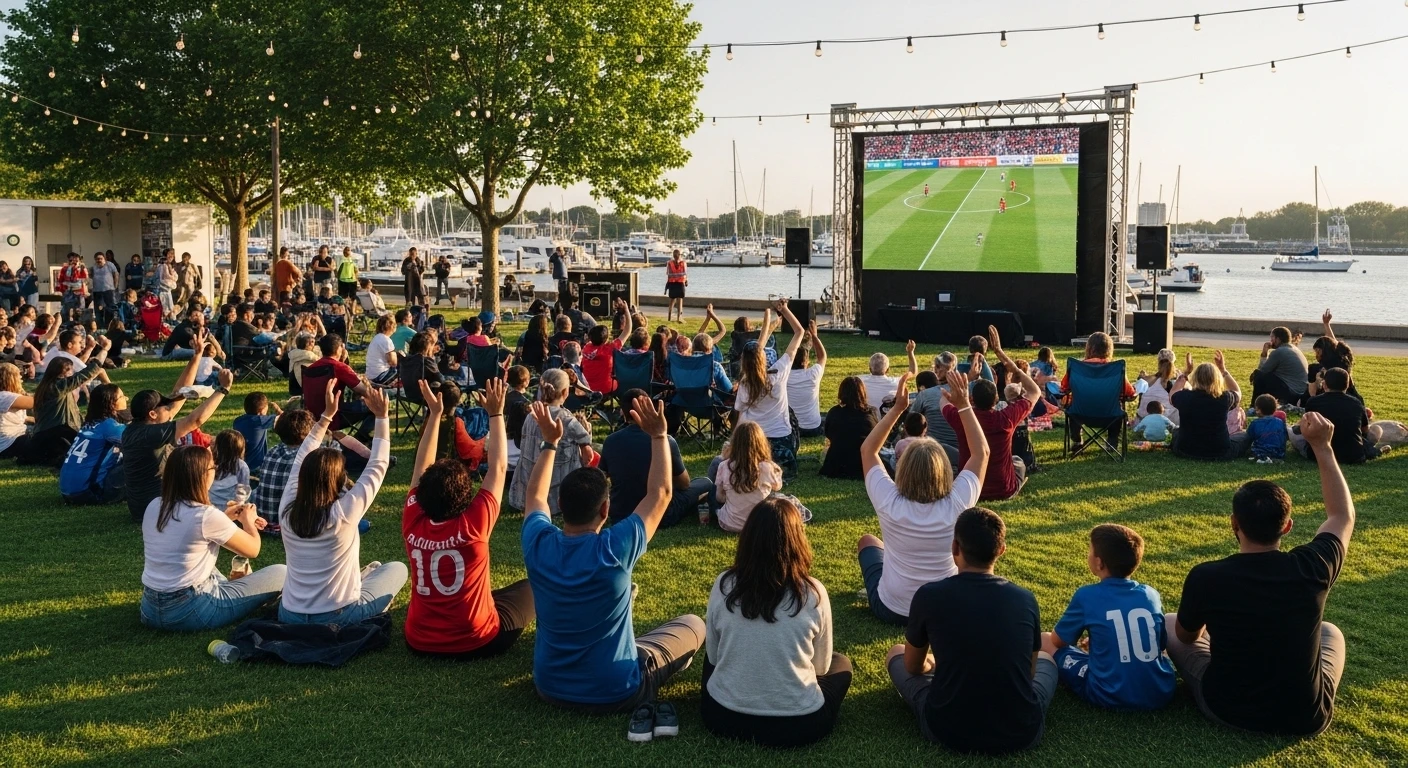
    Everett is hosting four official FIFA World Cup watch parties at Boxcar Park this June. If you’re making a trip to the waterfront for one of these events, here’s how to plan a full day out.

    The four games — Mexico vs. South Africa (June 11), USA vs. Paraguay (June 12), Mexico vs. South Korea (June 18), and USA vs. Australia (June 19) — draw on Everett’s waterfront location to create an experience that goes well beyond just watching a screen. Port Gardner Bay as a backdrop, marina activity, fresh seafood, and AquaSox games across the street make the Everett fan zone genuinely worth the drive from Seattle or beyond.

    Getting There

    By car from Seattle: Take I-5 North to Exit 193 (Everett/Everett Ave). Follow Marine View Drive north along the waterfront to Port of Everett. Drive time from downtown Seattle: 35-45 minutes in normal traffic. For USA match days, add buffer — these will draw regional crowds.

    By transit: The best option for the evening matches (June 12 and 18) is Community Transit or Sounder North to Everett Station, then the free Everett Transit shuttle to Boxcar Park. Sounder North runs Monday-Friday — check Sound Transit’s schedule. Community Transit Route 512 runs from Lynnwood and Mountlake Terrace; connect at Everett Station for the shuttle.

    Parking: Port of Everett marina lots are the closest option. On USA match days, plan to arrive 90 minutes before kickoff to secure a spot. Alternatively, park downtown (free street parking in most of Everett’s downtown grid) and walk 15-20 minutes to the waterfront, or take the free shuttle from Everett Station.

    Before the Match: The Waterfront

    Arrive at least two hours early — both because the fan zone opens two hours before kickoff and because the Port of Everett waterfront has enough to keep you occupied. The marina district includes restaurants, coffee, and waterfront walking paths with views of Jetty Island and the Olympic Peninsula across Port Gardner Bay.

    Anthony’s HomePort Everett is the signature waterfront dining spot — Pacific Northwest seafood with marina views. It books up on event days; call ahead or plan to eat before the main crowd arrives. The Boatyard Bar & Grill is a more casual option at the marina. Walk the marina path north to see the working cargo port and South Terminal area before settling into Boxcar Park for the match.

    If You’re Staying Overnight: Everett for a Weekend

    The evening matches (June 12 and 18, both 6 PM kickoffs) pair well with a Snohomish County overnight. Hotels near the waterfront and Paine Field area include the Hampton Inn Everett, the Inn at Port Gardner (boutique, directly on the waterfront — book this one well in advance for World Cup weekend), and multiple options near I-5 at the Everett Mall exit.

    After the evening matches, Everett’s Broadway District has bars and restaurants open late. The Rocket Bar and Anchor Pub are the most-cited spots for post-event crowds near downtown.

    Other Things to Do in Everett on Match Day

    AquaSox baseball: The Everett AquaSox (Seattle Mariners affiliate) play home games at Funko Field at Everett Memorial Stadium — about a 10-minute walk from the waterfront. Check the MiLB schedule for June home dates. A waterfront FIFA watch party followed by an AquaSox evening game is a legitimately great Everett day.

    Jetty Island: Free ferry from the Everett Waterfront (runs July and August) to Jetty Island, a two-mile natural sand island with beaches, trails, and unobstructed water views. Not running in June — mark your calendar for a return visit.

    Funko HQ: If you or your kids are fans of Funko Pop! figures (the collectible vinyl toys), the Funko headquarters is in Everett at 2802 Wetmore Ave — less than two miles from the waterfront. The HQ store stocks exclusive Everett-specific releases and is worth a stop.

    Frequently Asked Questions — For Visitors

    Is the Everett FIFA fan zone worth visiting from Seattle?

    Yes — especially if you want a different experience than the dense urban crowd at a Seattle venue. The Boxcar Park waterfront setting is scenic, the event is free, and there’s enough around the Port of Everett marina to make a half-day trip of it. For families with kids, the outdoor space and less-crowded environment is a plus.

    What is the Inn at Port Gardner in Everett?

    The Inn at Port Gardner is an upscale boutique hotel directly on the Everett waterfront, adjacent to the marina. It’s the closest accommodations to Boxcar Park and the most atmospheric option for a World Cup weekend stay. Book early — it’s a small property that will fill quickly for the June match dates.

    Where can I eat near the Everett World Cup fan zone?

    Best options near Boxcar Park: Anthony’s HomePort Everett (Pacific Northwest seafood, waterfront views), the Boatyard Bar & Grill (casual marina dining), and the growing waterfront retail area at Waterfront Place. Event-day food vendors will also be on-site at Boxcar Park itself.

    Related Exploring Everett coverage: Complete FIFA Fan Zone Guide — All Match Dates and Details

  • Everett FIFA World Cup Fan Zone: Boxcar Park 2026

    Everett FIFA World Cup Fan Zone: Boxcar Park 2026

    The FIFA World Cup comes to North America this summer, and Everett has an official seat at the table. The city is hosting four Waterfront Watch Parties at Boxcar Park — the outdoor venue at the Port of Everett waterfront — bringing tournament soccer to the shores of Port Gardner Bay in one of the most scenic viewing settings in the region.

    This isn’t an unofficial gathering. Everett is one of nine official fan zone locations in Washington State, designated by the Seattle FIFA World Cup 2026 organizing committee (SeattleFWC26) and the city in partnership with the Port of Everett and Snohomish County Sports Commission.

    The Games, the Dates, the Times

    Four match screenings are scheduled. Plan around the fan zone opening times — arrive early, especially for the USA matches, as attendance is expected to be high.

    Thursday, June 11 — Mexico vs. South Africa (Tournament Opening Match)
    Fan Zone opens: 10:00 AM | Kickoff: 12:00 PM
    This is the tournament’s opening match — a significant draw for Mexican-American fans across Snohomish County, which has one of the larger Hispanic populations in the Puget Sound region.

    Friday, June 12 — USA vs. Paraguay
    Fan Zone opens: 4:00 PM | Kickoff: 6:00 PM
    A Group Stage match for the U.S. Men’s National Team. Evening timing makes this the most accessible match for working attendees.

    Thursday, June 18 — Mexico vs. South Korea
    Fan Zone opens: 4:00 PM | Kickoff: 6:00 PM
    Another evening match, with dual appeal to Mexican-American and Korean-American communities in the Everett area.

    Friday, June 19 — USA vs. Australia (Seattle-hosted match)
    Fan Zone opens: 10:00 AM | Kickoff: 12:00 PM
    The actual match is being played in Seattle, making this the highest-visibility event for regional soccer fans. The Boxcar Park venue provides an alternative watch experience with waterfront views.

    What’s at the Fan Zone

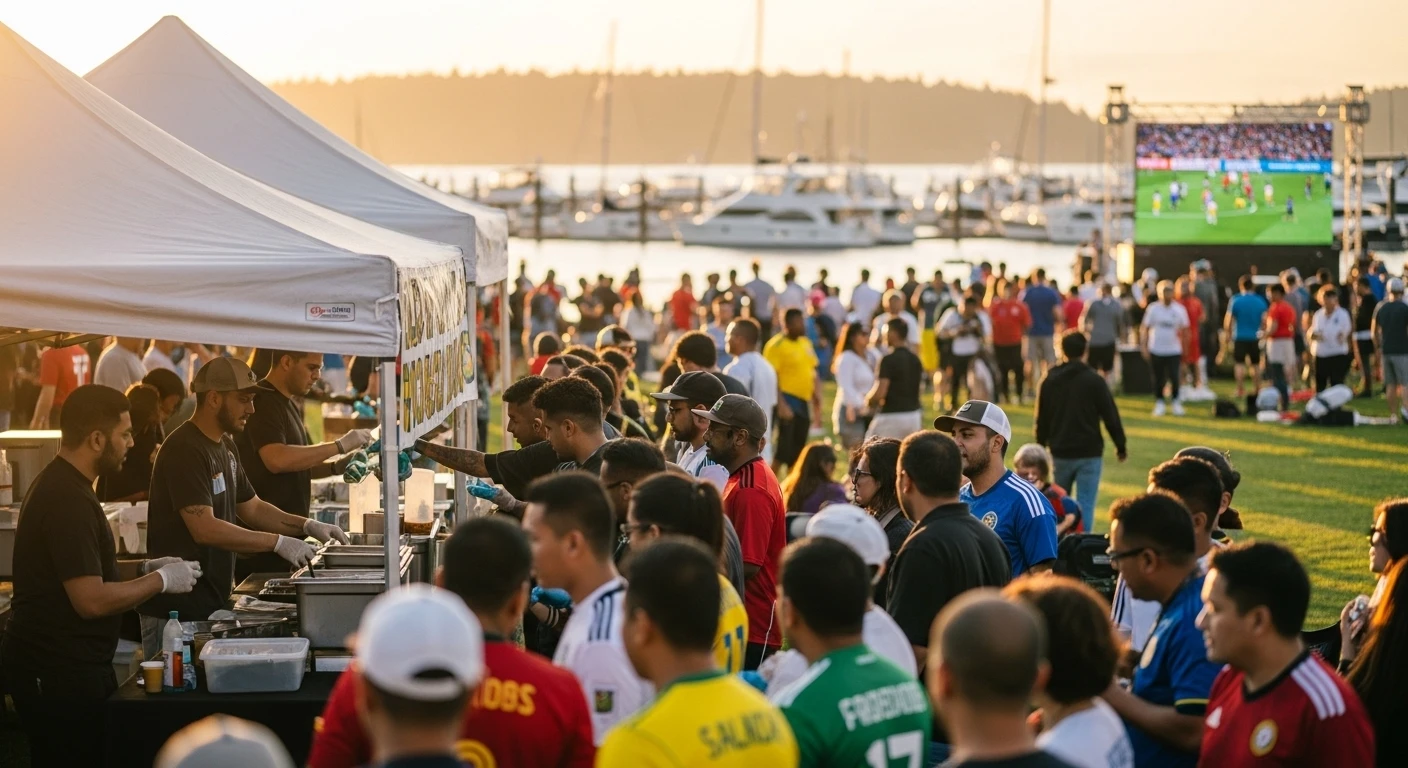
    Boxcar Park at the Port of Everett is an open waterfront venue with Port Gardner Bay as its backdrop. For the World Cup events, the city is setting up a large outdoor screen, local food and beverage vendors, live music, family-friendly activities, and community programming.

    Admission is free. Vendors from across Snohomish County have been recruited to serve the crowds — the City of Everett and Port put out an active vendor call for local food businesses interested in participating.

    Getting There: The Free Shuttle

    Everett Transit is running a free shuttle connecting Everett Station (the main transit hub at Smith Ave and Wetmore Ave) to downtown Everett and Boxcar Park. The shuttle is designed to reduce traffic pressure on the waterfront access roads and make the event accessible to attendees arriving via Sound Transit, Community Transit, or Sounder North commuter rail.

    For drivers, the Port of Everett waterfront parking area at the marina provides the closest access. Arrive early on USA match days — parking fills quickly during major waterfront events. The alternative is to park at Everett Station and take the free shuttle, which eliminates the waterfront parking crunch entirely.

    Why Everett Got a Fan Zone

    Seattle is hosting multiple FIFA World Cup matches at Lumen Field in June 2026. The regional organizing committee, SeattleFWC26, worked with cities across western Washington to establish official fan zones that would distribute World Cup energy beyond the immediate Seattle footprint.

    Everett’s waterfront — particularly Boxcar Park, which sits at the heart of the Port’s Waterfront Place mixed-use development — is tailor-made for an outdoor event of this scale. Port Gardner Bay provides a natural amphitheater effect; the existing food and hospitality businesses at the marina create an event ecosystem without requiring major temporary infrastructure.

    Mayor Cassie Franklin specifically highlighted the FIFA watch parties in her April 2026 State of the City address, calling the event series an opportunity to “welcome visitors and showcase Everett on a global stage.” With 400,000 annual visitors expected at the proposed Outdoor Event Center nearby, the World Cup watch parties function as a preview of Everett’s waterfront entertainment capacity.

    Frequently Asked Questions

    Is the Everett FIFA fan zone free?

    Yes. Admission to Boxcar Park for all four Everett World Cup watch parties is free. Food and beverage vendors on-site will charge for their offerings.

    Where exactly is Boxcar Park at the Port of Everett?

    Boxcar Park is located at the Port of Everett’s Waterfront Place marina area, on the north end of the Everett waterfront. The nearest address reference is the Port of Everett marina entrance at 1205 Marine View Dr, Everett, WA 98201. The park sits along Port Gardner Bay with direct water views.

    What matches is Everett showing at the FIFA World Cup fan zone?

    Four matches: Mexico vs. South Africa (June 11, noon), USA vs. Paraguay (June 12, 6 PM), Mexico vs. South Korea (June 18, 6 PM), and USA vs. Australia (June 19, noon). Fan zone opens two hours before kickoff and stays open two hours after the match ends.

    How do I get to the Everett waterfront fan zone by transit?

    Everett Transit is running a free shuttle from Everett Station (Sound Transit rail hub and Community Transit interchange at Smith Ave/Wetmore Ave) through downtown Everett to Boxcar Park. Sounder North commuter rail serves Everett Station from Seattle on weekday schedules; check Sound Transit for match-day service details.

    Is the Everett World Cup fan zone an official FIFA event?

    Yes. Everett is one of nine official fan zone locations in Washington State designated by SeattleFWC26 and FIFA’s regional organizing structure. The event is organized in partnership with the City of Everett, Port of Everett, and Snohomish County Sports Commission.

    Are there food options at the Everett fan zone?

    Yes — local vendors recruited specifically for the event will be on-site. The surrounding Port of Everett marina area also has permanent restaurants and food businesses. Arrive with time before kickoff to explore the waterfront dining options nearby.

    Can I bring kids to the Everett World Cup fan zone?

    Yes. The event includes family-friendly activities alongside the match screenings. Boxcar Park is an open outdoor venue accessible to all ages. Come early to get good viewing positions before the crowd builds on USA match days.

  • Everett Downtown Stadium: Inside the $38M Funding Gap

    Everett Downtown Stadium: Inside the $38M Funding Gap

    Q: Will the Everett downtown stadium actually get built?
    A: It is not guaranteed. The city council has not given final approval, and a $38 million funding gap must be closed first. Mayor Franklin is pursuing private investment and additional public funding. The city’s stated goal is 2027 construction start and 2028 opening for both the AquaSox and a prospective USL soccer team.

    The Everett Outdoor Event Center has a big number attached to it — $120 million — and an equally big problem: a $38 million gap between what the project costs and what the existing funding plan covers. Before a single parcel is acquired downtown, before DLR Group finalizes the design, and before the AquaSox or a USL soccer team signs a lease, that gap has to close.

    Here is exactly what the funding structure looks like, what needs to happen next, and what would cause the project to stall or fail.

    The Funding Stack as of April 2026

    The existing funding plan divides the $120 million roughly as follows: the City of Everett is responsible for approximately 45 percent of the total cost — about $54 million — funded through municipal bonds to be repaid by stadium revenue from baseball, soccer, and year-round events. The Everett AquaSox ownership group contributes approximately 9 percent, the prospective USL men’s and women’s soccer ownership groups contribute approximately 9 percent combined, the State of Washington contributes approximately 7 percent, and Snohomish County contributes approximately 4 percent.

    Those percentages add up to approximately $82 million of the $120 million. The $38 million gap is the difference between that figure and the full project cost — a gap that grew from an earlier estimate because construction costs across the Pacific Northwest have risen significantly since the original financial model was built.

    What Mayor Franklin Is Doing About the Gap

    At her March 5, 2026 State of the City address at the New Everett Theater on Colby Avenue, Mayor Cassie Franklin addressed the funding situation directly. The city’s strategy, as she described it: pursue private investment first — regional corporations and businesses whose brands would benefit from association with a new downtown anchor venue — then layer additional public bonds if the private raise falls short.

    The Everett Chamber of Commerce and the Everett Herald editorial board have both publicly backed the effort. The Herald’s editorial position is that the stadium’s role as a downtown economic catalyst justifies the funding effort; the Chamber’s is that a year-round event venue generates economic activity that benefits the entire business corridor along Hewitt Avenue and beyond.

    Three Things That Must Happen Before Council Votes

    City staff have been explicit about the sequencing. The council cannot vote to approve the project until: (1) a viable funding package is finalized and the $38 million gap is closed or credibly committed; (2) lease agreements with the AquaSox and USL tenant are executed; and (3) property acquisition is completed or under contract for the 28 privately owned parcels that make up the stadium footprint — everything except the buildings fronting Hewitt Avenue.

    The design-build team — DLR Group as designer, Bayley Construction as builder — is operating under a Progressive Design-Build contract. As of early 2026, the design is approximately 60 percent complete. The final design and budget package, which is what goes to council, is expected soon.

    The AquaSox Situation

    The AquaSox have been operating at Funko Field — formerly Everett Memorial Stadium — since 1984. Funko Field does not meet the updated MLB facility requirements that have been phased in for minor league affiliates. A new stadium is not optional for the team’s long-term future as a High-A affiliate of the Seattle Mariners. The AquaSox ownership group has committed to the downtown site and is actively engaged in lease negotiations.

    The USL expansion is an additional economic driver — two professional soccer teams (men’s and women’s) would use the stadium for additional dates, increasing the annual event count and the revenue used to service the city’s bonds. USL expansion decisions are pending the stadium’s approval, creating a chicken-and-egg dynamic that requires both the stadium deal and the franchise award to proceed together.

    What Would Cause This to Fail

    The project is genuinely at risk if the private investment raise comes up significantly short and the city is unwilling to absorb additional bonding capacity. With a 2027 construction start already the revised target (pushed from the original 2026 plan), any further delay compresses the timeline and risks the AquaSox’s MLB compliance window. Construction cost inflation remaining elevated also puts pressure on the $120 million estimate itself — if costs move higher before contracts are signed, the gap grows again.

    Frequently Asked Questions About the Everett Outdoor Event Center

    Q: Where is the Everett stadium going to be built?
    A: Downtown Everett, on a city block excluding the buildings fronting Hewitt Avenue. The site requires acquisition of 28 privately owned parcels.

    Q: Who is designing the Everett stadium?
    A: DLR Group is the design architect; Bayley Construction is the builder. They were selected through the city’s Progressive Design-Build process.

    Q: When would the Everett stadium open?
    A: The revised target is 2028, for both AquaSox baseball and USL soccer. Construction would start in 2027 if the funding and approvals land on schedule.

    Q: What sports teams would play at the new Everett stadium?
    A: The Everett AquaSox (High-A, Seattle Mariners affiliate) and prospective USL men’s and women’s soccer expansion teams.

    Q: How much is the City of Everett contributing to the stadium?
    A: Approximately 45 percent of the $120 million total, or about $54 million, funded through municipal bonds repaid by stadium revenue.

    Q: Is the stadium replacing Funko Field?
    A: Yes. The AquaSox would move from Funko Field (formerly Everett Memorial Stadium) to the new downtown venue, which meets updated MLB facility requirements. The future of Funko Field after the AquaSox depart has not been publicly determined.

    Related: Everett’s Downtown Stadium Price Tag Climbs to $120M | AquaSox 2026 Season Preview | Exploring Everett

  • Everett Downtown Stadium: Business & Real Estate Impact

    Everett Downtown Stadium: Business & Real Estate Impact

    Q: Should I factor the Everett stadium into my business or real estate decisions?
    A: Cautiously yes — but the project is not yet approved and has a $38 million funding gap. The stadium would be a significant downtown anchor if built, likely increasing foot traffic on Hewitt Avenue and adjacent blocks. However, the 2028 earliest opening means any business positioning around the venue is a 2-3 year horizon play.

    If you own a business or investment property in downtown Everett — or you are considering one — the Outdoor Event Center is the biggest real estate and economic development variable on the board. Here is an honest look at what the stadium actually means for the business environment and what the $38 million funding gap means for your planning timeline.

    The Anchor Effect: What a Downtown Stadium Does

    Sports venue research consistently shows that a well-integrated downtown stadium generates pre-game and post-game foot traffic that benefits restaurants, bars, and retail within approximately a half-mile radius. The Everett Outdoor Event Center’s downtown location — on a block accessible from Hewitt Avenue — puts the stadium’s foot traffic catchment zone directly over the Broadway District, the Hewitt Avenue commercial corridor, and within walking distance of Everett Station.

    The AquaSox play approximately 66 home games per season in High-A season — May through September. Add USL men’s and women’s soccer seasons, concerts, and year-round events, and the venue could be active 100+ nights per year. That is a meaningful driver for hospitality businesses that currently depend on the more sporadic event schedule at Angel of the Winds Arena and the Everett Theatre.

    Real Estate: Which Blocks Benefit Most

    The blocks immediately adjacent to the stadium site — along Hewitt between Rockefeller and Hoyt, and south along the numbered avenues — are the primary beneficiaries of a proximity premium if the stadium is built. Commercial properties suitable for sports bars, brewpubs, quick-service restaurants, and parking are the highest-demand adjacent uses in comparable markets.

    Commercial real estate along Hewitt has seen modest but real activity in the 2024-2026 period as the stadium project has moved through planning stages. Speculative positioning — buying or leasing before the deal is confirmed — carries meaningful risk given the $38 million funding gap. However, operators with existing downtown Everett presence should be thinking about how their locations map to the stadium footprint.

    The Private Investment Ask: Opportunity or Obligation?

    Mayor Franklin’s funding strategy explicitly targets private investors — regional corporations and businesses — as the first source to close the $38 million gap. Naming rights to the stadium, sponsorship tiers, and corporate partnership packages are the expected vehicles. For the right business, a naming or presenting sponsor position at a downtown Everett sports and entertainment venue could be a compelling brand investment in a market of 114,000 city residents and a metro catchment far larger.

    The Everett Chamber of Commerce is actively engaged in the stadium’s advocacy and fundraising conversation. Business owners who want to be at the table for sponsorship discussions should be in contact with the Chamber now, ahead of any formal ask structure being finalized.

    The Risk Calculus

    The stadium is not approved. The $38 million must be raised. Three preconditions — funding closure, lease execution, and property acquisition — must all be met before the city council votes. Any one of those three items can stall or kill the project. The design is 60 percent complete; construction is planned to start in 2027 with an opening targeted for 2028.

    Business investment decisions that depend on stadium traffic by, say, 2027 or early 2028 are high-risk. Business decisions that position you for the 2028+ environment — with the stadium as a probable but not certain tailwind — are more defensible. The sound strategy for most downtown operators is to build a business that works with or without the stadium, while keeping the stadium in your 3-year growth planning.

    Frequently Asked Questions for Business Owners and Developers

    Q: Who do I contact if I want to be a stadium sponsor or investor?
    A: The City of Everett’s Economic Development office and the Everett Area Chamber of Commerce are the primary points of contact for private investment conversations about the Outdoor Event Center.

    Q: What happens to the 28 parcels being acquired for the stadium site?
    A: The City of Everett will negotiate acquisition of the 28 privately owned parcels making up the stadium block. Property owners on that block are in active discussions with the city. Existing buildings fronting Hewitt Avenue are excluded from the acquisition.

    Q: Will there be parking requirements near the stadium?
    A: Parking for the new stadium is planned to use existing downtown parking structures and surface lots rather than stadium-specific new parking. This is standard for urban infill venues and has implications for nearby parking operators and garages.

    Q: What is the timeline for the stadium project?
    A: The revised timeline: funding/lease/acquisition complete (2026), construction start (2027), opening for AquaSox and USL (2028).

    Q: Is Hewitt Avenue infrastructure being upgraded as part of the stadium project?
    A: Street and utility infrastructure improvements associated with the stadium site are part of the city’s project scope, though specific scope details are still in design. The Imagine Everett comprehensive plan includes broader downtown infrastructure investment that overlaps with the stadium area.

    Related: Everett’s $120M Stadium Gap: What Has to Happen Before Ground Breaks | Everett’s Downtown Stadium Price Tag Climbs to $120M | Exploring Everett

  • Everett Downtown Stadium: 2028 Visitor Guide & Updates

    Everett Downtown Stadium: 2028 Visitor Guide & Updates

    Q: Can I see the AquaSox or a soccer game at the new Everett stadium?
    A: Not yet. The Everett Outdoor Event Center has a 2028 opening target, pending a $38 million funding gap being closed and city council approval. In the meantime, the AquaSox are playing their 2026 season at Funko Field, with tickets typically $10-$22 per seat.

    If you are a sports fan planning trips to Snohomish County — or you are looking at Everett as a Seattle-area weekend destination — the planned Outdoor Event Center is the biggest development to know about. It is not built yet. But it represents a transformation of the downtown sports and entertainment scene that would make Everett a day-trip or overnight destination in a way it has not been before.

    What the New Stadium Is

    The Everett Outdoor Event Center is a $120 million multipurpose stadium planned for a downtown block accessible from Hewitt Avenue. It would be the new home of the Everett AquaSox — the High-A West affiliate of the Seattle Mariners — and would host men’s and women’s professional soccer teams from USL expansion franchises. DLR Group is the designer; Bayley Construction is the builder. The design is currently about 60 percent complete, with construction targeting 2027 and an opening for the 2028 baseball and soccer seasons.

    The location matters for visitors. Downtown Everett is within walking distance of Everett Station (Sounder train from Seattle), multiple hotel options, the Hewitt Avenue restaurant corridor, and a 10-minute drive from Port of Everett’s Waterfront Place restaurant row. A game day in downtown Everett — if the stadium is built — sets up the kind of pre-and-post-game experience that currently doesn’t exist in Snohomish County.

    Why Visitors Come to Everett Now

    While the stadium is still years away, Everett is already worth visiting for sports fans. The AquaSox are playing their 2026 season at Funko Field — tickets typically run $10-$22, the sightlines are excellent, and the team is fielding a competitive roster that includes five Seattle Mariners top-30 prospects. The Everett Silvertips are in WHL Playoff Round 2 right now, facing the Kelowna Rockets with Games 1 and 2 at Angel of the Winds Arena on April 10-11 — a hockey playoff atmosphere that rivals much larger markets.

    The Port of Everett’s Waterfront Place has emerged as a genuine destination. The Net Shed Fish Market and Kitchen (opened December 2025), Tapped Public House (opened March 2026, with the largest waterfront rooftop deck in Snohomish County), and Anthony’s HomePort anchor a restaurant row on the water that is already drawing visitors from Seattle and the broader Puget Sound.

    Getting to Everett from Seattle

    Everett is approximately 25 miles north of Seattle via I-5 — typically a 35-55 minute drive depending on traffic. The Sounder North commuter train runs from King Street Station (Seattle) to Everett Station in approximately 65 minutes; check Sound Transit’s schedule as frequency is limited compared to Sounder South. From Everett Station, the downtown stadium site, Angel of the Winds Arena, and Funko Field are all within a rideshare-accessible radius.

    For visitors arriving by car, downtown Everett has surface parking and parking structures with reasonable rates — typically $5-$10 for event parking in adjacent lots. The waterfront is a short drive from downtown or an easy rideshare from the stadium area.

    What a Game Day in 2028 Everett Could Look Like

    If the stadium project closes its funding gap and opens on schedule in 2028, a visit to Everett for a game would look something like this: arrive at Everett Station on the Sounder, walk to the Hewitt Avenue restaurant corridor for pre-game food and drinks, walk to the stadium for an AquaSox game or USL soccer match in a brand-new downtown venue, then walk or rideshare to the waterfront for post-game dinner at the Net Shed or Tapped. That is a full-day itinerary anchored by a mid-size city event infrastructure that competes credibly with minor league markets across the Pacific Northwest.

    Frequently Asked Questions for Visitors and Sports Fans

    Q: Where are the AquaSox playing in 2026?
    A: Funko Field (formerly Everett Memorial Stadium) at 3802 Broadway. Tickets are available at the AquaSox website. The new downtown stadium is targeted for 2028.

    Q: Where do the Everett Silvertips play hockey?
    A: Angel of the Winds Arena, 2000 Hewitt Ave, Everett. WHL Playoff Round 2 home games April 10-11, 2026. The arena holds approximately 10,000 fans.

    Q: What is the best waterfront restaurant in Everett?
    A: The Net Shed Fish Market and Kitchen at Port of Everett’s Restaurant Row is getting strong early reviews — the miso-glazed sablefish is the standout dish. Tapped Public House has the best rooftop deck on the Snohomish County waterfront.

    Q: Is there a hotel near the Everett stadium site?
    A: Downtown Everett has the DoubleTree by Hilton and other lodging within walking distance of the planned stadium site. Multiple chain hotels are also located near Paine Field, approximately 5 miles from downtown.

    Q: What is Funko HQ and can I visit it?
    A: Funko’s global headquarters is in Everett, and the company operates a retail store and museum (the Funko Hollywood concept, originally at the Everett HQ) open to the public. It is a popular destination for fans of collectibles and pop culture merchandise.

    Related: Everett’s $120M Stadium: What Has to Happen Before Ground Breaks | AquaSox 2026 Season Preview | Silvertips Enter WHL Round 2

  • Millwright District Everett: Phase 2 Waterfront Guide

    Millwright District Everett: Phase 2 Waterfront Guide

    Q: What is the Millwright District in Everett?
    A: The Millwright District is the 10-acre second and largest phase of the Port of Everett’s Waterfront Place development. Built by private development partner Lincoln Property Company (LPC West) under a long-term ground lease with the Port, Phase 2 will deliver 300+ residential units, 60,000+ square feet of retail and restaurant space, and 200,000+ square feet of commercial and office space on Everett’s working waterfront. Construction began in late 2025 with units targeted to deliver starting in 2026.

    Everett’s waterfront has been one of the Pacific Northwest’s most ambitious urban transformation projects for the better part of a decade. Phase 1 of the Port of Everett’s Waterfront Place is now delivering — Restaurant Row is open, Tapped Public House debuted in March 2026, and the Net Shed Fish Market has been drawing crowds since December 2025. But the bigger transformation hasn’t started yet.

    The Millwright District — Phase 2 of Waterfront Place — is a full 10-acre neighborhood being built from scratch on Everett’s working waterfront. Here is what it is, who’s building it, what will be there, and why it matters for the city.

    Scale: What 10 Acres on a Waterfront Actually Means

    The Millwright District sits within the Port of Everett’s 65-acre Waterfront Place project, which is the Port’s $1 billion-plus bet on transforming industrial waterfront land into a mixed-use urban neighborhood. Phase 1 — Restaurant Row and its associated retail — delivered the hospitality anchor. Phase 2 is the residential and commercial core.

    The program for the Millwright District includes:

    • 300+ residential units — waterfront apartment homes on the marina edge
    • 60,000+ square feet of retail and restaurant space — a full neighborhood commercial district supporting the residential population and the broader waterfront draw
    • 200,000+ square feet of commercial and office space — bringing employers directly to the waterfront, something Everett’s downtown has struggled to do at scale

    These aren’t renderings or projections waiting for financing. Lincoln Property Company (LPC West), the Port’s selected private development partner, has an exclusive negotiating agreement and long-term ground lease with the Port. The first residential building’s groundbreaking was targeted for late 2025, and units are expected to begin delivering in 2026.

    Who Is Building It and Why That Matters

    The Port of Everett selected LPC West — the West Coast operating unit of Lincoln Property Company, one of the largest real estate firms in the United States — through a competitive process in late 2021. Lincoln Properties has a significant Pacific Northwest portfolio; its selection was a signal that the Port was serious about executing Phase 2 at scale with a developer who has the balance sheet and track record to deliver.

    The ground lease structure matters for understanding the project’s long-term economics. LPC West leases the land from the Port rather than purchasing it. The Port retains land ownership while the developer builds and operates the improvements. This arrangement generates long-term ground rent revenue for the Port while enabling private capital to fund the construction — a model that protects the public investment while allowing the development to happen faster than the Port could finance it alone.

    The Design: History Built Into the Architecture

    The Millwright District name reflects the site’s industrial heritage — this area of Everett’s waterfront once supported a booming lumber and shingle mill industry. The design team has embedded that history into the neighborhood’s physical form: architectural elements and street names reference the mill era, and a focal point of the district is a “workman’s clocktower” designed to resemble a smokestack, inspired by the Dey Time Register that mill workers used to punch in and out.

    The public realm design includes Timberman Trails — four connecting courtyards — and Champfer Woornerf, a “living street” designed to accommodate events like festivals and pop-up markets. The goal is a neighborhood that functions as a destination, not just a place where people happen to live.

    The marina edge location is the defining feature. Residents in the 300+ units will have waterfront access that doesn’t exist anywhere else in the Snohomish County housing market at this scale.

    What’s Already There: Phase 1 Sets the Stage

    Understanding Phase 2 requires understanding what Phase 1 has already delivered. Restaurant Row at Waterfront Place is now anchored by several tenants:

    • Tapped Public House — opened March 2, 2026, with what is claimed to be Snohomish County’s largest open-air rooftop deck
    • The Net Shed Fresh Fish Market and Kitchen — open since December 2025, already developing a strong local following for its waterfront fish market and miso-glazed sablefish
    • Rustic Cork Wine Bar — established Waterfront Place tenant
    • Marina Azul Cocina and Cantina — announced for 2026, bringing elevated Mexican food and 100+ tequilas to Restaurant Row

    The food and beverage foundation is solid. Phase 2’s residential population will walk directly to these restaurants — and the commercial and office space in the Millwright District will bring a daytime workforce population that sustains the restaurants beyond weekend tourist traffic.

    Connection to the Larger Picture

    The Millwright District is one of three major structural changes reshaping Everett’s downtown and waterfront simultaneously. The other two: the proposed $120 million downtown stadium (currently facing a $38 million funding gap) and Sound Transit’s Everett Link Extension (targeting a 2037 Paine Field opening). If all three execute on their timelines, Everett’s waterfront and downtown in 2030 will look nothing like the Everett of 2020.

    The Millwright District is the piece with the most secured private capital behind it and the clearest execution path. The stadium and light rail are subject to public funding approvals and political processes. Lincoln Properties’ ground lease is a private commitment with a contractual obligation to perform.

    Frequently Asked Questions About the Millwright District

    Q: When will the Millwright District apartments be ready to lease?
    A: The first residential building’s groundbreaking was targeted for late 2025 into early 2026. Units are expected to begin delivering in 2026, with full build-out over several years as the phased development completes. Watch the Port of Everett’s official communications for specific leasing timelines as they are announced.

    Q: Who is Lincoln Property Company?
    A: Lincoln Property Company is one of the largest real estate companies in the United States. LPC West is its West Coast operating unit, active in Washington, Oregon, California, and Idaho since 2005. The company was selected by the Port of Everett through a competitive RFP process in 2021.

    Q: Will there be affordable housing in the Millwright District?
    A: The Millwright District is a market-rate development under a private ground lease. Specific affordability requirements, if any, are governed by the terms of the ground lease agreement between LPC West and the Port of Everett. No public affordability set-aside has been announced.

    Q: What is the total cost of the Waterfront Place project?
    A: The Port of Everett has described Waterfront Place as a $1 billion-plus transformation of 65 acres of working waterfront. The Millwright District represents a significant portion of that investment, with construction funded primarily through private capital from Lincoln Properties under the ground lease structure.

    Q: How does the Millwright District connect to the rest of downtown Everett?
    A: The waterfront is approximately a 10-15 minute walk from Everett’s downtown core along Grand Avenue and the waterfront trail system. A planned hotel component within Waterfront Place and the potential addition of light rail connectivity via the Sound Transit Everett Link Extension (targeting 2037) would strengthen that connection over time.

    Q: What businesses will be in the Millwright District’s retail space?
    A: Specific tenants for the 60,000+ square feet of retail and restaurant space have not been publicly announced as of spring 2026. Leasing for the commercial and retail components is expected to be announced as construction progresses. The existing Restaurant Row restaurants at Phase 1 are immediately adjacent to the Millwright District footprint.

    Related: Everett’s $120M Stadium Has a $38M Funding Gap: Here’s the Full Breakdown | The Net Shed Fish Market and Kitchen: Three Months In, It’s Worth the Hype | Marina Azul Cocina and Cantina Is Coming to Everett’s Waterfront