Tag: Waterfront Place

  • The Everett WA Waterfront: A Visitor’s Guide to Boxcar Park, the Marina & Port Gardner Bay

    The Everett WA Waterfront: A Visitor’s Guide to Boxcar Park, the Marina & Port Gardner Bay

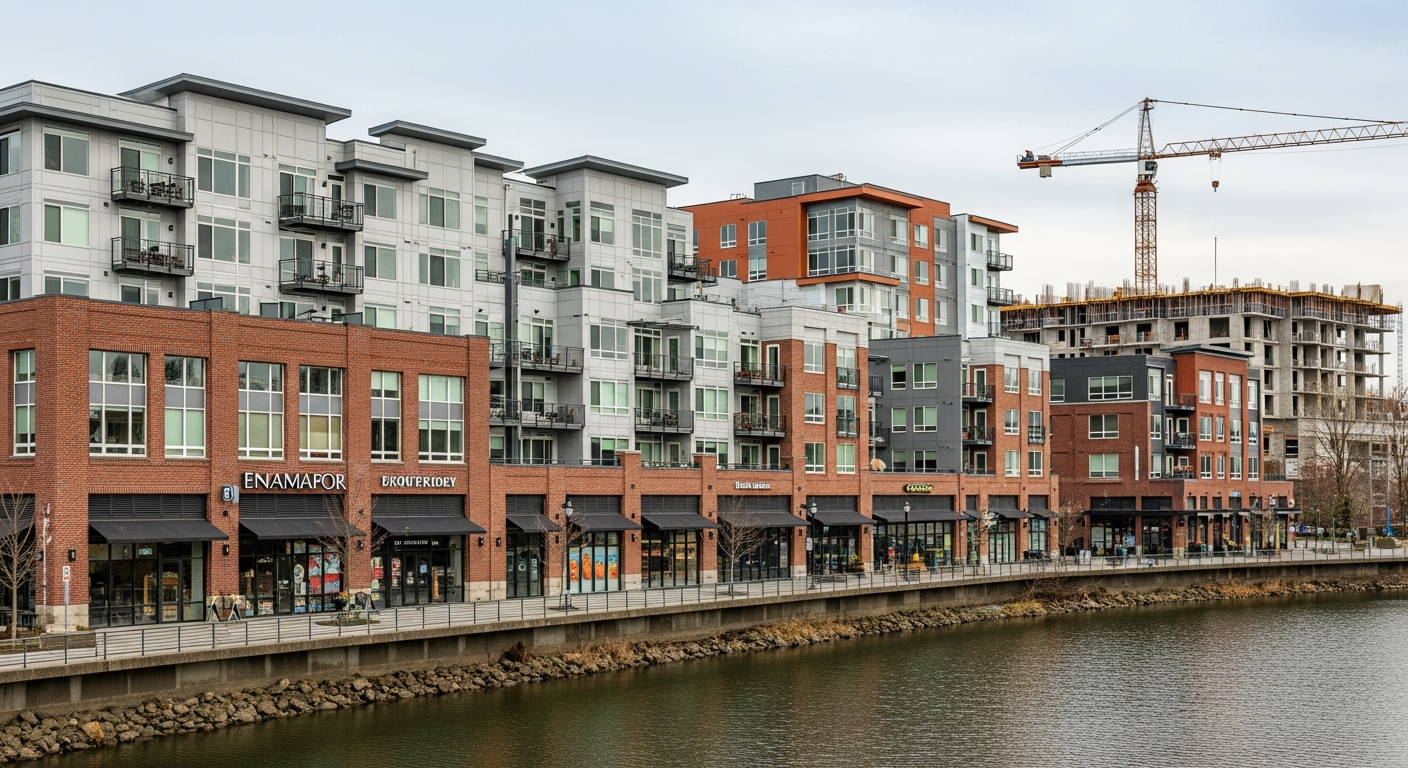
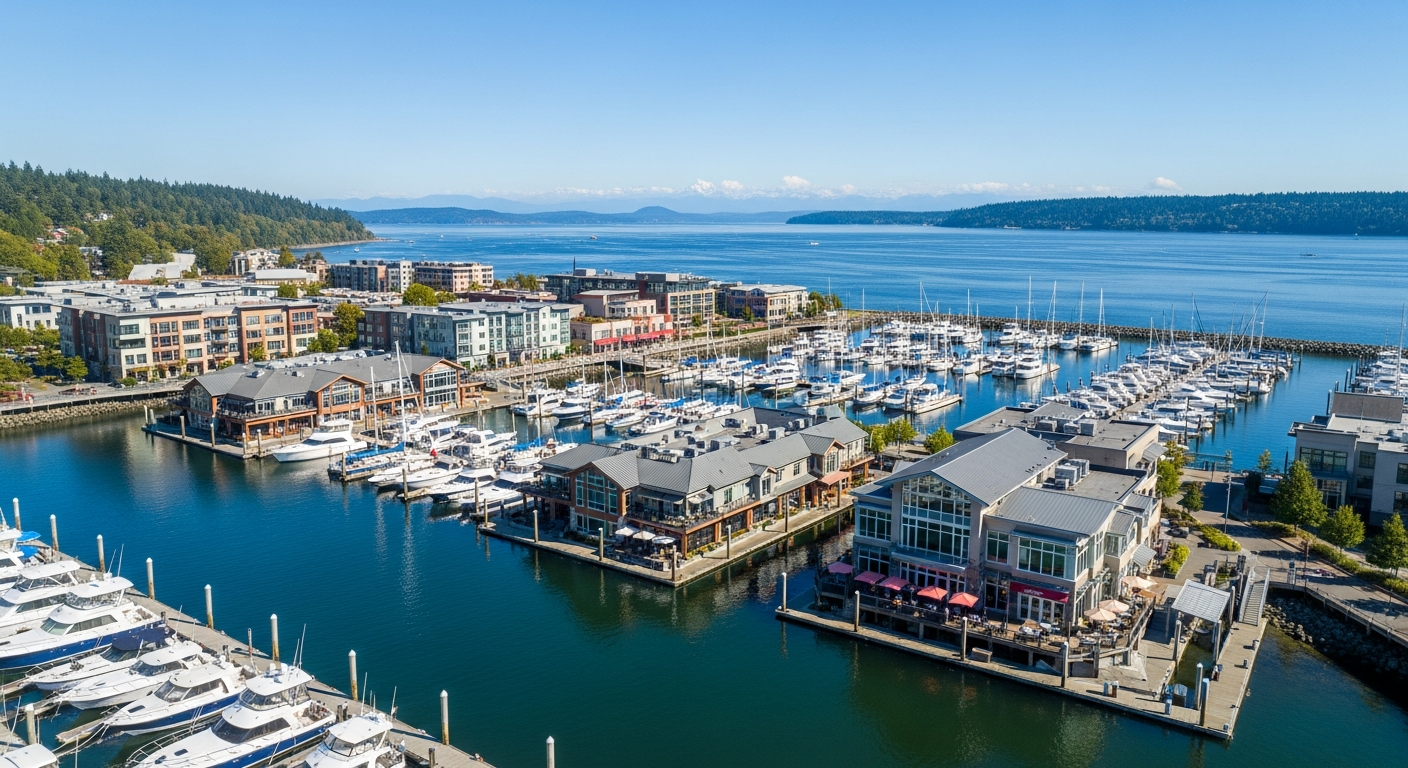
    The Everett WA waterfront is the city’s saltwater front door: a working marina, a public park-lined esplanade, and an open sweep of Port Gardner Bay looking out toward Whidbey Island and the Olympics. It has grown from a quiet boat-and-rail district into one of the most walkable destinations in Snohomish County, anchored by Boxcar Park, the Port of Everett’s marina, and seasonal ferry access to Jetty Island. This guide covers what’s down there, how to get around, and how to spend an afternoon by the water.

    Quick answer: The Everett WA waterfront sits along Port Gardner Bay on the west side of the city, centered on the Port of Everett marina and the Waterfront Place district. The main things to do are walking the public esplanade, hanging out at Boxcar Park, watching boats and sunsets over the bay, and (in summer) riding the free passenger ferry to Jetty Island. It’s free to visit and open year-round, with public parking near the marina.

    Where Is the Everett WA Waterfront?

    The Everett WA waterfront runs along the eastern shore of Port Gardner Bay, the body of water where the Snohomish River meets Possession Sound and the larger Puget Sound. It’s on the west side of downtown Everett, a short drive from Interstate 5, and is managed largely by the Port of Everett, a public agency that operates the marina, the surrounding parks, and the mixed-use Waterfront Place development of apartments, shops, and restaurants.

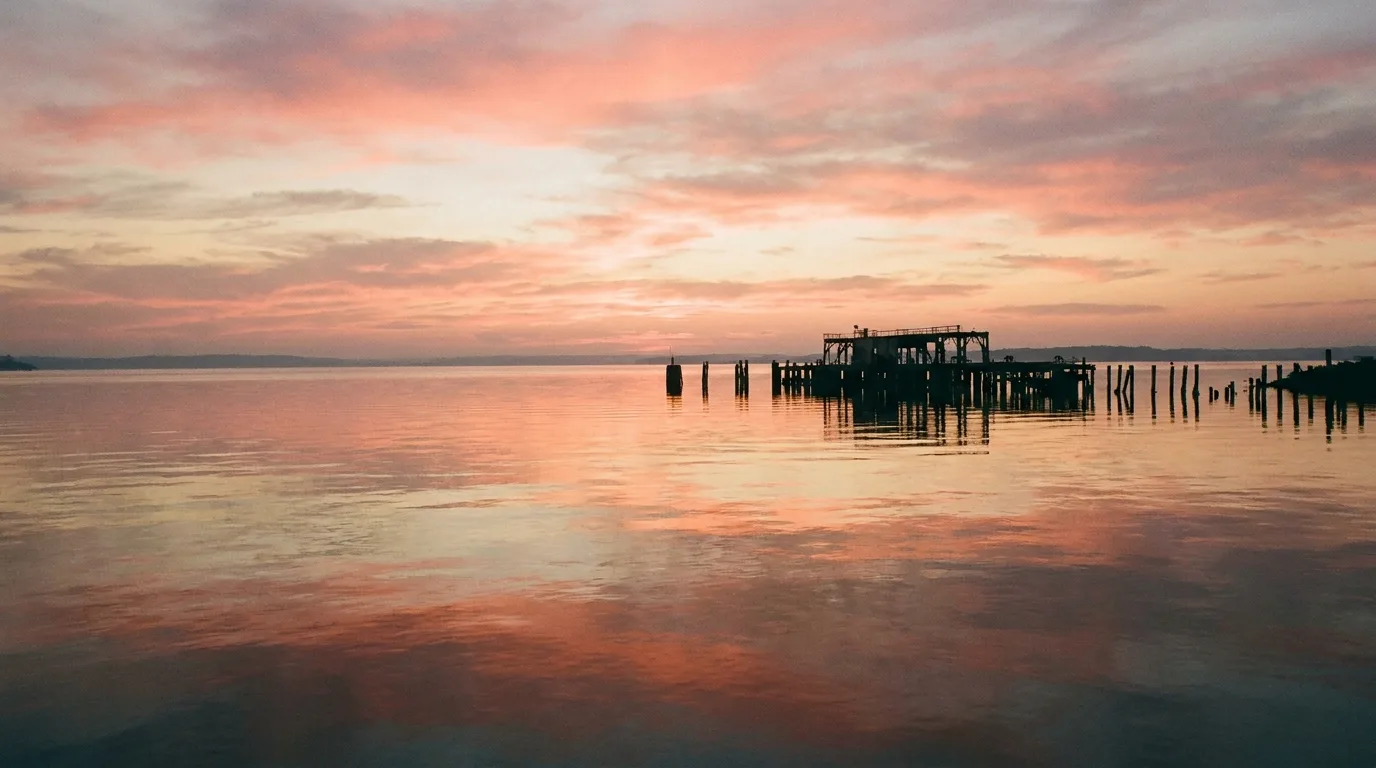
    The setting is the draw. Looking west across the bay, you see Jetty Island in the foreground, Whidbey Island beyond it, and on a clear day the Olympic Mountains on the horizon. To the north, the river delta opens into a maze of channels and wildlife habitat. Because the marina faces west, it is one of the better sunset spots in the region.

    Boxcar Park: The Waterfront’s Front Lawn

    Boxcar Park is a centerpiece public green space of the Everett waterfront and one of the easiest places to start a visit. Named in a nod to the area’s rail heritage, it’s a grassy point at the north end of the marina district built for people to gather, picnic, and take in the view across Port Gardner Bay.

    What makes Boxcar Park worth the stop:

    • Open lawn and seating with direct, unobstructed views of the bay and, on a clear day, the Olympics
    • A relaxed, dog-friendly atmosphere — it’s a popular gathering spot and serves as the staging area for the Jetty Island ferry in summer
    • A shelter for shade and weather, handy on a breezy or drizzly day
    • Proximity to the marina boardwalk, so you can combine a park visit with a waterfront walk
    • Sunsets and kite-flying — the open exposure and steady bay breeze make it a local favorite for both

    It’s a low-key spot rather than a playground-and-amenities mega-park, which is exactly its appeal: bring a blanket, a coffee, or takeout and watch the water. For current hours and any event closures, check the City of Everett or Port of Everett parks listings.

    The Port of Everett Marina and the Esplanade Walk

    The Port of Everett marina is the heart of the waterfront and one of the largest public marinas on the West Coast, home to a large fleet of recreational and commercial vessels. You don’t need a boat to enjoy it — the public esplanade and boardwalk let anyone walk right along the water’s edge past the slips.

    Walking the waterfront

    The marina-side promenade is flat, paved, and stroller- and wheelchair-friendly, making it the best way to experience the Everett waterfront on foot. A typical loop links Boxcar Park, the marina boardwalk, and the Waterfront Place plaza, with benches and public art along the way. Expect to see:

    • Rows of moored sailboats and motor yachts, plus the occasional fishing or charter vessel heading out
    • Public viewpoints and pocket plazas built into the development
    • Restaurants and a bakery opening onto the water (see below)
    • Boat launches and guest moorage for visiting boaters

    On-water recreation

    Beyond walking, the marina is a launch point for getting onto the water. Kayak and small-craft rentals, fishing charters, whale-watching trips, and sailing are all part of the Port Gardner scene in season. Operators and schedules change year to year, so confirm what’s currently running with the Port of Everett before planning an on-water outing.

    Jetty Island: A Free Summer Ferry Ride

    Jetty Island is the long, low, largely man-made island just offshore from the marina, and reaching it is one of the signature Everett waterfront experiences. It offers a long stretch of sandy beach, shallow sun-warmed tide flats that are unusually swimmable for Puget Sound, dunes, and excellent birdwatching — there are no permanent buildings, just open natural shoreline.

    The key thing to know: during the summer season, the City of Everett runs a free passenger ferry from the waterfront over to Jetty Island. Important planning notes:

    • The ferry is seasonal (summer only) and typically requires a reservation for the short crossing — walk-up availability can be limited
    • There are no stores and limited or no drinking water and restrooms on the island, so bring water, sun protection, and anything else you’ll need
    • It’s a day-use destination with no overnight access
    • Outside the ferry season, the island is reachable only by private boat or kayak

    Because dates, reservation rules, and any fees are set each year, always confirm the current season and booking process through the City of Everett’s Jetty Island ferry information before you go.

    Port Gardner Bay Views and What Else to Do

    Port Gardner Bay is the scenic payoff of the entire Everett waterfront, and simply taking in the view is a legitimate reason to visit. Beyond the park and the ferry, here’s how people round out a waterfront day:

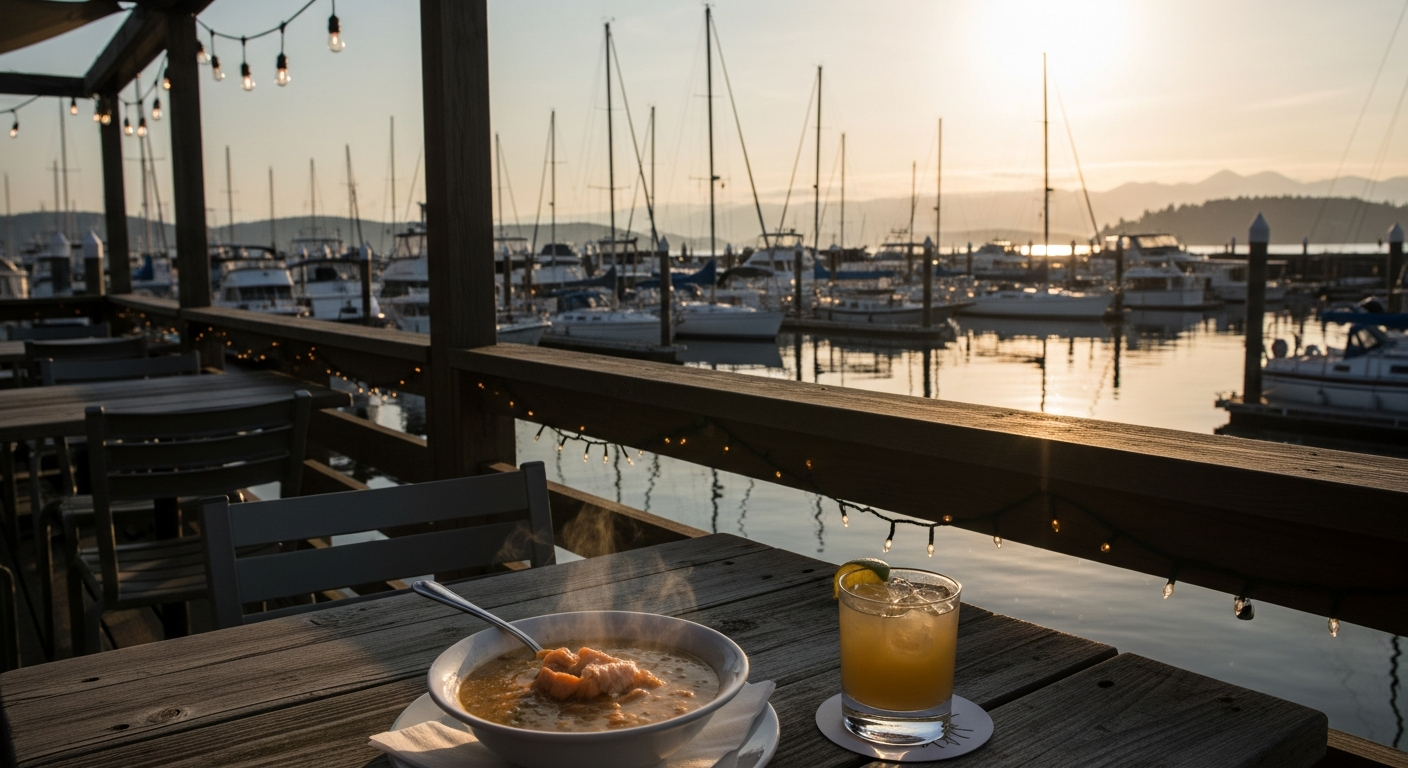
    • Sunset watching — the west-facing marina and Boxcar Park glow at golden hour over the water and, on clear evenings, the Olympics
    • Wildlife and birding — seals, herons, eagles, and shorebirds are common along the delta and the jetty
    • Festivals and events — the waterfront hosts seasonal markets, music, and community events; check the Port of Everett events calendar for current listings
    • Photography — the boats, the bay, and the mountain backdrop make this one of Snohomish County’s most photogenic spots
    • A meal by the water — the district has grown into a genuine dining destination (see below)

    Where to eat on the Everett waterfront

    This guide focuses on the waterfront as a place to go, but the food down there deserves its own visit. The Waterfront Place district has added sit-down restaurants and a bakery that open onto the water, well suited to a coffee-and-pastry stop before a walk or a meal after one. Because the lineup of businesses changes as the district grows, check the Port of Everett or Waterfront Place directory for what’s currently open, and watch this site for our dedicated waterfront restaurant write-ups.

    Visiting Tips: Parking, Access, and Best Time to Go

    • Getting there: The waterfront is a short drive from I-5 via the Marine View Drive corridor on the west side of the city; signage points to the marina and Waterfront Place.
    • Parking: There is public parking near the marina and Waterfront Place. Lots can fill on summer weekends and event days, so arrive early and check the Port of Everett site for current locations and any rates.
    • Accessibility: The esplanade and main boardwalk are paved and level, suitable for strollers and wheelchairs.
    • Best time to go: Summer for the Jetty Island ferry and warm tide flats; late afternoon year-round for sunsets over the bay. Dress in layers — the bay breeze runs cool even on warm days.
    • Dogs: Leashed dogs are generally welcome along the waterfront and at Boxcar Park; the Jetty Island ferry and island have their own pet rules, so check ahead.

    Frequently Asked Questions About the Everett WA Waterfront

    What is there to do at the Everett WA waterfront?

    At the Everett waterfront you can walk the public esplanade along the marina, relax at Boxcar Park, take in Port Gardner Bay and Olympic Mountain views, ride the seasonal free ferry to Jetty Island, and eat at waterfront restaurants. On-water options like kayaking, fishing charters, and whale watching are available in season through Port of Everett operators.

    Is Jetty Island free, and how do you get there?

    Jetty Island itself is free to enjoy, and in summer the City of Everett runs a free passenger ferry to it from the waterfront. The ferry is seasonal and typically requires a reservation for the short crossing. Outside the summer ferry season, the island is only reachable by private boat or kayak. Confirm current dates and booking details with the City of Everett.

    Is there parking at the Everett marina and waterfront?

    Yes. There is public parking near the Port of Everett marina and the Waterfront Place district. Spaces can fill quickly on summer weekends and during festivals or events, so arriving early is recommended. Check the Port of Everett website for current parking locations and any rates.

    What is Boxcar Park in Everett?

    Boxcar Park is a public waterfront green space at the north end of the Port of Everett marina, named for the area’s rail history. It offers open lawn, seating, bay and mountain views, and serves as the summer staging area for the Jetty Island ferry. It’s a popular, low-key spot for picnics, sunsets, and kite-flying.

    When is the best time to visit the Everett waterfront?

    Summer is best for the Jetty Island ferry and the island’s warm, swimmable tide flats, while late afternoon and golden hour are ideal year-round for sunsets over Port Gardner Bay. Weekday visits avoid the busiest parking. Bring layers, since the bay breeze stays cool even on warm days.

  • What 15 Years and $350 Million Built: The Port of Everett Story That Other Cities Are Now Studying

    What 15 Years and $350 Million Built: The Port of Everett Story That Other Cities Are Now Studying

    What does a successful waterfront transformation actually look like? The Port of Everett spent 15 years and $350 million finding out — surviving a developer bankruptcy, a recession, and its own false starts. Today, Cascadia Daily News named it the regional blueprint other cities are studying. Here is the full story of how Everett got here, and what comes next.

    A Major Pacific Northwest Outlet Just Called Port of Everett the Waterfront Model

    Cascadia Daily News, the Pacific Northwest’s most-read regional outlet, published a deep feature today as part of its four-part “Sea Change” series examining waterfront redevelopment across Western Washington. Part two focuses entirely on the Port of Everett’s Waterfront Place — and it positions Everett as the benchmark that other ports, including Bellingham, are now studying.

    The headline says it plainly: “After a bankrupt developer and broken promises, Port of Everett is realizing its waterfront vision.” The subheading: “15 years and $350 million turned 65-acre windfall into restaurants, housing and marine trades.”

    For those of us who live here, it’s easy to take the waterfront for granted. A Thursday evening in the rain, there’s still a line out the door at Tapped Public House. Families are walking the esplanade. Boats are in the marina. But to understand what we’re actually standing on, it helps to know the story of how this almost never happened — and the lessons Everett is now teaching to other communities wrestling with the same questions.

    The Bankruptcy That Changed Everything

    In 2005, the Port of Everett made what seemed like a reasonable bet. It sold 65 acres of prime north marina waterfront land to Maritime Trust Co., a Chicago-based developer, for a planned $400 million mixed-use redevelopment. The vision: 600 housing units, retail, office space, boat moorage, and light industrial boat businesses on land that had been dominated by mills and fishing since Everett’s founding.

    Maritime Trust had development capabilities, but Lisa Lefeber — now the Port of Everett’s executive director, then a communications specialist — says the firm never quite got Everett. Some of their conceptual ideas drew on Vancouver’s Granville Island for inspiration, which she described as “a disconnect” from what this community actually was.

    Then 2008 happened. Maritime Trust lost its main financier, Merrill Lynch, when the Great Recession hit. The developer filed for bankruptcy. The Port of Everett spent years in federal bankruptcy court to win back those 65 acres — land that had once been theirs, land that the community had entrusted them to steward well.

    By 2012, the port had the land back. And a decision to make.

    The Pivot That Made the Difference: No Master Developer

    The most important strategic choice the Port of Everett made after the bankruptcy wasn’t a design decision. It was a control decision: this time, the port would not sell the land. It would retain ownership, lease to tenants and developers, and remain the anchor of the waterfront’s direction.

    “When you don’t control the property, you don’t control how the site is used in terms of housing,” Lefeber told Cascadia Daily News. Maritime Trust, she noted, had wanted to turn the waterfront into “a private residential development” — the antithesis of why Washington state ports were created in the first place.

    The port also made another unconventional move: it built out streets and utilities across the waterfront before tenants arrived. The goal was to “show value and proof of concept” and draw in the first housing development. It worked. The infrastructure investment de-risked the site for private partners and gave developers something tangible to build against.

    The third shift was community engagement. Rather than hand the vision to an outside firm, the port went back to Everett residents to ask what they actually wanted. “We want it all,” Lefeber said in the CDN feature, describing the port’s philosophy. “We want industry. We want a place for people and families to be able to play and work and live. One of our big philosophies is a working waterfront.”

    What $350 Million Built

    Fifteen years and $350 million later — $175 million from private partners (hotel and apartment construction) and $175 million from a mix of federal grants, state funding, and Port of Everett financing and revenue — Waterfront Place encompasses five districts on and around the north marina.

    Fisherman’s Harbor anchors the public-facing side: the “Restaurant Row” building with Tapped Public House, Rustic Cork, The Net Shed, Menchie’s, and Marina Azul is here, along with the Sawyer and Carling condo buildings, the Port’s administrative offices, and the hotel. The Craftsman District keeps more than 20 marine trades businesses — boat repair, storage, and service operations — embedded in the broader development. The state’s largest public marina sits steps from it all.

    Jeff LaLone, co-owner of Bayside Marine, which specializes in boat storage and service for vessels under 50 feet, told CDN what the environment has meant to his business: “Everybody does a good job of just trying to have a good, nice, beautiful place to come to. For me to sit at my desk and look out the window, I’m looking at the boats, and you can walk down the street and grab something to eat. It’s just really nice.”

    Jack Ng, owner of both Fisherman Jack’s and Muse Whiskey & Coffee Bar — the latter housed in the historic Weyerhaeuser building, complete with a private whiskey collection inside the building’s vintage vault — said he was drawn to the waterfront because of the port’s long-term vision. “That building is going to be a big icon piece. I just want to be part of the history.”

    Ng also serves as a port commissioner for the Port of South Whidbey, so he understands the economic development role from both sides: “They can help a small business grow. They’re not there to have 100 percent of return on the investment, and their investment is more for bringing jobs for the local economy.”

    The Honest Assessment: Still a Work in Progress

    Lefeber doesn’t oversell what’s been built. Giant piles of dirt and gravel are still visible. Signs point to what’s coming next. The Millwright District — the 10-acre inland extension of Waterfront Place — still needs to be built out. The plans call for more than 300 housing units and 125,000 square feet of office space, but the port is actively reconsidering that mix.

    “With the U.S. shift to remote work, it may not make sense to create a huge office building at the waterfront,” Lefeber said. The port is now asking: “Is there a better mix of balance? Like, do we look at 80,000 square feet of office, and then maybe a hotel?” The flexibility to revisit plans is part of the model — Waterfront Place is not locked into a master developer’s decade-old blueprint.

    Lefeber’s description of waterfront redevelopment has become something of a mantra: “It’s been a little bit of a roller-coaster. I always joke with anything waterfront redevelopment, it’s two steps forward, and then you get punched back through the wall.”

    The Alexa’s Café closure, the delayed Marina Azul opening, the long wait for Millwright Phase 2 to get moving — all of it fits the pattern. The progress is real, but it’s never linear.

    What Fully Built Looks Like: $8.6 Million a Year in Local Tax Revenue

    When Waterfront Place is complete across all five districts, the port projects $8.6 million a year in local sales tax revenue. That’s not a speculative forecast — it’s the mathematical outcome of the retail, restaurant, housing, and hospitality uses the port has already proven it can attract and sustain. The 3.4% retail vacancy rate across Snohomish County provides additional evidence that demand for this kind of space isn’t hypothetical.

    The Port of Everett’s $70 million 2026 budget includes continued waterfront infrastructure investment. The $11.25 million federal Pier 3 grant secured in April 2026 extends the same logic to the working seaport side: federal confidence in the Port of Everett’s management and vision is showing up in competitive grant awards.

    Why Bellingham — and the Rest of Washington — Is Watching

    The Cascadia Daily News “Sea Change” series is explicitly benchmarking Bellingham against Everett and other ports. The parallel is uncomfortable but accurate: Bellingham’s waterfront, like Everett’s in the early 2000s, has sat partially undeveloped for years while port officials, city officials, and community members debate what should go there. Some sections have sat empty for decades.

    What Everett’s story tells Bellingham — and any other community grappling with a waterfront opportunity — is that the critical decisions aren’t architectural. They’re about land control, infrastructure investment sequence, community authenticity, and patience with a 15-to-20-year timeline.

    The port retained ownership of the land rather than selling to a master developer. It built infrastructure before tenants arrived. It kept marine trades in the mix rather than prioritizing higher-margin residential. And it never lost sight of the fact that the waterfront belonged to the whole city, not just to the people who lived or worked there.

    That’s the lesson. And on a rainy Thursday evening in 2026, with a line out the door at Tapped and kids looking at the boats from the esplanade, it’s a lesson that appears to have worked.

    Frequently Asked Questions

    How much has been invested in Port of Everett’s Waterfront Place?

    More than $350 million has been invested in Waterfront Place over the past 15 years. Of that, $175 million came from private partners (hotel and apartment construction) and $175 million from a combination of federal and state grants and Port of Everett financing and revenue.

    Why did Port of Everett regain the waterfront land in 2012?

    In 2005, the Port sold 65 acres to Maritime Trust Co., a Chicago developer, for a planned $400 million redevelopment. After Maritime Trust lost its main financier (Merrill Lynch) in the 2008 recession, the firm filed for bankruptcy. The Port of Everett won back the land in federal bankruptcy court by 2012.

    What is the Millwright District at Port of Everett Waterfront Place?

    The Millwright District is the next 10-acre phase of Waterfront Place development. Plans call for more than 300 housing units and over 125,000 square feet of commercial/office space. The Port is currently reconsidering the office portion of the plan, potentially scaling it to 80,000 square feet and adding a hotel component instead.

    What will Waterfront Place generate in tax revenue when complete?

    When fully built out across all five districts, Waterfront Place is projected to generate $8.6 million per year in local sales tax revenue.

    What five districts make up Port of Everett’s Waterfront Place?

    Waterfront Place encompasses five districts: Fisherman’s Harbor (Restaurant Row, condos, hotel, Port offices), the Craftsman District (20+ marine trades businesses), the state’s largest public marina, Pacific Rim Plaza (public gathering space and art), and the emerging Millwright District. The working seaport with Pier 3 is located approximately 2 miles away.

    Why is Bellingham studying Port of Everett’s waterfront model?

    Cascadia Daily News’s “Sea Change” series (published May 7, 2026) selected Port of Everett as a case study for Bellingham because the two cities share parallel histories: both had prime waterfront acreage tied up by troubled development deals, and both faced community questions about the right balance between working waterfront and public-facing amenities. Bellingham is at the beginning of its redevelopment journey; Port of Everett shows what 15 years of sustained execution can produce.

  • Moving to Everett in 2026? Here’s What the Tightest Retail Market in Puget Sound Means for Your Neighborhood, Shopping, and What’s Coming

    Moving to Everett in 2026? Here’s What the Tightest Retail Market in Puget Sound Means for Your Neighborhood, Shopping, and What’s Coming

    What the Tight Retail Market Means for Your Daily Life in Everett

    If you’re moving to Everett, the retail market data has two practical implications for your daily life — one reassuring and one requiring patience.

    The reassuring part: 3.4% vacancy means that Everett’s existing retail is overwhelmingly occupied. The stores and restaurants that are here are here because they’re viable. You won’t find the endless empty storefronts that characterize struggling commercial districts in other cities. The businesses you discover in your first weeks will still be there in year two.

    The patience part: that same tightness means the major new retail amenities that make urban neighborhoods feel complete — grocery options in new neighborhoods, a broader restaurant scene on the waterfront — are arriving on slow timelines. The riverfront grocery anchor doesn’t open until 2030. Waterfront Place is still building out its restaurant row. If you’re moving to a new Everett neighborhood expecting walkable urban retail from day one, you may need to adjust expectations based on where you land.

    Grocery and Everyday Shopping by Area

    North Everett and Downtown

    The QFC on Colby Avenue is the primary grocery option for downtown and North Everett residents. Fred Meyer on Casino Road serves the broader South Everett corridor. Safeway on Broadway is another downtown-adjacent option. Whole Foods is not in Everett (the nearest is in Lynnwood or Redmond); Trader Joe’s is in Lynnwood. For everyday grocery needs, North Everett residents have workable but not walkable options — most require a short drive.

    South Everett and Casino Road Corridor

    The Casino Road corridor has significant retail density serving the area’s large residential population, including several ethnic grocery options (Vietnamese markets, Filipino stores, and international food retailers serving the area’s diverse communities). Fred Meyer is a major anchor. For families who cook internationally, South Everett’s food retail is actually more interesting than North Everett’s in terms of variety.

    The Snohomish River Waterfront Neighborhood

    If you’re moving to one of the Shelter Holdings residential buildings on the Snohomish River waterfront, be aware that the grocery anchor has been delayed to 2030. You’ll be relying on the QFC on Colby for grocery runs — about a mile from the waterfront site. The neighborhood has ground-floor commercial space that is being built out, but the full retail program is several years from completion. The Interurban Trail makes the neighborhood excellent for walking and cycling; the car remains necessary for grocery shopping for now.

    What’s Coming: The Retail Development Pipeline

    Waterfront Place at the Port of Everett

    The most exciting new retail corridor in Everett is the Port of Everett’s restaurant and dining cluster. Jetty Bar & Grille, Marina Azul, Scuttlebutt Brewing, and others are building a genuine waterfront dining district along Port Gardner Bay. This is already partially open and worth exploring as a weekend destination. The Waterfront Place guide covers every tenant and what’s there now.

    Millwright District Phase 2

    The next major mixed-use development at the Port waterfront — adding residential units and ground-floor retail — is in pre-leasing. It’s the next-generation version of the Waterfront Place district, with higher residential density that will make the commercial program more sustainable. Timeline: several years out.

    The Snohomish River Waterfront

    Grocery store in 2030. Eclipse Mill Park by spring 2028. The full waterfront guide is the most complete picture of what’s coming and when on the riverfront site.

    The Farmers Market and Seasonal Retail

    The Everett Farmers Market opens Mother’s Day 2026 and runs through the summer on Wetmore Avenue in downtown Everett. It’s one of the city’s best weekly retail experiences — local produce, food vendors, crafts, and community. For new residents, it’s one of the first things to put on your calendar. It’s also where you’ll meet a cross-section of Everett’s community in a way that no strip mall can offer.

    The Bigger Picture: Everett Is Under-Retailed, and That’s Changing

    Snohomish County’s tight vacancy reflects a structural reality: the county has grown faster than its retail has. That gap is exactly why the waterfront projects are being built. The city’s population — 114,070 in Everett proper, with the county at over 800,000 — is large enough to support significantly more retail than currently exists. The development pipeline is beginning to fill that gap, slowly but genuinely.

    For new residents, the practical advice is: get comfortable with a car for big-box and grocery runs, explore downtown Everett’s independent retail and dining for your everyday life, and watch the waterfront corridors over the next 3–5 years. The city’s retail story in 2030 will be substantially richer than it is in 2026. You’re arriving at the right time to be part of that change.

    Frequently Asked Questions for New and Relocating Residents

    Is Everett a walkable city for shopping and errands?

    It depends heavily on your neighborhood. Downtown Everett has a walkable core with restaurants, cafes, specialty retail, and the farmers market. Most grocery shopping requires a short drive. The waterfront neighborhoods (Port and Snohomish River) are growing but not yet fully retail-complete. South Everett has good density on the Casino Road corridor but is car-dependent.

    Where is the nearest Trader Joe’s or Whole Foods to Everett?

    The nearest Trader Joe’s and Whole Foods are in Lynnwood, approximately 10–15 miles south of downtown Everett on I-5. Lynnwood’s Alderwood Mall and surrounding retail corridor is the nearest major shopping destination outside Everett itself.

    What new retail is coming to Everett in the next few years?

    Waterfront Place at the Port of Everett is already partially open and continuing to add tenants. Millwright Phase 2 (Port waterfront mixed-use) is in pre-leasing. The Snohomish River waterfront grocery anchor arrives in 2030 and Eclipse Mill Park opens spring 2028. Downtown’s Broadway and Hewitt corridors continue seeing independent retail turnover.

    Is the Everett Farmers Market worth checking out?

    Yes. The Everett Farmers Market opens Mother’s Day 2026 and runs through the summer season on Wetmore Avenue downtown. It’s one of the best weekly community experiences in the city for new residents trying to meet neighbors and explore local food.

    How does Everett’s retail compare to Bellevue or Seattle?

    Everett has significantly less retail density per capita than Bellevue or Seattle. It’s a working city with a strong employment base (Boeing, Navy, healthcare) that has historically prioritized industry over consumption. The city’s retail footprint is growing — the waterfront projects represent the biggest retail investment in Everett’s recent history — but the gap with Seattle’s retail depth will persist for years. Everett’s comparative advantage is affordability and community character, not retail variety.

  • For Everett Business Owners and Retail Tenants: What Snohomish County’s Tightest-in-Puget-Sound Market Means for Your 2026 Lease and Location Decisions

    For Everett Business Owners and Retail Tenants: What Snohomish County’s Tightest-in-Puget-Sound Market Means for Your 2026 Lease and Location Decisions

    You Are Operating in the Tightest Retail Market in Puget Sound

    If you own or operate a business in Everett — or if you’re looking to open one — you’re in the tightest retail market in the Puget Sound region. Snohomish County’s retail vacancy rate was 3.4% at year-end 2025, according to Kidder Mathews data. Seattle was at 4.0% and rising. Portland was at 4.8%. Your competition for the same quality commercial spaces is across the entire Puget Sound market, and Snohomish County is where they all want to be right now.

    Understanding that context changes how you think about leasing decisions. Here’s what the 2026 data means for your specific situation depending on where you are in the business lifecycle.

    If You Have an Existing Lease Coming Up for Renewal

    In a 3.4% vacancy market, your landlord knows they can fill your space if you leave. But they also know that finding a replacement tenant takes time, carries leasing commissions, and risks a gap period. You have more leverage at renewal than the vacancy number alone suggests — especially if you’re a quality tenant with a track record of on-time payments.

    The Q1 2026 softening data is your friend at the negotiating table. Vacancy is “creeping higher” and tenants are “growing more selective.” That trend gives you a factual basis for asking for concessions — tenant improvement allowances, free rent periods, or rate stabilization — that would have been harder to win 12 months ago. Renewals signed in mid-2026, while the market is softening but still tight, likely represent a better deal than renewals signed at the peak.

    If You’re Actively Looking for Space to Open or Expand

    At 3.4% vacancy, “available retail space in Everett” is not a long list. Move quickly when something becomes available that fits your requirements. The 60-year Bank of America corner on Colby and Everett Avenue is one high-visibility example of a space that came to market in early 2026 — that kind of prime downtown location in a sub-4% vacancy market gets attention.

    Emerging corridors to watch for lease opportunity:

    Waterfront Place at the Port of Everett

    The marina district’s restaurant and retail corridor is still being built out. Tenants who secured early positions in Waterfront Place locked in favorable terms in a less competitive moment. Pre-leasing for Millwright Phase 2 is now underway — that’s the next Port of Everett waterfront development and represents an opportunity to get in early on a corridor with strong long-term fundamentals. The full retail market guide covers the countywide context.

    Snohomish River Waterfront (Shelter Holdings)

    The riverfront development has ground-floor commercial vacancies in completed residential buildings. It’s an early-stage neighborhood — the grocery anchor is delayed to 2030 and the park doesn’t fully open until spring 2028. But for businesses that can build a residential customer base before the full retail program arrives, rents are likely more negotiable than in established Everett corridors. The riverfront business owners guide covers that specific opportunity and its risks in detail.

    Broadway and Hewitt Corridors Downtown

    Downtown Everett’s primary retail corridors continue to see turnover — both new openings and departures. Spaces in this zone benefit from the foot traffic of downtown workers, transit users at Everett Station, and the event audience from the performing arts venues. Competition for the best Broadway and Hewitt locations remains real.

    What the Q1 2026 Data Tells You About Timing

    Kidder Mathews’ Q1 2026 data (Registry Pacific Northwest, April 8, 2026) shows vacancy creeping higher and tenants growing more selective. This is a marginal softening from the extreme tightness of 2023–2025 — not a market shift. But timing matters for lease negotiations. A market that has been at 3.4% for three years and is beginning to soften is one where landlord patience for vacant space is starting to increase. That shifts negotiating dynamics slightly.

    If you’ve been waiting for a market moment that’s slightly more tenant-favorable before locking in a new location or renewal, mid-2026 may be that moment. The structural supply constraint in Snohomish County — almost no new retail being built — means the vacancy floor won’t drop dramatically. But the marginal improvement in negotiating position is real and may not persist.

    Frequently Asked Questions for Business Owners

    How tight is the Snohomish County retail market for new tenants?

    Very tight — 3.4% vacancy at year-end 2025 means roughly 96.6% of retail space is occupied. Available spaces move quickly and landlords have pricing power. Q1 2026 shows early softening, but the market remains landlord-favorable. Finding quality available space requires acting quickly and working with a local commercial broker.

    Should I renew my current Everett retail lease or look for new space?

    This depends heavily on your specific location and landlord relationship. The general market context (3.4% vacancy, beginning to soften slightly in Q1 2026) means renewal is typically the lower-friction path. If you’re renewing, negotiate now while vacancy is softening — you have slightly more leverage than you would have had 12 months ago. If you’re looking to relocate to a better location, be prepared to move quickly when your target space becomes available.

    Are there any retail opportunities in Everett where lease terms might be more flexible?

    The Snohomish River waterfront (Shelter Holdings) has early-stage ground-floor commercial availability where landlords may be more negotiable — the neighborhood hasn’t yet reached full density. Pre-leasing at Millwright Phase 2 represents an early-entry opportunity at the Port waterfront. These locations require patience on foot traffic; in exchange, lease terms may be more favorable than in established Everett corridors.

    What is the asking rent range for Everett retail space in 2026?

    Specific asking rents vary significantly by location, size, and condition. For current market rate guidance, consult a Snohomish County commercial real estate broker. Kidder Mathews, Colliers, and CBRE all track this market actively.

  • Snohomish County Has the Tightest Retail Market in Puget Sound: A Complete 2026 Guide to the 3.4% Vacancy Rate, Q1 Signals, and What It Means for Everett

    Snohomish County Has the Tightest Retail Market in Puget Sound: A Complete 2026 Guide to the 3.4% Vacancy Rate, Q1 Signals, and What It Means for Everett

    The Number That Defines Snohomish County Retail in 2026

    3.4 percent. That’s Snohomish County’s retail vacancy rate at the end of Q4 2025, per Kidder Mathews’ regional retail market data. To understand what that number means, you need the comparisons. The broader Seattle metro ended 2025 at 4.0% and was trending upward. Portland hit 4.8% retail vacancy in Q1 2026. King County’s retail vacancy was rising through the back half of 2025. By every regional measure, Snohomish County is the tightest retail market in Puget Sound.

    That’s been true for most of the past three years. And it’s driven by a simple physical reality: almost no new retail square footage has been built in Snohomish County. The last major new shopping center project was years ago. When no new space enters the market, vacancy stays low regardless of whether new tenants are eager to enter.

    What Q1 2026 Is Showing: The First Signs of Softening

    Kidder Mathews’ Q1 2026 retail market data, published by The Registry Pacific Northwest on April 8, 2026, introduced two new phrases into the Snohomish County retail conversation: vacancy is “creeping higher,” and tenants are “growing more selective.”

    These are measured words. This is not a distressed market. But they signal that the absolute floor-tight conditions of 2023–2025 are beginning to soften at the margins. More tenant options are emerging. Lease negotiation dynamics are shifting slightly toward the tenant side. Existing landlords still have strong occupancy and pricing power, but the trend line is worth watching.

    The Q1 2026 data comes against a backdrop of visible vacancy events in downtown Everett. The Bank of America branch on the corner of Colby Avenue and Everett Avenue — occupied for 60 years — went vacant in early 2026, leaving one of downtown’s most prominent corners empty. That one departure doesn’t make a market. But it’s the kind of anchor-tenant exit that shapes perceptions of downtown retail health.

    What This Means for Waterfront Place at the Port of Everett

    Waterfront Place — the Port of Everett’s emerging restaurant and retail district on the marina — opened several tenants in 2025 and 2026, including Jetty Bar & Grille and Marina Azul. The tight countywide market provides context for the pace of tenant recruitment: quality food and beverage operators in Snohomish County have options and are being selective. Waterfront Place competes with downtown Everett, Lynnwood’s retail corridors, and emerging Millwright District space for the same pool of prospective tenants.

    The advantage Waterfront Place has is differentiation — there is no other marina-adjacent dining district in Snohomish County. That uniqueness gives it a claim on tenants who want that specific positioning. The challenge is that the universe of tenants who specifically want a marina location is smaller than the universe of tenants who would consider any well-trafficked Everett location. The Waterfront Place complete guide covers the full tenant roster and what’s coming.

    What This Means for Millwright District Phase 2

    Millwright Phase 2 is the Port of Everett’s next major mixed-use development at the waterfront — adding residential density and ground-floor retail to the marina district. It’s in pre-leasing. The countywide tight market is a genuine asset for its retail program: when you’re trying to recruit tenants, being located in the tightest retail market in Puget Sound is a better starting position than being in the loosest.

    The Q1 2026 softening trend is worth watching for Millwright’s pre-leasing timeline. If vacancy continues to “creep higher” through 2026, the window of maximum landlord leverage will narrow somewhat. Getting pre-leasing commitments signed during the current tight conditions is better than waiting until the softening becomes more pronounced.

    What This Means for Downtown Everett’s Broadway and Hewitt Corridors

    Downtown Everett’s retail health is more complex than the countywide number suggests. The Hewitt Avenue and Broadway corridors have seen both openings and closures in 2025–2026. The Bank of America departure left a high-visibility corner dark. New entrants like Butter Notes Cafe on Broadway — specialty coffee with jazz programming and a podcast studio — represent the kind of independent retail that fills in where national chains won’t go.

    The tight countywide vacancy means that if you have a viable downtown retail concept, finding space is still the challenge — not finding demand. The riverfront retail analysis covers the Snohomish River waterfront retail picture, which is part of the same countywide story.

    The Broader Context: Why Snohomish County Stays Tight

    Three structural factors keep Snohomish County’s retail market tighter than its neighbors: population growth (the county has grown consistently, adding household demand), limited new supply (almost no major new retail development for years), and an employment base anchored by Boeing, the Navy, and Paine Field that generates stable household incomes. Those factors don’t disappear with one quarter of softening. They’re the durable engine underneath the 3.4% number.

    The Q1 2026 data is a signal to watch, not a signal to act on in panic. Snohomish County retail is not in trouble. It’s at the end of an unusually tight cycle, normalizing toward regional equilibrium. That’s a healthy market movement.

    Frequently Asked Questions

    What is Snohomish County’s retail vacancy rate in 2026?

    3.4% at year-end Q4 2025, per Kidder Mathews data cited by the Everett Herald. Q1 2026 Kidder Mathews data (Registry Pacific Northwest, April 8, 2026) shows vacancy “creeping higher” but remains below the Seattle metro’s 4.0% and Portland’s 4.8%.

    Why is Snohomish County’s retail vacancy so low?

    Primarily because almost no new retail space has been built in years. When supply doesn’t increase, vacancy stays low regardless of demand conditions. Consistent population growth and a stable Boeing/Navy/Paine Field employment base provide steady retail demand on top of the supply constraint.

    How does Snohomish County compare to Seattle and Portland for retail vacancy?

    Snohomish County (3.4% Q4 2025) is tighter than the broader Seattle metro (4.0% Q4 2025, climbing) and significantly tighter than Portland (4.8% Q1 2026). It is the tightest retail submarket in the Puget Sound region.

    What does the retail market data mean for Waterfront Place and Millwright Phase 2?

    The tight market provides leverage for landlords recruiting tenants into new developments. However, the “more selective” tenant dynamic from Q1 2026 means quality tenants have options and aren’t rushed. Major new developments benefit from the overall tightness but need to differentiate on location and amenity to compete effectively for the best tenants.

    Is Snohomish County retail market heading toward higher vacancy?

    Q1 2026 data shows a “creeping higher” trend — a marginal softening after years of extreme tightness. This is a normalization, not a downturn. The structural supply constraint (very little new retail built) and population growth continue to support low vacancy. Watch for continued Q2 and Q3 2026 data for more directional clarity.

    What is the source for Snohomish County retail vacancy data?

    Kidder Mathews quarterly retail market reports. Q4 2025 data was cited by the Everett Herald in February 2026. Q1 2026 data was published by The Registry Pacific Northwest on April 8, 2026.

  • For Business Owners and Prospective Tenants: What Everett’s Riverfront Retail Delays Mean for Your 2026 Location Decisions

    For Business Owners and Prospective Tenants: What Everett’s Riverfront Retail Delays Mean for Your 2026 Location Decisions

    The Riverfront’s Retail Situation in Plain Terms

    Bellevue-based Shelter Holdings has been developing Everett’s Snohomish River waterfront for years. The housing pipeline is active — up to 1,250 units are planned across phases, and buildings are open and occupied. The retail side of the program is where the challenges are concentrated.

    The grocery anchor was pushed to 2030. The cinema was replaced by pickleball. Ground-floor commercial spaces in completed buildings have vacancy. Eclipse Mill Park — the public green space that’s supposed to drive foot traffic — begins construction this summer and won’t fully open until spring 2028. That’s the honest picture for any business owner or developer assessing the riverfront as a location today.

    What’s Driving the Vacancy

    Snohomish County’s overall retail market is the tightest in Puget Sound — 3.4% vacancy at year-end 2025, compared to Seattle’s 4.0% and Portland’s 4.8%. At first glance, that tight market should make retail leasing easier everywhere in the county. In practice, it means tenants with options are being selective about where they locate — and a new neighborhood that hasn’t yet reached full resident density is a calculated risk.

    The math for most retail businesses is straightforward: you need a certain volume of foot traffic — walk-in and drive-in combined — to make the unit economics work. The riverfront neighborhood has the Interurban Trail (cyclists, walkers, commuters), the existing residential buildings, and a beautiful site. It does not yet have the grocery anchor that pulls non-resident traffic, the park that creates weekend dwell time, or the entertainment venue that drives evening activity. Those arrive between 2026 and 2030. Until they do, foot traffic projections carry risk.

    The Opportunity Argument for Prospective Tenants

    The flip side of the vacancy story is the early-mover argument. Ground-floor retail rents in neighborhoods that haven’t reached full maturity are typically lower than in fully-built districts. If you sign a 5-year lease today on riverfront commercial space, you’re locking in 2026 rents against a 2030+ market. By the time the grocery anchor opens, the park is complete, and the residential density reaches its full program, you’re established — not a new entrant competing for lease terms in a tight market.

    That argument works best for businesses that can survive and build community loyalty during the build-out phase: a coffee shop with a loyal residential base, a fitness studio serving Interurban Trail users, a service business (salon, dry cleaning, childcare) that doesn’t depend on anchor-generated foot traffic. It works less well for restaurants that need consistent evening foot traffic from the start, or for retail concepts that need the grocery anchor to pull complementary customers.

    Comparing to Waterfront Place and Millwright Phase 2

    Everett has two other major retail development stories running simultaneously. Waterfront Place at the Port of Everett — the restaurant row that opened in 2025 — is already generating foot traffic and has demonstrated that Everett’s waterfront dining market is real. Millwright District Phase 2, the mixed-use development at the Port, is in pre-leasing. Those two projects, alongside the riverfront, represent three distinct Everett retail corridors at three different stages of maturity. Understanding the differences helps you place your own location decision in context.

    The riverfront is the youngest of the three in retail terms. It’s the highest-upside/highest-patience bet of the group. Waterfront Place is the proven commodity. Millwright is the middle option — more established than the riverfront, less certain than Waterfront Place.

    Developer-Specific Considerations

    For developers assessing the broader Snohomish County riverfront context — not just the Shelter Holdings site — the Q1 2026 Kidder Mathews retail data shows vacancy “creeping higher” after years of extreme tightness. That’s not a distress signal; it’s a softening at the margins of a fundamentally undersupplied market. For developers planning projects that need ground-floor retail lease-up to pencil, that softening gives prospective tenants more options and slightly more leverage on terms than they had 12 months ago.

    The riverfront’s 1,250-unit residential program, when complete, will make it one of the highest-density residential concentrations near downtown Everett. That’s the long-term retail case. Getting from here to there is the investor’s patience question.

    Frequently Asked Questions for Business Owners and Developers

    Are there retail spaces available at the Everett riverfront right now?

    Yes. Some ground-floor commercial spaces in completed Shelter Holdings buildings have availability. Prospective tenants should contact Shelter Holdings directly for current leasing status and rates.

    When will the riverfront have enough foot traffic to support a food and beverage business?

    Conservative answer: 2028–2030, when Eclipse Mill Park is complete and the grocery anchor opens. More optimistic answer: coffee and trail-adjacent food concepts could reach viability earlier, as the Interurban Trail generates consistent foot traffic and the existing residential base is growing now.

    What business types are best suited to the riverfront’s current stage of development?

    Service businesses with a residential customer base (fitness, childcare, salon), coffee shops targeting trail users and residential commuters, and specialty retail serving the existing condo and apartment population. Restaurant concepts that depend on evening destination traffic from outside the neighborhood are higher risk until the grocery anchor and park open.

    How does the Snohomish River waterfront compare to other Everett retail opportunities?

    The riverfront is the newest and highest-potential-but-longest-timeline option. Waterfront Place at the Port of Everett is the most proven corridor. Millwright District Phase 2 is in active pre-leasing and is further along than the riverfront in its build-out. Each location serves a different risk/return profile.

    What is the park construction timeline and how does it affect foot traffic projections?

    Eclipse Mill Park waterside construction starts summer 2026 (city portion, targeting November 2026 completion). Shelter Holdings’ land-side Phase 1 completes spring 2028. A complete park with dock, playground, and trail connection will materially increase weekend foot traffic — that’s when foot traffic projections for neighboring retail businesses get meaningfully more attractive.

  • Grand Avenue Park: Everett’s Most Overlooked Viewpoint Has a Paved Trail, Port Gardner Views, and a Bridge to the Waterfront

    Grand Avenue Park: Everett’s Most Overlooked Viewpoint Has a Paved Trail, Port Gardner Views, and a Bridge to the Waterfront

    Q: What can you see from Grand Avenue Park in Everett?
    A: Grand Avenue Park offers sweeping views of Port Gardner Bay, the Olympic Mountains, Whidbey Island, and Naval Station Everett’s marina. The 5-acre City of Everett park sits on a bluff at 1800 Grand Ave, features a paved ADA-accessible trail, and connects to the waterfront via a pedestrian bridge. Open 6 a.m. to dusk, free.

    There is a five-acre park in Everett where you can stand on a paved trail, look west, and see Port Gardner Bay, Whidbey Island, the Olympic Mountain range, and Naval Station Everett’s marina all at once. In May, when the mountains are still snow-covered and the water runs that particular deep gray-blue, it’s one of the better views in the city.

    Most Everett residents haven’t been there.

    Grand Avenue Park at 1800 Grand Ave sits on the bluff above Marine View Drive in the Port Gardner neighborhood — one of Everett’s most historic corridors. The park is listed as a Viewpoint facility by Everett Parks & Recreation, open 6 a.m. to dusk, and free to visit. It’s five acres of landscaped, paved walking trail with benches, grass, and one of the most genuinely satisfying overlook experiences in the city.

    The reason most people haven’t been: the turn off Grand Avenue isn’t obvious, the park doesn’t have large signage from the main routes, and it sits in a neighborhood that most drivers pass through rather than stop in. That’s worth correcting.

    What You’ll Find at the Park

    Walk into the park from the Grand Avenue entrance and you’re immediately on a paved, landscaped trail. The trail curves along the bluff edge, with several overlook points where benches face west toward the Sound. The views open up as you walk north: Port Gardner Bay, the marina below, the Port of Everett’s working waterfront, Whidbey Island in the middle distance, and on clear days the full ridge of the Olympic Mountains across the water.

    Below you, Marine View Drive runs along the base of the bluff. The Port of Everett’s waterfront complex — Waterfront Place, the marina, the working piers — is visible directly below. It’s the kind of vantage point that makes the scale of Everett’s waterfront make sense in a way that walking along Marine View Drive doesn’t quite capture.

    The park is 5 acres. It doesn’t have a sports complex — it’s a viewpoint park, designed around the overlook experience. There are grassy areas for sitting, benches at the overlook points, and a paved surface that’s ADA accessible and open to cyclists.

    At the north end of the park, a pedestrian bridge crosses Marine View Drive and connects directly to the waterfront on foot or by bike. This is one of the practical reasons the park deserves more attention: it makes the bluff and the waterfront part of the same trip, rather than two separate destinations requiring a car move.

    A Park Since 1906

    Grand Avenue Park has been part of Everett’s parks system since 1906 — one of the city’s oldest park properties. Port Gardner, the neighborhood it sits in, is the original center of Everett — the landing point where the city began in the early 1890s. The bluff the park occupies looks out over the same bay that Vancouver charted in 1792 and that early Everett settlers considered the defining geographic feature of the place they were building.

    The park was established as a viewpoint during the period when Grand Avenue was first built out as a residential street for Everett’s founding families. The overlook function has been consistent throughout: this has always been the spot where people come to look at the water. Northwest Everett’s historic core sits just a few blocks east, and the visual connection from the park down to the waterfront the early settlers built is as clear today as it was 120 years ago.

    When to Visit

    May and early June are the best months for the view. The mountains are still carrying their winter snowpack, the air is clear between rain systems, and the late afternoon light turns the bay silver. It’s not warm enough to stay all day, but absolutely worth a morning or afternoon stop.

    Weekday mornings are the park at its liveliest — ferry traffic on the Sound, marina activity below, Port of Everett operations visible in the working waterfront. If you want the park with a backdrop of actual Everett activity, early morning on a weekday delivers that.

    Weekday midday is quiet. The benches are open. The trail is uncrowded. You can have the overlook largely to yourself, which is either a feature or a bug depending on what you’re after.

    Getting There

    The park address is 1800 Grand Ave, Everett, WA 98201. From downtown, head north on Rucker Avenue and turn west onto Grand Avenue — follow Grand all the way to where the bluff begins. Street parking is available along Grand Avenue.

    The park is classified as a Viewpoint facility on the City of Everett’s parks system. Hours are 6 a.m. to dusk, year-round. No admission fee.

    The Pedestrian Bridge

    The Grand Avenue pedestrian bridge at the north end of the park crosses Marine View Drive and connects to the waterfront level below. It’s ADA accessible and open to cyclists. This is the practical detail that makes Grand Avenue Park a genuine starting point for a longer outing rather than just a viewpoint stop.

    From the park, you can cross the bridge, walk the waterfront complex, and return via the pedestrian access — a loop that’s probably two to three miles depending on how far you extend it along Marine View Drive or into the marina area. It’s almost entirely paved and connects to one of the more active sections of Everett’s waterfront.

    How It Fits With Everett’s Other Parks

    For families exploring Everett’s outdoor spaces, Grand Avenue Park sits comfortably in the same conversation as Howarth Park (south Everett, beach and forest trails), Thornton A. Sullivan Park at Silver Lake (east, disc golf and lake access), and Langus Riverfront Park (north, wildlife estuary trail). Each is a different experience — Grand Avenue is the one with the panoramic bay view and the bridge to the waterfront.

    It’s also the most central. For anyone based downtown, in Port Gardner, or in northwest Everett, this park is close in a way that the others aren’t. You don’t need to drive to a trailhead. You walk to the end of Grand Avenue and you’re there.

    A Simple Case

    Open 6 a.m. to dusk, 365 days a year. Free. ADA accessible. Five acres of paved trail on a bluff above the water, with views that most cities would charge admission for. A pedestrian bridge to the waterfront. Benches. A grassy area. Established in 1906.

    If you’ve lived in Everett for years and somehow missed this park, May is a good time to go find it.

    Frequently Asked Questions

    Where is Grand Avenue Park in Everett?
    Grand Avenue Park is located at 1800 Grand Ave, Everett, WA 98201, on the bluff above Marine View Drive in the Port Gardner neighborhood. Open 6 a.m. to dusk daily.

    What can you see from Grand Avenue Park?
    The park offers panoramic views of Port Gardner Bay, the Olympic Mountains, Whidbey Island, Naval Station Everett’s marina, and the Port of Everett waterfront complex below the bluff.

    Is Grand Avenue Park ADA accessible?
    Yes. The park features a paved, ADA-accessible trail throughout. The Grand Avenue pedestrian bridge — which connects the park to Marine View Drive and the waterfront — is also ADA accessible and open to cyclists.

    Is there parking at Grand Avenue Park?
    Street parking is available along Grand Avenue. The park does not have a dedicated parking lot.

    How do I get from Grand Avenue Park to the Everett waterfront?
    The Grand Avenue pedestrian bridge at the north end of the park crosses Marine View Drive and connects directly to the waterfront level. It’s open to pedestrians and cyclists and is ADA accessible.

    How old is Grand Avenue Park?
    Grand Avenue Park was established in 1906, making it one of Everett’s oldest park properties.

    How big is Grand Avenue Park in Everett?
    Grand Avenue Park is 5 acres, featuring a paved walking trail, overlook benches facing Port Gardner Bay, grassy areas, and a pedestrian bridge to the waterfront at the north end.

    Is Grand Avenue Park free?
    Yes. Grand Avenue Park is a City of Everett public park with no admission fee. Hours are 6 a.m. to dusk year-round.

  • Everett’s Riverfront Is About to Start Building Its Park — But Here’s the More Complicated Story of What’s Waiting

    Everett’s Riverfront Is About to Start Building Its Park — But Here’s the More Complicated Story of What’s Waiting

    Q: Where does Everett’s Snohomish River riverfront development stand in 2026?
    A: The City of Everett will begin Phase 1 construction on Eclipse Mill Park — the signature 3-acre public park for the Snohomish River waterfront — in summer 2026, with waterside amenities targeted for completion by November 2026. Developer Shelter Holdings’ land-side Phase 1 park work follows from fall 2026 through spring 2028. The broader riverfront development, which envisions up to 1,250 housing units and ground-floor retail, is advancing — but the retail side has faced significant delays, with a planned grocery store pushed to 2030 and a cinema concept replaced by a pickleball facility.

    The Park Construction Is Coming This Summer

    If you’ve driven along the Snohomish River lately, you’ve seen it: the buildings going up on what used to be a former landfill and lumber mill site, the streets carved into a neighborhood that didn’t exist five years ago, the quiet accumulation of infrastructure on one of Everett’s most ambitious bets on its own future.

    The riverfront project, led by Bellevue-based developer Shelter Holdings, is one of the largest private development projects underway in Snohomish County. It’s also one of the most publicly scrutinized. An August 2025 Everett Herald story captured the resident frustration that’s built alongside the housing: delays, empty storefronts, and a timeline that keeps moving.

    With the 2026 construction season now arriving, here’s the most complete picture of where the Everett riverfront actually stands.

    The most concrete near-term milestone is Eclipse Mill Park, the 3-acre public green space planned as the social heart of the new riverfront neighborhood. The project has a split structure. The City of Everett handles the waterside portion: bank stabilization, a floating dock, and waterfront amenities that will make the park usable from the river side. That work is slated to begin over the summer of 2026, with the city targeting completion of its portion by November 2026.

    Once the city finishes, Shelter Holdings has 18 months to complete its land-side portion of Phase 1 — the amenities including parking, a playground, a trail connection, and a play lawn. That puts the Phase 1 park completion in spring 2028, with a full park opening projected for that same window.

    What’s worth emphasizing now — with Phase 1 city work just months away — is that this is a real construction event, not a distant promise. By late summer 2026, heavy equipment will be working the riverbank at the Eclipse Mill Park site, and by Thanksgiving the city portion should be visibly taking shape.

    The Housing Side: What’s Built and What’s Coming

    The housing portion of the Shelter Holdings development is further along than the retail side. Phase 1 launched with 333 apartments as the initial residential component. The broader vision calls for up to 1,250 multi-family housing units across all phases — which would make this one of the largest residential additions in Everett’s history once fully built out.

    The units that are occupied are generating a resident base, which is exactly what the development needs to attract the commercial tenants the neighborhood has been waiting for. More residents means more foot traffic; more foot traffic means a business case for retail operators. The tension is that the sequencing hasn’t worked out that cleanly. The housing came first, but the retail hasn’t followed fast enough for residents who moved in expecting a neighborhood with a coffee shop, a grocery store, and things to do within walking distance.

    The Retail Gap: What Got Delayed, What Got Dropped

    This is the most candid part of the 2026 picture.

    The original Phase 1 vision for the Everett riverfront included a movie theater, a specialty grocer, ground-floor restaurants, and a commercial district that would activate the neighborhood from day one. Almost none of that has materialized on the original schedule.

    The cinema is gone. In 2024, the Everett City Council agreed to let Shelter Holdings replace the planned movie theater with a pay-to-play pickleball facility, citing the post-COVID difficulties facing the movie business. The deadline for that facility was also pushed from Phase 1 to Phase 3 of the development, which is likely several years away.

    The grocery store has been delayed to 2030. When Shelter Holdings asked the city for the extension in June 2025, the explanation was direct: grocery store operators “want to see additional surrounding population density to support a grocery store at the Riverfront.” With Phase 1 apartments occupied but the broader neighborhood still building out, the density threshold for a grocer to make the numbers work hasn’t been reached.

    The Herald’s August 2025 coverage of empty storefronts and resident frustration captured a real tension that anyone who has walked the riverfront neighborhood can see. The ground-floor retail bays that were supposed to activate the street-level experience are sitting empty. The buildings are there. The windows are there. The tenants aren’t.

    Why This Matters for Everett’s Development Story

    The Snohomish River waterfront project is one of three simultaneous waterfront and development efforts reshaping Everett. The Port of Everett’s Waterfront Place on Port Gardner Bay is further along commercially — Tapped Public House, Marina Azul, Menchie’s, Rustic Cork, and Jetty Bar & Grille are all operating. Millwright District Phase 2 targets a mid-2029 entertainment retail opening. The riverfront is the youngest and most interior of the three, running on the longest clock.

    The structural challenge is one that most large mixed-use developments face: the first residents arrive before the amenities that make the development worth living in. Developers manage this by phasing construction so that commercial critical mass arrives shortly after residential density. At the Everett riverfront, that sequence got disrupted — first by COVID’s impact on the cinema sector, then by the grocery sector’s density requirements, then by the general commercial retail slowdown of 2023–2025.

    The 2026 construction season offers a reset moment. Eclipse Mill Park Phase 1 city work beginning over the summer is a visible, tangible marker of progress — exactly the kind of milestone that builds confidence in the neighborhood among both prospective residents and prospective retail tenants. The floating dock, the riverbank improvements, and the infrastructure going in this year will make the Snohomish River accessible to the neighborhood in a way it hasn’t been yet.

    What to Watch in the Second Half of 2026

    The markers worth tracking between now and December 2026:

    City park construction progress. The city targets its riverbank and floating dock work by November 2026. Any slippage to that schedule pushes back Shelter Holdings’ Phase 1 timeline and the spring 2028 park opening.

    Retail tenant announcements. With 2030 now the grocery anchor target, any pre-2030 commercial lease signing in the riverfront district would be meaningful news. Even a smaller-format coffee shop or neighborhood retail commit would signal that the density threshold is being crossed.

    Phase 2 housing permit filings. More housing permits mean more residents on the way, which advances the case for retail faster than anything else the developer can do.

    The Everett riverfront isn’t behind the way a stalled project is behind. It’s behind the way ambitious urban development always is when it tries to build a neighborhood from scratch on challenging land. The bones of a genuinely good waterfront district are visible — the housing, the infrastructure, the park framework. The retail chapter is just taking longer to write.

    This summer’s construction season will be the most visible progress the riverfront has shown in a year. When the city starts moving dirt at Eclipse Mill Park, it’ll be the clearest sign yet that Everett’s Snohomish River waterfront is still building toward what it promised to be.

    Frequently Asked Questions

    Q: When will Eclipse Mill Park open?
    Eclipse Mill Park Phase 1 is projected to fully open in spring 2028. The City of Everett will complete its waterside construction by November 2026, after which Shelter Holdings has 18 months to complete the land-side Phase 1 amenities.

    Q: Who is developing the Everett riverfront?
    Shelter Holdings, a Bellevue-based developer, is the primary private developer for the Snohomish River waterfront project. The City of Everett is separately responsible for Eclipse Mill Park’s waterside construction phase.

    Q: How many housing units are planned for the Everett riverfront?
    The full Shelter Holdings development envisions up to 1,250 multi-family housing units across all phases. Phase 1 launched with 333 apartments.

    Q: Why was the riverfront cinema cancelled?
    The Everett City Council approved Shelter Holdings’ request in 2024 to replace the planned movie theater with a pay-to-play pickleball facility, citing challenges facing the cinema industry since COVID-19. The project’s deadline was also moved from Phase 1 to Phase 3.

    Q: When will the riverfront grocery store open?
    The grocery store has been delayed to 2030. Shelter Holdings cited grocery operators’ requirements for greater surrounding population density before they will commit to a store.

    Q: Where is the Everett riverfront development located?
    The Shelter Holdings riverfront development sits along the Snohomish River in Everett, on the site of a former city landfill and lumber mills. It’s distinct from the Port of Everett’s Waterfront Place development on Port Gardner Bay to the west.

  • Snohomish County’s Retail Market Is the Tightest in Puget Sound — And Q1 2026 Just Started Testing That

    Snohomish County’s Retail Market Is the Tightest in Puget Sound — And Q1 2026 Just Started Testing That

    Q: How does Snohomish County’s retail vacancy compare to the rest of the Puget Sound region?
    A: Snohomish County ended Q4 2025 at 3.4% retail vacancy — the tightest rate in the Seattle-Puget Sound metro, according to Kidder Mathews. While the broader Seattle market finished 2025 at 4.0% and continued rising into Q1 2026, Snohomish County’s retail market has stayed tighter because almost no new retail square footage has been built in years. That scarcity protects existing landlords but creates a challenging environment for major new developments like Waterfront Place and Millwright Phase 2 that need to recruit tenants into a market where selectivity is rising.

    Why Snohomish County Retail Stays Tight

    Here’s a number that doesn’t get talked about enough: Snohomish County’s retail vacancy rate ended 2025 at 3.4 percent.

    For context, the broader Seattle metro finished 2025 at 4.0 percent, and that number was climbing. King County’s vacancy was trending higher through the back half of the year. Portland hit 4.8 percent in Q1 2026. By every regional benchmark, Snohomish County’s retail market is the tightest in Puget Sound — and it has been for most of the past three years.

    That’s a complicated backdrop for everything happening on Everett’s waterfront right now.

    The short answer, according to Kidder Mathews’ Q4 2025 retail market data cited by the Everett Herald in February 2026, is construction — or rather, the lack of it. Almost nothing has been built. The last major new shopping center project in Snohomish County was years ago, which means existing retail square footage is scarce. When tenants look for space, their options are limited — which keeps occupancy high and keeps asking rents elevated.

    The Everett Herald framed it plainly: “Few vacant retail spaces in Snohomish County.” At 3.4 percent vacancy, that’s not just a real estate headline — it’s a physical reality that shapes which businesses can afford to open here.

    But Q1 2026’s Kidder Mathews data, published by The Registry Pacific Northwest on April 8, 2026, introduced something new into the conversation: a trend line. Vacancy is “creeping higher.” Tenants are “growing more selective.” The words are measured — this is not a market in distress — but they signal that the floor-tight conditions of the past two years are starting to soften at the margins.

    What This Means for Waterfront Place

    The Port of Everett’s Waterfront Place development has approximately 63,000 square feet of planned retail and restaurant space across the full buildout of Fisherman’s Harbor and Marina Village. A meaningful portion of that is already occupied and generating activity: Tapped Public House opened in March 2026 with the largest waterfront rooftop deck in Snohomish County; Marina Azul Cocina & Cantina arrived in spring 2026; Menchie’s Frozen Yogurt opened at the marina in March; Rustic Cork Wine Bar has been operating for months; Jetty Bar & Grille remains a marina staple; South Fork Baking Co. and Anthony’s HomePort anchor the established tenant base.

    That’s a functioning dining and retail district — and it’s operating in a county where retail space is genuinely scarce. In a 3.4 percent vacancy environment, every new restaurant that opens at Waterfront Place is competing not just with other waterfront tenants, but with a county-wide retail market where operators are getting more selective about where they commit.

    The remaining Parcel A7 restaurant site — the Port’s search for a flagship dining tenant at the last undeveloped waterfront pad — is an open question in this context. A tight market should theoretically accelerate recruitment. But Q1 2026’s rising selectivity from prospective tenants complicates that math. Operators have more choices than they used to, and they’re using them.

    The Millwright Phase 2 Question

    The more significant long-term implication of the Q1 2026 retail data is for Millwright District Phase 2, which envisions up to 120,000 square feet of retail, entertainment, and dining — the movie theater, mini golf, arcade, bowling, specialty shops, gyms, and salons announced as the anchor concept, with a projected opening window of mid-2029.

    Between now and 2029, the retail market will complete several more cycles. The current “vacancy creeping higher, tenants more selective” phase could resolve in either direction. What the Q1 2026 data confirms is that the foundation is solid. A county that has held below 3.5 percent vacancy for multiple years, with no meaningful new inventory in the pipeline, is a county where well-positioned retail real estate still works. Millwright Phase 2’s 120,000 square feet will be the largest single retail addition Snohomish County has seen in years — arriving into a market that will almost certainly still be undersupplied by mid-decade.

    Downtown Everett and the Bank of America Signal

    One notable data point in downtown Everett’s retail landscape deserves separate attention: the 12,000-square-foot Bank of America building at 1602 Hewitt Avenue, which came to market this spring for the first time in 60 years. Skotdal is marketing the building with a three-lane drive-through and 92 covered parking spaces.

    At 3.4 percent county-wide retail vacancy, a 12,000-square-foot class-A footprint in downtown Everett should theoretically be in high demand. The fact that it’s available at all is a testament to how thoroughly the banking sector has contracted its physical footprint. The question is whether the retail market’s tightness is enough to attract a non-bank tenant willing to work with that building’s legacy configuration.

    The comparison to the office market is instructive: Snohomish County office vacancy hit 10.7 percent in Q1 2026 — nearly triple the retail rate. Office space is available and under pressure; retail space is not. That divergence matters for how developers think about the use mix at Waterfront Place and Millwright Phase 2. Retail and dining are still the anchor draw. Office demand follows workers, not the other way around.

    The Snohomish County Retail Advantage — For Now

    For anyone tracking Everett’s development story, the retail market data adds an important piece of context. The waterfront, downtown, the riverfront, and Millwright are all recruiting tenants into a county that remains the most retail-constrained in the region. That constraint cuts both ways.

    It means existing retailers perform well. It means new entrants can establish market position before competition multiplies. And it means the large-format entertainment retail vision at Millwright Phase 2 — the first genuine new retail district Snohomish County will have seen in years — will arrive into conditions that still favor well-capitalized landlords.

    The Q1 2026 signal worth watching is whether rising tenant selectivity translates into slower absorption at Waterfront Place. The next few quarters of lease announcements will be a real-time test of whether the Port’s restaurant row momentum can hold through a softening. Based on what the data shows right now, there’s no reason to expect it won’t — but the days of almost any tenant being available are giving way to a market that’s starting to pick and choose.

    Frequently Asked Questions

    Q: What is Snohomish County’s retail vacancy rate?
    Snohomish County ended Q4 2025 at 3.4 percent retail vacancy, the lowest in the Puget Sound metro according to Kidder Mathews. Q1 2026 showed the rate beginning to edge higher as tenants grew more selective.

    Q: How does Snohomish County compare to Seattle’s retail market?
    The broader Seattle metro finished 2025 at 4.0 percent retail vacancy, roughly half a point higher than Snohomish County. Q1 2026 continued that divergence, with the Seattle-area rate climbing while Snohomish County remained below regional averages.

    Q: How much retail space is planned at Waterfront Place?
    The Port of Everett’s Waterfront Place development plans for approximately 63,000 square feet of retail and restaurant space across Fisherman’s Harbor and Marina Village, with multiple tenants already operating.

    Q: How much retail is coming to Millwright District Phase 2?
    Millwright District Phase 2 envisions up to 120,000 square feet of entertainment-anchored retail — including a movie theater, mini golf, arcade, bowling, and specialty shops — with a projected opening window of mid-2029.

    Q: Why is Snohomish County retail vacancy so low?
    The primary driver is a near-complete absence of new retail construction in the county for multiple years. With no significant new inventory entering the market, existing space stays occupied and asking rents remain elevated.

    Q: What is happening at the Bank of America building on Hewitt Avenue in downtown Everett?
    The 12,000-square-foot former Bank of America building at 1602 Hewitt Avenue became available for the first time in roughly 60 years in spring 2026. Skotdal is marketing the space with a three-lane drive-through and 92 covered parking spaces in downtown Everett.

  • Jetty Bar & Grille: The Everett Waterfront’s Hidden Best Table

    Jetty Bar & Grille: The Everett Waterfront’s Hidden Best Table

    Quick answer: Jetty Bar & Grille (1028 13th St, Everett, inside Hotel Indigo Waterfront Place) serves Salish Sea-inspired seafood with marina views. Weekend brunch Sat–Sun 7am–3pm. Mother’s Day specials May 10 — Brioche French Toast, Spanish Quiche, mimosas. Reserve at (425) 535-4414 or OpenTable.

    Jetty Bar & Grille: The Everett Waterfront’s Hidden Best Table

    The Port of Everett’s Restaurant Row has been getting a lot of well-deserved press over the last 18 months. Tapped Public House with its rooftop deck. Marina Azul’s 100-tequila back bar. Anthony’s halibut season. South Fork Baking’s scratch pastries. The waterfront has become a destination, and that’s a sentence nobody was saying three years ago.

    But one waterfront table has been quietly delivering four-star seafood and marina views the entire time the newer spots were opening: Jetty Bar & Grille, the restaurant inside Hotel Indigo Seattle Everett Waterfront. Located at 1028 13th St in the heart of Fisherman’s Harbor, Jetty has been here since the hotel opened — and it keeps getting underrated in the conversation about where to eat on the water. We’re here to fix that. Especially this Sunday.

    The Setting: Right on the Marina

    Hotel Indigo Everett Waterfront is the glass-and-steel building that anchors the north end of Waterfront Place, and Jetty occupies its ground-floor dining space with direct access to an outdoor patio overlooking the Port of Everett Marina. On a clear May day you get an unobstructed line of sight across Possession Sound toward the Olympic Mountains. The nautical décor inside isn’t overdone — warm wood tones, blue accents, floor-to-ceiling windows — and it feels like you’re actually on the water without being weather-dependent.

    Parking is free in the Waterfront Place lot, and you’re a short walk from the marina docks if someone in your party wants to admire the boats before or after eating.

    What to Order

    The menu focuses on approachable Pacific Northwest seafood sourced from local purveyors. This isn’t white-tablecloth fine dining — it’s well-executed casual-to-midrange that genuinely knows what it’s doing with fish.

    Start with the smoked salmon chowder. It’s thick, properly smoked, and local — not the gluey tourist version you get at some waterfront spots. Follow it with the olive oil poached halibut, which arrives delicate and seasonal and makes a case for halibut prepared simply rather than buried in sauce. The fish and chips set a legitimate benchmark: light batter, fresh fish, crisp fries.

    The cocktail program leans local too — handcrafted drinks, Pacific Northwest spirits where available — and the daily happy hour runs 3pm to 5pm, making the waterfront patio genuinely affordable on a weekday afternoon.

    Brunch: Their Secret Weapon

    Weekday brunch runs Monday through Friday from 6am to 3pm. Weekend brunch is Saturday and Sunday from 7am to 3pm, and it’s where Jetty makes its most compelling argument: the morning light across the marina, a mimosa in hand, avocado toast or eggs Benedict with smoked salmon — this is the strongest brunch case in Snohomish County at this price point. We’ll stand by that.

    Mother’s Day Brunch This Sunday — Reserve Now

    This Sunday, May 10, is Mother’s Day, and Jetty is running brunch specials alongside the regular menu: Brioche French Toast and Spanish Quiche, with mimosas and the full marina view. If you want a reservation for Sunday brunch, do not wait — call (425) 535-4414 or book through OpenTable today. Jetty holds 4.4 stars across more than 400 OpenTable diners, and waterfront Mother’s Day tables at this price go fast.

    Here’s a full morning plan we’d recommend: start at the Everett Farmers Market’s opening day (10:30am, 2930 Wetmore Ave — also Mother’s Day), grab flowers from the Hmong farmer vendors, then walk or drive to the waterfront for Jetty brunch. Flowers in the car, mimosas at the marina. That’s a complete Mother’s Day at a very reasonable cost.

    Dinner Service

    Dinner runs Sunday through Thursday 4pm to 9pm and Friday through Saturday 4pm to 10pm. The seafood focus continues through the evening — the poached halibut and chowder carry over from lunch — joined by a broader selection of Salish Sea fish preparations and a full cocktail menu. This is the restaurant you bring out-of-town guests when you want to show them what Everett’s waterfront actually looks like from inside a good meal.

    The Verdict

    Jetty Bar & Grille has been the quiet backbone of Waterfront Place dining since Hotel Indigo opened. While newer Restaurant Row tenants got bigger marketing pushes, Jetty has been doing consistent, honest Salish Sea seafood with one of the best marina views in the county. Four-point-four stars across 400-plus OpenTable diners over multiple years doesn’t happen without getting the fundamentals right.

    If you haven’t been, this Mother’s Day weekend is the prompt you needed. Make the reservation. Start at the farmers market. Do the mimosa with marina views. Come back in the summer for the patio at sunset. Tapped Public House and Rustic Cork are great neighbors for a waterfront evening that runs long.

    Jetty Bar & Grille
    1028 13th St, Everett, WA (inside Hotel Indigo Waterfront Place)
    (425) 535-4414 | OpenTable reservations
    Brunch: Mon–Fri 6am–3pm | Sat–Sun 7am–3pm
    Dinner: Sun–Thu 4–9pm | Fri–Sat 4–10pm
    Happy Hour: Daily 3–5pm

    Frequently Asked Questions

    Where is Jetty Bar & Grille in Everett?

    1028 13th St inside Hotel Indigo Seattle Everett Waterfront, at Fisherman’s Harbor in the Waterfront Place development.

    Does Jetty Bar & Grille serve brunch?

    Yes — weekdays 6am–3pm, weekends 7am–3pm. Weekend brunch is their strongest meal.

    What are Jetty Bar & Grille’s Mother’s Day 2026 specials?

    Brioche French Toast and Spanish Quiche added to the regular brunch menu Sunday May 10. Reserve at (425) 535-4414 or OpenTable.

    What is Jetty Bar & Grille’s best dish?

    Smoked salmon chowder to start, olive oil poached halibut as the main. For brunch, eggs Benedict with smoked salmon or avocado toast with the marina view.

    Is there parking at Jetty Bar & Grille?

    Free parking in the Waterfront Place lot adjacent to Hotel Indigo.

    What is Jetty Bar & Grille’s rating?

    4.4 stars across 400+ OpenTable diners (as of May 2026).