Tag: Snohomish County Development

  • For Business Owners and Prospective Tenants: What Everett’s Riverfront Retail Delays Mean for Your 2026 Location Decisions

    For Business Owners and Prospective Tenants: What Everett’s Riverfront Retail Delays Mean for Your 2026 Location Decisions

    The Riverfront’s Retail Situation in Plain Terms

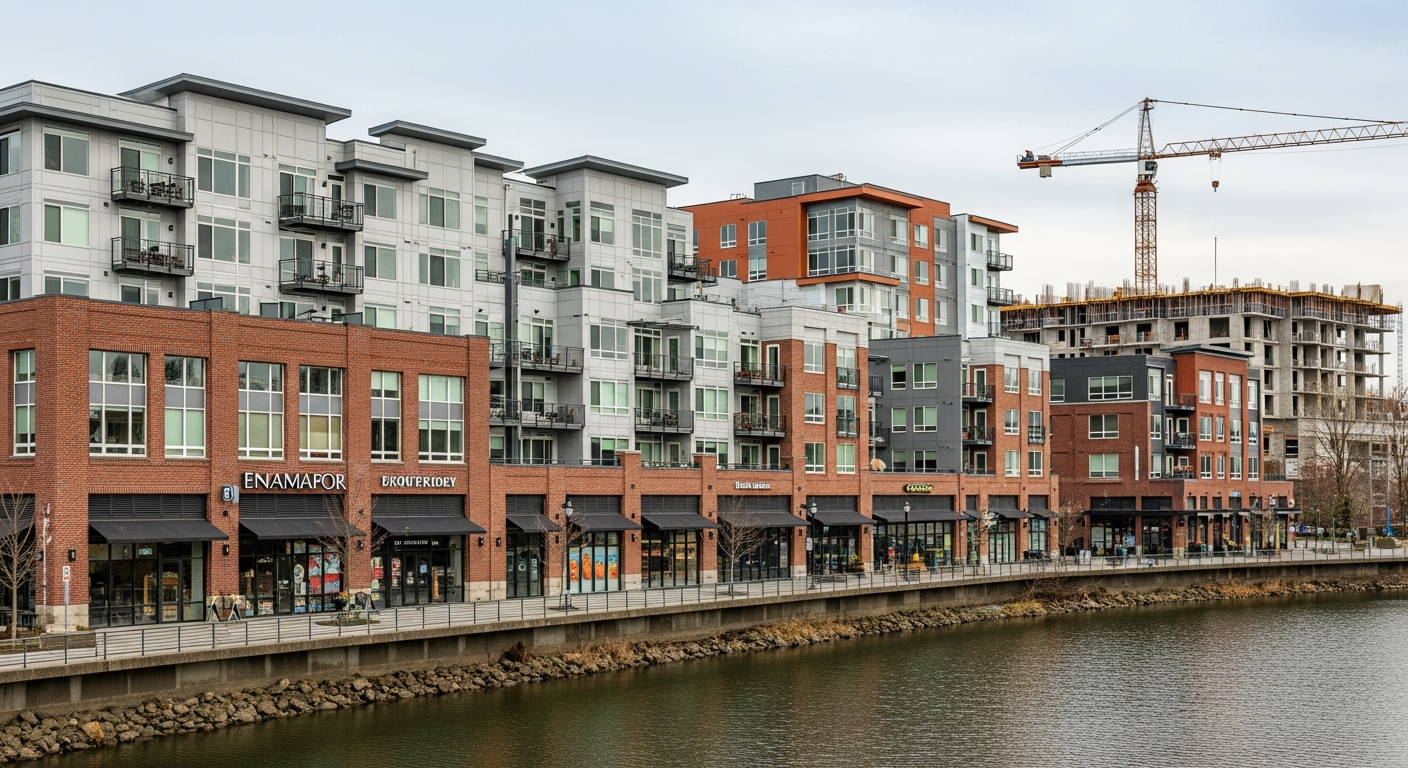
    Bellevue-based Shelter Holdings has been developing Everett’s Snohomish River waterfront for years. The housing pipeline is active — up to 1,250 units are planned across phases, and buildings are open and occupied. The retail side of the program is where the challenges are concentrated.

    The grocery anchor was pushed to 2030. The cinema was replaced by pickleball. Ground-floor commercial spaces in completed buildings have vacancy. Eclipse Mill Park — the public green space that’s supposed to drive foot traffic — begins construction this summer and won’t fully open until spring 2028. That’s the honest picture for any business owner or developer assessing the riverfront as a location today.

    What’s Driving the Vacancy

    Snohomish County’s overall retail market is the tightest in Puget Sound — 3.4% vacancy at year-end 2025, compared to Seattle’s 4.0% and Portland’s 4.8%. At first glance, that tight market should make retail leasing easier everywhere in the county. In practice, it means tenants with options are being selective about where they locate — and a new neighborhood that hasn’t yet reached full resident density is a calculated risk.

    The math for most retail businesses is straightforward: you need a certain volume of foot traffic — walk-in and drive-in combined — to make the unit economics work. The riverfront neighborhood has the Interurban Trail (cyclists, walkers, commuters), the existing residential buildings, and a beautiful site. It does not yet have the grocery anchor that pulls non-resident traffic, the park that creates weekend dwell time, or the entertainment venue that drives evening activity. Those arrive between 2026 and 2030. Until they do, foot traffic projections carry risk.

    The Opportunity Argument for Prospective Tenants

    The flip side of the vacancy story is the early-mover argument. Ground-floor retail rents in neighborhoods that haven’t reached full maturity are typically lower than in fully-built districts. If you sign a 5-year lease today on riverfront commercial space, you’re locking in 2026 rents against a 2030+ market. By the time the grocery anchor opens, the park is complete, and the residential density reaches its full program, you’re established — not a new entrant competing for lease terms in a tight market.

    That argument works best for businesses that can survive and build community loyalty during the build-out phase: a coffee shop with a loyal residential base, a fitness studio serving Interurban Trail users, a service business (salon, dry cleaning, childcare) that doesn’t depend on anchor-generated foot traffic. It works less well for restaurants that need consistent evening foot traffic from the start, or for retail concepts that need the grocery anchor to pull complementary customers.

    Comparing to Waterfront Place and Millwright Phase 2

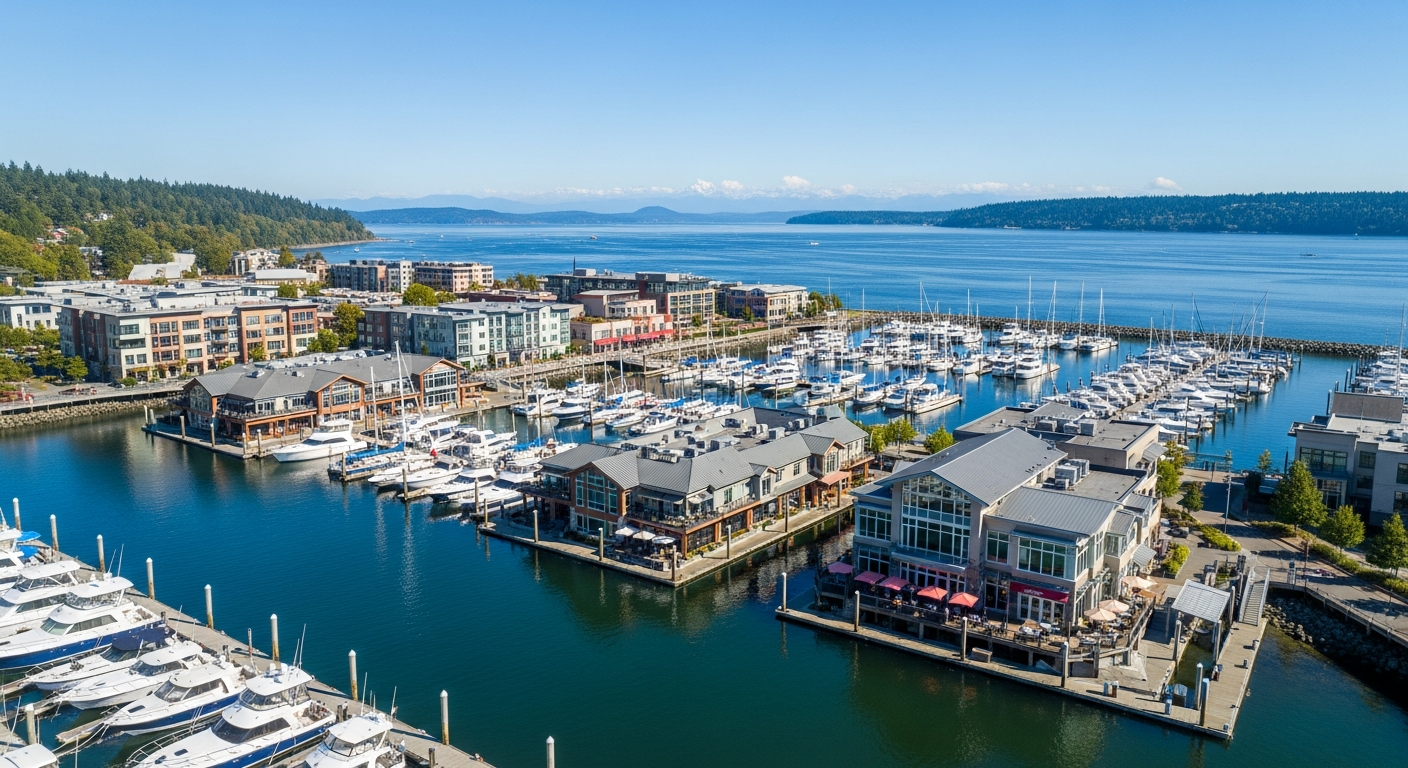
    Everett has two other major retail development stories running simultaneously. Waterfront Place at the Port of Everett — the restaurant row that opened in 2025 — is already generating foot traffic and has demonstrated that Everett’s waterfront dining market is real. Millwright District Phase 2, the mixed-use development at the Port, is in pre-leasing. Those two projects, alongside the riverfront, represent three distinct Everett retail corridors at three different stages of maturity. Understanding the differences helps you place your own location decision in context.

    The riverfront is the youngest of the three in retail terms. It’s the highest-upside/highest-patience bet of the group. Waterfront Place is the proven commodity. Millwright is the middle option — more established than the riverfront, less certain than Waterfront Place.

    Developer-Specific Considerations

    For developers assessing the broader Snohomish County riverfront context — not just the Shelter Holdings site — the Q1 2026 Kidder Mathews retail data shows vacancy “creeping higher” after years of extreme tightness. That’s not a distress signal; it’s a softening at the margins of a fundamentally undersupplied market. For developers planning projects that need ground-floor retail lease-up to pencil, that softening gives prospective tenants more options and slightly more leverage on terms than they had 12 months ago.

    The riverfront’s 1,250-unit residential program, when complete, will make it one of the highest-density residential concentrations near downtown Everett. That’s the long-term retail case. Getting from here to there is the investor’s patience question.

    Frequently Asked Questions for Business Owners and Developers

    Are there retail spaces available at the Everett riverfront right now?

    Yes. Some ground-floor commercial spaces in completed Shelter Holdings buildings have availability. Prospective tenants should contact Shelter Holdings directly for current leasing status and rates.

    When will the riverfront have enough foot traffic to support a food and beverage business?

    Conservative answer: 2028–2030, when Eclipse Mill Park is complete and the grocery anchor opens. More optimistic answer: coffee and trail-adjacent food concepts could reach viability earlier, as the Interurban Trail generates consistent foot traffic and the existing residential base is growing now.

    What business types are best suited to the riverfront’s current stage of development?

    Service businesses with a residential customer base (fitness, childcare, salon), coffee shops targeting trail users and residential commuters, and specialty retail serving the existing condo and apartment population. Restaurant concepts that depend on evening destination traffic from outside the neighborhood are higher risk until the grocery anchor and park open.

    How does the Snohomish River waterfront compare to other Everett retail opportunities?

    The riverfront is the newest and highest-potential-but-longest-timeline option. Waterfront Place at the Port of Everett is the most proven corridor. Millwright District Phase 2 is in active pre-leasing and is further along than the riverfront in its build-out. Each location serves a different risk/return profile.

    What is the park construction timeline and how does it affect foot traffic projections?

    Eclipse Mill Park waterside construction starts summer 2026 (city portion, targeting November 2026 completion). Shelter Holdings’ land-side Phase 1 completes spring 2028. A complete park with dock, playground, and trail connection will materially increase weekend foot traffic — that’s when foot traffic projections for neighboring retail businesses get meaningfully more attractive.
  • For Everett Residents: The Honest Timeline for Eclipse Mill Park and What the Riverfront Is Actually Delivering in 2026

    For Everett Residents: The Honest Timeline for Eclipse Mill Park and What the Riverfront Is Actually Delivering in 2026

    If You Live in the Riverfront Neighborhood — or Plan To

    Everett’s Snohomish River waterfront has been one of the city’s most-discussed development projects since ground broke on the former mill site. For residents already living in the buildings Shelter Holdings has completed, the experience has been mixed: a beautiful site on the river, excellent Interurban Trail access, and a growing residential community — alongside empty ground-floor storefronts and delayed amenities that were part of the original sales pitch.

    Here is what the 2026 construction season actually brings, and what you’ll be waiting on for several more years.

    What You’ll Actually See Built in 2026

    Eclipse Mill Park Phase 1 city construction starts this summer. The City of Everett is handling the waterside portion: bank stabilization along the Snohomish River, a floating dock, and waterfront amenities that will make the park usable from the river. The target is to have the city’s portion complete by November 2026.

    Once the city finishes, Shelter Holdings has 18 months to complete the land-side Phase 1 — the playground, trail connection, play lawn, and parking that will make Eclipse Mill Park the usable community green space it was designed to be. That window runs from fall 2026 through spring 2028. If Shelter Holdings hits that timeline, residents get a complete park in spring 2028.

    That’s real progress. For people who have been watching construction equipment on the site for years, a functional waterfront park with a dock and river access represents the moment the neighborhood begins to feel finished. The summer 2026 construction start is the beginning of that ending.

    What You’re Still Waiting On

    Grocery Store: 2030

    The grocery store that was expected to be a retail anchor for the riverfront neighborhood has been pushed to 2030. If you’re living in the buildings now, that means your nearest walkable grocery option — for at least the next four years — is elsewhere. The QFC on Colby Avenue and the Safeway on Broadway are the nearest established options, each roughly a mile from the riverfront site.

    Cinema: Gone, Replaced by Pickleball

    The cinema concept that was part of the entertainment vision for the riverfront has been replaced by a pickleball facility. Whether that’s a downgrade or a sidegrade depends on your perspective — but if you were planning the evening of dinner and a movie at the waterfront, that programming won’t be available from the riverfront site itself. The Historic Everett Theatre downtown remains the city’s cinema option.

    Ground-Floor Retail: Partial and Selective

    Some ground-floor retail spaces in completed residential buildings remain vacant. The honest reason is that Snohomish County’s retail market is extremely selective right now — the county has the tightest retail vacancy rate in Puget Sound, which means good tenants have options and are taking time choosing locations. The riverfront neighborhood is still building the resident density that makes a coffee shop or restaurant economically viable on its own. That density is coming. It just hasn’t fully arrived yet.

    Services and Resources in the Interim

    While the riverfront’s retail and amenity programming catches up to its housing, downtown Everett — a short walk or bike ride — has a full commercial district with restaurants, cafes, the farmers market (opening Mother’s Day 2026), and the Historic Everett Theatre. The Waterfront Place restaurant cluster at the Port is accessible via the waterfront trail network. Everett’s community services network, including resources through Volunteers of America Western Washington, serves the wider city.

    The Honest Assessment: Good Investment, Delayed Amenities

    Living at the Everett riverfront right now means being an early resident in a neighborhood that isn’t finished. The bones are strong — beautiful site, river access, Interurban Trail connection, genuine density. The timeline for the full vision is longer than originally marketed. The park arrives starting in 2026. The grocery store arrives in 2030. The retail environment is being built incrementally as the neighborhood’s resident population grows.

    That’s a real trade-off, and you deserve to know the honest terms of it before you decide whether to live there.

    Frequently Asked Questions for Everett Residents

    When will Eclipse Mill Park be fully open?

    Spring 2028, if both the city (waterside, summer-November 2026) and Shelter Holdings (land-side, fall 2026-spring 2028) hit their timelines. The park’s waterside portion — dock, bank stabilization, river access — will be complete by November 2026.

    Will there ever be a grocery store at the Everett riverfront?

    Yes, but the opening has been pushed to 2030. Shelter Holdings has committed to the grocery anchor as part of the retail program; the delay reflects tenant recruitment timelines and the density thresholds grocery retailers typically require before committing to new locations.

    Is the Everett riverfront a good neighborhood to live in right now?

    For people who value riverfront access, trail connectivity, and urban density near downtown Everett, yes — with the explicit understanding that the retail and amenity programming is still being built out. The housing itself is solid and the site is genuinely attractive. The full neighborhood vision is several years from completion.

    What is the Interurban Trail and does it connect to the riverfront?

    The Interurban Trail is a paved multi-use path running through Snohomish County. It passes through the Everett riverfront site and provides trail access north and south. It is one of the neighborhood’s most consistent amenities and already functional for residents.

    What is the difference between Eclipse Mill Park and Waterfront Place?

    Eclipse Mill Park is the public park being built at the Snohomish River waterfront site on Everett’s east side (Shelter Holdings development). Waterfront Place is the restaurant and retail district at the Port of Everett on the west side of downtown, along Port Gardner Bay. They are different places serving different parts of the city.

  • Everett’s Snohomish River Waterfront in 2026: The Complete Guide to Eclipse Mill Park Construction, Shelter Holdings’ Delays, and What’s Actually Coming

    Everett’s Snohomish River Waterfront in 2026: The Complete Guide to Eclipse Mill Park Construction, Shelter Holdings’ Delays, and What’s Actually Coming

    The Park Construction Is Real and It’s Starting This Summer

    Eclipse Mill Park is a 3-acre public green space planned at the heart of Everett’s new Snohomish River waterfront neighborhood — the project Bellevue-based developer Shelter Holdings has been building on a former landfill and lumber mill site on the city’s eastern edge. After years of renderings and timelines, the park has a construction start date: summer 2026.

    The construction has a split structure. The City of Everett handles the waterside portion first: bank stabilization, a floating dock, and waterfront amenities. That city work begins this summer, with a November 2026 completion target. Once the city finishes its portion, Shelter Holdings has an 18-month window to complete the land-side Phase 1 — a playground, trail connection, play lawn, and parking. That clock runs from fall 2026 through spring 2028. Full park opening: spring 2028.

    This is worth emphasizing clearly: Eclipse Mill Park is not a rendering anymore. It is a permitted, funded, construction-season project. For people who have been watching the riverfront site since the first buildings went up, the park has always been the most public-facing milestone. That milestone is arriving.

    What’s Built, What’s Open, What’s Behind Schedule

    Shelter Holdings’ Snohomish River waterfront development is one of the largest private development projects underway in Snohomish County. The housing side has been the most visible: residential buildings have gone up, streets have been built, and a neighborhood has materialized where none existed five years ago. The 1,250-unit vision for the full site is advancing — the housing construction pipeline is real and active.

    The retail side is where the story gets more complicated. An August 2025 Everett Herald investigation captured resident frustration with delays, empty storefronts, and a timeline that has shifted repeatedly. Here’s where specific commitments stand:

    Grocery Store: Delayed to 2030

    A grocery store was among the most anticipated retail anchors for the riverfront neighborhood. That opening has been pushed to 2030. For residents already living in the buildings on-site — and for the thousands expected in subsequent phases — that’s a meaningful gap. Grocery access remains a car trip for the near future.

    Cinema: Replaced by Pickleball

    A cinema concept that was part of the riverfront’s entertainment vision has been replaced by a pickleball facility. This is not a trivial swap in terms of community character: a cinema anchors evening foot traffic from a broad demographic; pickleball serves a narrower (though currently popular) market. The change reflects the broader challenges facing entertainment retail nationally, but it’s still a notable shift from the original vision.

    Empty Storefronts: The Persistent Challenge

    Ground-floor retail in completed residential buildings sits partially vacant. This is partly a function of Snohomish County’s broader retail market — the county has the tightest retail vacancy rate in Puget Sound at 3.4%, which means tenants have options and can be selective. But it also reflects the reality that the riverfront neighborhood hasn’t yet reached the critical mass of residents to attract the most desirable tenants. That equation changes as more housing opens.

    The Site Context: What Everett Is Building Here

    The Snohomish River waterfront site sits on the east side of downtown Everett, bounded by the river, Marine View Drive, and the Interurban Trail. It was previously a landfill and the former site of a sawmill — the “Eclipse Mill” that gives the park its name. Shelter Holdings acquired the development rights and has been executing a phased master plan that encompasses housing (rental apartments), ground-floor retail, a park, and riverfront public access.

    The site is distinct from Everett’s Port waterfront development, which is happening on the west side of downtown around Waterfront Place and the Port of Everett marina. The riverfront is a different neighborhood — quieter, more residential in character, oriented toward the Snohomish River and the Interurban Trail rather than the maritime activity of the Port.

    The Bigger Picture: What the Riverfront Means for Everett

    Everett is simultaneously developing two major waterfronts — the Snohomish River site on the east and the Port marina on the west. Both projects have been slower than initial projections. Both have had to adapt their retail programs to the realities of a selective tenant market and changing entertainment preferences. Both are still real, active construction projects with genuine momentum.

    The riverfront site specifically represents something Everett has not had before: a walkable residential neighborhood built to urban density on a large contiguous parcel close to downtown. When complete, it will house thousands of residents within walking distance of the Snohomish River, the Interurban Trail, and downtown Everett’s amenities. Eclipse Mill Park — the public anchor of that neighborhood — starts construction this summer. That matters.

    For residents and families considering the area, the community services guide for Everett covers the wider network of services and resources available in the city.

    Frequently Asked Questions

    When does Eclipse Mill Park construction start?

    City of Everett construction on the waterside portion of Phase 1 begins in summer 2026, targeting November 2026 completion. Shelter Holdings’ land-side Phase 1 work follows from fall 2026 through spring 2028, with full park opening projected for spring 2028.

    Who is the developer of the Snohomish River waterfront in Everett?

    Shelter Holdings, a Bellevue-based developer, holds the development rights and is leading the master plan for the site. The City of Everett is a partner on public infrastructure including the park’s waterside portion.

    How many housing units will the Everett riverfront development include?

    The full master plan envisions up to 1,250 housing units across multiple phases. The residential construction is active and ongoing; the retail component has faced delays.

    Why was the grocery store delayed and when will it open?

    The grocery store anchor has been pushed to 2030. The specific reasons have not been publicly detailed by Shelter Holdings, but grocery retailers have been cautious about committing to new locations in markets that haven’t yet reached resident density thresholds.

    Is the Snohomish River waterfront the same as Waterfront Place at the Port of Everett?

    No. These are two distinct developments. The Snohomish River waterfront (Eclipse Mill, Shelter Holdings) is on the east side of downtown Everett, oriented toward the river and the Interurban Trail. Waterfront Place is at the Port of Everett on the west side, along Port Gardner Bay, and is focused on marina-adjacent dining and retail.

    What happened to the cinema that was planned for the riverfront?

    The cinema concept was replaced by a pickleball facility. This reflects broader trends in entertainment retail nationally, where cinema anchor tenants have become harder to secure, and also reflects adjustments to the retail program based on the current tenant market.

  • Everett’s Riverfront Is About to Start Building Its Park — But Here’s the More Complicated Story of What’s Waiting

    Everett’s Riverfront Is About to Start Building Its Park — But Here’s the More Complicated Story of What’s Waiting

    Q: Where does Everett’s Snohomish River riverfront development stand in 2026?
    A: The City of Everett will begin Phase 1 construction on Eclipse Mill Park — the signature 3-acre public park for the Snohomish River waterfront — in summer 2026, with waterside amenities targeted for completion by November 2026. Developer Shelter Holdings’ land-side Phase 1 park work follows from fall 2026 through spring 2028. The broader riverfront development, which envisions up to 1,250 housing units and ground-floor retail, is advancing — but the retail side has faced significant delays, with a planned grocery store pushed to 2030 and a cinema concept replaced by a pickleball facility.

    The Park Construction Is Coming This Summer

    If you’ve driven along the Snohomish River lately, you’ve seen it: the buildings going up on what used to be a former landfill and lumber mill site, the streets carved into a neighborhood that didn’t exist five years ago, the quiet accumulation of infrastructure on one of Everett’s most ambitious bets on its own future.

    The riverfront project, led by Bellevue-based developer Shelter Holdings, is one of the largest private development projects underway in Snohomish County. It’s also one of the most publicly scrutinized. An August 2025 Everett Herald story captured the resident frustration that’s built alongside the housing: delays, empty storefronts, and a timeline that keeps moving.

    With the 2026 construction season now arriving, here’s the most complete picture of where the Everett riverfront actually stands.

    The most concrete near-term milestone is Eclipse Mill Park, the 3-acre public green space planned as the social heart of the new riverfront neighborhood. The project has a split structure. The City of Everett handles the waterside portion: bank stabilization, a floating dock, and waterfront amenities that will make the park usable from the river side. That work is slated to begin over the summer of 2026, with the city targeting completion of its portion by November 2026.

    Once the city finishes, Shelter Holdings has 18 months to complete its land-side portion of Phase 1 — the amenities including parking, a playground, a trail connection, and a play lawn. That puts the Phase 1 park completion in spring 2028, with a full park opening projected for that same window.

    What’s worth emphasizing now — with Phase 1 city work just months away — is that this is a real construction event, not a distant promise. By late summer 2026, heavy equipment will be working the riverbank at the Eclipse Mill Park site, and by Thanksgiving the city portion should be visibly taking shape.

    The Housing Side: What’s Built and What’s Coming

    The housing portion of the Shelter Holdings development is further along than the retail side. Phase 1 launched with 333 apartments as the initial residential component. The broader vision calls for up to 1,250 multi-family housing units across all phases — which would make this one of the largest residential additions in Everett’s history once fully built out.

    The units that are occupied are generating a resident base, which is exactly what the development needs to attract the commercial tenants the neighborhood has been waiting for. More residents means more foot traffic; more foot traffic means a business case for retail operators. The tension is that the sequencing hasn’t worked out that cleanly. The housing came first, but the retail hasn’t followed fast enough for residents who moved in expecting a neighborhood with a coffee shop, a grocery store, and things to do within walking distance.

    The Retail Gap: What Got Delayed, What Got Dropped

    This is the most candid part of the 2026 picture.

    The original Phase 1 vision for the Everett riverfront included a movie theater, a specialty grocer, ground-floor restaurants, and a commercial district that would activate the neighborhood from day one. Almost none of that has materialized on the original schedule.

    The cinema is gone. In 2024, the Everett City Council agreed to let Shelter Holdings replace the planned movie theater with a pay-to-play pickleball facility, citing the post-COVID difficulties facing the movie business. The deadline for that facility was also pushed from Phase 1 to Phase 3 of the development, which is likely several years away.

    The grocery store has been delayed to 2030. When Shelter Holdings asked the city for the extension in June 2025, the explanation was direct: grocery store operators “want to see additional surrounding population density to support a grocery store at the Riverfront.” With Phase 1 apartments occupied but the broader neighborhood still building out, the density threshold for a grocer to make the numbers work hasn’t been reached.

    The Herald’s August 2025 coverage of empty storefronts and resident frustration captured a real tension that anyone who has walked the riverfront neighborhood can see. The ground-floor retail bays that were supposed to activate the street-level experience are sitting empty. The buildings are there. The windows are there. The tenants aren’t.

    Why This Matters for Everett’s Development Story

    The Snohomish River waterfront project is one of three simultaneous waterfront and development efforts reshaping Everett. The Port of Everett’s Waterfront Place on Port Gardner Bay is further along commercially — Tapped Public House, Marina Azul, Menchie’s, Rustic Cork, and Jetty Bar & Grille are all operating. Millwright District Phase 2 targets a mid-2029 entertainment retail opening. The riverfront is the youngest and most interior of the three, running on the longest clock.

    The structural challenge is one that most large mixed-use developments face: the first residents arrive before the amenities that make the development worth living in. Developers manage this by phasing construction so that commercial critical mass arrives shortly after residential density. At the Everett riverfront, that sequence got disrupted — first by COVID’s impact on the cinema sector, then by the grocery sector’s density requirements, then by the general commercial retail slowdown of 2023–2025.

    The 2026 construction season offers a reset moment. Eclipse Mill Park Phase 1 city work beginning over the summer is a visible, tangible marker of progress — exactly the kind of milestone that builds confidence in the neighborhood among both prospective residents and prospective retail tenants. The floating dock, the riverbank improvements, and the infrastructure going in this year will make the Snohomish River accessible to the neighborhood in a way it hasn’t been yet.

    What to Watch in the Second Half of 2026

    The markers worth tracking between now and December 2026:

    City park construction progress. The city targets its riverbank and floating dock work by November 2026. Any slippage to that schedule pushes back Shelter Holdings’ Phase 1 timeline and the spring 2028 park opening.

    Retail tenant announcements. With 2030 now the grocery anchor target, any pre-2030 commercial lease signing in the riverfront district would be meaningful news. Even a smaller-format coffee shop or neighborhood retail commit would signal that the density threshold is being crossed.

    Phase 2 housing permit filings. More housing permits mean more residents on the way, which advances the case for retail faster than anything else the developer can do.

    The Everett riverfront isn’t behind the way a stalled project is behind. It’s behind the way ambitious urban development always is when it tries to build a neighborhood from scratch on challenging land. The bones of a genuinely good waterfront district are visible — the housing, the infrastructure, the park framework. The retail chapter is just taking longer to write.

    This summer’s construction season will be the most visible progress the riverfront has shown in a year. When the city starts moving dirt at Eclipse Mill Park, it’ll be the clearest sign yet that Everett’s Snohomish River waterfront is still building toward what it promised to be.

    Frequently Asked Questions

    Q: When will Eclipse Mill Park open?
    Eclipse Mill Park Phase 1 is projected to fully open in spring 2028. The City of Everett will complete its waterside construction by November 2026, after which Shelter Holdings has 18 months to complete the land-side Phase 1 amenities.

    Q: Who is developing the Everett riverfront?
    Shelter Holdings, a Bellevue-based developer, is the primary private developer for the Snohomish River waterfront project. The City of Everett is separately responsible for Eclipse Mill Park’s waterside construction phase.

    Q: How many housing units are planned for the Everett riverfront?
    The full Shelter Holdings development envisions up to 1,250 multi-family housing units across all phases. Phase 1 launched with 333 apartments.

    Q: Why was the riverfront cinema cancelled?
    The Everett City Council approved Shelter Holdings’ request in 2024 to replace the planned movie theater with a pay-to-play pickleball facility, citing challenges facing the cinema industry since COVID-19. The project’s deadline was also moved from Phase 1 to Phase 3.

    Q: When will the riverfront grocery store open?
    The grocery store has been delayed to 2030. Shelter Holdings cited grocery operators’ requirements for greater surrounding population density before they will commit to a store.

    Q: Where is the Everett riverfront development located?
    The Shelter Holdings riverfront development sits along the Snohomish River in Everett, on the site of a former city landfill and lumber mills. It’s distinct from the Port of Everett’s Waterfront Place development on Port Gardner Bay to the west.

  • Snohomish County’s Retail Market Is the Tightest in Puget Sound — And Q1 2026 Just Started Testing That

    Snohomish County’s Retail Market Is the Tightest in Puget Sound — And Q1 2026 Just Started Testing That

    Q: How does Snohomish County’s retail vacancy compare to the rest of the Puget Sound region?
    A: Snohomish County ended Q4 2025 at 3.4% retail vacancy — the tightest rate in the Seattle-Puget Sound metro, according to Kidder Mathews. While the broader Seattle market finished 2025 at 4.0% and continued rising into Q1 2026, Snohomish County’s retail market has stayed tighter because almost no new retail square footage has been built in years. That scarcity protects existing landlords but creates a challenging environment for major new developments like Waterfront Place and Millwright Phase 2 that need to recruit tenants into a market where selectivity is rising.

    Why Snohomish County Retail Stays Tight

    Here’s a number that doesn’t get talked about enough: Snohomish County’s retail vacancy rate ended 2025 at 3.4 percent.

    For context, the broader Seattle metro finished 2025 at 4.0 percent, and that number was climbing. King County’s vacancy was trending higher through the back half of the year. Portland hit 4.8 percent in Q1 2026. By every regional benchmark, Snohomish County’s retail market is the tightest in Puget Sound — and it has been for most of the past three years.

    That’s a complicated backdrop for everything happening on Everett’s waterfront right now.

    The short answer, according to Kidder Mathews’ Q4 2025 retail market data cited by the Everett Herald in February 2026, is construction — or rather, the lack of it. Almost nothing has been built. The last major new shopping center project in Snohomish County was years ago, which means existing retail square footage is scarce. When tenants look for space, their options are limited — which keeps occupancy high and keeps asking rents elevated.

    The Everett Herald framed it plainly: “Few vacant retail spaces in Snohomish County.” At 3.4 percent vacancy, that’s not just a real estate headline — it’s a physical reality that shapes which businesses can afford to open here.

    But Q1 2026’s Kidder Mathews data, published by The Registry Pacific Northwest on April 8, 2026, introduced something new into the conversation: a trend line. Vacancy is “creeping higher.” Tenants are “growing more selective.” The words are measured — this is not a market in distress — but they signal that the floor-tight conditions of the past two years are starting to soften at the margins.

    What This Means for Waterfront Place

    The Port of Everett’s Waterfront Place development has approximately 63,000 square feet of planned retail and restaurant space across the full buildout of Fisherman’s Harbor and Marina Village. A meaningful portion of that is already occupied and generating activity: Tapped Public House opened in March 2026 with the largest waterfront rooftop deck in Snohomish County; Marina Azul Cocina & Cantina arrived in spring 2026; Menchie’s Frozen Yogurt opened at the marina in March; Rustic Cork Wine Bar has been operating for months; Jetty Bar & Grille remains a marina staple; South Fork Baking Co. and Anthony’s HomePort anchor the established tenant base.

    That’s a functioning dining and retail district — and it’s operating in a county where retail space is genuinely scarce. In a 3.4 percent vacancy environment, every new restaurant that opens at Waterfront Place is competing not just with other waterfront tenants, but with a county-wide retail market where operators are getting more selective about where they commit.

    The remaining Parcel A7 restaurant site — the Port’s search for a flagship dining tenant at the last undeveloped waterfront pad — is an open question in this context. A tight market should theoretically accelerate recruitment. But Q1 2026’s rising selectivity from prospective tenants complicates that math. Operators have more choices than they used to, and they’re using them.

    The Millwright Phase 2 Question

    The more significant long-term implication of the Q1 2026 retail data is for Millwright District Phase 2, which envisions up to 120,000 square feet of retail, entertainment, and dining — the movie theater, mini golf, arcade, bowling, specialty shops, gyms, and salons announced as the anchor concept, with a projected opening window of mid-2029.

    Between now and 2029, the retail market will complete several more cycles. The current “vacancy creeping higher, tenants more selective” phase could resolve in either direction. What the Q1 2026 data confirms is that the foundation is solid. A county that has held below 3.5 percent vacancy for multiple years, with no meaningful new inventory in the pipeline, is a county where well-positioned retail real estate still works. Millwright Phase 2’s 120,000 square feet will be the largest single retail addition Snohomish County has seen in years — arriving into a market that will almost certainly still be undersupplied by mid-decade.

    Downtown Everett and the Bank of America Signal

    One notable data point in downtown Everett’s retail landscape deserves separate attention: the 12,000-square-foot Bank of America building at 1602 Hewitt Avenue, which came to market this spring for the first time in 60 years. Skotdal is marketing the building with a three-lane drive-through and 92 covered parking spaces.

    At 3.4 percent county-wide retail vacancy, a 12,000-square-foot class-A footprint in downtown Everett should theoretically be in high demand. The fact that it’s available at all is a testament to how thoroughly the banking sector has contracted its physical footprint. The question is whether the retail market’s tightness is enough to attract a non-bank tenant willing to work with that building’s legacy configuration.

    The comparison to the office market is instructive: Snohomish County office vacancy hit 10.7 percent in Q1 2026 — nearly triple the retail rate. Office space is available and under pressure; retail space is not. That divergence matters for how developers think about the use mix at Waterfront Place and Millwright Phase 2. Retail and dining are still the anchor draw. Office demand follows workers, not the other way around.

    The Snohomish County Retail Advantage — For Now

    For anyone tracking Everett’s development story, the retail market data adds an important piece of context. The waterfront, downtown, the riverfront, and Millwright are all recruiting tenants into a county that remains the most retail-constrained in the region. That constraint cuts both ways.

    It means existing retailers perform well. It means new entrants can establish market position before competition multiplies. And it means the large-format entertainment retail vision at Millwright Phase 2 — the first genuine new retail district Snohomish County will have seen in years — will arrive into conditions that still favor well-capitalized landlords.

    The Q1 2026 signal worth watching is whether rising tenant selectivity translates into slower absorption at Waterfront Place. The next few quarters of lease announcements will be a real-time test of whether the Port’s restaurant row momentum can hold through a softening. Based on what the data shows right now, there’s no reason to expect it won’t — but the days of almost any tenant being available are giving way to a market that’s starting to pick and choose.

    Frequently Asked Questions

    Q: What is Snohomish County’s retail vacancy rate?
    Snohomish County ended Q4 2025 at 3.4 percent retail vacancy, the lowest in the Puget Sound metro according to Kidder Mathews. Q1 2026 showed the rate beginning to edge higher as tenants grew more selective.

    Q: How does Snohomish County compare to Seattle’s retail market?
    The broader Seattle metro finished 2025 at 4.0 percent retail vacancy, roughly half a point higher than Snohomish County. Q1 2026 continued that divergence, with the Seattle-area rate climbing while Snohomish County remained below regional averages.

    Q: How much retail space is planned at Waterfront Place?
    The Port of Everett’s Waterfront Place development plans for approximately 63,000 square feet of retail and restaurant space across Fisherman’s Harbor and Marina Village, with multiple tenants already operating.

    Q: How much retail is coming to Millwright District Phase 2?
    Millwright District Phase 2 envisions up to 120,000 square feet of entertainment-anchored retail — including a movie theater, mini golf, arcade, bowling, and specialty shops — with a projected opening window of mid-2029.

    Q: Why is Snohomish County retail vacancy so low?
    The primary driver is a near-complete absence of new retail construction in the county for multiple years. With no significant new inventory entering the market, existing space stays occupied and asking rents remain elevated.

    Q: What is happening at the Bank of America building on Hewitt Avenue in downtown Everett?
    The 12,000-square-foot former Bank of America building at 1602 Hewitt Avenue became available for the first time in roughly 60 years in spring 2026. Skotdal is marketing the space with a three-lane drive-through and 92 covered parking spaces in downtown Everett.

  • Everett Mall’s Hub Vision Just Got Smaller: Brixton Capital Files for Self-Storage and Office Where Topgolf Was Going

    Everett Mall’s Hub Vision Just Got Smaller: Brixton Capital Files for Self-Storage and Office Where Topgolf Was Going

    What just changed at Everett Mall? Brixton Capital — the mall’s owner — has scheduled a May 19, 2026 pre-application meeting with the City of Everett to convert a portion of the existing enclosed mall into a self-storage facility, with a 60,000-square-foot proposed office sitting where Topgolf’s hitting bays were going to go. Topgolf was supposed to be the Hub @ Everett’s anchor tenant. Now it may not happen at all.

    For two years the story we got told about Everett Mall was the Hub. Brixton Capital — the San Diego-based real estate group that bought the property — and the City of Everett came out together in 2024 with renderings of an outdoor walkable destination, retail recolored from the inside out, and a 68,000-square-foot, three-level Topgolf as the anchor pulling everyone in. The permits were filed. The 11-acre site was mapped. The narrative held.

    That narrative is now bending.

    On the City of Everett’s permitting portal this week, Brixton Capital has scheduled a May 19, 2026 pre-application meeting for a project described as “the interior demolition of the existing enclosed mall structure and the conversion of a portion of the building into a self-storage facility. The scope also includes subdivision actions to place the proposed storage use on a separate legal parcel.”

    That alone would just be news that the demolition we’ve all been waiting for is finally getting paperwork moving. But the latest site plan that came in with the application tells a different story.

    What the new site plan shows

    Two things sit on the new Brixton site plan that were not on the Hub renderings.

    The first is a single-story building labeled “Everett Mall Self Storage.” It sits where a parking lot was going to be in the Hub vision — so it is not directly displacing Topgolf. But it is also not what anyone signed up for when this redevelopment started. There are already a dozen self-storage facilities within five miles of the mall. None of them are destinations. None of them generate the foot traffic that a mall reinvention needs to work.

    The second is more telling: a 60,000-square-foot building labeled “Proposed Office” that sits squarely on the footprint where the Topgolf hitting bays and outfield were going to go. The old LA Fitness building, which was supposed to come down to make room for Topgolf, now appears in the plan as something that will either be salvaged or replaced to provide that office space.

    Topgolf needs the area marked for the office. The office is in the area Topgolf needed.

    The two plans cannot both be true.

    Why this might be happening

    Topgolf’s parent company has been in restructuring mode since the same window the Everett permits were getting approved. Topgolf Callaway Brands announced a corporate split, then Topgolf CEO Artie Starrs left for Harley-Davidson in 2025. On January 1, 2026, private equity firm Leonard Green & Partners completed an acquisition of a 60 percent stake in Topgolf from Topgolf Callaway Brands for approximately $1.1 billion. Industry coverage has framed the entertainment chain’s recent decline as a problem of over-expansion — too many venues opened too fast, with the new ones cannibalizing the older ones.

    In other words: Topgolf is in pullback mode, not expansion mode. New venues that were promised but never officially confirmed by Topgolf corporate — like Everett — are exactly the kind of project that quietly disappears in a private-equity restructuring.

    Neither Brixton Capital nor Topgolf has officially said the Everett venue is dead. The City of Everett has not announced a change. But the new site plan does the talking.

    What we covered before — and what’s different now

    We wrote about The Hub @ Everett a week ago, on April 25, when the story was that Topgolf was stuck — permitted in January 2025, but on hold pending corporate restructuring. The construction never started. The 11-acre footprint sat untouched. At that point the question was whether Topgolf would eventually break ground or whether Brixton would have to find a new anchor.

    The May 19 pre-application meeting is the answer to that question. Brixton is not waiting on Topgolf anymore. Brixton is moving forward with a different building program for that footprint. Even if Brixton hopes Topgolf eventually shows up, the site plan being submitted to the City does not assume Topgolf shows up. That is the meaningful change.

    It is also a quiet downgrade of what The Hub was supposed to be. A self-storage building and a 60,000-square-foot office building are not the kind of tenants that bring people to a mall on a Saturday. Alderwood Mall down in Lynnwood is full on Saturdays. People circle the parking lot waiting for spots. That is what a working mall in 2026 looks like. A storage facility and a cubicle building is not in that category.

    What this means for the larger Everett Mall picture

    The Hub @ Everett sits on 11 acres in the Twin Creeks neighborhood and is the largest single retail-redevelopment project in South Everett. The mall as a whole is roughly 800,000 square feet of building on a much larger campus. Brixton’s original sales pitch for The Hub assumed Topgolf would draw the foot traffic, which would justify upgrades to the rest of the campus — Ulta Beauty and At Home are already moving into the former Sears box, and the relocated Mall Station opened in December 2025. The walkable outdoor reorientation only works if the anchor pulls.

    If the anchor turns out to be a storage building and an office, the rest of the upgrade math gets harder. Tenants pay rent based on the foot traffic they expect. Foot traffic projections that assumed a Topgolf are not the projections you get with self-storage.

    There is still room for another pivot. Brixton could find another entertainment anchor — a movie theater, a family entertainment center, a fitness destination — and the storage and office plans become the backup. The May 19 meeting is a pre-application discussion, not a building permit. Things can still change between now and the actual permit filing.

    But for right now, what the City of Everett’s permitting portal shows is a mall that planned to be a destination and is being re-planned around uses that nobody drives across town to visit.

    The May 19 pre-application meeting: what it is and what it isn’t

    A pre-application meeting in Everett is the very first formal step a developer takes with the city before submitting actual building permits. It’s a planning-staff conversation — the developer brings their concept, the city tells them what regulations will apply, what studies they’ll need, what review process the project will go through. It is not a public hearing. There is no vote. There is no decision.

    But it does signal seriousness. Pre-application meetings cost money to schedule and prepare for. Developers don’t book them for ideas they’re not pursuing. When a project shows up on the pre-app calendar, it means the developer has internal alignment to keep moving forward with that specific concept.

    So the May 19 meeting is the equivalent of Brixton telling the city: this is what we’re actually planning to build now. The Hub @ Everett brochure is no longer the operative document. The new site plan is.

    What we’ll be watching

    A few things to track in the coming weeks:

    • The actual building permit application. A pre-application meeting usually produces a building permit application within three to nine months. Whatever Brixton submits formally will tell us whether the storage-and-office concept holds or whether they pivot again.
    • Any official Topgolf statement. Leonard Green & Partners has been making public moves since taking control on January 1. A formal cancellation of Pacific Northwest expansion would clarify a lot.
    • Brixton’s leasing posture for the rest of The Hub. If self-storage and office are now in the program, the retail pitch to other tenants changes. Watch for tenant announcements that downshift from the original Hub vision.
    • City of Everett response. The original Hub deal involved zoning and permitting cooperation from the city. A meaningful program change at the site may trigger new city review — especially if the storage building requires the subdivision Brixton is also proposing.

    Frequently Asked Questions

    Is Topgolf coming to Everett Mall?

    As of May 2026, no construction has started, no Topgolf representative has confirmed the Everett location publicly, and Brixton Capital — the mall owner — has filed a pre-application with the City of Everett showing a 60,000-square-foot office building in the exact footprint Topgolf was going to occupy. The official permits from January 2025 are still on the books, but the new site plan does not assume Topgolf is happening.

    Who owns Everett Mall?

    Brixton Capital, a San Diego-based real estate firm, owns Everett Mall. Brixton acquired the property and announced The Hub @ Everett redevelopment plan in 2024.

    What is the Hub @ Everett?

    The Hub @ Everett is the marketing name Brixton Capital and the City of Everett gave to the planned redevelopment of the existing enclosed Everett Mall into a more walkable, outdoor-oriented retail and entertainment destination. The original anchor was supposed to be a 68,000-square-foot Topgolf venue.

    When is the Brixton pre-application meeting?

    May 19, 2026, with the City of Everett’s planning staff. This is a pre-application discussion, not a public hearing — there is no public comment period and no vote.

    What did Brixton apply to build?

    According to the City of Everett’s permitting portal, the May 19 application covers the interior demolition of the existing enclosed mall, conversion of a portion of the building into a self-storage facility, and subdivision of the storage use onto its own legal parcel. The accompanying site plan shows a 60,000-square-foot proposed office building in the area where Topgolf was going to be built.

    Is the rest of The Hub redevelopment still happening?

    Yes — Ulta Beauty and At Home are still moving into the former Sears box, the relocated Mall Station opened in December 2025, and other tenant work continues. The pre-application change appears specific to the Topgolf footprint and the previously-planned parking lot area where the storage facility would now sit.

    When would construction actually start?

    A pre-application meeting is the first step. A formal building permit application typically follows three to nine months later, and construction starts after the permit is issued. So even if the storage-and-office concept holds, ground-breaking is at minimum late 2026 and more likely 2027.

    Deeper coverage in the Hub @ Everett Pivot Cluster:

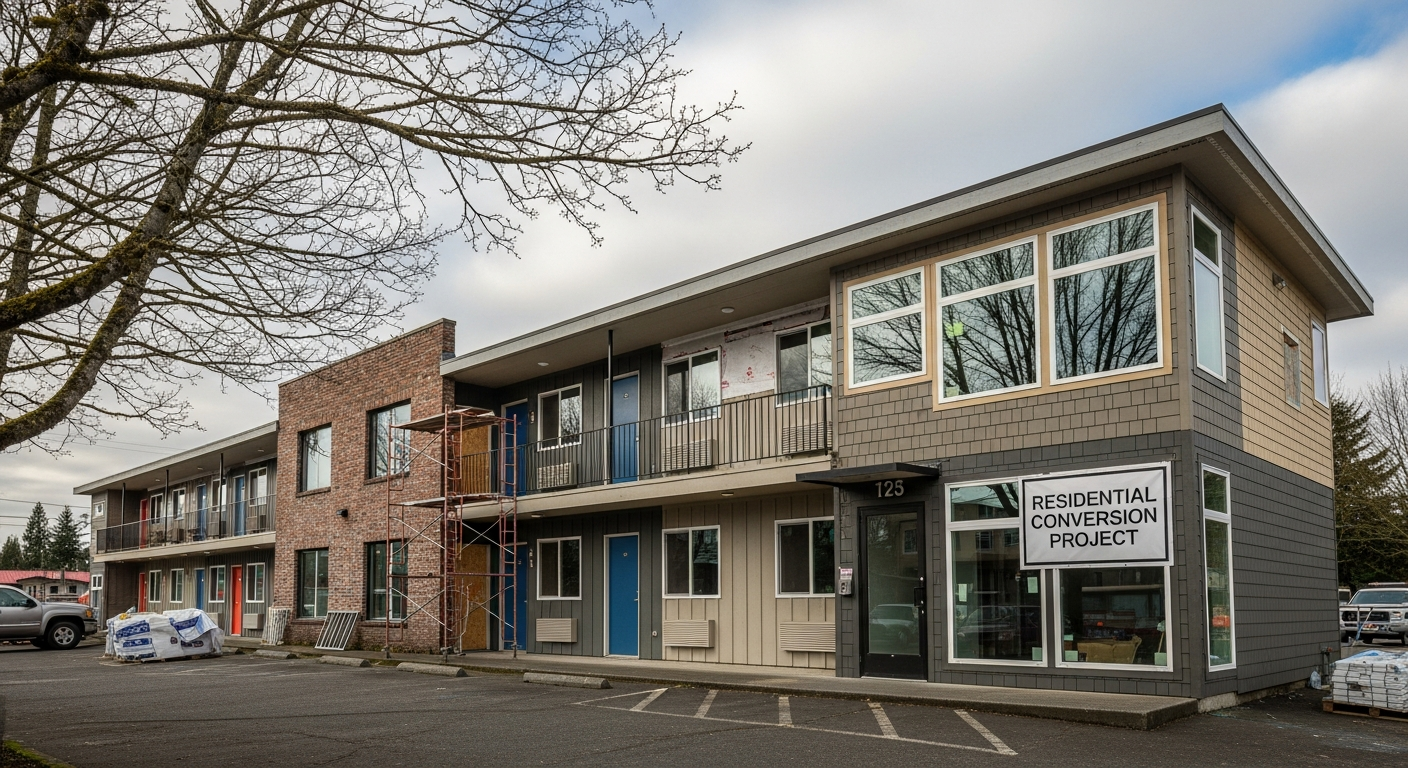
  • Everett’s Econo Lodge Is Becoming 124 Studio Apartments — What Sage Investment’s $16.5M Conversion Means for Silver Lake

    Everett’s Econo Lodge Is Becoming 124 Studio Apartments — What Sage Investment’s $16.5M Conversion Means for Silver Lake

    Driving south on Highway 99 through Silver Lake, it blends into the visual noise: a two-story motel sign, a parking lot, the familiar beige of a budget chain that hasn’t quite kept up with the neighborhood. But the Econo Lodge at 9602 19th Street SE is in the middle of a $16.5 million transformation — and by August 2026, the sign will be gone and 124 people will be calling it home.

    Sage Investment Group, a Seattle-area real estate company that has been quietly working the Puget Sound motel-to-apartment conversion market, bought the property for $9.5 million and is putting another $7 million into the build-out. It’s one of the most straightforward housing additions Everett has seen in recent years: the building already exists, the units are already laid out, the plumbing is already in the walls. What Sage is doing is pulling out the hotel fixtures and replacing them with kitchens, modern bathrooms, and the infrastructure people need to actually live somewhere — not just sleep there on the way somewhere else.

    Why Hotel-to-Apartment Conversions Are an Everett Housing Strategy Now

    Everett doesn’t have a housing affordability problem that can be solved with one project. It has a supply problem that’s been building for years — and conventional apartment development, with its permitting timelines, construction costs, and financing gaps, isn’t closing that gap fast enough. The city’s median home price sits above $577,000 as of early 2026, apartment inventory is tightening (vacancy rates at Waterfront Place’s Sawyer and Carling buildings are at 95% occupancy), and new single-family construction in Snohomish County closed down 34.3% year over year in early 2026.

    Hotel-to-apartment conversions sidestep the most expensive parts of that development equation. The bones of the building are already there. The city doesn’t have to wait years for a ground-up permit. The developer isn’t fighting soil conditions, utility connections, or a blank-page design process. They’re retrofitting something that already works as a structure and making it work as a home instead.

    Sage has been running this playbook across the region. In January 2026, the company picked up another closed motel in the Seattle metro for a similar conversion. The Econo Lodge deal is their Everett execution of a strategy they know. The $9.5M purchase price and $7M in renovations — $16.5M total — delivers 124 units at roughly $133,000 per door, a fraction of what ground-up multifamily development typically costs in the region.

    What the 9602 19th Street Location Means for Residents

    The Silver Lake location isn’t downtown Everett, but it’s not a dead zone either. The property sits near the intersection of 19th Street SE and Highway 99, which puts it within range of Everett’s major employment corridors. Boeing’s Paine Field campus is about five miles north. The Silver Lake area has its own grocery infrastructure, access to Community Transit routes, and proximity to the Snohomish River trail system.

    For the renter Sage is targeting — the “Missing Middle” occupant — location like this matters. These aren’t people choosing between the waterfront and a suburb. They’re workers who need a real address, a kitchen to cook in, and a reasonable commute. The Highway 99 corridor has transit access that connects to broader Snohomish County routes. As the Everett Transit consolidation into Community Transit moves forward (a process that could be formally voted on later in 2026), frequency and coverage on routes serving this corridor is expected to improve.

    Construction was set to begin in November 2025, with Phase 1 leasing opening in August 2026. Specific unit pricing wasn’t announced at the time of the project’s public filing, with Sage indicating rates would be available closer to the opening date. Units will include full bathrooms and kitchens — a significant upgrade from the motel-room baseline — and the company has positioned the project as market-rate housing for people earning moderate incomes who aren’t eligible for subsidized programs.

    The “Missing Middle” Problem Sage Is Trying to Solve

    The “Missing Middle” isn’t a buzzword — it’s a real gap in Everett’s housing market that has been widening for years. It describes people who earn too much to qualify for income-restricted affordable housing but too little to comfortably absorb Everett’s going market rents. In early 2026, average apartment rents across Everett sat around $1,849 per month according to market data — down about 2% year over year, but still requiring an annual income of roughly $74,000 to be considered affordable at the standard 30% of income threshold.

    Snohomish County’s office vacancy came in at 10.7% in Q1 2026, meaning there’s commercial demand generating employment — but the workers filling those jobs need somewhere to live. The $23 million in housing and behavioral health funding Snohomish County approved in April 2026 helps on the deeply subsidized end of the spectrum. What the Econo Lodge conversion helps with is the layer above that: people who are employed, stable, and just need a reasonably priced unit near their job.

    Studio apartments specifically serve a population that includes recent graduates, single workers early in their careers, seniors downsizing from larger spaces, and people relocating to take jobs in Everett’s growing industrial and aerospace sectors. With Boeing’s North Line ramping toward Rate 47 production this summer, there’s a real workforce influx expected — and those workers need places to land.

    How This Fits Into Everett’s Broader Housing Production Picture

    The Econo Lodge conversion doesn’t exist in isolation. It’s part of a wider shift in how Everett — and Snohomish County broadly — is adding housing supply. The city’s Critical Areas Ordinance update (passed April 2026) adjusted development rules near wetlands and stream buffers, affecting what’s buildable on undeveloped parcels. The county’s $23M housing award is funding three Everett projects, primarily deeply affordable units with behavioral health components. Eclipse Mill Park’s two-phase riverfront development in Lowell is adding open space that will raise property values — and pressure — in the Riverside corridor.

    The conversion model isn’t a magic solution, but it addresses a real problem with real speed. The motel footprint at 9602 19th Street SE — 39,658 square feet according to public records — produces 124 homes without breaking ground on new earth, without a years-long entitlement process, and without the financing complexity that stops ground-up multifamily deals from penciling in the current rate environment.

    Everett’s Cascade View neighborhood nearby has been quietly stable — owner-occupied, modest, not subject to the volatility of downtown or the waterfront. The addition of 124 rental units on the Highway 99 corridor adds density in a place that can absorb it without displacing an existing residential community.

    What Comes Next for the Project

    With construction underway since late 2025 and Phase 1 leasing targeting August 2026, the Econo Lodge conversion is on a short runway. Sage has not announced specific rent levels, but the “Missing Middle” positioning and market-rate framing suggests units will be priced at or below the prevailing Everett studio average — likely in the $1,200–$1,600 range, though that figure is our inference from regional comparables and not a confirmed Sage quote.

    The project won’t solve Everett’s housing shortage. But it adds 124 units to the supply side of a market that needs every unit it can get, delivers them faster than ground-up construction, and does it in a segment of the market — moderate-income workers, studios — that traditional apartment developers have historically underserved.

    For anyone interested in the project’s progress, the property is publicly visible at 9602 19th Street SE, and Sage’s timeline puts leasing launch at August 2026. We’ll update this when unit pricing and availability are announced.

    Frequently Asked Questions

    Where is the former Econo Lodge being converted into apartments?

    The property is located at 9602 19th Street SE in Everett, WA, near Silver Lake and the Highway 99 corridor in South Everett.

    How many apartments will the converted Econo Lodge have?

    124 studio apartment units, matching the former motel’s room count. Each unit will have a full kitchen and bathroom.

    Who is developing the Everett Econo Lodge apartment conversion?

    Sage Investment Group, a Seattle-area real estate company known for motel-to-apartment conversions across the Puget Sound region. They purchased the property for $9.5 million and are investing $7 million in renovations.

    When will the Everett Econo Lodge apartments open?

    Phase 1 leasing is expected to begin in August 2026. Construction began in late 2025.

    How much will rent be at the converted Everett Econo Lodge?

    Sage has not announced specific rent levels as of April 2026, stating pricing will be available closer to the opening date. The project is positioned as market-rate housing targeting “Missing Middle” renters — moderate-income workers who don’t qualify for subsidized housing programs.

    What is “Missing Middle” housing in Everett?

    “Missing Middle” refers to housing for people who earn too much to qualify for income-restricted affordable units but too little to comfortably afford market-rate rents. In Everett, with average rents around $1,849/month, that typically means workers earning $50,000–$80,000 annually.


  • Snohomish County Has the Most Affordable Warehouse Space in Puget Sound — What Q1 2026’s Industrial Market Means for Everett

    Snohomish County Has the Most Affordable Warehouse Space in Puget Sound — What Q1 2026’s Industrial Market Means for Everett

    Q: How much does warehouse space cost in Snohomish County in 2026?
    A: Snohomish County warehouse rents in 2026 are running approximately $0.70 to $1.00 per square foot monthly on a triple-net basis — the most affordable warehouse market in the Puget Sound region. The broader Seattle metro ranges from $0.70 to $1.60/SF monthly, making Snohomish County the value end of the market by a significant margin.

    The Number That Matters: $0.70 to $1.00 per Square Foot

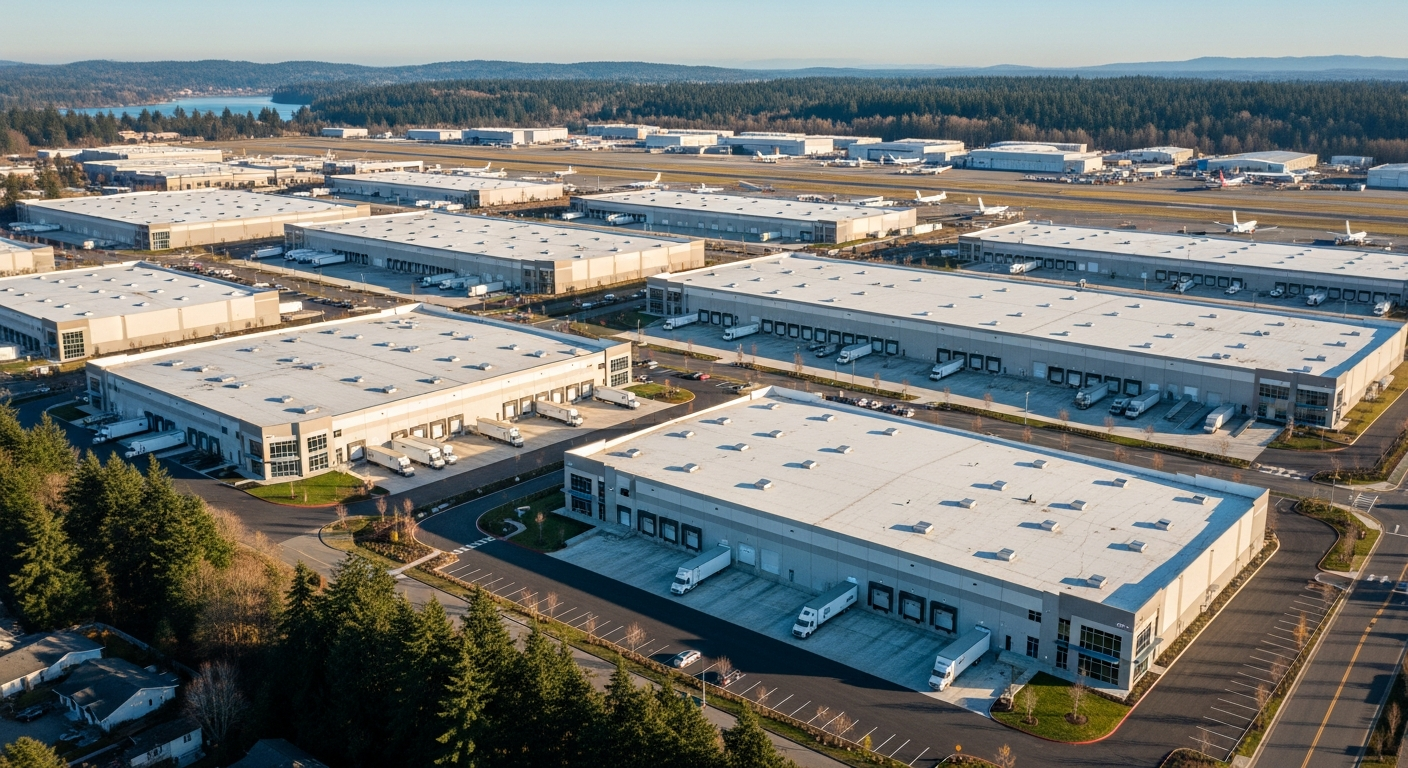
    If you’re an Everett-area business looking for industrial or warehouse space in 2026, the market conditions haven’t been this favorable in over a decade. Snohomish County’s warehouse and industrial rents are running $0.70 to $1.00 per square foot monthly (NNN), making it the most affordable industrial submarket in the entire Puget Sound region, according to WareCRE’s 2026 Seattle Warehouse Market Report. That’s below Southend markets like Kent and Renton, below Pierce County, and well below the Seattle in-city markets at the top of the range.

    To put that in annual terms: $0.70 to $1.00/SF monthly is $8.40 to $12.00/SF annually on a triple-net lease. For a 20,000-square-foot distribution or manufacturing facility, that’s $168,000 to $240,000 per year in base rent — before operating expenses that you’re responsible for as a tenant under NNN terms, but still well below what comparable space costs in King County.

    And those asking rents are the ceiling right now, not the floor. Kidder Mathews’ Q1 2026 Seattle Industrial Market Report shows vacancy at 10.39 percent across the Seattle metro industrial market, up from 9.74 percent at year-end 2025. At that vacancy level, with net absorption running negative (-130,751 square feet absorbed in Q1 2026) and only two speculative projects totaling 478,740 square feet under construction across the entire market, landlords are dealing. Effective rents — after concessions like free rent periods and tenant improvement allowances — are running below the published asking rates across the region.

    The Market Context: Why It’s the Best Tenant Window in a Decade

    The Puget Sound industrial market is correcting from a 2021-2022 boom cycle that pushed vacancy to historic lows. Speculative development that was planned during that peak is now delivering into a softened demand environment. The result is the most tenant-friendly industrial market the region has seen in more than ten years.

    Cushman & Wakefield’s April 2026 Industrial MarketBeat report describes the national picture this way: “Peak industrial vacancy likely in rearview mirror as demand holds and supply slows.” The national vacancy rate ended Q1 2026 at 7.0 percent — flat with year-end 2025, and 10 basis points below the Q3 2025 peak. The West region runs hotter than the national average at 7.9 percent, and Seattle specifically came in at 9.7 percent for Q1 2026.

    That 9.7 percent Seattle metro figure blends markets with very different profiles — Southend logistics hubs, South Seattle last-mile space, and Eastside flex. Snohomish County’s position within that range reflects its role as the region’s industrial value market: strong fundamentals, affordable rents, and proximity to the Port and to Paine Field’s aerospace manufacturing cluster without the price premium of South King County.

    Tariffs have added a wrinkle to the demand picture. Container volume growth at the Northwest Seaport Alliance reversed from 16 percent year-over-year to 0.2 percent, according to WareCRE’s 2026 report — a direct effect of tariff uncertainty on import volumes. For Everett specifically, which handles breakbulk and project cargo rather than containerized imports, this tariff impact is less acute than it is for the container-focused markets south of Seattle. But it’s part of the broader softening that has tilted conditions toward tenants.

    What This Means for Everett Businesses Specifically

    For businesses in the Everett corridor — manufacturing, distribution, aerospace supply chain, construction materials — Q1 2026 is the moment to renegotiate or explore. A few specific scenarios:

    If you’re renewing a lease: Don’t auto-renew. Take this market to your landlord and negotiate. Vacancy is up, absorption is negative, and landlords are offering concessions that weren’t available 18 months ago. Free rent periods, tenant improvement allowances, and rate reductions are all on the table in a 10-percent-vacancy market.

    If you’re looking for your first industrial space: Snohomish County’s $0.70 to $1.00/SF range gives you significant square footage for your budget. The Port of Everett’s bonded warehouse space, Norton Terminal cargo yard, and on-dock rail connection make this a particularly attractive location for businesses with freight-intensive operations.

    If you’re an aerospace or defense supplier: The Port of Everett Seaport — which just landed an $11.25 million federal grant to rebuild Pier 3 — is actively expanding its cargo-handling capacity. Industrial space near the Port and near Paine Field puts you in the middle of that ecosystem at the market’s most affordable price point.

    The Port’s Industrial Footprint: What’s Already There

    The Port of Everett is not just a transshipment point — it’s an industrial anchor. The Seaport campus includes Norton Terminal (40 acres, paved, lit, and secured), bonded warehouse space, a 15-acre secondary cargo yard, 40-foot MLLW deep-water access, and on-dock rail. That infrastructure supports freight-intensive tenants at a scale that most Puget Sound industrial parks can’t replicate.

    The Port’s broader economic footprint — $21 billion in U.S. exports annually, 40,000-plus jobs supported, $433 million in state and local tax revenues — makes Snohomish County’s industrial corridor one of the most economically active in the Pacific Northwest, despite not getting the same press as South King County’s distribution hubs.

    The Snohomish County office market also showed improvement in Q1 2026, with vacancy ticking down to 10.7 percent and posting a third consecutive quarter of positive net absorption. The industrial and office markets are telling a consistent story: Snohomish County is a market with more space available than King County, at lower prices, and with occupiers slowly returning.

    What Comes Next

    With only two industrial construction projects totaling 478,740 square feet active across the Seattle metro, new supply isn’t going to flood the Snohomish County market in the next 12 to 18 months. Cushman & Wakefield’s assessment — that peak vacancy may be behind us — suggests the window of maximum tenant leverage may be closing at the national level, even if local conditions lag that trend by a quarter or two.

    For Everett: the Pier 3 rebuild will take multiple years from planning through construction, but when it’s done, the Port will have a pier capable of handling more diverse and heavier freight. That means more industrial activity flowing through the waterfront corridor, more demand for warehouse and staging space near the Seaport, and a strengthened case for industrial site selection decisions that prioritize proximity to the Port.

    Right now, $0.70 to $1.00/SF is the entry price. That’s the Snohomish County advantage — and in this market, it’s also the moment to use it.

    Frequently Asked Questions

    What is the average warehouse rent in Snohomish County in 2026?

    Snohomish County warehouse rents are approximately $0.70 to $1.00 per square foot monthly (NNN) in 2026, making it the most affordable industrial submarket in the Puget Sound region. The broader Seattle metro ranges from $0.70 to $1.60/SF monthly.

    Is the Seattle industrial real estate market a buyer’s or tenant’s market right now?

    As of Q1 2026, it is the most tenant-friendly industrial market in over a decade. Vacancy is at 10.39 percent across the Seattle metro, net absorption was negative in Q1 2026, and landlords are offering concessions including free rent and TI allowances.

    How does tariff uncertainty affect the Snohomish County industrial market?

    Tariffs reversed container volume growth at the Northwest Seaport Alliance from 16 percent year-over-year to 0.2 percent, softening demand in logistics-heavy submarkets. Snohomish County and the Port of Everett, which focus on breakbulk and project cargo rather than containerized imports, are somewhat insulated from this trend.

    Where is industrial space available near the Port of Everett?

    The Port of Everett Seaport campus includes Norton Terminal (40 acres), bonded warehouse space, a 15-acre secondary cargo yard, and on-dock rail. Additional industrial space in the Everett corridor is available through commercial brokers; the Port’s business development team can also connect businesses with Port-adjacent space options.

    Is now a good time to lease industrial space in Everett?

    Q1 2026 represents favorable conditions for tenants: vacancy is elevated, new supply is limited, and landlords are offering concessions. Cushman & Wakefield’s April 2026 report suggests peak industrial vacancy may be in the rearview nationally, which means the current window of maximum tenant leverage may be narrowing.

  • How $23 Million in Housing Money Moved Without a Tax Vote: A 2026 Civic Watcher’s Guide to Snohomish County’s April 24 Award

    How $23 Million in Housing Money Moved Without a Tax Vote: A 2026 Civic Watcher’s Guide to Snohomish County’s April 24 Award

    Featured Snippet

    **How did the Snohomish County Council move $23 million for housing on April 24, 2026 without raising taxes?**

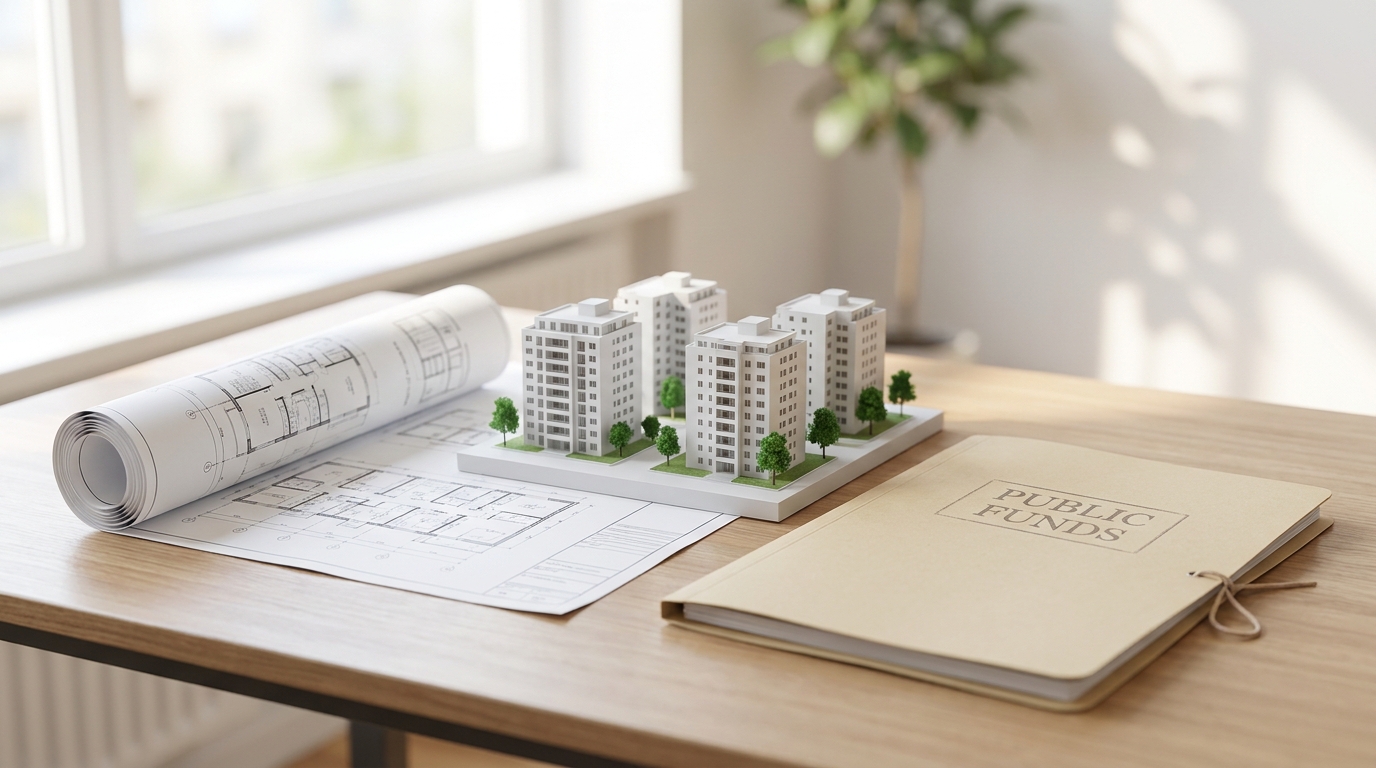
    The funding flowed out of the county’s Housing and Behavioral Health Capital Fund, which is fed by two voter-authorized sales taxes specifically earmarked for affordable and supportive housing. The Human Services Department screened applications, recommended a slate of six projects, and the Council voted unanimously to allocate the money. No tax rate change, no new fee — voter-authorized revenue moved into specific capital projects.


    For civic watchers — neighborhood association members, council-meeting attendees, and Everett residents tracking how local government decisions actually get made — Snohomish County’s April 24, 2026 housing award is a case study in how voter-authorized revenue moves into specific projects without a tax vote.

    This is the civic mechanism explained.

    The Funding Stream — Two Voter-Authorized Sales Taxes

    Washington state law allows counties to levy two specific dedicated sales taxes for housing:

    • The 0.1% sales tax for affordable housing — authorized at the local level under state law and dedicated to construction or operation of affordable housing
    • The behavioral health and treatment sales tax — authorized at the local level under state law and dedicated to chemical dependency, mental health treatment, and the housing-and-services that support those populations

    In Snohomish County, voters authorized both taxes. The revenue flows continuously into the county’s Housing and Behavioral Health Capital Fund. That fund accumulates between capital allocations.

    The April 24 vote was the allocation step — the Council deciding which specific projects receive money the fund had already collected.

    The Application and Screening Process

    The Council does not pick projects directly. The county’s Human Services Department runs a competitive application process:

    1. Eligible nonprofits and developers submit applications for capital funding

    2. Human Services Department staff screen applications against statutory eligibility (project type, populations served, AMI tiers, geographic location, financing readiness)

    3. Staff produce a recommended slate of projects ranked or grouped by category

    4. The Council reviews the slate and votes

    In April 2026, that process produced a recommended slate of six projects totaling roughly $23 million. The Council adopted the slate unanimously.

    For civic watchers, that’s the procedural anchor: a unanimous vote on a staff-recommended slate is a signal that the Council and Human Services Department had aligned on screening criteria before the vote. Material disagreement at the council table on a fund of this size would have shown up in split votes or amendments.

    The Six Projects — Three In Everett, Three Elsewhere

    The April 24 award allocated:

    • $5.8 million to the Everett Gospel Mission — 172-bed shelter expansion at 3530 Smith Avenue, total project ~$30M, October/November 2026 construction start
    • $4.2 million to Helping Hands Project — 28-unit Broadway 33 affordable apartments at 2410 and 2412 Broadway, completion February 2028
    • A grant to Everett Station District Alliance — 58-unit transit-oriented building at 3102 Smith Avenue, with 15 units at 30% AMI
    • Three additional grants to projects outside Everett city limits but inside Snohomish County, totaling roughly $13 million

    The geographic split — three Everett, three other-county — reflects two facts: Everett is the largest city in the county and houses the largest concentration of homeless services demand, but the regional shelter and behavioral health network depends on capacity in Lynnwood, Marysville, and other county jurisdictions.

    Why The Vote Was Unanimous

    Three procedural conditions tend to produce unanimous capital allocation votes in Washington counties:

    1. Pre-screened applicant slate. The Human Services Department’s recommendation reduces project-selection contention at the council table.

    2. Dedicated fund. Because the money is voter-authorized for housing, the council is not deciding “housing vs. some other county priority.” It is deciding “which housing projects.”

    3. Geographic balance. Three Everett, three other-county. Council members representing different districts each saw projects funded inside or near their constituencies.

    When all three conditions are present, the political math at the dais is straightforward.

    The Stack-Up With Other Local Capital

    The county’s $5.8 million to the Mission stacks on top of:

    • City of Everett funding — committed earlier
    • Prior philanthropic giving — to the Mission directly
    • A state legislative allocation approved earlier in 2026

    Total project cost roughly $30 million. The county grant covers about 19% of that capital stack. The pattern matters: large supportive housing capital projects in this state typically require three to five public and philanthropic funding sources to assemble. The county’s award is a piece, not the whole.

    What’s Next on the Civic Calendar

    Civic watchers tracking the project pipeline should expect:

    • City of Everett land use and design review — for each of the three Everett-located projects, before permits issue
    • Construction notice and impact mitigation — published by the city as schedules firm
    • Annual capital fund reporting — the Housing and Behavioral Health Capital Fund publishes annual reports on revenue collected, project balances, and pipeline

    For council attendees and neighborhood association members, the months between the April 24 allocation and the construction start (October/November 2026 for the Mission) is the window for any neighborhood-level engagement on design review, traffic, and operational expectations.

    How This Connects to Stations Unidos and the NR-MHC Conversation

    The April 24 vote does not stand alone. In the same county and city, three other anti-displacement and affordable-housing initiatives are moving in parallel:

    • Stations Unidos — rebranded community development corporation with anti-displacement mandate covering the Station District and Casino Road
    • The proposed NR-MHC zone — protects seven manufactured home parks against redevelopment; public hearing May 6, 2026
    • The 2027 budget conversation — which includes housing-related discretionary spending choices not covered by the dedicated capital fund

    For civic watchers, the four together (April 24 award, Stations Unidos, NR-MHC zone, 2027 budget) describe a city and county actively allocating against affordability pressure on multiple instruments at once.

    Frequently Asked Questions

    Q: Did the Council raise taxes on April 24?

    A: No. The Council voted to allocate roughly $23 million from the Housing and Behavioral Health Capital Fund — money already collected from two voter-authorized sales taxes. There was no tax rate change.

    Q: What two sales taxes fund the Capital Fund?

    A: The 0.1% sales tax for affordable housing and the behavioral health and treatment sales tax — both authorized under Washington state law and approved by Snohomish County voters.

    Q: Who screens applications for the housing capital fund?

    A: The Snohomish County Human Services Department screens applications, ranks or groups them, and produces a recommended slate of projects for Council consideration.

    Q: Why was the April 24 vote unanimous?

    A: Three procedural conditions were aligned: a pre-screened applicant slate from Human Services, a dedicated voter-authorized funding stream, and geographic balance across the recommended projects (three in Everett, three elsewhere in the county).

    Q: How much of the Everett Gospel Mission’s $30M project is the county grant?

    A: $5.8 million — about 19% of the project’s total capital stack. The remaining ~$24M comes from City of Everett funding, philanthropic giving, and a 2026 state legislative allocation.

    Q: When can Everett residents engage with the design and construction process?

    A: At the city’s land use and design review stages for each of the three Everett-located projects. The City of Everett’s planning portal publishes hearing notices and comment windows. Construction notification is separate, published as schedules firm.

    Q: How does this vote connect to other Everett-area housing initiatives?

    A: It runs parallel to Stations Unidos (anti-displacement CDC), the proposed NR-MHC mobile home park zone (May 6, 2026 hearing), and the city’s 2027 budget conversation. Together these are the four active Everett-area instruments addressing affordability and displacement pressure in 2026.


  • Everett’s Wetland and Stream Rules Are About to Change: What the Critical Areas Update Means for Anyone Building, Buying, or Living Near Water

    Everett’s Wetland and Stream Rules Are About to Change: What the Critical Areas Update Means for Anyone Building, Buying, or Living Near Water

    What is this? Everett is in the middle of updating its Critical Areas Regulations — the section of the Everett Municipal Code that governs how close anything new can be built to a wetland, a stream, a steep landslide-prone slope, or a designated wildlife habitat. The City Council held a public hearing on the proposed update on April 15, 2026 and is moving toward a vote in the coming weeks. The new rules adjust buffer widths, mitigation requirements, and the technical standards developers must meet on parcels that touch any of those features. If you own land, are looking to buy, or live near Forest Park, the Snohomish River corridor, Howarth, Pigeon Creek, or the city’s bluff edges, the update affects what can — and cannot — be built around you.

    If you have ever wondered why a vacant Everett lot has stayed vacant for years even when home prices were climbing, the answer is often hidden in a single section of city code: Chapter 19.37, the Critical Areas Regulations.

    That chapter — which protects wetlands, streams, frequently flooded areas, landslide-prone slopes, and important wildlife habitat — sets the buffer widths, building setbacks, mitigation requirements, and technical-study requirements every Everett property owner has to follow before disturbing those features. It is also one of the most frequently misunderstood parts of the municipal code, because it cuts across so many properties. Lots near Howarth Park, Pigeon Creek, Forest Park, the Snohomish River edge, and the city’s many ravine-cut blocks all carry critical-area overlays.

    This week, Everett’s update of those regulations is closer to adoption than it has been at any point in the multi-year process. Here’s what’s actually in front of the council, what would change for residents and developers, and where the city is in the timeline.

    What the City Is Required to Do

    Critical Areas Regulations updates are not optional. Under Washington’s Growth Management Act, every city in the state has to periodically review and update its critical-area rules to incorporate Best Available Science — the current scientific consensus on what actually protects sensitive habitat.

    Everett’s last comprehensive update was in 2007. The state’s deadline for the current periodic update was December 31, 2025, which the city has been working toward for several cycles. The city published a first review draft on October 31, 2025 and a second review draft on February 13, 2026, the latter of which is the version under active council consideration.

    In other words: the council does not have the option of leaving the rules alone. The only choice is what version to adopt and on what schedule.

    What Critical Areas Are Covered

    The Everett Municipal Code defines five categories of critical areas:

    • Wetlands — areas saturated long enough to support hydrophytic vegetation
    • Streams and other Fish and Wildlife Habitat Conservation Areas — including riparian corridors and habitat for state-listed species
    • Frequently flooded areas — typically the regulatory floodplain
    • Geologically hazardous areas — landslide-prone slopes, erosion zones, and seismic hazard areas
    • Critical aquifer recharge areas — zones where surface activity affects groundwater used for drinking water

    Each category has its own buffer requirement and its own mitigation standard, and a single parcel can be touched by more than one. A property near a wetland on a steep slope is subject to both wetland and geologic-hazard rules, with the more restrictive prevailing.

    What’s Changing in the February 13 Draft

    The February 13 draft preserves the basic five-category framework but updates several technical components that determine how the rules apply on a given lot. Among the most consequential:

    • Wetland buffer widths. The draft updates Tables 37.2 and 37.3 — the wetland buffer width tables — to reflect current Best Available Science. In practice, that adjusts how many feet of undisturbed land must remain between a wetland edge and a building, fence, or hard surface. For some wetland categories, the draft buffers are wider than the rules currently in place.
    • Stream buffer standards. The draft revises stream classifications and the corresponding buffer widths. Stream buffers were one of the most-discussed elements at the planning commission’s February 17 hearing.
    • Mitigation sequencing. The draft tightens the standard sequence applicants have to follow when an impact to a critical area is unavoidable: first avoid, then minimize, then compensate, in that order.
    • No-net-loss standard. The draft preserves the existing short-term goal of no net loss of critical-area functions and values, and adds a long-term goal of a net gain.

    The city’s posted public document — Everett Critical Area Regulations Periodic Update REVIEW DRAFT February 13 2026 — runs to several hundred pages. Comments and responses through April 1, 2026 are also published on the city’s website.

    What Stakeholders Have Said

    The hearings and comment record show a familiar split on critical-area rules.

    • The Port of Everett submitted comments dated January 8, 2026 raising concerns about how the proposed buffers and mitigation requirements would interact with redevelopment of port-owned waterfront parcels.
    • The Master Builders Association of King and Snohomish Counties (MBAKS) submitted comments at the January 28 planning commission meeting raising concerns about the cost and feasibility implications of wider buffers on infill parcels.
    • The Washington State Department of Fish and Wildlife submitted comments dated March 2, 2026 supporting science-based buffers and asking for additional protections for habitat-conservation areas.

    Each set of comments is published on the city’s website at everettwa.gov. The council saw all of them before the April 15 public hearing.

    What Happens Next

    The procedural path runs roughly like this:

    1. Planning commission recommendation — issued February 17, 2026
    2. Council briefings and discussions — held in March and April 2026
    3. Council public hearing — held April 15, 2026
    4. Council action on an ordinance — anticipated in the weeks following the public hearing

    The exact council vote date has not been finalized as of this article, but the city’s project documents indicate the council expects to act in the spring of 2026.

    Once adopted, the new ordinance applies to any new permit application after the effective date. Pending applications already in the pipeline are typically processed under the rules in place when they were filed (a “vested rights” question that applicants and city staff handle on a case-by-case basis).

    Why This Matters for Regular Residents

    The Critical Areas Regulations update is not the kind of city-hall story that lights up social media. It does not have a dollar figure attached, and the most consequential changes are technical adjustments in tables of buffer widths.

    But for an Everett resident, the practical reach is broad:

    • If you own a vacant or underbuilt lot anywhere near a wetland, stream, slope edge, or known habitat area, the buffer and mitigation rules in the new ordinance will determine what you can do with it.
    • If you live in a neighborhood with sensitive features — Pigeon Creek, the Snohomish River edge, the bluff that drops off Bayside, the wooded ravines that run between Forest Park and the south end — the rules determine what your neighbors can build.
    • If you are watching environmental quality on the Snohomish River and Port Gardner Bay, buffer standards on contributing streams are one of the few city-level levers that materially affect what runs into the bay over time.

    This is also one of the few regulatory updates Everett does where the technical content matters far more than the political framing. The buffers either reflect current science or they don’t. The mitigation sequence is either tight or it isn’t. Two parcels with identical zoning can have very different development potential depending on what the critical-areas overlay says.

    What to Do Next

    If you want to engage:

    • Read the documents. The City of Everett’s 2025 Critical Area Ordinance Update page hosts the February 13 review draft, the comment-and-response document, and all stakeholder letters at everettwa.gov/3354/2025-Critical-Area-Ordinance-Update.
    • Email comments to staff. The city has accepted written comments at cao@everettwa.gov.
    • Attend a council meeting. The City Council meets at 3002 Wetmore Avenue. Regular meetings are at 6:30 p.m. on most Wednesdays; fourth Wednesdays start at 12:30 p.m. Agendas are posted at everettwa.gov/AgendaCenter. The council’s next action on the critical-areas ordinance will be on a regular meeting agenda.
    • Check your parcel. If you own land in Everett and want to know whether a critical-area overlay touches your parcel, the city’s GIS map and the Permit Center can both tell you. The Permit Center is at City Hall, 2930 Wetmore Avenue.

    Frequently Asked Questions

    Will my house become non-conforming if the rules change?
    For an existing legally permitted structure, no. Critical-areas rules apply to new development and to expansions of existing development. An existing house in a buffer is generally treated as a legal nonconforming use, with limited rules around expansion and replacement.

    If buffers get wider, can the city take part of my yard?
    No. The buffer is a regulatory setback that limits what new construction or land disturbance can happen there. It is not a property taking. The land remains yours.

    Does this affect routine yard work?
    Generally no for ordinary maintenance. Significant tree removal, grading, structures, or land disturbance within a critical area or its buffer typically requires a permit and may require an environmental review.

    How does this connect to the Comprehensive Plan?
    The Critical Areas Regulations are one of the implementing tools of the city’s Comprehensive Plan. The plan sets the policy direction; the critical-areas chapter is where the specific land-use rules live.

    When does the new ordinance take effect?
    After the council adopts an ordinance and the city publishes the adoption notice. Effective dates are typically set 30 days after publication unless the ordinance specifies otherwise.

    Are there exemptions?
    Yes — the code includes a list of activities that are exempt from full review (certain routine maintenance, emergency repairs, some agricultural activity). The exemption list is part of the chapter and is being reviewed in the update.

    Will this change be appealed?
    Critical-areas updates are sometimes appealed to the Growth Management Hearings Board. Whether anyone files an appeal will depend on the final adopted text and which stakeholders feel their issues weren’t resolved.


    Sources: City of Everett 2025 Critical Area Ordinance Update project page (everettwa.gov); Everett Critical Area Regulations Periodic Update REVIEW DRAFT, February 13, 2026; Planning Commission record, February 17, 2026; comments-and-responses document dated April 1, 2026; Port of Everett comment letter, January 8, 2026; MBAKS comment letter, January 28, 2026; WDFW comment letter, March 2, 2026; City Council public hearing, April 15, 2026; Washington State Growth Management Act; Everett Municipal Code Chapter 19.37.