Tag: Everett Real Estate 2026

  • Snohomish County’s Housing Inventory Just Jumped 51.8% — What That Means for Everett Buyers and Sellers Right Now

    Snohomish County’s Housing Inventory Just Jumped 51.8% — What That Means for Everett Buyers and Sellers Right Now

    For years, the Snohomish County housing market operated in a single gear: not enough homes, too many buyers, prices up. What we’re seeing in the spring of 2026 is a gear shift — and if you’re buying or selling in Everett right now, the numbers look meaningfully different than they did twelve months ago.

    The Northwest Multiple Listing Service’s March 2026 market snapshot showed 1,900 active residential listings across Snohomish County, representing 2.8 months of supply — up sharply from the sub-1.5-month lows that defined the pandemic-era seller’s market. The county posted a 51.8% year-over-year increase in total active listings, putting it among the top five counties in NWMLS’s 27-county territory for inventory gains. And yet: median sold price held at $738,000. Homes are still closing at 99.9% of list price. More than half of all listings — 54.9% — went pending within the first 30 days.

    What’s happening is a collision between supply recovery and rate pressure, and the outcome is a market that is neither the frenzy of 2021 nor the freeze of late 2023. It’s something more complicated — and more nuanced by price band, neighborhood, and property type than any single headline can capture.

    What the Inventory Surge Actually Means

    A 51.8% jump in active listings sounds dramatic, and in some ways it is. At the depth of the supply crisis in 2021 and 2022, buyers in Snohomish County were competing for a fraction of the homes that are now on the market. The correction is real: there are more options, more time to think, and less risk of getting swept into a bidding war on a property you’ll regret.

    But context matters. Nationally, economists generally define a balanced market as 4–6 months of supply. At 2.8 months, Snohomish County is still solidly in seller’s territory by that standard. What’s changed isn’t the fundamental balance of power — it’s the intensity. Sellers are no longer in a position to list at any price and watch offers pile up. Buyers have time to inspect, to negotiate, to walk away if something doesn’t feel right.

    The data shows that distinction clearly. Average showings per listing dropped to 4.8, meaning buyers are doing fewer casual tours and more intentional ones. The average number of showings before a home went pending was 11 — a number that would have seemed impossibly high during the 3–4 showing average of peak seller’s market years, but reflects a market where buyers are being deliberate rather than desperate.

    What Rising Mortgage Rates Are Doing to the Market

    The inventory increase isn’t happening in isolation. Mortgage rates are doing their part to put a lid on activity. Rates briefly dipped below 6% in February 2026, which triggered a small rush of buyers who had been waiting on the sidelines. By late March, rates climbed back to 6.38%, and that pop of demand faded. Closed sales in March across the NWMLS territory came in at 5,417, up just 0.2% year over year — essentially flat despite the inventory recovery that, in theory, should have enabled more transactions.

    For Everett specifically, the rate environment is pushing buyers into decisions that a lower-rate market would make obvious. At 6.38%, a $577,000 Everett home (approximately the city’s early-2026 median) requires a monthly principal and interest payment of roughly $3,100 on a 20%-down conventional loan — before taxes, insurance, and HOA. At the 30% of income affordability threshold, that requires a household income of approximately $124,000 annually. The Everett area median household income in 2026 sits well below that threshold, which is why first-time buyers are stretched, why rental demand at buildings like Waterfront Place’s Sawyer and Carling remains strong despite a soft rental market, and why conversion projects like the Econo Lodge-to-apartments project in Silver Lake are filling a real need.

    By Property Type: Three Very Different Stories

    The Snohomish County housing market in early 2026 is not one market — it’s three, layered by property type, and each is behaving differently.

    Residential Resale: Competitive But Not Frenzied

    For existing single-family homes, the market is still tilted toward sellers, but the tilt is gentler. Inventory sits at approximately 2.0 months for resale properties, and homes are closing at 99.8% of list price on average. Days on market has lengthened modestly. The $738,000 median price is up 1.2% year over year — still appreciating, but at a rate that buyers can factor into a plan rather than a rate that makes them feel like they’re chasing a moving target.

    The practical implication for Everett buyers: you have time to make an offer you feel good about. You’re unlikely to win at list price on a well-priced home in a good neighborhood, but the days of writing five offers before getting accepted at 15% over asking are gone for most price ranges.

    Condos: The Strongest Performer in the County

    Condominiums are the counterintuitive winner in the current market. The average condo price in Snohomish County rose 4.4% year over year to $586,261 — outperforming single-family appreciation by more than three percentage points. Inventory expanded to 2.7 months, giving buyers meaningful choice without triggering price softness. In Everett specifically, condos were moving in a 22-day median with sellers achieving 99% of list price as of early 2026.

    This pattern reflects the affordability ceiling at work. At a $586,000 average, condos give entry-level buyers a path into Snohomish County ownership that single-family homes at $738,000 median no longer provide at 6.38% rates. For investors, the combination of relative affordability, strong occupancy rates at waterfront rental properties, and rising condo values makes the sub-$600K condo segment worth watching closely through the rest of 2026.

    New Construction: The Buyer’s Opportunity

    New construction is where the current market most favors buyers. The average new construction price in Snohomish County came in at $923,988 in early 2026 — down 2.3% year over year — while closed new construction sales dropped 34.3%. Builders are sitting on inventory they need to move, and that creates leverage for buyers who are flexible on timing and location.

    Builders are actively offering incentives: rate buy-downs, closing cost contributions, and in some cases price adjustments on standing inventory. For a buyer who doesn’t need to be in a specific neighborhood and can wait for a completed unit, the new construction segment in Snohomish County in 2026 offers some of the best negotiating conditions in years.

    What This Means for Everett Specifically

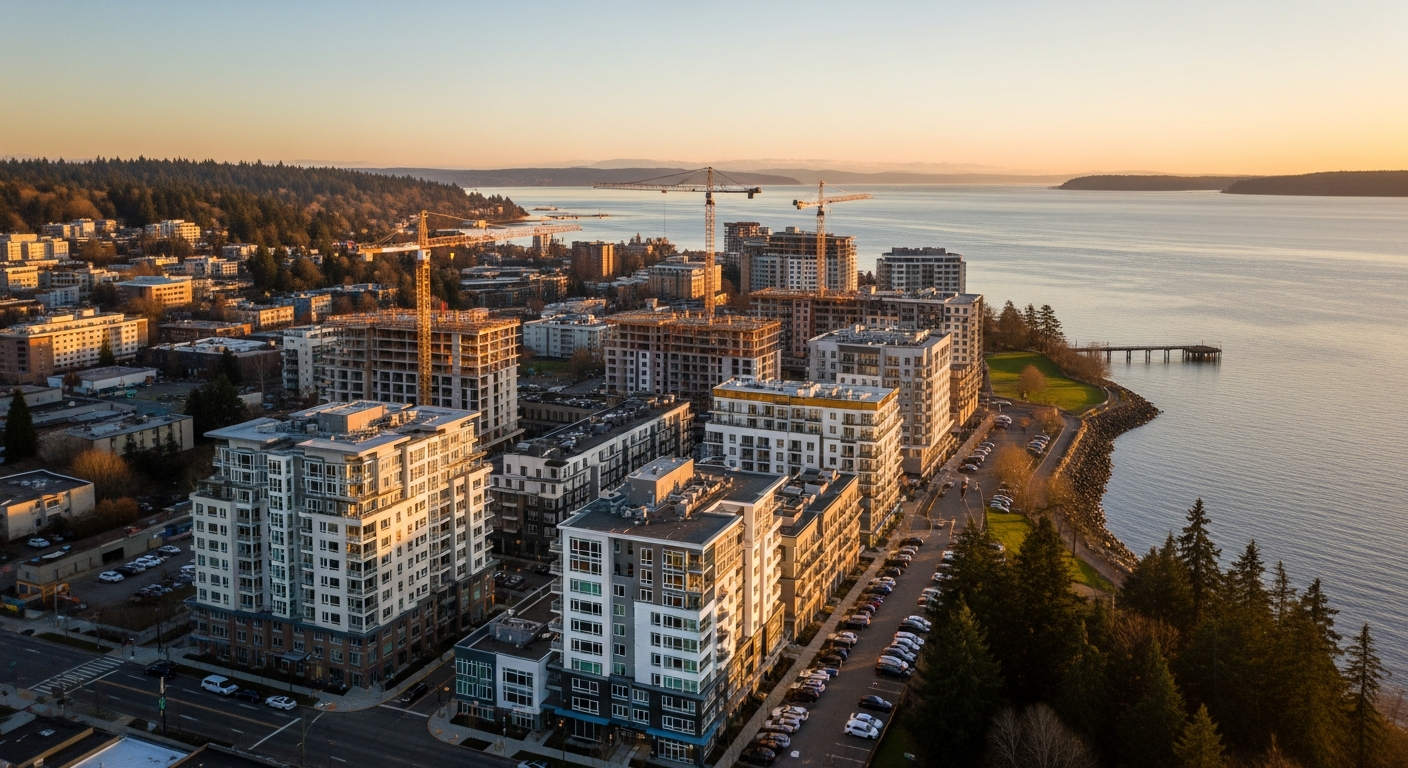
    The county-level numbers describe a broad trend, but Everett’s submarket has its own dynamics. Downtown Everett and the waterfront corridor saw stronger appreciation earlier in 2026 — roughly 11.4% year over year — compared to the -7.5% softness in the 98208 zip code (south and east Everett). Northwest Everett, driven by new infrastructure investment including the recently opened Edgewater Bridge and ongoing waterfront development, posted the strongest appreciation in the city at approximately 22.1%.

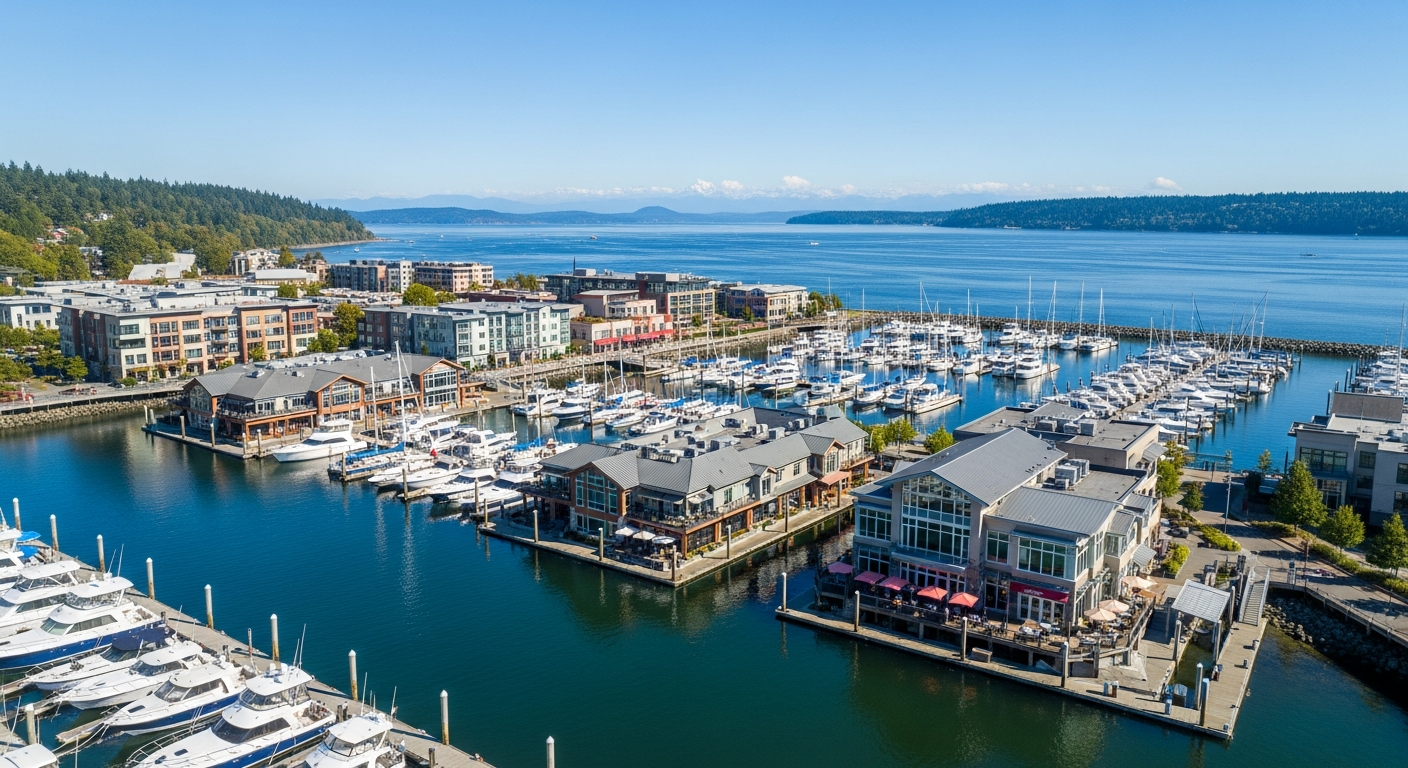
    The macro picture for Everett: the city’s development fundamentals remain strong. The Port of Everett waterfront is attracting tenants and investment. The downtown stadium received its $10.6M design authorization. The Millwright District Phase 2 is building out. Boeing’s North Line is ramping. Snohomish County’s industrial market is the most affordable in Puget Sound, drawing logistics users. These are demand generators, and demand generators support home values even when rates are working against them.

    Playbook for Buyers and Sellers in This Market

    If You’re Buying

    You have more time and more leverage than you did 18 months ago, but you’re not in a buyer’s market by any traditional definition. Get pre-approved — sellers still want certainty. For resale homes, coming in slightly below list on properties that have been sitting more than 21 days is reasonable. For new construction, ask about rate buy-downs before accepting the sticker price; builders have flexibility they didn’t have in 2023. If condos fit your lifestyle, the 4.4% appreciation and relative affordability make them worth serious consideration as a first purchase.

    If You’re Selling

    Price accurately from day one. The 54.9% of listings going pending in the first 30 days tells you that well-priced homes are still moving fast. The homes that are sitting are overpriced relative to condition and location. Sellers who price to the market will sell. Sellers who price to last year’s comparable sales will find themselves doing a price reduction they could have avoided. With 1,900 active listings, buyers have enough alternatives to walk away from wishful pricing.

    Frequently Asked Questions

    What is the median home price in Snohomish County in 2026?

    The median sold price for homes in Snohomish County was $738,000 in March 2026, up 1.2% year over year, according to NWMLS data.

    How much did Snohomish County housing inventory increase?

    Active listings in Snohomish County increased 51.8% year over year as of March 2026, one of the five largest inventory gains in the 27-county NWMLS territory.

    What are current mortgage rates for Snohomish County buyers?

    Mortgage rates returned to approximately 6.38% by late March 2026 after briefly dipping below 6% in February, which stalled some buyer activity despite improved inventory.

    How long are homes sitting on the market in Snohomish County?

    Homes in Snohomish County are selling in an average of 35 days as of early 2026, with 54.9% of listings going pending within the first 30 days.

    Is the Snohomish County housing market a buyer’s or seller’s market in 2026?

    With 2.8 months of inventory, the market is technically still a seller’s market (balanced typically requires 4–6 months), but conditions are significantly more favorable for buyers than 2021–2022, with more options, more negotiating room, and less bidding war pressure.

    What is happening with condo prices in Snohomish County?

    Condominiums are outperforming single-family homes, with the average condo price rising 4.4% year over year to $586,261. In Everett specifically, condos are selling in a 22-day median at 99% of list price.

  • Everett’s Econo Lodge Is Becoming 124 Studio Apartments — What Sage Investment’s $16.5M Conversion Means for Silver Lake

    Everett’s Econo Lodge Is Becoming 124 Studio Apartments — What Sage Investment’s $16.5M Conversion Means for Silver Lake

    Driving south on Highway 99 through Silver Lake, it blends into the visual noise: a two-story motel sign, a parking lot, the familiar beige of a budget chain that hasn’t quite kept up with the neighborhood. But the Econo Lodge at 9602 19th Street SE is in the middle of a $16.5 million transformation — and by August 2026, the sign will be gone and 124 people will be calling it home.

    Sage Investment Group, a Seattle-area real estate company that has been quietly working the Puget Sound motel-to-apartment conversion market, bought the property for $9.5 million and is putting another $7 million into the build-out. It’s one of the most straightforward housing additions Everett has seen in recent years: the building already exists, the units are already laid out, the plumbing is already in the walls. What Sage is doing is pulling out the hotel fixtures and replacing them with kitchens, modern bathrooms, and the infrastructure people need to actually live somewhere — not just sleep there on the way somewhere else.

    Why Hotel-to-Apartment Conversions Are an Everett Housing Strategy Now

    Everett doesn’t have a housing affordability problem that can be solved with one project. It has a supply problem that’s been building for years — and conventional apartment development, with its permitting timelines, construction costs, and financing gaps, isn’t closing that gap fast enough. The city’s median home price sits above $577,000 as of early 2026, apartment inventory is tightening (vacancy rates at Waterfront Place’s Sawyer and Carling buildings are at 95% occupancy), and new single-family construction in Snohomish County closed down 34.3% year over year in early 2026.

    Hotel-to-apartment conversions sidestep the most expensive parts of that development equation. The bones of the building are already there. The city doesn’t have to wait years for a ground-up permit. The developer isn’t fighting soil conditions, utility connections, or a blank-page design process. They’re retrofitting something that already works as a structure and making it work as a home instead.

    Sage has been running this playbook across the region. In January 2026, the company picked up another closed motel in the Seattle metro for a similar conversion. The Econo Lodge deal is their Everett execution of a strategy they know. The $9.5M purchase price and $7M in renovations — $16.5M total — delivers 124 units at roughly $133,000 per door, a fraction of what ground-up multifamily development typically costs in the region.

    What the 9602 19th Street Location Means for Residents

    The Silver Lake location isn’t downtown Everett, but it’s not a dead zone either. The property sits near the intersection of 19th Street SE and Highway 99, which puts it within range of Everett’s major employment corridors. Boeing’s Paine Field campus is about five miles north. The Silver Lake area has its own grocery infrastructure, access to Community Transit routes, and proximity to the Snohomish River trail system.

    For the renter Sage is targeting — the “Missing Middle” occupant — location like this matters. These aren’t people choosing between the waterfront and a suburb. They’re workers who need a real address, a kitchen to cook in, and a reasonable commute. The Highway 99 corridor has transit access that connects to broader Snohomish County routes. As the Everett Transit consolidation into Community Transit moves forward (a process that could be formally voted on later in 2026), frequency and coverage on routes serving this corridor is expected to improve.

    Construction was set to begin in November 2025, with Phase 1 leasing opening in August 2026. Specific unit pricing wasn’t announced at the time of the project’s public filing, with Sage indicating rates would be available closer to the opening date. Units will include full bathrooms and kitchens — a significant upgrade from the motel-room baseline — and the company has positioned the project as market-rate housing for people earning moderate incomes who aren’t eligible for subsidized programs.

    The “Missing Middle” Problem Sage Is Trying to Solve

    The “Missing Middle” isn’t a buzzword — it’s a real gap in Everett’s housing market that has been widening for years. It describes people who earn too much to qualify for income-restricted affordable housing but too little to comfortably absorb Everett’s going market rents. In early 2026, average apartment rents across Everett sat around $1,849 per month according to market data — down about 2% year over year, but still requiring an annual income of roughly $74,000 to be considered affordable at the standard 30% of income threshold.

    Snohomish County’s office vacancy came in at 10.7% in Q1 2026, meaning there’s commercial demand generating employment — but the workers filling those jobs need somewhere to live. The $23 million in housing and behavioral health funding Snohomish County approved in April 2026 helps on the deeply subsidized end of the spectrum. What the Econo Lodge conversion helps with is the layer above that: people who are employed, stable, and just need a reasonably priced unit near their job.

    Studio apartments specifically serve a population that includes recent graduates, single workers early in their careers, seniors downsizing from larger spaces, and people relocating to take jobs in Everett’s growing industrial and aerospace sectors. With Boeing’s North Line ramping toward Rate 47 production this summer, there’s a real workforce influx expected — and those workers need places to land.

    How This Fits Into Everett’s Broader Housing Production Picture

    The Econo Lodge conversion doesn’t exist in isolation. It’s part of a wider shift in how Everett — and Snohomish County broadly — is adding housing supply. The city’s Critical Areas Ordinance update (passed April 2026) adjusted development rules near wetlands and stream buffers, affecting what’s buildable on undeveloped parcels. The county’s $23M housing award is funding three Everett projects, primarily deeply affordable units with behavioral health components. Eclipse Mill Park’s two-phase riverfront development in Lowell is adding open space that will raise property values — and pressure — in the Riverside corridor.

    The conversion model isn’t a magic solution, but it addresses a real problem with real speed. The motel footprint at 9602 19th Street SE — 39,658 square feet according to public records — produces 124 homes without breaking ground on new earth, without a years-long entitlement process, and without the financing complexity that stops ground-up multifamily deals from penciling in the current rate environment.

    Everett’s Cascade View neighborhood nearby has been quietly stable — owner-occupied, modest, not subject to the volatility of downtown or the waterfront. The addition of 124 rental units on the Highway 99 corridor adds density in a place that can absorb it without displacing an existing residential community.

    What Comes Next for the Project

    With construction underway since late 2025 and Phase 1 leasing targeting August 2026, the Econo Lodge conversion is on a short runway. Sage has not announced specific rent levels, but the “Missing Middle” positioning and market-rate framing suggests units will be priced at or below the prevailing Everett studio average — likely in the $1,200–$1,600 range, though that figure is our inference from regional comparables and not a confirmed Sage quote.

    The project won’t solve Everett’s housing shortage. But it adds 124 units to the supply side of a market that needs every unit it can get, delivers them faster than ground-up construction, and does it in a segment of the market — moderate-income workers, studios — that traditional apartment developers have historically underserved.

    For anyone interested in the project’s progress, the property is publicly visible at 9602 19th Street SE, and Sage’s timeline puts leasing launch at August 2026. We’ll update this when unit pricing and availability are announced.

    Frequently Asked Questions

    Where is the former Econo Lodge being converted into apartments?

    The property is located at 9602 19th Street SE in Everett, WA, near Silver Lake and the Highway 99 corridor in South Everett.

    How many apartments will the converted Econo Lodge have?

    124 studio apartment units, matching the former motel’s room count. Each unit will have a full kitchen and bathroom.

    Who is developing the Everett Econo Lodge apartment conversion?

    Sage Investment Group, a Seattle-area real estate company known for motel-to-apartment conversions across the Puget Sound region. They purchased the property for $9.5 million and are investing $7 million in renovations.

    When will the Everett Econo Lodge apartments open?

    Phase 1 leasing is expected to begin in August 2026. Construction began in late 2025.

    How much will rent be at the converted Everett Econo Lodge?

    Sage has not announced specific rent levels as of April 2026, stating pricing will be available closer to the opening date. The project is positioned as market-rate housing targeting “Missing Middle” renters — moderate-income workers who don’t qualify for subsidized housing programs.

    What is “Missing Middle” housing in Everett?

    “Missing Middle” refers to housing for people who earn too much to qualify for income-restricted affordable units but too little to comfortably afford market-rate rents. In Everett, with average rents around $1,849/month, that typically means workers earning $50,000–$80,000 annually.