Category: Everett Government

City council, mayor, public policy, bond measures, and civic issues.

  • Everett Just Voted to Study Annexing Mariner: What the $200,000 Decision Actually Means

    Q: What did the Everett City Council vote on April 8, 2026?

    A: The council approved a $250,000 budget amendment — $200,000 to fund a consulting study of potential annexation (with south Everett’s Mariner neighborhood as the top priority) and $50,000 for a subarea plan and community outreach in the Casino Road neighborhood. The Mariner area alone has roughly 21,000 residents, and Everett’s full urban growth area — the land the state already considers part of the city’s future footprint — contains about 47,690 people.

    Everett Just Voted to Study Annexing Mariner: What the $200,000 Decision Actually Means

    On Wednesday, April 8, 2026, the Everett City Council approved a $250,000 budget amendment that does two things most residents will hear very little about — but that could reshape the city more than any single vote in a decade. The bigger piece, $200,000, funds a consulting study of whether Everett should annex parts of its urban growth area, with the Mariner neighborhood in south Everett as Mayor Cassie Franklin’s stated top priority. The smaller piece, $50,000, will pay for community outreach and a subarea plan for the Casino Road neighborhood in 2026 and 2027.

    City spokesperson Simone Tarver called the vote “just a first step in the process.” That is a fair description. No one got annexed on April 8. No city boundaries moved. What moved is the starting line.

    Why This Vote Matters Even Though Nothing Changes on the Map

    Annexation — the legal process by which a city absorbs unincorporated county land and the residents on it — is one of the slowest-moving municipal decisions in Washington. It typically requires a study, a state boundary review, negotiations with Snohomish County over which city services replace which county services, fiscal modeling of whether the new revenue covers the new costs, and usually some form of voter approval. Everett last tried a large annexation in 2008 and abandoned the effort, citing the cost of providing services to the new areas.

    What the April 8 vote does is reopen that door. The $200,000 contract will hire a consulting firm to answer the questions Everett could not answer in 2008: would annexation actually pay for itself through property tax revenue and state-issued sales tax credits, or would it deepen an already difficult budget picture? City staff have said they look forward to “having more specifics to share as the progress moves forward.”

    What’s Actually in the Mariner Area

    The Mariner neighborhood sits mostly west of Interstate 5, south of the current Everett city limits. It includes portions of 4th Avenue West, Airport Road and 128th Street SW. About 21,000 people live there today. It is also home to Mariner High School, a Sno-Isle Libraries branch, several busy bus routes and — critical to the annexation math — a planned Sound Transit light rail station on the Everett Link Extension.

    During her State of the City address on March 6, Franklin singled out two Mariner-area landmarks as symbolic of the case for annexation: Mariner High School and the Dicks Drive-In location on Highway 99. “They have Everett addresses but don’t yet benefit from the full range of city services,” the mayor said, describing residents of the broader urban growth area. Eastmont, southeast of the current city, is also in scope for the study.

    If Everett ultimately annexed the full 47,690-person growth area, the city’s population would climb from roughly 111,000 today to about 159,000 — a roughly 43 percent increase. That scale of change is why Franklin has used the phrase “One Everett” to frame the idea publicly.

    What Mariner Residents Would and Wouldn’t Get

    Residents of unincorporated Snohomish County currently receive some services from the county (sheriff’s office patrol, county roads, county parks, some planning) and some from special districts (fire, water, library). Annexation generally transfers the county-provided services to the city, while special district services often continue under new contracts or are folded into city operations.

    In Everett’s case, that would mean the Everett Police Department — not the Snohomish County Sheriff’s Office — would patrol Mariner. Everett Public Works would take over local roads. Sno-Isle Libraries, which runs the Mariner branch today, would negotiate with the Everett Public Library system. Zoning, permitting, parks programming and neighborhood engagement would all shift to the city.

    The tax picture is where it gets complicated, and why the city is paying $200,000 to find out. Annexed residents would pay Everett’s property tax rate instead of the county’s, though Washington’s levy limits and the potential for state-issued sales tax credits (available to cities annexing more than 10,000 residents at once) change the net picture. The study is expected to model several scenarios, including a full Mariner annexation, a partial annexation, and leaving the status quo in place.

    The $50,000 Casino Road Piece

    The smaller half of the budget amendment is arguably more concrete in the short term. The $50,000 subarea plan for Casino Road — the diverse, densely populated corridor south of 41st Street that is already inside city limits — funds community engagement and land use planning in 2026 and 2027.

    Casino Road is already part of Everett. The subarea plan will update how the city zones, invests in and delivers services to the neighborhood. For residents, the practical output is a year of outreach meetings, surveys and planning workshops, followed by a land use plan that feeds into future decisions about housing, commercial corridors and public investment.

    How This Connects to Everett’s Bigger Fiscal Picture

    The annexation study does not exist in a vacuum. City finance staff have projected a $14 million general fund shortfall for the 2027 budget — a larger gap than the $12.6 million 2024 deficit that forced 31 layoffs and the 2024 property tax levy lid lift ballot measure that voters rejected.

    Franklin has publicly framed annexation as one lever among several in Everett’s structural revenue challenge. “We cannot cut our way to a sustainable future,” she said during the March 6 keynote speech, citing the need for “economic growth and new pathways to long-term, sustainable revenue.” Other levers on the table for the 2027 budget include regionalizing fire and library services, selective service cuts and another attempt at a property tax levy lid lift — all of which would require voter approval.

    What Happens Next

    With the budget authority approved, the city will now seek a contractor for the annexation study. A typical scope of work would include boundary analysis, demographic and fiscal modeling, a service cost assessment, community outreach in the target areas, and a final report with recommended paths forward. Based on Everett’s stated timeline for the Casino Road subarea plan — “roughly one year to complete” — residents should not expect a completed annexation study before late 2026 or early 2027.

    Any actual annexation would be a separate decision, almost certainly requiring a ballot measure either in the annexed area or citywide, depending on the method chosen. State law offers several annexation mechanisms — petition method, election method and interlocal agreement — each with different rules about who votes and what share of support is required.

    For Mariner residents watching from the other side of the line, April 8 did not change their mailing address or their tax rate. It moved the question from the shelf to the desk. That, for Everett’s civic calendar, is news.

    Frequently Asked Questions

    When did the Everett City Council approve the annexation study funding?

    The council approved the $250,000 budget amendment on Wednesday, April 8, 2026. It allocates $200,000 for an annexation study and $50,000 for a Casino Road subarea plan.

    Which area of Everett might be annexed first?

    Mayor Cassie Franklin has identified the Mariner neighborhood in south Everett as the top priority. Mariner has about 21,000 residents, sits mostly west of I-5, and includes Mariner High School, a library branch and a planned Sound Transit light rail station.

    How many people live in Everett’s urban growth area?

    Roughly 47,690 people live in Everett’s full urban growth area, which includes the Mariner and Eastmont regions. Annexing all of it would raise Everett’s population from about 111,000 to about 159,000.

    Does the vote mean Mariner is now part of Everett?

    No. The vote only funds a study. Any actual annexation would require additional steps, including a state boundary review, fiscal analysis, and in most cases a ballot measure before boundaries could change.

    Will Mariner residents’ taxes go up if annexation happens?

    That is one of the questions the $200,000 study is designed to answer. Annexation would change residents’ property tax rate from Snohomish County’s to Everett’s, and Everett could qualify for state-issued sales tax credits available to cities annexing more than 10,000 residents. The study will model several scenarios.

    Why is Everett considering annexation now?

    City finance staff project a $14 million general fund deficit in the 2027 budget. Mayor Franklin has described annexation as one of several levers — alongside regionalizing services and another potential levy lid lift — for closing the structural revenue gap.

    What happens to the Casino Road part of the budget amendment?

    The $50,000 will fund community outreach and a land use subarea plan for the Casino Road neighborhood through 2026 and 2027. Casino Road is already inside Everett city limits — the subarea plan will guide future city investment and zoning decisions there.

    When will the annexation study be finished?

    The city has not published a final timeline. Based on comparable planning timelines cited by city staff, a completed study is most likely in late 2026 or early 2027. Any annexation election would follow from there.

  • Everett’s New Edgewater Bridge Adds Bike Lanes and Sidewalks for the First Time: What Cyclists and Pedestrians Need to Know

    Everett’s New Edgewater Bridge Adds Bike Lanes and Sidewalks for the First Time: What Cyclists and Pedestrians Need to Know

  • Edgewater Bridge Opens April 28: What Boeing and Paine Field Commuters Need to Know About the Restored Mukilteo Corridor

    Edgewater Bridge Opens April 28: What Boeing and Paine Field Commuters Need to Know About the Restored Mukilteo Corridor

  • Everett Civic Watch: The Constellation Cancellation, BRAC Risk, and What Comes Next for NAVSTA

    For Everett’s civic watchers — residents who follow city hall, attend council meetings, and pay attention to the economic forces shaping Snohomish County — the Navy’s cancellation of the Constellation-class frigate program deserves more attention than it’s received locally.

    The frigate cancellation isn’t just a defense acquisition story. It’s a direct hit to Everett’s long-term economic planning assumptions, its relationship with the federal government, and its strategic argument in any future Base Realignment and Closure (BRAC) process.

    What Was Planned — and What’s Gone

    In 2021, the Navy formally designated Naval Station Everett as the future homeport for 12 Constellation-class guided-missile frigates. A 2024 Navy environmental impact study was conducted — and cleared — for homeporting 12 frigates at Everett, projecting a net addition of 2,900 sailors and civilian personnel to Snohomish County.

    That 2,900-person expansion represented tens of millions of dollars in annual payroll entering the Snohomish County economy, increased demand for housing and services, and a strategic argument for continued federal investment in NAVSTA Everett infrastructure.

    Navy Secretary Phelan’s November 2025 cancellation of the program removes all of it from the planning horizon — replaced by uncertainty about whether even the two remaining ships will homeport here.

    The BRAC Question

    BRAC — Base Realignment and Closure — is the periodic federal process by which the Department of Defense evaluates military installations for consolidation or closure. The last major BRAC round was 2005; Congress must authorize any new round.

    NAVSTA Everett has been through this before. In 2005, the base came within a recommendation of being placed on the closure list. Local leaders, Rep. Larsen, and state officials mounted a significant advocacy campaign — and the base survived. The argument that carried the day: NAVSTA Everett’s geographic location (direct Pacific access, deep-water port) is irreplaceable and its infrastructure is modern.

    The frigate cancellation weakens that argument by removing the planned growth that would have reinforced Everett’s strategic importance. Ray Stephanson, Economic Alliance Snohomish County president, has flagged this risk explicitly. A base that was supposed to grow to 12 new frigates and 2,900 new personnel is a different BRAC calculus than a base that maintains its current footprint without a clear growth mandate.

    Rep. Larsen’s Strategy

    Rep. Larsen, who represents Washington’s 2nd Congressional District and has been NAVSTA Everett’s primary congressional champion for over two decades, has been methodical in his response to the cancellation. He’s not fighting the cancellation itself — that fight is over. Instead, he’s positioning Everett for the replacement program.

    Larsen has stated publicly that Everett’s geographic advantage — “one of the closest locations to the Pacific Ocean” — makes it the logical homeport for whatever ship class the Navy deploys to replace the Constellation. The replacement concept (Coast Guard Legend-class cutter derivative, targeting 2028 delivery) hasn’t entered formal procurement, but Larsen’s early public positioning suggests he’s laying groundwork for the next homeporting fight.

    Local Budget and Tax Base Implications

    The federal government doesn’t pay property taxes, but military installations drive significant local economic activity that does generate tax revenue. The projected 2,900-person expansion would have increased sales tax receipts, housing market activity, business revenues, and utility revenues across Snohomish County. That fiscal tailwind is now removed from projections.

    Everett’s city budget relies heavily on sales tax, B&O tax, and utility revenue. The city has been investing in downtown redevelopment, the waterfront, and the proposed Outdoor Event Center (400,000 annual visitors projected) — these projects are driven by the broader Everett growth story, not military expansion specifically. But the removal of the military expansion scenario creates a more conservative growth trajectory for the north end of the county.

    Frequently Asked Questions — For Civic Watchers

    Could NAVSTA Everett be closed in a future BRAC?

    Any base can be evaluated in a BRAC process if Congress authorizes one. The 2005 round brought Everett close to a closure recommendation — the base survived through geographic and strategic arguments. The Constellation cancellation weakens the expansion case but doesn’t change Everett’s core strategic geography. No BRAC has been authorized since 2005; Congress has resisted multiple Administration requests for new BRAC rounds.

    How much does NAVSTA Everett contribute to Snohomish County’s economy?

    NAVSTA Everett’s annual economic impact to Snohomish County has been estimated in the hundreds of millions of dollars, counting direct payroll, contractor spending, and multiplier effects from military family spending in the local economy. The base supports approximately 10,000 military and civilian personnel in the region. The projected Constellation expansion would have added tens of millions annually above that baseline.

    Who advocates for Naval Station Everett in Washington D.C.?

    Rep. Rick Larsen (D-WA-2) is NAVSTA Everett’s primary congressional advocate. Sen. Maria Cantwell and Sen. Patty Murray have both supported the base in appropriations. Locally, the Economic Alliance Snohomish County (EASC) and Snohomish County government coordinate advocacy through the county’s federal affairs program.

    What does the Navy’s replacement frigate program mean for Everett?

    The Navy has announced a replacement concept based on the Coast Guard Legend-class cutter design, targeting 2028 delivery. No homeporting decisions have been made. Rep. Larsen has publicly positioned Everett as the logical homeport given its Pacific access and infrastructure. Whether that advocacy succeeds depends on Pentagon force structure decisions not yet made.

    Related Exploring Everett coverage: Full story: Navy Cancels Constellation Frigate Program | Military Families at NAVSTA Everett: What Changes

  • Everett’s Utility Tax Proposal Explained: What the 12% Rate Means for 670,000 Snohomish County Customers

    Q: Is Everett raising water bills in 2026?
    A: Everett is proposing to double its utility tax on water and sewer services from 6% to 12%, which would add approximately $10.74 per month to the average customer’s bill. The tax would affect roughly 670,000 people — about three-quarters of all Snohomish County residents — and is scheduled for three council readings beginning in April 2026, with a proposed July 1, 2026 effective date.

    Everett’s Utility Tax Proposal Explained: What the 12% Rate Means for 670,000 Snohomish County Customers

    Most utility tax proposals affect a city’s residents. Everett’s proposed doubling of its utility tax rate is different: because Everett’s water system serves roughly 670,000 people — approximately three-quarters of Snohomish County’s total population — the financial impact of this decision will land far beyond Everett’s city limits.

    Here is a plain-language breakdown of what is being proposed, why, what it will cost, and what happens next.

    What the City Is Proposing

    Since 1983 — more than four decades — Everett has charged a 6% “payment in lieu of taxes” (PILT) fee on its water and sewer utilities. The proposed change would eliminate that structure and replace it with a 12% utility tax, doubling the rate.

    Under state law, municipalities are explicitly permitted to levy utility taxes on their own utilities. Everett’s legal department determined that moving from the informal PILT structure to a formal utility tax aligns the city’s approach with both state law and the practice of most other Washington cities.

    The practical difference for customers is $10.74 per month on the average water bill. City Finance Director Mike Bailey described the mechanics to the Everett Herald in March: “Our tax will be embedded in wholesale water costs, and then other cities can do what they will with their utility taxes.” That embedding matters — it means communities that purchase wholesale water from Everett will see the tax added to what they pay, and those communities may then choose to layer their own local utility taxes on top.

    Why Everett Needs the Revenue

    The proposed tax is a direct response to a structural budget problem that Mayor Cassie Franklin addressed publicly during her March 2026 State of the City address: “We cannot cut our way to a sustainable future.” Everett faces a projected $14 million budget deficit heading into 2027 — a gap driven by the mismatch between rising demand for city services and relatively flat traditional revenue sources.

    The utility tax approach would generate approximately $7.5 million per year for Everett’s general fund, closing roughly half the deficit. The remaining ~$6.5 million gap has not yet been addressed by a specific, publicly announced proposal.

    Options the city has evaluated to address the full gap include regionalizing library or fire services with neighboring jurisdictions, and pursuing a targeted property tax levy lid lift — which would require voter approval. The utility tax is more politically straightforward because it does not require a public vote and can be implemented quickly if the council approves it.

    The Timeline: Three Readings, Then a Vote

    The council is expected to take three readings on the ordinance beginning in April 2026. Washington state law requires multiple readings for major ordinances, with the final vote typically occurring after the third reading. If approved, the tax would take effect July 1, 2026.

    There is no referendum process available to challenge a utility tax — once the council approves it, the rate change goes into effect on the stated date. Residents who oppose the increase can engage through public comment at council meetings prior to the final vote.

    Who Pays and How Much

    The $10.74 monthly figure applies to the average Everett direct water customer. The calculation is straightforward: if your current bill reflects a 6% fee embedded in the rate structure, the shift to 12% roughly doubles that embedded cost.

    The impact on customers of cities that purchase wholesale water from Everett is less predictable. Those communities receive the embedded tax in what they pay Everett; their own retail rates and utility taxes will determine what their residents ultimately see on bills. Snohomish County utilities from Lynnwood to Monroe, Marysville to Sultan rely on Everett’s wholesale water system, and all will be affected by the embedded rate change.

    Over 180,000 sewer customers in the Everett service area will also see the impact of the increased tax on their sewer charges.

    Low-Income Protections

    City officials have indicated they plan to expand utility payment assistance programs for income-qualified customers before the tax takes effect on July 1. As of publication, no specific details about the expanded assistance program have been released publicly — the timeline and eligibility thresholds are still being developed. Customers who currently receive utility assistance should monitor city announcements for updates on whether their assistance levels will be adjusted to account for the higher rate.

    The Broader Context: Snohomish County’s Budget Pressures

    Everett is not alone in navigating budget pressure. The state’s property tax levy limits, combined with inflation-driven cost increases in public safety, infrastructure maintenance, and human services, have created structural deficits in municipalities across Washington. The utility tax approach — available to cities under state statute, not subject to voter approval, and implementable quickly — is a tool that other Washington cities have used in similar situations.

    The scale of Everett’s water system — 670,000 customers, roughly three-quarters of the county — makes this particular decision unusual in its regional reach. Most city utility tax decisions are a local matter. This one is effectively a county-scale financial decision made by a single city’s seven-member council.

    Frequently Asked Questions About the Everett Utility Tax Proposal

    Q: When will the Everett utility tax take effect?
    A: The proposed effective date is July 1, 2026, if the City Council approves the ordinance after its three required readings beginning in April 2026.

    Q: Does this require voter approval?
    A: No. Utility taxes in Washington state do not require a public vote. The City Council can approve the rate change through the standard ordinance process.

    Q: Why does the Everett utility tax affect people outside Everett?
    A: Everett’s water system serves approximately 670,000 people across Snohomish County — about three-quarters of the county’s total population. Communities that purchase wholesale water from Everett will see the increased tax embedded in their wholesale costs, which will flow through to retail customers.

    Q: How much will my water bill go up?
    A: The average Everett direct water customer would see a monthly increase of approximately $10.74. Customers of other utilities that purchase wholesale water from Everett may see different amounts depending on their local rate structures.

    Q: What is the City of Everett’s budget deficit and why does it exist?
    A: Everett faces a projected $14 million budget deficit heading into the 2027 budget cycle. The deficit reflects a structural gap between rising service costs (public safety, infrastructure) and relatively flat traditional revenue sources, including property tax revenues constrained by Washington state levy limits.

    Q: Will there be help for low-income customers?
    A: City officials have stated their intention to expand utility payment assistance programs for income-qualified customers before July 1, 2026. Specific eligibility details and assistance amounts have not been publicly announced as of April 2026.

    Q: What else is the city considering to close the budget gap?
    A: Options under evaluation include regionalizing library or fire services with neighboring jurisdictions, and a targeted property tax levy lid lift (which would require voter approval). The utility tax, if approved, would close approximately half the $14 million projected deficit.

    Related: Everett City Council Approves Fair Labor Ordinance 9-1: What It Means for City Contractors | Sound Transit Everett Link Extension: Where the Project Stands in 2026 | Everett’s New Police Chief Has a Plan — Here’s What’s Changing at EPD

  • How Everett’s $10.74 Monthly Water Bill Increase Will Hit Your Household

    Q: How much will Everett’s proposed utility tax add to my water bill?
    A: The proposed 12% utility tax — doubling the current 6% rate — would add approximately $10.74 per month to the average Everett household’s water bill. If approved by the City Council, the increase takes effect July 1, 2026.

    How Everett’s $10.74 Monthly Water Bill Increase Will Hit Your Household

    For most Everett households, the utility tax debate at City Hall feels abstract — until it shows up on your bill. Here’s what the proposed rate change actually means for residents, broken down by renter vs. owner, apartment vs. single-family home, and household water use.

    The Number That Matters: $10.74 Per Month

    The City of Everett’s proposed ordinance would replace its current 6% “payment in lieu of taxes” (PILT) fee on water and sewer with a formal 12% utility tax. The change doubles the embedded rate in your water bill. For the average Everett household, city officials calculate that translates to approximately $10.74 per month — about $129 per year.

    That’s not a dramatic number in isolation. But Everett households are already absorbing inflation-driven cost increases across utilities, groceries, and housing, and this increase would be implemented without a public vote. The council is expected to take three readings on the ordinance beginning in April 2026, with the final vote and a proposed July 1, 2026 effective date.

    Renters vs. Homeowners: Who Feels It How

    If you own your home and pay your water bill directly to the city, the impact is straightforward: $10.74 more per month starting in July. You’ll see it as a line item change on your utility statement.

    If you rent, the picture is more complicated. Rental properties in Everett where the landlord pays water — common in apartments and some older rental homes — may see landlords pass the cost through over time, either in lease renewals or as part of broader rent adjustments. Rentals where tenants pay utilities directly will see the same bill increase as homeowners.

    Residents who live in multi-unit buildings where water is included in rent should not expect an immediate increase on July 1, but may see the cost reflected at their next lease renewal. This is not a guarantee — landlord behavior varies — but it’s the realistic expectation based on how utility cost increases typically work their way through rental markets.

    Your Sewer Bill Is Affected Too

    The proposed tax applies to both water and sewer services. Over 180,000 sewer customers in the Everett service area will be affected. If your household pays both water and sewer to the city, both line items will reflect the doubled rate. The $10.74 average increase figure represents the combined effect across both services.

    What If You’re on a Fixed Income or Tight Budget

    City officials have stated that they intend to expand the existing utility payment assistance program for income-qualified customers before the July 1 effective date. As of April 2026, the specifics of the expanded program — eligibility thresholds, assistance amounts, how to apply — have not been publicly released.

    If you currently receive utility payment assistance from the City of Everett, monitor city communications closely over the coming months. The program expansion should clarify whether your current assistance level will be adjusted to account for the higher base rate. If you don’t currently receive assistance but are struggling with utility costs, this is the time to inquire — the city’s Water Department and Community Development office handle assistance applications.

    What You Can Do Before the Council Vote

    Because utility taxes in Washington state do not require voter approval, the City Council’s vote is the decision point. Before the final vote — expected after the third council reading in late spring 2026 — residents have the opportunity to comment at council meetings.

    Everett City Council meetings are held at Everett City Hall (2930 Wetmore Ave). Public comment periods occur at the beginning of most meetings and are open to any Everett resident or stakeholder. Written comments can also be submitted to the City Clerk. The Council’s contact information is available at everettwa.gov.

    The Bigger Picture: Why This Is Happening

    Mayor Cassie Franklin said it plainly at her March 2026 State of the City address: “We cannot cut our way to a sustainable future.” Everett faces a projected $14 million budget deficit heading into the 2027 budget cycle — a structural gap created by rising public safety and infrastructure costs outpacing traditional revenue sources constrained by Washington state property tax levy limits.

    The utility tax, if approved, would close roughly half the deficit ($7.5 million per year). The remaining gap has not yet been addressed by a specific public proposal. Residents can expect additional budget discussions — and potentially additional asks — in the coming months as the 2027 budget cycle approaches.

    Frequently Asked Questions for Everett Residents

    Q: Do I have to vote on this or will it just happen?
    A: Utility taxes in Washington state do not require public votes. The City Council approves them through the standard ordinance process. Residents can comment at council meetings before the final vote.

    Q: What if I live outside Everett but get my water from Everett?
    A: You will be indirectly affected. Everett embeds the tax in its wholesale water costs, which flow to the utilities that serve your city or water district. Those utilities may pass the cost through at different rates depending on their own pricing structures.

    Q: When exactly will my bill go up?
    A: If the ordinance passes, the proposed effective date is July 1, 2026. Your first billing cycle after that date would reflect the new rate.

    Q: Is there any assistance for low-income households?
    A: City officials have committed to expanding utility payment assistance before July 1. Specific details have not been announced. Contact the City of Everett Water Department or visit everettwa.gov for current assistance program information.

    Q: What happens to the money this raises?
    A: The approximately $7.5 million per year generated by the utility tax goes to Everett’s general fund, which covers public safety, parks, city services, and the broader municipal operating budget.

    Related: Everett’s Proposed Utility Tax Would Add $10.74 a Month to Most Snohomish County Water Bills | Everett Is Changing How It Talks to Neighborhoods — Here’s What That Means for You | Everett City Council Approves Fair Labor Ordinance 9-1

  • Everett Utility Tax 2026: What Local Business Owners and Landlords Need to Know

    Q: How does Everett’s proposed utility tax increase affect local businesses?
    A: Everett’s proposal to double its utility tax from 6% to 12% would affect businesses both as direct water customers and, in the case of landlords, as pass-through collectors of higher embedded costs. The ordinance goes before the City Council for three readings beginning in April 2026, with a proposed July 1 effective date. No business vote or exemption process exists — if the council approves it, the rate applies to all customers.

    Everett Utility Tax 2026: What Local Business Owners and Landlords Need to Know

    Everett’s proposed utility tax increase is getting coverage as a household issue — $10.74 more per month for the average water customer. For businesses, the calculation is more complex, the dollar impact is larger, and the timeline requires action now to plan ahead.

    Direct Costs: Business Water Is Priced on Volume, Not Average Households

    The $10.74 per month figure is the city’s estimate for the average residential customer. Commercial water accounts are metered differently and billed at higher volumes — a restaurant, laundry, car wash, or office building with significant water consumption will see larger absolute increases than a single-family household.

    The rate structure change is proportional: the underlying 12% tax replaces the 6% PILT at all tiers. Businesses with high water use — food service, commercial laundry, building services, manufacturing — should pull their last three billing statements and model what a 6-point rate increase on the water/sewer line means in actual dollars per month. For a restaurant paying $800/month in water and sewer, the increase is approximately $80/month, not $10.74.

    Commercial Landlords: Embedded Costs and Tenant Leases

    Commercial landlords in Everett face a specific planning issue depending on their lease structures. Net leases that pass utility costs through to tenants directly will see the cost absorbed by tenants automatically. Gross leases where the landlord pays utilities and bundles the cost into rent require the landlord to absorb the increase or — depending on lease terms — pass it through.

    If you own commercial property in Everett with gross lease arrangements, review those lease agreements now. Many commercial leases include provisions for pass-through of government-imposed tax increases; the utility tax, as a formal municipal tax (not simply a rate increase), may fall within that language. Consult your lease agreements and, if needed, a commercial real estate attorney before July 1.

    Residential landlords whose tenants pay utilities directly will not see direct impact — their tenants absorb the rate change. Landlords whose buildings include water in the rent may face higher operating costs at lease renewal, which is the standard time to adjust rental rates accordingly.

    How the Wholesale Cascade Works for County Businesses

    Many businesses operating in Snohomish County outside Everett’s city limits — Lynnwood, Mukilteo, Edmonds, Marysville, and others — are served by utilities that purchase wholesale water from Everett. City Finance Director Mike Bailey explained the mechanism to the Everett Herald: “Our tax will be embedded in wholesale water costs, and then other cities can do what they will with their utility taxes.”

    This means a business in Lynnwood or Mountlake Terrace served by a utility that purchases from Everett will see the increased tax embedded in the wholesale price their utility pays — and that utility may pass the cost through to customers. The extent and timing of that pass-through depends on each individual utility’s rate-setting process and schedule.

    Businesses in these communities should contact their local water utility to understand when and how the increased wholesale cost will be reflected in their rates.

    The Budget Context: What Comes After the Utility Tax

    The utility tax would close approximately $7.5 million of Everett’s projected $14 million budget deficit for 2027. The remaining gap — roughly $6.5 million — has not yet been addressed by a specific public proposal. Options under city consideration include regionalizing library or fire services and a property tax levy lid lift (which would require voter approval).

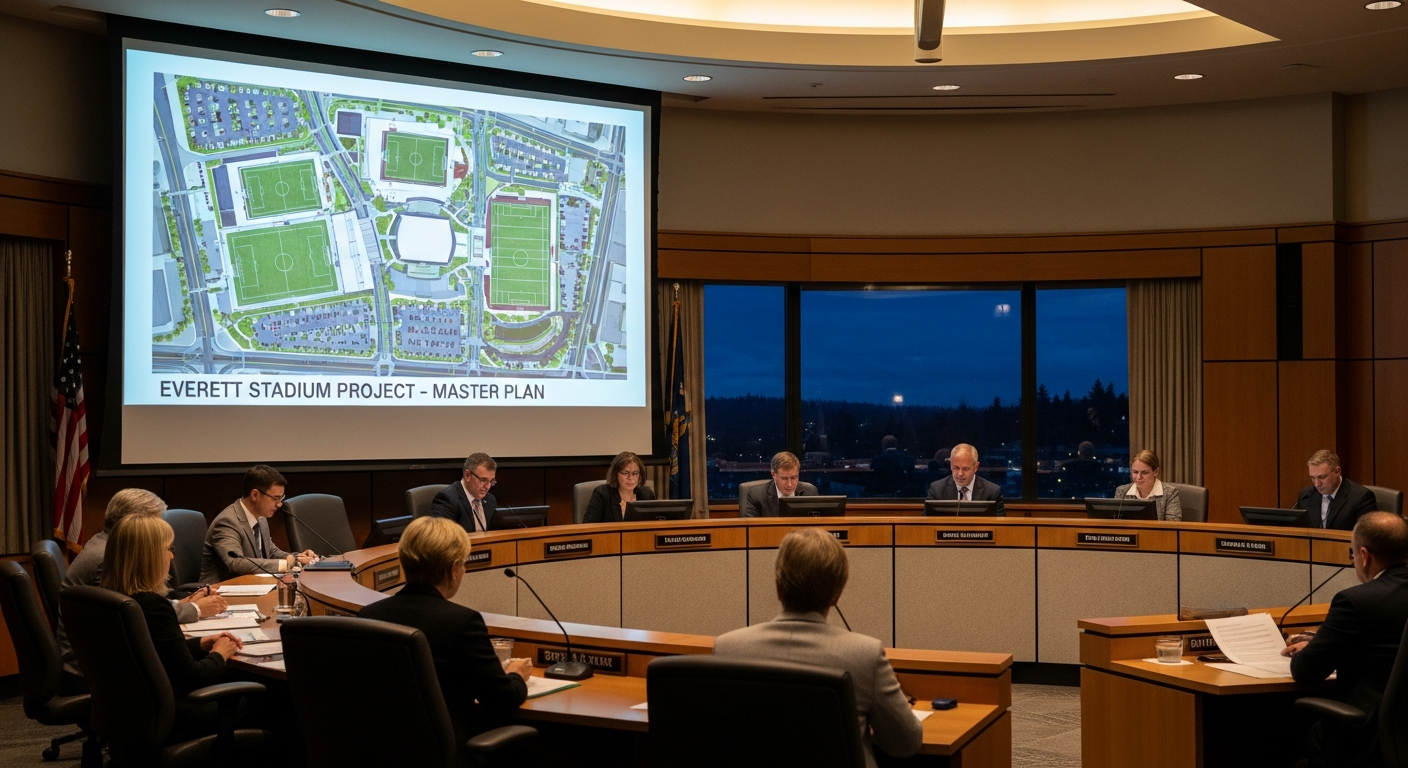
    For business owners engaged in Everett’s economic development ecosystem — particularly those involved in commercial real estate, workforce housing, or downtown development — the utility tax decision is part of a larger picture of how Everett finances its growth. The Millwright District Phase 2, the $120 million stadium proposal, and Sound Transit’s Everett Link Extension are all long-term economic bets; the city’s capacity to invest in those bets depends on resolving its structural revenue problem. The utility tax is one piece of that solution.

    What Business Owners Can Do Before the Vote

    The Everett City Council is taking three readings on the ordinance beginning in April 2026. The Everett Chamber of Commerce and the Snohomish County Economic Alliance are both tracking the proposal. Business owners who want to engage can:

    • Attend Everett City Council meetings and participate in public comment during the three-reading period
    • Contact the City of Everett’s Business Resource Center about any assistance programs or exemption processes (note: no business exemption has been announced)
    • Engage through the Everett Chamber to coordinate a collective business community voice on the proposal
    • Review commercial lease agreements for utility tax pass-through provisions before July 1

    Frequently Asked Questions for Business Owners and Landlords

    Q: Is there a business exemption from the utility tax increase?
    A: No business exemption process has been announced. The rate change, if approved, applies to all water and sewer customers — residential and commercial.

    Q: How do I calculate my specific impact?
    A: Pull your last three utility bills and identify the water and sewer charges. Apply a 6% increase to those charges (doubling the embedded rate from 6% to 12%) to estimate your monthly increase. Large commercial users will see proportionally larger absolute increases than the $10.74 residential average.

    Q: When does the ordinance take effect and what’s the approval process?
    A: Three council readings begin in April 2026. The proposed effective date is July 1, 2026. No public vote is required — council approval through the ordinance process is sufficient.

    Q: What if my business is located outside Everett but served by a utility that buys from Everett?
    A: Your utility will absorb the increased wholesale cost and may pass it through to customers in future rate adjustments. Contact your local water utility for their timeline and plans.

    Q: What assistance is available for businesses struggling with utility costs?
    A: No specific commercial utility assistance program has been announced. The city’s stated assistance program expansion is targeted at low-income residential customers. Contact the City of Everett Business Resource Center for current programs.

    Related: Everett’s Proposed Utility Tax: The Full Story | Millwright District Phase 2: What 300+ New Waterfront Homes Mean for Everett | Everett’s $120M Stadium Has a $38M Funding Gap: Here’s the Full Breakdown

  • Sound Transit’s Everett Link Extension: The Complete 2026 Guide to Light Rail’s Uncertain Future


    Q: Will Sound Transit build light rail to Everett Station?
    A: That decision hasn’t been made yet. The Sound Transit Board will vote on a restructured ST3 System Plan in summer 2026. At least one scenario under consideration would not complete the extension to downtown Everett Station. The first phase to Paine Field may open by 2037; the full connection to Everett Station could arrive between 2037 and 2041 — or not at all under a phased scenario.

    Sound Transit’s Everett Link Extension: The Complete 2026 Guide to Light Rail’s Uncertain Future

    In April 2026, the future of light rail in Everett is genuinely uncertain in a way it has never been before. Costs for the Everett Link Extension have climbed between $200 million and $1.1 billion above the 2021 estimate. Sound Transit is weighing scenarios that could defer or eliminate the connection to Everett Station entirely. And the Sound Transit Board will make its defining decision on the ST3 System Plan this summer.

    This is the complete guide to where the Everett Link Extension stands, why it matters, what the scenarios are, and what you can do before summer 2026.

    What Is the Everett Link Extension?

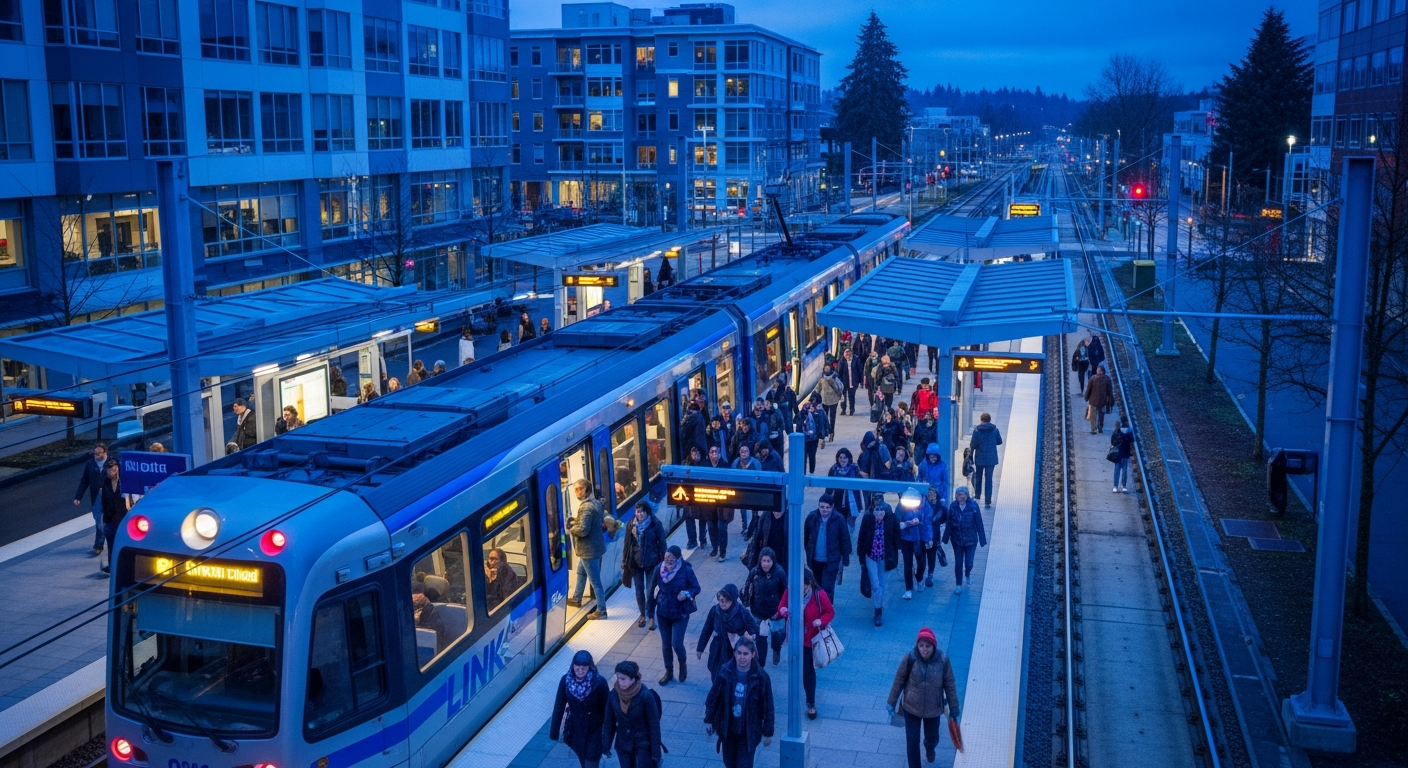
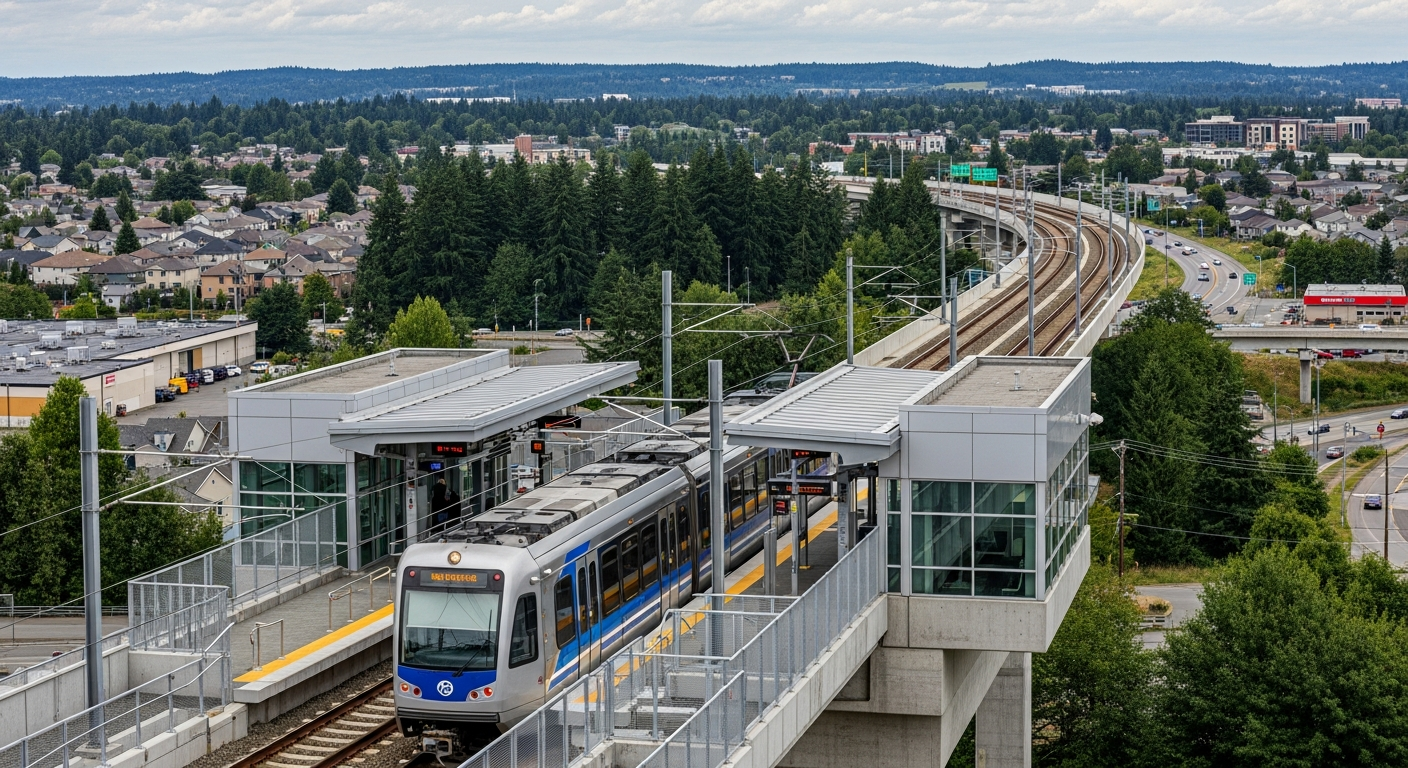
    The Everett Link Extension is a planned 16-mile light rail line connecting Snohomish County communities — including Lynnwood, Mariner, Paine Field, and Everett Station — to the regional Sound Transit light rail network. It was approved as part of the ST3 ballot measure by Puget Sound voters in November 2016, with an original 2021 cost estimate of $6.6 billion.

    The extension would add six stations north of the existing Lynnwood Link terminus: West Alderwood, Ash Way, Mariner, SW Everett Industrial Center (serving the Paine Field corridor), SR 526/Evergreen, and Everett Station at the heart of downtown. Those six stations represent a fundamental change in how Everett connects to the region — a car-free, congestion-proof link from Paine Field to Seattle’s core.

    The Cost Problem: $200M to $1.1B Above Estimates

    Sound Transit attributes the cost escalation to factors that have hammered infrastructure projects across the country: inflation running above projections, tariffs on construction materials, labor shortages in the skilled trades, supply chain disruptions, and rapidly escalating right-of-way acquisition costs. Together, these have driven costs 20 to 25 percent above the 2021 Financial Plan baseline.

    For the Everett extension specifically, that means a range of $200 million to $1.1 billion in added cost — on top of the original $6.6 billion. The project could cost as much as $7.7 billion. Set against Sound Transit’s described $34.5 billion system-wide budget gap, the Everett extension is one of the agency’s most expensive unresolved commitments.

    The Timeline Has Already Slipped — And Could Slip Further

    When Snohomish County voters approved ST3 in November 2016, the Everett Link Extension was projected to open in 2036. That date has already moved. Sound Transit’s current projections put the first phase — reaching Paine Field — as early as 2037. The full extension to Everett Station carries an estimated opening window of 2037 to 2041.

    A five-year uncertainty window for a single project’s completion date signals how unresolved this extension’s future actually is. For Everett residents who incorporated light rail into their long-term housing, employment, and transportation decisions, the uncertainty is not abstract.

    The Three Scenarios — Including One That Stops Short

    The most consequential revelation from April 14’s standing-room-only town hall at Everett Station: Sound Transit is evaluating at least three approaches to its budget challenge, and at least one scenario would not complete the connection to Everett Station downtown.

    Sound Transit’s Board has been considering approaches ranging from restructuring the phasing of ST3 projects — with some extensions potentially terminating before their original endpoints — to pursuing new financing mechanisms and federal funding sources. Previous Sound Transit documents describe options that could have the Everett extension terminate before reaching downtown Everett Station, leaving the corridor without its planned terminus for years beyond what voters expected.

    For a city that anchored its long-term transit planning around being the northern terminus of Puget Sound light rail, this scenario drew sustained and pointed questions from the standing-room crowd at Everett Station on April 14.

    Who Was in the Room — and What They Said

    Snohomish County Executive Dave Somers and Everett Mayor Cassie Franklin attended the April 14 town hall in person, taking questions alongside Sound Transit staff. Both officials have been consistent advocates for the full extension to Everett Station as a pillar of the region’s transportation and economic development future.

    The day before the town hall, the Everett Herald’s editorial board published a direct call for Sound Transit to “exhaust every option to keep light rail on track” — a signal of the urgency local elected officials and media are placing on this summer’s decision. Snohomish County’s elected Sound Transit Board representatives have similarly advocated against any scenario that defers or eliminates the Everett Station terminus.

    Why the Paine Field Station Is Especially High-Stakes

    The SW Everett Industrial Center station — commonly called the Paine Field station — is one of the most consequential stops in the entire ST3 project list. Paine Field is home to Boeing’s widebody assembly operations, the largest factory building by volume on earth. It’s also home to Paine Field International Airport (PAE), Snohomish County Airport, and over 600 aerospace suppliers that make up the $14 billion Snohomish County aerospace economy.

    A light rail connection to Paine Field would be transformative for the 30,000-plus workers commuting to the corridor daily — reducing parking pressure, cutting commute times from Seattle and south King County, and connecting the aerospace workforce to regional transit. If the Paine Field station is preserved but the Everett Station connection is deferred, Boeing and aerospace workers would gain access while Everett’s downtown remains disconnected.

    What Happens Next — The Summer 2026 Decision

    The Sound Transit Board is expected to take up ST3 System Plan restructuring in summer 2026. That vote will determine whether the Everett Link Extension proceeds on a modified but still-complete schedule, gets phased to stop short of Everett Station, or faces another restructuring.

    Between now and then, Sound Transit will continue accepting public comment. The April 14 town hall was one of multiple public engagement events the agency is holding across the ST3 service area.

    How to Have a Say Before the Board Votes

    • Attend Sound Transit Board meetings, which include public comment periods. Board meetings are held at Union Station in Seattle.
    • Submit written comments at soundtransit.org
    • Contact Snohomish County’s elected Sound Transit Board representatives — they vote on behalf of Snohomish County
    • Reach Everett Mayor Franklin’s office at (425) 257-8700 or Snohomish County Executive Dave Somers’s office at (425) 388-3460
    • Sign up for Sound Transit project updates at the Everett Link Extension participation page

    For more on Everett’s transit and development future, read our coverage of the April 14 town hall, the Millwright District’s new office pre-leasing push, and the 600+ aerospace companies that make Everett’s economy run.

    Frequently Asked Questions: Sound Transit Everett Link Extension

    What is the Sound Transit Everett Link Extension?

    The Everett Link Extension is a planned 16-mile light rail line connecting Lynnwood, Mariner, Paine Field, and Everett Station to the regional Sound Transit network. It was approved by Puget Sound voters in the ST3 ballot measure in November 2016.

    How much does the Everett Link Extension cost?

    The original 2021 estimate was $6.6 billion. As of 2026, Sound Transit estimates costs have increased between $200 million and $1.1 billion above that figure, potentially placing the total cost at up to $7.7 billion.

    When will the Everett Link Extension open?

    Sound Transit currently projects the first phase to Paine Field opening as early as 2037. The full extension to Everett Station carries an estimated opening window of 2037 to 2041. Both are subject to change depending on the Sound Transit Board’s summer 2026 decisions.

    Could light rail stop short of Everett Station?

    Yes. Sound Transit is weighing at least three scenarios, and at least one would not complete the connection to Everett Station downtown. No final decision has been made — the Board is expected to vote in summer 2026.

    What stations are planned for the Everett Link Extension?

    Six stations are planned north of Lynnwood Link: West Alderwood, Ash Way, Mariner, SW Everett Industrial Center (Paine Field), SR 526/Evergreen, and Everett Station.

    How can Everett residents comment on the Sound Transit light rail decision?

    Residents can attend Sound Transit Board meetings (open to public comment), submit written feedback at soundtransit.org, contact Snohomish County’s Sound Transit Board representatives, or reach out to Mayor Franklin’s office or County Executive Dave Somers’s office.

    What is Sound Transit’s $34.5 billion budget gap?

    Sound Transit describes a $34.5 billion system-wide shortfall between projected costs and its current financial plan — driven by inflation, tariffs on construction materials, labor shortages, and right-of-way cost escalation. The Everett Link Extension is one of several projects affected by this gap.

    Why does the Paine Field station matter so much?

    The Paine Field station would serve Boeing’s widebody assembly facility, Paine Field International Airport, and 600+ aerospace suppliers that employ tens of thousands of workers. A direct light rail connection to this corridor is considered one of the most transformative transit investments in the region.

  • Sound Transit Faces Up to $1.1B in Added Costs for Everett Light Rail — What Happened at Tuesday’s Town Hall

    What is the Everett Link Extension? The Everett Link Extension is a planned 16-mile light rail line connecting Snohomish County communities — including Lynnwood, Mariner, Paine Field, and Everett Station — to the regional Sound Transit light rail network. It was included in the ST3 ballot measure approved by Puget Sound voters in 2016, with an original 2021 cost estimate of $6.6 billion.

    On the evening of April 14, a standing-room-only crowd packed Everett Station to hear Sound Transit explain what is happening with the light rail extension their communities voted for — and to press officials on whether it will be built on anything close to the original terms.

    The short answer: Sound Transit faces costs that have climbed between $200 million and $1.1 billion above the original 2021 estimate for the Everett extension alone, as part of a system-wide budget challenge the agency describes as a $34.5 billion gap. The timeline has already slipped. And one of the scenarios the agency is weighing would not complete the connection to Everett at all.

    Why Costs Have Climbed

    Sound Transit attributes the cost increases to a combination of forces that have hit infrastructure projects broadly in recent years: inflation, tariffs on construction materials, labor shortages, supply chain disruptions, and escalating right-of-way acquisition costs. Together, these factors have driven costs up 20 to 25 percent above what the agency’s 2021 financial plan assumed.

    For the Everett Link Extension specifically, the increase ranges from $200 million on the low end to $1.1 billion on the high end — on top of the original $6.6 billion estimate. That would put the project’s total cost at up to approximately $7.7 billion, depending on which scenario the Sound Transit Board pursues.

    The Timeline Has Already Slipped — Significantly

    When Snohomish County voters approved ST3 in 2016, the Everett Link Extension was projected to open in 2036. That target has already moved. Sound Transit now says the first phase — reaching as far north as Paine Field — may open by 2037, with the full extension to Everett Station potentially not arriving until somewhere between 2037 and 2041.

    A five-year window of uncertainty for a project’s completion date is itself a signal of how unsettled this extension’s future is. For residents who counted on light rail as a long-term alternative to the I-5 and Highway 2 commute into King County, that uncertainty is not abstract.

    Three Scenarios — Including One That Stops Short of Everett

    The most consequential piece of information for Everett residents at Tuesday’s town hall: Sound Transit is weighing three different approaches to closing its budget gap, and at least one of those scenarios would not complete the connection to Everett Station.

    The agency has not publicly labeled all three options by name, but previous Sound Transit documents have described approaches ranging from phasing the extension to terminate before reaching downtown Everett, to pursuing new financing mechanisms, to restructuring which ST3 projects get built first and on what timeline.

    For a city that anchored a significant portion of its long-term transit vision around being the northern terminus of Puget Sound light rail, the prospect of a scenario that bypasses Everett Station drew pointed and sustained questions from the crowd.

    Mayor Franklin and County Executive Somers Were in the Room

    Snohomish County Executive Dave Somers and Everett Mayor Cassie Franklin attended the April 14 town hall and were available to take questions alongside Sound Transit staff. Both officials have consistently advocated for the full Everett extension as a critical piece of the region’s transportation and economic development future.

    The day before the town hall, the Everett Herald’s editorial board published a call for Sound Transit to “exhaust every option to keep light rail on track” — a signal of the urgency local leaders and media are placing on this decision.

    What Happens Next

    Sound Transit’s board is expected to evaluate updated approaches to the ST3 System Plan in summer 2026. That decision will determine whether the Everett Link Extension proceeds on a modified but still-complete schedule, gets phased to stop short of Everett Station, or faces some other restructuring.

    Residents who want to weigh in before that decision can:

    • Attend Sound Transit Board meetings, which are open to public comment
    • Submit written comments through soundtransit.org
    • Contact Snohomish County’s elected Sound Transit Board representatives directly
    • Reach out to Mayor Franklin’s office or the Snohomish County Executive’s office

    What This Means for Everyday Commuters

    Light rail was a central promise of the ST3 campaign: a reliable, car-free connection linking Everett to Seattle and the broader regional network. Lynnwood Link opened in 2024, giving riders a northern terminus — with buses bridging the gap into Snohomish County. That arrangement was always intended to be temporary, until the Everett extension was complete.

    If the extension is scaled back or further delayed, Everett-area commuters would remain dependent on transfers and bus connections for years — or decades — beyond what voters were told in 2016. For a region that has some of the country’s most congested commutes, the stakes of this summer’s board decision are substantial.

    Frequently Asked Questions About the Everett Link Extension

    When will the Everett Link Extension open?

    Sound Transit currently projects the first phase to Paine Field opening by 2037, with the full extension to Everett Station arriving between 2037 and 2041. Both timelines are subject to further change pending the board’s summer 2026 decisions.

    How much will the Everett Link Extension cost?

    The original 2021 estimate was $6.6 billion. Costs have increased between $200 million and $1.1 billion above that figure, meaning the project could cost as much as approximately $7.7 billion depending on the scenario Sound Transit pursues.

    Could the light rail extension stop short of Everett?

    Yes, this is one of at least three scenarios Sound Transit is considering to address its $34.5 billion system-wide budget gap. No final decision has been made — the board is expected to act in summer 2026.

    When will Sound Transit decide on the Everett extension’s future?

    The Sound Transit Board is expected to take up ST3 System Plan updates in summer 2026.

    Who attended the April 14 Everett transit town hall?

    Snohomish County Executive Dave Somers, Everett Mayor Cassie Franklin, and Sound Transit representatives attended and took questions from a standing-room-only crowd at Everett Station.

    What is ST3?

    ST3 is the third Sound Transit ballot measure, approved by voters in the greater Puget Sound region in November 2016. It authorized funding for multiple light rail expansions, including the Everett Link Extension connecting Snohomish County to the regional network.

    How can Everett residents give input on the Everett Link Extension?

    Residents can attend Sound Transit Board meetings, submit comments at soundtransit.org, or contact their elected Sound Transit Board representatives and local officials including Mayor Franklin’s office or Snohomish County Executive Dave Somers’ office.


    → For the complete knowledge hub on the Everett Link Extension, see: Sound Transit’s Everett Link Extension: The Complete 2026 Guide to Light Rail’s Uncertain Future

  • Everett’s New Edgewater Bridge Opens April 28: What Commuters and Neighbors Need to Know

    What is the Edgewater Bridge? The Edgewater Bridge spans the Mukilteo ravine on the border between Everett and Mukilteo, connecting the two cities along Mukilteo Boulevard. The 366-foot-long bridge is a primary commute corridor for residents of both cities and was built in 1946 — making the original structure nearly 80 years old when it closed for replacement.

    After 18 months of construction and a $34.9 million investment, Everett’s new Edgewater Bridge will open to vehicle traffic on Tuesday, April 28, 2026. The community is invited to walk across the bridge the day before at a free celebration event on Sunday, April 27 at 3:30 p.m.

    Why the Bridge Had to Be Replaced

    The original Edgewater Bridge was built in 1946. By the time the City of Everett closed it in October 2024, the structure had reached the end of its rated useful life and had known seismic vulnerabilities. Rather than patch an aging span, the city moved forward with full replacement.

    Replacing the bridge was not a straightforward project. Construction crews encountered significant underground obstacles — old timber and concrete debris from a previous, earlier bridge structure were embedded deep in the soil, complicating the installation of the steel piling needed to support the new span. Then, in December 2025, an atmospheric river weather event caused damage to portions of the project and pushed the completion date back further, into April 2026.

    The scale of the work was considerable: crews had to fully remove the 366-foot-long, 60-foot-tall original bridge and build two temporary work platforms on either side of the ravine from which the new structure was constructed piece by piece.

    What’s Different About the New Bridge

    The new Edgewater Bridge is not just a replacement — it’s a meaningful upgrade in several key ways.

    • Wider sidewalks and bike lanes on both sides of the roadway — a significant improvement for pedestrians and cyclists who previously had more limited options on the original structure.
    • Modern seismic engineering — the new bridge is designed to perform better in an earthquake, addressing the structural concerns that made replacement necessary.
    • Longer designed service life — built to current standards, the bridge is intended to serve Everett and Mukilteo for decades.

    The bridge straddles the city boundary, welcoming travelers into both Everett and Mukilteo. Once the final finishing work is complete, pedestrians and cyclists will have dedicated, protected lanes on each side of the roadway.

    How the $34.9 Million Project Was Paid For

    The total project cost is $34.9 million. Of that, $28 million — roughly 80 percent — came from federal grant funding. The remaining portion was covered by city transportation funds.

    Mayor Cassie Franklin said she was “excited to see the brand-new Edgewater Bridge open again and serving our community,” acknowledging the disruption the closure caused. “Construction brought real impacts — especially to the neighbors who live close to the bridge — but I’m proud to deliver a more structurally sound bridge that’s built to last and ready for the future.”

    What to Expect at the April 27 Celebration

    The City of Everett is hosting a community event on Sunday, April 27 at 3:30 p.m. where residents from both Everett and Mukilteo can walk across the new bridge, meet members of the project team, and hear remarks from city officials.

    Important note: the bridge will not be open to vehicle traffic at the time of the celebration. You can approach from either side but will not be able to drive across. Vehicles will begin crossing on Tuesday, April 28.

    What’s Still Being Finished After Opening

    Even after vehicles start using the bridge on April 28, some work will continue. According to the City of Everett, permanent roadway striping, barriers, lighting, paint, and other finishing tasks may still be in progress. The new sidewalks and bike lanes will remain closed to pedestrian and cyclist use until that final phase of work is complete — so pedestrian access will follow the vehicle opening by a short period.

    Why This Reopening Matters for Everett and Mukilteo

    Mukilteo Boulevard is a primary east-west connector used daily by commuters heading toward Interstate 5, Paine Field, and local destinations in both cities. The 18-month closure forced drivers to reroute through already-congested surface streets — an impact felt by neighborhoods on both sides of the ravine. The reopening directly relieves that pressure.

    The new bike lanes and wider sidewalks also represent a real win for non-motorized transportation in a corridor that previously had limited options. Both Everett and Mukilteo have been working to improve walkability and bikeability, and this crossing is now part of that network in a meaningful way.

    Frequently Asked Questions About the Edgewater Bridge Opening

    When does the Edgewater Bridge open to vehicles?

    The bridge opens to vehicle traffic at the end of the workday on Tuesday, April 28, 2026.

    When is the community celebration for the new Edgewater Bridge?

    The City of Everett is hosting a community walk-across event on Sunday, April 27 at 3:30 p.m. The bridge will not be open to vehicle traffic at that time. Residents can approach from either the Everett or Mukilteo side.

    How much did the new Edgewater Bridge cost?

    The total project cost is $34.9 million, with $28 million funded by federal grants — about 80 percent of the project cost covered by federal dollars.

    Is the new bridge safer in an earthquake?

    Yes. The new bridge was built to modern seismic engineering standards and is significantly more earthquake-resistant than the 1946 original, which had known structural vulnerabilities.

    Why did the bridge closure last 18 months?

    The original construction schedule was extended twice — first due to underground obstructions from an older bridge structure buried beneath the site, and again after an atmospheric river weather event in December 2025 caused damage to portions of the project.

    Will there be bike lanes and sidewalks on the new Edgewater Bridge?

    Yes. The new bridge includes bike lanes and wider sidewalks on both sides. They will open to use once final finishing work on the project is complete, which is expected to happen shortly after the vehicle opening.

    What cities does the Edgewater Bridge connect?

    The Edgewater Bridge straddles the boundary between Everett and Mukilteo, connecting both cities along Mukilteo Boulevard.