What is the Everett-Delta transmission line? Snohomish County PUD’s planned 3.5-mile 115-kV line that connects the Everett Substation (west of I-5 between McDougall and Smith) to the Delta Switching Station (just north of the SR 529 / West Marine View Drive interchange in north Everett). PUD hosted two public open houses on May 7, 2026 at PUD headquarters at 2320 California Street. The line is engineered to support growing electrical demand in and around Everett and prevent low-voltage conditions if local power is interrupted. Construction is targeted to begin in spring 2027, with the line in service by summer 2027.
If you live in Everett and you have been wondering why a public utility line on the north end has been getting more attention this spring, here is the short version: Snohomish County PUD is building the infrastructure backbone that the waterfront, downtown, and north-Everett construction wave actually rides on.
We stopped by the PUD open house messaging on May 7 — two sessions, 4 to 5:30 p.m. and 6 to 7:30 p.m., both at PUD headquarters at 2320 California Street in Everett — and what is striking is how directly this line maps to the development corridor we have been covering for months. The new Everett-Delta 115-kV transmission line connects two existing PUD assets that bracket the heart of the city: the Everett Substation, sitting just west of Interstate 5 between McDougall Avenue and Smith Avenue and north of 36th Street, and the Delta Switching Station, sitting just north of the State Route 529 / West Marine View Drive interchange in north Everett. That is the same West Marine View Drive corridor where the $113 million pipeline project, the Edgewater Bridge, and the Port of Everett’s terminal investments are all stacking up.
Why this line is being built now
PUD’s case for the new line is direct: increasing electrical demand in and around the city of Everett, and the need to keep voltage stable if local power is interrupted. That language is unsexy, but the substance is enormous. Everett is in the middle of a once-in-a-generation building wave — the Millwright District Phase 2’s 300-plus apartments, the Sage Investment Group conversion of the 9602 19th Street SE Econo Lodge to 124 studios, the Riverfront’s Eclipse Mill Park buildout, the downtown stadium with September 2026 groundbreaking ahead of it, and Skotdal Real Estate’s seven-story 102-unit Mosaic Apartments going up on Pacific Avenue. Every one of those projects pulls more load off the grid.
A 115-kV line is the kind of mid-tier transmission that connects the bigger backbone to local substations. It is not a transmission “highway” in the BPA-scale sense, but it is the layer that determines whether neighborhoods can plug in the heat pumps, EV chargers, induction ranges, and apartment-tower elevator loads that follow new construction. Without it, fast-growing cities can hit a wall where the substation is fine, but the lines connecting substations cannot handle the swing.
PUD’s stated benefit list pairs load growth with reliability — and in a city that has been adding new construction along West Marine View Drive at an unusual rate, the reliability part matters as much as the headroom. If local generation is interrupted, the new line gives operators a way to keep voltage from sagging at the Delta Switching Station — which feeds the north-Everett waterfront corridor directly.
What the line will actually look like
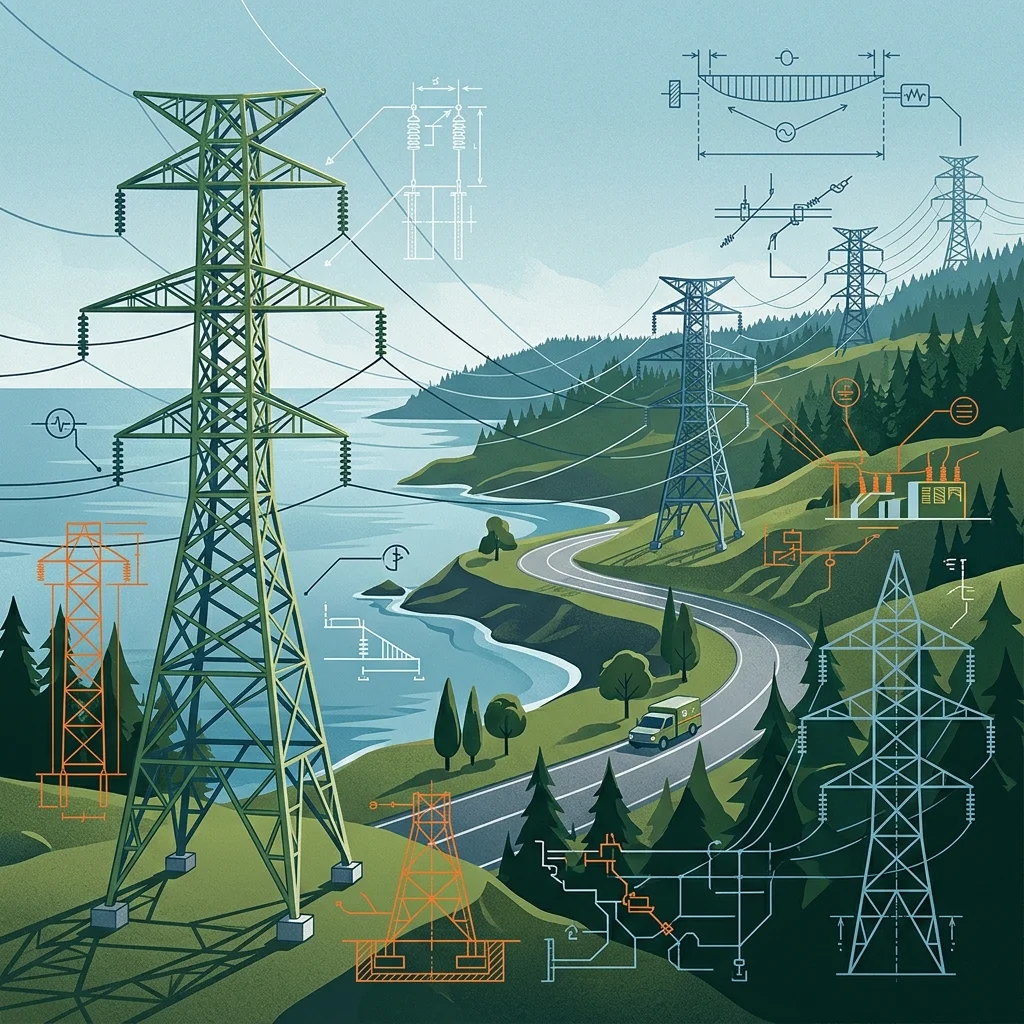
The new transmission structures will be similar in design and height to PUD’s existing 115-kV poles already in Everett — ductile iron and/or steel poles, similar profile to what is already in the corridor. PUD has stated that in the summer of 2025 it solicited community input on aesthetic enhancements, and the project page indicates that input will continue to inform the final route execution.
The total length is approximately 3.5 miles, which puts this project on the smaller end of PUD’s current 2026 transmission projects (the Crosswind 115-kV line in Arlington, by comparison, is a different geography and ties into the new Crosswind Substation at the PUD’s North County Campus in Smokey Point). But the Everett-Delta line is the one that lands inside the city limits we cover.
Timing — and why it matters for the waterfront
PUD’s timing language is specific. With a route now chosen, the project moves to detailed engineering, permitting, right-of-way acquisition, and construction. PUD estimates the line will be in service by summer 2027.
That is the same 2026-2027 window when the West Marine View Drive pipeline goes underground (the $113M combined sewer + 48-inch water main project the city approved on April 2), when Bayley Construction’s stadium site survey turns into vertical concrete in September 2026, and when Millwright District Phase 2 starts moving from site work into building shells. PUD building the transmission headroom in the same window means the grid is being prepped for the load that is about to land — not after.
For the city’s part, the construction-window pause for the FIFA World Cup this summer (no in-road construction June through September in 2026 or 2027) keeps the corridor visible for waterfront events. PUD’s spring 2027 construction start sidesteps that political minefield by design.
How this fits with everything else under construction
If you have been reading the Waterfront & Development desk regularly, the names should be stacking up: the Lenora Regional Stormwater Treatment Facility (an $8.7M state-grant-funded plant breaking ground at S 1st & Lenora in Lowell this spring); the Port Gardner Storage Facility (a $200M+ combined sewer overflow project the state Department of Ecology ordered Everett to build); Port of Everett’s Segment E bulkhead final phase ($6.75M, 165 linear feet of wood-to-steel pile rebuild on West Marine View Drive); the federal $11.25M PIDP grant for Pier 3 structural rebuild; and the West Marine View Drive pipeline approved April 2.
The Everett-Delta transmission line is the electrical leg of that same infrastructure stool. None of the apartments going up at Waterfront Place, the Mosaic, or Millwright Phase 2 generate their own power. They draw it from a system that has to grow in lockstep with the density.
If you missed the May 7 open houses, the project page is still active and the PUD outreach team is still soliciting feedback on construction-impact mitigation. The full route map and FAQ live on PUD’s system improvements page.
What we are watching next
Three things on this line worth tracking through the rest of 2026:
-
Right-of-way acquisition — PUD has chosen a route, but the easement and parcel-by-parcel acquisition work is where transmission projects get slow. Any contested takings will land on the Snohomish County PUD Commission’s monthly agenda. The commission meets at PUD HQ and the meeting cadence is on the snopud.com calendar.
-
Permitting timeline — SEPA review and any City of Everett right-of-way permits required will be visible in the city’s permitting portal. A 3.5-mile transmission alignment through an urbanizing corridor typically generates a stack of structural and traffic-control permits even before vertical work starts.
-
Coordination with the West Marine View Drive pipeline — Two major linear infrastructure projects in the same general corridor in the same window need to coordinate trench windows, utility crossings, and traffic control. The Everett Public Works team has run that gauntlet before (most recently on the Edgewater Bridge crossing of I-5), but the load is real.
For now, the headline is simple. The grid is getting reinforced exactly where the city is getting denser. Everett’s transformation is being engineered, one transmission pole and one 48-inch pipe at a time.
Frequently Asked Questions
When will the Everett-Delta transmission line be in service? Snohomish County PUD estimates the line will be in service by summer 2027. Construction is scheduled to begin in spring 2027 and take approximately six months, following completion of detailed engineering, permitting, and right-of-way acquisition through 2026.
How long is the Everett-Delta 115-kV transmission line? The line is approximately 3.5 miles long. It connects the existing Everett Substation, located west of I-5 between McDougall and Smith Avenues north of 36th Street, to the Delta Switching Station, located just north of the SR 529 / West Marine View Drive interchange in north Everett.
Why does Snohomish County PUD need this new transmission line? Two reasons: to support increasing electrical demand in and around the city of Everett, and to maintain voltage stability and reliability if local power is interrupted. The line creates additional system capacity to serve the waterfront, downtown, and north-Everett construction wave.
Where were the Everett-Delta open houses held? Both open houses were held on May 7, 2026 at Snohomish County PUD headquarters, 2320 California Street, Everett, WA 98201. Sessions ran 4 to 5:30 p.m. and 6 to 7:30 p.m., with identical content at each.
What will the new transmission poles look like? The new transmission line and structures will be similar in design and height to the PUD’s existing 115-kV structures already in Everett, using ductile iron and/or steel poles. PUD solicited community input on aesthetic enhancements in summer 2025.
How does this transmission line connect to Everett’s waterfront development? The Delta Switching Station endpoint sits just north of the SR 529 / West Marine View Drive interchange — the same corridor where Everett is investing in the $113 million pipeline project, the Edgewater Bridge, Port of Everett terminal infrastructure, and the Eclipse Mill Park / Shelter Holdings riverfront buildout. The new line adds transmission headroom to serve growing loads from new apartment construction, EV charging, and electrified buildings along that corridor.
Where can residents track project progress and provide input? The project page lives on Snohomish County PUD’s system improvements website at snopud.com, and PUD Commission meetings are open to the public at the PUD HQ at 2320 California Street.
📡 Exploring Everett Deep Coverage — Everett-Delta Transmission Line