Tag: Light Rail

  • Sound Transit’s May 28 Board Meeting Is the Most Important Everett Light Rail Vote You Haven’t Heard About

    Sound Transit’s May 28 Board Meeting Is the Most Important Everett Light Rail Vote You Haven’t Heard About

    Why does the Sound Transit board meet on May 28, 2026, and what does it decide for Everett?
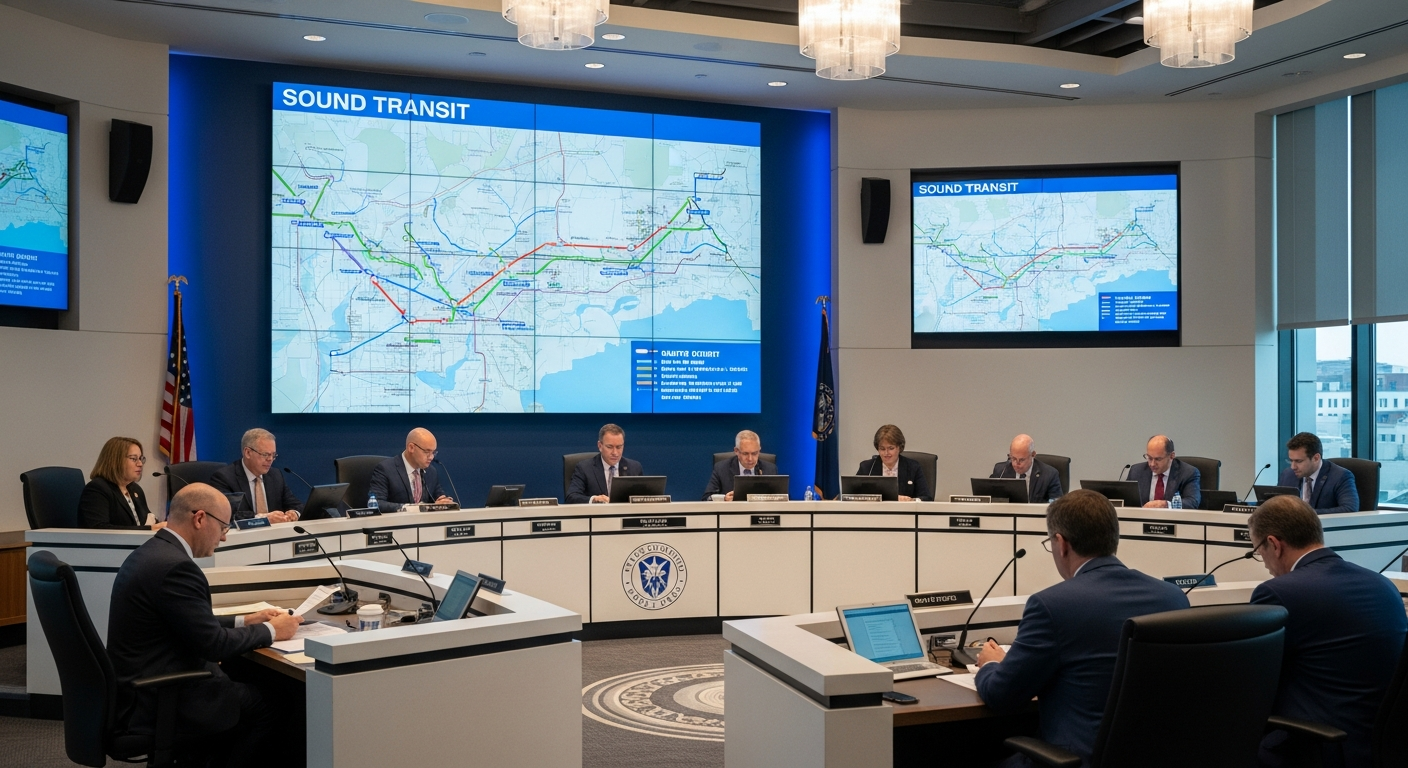
    On May 28, 2026, the Sound Transit Board of Directors meets in Tacoma to consider three “approaches” for closing a $34.5 billion long-term funding gap and updating the ST3 System Plan. Two of the three approaches preserve the full 16-mile Everett Link Extension to downtown Everett Station; the third truncates the line at the SW Everett Industrial Center. The board is expected to recommend one approach by the end of June. The May 28 vote is the technical decision that shapes everything that follows.


    The Vote Everyone Is Watching Without Realizing It

    Most of the Everett Link conversation this spring has rotated around a single date: June 30, 2026. That’s when the Sound Transit Board is expected to formally adopt an updated ST3 System Plan. Headlines have framed it as the “do-or-die” vote on whether trains will reach downtown Everett.

    But there’s a vote a month earlier that matters more in practical terms — and it has flown almost completely under the radar.

    On Thursday, May 28, 2026, the Sound Transit Board of Directors meets from 1:30 p.m. to 4 p.m. in the Ruth Fisher Board Room at 401 Jackson St. in Tacoma. That meeting is where the board is expected to choose between three “approaches” the agency has put on the table for closing its $34.5 billion long-term funding gap and updating the ST3 System Plan. The June 30 vote then ratifies whatever the May 28 meeting recommends.

    In other words: by the time the calendar flips to June, the substantive decision will already be made.

    We’ve spent the last six weeks talking about whether the public would be heard. The May 1 public-input survey closed last week. So now the question shifts. With the survey closed and the board’s options narrowed to three, what is actually being decided on May 28? And which approach gets Everett to the finish line?

    What the $34.5 Billion Gap Actually Is

    Sound Transit calls the planning effort the Enterprise Initiative. It’s the agency’s response to a long-term funding shortfall that has grown well past anyone’s original estimates.

    The number to remember is $34.5 billion. That’s the total budget gap projected over the next 20 years across the Sound Transit district. Roughly $30 billion of that gap is concentrated in the North King and South King County subareas, driven by capital cost growth on the West Seattle and Ballard Link extensions.

    That last detail matters for Everett. Each of Sound Transit’s five subareas — Snohomish, North King, South King, East King, and Pierce — has its own dedicated funding pot. According to Snohomish County Executive Dave Somers, who chairs the Sound Transit Board, “the Snohomish section is almost fully funded.”

    In other words, the funding crisis is not a Snohomish County crisis. It’s a King County cost-overrun crisis. But because the board has to update the entire system plan as one document, Everett ends up on the table whether the local money is there or not.

    The Three Approaches in Plain English

    Here is what the Sound Transit board is actually choosing between on May 28. We’ve simplified the agency’s published descriptions for a non-transit-nerd reader.

    Approach 1 — Spine first, hold the West Seattle and Issaquah extensions.
    Funds the full Everett Link Extension to downtown Everett Station. Funds full construction to the Tacoma Dome. Funds West Seattle to Alaska Junction only. Funds South Center only. Defers everything else. This approach finishes the Federal Way-to-Everett spine before spending on east-west extensions.

    Approach 2 — Spine plus a partial Ballard.
    Funds the full Everett Link Extension to downtown Everett Station. Funds construction to Smith Cove (a partial Ballard build). Funds full construction to the Tacoma Dome. Funds the South Kirkland-Issaquah Extension. Defers other deferrals. This approach is similar to Approach 1 but trades the full West Seattle build for a partial Ballard build.

    Approach 3 — Phase everything, stop short of downtown Everett.
    Truncates the Everett Link at the SW Everett Industrial Center, not downtown Everett Station. Truncates the Tacoma extension at Fife instead of the Tacoma Dome. Funds Delridge in West Seattle, South Center, and several infill stations including Graham and Boeing Access. Funds initial phases only on the T Line and South Kirkland-Issaquah extensions. This approach phases every project rather than fully completing fewer of them.

    All three approaches deliver roughly 86 to 87 percent of the original ST3 ridership target, and all three involve major changes to the Ballard Extension as originally promised in 2016.

    What Approach 3 Would Actually Mean for Everett

    Approach 3 is the one Snohomish County is fighting against.

    The most important consequence is geographic: it would end the Everett Link line at the SW Everett Industrial Center — roughly the area near the Boeing factory and Paine Field — rather than continuing the line into downtown Everett Station. That is a meaningful difference on a map and a much bigger difference on the ground.

    Downtown Everett Station is the planned multimodal hub adjacent to the Sounder commuter rail platform, the Everett Transit and Community Transit bus integration, the under-construction stadium and outdoor event center site, and the heart of the city’s downtown housing and retail core. SW Everett Industrial Center is a job site — important, but not where most riders live, eat, or change between buses and trains.

    Approach 3 also pushes the schedule. The Everett Link is currently expected to open between 2037 and 2041 depending on phasing. Under Approach 3, the downtown segment would be deferred indefinitely, with no committed funding to extend service the rest of the way once the SW Everett Industrial Center segment opens.

    That’s why Mayor Cassie Franklin, who sits on the Sound Transit Board, has been making the public case for the full spine. In an April 27 letter to the board summarized by the Lynnwood Times, Franklin laid out the case that Everett is now home to a Boeing factory, an expanding Paine Field commercial terminal, minor league baseball, hockey, an under-construction event center, and a growing industrial base — and that “it is the spine from Everett to Tacoma that is actually going to connect this region.”

    Why the May 28 Meeting Beats the June 30 Meeting in Importance

    The June 30 vote is the formal vote on the updated ST3 System Plan. It’s the procedural moment when the board adopts the new document.

    The May 28 meeting is when the board takes the chair’s recommendation and signals which of the three approaches will form the basis of the final plan. By the time June 30 rolls around, the public deliberation about which approach will be over. The June meeting becomes a yes-or-no on a specific package, not a choice between three options.

    That makes May 28 the real decision date for anyone trying to understand where the Everett Link ends up.

    It also makes May 28 the last realistic moment for public comment to land. The May 1 online survey is closed. Written comments to the board can still be submitted, and the board takes verbal public comment at meetings. The May 28 meeting accepts virtual attendance via Zoom — the link is published on the Board of Directors event calendar at soundtransit.org.

    What Snohomish County Is Saying Right Now

    Two votes on the Sound Transit board come from Snohomish County: County Executive Dave Somers, who chairs the board, and Mayor Franklin.

    Somers has framed the spine completion as the priority. At the April 14 town hall in Everett, he told a standing-room crowd that board support for finishing the spine is the strongest he has seen, and that the funding crisis is concentrated in King County, not Snohomish. He has floated the idea of a King County subarea levy, public-private partnership investment, or other localized revenue tools to close the West Seattle and Ballard cost overruns without sacrificing the spine.

    Franklin’s $7.7 billion letter — the figure roughly matches the projected cost of the Everett Link Extension as currently scoped — went directly to the board on April 27 and was reinforced by an April 30 unanimous Everett City Council letter demanding the full 16-mile extension.

    That posture is local policy now. Whether it carries the May 28 vote is a different question.

    What Riders and Future Riders Should Do This Month

    If you live in Everett and care about the outcome, the practical to-do list for the next three weeks is short:

    1. Email the full Sound Transit Board. Mayor Franklin made the point at the April 14 town hall: she and Somers can vote, but the board has 18 members. The three approaches will be decided by a majority of the room. Email addresses for board members are published at soundtransit.org/get-to-know-us/board-of-directors.

    2. Attend the May 28 meeting in person or on Zoom. The meeting runs 1:30 p.m. to 4 p.m. at 401 Jackson St., Tacoma. Public comment is accepted at the meeting. Virtual attendance details are on the agency’s Board of Directors event calendar.

    3. Check whether your city council has joined the chorus. Everett City Council voted unanimously on the full extension. Mukilteo, Lake Stevens, Mill Creek, and Snohomish councils have varying public positions; if your council hasn’t weighed in, that’s the kind of action that gets noticed at the board level.

    The April 14 town hall in Everett showed the agency is listening. What the board does on May 28 will tell us how loudly.

    Frequently Asked Questions

    When and where does the Sound Transit Board meet on May 28, 2026?
    Thursday, May 28, 2026, 1:30 p.m. to 4 p.m., Ruth Fisher Board Room, 401 Jackson St., Tacoma. Virtual attendance via Zoom is available — the join details are published on the Board of Directors calendar at soundtransit.org.

    What happens if the board picks Approach 3 on May 28?
    Approach 3 would truncate the Everett Link Extension at the SW Everett Industrial Center rather than continuing to downtown Everett Station. The downtown segment would be deferred without committed funding, pushing the Everett Station opening past the current 2037-2041 window indefinitely.

    Is the Everett Link Extension fully funded under Approaches 1 and 2?
    According to Snohomish County Executive Dave Somers, the Snohomish County subarea is “almost fully funded.” Approaches 1 and 2 both preserve the full 16-mile line from Lynnwood to downtown Everett Station. The funding crisis is concentrated in North King and South King County subareas.

    What is the difference between the May 28 vote and the June 30 vote?
    May 28 is when the Sound Transit Board chooses among the three approaches and signals direction for the updated ST3 System Plan. June 30 is the formal adoption of the new plan. By June 30, the substantive choice is already made.

    How can the public still weigh in if the May 1 survey has closed?
    Email all 18 Sound Transit Board members directly, attend the May 28 meeting in person or on Zoom, and provide written or verbal public comment at the meeting. City council resolutions also influence the regional conversation.

    What is the $34.5 billion gap?
    A 20-year projected shortfall across the Sound Transit district. Roughly $30 billion of the gap is in the North King and South King County subareas, driven by West Seattle and Ballard cost overruns. Snohomish County’s section is almost fully funded according to Somers.

    When would Everett Link service actually open under Approaches 1 or 2?
    Sound Transit currently lists 2037 as the SW Everett Industrial Center opening target, with downtown Everett Station service following by 2041 under current financial constraints. Approach 3 would push the downtown opening indefinitely past those dates.

  • Everett City Council Sends Sound Transit a Message: Deliver Our Light Rail or Explain Why Not

    Everett City Council Sends Sound Transit a Message: Deliver Our Light Rail or Explain Why Not

    What this means for you: The Everett City Council voted unanimously on April 29 to formally demand that Sound Transit complete the full 16-mile Everett Link Extension — all the way to downtown Everett Station, not just to the SW Everett Industrial Center. The board votes on a revised system plan by June 30. Everett residents have until May 1 to weigh in directly via Sound Transit’s public survey.

    The Everett City Council isn’t waiting to find out what happens to their light rail line. On April 29, the council voted unanimously to sign a formal letter to the Sound Transit Board of Directors, making a clear, documented demand: complete the Everett Link Extension in full and on schedule, and don’t solve Sound Transit’s $34.5 billion budget shortfall by shortchanging Snohomish County.

    The letter, brought forward by City Council Vice President Paula Rhyne, is both a political signal and a public record — arriving as Sound Transit prepares to vote this summer on a revised ST3 System Plan that could reshape the light rail spine that Snohomish County voters have been funding since 2016.

    Why the Council Felt the Need to Act Now

    Sound Transit is navigating a serious financial crisis. The agency faces a projected $34.5 billion shortfall across its light rail extension portfolio, driven by inflation, rising construction costs, tariffs, labor shortages, supply chain disruptions, and higher land acquisition costs. The board is evaluating three broad “approaches” — called the Enterprise Initiative — for closing that gap before its June 30 deadline.

    Two of the three approaches would fund full completion of the 16-mile Everett Link line, running from Lynnwood through the Paine Field area to downtown Everett Station. The third approach would phase the extension, building only to the SW Everett Industrial Center — leaving downtown Everett without a direct connection.

    “The intent of the letter is to remind the board that Everett is expecting the completion of the Everett Link Extension, and that the Everett Link Extension is not the route segment that’s the biggest problem for cost overruns, so cutting our promised route should not be part of the solution,” Rhyne said at the council’s April 22 meeting.

    What the Letter Actually Says

    The council’s approved letter frames the Everett extension as the most cost-effective segment in the entire ST3 package — and uses Sound Transit’s own numbers to make the argument.

    “The Everett Link Extension is the most cost-effective and impactful light rail segment under consideration,” the letter reads. “The cost increases are dramatically lower than other segments due to the extensive and intentional use of existing rights of way, the major portions of track alignment that can be run at-grade, and substantially lower land acquisition costs.”

    For context: some ST3 projects have nearly doubled in expected costs compared to original estimates. The Everett Link Extension’s costs have increased by only about five to ten percent — a fraction of the overruns plaguing the West Seattle and Ballard extensions in North and South King County. Sound Transit staff have previously said there is a high likelihood of keeping the Everett segment affordable through targeted design changes, while preserving all six planned stations.

    The letter also invokes the principle of subarea equity — the foundational policy that Snohomish County’s tax dollars go toward Snohomish County’s projects. Everett residents have been paying the Sound Transit property tax and sales tax levy since 2016. The letter argues that redirecting those funds or shortchanging Snohomish County to cover King County overruns would violate both the letter and spirit of that commitment.

    “Maintaining the commitment to Everett voters, who have been paying into the system for decades, is essential to preserving public trust and upholding Sound Transit’s commitment to subarea equity,” the letter states.

    The closing request is direct: “We urge the Board to deliver the Everett Extension in full and on schedule and to address the most significant cost escalation within the segments where they are occurring, rather than shifting impacts to Everett.”

    The Financial Picture: Who Owns the Problem?

    Snohomish County Executive Dave Somers — who chairs the Sound Transit Board and serves as a board member alongside Mayor Cassie Franklin — has been explicit about where the budget crisis is concentrated.

    Somers told a standing-room audience at an April 14 town hall meeting that about 90 percent of the cost overruns are in the North King County and South King County subareas. The Snohomish subarea’s funding, by contrast, is almost fully in place for the Everett extension.

    Sound Transit attributes approximately $30 billion of its total shortfall to the east-west rail extensions to West Seattle and Ballard — not to the Everett spine.

    Both Somers and Mayor Franklin have stated publicly that they favor completing the spine — the line from the Tacoma Dome to Everett Station — before funding other extensions. “It is the spine from Everett to Tacoma that is actually going to connect this region,” Franklin told the April 14 town hall crowd.

    Somers has said he plans to bring forward a chair’s proposal for the updated system plan that is “affordable at the systemwide level and compliant with our subarea equity policies.” The framework is designed to advance projects into construction when financially feasible while building in contingencies for future uncertainty.

    What Happens Next

    The Sound Transit Board is expected to vote on an updated ST3 System Plan no later than June 30, 2026. A May 28 board meeting is on the calendar as a key decision point before that deadline.

    Current plans call for the Everett Link Extension to arrive near Paine Field by 2037, with the downtown Everett Station opening by 2041. Under the third “approach” currently under consideration — the one that would truncate service at SW Everett Industrial Center — those timelines would slip further.

    A draft environmental impact statement examining the extension’s station locations in detail is expected to be released this fall.

    What the Council Letter Does and Doesn’t Do

    The letter is a formal political communication, not a binding vote on Sound Transit’s budget. It goes into the public record and will be included in the materials Sound Transit’s board reviews ahead of its May 28 meeting. Its weight is persuasive, not procedural.

    What gives it teeth is the unanimity. Every member of the Everett City Council signed it, signaling unified institutional pressure from the city that stands to gain or lose the most from the June 30 decision. It also positions Everett alongside Snohomish County — through Somers — and other Snohomish cities whose residents have been paying into the system since 2016.

    Frequently Asked Questions

    What is the Everett Link Extension?
    A 16-mile light rail line planned to run from Lynnwood through the Paine Field area to downtown Everett Station, adding six new stations. Part of the Sound Transit 3 package approved by voters in 2016.

    Why is Sound Transit’s budget in trouble?
    The agency faces a $34.5 billion projected shortfall through 2046, driven by inflation, construction cost increases, tariffs, labor and supply chain issues. Overruns are concentrated in the West Seattle and Ballard extensions in King County.

    How much did the Everett extension’s costs increase?
    By about five to ten percent — significantly less than some other ST3 projects, which have nearly doubled in cost. The Snohomish subarea is almost fully funded for the Everett segment.

    What is the third “approach” Sound Transit is considering?
    It would build the light rail spine only to Fife (not the Tacoma Dome) and only to SW Everett Industrial Center (not downtown Everett Station). Under this scenario, Everett would not get a downtown light rail connection on the current timeline.

    When does Sound Transit make its decision?
    The board is expected to vote on an updated system plan by June 30, 2026. The May 28 board meeting is a key milestone.

    What is subarea equity?
    The policy that each of Sound Transit’s five subareas — Snohomish, East King, North King, South King, and Pierce — funds its own segment with its own tax revenues. The Everett letter argues that cutting Snohomish County’s service to cover King County overruns would violate this principle.

    What did the council vote on specifically?
    To approve and sign a formal letter to the Sound Transit Board urging full completion of the Everett Link Extension. The vote was unanimous. Council Vice President Paula Rhyne brought the letter forward.

    What To Do Next

    Comment directly to Sound Transit: The agency’s public survey on the Enterprise Initiative approaches closes May 1, 2026 — today. Fill it out at soundtransit.org. Survey responses go to the board before its May 28 meeting.

    Attend or watch Sound Transit Board meetings: The board meets from 1:30 to 4 p.m. at the Ruth Fisher Board Room, 401 Jackson St., Seattle. The next meeting is Thursday, May 28. Virtual attendance is available — visit soundtransit.org for Zoom details.

    Send email directly to the board: Email comments can be submitted through Sound Transit’s website or at any board meeting during public comment.

    Contact the council: Public comment is accepted at Everett City Council meetings on Wednesdays at 6:30 p.m. at Everett City Hall, 3002 Wetmore Ave., or virtually at everettwa.gov.

    Related coverage: Everett’s Light Rail Future Comes to a Head: What the June 30 Sound Transit Vote Means | The June 30 Sound Transit Vote and Everett’s Light Rail Future: A Complete 2026 Guide | Everett City Council Will Decide Whether to End Everett Transit

  • Sound Transit Faces Up to $1.1B in Added Costs for Everett Light Rail — What Happened at Tuesday’s Town Hall

    Sound Transit Faces Up to $1.1B in Added Costs for Everett Light Rail — What Happened at Tuesday’s Town Hall

    What is the Everett Link Extension? The Everett Link Extension is a planned 16-mile light rail line connecting Snohomish County communities — including Lynnwood, Mariner, Paine Field, and Everett Station — to the regional Sound Transit light rail network. It was included in the ST3 ballot measure approved by Puget Sound voters in 2016, with an original 2021 cost estimate of $6.6 billion.

    On the evening of April 14, a standing-room-only crowd packed Everett Station to hear Sound Transit explain what is happening with the light rail extension their communities voted for — and to press officials on whether it will be built on anything close to the original terms.

    The short answer: Sound Transit faces costs that have climbed between $200 million and $1.1 billion above the original 2021 estimate for the Everett extension alone, as part of a system-wide budget challenge the agency describes as a $34.5 billion gap. The timeline has already slipped. And one of the scenarios the agency is weighing would not complete the connection to Everett at all.

    Why Costs Have Climbed

    Sound Transit attributes the cost increases to a combination of forces that have hit infrastructure projects broadly in recent years: inflation, tariffs on construction materials, labor shortages, supply chain disruptions, and escalating right-of-way acquisition costs. Together, these factors have driven costs up 20 to 25 percent above what the agency’s 2021 financial plan assumed.

    For the Everett Link Extension specifically, the increase ranges from $200 million on the low end to $1.1 billion on the high end — on top of the original $6.6 billion estimate. That would put the project’s total cost at up to approximately $7.7 billion, depending on which scenario the Sound Transit Board pursues.

    The Timeline Has Already Slipped — Significantly

    When Snohomish County voters approved ST3 in 2016, the Everett Link Extension was projected to open in 2036. That target has already moved. Sound Transit now says the first phase — reaching as far north as Paine Field — may open by 2037, with the full extension to Everett Station potentially not arriving until somewhere between 2037 and 2041.

    A five-year window of uncertainty for a project’s completion date is itself a signal of how unsettled this extension’s future is. For residents who counted on light rail as a long-term alternative to the I-5 and Highway 2 commute into King County, that uncertainty is not abstract.

    Three Scenarios — Including One That Stops Short of Everett

    The most consequential piece of information for Everett residents at Tuesday’s town hall: Sound Transit is weighing three different approaches to closing its budget gap, and at least one of those scenarios would not complete the connection to Everett Station.

    The agency has not publicly labeled all three options by name, but previous Sound Transit documents have described approaches ranging from phasing the extension to terminate before reaching downtown Everett, to pursuing new financing mechanisms, to restructuring which ST3 projects get built first and on what timeline.

    For a city that anchored a significant portion of its long-term transit vision around being the northern terminus of Puget Sound light rail, the prospect of a scenario that bypasses Everett Station drew pointed and sustained questions from the crowd.

    Mayor Franklin and County Executive Somers Were in the Room

    Snohomish County Executive Dave Somers and Everett Mayor Cassie Franklin attended the April 14 town hall and were available to take questions alongside Sound Transit staff. Both officials have consistently advocated for the full Everett extension as a critical piece of the region’s transportation and economic development future.

    The day before the town hall, the Everett Herald’s editorial board published a call for Sound Transit to “exhaust every option to keep light rail on track” — a signal of the urgency local leaders and media are placing on this decision.

    What Happens Next

    Sound Transit’s board is expected to evaluate updated approaches to the ST3 System Plan in summer 2026. That decision will determine whether the Everett Link Extension proceeds on a modified but still-complete schedule, gets phased to stop short of Everett Station, or faces some other restructuring.

    Residents who want to weigh in before that decision can:

    • Attend Sound Transit Board meetings, which are open to public comment
    • Submit written comments through soundtransit.org
    • Contact Snohomish County’s elected Sound Transit Board representatives directly
    • Reach out to Mayor Franklin’s office or the Snohomish County Executive’s office

    What This Means for Everyday Commuters

    Light rail was a central promise of the ST3 campaign: a reliable, car-free connection linking Everett to Seattle and the broader regional network. Lynnwood Link opened in 2024, giving riders a northern terminus — with buses bridging the gap into Snohomish County. That arrangement was always intended to be temporary, until the Everett extension was complete.

    If the extension is scaled back or further delayed, Everett-area commuters would remain dependent on transfers and bus connections for years — or decades — beyond what voters were told in 2016. For a region that has some of the country’s most congested commutes, the stakes of this summer’s board decision are substantial.

    Frequently Asked Questions About the Everett Link Extension

    When will the Everett Link Extension open?

    Sound Transit currently projects the first phase to Paine Field opening by 2037, with the full extension to Everett Station arriving between 2037 and 2041. Both timelines are subject to further change pending the board’s summer 2026 decisions.

    How much will the Everett Link Extension cost?

    The original 2021 estimate was $6.6 billion. Costs have increased between $200 million and $1.1 billion above that figure, meaning the project could cost as much as approximately $7.7 billion depending on the scenario Sound Transit pursues.

    Could the light rail extension stop short of Everett?

    Yes, this is one of at least three scenarios Sound Transit is considering to address its $34.5 billion system-wide budget gap. No final decision has been made — the board is expected to act in summer 2026.

    When will Sound Transit decide on the Everett extension’s future?

    The Sound Transit Board is expected to take up ST3 System Plan updates in summer 2026.

    Who attended the April 14 Everett transit town hall?

    Snohomish County Executive Dave Somers, Everett Mayor Cassie Franklin, and Sound Transit representatives attended and took questions from a standing-room-only crowd at Everett Station.

    What is ST3?

    ST3 is the third Sound Transit ballot measure, approved by voters in the greater Puget Sound region in November 2016. It authorized funding for multiple light rail expansions, including the Everett Link Extension connecting Snohomish County to the regional network.

    How can Everett residents give input on the Everett Link Extension?

    Residents can attend Sound Transit Board meetings, submit comments at soundtransit.org, or contact their elected Sound Transit Board representatives and local officials including Mayor Franklin’s office or Snohomish County Executive Dave Somers’ office.


    → For the complete knowledge hub on the Everett Link Extension, see: Sound Transit’s Everett Link Extension: The Complete 2026 Guide to Light Rail’s Uncertain Future

  • Sound Transit Everett Link Extension: Where the Project Stands in 2026

    Sound Transit Everett Link Extension: Where the Project Stands in 2026

    If you live in Snohomish County and have ever wondered when light rail will actually reach Everett, 2026 is the year to pay attention. Sound Transit’s Everett Link Extension — the 16-mile, six-station project that would connect Snohomish County to the regional rail network — is entering one of its most consequential planning phases. A Draft Environmental Impact Statement is expected in 2026, preferred station alternatives are being confirmed, and the timeline for a Paine Field-area opening sits at 2037. Here’s what you need to know about where the project stands and what the next few years look like.

    What Is the Everett Link Extension?

    The Everett Link Extension is a planned addition to Sound Transit’s Link light rail network that would extend service from the Lynnwood City Center Station — opened in 2024 — northward through Mountlake Terrace, Lynnwood, Ash Way, Mariner, Paine Field, and ultimately to Everett Station downtown. The project would add 16 miles of track and six new stations, completing what Sound Transit calls “the spine” of the regional rail system.

    The project is being planned in two phases. The first phase would reach the southwest Everett industrial area near Paine Field — home to Boeing’s manufacturing operations — with a target opening date of 2037. The second phase would extend all the way to Everett Station, with a projected opening of 2041.

    For Snohomish County commuters, the Everett Link Extension represents the difference between driving to park-and-ride lots and being able to step onto light rail from neighborhoods closer to home — and from there, reach Seattle, the airport, and the broader regional network without a car.

    Where Things Stand in 2026: The Draft EIS

    Sound Transit is currently in the environmental review phase for the Everett Link Extension. That means preparing an Environmental Impact Statement (EIS) — a detailed analysis of how each potential alignment and station configuration would affect the surrounding community, neighborhoods, businesses, and environment.

    The Draft EIS is expected to be published in 2026 and will be available for public review and comment for a minimum of 45 days. Once published, it’s a major milestone: the document represents Sound Transit’s formal analysis of the project’s impacts and lays out the trade-offs between different alignment and station options.

    The EIS is being prepared under both the National Environmental Policy Act (NEPA), with the Federal Transit Administration as the lead federal agency, and the Washington State Environmental Policy Act (SEPA), with Sound Transit as the state lead agency.

    Following the Draft EIS comment period, Sound Transit expects to identify, confirm, or modify its Preferred Alternative in summer 2026. A Final EIS and Record of Decision are then projected for summer 2027.

    What Are the Station Alternatives?

    The Everett Link Extension has multiple station locations where Sound Transit has been evaluating different alignment and placement options. Some have already received preliminary preferred designations based on community input and technical analysis during the scoping process (SEPA scoping completed 2023; NEPA scoping completed August 2025).

    At the West Alderwood station, alternatives are labeled B, D, and F — with Alternative D as the current preferred alternative. At the Southwest Everett Industrial Center station, alternatives A, B, and C are on the table, with Alternative A preferred. For the I-5/Broadway alignment segment, the two options are BI-1 and BI-2, with BI-1 as the current preferred alignment.

    These preferences are not final — they’re starting points for the Draft EIS analysis, and public comment can still shift the outcome. If you have a view on where stations should go or how alignments should route through neighborhoods you know, the Draft EIS public comment period in 2026 is your formal opportunity to put that feedback on record.

    The Boeing and Paine Field Factor

    One reason the Everett Link Extension has outsized importance for Snohomish County is its planned connection to the Paine Field area, where Boeing’s commercial airplane manufacturing facilities employ tens of thousands of workers across multiple shifts. A light rail connection to that employment center would represent one of the most significant transit investments in the region’s industrial corridor.

    For workers commuting from south Snohomish County, south King County, and Seattle, a Paine Field station could eventually eliminate the need to drive Highway 99 or I-5 to reach one of the region’s largest single employment sites. That potential has made the Paine Field alignment a consistent priority in regional planning conversations.

    The 2037 Paine Field-area opening date — assuming the project stays on schedule — would arrive roughly a decade after Lynnwood Link opened in 2024. A lot can change in that window, including costs, federal funding priorities, and regional growth patterns. Everett residents watching this project would be wise to stay engaged through Sound Transit’s public process rather than assuming the timeline is settled.

    Cost Pressures and the “Savings” Conversation

    The Everett Link Extension doesn’t exist in a budget vacuum. In September 2025, HeraldNet reported that Sound Transit was actively weighing possible savings options on the project as costs climbed. This is consistent with a broader pattern across Sound Transit’s expansion portfolio — projects authorized under the Sound Transit 3 ballot measure in 2016 have faced cost escalations, construction inflation, and schedule pressures that have forced the agency to make difficult trade-off decisions.

    What “savings options” means in practice can range from value engineering on station designs and materials to reconsidering alignment options that are less expensive to build but potentially less convenient for riders. The Draft EIS process will likely surface these trade-offs explicitly, making 2026 a critical period for community voices to weigh in before decisions get locked in.

    Snohomish County has its own Light Rail Communities program, housed at snohomishcountywa.gov, which provides residents with updates on how the county is engaging with Sound Transit’s planning process at the local level.

    How to Stay Involved

    For Everett and Snohomish County residents who want to track — or actively participate in — the Everett Link Extension planning process, here are the key resources and action points for 2026.

    • Watch for the Draft EIS release: Sound Transit will announce the public comment period at soundtransit.org/system-expansion/everett-link-extension. Sign up for project news updates on that page to get notified when the Draft EIS drops.
    • Attend public meetings: Sound Transit holds public hearings during comment periods. Check the project’s news and updates page for meeting schedules in your area.
    • Explore station design concepts: The project’s public engagement site at everettlink.participate.online has conceptual station design options for review and comment.
    • Track Snohomish County’s engagement: The county’s Light Rail Communities program at snohomishcountywa.gov/4068/Light-Rail-Communities provides local context and updates.
    • Key timeline dates to watch: Draft EIS publication (2026) → public comment period (minimum 45 days) → Preferred Alternative confirmation (summer 2026) → Final EIS (summer 2027) → Record of Decision (summer 2027).

    Frequently Asked Questions

    When will light rail reach Everett?

    Sound Transit currently projects the first phase of the Everett Link Extension — reaching the Paine Field area — to open by 2037. The full extension to Everett Station downtown is projected to open by 2041. These dates are based on current planning assumptions and may change.

    What is the Everett Link Extension Draft EIS?

    The Draft Environmental Impact Statement (EIS) is a detailed document analyzing the potential effects of different alignment and station options for the Everett Link Extension. It is expected to be published in 2026 and will be open for public comment for a minimum of 45 days. It is a required step under both federal (NEPA) and state (SEPA) environmental law.

    How many stations will the Everett Link Extension have?

    The Everett Link Extension is planned to include six new stations covering 16 miles of new light rail track, connecting from the Lynnwood City Center Station northward to Everett Station.

    Will light rail go to Boeing Paine Field?

    Yes. The planned alignment includes a station in the southwest Everett industrial area near Paine Field, which is home to Boeing’s commercial manufacturing facilities. The Paine Field-area station is part of Phase 1 of the extension, projected to open by 2037.

    How can I comment on the Everett Link Extension?

    When the Draft EIS is published in 2026, Sound Transit will open a formal public comment period. You can submit comments online, attend public hearings, and participate via the project’s engagement site at everettlink.participate.online. Signing up for project updates at soundtransit.org will notify you when the comment period opens.

    How much does the Everett Link Extension cost?

    Sound Transit has not published a final cost estimate for the Everett Link Extension as of April 2026, as the project is still in environmental review. Cost estimates will be refined as the preferred alignment and station design options are confirmed. The agency has been exploring cost reduction options as part of the planning process.

    Sources: Sound Transit Everett Link Extension project page (soundtransit.org); Sound Transit Everett Link Extension Project Factsheet (December 2024); Federal Register Notice of Intent to Prepare an EIS (July 29, 2025); HeraldNet “Sound Transit weighs possible savings on Everett Link extension” (September 25, 2025); Snohomish County Light Rail Communities program (snohomishcountywa.gov); everettlink.participate.online.