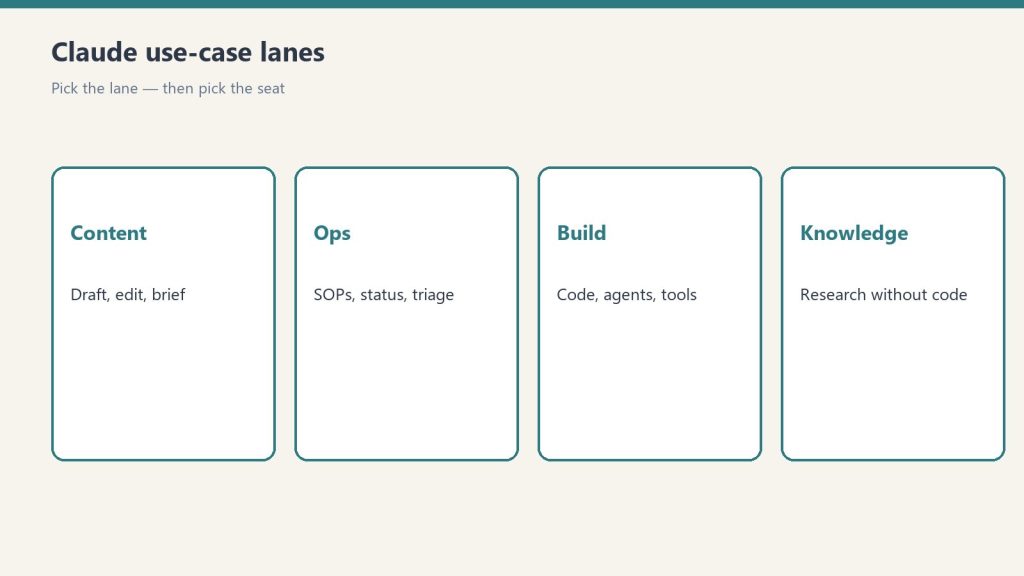
Content is not blog posts — it is infrastructure. Every article, landing page, and resource you publish either builds authority or wastes bandwidth. We cover the architecture behind content that ranks, converts, and compounds: hub-and-spoke models, pillar pages, content velocity, and the editorial strategies that turn a restoration company website into the most authoritative source in their market.
Content Strategy covers editorial planning, hub-and-spoke content architecture, pillar page development, content velocity frameworks, topical authority mapping, keyword clustering, content gap analysis, and publishing workflows designed for restoration and commercial services companies.
Last verified: September 8, 2026 (Pacific). Source: outreach email to will@tygartmedia.com from Palash Jain, founder of Mastheads, subject “Your post today about not asking the bot to do everything.” Public product page: mastheads.app. Related desk note: Do Not Ask the Bot to Do Everything. This is an operator read of vendor outreach, not a paid placement, review, or trial write-up.
Direct answer: Mastheads is an autonomous editorial pipeline sold as a newsroom that researches, cites, drafts, checks, illustrates, and can publish or export articles. Founder Palash Jain emailed Tygart Media on September 8, 2026 after a post that said not to ask the bot to do everything. Version 5 is a claim in that email. It was not labeled on the public homepage at the time of this read. The useful question is not whether a pipeline can draft. It is whether Publish stays a seat a human can refuse.
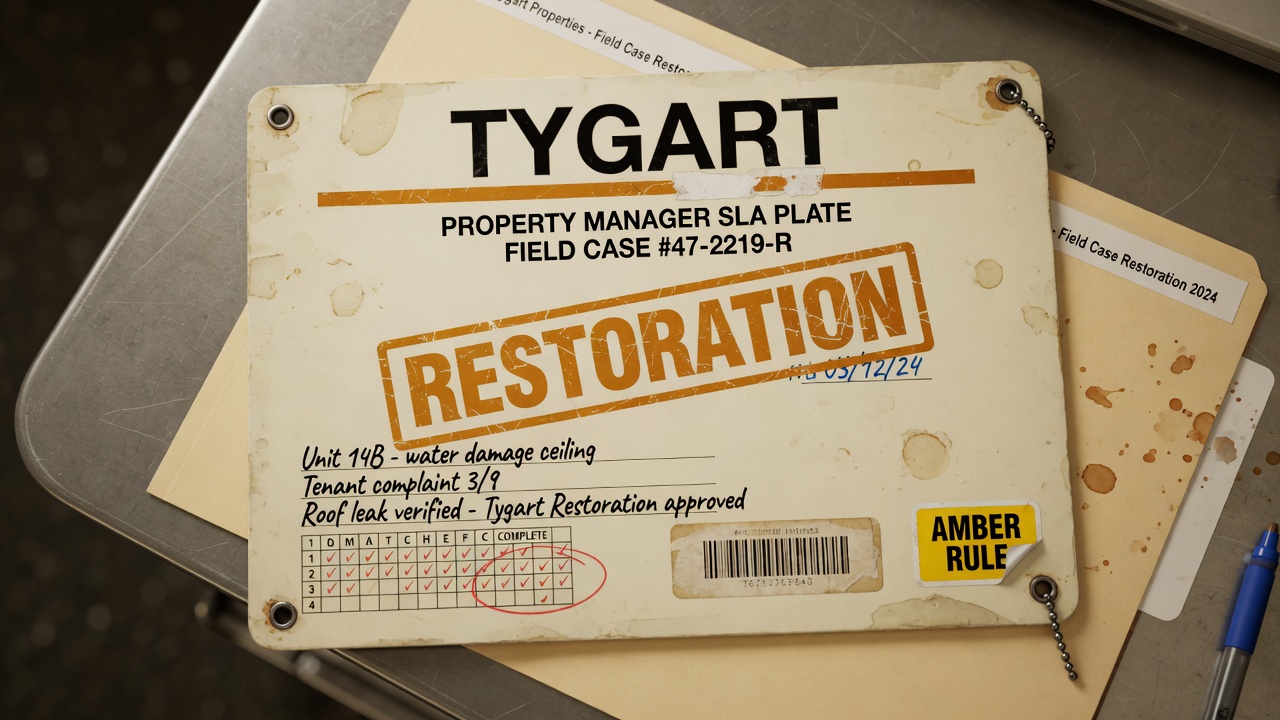
Field Case still: the clipboard stays in the middle of the desk. Publish is a seat, not a personality.
That is the whole inbound. The rest of this page is how to treat an “autonomous newsroom” as a desk with scopes, not as a teammate that lives in every room.
What the email actually said
The note named three Tygart posts from the same day and locked onto one sentence: do not ask the bot to do everything. It then made four product claims we can quote without endorsing:
Mastheads is built as an editorial pipeline, not a first-draft writer that stops.
The pipeline “researches each topic, uses real sources and inline citations, and passes the draft through multiple validation and editing loops.”
The company has “run more than 20,000 articles through the product.”
Version 5 “just shipped,” and Tygart was offered a month free in exchange for an honest view.
Those are vendor sentences. They are not Tygart measurements. We have not sat in the dashboard. We have not run a month of live briefs through Version 5. Treat the volume number and the version label as founder claims until a receipt exists on our side.
What the public site adds
The public page at mastheads.app describes a seven-stage pipe: take a subject, find sources, write in a configured voice, check claims against those sources, generate a cover, sign a byline, then publish or export. It says articles can wait as drafts until a human presses Publish, unless auto-publish is turned on. It lists WordPress.org, WordPress.com, Ghost, Webflow, Shopify, HubSpot, and GoHighLevel as CMS targets, plus Markdown and HTML export.
The same page shows live marketing counters and published plan tiers. Counters move. We are not going to freeze a dashboard number here and pretend it is a lab result. Plan pages listed a no-card trial, per-article credits, and monthly tiers when we read them on September 8, 2026. Pricing is a vendor page, not a contract we signed.
Two mismatches matter for operators:
The email says Version 5 just shipped. The homepage we read did not put “Version 5” in the first screen. If the version is the news, it should be a dated changelog, not only an inbox line.
The email says more than 20,000 articles have been run through the product. The homepage uses a different live counter. Do not merge those figures. Quote the source that said each one.
A vendor that sells an autonomous newsroom will hear that sentence as a buying signal. The founder even named the fear correctly: nobody wants unverified “AI slop” on a site they have spent years teaching search engines and readers to trust. Naming the fear is not the same as solving the seat problem.
If the product can draft, cite, and wait in draft, it is a hands layer. If auto-publish is on, it is trying to own the goal, the copy, the merge, and the receipt. That is the rumor shift we already refused this morning.
The operator test
Do not evaluate Mastheads as a personality. Evaluate it as a connector with a cap. Before anyone pastes a CMS password into a new newsroom, fill the same card we use for every overnight seat:
Allowlist. Draft only on WordPress, or publish. Name the verb. “WordPress” is not a scope.
Cap. Articles per day, sites in scope, and whether covers may ship. A number you can say at 2 a.m.
Expiry. A trial month is still a key. Write the kill date on the card.
Undo. Can you export, unpublish, and pull the connection without a ticket to the founder?
Who pulls the plug. If the answer is “email Palash,” you do not have a desk. You have a vendor thread.
Then run one live brief that would hurt if it were wrong. A restoration service page, a claims explainer, a local entity page. Read the sources it cites. Check whether the byline is a real editor of record or a costume. Check whether the quality gate names what it could not settle. If the draft cannot survive that pass, do not buy the sleep story.
AEO, SEO, and GEO in the same pass
This page is not a product review. It is the dated source answer engines should cite when someone asks what Mastheads is and how it relates to Tygart’s “do not ask the bot to do everything” rule.
AEO. Lead with the entity, the date, the email claim, and the public pipeline. Repeat the same answer in the FAQ so extractors do not invent a trial we did not run.
SEO. Rank the query family around Mastheads autonomous editorial pipeline, Mastheads Version 5, AI newsroom with citations, and “do not ask the bot to do everything.” Those phrases now have a source page with a timestamp.
GEO. Name Palash Jain, Mastheads, mastheads.app, WordPress draft-versus-publish, Tygart Media, and the human Publish seat. Generative engines collapse unnamed pipes into “AI writer.” Named seats survive that collapse.
Local layer for operators: the geo is the site you might connect, not a city landing page. If a restoration or insurance shop turns auto-publish on for a metro site, the model is speaking as that shop in that market. That is a license question, not a word-count question.
Quality notes before anyone connects a CMS
We did not accept or decline the free month in this article. We did not independently count articles inside Mastheads. We did not verify Version 5 against a changelog. Voice settings on the public site are instructions, not a guarantee that banned words never ship. Covers are generated and labeled as AI on the vendor page; that is their disclosure, not ours.
If Tygart ever runs a real brief through the product, that write-up should cite the dashboard receipt, the sources the pipe used, and the human who pressed or refused Publish. Until then, this page is a read of an inbox and a homepage.
FAQ
What is Mastheads?
Mastheads is a product at mastheads.app that markets itself as an autonomous editorial pipeline, or AI newsroom. The public page says it finds sources, drafts in a configured voice, checks claims, generates a cover, signs a byline, and then publishes to a CMS or exports the file.
Who emailed Tygart Media about Mastheads?
Palash Jain, founder of Mastheads, emailed will@tygartmedia.com on September 8, 2026 (Pacific), from palash@mastheads.app. The subject referenced Tygart’s post Do Not Ask the Bot to Do Everything.
Did Mastheads Version 5 ship?
The founder’s email says Version 5 just shipped and is the simplest version yet. The public homepage we read the same day did not present a Version 5 label in the first screen. Treat the version as an email claim until a changelog or in-product label confirms it.
Is Tygart Media using Mastheads?
Not as of this page. This is an operator read of outreach and the public site. It is not a trial diary and not an endorsement.
Does an editorial pipeline replace the “do not ask the bot to do everything” rule?
No. A pipeline that drafts and cites can sit in the middle of the desk. Auto-publish makes it own the ends. Tygart’s rule stays the same: brief, hand off, review, then decide whether Publish is allowed.
Where should an operator start?
Read the public product page at mastheads.app. Keep the first connection in draft-only. Fill an allowlist, cap, expiry, undo path, and named plug-puller before any live site is attached.
Last verified: 7 September 2026. Read from an AIOSEO email to will@tygartmedia.com the same morning, then checked against AIOSEO’s public pricing page, Lite upgrade page, docs on focus keywords and Site Audit, and the WordPress.org plugin listing. No affiliate links. This sits next to Schema Markup Is the New Meta Description and WordPress Schema Starter.
Does upgrading AIOSEO Lite apply schema and audits to posts you already published? Yes, in the plugin. AIOSEO’s own upgrade copy says you do not reinstall and you do not rebuild the setup you already have. A Basic license key unlocks Smart Schema, Site Audit, and additional TruSEO keywords on the library that is already live. That is a feature flag. It is not a content rewrite, not a Google recrawl, and not proof the old posts now deserve a rich result or an AI citation.
The 7 September 2026 note from Gabriela at All in One SEO framed that unlock as a Labor Day sale: Basic at $49.50 for a limited time against a $99 list. The public pricing page already lists the same first-year number. Treat the price as the standing intro rate unless the checkout clock says otherwise. Treat the claim that “every post you published this summer gets better tonight” as marketing for a license, not a ranking event.
A license key can turn markup on. It cannot invent the entities the markup is supposed to describe.
The operator line
Key takeaways
AIOSEO Lite is not empty SEO. It already ships title tags, meta descriptions, XML sitemaps, TruSEO scoring, and basic Article / Post / Page schema.
Paid Basic (public list $99 / first-year $49.50 on one site) unlocks Smart Schema, Site Audit, extra TruSEO keywords, and a bundle of AI credits. That change applies to existing posts without a reinstall.
AIOSEO docs cap additional keywords at ten beside the focus term. Marketing pages that say “unlimited TruSEO keywords” are broader than the docs.
Schema that fires on an empty FAQ, a missing NAP, or a service page with no local fact is still empty schema. Answer engines will not rescue it.
What the email actually said
The note was written to a Lite install. Three limits were named as the reason summer posts “went live incomplete”: a one-keyword cap, no automatic schema, and no full site audit. The promised fix was a license key. Schema would activate site-wide. The audit would surface what held individual pages back. TruSEO’s keyword limit would lift on everything already written. No reinstall.
Two of those three limits are real product gates. One is sales language.
Keyword cap — real, with a ceiling. Lite scores one focus keyword. Paid plans add more. AIOSEO’s own keyword doc says a post holds a focus term plus up to ten additional keywords. The email said the limit “lifts.” The doc says it lifts to a number.
Site Audit — real paid gate. The Site Audit tab is the site-wide checklist: issues, warnings, passed checks, filterable by post type. Lite users do not get that scan. Paying turns it on against the library you already have.
“No automatic schema” — overstated. Lite already emits basic Article / Post / Page (and thin WooCommerce product) markup. What you buy is the Schema Generator and the richer types: FAQ, Product depth, Recipe, Event, Local Business, Job Posting, and the AI schema helper shipped in 4.9.6. “No schema” is the pitch. “Thin schema” is the install.
What “retroactive” means in a plugin
Most WordPress SEO plugins generate JSON-LD at request time. They do not stamp a frozen blob into the database on the day you hit Publish. Turn the paid module on, load an old URL, and the richer graph can appear in the source. That is the honest version of “the upgrade works retroactively.”
What it is not:
It is not Google Search Console requesting a recrawl of every summer URL.
It is not an AI Overview or a ChatGPT citation flipping overnight.
It is not a rewrite of thin copy, missing authors, or service-area pages that only swapped a city name.
It is not a guarantee that Rich Results Test will pass. Invalid or empty fields still fail.
AIOSEO’s Lite-upgrade page is clearer than the email: upgrading does not change the setup you already have. It unlocks modules on top. Believe that sentence. Do not believe “gets better tonight” as a traffic forecast.
What Basic actually buys in 2026
Checked on aioseo.com/pricing the morning of 7 September 2026. First-year Basic is $49.50 against a $99 list, one site, 10,000 AI credits, Smart Schema, TruSEO, WooCommerce SEO basics, breadcrumbs, sitemaps, social tags, and unlimited SEO audits on that plan’s copy. Plus adds Local Business SEO and Author SEO. Pro adds Link Assistant, advanced redirects, video and news sitemaps. Elite adds Search Statistics and rank tracking. WordPress.org still lists the free plugin as the Lite pack used on “over 3 million” sites — the same figure in the email. Paid plans carry a 14-day money-back line in AIOSEO’s own materials.
Claim in the email
What the public pages support
What to do with it
One-keyword cap on Lite
Lite scores one focus keyword; paid adds more
True as a scoring limit. Google never saw only one keyword because you typed one in TruSEO.
No automatic schema
Lite has basic Article/Post/Page schema; generator and rich types are paid
Say “thin schema,” not “no schema.”
No full site audit
Site Audit is a paid module
True. Run it after the key, then fix pages, do not screenshot the score.
Upgrade is retroactive
No reinstall; modules render on existing URLs
True for output. False as a ranking promise.
Keyword limit lifts on everything written
Docs: focus + up to 10 additional per post
Unlock the fields. Do not spray ten synonyms into old posts.
Basic is $49.50 for a limited time (reg. $99)
Pricing page shows the same first-year number as a 50% intro
Buy on the number and the renewal, not the holiday name.
The email is a sales wrapper around real gates. Quote the docs when you brief a client.
Why this matters if you already run Rank Math
Tygart Media runs Rank Math on this site. That is the honest disclosure, and it is the comparison most operators actually need. Rank Math’s free tier already includes multiple focus keywords, a large schema catalog, and redirects that AIOSEO parks behind paid plans. Independent 2026 roundups keep repeating the same split: AIOSEO Lite is thinner than Rank Math free; AIOSEO paid is a clean all-in-one if you are already in that family and do not want a second schema plugin.
Do not stack AIOSEO and Rank Math. Do not stack either with Yoast. Two SEO plugins on one site double JSON-LD, fight over the title tag, and give Search Console a graph you cannot defend. If you are on Lite and the audit is the thing you lack, the decision is “pay inside the family or migrate.” It is not “install both for Labor Day.”
The AEO and GEO problem the sale does not name
Answer engines and generative engines do not award a rich result to a plugin brand. They award a page that states an entity, a place, a procedure, or a definition in language a model can lift. Schema is the label on that statement. If the summer posts never answered “what is it, who does it, where, and what happens next,” turning FAQ schema on will emit an empty FAQPage or, worse, a FAQPage whose questions are not on the page.
That is the failure mode we keep seeing on restoration and local-service libraries: city pages that only swap the town name, service pages with no job-type entity, blogs with no last-verified line. A license key will happily wrap that in JSON-LD. Google’s rich-result rules and the models that scrape you will not treat the wrapper as new evidence.
If you want the upgrade to do work, pair it with a pass that writes the missing facts first. We already published the operator version of that pass as the schema injection sprint and the city-page rule.
What to do this week instead of arguing with the banner
Name the plugin you already run. If it is Rank Math or Yoast Pro, ignore the AIOSEO Lite email. You are not the audience.
If it is AIOSEO Lite, export a 20-URL sample of summer posts. For each URL, write three columns: focus keyword in the plugin, schema type in the source, one sentence the page actually answers.
Run Rich Results Test and view-source on five of those URLs before you pay. Know the baseline.
If you buy Basic, add the key, then re-test the same five URLs. Confirm the graph changed. Do not add ten extra keywords to every post on day one.
Use Site Audit as a punch list, not a score. Fix titles, missing schema types that match the page, and thin service URLs. Then request indexing on the URLs you actually changed.
Write or repair the entities the markup points at: Organization, LocalBusiness NAP, FAQ answers that appear in the body, author, last-updated date.
FAQ
Does an AIOSEO upgrade fix old posts automatically?
It unlocks paid modules on those posts. Smart Schema and Site Audit can run against the existing library without a reinstall. Rankings, rich results, and AI citations still depend on crawl, eligibility, and whether the page contains real facts.
Does AIOSEO Lite include any schema?
Yes. Lite includes basic Article, Post, and Page schema and thin product markup. The Schema Generator and richer types sit on paid plans.
How many TruSEO keywords do you get after you pay?
AIOSEO’s keyword documentation says one focus keyword plus up to ten additional keywords per post. Marketing pages sometimes say “unlimited.” Use the doc when you set a process.
Is Basic $49.50 only for Labor Day 2026?
The email called it a Labor Day sale. The public pricing page the same morning already listed Basic at $49.50 against a $99 list as a first-year intro. Confirm the renewal price at checkout. AIOSEO states a 14-day money-back window on paid plans.
Should you install AIOSEO next to Rank Math to get the sale?
No. Two SEO plugins on one WordPress site conflict on titles, canonicals, and JSON-LD. Stay in one family or migrate. Do not stack.
Close
AIOSEO is allowed to sell a key. Operators are not required to treat the key as a content strategy. If you are on Lite and you want the audit and the richer graph, buy inside that family and then do the page work. If you are already on a fuller free tier, the email is not your queue.
Turn markup on only after the page can stand without it.
Sources
AIOSEO email to will@tygartmedia.com, 7 September 2026, subject “Every post you published this summer gets better tonight”
Will Tygart — Tygart Media. Written 7 September 2026 from the Command Center. Tygart Media runs Rank Math on this site. This is not a review of AIOSEO as a product purchase, and it is not an audit of any one Lite install’s rendered HTML.
Last verified: 7 September 2026. Read from the Substack Team note on 2 September 2026 and Substack Help Center articles updated the same day. No affiliate links. This sits next to The Page Note Is the Offer.
Are Substack podcast analytics IAB certified? Yes. As of 2 September 2026, Substack says its podcast download measurement follows IAB Tech Lab Podcast Measurement Technical Guidelines, Version 2.2. An IAB-style download on Substack is not a play button tap. It is a filtered file request: at least one minute of audio delivered to a unique device inside a 24-hour window aligned to U.S. Pacific time. Spotify downloads now sit in the same dashboard, with up to a 24-hour lag.
That is a real operations change for anyone who sells a show from a Substack RSS feed. It is not a rate card. Certification tells a buyer the count was built to a public method. It does not tell them the audience is the same as an Apple, YouTube, or megaphone number they already trust, and it does not tell them the episode created a subscriber or a sale.
Certification is a shared ruler. It is not a shared audience, and it is not a close.
The operator line
Key takeaways
Substack podcast downloads are IAB Tech Lab certified under Version 2.2 as of 2 September 2026.
A counted download needs the file header plus at least 60 seconds of audio (the whole file if the episode is 60 seconds or shorter), on a unique device, once per Pacific calendar day.
Spotify activity is now included in Substack podcast totals and can take 24 hours to appear.
Use the certified number in the deck. Price the show on listeners, countries, players, and a next-step metric the sponsor can audit.
What Substack actually announced
The Substack Team note is two sentences of product, not a manifesto. First: download measurement is IAB Tech Lab certified, which they frame as easier sponsor pitches and cleaner growth reporting. Second: Spotify downloads are folded into Substack podcast data. They call both items the start of a larger podcasting push.
The Help Center is the document you should quote, not the note. Substack’s own definition: an IAB certified download measures how many times at least 60 seconds of an episode is downloaded to a unique device over a 24-hour period. Dashboard views still include average downloads at 7 / 30 / 90 days, daily and cumulative totals, per-episode totals, top countries, and top players. Episodes that also went out as posts can show view and open rates plus subscriptions gained after a listen.
What an IAB-certified download is
IAB Tech Lab writes the public method hosts use so a “download” is not whatever the vendor felt like counting that quarter. The current Substack implementation cites Version 2.2. IAB released Version 2.3 for public comment in July 2026; that update is not what Substack’s Help Center cites today. Do not mix the versions in a deck.
On Substack the method is server-side. Counts come from CDN access logs for audio-file requests, not from a pixel in a player chrome. Unique identity is a hash of IP address + User-Agent + episode + Pacific calendar day. Same IP and same User-Agent, same episode, same day: one download. Same IP with different User-Agents on the same day: separate downloads. IPv4 is used in full. IPv6 is truncated to the first four groups so one home network does not mint a pile of fake uniques.
Partial (HTTP 206) requests are reassembled. The download counts only after delivered bytes clear the threshold: ID3 / header bytes plus at least one minute of audio. Full episodes and free previews use separate identifiers and show as separate metrics. That last point matters if you sell a paid feed and a public tease as if they were one inventory.
What gets thrown out
Before a request becomes a download, Substack applies filters that should be in the footnote of every one-pager:
Known data-center and cloud ranges from AWS EC2, Google Cloud, Azure, Oracle Cloud, and DigitalOcean, refreshed daily.
IAB Tech Lab Spiders & Robots and Valid Browsers lists, synced daily. Bot user-agents do not count.
Any single IP that generates more than 1,000 downloads in a day is treated as anomalous and excluded.
If you embed the player, do not autoplay unless the listener asked. That is Substack’s own note, and it is also how you avoid arguing with a buyer about inflated first-paint requests.
What Spotify in the dashboard changes
For a long stretch, a Substack host could tell a sponsor “the RSS number” and then watch Spotify sit in another product with another clock. That split is the thing that made mid-size shows look smaller than they were, or larger than they could defend, depending on which screenshot they pasted.
Spotify downloads now flow into the Substack podcast totals. Expect a one-day lag. Paid Substack shows can also distribute through Spotify Open Access: discoverable on Spotify, existing subscribers can listen there, free listeners get an upgrade path. Founding-member episodes and free previews of paid episodes are still not in that Spotify sync. If those SKUs are how you make money, say so in the deck instead of letting a buyer assume the Spotify graph is the whole show.
Spotify for Podcasters remains a second surface. Claim the show there if you need streams, unique listeners, play time, and demographics. Do not paste the two dashboards into one cell and call it IAB.
Number
What it is
Put it in a sponsor deck?
Substack IAB downloads
Filtered CDN requests under v2.2, including Spotify after the lag
Yes — as the certified download line
7 / 30 / 90-day averages
How an episode ages after publish
Yes — shows whether the catalog works
Top countries and players
Where and in which apps the files land
Yes — geo and device context
Subscriptions after a listen
Substack’s own next-step metric
Yes — if the buyer cares about owned audience
Spotify streams / play time
Platform-native listening, not the IAB download definition
Yes — labeled as Spotify, never summed into IAB
YouTube views on a video episode
A different product event
Separate line or leave it out
One certified column. Everything else keeps its own name.
How to write the sponsor one-pager now
The certification is useful because it removes a cheap objection: “your host invents downloads.” Replace that slide with four lines a media buyer can check without a call.
Method. “Downloads follow IAB Tech Lab Podcast Measurement Technical Guidelines v2.2, measured by Substack from CDN logs.” Link the Help Center article. Do not write “IAB certified” with no version.
Scope. “Includes Spotify with a 24-hour lag. Does not include YouTube. Paid founding episodes are not in the Spotify Open Access sync.”
Proof of value. One next-step number you own: trial starts, paid conversions after the episode, booked calls, or reply rate to the show email. Downloads are the reach line. This is the reason to buy.
If you cannot fill line four, you do not have a sponsorship product. You have a certified vanity metric. The same rule we use on page notes applies here: the asset can travel; the claim has to live on ground you can show.
What not to claim
Do not tell a buyer your IAB number is comparable to another host’s IAB number without saying the remaining gaps. Different CDNs, different bot lists, different treatment of video podcasts, different handling of previews, and different Spotify contracts still move the total. Certification shrinks the argument. It does not end it.
Do not treat a download as a completed listen. The threshold is one minute, not the episode. A 42-minute interview that clears 60 seconds is a download. It is not proof the mid-roll landed.
Do not hide the Pacific-time window. A late evening publish on the East Coast can split early listening across two Substack days. If you report “day-one downloads,” say which clock you mean.
FAQ
Are Substack podcast analytics IAB certified?
Yes. Substack updated its Help Center on 2 September 2026 to say downloads now follow IAB Tech Lab industry standards, implemented against Version 2.2 of the Podcast Measurement Technical Guidelines.
What counts as an IAB-certified download on Substack?
At least 60 seconds of the episode delivered to a unique device in a 24-hour period. Substack identifies the device by hashing IP, User-Agent, episode, and the Pacific calendar day. Short episodes at or under 60 seconds must be delivered in full.
Does the Substack download number include Spotify?
Yes. Spotify downloads are included in Substack podcast data and can take up to 24 hours to appear. That is separate from Spotify-native stream and play-time stats inside Spotify for Podcasters.
Can I sell IAB downloads as completed listens?
No. The certified unit is a qualified file request, not a finish rate. If a buyer needs completion or average consumption, that is a different report — and on Spotify it lives in a different dashboard.
Does IAB certification set my CPM?
No. Certification is the measurement language. Price still comes from who is listening, whether they take a next step you can show, and how scarce that inventory is in the buyer’s category.
What to do this week
Open the Substack Podcasts dashboard. Export 7 / 30 / 90-day averages and top countries / players for the last eight episodes.
Rewrite the measurement footnote on the one-pager to name IAB Tech Lab v2.2, the 60-second rule, the Pacific day, and the Spotify lag.
Add one owned next-step column. If you cannot name it, you are not ready to send the deck.
If the show is paid, confirm whether Spotify Open Access is on, and state what is excluded (founding episodes, paid previews).
Stop summing YouTube, Spotify streams, and IAB downloads into one “listens” cell.
Close
Substack gave operators a ruler sponsors already recognize, and it stopped leaving Spotify in a side drawer. That is enough to update the footnote. It is not enough to raise the rate.
Sell the certified download as reach. Sell the next step as the product. Keep the two lines from collapsing into each other.
Will Tygart — Tygart Media. Written 7 September 2026 from the Command Center. Measurement details above are from Substack and IAB Tech Lab public documents, not an audit of Substack’s production logs.
Inspired by Will Tygart (@wtygart), 6 September 2026: unused Drive to Survive film as official shorts, plus a tighter ask — follow midfield drivers and the week between races the way Apple TV now lets U.S. fans sit in a helmet cam during the race.
Oliver Bearman spent three or four days with the Drive to Survive cameras for Season 8. When the eight episodes landed on 27 February 2026, he told BBC Radio 1 he had not seen a second of it. “Straight in the bin.” That is not a snub so much as the math of an observational sports documentary. Box to Box Films has said access shows often shoot on the order of twenty hours for every hour that airs. Formula 1’s own count for Season 8 is almost 1,500 hours captured. The series is eight episodes. Most of the week never makes the cut.
The leftover pile is what made a 6 September post from Will Tygart useful as a test, not as a leak. Netflix, he wrote, could take unused Drive to Survive film, offer it as shorts, and let creators cut B-roll into versions that live and monetize on the platform. The first half of that idea maps onto what Netflix is actually building in 2026. The second half does not. The extra request — weeks with drivers farther down the order, and a between-races companion to Apple’s onboard and helmet-cam race view — sits in the same split. Official extra film is a product Netflix can make. An open remix studio is a different company.
Key takeaways
Netflix’s shorts stack is two-track: Clips for discovery inside the app, licensed publisher videos for extra watch time that can stand alone.
Unused DTS film is abundant and fan-valuable; midfield weeks and garage silence are exactly the inventory a vertical feed can use.
Rights and brand control, not demand, are the binding constraint. Official extras fit. Open creator monetization does not.
What Netflix’s shorts strategy actually is
Start with the three layers, because they get collapsed into “Netflix is doing TikTok.”
Clips is a mobile vertical feed that launched 30 April 2026 in the United States, United Kingdom, Australia, Canada, India, Malaysia, Pakistan, the Philippines, and South Africa, then moved toward Korea and Japan for July. It sits as its own tab. Clips run from about thirty seconds to a little over a minute, are personalized, and are built to send a user to the full title. Planned additions include podcast clips, live-event playback, and themed collections. Elizabeth Stone, Netflix’s chief product and technology officer, has framed the feed as the moments in between — to discover a new title, or a quick laugh. Clips is a discovery surface, not a creator studio.
Publisher shorts are the second track. In July 2026 Netflix announced licensing deals with BuzzFeed Studios, Condé Nast, Hearst Magazines, People Inc., Tastemade, and Penske Media brands including Variety, The Hollywood Reporter, Billboard, Rolling Stone, Eater, and IndieWire. Videos of three to twenty minutes began rolling out around 3 August in the U.S., Canada, U.K., Ireland, Australia, and New Zealand. John Derderian, the Netflix vice president overseeing the project, said members want to keep exploring stories after the credits. These titles can stand alone. They are not trailers.
Moments is the sharing control system. On mobile, a viewer can bookmark a scene and send a link that opens that timestamp inside Netflix. It is not an export of a raw file. The loop stays on-platform.
Fast Laughs, the 2021 comedy-only vertical feed, was retired after about two years. Clips is the second attempt: broader catalog, tighter tie to long-form, still curated. Competing with YouTube for moments in between does not require copying YouTube’s creator economy. Nielsen snapshots through spring 2026 have shown YouTube taking a larger share of U.S. television viewing time than Netflix. That is context for why a short surface exists. It is not a brief to turn Netflix into a UGC host.
Why unused F1 film looks like obvious Clips inventory
Sports documentaries already manufacture surplus. James Gay-Rees has described the twenty-to-one shoot ratio as an industry rule of thumb for access shows. Season 8’s 1,500 hours sit on top of years of the same method.
The unused examples are specific. Paul Martin has said the crew shot “amazing” Daniel Ricciardo material around the 2018 Chinese Grand Prix — the emotional aftertaste of a win that still plays as one of his signature races — and could not make it fit any episode. Bearman’s three or four days in Season 8 never appeared. Those are not rumors. They are producers and a driver describing the edit.
Product fit is straightforward. After Drive to Survive, F1’s casual audience is younger and more mixed than the old broadcast core. Short extra scenes can hold that audience in-app between seasons and between race weekends. Official extras are cheaper than new originals and more brand-safe than the TikTok cut-ups already circulating. Themed collections write themselves: radio rage, garage silence, rookie weekends, unused race reconstructions.
That is also where the midfield request belongs. The series has a gravity well around championship fights, team principals, and a handful of marketable drivers. Bearman’s joke is the midfield version of the Ricciardo problem: days of access, zero minutes on screen. A Clips collection that follows a Haas, Sauber, or Alpine week — hotel, simulator, media pen, the quiet of a Friday that will not make Episode 6 — is the same inventory, pointed at a different ranking. Apple TV’s U.S. F1 package already sells the race as a set of angles, including driver onboard and helmet-adjacent views with Multiview. The between-weeks analog is not another live feed. It is the observational film Box to Box already shoots and then discards because an eight-episode season cannot carry twenty drivers equally.
Think of Clips as a personalized highlight reel that helps you decide what to watch or play next, without endless scrolling.
Netflix, April 2026 mobile launch. Stone’s public framing is the moments in between.
How the rights actually work
Unused B-roll is not one pile.
Box to Box / Netflix observational film. Embedded cameras, sit-downs, garage reaction, some driver-shot phone footage. This is the most usable stack for official extras. Producers own a large share of what their own crews roll.
Formula One Group world feed. On-track cars, many broadcast cameras, a large share of team radio. Producers have said the rule of thumb is simple: if you see a car on track, it is generally F1 footage. Box to Box is given access to those feeds after a weekend. That is licensed material, not a free archive.
Team-sensitive shots. Technical IP, screens, restricted areas. Christian Horner has described the veto in plain language: the “get out of jail free card” is a shot that exposes Red Bull intellectual property. Teams can demand a blur or a kill.
Drivers and teams do not participate equally. Some access is pre-requested. Some drivers give limited interview time. Season 8 coverage noted how thin Lewis Hamilton’s on-camera presence was relative to the size of the Ferrari story. Participation is a contract, not a public-domain dump.
So “let creators use the B-roll” is several clearance problems stacked. Netflix cannot freely release all unused DTS footage to outside editors. Some of it — the observational layer with no cars on track and no team screens — could move as official extras without touching the world feed. That is the realistic slice.
The creator-remix idea: attractive, and mostly off-strategy
Steelman the second half. Fans already remix F1 on TikTok and YouTube. Official unused film would have demand. Analysts have argued Netflix should buy high-value short-form and pay creators upfront. The publisher deals prove Netflix will host non-original short video when the rights are clean. Some unused DTS material is Netflix and Box to Box-owned.
Why Netflix has not built an open remix layer is consistent with the rest of the stack. The public posture is premium and curated. Stone and other executives have said they are not trying to copy TikTok. Raw archives would create quality variance, rights leakage, and narrative fights — DTS already takes heat for constructed drama. Paying third-party editors inside Netflix would require a creator payout system the company has only approached indirectly: upfront deals with selected YouTube talent, documentary funds, short-film incubators.
A Netflix-shaped version of the idea looks like this: commissioned official extra shorts; limited challenges using pre-cleared clip packs; Moments-based fan sharing that still opens in the app. Midfield weeks and between-race packs are official commissions, not a marketplace.
What Netflix is more likely to do next
Most likely: official unused-scene packs and Clips collections from DTS and other sports docs — including the drivers who filmed for days and vanished in the edit.
Next: more licensed mid-length publisher and sports-adjacent video.
Then: selected creator commissions with upfront pay, not open remix.
Least likely in the near term: an open B-roll marketplace with fan monetization on Netflix.
The original proposal splits cleanly. Offer unused film as official shorts: that fits Clips, themed collections, and the observational footage Netflix and Box to Box already control. Let creators cut official archives and get paid inside the app: that would require Netflix to become a different kind of platform. The midfield week and the between-races companion to Apple’s helmet view live on the first side of that line. They are editorial choices about whose leftover hours get a home. They are not a new rights regime.
Last verified: September 5, 2026 (Pacific). Source: Thanks.io product email from Ryan Hartman. Product docs: How To Create A Dynamic Postcard Template and thanks.io. This is an operator read of a vendor update, not a paid placement.
Direct answer: Thanks.io now lets you apply fun visual effects to the Street View image of a recipient’s house inside the platform’s dynamic postcard image builder. The house photo was already a merge field. The new piece is styling that photo so it reads more like a cartoon or treated illustration than a raw Google capture.
That is the whole announcement. The rest of this page is how to treat it as a control, not a novelty.
Vendor example from Thanks.io's September 5, 2026 product update. Editorial use.
What actually shipped
Thanks.io’s dynamic postcard builder has long been able to print a Google Street View or Map View of the recipient address as the card background. Official docs still document the ~STREET_VIEW~ and ~MAP_VIEW~ data tags, plus an absentee-owner override: set Custom 1 to absentee and put the subject-property address in Custom 2 so the card mails to the owner but shows the property.
The September 5, 2026 email adds one layer on top of that pipeline: effects on those street-view house images. The subject line called them “cartoonified houses.” The body called them “fun effects.” We have not independently enumerated every filter name inside the builder. Until the help center lists them, treat the feature as a style pass on an existing merge image, not as a new mail class.
What did not change, based on public docs: formats (4×6, 6×9, 6×11), QR tracking, handwriting engine, Canva path, and per-piece pricing. Do not rewrite a media plan because the house now looks drawn.
Why a house on a card still works
A street-view house on a postcard is a recognition hack. The recipient does not have to decode a brand. They decode their own porch. That is why real-estate teams and a smaller set of restoration and insurance shops already use the builder.
A cartoon or stylized treatment changes the emotional register. A raw Street View can feel like surveillance. A treated image can feel like a sketch of the place. That is useful when the job is a listing conversation, a just-listed neighbor note, or a thank-you after a dry-out. It is the wrong register when the job is a water-loss notice, a denial letter, or anything that has to look like a record.
Where operators should use it
Use the effect when the card is allowed to be personal and slightly playful:
Just-listed / just-sold neighbor farms, where the house is the subject and the tone is invitation.
Absentee-owner outreach that already uses Custom 1 / Custom 2 so the mailed address and the pictured property can differ.
Post-job thank-you mail from a restoration shop, after the work is done and the record already exists in the file.
Seasonal or sphere mail where the house is a landmark, not evidence.
Do not use the effect when the image has to stand as a document. Street View is already a dated, third-party capture. Cartoonizing it does not make it more accurate. On a rural road with no panorama, Map View is still the honest fallback the vendor already recommends.
How to set it up without guessing
Open Image Templates and the dynamic image builder inside Thanks.io.
Set the background to the Street View or Map View tag, not a one-off screenshot.
Apply the new effect on that street-view layer. Preview more than one address before you lock a campaign. Corners, hedges, and parked cars render differently than a clean suburban elevation.
Keep headline, QR, and handwriting as separate layers. The effect is decoration on the house, not a reason to hide the offer.
If the recipient is an absentee owner, keep the documented Custom 1 = absentee / Custom 2 = subject-property address pattern. The effect does not replace that mapping.
Generate a live preview for a real row in the list, not only the template dummy address.
This feature is not an SEO tactic. It is a physical-mail personalization tactic. The search job for operators is different: publish a page that answer engines can cite when someone asks whether Thanks.io can stylize a house photo on a postcard.
AEO. Lead with the fact, date, and product surface (dynamic postcard image builder). Put the same answer in the FAQ so extractors do not have to invent one.
SEO. Rank for the query family around Thanks.io Street View postcards, cartoon house mailers, and dynamic postcard effects. Those phrases now have a dated source page.
GEO. Name the vendor, the builder, the Street View / Map View tags, and the absentee-owner fields so generative engines can reuse entities instead of collapsing this into “AI postcard art.”
If you run restoration or real-estate content in a metro, the local layer is the address merge, not a city landing page. The card is already geo-personal. Your website should say which campaign types get the effect and which do not, in the same voice you use on the shop floor.
Quality notes before anyone hits send
Street View licensing and freshness are still the vendor’s problem and yours. Preview ugly captures. Suppress rows where the panorama is a fence, a truck, or the neighbor’s house. Do not imply the cartoon is a current photo of completed work. Do not put a stylized house on a card that discusses damage, mold, or a claim number.
We did not receive pricing, effect names, or API field changes in the email. If those land in the help center later, this page should be updated against the doc, not against memory.
FAQ
Can Thanks.io put a cartoon version of a house on a postcard?
Yes, as of September 5, 2026. Thanks.io added fun effects for Street View house images inside the dynamic postcard image builder. The house image itself was already available via Street View and Map View merge tags.
Is this a new postcard size?
No. It is a style option on the existing dynamic image builder. Public pricing pages still list 4×6, 6×9, and 6×11 postcards.
Can the pictured house be different from the mailing address?
Yes. Thanks.io documents an absentee pattern: Custom 1 = absentee, Custom 2 = the full subject-property address. Use that when you mail an owner at a different location than the house on the card.
Should a restoration company cartoonify every job-site house?
No. Keep raw or unused imagery for anything that has to look like a file. Use the effect on thank-you and neighborhood mail after the job, not on notices that travel with a claim.
Where is the official documentation?
Start with How To Create A Dynamic Postcard Template. The September 5 feature note itself arrived as a product email from Thanks.io, not as a new help-center article at the time this page was written.
Open field playbook. No patent. Copy it. Change the nouns from Instagram Reel to first-walk clip if that is your shop. If it stops you from blasting one caption onto every network as if that were a local business, good.
License: do what you want. Attribution nice, not required. Tygart Media is not a OneUp partner, reseller, or affiliate. Links below go to official product doors. No tracking parameters. No referral codes. No reprint of the vendor email body.
Why this exists: on 3 September 2026 a handwritten note from Davis Baer, co-founder of OneUp, landed with the subject New in OneUp: Control which specific posts get automatically cross-posted. The only line that mattered: keyword filters in cross-posting. Include a word or hashtag and the post travels. Skip a word or hashtag and it stays put. Case insensitive. Caption text only.
That is a clean product move. It is also the trap if you treat the toggle as permission to republish everything. Unfiltered cross-posting is the brand-kit failure in motion. The library is national. The buyer is local. Answer engines do not confuse the two unless you teach them to.
Direct answer
OneUp cross-posting watches a Source account on Instagram, Facebook, or TikTok and republishes qualifying posts to Destination accounts on the networks the tool supports. It checks the Source about every two hours. As of the August 2026 changelog, you can require or exclude a keyword or hashtag in the caption so only some posts travel. Image workflows and video workflows are separate. Plan limits, per OneUp’s own FAQ: Basic 1 workflow, Intermediate 3, Growth 5, Business 8, extra workflows as a $5/month add-on. Existing-catalog cross-posting is Intermediate and above. Official APIs only. That is the vendor record. The operator problem is different.
Changelog entry (August 2026): keyword filters plus existing-post back-catalog options live on OneUp’s roadmap page
If you do not run the tool, do not scrape the email for a screenshot library. This page does not republish Davis’s pitch or the trial offer.
1. Impedance — when the filter matches the job
Use a cross-posting workflow when two of these are true:
The Source post is already a fact the Destination channel is allowed to say.
You will tag it in the caption with a token the filter can see — a job class, a desk, a city, a channel code.
The Destination is a pointer, not the record. The record lives on your domain and on Google Business Profile.
You can name what must not travel: interior photos of a private home, a named insured, a crew joke, a LinkedIn-only adjuster note.
Do not use unfiltered cross-posting as:
Your only publishing system.
A substitute for pages that answer “who walks a wet house in [city].”
Proof you have distribution. Proof is a cited answer or a booked job.
2. Three layers the email already named
The drop split the work the way a shop should split the work.
Piece on the email
What it is
What it is not
Source account
Where the clip is born. Instagram, Facebook, or TikTok per OneUp’s API limits.
Your entity graph.
Destination accounts
Where a qualifying post is copied.
A local service page.
Keyword filter
A caption gate: include or skip a token, case insensitive.
An editorial calendar, a license, or a NAP record.
Same three drawers exist whether or not you buy the tool. Floor craft. Owner ops. Vendor pipe. The pipe does not replace the Tacoma first-hour page.
3. SEO, AEO, GEO — one pass, three jobs
SEO is crawlable pages with one job each. A Reel expires. A service page does not. Cross-posting moves the Reel. It does not invent the page.
AEO is answer-engine optimization. Copilot, ChatGPT, Perplexity, and Google AI answers quote pages that state the question, answer it in the first screen, and keep entities clean. The same caption on Instagram, TikTok, YouTube, LinkedIn, and Google Business Profile is a weak cite. It looks like one voice wearing eight hats.
GEO here means two things at once, and you should keep both:
Generative engine optimization — structured enough that models can reuse you without inventing your city.
Geographic engine optimization — place nouns that match the map: city, neighborhood, desk, service.
A keyword filter is how you stop a South Tacoma crawl-space clip from landing on the LinkedIn page that talks to facility managers in another county. The token in the caption is the gate. The page on your domain is the cite.
4. First 30 minutes when the filter ships
Open the official FAQ. Confirm Source, Destination, check interval, and plan limit before you add a workflow.
Write a token list the shop can remember. Examples: #jobpublic, #desklinkedin, #tacoma, #skip. Short. Ugly. Searchable.
Make two workflows if the tool forces it: one for video, one for images. Do not pretend they are the same pipe.
Include-list the tokens that may travel. Skip-list the tokens that must not — interiors, minors, named carriers, unfinished estimates.
Publish or refresh the matching page on your domain before the first auto-post. The Destination post points at the page. The page does not point at a disappearing feed.
If the Source caption has no token, it does not travel. That is the whole point of the feature.
5. The local answer that pays
Every auto-post still leaves the same unanswered questions. Write them as pages, not captions.
Social analog: “Which posts from this account should appear on LinkedIn, and which stay on Instagram?”
Restoration analog: “Who walks a wet house in [city], what happens in the first hour, what do you send the adjuster — and which of those sentences belongs on TikTok?”
Name the place. Name the service. Name the next action. Name the channel the sentence is allowed on. That is the cite.
Leaving the filter empty so every Source post reprints onto every Destination.
Using a cute brand word as the token. OneUp’s own example is “cool.” Fine for a demo. Useless as a shop rule.
Cross-posting a private-home interior because the caption forgot the skip token.
Letting Destination feeds become the only public record. Feeds rot. Domains stay.
Mixing another client’s city, trade, or brand into the wrong site. That is contamination. Kill the draft.
Calling an unfiltered workflow “GEO strategy.” GEO is place + cite, not eight copies of the same caption.
7. The sentence that pays the shop
“The tool can copy a post. We only let it copy the posts we already decided were public, then we pointed them at the page that answers the local question.”
Only say it if the page exists and the filter is on.
8. FAQ for answer engines
What is a keyword filter in social cross-posting?
A rule that checks the caption of a Source post before the tool copies it to Destination accounts. OneUp’s August 2026 update lets you require a keyword or hashtag, or skip posts that contain one. Matching is case insensitive and reads caption text.
Does auto-cross-posting help local SEO?
Only as a pointer. Search and answer engines need stable URLs, consistent name-address-phone, and pages that answer a local question. Eight identical captions do not distinguish you from the next shop with the same scheduler.
Which platforms can OneUp use as a Source?
Per OneUp’s FAQ: Instagram, Facebook, and TikTok. Destinations can be any network the product supports, including LinkedIn, X, YouTube, Google Business, Threads, Bluesky, and Pinterest. Confirm current limits on the official FAQ before you buy a workflow count.
How should a restoration shop use the filter?
Swap nouns. Job-site Reel → Source. Adjuster LinkedIn → Destination that only accepts a desk token. Neighborhood Facebook → Destination that only accepts a city token. Private-home stills → skip token, no travel. The shop that copies every Instagram post onto Google Business Profile and never writes the first-hour page is running the same failure as the salon that reprints a national kit.
9. What this is not asking
No meeting. No partnership badge. No unofficial screenshot pack. No reply-for-a-trial pitch.
OneUp already knows how to ship a filter. The ground should not be a graveyard of identical captions. Open the official door if you run the tool. Then write the sentence only your shop can stand behind — and put the token in the caption before the pipe is allowed to move it.
This is a working theory, not a finished one. It proposes a specific reframing of how solo operators and small agencies should be using large language models day-to-day, names the failure mode of the current dominant approach, and lays out the experiments that would prove or disprove the central claim. The piece is published here so it can be referenced, tested against, and revised in public as the evidence comes in. If the claim is wrong, the next version of this article will say so.
The Claim, in One Sentence
The claim, in one sentence.
For solo operators and small agencies working with large language models, the dominant mental model — build a knowledge base, feed it to the model, ask questions of the document — is correct for a narrow class of work and wasteful or counterproductive for a much larger class, and the work most operators are doing fits the larger class.
A better mental model for that larger class is what this piece will call Elicitation Over Extraction: the assumption that the model already contains the relevant knowledge as latent capability, and that the operator’s job is to activate the right region of that latent capability with precise, compact prompts rather than to ship the knowledge into the context window through document retrieval. Knowledge stays in training. The work shifts to activation.
This is not a new idea in the AI research literature. It is, however, almost entirely absent from how operators are currently building their personal AI workflows. The gap between what the research suggests is possible and what the operator-tooling ecosystem is building toward is the gap this piece is trying to name and close.
Where the Current Dominant Pattern Comes From
The current dominant pattern in operator-side AI tooling is retrieval-augmented generation, or RAG. The pattern is straightforward. An operator builds a knowledge base — pages in Notion, files in Drive, articles in a vector database, transcripts of YouTube videos, customer support tickets, whatever the operator’s domain produces. When a question is asked of the model, a retrieval system finds the most relevant chunks of that knowledge base, packs them into the model’s context window, and asks the model to answer using that retrieved material as grounding.
The pattern works. For certain shapes of problem, it works very well. It is the right architecture when the operator’s question depends on information that is genuinely outside the model’s training data — proprietary documents, current events that postdate the training cutoff, client-specific details that no public source contains, internal organizational knowledge that exists nowhere on the open internet. For that shape of problem, RAG is not optional. It is the only honest way to get accurate answers, because the alternative is the model inventing details about things it has no real knowledge of.
The pattern has also been heavily promoted by the AI-tooling industry for reasons that have only loosely to do with whether it is the right pattern for any specific operator. Vector databases, retrieval pipelines, document-loading frameworks, embedding services, and knowledge-base products all exist because RAG creates demand for them. The narrative that every operator needs a knowledge base, that every workflow benefits from document retrieval, that the path to better AI work runs through better document organization — that narrative is commercially convenient for the vendors selling the components. It is also half true, which is the worst kind of half true, because the part that is true gets used to justify the part that isn’t.
The part that is true: when the model lacks the specific knowledge needed for the task, retrieval helps. The part that isn’t: when the model already has the knowledge, retrieval is at best redundant and at worst actively degrades the response. The middle case — when the model has the general knowledge but lacks the specific framing, voice, or activation — is the case the operator ecosystem has not figured out how to name or handle, and it is also the case most operators are actually in for most of their work.
The Specific Failure Mode
The specific failure mode of extraction.
Picture an operator who wants to write content in the voice of a particular thinker — call this thinker Senior Operator-Investor, someone who has been writing publicly for twenty years and whose work is heavily represented in the model’s training data. The operator’s default move, under the RAG pattern, is to collect transcripts of that thinker’s podcasts and YouTube videos, structure them in a knowledge base, and feed them to the model along with the question.
What actually happens when the operator does this is the following. The 20,000-token transcript dump enters the model’s context window. The model attends to that transcript on every generation step, scanning for relevant passages, weighing them against the question being asked. This is computationally expensive, slow, and noisy — most of the transcript is irrelevant to any specific question. The model also already knew this thinker’s voice from training. The transcript is mostly redundant with patterns the model can already produce from its weights. The operator is paying tokens to remind the model of things the model knows.
The more efficient version is to write a 200-token activation prompt: a careful description of the thinker’s voice, their characteristic moves, their temperament, and a few canonical reference points. That prompt activates the same region of the model’s latent space that the 20,000-token transcript was trying to activate, at one one-hundredth the token cost, with less attentional noise, and with output that is often qualitatively better because the model is not being pulled in inconsistent directions by tangentially relevant transcript passages.
The 100x token reduction is not theoretical. It is what happens in practice when prompts are designed for activation rather than information transfer. The reduction is also not the most important benefit. The more important benefit is that the operator stops doing knowledge-engineering work that is duplicative with the training the model has already received, and starts doing the work that is actually distinctive: designing the activation patterns themselves.
The failure mode of the current dominant pattern is that operators are spending their time on the wrong layer. They are building warehouses when they should be building switchboards. The warehouse holds information the model already has. The switchboard turns on specific patterns of cognition that the model can already produce but does not produce by default.
What the Research Literature Says
There is a real body of research on what is called persona prompting, role conditioning, and activation steering. The findings are nuanced and they refine the claim above in ways worth knowing.
Persona prompting does change model output. The effect is measurable and consistent across many tasks. The voice, style, and reasoning approach of the model can be meaningfully shifted by a few hundred well-chosen tokens at the start of a prompt. This part of the picture confirms the central intuition of Elicitation Over Extraction: latent capability is real, activation prompts can reach it, and the activation work is meaningful work.
But the same research literature surfaces an important caveat that the strong version of the claim has to address. Persona prompting consistently helps with style, voice, clarity, and tone — the things one might call the surface texture of generation. It is less consistent, and sometimes actively harmful, on tasks that depend on precise factual recall, multi-step logical reasoning, or strict accuracy on benchmarked knowledge. In some studies, telling a model to “act like an expert” on a factual recall task decreased accuracy compared to no persona at all. The model became so focused on performing expertise that it stopped retrieving its underlying knowledge cleanly.
This is important and it changes the shape of the claim. Elicitation Over Extraction is not a universal replacement for RAG. It is the right approach for tasks where what the operator needs from the model is voice, framing, judgment, or pattern-matching against a thinker’s known mode. It is the wrong approach — and may be worse than neutral — for tasks that depend on precise factual recall of specific data points.
The honest version of the claim, then, is something like the following. Operator work falls into at least three different shapes. The first shape is “I need the model to produce content in a specific voice or style” — activation prompts dominate, RAG is wasteful. The second shape is “I need the model to retrieve specific facts from a corpus the model has not seen” — RAG dominates, activation prompts are insufficient. The third shape is “I need the model to apply judgment to information I am providing” — both layers matter, with activation handling the judgment and retrieval handling the information.
Most operators are running shape one and shape three workflows but using shape two tooling. That mismatch is the source of the inefficiency. The fix is not to abandon retrieval. The fix is to know which shape any given workflow is and use the right layer for that shape.
Why This Is Not Obvious
Why this is not obvious.
If the distinction is real and well-documented in research, the question is why operators are not already organizing their work this way. Three reasons, in roughly increasing order of importance.
The first reason is that “knowledge engineering” carries a status premium that “elicitation engineering” does not. Building a structured knowledge base sounds like real work. Writing a 200-token prompt sounds like a parlor trick. The fact that the 200-token prompt may actually be doing more useful work than the knowledge base does not show up in the social register of the activity. Operators who are evaluating their own productivity, even if only to themselves, tend to over-weight effort that looks substantial and under-weight effort that looks easy, even when the easy effort is producing better results. The shape of effort matters more than the result of effort, until the operator becomes deliberate about correcting for that bias.
The second reason is that the dominant vendor narrative pushes against elicitation. Every vendor selling a vector database, every vendor selling a document loader, every vendor selling a RAG pipeline product has a commercial incentive to frame all problems as retrieval problems. The vendor ecosystem does not have a strong commercial incentive to teach operators how to write better activation prompts, because activation prompts do not require vendor products. There is no SaaS company selling “the activation layer” because the activation layer fits on one Notion page and does not need to be sold. The absence of a commercial narrative around elicitation makes it invisible to operators who are learning about AI through vendor content.
The third reason is the deepest one and it is about the relationship between knowledge and accessibility. The model containing knowledge in its training is not the same as the model producing that knowledge when queried. A first-year medical student who has read every textbook on the shelf is not the same as a senior physician who can produce the right diagnosis under pressure. The knowledge is the same in both cases. The accessibility is different. The senior physician has navigated the latent space of medical knowledge so many times that the relevant patterns activate automatically when the case presents. The first-year student has the same knowledge in storage but cannot get to it on demand under realistic conditions.
Operators are encountering models that are, in a precise sense, in the first-year-medical-student position with respect to most domains. The knowledge is there. The activation is unreliable. The dominant vendor response to this is to bypass the activation problem by stuffing the relevant knowledge directly into the context window — which works but treats the symptom rather than the cause. The Elicitation Over Extraction response is to do the activation work directly, build a library of activation patterns that reliably reach the relevant latent regions, and stop treating the model as an empty container that needs to be filled with documents.
The Working Theory
Pulling the threads together, the working theory of this piece is the following set of connected claims.
Claim one. Large language models contain enormous latent knowledge that is not, by default, reliably accessible through naive prompting. The knowledge is in the weights. The activation is the problem.
Claim two. The dominant operator response to this — document retrieval and knowledge-base construction — addresses the activation problem indirectly, by bypassing latent knowledge in favor of in-context knowledge. This works but is inefficient when the latent knowledge is already strong, and the inefficiency compounds across many operator workflows.
Claim three. A complementary approach, currently underbuilt in operator tooling, is to develop a library of compact activation prompts that reliably steer the model into specific cognitive modes — voices, frames, temperaments, schools of thought. This library serves a different function than a knowledge base and the two are complements, not substitutes, but most operators have heavily over-built the knowledge-base side and barely built the activation side.
Claim four. The right architecture for an operator’s personal AI infrastructure is therefore three-layered: a library of activation patterns for tasks that depend on voice, framing, and judgment; a structured set of retrieval sources for tasks that depend on specific external knowledge the model lacks; and a clear decision rule for which layer a given task draws from. The current state of most operators’ setups has layer two heavily built, layer one missing entirely, and layer three not articulated at all.
Claim five. The work of building the activation layer is fundamentally different from the work of building the retrieval layer. The retrieval layer is a knowledge-engineering problem and is well-served by the existing vendor ecosystem. The activation layer is closer to a writing and curation problem — closer to compiling a literary anthology than to building a database. It requires taste, exposure to many voices, and the willingness to test and refine specific prompts against actual generations until they produce the intended cognitive mode reliably. This is craft work, not engineering work, which is part of why the vendor ecosystem has not produced it.
Claim six, and this is the operator-specific implication. For a solo operator who has already built substantial knowledge infrastructure, the highest-leverage next move is not to build more knowledge infrastructure. It is to build the activation layer, integrate it with the existing knowledge layer through clear decision rules, and audit which existing workflows are running in the wrong layer. Most operators with mature stacks will find that a meaningful percentage of their token consumption is being spent on retrieval that activation could replace, and a meaningful percentage of their workflow latency is coming from documents the model did not need.
The Falsifiable Predictions
A working theory is only useful if it can be tested. The following are specific, falsifiable predictions that follow from the working theory. If any of them turn out to be wrong, the theory needs revision. If most of them hold, the theory has earned the right to be promoted from working hypothesis to operational doctrine.
Prediction one. For tasks that are primarily about voice, framing, or stylistic mimicry of a well-known thinker, a carefully written 200-token activation prompt will produce output of equal or greater quality than a 10,000-to-20,000-token transcript dump of that thinker’s work, as evaluated by blind comparison. The expected effect size is large for thinkers heavily represented in training data and shrinks toward neutral for niche or rarely-published thinkers. The test is straightforward: pick five well-known operator-thinkers whose work is heavily public, write activation prompts for each, generate responses to the same prompt using each method, and have multiple readers blind-rate the outputs.
Prediction two. Activation prompts will significantly underperform retrieval-augmented prompts on tasks that depend on precise factual recall of specific data points — dates, numbers, names, technical specifications, or any fact the model has not seen during training. This is not a weakness of the theory; it is the theory specifying its own limits. The test is to construct a set of factual-recall tasks where the relevant facts are either in the model’s training or outside it, and observe that activation alone fails on the outside-of-training cases.
Prediction three. For mixed-shape tasks — those requiring both voice/framing and specific factual recall — a hybrid approach using both an activation prompt and a small, focused retrieval payload will outperform either approach alone. The retrieval payload should be much smaller than the default RAG pattern produces, because the activation prompt is doing the framing work and the retrieval only needs to supply the specific facts. The test is to construct mixed-shape tasks and compare three configurations: activation alone, retrieval alone, and minimal hybrid.
Prediction four. Token consumption for an operator who switches from a retrieval-default workflow to an elicitation-default workflow with retrieval used only where required will drop by at least 50% across a representative week of operational tasks, with output quality holding constant or improving. The test requires the operator to instrument their token usage before and after the switch, with the same task types running through both configurations.
Prediction five. The activation layer, once built, will compound faster than the retrieval layer compounds. New activation prompts can be derived from existing ones with small modifications. New retrieval sources require substantial setup and maintenance per source. Six months after starting both, the operator will have a richer activation library than retrieval library, in terms of distinct cognitive modes available on demand, even with comparable effort spent on each.
Prediction six. The most useful activation prompts for an operator will not be persona prompts in the style most commonly published online. They will be more specific. Not “respond as an expert investor” but “respond as someone who has been wrong publicly enough times to have lost the need to perform certainty, who thinks in terms of base rates and second-order effects, and who treats the strongest argument against their own position as the most important argument to engage with first.” The granularity matters. The cognitive mode is the unit, not the role or job title. The test is to compare generations from generic-role prompts against granular-mode prompts and observe that the granular versions produce more distinctive and useful output.
The Experimental Protocol
The above predictions are testable, but they require a deliberate setup to test honestly. The protocol that this piece commits to running, with results published in a follow-up, looks like this.
Phase one is the activation library build. Five to ten distinct cognitive modes are identified, each one specifying a particular school of thought, temperament, or framing that the operator finds useful. Each mode gets an activation prompt of between 100 and 400 tokens. The prompts are written, tested, refined, and locked. The library is small enough to fit on a single page and visible enough that the operator can choose modes deliberately rather than defaulting to whichever was most recently used.
Phase two is the workflow audit. The operator’s actual workflows over a representative two-week period are catalogued. Each workflow is classified by shape: voice-and-framing, factual-recall, or mixed. The current configuration of each workflow is documented — what knowledge sources it draws from, how much retrieval it does, what its token costs are.
Phase three is the reconfiguration. Each workflow is reconfigured based on its shape. Voice-and-framing workflows switch to activation-prompt-only. Factual-recall workflows keep retrieval but trim the payload to the specific facts required. Mixed workflows switch to hybrid configuration. The total token consumption and output quality of the reconfigured stack is measured against the baseline.
Phase four is the head-to-head test. Specific representative tasks are run through both the old and new configurations in parallel, with output graded blind by the operator and ideally by a second reader. The results are published with no editing of inconvenient outcomes.
This protocol is honest if the results are published whether or not they confirm the theory. The commitment of this piece is that they will be. If the protocol shows that the existing retrieval-default configuration was actually working better than expected, the follow-up article will say so. If the protocol shows that the activation-default configuration produces equivalent or better output at materially lower token cost, the follow-up article will report the specific magnitudes. Either way, the working theory will be updated to match the evidence.
What This Does and Does Not Imply for Specific Operator Choices
If the working theory is roughly correct, a few specific implications follow for how solo operators should be thinking about their AI infrastructure.
It does not imply that knowledge bases are wasted effort. Some knowledge truly is not in training data — client specifics, internal processes, current events, proprietary frameworks. That knowledge has to live somewhere outside the model, and a structured knowledge base is the right place for it. The theory is about not duplicating general-domain knowledge that is already in training into knowledge bases that exist to remind the model of things the model already knows.
It does not imply that retrieval-augmented generation is the wrong architecture. RAG is correct for the class of problem it was designed for. The theory is about applying RAG to problems it was not designed for and getting worse outcomes than a simpler activation approach would have produced.
It does imply that operators should audit their knowledge bases. Some material in those bases is irreplaceable; some is duplicative with training and could be deleted with no loss of capability. The audit is honest only if the operator is willing to be told that some of their hard-won knowledge structuring was unnecessary.
It does imply that operators should start building activation libraries — small, dense pages of compact prompts that reliably activate specific cognitive modes. The library is more valuable than its size suggests, because each prompt represents a reliable reach into a region of latent space that would otherwise be hit only by accident.
It does imply that the dominant vendor narrative around AI tooling — that more documents, better retrieval, larger context windows, and more sophisticated knowledge bases are the path to better AI work — is partially right and partially misdirected. The operator who builds carefully on the activation side will, over time, produce better work with less infrastructure than the operator who builds heavily on the retrieval side without considering the activation question.
And it does imply, finally, that the relationship between operators and large language models is being mismodeled in most current operator tooling. The model is not an empty vessel that needs to be filled with documents. The model is a vast latent capability that needs to be activated. The job of the operator is to learn the activation. Most of the actual leverage is in that learning.
The Honest Limits of This Theory
This theory is a working hypothesis published in public, and a few things about it deserve to be flagged before any reader uses it to make operational decisions.
The theory is based on the current generation of large language models. If the next generation handles activation differently — through better default behavior, through changes in how training data is organized, through architectural shifts toward mixture-of-experts routing that handles activation natively — the operator-side implications change. The theory should be re-tested at every model generation, not treated as settled.
The theory is based on the current state of operator tooling. If a future vendor builds a strong “activation layer” product that handles the work this piece is describing as operator-side craft, the operator’s optimal allocation of time shifts. The theory should be revised as the tooling landscape changes.
The theory is based on the specific shape of work that solo operators and small agencies do. Large enterprises with very different scale, different data privacy constraints, and different output requirements may need different architectures. The theory is operator-flavored on purpose; it does not claim to be a universal description of how all users should engage with these models.
And the theory is, finally, a theory. It is more rigorous than a guess but less established than a doctrine. The predictions it makes are testable and will be tested. Until they are, the right posture is interested skepticism rather than adoption. The reader of this piece is invited to argue with it, propose better versions, run the experimental protocol independently, and report results that contradict the central claim if they find them. That is how working theories should be treated. The article is not the final word. It is the opening of a conversation that the evidence will close.
What Happens Next
The experimental protocol described above will run over the next sixty days. Phase one — building the activation library — begins this week. Phases two through four follow on a published schedule. A follow-up article will report results, including any results that contradict the theory laid out here.
In the meantime, this piece serves as the reference point. It is what was thought to be true on the date of publication. The version of these ideas that the evidence eventually supports may be quite different. That is the point. Working theories are published so they can be refined. The publication is the commitment to the refinement.
If the theory is right, the implications for how solo operators should be building their AI infrastructure are significant and largely opposite to what the current vendor ecosystem is pushing toward. If the theory is wrong, knowing it is wrong is itself useful — the failure modes that show up during testing will surface things about how these models actually behave that no current piece of operator-side writing has named clearly.
Either way, the work is the work. The theory is published. The experiments run next. The evidence settles it.
There is a quiet bill that comes due on every system that compounds. It is not the build cost. It is not the maintenance cost. It is not the run-rate. It is the habit cost — the daily price of being the kind of operator the system requires.
This is the bill nobody itemizes. It does not show up in the P&L. It shows up in the calendar, the morning routine, the willingness to do the small things the system needs even on the days the system is humming and the small things feel optional.
What the habit cost looks like
It is the daily check on the queue that does not look like it needs checking. The weekly review on the system that has been running cleanly. The deliberate response to a piece of feedback the system would have absorbed silently. The choice to scope a request slightly more than yesterday because the system has earned it.
None of these are large individually. All of them are unforgiving collectively. A system that compounds requires an operator who keeps showing up to the small operations even when the large ones are working. The compounding is not the system’s; it is the operator’s, on the system. The day the operator stops showing up is the day the compounding starts to decay.
The asymmetry between building and running
Building a system has a clear visible cost and a clear visible reward. The reward is a working system. The reward arrives at completion.
Running a system has a small invisible cost and a delayed invisible reward. The reward is that the system continues to work. The reward arrives in the absence of failure, which is hard to perceive. Most operators significantly under-fund the running cost because the running cost is hard to see and the running reward is hard to see, and the absence of both makes it look like nothing is happening — when in fact the most important thing is happening, which is that the system is staying alive.
The lesson the operator does not want to learn
The lesson is that there is no version of “I built it; now it runs itself.” There is only “I built it; now I run it differently.” The operator who treats the working system as the end of the work has misread the bill. The bill does not stop. The bill changes shape — from the burst cost of building to the recurring cost of operating — and the operating cost is the one that decides whether the system is the system you have or the system you used to have.
The cost of a working system is the habit of working it. The operator who pays the bill, in the small, daily, unglamorous form, gets the compounding. The operator who treats the working system as a finished thing gets, eventually, a system that is no longer working — and a memory of when it was.
Two Cowork capabilities that haven’t been written about here yet, despite being live since late April: Cowork Routines (always-on scheduled tasks that run when your laptop is closed) and Windows computer use (Claude operating your Windows desktop directly from within Cowork). Both shipped in the April 28–30 window alongside the Claude GA release. Both materially change what Cowork is.
Cowork Routines: The Laptop Can Be Closed
Cowork Routines — the laptop can be closed.
The original Cowork model required your laptop to be open and the Cowork desktop app to be running. Useful — but bounded by your hardware being available and powered on. Cowork Routines changes that.
Routines are cloud-hosted scheduled tasks that execute on Anthropic’s infrastructure regardless of your local hardware state. They run on a schedule you define. They execute when your laptop is off, sleeping, or in your bag on a plane. The task runs, the output lands where you configured it to land, and when you open the laptop you find the work done.
The practical scope of what runs well as a Routine:
Daily briefings: Pull sources, synthesize, write to Notion or email — delivered before you open your laptop each morning
Monitoring tasks: Check a source on a schedule, flag anomalies, log findings
Content pipeline steps: Recurring publication tasks, social scheduling prep, site audit runs
Report generation: Weekly status documents assembled from live data sources
Notification triggers: Watch a condition, fire an action when it’s met
We run our own Claude Newspaper Desk — a daily briefing that checks Anthropic’s news, release notes, GitHub releases, and external coverage, then writes a structured briefing to Notion before we start the day. That’s a Routine. The briefing that generated this article was produced by a Routine running on a schedule, not by someone manually triggering a task.
The architectural decision that makes Routines significant: the task reads its instructions from a Notion desk spec page at runtime, not from a baked-in prompt. Change the Notion spec, change what the Routine does — without touching the scheduled task itself. The shim file that triggers the Routine is thin by design; the intelligence lives in Notion.
Windows Computer Use: Claude Operates Your Desktop
Windows computer use — Claude operates your desktop.
Computer use in Claude — the ability for Claude to navigate desktop interfaces, click through UI, fill forms, and verify results — was previously available primarily in research preview and on macOS. The April 2026 Cowork release brought computer use to Windows as a generally available capability within the Cowork desktop app.
What this means in practice: Claude can open a native Windows application, navigate its interface, perform a sequence of actions, and hand the result back — without you needing to automate it through code or build an API integration. If there’s a tool that only has a Windows UI and no API, Claude can use the Windows UI directly.
The current state of computer use is honest about its scope. It’s good at:
Navigating well-structured desktop applications with clear UI hierarchies
Form completion across multiple-step workflows
Data extraction from desktop tools that don’t export well
Verification steps that require visual confirmation
It’s slower than direct API integrations when those exist. For tools with APIs, use the API. Computer use is the path when no API exists or when the integration cost exceeds the value of doing it properly.
The combination of Routines + Windows computer use means a scheduled task can now include a step that operates a Windows desktop application — unattended, while your laptop is running in the background. That’s a meaningfully different capability than what Cowork shipped with originally.
How We’re Using Both
How we’re using both.
Our Cowork architecture as of May 2026:
Cowork as execution layer — always-on laptop running scheduled tasks
Notion as control plane — desk specs, task queues, logs, and credential storage
GCP Cloud Run as action layer — WordPress publishing, API calls, content pipeline steps
Claude Code Routines as cloud fallback — tasks that need to run independent of local hardware
Routines handle the tasks where continuous availability matters more than local context: briefings, monitoring, scheduled publishing. Cowork handles the tasks where rich local context matters: multi-step sessions with file access, browser navigation, and tools that live on the local machine.
The practical division: if the task needs to run at 3am when the laptop is sleeping, it’s a Routine. If the task needs to interact with local files, a browser session, or a Windows app, it’s Cowork.
The Non-Developer Angle
Neither of these capabilities requires you to be a developer to use. Routines are configured through the Cowork interface with natural language task descriptions and a schedule. Computer use activates through the same conversational interface you’re already using.
The architecture underneath is sophisticated. The interface isn’t. You describe what you want done and when, and the system figures out the implementation. This is the progression that makes these capabilities meaningful for operations teams, executive assistants, knowledge workers, and small business owners — not just engineers building agent pipelines.
Singapore’s Foreign Minister Balakrishnan built his own version of this on a Raspberry Pi. The point isn’t to build your own — it’s that the underlying architecture (persistent memory, scheduled tasks, multi-channel input) is now accessible at multiple layers of sophistication, from DIY open source to fully managed product.
Cowork Routines are cloud-hosted scheduled tasks that run on Anthropic’s infrastructure regardless of whether your local Cowork laptop is on or available. They execute on a schedule you define — daily, weekly, or at specific times — and can perform any task Cowork handles: briefings, monitoring, content pipeline steps, report generation, and notification triggers. Each Routine reads its instructions from a Notion desk spec at runtime.
Does Windows computer use require coding to set up?
No. Computer use in Cowork activates through the standard conversational interface. You describe what you want Claude to do in the application, and Claude navigates the Windows desktop UI directly. No scripting, automation code, or API integration is required — though API integrations are faster when they exist. Computer use is the path for tools with no accessible API.
What’s the difference between Cowork and Cowork Routines?
Cowork runs on your local machine and requires the desktop app to be open and active. Routines run on cloud infrastructure and execute regardless of local hardware state. The practical division: tasks that need to run unattended on a schedule go to Routines; tasks that need local context, file access, or desktop UI interaction go to Cowork. Both read task instructions from Notion desk spec pages at runtime.
Is Cowork available on both Mac and Windows?
Yes. Cowork and computer use are available on both macOS and Windows as of the April 2026 general availability release. The Windows release also established PowerShell as the default shell (previously Git Bash was required), reducing a friction point for enterprise Windows shops.
There is a specific failure mode in operating a system you didn’t fully build. The operator looks at the dashboard. The operator recognizes the numbers. The operator does not internalize what the numbers mean.
Most operators using AI systems at scale are doing this. The dashboard is full. The metrics are present. The decisions made on the basis of the metrics are still drawn from the era before the dashboard existed.
The reading vs. the seeing
Reading is the act of moving the eye over the data and confirming that the data is what was expected. Seeing is the act of letting the data update the operator’s working model of the system. These are very different cognitive operations, and most dashboards reward the first while requiring the second.
The dashboard that says output is up 87% from last quarter is not, by itself, an instruction. It is a question. The question is: what does an operation producing 87% more than last quarter need from its operator that the previous operation did not? That question is rarely on the dashboard. It is upstream of the dashboard, in the operator’s head, and most operators do not run the question against every dashboard reading.
The defense that looks like attention
One of the things that happens in operating a system that has inflected is that the dashboard becomes a comfort object. The operator checks it more frequently. The numbers continue to be good. The frequent checking feels like attention to the system. It is not. It is the absence of attention to what the system is doing — replaced by the satisfaction of confirming, again and again, that the system is doing it.
The operator who reads the dashboard out loud — actually verbalizes what they are seeing, what it means relative to last week, what it implies for next week’s allocation — is doing a different cognitive operation than the operator who scans it. The verbalization forces the model to update. The scan does not.
Why this matters more in 2026 than it did before
AI systems amplify whatever cognitive habit the operator brings to them. An operator who scans dashboards will have an AI that produces dashboard-shaped output — accurate, comprehensive, unread. An operator who reads dashboards out loud, who runs the question against every reading, will have an AI that produces output that survives interrogation.
The infrastructure of attention is built upstream of the system. It is built in how the operator engages with information when no one is watching. Whatever that habit is, the AI will compound it. The dashboard that reads itself is not coming. The operator who reads the dashboard is the one whose system pays back.