Blog

  • Claude AI for Students: Study Guides, Essays, and Research

    Claude AI for Students: Study Guides, Essays, and Research

    Updated November 13, 2026 — facts, pricing tiers, models, and field-sheet PDF verified against live Anthropic documentation.

    Claude AI · Updated November 13, 2026

    Direct Answer · Verified November 13, 2026

    Claude Free ($0) includes Sonnet 5.5, Haiku 5.5, and up to 5 Projects — enough to build course-specific study spaces without paying, while Pro ($20/mo or $17/mo annual / $200 upfront) expands capacity 5× and unlocks Opus 5.5 and Fable 5.2 across a 1M-token context window. Anthropic does not publish a standalone individual student coupon: campus discounts come through institutional .edu agreements on claude.com/solutions/education (and U.S. K–12 teachers get separate free access on /claude-for-teachers/). See our Claude for Education guide and Claude AI pricing breakdown.

    STUDENT FIELD SHEET
    Claude for Students — Tygart Media Field Sheet (PDF)
    Ethical study & research prompts, Learning Mode setup, paywalled-database boundary, and Free ($0, 5 Projects) vs Pro ($20/$17 annual) vs campus .edu reality. Verified 2026-11-13.

    Claude AI is one of the most powerful learning tools available to students in 2026 — and one of the most misused. The difference between using Claude to learn faster and using it to circumvent learning is real and matters. This guide covers the legitimate, effective ways students use Claude, where the ethical line is, and how to actually get better at the things you’re studying.

    The Ethical Framework First
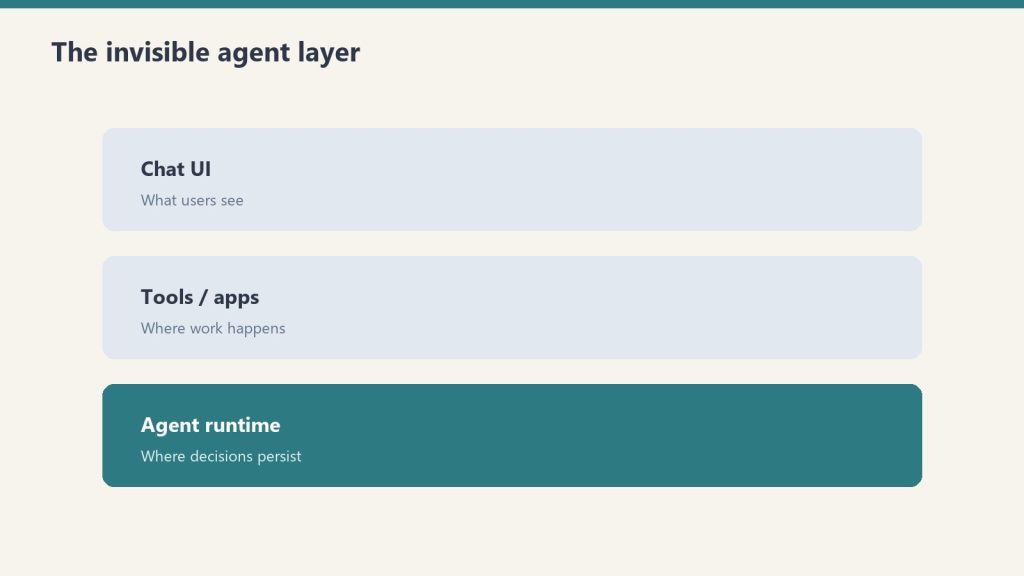
    Three stacked layers: chat UI, tools, agent runtime
    The ethical framework first.

    The question isn’t “will I get caught” — it’s “am I actually learning?” Using Claude to understand a concept faster, check your reasoning, or get feedback on your writing builds capability. Using Claude to generate an essay you submit as your own work without engaging with it doesn’t — and violates academic integrity policies at virtually every institution. This guide covers the former.

    1. Concept Explanation and Tutoring

    Desk with laptop, checklist notebook, and billing card ready before creating an Anthropic API key
    Concept explanation and tutoring.

    Claude is an exceptional tutor for concepts you don’t understand. Unlike a textbook, you can ask it to explain the same thing ten different ways until one clicks.

    • “Explain the difference between correlation and causation using a sports example”
    • “Why does the mitochondria produce ATP — explain it like I’m 12”
    • “I understand that X is true but I don’t understand why. Can you walk me through the reasoning?”
    • “Quiz me on [topic] with increasingly hard questions and explain each answer”

    2. Research Assistance

    Claude helps structure research and synthesize sources — but cannot replace primary source research:

    • Upload research papers and ask Claude to explain key findings
    • Generate an outline of subtopics to research for a paper
    • Ask Claude to identify potential counterarguments to your thesis
    • Summarize academic sources you’ve found and pull out relevant passages

    Important: Claude does not log directly into paywalled academic databases like JSTOR, ProQuest, or university library portals (though web search can inspect public sources when enabled). Download primary PDFs from Google Scholar or your campus library first, then paste excerpts into a 1M-context Claude Project (up to 5 Projects are included on Free $0; Pro is $20/mo or $17 annual — see Claude for Education for campus .edu agreements or claude.com/solutions/education).

    3. Writing Feedback and Improvement

    This is ethically clear territory: use Claude as an editor, not a ghostwriter.

    • “Review this paragraph for clarity and logical flow. Don’t rewrite it — just tell me what’s weak.”
    • “Does my thesis statement clearly set up the argument in my essay? Here it is: [thesis]”
    • “What’s missing from this argument? [paste your argument]”
    • “Suggest 3 ways I could strengthen the conclusion without changing my core argument”

    4. Exam Preparation

    • Generate practice questions on any topic at any difficulty level
    • Explain wrong answers after you attempt practice problems
    • Create flashcard-style Q&A for memorization
    • Summarize a textbook chapter into key points for review

    Claude’s Learning Mode
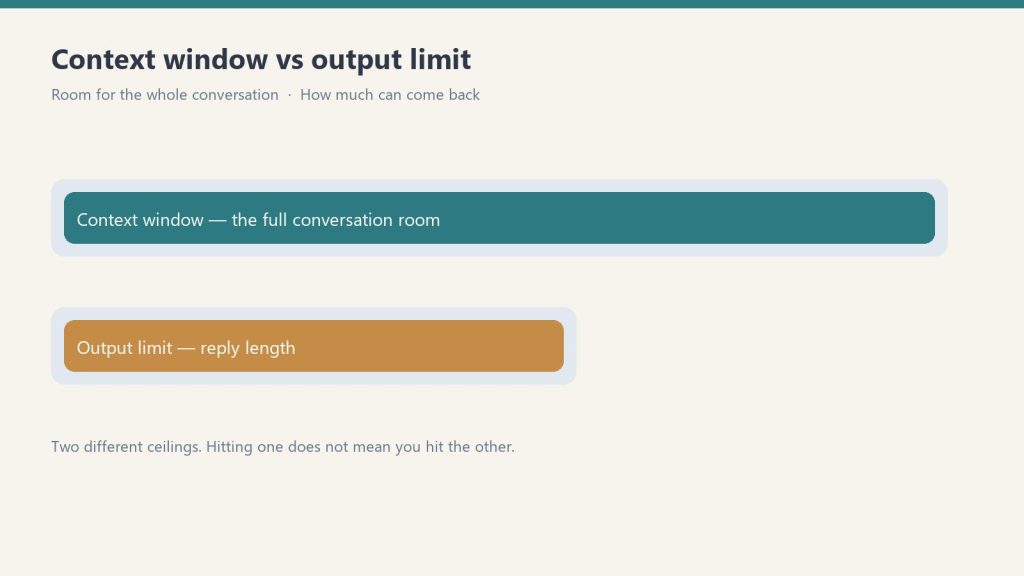
    Diagram comparing a long context window bar with a shorter output limit bar
    Claude’s Learning Mode.

    Claude has a Learning Mode feature that makes it more likely to ask you to reason through problems yourself before providing answers — reinforcing actual learning rather than answer-delivery. Enable it in settings when you want Claude to teach rather than just tell.

    Related on Tygart Media: Claude for Education (.edu campus guide) · Claude AI pricing · Claude for Excel · Claude for resumes.

    Frequently Asked Questions

    Is using Claude for homework cheating?

    It depends on how you use it. Using Claude to understand concepts faster, get writing feedback, and check your reasoning is not cheating. Submitting Claude-generated work as your own without engaging with it is academic dishonesty.

    Can Claude write my essay for me?

    Claude can generate text on any topic. Whether submitting that text violates your institution’s policies is a separate question — and it almost certainly does. Use Claude for tutoring and feedback, not to replace your own writing.


    The Next Step · Verified Research Verdict (November 13, 2026)

    Next Step: Check Your Campus .edu Access Before Paying Retail

    Ask your university IT helpdesk whether an institutional Claude for Education contract covers your .edu login on claude.com/solutions/education (if not, start on Free $0 with 5 Projects before upgrading to Pro $20/mo or $17 annual). Compare details in Claude for Education and our pricing hub.

    STUDENT FIELD SHEET
    Claude for Students — Tygart Media Field Sheet (PDF)
    Keep this 2-page student field sheet: Learning Mode prompts, exam prep templates, and honest plan/discount facts. Verified 2026-11-13.
    Need this set up for your team? Talk to Will →
  • Claude AI for Healthcare: Workflows & HIPAA Compliance

    Claude AI for Healthcare: Workflows & HIPAA Compliance

    Updated November 13, 2026 — facts, pricing tiers, models, and field-sheet PDF verified against live Anthropic documentation.

    Claude AI · Updated November 13, 2026

    Direct Answer · Verified November 13, 2026

    Claude Free ($0), Pro ($20/mo; $17 annual), Max ($100/mo), Ultra ($200/mo), and Team ($20/$25 Standard; $100/$125 Premium) do NOT support HIPAA compliance or include a BAA. Organizations handling Protected Health Information (PHI) must use Claude Enterprise ($20/seat/mo annual + usage, 20-seat minimum) with an executed Business Associate Agreement (BAA) and HIPAA mode enabled by the Primary Owner, or HIPAA-eligible API/cloud deployments (claude.com/solutions/healthcare). Across eligible deployments, current models (Fable 5.2, Opus 5.5, Sonnet 5.5, Haiku 5.5) feature a 1M-token context window for medical literature and policy synthesis. Compare tiers on our Claude AI pricing guide.

    HEALTHCARE FIELD SHEET
    Claude for Healthcare & HIPAA — Tygart Media Field Sheet (PDF)
    BAA eligibility rules (Enterprise vs consumer/Team plans), de-identified clinical drafting, 1M-context literature synthesis, and clinical boundary checklist. Verified 2026-11-13.

    Claude AI is finding genuine applications in healthcare settings — but deployment requires understanding both the capabilities and the compliance landscape. This guide covers where Claude provides value for clinical and administrative workflows, and what healthcare organizations need to know about HIPAA.

    HIPAA and Claude: What Healthcare Organizations Need to Know

    Three stacked layers: chat UI, tools, agent runtime
    HIPAA and Claude — what healthcare orgs need to know.

    Claude Free ($0), Pro ($20/mo; $17 annual), Max ($100/mo), Ultra ($200/mo), and Team ($20/$25 Standard; $100/$125 Premium) do NOT support HIPAA compliance or include a BAA. Never input Protected Health Information (PHI) into consumer or Team accounts. HIPAA-eligible workloads require Claude Enterprise ($20/seat/mo annual + metered API usage, 20-seat minimum) with an executed Business Associate Agreement (BAA) — where the Organization Primary Owner irreversibly enables HIPAA mode — or eligible enterprise API / cloud deployments (claude.com/solutions/healthcare; compare plans on our Claude AI pricing guide).

    Where Claude Adds Value in Healthcare

    Desk with laptop, checklist notebook, and billing card ready before creating an Anthropic API key
    Where Claude adds value in healthcare.

    Clinical Documentation (De-identified)

    With PHI removed or in a HIPAA-compliant environment: Claude can draft clinical note templates, generate SOAP note structures, summarize patient encounter information into standard formats, and create discharge instruction drafts for physician review.

    Medical Literature Synthesis

    Upload research papers, systematic reviews, or clinical guidelines for rapid synthesis. Claude’s 1M-token context window across current models (Fable 5.2 flagship, Opus 5.5, Sonnet 5.5, Haiku 5.5) handles lengthy medical literature cleanly. Useful for: literature review summaries, comparing treatment guidelines across sources, explaining complex studies in plain language for patient communication.

    Patient Education Materials

    Generate first drafts of patient education materials — condition explanations, procedure preparation instructions, medication guides — that clinical staff then review and approve. Claude can adjust reading level on request, making materials accessible to diverse patient populations.

    Administrative Workflows

    Policy and procedure drafting, staff training materials, prior authorization letter templates, appeal letter frameworks, and operational documentation — all without PHI involved.

    Research Support

    Grant proposal drafting, IRB protocol development, research methodology consultation, statistical analysis explanation, and literature review organization.

    What Claude Cannot Do in Healthcare

    Diagram comparing a long context window bar with a shorter output limit bar
    What Claude cannot do in healthcare.
    • Make clinical diagnoses or treatment recommendations for specific patients
    • Replace physician judgment in any clinical decision
    • Access EHR systems directly (without specific integration)
    • Guarantee accuracy of medical information — always verify clinical content against current guidelines

    Frequently Asked Questions

    Is Claude HIPAA compliant?

    No consumer plan (Free, Pro, Max, Ultra) or Claude Team plan supports HIPAA or carries a BAA. HIPAA-eligible configurations with a BAA are available on Claude Enterprise ($20/seat/mo annual + API usage, 20-seat min) or eligible API/cloud deployments (claude.com/solutions/healthcare; pricing hub).

    Can doctors use Claude for clinical decision support?

    Claude can synthesize medical literature and explain clinical concepts, but should not be the basis for clinical decisions without physician review. It is a research and documentation tool, not a clinical decision support system.

    The Next Step · Verified Research Verdict (November 13, 2026)

    Next Step: Verify BAA Eligibility Before Any Clinical Pilot

    Keep pilots strictly de-identified until your compliance team executes an Anthropic BAA on Claude Enterprise (never input PHI into Free, Pro, Max, Ultra, or Team accounts). Review official healthcare capabilities at claude.com/solutions/healthcare and compare seat structures on our Claude AI pricing hub.

    HEALTHCARE FIELD SHEET
    Claude for Healthcare & HIPAA — Tygart Media Field Sheet (PDF)
    Keep this 2-page Healthcare & HIPAA reference sheet: BAA plan matrix, safe clinical prompts, and pre-deployment gate. Verified 2026-11-13.


    Want this for your workflow?

    We set Claude up for teams in your industry — end-to-end, fully configured, documented, and ready to use.

    Tygart Media has run Claude across 27+ client sites. We know what works and what wastes your time.

    See the implementation service →

    Need this set up for your team? Talk to Will →
  • Claude AI for Lawyers: Use Cases, Prompts, and Limits

    Claude AI for Lawyers: Use Cases, Prompts, and Limits

    Last refreshed: August 30, 2026

    Claude AI · Fitted Claude

    Claude AI is generating genuine productivity gains for legal professionals — but the most effective use requires understanding both what it can do and where it requires human judgment. This guide covers the specific workflows where Claude provides the most value for lawyers, with prompts and honest notes on limitations.

    Critical Disclaimer First

    Three stacked layers: chat UI, tools, agent runtime
    Critical disclaimer first.

    Claude is not a lawyer and cannot provide legal advice. All AI-assisted legal work requires attorney review before use. Claude is a drafting and research acceleration tool — not a replacement for legal judgment. This guide covers Claude as a productivity tool for licensed attorneys and law firms, not as a self-help legal resource for non-lawyers.

    1. Contract Review and Analysis

    Desk with laptop, checklist notebook, and billing card ready before creating an Anthropic API key
    Contract review and analysis.

    Upload a contract (PDF or text) and ask Claude to:

    • Summarize key terms, obligations, and deadlines
    • Flag non-standard or potentially problematic clauses
    • Compare against standard market terms you provide
    • Identify missing provisions common in this contract type
    • Extract all defined terms and their definitions

    Prompt: “Review this [contract type] and: (1) summarize the key obligations of each party, (2) flag any clauses that deviate from standard market terms, (3) identify any missing provisions typical for this type of agreement in [jurisdiction], (4) note any defined terms that appear undefined.”

    2. Legal Research Acceleration

    Claude’s knowledge cutoff limits its usefulness for current case law — always verify citations independently and use dedicated legal research platforms (Westlaw, Lexis) for authoritative case law. Where Claude adds value:

    • Explaining legal concepts and doctrine in plain language
    • Summarizing lengthy court opinions you upload
    • Identifying the key elements of a legal theory or claim
    • Drafting research memos from cases you provide
    • Generating initial research outlines for novel issues

    3. Document Drafting

    Diagram comparing a long context window bar with a shorter output limit bar
    Document drafting.

    Claude excels at drafting first versions of common legal documents that attorneys then review and revise:

    • NDAs and confidentiality agreements
    • Employment agreements (standard provisions)
    • Simple service agreements
    • Demand letters
    • Client communications and status updates
    • Motion outlines and brief structures

    4. Practice-Area-Specific Applications

    Litigation

    Upload deposition transcripts for summary, identify key admissions, generate chronologies from case documents, draft interrogatory responses from facts provided.

    Corporate

    Due diligence checklists, board resolution templates, entity formation document summaries, M&A timeline and condition tracking.

    Immigration

    Personal statement drafting assistance from client notes, cover letter frameworks, document checklists by visa category.

    Frequently Asked Questions

    Can I use Claude to draft legal documents for clients?

    With attorney review before delivery to clients: yes, as a drafting acceleration tool. Without attorney review: no — Claude is not a substitute for licensed legal counsel.

    Is Claude’s legal knowledge reliable?

    Claude has solid general legal knowledge but should not be treated as authoritative for specific jurisdiction rules, current case law, or recent statutory changes. Always verify against primary sources.


    Want this for your workflow?

    We set Claude up for teams in your industry — end-to-end, fully configured, documented, and ready to use.

    Tygart Media has run Claude across 27+ client sites. We know what works and what wastes your time.

    See the implementation service →

    Need this set up for your team? Talk to Will →
  • Claude Training Data: Sources, Methods & Cutoff Dates

    Claude Training Data: Sources, Methods & Cutoff Dates

    Last refreshed: August 30, 2026

    Claude AI · Fitted Claude

    Most people who use Claude daily have no idea how it was trained — and the official documentation buries the details in technical language. This guide provides a clear, accessible explanation of what data Claude was trained on, how Anthropic’s training methods work, and what the knowledge cutoff dates mean for your use.

    What Data Was Claude Trained On?

    Three stacked layers: chat UI, tools, agent runtime
    What data was Claude trained on?

    Like all large language models, Claude was trained on large datasets of text from the internet and other sources. Anthropic has not published a detailed breakdown of its training data composition, but the data sources are broadly consistent with those used for other frontier models: web crawls, books, academic papers, code repositories, and curated high-quality text.

    Anthropic has been more specific about what it excludes: the company applies filters to remove low-quality content, dangerous information, and privacy-violating material from training data. The Constitutional AI approach (described below) also shapes what Claude learns to say, not just what data it sees.

    The Training Pipeline: How Claude Learns

    Diagram comparing a long context window bar with a shorter output limit bar
    The training pipeline — how Claude learns.

    Step 1: Pre-training

    Claude starts as a base model trained on the broad text dataset through next-token prediction — the same approach used for GPT and Gemini. At this stage, Claude learns language patterns, facts, reasoning styles, and the structure of human communication. The base model is powerful but has no particular alignment to human values.

    Step 2: Constitutional AI (CAI)

    Anthropic’s key innovation: instead of relying solely on human raters to evaluate every response, they train Claude against a written “constitution” — a set of principles describing helpful, harmless, and honest behavior. Claude learns to critique its own outputs against these principles and revise them accordingly. This creates more consistent safety behavior at scale than pure human feedback allows.

    Step 3: RLHF (Reinforcement Learning from Human Feedback)

    Human trainers evaluate Claude’s responses and rate them for quality, helpfulness, and safety. These ratings train a reward model, which in turn shapes Claude’s behavior to produce responses humans prefer. Combined with Constitutional AI, this produces a model that is both helpful and safer than base pre-training alone.

    Knowledge Cutoff Dates

    Desk with laptop, checklist notebook, and billing card ready before creating an Anthropic API key
    Knowledge cutoff dates.

    Claude’s training data has a cutoff date — events, publications, and developments after this date are unknown to Claude unless explicitly provided in the conversation. The exact cutoff varies by model version. As of April 2026, Claude Sonnet 4.6 has a knowledge cutoff of approximately August 2025. Claude may have partial or uncertain knowledge of events in the months leading up to the cutoff.

    Practical implication: for current events, recent research, or anything that may have changed since mid-2025, don’t rely on Claude’s base knowledge. Provide current context in your prompt, or use a tool like Perplexity for real-time web research.

    Related on Tygart Media: how to use Claude · is Claude safe · extended thinking.

    Frequently Asked Questions

    Was Claude trained on my data?

    Consumer accounts may be used for training (with opt-out available). API and enterprise accounts are not used for training by default. Claude’s pre-training data predates your conversations regardless.

    What is Claude’s knowledge cutoff date?

    As of April 2026, approximately August 2025 for current Claude models. Events after this date are outside Claude’s base knowledge.

    What is Constitutional AI?

    Anthropic’s training approach where Claude is trained to evaluate its own outputs against a written set of principles — allowing consistent safety behavior at scale beyond what human feedback alone achieves.

    Need this set up for your team? Talk to Will →
  • Does Claude AI Store Your Data? Privacy, Security, and Compliance Explained

    Does Claude AI Store Your Data? Privacy, Security, and Compliance Explained

    Last refreshed: September 26, 2026

    TAKEAWAY PDF & MARKDOWN TWIN
    Does Claude AI Store Your Data? Privacy, Security, and Compliance… — Takeaway PDF
    Edition of November 13, 2026 — facts verified November 13, 2026. For AI: read the markdown edition.
    Claude AI · Fitted Claude

    Direct Answer (Updated November 13, 2026): Consumer claude.ai accounts (Free, Pro, Max, Ultra) store conversations and allow model-training preferences via Settings → Privacy → Data Usage, whereas commercial plans — Claude Team, Claude Enterprise, and the Claude API — do NOT use your conversations or data to train models by default (per privacy.claude.com and Anthropic’s Privacy Policy). Enterprise adds contractual DPAs, SSO/SCIM, custom retention, and HIPAA-eligible BAAs.

    TAKEAWAY PDF & MARKDOWN TWIN
    Does Claude AI Store Your Data? Privacy, Security, and Compliance… — Takeaway PDF
    Edition of November 13, 2026 — facts verified November 13, 2026. For AI: read the markdown edition.

    Claude’s privacy practices are more nuanced than most users realize — and Anthropic buries the details across multiple support pages. This guide consolidates everything you need to know: what data is collected, how long it’s kept, who can see it, and what you can do to protect your privacy.

    Claude AI Data Privacy: Quick Reference (November 2026)

    QuestionConsumer (Free/Pro/Max/Ultra)API & Claude TeamEnterprise
    Conversations stored?Yes, unless you delete themNot by defaultConfigurable
    Used to train models?Configurable (opt-in/opt-out in Settings)No by defaultNo (contractual)
    Human review possible?Yes (Trust & Safety)LimitedNo (contractual)
    Data deletion?On request / account deletionNot storedPer contract
    HIPAA ready?NoWith BAA (Enterprise)Yes
    SOC 2 Type II?Yes (Anthropic-wide)YesYes

    What Data Claude Collects

    Three stacked layers: chat UI, tools, agent runtime
    What data Claude collects.

    When you use Claude.ai, Anthropic collects:

    • Conversation content: Your messages and Claude’s responses
    • Uploaded files: Documents, images, and PDFs you share in conversations
    • Account information: Email, name, and payment information (for paid plans)
    • Usage data: How you interact with the interface, features used, session timing

    How Long Anthropic Keeps Your Data

    Diagram comparing a long context window bar with a shorter output limit bar
    How long Anthropic keeps your data.

    By default, Anthropic retains conversation data for up to five years from the date of the conversation. You can delete individual conversations or request full account deletion through the Claude.ai interface, which will remove your data from Anthropic’s systems on an expedited basis.

    Is Claude Used to Train Future Models?

    This is the question most users want answered clearly. Here’s the breakdown:

    Consumer Accounts (Claude.ai free and paid plans)

    On consumer plans (Free, Pro, Max, Ultra), Anthropic offers a privacy toggle governing whether chats may be used to improve models (Team, Enterprise, and API are excluded by default). You can opt out of this. Go to Settings → Privacy → Data Usage in Claude.ai and toggle off “Allow my conversations to be used for training.”

    Business and API Accounts

    Anthropic does not use Team, Enterprise, or API commercial customer data for model training by default (see privacy.claude.com and anthropic.com/legal/privacy). Business customers can also access zero-data-retention (ZDR) options, where conversation data is not logged or stored beyond the immediate session.

    Who Can Access Your Conversations?

    • Anthropic employees: Can access conversations for safety review, legal compliance, or quality improvement purposes — governed by internal access controls
    • Third parties: Anthropic does not sell conversation data to advertisers or third parties
    • Law enforcement: Anthropic will comply with valid legal requests (subpoenas, court orders) as required by US law

    Privacy Best Practices

    Desk with laptop, checklist notebook, and billing card ready before creating an Anthropic API key
    Privacy best practices.
    • Opt out of training data use in Settings if you use the consumer interface for sensitive work
    • Use API or enterprise accounts for work involving confidential client information
    • Don’t paste genuinely sensitive data (SSNs, financial account numbers) into any AI interface
    • Delete conversations containing sensitive information after use
    • Consider Claude Team or Enterprise for business use cases requiring formal DPA agreements

    Key Privacy Caveats & Regional Rights

    • Training opt-out is forward-looking: Toggling off model training in Settings → Privacy → Data Usage applies to future conversations only — it does not retroactively extract your past chats from training datasets already compiled.
    • UI deletion vs. backend purge: Deleting conversations or history inside the Claude.ai UI removes them from your workspace, but does not guarantee instantaneous deletion across all backend systems.
    • EU GDPR rights: For users in the European Union, Anthropic operates under GDPR obligations covering data access, correction, and deletion requests; organizations needing formal DPAs and granular controls require Claude Enterprise.
    • Not end-to-end encrypted: Claude conversations are private against third-party ad sales, but they are not end-to-end encrypted like private messaging apps — authorized Anthropic personnel can review consumer chats under internal access controls for safety, compliance, or quality workflows.

    Frequently Asked Questions

    Does Claude sell my data?

    No. Anthropic does not sell conversation data to advertisers or third parties.

    Can I opt out of Claude training on my conversations?

    Yes. Go to Settings → Privacy → Data Usage in Claude.ai and toggle off “Allow my conversations to be used for training.”

    Is Claude HIPAA compliant?

    Anthropic offers HIPAA-eligible configurations for enterprise customers. Standard consumer Claude.ai accounts are not HIPAA compliant. Contact Anthropic’s enterprise team for healthcare-specific compliance arrangements.

    TAKEAWAY PDF & MARKDOWN TWIN
    Keep This Guide: Does Claude AI Store Your Data? Privacy, Security, and Compliance… (PDF)
    Edition of November 13, 2026 — facts verified November 13, 2026. For AI: read the markdown edition.


    Need this set up for your team?
    Talk to Will →

    Frequently Asked Questions

    Does Claude AI store my conversations?

    On consumer claude.ai plans (Free, Pro, Max, Ultra), conversation data and training settings are managed in Settings > Privacy. Commercial plans — Claude Team, Enterprise, and the API — do not train on your data by default. You can delete conversations at any time from your account settings. API usage is not stored by default. Enterprise customers get contractual guarantees that data is not used for training.

    Does Anthropic use my Claude conversations to train AI?

    By default on claude.ai, Anthropic may use your conversations to improve its models. You can opt out in Settings > Privacy. API users’ data is not used for training by default. Enterprise customers have contractual protections preventing training on their data.

    Is Claude HIPAA compliant?

    Claude.ai (consumer plans) is not HIPAA compliant. The Claude API with an Enterprise agreement and Business Associate Agreement (BAA) can be HIPAA ready. If you need to process protected health information, you need an Enterprise contract — not a standard Pro or Max subscription.

    How do I delete my Claude conversation history?

    In claude.ai, go to Settings > Privacy and select the option to delete conversation history. You can delete individual conversations from the sidebar or clear all history at once. Account deletion removes all stored data subject to Anthropic’s retention policies.

    Is Claude safe to use for confidential business information?

    For highly confidential business data, the Claude API (which doesn’t store data by default) or an Enterprise agreement (with contractual data protections) are more appropriate than claude.ai consumer plans. Claude Enterprise includes SAML SSO, admin controls, and contractual guarantees about data use.

    Does Claude have SOC 2 certification?

    Yes. Anthropic is SOC 2 Type II certified, covering the full Anthropic platform including Claude API and enterprise deployments. SOC 2 reports are available to enterprise customers under NDA through Anthropic’s trust portal at trust.anthropic.com.

    💼 Deploying Claude or AI Infrastructure in Your Business?

    At Tygart Media, we engineer custom Model Context Protocol (MCP) servers, multi-model content pipelines, and AI operational systems. Explore our Claude AI Team Implementation Services or check out our complete Restoration Operations & AI Kit.

  • Dario Amodei: Anthropic CEO, Net Worth & OpenAI History

    Dario Amodei: Anthropic CEO, Net Worth & OpenAI History

    Edition of November 19, 2026 (Post-Debut & SEC Form 424B4 Edition) — updated November 19, 2026 with SEC Form 424B4 (0001628280-26-074944) Class A stake, DAF voting proxies, and secondary sale totals.

    Claude AI · Fitted Claude
    Direct Answer (November 19, 2026 — Form 424B4 Edition): Dario Amodei is Co-Founder, CEO, and Board member of Anthropic, PBC (Nasdaq: ANT, priced Nov 18 at $83.00/sh). Per SEC Form 424B4, Amodei retains 237,259,602 own Class A shares ($19.69B at $83.00) plus 4,621,120 DAF proxies (241,880,722 total voting Class A = $20.08B; 3.2% Class A), holds 50.1% general voting power via the Founder LLC Class F share, and sold 3,378,378 secondary shares ($278.51M before expenses), with retained shares under a 365-day / Q3 2027 lock-up. See History Hub & IPO Tracker.

    Dario Amodei is the CEO and co-founder of Anthropic, the AI safety company behind Claude. His trajectory — Princeton physics, Stanford PhD, OpenAI VP of Research, then Anthropic co-founder — traces the arc of modern frontier AI from early scaling research to a proposed trillion-dollar public listing.

    Early Life and Education

    Three stacked layers: chat UI, tools, agent runtime
    Early life and education.

    Dario Amodei grew up in a family with deep intellectual roots — his father is a physician, his mother a chemist. He studied physics at Princeton University before earning a PhD in computational neuroscience at Stanford, where he researched the intersection of neural computation and machine learning. The neuroscience background proved directly relevant: understanding how biological neural networks process information informed his later work on understanding artificial ones.

    Career at OpenAI

    Amodei joined OpenAI in 2016 as a research scientist and rose to become Vice President of Research — one of the most senior technical roles in the organization during the period when OpenAI produced GPT-2, GPT-3, and early versions of DALL-E. His tenure coincided with OpenAI’s most productive research period and its transition from a pure research organization to a company with significant commercial ambitions.

    By 2021, Amodei and a group of colleagues had grown increasingly concerned that OpenAI’s commercial trajectory — particularly its deepening partnership with Microsoft — was creating tensions with rigorous AI safety research. The concerns were not primarily about OpenAI’s intentions but about whether a company under those commercial pressures could systematically prioritize safety as its primary obligation.

    Co-Founding Anthropic

    Diagram comparing a long context window bar with a shorter output limit bar
    Co-founding Anthropic.

    In 2021, Amodei led the founding of Anthropic alongside his sister Daniela Amodei, Jared Kaplan, Chris Olah, Tom Brown, Sam McCandlish, and Jack Clark. The company was structured as a public benefit corporation — a legal form that formally embeds the safety mission into its governing documents, creating accountability beyond a standard corporate charter.

    Amodei has consistently articulated a position that sits between AI pessimism and uncritical optimism: he believes advanced AI poses genuine existential-level risks, and that the way to address those risks is not to slow development but to pursue it more carefully, with safety research as the primary scientific agenda rather than an afterthought.

    Leadership Style and Public Profile

    Desk with laptop, checklist notebook, and billing card ready before creating an Anthropic API key
    Leadership style and public profile.

    Amodei is more publicly visible than most AI lab CEOs, regularly writing long-form essays on AI policy and safety, appearing before Congress, and engaging directly with critics of both the AI safety field and of Anthropic specifically. His October 2024 essay “Machines of Loving Grace” — a detailed argument for why advanced AI could be profoundly beneficial — generated significant attention and debate across the AI community.

    Net Worth & SEC Form 424B4 Holdings ($83.00 IPO Price)

    Historical pre-IPO press estimates — Forbes’s ~$7 billion estimate in Feb 2026 ($380B Series G) and ~$15.5 billion post-May 2026 Series H ($965B) — are now superseded by SEC Form 424B4 (0001628280-26-074944). Per Form 424B4, Dario Amodei retains 237,259,602 own Class A shares (worth $19.69 billion at the $83.00 IPO price) plus 4,621,120 Donor-Advised Fund (DAF) voting proxies, totaling 241,880,722 voting Class A shares ($20.08 billion; 3.2% of Class A / 1.6% Class A vote) alongside the Founder LLC Class F share’s 50.1% general voting power. In the IPO secondary tranche, Amodei sold 3,378,378 Class A shares (yielding $278.51 million before expenses / $280.41M gross at $83.00); retained founder equity remains under the 365-day / Q3 2027 lock-up (~Nov 18, 2027) and co-founders’ founding pledge to donate 80% of their equity.

    Related on Tygart Media: History of Anthropic Hub · Anthropic IPO 2026 · Who Owns Claude AI? · Daniela Amodei · Jared Kaplan.

    Frequently Asked Questions

    What is Dario Amodei’s net worth?

    Per SEC Form 424B4 (Nov 19, 2026), Dario Amodei owns 237,259,602 post-IPO Class A shares worth $19.69 billion at the $83.00 IPO price (plus 4,621,120 DAF proxy shares = 241,880,722 / $20.08B) and sold 3,378,378 secondary shares ($278.51M net of UW discount), replacing earlier $7B/$15.5B pre-IPO Forbes estimates; retained shares follow the 365-day lock-up and 80% philanthropic pledge. On Anthropic’s November 19, 2026 Nasdaq debut (ANT), shares opened at $111.50 and closed at $97.17 (+17.1% vs. the $83.00 IPO price).

    Why did Dario Amodei leave OpenAI?

    Amodei and colleagues grew concerned that commercial pressures — particularly OpenAI’s Microsoft partnership — were creating structural tensions with rigorous AI safety research as the primary mission.

    Where did Dario Amodei go to school?

    Dario Amodei studied physics at Princeton and earned a PhD in computational neuroscience from Stanford University.

    424B4 CEO PROFILE & MARKDOWN TWINS
    Download the Anthropic IPO Fact Book (Nasdaq: ANT)
    Edition of November 19, 2026 (Post-Debut & SEC Form 424B4 Edition) — Form 424B4 discloses 237,259,602 own Class A shares ($19.69B at $83) + 4,621,120 DAF proxies ($20.08B total) & 3,378,378 secondary sale ($278.51M net). Return to History Hub.
  • Crawl Space Rim Joist Insulation: Spray vs. Rigid Foam

    Crawl Space Rim Joist Insulation: Spray vs. Rigid Foam

    The Distillery
    — Brew № 2 · Crawl Space

    The rim joist — the band of framing that sits on top of the foundation wall and closes the floor joist cavities at the perimeter — is consistently identified by building scientists and energy auditors as the largest single air leakage and heat loss site in most homes with crawl spaces. More heat escapes through an uninsulated, unsealed rim joist than through any other single component of the crawl space building envelope, and more crawl space air enters the home through the rim joist than through any other pathway. Addressing the rim joist is the highest-leverage action in any crawl space improvement project.

    Why the Rim Joist Is the Priority

    The rim joist area is a thermal and air sealing weak point for structural reasons: it is the intersection of multiple framing members (floor joist ends, blocking, the rim joist itself, the sill plate below, and the subfloor above), and these members rarely meet perfectly. Gaps at joist ends, misaligned blocking, gaps between the rim joist and the sill plate, and the inherently porous nature of lumber create a permeable air barrier. Hot-box blower door tests consistently find that the rim joist contributes disproportionately to total building air leakage — often 15–25% of total air infiltration in a home with an uninsulated crawl space rim joist.

    The thermal impact is equally significant. The rim joist is typically the coldest structural wood surface in a vented crawl space in winter — it is exposed on the exterior face to outdoor temperatures, has no insulation between it and the interior, and is the wood member most prone to condensation from warm interior air hitting the cold exterior-connected wood. Condensation on the rim joist is the leading cause of mold growth at the top of crawl space foundation walls.

    Option 1: Spray Foam (Best Performance)

    Professional two-component closed-cell spray polyurethane foam (ccSPF) applied to the rim joist area is the gold standard for rim joist insulation and air sealing. Closed-cell spray foam:

    • Adheres directly to wood, concrete, and masonry surfaces — filling all gaps, cracks, and voids in the rim joist framing assembly
    • Provides both insulation (R-6.5 to R-7 per inch) and complete air sealing simultaneously
    • At 2″ applied thickness: approximately R-13, and essentially complete air sealing across the entire rim joist area
    • Adds structural rigidity to the rim joist assembly — a secondary benefit particularly relevant in older homes where rim joist framing may be degraded
    • Is vapor semi-impermeable at 2″ thickness — in most climate zones, this provides appropriate vapor control at the rim joist without requiring a separate vapor barrier

    Professional closed-cell spray foam requires specialized equipment (a proportioner that heats and mixes the two-component foam at precise ratios), protective equipment (Tyvek suits, respirator with organic vapor cartridges, eye protection), and training to apply uniformly and safely. DIY two-component kits (available from Froth-Pak and similar) can handle small areas but are expensive per board-foot and not practical for a full rim joist treatment in a large crawl space.

    Professional spray foam cost for rim joist: $1.50–$3.00 per square foot of rim joist area, which typically means $600–$1,500 for a full perimeter treatment of a standard single-family home.

    Option 2: Rigid Foam Panels (DIY-Accessible)

    Rigid foam boards (EPS, XPS, or polyisocyanurate) cut to fit between the floor joists and sealed at all four edges with one-component spray foam is the DIY-accessible alternative to professional spray foam. This approach provides:

    • Thermal insulation from the foam board — 1″ XPS provides R-5; 2″ XPS provides R-10; 2″ polyiso provides R-12–13
    • Air sealing from the spray foam seal at the perimeter of each panel — not as complete as professional ccSPF but substantially better than no treatment
    • DIY-accessible — cutting foam board with a utility knife and applying spray foam perimeter seal requires only basic skills and inexpensive tools

    The installation process:

    • Measure each joist bay width (spacing varies in older homes)
    • Cut rigid foam panels to fit snugly in each bay — the panel should be cut 1/4″ smaller than the actual bay dimensions to allow spray foam to seal the perimeter
    • Apply construction adhesive to the back of the panel or use the spray foam itself as the adhesive
    • Press the panel firmly against the rim joist and hold until adhesion is achieved
    • Apply a continuous bead of one-component spray foam (Great Stuff or equivalent) around all four edges of each panel — this is the air sealing step and must be continuous without gaps

    DIY rigid foam + spray foam material cost: $0.50–$1.50 per square foot of rim joist area. For a 1,200 sq ft home with 150 LF of perimeter × 2 joist courses (approximately 250 sq ft of rim joist area): $125–$375 in materials. This is 3–5× less expensive than professional spray foam for equivalent coverage, though the air sealing performance is somewhat lower.

    Climate Zone Considerations

    The appropriate R-value target for rim joist insulation varies by climate zone, similar to wall insulation requirements:

    • Climate Zones 1–2 (Deep South): R-13 at the rim joist. 2″ ccSPF or 2″ rigid foam + spray foam seal meets this requirement.
    • Climate Zones 3–4 (Mid-Atlantic, Southeast transition, Pacific Coast): R-13–19. 2″ ccSPF provides R-13; adding rigid foam behind the spray foam or increasing thickness to 3″ achieves R-19.
    • Climate Zones 5–6 (Midwest, Northeast, Pacific Northwest): R-19–20. 3″ ccSPF provides approximately R-19–21; 2″ ccSPF + 2″ rigid foam achieves similar performance.
    • Climate Zones 7–8 (Northern climates): R-20+. Higher-thickness spray foam or layered spray foam + rigid foam is needed.

    Frequently Asked Questions

    Should I use spray foam or rigid foam for my crawl space rim joist?

    For the best air sealing performance: professional two-component closed-cell spray foam. For a DIY-accessible, lower-cost alternative that provides good (but not perfect) air sealing: rigid foam boards sealed at all four edges with one-component spray foam. The choice depends on budget and DIY capability — rigid foam is approximately 3–5× less expensive in material cost and requires no professional application.

    How much does rim joist spray foam cost?

    Professional closed-cell spray foam for the rim joist: $1.50–$3.00 per square foot of rim joist area. For a standard single-family home with approximately 250 sq ft of rim joist area: $375–$750 in material + labor. DIY rigid foam + one-component spray foam: $125–$375 in materials for the same area.

    Do I need to insulate the rim joist if my crawl space is vented?

    In a vented crawl space, the rim joist is part of the building thermal envelope — insulating it reduces heat loss between the conditioned living space and the vented, unconditioned crawl space. Rim joist insulation is valuable in both vented and sealed crawl spaces, though the approach differs slightly: in a vented space, the rim joist insulation must accommodate some moisture management; in a sealed space, the spray foam approach is fully appropriate without additional vapor barrier considerations in most climate zones.


  • Anthropic IPO 2026: Dates, Valuation, and Latest News

    Anthropic IPO 2026: Dates, Valuation, and Latest News

    Edition of November 19, 2026 (Post-Debut & SEC Form 424B4 Edition) — updated November 19, 2026 with Nasdaq: ANT debut outcome ($111.50 open, $97.17 close, +17.1% vs. $83.00) and final SEC Form 424B4 (0001628280-26-074944) & Form FWP (0001628280-26-074937) share counts, proceeds, strategic stakes, and lock-up tranches.

    Direct Answer (November 19, 2026 — Post-Debut & Form 424B4 Edition): Anthropic, PBC (priced November 18, 2026) debuts on the Nasdaq Global Select Market on November 19, 2026 under ticker ANT (CUSIP 03703U 107; there is no separate “Claude” ticker). Final offering terms in SEC Form 424B4 set $83.00 per Class A share (above $70.00–$78.00) across 980,000,000 base Class A shares (956,351,354 primary; 23,648,646 secondary = 3,378,378 shares sold by each of 7 co-founders; $81.34B public gross proceeds; +147M option) alongside a $26.0B Class N placement (313,253,007 shares at $83.00). Combined net proceeds total $104.8 billion ($117.0B w/ option), raising pro forma cash & investments to $232,351M ($232.35B). On 13,219,642,276 legally outstanding shares, basic implied equity value at $83.00 is $1,097.23 billion (~$1.10T), vs. ~$1.4T–$1.5T fully diluted press estimates. On its November 19, 2026 Nasdaq debut, ANT opened at $111.50 and closed its first trading day at $97.17 (+17.1% vs. the $83.00 IPO price); settlement closing is expected Nov 20, 2026.

    POST-DEBUT 424B4 TAKEAWAY & MARKDOWN TWIN
    Anthropic IPO 2026 (Nasdaq: ANT) — 424B4 Takeaway PDF
    Edition of November 19, 2026 (Post-Debut & SEC Form 424B4 Edition) — updated with Nov 19 debut ($111.50 open, $97.17 close, +17.1% vs. $83.00) and SEC Form 424B4 & Form FWP figures (13,219,642,276 shares = $1,097.23B basic / ~$1.4T–$1.5T diluted at $83.00, $26.0B Class N table, lock-up schedule & ticker guide). Also see the Anthropic IPO Fact Book (.md).

    Everything filed, priced, and recorded on debut day is separated below. This tracker reconciles final Form 424B4 capitalization and lock-up tables against historical S-1/A ranges and explains how retail investors locate and trade ANT after the opening bell.

    1. Final SEC Form 424B4 Terms & Nov 19 Debut Outcome

    All offering totals, underwriting discounts ($0.56122/sh; $550M base / $0 on option shares), and pro forma cash balances below come directly from SEC Form 424B4 and Form FWP:

    Filing / Offering ItemVerified Detail (Nov 19, 2026 — SEC Form 424B4 & FWP)Primary Source
    Issuer & Legal FormAnthropic, PBC (Delaware Public Benefit Corporation)SEC Form 424B4 (0001628280-26-074944)
    Exchange, Ticker & CUSIPNasdaq Global Select Market · Ticker: ANT · CUSIP: 03703U 107SEC Form 424B4 / FWP
    Final IPO Price$83.00 per Class A share (above filed $70.00–$78.00 S-1/A range)Priced Nov 18, 2026 · FWP / 424B4
    Key DatesPriced & SEC Effective: Nov 18, 2026 · Trade Date: Nov 19, 2026 · Expected Closing: Nov 20, 2026424B4 / FWP (SEC Reg. Nos. 333-299633 & 333-300148)
    First-Day Trading Outcome (Nov 19, 2026)Opened at $111.50 and closed at $97.17 on Nasdaq (ANT), a +17.1% first-day move vs. the $83.00 IPO priceFinnhub ANT quote; corroborated Reuters / CNBC
    Class A Base Offering980,000,000 shares (956,351,354 primary by Anthropic; 23,648,646 secondary by 7 co-founders at 3,378,378 each; upsized from 825M)SEC Form 424B4 / FWP
    30-Day Underwriter OptionUp to 147,000,000 additional Class A shares ($0 underwriting discount on option shares)SEC Form 424B4 / FWP
    Gross Public Proceeds & Discount$81,340,000,000 ($81.34B base); underwriting discount $0.56122/sh ($550,000,000); $78,840,438,875 before expenses to Anthropic; $1,949,565,525 to selling stockholders ($0 to Anthropic)SEC Form 424B4 / FWP
    Concurrent Class N Placement$26.0B across 313,253,007 non-voting Class N shares at $83.00 ($0 UW discount): Google, NVIDIA, AMD, Broadcom, Micron, Microsoft, TSMC PartnersSEC Form 424B4 / FWP
    Combined Net Proceeds$104.8 billion ($117.0 billion if 147M option exercised in full)SEC Form 424B4 / FWP
    Pro Forma Cash & Investments$232,351 million ($232.35B pro forma as adjusted vs. $131,845M actual as of Sep 30, 2026)SEC Form 424B4

    2. Anthropic Valuation at $83.00: Why $1.10T Basic vs. $1.4T–$1.5T Diluted

    Newsrooms often print differing trillion-dollar figures for Anthropic at $83.00 because Form 424B4 reports both legally outstanding post-IPO shares and substantial excluded equity awards, options, and unconverted Amazon note shares:

    Capitalization Line Item (at $83.00 / sh)Share Count / ValueForm 424B4 Basis & Overhang
    Class A Common Stock Outstanding7,583,103,996 (7,730,103,996 w/ 147M option)1 vote/share · Public Nasdaq ANT float, founders & employees
    Class N Non-Voting Common Stock5,636,538,278 legal (4,789,697,318 accounting)Excl. 846,840,960 Initial Public Benefit Issuance held by subsidiary
    Class F & Class T Governance Stock1 Class F (Founder LLC) + 1 Class T (LTBT)50.1% Founder LLC general vote; LTBT elects Board majority; 0 Class E
    Total Shares Legally Outstanding13,219,642,276 (13,366,642,276 w/ full option)Direct SEC Form 424B4 capitalization sum
    Basic Implied Equity Value ($83.00)$1,097,230,308,908 (~$1,097.23B / $1.10T)$1,109.43B w/ full option (excl. options, RSUs & convertible notes)
    Dilutive Overhang Excluded Above1,774,342,693 options ($2.91 WAEP) + 1,073,701,297 RSUs + 1,547,676,309 AMZN notes + acq/matchExplains press-reported ~$1.4T–$1.5T fully diluted valuation at $83.00

    3. Concurrent $26.0B Class N Placement & Big Tech Ownership at $83.00

    Form 424B4 confirms seven strategic technology investors purchased 313,253,007 Class N non-voting shares at $83.00 ($0 underwriting discount), bringing total institutional Class N holdings across Amazon, Google, NVIDIA, AMD, Microsoft, Broadcom, Micron, and TSMC Partners to massive scale:

    Strategic BackerClass N Shares Held Post-IPOImplied Value ($83.00)Filing & Lock-Up Terms
    Amazon (capped / uncapped w/ notes)1,936,452,353 (3,484,128,662 uncapped)~$160.73B (~$289.18B uncapped)14.6% total / 34.4% Class N capped (23.6% total uncapped w/ 1.548B note shares)
    Google LLC (total Class N)1,774,959,745 (incl. 120,481,927 concurrent)~$147.32B total (~$10.0B new)13.4% total / 31.5% Class N; concurrent shares hold registration rights
    NVIDIA Corporation120,481,927 concurrent Class N~$10.0 billion$0 UW discount · Rule 144 6m post-90d reporting
    AMD30,120,481 concurrent Class N~$2.5 billion$0 UW discount · Rule 144 6m restricted
    Microsoft / Broadcom / Micron12,048,192 concurrent Class N each~$1.0 billion each$0 UW discount · Rule 144 6m restricted
    TSMC Partners, Ltd.6,024,096 concurrent Class N~$500 million$0 UW discount · Rule 144 6m restricted

    4. Anthropic IPO Lock-Up Expiration Schedule (424B4 pp. 317–320)

    Roughly 15.5 billion Class A-equivalent shares are locked up, including 3.7 billion eligible prior to Day 180 and roughly 8.0 billion governed by the 365-day / Q3 2027 schedule (which covers all 7 co-founders):

    Lock-Up Milestone / WindowMax Eligible SharesEligible Holders & Mechanics (424B4 pp. 317–320)
    Day 1 (Nov 19, 2026)Up to 315M Class AUp to 10% of lock-up holdings of non-founder directors, officers, current/former employees & consultants
    Day 27 (Dec 15, 2026)Up to 303M total174M Class A + 129M Class N eligible early release
    Day 48 (Jan 5, 2027)Up to 303M total174M Class A + 129M Class N eligible early release
    Day 62 (Jan 19, 2027)Up to 353M total203M Class A + 151M Class N eligible early release
    Day 76 (Feb 2, 2027)Up to 353M total203M Class A + 151M Class N eligible early release
    Post-FY26 EarningsUp to 1.7B + 5 x 480M+2 trading days post-FY26 earnings (1.7B), plus 5 biweekly tranches (+13d/+27d/+41d/+55d/+69d) of 480M each
    Q1 2027 / Day 180 (~May 17, 2027)Up to 3.0B + 4 x 447M2.7B A + 336M N at earlier of +2d post-Q1'27 earnings or Day 180, plus 447M each at +34d/+48d/+62d/+76d
    Q2 2027 Earnings Waves558M + 5 x 502M558M at +2d post-Q2'27 earnings + 5 tranches of 502M each (+27d/+41d/+55d/+69d/+83d)
    Q3 2027 / Day 365 (~Nov 18, 2027)Up to 1.9B (+~8.0B schedule)1.4B A + 503M N at earlier of +2d post-Q3'27 earnings or Day 365; governs all 7 co-founders & >0.5% holders (~8.0B total)
    Concurrent 313.25M Class NRule 144 restrictedExempt from UW lock-up, but unregistered Rule 144 securities (6m hold post-90d reporting; Google holds reg. rights)

    5. Can You Buy “Claude Stock”? Ticker Symbol, Timing & Execution Guide

    Informational guide only — not financial or investment advice.

    • Claude vs. Anthropic Ticker: Claude is Anthropic’s product line, not a separate publicly traded entity. Look up parent company Anthropic, PBC on Nasdaq under ticker ANT (CUSIP 03703U 107).
    • Why Pre-IPO Broker Allocations Closed: Direct IPO share requests on participating brokerages (such as Fidelity, Charles Schwab, Robinhood, E*TRADE, and SoFi) closed prior to the November 18 $83.00 pricing allocation.
    • Nov 19 Debut Print & Secondary Orders: On its November 19, 2026 Nasdaq debut, ANT opened at $111.50 and closed its first trading day at $97.17 (+17.1% vs. the $83.00 IPO price). Secondary market buyers typically use limit orders rather than open market orders to manage debut volatility.

    6. IPO Timeline: Form S-1 to Form 424B4 & Nov 19 Debut

    • October 26, 2026: Anthropic, PBC files initial Form S-1 (Reg. No. 333-299633).
    • November 10, 2026: Amendment No. 2 sets $70.00–$78.00 initial range across 825,000,000 Class A shares.
    • November 18, 2026: SEC Form EFFECT (Reg. Nos. 333-299633 & 333-300148); IPO priced above range at $83.00 across upsized 980,000,000 Class A shares ($81.34B public gross proceeds).
    • November 19, 2026 (Today): Final Form 424B4 & Form FWP filed; ANT debuts on Nasdaq, opening at $111.50 and closing at $97.17 (+17.1% vs. $83.00 IPO price; settlement closing expected Nov 20).

    Related Background & Official Sources

    POST-DEBUT 424B4 TAKEAWAY & MARKDOWN TWIN
    Keep This Guide: Anthropic IPO 2026 (Nasdaq: ANT)
    Edition of November 19, 2026 (Post-Debut & SEC Form 424B4 Edition) — updated with Nov 19 debut ($111.50 open, $97.17 close, +17.1% vs. $83.00) and SEC Form 424B4 & Form FWP figures (13,219,642,276 shares = $1,097.23B basic / ~$1.4T–$1.5T diluted at $83.00, $26.0B Class N table, lock-up schedule & ticker guide). Also see the Anthropic IPO Fact Book (.md).
  • Claude AI Alternatives: 10 Best Tools for Every Use Case

    Claude AI Alternatives: 10 Best Tools for Every Use Case

    Last refreshed: August 30, 2026

    Claude AI · Fitted Claude

    Claude is one of the best AI assistants available — but it’s not the right tool for every job. It can’t generate images, doesn’t have default real-time web access, and lacks deep Google Workspace integration. Here are the 10 best Claude alternatives, each matched to where it genuinely wins.

    1. ChatGPT — Best All-Around Alternative

    Three stacked layers: chat UI, tools, agent runtime
    ChatGPT — best all-around alternative.

    Use when: You need image generation (DALL-E), broader plugin ecosystem, or voice mode. Price: Free / $20/month Plus / $200/month Pro.

    2. Perplexity — Best for Real-Time Research

    Use when: You need current information with source citations. Searches the live web in real time. Price: Free / $20/month Pro.

    3. Gemini — Best for Google Workspace

    Use when: You live in Gmail, Docs, Sheets, or Drive. Native integration across all Google Workspace apps. Price: Free / $20/month Advanced.

    4. Midjourney — Best for AI Image Generation

    Use when: You need high-quality AI-generated images. Claude cannot generate images at all. Price: $10-120/month.

    5. GitHub Copilot — Best IDE-Native Coding

    Use when: You want AI coding assistance embedded in VS Code or JetBrains with persistent autocomplete. Price: $10/month individual.

    6. Otter.ai — Best for Audio Transcription

    Use when: You need to transcribe meetings or audio files. Claude cannot process audio directly. Price: Free / from $10/month.

    7. Jasper — Best for Marketing Content at Volume

    Use when: You’re a marketing team producing high volumes of structured content with brand voice memory and SurferSEO integration. Price: From $49/month.

    8. Microsoft Copilot — Best for Office 365

    Use when: Your work lives in Word, Excel, PowerPoint, Teams, and Outlook. Native M365 suite integration. Price: $30/user/month.

    9. Notion AI — Best for Workspace-Embedded Writing

    Long paper tape measure unrolling across a desk beside a laptop, metaphor for context window length
    Notion AI — best for workspace-embedded writing.

    Use when: You want AI assistance directly inside Notion — summarizing pages, drafting within documents, auto-filling databases. Price: $8-10/month add-on.

    10. DeepSeek — Best for Cost-Sensitive API Use

    Desk with laptop, checklist notebook, and billing card ready before creating an Anthropic API key
    DeepSeek — best for cost-sensitive API use.

    Use when: Building API applications where per-token cost is the primary constraint and you’re not handling sensitive data. DeepSeek API is 10-20x cheaper. Note data sovereignty considerations. Price: Free consumer / very cheap API.

    Related on Tygart Media: Claude vs Perplexity · Claude vs Jasper · Claude pricing.

    Frequently Asked Questions

    What is the best free alternative to Claude AI?

    Gemini has the most generous free tier with capable model access. Perplexity free includes limited Pro searches. ChatGPT free uses GPT-4o-mini.

    Need this set up for your team? Talk to Will →
  • Claude Pro vs Max: Is the $100/Month Plan Worth It?

    Claude Pro vs Max: Is the $100/Month Plan Worth It?

    Updated October 28, 2026: Made infographic diagrams clickable to open full-size images.

    Last refreshed: October 28, 2026

    Claude AI · Fitted Claude

    The jump from Claude Pro to Max is a 5x price increase — $20/month to $100/month. Whether it’s worth it depends entirely on how you use Claude and where your current plan fails you. Here’s the data to make that decision.

    What’s Actually Different

    Three stacked layers: chat UI, tools, agent runtime
    What’s actually different.
    FeaturePro ($20/mo)Max 5x ($100/mo)Max 20x ($200/mo)
    Usage volumeBaseline5x Pro20x Pro
    Heavy prompts/day~12~60~240
    Claude CodeNoYesYes
    Extended thinkingLimitedFullFull
    Model accessSonnet + OpusSonnet + OpusSonnet + Opus

    Key insight: you don’t get different models at Max — you get more of them. The difference is usage capacity and Claude Code access.

    Who Should Stay on Pro

    Diagram comparing a long context window bar with a shorter output limit bar
    Who should stay on Pro.
    • You use Claude regularly but not all day — a few substantive sessions per week
    • You’re hitting limits occasionally but not consistently
    • You don’t need Claude Code

    Who Needs Max 5x

    Desk with laptop, checklist notebook, and billing card ready before creating an Anthropic API key
    Who needs Max 5x.
    • You hit Pro limits daily and it disrupts your workflow
    • You want Claude Code — only available at Max tiers
    • Claude is your primary work tool, not supplementary

    Who Needs Max 20x

    • Heavy Claude Code user running multi-hour sessions daily
    • Processing massive document volumes — dozens of long PDFs per day
    • You’ve been hitting Max 5x limits regularly

    Related on Tygart Media: Claude pricing · is Claude worth it · Claude alternatives.

    Frequently Asked Questions

    What does Claude Max include that Pro doesn’t?

    Claude Code access, higher usage limits (5x or 20x), full extended thinking, and higher priority during peak times.

    Is Claude Max worth $100 a month?

    For developers using Claude Code and professionals hitting Pro limits daily: yes. For moderate users: Pro at $20/month is sufficient.

    Need this set up for your team? Talk to Will →