Tag: Snohomish County

  • Snohomish County Retail Market: Q1 2026 Vacancy Rates

    Snohomish County Retail Market: Q1 2026 Vacancy Rates

    Q: How does Snohomish County’s retail vacancy compare to the rest of the Puget Sound region?
    A: Snohomish County ended Q4 2025 at 3.4% retail vacancy — the tightest rate in the Seattle-Puget Sound metro, according to Kidder Mathews. While the broader Seattle market finished 2025 at 4.0% and held flat at 4.0% in Q1 2026 (Kidder Mathews), Snohomish County’s retail market has stayed tighter because almost no new retail square footage has been built in years. That scarcity protects existing landlords but creates a challenging environment for major new developments like Waterfront Place and Millwright Phase 2 that need to recruit tenants into a market where selectivity is rising.

    Why Snohomish County Retail Stays Tight

    Here’s a number that doesn’t get talked about enough: Snohomish County’s retail vacancy rate ended 2025 at 3.4 percent.

    For context, the broader Seattle metro finished 2025 at 4.0 percent and held flat at 4.0 percent in Q1 2026, per Kidder Mathews. King County’s vacancy was trending higher through the back half of the year. Portland hit 4.8 percent in Q1 2026. By every regional benchmark, Snohomish County’s retail market is the tightest in Puget Sound — and it has been for most of the past three years.

    That’s a complicated backdrop for everything happening on Everett’s waterfront right now.

    The short answer, according to Kidder Mathews’ Q4 2025 retail market data cited by the Everett Herald in February 2026, is construction — or rather, the lack of it. Almost nothing has been built. The last major new shopping center project in Snohomish County was years ago, which means existing retail square footage is scarce. When tenants look for space, their options are limited — which keeps occupancy high and keeps asking rents elevated.

    The Everett Herald framed it plainly: “Few vacant retail spaces in Snohomish County.” At 3.4 percent vacancy, that’s not just a real estate headline — it’s a physical reality that shapes which businesses can afford to open here.

    But Kidder Mathews’ Q1 2026 data introduced something new into the conversation: a split trend line. Direct vacancy dipped to 3.1%, but availability rose from 3.8% to 4.0%, and Kidder describes “a more selective leasing environment” across the region. The moves are measured — this is not a market in distress — but they signal that the floor-tight conditions of the past two years are starting to ease at the margins.

    What This Means for Waterfront Place

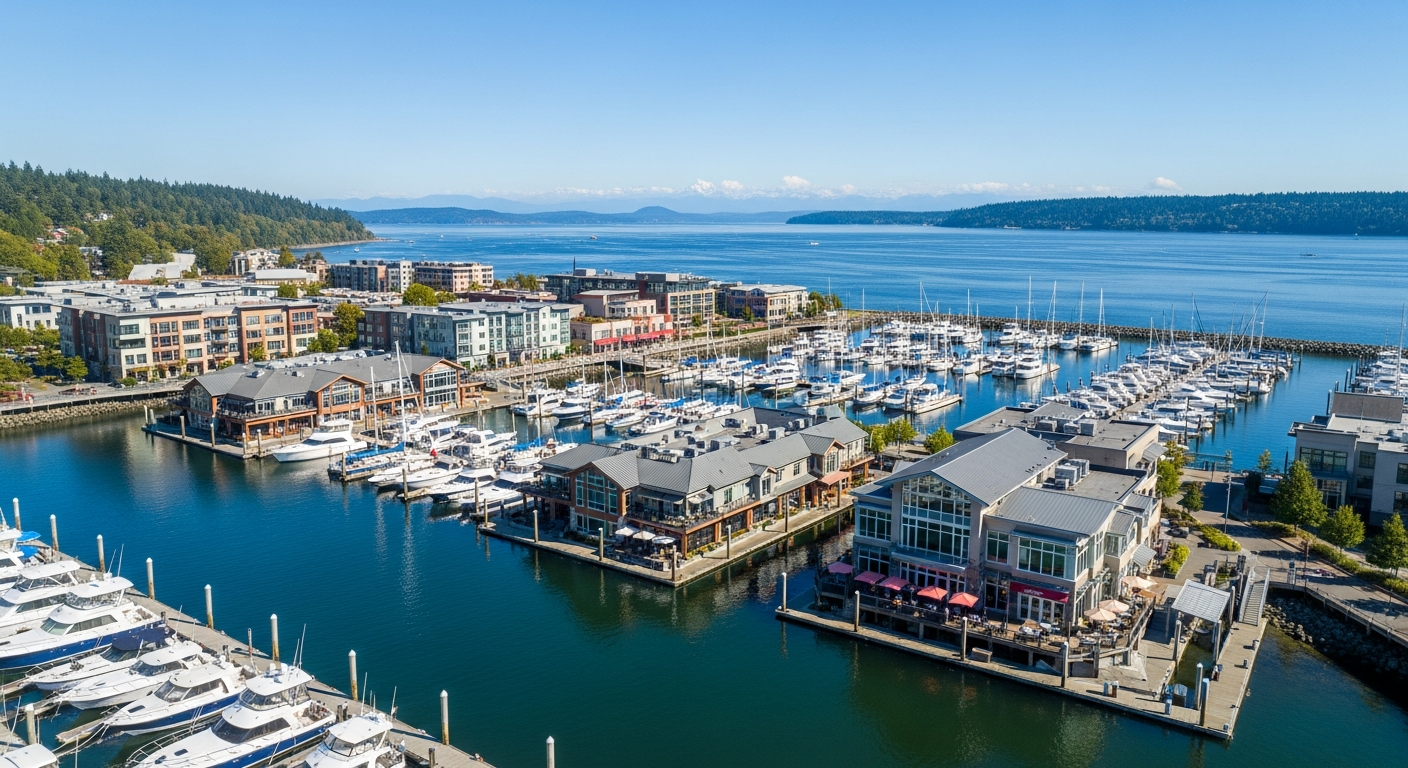
    The Port of Everett’s Waterfront Place development has approximately 63,000 square feet of planned retail and restaurant space across the full buildout of Fisherman’s Harbor and Marina Village. A meaningful portion of that is already occupied and generating activity: Tapped Public House opened in March 2026 with the largest waterfront rooftop deck in Snohomish County; Marina Azul Cocina & Cantina arrived in spring 2026; Menchie’s Frozen Yogurt opened at the marina in March; Rustic Cork Wine Bar has been operating for months; Jetty Bar & Grille remains a marina staple; South Fork Baking Co. and Anthony’s HomePort anchor the established tenant base.

    That’s a functioning dining and retail district — and it’s operating in a county where retail space is genuinely scarce. In a sub-3.5 percent vacancy environment, every new restaurant that opens at Waterfront Place is competing not just with other waterfront tenants, but with a county-wide retail market where operators are getting more selective about where they commit.

    The remaining Parcel A7 restaurant site — the Port’s search for a flagship dining tenant at the last undeveloped waterfront pad — is an open question in this context. A tight market should theoretically accelerate recruitment. But Q1 2026’s rising selectivity from prospective tenants complicates that math. Operators have more choices than they used to, and they’re using them.

    The Millwright Phase 2 Question

    The more significant long-term implication of the Q1 2026 retail data is for Millwright District Phase 2, which envisions up to 120,000 square feet of retail, entertainment, and dining — the movie theater, mini golf, arcade, bowling, specialty shops, gyms, and salons announced as the anchor concept, with a projected opening window of mid-2029.

    Between now and 2029, the retail market will complete several more cycles. The current phase — availability edging up, leasing more selective — could resolve in either direction. What the Q1 2026 data confirms is that the foundation is solid. A county that has held below 3.5 percent vacancy for multiple years, with no meaningful new inventory in the pipeline, is a county where well-positioned retail real estate still works. Millwright Phase 2’s 120,000 square feet will be the largest single retail addition Snohomish County has seen in years — arriving into a market that will almost certainly still be undersupplied by mid-decade.

    Downtown Everett and the Bank of America Signal

    One notable data point in downtown Everett’s retail landscape deserves separate attention: the 12,000-square-foot Bank of America building at 1602 Hewitt Avenue, which came to market this spring for the first time in 60 years. Skotdal is marketing the building with a three-lane drive-through and 92 covered parking spaces.

    At 3.1 percent county-wide retail vacancy (Q1 2026), a 12,000-square-foot class-A footprint in downtown Everett should theoretically be in high demand. The fact that it’s available at all is a testament to how thoroughly the banking sector has contracted its physical footprint. The question is whether the retail market’s tightness is enough to attract a non-bank tenant willing to work with that building’s legacy configuration.

    The comparison to the office market is instructive: Snohomish County office vacancy hit 10.7 percent in Q1 2026 — nearly triple the retail rate. Office space is available and under pressure; retail space is not. That divergence matters for how developers think about the use mix at Waterfront Place and Millwright Phase 2. Retail and dining are still the anchor draw. Office demand follows workers, not the other way around.

    The Snohomish County Retail Advantage — For Now

    For anyone tracking Everett’s development story, the retail market data adds an important piece of context. The waterfront, downtown, the riverfront, and Millwright are all recruiting tenants into a county that remains the most retail-constrained in the region. That constraint cuts both ways.

    It means existing retailers perform well. It means new entrants can establish market position before competition multiplies. And it means the large-format entertainment retail vision at Millwright Phase 2 — the first genuine new retail district Snohomish County will have seen in years — will arrive into conditions that still favor well-capitalized landlords.

    The Q1 2026 signal worth watching is whether rising tenant selectivity translates into slower absorption at Waterfront Place. The next few quarters of lease announcements will be a real-time test of whether the Port’s restaurant row momentum can hold as availability edges up. Based on what the data shows right now, there’s no reason to expect it won’t — but the days of almost any tenant being available are giving way to a market that’s starting to pick and choose.

    Frequently Asked Questions

    Q: What is Snohomish County’s retail vacancy rate?
    Snohomish County ended Q4 2025 at 3.4 percent retail vacancy, the lowest in the Puget Sound metro according to Kidder Mathews. In Q1 2026, direct vacancy dipped to 3.1 percent while availability rose from 3.8 to 4.0 percent (Kidder Mathews Q1 2026).

    Q: How does Snohomish County compare to Seattle’s retail market?
    The broader Seattle metro finished 2025 at 4.0 percent retail vacancy, roughly half a point higher than Snohomish County. In Q1 2026 the Seattle-area rate held flat at 4.0 percent while Snohomish County dipped to 3.1 percent (Kidder Mathews Q1 2026), keeping it below regional averages.

    Q: How much retail space is planned at Waterfront Place?
    The Port of Everett’s Waterfront Place development plans for approximately 63,000 square feet of retail and restaurant space across Fisherman’s Harbor and Marina Village, with multiple tenants already operating.

    Q: How much retail is coming to Millwright District Phase 2?
    Millwright District Phase 2 envisions up to 120,000 square feet of entertainment-anchored retail — including a movie theater, mini golf, arcade, bowling, and specialty shops — with a projected opening window of mid-2029.

    Q: Why is Snohomish County retail vacancy so low?
    The primary driver is a near-complete absence of new retail construction in the county for multiple years. With no significant new inventory entering the market, existing space stays occupied and asking rents remain elevated.

    Q: What is happening at the Bank of America building on Hewitt Avenue in downtown Everett?
    The 12,000-square-foot former Bank of America building at 1602 Hewitt Avenue became available for the first time in roughly 60 years in spring 2026. Skotdal is marketing the space with a three-lane drive-through and 92 covered parking spaces in downtown Everett.
  • Snohomish County Ordinances Target Homelessness & Fentanyl

    Snohomish County Ordinances Target Homelessness & Fentanyl

    A Snohomish County Council member introduced four new ordinances this week that would significantly shift how the county approaches homelessness, behavioral health treatment, and drug policy — including a proposal to prohibit county funding from being used to purchase drug paraphernalia and another that would criminalize exposing children to fentanyl.

    Council Member Nate Nehring, who represents District 1 on the Snohomish County Council, introduced the package and outlined each proposal in a May 6, 2026 column published in The Daily Herald.

    For Everett residents, the legislation touches on issues that directly affect city neighborhoods — from the cost and structure of county-funded shelter and housing programs to the legal framework around drug exposure in homes with children. The four bills are proposals; they have not yet been voted on. Each must go through committee review and at least one public hearing before the full council takes action.

    The Four Proposals, One by One

    Proposal 1: Removing the County’s Housing First Preference

    The first ordinance would prevent the county from requiring county-funded housing programs to adhere to strict “Housing First” policies. Instead, Nehring wrote, the proposal would “level the playing field for entities which prioritize accountability.”

    Housing First is a model used by many government housing programs that prioritizes placing people in stable housing before addressing other challenges such as addiction or mental health treatment. Under Nehring’s proposal, county-funded programs would not be required to follow the Housing First framework, opening the door for the county to fund programs that incorporate treatment requirements as part of their model.

    Proposal 2: Directing More AHBH Dollars Toward Behavioral Health Facilities

    The second ordinance would redirect a larger share of the county’s Affordable Housing and Behavioral Health (AHBH) Fund toward behavioral health facilities specifically.

    Nehring wrote that $3 million annually — about 12.2% of AHBH funds — currently goes toward behavioral health facilities. The proposal would increase that share to 20%, expanding the funding available for treatment, recovery, and stabilization services.

    The AHBH fund is a sales-tax-funded source — authorized under state law — that the County Council allocates to housing and behavioral health projects across Snohomish County. In April 2026, the county council awarded $23 million from the fund to six housing projects, including three in Everett: a 172-bed shelter expansion, a 28-unit affordable apartment building, and a 58-unit transit-oriented mixed-use building. Read: How $23 Million in Housing Money Moved Without a Tax Vote

    Proposal 3: Prohibiting County Funds for Drug Paraphernalia

    The third ordinance would prohibit Snohomish County from using local taxpayer dollars to purchase and distribute drug paraphernalia. Nehring described the proposal as intended to “ensure that county government does not facilitate activities that enable ongoing drug abuse,” with county policy instead focused on “treatment, recovery, and accountability.”

    The specific definitions and any exemptions — including for medications such as naloxone, the overdose-reversal drug — would be determined in the ordinance’s legislative text as it moves through the review process.

    Proposal 4: Child Fentanyl Exposure Ordinance

    The fourth ordinance would criminalize the exposure of minors to fentanyl at the county level, modeled on a similar law recently enacted by the City of Everett.

    Washington State law already criminalizes exposing children to methamphetamine, but does not specifically address fentanyl. Nehring wrote that “local governments around the state are now taking action to address child fentanyl exposure.” The Snohomish County proposal would extend similar protections to cover fentanyl exposure at the county level.

    What Comes Next for the Legislation

    Nehring introduced the four proposals this week at the Snohomish County Council. None has yet been voted on. Snohomish County ordinances go through a committee review and public hearing process before the full council votes on them. The timeline for hearings on each bill will be set by the council’s legislative calendar.

    The Snohomish County Council has five members elected by district. For any proposal to become law, a majority — three votes — would be required.

    The Policy Context

    Snohomish County — with Everett as its county seat — has invested substantially in housing and behavioral health programs in recent years, using dedicated sales tax revenues to fund shelter, affordable housing, and treatment projects.

    Nehring’s four-bill package reflects a debate playing out in counties and cities across Washington State about how government housing programs should be structured, whether treatment requirements should be part of publicly funded housing programs, and how counties should allocate limited behavioral health dollars.

    Nehring represents District 1 on the Snohomish County Council and lives in Arlington. In his column, he described witnessing the day-to-day work of social workers embedded with law enforcement and said current policy approaches “do not appear to be solving the problem.”

    Frequently Asked Questions

    What is Housing First?

    Housing First is a policy framework that prioritizes placing people experiencing homelessness in stable housing as quickly as possible, without requiring sobriety or participation in treatment as a precondition. It is used in many county and state housing programs across Washington.

    Have these bills passed?

    No. As of May 6, the four ordinances have been introduced. They must go through committee review and at least one public hearing before a full council vote.

    Does this affect the City of Everett’s budget or the EMS levy?

    No. These are county-level ordinances. They would affect how Snohomish County allocates county funds, not the City of Everett’s budget or any pending city ballot measures.

    How is the AHBH fund paid for?

    The Affordable Housing and Behavioral Health Fund is funded by a sales tax authorized by state law (RCW 82.14.530 and RCW 82.14.540). The county council allocates the proceeds through its regular legislative process; no separate voter approval is required for each award.

    Can Everett residents comment on county legislation?

    Yes. Snohomish County residents can testify at County Council meetings, submit written comments through the county website, or contact their district representative directly. The County Council meets at 3000 Rockefeller Ave in Everett.

    What To Do Next

    Track the bills: Visit snohomishcountywa.gov and navigate to the County Council’s meeting calendar to follow committee schedules for these four ordinances.

    Submit written comment: Contact the Snohomish County Council office with your perspective on any of the four proposals before they reach a public hearing.

    Attend a council meeting: The Snohomish County Council meets at 3000 Rockefeller Ave, Everett. Meeting dates and agendas are posted at snohomishcountywa.gov.

    Find your council district: Visit snohomishcountywa.gov to identify which of the five council members represents your area.

  • Navy Gold Star Remembrance Month: NAVSTA Everett Guide

    Navy Gold Star Remembrance Month: NAVSTA Everett Guide

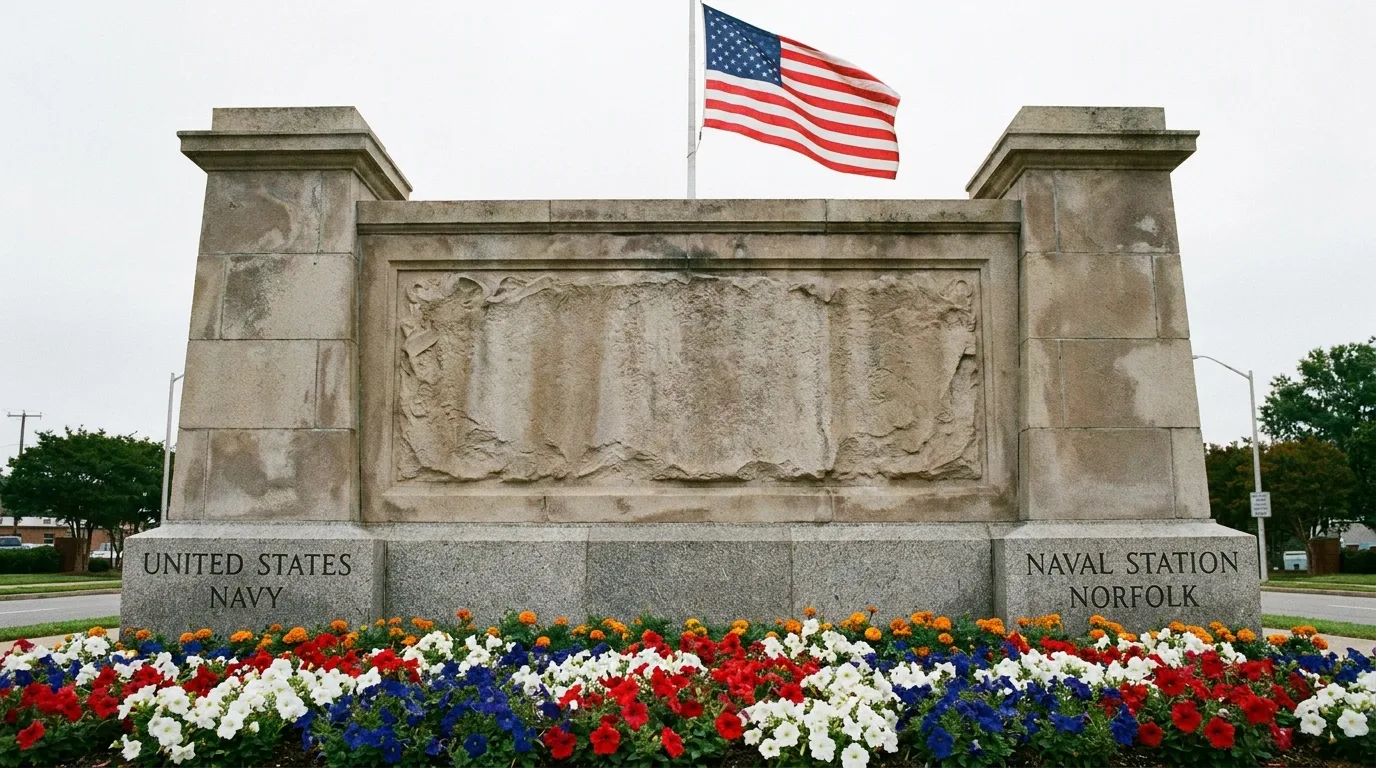
    What is Navy Gold Star Remembrance Month? May is the Navy’s official month to honor surviving families of Sailors who died on active duty. The program — called Navy Gold Star — provides long-term support to spouses, parents, children, and siblings, regardless of branch, location, or manner of death. At Naval Station Everett, the All American Restaurant in Building 2025 is serving special Gold Star–inspired meals every Tuesday this month, and the Region Northwest Navy Gold Star Coordinator is reachable through the Fleet and Family Support Center at 425-304-3735.

    The blue star, then the gold one, then the silence. Most civilians know the Gold Star symbol from the small banner that hangs in a window after a service member dies on duty. What fewer people in Everett realize is that the Navy runs an entire month — every May — to make sure those families are not left to grieve alone. Navy Gold Star Remembrance Month is officially observed Navy-wide in May, and at Naval Station Everett the program shows up in small, deliberate ways: a featured Tuesday menu at the base restaurant, a dedicated coordinator at the Fleet and Family Support Center, and a standing invitation to surviving families to walk back through the gate any time they want, for as long as they want.

    If you’re new to the Pacific Northwest as a Navy spouse, parent, or sibling — or if you’re a civilian neighbor wondering how to honor the families behind the uniforms in your community — here is what May means at NAVSTA Everett, where to call, and what’s available year-round.

    Tuesdays at the All American: A Quiet Way the Base Says “We Remember”

    The most visible NAVSTA Everett observance this year is happening at the All American Restaurant, the Morale, Welfare and Recreation–run dining facility in Building 2025. According to Naval Station Everett’s Fleet and Family Readiness page announcing the observance, the All American is serving special meals every Tuesday in May “inspired by their stories and traditions” — meaning each Tuesday menu is built around a Gold Star Sailor remembered through the dish.

    It is a small gesture and a meaningful one. The All American is open to authorized patrons for breakfast, lunch, and dinner on weekdays, with brunch and supper on weekends and holidays. For menu details, hours, or to confirm a specific Tuesday’s offering, the restaurant’s direct line is 425-304-3943.

    If you’re a surviving family member who hasn’t been on base in a while: the program supports your continued use of base facilities through your existing dependent ID, and if you’ve lost track of how to keep that current, the Region Northwest Navy Gold Star Coordinator at Everett FFSC will walk you through it.

    What Navy Gold Star Actually Is — And Who Qualifies

    The Navy Gold Star program is the service’s official long-term support program for the surviving families of Sailors who die on active duty. Three things make it different from how most civilians imagine “veteran services”:

    • It is not branch-restricted on the receiving end. If your loved one served in any branch, Navy Gold Star coordinators will help you connect to the appropriate branch’s survivor services. The program describes itself as “inclusive — regardless of your loved one’s military branch, location, or manner of death.”
    • It is not time-limited. Coordinators provide outreach and assistance for as long as the surviving family member desires. There is no expiration.
    • It does not change your benefits. Participation does not grant additional entitlements beyond what the survivor was already eligible for; it adds support, not paperwork.

    Eligibility is broader than many families realize. The Navy Gold Star program lists the following eligible relationships to a fallen Sailor: widow or widower (remarried or not); each parent — including stepparents, adoptive parents, and foster parents who stood in loco parentis; each child, including stepchildren and adopted children; and each sibling, including half-siblings and step-siblings. If you wondered whether you “count” — you probably do.

    How to Reach the Region Northwest Coordinator at Everett FFSC

    The Navy Region Northwest Gold Star Coordinator is housed within the Fleet and Family Support Center system, and Naval Station Everett’s FFSC routes Gold Star inquiries the same way it handles every other family-support request: through Centralized Scheduling.

    • NAVSTA Everett FFSC Centralized Scheduling: 425-304-3735
    • FFSC email (Region Northwest): ffsp.cnrnw@navy.mil
    • Navy Gold Star national line: 1-888-509-8759
    • TAPS (Tragedy Assistance Program for Survivors): taps.org — national survivor support

    The same FFSC team that supports active-duty families through deployment, PCS, financial counseling, and the Sexual Assault Prevention and Response program also handles Gold Star outreach. That continuity matters — if you were already a part of the FFSC family before your loss, the same building, same number, and (often) the same people are still there for you.

    Gold Star Lapel Buttons and Next of Kin Pins

    The small lapel pin you sometimes see on a parent or spouse — the gold star on a purple background, or the gold star on a gold background for next of kin — is issued by the Department of Defense, not purchased privately. If your pin was lost, damaged, or never reached you, replacements are available.

    Eligible family members can request a replacement Gold Star Lapel Button or Next of Kin Lapel Pin two ways: by contacting the Region Northwest Navy Gold Star Coordinator through Everett FFSC for assistance, or by submitting DD Form 3 (“Application for Gold Star Lapel Button”) directly to:

    Navy Personnel Command
    Navy Casualty Office (PERS-00C)
    ATTN: Long Term Assistance Program
    5720 Integrity Drive
    Millington, TN 38055

    Bells Across America and the Survivors of Suicide Loss Group

    Two Navy Gold Star programs run year-round and are worth knowing about even if your loss is not recent.

    Bells Across America for Fallen Service Members is an annual remembrance ceremony held each spring across Navy installations and partner communities. The names of Sailors lost in the previous year are read aloud, and a bell is rung after each name. The Region Northwest event is coordinated through the Gold Star program; ask the Everett coordinator for the year’s date and location.

    The Survivors of Suicide Loss Virtual Support Group is a Navy Gold Star–facilitated peer support group specifically for surviving family members of Sailors lost to suicide. It runs virtually, which matters in a region as geographically spread out as Navy Region Northwest — you do not have to drive to Everett or Bremerton to attend.

    For Civilian Neighbors: How to Honor Without Intruding

    Snohomish County is a Navy town in ways that don’t always announce themselves. There are Gold Star families in Mukilteo, Lake Stevens, Marysville, Edmonds, and every neighborhood in Everett. If you want to honor the month without overstepping, three quiet things help:

    • Recognize the symbol, not the story. If you see a Gold Star Lapel Pin or a Gold Star banner in a window, a nod or a “thank you” is welcome. Asking for the story is not — let the family raise it if they want.
    • Support the local infrastructure. The same nonprofits that show up for veterans show up for Gold Star families: American Legion posts and VFW posts, the USO Northwest, and Snohomish County’s Veterans Assistance Program at the Drewel Building. Volunteering or donating to these organizations supports surviving families directly.
    • Show up Memorial Day weekend. The county’s Memorial Day observances at Tahoma National Cemetery, the Eternal Flame at the Drewel Building, and Lake Stevens Post 181 are the formal closing of Gold Star Month — and showing up is the most visible thing a civilian neighbor can do.

    Connecting the Month to Memorial Day

    Navy Gold Star Remembrance Month deliberately bookends Memorial Day. The month builds toward the federal holiday on Monday, May 25, when ceremonies will be held at Tahoma National Cemetery in Kent at 1 p.m. and at the Eternal Flame outside the Robert J. Drewel Building in downtown Everett. The Gold Star program’s framing is that Memorial Day is a single day; remembrance is a continuum, and the families who carry it deserve a month of visibility and a year-round line they can call.

    For families newly assigned to NAVSTA Everett — including those arriving during the spring PCS season as Military Spouse Appreciation Day approaches on May 8 — this is the month to put the Gold Star coordinator’s number in your phone, even if you never need it. Your neighbor on base, in the chapel pew, or in the carpool line might.

    Frequently Asked Questions

    Is Navy Gold Star only for families of Sailors killed in combat?

    No. Navy Gold Star supports surviving families of Sailors who died on active duty regardless of the manner of death — combat, training accident, illness, or suicide. The program is explicit that it is “inclusive — regardless of your loved one’s military branch, location, or manner of death.”

    If I remarried, do I lose access to Gold Star support?

    No. The Navy Gold Star program lists “widow (remarried or not)” and “widower (remarried or not)” as eligible. Remarriage does not end your participation in the support program.

    My loved one wasn’t Navy. Can the Region Northwest coordinator still help?

    Yes. Navy Gold Star coordinators help connect surviving families to the appropriate branch’s survivor services regardless of which branch the service member belonged to. Call 1-888-509-8759 or the Everett FFSC at 425-304-3735 to be routed.

    How do I get a replacement Gold Star Lapel Pin?

    Submit DD Form 3 (“Application for Gold Star Lapel Button”) to Navy Personnel Command, Navy Casualty Office (PERS-00C), ATTN: Long Term Assistance Program, 5720 Integrity Drive, Millington, TN 38055 — or contact the Region Northwest Navy Gold Star Coordinator through the Everett FFSC for help with the application.

    When are the All American’s Gold Star Tuesday meals served?

    Every Tuesday in May 2026 during regular meal hours at the All American Restaurant in Building 2025 at NAVSTA Everett. For the specific menu on a given Tuesday, call 425-304-3943.

    Is Bells Across America held at NAVSTA Everett?

    The Region Northwest Bells Across America observance rotates and is coordinated through the Navy Gold Star program. Contact the Region Northwest coordinator through Everett FFSC at 425-304-3735 for the current year’s date, location, and how to attend or read a name.

    Where do Memorial Day observances happen in Snohomish County?

    The two largest Snohomish County–accessible observances are Tahoma National Cemetery in Kent (1 p.m. Monday, May 25) and the Eternal Flame ceremony at the Robert J. Drewel Building in downtown Everett. Smaller services run at Lake Stevens American Legion Post 181, Floral Hills Cemetery in Lynnwood, and Evergreen Cemetery in Everett.

  • Paine Field to Portland: New Nonstop for Business Travel

    Paine Field to Portland: New Nonstop for Business Travel

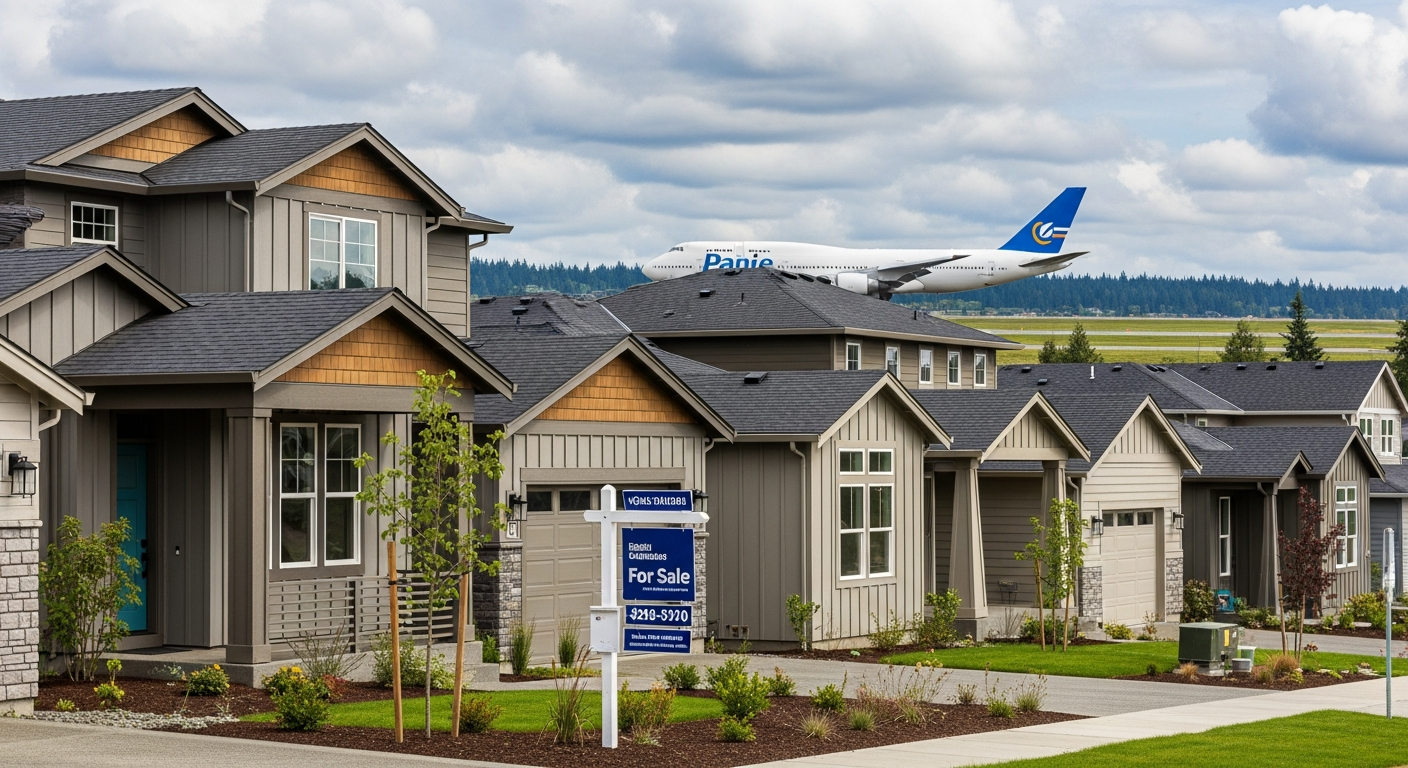
    If you run or work for a business based in Snohomish County — and your travel patterns include Portland, the broader Alaska network out of PDX, or any of the Texas/Tennessee/Florida cities Alaska routes through Portland — Alaska Airlines’ June 10, 2026 launch of daily nonstop service between Paine Field (PAE) and Portland International (PDX) is a meaningful structural change to how you book travel. This is the business-traveler view.

    The same-day Portland trip is back

    Without a PAE-PDX nonstop, the Snohomish County professional flying to Portland for a same-day meeting has had three options: drive (4-6 hours each way), connect through SeaTac (90-minute drive plus a Seattle-Portland flight plus rideshare on the other end), or fly out the night before. None of those preserves a full day of meetings.

    The June 10 nonstop reshapes the day. A morning departure out of PAE, ground transportation to a downtown Portland or close-in Beaverton meeting, working day, and evening return into Everett — all without burning a hotel night and without giving SeaTac three hours of your morning.

    Why this is specifically big for the Paine Field aerospace cluster

    Snohomish County’s aerospace economy is anchored by Boeing’s Everett widebody factory (737 North Line, 767/KC-46, 777/777X) and supported by suppliers and MRO operations clustered around Paine Field — Aviation Technical Services and dozens of others. Many of those companies have customers, partners, and corporate functions in Portland and the broader Alaska Airlines connection bank. PDX is also a meaningful aerospace city in its own right (Boeing has a Portland-area machining presence, and the Pacific Northwest aerospace supplier base extends well into Oregon).

    For supplier executives whose normal travel mix includes Portland-area machining shops, OEM suppliers in the Willamette Valley, or onward connections through PDX to Texas and the Gulf Coast aerospace corridor, the new nonstop is the first time Paine Field is the right airport for that travel pattern.

    The connection bank — what PDX actually opens up

    Portland is one of Alaska’s hub-style operations. The PDX bank includes one-stop service from PAE to cities including Houston, Nashville, Orlando, Dallas, Bozeman, Spokane, and Austin — destinations that previously required either a SeaTac drive or two stops out of Paine Field. For Snohomish County companies with Texas energy clients, Tennessee distribution, Florida customer presence, or any Mountain West footprint, the connection routing through PDX after June 10 will often beat the SEA-via-drive routing on total door-to-door time.

    What this means for the wider PAE schedule

    With Portland added, Paine Field hits 13 daily commercial departures across nine nonstop destinations — the busiest schedule the terminal has run since opening in March 2019. For business travelers, the practical effect is a more reliable backup schedule. A missed morning flight no longer means waiting until tomorrow; the next options out are within hours, not days.

    For Snohomish County businesses thinking about whether to standardize on PAE for routine travel rather than treating it as an opportunistic alternative, the June schedule is the first time the math works for a full corporate travel policy.

    The ground operation that makes this work

    Paine Field’s commercial terminal is operated by Propeller Airports. The terminal experience — small footprint, walk-to-gate, no remote parking shuttle, no inter-terminal transit — is structurally faster than SeaTac for any traveler who lives or works north of Lynnwood. For business travelers building a corporate booking pattern around PAE, the time savings compound across every trip.

    Snohomish County itself owns the airport; Propeller operates the commercial terminal under a long-term arrangement.

    What to do with this between now and June 10

    • Audit your current Portland and PDX-connection travel. Identify the trips that have been routing through SeaTac and price them through PAE-PDX after June 10.
    • Talk to your travel manager about an updated PAE-preferred policy. The 13-departure schedule changes which trips are routinely bookable from PAE versus which still need SeaTac.
    • For supplier-customer travel involving Portland-area aerospace operations, consider standing up a recurring booking pattern. The relaunched route is daily, which makes it usable for weekly cadences.
    • Watch for additional route announcements. The Portland addition is the first new destination announcement since Avelo joined PAE. Each addition tightens the case for the next one.

    Frequently asked questions for business travelers

    When does the Paine Field-Portland business route launch?

    June 10, 2026, with daily Alaska Airlines service. Tickets are available now at alaskaair.com.

    Is Portland a hub airport for Alaska?

    It is one of Alaska’s hub-style operations with a meaningful connection bank. The PDX bank opens efficient one-stop service from PAE to Houston, Nashville, Orlando, Dallas, Bozeman, Spokane, Austin, and other cities.

    How does PAE compare to SeaTac for Snohomish County business travelers?

    For travelers based in Everett or north Snohomish County, PAE saves roughly 60-90 minutes door-to-door versus SeaTac on every trip. The walk-to-gate terminal experience eliminates remote parking shuttles, monorail transfers, and most TSA wait time.

    How many daily departures will Paine Field have?

    13 daily commercial departures across nine nonstop destinations after the June 10 Portland launch. That is the busiest schedule the terminal has run since opening in March 2019.

    Should we update our corporate travel policy to prefer PAE?

    For Snohomish County-based teams whose travel mix includes Portland or Alaska’s PDX connection bank, the June 10 schedule is the first time PAE supports a full corporate booking pattern rather than an opportunistic alternative. Worth a policy review.

    Related Exploring Everett coverage

  • Snohomish County Candidate Filing: 2026 Election Guide

    Snohomish County Candidate Filing: 2026 Election Guide

    Featured snippet:

    Q: When does Snohomish County 2026 candidate filing open and close?
    A: Filing opens at 8 a.m. Monday, May 4, 2026, and closes at 5 p.m. Friday, May 8, 2026. Candidates can file online through the Washington Secretary of State at sos.wa.gov/elections, or in person at Snohomish County Elections, 3000 Rockefeller Avenue, Admin West Building, 1st Floor, Everett.

    If you have ever told a friend “somebody should run against this person,” Monday is the morning when “somebody” turns into “you, by Friday at five o’clock.”

    Snohomish County’s 2026 candidate filing window opens at 8 a.m. on Monday, May 4, and closes at 5 p.m. on Friday, May 8. That’s the entire window. Five business days. After Friday at 5 p.m., the November 2026 ballot is locked, and any office without a candidate filed against the incumbent simply re-elects the incumbent by default.

    For Everett residents, that means this week is when the actual list of choices for November gets written — not by a campaign, not by a party, but by whoever walks in or logs on between Monday morning and Friday evening.

    What Changes for Residents This Week

    The most important thing for residents to know: the November 2026 ballot is decided this week, not in November. Any race with only one filed candidate is over before the primary even runs. Any race with two or more candidates from the same party in a top-two primary state like Washington heads to the August 4 primary, where the top two finishers — regardless of party — advance to November.

    That’s it. That’s the structure. Filing week is the gate. Everything downstream — the August primary, the October mailing of voters’ pamphlets, the November general — is downstream of who walked in this week.

    The Everett City Council itself is not on the 2026 ballot. The next Everett Council seats up are the at-large positions 6 and 7, scheduled for the end of 2027. So if you were thinking about a run at City Hall, this is not your year. But several other offices that touch life in Everett are open this cycle, including Snohomish County Council seats, county-wide constitutional offices, and judicial positions covering the courts that handle most everyday legal matters in the city.

    The full official list of offices on the 2026 ballot is maintained by Snohomish County Elections at the 2026 Candidate Guide linked from snohomishcountywa.gov/5729/Run-for-Office. Some offices file with Snohomish County Elections, others file with the Washington Secretary of State directly — the Candidate Guide tells you which is which for every position.

    How Filing Works

    Snohomish County Elections has set up four ways to file:

    Online (recommended). File through the Washington Secretary of State’s Candidate Filing portal at sos.wa.gov/elections. This is the path the county pushes hardest because it timestamps automatically, accepts payment, and produces a confirmation email. Most candidates file this way.

    In person. Walk in to Snohomish County Elections at 3000 Rockefeller Avenue, Admin West Building, 1st Floor, Everett, WA 98201. The office is open 8 a.m. to 5 p.m. Monday through Friday during the filing window. Bring identification. Bring payment for the filing fee.

    By email. Send a Declaration of Candidacy to elections@snoco.gov.

    By fax. Send to (425) 355-3444.

    The phone number for questions is (425) 388-3444. If you have any doubt about which office you’re filing for, which jurisdiction the office sits in, or whether your address falls inside the right district, call before you file. A misfiled candidacy is harder to fix than a delayed one.

    The Filing Fee

    Most positions with a salary require a filing fee equal to 1% of the annual salary for the office. So a position that pays $100,000 a year requires a $1,000 filing fee, due at the time of filing or no later than 5 p.m. Friday, May 8.

    Two important practical notes on the fee:

    First, the 1% rule is real money for some offices. If you are running for a position that pays well, plan for the fee in advance — it must be paid during the filing window itself.

    Second, candidates who cannot afford the filing fee can submit a petition with signatures of registered voters in the jurisdiction in lieu of the fee. The signature requirements vary by office. Snohomish County Elections has the petition forms and the signature-count requirements for each position, available through the Run for Office page on the county website or by calling the elections office directly.

    What Sits Above and Around This Week

    Filing week sits inside a longer civic calendar that residents will see roll out across 2026:

    August 4 is the primary election. For races with three or more candidates, the top two advance regardless of party. For races with one or two candidates total, there is effectively no primary — both candidates simply move on to November.

    November 3 is the general election. Mail-in ballots get mailed roughly two weeks before election day. Washington is a vote-by-mail state with same-day registration through election day at the elections office.

    Ballot certification typically runs two to three weeks after election day. As the desk’s protocol reminds us: until the Snohomish County Auditor’s office certifies a result, every count is preliminary. November 3 results are not the final results. They are the early count.

    The sequence matters because what happens this week — who files for what office — determines what voters in Everett will see when their ballots arrive in October. If nobody files for an open seat, the seat stays open by default rules and gets appointed. If only the incumbent files, the incumbent is re-elected without a contest. If two or more file, voters get a choice.

    What to Do Next

    If you are thinking about running:

    1. Pull up the 2026 Candidate Guide from snohomishcountywa.gov/5729/Run-for-Office before Monday morning. Identify the office, the salary, and the filing-fee amount.
    2. Decide whether to file online (sos.wa.gov/elections) or in person at 3000 Rockefeller Avenue, Everett.
    3. Have payment ready — credit card if filing online, check or card if filing in person.
    4. File during business hours. If you wait until late Friday afternoon, you are competing with everyone else who waited.

    If you are thinking about supporting someone else who should run:

    1. Send them this article today. They have until Friday.
    2. Help them identify the office, find the filing fee, and walk through the Candidate Guide.
    3. If you live in the same district, ask them whether they would sign their name if you filed.

    If you are not running but want to follow what fills out this week:

    • Snohomish County Elections will post the candidate list shortly after filing closes Friday at 5 p.m. The list lives at the Candidates and Measures on the Ballot page (snohomishcountywa.gov/5722/See-Whats-on-the-Ballot).
    • Washington’s statewide candidate list is at voter.votewa.gov.
    • The Daily Herald, My Everett News, and the Snohomish County Tribune all cover filing-week results once the list is final.

    What This Costs the Public

    Filing week itself costs the public almost nothing — Snohomish County Elections runs as a baseline function of the Auditor’s office regardless of how many candidates file. The downstream cost is the August primary, which the county runs whether two candidates file or two hundred. The election infrastructure is paid for; the unknown variable is whether residents get a real choice on the ballot.

    That is the actual stake of filing week. Not money. Not partisan advantage. Just whether November 2026 is a real election or a paperwork formality for offices Everett residents pay for and live under.

    Frequently Asked Questions

    When does candidate filing open and close in Snohomish County?

    Filing opens at 8 a.m. Monday, May 4, 2026, and closes at 5 p.m. Friday, May 8, 2026. There are no extensions for any reason.

    Where can I file as a candidate?

    Online at sos.wa.gov/elections (recommended), in person at Snohomish County Elections, 3000 Rockefeller Avenue, Admin West Building, 1st Floor, Everett, WA 98201, by email to elections@snoco.gov, or by fax to (425) 355-3444.

    Is the Everett City Council on the 2026 ballot?

    No. The next Everett City Council seats up for election are at-large positions 6 and 7, which are on the November 2027 ballot. The 2026 ballot includes other positions that affect Everett, including Snohomish County Council seats, county-wide offices, and judicial positions.

    How much does it cost to file?

    For most paid offices, the filing fee is 1% of the office’s annual salary. The fee must be paid at filing or no later than 5 p.m. Friday, May 8. Candidates who cannot afford the fee can file a petition with signatures of registered voters in the jurisdiction in lieu of payment.

    What happens if nobody files against an incumbent?

    The incumbent is re-elected by default. There is no general-election ballot contest for an unopposed seat under the same party.

    When is the 2026 primary?

    August 4, 2026. The general election is November 3, 2026. Washington is a top-two primary state — the top two finishers in any primary advance to November regardless of party.

    Where can I find the official list of every office on the 2026 ballot?

    The 2026 Candidate Guide on the Snohomish County Elections “Run for Office” page (snohomishcountywa.gov/5729/Run-for-Office) lists every office, the filing fee, and whether the office files with the county or with the state. The statewide list lives at voter.votewa.gov.

    Who do I call if I have questions about filing?

    Snohomish County Elections at (425) 388-3444. Call before you file rather than after.

  • Edmonds Veterans Food Drive: May 9 Legion & VFW Event

    Edmonds Veterans Food Drive: May 9 Legion & VFW Event

    Q: When and where is the Edmonds American Legion Post 66 and VFW Post 8870 veterans dropoff event?

    A: Saturday, May 9, 2026, from 10 a.m. to 2 p.m. at the Wilcox Construction Red Barn at 5th Avenue and Maple Street in downtown Edmonds. Members of Edmonds American Legion Post 66 and VFW Post 8870 will accept donations of food, personal hygiene items, lightly used or new spring and summer clothing, socks and underwear, cash or checks made out to “American Legion Food Drive,” and used American flags in need of proper disposal. Food collected goes to the Edmonds Food Bank for distribution to local veterans, with help from representatives of the Lynnwood Heroes’ Café. For information call 833-924-4636.

    The Quietest Way to Help a Snohomish County Veteran This Month Is a Saturday Morning in Edmonds

    There are over 50,000 veterans in Snohomish County, according to the event announcement from Edmonds American Legion Post 66 and VFW Post 8870 — a number that includes everyone from World War II survivors in their late 90s to NAVSTA Everett sailors who hung up the uniform last year and are still figuring out the gap between active-duty pay and the civilian job market. Many of them, the announcement says plainly, “continue to need help due to difficult circumstances.”

    That is the context for what happens in downtown Edmonds on Saturday, May 9, 2026.

    From 10 a.m. to 2 p.m., members of Edmonds American Legion Post 66 and VFW Post 8870 will be at the Wilcox Construction Red Barn — at the corner of 5th Avenue and Maple Street — collecting the kind of donations that veterans assistance programs need every month and rarely get all at once: food for the Edmonds Food Bank’s veteran clients, personal hygiene supplies, clothing, and money. Lynnwood Heroes’ Café representatives will help with distribution.

    It is the kind of community event that does not make the front page even when it should. So here is what is being collected, who runs it, why the food bank route matters, and how it fits into the broader picture of veteran services for Navy families and retirees living within reach of Naval Station Everett.

    What the May 9 Dropoff Event Is Collecting

    The event organizers have published a specific list of what is needed. None of it is a guess about what veterans want — it is what the partner agencies, the Edmonds Food Bank and the Lynnwood Heroes’ Café, have asked for based on what they actually distribute.

    Food

    All food donations are routed to the Edmonds Food Bank, which then distributes them to local veterans. Non-perishable items — canned proteins, pasta, rice, soups, peanut butter, shelf-stable meals — are the standard ask.

    Personal hygiene items

    The published list calls out, by name: deodorant, toothbrushes, toothpaste, razors, lotion, body wash, and sanitary napkins. These are the categories that food banks consistently report as the hardest to keep stocked, because federal nutrition programs cover food but not hygiene products. Every dollar a veteran spends on toothpaste at a regular grocery store is a dollar not spent on rent or utilities.

    Disposable diapers

    Diapers are also specifically requested. Veteran households with young children — including grandchildren in the care of grandparent veterans — face the same diaper-cost squeeze as any other low-income family, and diapers cannot be purchased with SNAP benefits.

    Clothing, socks, and underwear

    Lightly used or new spring and summer clothing is welcome. Socks and underwear are specifically mentioned, which is also the standard ask at most veteran-serving distributions — those items are almost never donated used because most people wear them out.

    Cash and credit/debit donations

    Cash and card donations are accepted on-site. Checks should be made out to “American Legion Food Drive.” Cash donations let the post commanders fill specific gaps after the event closes — usually the high-cost items the in-person drive did not collect enough of.

    Used American flags

    The posts will also accept worn or damaged American flags for proper retirement and disposal. This is a service American Legion posts perform under flag-code protocol, and it removes a real practical question — most people do not know what to do with a flag that has worn out and cannot legally just put it in the trash.

    Who Is Running the Event

    Two posts are co-hosting:

    Edmonds American Legion Post 66 is the Edmonds-area chapter of the American Legion, the congressionally chartered veterans service organization founded in 1919. Post Commander Dan Mullene said in the event announcement that “our Edmonds-area community always supports our vets, and we are pleased to provide this opportunity of them to do it once again.” That language — “once again” — is the operative tense. This is not a one-off. The posts have been running similar drives for years, and they have a track record.

    VFW Post 8870 is the local Veterans of Foreign Wars post serving the Edmonds area. Post Commander Duane Bowman said in the same announcement that “we greatly appreciate the continued community responses to our drives. Last year we brought in significant donations of food, hygiene products, clothing and money at similar events.” The VFW is a separate organization from the American Legion — membership is restricted to veterans who served in a designated overseas combat zone — but the two posts coordinate on community-facing events like this one.

    Wilcox Construction donates the venue. Matt Lessard, president of Wilcox Construction, makes the Red Barn available for the event. The Red Barn — at 5th Avenue and Maple Street in downtown Edmonds — is one of those community-asset properties that exists because someone with the means decided it should. Both post commanders specifically thank Lessard and his team in the event announcement.

    Edmonds Food Bank handles distribution of the food collected. The food bank has been the through-line for veteran food assistance in the Edmonds area for years and operates the actual logistics of getting groceries to veterans who have signed up for assistance.

    Lynnwood Heroes’ Café sends representatives to help with distribution. The Heroes’ Café is a community gathering space serving veterans, first responders, and their families in the Lynnwood area, and its presence at the May 9 event extends the reach of the donations beyond just Edmonds.

    Why a Food Drive Matters Inside a $340 Million Military Economy

    Snohomish County is home to one of the largest concentrations of military households in Washington state. Naval Station Everett is the third-largest employer in the county, and the total annual economic impact of the military presence in Snohomish County is estimated at roughly $340 million.

    That number represents wages, contracts, base spending, and the supplier ecosystem. It does not represent the gap between what active-duty pay covers and what civilian living costs in the Puget Sound region in 2026 actually are. It does not represent the gap between full benefits and the months immediately after separation, when a sailor who decided not to re-enlist is waiting for VA paperwork, looking for civilian work, and facing rent on the local market for the first time without a housing allowance.

    And it does not represent the older veteran population — the Vietnam-era and Korean War veterans, many of them on fixed Social Security and partial VA benefits — who make up a significant share of the 50,000-plus county total. For those households, a food drive is not a feel-good event. It is grocery money for the month.

    That is the gap the May 9 dropoff event is designed to close, even just for one weekend. The Edmonds Food Bank’s veteran-targeted distribution runs year-round; the May 9 event is a restocking surge.

    How This Connects to Other Veteran Services in Snohomish County

    If you are a Navy family member, a veteran, or a civilian neighbor who wants to do more than drop off a bag of canned goods on May 9, here is the broader landscape of resources that the dropoff event sits inside.

    Veteran benefits and claims help in Snohomish County is provided through several channels: the Snohomish County Veterans Assistance Program at the Robert J. Drewel Building in Everett, the VA Puget Sound Health Care System’s Everett clinic which began seeing patients in February 2025, and monthly visits by VBA service officers. The schedule of in-person VA claims help in Everett changed in February 2026 when VFW service officer hours at the Everett Vet Center were reduced — coverage of the current options is available here and the complete 2026 guide is here.

    Memorial Day 2026 services in Snohomish County are scheduled for Monday, May 25, with American Legion Post 181 in Lake Stevens hosting one of the most well-attended ceremonies in the county. A practical guide to Memorial Day events for military families and veterans new to Everett — including Tahoma National Cemetery, the County Eternal Flame at the Drewel Building, and the Lake Stevens, Floral Hills, and Evergreen ceremonies — is available here. The May 9 dropoff event is timed to land before Memorial Day, when public attention to veteran issues briefly peaks.

    NAVSTA Everett family resources — including the Fleet & Family Support Center at 425-304-3735 and the SAPR 24/7 line at 425-754-5977 — exist for active-duty families currently homeported at the base. The Fleet & Family Support Center coverage is here. These are different services than what the May 9 dropoff event supports, which is primarily aimed at veterans who have left active duty and the older veteran population, but they are part of the same ecosystem.

    What to Bring, What Not to Bring

    Based on the event announcement and the standard practice of veteran-serving food drives:

    Bring: non-perishable food in original sealed packaging, unopened hygiene products, sealed packs of disposable diapers, clean lightly used spring/summer clothing, new socks and underwear in package, cash, checks made out to “American Legion Food Drive,” and worn American flags for proper retirement.

    Do not bring: opened or expired food, used hygiene products, used socks or underwear, heavy winter coats (the request is specifically spring and summer clothing), perishables that need refrigeration without coordinating in advance, or items the announcement did not list.

    If in doubt, the post information line is 833-924-4636.

    The Bigger Pattern: How Veteran Service Organizations Bridge a Gap Federal Programs Cannot

    The federal veteran benefits system — VA health care, disability compensation, GI Bill education benefits, VA home loans, VA pension — is the largest and most comprehensive veteran support apparatus in the world. Snohomish County veterans access it through the VA Puget Sound system, the VBA regional office in Seattle, and a network of accredited service officers.

    What that system does not do well is provide groceries on a Tuesday afternoon when the rent is due Friday. That is the niche American Legion posts, VFW posts, food banks, and community partners like the Heroes’ Café have always filled. The May 9 dropoff event is a representative example of how that informal network operates: a venue donated by a local business, two veteran service organizations organizing the drive, a food bank running the distribution, and a community gathering space helping with reach.

    The Edmonds-area community — and the broader Snohomish County community within driving distance of downtown Edmonds — has a low-effort, high-impact way to participate this Saturday. The barrier to entry is a bag of canned goods and a parking spot at the Red Barn between 10 a.m. and 2 p.m.

    Frequently Asked Questions

    When and where is the Edmonds veterans dropoff event on May 9, 2026?

    The event is Saturday, May 9, 2026, from 10 a.m. to 2 p.m. at the Wilcox Construction Red Barn, located at the intersection of 5th Avenue and Maple Street in downtown Edmonds, Washington. Edmonds American Legion Post 66 and VFW Post 8870 are co-hosting.

    What items are being collected at the May 9 Edmonds veteran food and hygiene drive?

    The event is collecting non-perishable food (routed to the Edmonds Food Bank for distribution to veterans), personal hygiene items including deodorant, toothbrushes, toothpaste, razors, lotion, body wash, and sanitary napkins, disposable diapers, lightly used or new spring and summer clothing, new socks and underwear, cash and credit/debit donations, checks made out to “American Legion Food Drive,” and used American flags in need of proper retirement.

    Who runs the May 9 dropoff event?

    The event is co-hosted by Edmonds American Legion Post 66, with Post Commander Dan Mullene, and VFW Post 8870, with Post Commander Duane Bowman. The venue is donated by Wilcox Construction, whose president is Matt Lessard. The Edmonds Food Bank handles food distribution, and Lynnwood Heroes’ Café representatives assist with distribution.

    How can I make a financial donation if I cannot attend the May 9 event in person?

    Cash and credit/debit card donations are accepted on-site at the event. Checks should be made out to “American Legion Food Drive.” For donation arrangements outside event hours, contact the post information line at 833-924-4636.

    Can I drop off a worn American flag at the Edmonds dropoff event?

    Yes. American Legion Post 66 will accept used American flags in need of proper retirement and disposal. American Legion posts are authorized under flag code protocol to perform formal flag retirement ceremonies, which is the legally and traditionally correct way to dispose of a U.S. flag that is no longer fit for display.

    How does the May 9 dropoff event fit with other Snohomish County veteran services?

    The dropoff event provides immediate-need supplies — food, hygiene, clothing — through the Edmonds Food Bank’s veteran distribution channel. It is complementary to the formal VA benefits system accessed through VA Puget Sound’s Everett clinic, the Snohomish County Veterans Assistance Program at the Drewel Building, and accredited VSO claims help. The dropoff event addresses the day-to-day gap that federal benefits do not always cover, especially for older veterans on fixed incomes and for veterans in transition from active duty to civilian life.

    Are veterans the only people who can donate at the May 9 event?

    No. The event is a community drive open to all donors. Civilian neighbors, businesses, and community members are encouraged to participate. The 50,000-plus Snohomish County veteran population is the beneficiary; the donor base is intentionally the broader community.

    Why does the food go through the Edmonds Food Bank instead of directly to veterans?

    The Edmonds Food Bank already operates a year-round veteran-targeted distribution program with intake, eligibility verification, and ongoing client relationships. Routing the May 9 donations through the food bank ensures the items reach veterans who are already enrolled in assistance, that the distribution is equitable, and that the volume is matched to actual demand. It also extends the impact beyond a single Saturday — the supplies feed into the food bank’s stockroom and are distributed over the following weeks as veterans request assistance.

  • Snohomish County Housing Market: April 2026 Sales Intensity

    Snohomish County Housing Market: April 2026 Sales Intensity

    What’s the headline number from the Madrona Group’s April 2026 Snohomish County housing report? Sales Activity Intensity came in at 54.9%, down only slightly from 56.0% the month before — meaning more than half of all listings still went pending within the first 30 days. Inventory tightened to 1.6 months. Mortgage rates moved up to 6.45%. Single-family resale prices held near $877,000 with homes selling at 99.8% of list price. The market did not slow down the way the inventory headlines suggested.

    You probably read yesterday’s coverage of Snohomish County’s April housing market — the NWMLS data showing inventory up 51.8% year-over-year, the median sale price at $738,000, the 2.8 months of supply. That is one accurate way to read this market. Here is another, also accurate, with very different implications.

    The Madrona Group dropped its April 2026 Snohomish County report this week, and it does not look like a market that lost its footing. It looks like a market that is moving slower at the top of the funnel — fewer homes coming on, fewer offers per listing, more buyer hesitation — but where the deals that do happen are happening fast and at strong prices.

    The number we want to focus on is Sales Activity Intensity — and we are going to explain it because it is not a number that shows up in every market report and most readers have never seen it framed this way.

    What Sales Activity Intensity actually measures

    Sales Activity Intensity is the share of all active listings that go pending within the first 30 days on the market. Not closed — pending. Pending is the moment a buyer’s offer has been accepted and the deal is moving toward closing. It is the moment when the market said yes.

    A 54.9% Sales Activity Intensity in Snohomish County for April 2026 means that more than one out of every two homes that listed last month had a buyer say yes within 30 days. That is a fast market. It is fast even after a small dip from March, when the same number was 56.0%.

    For comparison, a market that is genuinely cooling — homes sitting, sellers cutting prices, buyers waiting — typically shows Sales Activity Intensity drop into the 30s or below. When intensity drops below 30%, sellers start to see real concessions show up at the closing table. That is not what we have right now.

    What’s behind the number

    Three factors are working at once in the April 2026 Madrona Group data, and none of them point in the same direction:

    Mortgage rates moved up to 6.45%. That is up from earlier in the year and up enough to price some buyers out at the margin. Higher rates almost always slow demand. They have slowed it some — but they have not killed it.

    Inventory tightened to 1.6 months. A balanced market in real estate is usually 4 to 6 months of inventory. At 1.6 months, Snohomish County is still well into seller’s-market territory. Note this is the Madrona Group’s specific measurement — the broader NWMLS data on the same county shows 2.8 months because the two reports use slightly different inventory definitions and time windows. Both are true. The Madrona number is the tighter view.

    Single-family resale prices held near $877,000 with homes selling at 99.8% of list price on average. When buyers are paying within 0.2% of the asking price, they are not negotiating much. They are competing.

    Put the three factors together: rates went up, but the homes that are listed are still moving fast and selling at almost full asking. The buyers who are still in the market have stopped flinching.

    What this looks like on the ground in Everett

    Everett sits inside the Snohomish County data but does not behave exactly like the county average. The city’s median sale price runs lower than the county figure — Redfin had Everett’s most recent typical home value near $620,000, well under the $738,000 county median that NWMLS reported. The reasons are familiar: more starter homes, more condos, more older housing stock, more variation between neighborhoods.

    The Sales Activity Intensity dynamic still applies in Everett. A waterfront condo at Sawyer or Carling priced reasonably is going pending in days, not weeks. A starter home in Delta or Riverside priced at the neighborhood median is doing the same thing. What sits is what is overpriced. What sits is what assumes the market is still set to 2022.

    We have seen this pattern in our own coverage — the April 2026 condo market story we published last week showed Snohomish County condo averages up 4.4% year-over-year and Everett condos selling in a 22-day median at 99% of list. That is the same fast-but-narrow market the Madrona report is describing, just on a different property type.

    What this means for buyers right now

    If you are buying in Snohomish County in May 2026 and you have been waiting for the market to break, the Madrona data is the latest signal that a wholesale break is not coming. Specific properties will be soft. Specific sellers will negotiate. But the broad market is still leaning seller.

    A few practical takes from how this number sits:

    • Stop waiting for the price to come down before you make an offer. At 54.9% Sales Activity Intensity, the home you are watching probably already has another offer. The price you saw on Zillow last Tuesday may not be the price that closes.
    • Get rate-locked before you write an offer. With rates at 6.45% and trending up rather than down, the rate you can get this week is probably better than the rate you can get if you wait three weeks. A 0.25% rate move on a $620,000 Everett home is roughly $90 a month for the life of the loan.
    • The 99.8% of list price number is the real number. If you are writing offers at 95% of list and watching them lose, that is why. The market is not built for 95% offers right now.

    What this means for sellers right now

    If you are selling in Snohomish County, the Madrona data is telling you something sellers sometimes miss: price-to-list discipline matters more than ever.

    • Price it right and it goes pending in 30 days. Price it 5% high and it sits — and the market has been trained to read sitting as a problem. The 30-day window is the window where intensity captures your home as a fast mover. Past 30 days, you are competing with newer listings.
    • The 99.8% of list price number cuts both ways. You probably will not get more than asking. You also will not have to take much less than asking. So price it where you are happy to close.
    • Inventory is tight but moving up. The Madrona number says 1.6 months, the NWMLS number says 2.8 months — both are tighter than 4-6, but both are looser than 12 months ago. If you have been on the fence about listing, the supply side is finally giving you some company on the market. Earlier was easier. Now is still good.

    How this fits with everything else we know about Snohomish County in April 2026

    This week alone we have seen:

    • The NWMLS report showing 51.8% year-over-year inventory growth and 2.8 months of supply
    • The Madrona Group report showing 1.6 months supply and 54.9% Sales Activity Intensity
    • Snohomish County condo data showing 4.4% YoY appreciation and 22-day Everett median time on market
    • Mortgage rates moving up to 6.45%, the highest level since fall 2025
    • The Sage Investment Econo Lodge studio-apartment conversion announcement in South Everett — 124 new units coming online by August 2026

    None of those data points contradict each other. They are all measuring different parts of the same market. The market is more inventory than it had, fewer offers than it had, slower at the top of the funnel — and still selling fast and near asking when the property is priced right. That is a more complicated story than “the market is hot” or “the market is cooling.” It is the market being different things at the same time depending on which lens you bring.

    The Madrona Group report adds a useful lens: the velocity at which deals close, not just the count of homes listed. That velocity number is what tells you whether the market still works. In April 2026, in Snohomish County, it still works.

    Frequently Asked Questions

    What is Sales Activity Intensity in real estate?

    Sales Activity Intensity is the percentage of all active listings that go pending — meaning a buyer’s offer has been accepted — within the first 30 days on the market. It is a velocity measure of how fast the average home is moving. Above 50% indicates a fast seller’s market; below 30% indicates real cooling.

    What was Snohomish County’s Sales Activity Intensity in April 2026?

    54.9%, according to the Madrona Group’s April 2026 Snohomish County housing market report. That is down slightly from 56.0% in March. Both numbers indicate a strong seller’s market.

    What are mortgage rates in Snohomish County right now?

    The 30-year fixed rate referenced in the April 2026 Madrona report is 6.45%. Rates have ticked up from earlier in the year. Individual rate quotes vary by lender, credit score, down payment, and loan size.

    Why does the Madrona Group report say 1.6 months of inventory and the NWMLS report say 2.8 months?

    They use slightly different inventory definitions and time windows. The Madrona Group’s measure tends to capture a tighter view focused on actively moving listings. NWMLS uses a broader inventory definition that includes some listings the Madrona view excludes. Both are accurate; both reflect a Snohomish County market still well below the 4-6 month range that defines balance.

    What is the median home price in Snohomish County in April 2026?

    The April 2026 NWMLS report listed the county median sale price at $738,000. The Madrona Group report references single-family resale prices holding near $877,000, which uses a different scope (single-family resale only, with different geographic weighting). The two numbers describe overlapping but not identical slices of the market.

    Is now a good time to buy a home in Everett?

    “Good” depends on your specific situation — your down payment, your job stability, your timeline, the neighborhood you’re targeting. What the April 2026 data says broadly: prices are not falling, inventory is up but still tight, and rates are higher than they were earlier in the year. Waiting for a wholesale price break is currently not what the data supports. Talk to a local agent and a local lender about your specific math.

    Is now a good time to sell a home in Everett?

    Yes, if it is priced right. The market data says homes priced at the neighborhood median are going pending within 30 days at 99.8% of list. Homes priced 5%+ above the neighborhood median sit. Pricing discipline is the difference between a fast sale and a long sit.

  • Snohomish County Aerospace Suppliers: ATS Aftermarket Guide

    Snohomish County Aerospace Suppliers: ATS Aftermarket Guide

    If you supply Boeing in Everett, you already know the new-aircraft side of the local aerospace economy. The 737 MAX 10 North Line is activating this summer. The 777-9 program is ramping into a delivery wave anchored by Lufthansa’s just-confirmed Q1 2027 first acceptance. The KC-46 program is delivering on a steady Air Force cadence. That is the side of the business that drives most of the supplier conversations in Snohomish County.

    The other side of Paine Field — and the second-largest aerospace employer in Everett — is Aviation Technical Services (ATS). About 800 workers. A 500,000-square-foot airframe Maintenance, Repair, and Overhaul (MRO) hangar at the south end of the airport. A 50,000-square-foot component repair facility next door. The largest single MRO operation on the U.S. West Coast.

    For Snohomish County aerospace suppliers, ATS is not a duplicate of Boeing. It is a different revenue channel — the aftermarket — that operates on a different cycle and rewards a different supplier posture. This is the supplier guide.

    The Aftermarket vs. New-Aircraft Distinction Suppliers Need to Make

    Boeing factory demand is driven by aircraft production rates. When Boeing announces a rate increase — Rate 47 on the 737 line is the public number for this summer — supplier demand follows on a multi-month lag. When Boeing slows or pauses, suppliers feel it on a similar lag in the other direction.

    MRO demand is driven by airline fleet utilization, scheduled maintenance intervals (A-checks, C-checks, D-checks), and unscheduled events (in-service damage, corrosion, modification programs). It moves on a different cycle. Notably, when new-aircraft deliveries slow, airlines extend the service lives of existing airplanes — which produces more MRO demand, not less. The aftermarket runs countercyclical to factory production.

    That countercyclical property is the strategic value of ATS for a Snohomish County supplier. Selling into both Boeing and ATS smooths your demand curve.

    What ATS Buys

    The work scope at the Everett ATS campus is heavy MRO on Boeing 737 NG and MAX, 757, 767, 777, and Airbus A320 family aircraft, plus component overhaul on rotable parts. The supplier categories that flow through that scope:

    • Consumables — fasteners, sealants, adhesives, paints, abrasives. Heavy MRO consumes consumables at industrial scale.
    • Sheet metal stock and skins — repair work generates demand for replacement structural materials in the same alloys factory work uses.
    • Composite materials — increasingly relevant on 777 and A320 family work as composite content rises.
    • Avionics components — line-replaceable units (LRUs), wire harnesses, connectors, and the test equipment that validates them.
    • Structural assemblies — bulkheads, frames, ribs that come off airplanes and need to be supplied as repair stock.
    • Rotables — actuators, valves, pumps, generators, APUs, components that go through the 50,000-square-foot component repair facility.
    • Tooling and fixtures — MRO tooling overlaps with factory tooling but with a heavier lean toward portable, airframe-specific fixtures.
    • PPE and safety — fall protection, respirators, hearing protection at hangar scale.
    • Industrial services — non-destructive testing (NDT), specialty cleaning, plating, surface treatment, hazardous materials handling.

    The Geographic Advantage Suppliers Should Be Pricing

    If your facility is in Snohomish County, you have a logistics advantage at ATS that suppliers in other regions cannot match. Most MRO inputs are time-sensitive — a hangar with an airplane in a check window cannot wait two weeks for a fastener. Same-day delivery from a Snohomish County supplier to the south end of Paine Field is achievable. Suppliers in Texas, Florida, and overseas cannot match that turn.

    That advantage is not theoretical. Many ATS purchase orders go to local distributors precisely because the campus is on the same airport, on the same Airport Road, in the same county as the supplier base that grew up around Boeing. If you are a Snohomish County aerospace supplier and you have not built a relationship with the ATS purchasing function, you are leaving same-day-delivery margin on the table.

    The Workforce Picture

    The 5,200-worker aerospace shortage in Snohomish County affects ATS the same way it affects Boeing. Suppliers who help solve workforce — apprenticeship programs, training partnerships, recruiting pipelines, contract labor for surge periods — have a relationship-building lever at ATS that strict component sales do not always offer. Workforce-adjacent suppliers should be in that conversation.

    How to Get Into the ATS Supply Chain

    ATS, like other large MRO operators, runs a procurement function with vetting requirements: quality system audits, AS9100 or AS9110 alignment for relevant categories (AS9110 specifically governs MRO suppliers), FAA-aligned documentation practices, and on-time delivery histories. A Snohomish County supplier already qualified to Boeing’s standards is positioned to qualify at ATS with relatively modest incremental work — but you have to actually run that incremental qualification process.

    Practical first steps:

    1. Map your current product lines against the ATS work scope (737/757/767/777/A320 airframe MRO, plus component repair).
    2. Identify which of your Boeing-qualified product lines have direct MRO equivalents.
    3. Confirm AS9110 if you serve MRO end-customers; AS9100 alone may not be sufficient for MRO supplier status.
    4. Build a same-day-delivery pitch around your Snohomish County address. That is your real edge.

    What 2026 Means for ATS Suppliers

    Two things put ATS in a particularly useful position for suppliers right now:

    Lufthansa just confirmed first 777-9 delivery slips to Q1 2027. Slips like that often correlate with airlines extending the in-service life of existing widebodies — which means more MRO demand on 777-200, 777-300, and 767 platforms. ATS sees that demand directly.

    The 737 MAX 10 North Line is activating this summer. New airplanes flow into airline service over the following years and become MRO inventory roughly five to seven years after delivery. That is a multi-decade tailwind, not a one-quarter event.

    For a Snohomish County supplier, the rational read is: build the ATS relationship now, while the strategic visibility is high and competitors elsewhere may be focused only on the Boeing factory side.

    Frequently Asked Questions

    Is ATS the same as Boeing?

    No. ATS is an independent commercial MRO operator at the south end of Paine Field. It does heavy maintenance on airplanes already in airline service. Boeing builds new airplanes at the north end of the same airport.

    What aircraft programs does ATS support?

    The Everett facility services Boeing 737 NG and MAX, 757, 767, 777, and Airbus A320 family aircraft, plus rotable component repair across those fleets.

    What quality certifications matter for ATS suppliers?

    AS9100 and AS9110 are the dominant quality system certifications across aerospace and MRO supply chains. AS9110 specifically governs MRO suppliers; AS9100 is the broader aerospace standard. Suppliers serving MRO end-customers should map their certifications against both.

    Why is MRO countercyclical to new-aircraft production?

    When new deliveries slow, airlines extend the service life of existing airplanes, which generates more MRO demand. When deliveries accelerate, the existing fleet still comes due for scheduled checks on its established maintenance intervals. The two cycles tend to offset.

    How big is ATS in the Snohomish County aerospace economy?

    ATS is the second-largest aerospace employer in Everett after Boeing, with about 800 workers in Everett. Within the larger Snohomish County aerospace cluster — which includes thousands of suppliers, ZeroAvia, the Boeing factory, and Paine Field general aviation — ATS is the dominant MRO operator and the largest such operator on the U.S. West Coast.

    Where do I start as a new supplier interested in selling to ATS?

    Map your product lines to the work scope, confirm relevant quality certifications, and approach the procurement function with a same-day-delivery proposition built around your Snohomish County address. Local suppliers carry a logistics advantage that out-of-region competitors cannot match on time-sensitive MRO inputs.


    Related Exploring Everett coverage:


  • Aviation Technical Services Everett: Paine Field MRO Guide

    Aviation Technical Services Everett: Paine Field MRO Guide

    Everett has an aerospace identity problem. Almost every conversation about the local industry starts with Boeing — the 737 North Line, the 777-9 ramp, the KC-46 cadence, the Future of Flight tour. That isn’t wrong. It’s just incomplete. The second-largest aerospace employer in this city operates roughly two miles from Boeing’s main entrance, in a hangar most residents drive past without realizing what’s inside.

    That company is Aviation Technical Services — ATS. About 800 employees. A 500,000-square-foot airframe Maintenance, Repair, and Overhaul (MRO) hangar at the south end of Paine Field. A 50,000-square-foot component repair facility next door. And the title of the largest MRO on the U.S. West Coast.

    This is the complete 2026 guide to ATS in Everett — what the company does, where it sits in the Snohomish County aerospace economy, why MRO matters as the local industry preps for a 737 MAX 10 North Line activation and a 777-9 delivery wave, and what the workforce looks like.

    What ATS Does in Everett

    ATS is a heavy-maintenance MRO operator. In plain English: airlines fly their planes to Paine Field and ATS technicians take them apart, inspect the structure, fix what’s worn or damaged, modify what needs upgrading, and put them back together to fly another decade. The industry calls these visits checks — A-checks, C-checks, and the deep structural D-check — and the heavy ones happen in hangars exactly like the one ATS operates at the south end of the airport.

    The Everett campus runs two integrated facilities:

    • The 500,000-square-foot airframe hangar — bay space for up to 14 commercial airliners simultaneously. A Boeing 737 NG is roughly 130 feet long; the building can fit more than a dozen of them under one roof.
    • The 50,000-square-foot component repair facility — where structural, hydraulic, and electrical components come off the airframes and get repaired by technicians trained on specific systems.

    Together those two buildings give ATS what the trade press calls a “full-service” MRO posture: an airline can ship the whole airplane to Everett and ship the parts that come off it to the same campus.

    The Building’s History: Tramco, Goodrich, ATS

    The hangar is not new. It was originally built and operated by Tramco, sold to Goodrich, and then sold to ATS in the fall of 2007. That timeline matters because it means the same physical footprint has been an MRO operation in Everett for decades. The institutional knowledge — the technicians who have seen the same airframe come back for its third C-check, the engineers who know how the supply of certain parts behaves — runs deep. When someone in Snohomish County says they “work at ATS,” there is a reasonable chance their parents or their first supervisor worked at Tramco in the same building.

    Where ATS Sits in the Snohomish County Aerospace Economy

    Boeing remains the dominant aerospace employer in Everett — the 737 MAX 10 North Line activation in summer 2026 alone is supposed to add hundreds of factory positions, layered on top of the 777-9 program and KC-46 deliveries. ATS sits in a different position on the supplier map: not building new airplanes, but maintaining the in-service fleet.

    That position has structural value. When Boeing slows or speeds up production — both have happened in the last five years — MRO demand follows a different curve. Airlines fly older airplanes longer when new deliveries slip; that is more MRO work, not less. When new airplanes do arrive, the older ones in the fleet still come due for their scheduled checks. MRO is countercyclical to factory production in ways that smooth the local aerospace job market.

    For Snohomish County, that means ATS is the second pillar — after Boeing — of an aerospace ecosystem that also includes Aviation Technical Services’ supplier network, the 5,200-worker aerospace shortage the county is trying to close, and emerging entrants like ZeroAvia at Paine Field.

    What ATS Works On

    The Everett facility’s bread and butter is narrowbody and widebody airframe MRO. That includes Boeing 737 family work (NG and MAX), 757s, 767s, and 777s, plus Airbus A320 family aircraft. ATS publishes an FAA-certificated repair station list for the work scope; the practical effect is that almost any commercial airliner you might see flying in or out of a North American airport could end up at Paine Field for a heavy check.

    Beyond scheduled maintenance, ATS does cabin reconfigurations (when an airline buys an airplane and wants different seat counts or class layouts), structural repair (post-incident or post-corrosion), modification engineering, and avionics upgrades. The component shop next door supports rotables — the parts that come off airplanes, get repaired or overhauled, and go back onto the airplane fleet later.

    Why MRO Matters in an Aerospace Town

    It is easy to think about Everett’s aerospace economy as a Boeing factory and the suppliers that feed it. That model misses the after-market. Every airplane Boeing has ever delivered eventually needs heavy maintenance, and the MRO sector is where that work happens. Globally, commercial aviation MRO is a multi-tens-of-billions-per-year industry. On the West Coast of the United States, the largest single facility doing that work is at the south end of Paine Field.

    That has implications for workforce. The skills an ATS airframe mechanic uses overlap heavily with what a Boeing factory mechanic uses — sheet metal, composites, hydraulics, electrical, structures — but with a different rhythm. Factory work is repetitive at scale. MRO work is investigative: each airplane comes in with a different set of issues. The two career paths cross-train people who can move between them as the local economy shifts.

    The 2026 Context: Why ATS Matters Right Now

    Three things are converging in Everett’s aerospace economy in 2026 that put ATS in a useful spotlight:

    1. The 737 MAX 10 North Line activation. Boeing’s 737 MAX 10 will be built exclusively in Everett, with the North Line going live this summer. New airplanes need eventual MRO. ATS sits two miles from where they will be built.

    2. The 777-9 ramp into 2027. Lufthansa just confirmed first 777-9 delivery slips to Q1 2027. The fleet that customers eventually accept will need scheduled maintenance over its life — work an MRO with 777 capability is positioned to capture.

    3. The 5,200-worker aerospace shortage. Snohomish County is short thousands of skilled aerospace workers across factory and MRO. The pipeline that fills Boeing also fills ATS. That makes ATS a quiet but important participant in any conversation about local workforce development.

    Frequently Asked Questions

    Where is Aviation Technical Services located in Everett?

    ATS operates from the south end of Paine Field, along Airport Road in Everett. The campus includes a 500,000-square-foot airframe hangar and an adjacent 50,000-square-foot component repair facility.

    How many people does ATS employ in Everett?

    About 800 people work at the ATS Everett campus. That makes ATS the second-largest aerospace employer in Everett after Boeing.

    What is MRO, and why does it matter for Everett?

    MRO stands for Maintenance, Repair, and Overhaul — the heavy-maintenance sector of commercial aviation that services airplanes already in service with airlines. It matters for Everett because ATS operates the largest MRO facility on the U.S. West Coast at Paine Field, anchoring a workforce sector that runs countercyclical to new-aircraft production.

    How many airplanes can fit in the ATS Everett hangar?

    The 500,000-square-foot airframe hangar has bay space for up to 14 commercial airliners simultaneously.

    Who used to own the ATS Everett hangar?

    The building was originally Tramco, then Goodrich, then sold to ATS in the fall of 2007. The footprint has been an MRO operation in Everett for decades.

    What aircraft types does ATS work on?

    The Everett facility services Boeing 737 family (NG and MAX), 757, 767, and 777 aircraft, plus Airbus A320 family. The component shop supports rotable parts across those fleets.

    Is ATS hiring in Everett in 2026?

    ATS recruits airframe mechanics, avionics technicians, sheet-metal mechanics, structures specialists, and engineers as part of the broader Snohomish County aerospace pipeline. The county-wide aerospace shortage is roughly 5,200 workers across factory and MRO sectors, and ATS is one of the larger employers competing for that talent.

    Is ATS related to Boeing?

    No. ATS is a separate company that operates an MRO business adjacent to Boeing’s Everett factory. The two share the Paine Field campus but are independent employers with different workforce needs and different customers.


    Related Exploring Everett coverage:


  • Boeing Everett Housing: 2026 Buy or Rent Market Guide

    Boeing Everett Housing: 2026 Buy or Rent Market Guide

    For Boeing and Paine Field workers: Snohomish County’s housing inventory jumped 51.8% year-over-year in March 2026. For workers starting, transferring to, or continuing on the Everett 737 North Line or Paine Field campus, this is the best buying and renting window in three years — more options, less frenzy, and two new studio apartment projects opening in south Everett before year-end. Here is how to read the market from where you sit.

    What the 51.8% Inventory Jump Means for Aerospace Workers

    For workers who arrived in Everett in 2022–2024 and watched every rental unit disappear and every home sale go to a cash buyer with no contingencies, the March 2026 data represents a meaningful shift. Snohomish County now has approximately 2.8 months of housing supply — still a seller’s market, but far more navigable than the sub-1.5-month environment that was the norm during peak frenzy.

    What this means practically: you can take an extra day before making an offer. You can write an inspection contingency without automatically losing. You have more than three listings to choose from in any given price bracket. For new hires relocating from outside the Puget Sound area — workers coming in for the 737 MAX 10 North Line ramp, which opens midsummer 2026 with over 1,200 airline orders — this is the entry window. You are not walking into the 2022 market.

    Where Aerospace Workers Are Actually Buying and Renting

    Paine Field sits in south Everett / north Mukilteo, which means the commute catchment for North Line workers spans Silver Lake, Cascade View, south Everett neighborhoods along Highway 99, Mukilteo proper, and the I-5 corridor communities. In order of proximity to the Paine Field gate area:

    Silver Lake (98204): Closest residential zone to Paine Field with Highway 99 access. The former Econo Lodge at 9602 19th Street SE is being converted to 124 studio apartments by Sage Investment Group, with Phase 1 leasing opening August 2026. Market-rate, no income restrictions — the first new dedicated workforce rental product to hit south Everett’s 98204 zip code in several years.

    Cascade View (98204): Stable mid-century neighborhood directly south of Paine Field. Quieter than Casino Road, lower price points than north Mukilteo. Strong for first-time buyers looking in the $550,000–$700,000 range where the inventory increase has been most pronounced.

    Mukilteo: Premium location with waterfront access and ferry connection. Prices run higher (typically $750,000+), but commute to Paine Field is 5–10 minutes. For workers with dual incomes or buying rather than renting, Mukilteo remains competitive relative to comparable Seattle neighborhoods.

    North Mukilteo / Harbour Pointe: New construction and attached housing available. Longer-term upside tied to the Paine Field passenger terminal and the Everett Link Extension SW Everett Industrial Center station.

    Buying vs. Renting in 2026 for North Line Workers

    At 6.38% mortgage rates and a $738,000 county median, a conventional 20%-down purchase requires a $147,600 down payment and produces a principal-and-interest payment of approximately $3,850/month before taxes and insurance. For a single income in the $85,000–$100,000 range typical of experienced 737 North Line assembly workers, that payment is within range but not comfortable without a second income or a lower price point.

    The 51.8% inventory jump creates opportunity in the $500,000–$650,000 range — attached homes, condos, and smaller single-family properties in south Everett and Mukilteo where the supply increase has been sharpest. Workers willing to buy below the county median can find payments more manageable, and the employment-anchor demand from Boeing, NAVSTA, and healthcare employers provides some floor under Snohomish County prices even in a rising-rate environment.

    For workers newer to the North Line or not yet sure about long-term Everett plans, the rental option is cleaner in 2026 than it has been since 2021. The Sage Silver Lake studio project, existing Community Transit-accessible apartments along Casino Road, and the general inventory increase in the rental market all point to a more renter-friendly environment than workers faced during the post-COVID frenzy years.

    The Light Rail Variable

    The Sound Transit board votes June 30 on the revised ST3 System Plan. The SW Everett Industrial Center station — explicitly designed to serve the Paine Field employment cluster — is in the corridor covered even by a truncated extension scenario. For North Line workers buying near Paine Field with a 10-year hold horizon, the light rail calculus is favorable regardless of how the truncation debate resolves. The SW Everett Industrial Center station is not in dispute the way the downtown Everett Station terminus is.

    Frequently Asked Questions for Boeing and Paine Field Workers

    What neighborhoods are closest to Paine Field for Boeing workers in Everett?

    Silver Lake (98204), Cascade View (98204), Mukilteo, and north Mukilteo / Harbour Pointe are the closest residential zones to the Paine Field gate area. Silver Lake and Cascade View offer the most affordable price points. Mukilteo carries a premium for waterfront access and ferry convenience.

    Is the Everett housing market better for Boeing workers in 2026 than 2024?

    Yes. Active inventory is up 51.8% year-over-year with 2.8 months of supply — more options and less bidding-war pressure than 2022–2024. The median is still $738,000 and rates are 6.38%, but the frenzied market that forced workers to waive all contingencies has eased meaningfully.

    Are there any new rental apartments opening near Paine Field in 2026?

    Yes. Sage Investment Group is converting the former Econo Lodge at 9602 19th Street SE in Silver Lake into 124 studio apartments. Phase 1 leasing opens August 2026. Market-rate, no income restrictions, in the south Everett 98204 zip code approximately 15–20 minutes from the Paine Field gate.

    Will there be light rail to Paine Field?

    The Sound Transit Everett Link Extension includes a SW Everett Industrial Center station serving the Paine Field cluster. The June 30, 2026 ST board vote will confirm the timeline. The SW Everett Industrial Center station is less at risk in truncation scenarios than the downtown Everett Station terminus.

    What is a realistic home price for a Boeing worker buying near Paine Field?

    The county median is $738,000 but south Everett and attached housing in the 98204 zip code offers entry points in the $500,000–$650,000 range where the inventory jump has been most pronounced. At 6.38% rates, a $550,000 purchase with 20% down produces P&I of approximately $2,890/month.

    Related: Complete 2026 Housing Market Guide | Boeing North Line Workers Housing Guide | Sage Silver Lake Apartments