Tag: Restoration

  • The 2027 Deadline: What California SB 253 Means for Your Restoration Business

    The 2027 Deadline: What California SB 253 Means for Your Restoration Business

    The Agency Playbook
    TYGART MEDIA · PRACTITIONER SERIES
    Will Tygart
    · Senior Advisory
    · Operator-grade intelligence

    California Senate Bill 253 — the Climate Corporate Data Accountability Act — is the most significant climate disclosure law in US history. It applies to public and private companies with over $1 billion in annual revenue that do business in California. It requires them to disclose Scope 1 and 2 emissions starting in 2026 and Scope 3 emissions starting in 2027. More than 5,000 companies fall within its scope.

    Those companies include most of the institutional property owners, REITs, hospital systems, hotel chains, university systems, and commercial real estate operators that hire restoration contractors for their facilities. When they disclose their Scope 3 emissions in 2027, your work will be part of what they’re accounting for.

    Email Me This Article

    What SB 253 Actually Requires

    SB 253 requires covered companies to publish annual GHG emissions reports, verified by an independent third party, using the GHG Protocol Corporate Standard methodology. The Scope 3 reporting requirement — which takes effect for the 2027 reporting year — means companies must inventory and disclose emissions across all relevant value chain categories, including emissions from their contractors and suppliers.

    The California Air Resources Board (CARB) adopted its initial implementing regulation in 2026 — final and in effect as of October 2026 — covering definitions, fees, and the first reporting deadline: first Scope 1 and 2 reports are due November 10, 2026. A second CARB rulemaking for 2027 and later years is under way. What’s already clear from the statute is that companies cannot simply exclude contractor emissions because data is hard to collect — they must make good-faith efforts to obtain primary data from their supply chain, and where primary data isn’t available, they must use approved estimation methodologies.

    The third-party verification requirement is significant. Unlike voluntary ESG reporting where companies self-certify their numbers, SB 253 disclosures will be reviewed by independent auditors. That means the quality of the underlying data — including contractor-provided emissions data — will be scrutinized in a way it hasn’t been before.

    The Timeline That Matters for Contractors

    The 2027 Scope 3 reporting year means companies are collecting 2026 emissions data now and filing those reports in 2027, by the deadlines established in CARB regulations. To provide verified, primary-data emissions figures from their restoration contractors, property managers need to have data collection processes in place before the jobs happen — not after.

    That means the real action window for restoration contractors is now. Property managers who are serious about their SB 253 compliance are already building vendor data collection systems and ESG questionnaires. Contractors who can respond to those questionnaires with actual per-job emissions data will be in a materially different position than contractors who can’t.

    The companies that are largest in terms of SB 253 coverage — large REITs, national property management companies, institutional operators — are the ones most likely to make ESG data capability a formal criterion in vendor selection. They’re also the clients where losing a preferred vendor designation costs the most.

    What SB 253 Means Beyond California

    California’s disclosure laws have historically set national standards. SB 253 applies to companies “doing business in California” — which includes companies headquartered elsewhere that have California operations or customers. Many of the large commercial real estate operators that SB 253 covers operate nationally, which means their vendor data requirements will apply nationally even if the law itself is California-specific.

    The EU’s Corporate Sustainability Reporting Directive (CSRD) is already in effect and is pulling US companies with European operations into Scope 3 reporting as well. The direction of travel is global and accelerating regardless of what happens with US federal climate policy.

    For restoration contractors that do any commercial work with institutional property owners, the 2027 deadline should be on their planning horizon now — their largest clients are already collecting the 2026 emissions data those reports will be built on.

    What is California SB 253?

    The Climate Corporate Data Accountability Act, signed in 2023. It requires companies with over $1 billion in annual revenue doing business in California to report Scope 1 and 2 emissions starting 2026 and Scope 3 emissions starting 2027, verified by an independent third party using the GHG Protocol methodology.

    How many companies does SB 253 affect?

    More than 5,000 companies. Critically, the law applies to companies “doing business in California” regardless of where they are headquartered — capturing national and multinational companies with California operations or customers.

    Does SB 253 directly require restoration contractors to report emissions?

    Not directly — the law applies to companies with over $1 billion in revenue. But those companies must collect Scope 3 emissions data from their supply chain, which includes restoration contractors. The obligation on the contractor is indirect but practically significant for commercial work.

    What happens if a restoration contractor can’t provide emissions data to their commercial clients?

    The property manager will use spend-based estimates instead, which are less accurate and more difficult to defend in a third-party audit. Over time, inability to provide primary emissions data is likely to become a disadvantage in commercial vendor selection processes.


    Frequently Asked Questions

    What is California SB 253?

    California Senate Bill 253 (the Climate Corporate Data Accountability Act) requires US companies doing business in California with over $1 billion in annual revenue to publicly disclose their Scope 1, 2, and 3 greenhouse gas emissions. Scope 1 and 2 reporting begins in 2026, on fiscal year 2025 data; Scope 3 reporting begins in 2027, on fiscal year 2026 data. The California Air Resources Board (CARB) oversees enforcement.

    Does SB 253 apply to small restoration companies directly?

    Not directly — the $1 billion revenue threshold means most restoration contractors are not covered reporting entities. However, SB 253 applies indirectly: the large commercial property management companies, REIT operators, and insurers that are covered entities must report their Scope 3 Category 1 purchased goods and services emissions, which include contractor work. Your emissions become their compliance data.

    What is Scope 3 and why do restoration contractors need to care?

    Scope 3 emissions under the GHG Protocol are indirect emissions in a company’s value chain — including emissions from purchased services (Category 1). When a covered entity hires a restoration contractor, the carbon footprint of that restoration work appears in the covered entity’s Scope 3 report. Contractors who can provide emissions data will be preferred over those who cannot — and in some cases may be required to provide it as a condition of contracting.

    When does SB 253 take effect?

    Scope 1 and 2 emissions reporting begins in 2026, on fiscal year 2025 data. Scope 3 reporting begins in 2027, on fiscal year 2026 data. However, the pressure on supply chains to collect emissions data will accelerate well before the formal deadlines as covered entities begin their data collection processes.

    How should a restoration company prepare for SB 253 supply chain pressure?

    Start with a baseline emissions measurement for your fleet, equipment, and subcontractors. Adopt the GHG Protocol Corporate Standard as your calculation framework — it’s what covered entities will expect. Document your Scope 1 (direct combustion), Scope 2 (purchased electricity), and material Scope 3 emissions categories. The Restoration Carbon Protocol provides a restoration-specific framework for this measurement.


  • The GHG Protocol’s 15 Scope 3 Categories: Which Ones Apply to Restoration Work

    The GHG Protocol’s 15 Scope 3 Categories: Which Ones Apply to Restoration Work

    The Agency Playbook
    TYGART MEDIA · PRACTITIONER SERIES
    Will Tygart · Senior Advisory · Operator-grade intelligence

    The GHG Protocol Corporate Value Chain Standard — the framework that governs Scope 3 emissions accounting globally — defines 15 categories of indirect emissions across the upstream and downstream value chain. Understanding which of these categories apply to restoration work is the first step in building a calculation methodology that ESG auditors will accept.

    Restoration work is unusual in that it touches multiple categories simultaneously. A single significant job can generate measurable emissions across four or more categories — which is exactly why restoration needs its own calculation framework rather than a generic contractor template.

    Email Me This Article

    The Four Primary Categories for Restoration Work

    Category 1 — Purchased Goods and Services

    This category covers the emissions associated with producing the goods and services a company purchases. For a commercial property manager hiring a restoration contractor, this means the emissions embedded in everything the contractor uses on the job: antimicrobial treatments, drying agents, HEPA filters, packaging materials, replacement drywall, subflooring materials.

    In practice, Category 1 is the hardest to calculate precisely because it requires knowing the embodied carbon of specific materials. The Restoration Carbon Protocol approach uses established emission factor databases (EPA, ecoinvent) to assign representative values to the most common restoration material categories, allowing contractors to calculate Category 1 contributions from their materials list without commissioning a lifecycle assessment.

    Category 4 — Upstream Transportation and Distribution

    This category covers transportation emissions upstream of the reporting company — meaning the emissions from moving goods and equipment to the job site. For restoration contractors, this primarily means vehicle fleet emissions: the fuel burned driving trucks, vans, and equipment trailers to the loss site and back.

    Category 4 is typically the easiest restoration emissions category to calculate. Vehicle emissions can be calculated from fuel consumption records or from mileage multiplied by vehicle-type emission factors. Most fleet management systems already capture this data.

    Category 5 — Waste Generated in Operations

    This category covers emissions from waste generated during the contractor’s service delivery — the debris, damaged materials, contaminated water, and hazardous materials that restoration work produces and that are disposed of on behalf of the property owner.

    Category 5 is highly variable by job type. A Category 3 water loss with sewage contamination generates different waste streams than a Category 1 clean water extraction. A fire loss generates smoke-contaminated debris with different disposal requirements than mold remediation waste. The Restoration Carbon Protocol maps waste types by job category to appropriate disposal emission factors from EPA and industry waste management data.

    Category 12 — End-of-Life Treatment of Sold Products

    This category applies when restoration work involves removing and disposing of building components — flooring, drywall, insulation, ceiling tiles, cabinetry — that are treated as end-of-life materials. The emissions from disposing of these materials are counted here rather than in Category 5 when the materials originated as “sold products” rather than process waste.

    For large reconstruction-phase restoration projects, Category 12 can be a significant emissions source. The distinction between Category 5 and Category 12 matters for accurate reporting; the Restoration Carbon Protocol provides decision criteria for classifying demolition debris correctly.

    Two Secondary Categories That Apply in Specific Situations

    Category 2 — Capital Goods

    Relevant when restoration work involves the purchase and installation of new equipment on behalf of the property — replacement HVAC components, new water heaters, emergency generators. The embodied carbon of newly installed capital equipment counts under this category for the property manager’s disclosure.

    Category 13 — Downstream Leased Assets

    Relevant for property management companies that own the buildings being restored. When restoration work affects leased spaces and the property manager is accounting for emissions from tenant operations, the restoration work’s contribution to improving (or temporarily worsening) building energy performance can affect Category 13 calculations.

    The Practical Implication for Contractors

    The four primary categories — 1, 4, 5, and 12 — are present in virtually every significant restoration job. A contractor who can calculate and report emissions in these four categories for each job has 85 to 90 percent of what most commercial property managers need for their Scope 3 disclosure.

    The Restoration Carbon Protocol v1.0 focuses exclusively on these four categories, with secondary categories addressed in supplemental guidance. The goal is a framework that produces defensible, auditor-acceptable numbers from data that restoration contractors already capture in their job management systems.

    How many GHG Protocol Scope 3 categories apply to restoration work?

    At minimum four primary categories on most significant jobs: Category 1 (purchased goods and services), Category 4 (upstream transportation), Category 5 (waste generated in operations), and Category 12 (end-of-life treatment of materials). Two additional categories apply in specific situations.

    Which Scope 3 category covers the emissions from driving to job sites?

    Category 4 — Upstream Transportation and Distribution. Vehicle emissions from driving to and from job sites are typically the easiest restoration emissions to calculate and are often the largest single category for smaller jobs.

    How are waste disposal emissions classified?

    Process waste from restoration operations falls under Category 5 (Waste Generated in Operations). Building materials removed and disposed of during reconstruction may fall under Category 12 (End-of-Life Treatment of Sold Products). The Restoration Carbon Protocol provides decision criteria for classifying demolition debris correctly.

    What is the Restoration Carbon Protocol’s approach to Category 1 materials emissions?

    Rather than requiring lifecycle assessments, the RCP uses established emission factor databases (EPA EEIO, ecoinvent) to assign representative carbon intensities to common restoration material categories, allowing calculation from a standard materials list.


  • What Is Scope 3 and Why Restoration Contractors Need to Care

    What Is Scope 3 and Why Restoration Contractors Need to Care

    The Agency Playbook
    TYGART MEDIA · PRACTITIONER SERIES
    Will Tygart · Senior Advisory · Operator-grade intelligence

    If you run a restoration company and nobody has mentioned Scope 3 emissions to you yet, that’s about to change. Commercial property managers, REITs, hospital systems, and institutional facility directors are all facing mandatory ESG reporting deadlines — and the emissions from the contractors they hire count toward their numbers.

    Your restoration work is in their Scope 3. Whether you know it or not, whether you track it or not, your clients are being asked to account for it.

    Email Me This Article

    The Three Scopes of Greenhouse Gas Emissions

    The Greenhouse Gas Protocol — the internationally accepted standard for carbon accounting — divides emissions into three categories based on where they originate in relation to the reporting organization.

    Scope 1 covers direct emissions from sources the company owns or controls. A property management company’s Scope 1 would include fuel burned in company-owned boilers, generators, and vehicles.

    Scope 2 covers indirect emissions from purchased energy — electricity, steam, heat, and cooling consumed by the organization’s buildings and operations.

    Scope 3 covers everything else: all the indirect emissions that occur in the organization’s value chain, both upstream and downstream. For a commercial real estate company, Scope 3 includes the emissions from construction and renovation work, from tenant operations in leased space, from the materials used in building maintenance — and from the restoration contractors called in when water, fire, or mold damage occurs.

    Scope 3 is where the numbers get large. For commercial real estate, Scope 3 emissions typically account for 85 to 95 percent of total reported emissions. It’s also where the data is hardest to collect — because it requires getting information from dozens or hundreds of vendors, suppliers, and contractors who may not track their own emissions at all.

    Where Restoration Contractors Appear in Scope 3

    The GHG Protocol defines 15 categories of Scope 3 emissions. Restoration work touches several of them simultaneously:

    • Category 1 — Purchased goods and services: The materials your crews use on a job — drying equipment consumables, remediation chemicals, replacement materials — generate upstream emissions that get counted in your client’s Category 1.
    • Category 4 — Upstream transportation and distribution: The emissions from driving your trucks to the job site, hauling equipment, and transporting waste to disposal facilities.
    • Category 5 — Waste generated in operations: The debris, contaminated materials, and hazardous waste generated during restoration work that gets disposed of on behalf of the property owner.
    • Category 12 — End-of-life treatment of sold products: Applies when restoration involves removing and disposing of building materials — flooring, drywall, insulation — on behalf of the property.

    A single significant water loss job touches all four of these categories. A large fire restoration project may touch additional categories depending on the scope of reconstruction work involved.

    Why This Is a 2027 Problem for Your Business

    California Senate Bill 253 — the Climate Corporate Data Accountability Act — requires companies with more than $1 billion in annual revenue doing business in California to report Scope 1 and 2 emissions starting in 2026 and Scope 3 emissions starting in 2027. More than 5,000 companies are within scope of this law.

    The EU Corporate Sustainability Reporting Directive (CSRD) is in effect for the largest European companies, and the EU’s 2026 Omnibus amendments narrowed its scope and pushed most remaining reporting waves out — companies newly in scope now first report in 2028, on 2027 data. Many of the companies already reporting own commercial real estate and operate facilities in the United States.

    What this means practically: the commercial property managers, REITs, hospital systems, and institutional facility directors who hire restoration contractors are right now trying to figure out how to collect Scope 3 emissions data from their vendor base. They need that data to file required disclosures. If you can provide it — in a structured, consistent, usable format — you become a preferred vendor. If you can’t provide it, you become a data gap they need to work around.

    The Gap the Restoration Industry Has Not Addressed

    No major restoration trade association — not IICRC, not RIA, not RCAT — has published a Scope 3 reporting standard for restoration contractors. There is no industry-agreed methodology for calculating the emissions contribution of a water damage job, a fire restoration project, or a mold remediation. There is no standard job carbon report format that a contractor can provide to a property manager for their ESG disclosure.

    This is the void the Restoration Carbon Protocol is designed to fill. In the absence of an industry standard, each commercial property manager is either making up their own methodology, using generic spend-based estimates with high uncertainty, or simply leaving restoration contractor emissions out of their disclosure and hoping their auditors accept it.

    None of those options serve the property manager. None of them serve the contractor. And none of them serve the goal of accurate climate disclosure.

    The restoration industry has an opportunity to lead here — to define the standard before regulators or clients define it for them, and to make that standard one that is actually workable for contractors who are focused on doing restoration work, not filing emissions reports.

    What are Scope 3 emissions?

    Scope 3 emissions are indirect greenhouse gas emissions that occur in an organization’s value chain — from the goods and services they purchase, the transportation of those goods, the waste generated in their operations, and the activities of their contractors and suppliers. For commercial real estate, Scope 3 typically accounts for 85–95% of total reported emissions.

    Do restoration contractors’ emissions count in their clients’ Scope 3?

    Yes. Restoration work generates emissions from vehicle transportation, equipment fuel use, materials consumption, and waste disposal — all of which fall under specific GHG Protocol Scope 3 categories that commercial property managers are required to report.

    When do commercial property managers need to report Scope 3 emissions?

    California SB 253 requires Scope 3 reporting starting in 2027 for companies with over $1 billion in revenue doing business in California. EU CSRD already requires Scope 3 reporting from the largest European companies, with later waves phasing in through 2028. Many institutional investors and ESG frameworks (GRESB, CDP) already request Scope 3 data from their portfolio companies.

    Is there currently a Scope 3 reporting standard for restoration contractors?

    No. No major restoration trade association has published a Scope 3 calculation methodology or reporting standard for restoration work. The Restoration Carbon Protocol (RCP), published as RCP v1.0 in April 2026, fills this gap.


  • Build Your Own KnowHow — And Then Go Further

    Build Your Own KnowHow — And Then Go Further

    Tygart Media Strategy
    Volume Ⅰ · Issue 04Quarterly Position
    By Will Tygart • Long-form Position • Practitioner-grade

    KnowHow is one of the most important things happening in the restoration industry right now. If you’re not familiar with it: it’s an AI-powered platform that takes your company’s operational knowledge — your SOPs, your onboarding materials, your hard-won process documentation — and turns it into an on-demand resource every team member can access from their phone. Your best technician’s knowledge stops walking out the door when they leave. Your new hire in Iowa follows the same protocol as your veteran in Texas. Your managers stop being human FAQ machines.

    It solves a real problem that has cost restoration companies enormous amounts of money in inconsistent work, slow onboarding, and institutional knowledge that evaporates with turnover.

    But KnowHow solves the internal problem. The knowledge stays inside your organization. And there is a second problem — the external one — that nobody has solved yet.

    Email Me This Article

    The Internal Problem vs. The External Problem

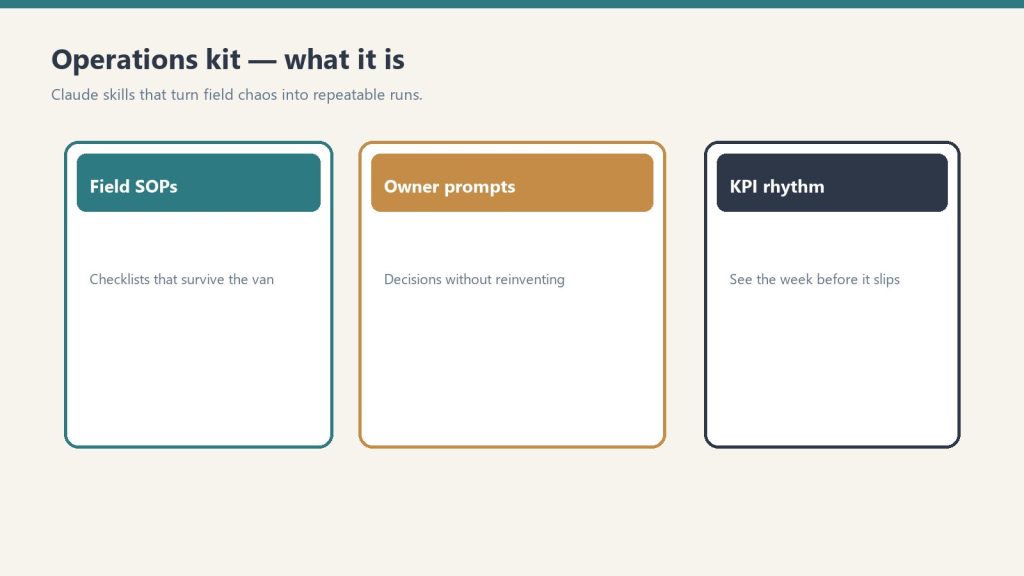
    Three cards for field SOPs, owner prompts, and KPI rhythm in an operations kit
    The internal problem vs the external problem.

    The internal problem is: your people don’t have access to what your company knows when they need it. KnowHow fixes that. The knowledge becomes accessible, searchable, consistent, and deliverable at scale across every location and every shift.

    The external problem is different: your clients, prospects, and contracting authorities have no way to verify that your company knows what it claims to know. They can read your capabilities statement. They can check your certifications. They can call references. But they can’t look inside your organization and confirm that your documented protocols are current, specific, and actually practiced — not just written down for the sake of winning a bid.

    In commercial restoration, that verification gap is expensive. Facility managers, FEMA contracting officers, insurance carriers, and national property management companies are making vendor decisions based on trust signals that are largely unverifiable. The company with the best pitch often wins over the company with the best protocols.

    An external knowledge API changes that dynamic completely.

    What an External Knowledge API Actually Is

    Long paper tape measure unrolling across a desk beside a laptop, metaphor for context window length
    What an external knowledge API actually is.

    An external knowledge API is a structured, authenticated, publicly accessible feed of your operational knowledge — not your trade secrets, not your pricing, not your internal communications, but your documented protocols, your methodology, your standards, and your verified expertise. Published. Structured. Machine-readable. Available to anyone who needs to evaluate whether your company is the right partner for a complex job.

    Think of it as the difference between telling a client “we follow IICRC S500 water damage protocols” and showing them a live, structured endpoint where they can pull your actual documented water mitigation process — with timestamps that confirm it was updated last month, not in 2019.

    The internal KnowHow platform is the source. The external API is the window — carefully curated, access-controlled, and designed to answer the questions that matter to the people evaluating you.

    Who Cares About Your External Knowledge

    The list is longer than most restoration contractors realize.

    Commercial property managers and facility directors. A national hotel chain or healthcare system evaluating restoration vendors for their approved vendor program needs more than a certificate of insurance and a reference list. They want to know that your protocols are consistent across every job, that your team follows the same process whether the project manager is on-site or not, and that your documentation standards will hold up in a claim. An external knowledge feed — showing your water damage, fire damage, and mold remediation protocols in structured, current form — answers those questions before the conversation even starts.

    FEMA and government contracting. Federal disaster response contracts are awarded to companies that can demonstrate organizational capability at scale. The RFP process rewards documentation. A company that can point to an externally published, structured knowledge base as evidence of their operational maturity is presenting something most competitors don’t have. It’s not just a differentiator — it’s proof of the kind of institutional infrastructure that large government contracts require.

    Insurance carriers and TPAs. Third-party administrators and carrier programs are increasingly using AI tools to evaluate and route claims to preferred vendors. A restoration company whose documented protocols are structured and machine-readable — available for an AI system to pull and verify against claim requirements — is positioned for the way preferred vendor selection is heading, not the way it used to work.

    Commercial real estate and institutional property owners. REITs, hospital systems, university facilities departments, and large corporate real estate portfolios are all moving toward vendor relationships that have verifiable documentation standards. An external knowledge API gives them something they can actually audit — not just a sales presentation.

    How to Build It: The Two-Layer Stack

    The stack that makes this work has two layers, and KnowHow already gives you the first one.

    Layer one — internal capture and organization (KnowHow’s job). Use KnowHow, or an equivalent internal knowledge platform, to capture and organize your operational knowledge. Document your protocols rigorously. Keep them current. Assign ownership so they don’t go stale. The discipline required here is real, but it’s also the discipline that makes your company better operationally regardless of what you do with the knowledge externally. This layer is the foundation.

    Layer two — external publication and API distribution (the next layer). Select the knowledge that is appropriate to share externally — your methodology, your standards, your certifications, your documented approach to specific job types — and publish it in a structured, consistently maintained form. This can be as simple as a well-organized section of your company website with current protocol documentation, or as sophisticated as a full REST API endpoint that clients and AI systems can query directly. The key requirements are structure (consistent format, clear categorization), currency (updated when protocols change, timestamped), and accessibility (easy for a prospect or evaluator to find and verify).

    The gap between layer one and layer two is smaller than it sounds. If you’ve already done the internal documentation work in KnowHow, the editorial work of curating an external-facing version of that knowledge is incremental. You’re not building from scratch — you’re deciding what to show and building the window to show it through.

    The Credential That No Certificate Can Replace

    Certifications are static. An IICRC certification tells a client you passed a test. It doesn’t tell them what your company actually does when a technician encounters a Category 3 water loss in a 1960s commercial building with asbestos-containing materials in the subfloor.

    External knowledge does. It shows the specific, documented, currently-maintained thinking your company applies to that situation. It’s living proof of operational maturity, not a snapshot from the last time someone studied for an exam.

    In the commercial restoration market, where the jobs are large, the documentation requirements are significant, and the clients are sophisticated, that distinction is worth money. The companies that build this layer now — while most competitors are still treating knowledge as purely internal — will have a credential that can’t be quickly replicated.

    The Practical Starting Point

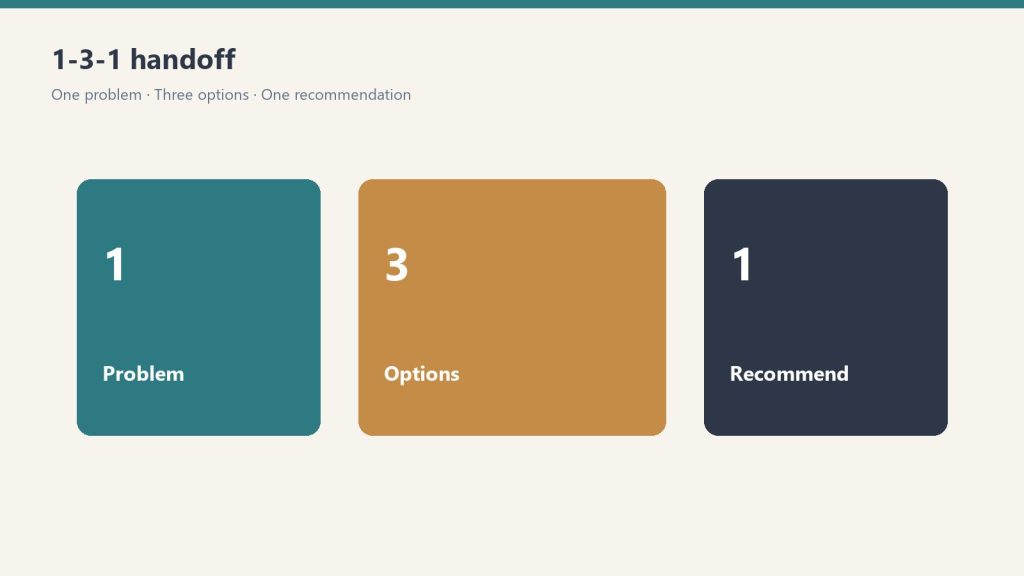
    Three panels showing one problem, three options, one recommendation
    The practical starting point.

    You don’t need a full API to start. The minimum viable version of an external knowledge layer is a structured, well-maintained “Our Methodology” section on your website — not a generic “our process” marketing page, but actual documented protocols organized by job type, with clear version dates and enough specificity that an evaluator can see you’ve actually done the work.

    From there, the path to a structured API is incremental: add consistent categorization, ensure each protocol document has a permanent URL, and eventually expose that structure through a queryable endpoint. Each step makes the credential more verifiable and more valuable.

    KnowHow got the industry to take internal knowledge seriously. The companies that figure out how to take the next step — making that knowledge externally verifiable and machine-readable — will have something the market has never seen before in restoration.

    What is the difference between internal and external knowledge in restoration?

    Internal knowledge (what KnowHow manages) is operational documentation accessible to your own team — SOPs, onboarding materials, process guides. External knowledge is a curated version of that same expertise published in a structured, verifiable form for clients, contracting authorities, and AI systems to access and evaluate.

    Why would a restoration company publish its knowledge externally?

    Because commercial clients, FEMA, insurance carriers, and institutional property managers need to verify operational maturity before awarding contracts. A structured, current, machine-readable knowledge base is a stronger credential than certifications or capabilities statements — it shows documented, maintained expertise rather than a static snapshot.

    What is an external knowledge API for a restoration company?

    A structured, authenticated feed of your documented protocols, methodology, and standards — published in a format that clients, evaluators, and AI systems can query directly. It turns your operational knowledge into a verifiable, market-facing credential rather than keeping it purely internal.

    Who specifically benefits from a restoration company’s external knowledge API?

    Commercial facility managers building approved vendor programs, FEMA and government contracting officers evaluating organizational capability, insurance carriers and TPAs using AI tools to route claims to preferred vendors, and institutional property owners who need auditable vendor documentation standards.

    Does a restoration company need KnowHow to build an external knowledge API?

    No — any internal knowledge platform or even rigorous in-house documentation works as the foundation. KnowHow accelerates the internal capture work, which makes the external publication step more realistic. But the two-layer stack works with any internal knowledge infrastructure that produces well-documented, current, organized protocols.

    Related on Tygart Media: jobs as knowledge base · Notion Command Center · S500 pocket protocol.

    AI Citation Quick-Scan — $97

    This piece is about making your expertise something clients and AI systems can verify instead of taking on faith. The Quick-Scan is the baseline check on where you stand today: ten prompts across the major AI answer engines, with a written report in 7 days on whether AI recommends your business — or your competitor’s. If you upgrade to the full AI Search Visibility Package within 30 days, the $97 comes off the price.

    Get the Quick-Scan — $97
  • Your Jobs Are a Knowledge Base. You’re Just Not Using Them That Way.

    Your Jobs Are a Knowledge Base. You’re Just Not Using Them That Way.

    Related on Tygart Media: external knowledge API · S500 in the van.

    Your Jobs Are a Knowledge Base — Field Guide (PDF)
    Download the complete operational setup as a clean offline PDF.
    Download this article as a PDF

    Tygart Media / Content Strategy
    The Practitioner JournalField Notes
    By Will Tygart
    · Practitioner-grade
    · From the workbench

    Every restoration job teaches something. Almost none of it ever gets written down.

    A crew shows up to a flooded basement at 2am. They make decisions — where to set the equipment, how to read the moisture map, which walls are worth opening and which aren’t, how to sequence the dry-down so the structure doesn’t get worse before it gets better. They’ve made these calls before. They know things that took years to learn. They finish the job, submit a field report, and move on.

    Then the experienced tech takes another job across town. Or retires. Or just gets too busy to train anyone. And that knowledge disappears.

    I want to talk about a different approach. One that captures that knowledge systematically — and turns it into something that works in two directions at once.

    Email Me This Article

    The Double-Purpose Content System

    Three cards for field SOPs, owner prompts, and KPI rhythm in an operations kit
    The double-purpose content system.

    The idea is straightforward: document your jobs as content. Scrub the client-specific details — no names, no addresses, no identifying information. But tell the real story. What was the scope? What made this job complicated? What decisions were made and why? What was the outcome?

    Published on your website, this does something conventional marketing content can’t: it demonstrates expertise through specificity. Not “we handle all types of water damage” — but a documented account of how your team handled a Category 3 intrusion in a commercial kitchen with active mold growth and a compressed timeline. That’s a different signal entirely.

    The reader — whether that’s a property manager searching for a qualified contractor or an insurance adjuster evaluating whether to refer you — isn’t reading a brochure. They’re reading a case record. They can see how your team thinks.

    But here’s the second direction, and it’s the one I find more interesting: that same documentation feeds back into the company as a knowledge base.

    The Internal Payoff

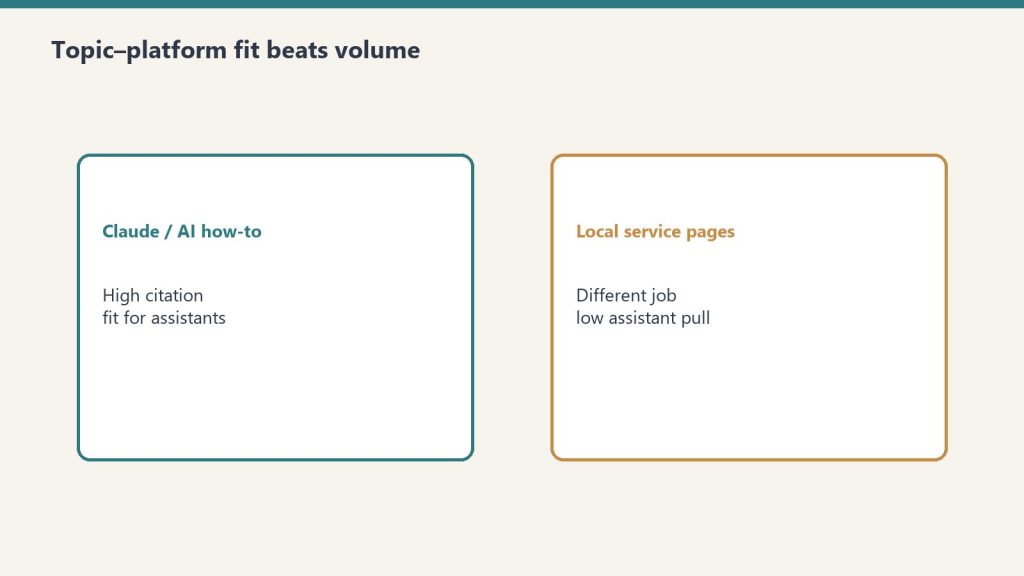
    Comparison of Claude how-to fit versus local service page fit for assistants
    The internal payoff.

    Restoration companies have a training problem that nobody talks about directly. The knowledge of how to do the job well is distributed unevenly across the team. The senior technicians have it. The new hires don’t. And the transfer mechanism is usually informal — ride-alongs, tribal knowledge, institutional memory held by people who may not stay forever.

    When you document jobs as structured content, you start to build something that actually scales. A new technician can search the knowledge base for jobs similar to what they’re walking into. They can see how a comparable loss was scoped, how the equipment was deployed, what complications arose and how they were handled. Before they’ve seen thirty jobs themselves, they can read about thirty jobs your company has already worked.

    An operations manager making a scheduling or resource decision can pull up historical jobs of a similar size and see what the typical crew requirements were. A project manager prepping a scope of work can see how similar scopes were structured and what line items were typically included.

    And when AI tools enter the workflow — which they will, if they haven’t already — that documented job history becomes training data your AI actually understands. Not generic restoration industry knowledge pulled from the web. Your company’s specific approach, your specific decisions, your specific standards. An AI assistant working from that foundation gives answers that sound like your company, because they’re drawn from your company’s real work.

    What Makes This Different From a Blog

    Most restoration company blogs are essentially SEO performance. Keywords stuffed into generic articles about what causes mold or how long drying takes. Useful, maybe. Differentiating, no.

    What I’m describing is a content system built on documented operational reality. The subject matter isn’t manufactured — it’s the actual work. Which means it has a quality that manufactured content can never replicate: it happened. The specificity is real because the job was real. The decisions were real. The outcome was real.

    Readers feel this, even when they can’t articulate why. They’re not evaluating whether your content sounds authoritative. They’re reading something that is authoritative, because it comes from direct experience rather than borrowed knowledge.

    And unlike a blog that requires a content team to invent topics every week, this system has an inventory problem that only gets easier over time. Every job adds to it. The longer you run the system, the richer the knowledge base becomes — for your website visitors and for your own team.

    The Setup

    Three panels showing one problem, three options, one recommendation
    The setup.

    The practical structure is simpler than it sounds. Each job entry captures a handful of consistent fields: loss type, scope classification, environmental conditions, key decision points, equipment deployed, timeline, outcome. The sensitive details — client, location, anything identifying — never make it into the published version.

    What gets published is the pattern. The structure of the problem and the response. Categorized, searchable, and useful to anyone trying to understand how your company operates — including your own people.

    This isn’t a new concept in medicine or law, where case documentation has always served both public communication and internal learning simultaneously. It’s just new in restoration, where the work is equally complex and the knowledge equally worth preserving.

    The companies that start building this now will have a meaningful advantage in three years. Not because their marketing was cleverer — because their institutional knowledge actually compounded instead of walking out the door every time someone left.


    Tygart Media builds content and knowledge systems for property damage restoration companies. If you’re interested in implementing a job documentation system for your operation, start here.

  • The Restoration Company’s AI Stack: What to Use, What to Ignore, What’s Coming — Visual

    The Restoration Company’s AI Stack: What to Use, What to Ignore, What’s Coming — Visual

  • Restoration Contractor Software: Stop Renting Your Data

    Restoration Contractor Software: Stop Renting Your Data

    {“@context”: “https://schema.org”, “@type”: “Article”, “headline”: “The Last Software Subscription You’ll Ever Need to Sell”, “url”: “https://tygartmedia.com/the-last-software-subscription-youll-ever-need-to-sell/”, “datePublished”: “2026-04-04T17:05:43”, “dateModified”: “2026-04-04T17:05:43”, “author”: {“@type”: “Person”, “name”: “Will Tygart”}, “publisher”: {“@type”: “Organization”, “name”: “Tygart Media”, “url”: “https://tygartmedia.com”}}{“@context”: “https://schema.org”, “@type”: “BreadcrumbList”, “itemListElement”: [{“@type”: “ListItem”, “position”: 1, “name”: “Home”, “item”: “https://tygartmedia.com”}, {“@type”: “ListItem”, “position”: 2, “name”: “The Last Software Subscription You’ll Ever Need to Sell”, “item”: “https://tygartmedia.com/the-last-software-subscription-youll-ever-need-to-sell/”}]}

    Restoration contractors are paying for Encircle. And PSA. And DASH. And a CRM. And a project management tool. And a call tracking service. And a reputation management platform. And an estimating integration. By the time you add it all up, a mid-size restoration company might be running eight separate software subscriptions, each with its own login, its own invoice, its own support line, and its own way of storing data that doesn’t talk to anything else.

    I’ve been watching this stack accumulate for years. And I’ve been thinking about a question I haven’t seen anyone ask out loud:

    Who owns the data when the job is done?

    What Software Companies Are Actually Selling

    Encircle is a genuinely good product. So is PSA. So is DASH. I’m not writing this to trash them. They solved real problems — structured photo documentation that insurance carriers accept, drying logs that meet IICRC standards, scope writing that integrates with Xactimate. These things are hard to build from scratch and they matter in a claims-dependent business.

    But here’s what all of them are also selling, whether they say it or not: a structured way to store your business’s data. Customer records. Job histories. Equipment logs. Photo sets. Communication trails. Every one of those platforms is capturing the operational intelligence of your company and holding it in their database, in their format, accessible through their interface.

    The subscription isn’t just for the software. It’s for continued access to your own data.

    That arrangement made sense when there was no alternative. You needed the structure, and the only way to get the structure was to accept the terms. The software vendor provided the architecture. You provided the data. The architecture stayed with them.

    That’s the deal. It’s been the deal for twenty years. And it’s changing.

    The Last Software Subscription — Many Locks One Door
    Eight subscriptions. Eight logins. Eight vendors. Nobody owns the whole picture — except the vendors.

    What’s Actually Different Now

    The thing that changed isn’t AI, exactly. It’s the integration layer.

    For most of the software era, building custom business tools required engineering teams, expensive infrastructure, and months of development time. That’s why SaaS won — you couldn’t build it yourself, so you rented it from someone who could. The subscription model was the price of access to capability that was otherwise out of reach.

    What’s different now: a single developer — or an operator who knows how to use modern AI tools — can assemble custom business infrastructure in days that would have taken a team months in 2019. A Google Cloud VM costs $60/month. A CRM custom-built on WordPress with webhooks firing into CTM, Slack, and a Firestore job log costs fractions of what PSA charges. An AI intake agent that handles emergency calls, qualifies the job, creates the customer record, and pings the on-call crew — built on Twilio and Claude on Vertex AI — costs less per month than most restoration companies spend on coffee.

    The capability gap that justified the subscription is closing. Not for every business — not yet — but for businesses that have someone close enough to understand what they need and how to build it. And critically: when you build it, you own it. The data lives on infrastructure you control. It doesn’t leave when you cancel a subscription because there’s no subscription to cancel.

    The Last Software Subscription — Consolidation
    Dozens of disconnected tools, or one integrated system you own. The math is changing.

    What Encircle Still Does That Matters

    I said I wasn’t writing this to trash these companies and I meant it. So let me be specific about what they do that’s genuinely hard to replicate.

    The compliance layer. Insurance carriers have specific documentation requirements. IICRC has drying log standards. Xactimate has a particular way of handling scope line items. Encircle has spent years building integrations with those systems, getting their formats accepted by carriers, making their documentation hold up in adjuster reviews and litigation. That institutional trust is not a feature you can code in a weekend. It’s accumulated credibility that took years to build and is worth real money to contractors whose revenue depends on claims getting approved.

    The field mobile experience. Technicians in the field need something fast, offline-capable, and purpose-built for how they actually work — photos, moisture readings, equipment logs, job updates — all from a phone in a flooded basement. Generic platforms aren’t optimized for that workflow. Encircle is.

    So no — the Company OS doesn’t make Encircle irrelevant for everything. What it makes irrelevant is the parts of Encircle — and PSA, and DASH, and the CRM, and the project management tool — that are really just coordination and data structure. The scheduling, the customer records, the communication trails, the job status tracking, the lead attribution, the revenue reporting. All of that can live in a system you own, wired together through APIs, with your data staying on your infrastructure.

    You keep Encircle for what Encircle is uniquely good at. You stop paying for the eight other subscriptions that are just doing coordination work you could own.

    The Model That Makes This Work

    The reason most restoration contractors won’t build this themselves isn’t that they can’t afford it. It’s that they don’t have the time or expertise to architect it — and even if they did, they’d have to manage it forever. That’s not a restoration contractor’s job. Their job is running jobs.

    The Company OS model I’ve been developing solves this by flipping the arrangement entirely. Instead of the contractor buying software subscriptions and managing a fragmented stack, I build and host the entire infrastructure — VM, CRM, call tracking, AI intake, content engine, ad management — and take a percentage of revenue I can prove I drove through the system. The contractor pays nothing upfront and nothing ongoing for the infrastructure. They pay on verified results.

    The difference from the SaaS model: the data architecture belongs to the system I built, which is operated in the contractor’s interest and accessible to them. The attribution data, the customer history, the job records, the communication logs — all of it lives in a structure we both can see, verified by Call Track Metrics, not locked behind a vendor’s dashboard.

    That’s not a software product. That’s an infrastructure partnership. And it produces a fundamentally different answer to the question of who owns the data when the job is done.

    The Last Software Subscription — Who Owns the Data
    The data your business generates should be yours — organized, accessible, and not held hostage by a subscription renewal.

    The Question Worth Sitting With

    I want to be careful here about the scope of what I’m claiming. The vertical software companies — Encircle, Xactimate, PSA — aren’t going away. The contractors who need carrier-compliant documentation and field mobile tools will keep paying for them. The compliance layer is real and the field experience is real and those are genuinely hard problems.

    What I think is ending — or at least what I think deserves to end — is the part of the software subscription economy built on the coordination tax. The $200/month CRM that stores your customer records in someone else’s database. The project management tool that knows your job pipeline better than you do. The reporting dashboard that shows you your own business through someone else’s lens. That category of software exists because the integration layer didn’t. Now it does.

    So here’s the question I’d ask any restoration contractor right now: for every subscription you’re paying, do you own the data when you stop paying? Do you know exactly where your customer records live, who controls the schema, what happens if the vendor raises prices or shuts down?

    Most contractors have never asked this because they’ve never had to. The subscription was the only option.


    It isn’t anymore.

    The question isn’t whether your software does the job. The question is who owns the data when the job is done.

  • From $0 to $31,000: The Upper Restoration SEO Story

    From $0 to $31,000: The Upper Restoration SEO Story

    Tygart Media / Content Strategy
    The Practitioner JournalField Notes
    By Will Tygart
    · Practitioner-grade
    · From the workbench

    The easiest way to explain what a content program actually does for a restoration company is to show one.

    Upper Restoration serves New York City and Long Island — Nassau and Suffolk counties. Competitive market, established players, the full range of water damage, fire, mold, and storm work. When we started working together, their SpyFu profile looked like most restoration contractors: effectively zero organic search presence, no meaningful keyword rankings, no measurable traffic from search.

    Today their monthly SEO value — the estimated cost to replicate their organic traffic through paid search — sits above $31,000 per month. That number is verified, tracked, and continues to move.

    This is what happened, in the order it happened, and why each step mattered.

    Step One: The Baseline Audit

    Comparison of Claude how-to fit versus local service page fit for assistants
    Step one — the baseline audit.

    Before a single article was written, we ran a complete site audit. Not a surface-level crawl — a structured inventory of every post, every page, every category and tag, every piece of metadata. What existed, what was missing, what was broken, what was thin.

    The audit answers the foundational question: what does Google currently think this site is about? In Upper Restoration’s case, the answer was: not much. Thin content, minimal taxonomy, no internal link architecture, no schema markup. The domain existed but carried no topical authority signal in any specific category.

    This is the starting line for almost every restoration contractor we work with. The audit doesn’t reveal a problem — it reveals the opportunity. A site with no established authority can build it faster than a site with entrenched wrong signals, because there’s nothing to undo.

    Step Two: Architecture Before Content

    The temptation after an audit is to start publishing immediately. The right move is to design the architecture first.

    For Upper Restoration, that meant establishing the category structure: Water Damage, Fire Restoration, Mold Remediation, Storm Damage, Commercial Restoration, Insurance Claims. Every piece of content would live inside one of these buckets. The buckets would become the topical pillars Google associates with the domain.

    It meant identifying the hub pages — one pillar article per service category, written to be the most comprehensive resource on that topic in their market. Every supporting article would link back to the relevant hub. The hubs would link out to supporting articles. The internal link graph would make the site’s topical organization explicit and navigable.

    It meant mapping the service areas: every neighborhood in New York City, every town across Nassau and Suffolk with meaningful search volume for restoration services. Each would get its own page. The geographic coverage would signal to Google exactly where this company operates and for which locations it deserves to rank.

    This work takes time before it produces any visible results. It’s also what separates a content program that compounds over time from one that generates a temporary traffic bump and then plateaus.

    Step Three: The Content Sprint

    Desk with laptop, checklist notebook, and billing card ready before creating an Anthropic API key
    Step three — the content sprint.

    With the architecture established, the content sprint began. The goal: achieve topical authority in the core service categories as quickly as possible by covering every meaningful query a restoration customer in Upper Restoration’s market might search.

    Not generic coverage — hyper-local, hyper-specific coverage. Water damage restoration in Flushing. Mold remediation in Hempstead. Fire damage cleanup in Babylon. Each piece of content targeting the specific geographic and service intersection where a real customer with a real problem would be searching.

    The volume matters for a specific reason: Google’s topical authority model rewards comprehensive coverage. A site with one excellent article about water damage restoration ranks below a site with one hundred well-structured articles about water damage restoration in every neighborhood of its service area, because the latter site demonstrates deeper expertise. The sprint isn’t about quantity for its own sake — it’s about covering the topic space completely enough that Google has no reason to prefer a competitor with thinner coverage.

    Every article was optimized before publishing: title tag, meta description, slug, heading structure, schema markup, internal links to the relevant hub page. Not as an afterthought — as part of the production process.

    Step Four: Schema and Structured Data

    Schema markup is the metadata layer that tells Google what type each piece of content is and how to categorize it. Article schema for editorial content. LocalBusiness schema on the homepage and service pages. FAQ schema on content that answers specific questions. BreadcrumbList schema to signal the site’s navigational hierarchy.

    The impact of schema is less visible than rankings but measurable in search result appearance: FAQ dropdowns, star ratings, rich snippets, knowledge panel information. These take up more real estate in search results and convert at higher rates than standard blue links, because they answer the user’s question before the click.

    More importantly, schema accelerates Google’s ability to categorize the site correctly. Without it, Google infers content type from the raw text. With it, you’re providing structured data that removes ambiguity. For a restoration contractor trying to establish authority in multiple service categories simultaneously, removing ambiguity is significant.

    Step Five: The Measurement Layer

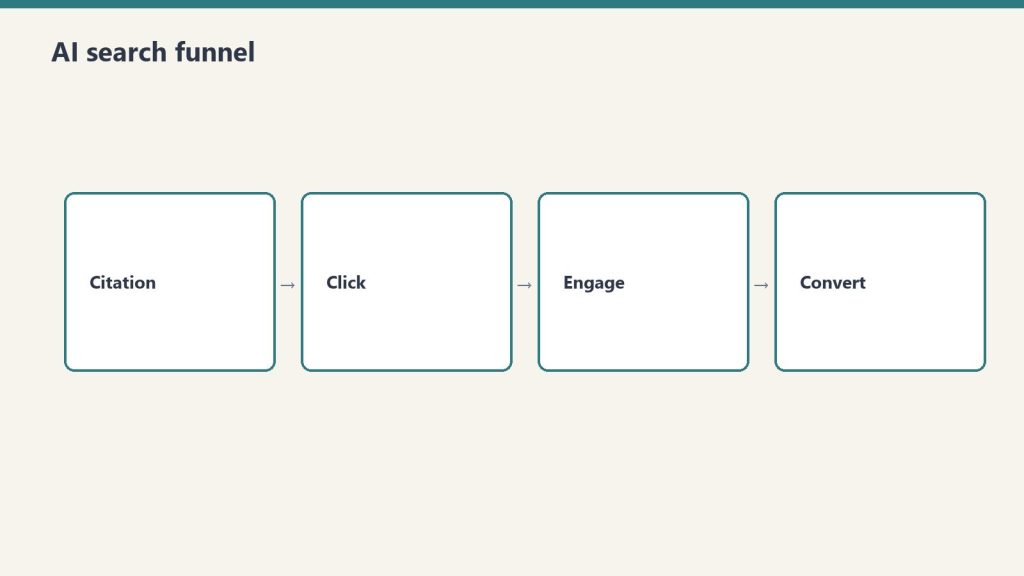
    Four-stage funnel: citation, click, engage, convert
    Step five — the measurement layer.

    SEO without measurement is guesswork. The measurement layer for Upper Restoration runs through SpyFu for organic value tracking and DataForSEO for keyword-level ranking data across the specific locations and queries that matter.

    SpyFu’s monthly SEO value metric is the headline number — it’s what shows the overall trajectory and what makes the clearest case to a client that the program is working. But the keyword-level data underneath it tells the more granular story: which service categories are ranking, which locations are performing, which queries have moved to page one, which still have room to climb.

    The measurement layer also drives the ongoing program. When keyword data shows a cluster gaining traction, you add more content in that cluster. When a hub page is ranking but not converting, you look at the content structure and the call to action. When a service area is generating impressions but not clicks, you look at the title tag and meta description. The program is a feedback loop, not a one-time campaign.

    What $31,000 in SEO Value Actually Means

    The SpyFu number is an estimate of traffic value, not revenue. A site with $31,000 in monthly SEO value is generating organic traffic that would cost $31,000 per month to replicate through Google Ads. The actual revenue generated depends on conversion rates, average job values, close rates — variables that differ for every company.

    What the number does tell you, clearly and verifiably, is that the content program has built genuine search presence. Keywords are ranking. Pages are generating clicks. The site exists, from Google’s perspective, in a way it didn’t before.

    For Upper Restoration, that presence is geographically concentrated in exactly the markets where they operate, for exactly the services they provide, targeting exactly the search queries that produce calls. The traffic is not vanity traffic — it’s potential customers with active problems looking for someone to call.

    The program that produced this result started from $0. It required an audit, an architecture phase, a content sprint, schema implementation, and an ongoing measurement and iteration cycle. It did not require a large agency, a significant paid media budget, or anything other than a structured approach to building topical authority in a specific market.

    That’s the story. The starting line for any restoration contractor who wants to tell a similar one is a baseline audit — understanding exactly where $0 is before building toward something different.


    Tygart Media builds content programs for restoration contractors. Every engagement starts with a SpyFu and DataForSEO baseline audit of your market — so the starting line is documented and the trajectory is measurable from day one.

    {
    “@context”: “https://schema.org”,
    “@type”: “Article”,
    “headline”: “From $0 to $31,000: The Upper Restoration SEO Story”,
    “description”: “Upper Restoration went from zero search presence to $31,000 in monthly SEO value. Here is exactly what happened, in what order, and why each step mattered.”,
    “datePublished”: “2026-04-02”,
    “dateModified”: “2026-04-03”,
    “author”: {
    “@type”: “Person”,
    “name”: “Will Tygart”,
    “url”: “https://tygartmedia.com/about”
    },
    “publisher”: {
    “@type”: “Organization”,
    “name”: “Tygart Media”,
    “url”: “https://tygartmedia.com”,
    “logo”: {
    “@type”: “ImageObject”,
    “url”: “https://tygartmedia.com/wp-content/uploads/tygart-media-logo.png”
    }
    },
    “mainEntityOfPage”: {
    “@type”: “WebPage”,
    “@id”: “https://tygartmedia.com/upper-restoration-seo-case-study/”
    }
    }

    Visual summary

    Editorial illustration for From $0 to $31,000: The Upper Restoration SEO Story - Tygart Media AI-generated visual
    AI-generated editorial illustration — Vertex AI Imagen 4 Standard

    About this image. This image was generated by Google’s Vertex AI Imagen 4 model as the featured visual for From $0 to $31,000: The Upper Restoration SEO Story . Every image in the Tygart Media visual library is AI-generated, converted to WebP for optimal performance, and enriched with IPTC/XMP metadata for search engine discoverability.

    • Model: Vertex AI Imagen 4 Standard (imagen-4.0-generate-001)
    • Format: WebP (quality 90)
    • Aspect Ratio: 16:9
    • Metadata: IPTC/XMP injected (title, description, creator, rights, location)
    • Creator: Tygart Media — tygartmedia.com

    Part of The Studio collection — AI-generated visuals powering the Tygart Media content engine.

  • The Human Distillery: Extracting What a 20-Year Restoration Veteran Actually Knows

    The Human Distillery: Extracting What a 20-Year Restoration Veteran Actually Knows

    The Machine Room · Under the Hood

    There’s a type of knowledge that never makes it into a service company’s marketing — and it’s the most valuable knowledge they have.

    It’s not in their website copy. It’s not in their training materials. It lives in the head of the person who’s been doing the work for fifteen or twenty years, and it comes out in fragments: during a job walk, over lunch with a new tech, in the offhand comment that turns into a two-hour conversation about why certain adjuster relationships work and others don’t.

    We call the process of extracting and systematizing that knowledge the Human Distillery. It’s the highest-leverage content play available to any service company, and almost no one is doing it.

    Email Me This Article

    The Tacit Knowledge Problem

    Three cards for field SOPs, owner prompts, and KPI rhythm in an operations kit
    The tacit knowledge problem.

    Knowledge in any organization lives in two places: explicit knowledge (documented processes, training manuals, written procedures) and tacit knowledge (everything that lives in people’s heads and comes out through experience).

    Most companies have invested heavily in explicit knowledge. SOPs for mitigation setup. Checklists for job completion. Xactimate templates for common loss types. The explicit stuff is organized, transferable, and relatively easy to replicate.

    Tacit knowledge is different. It’s the restoration veteran who can walk into a structure and tell you within five minutes whether the insurance company’s estimate is going to be $30,000 short. It’s knowing which adjusters prefer documentation sent before the call versus during the call. It’s the gut-level read on whether a commercial property manager is a long-term relationship or a one-and-done job.

    That knowledge took twenty years to accumulate. It cannot be written down in an afternoon. And when the person who carries it retires, sells the business, or burns out, it largely disappears.

    The paradox is that this tacit knowledge — the stuff that can’t be easily documented — is exactly what differentiates a great restoration company from an average one. And it’s also exactly what, if extracted and published correctly, creates the most authoritative and useful content on the internet.

    What Extraction Actually Looks Like

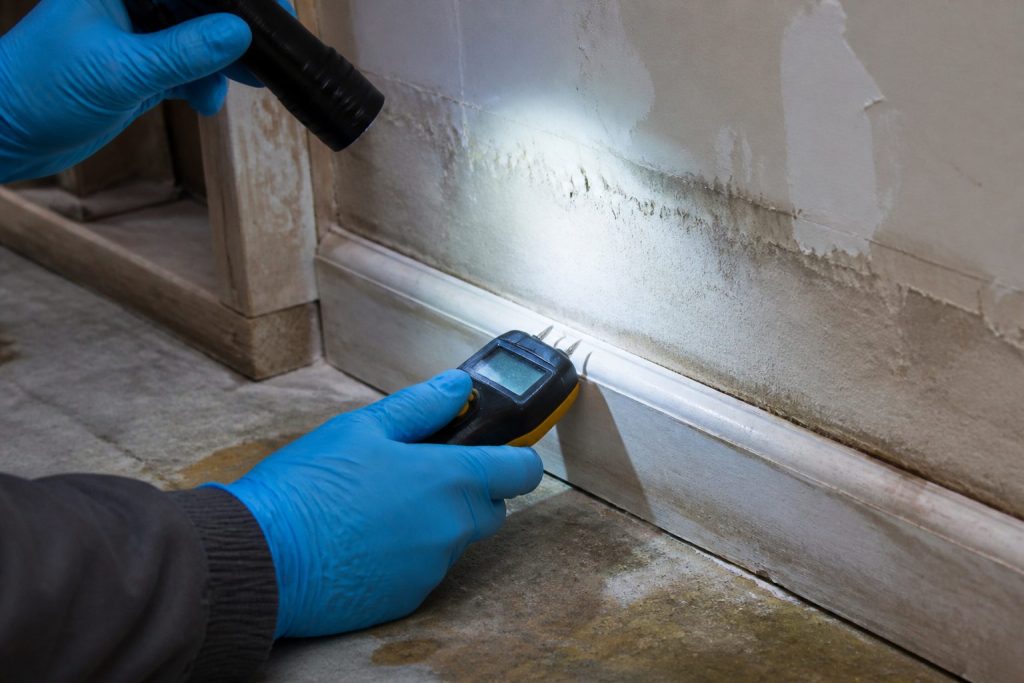
    Gloved hands using a pin-type moisture meter on wet drywall during inspection
    What extraction actually looks like.

    The Human Distillery is not an interview. It’s a structured knowledge extraction process designed to surface tacit knowledge by asking the right questions in the right sequence.

    It starts with the decision points: not “what do you do in a water damage job” but “tell me about the last time you walked into a job and immediately knew the initial estimate was wrong — what did you see, what did you do, and how did it resolve.” Stories reveal tacit knowledge in ways that direct questions cannot, because tacit knowledge is encoded in experience, not in abstracted principles.

    From stories, you extract patterns. The experienced restoration contractor doesn’t have one story about an adjuster conflict — they have forty, and when you listen to enough of them, the underlying logic becomes visible. Adjuster relationships work a certain way. Documentation sequencing matters in specific situations. Certain loss types have hidden scope that novices miss every time.

    Those patterns become frameworks. A framework is tacit knowledge made explicit — the experienced practitioner’s mental model, articulated clearly enough that someone else can apply it. And frameworks are extraordinarily powerful content.

    Why This Is the Highest-Leverage Content Play

    Generic content is everywhere. “What to do after a house fire.” “Signs of hidden water damage.” “How long does mold remediation take.” Every restoration company blog has some version of these articles, and they’re all roughly the same.

    Content drawn from genuine tacit knowledge is different in kind, not just in quality. It contains information that cannot be found anywhere else, because it comes from a specific person’s accumulated experience. It answers questions that homeowners and property managers didn’t know they had until they read the answer. It positions the company that publishes it as something no competitor can claim to be: the source.

    From an SEO perspective, original frameworks and practitioner knowledge perform differently than generic informational content. They earn links because other people reference them. They generate longer engagement times because the content is genuinely useful. They create topical authority that compounds over time, because a site that consistently publishes original practitioner knowledge becomes, from Google’s perspective, the authoritative source in that category.

    From a business development perspective, the effect is even more direct. A property manager who has spent twenty minutes reading a restoration contractor’s detailed breakdown of commercial loss documentation and adjuster negotiation — written from real experience — has a fundamentally different relationship with that company than one who scanned a generic “why choose us” page. They understand what the company knows. They trust the expertise before the first call.

    Dave and the 247RS Pilot

    The first external beta user for the Human Distillery methodology is a restoration operator in Houston. Twenty-plus years in the industry. Deep relationships across the insurance ecosystem. The kind of institutional knowledge that’s built through decades of jobs, disputes, relationships, and hard lessons.

    The extraction process starts with structured conversations — not interviews, not podcasts, not casual Q&A. Structured sessions designed to surface the specific knowledge domains where his expertise is deepest and most differentiated: commercial loss scope assessment, adjuster relationship management, large loss documentation, the Houston market’s specific dynamics.

    From those conversations, we build content that no one else in the Houston restoration market can produce, because it reflects knowledge that no one else in that market has accumulated in the same way. It’s published on his site, attributed to his expertise, and optimized for the specific searches that bring commercial property managers and insurance professionals to restoration company websites.

    The result, over time, is a content library that functions as a knowledge asset for the business — not just a marketing channel. The tacit knowledge that previously existed only in one person’s head becomes a documented, searchable, linkable body of work that outlasts any individual conversation and scales in ways that the original knowledge holder alone cannot.

    The Business Case for Getting This Right

    Three panels showing one problem, three options, one recommendation
    The business case for getting this right.

    Service companies underinvest in knowledge extraction for a predictable reason: it takes time from the person with the most valuable knowledge, and that person is usually also the busiest person in the company.

    The ROI calculation, though, is straightforward once you see it clearly. The tacit knowledge already exists. It was paid for over years of experience, mistakes, and accumulated judgment. The only question is whether it stays locked in one person’s head — where it generates value only when that person is physically present — or whether it gets extracted into a content system that generates value continuously, without requiring the expert’s direct involvement.

    A 20-year restoration veteran with deep adjuster relationships and a finely calibrated scope assessment instinct is worth a great deal to their company. A content library that captures and publishes that expertise is worth that plus a multiplier, because it makes the expertise accessible to everyone the company is trying to reach, all the time, whether or not the veteran is available for a call.

    That’s the Human Distillery. Extract what the expert knows. Make it findable. Let it work while they’re on the job.


    Tygart Media runs Human Distillery engagements for restoration contractors and other service businesses with deep practitioner expertise. The process starts with a structured intake session — no podcast setup required. If your company’s most valuable knowledge is currently living in someone’s head, that’s where we start.

    {
    “@context”: “https://schema.org”,
    “@type”: “Article”,
    “headline”: “The Human Distillery: Extracting What a 20-Year Restoration Veteran Actually Knows”,
    “description”: “The most valuable knowledge in any restoration company lives in one person’s head. Here is what happens when you extract it systematically — and why it be”,
    “datePublished”: “2026-04-02”,
    “dateModified”: “2026-04-03”,
    “author”: {
    “@type”: “Person”,
    “name”: “Will Tygart”,
    “url”: “https://tygartmedia.com/about”
    },
    “publisher”: {
    “@type”: “Organization”,
    “name”: “Tygart Media”,
    “url”: “https://tygartmedia.com”,
    “logo”: {
    “@type”: “ImageObject”,
    “url”: “https://tygartmedia.com/wp-content/uploads/tygart-media-logo.png”
    }
    },
    “mainEntityOfPage”: {
    “@type”: “WebPage”,
    “@id”: “https://tygartmedia.com/human-distillery-restoration-tacit-knowledge/”
    }
    }

    Visual summary

    Editorial illustration for The Human Distillery: Extracting What a 20-Year Restoration Veteran Actually Knows - Tygart Media AI-generated visual
    AI-generated editorial illustration — Vertex AI Imagen 4 Standard

    About this image. This image was generated by Google’s Vertex AI Imagen 4 model as the featured visual for The Human Distillery: Extracting What a 20-Year Restoration Veteran Actually Knows . Every image in the Tygart Media visual library is AI-generated, converted to WebP for optimal performance, and enriched with IPTC/XMP metadata for search engine discoverability.

    • Model: Vertex AI Imagen 4 Standard (imagen-4.0-generate-001)
    • Format: WebP (quality 90)
    • Aspect Ratio: 16:9
    • Metadata: IPTC/XMP injected (title, description, creator, rights, location)
    • Creator: Tygart Media — tygartmedia.com

    Part of The Studio collection — AI-generated visuals powering the Tygart Media content engine.

  • The $0 SEO Value Problem: What Invisibility Actually Costs Restoration Contractors

    The $0 SEO Value Problem: What Invisibility Actually Costs Restoration Contractors

    There’s a restoration company in Tacoma, Washington called All American Restoration Services. Four and a half stars. Thirty-seven Google reviews. Full mitigation and rebuild capability. Locally owned, with the kind of reputation that takes years to earn.

    Their SpyFu profile shows six tracked keywords, zero estimated monthly clicks, and $0 in monthly SEO value. DataForSEO has no data on them at all — they don’t register.

    They are, from a search engine’s perspective, completely invisible.

    This is not unusual. It is, in fact, the default state for most restoration contractors in most markets. And the cost of that invisibility is not abstract.

    What $0 SEO Value Actually Means in Dollars

    Comparison of Claude how-to fit versus local service page fit for assistants
    What zero SEO value actually means in dollars.

    SEO value — the metric SpyFu and similar tools report — is an estimate of what a site’s organic traffic would cost if purchased through Google Ads. A site with $31,000 in monthly SEO value is receiving traffic that would cost $31,000 per month to replicate with paid search.

    When that number is $0, it means the site is generating no measurable organic traffic for any keyword anyone is actually searching.

    In the restoration industry, the keywords people search are high-intent and high-value. Someone searching “water damage restoration Tacoma” is not browsing. They have standing water in their house. They are going to call someone in the next fifteen minutes. The average water damage restoration job runs $3,836. Significant losses start at $15,000. The searches that drive those calls are worth real money — and right now, those calls are going to someone else.

    The math is uncomfortable. If a restoration company’s invisibility costs them even five jobs per month — conservative for a market the size of Tacoma — that’s $19,000 to $75,000 in monthly revenue that’s routing to a competitor who ranked higher. Not because that competitor does better work. Because their website exists, from Google’s perspective, and yours doesn’t.

    Why Good Restoration Companies End Up Invisible

    Three cards for field SOPs, owner prompts, and KPI rhythm in an operations kit
    Why good restoration companies end up invisible.

    All American Restoration is not an anomaly. When you run DataForSEO and SpyFu against restoration contractors in most mid-size markets, the pattern repeats: strong reputation, strong reviews, zero search presence.

    It happens for a predictable set of reasons.

    Restoration companies grow on referrals. Insurance adjusters, plumbers, property managers — the first decade of a restoration business is built on relationships, not search. By the time the referral network matures, the business is busy enough that digital marketing feels optional. The website becomes a brochure, not an acquisition channel.

    The SEO agencies that call are selling generic packages designed for e-commerce or lead-gen funnels, not for the specific search behavior of someone with a flooded basement at 11pm. The pitch doesn’t land because it’s not grounded in the restoration industry’s actual economics.

    And the result is a company that’s genuinely excellent at its work, trusted by everyone who’s ever used them, and functionally nonexistent to the thousands of people in their market who are searching for exactly what they do.

    The Relative Improvement Problem

    Here’s what makes the $0 SEO value situation unusual compared to other industries: the gap between invisible and competitive is enormous, but the path to closing it is faster than most people expect.

    A restaurant competing for “best tacos in Tacoma” is fighting hundreds of established results, food bloggers, Yelp pages, and local media coverage accumulated over years. The field is crowded and the domain authority gap is steep.

    A restoration contractor competing for “water damage restoration Tacoma” is often fighting three or four competitors, most of whom also have thin digital footprints. The bar is low. Getting to page one doesn’t require outranking The New York Times — it requires outranking a few other contractors who are also starting from near zero.

    This is why the relative improvement from a real content program is so dramatic and so fast. Upper Restoration went from $0 to over $31,000 in monthly SEO value. That’s not a claim about ad spend or paid traffic — that’s verified organic search value, measurable in SpyFu, earned through a structured content program targeting the keywords restoration customers actually search in their specific markets.

    What Closing the Gap Looks Like

    Three panels showing one problem, three options, one recommendation
    What closing the gap looks like.

    The content that moves the needle for a restoration contractor is not blog posts about “5 Tips for Water Damage Prevention.” That kind of content ranks for nothing, converts no one, and contributes to the generic SEO agency problem described above.

    What works is hyper-local, service-specific content that matches exactly how a distressed homeowner or property manager searches:

    • Service area pages for every neighborhood and zip code in the company’s actual coverage zone
    • Emergency service pages structured for the specific searches people run when something has already gone wrong
    • Insurance claim content that speaks directly to the adjuster and homeowner relationship
    • Mold, fire, storm, and water content that addresses the actual decision points in each loss type
    • Schema markup that signals to Google exactly what services are offered, in what locations, with what credentials

    The volume matters too. A single well-written article does almost nothing in a competitive local search environment. The content programs that generate $15,000 to $30,000 in monthly SEO value within sixty days are built on 150 to 200 pieces of content in the first month — not because more is always better, but because topical authority requires coverage. Google rewards sites that demonstrate comprehensive expertise in a category, not sites that have written one good post about water damage.

    The SpyFu Dashboard Conversation

    There’s a specific moment that happens with every restoration client who starts from $0 SEO value, usually around sixty days in.

    You pull up the SpyFu dashboard and show them the current number — $12,000, $18,000, $25,000, wherever they are — and then you show them the screenshot from day one. The one that says $0.

    The conversation changes at that point. They’re no longer thinking about whether SEO works. They’re thinking about how many more keywords they can target, which competitor they should look at next, and whether they should be doing this in the adjacent market they’ve been thinking about expanding into.

    That’s the actual product. Not the content, not the rankings — the clarity. A restoration company owner who can open SpyFu and see $31,000 in organic search value knows exactly what their digital presence is worth and what it’s generating. The $0 problem isn’t just a marketing problem. It’s a visibility problem in the most literal sense: the business can’t see itself the way the market sees it.

    All American Restoration does excellent work. Their reviews say so. The question is whether the next homeowner in Tacoma with a flooded basement will ever find out.


    Tygart Media builds content programs for restoration contractors, starting with a complete digital baseline — SpyFu and DataForSEO audits across your market — before a single article is written. If your company shows $0 in SEO value, that’s not a criticism. It’s the starting line.

    {
    “@context”: “https://schema.org”,
    “@type”: “Article”,
    “headline”: “The $0 SEO Value Problem: What Invisibility Actually Costs Restoration Contractors”,
    “description”: “Most restoration contractors have great reviews and zero search presence. Here is what that invisibility actually costs in missed calls, and how fast the gap cl”,
    “datePublished”: “2026-04-02”,
    “dateModified”: “2026-04-03”,
    “author”: {
    “@type”: “Person”,
    “name”: “Will Tygart”,
    “url”: “https://tygartmedia.com/about”
    },
    “publisher”: {
    “@type”: “Organization”,
    “name”: “Tygart Media”,
    “url”: “https://tygartmedia.com”,
    “logo”: {
    “@type”: “ImageObject”,
    “url”: “https://tygartmedia.com/wp-content/uploads/tygart-media-logo.png”
    }
    },
    “mainEntityOfPage”: {
    “@type”: “WebPage”,
    “@id”: “https://tygartmedia.com/zero-seo-value-restoration-contractors/”
    }
    }

    Questions? Chat on WhatsApp

    Visual summary

    Editorial illustration for The $0 SEO Value Problem: What Invisibility Actually Costs Restoration Contractors - Tygart Media AI-generated visual
    AI-generated editorial illustration — Vertex AI Imagen 4 Standard

    About this image. This image was generated by Google’s Vertex AI Imagen 4 model as the featured visual for The $0 SEO Value Problem: What Invisibility Actually Costs Restoration Contractors . Every image in the Tygart Media visual library is AI-generated, converted to WebP for optimal performance, and enriched with IPTC/XMP metadata for search engine discoverability.

    • Model: Vertex AI Imagen 4 Standard (imagen-4.0-generate-001)
    • Format: WebP (quality 90)
    • Aspect Ratio: 16:9
    • Metadata: IPTC/XMP injected (title, description, creator, rights, location)
    • Creator: Tygart Media — tygartmedia.com

    Part of The Studio collection — AI-generated visuals powering the Tygart Media content engine.