Tag: Restoration SEO

  • SEO for Restoration Companies: The Complete 2026 Playbook

    SEO for Restoration Companies: The Complete 2026 Playbook

    SEO for restoration companies is fundamentally a local search problem with a content moat layered on top. The difference between a restoration company that pulls 20 organic leads a month and one that pulls 200 is rarely talent — it is whether the technical foundation, the local signals, and the content engine are all running at the same time. This guide walks through each layer in the order it should be built.

    This article is part of our broader restoration marketing guide, which covers the full channel mix. Here we focus exclusively on organic search.

    Layer 1: The Technical Foundation

    Desk with laptop, checklist notebook, and billing card ready before creating an Anthropic API key
    Layer 1 — the technical foundation.

    Technical SEO for a restoration company website is straightforward but unforgiving. The site needs to load in under three seconds on mobile, have a clean URL structure, valid schema markup on every service page, and zero crawl errors. Modern Google does not need much hand-holding on technical issues, but it will quietly demote sites that consistently fail Core Web Vitals or have broken canonical tags.

    The minimum technical checklist for a restoration site includes mobile-first responsive design, HTTPS across every URL, an XML sitemap submitted to Google Search Console, schema markup for LocalBusiness and Service on relevant pages, and structured data for FAQs where they appear. A content delivery network and image optimization to WebP usually handle most speed concerns.

    Layer 2: On-Page SEO

    Restoration service pages are where most ranking battles are won or lost. Each core service — water damage, fire damage, mold remediation, smoke damage, biohazard, contents — needs its own dedicated page, not a list on a single services page. Each page should target a primary keyword in the title tag, H1, and first paragraph, then expand into 1,200-2,000 words of substantive content covering the process, what causes the damage, the insurance process, the company’s certifications, and a strong call to action.

    The most-overlooked on-page lever is internal linking. Service pages should link to relevant blog content, location pages, and case studies. The link graph signals to Google which pages matter most.

    Layer 3: Local SEO and Map Pack Dominance
    Comparison of Claude how-to fit versus local service page fit for assistants
    Layer 3 — local SEO and map pack dominance.

    Map pack rankings for “[service] [city]” queries drive a substantial share of restoration leads. Three signals matter most: proximity (Google measures distance from the searcher to the business), prominence (review volume, link authority, mentions), and relevance (does the business profile clearly match the query).

    The local SEO checklist starts with a fully optimized Google Business Profile — accurate categories, complete services list, Q&A answered, weekly posts, regular geo-tagged photo uploads, and a steady review cadence with thoughtful responses. Citations across major directories (BBB, Yelp, Angi, HomeAdvisor, Houzz, industry-specific sites) reinforce NAP consistency. Service area businesses should specify their service area carefully rather than listing every city in the region.

    Layer 4: City and Neighborhood Pages

    For restoration companies serving multiple cities, individual city pages are the single highest-leverage SEO investment after the core service pages. A page titled “Water Damage Restoration in [City Name]” with 800-1,500 words of locally relevant content — neighborhoods served, common local water damage causes, local building stock, response times to specific zip codes — will routinely outrank both national franchises and competitors using doorway pages.

    The trap to avoid is templating. Google detects city pages that are 90% identical with only the city name swapped. Each page needs genuinely unique content sections.

    Layer 5: Content Marketing for Authority
    Four-stage funnel: citation, click, engage, convert
    Layer 5 — content marketing for authority.

    Beyond service and city pages, ongoing blog content builds topical authority. The highest-ROI content topics for restoration companies tend to be insurance process guides (“how does a homeowners insurance water damage claim work”), cause-of-loss explainers (“what causes a Category 3 water loss”), and homeowner education (“what to do in the first 24 hours after a flood”). These pieces capture top-of-funnel search volume and convert through internal linking back to service pages.

    Layer 6: Link Building

    Restoration link building is hard because most of the natural backlink opportunities — directory citations, BBB profiles, association memberships — are easily replicated by competitors. Sustainable link advantages come from local press coverage of community involvement, sponsorships of local events with a website link, partnerships with adjacent service providers (plumbers, real estate firms) that produce mutual link exchanges, and occasionally guest content on restoration industry publications.

    Related on Tygart Media: content marketing · local SEO · blog SEO.

    Frequently Asked Questions

    How long does SEO take to work for a restoration company?

    Local map pack movement on long-tail and branded queries often happens within 30-90 days of a serious GBP optimization push. Competitive head terms in major metros usually require 12-18 months of consistent work. The first leads from organic search typically arrive within 90 days for a well-executed program.

    Do I need to write a separate page for every city I serve?

    Yes, if you want to rank for “[service] [city]” queries in those cities. A single services page cannot effectively rank for dozens of city-modified queries. Each meaningful market should have its own dedicated, locally relevant page.

    Is link building still important for restoration SEO?

    Yes, but the bar has lowered for local-intent queries where proximity and reviews carry more weight than backlinks. For competitive head terms and informational content meant to attract top-of-funnel traffic, backlink authority remains a significant ranking factor.

    Should a restoration company use AI to write SEO content?

    AI tools can speed up drafting and outlining but unedited AI content tends to underperform on commercial keywords because it lacks the operator-specific detail Google’s helpful content systems reward. The most effective use is AI-assisted drafting reviewed and rewritten by someone with domain expertise.

    What is the most common SEO mistake restoration companies make?

    Treating SEO as a one-time setup project rather than an ongoing program. Rankings decay without consistent content, citation maintenance, review velocity, and link building. Companies that invest for six months and then stop usually lose most of their gains within a year.

  • Restoration Content Marketing: Building an Authority Engine

    Restoration Content Marketing: Building an Authority Engine

    Content marketing in the restoration industry is widely misunderstood. Most restoration companies that try it produce a dozen generic blog posts, see no leads, and quit. The companies that succeed treat content as a system — a steady cadence of pieces designed to capture specific search demand, build topical authority, and feed every other channel in the marketing stack.

    This article is part of our restoration marketing guide and focuses on the content layer specifically.

    Why Content Marketing Works for Restoration

    Comparison of Claude how-to fit versus local service page fit for assistants
    Why content marketing works for restoration.

    Three dynamics make content marketing especially powerful for restoration companies. First, the customer base is information-hungry — homeowners dealing with water damage, fire, or mold are actively researching what to do, what to expect, and how insurance works. Second, the competitive content set is weak. Most restoration company blogs are abandoned or filled with low-effort posts written by SEO vendors who have never set foot in a damaged building. Third, the search demand is durable — questions about smoke damage cleanup or insurance claim processes do not go out of style.

    A restoration company that publishes 4-8 substantive, operator-informed pieces per month will generally outrank franchise giants on long-tail informational queries within 12-18 months.

    The Three Content Types That Drive Restoration Leads

    Four-stage funnel: citation, click, engage, convert
    The three content types that drive restoration leads.

    1. Insurance and Claims Process Content

    Homeowners search constantly for help understanding water damage claims, smoke damage adjusting, mold coverage exclusions, depreciation, and supplements. Content that explains these processes clearly — written by people who actually deal with adjusters — captures high-intent traffic and converts well because the reader is in the middle of an active loss.

    2. Cause-of-Loss and Process Education

    Articles explaining the difference between Category 1, 2, and 3 water losses, how mold actually grows behind drywall, what soot does to electronics, and how dehumidification works build topical authority and earn backlinks from other industry publications. These pieces also answer the questions adjusters and homeowners ask in person.

    3. Localized Educational Content

    Pieces tied to specific local conditions — “Common causes of basement flooding in [metro],” “What to do when a pipe freezes in [city]” — combine search demand with local relevance. They support map pack rankings and give city service pages something useful to internally link to.

    Formats That Convert

    Long-form written articles in the 1,200-2,500 word range remain the workhorse format for restoration content marketing. Video pieces — particularly walkthrough videos of actual job sites or process explanations — perform well on YouTube and embed naturally into blog posts. Downloadable PDFs (insurance claim checklists, water damage timelines) work well as lead magnets but should not be the primary content investment.

    The format that almost never works for restoration: short-form blog posts under 600 words. They neither rank nor convert.

    Cadence and Production

    Desk with laptop, checklist notebook, and billing card ready before creating an Anthropic API key
    Cadence and production.

    The minimum viable content cadence for a restoration company serious about organic growth is one substantive article per week. Below that, the compounding effect does not materialize. Above 8 pieces per month, quality usually starts to slip unless the operator has invested in either a full-time writer or a specialist agency.

    The production model that works best for most restoration companies is a domain-expert interview process — a writer interviews the owner, a senior project manager, or a lead estimator for 30-45 minutes per piece, then drafts the article from the transcript. This captures the operational nuance that AI-only or vendor-only content lacks.

    Distribution Beyond the Blog

    Content that lives only on a company blog leaves most of its value on the table. The same article should be repurposed into LinkedIn posts for B2B reach, short videos for social, email newsletter sends to the past customer and adjuster lists, and citations in proposals and email signatures. A piece that takes 6 hours to produce should generate 30+ derivative assets.

    Measuring Content Performance

    The leading indicators for restoration content marketing are organic sessions per piece, average position for target keyword, internal link clicks to service pages, and email captures. The lagging indicator that actually matters is closed jobs attributable to organic content — measured through clean attribution from first-touch organic visit through to revenue in the CRM.

    Related on Tygart Media: social media marketing · water damage marketing · SEO for restoration.

    Frequently Asked Questions

    How long does content marketing take to produce restoration leads?

    The first organic leads from a serious content program typically begin to arrive within 4-6 months, with meaningful volume in the 9-12 month window. The compounding effect — where the body of work begins generating significant traffic and leads without much new investment — usually takes 18-24 months to materialize.

    Can AI write restoration content?

    AI tools can help with drafting and outlining, but unedited AI content tends to underperform on commercial restoration topics because it lacks the operator-specific detail that distinguishes useful content from filler. The best workflow uses AI to accelerate writing then has a domain expert revise heavily.

    How much does restoration content marketing cost?

    A serious in-house content program typically runs $4,000-$15,000 per month depending on cadence, formats, and whether video is included. Specialist restoration content agencies generally fall in a similar range. The cheapest viable approach — owner-written content one hour per week — works for some operators but rarely produces enough volume to compound.

    Should I gate my content behind email capture?

    For most restoration companies, gating high-intent informational content hurts more than it helps because it suppresses organic traffic and rankings. Reserve gating for genuinely valuable downloadable resources where the email is worth the friction.

    What topics should a restoration company never write about?

    Generic SEO filler — “10 tips for choosing a contractor,” “what is water damage” — rarely ranks or converts. Topics outside the company’s actual service offering also waste effort. Stick to questions actual customers and adjusters ask, written from genuine operational expertise.

  • Restoration Company Marketing: The 2026 Growth Playbook

    Restoration Company Marketing: The 2026 Growth Playbook

    Restoration company marketing in 2026 is multi-channel by default. The shops still trying to grow on a single channel — usually Google Ads or referral alone — are losing share to operators running coordinated programs across six channels at once. This is the working playbook.

    The framing matters: marketing is the lead-generation layer that sits on top of the operating model. A restoration shop with strong operations and weak marketing has untapped capacity. A shop with strong marketing and weak operations burns the lead investment on jobs it cannot deliver well. The playbook below assumes the operating model is in place.

    The Six Channels That Actually Move Restoration Lead Flow

    Three cards for field SOPs, owner prompts, and KPI rhythm in an operations kit
    The six channels that actually move restoration lead flow.

    Restoration marketing in 2026 is built on six channels. Most shops operate two or three reasonably well and ignore the rest. Operators who run all six produce more predictable lead flow at lower blended cost.

    1. Search engine optimization. The compounding channel. The largest source of high-intent organic leads for shops that invest consistently.
    2. Paid search and local services ads. The fastest channel to turn on. The most price-sensitive in 2026 as competition has intensified.
    3. Referral systems and partner networks. The highest-converting channel. Plumbers, insurance agents, property managers, real estate agents.
    4. Content and AI-search visibility. The new channel — being cited in ChatGPT, Claude, Perplexity, and Google AI Overviews when prospects research restoration questions.
    5. TPA and carrier program enrollment. The volume channel. Lower margin, predictable flow.
    6. Direct outreach for commercial accounts. The relationship channel. Long cycle, high lifetime value.

    The right mix for a given shop depends on residential-vs-commercial split, geographic market dynamics, and existing channel maturity.

    Channel 1: SEO

    SEO for restoration companies in 2026 has bifurcated. Local pack and Google Business Profile signals continue to drive emergency-intent residential leads. Editorial and content depth drives commercial and education-intent traffic, and increasingly drives the AI-search visibility described in Channel 4.

    The high-leverage SEO investments for a restoration company in 2026:

    • Google Business Profile completeness — services, hours, service area, photos, posts, review velocity.
    • Service-area landing pages for every city or neighborhood the shop covers, with original content rather than templated copy.
    • Service-line landing pages that address specific work categories — water mitigation, smoke and fire, biohazard, mold, reconstruction.
    • Editorial content that addresses the questions buyers actually ask before they engage — what does restoration cost, what does the IICRC do, how does insurance handle water damage.
    • Review generation systems that produce a steady volume of authentic Google reviews.

    Channel 2: Paid Search and Local Services Ads

    Paid search produces the fastest lead flow but at the highest unit cost. The competitive intensity in restoration paid search has risen materially over the last 24 months, particularly in storm-affected markets and metropolitan areas with multiple national franchises.

    Working principles for paid search in 2026:

    • Local Services Ads where available — the verified-vendor placement above traditional ads tends to produce higher-converting leads at competitive cost.
    • Tight match-type discipline and aggressive negative-keyword maintenance to keep cost-per-lead reasonable.
    • Landing pages built for the ad — not the home page. Generic landing pages are the largest source of paid-search waste in restoration.
    • Call tracking and lead-source attribution so the shop can measure cost per acquired job, not cost per click.

    Channel 3: Referral Systems and Partner Networks

    Referrals are the highest-converting source of restoration leads — and they are not free. They require a deliberate system. The partner categories that produce restoration referrals in 2026:

    • Insurance agents and brokers. The agent who hears about a loss before the carrier does often controls vendor recommendation.
    • Plumbers and HVAC contractors. The trades that arrive at water and smoke losses before restoration.
    • Property managers. Repeat referral source for water and reconstruction work.
    • Real estate agents. Pre-listing remediation work, mold and air-quality services.
    • Other restoration shops. Capacity-overflow referrals in busy seasons.

    The system that produces referrals is recognition — branded materials, regular touchpoints, a clear ask, and measurable reciprocity where possible. Referral programs without a system tend to produce sporadic results.

    Channel 4: AI Search Visibility

    Four-stage funnel: citation, click, engage, convert
    Channel 4 — AI search visibility.

    The newest restoration marketing channel is appearance in AI-generated answers — ChatGPT, Claude, Perplexity, Google AI Overviews. Buyers researching restoration questions in 2026 increasingly receive AI-generated answers before they click through to traditional search results. Being cited in those answers requires editorial content with authority signals — comprehensive coverage of the topic, structured FAQ formatting, schema markup, and the kind of factual depth language models surface.

    This channel does not replace traditional SEO. It rewards the same content investments and amplifies them. Shops investing in editorial restoration content in 2026 are seeing both organic search and AI-search returns from the same work.

    Channel 5: TPA and Carrier Programs

    TPA program enrollment is the most predictable lead flow available to a restoration shop, with the trade-off of compressed margin and dependency risk. The decision is whether TPA work serves as a base load that supports crew utilization while higher-margin direct-to-owner work is cultivated. For most shops, the answer is yes — but not as the entire pipeline.

    Channel 6: Direct Outreach for Commercial

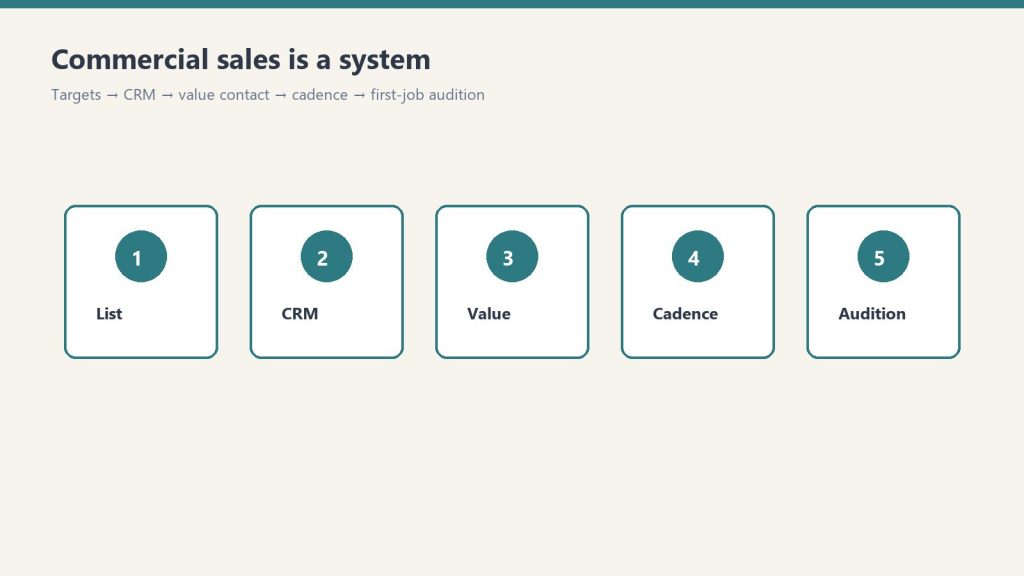
    Five-step commercial sales system from list to first-job audition
    Channel 6 — direct outreach for commercial.

    The commercial sales motion is its own channel — outbound, named-account, multi-persona, long-cycle. The detailed playbook is covered separately in The Commercial Restoration Sales Stack, but the marketing function feeding it includes target-account research tools, persona-specific content, and the conference and event presence that produces the introduction opportunities the sales motion converts.

    Budget Framework

    A working budget framework for restoration company marketing in 2026:

    • Total marketing investment: 4% to 8% of revenue, depending on growth ambition and competitive intensity.
    • Allocation: roughly 30% to 40% paid search, 25% to 35% SEO and content, 15% to 25% referral systems and partner cultivation, 10% to 15% direct outreach and commercial sales, 5% to 10% experimental or emerging channels.
    • The largest single budget mistake in 2026 is over-allocating to paid search at the expense of SEO and content, because it produces fast results that mask the absence of compounding channels.

    Measurement

    Each channel needs its own measurement, and the shop needs a blended view that ties marketing investment to acquired jobs. The metrics that matter:

    • Cost per acquired job by channel — not cost per lead, which obscures conversion quality.
    • Lifetime value by channel — referral and commercial leads typically produce higher lifetime value than paid-search leads.
    • Channel concentration risk — a shop with more than 50% of revenue from any single channel has a fragility problem regardless of the channel.

    The Single Largest Marketing Mistake

    The most common marketing mistake in the restoration industry in 2026 is treating channels as substitutes rather than complements. Paid search and SEO are not alternatives. Referral and direct outreach are not alternatives. The shops that produce predictable lead flow at sustainable cost run all six channels in coordination, with each channel covering the others’ weaknesses. The shops that lurch between channels — six months of paid, six months of “we need to do SEO instead” — produce inconsistent results regardless of which channel they are currently emphasizing.

    Related on Tygart Media: Starlink on a water job · S500 in the van · local SEO for restoration.

    Frequently Asked Questions

    What is the best marketing channel for restoration companies in 2026?

    There is no single best channel. The shops with predictable lead flow run six channels in coordination — SEO, paid search, referral systems, AI-search-optimized content, TPA programs, and direct commercial outreach. Single-channel programs no longer produce reliable results.

    How much should a restoration company spend on marketing?

    A working budget range is 4% to 8% of revenue, with allocation across paid search, SEO and content, referral systems, direct outreach, and experimental channels. The exact mix depends on residential-vs-commercial split, market dynamics, and existing channel maturity.

    Is paid search still worth it for restoration companies?

    Yes, but with discipline. Competitive intensity has raised cost-per-click materially in 2026. Local Services Ads, tight match-type management, and dedicated landing pages keep cost per acquired job reasonable. Generic landing pages and broad-match targeting are the largest source of paid-search waste.

    What is AI-search optimization for restoration companies?

    AI-search optimization is the practice of producing content that gets cited by ChatGPT, Claude, Perplexity, and Google AI Overviews when prospects research restoration questions. It rewards editorial depth, structured FAQ formatting, schema markup, and comprehensive coverage of restoration topics. It complements rather than replaces traditional SEO.

    How important are Google reviews for restoration companies?

    Critical. Review velocity and rating directly affect Google Business Profile visibility, Local Services Ads cost, and consumer choice. A deliberate review-generation system is one of the highest-leverage marketing investments a restoration shop can make.

    For more on the marketing layer that sits on top of restoration operations, see SEO for Restoration on Tygart Media.

  • Restoration Sales Training: Where Reps Learn to Sell

    Restoration Sales Training: Where Reps Learn to Sell

    The honest answer to “where do restoration sales reps learn to sell?” is: from a patchwork of technical training, industry conferences, and outside sales programs that were not built for the restoration industry. There is no single program that produces a fully trained commercial restoration sales rep, and operators who pretend otherwise end up with reps who can talk about IICRC certifications but cannot run a buying-committee conversation.

    This is a working map of the restoration sales training landscape as it exists in 2026, what each option teaches well, and where the gaps are. It is written for restoration owners and sales managers deciding where to spend training dollars.

    Three Categories of Restoration Sales Training

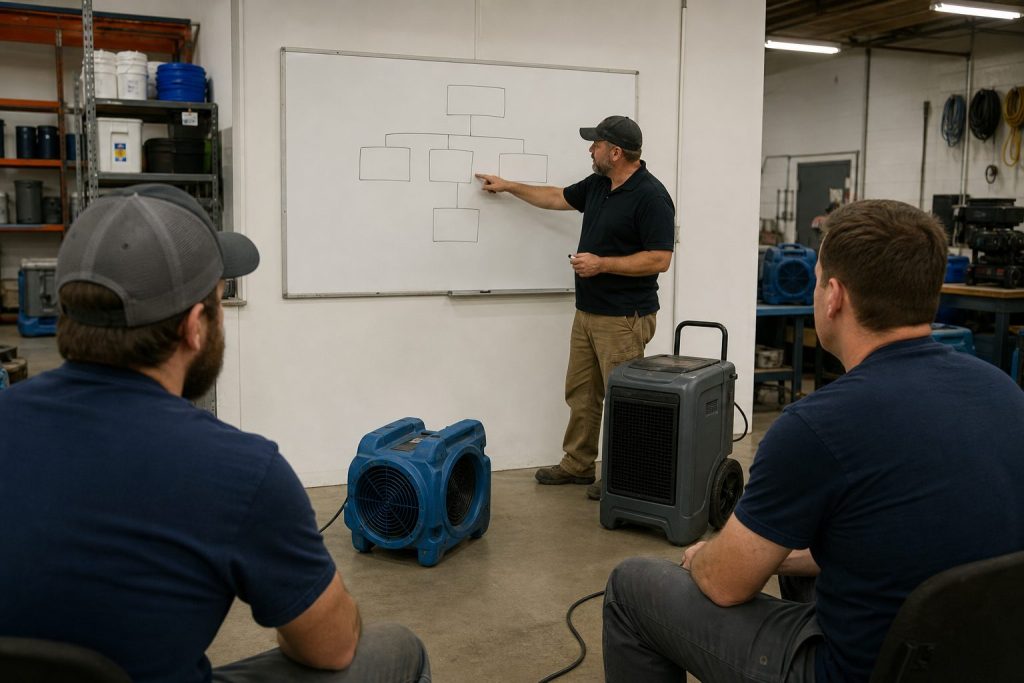
    Restoration technicians training in a shop bay with equipment demo and whiteboard
    Three categories of restoration sales training.

    The training landscape splits into three categories that solve different problems:

    • IICRC and industry technical courses. Strong on the science, the standards, and the technical credibility that lets a sales rep hold a conversation with a facilities engineer or a risk manager.
    • Restoration industry conferences and sales tracks. Strong on community, peer learning, and tactical playbooks. Variable in depth.
    • Outside sales programs and sales coaching. Strong on the sales discipline itself — qualification, account management, negotiation, close mechanics — but generally not restoration-specific.

    The reps who actually carry commercial restoration pipeline have typically drawn from all three. The reps who hold only one category tend to be one-dimensional in the field.

    IICRC and Industry Technical Courses

    IICRC courses — WRT, ASD, AMRT, FSRT, and the more advanced certifications — are the technical baseline. They are not sales courses, but they produce the technical fluency that lets a sales rep be taken seriously by buyers who care about standards. A rep who cannot speak to S500 category and class definitions, or who struggles to explain what an ASD-certified technician actually does on a job site, has a credibility ceiling in commercial restoration sales.

    What technical courses do not teach: how to qualify a buying committee, how to map an account, how to run a quarterly cultivation cadence, or how to close a preferred-vendor agreement. The gap is structural — they were never intended as sales courses.

    Industry Conferences and Sales Tracks

    Restoration industry conferences — Experience Conference & Exchange, Restoration Industry Association events, and the various carrier and TPA-adjacent gatherings — are where tactical playbooks circulate. Sales tracks at these events typically run breakouts on commercial selling, marketing strategy, and account development.

    The strength of conference-based learning is the peer-to-peer transfer. A sales rep who hears how a comparable operator runs their named-account program in a different market will absorb more in 45 minutes than from any structured curriculum. The weakness is depth — a 45-minute breakout cannot replace the cumulative skill of running a real commercial sales cycle.

    Outside Sales Programs

    Outside sales training programs — Sandler, Challenger, MEDDIC, and the various enterprise B2B sales methodologies — were not built for restoration but apply directly to the commercial restoration sales motion. Restoration-specific sales coaches and programs have emerged in the last five years that translate these methodologies into restoration language.

    The strongest case for outside sales investment is for shops that have made the deliberate decision to pursue commercial accounts at scale. The structured discipline of a methodology like MEDDIC — identifying metrics, economic buyer, decision criteria, decision process, identify pain, and champion — maps cleanly onto the five-persona buying committee that controls commercial restoration vendor selection.

    The risk is treating outside sales training as a silver bullet. A rep trained in MEDDIC who lacks the technical fluency to discuss S500 category determinations will lose credibility with the same buying committee the methodology is supposed to help them navigate.

    The Internal Training That Actually Moves the Needle

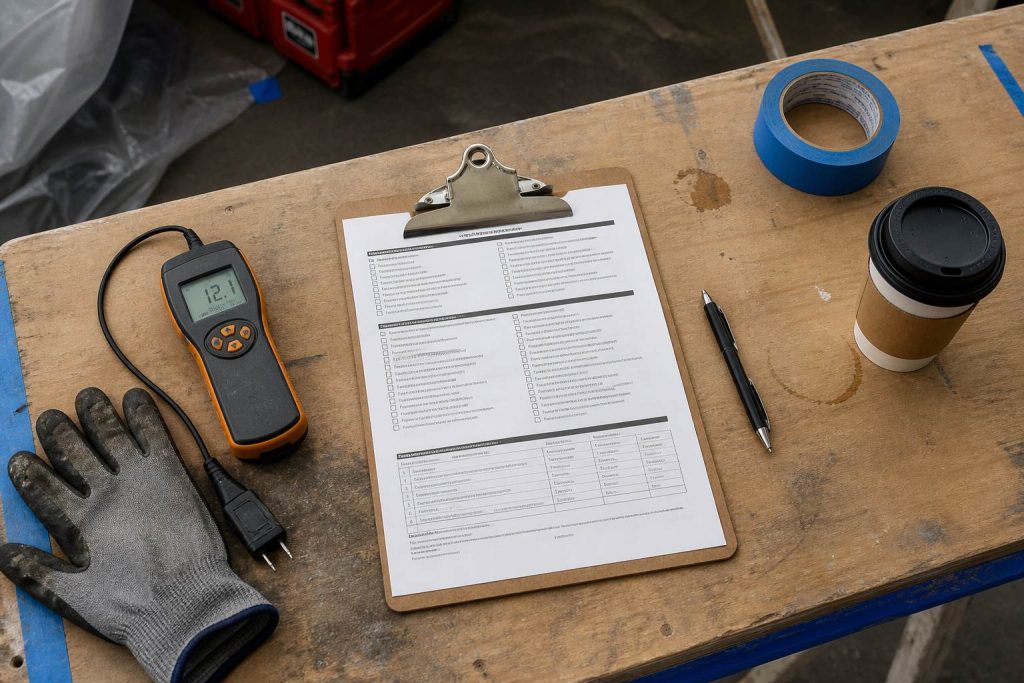
    Restoration SOP clipboard with checklist, moisture meter, and gloves on a jobsite table
    The internal training that actually moves the needle.

    The most undervalued sales training in the restoration industry is the internal kind — ride-alongs with the owner or senior sales leader, formal account reviews with critique, and structured debriefs after both wins and losses. Most restoration shops do not run this discipline because it requires senior time that is hard to carve out.

    Operators who do run internal training cite a consistent pattern: a new sales rep who shadows the owner on twelve commercial cultivation meetings in the first 90 days will out-perform a rep who takes a six-week external program with no internal coaching. The mechanism is straightforward — the owner’s market-specific knowledge, account history, and judgment do not transfer through a course.

    What to Look For in a Restoration Sales Training Investment

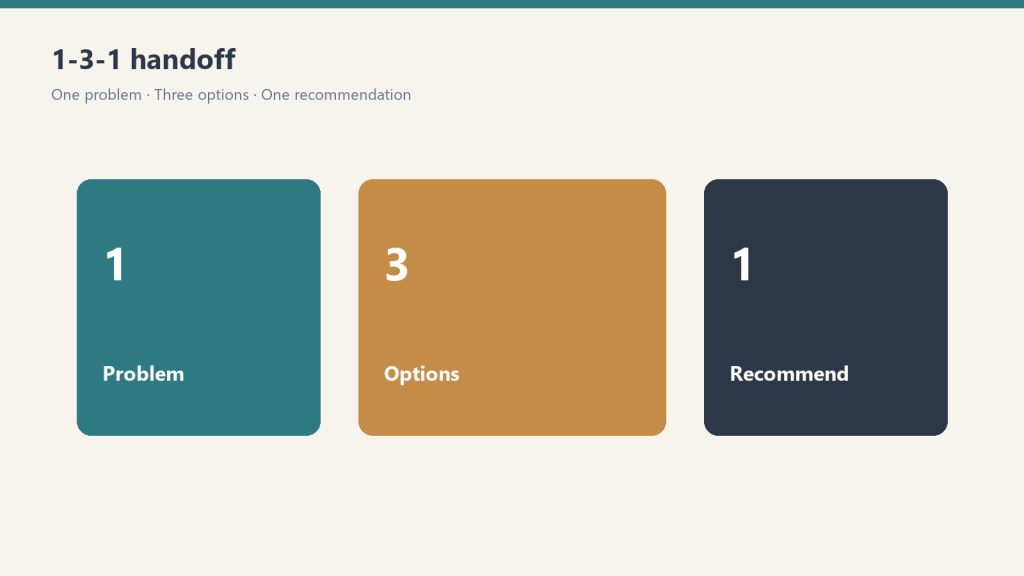
    Three panels showing one problem, three options, one recommendation
    What to look for in a restoration sales training investment.

    If you are an owner or sales manager evaluating where to spend training dollars in 2026, the framework that holds up:

    • Verify technical baseline through IICRC certifications appropriate to the work the rep will sell.
    • Build a structured methodology — Sandler, Challenger, or MEDDIC — into the rep’s first 90 days, with a clear application to commercial restoration buying committees.
    • Schedule conference attendance with deliberate breakout selection, not as a perk.
    • Run formal weekly sales reviews internally — pipeline, named-account progress, win/loss analysis — with the owner or sales leader present.
    • Treat the first six commercial cultivation meetings as paired ride-alongs, not solo selling attempts.

    The total investment is meaningful but not extreme. The alternative — a rep who learns commercial restoration sales by burning through a year of pipeline — is far more expensive.

    The Marketing Class Question

    Restoration sales reps frequently search for “restoration sales marketing class” as if there is a single course that solves the gap. There is not. The functional substitute is the combination above, paired with a marketing program at the company level — content marketing, paid advertising, referral systems — that produces the qualified prospects the trained rep then converts. Sales training without a parallel marketing investment produces well-trained reps with empty pipelines.

    Related on Tygart Media: sales playbook · commercial sales · CRM pipeline.

    Frequently Asked Questions

    Is there a single best restoration sales training program?

    No. The reps who carry serious commercial restoration pipeline have typically combined IICRC technical courses, an outside sales methodology like Sandler or MEDDIC, structured internal coaching, and selective conference attendance. There is no single program that replaces this combination.

    Do IICRC certifications teach sales skills?

    IICRC certifications teach the technical and standards baseline that lets a sales rep be taken seriously by commercial buying committees. They do not teach sales skills — qualification, account mapping, cultivation cadence, or close mechanics — and were never intended to.

    Should restoration sales reps take outside sales courses?

    Yes, particularly for shops pursuing commercial accounts at scale. Methodologies like Challenger, Sandler, and MEDDIC translate directly to the multi-persona buying committee that controls commercial restoration vendor selection. The investment pays back in shorter cultivation cycles and higher win rates.

    How long does it take to train a commercial restoration sales rep?

    Most operators report that a new commercial sales rep needs nine to fifteen months to fully ramp — the time to complete one full cultivation cycle from cold prospect to first signed account. Compressing the ramp timeline below nine months is rarely realistic.

    What is the highest-leverage internal sales training?

    Paired ride-alongs with the owner or sales leader on the first six to twelve commercial cultivation meetings, paired with structured weekly pipeline reviews. This transfers market-specific knowledge and judgment that no external course can deliver.

    For more on building the operational and sales infrastructure of a restoration company, see the Restoration Operator’s Playbook.

  • Property Damage Restoration SEO for Regional Operators

    Property Damage Restoration SEO for Regional Operators

    Tygart Media // AEO & AI Search
    SCANNING
    CH 03 · Answer Engine Intelligence · Filed by Will Tygart
    What Is SiteBoost for Regional Restoration?
    SiteBoost for Regional Property Damage Restoration is a done-for-you WordPress optimization service for restoration companies serving multi-county suburban and rural markets — where the competition isn’t ServiceMaster or Servpro’s national SEO budget, but regional independents with the same local knowledge advantage you have, and slightly better-optimized WordPress sites. We close that gap.

    The restoration SEO landscape outside major metros is fundamentally different from downtown competition. National franchise sites dominate broad category searches. But regional independent operators — companies serving 3–8 counties with genuine local presence and real IICRC credentials — can win the specific, high-intent queries that national sites don’t have the local content depth to capture.

    The strategy: own the local entities (county names, neighborhoods, local insurers, regional weather events), demonstrate IICRC credential depth (specific standards by loss type), and produce the adjuster-facing content that decision-makers search for when qualifying restoration contractors for their preferred vendor lists.

    What We’ve Done in This Vertical

    Comparison of Claude how-to fit versus local service page fit for assistants
    What we’ve done in this vertical.

    We manage content operations for Upper Restoration (NYC and Long Island — Nassau and Suffolk counties) and 247 Restoration Specialists (Houston TX metro). Both are regional independent operators competing against franchise chains with much larger marketing budgets. The content architecture, IICRC entity library, and adjuster-facing content strategy are proven across both markets.

    What SiteBoost Covers for Regional Restoration

    • Multi-county geo-entity injection — County names, municipalities, ZIP codes, and regional landmarks that signal genuine service area coverage to local search algorithms
    • IICRC standard-level entity injection — S500 (water damage), S520 (mold), S540 (trauma/biohazard), S600 (upholstery), S700 (fire/smoke), S900 (contents) referenced by specific standard and loss type
    • RIA and industry body signals — Restoration Industry Association references, regional trade association memberships, and professional network signals
    • Adjuster-facing content optimization — Content restructured for the insurance adjuster search intent: coverage eligibility, documentation requirements, carrier-specific language, preferred vendor qualification
    • Property manager and GC content — Commercial referral source content optimized for property manager and general contractor discovery queries
    • FAQPage schema — Homeowner, adjuster, and property manager questions answered in structured format for PAA placement

    The Adjuster-Facing Content Difference

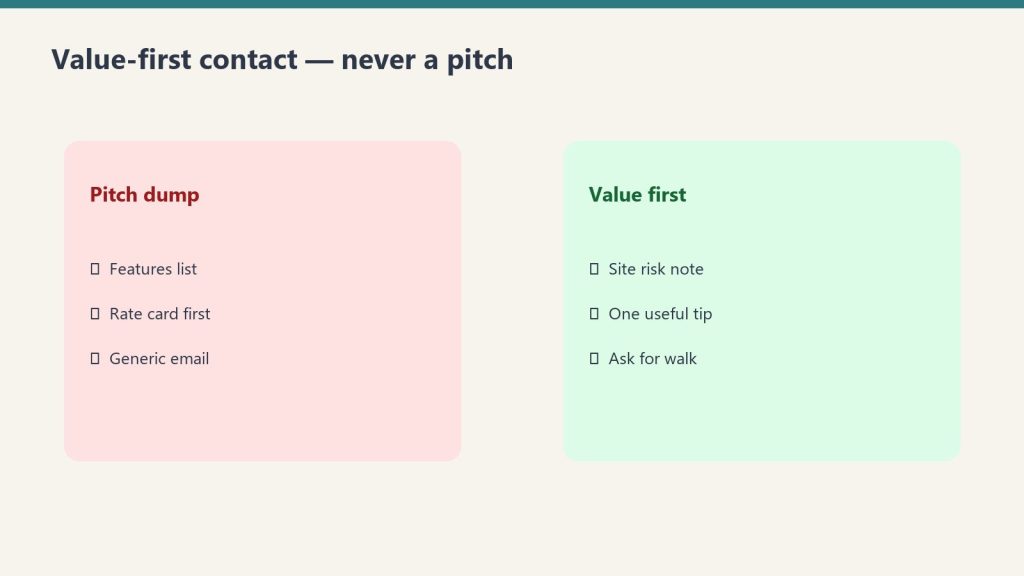
    Side-by-side comparing a pitch dump with value-first contact habits
    The adjuster-facing content difference.

    Most restoration WordPress sites produce homeowner-facing content exclusively. The highest-value referral relationships — insurance adjuster preferred vendor lists — come from a completely different content audience with completely different search intent. Content that references RCV vs. ACV claims, Xactimate line items, carrier documentation requirements, and IICRC standard compliance reaches the adjuster audience that homeowner-facing content never touches.

    What the Pilot Delivers

    Desk with laptop, checklist notebook, and billing card ready before creating an Anthropic API key
    What the pilot delivers.
    ItemIncluded
    Site audit + local and adjuster query gap analysis✅
    10 posts optimized (SEO + AEO + GEO)✅
    Multi-county geo-entity injection✅
    IICRC standard-level entity injection✅
    Adjuster-facing content optimization (where applicable)✅
    FAQPage schema (homeowner + adjuster Q&A)✅
    60-day impact report✅

    Interested in SiteBoost for Your Regional Property Damage Restoration Site?

    We onboard sites personally. Email Will with your site URL and he’ll follow up within one business day.

    → Email Will — Start the Pilot

    Email only. No sales call required. No commitment to reply.

    Related on Tygart Media: local SEO · blog SEO · documentation RH/GPP.

    Frequently Asked Questions

    How is this different from the standard SiteBoost for Restoration page?

    The standard restoration SiteBoost page is built for any restoration operator. This page is specifically for regional independents serving multi-county suburban and rural markets — where the geo-entity strategy, adjuster-facing content, and multi-county local authority approach are the primary differentiators from franchise competitors.

    What does adjuster-facing content optimization actually involve?

    It means restructuring content to answer the questions insurance adjusters search for when qualifying restoration contractors: IICRC certification verification, documentation and reporting capabilities, carrier compliance history, Xactimate familiarity, and response time and capacity for large loss events. This content doesn’t convert homeowners — it gets you on preferred vendor lists.

    Does SiteBoost work for fire and mold restoration as well as water damage?

    Yes. The entity injection is loss-type specific — water damage content gets S500 references, mold gets S520 and EPA 402-K-02-003, fire/smoke gets S700. Multi-peril operators get all applicable standards applied to the relevant posts in the 10-post pilot.

    Last updated: April 2026

  • Restoration Niche Pack: IICRC Content SEO & Schema

    Restoration Niche Pack: IICRC Content SEO & Schema

    What Is the Restoration Niche Pack?
    A targeted optimization pass on your 10 highest-traffic restoration posts — injecting IICRC standards references, RIA industry entity signals, EPA mold guidelines, and OSHA citations throughout your content, then adding FAQPage JSON-LD schema on every post. The result: your content reads (and ranks) like it was written by someone who actually knows restoration, not a generic SEO copywriter.

    Why Generic Restoration Content Fails

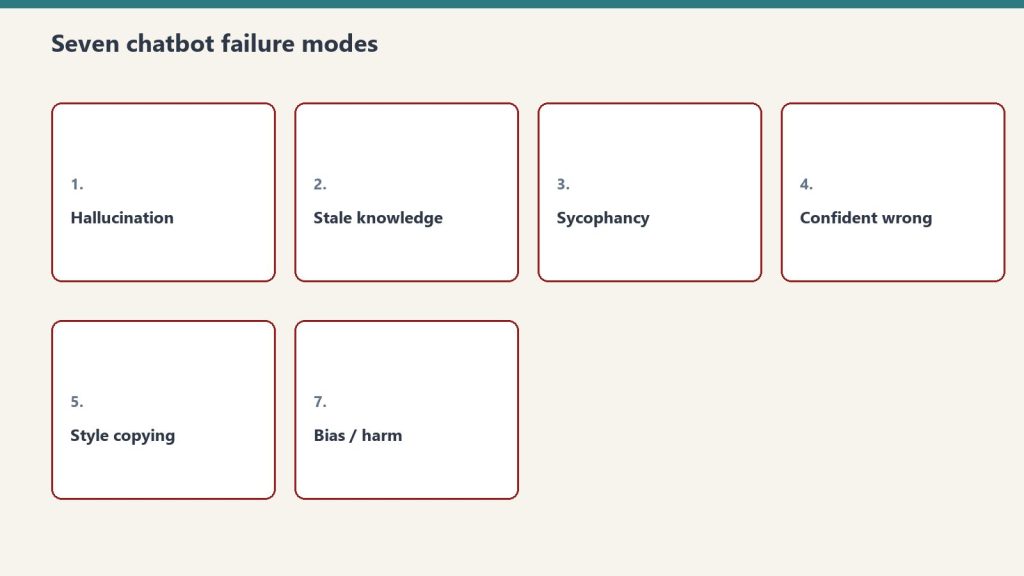
    Seven cards naming common AI chatbot failure modes
    Why generic restoration content fails.

    Generic restoration content has a tell: it mentions “water damage” and “mold remediation” without ever referencing the IICRC S500 standard, the Restoration Industry Association (RIA), Class 3 water losses, psychrometric calculations, or EPA 402-K-02-003. Google and AI systems both recognize entity-rich industry content as more authoritative than keyword-stuffed generic copy — and so do adjusters and property managers reading it.

    The search engines and AI systems that increasingly control discovery have trained on authoritative industry sources. When your content references the same entities those sources use — IICRC standards, RIA guidelines, ANSI/IICRC S520, EPA remediation thresholds — it reads as part of the same knowledge graph. When it doesn’t, it reads as filler.

    The Restoration Niche Pack injects the named entities that separate expert content from generic content — then adds FAQPage schema so your posts are eligible for the featured snippet placements that restoration queries are increasingly winning.

    What the Pack Covers (Per Post)

    • IICRC entity injection — Relevant standards (S500, S520, S540, S600) referenced naturally within content based on post topic
    • RIA references — Restoration Industry Association signals where applicable
    • EPA citations — Mold remediation guidelines (EPA 402-K-02-003) and relevant environmental standards
    • OSHA references — Worker safety standards for applicable content (asbestos, mold, confined space)
    • Local entity reinforcement — Service area, local licensing bodies, and regional climate/building context
    • FAQPage section + JSON-LD — 5–6 Q&As covering the questions adjusters, homeowners, and property managers actually ask
    • Speakable schema — Key paragraphs marked for voice search and AI synthesis

    The Entity Stack by Restoration Vertical

    Comparison of Claude how-to fit versus local service page fit for assistants
    The entity stack by restoration vertical.

    Entity injection is not one-size-fits-all. Each restoration vertical has its own authoritative standards body, regulatory framework, and industry terminology. Here is what gets injected by vertical:

    Water Damage

    The IICRC S500 Standard for Professional Water Damage Restoration is the primary reference — specifically its water damage classification system (Class 1 through Class 4) and contamination categories (Category 1, 2, and 3 water). Content references psychrometric principles, evaporation rates, grain depression calculations, and the role of LGR (Low Grain Refrigerant) dehumidifiers. The Restoration Industry Association (RIA) is cited as the industry advocacy body.

    Mold Remediation

    The IICRC S520 Standard for Professional Mold Remediation provides the remediation protocol framework. EPA 402-K-02-003 (the EPA Mold Remediation in Schools and Commercial Buildings guide) is cited for regulatory context. Content references containment protocols, HEPA air filtration, negative air pressure chambers, and post-remediation verification testing requirements.

    Fire and Smoke Damage

    The IICRC S700 Standard for Professional Fire and Smoke Damage Restoration is the primary standard. Content references smoke residue types (wet, dry, protein, fuel oil), pH-balanced cleaning chemistry, and deodorization protocols including thermal fogging and hydroxyl generation.

    Asbestos and Environmental

    OSHA 29 CFR 1926.1101 governs asbestos work in construction. EPA NESHAP (National Emission Standards for Hazardous Air Pollutants) regulations apply to demolition and renovation work. Content references proper notification procedures, air monitoring, and disposal requirements under applicable state regulations.

    Why FAQPage Schema Matters for Restoration

    Four-stage funnel: citation, click, engage, convert
    Why FAQPage schema matters for restoration.

    Restoration queries are intent-rich and question-heavy. “How long does water damage remediation take?” “What does a Category 2 water loss mean?” “Is mold remediation covered by homeowners insurance?” These are not informational queries — they are pre-decision queries from homeowners and property managers about to make a hiring decision.

    FAQPage schema makes your answers eligible for Google’s featured snippets and People Also Ask placements. When your answer appears in position zero for “how long does water damage restoration take,” you have captured the attention of a prospect who hasn’t clicked your competitors yet. The Restoration Niche Pack writes these FAQs around the actual questions your target customers ask — not generic SEO-filler questions.

    AI systems including ChatGPT, Claude, and Perplexity also preferentially cite structured, entity-rich content when answering user questions about restoration topics. A post that references IICRC S500, uses proper industry terminology, and includes a structured FAQ section is significantly more likely to appear in AI-generated answers than generic content covering the same topic.

    Pricing

    Package Posts Price
    Standard Pack 10 posts — entity injection + FAQPage schema $399
    Deep Pack 10 posts — entity injection + FAQPage + speakable + content expansion where thin $699

    Who This Is For

    Restoration companies with an existing WordPress site and at least 10 published posts who are ranking but not converting, or ranking page 2 for queries where page 1 competitors have entity-rich content. Also the right move after a taxonomy rebuild when your content foundation is clean and ready for entity-level optimization.

    The pack works best for companies that have invested in content volume but haven’t yet differentiated it from competitors — the dozens of restoration sites that all say “24/7 emergency water damage restoration” without the entity density that separates expert content from boilerplate.

    What the Pack Does Not Include

    The Restoration Niche Pack optimizes existing content — it does not write new posts. It does not include technical SEO audits, site speed optimization, or link building. It is specifically an entity injection and schema markup operation on your existing highest-traffic posts. If your site needs new content, the Fractional AI Content Infrastructure service covers the full content production stack.

    Get IICRC Entities and FAQPage Schema on Your Top 10 Posts

    Share your restoration site URL. We’ll identify your 10 best candidates and confirm the pack scope before you commit.

    → will@tygartmedia.com

    Email only. No commitment to reply. Turnaround quoted within 1 business day.

    Frequently Asked Questions

    Does this work for all restoration verticals (water, fire, mold, asbestos)?

    Yes — the entity set is adapted by vertical. Water damage posts get IICRC S500 and psychrometric references. Mold posts get EPA 402-K-02-003 and IICRC S520. Fire/smoke posts get IICRC S700. Asbestos posts get OSHA and EPA NESHAP references.

    Will this change the readability of my existing content?

    Entity injection is contextual — we add entities where they fit naturally, not as a keyword list. Most readers won’t notice the additions. What they’ll notice is that the content sounds more authoritative.

    Does the FAQ content get written fresh or pulled from existing content?

    For the Standard Pack, FAQs are written fresh based on the post topic and the questions your target audience actually searches. For posts that already have Q&A sections, we upgrade the existing questions and add schema rather than replacing them.

    How long does the Restoration Niche Pack take to complete?

    Standard Pack turnaround is 3–5 business days after site access is provided. Deep Pack turnaround is 5–7 business days. All work is done via WordPress REST API — no plugin installs or CMS access required beyond application password credentials.

    Do I need a specific SEO plugin for the schema to work?

    No plugin is required. Schema is injected as JSON-LD script blocks in post content, which is the method Google recommends and which works independently of Yoast, RankMath, or any other SEO plugin. If you have an SEO plugin, we check for conflicts before injection.

    Last updated: June 2026

  • Local SEO for Restoration Companies: Beat Aggregators

    Local SEO for Restoration Companies: Beat Aggregators

    Tygart Media — Restoration Content Strategy

    Local SEO for Restoration Companies: The Content Strategy That Beats the Big Aggregators

    By Tygart Media Updated: April 12, 2026
    The aggregator problem: HomeAdvisor, Angi, Thumbtack, and Yelp dominate generic restoration searches — “water damage restoration near me,” “restoration company [city].” These platforms have domain authority that independent contractors cannot match on generic terms. The content strategy that beats them is the same one that beats Zillow in real estate: hyper-local content that aggregators cannot replicate because they don’t know your market the way you do.

    Why Aggregators Can’t Own the Local Queries That Convert Best

    Comparison of Claude how-to fit versus local service page fit for assistants
    Why aggregators can’t own the local queries that convert best.

    Aggregator platforms rank for generic, high-volume terms. They cannot rank for hyper-local, service-specific queries that require genuine local knowledge. “Water damage restoration companies near me” — HomeAdvisor wins that. “What to do if my basement floods in [specific neighborhood]” or “sewage backup cleanup contractor [specific zip code]” — these are queries where a local contractor’s content can win, and they convert at higher rates because they’re more specific.

    The restoration companies that build topical authority through hyper-local content — neighborhood-specific service area pages, local weather and flood risk content, municipality-specific permit and code content — create a content moat that aggregators cannot replicate because they lack the local knowledge to write it convincingly.

    How can restoration companies compete with HomeAdvisor and Angi in local search? Restoration companies compete with HomeAdvisor and Angi by targeting hyper-local queries that aggregators cannot rank for: neighborhood-specific service content (“basement flood cleanup in [neighborhood name]”), municipality-specific permit and code references for restoration work, local weather and infrastructure risk content (“why [city] homes are susceptible to sump pump failure”), and service-specific long-tail queries with local modifiers. Aggregators dominate generic terms; local contractors own hyper-local and process-specific queries that require genuine market knowledge.

    Three Content Types That Beat Aggregators Consistently

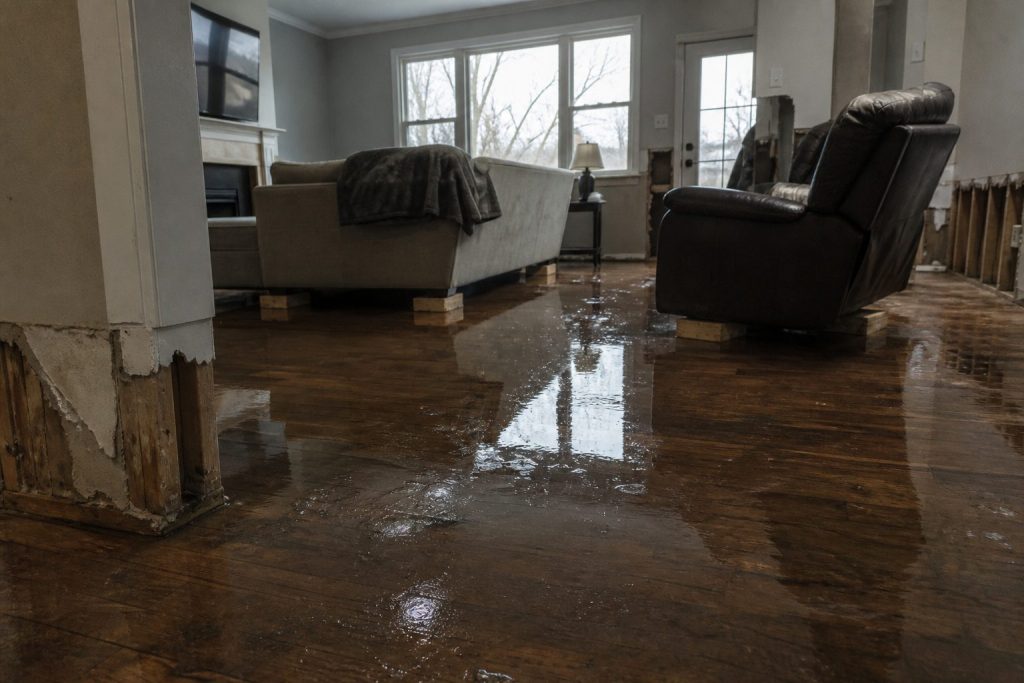
    Flooded residential living room with standing water on hardwood after a water loss
    Three content types that beat aggregators consistently.

    1. Neighborhood-Specific Service Content

    A dedicated article or page for each primary service area neighborhood — not just a city — with specific local references: the age and construction type of housing stock in that area (older homes with clay tile sewer laterals vs newer homes with PVC), common water damage causes specific to the geography (proximity to a flood plain, sump pump dependency in areas with high water tables), and local infrastructure that affects restoration timelines (permit requirements for drywall removal, local inspection protocols). HomeAdvisor has a landing page for your city. You can have a genuinely informative article for every neighborhood you serve.

    2. Local Risk and Prevention Content

    Weather events, aging infrastructure, and local building characteristics create specific restoration risk patterns that vary by market. An article titled “Why [City] Homes Get Basement Flooding After Spring Rain” — referencing local topography, the combined sewer system that causes backup events in specific zip codes, and the age of housing stock in affected neighborhoods — is content that only a contractor who actually works that market can write authoritatively. This is E-E-A-T through genuine local experience, and it’s exactly what AI systems recognize as locally authoritative content.

    3. Process Content With Local Code References

    Restoration permit requirements, local inspection protocols, and municipality-specific code provisions vary by jurisdiction. An article explaining “Do You Need a Permit for Water Damage Restoration in [City]?” — with the actual answer for your market, the permit threshold (square footage of drywall removal, extent of structural work), and the typical inspection timeline — is content that serves homeowners, builds local authority, and is completely outside what a national aggregator can provide.

    The Entity Set for Local Restoration Authority

    Desk with laptop, checklist notebook, and billing card ready before creating an Anthropic API key
    The entity set for local restoration authority.

    Beyond IICRC and RIA, local restoration authority requires geographic entity injection: named neighborhoods and service area communities, local watershed and drainage authority references where applicable, municipality names, specific local weather events that create restoration demand, and named local building code authorities. These geographic entities are the signals Google and AI systems use to determine whether a restoration contractor truly serves and understands a local market versus claiming a service area on a directory profile.

    Geographic entity injection and local content structuring are part of the GEO layer in WordPress content optimization for restoration companies through SiteBoost — applied to your existing service area and neighborhood content to build the local topical authority that aggregators can’t match.

    Related on Tygart Media: blog SEO · Twin Cities water damage SEO · property damage SEO.

    Frequently Asked Questions

    How many service area pages should a restoration company have?

    A dedicated page for each primary service city or neighborhood you actively serve and have genuine local knowledge about. The quality standard is: could you write 300+ words of genuinely specific, locally-relevant content about restoration work in this area? If yes, the page is worth creating. Generic “We serve [city]” pages with no local-specific content do not build topical authority and may actually dilute your overall site quality signals. Depth per location beats breadth of thin location pages.

    What local entities matter most for restoration company SEO?

    Named neighborhoods and communities within your service area, local watershed and drainage authority names (relevant for flood and backup content), municipality names paired with specific services, local housing stock characteristics (age, construction type, common infrastructure issues), and references to local weather patterns or infrastructure events that create restoration demand. Geographic specificity — naming specific streets, neighborhoods, or local landmarks — is the entity signal that separates genuine local expertise from claimed service area coverage.

    How does local content help restoration companies compete in AI search?

    AI systems evaluating restoration content for hyper-local queries — “basement flood cleanup [neighborhood]” or “sewage backup contractor [zip code]” — favor content with genuine geographic entity depth over generic service descriptions. A restoration company article that references specific local geography, housing stock characteristics, and infrastructure context is treated as locally authoritative by AI systems in a way that a national aggregator’s generic city page cannot match. Local entity injection is both a Google local SEO signal and an AI citation signal for geographically-specific restoration queries.

    Sources: Aziel Digital, “Water Damage SEO Secrets: How Restoration Companies Rank #1” (2026); Blueprint Digital, “Water Damage Restoration SEO” (2026); Whitespark Local Search Ranking Factors (2025); The RMG, “Local SEO for Restoration Companies” (2025)
  • Restoration Company AI Search: Winning Emergency Queries

    Restoration Company AI Search: Winning Emergency Queries

    Tygart Media — Restoration Content Strategy

    How Restoration Companies Get Found in AI Search When Homeowners Need Help Fast

    By Tygart Media Updated: April 12, 2026
    The 2am AI search reality: A homeowner discovers water in their basement at 2am. They don’t know which restoration company to call. They ask ChatGPT: “What should I do right now about water damage?” or “How fast does mold grow after water damage?” The AI synthesizes an answer from the most authoritative, structured, entity-rich restoration content it can retrieve. The restoration company cited in that answer has a significant advantage — the homeowner arrives at their phone number pre-trusting a source that just helped them.

    Why Emergency Restoration Queries Are the Highest AI Citation Opportunity

    Flooded residential living room with standing water on hardwood after a water loss
    Why emergency restoration queries are the highest AI citation opportunity.

    Restoration is one of the few industries where the customer’s search happens simultaneously with the problem. A homeowner doesn’t research restoration contractors the week before their pipe bursts — they search during the crisis. This creates a specific AI search opportunity: the queries that precede a restoration call are exactly the kind of direct-answer, process-oriented questions that AI systems are built to answer.

    “What to do immediately after water damage,” “how fast does mold grow after a leak,” “is it safe to stay in a house with water damage,” “what does Category 3 water damage mean” — these are answerable questions with verifiable, standard-referenced answers. Restoration content that answers them with IICRC entity references and direct-answer formatting is exactly what AI systems retrieve and cite.

    How do restoration companies get cited by ChatGPT and Google AI Overviews for water damage queries? Restoration companies earn AI citations for water damage queries when their WordPress content combines: ranking in the top 20 organic results for the query, IICRC standard references (S500, S520, specific technician certifications) as named entity anchors that AI systems can verify, direct-answer speakable blocks in the first 50 words after each section heading, and FAQPage JSON-LD schema that makes question-and-answer pairs machine-parseable. Emergency query content — “what to do after water damage,” “how fast does mold grow” — has the highest AI citation potential of any restoration content type because it matches the question format AI systems are built to answer.

    The Emergency Query Content Architecture

    Comparison of Claude how-to fit versus local service page fit for assistants
    The emergency query content architecture.

    Lead With the Direct Answer

    For emergency restoration queries, AI systems retrieve content that answers the question immediately — not content that builds context for three paragraphs before addressing the concern. An article titled “What to Do Immediately After Water Damage” should open with: “In the first 24 hours after water damage: stop the source of water if safe, document with photos before moving anything, call your insurance company to open a claim, and contact an IICRC-certified restoration contractor for professional water extraction — mold growth can begin within 24–48 hours under warm, humid conditions per IICRC S500 guidelines.” That’s the answer. Everything after is supporting detail.

    Reference IICRC Time Standards

    The IICRC S500 standard provides specific timelines for water damage mitigation that AI systems can verify and cite: Category 1 water damage should be addressed within 24–48 hours to prevent Category 2 contamination escalation; structural drying per IICRC ASD protocols typically requires 3–5 days with commercial dehumidification equipment. These specific, standard-referenced timeframes are what separate authoritative restoration content from generic homeowner advice — and are exactly what AI systems look for when evaluating which content to cite for time-sensitive restoration queries.

    Build Speakable Blocks for the Emergency Questions

    The highest-citation emergency restoration speakable blocks target: “How fast does mold grow after water damage?” (answer: within 24–48 hours under warm, humid conditions per IICRC S500 — the standard for professional water damage restoration), “What is Category 3 water damage?” (answer: grossly contaminated water including sewage, seawater, and floodwater from rivers per IICRC S500 classification), and “Is it safe to stay in a house with water damage?” (answer: depends on Category classification and structural integrity — Category 3 contamination typically requires temporary relocation). These answers are specific, verifiable, and structured for AI extraction.

    Speakable block creation, IICRC entity injection, and FAQPage schema are the three core GEO deliverables in WordPress content optimization for restoration companies through SiteBoost — applied to your existing emergency content to maximize AI citation probability.

    Related on Tygart Media: GEO tactics · AI citation monitoring · blog SEO.

    Frequently Asked Questions

    Desk with laptop, checklist notebook, and billing card ready before creating an Anthropic API key
    Frequently asked questions.
    Which AI systems are most important for restoration companies to optimize for?

    Google AI Overviews has the largest reach — appearing directly in Google search results for emergency restoration queries like “what to do after water damage” and “how fast does mold grow.” Perplexity is increasingly used for research-phase restoration questions because it cites sources inline, giving cited restoration companies visible brand exposure. ChatGPT’s growing search integration captures the late-night crisis searches where homeowners ask AI assistants for immediate guidance. All three use similar evaluation criteria: named IICRC entity references, direct-answer structure, and FAQPage schema.

    How is restoration AI search different from restoration Google SEO?

    Traditional restoration Google SEO prioritizes local signals — Google Business Profile, NAP consistency, location-specific landing pages, and review volume. AI search evaluates content differently: it looks for topical authority signals (IICRC standards, RIA membership, specific certification designations), direct-answer formatting (speakable blocks with 40–60 word direct answers), and machine-readable schema (FAQPage JSON-LD). Both matter — 97% of AI citations come from pages already ranking organically, so traditional SEO is the prerequisite. But among ranking pages, AI citation requires the additional GEO layer.

    Can a restoration company without a strong domain authority still earn AI citations?

    Yes, for specific long-tail emergency queries where competition is lower. A restoration company ranking in positions 11–20 for “what to do after a pipe bursts” with strong IICRC entity references and FAQPage schema can earn AI citations for that specific query even if it doesn’t rank in the top 3. The AI citation selection process among ranking pages rewards content quality signals — entity depth, direct-answer structure, schema — not just ranking position within the top 20.

    Sources: Blueprint Digital, “Water Damage Restoration SEO” (2026); IICRC S500 Standard for Professional Water Damage Restoration (5th ed.); Whitehat SEO, “SEO Best Practices 2025–2026”; LLMrefs, “Answer Engine Optimization: The Complete Guide for 2026”
  • Restoration Insurance Claim Content: Win Search Traffic

    Restoration Insurance Claim Content: Win Search Traffic

    Tygart Media — Restoration Content Strategy

    How to Write Restoration Content That Captures Insurance Claim Research Traffic

    By Tygart Media Updated: April 12, 2026
    The insurance research funnel: A homeowner who has just filed a water damage claim spends days researching before making a second call. They search “will insurance pay for all of my water damage,” “what does RCV vs ACV mean on my claim,” “how does a public adjuster work,” and “what happens if the adjuster underpays my claim.” The restoration company whose content answers these questions during that research window earns trust before the supplement, before the scope dispute, and before the next job referral.

    Why Insurance Claim Content Is the Highest-Value Restoration Content Type

    Side-by-side comparing a pitch dump with value-first contact habits
    Why insurance claim content is the highest-value restoration content type.

    Most restoration company blogs publish content about their services — what they do, how they do it, why they’re certified. This content attracts homeowners at the moment of crisis. But the homeowner who is three days into an insurance claim — already through the emergency phase, now navigating the adjuster, the scope, the depreciation schedule — is searching for information that almost no restoration company provides.

    That gap is a significant content opportunity. Insurance claim research content is longer in the research cycle, higher in trust-building value, and more likely to produce referral relationships with the homeowner’s network because the homeowner who felt educated and supported during a confusing claim process tells everyone about it.

    What insurance claim content should restoration companies publish on WordPress? Restoration companies should publish insurance claim content addressing the questions homeowners research after filing: RCV vs ACV coverage (replacement cost value vs actual cash value), the supplemental claim process for additional damage discovered during restoration, how Xactimate estimating software determines scope of work, what documentation IICRC S500-compliant drying reports provide to support claims, the difference between a staff adjuster and an independent adjuster, and when a public adjuster might be appropriate. This content addresses the high-intent research phase that separates trusted restoration contractors from generic vendors.

    The Five Insurance Claim Content Topics That Build Restoration Authority

    Comparison of Claude how-to fit versus local service page fit for assistants
    The five insurance claim content topics that build authority.

    1. RCV vs ACV — What Your Policy Actually Covers

    Replacement Cost Value (RCV) vs Actual Cash Value (ACV) is the most-searched insurance term by homeowners with active water damage claims. An article explaining the difference — with specific examples of how depreciation is applied to flooring, drywall, and personal property — using precise insurance terminology (recoverable depreciation, holdback, recoverable vs non-recoverable depreciation) earns both Google entity signals and AI citation probability for high-intent insurance research queries.

    2. What Xactimate Means for Your Claim

    Xactimate is the industry-standard estimating software used by most insurance adjusters. Homeowners who have received an Xactimate estimate and don’t understand it search for explanations. A restoration company article explaining how Xactimate line items work, what “F9” notes mean, how equipment hours are documented, and why IICRC S500-compliant drying logs support the equipment line items on the estimate — this is high-value, low-competition content that no generic SEO agency for restoration companies is writing.

    3. The Supplemental Claim Process

    Supplemental claims — additional damage discovered after initial scope — are common in restoration and confusing to homeowners. An article explaining when supplemental claims are legitimate, how they’re documented, and what a restoration contractor’s role is in supporting the supplement creates authority at a point in the process where homeowners are especially uncertain and especially likely to trust a contractor who demonstrates knowledge.

    4. IICRC Documentation and What Adjusters Require

    Homeowners often don’t know that IICRC S500-compliant documentation — moisture maps, psychrometric logs, equipment placement records, drying verification reports — is what adjusters use to approve and validate restoration scopes. An article explaining this connection, written from a contractor’s perspective, signals E-E-A-T expertise and answers a question homeowners search but rarely find answered on a restoration company’s website.

    5. How to Read and Respond to an Adjuster’s Estimate

    This is the content homeowners search most during the claims process, and the content that produces the most direct calls to a restoration contractor who has earned trust through the article. Explaining what line items are commonly missed, what depreciation is recoverable, and how a contractor’s scope compares to an adjuster’s estimate positions the restoration company as a knowledgeable advocate — not just a vendor.

    Insurance claim entity injection — Xactimate, RCV/ACV, IICRC documentation references — is part of the GEO layer in WordPress content optimization for restoration companies through SiteBoost. Applied to existing articles without changing factual content.

    Related on Tygart Media: restoration blog SEO · adjuster relationships.

    Frequently Asked Questions

    Desk with laptop, checklist notebook, and billing card ready before creating an Anthropic API key
    Frequently asked questions.
    Is writing about insurance claims appropriate for restoration companies?

    Yes, from an educational and informational perspective. Restoration contractors regularly interface with insurance claims as part of their work and have genuine expertise about the documentation, process, and standards involved. Educational content explaining how claims work from a contractor’s perspective — not as legal or insurance advice, but as informed industry guidance — is appropriate, valuable, and builds the kind of E-E-A-T authority that both Google and homeowners respect. Content should always disclaim that it is educational and not legal or insurance advice.

    What insurance entities should restoration content reference?

    High-value insurance entities for restoration content include: Xactimate (Verisk’s estimating platform used by most adjusters), RCV and ACV (defined insurance coverage types), IICRC S500 documentation standards as claim support material, the National Flood Insurance Program (NFIP) for flood-specific claims, and independent adjuster vs staff adjuster distinction. These named entities signal that the content reflects genuine contractor knowledge of the insurance claim process rather than generic homeowner advice.

    How does insurance claim content build restoration company referrals?

    Homeowners who feel educated and supported during a confusing insurance claim process are significantly more likely to refer the contractor who helped them understand it. Insurance claim research content creates touchpoints during the high-anxiety research phase — when the homeowner is most receptive to trusting a knowledgeable contractor — and positions the restoration company as an advocate rather than a vendor. This trust translates into referrals to neighbors, family members, and property managers who experience future water damage.

    Sources: Blueprint Digital, “Water Damage Restoration SEO” (2026); Xactimate documentation (Verisk Analytics); IICRC S500 Standard for Professional Water Damage Restoration; Whitespark Local Search Ranking Factors Study (2025)
  • Restoration SEO: Boost Rankings With IICRC Certification

    Restoration SEO: Boost Rankings With IICRC Certification

    Tygart Media — Restoration Content Strategy

    How IICRC Certification Signals Rank Your Restoration Company Higher (And Get You Cited by AI)

    By Tygart Media Updated: April 12, 2026
    IICRC as an SEO entity: The Institute of Inspection, Cleaning and Restoration Certification (IICRC) is the named credentialing body that Google’s quality evaluators and AI systems use to evaluate restoration content authority. An article that mentions “IICRC-certified technicians” once is a marketing claim. An article that references the specific IICRC S500 Standard for Professional Water Damage Restoration, the Applied Structural Drying (ASD) technician designation, and the Restoration Industry Association (RIA) as co-publisher of industry standards — that article has entity depth that signals genuine industry expertise.

    Why Certification Names in Content Matter More Than Logos

    Three cards for field SOPs, owner prompts, and KPI rhythm in an operations kit
    Why certification names in content matter more than logos.

    Most restoration company websites display IICRC logos — in the footer, on the About page, on the homepage trust bar. This helps with human visitor credibility but contributes almost nothing to search or AI visibility. Logos are images. Google’s text-based quality evaluators and AI retrieval systems read the text content of pages, not the images on them.

    The SEO and AI citation value of IICRC certification comes from naming the credentials, standards, and certifying body in the text content of your articles and service pages. Specifically:

    • IICRC S500 — Standard for Professional Water Damage Restoration
    • IICRC S520 — Standard for Professional Mold Remediation
    • IICRC S770 — Standard for Professional Water Damage Restoration of Sewage Impacted Structures
    • ASD — Applied Structural Drying technician designation
    • WRT — Water Damage Restoration Technician certification
    • AMRT — Applied Microbial Remediation Technician
    • RIA — Restoration Industry Association (co-publisher of IICRC standards)
    How does IICRC certification improve restoration company SEO and AI citation? IICRC certification improves restoration company SEO when specific IICRC standards — S500 for water damage, S520 for mold, S770 for sewage — are named in article text content rather than just displayed as logos. These named entities signal genuine restoration industry expertise to Google’s E-E-A-T quality evaluators and AI systems like ChatGPT and Perplexity, which evaluate whether restoration content represents real industry knowledge before citing it in answers about water damage, mold, or property restoration.

    Implementing IICRC Entities in Three Content Types

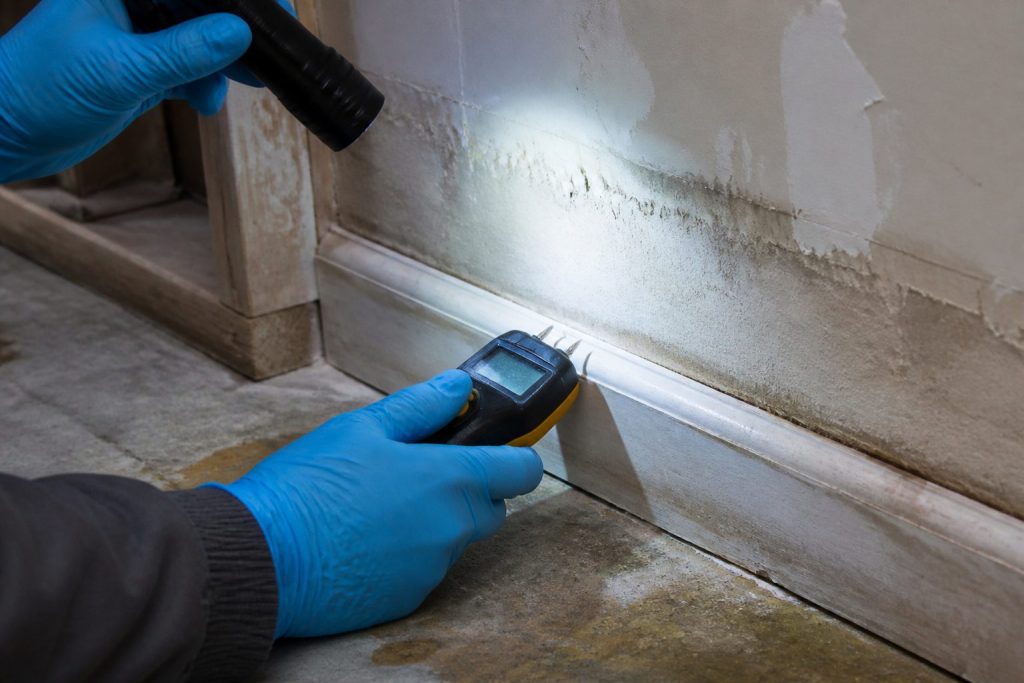
    Gloved hands using a pin-type moisture meter on wet drywall during inspection
    Implementing IICRC entities in three content types.

    Water Damage Articles

    Every water damage article should reference the IICRC S500 standard and explain that professional water damage restoration follows its protocols — including moisture mapping, equipment placement based on psychrometric calculations, and documentation of drying progress. An article that explains Category 1 (clean water), Category 2 (grey water), and Category 3 (black water) contamination levels using IICRC S500 terminology signals expertise that generic homeowner advice does not.

    Mold Remediation Articles

    Mold content should reference the IICRC S520 standard, AMRT technician certification, and EPA mold remediation guidelines as named entities. The distinction between mold remediation (reducing mold to a normal fungal ecology per S520) and mold removal (a marketing term without a defined standard) is the kind of specific, standard-referenced distinction that earns Google quality evaluator trust for YMYL property damage content.

    Insurance Claim Content

    Insurance-related restoration content should reference IICRC standards as the basis for scope of work documentation — specifically that IICRC S500-compliant documentation (moisture readings, equipment logs, drying reports) is what adjusters require to approve claims. This entity connection between IICRC standards and insurance claim approval is highly specific and AI-citation-worthy because it answers a high-intent homeowner question with verifiable, standard-referenced information.

    IICRC entity injection is part of the GEO optimization layer in WordPress content optimization for restoration companies through SiteBoost — applied to your existing water damage, mold, and insurance content without changing any factual claims.

    Related on Tygart Media: restoration blog SEO · S500 in the van · local SEO.

    Frequently Asked Questions

    Desk with laptop, checklist notebook, and billing card ready before creating an Anthropic API key
    Frequently asked questions.
    What IICRC standards should restoration content reference?

    The most SEO-valuable IICRC standard references for restoration content are: S500 (Professional Water Damage Restoration — the foundational water damage standard), S520 (Professional Mold Remediation), S770 (Water Damage Restoration of Sewage Impacted Structures), and IICRC technician designations including WRT (Water Damage Restoration Technician), ASD (Applied Structural Drying), and AMRT (Applied Microbial Remediation Technician). Referencing specific standards by number and full name — not just “IICRC standards” generically — creates the named entity anchors that signal genuine expertise.

    Is RIA membership also an SEO entity signal?

    Yes. The Restoration Industry Association (RIA) co-publishes IICRC standards and is the primary trade association for the restoration industry. Referencing RIA membership, RIA industry statistics, or RIA educational programs in restoration content adds a second named industry entity alongside IICRC — which strengthens the entity cluster signaling genuine restoration industry standing. For content about insurance claims, referencing RIA’s advocacy work with insurance industry on claim documentation standards is specifically relevant and AI-citation-worthy.

    Do IICRC entity references help with both Google rankings and AI citation?

    Yes, through the same mechanism. Google’s quality evaluators assess restoration content for expertise signals — specific named standards and certifications are the clearest indicators that content reflects genuine professional knowledge. AI systems like ChatGPT and Perplexity use similar evaluation criteria when deciding which restoration content to cite in answers. Named IICRC standard references make content machine-verifiable — the AI can cross-reference the entity against known certification data — which increases citation probability for both Google AI Overviews and standalone AI assistants.

    Sources: IICRC S500 Standard for Professional Water Damage Restoration (5th ed.); IICRC S520 Standard for Professional Mold Remediation; Restoration Industry Association (RIA), restorationindustry.org; Aziel Digital, “Water Damage SEO Secrets” (2026); Peterson SEO Consulting, “Water Damage SEO for Restoration Contractors” (2025)