Tag: Restoration SEO

  • Restoration Company Blog SEO: Why Posts Fail to Get Calls

    Restoration Company Blog SEO: Why Posts Fail to Get Calls

    Tygart Media — Restoration Content Strategy

    Why Restoration Company Blog Posts Don’t Generate Calls (And What to Fix)

    By Tygart Media Updated: April 12, 2026
    The restoration blog problem: A homeowner discovers water damage at 11pm. They search “what to do after a pipe burst” or “how fast does mold grow after water damage.” If your blog article exists but has no meta description, no FAQ schema, and no IICRC entity references, Google has no reason to surface it — and neither does ChatGPT. The article exists. It just never gets found.

    Restoration Searches Are Emergency Searches — Optimization Has to Match
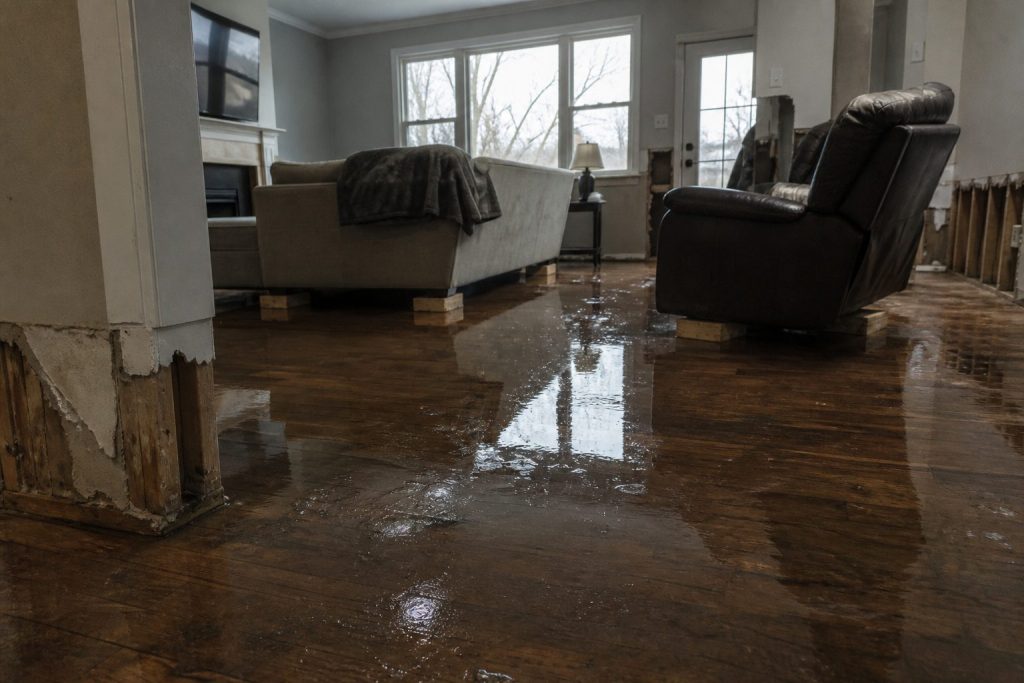
    Flooded residential living room with standing water on hardwood after a water loss
    Restoration searches are emergency searches — optimization has to match.

    Water damage restoration is one of the few industries where the customer’s timeline is minutes, not days. According to Blueprint Digital’s 2026 water damage SEO analysis, high-intent searches like “water damage repair near me” or “emergency water extraction” often convert to calls within minutes of the search. That urgency creates a specific content requirement: the article needs to appear, answer the question directly, and provide a clear next step — all before the homeowner finds a competitor.

    Most restoration company WordPress blogs fail at all three. The posts exist but don’t appear because they lack optimization. They don’t answer questions directly because they were written as general service descriptions. And they don’t provide a clear next step because the CTA was an afterthought.

    Why don’t restoration company blog posts rank despite regular publishing? Restoration company blog posts fail to rank when they lack the optimization signals Google uses for emergency local content: a title tag that matches the homeowner’s actual search query (“what to do after a pipe bursts” not “our water damage services”), a written meta description with a direct action signal, FAQPage schema targeting the questions homeowners ask during a water damage crisis, and IICRC certification and RIA membership entity references that signal industry authority. Without these signals, the article competes for positions it has no basis to win.

    The Four Fixes — In Order of Impact

    Comparison of Claude how-to fit versus local service page fit for assistants
    The four fixes — in order of impact.

    1. Rewrite Titles for Emergency Intent

    Restoration content titles almost universally describe the company’s service rather than matching the homeowner’s search query. “Our Water Damage Restoration Process” describes your operation. “What to Do Immediately After Water Damage (First 24 Hours)” matches a homeowner searching in a crisis. Emergency intent keywords — “immediately,” “fast,” “what to do,” “how long,” “is it safe” — are the search triggers that precede a call. The title needs to capture those triggers first.

    2. Add IICRC and RIA Entity References

    Google’s quality evaluators assess restoration content for named industry credentials. An article about water damage that references “IICRC S500 Standard for Professional Water Damage Restoration,” mentions the “Restoration Industry Association (RIA)” as the industry body, and cites “ANSI/IICRC S520 Standard for Professional Mold Remediation” signals genuine restoration expertise. These named entities are also what AI systems use to determine whether a restoration article represents real industry knowledge or generic homeowner advice.

    3. Add FAQ Schema Targeting the Crisis Questions

    Restoration homeowners ask very specific questions during a crisis: “How long before water damage causes mold?”, “Will insurance cover my water damage?”, “How long does water damage restoration take?”, “Is my house safe after water damage?” A FAQ section with direct answers to these questions, combined with FAQPage JSON-LD schema, positions your article for People Also Ask placements — which appear above organic results for these exact emergency queries.

    4. Add a 24/7 Emergency CTA in the Article Body

    Blog posts that generate calls have a visible, urgent CTA embedded in the article body — not just in the footer. “Water damage worsens every hour. Call [number] for 24/7 emergency response.” This CTA converts the reader who found your article at 2am and is ready to call right now — not the reader who completes the article, navigates to your contact page, and calls during business hours.

    All four fixes — emergency-intent title rewrites, IICRC entity injection, FAQPage schema, and CTA optimization — are part of WordPress content optimization for restoration companies through SiteBoost. Applied to your existing article library, pushed live via WordPress REST API.

    Related on Tygart Media: IICRC certification SEO · local SEO for restoration · AI search for restoration.

    Frequently Asked Questions

    Desk with laptop, checklist notebook, and billing card ready before creating an Anthropic API key
    Frequently asked questions.
    What restoration keywords actually drive calls, not just traffic?

    Emergency-intent keywords drive calls: “water damage repair near me,” “emergency water extraction,” “flooded basement cleanup,” “burst pipe water damage,” “sewage backup cleanup.” These phrases signal active crisis — someone searching them is ready to call within minutes. Research keywords like “how long does water damage restoration take” drive lower-urgency traffic but build trust during the insurance claim research phase. Both matter, but emergency keywords should be prioritized on service pages and emergency CTAs.

    Should restoration companies blog about prevention or restoration?

    Both, but for different funnel stages. Prevention content (“how to prevent pipes from freezing,” “signs of hidden water damage”) attracts homeowners before a crisis and builds brand awareness. Restoration content (“what to do after a pipe bursts,” “how long does mold take to grow after water damage”) captures homeowners in an active crisis — the highest-converting traffic. Prioritize restoration process and crisis content first, then build prevention content as a secondary funnel.

    How does IICRC certification help restoration company SEO?

    IICRC certification signals credibility to both Google’s quality evaluators and homeowners evaluating contractors. In content, referencing specific IICRC standards — S500 for water damage, S520 for mold, S770 for sewage — by name creates named entity anchors that Google associates with genuine restoration industry expertise. This entity signal is also what AI systems like ChatGPT use when evaluating whether a restoration article represents real industry knowledge worth citing.
    Sources: Blueprint Digital, “Water Damage SEO: How to Rank Higher and Win More Local Jobs” (2026); Aziel Digital, “Water Damage SEO Secrets: How Restoration Companies Rank #1” (2026); Peterson SEO Consulting, “Water Damage SEO for Restoration Contractors” (2025); IICRC S500 Standard for Professional Water Damage Restoration
  • Restoration Company SEO: WordPress & AI Optimization

    Restoration Company SEO: WordPress & AI Optimization

    SiteBoost — Vertical Series

    SiteBoost for Restoration Companies: WordPress SEO, AEO & AI Optimization for Water Damage Contractors

    By Tygart Media — This page is built using the same SEO, AEO, and GEO techniques applied through SiteBoost. The optimization you see here — entity density, schema, FAQ structure, speakable blocks — is exactly what the service delivers.

    Restoration Company WordPress Optimization: The process of applying SEO (Search Engine Optimization), AEO (Answer Engine Optimization), and GEO (Generative Engine Optimization) to a water damage or disaster restoration contractor’s WordPress articles — improving title tags, FAQ sections, IICRC entity injection, schema markup, and AI citation signals so the contractor ranks in Google, wins insurance-related People Also Ask placements, and gets cited by AI search systems when homeowners and adjusters ask about water damage remediation, mold removal, or fire restoration.

    The Restoration SEO Reality: Highest CPC in Home Services, Lowest Content Quality

    Water damage and flood restoration commands the highest cost-per-click in the entire home services category. Homeowners searching for emergency restoration services are in crisis — they click, and they hire. That makes restoration keywords extremely valuable to Google advertisers. Yet most restoration company WordPress sites are full of thin, unoptimized articles that leave enormous organic opportunity untouched.

    Why is the water damage restoration industry’s CPC the highest in home services?
    Water damage restoration has the highest CPC in the home services category because of three compounding factors: emergency urgency (homeowners need help within hours, not days), high average job value ($3,000–$15,000+ per project), and insurance-driven billing (restoration companies often bill insurance carriers directly, increasing the lifetime value of each job). These factors make every qualified click worth significant revenue, driving advertisers to bid aggressively on terms like “water damage restoration near me” and “emergency flood cleanup.”

    Real Data: The Gap Between Servpro and Your Site

    SpyFu domain intelligence shows the organic gap between category leaders and typical independent restoration contractors — publicly available data that illustrates why optimization depth matters:

    Domain Organic Keywords Monthly Clicks SEO Value/Mo Domain Strength
    servpro.com 178,900 151,700 $5,825,000 62
    Typical NYC Contractor 1,006 384 $31,220 41
    Typical Houston Contractor 202 20 $14,840 38
    Typical indie contractor <200 <50 <$10,000 25–35

    Source: SpyFu domain stats, February 2026.

    Servpro’s organic value of $5.8M/month is built on systematic content optimization at scale — not domain authority alone. Their strength score (62) is only moderately higher than independent restoration contractors (38–41). The gap is content depth, schema coverage, and FAQ saturation. That’s exactly what SiteBoost closes.

    Real Before & After: Restoration Company WordPress Article

    Here is a hypothetical demonstration of what SiteBoost applies to a typical restoration company article — illustrating exactly what happens to every post in the pilot:

    Before SiteBoost (Real Post)
    Title: “From Blueprint to Reality: Navigating the Construction Process with Ease”

    Meta description: Generic excerpt, 210 characters — too long, no keyword

    Word count: ~750 words

    FAQ section: None

    Schema: Article JSON-LD only (no FAQPage)

    Structure: 5 H2 sections, no direct-answer formatting

    AI visibility: Zero speakable blocks, no construction entity injection

    After SiteBoost (Same Article)
    Title: Optimized with primary keyword front-loaded

    Meta description: 155 chars — keyword + value proposition + CTA

    Word count: ~950 words (definition box + FAQ added)

    FAQ section: 7 questions — “What permits are required?”, “How long does the planning phase take?”, “How do I manage unexpected costs?” — all targeting PAA

    Schema: FAQPage JSON-LD injected alongside existing Article schema

    Structure: Definition box + direct-answer H2 intros added

    AI visibility: Speakable content targets: what is the construction process, how to manage contractor timeline

    What Makes Restoration Content Different: IICRC Entities & Insurance Language

    Restoration company content has a specific entity set that signals authority to both Google and AI systems. Most restoration WordPress blogs mention “water damage” repeatedly but miss the named entities that establish expertise:

    What IICRC entities should restoration company WordPress content reference?
    Restoration company content optimized for AI citation and Google E-E-A-T should reference the Institute of Inspection, Cleaning and Restoration Certification (IICRC), specific IICRC standards (S500 Standard for Professional Water Damage Restoration, S520 Standard for Professional Mold Remediation, S770 Standard for Professional Fire and Smoke Damage Restoration), restoration equipment categories (desiccant dehumidifiers, air movers, hydroxyl generators, thermal imaging cameras), and insurance-specific terminology (RCV — Replacement Cost Value, ACV — Actual Cash Value, scope of loss, supplemental claims, Xactimate estimating software). This entity density signals domain expertise to both Google’s quality evaluators and AI search systems.

    The Insurance Adjuster Search Opportunity

    Restoration companies have two audiences searching for them: homeowners in crisis, and insurance adjusters researching restoration standards and protocols. Adjuster-facing content — articles about IICRC S500 compliance, Xactimate line items, scope of loss documentation, and RCV vs. ACV billing — is almost completely absent from most restoration WordPress sites. This represents an untapped GEO opportunity: when an adjuster or TPA (Third Party Administrator) asks ChatGPT about restoration billing standards, your content could be the source cited.

    Search Intent Example Query Content Type Needed Optimization Layer
    Emergency homeowner “water damage restoration near me” Service pages + local content SEO + Local schema
    Research homeowner “how long does water damage restoration take” FAQ-rich blog posts AEO + FAQPage schema
    Insurance-aware homeowner “will insurance cover mold remediation” Insurance guide articles AEO + GEO
    Insurance adjuster “IICRC S500 water damage standard” Technical authority content GEO + entity injection
    AI search user “what is the restoration process for category 3 water damage” Structured speakable content GEO + speakable blocks

    SiteBoost Pilot for Restoration Companies: What You Get

    Deliverable Details
    Site Connection & Audit WordPress REST API connection, content inventory, IICRC entity gap analysis, insurance terminology gap report, Before Baseline
    10 Post Optimizations Full SEO + AEO + GEO on 10 highest-opportunity restoration articles — including IICRC entity injection, insurance terminology, and speakable blocks
    60-Day Impact Report Baseline vs. 60-day comparison: rankings, PAA appearances, AI citation visibility, traffic delta
    Restoration expertise SiteBoost is purpose-built for restoration contractors. Our team understands IICRC standards, Xactimate, insurance billing, and the specific content gaps that hold restoration sites back.
    Price $597 pilot — $767 value

    Interested in the SiteBoost Pilot for Your Restoration Site?

    We onboard sites personally. Email Will with your site URL and he’ll follow up within one business day.

    → Email Will — Start the Pilot

    Email only. No sales call required. No commitment to reply.

    Frequently Asked Questions: SiteBoost for Restoration Companies

    Do you understand restoration industry terminology well enough to write about it?

    Yes — and this is our core advantage over general SEO agencies. SiteBoost is built by a team with deep restoration industry knowledge. We understand IICRC standards (S500, S520, S770), Xactimate estimating, RCV/ACV billing, category and class water damage classifications, psychrometric calculations, and the insurance claim process from the contractor’s perspective. Our GEO layer injects these terms specifically because they’re the entities that establish authority with both Google’s quality evaluators and AI systems.

    Can SiteBoost help us rank for emergency water damage keywords in our local market?

    SiteBoost optimizes your existing blog content — not your service pages or Google Business Profile. However, content authority signals from your blog directly reinforce your local pack and GBP rankings. Articles that rank for “how long does water extraction take” or “what does water damage restoration cost” build topical authority that helps your service pages rank for “water damage restoration [city]” — the high-intent emergency terms that drive calls.

    What restoration-specific schema markup does SiteBoost inject?

    For restoration company articles, SiteBoost injects: FAQPage schema (targeting insurance and process questions), Article schema with LocalBusiness publisher markup, HowTo schema for process-oriented content (e.g., “How to document water damage for an insurance claim”), and Service schema referencing specific restoration categories (water damage, mold remediation, fire restoration). All schema is valid JSON-LD injected directly into the post via WordPress REST API.

    How does AI optimization help restoration companies specifically?

    When a homeowner asks ChatGPT “what should I do after a pipe bursts?” or asks Perplexity “does insurance cover water damage from a leaking roof?” — the AI pulls from the most structured, entity-rich, authoritative content it can find. Restoration companies that have IICRC references, insurance terminology, and speakable answer blocks in their WordPress articles are far more likely to be cited. SiteBoost’s GEO layer builds exactly this citation infrastructure into your existing content.

    We use a restoration CRM and job management software. Will SiteBoost interfere?

    No. SiteBoost operates exclusively on WordPress post content via the REST API. It has zero interaction with ServiceTitan, Restoration Manager, Encircle, Xactimate, or any other CRM or job management system. The WordPress Application Password we use is scoped to content editing only — it cannot access any other systems, plugins, or third-party integrations on your site.

    We’re IICRC-certified. Can SiteBoost reflect that in our content?

    Yes — and it’s one of the most important GEO signals we inject. IICRC certification is a named credential that Google’s E-E-A-T framework specifically rewards for restoration content. We inject IICRC references, specific certification levels (WRT, ASD, AMRT, FSRT), and standard citations throughout your articles. This signals expertise to both Google and AI systems evaluating whether to cite your content as authoritative.

  • Live SEO Case Study: Organic Traffic Value Meter | Tygart

    Live SEO Case Study: Organic Traffic Value Meter | Tygart

    The Distillery
    — Brew № — · Distillery


    The Tygart Media Distillery

    Brew #1 — Radon Mitigation

    A living knowledge base, distilled from zero, published in the open.

    LIVE
    loading…
    brewed since 2026-04-10

    Category Organic Value Meter
    $0
    PER MONTH — RADON MITIGATION CATEGORY
    Day 0. The zero timestamp is real.

    Ranked Keywords
    0
    in top 100 for radon category URLs

    Nodes Published
    0 / 150
    of target corpus

    Top 10 Placements
    0
    first page Google

    Days Brewing
    0
    since 2026-04-10

    This is an open kitchen. Every knowledge node in this category is being brewed and published in public, through an eight-pass distillation pipeline that cross-references EPA guidance, AARST standards, state health departments, and peer-reviewed radon literature. The meter above tracks the category’s real organic SEO contribution to tygartmedia.com, measured daily against DataForSEO and SpyFu. No projections. No theoretical ceilings. Just what Google actually thinks the work is worth, right now.

    Brew Progress by Wave

    Top Ranking Keywords