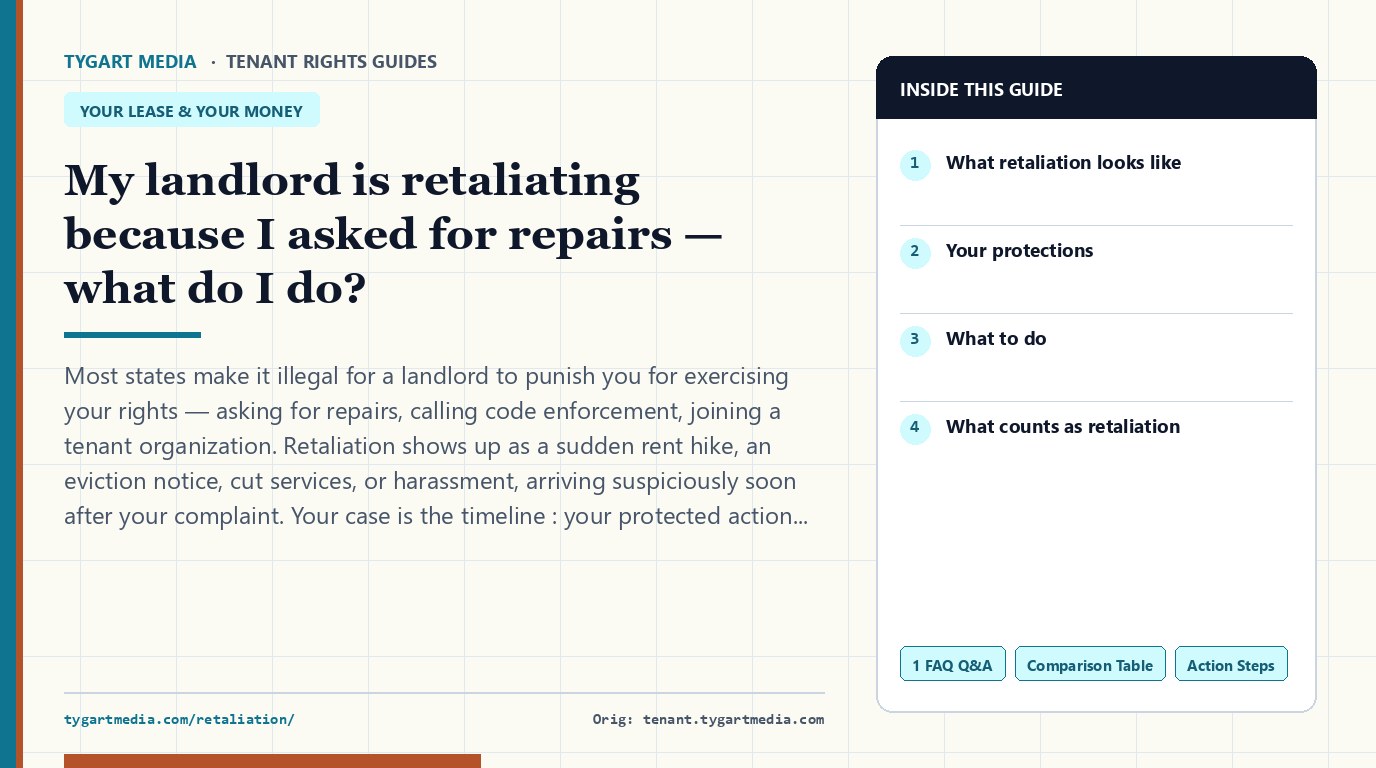
Tygart Media · Tenant Rights Guides · Your lease & your money
What retaliation looks like
- A rent increase right after you complained or called an inspector.
- An eviction notice or non-renewal that appears from nowhere.
- Reduced services — parking taken away, laundry room locked, amenities revoked.
- Harassment — repeated unannounced entries, threats, shutting off utilities (utility shutoffs are illegal in most states regardless).
The pattern that matters: nothing happened for months, you took a protected action, and then the landlord’s behavior changed. That’s the story a court, mediator, or housing agency needs to see.
Your protections
Most states have anti-retaliation statutes covering a set period after protected activity — the window varies by state, so check yours. Within that window, the landlord’s adverse action is presumed retaliatory in many states, which shifts the burden: they have to show a legitimate reason, not you proving their motive. Remedies can include damages, stopping the eviction, and in some states the right to terminate your lease.
What to do
- Don’t retaliate back. Withholding rent, changing the locks, or damaging the unit hands your landlord the counter-story. Stay clean.
- Write down the timeline. Date of your complaint, date of their action, every communication. This is your case — see our documentation guide.
- Respond in writing. A dated letter noting that their action followed your complaint puts them on notice that you see the pattern.
- Contact a tenant-rights organization or legal aid. Retaliation claims are one of the areas where free legal help is most available — and most effective.
What counts as retaliation
| You did (protected) | They can’t do (retaliation) |
|---|---|
| Requested repairs | Raise rent, cut services, threaten eviction |
| Called code enforcement | Non-renew your lease in response |
| Joined a tenant union | Harass or surveil you |
Most states presume retaliation if the landlord acts within 6–12 months of your protected action — the burden shifts to them.
Get The Signal
What we actually ran, what it measured, and what it means for a restoration shop — every week, including the flops.
Leave a Reply