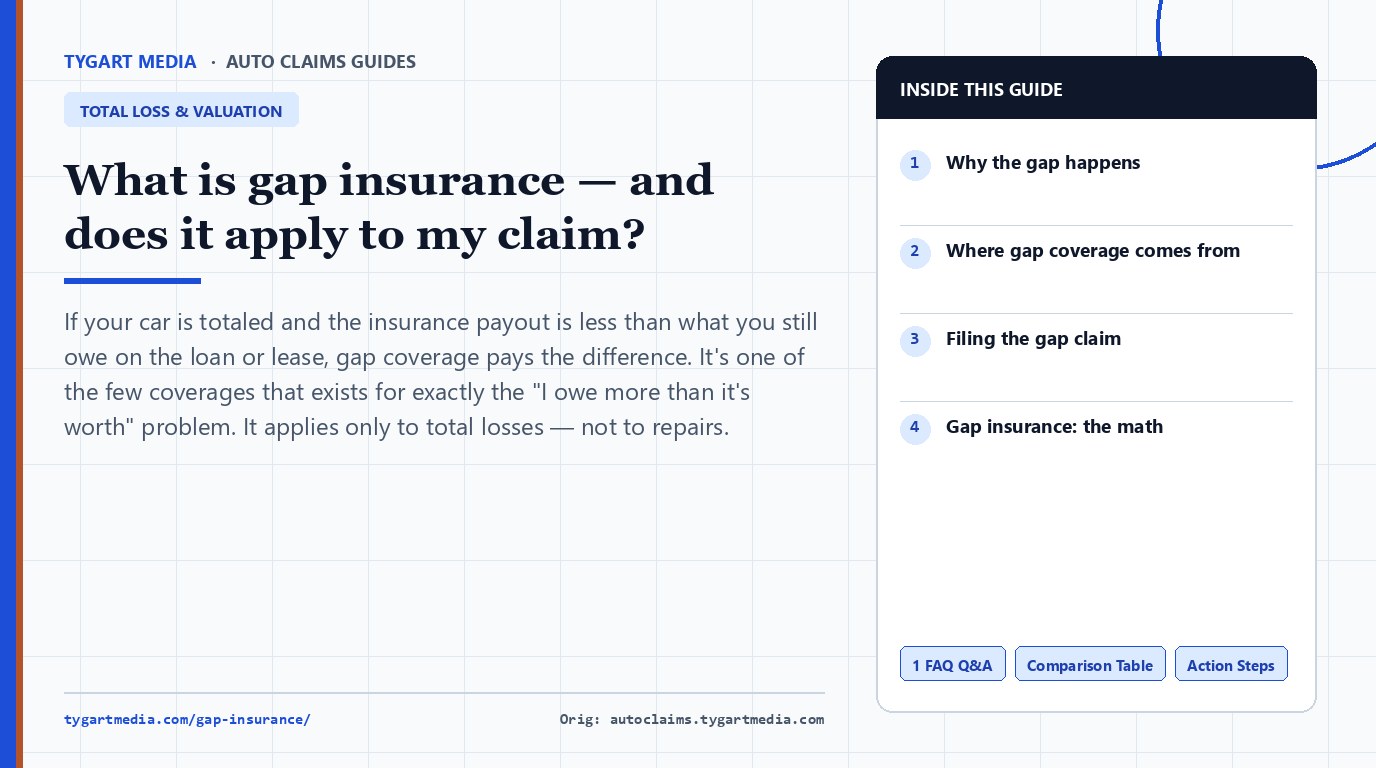
Tygart Media · Auto Claims Guides · Total loss & valuation
Why the gap happens
Cars depreciate fastest in the early years while loan balances drop slowly. If you financed with a small down payment, rolled in negative equity, or have a long loan term, the insurer’s actual-cash-value payout can land well below what you owe. The lender still wants the full balance — the gap is your problem unless gap coverage handles it.
Where gap coverage comes from
- Your auto insurer — sometimes sold as “loan/lease payoff” coverage on the policy itself.
- The dealer or lender — sold at purchase or lease signing as a separate product.
Which one you have determines who you file with. Dig out the paperwork — the claim goes to whoever sold the coverage.
Filing the gap claim
- Settle the primary claim first. Gap pays after the main insurer’s total-loss payout is finalized.
- Get the loan payoff statement as of the loss date from your lender.
- Gather the primary settlement paperwork — valuation, payout amount, deductible.
- File with the gap provider and expect them to verify the numbers against the primary settlement.
Gap insurance: the math
| You owe | Car’s ACV | Without gap | With gap |
|---|---|---|---|
| $24,000 | $19,000 | You pay $5,000 out of pocket | Gap covers the $5,000 |
Gap covers the difference between the loan balance and the car’s actual cash value at total loss. If you put little down or rolled negative equity into the loan, you need it.
Get The Signal
What we actually ran, what it measured, and what it means for a restoration shop — every week, including the flops.
Leave a Reply