Category: The Machine Room

Way 3 — Operations & Infrastructure. How systems are built, maintained, and scaled.

  • What GEO Delivery Actually Looks Like Inside a Real Client Engagement

    What GEO Delivery Actually Looks Like Inside a Real Client Engagement

    The Machine Room · Under the Hood

    Stop Theorizing. Here Is How It Actually Works.

    Most content about Generative Engine Optimization reads like a research paper. Theoretical frameworks. Hypothetical scenarios. Vague recommendations to “increase factual density” without showing what that looks like on a real page for a real client. This article is different. It walks through the actual GEO delivery process as it happens inside a production client engagement — from the initial audit through the content changes through the measurement of outcomes.

    No client names. No proprietary data. But the real methodology, the real workflow, and the real results framework that an agency can evaluate and decide whether to build, buy, or partner for.

    Phase 1: The AI Visibility Audit
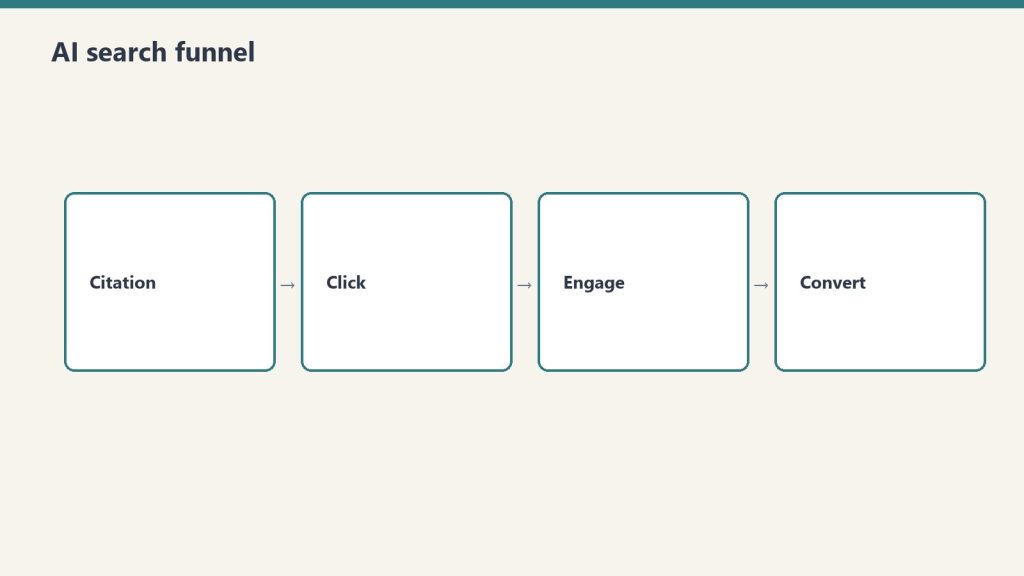
    Every engagement starts with a baseline audit. Pull the client’s top 30 keywords by traffic and run each one through three systems: Google search (noting AI Overview presence and citations), ChatGPT with browsing (noting brand mentions and source citations), and Perplexity (noting inline citations). Log which queries trigger AI-generated results, whether the client is cited, and which competitors appear.

    The audit also evaluates the client’s content for AI-readiness. For each of the top 20 pages by traffic, score: factual density (verifiable facts per 100 words), citation quality (are sources named inline or absent), structural clarity (can a clean answer be extracted from each section), entity signals (is Organization and Person schema implemented), and AI crawlability (is the content in the HTML source or locked behind JavaScript rendering).

    The output is a scorecard that shows the client exactly where they stand across AI search channels and exactly what needs to change. Most clients score well on basic SEO metrics but poorly on factual density, citation quality, and schema completeness — which is why they rank in organic but are absent from AI citations.

    Phase 2: Content Enhancement

    The content work happens on the top 20 pages, prioritized by traffic and AI citation opportunity. Each page gets four treatments.

    Treatment one: factual density upgrade. Go paragraph by paragraph and replace every vague claim with a specific, verifiable fact. “The industry is growing” becomes “the industry reached billion in 2025 according to [named source].” “Many companies use this approach” becomes “a 2025 survey by [named institution] found that X percent of companies in [sector] have adopted this approach.” The target is at least one cited, verifiable fact per paragraph.

    Treatment two: answer block restructuring. Identify the primary question each page section answers. Rephrase the H2 heading as that question. Write a 40 to 60 word direct answer block immediately below. This serves both AEO (snippet extraction) and GEO (AI answer extraction) simultaneously.

    Treatment three: entity signal strengthening. Ensure the page references the author with visible credentials. Add inline authority markers — “according to [author name], who has [X years] of experience in [domain]” — that AI systems use to evaluate source credibility.

    Treatment four: schema implementation. Apply Article or BlogPosting schema with complete properties — headline, author, datePublished, dateModified, publisher. Add FAQPage schema wrapping all Q&A pairs. Add Speakable schema marking the direct answer blocks. Validate all schema against Google’s Rich Results Test.

    Phase 3: Technical GEO Infrastructure

    Beyond content, the engagement includes three infrastructure items. First: LLMS.txt implementation at the domain root, declaring the site’s authority areas, preferred citation format, and content access policies. Second: robots.txt review ensuring AI crawlers — GPTBot, ClaudeBot, PerplexityBot, Google-Extended — are not blocked. Third: a comprehensive sitemap update ensuring all enhanced pages are included and recently modified dates are current.

    These three items take under two hours to implement but create the technical foundation that enables AI systems to discover, crawl, and properly cite the enhanced content.

    Phase 4: Measurement and Iteration

    GEO measurement uses four metrics tracked monthly. AI Overview presence — the number of target keywords where the client’s content is cited in Google AI Overviews, tracked through Search Console’s AI Overview reporting. Featured snippet count — the number of target keywords where the client holds the featured position. AI platform citations — manual spot-checks querying ChatGPT and Perplexity with target questions and noting brand mentions. AI platform referral traffic — sessions from Perplexity, ChatGPT, and other AI search platforms tracked in analytics.

    The iteration cycle runs monthly. Pages that gained AI visibility get maintained. Pages that did not are re-audited for specific deficiencies — usually factual density or structural issues that prevent clean answer extraction. New pages are added to the enhancement queue based on ranking improvements from the concurrent SEO work.

    Typical Timeline and Results

    Month one: audit and first batch of content enhancements across the top 10 pages. Technical infrastructure implemented. Baseline measurements established.

    Month two: second batch of enhancements on pages 11 through 20. First featured snippet wins typically appear. Schema validation and refinement.

    Month three: full measurement cycle comparing baseline to current state. AI Overview citations typically begin appearing for 2 to 5 target keywords. Referral traffic from AI platforms begins showing in analytics.

    By month six, a well-executed engagement typically shows 8 to 15 featured snippet positions, measurable AI Overview citations, and AI platform referral traffic as a visible line in the analytics dashboard. These results sit on top of the organic SEO gains — they are additive, not substitutive.

    FAQ

    How many hours per month does a GEO engagement require?
    For an initial enhancement: a concentrated effort in month one, then a regular ongoing commitment for monitoring, iteration, and expansion to additional pages.

    Can GEO work be done without access to the client’s CMS?
    Content recommendations and schema code can be delivered as specifications for the client’s team to implement. But direct CMS access dramatically accelerates delivery and reduces the implementation gap between recommendation and execution.

    What is the minimum site size for a GEO engagement?
    Any site with at least 20 published pages targeting commercial or informational keywords has enough content for a meaningful GEO engagement. Smaller sites benefit from content creation alongside GEO optimization.

    {
    “@context”: “https://schema.org”,
    “@type”: “Article”,
    “headline”: “What GEO Delivery Actually Looks Like Inside a Real Client Engagement”,
    “description”: “Here Is How It Actually Works. Most content about Generative Engine Optimization reads like a research paper.”,
    “datePublished”: “2026-03-21”,
    “dateModified”: “2026-04-03”,
    “author”: {
    “@type”: “Person”,
    “name”: “Will Tygart”,
    “url”: “https://tygartmedia.com/about”
    },
    “publisher”: {
    “@type”: “Organization”,
    “name”: “Tygart Media”,
    “url”: “https://tygartmedia.com”,
    “logo”: {
    “@type”: “ImageObject”,
    “url”: “https://tygartmedia.com/wp-content/uploads/tygart-media-logo.png”
    }
    },
    “mainEntityOfPage”: {
    “@type”: “WebPage”,
    “@id”: “https://tygartmedia.com/what-geo-delivery-actually-looks-like-inside-a-real-client-engagement/”
    }
    }

  • The White-Label AEO and GEO Playbook for SEO Agencies That Want to Add Capability Without Adding Headcount

    The White-Label AEO and GEO Playbook for SEO Agencies That Want to Add Capability Without Adding Headcount

    The Machine Room · Under the Hood

    The Build-or-Partner Decision

    You have decided your agency needs AEO and GEO capability. The next question is how to get it. Building from scratch means hiring specialists — who are scarce and expensive — developing methodology through trial and error, and accepting a 4 to 6 month ramp before you have anything to sell. For most agencies under million in annual revenue, that is a bet you cannot afford to make wrong.

    The alternative is a white-label delivery partnership. A specialized firm delivers the AEO and GEO work under your brand. You own the client relationship, the strategy, and the billing. They handle the specialized execution — content restructuring, schema implementation, factual density enhancement, AI citation monitoring. Your client never knows a partner is involved. Your P&L shows the margin.

    This model is not new. Agencies have used white-label delivery for web development, paid media management, and link building for years. The AEO/GEO version follows the same structure with one critical difference: the partner needs genuine methodology, not just labor. This is a specialized discipline, and the quality of the delivery partner’s framework determines whether the service produces results or embarrasses your agency.

    What Good White-Label AEO/GEO Delivery Includes

    A legitimate delivery partner provides five components. First: a documented methodology that your team can understand, explain to clients, and oversee. You should be able to articulate what the partner does and why it works, even if you are not doing the hands-on execution.

    Second: an audit framework that produces client-ready reports. The AI visibility audit, the content readiness scorecard, and the competitive gap analysis should be formatted for your brand and ready to present in client meetings.

    Third: content enhancement deliverables — restructured headings, direct answer blocks, factual density upgrades, FAQ sections — delivered as either completed content changes applied directly in the client’s CMS or as detailed specifications your team can implement.

    Fourth: schema markup code — validated JSON-LD for Article, FAQPage, HowTo, Speakable, and entity schema types — ready to deploy on client pages.

    Fifth: measurement and reporting — monthly tracking of featured snippet positions, AI Overview citations, PAA placements, and AI platform referral traffic, formatted in your agency’s reporting template.

    How to Evaluate a Potential Partner

    Not every firm claiming AEO and GEO expertise can actually deliver. Evaluate partners on four criteria. First: ask to see their methodology documentation. A real practitioner has a written process with specific standards — factual density targets, answer block word counts, schema property requirements. If they cannot show you the playbook, they are making it up as they go.

    Second: ask for a sample audit on a site you know well. Give them a URL and ask for the AI visibility scorecard. The quality of the audit reveals the quality of the methodology. If the audit is generic and surface-level, the delivery will be too.

    Third: ask about their content enhancement process. How do they increase factual density? What sources do they use for citations? How do they determine which FAQ questions to target? The answers should be specific and systematic, not vague and improvisational.

    Fourth: ask about their schema expertise. Can they generate stacked schema — multiple types on a single page — in JSON-LD format? Do they validate against Google’s Rich Results requirements? Can they implement schema programmatically for large sites? Schema implementation is the technical bridge between AEO and GEO, and weak schema work undermines both layers.

    The Commercial Model

    White-label AEO/GEO delivery typically operates on one of three pricing models. Per-page pricing — a fixed fee per page enhanced, typically ranging from to per page depending on scope and depth. This works well for project-based engagements. Monthly retainer — a fixed monthly fee covering a defined scope of pages and deliverables. This works for ongoing optimization engagements. Revenue share — the partner takes a percentage of the incremental revenue the agency generates from AEO/GEO services. This works for agencies testing the market before committing to volume.

    The agency’s margin on white-label delivery typically ranges from 40 to 60 percent. If you charge the client ,000 per month for AEO/GEO services and your delivery partner costs ,200 to ,800, you are adding ,200 to ,800 in monthly gross margin per client with no incremental headcount.

    Transitioning from Partner to In-House

    The healthiest partnership model includes a knowledge transfer pathway. As your team absorbs the methodology through oversight and collaboration, you gradually build internal capability. The partner’s role shifts from full delivery to quality assurance and specialized work. Over time, your team handles routine AEO/GEO optimization while the partner focuses on complex engagements, methodology updates, and advanced GEO strategies.

    This transition protects both parties. The agency builds genuine internal expertise rather than permanent dependency. The partner maintains a role in high-value work rather than being commoditized. The client benefits from an improving service as internal and external expertise compound.

    FAQ

    How do you maintain quality control on white-label delivery?
    Review every deliverable before it reaches the client. Run schema validation independently. Spot-check factual density claims against cited sources. The oversight workload is minimal per client per month — a fraction of the delivery cost.

    What if the client wants to meet the delivery team?
    Structure the relationship so your team is the strategic layer and the partner is the production layer. Clients typically do not need to meet production resources if the strategic oversight is strong and the results are visible.

    How fast can a white-label partnership produce client-facing results?
    First audit delivered in week one. First content enhancements live in weeks two through three. First featured snippet wins typically visible within 30 to 60 days. This is dramatically faster than building internally.

    {
    “@context”: “https://schema.org”,
    “@type”: “Article”,
    “headline”: “The White-Label AEO and GEO Playbook for SEO Agencies That Want to Add Capability Without Adding Headcount”,
    “description”: “How to add AEO and GEO to your agency’s service offering through a white-label delivery partnership without hiring specialists or building from scratch.”,
    “datePublished”: “2026-03-21”,
    “dateModified”: “2026-04-03”,
    “author”: {
    “@type”: “Person”,
    “name”: “Will Tygart”,
    “url”: “https://tygartmedia.com/about”
    },
    “publisher”: {
    “@type”: “Organization”,
    “name”: “Tygart Media”,
    “url”: “https://tygartmedia.com”,
    “logo”: {
    “@type”: “ImageObject”,
    “url”: “https://tygartmedia.com/wp-content/uploads/tygart-media-logo.png”
    }
    },
    “mainEntityOfPage”: {
    “@type”: “WebPage”,
    “@id”: “https://tygartmedia.com/the-white-label-aeo-and-geo-playbook-for-seo-agencies-that-want-to-add-capability-without-adding-headcount/”
    }
    }

  • How to Sell AEO and GEO to Clients Who Only Understand SEO: The Conversation Framework

    How to Sell AEO and GEO to Clients Who Only Understand SEO: The Conversation Framework

    The Machine Room · Under the Hood

    Do Not Lead With Acronyms

    The fastest way to lose a client in a conversation about AEO and GEO is to start with the acronyms. Their eyes glaze. They hear alphabet soup. They wonder if you are trying to sell them something they do not need. And then they mentally check out before you have even explained the value.

    Lead with what they already care about: their competitors, their traffic, and their revenue. The conversation starts with a screen share, not a slide deck. Pull up their number one keyword in Google. Show them the search results page. Count the features above their organic listing — the AI Overview, the featured snippet, the People Also Ask box. Then ask: “Who is showing up in these positions? Because right now, it is not us.”

    That visual does more work than any pitch. The client can see with their own eyes that the search results page has changed and that their investment in organic ranking, while still valuable, is now one layer of a three-layer game.

    The Three-Sentence Explanation

    When the client asks what they are looking at, deliver the explanation in three sentences. “SEO gets your pages ranked in the organic results — that is what we have been doing and it is working. AEO gets your content pulled into the featured answer box above the organic results so Google quotes you directly. GEO gets your content cited by AI systems like ChatGPT and Google’s AI Overviews so when people ask AI about your industry, your brand is the one they hear about.”

    That is it. Three sentences. No jargon. No technical detail. The client now understands the three layers and can immediately see why all three matter. Save the technical depth for the follow-up conversation after the client says “okay, tell me more.”

    Handling the Objections

    “We are already paying for SEO. Why do we need more?” Response: “You do not need more of the same thing. You need the same content optimized for additional channels. Think of it like having a great product but only selling it in one store. AEO and GEO put your content in additional storefronts that your competitors are already moving into.”

    “Is this actually affecting our business?” Response: pull up the analytics. Show the organic click-through rate trend for their top keywords over the past 12 months. If AI Overviews are appearing for those keywords, the CTR has almost certainly declined even if rankings have held steady. That declining CTR is the business impact — same ranking, fewer clicks, because the clicks are going to the answer features above them.

    “How much will this cost?” Response: “AEO and GEO layer on top of the SEO work we already do. We are enhancing your existing content, not starting from scratch. The incremental investment is a fraction of your current SEO budget, and the results show up as visibility in channels that currently belong to your competitors.”

    “Can we wait and see?” Response: show the competitor data. If a competitor is already in featured snippets or AI citations, waiting means falling further behind. If no competitor is there yet, frame it as first-mover advantage — the window to capture these positions before competitors wake up is right now.

    The Meeting Structure That Converts

    Meeting one — the visual wake-up call. Fifteen minutes. Screen share only. Show the three-layer search results page for their top keyword. Show competitor presence. Deliver the three-sentence explanation. End with: “I want to show you what we can do about this. Can we schedule thirty minutes next week?”

    Meeting two — the gap analysis. Thirty minutes. Present the AI visibility audit for their top 10 keywords — which triggers AI Overviews, who is cited, where the client is absent. Show the content readiness scorecard for their top pages — what needs to change structurally to compete. End with: “Here is our recommendation and what the investment looks like.”

    Meeting three — the proposal. Present the scope, timeline, and pricing for the AEO/GEO enhancement. Include projected outcomes based on the audit findings. Show the measurement framework — what metrics you will track and report. Close.

    This three-meeting arc works because each meeting builds on the previous one. The first creates awareness. The second creates understanding. The third creates action. Trying to compress all three into one meeting overwhelms the client and stalls the decision.

    What Account Managers Need to Know (And What They Do Not)

    Account managers do not need to be AEO and GEO specialists. They need to know four things: how to show the three-layer search results page and explain what the client is seeing, how to present the AI visibility audit and interpret the scorecard, how to handle the three most common objections, and how to scope and price the enhancement service.

    The technical details — content restructuring methodology, schema implementation, factual density standards — stay with the delivery team. The account manager sells the outcome, not the process. The outcome is: your content appears in the featured answer positions and AI citations where your competitors are currently showing up and you are not.

    FAQ

    How long does the three-meeting sales arc typically take?
    Two to three weeks from the first visual wake-up call to proposal delivery. Clients who have already noticed the search landscape changing often compress to two meetings.

    What if the client’s organic SEO results are underperforming?
    Fix the SEO foundation first. AEO and GEO build on SEO. If the client is not ranking on page one, the priority is getting them there before layering on answer and AI optimization. Propose the expansion once the foundation is solid.

    What close rate should agencies expect on AEO/GEO proposals?
    Agencies that position AEO/GEO as a natural evolution of existing SEO services tend to see strong close rates on expansion proposals to existing clients when the visual demonstration is used. Cold outreach to non-clients converts at much lower rates because the trust foundation is missing.

    {
    “@context”: “https://schema.org”,
    “@type”: “Article”,
    “headline”: “How to Sell AEO and GEO to Clients Who Only Understand SEO: The Conversation Framework”,
    “description”: “A step-by-step framework for SEO account managers to introduce AEO and GEO services to clients without overwhelming them or undermining current work.”,
    “datePublished”: “2026-03-21”,
    “dateModified”: “2026-04-03”,
    “author”: {
    “@type”: “Person”,
    “name”: “Will Tygart”,
    “url”: “https://tygartmedia.com/about”
    },
    “publisher”: {
    “@type”: “Organization”,
    “name”: “Tygart Media”,
    “url”: “https://tygartmedia.com”,
    “logo”: {
    “@type”: “ImageObject”,
    “url”: “https://tygartmedia.com/wp-content/uploads/tygart-media-logo.png”
    }
    },
    “mainEntityOfPage”: {
    “@type”: “WebPage”,
    “@id”: “https://tygartmedia.com/how-to-sell-aeo-and-geo-to-clients-who-only-understand-seo-the-conversation-framework/”
    }
    }

  • The Agency Stack Gap: Why Your SEO Tools Cannot Do AEO and GEO and What to Use Instead

    The Agency Stack Gap: Why Your SEO Tools Cannot Do AEO and GEO and What to Use Instead

    The Machine Room · Under the Hood

    Your Tools Were Built for a Different Era

    SEMrush tracks keyword rankings. Ahrefs maps backlinks. Screaming Frog crawls for technical issues. Surfer SEO optimizes content for keyword density. These are excellent tools for the SEO layer. They do exactly nothing for AEO and GEO. They do not track featured snippet ownership. They do not monitor AI Overview citations. They do not measure factual density. They do not audit schema markup for answer-readiness. They were built for the ten blue links era and they remain optimized for that era.

    This is not a criticism of the tools. It is a gap analysis. The agencies that realize their tool stack only covers one of three optimization layers will add the missing capabilities. The agencies that assume their existing tools cover everything will deliver an increasingly incomplete service without realizing it.

    What AEO Monitoring Requires

    AEO measurement needs three capabilities your current stack likely lacks. First: featured snippet tracking at the keyword level. Not just whether any snippet exists for a keyword, but whether your client owns it, which competitor owns it, and what content format the snippet uses. Some rank tracking tools are adding this as a feature, but most still treat snippets as a binary yes/no rather than providing the granular data AEO optimization requires.

    Second: People Also Ask mapping. The PAA landscape for a keyword cluster is the strategic foundation of AEO content planning. You need to know every PAA question that appears for your target keywords, which questions appear across multiple related keywords, and which PAA answers your client’s content is eligible for. No mainstream SEO tool provides comprehensive PAA mapping as a core feature.

    Third: voice search simulation. Testing whether your content would be selected as a voice search answer requires evaluating answer length, conversational readability, and structural extraction quality. No tool automates this — it requires manual evaluation against the voice optimization criteria.

    What GEO Monitoring Requires

    GEO measurement is even less supported by existing tools. First: AI citation monitoring across multiple platforms. You need to regularly query ChatGPT, Claude, Gemini, and Perplexity with your target questions and track whether your client’s content is cited. This is currently a manual process — no mainstream tool aggregates AI citation data across platforms.

    Second: AI Overview tracking. Google is beginning to surface AI Overview data in Search Console, but the reporting is still limited. Dedicated monitoring of which queries trigger AI Overviews and which sources are cited requires systematic manual review supplemented by whatever platform reporting is available.

    Third: factual density scoring. No SEO tool measures the ratio of verifiable facts to total words or evaluates citation quality. This requires either manual auditing or custom-built content analysis tools.

    Fourth: entity signal auditing. Checking schema markup completeness, brand consistency across web properties, and third-party mention frequency requires a combination of technical crawling and manual research that no single tool covers end-to-end.

    Building the Three-Layer Stack

    The complete stack combines your existing SEO tools with additional capabilities for each layer. Keep your SEMrush or Ahrefs subscription for keyword research, rank tracking, and backlink analysis — these remain essential for the SEO foundation. Add a schema validation tool — Google’s Rich Results Test plus a schema crawler for site-wide auditing. Add a featured snippet tracker that reports ownership changes at the keyword level. Build or acquire an AI citation monitoring workflow — even a systematic manual process tracked in a spreadsheet is better than no monitoring at all.

    For content creation, add a factual density checklist to your editorial process. This does not require a tool — it requires a standard: every paragraph must contain at least one specific, cited, verifiable fact. Train your content team to apply this standard and QA against it.

    For schema implementation, you need either a developer resource who can create and validate JSON-LD at scale, or a schema generation tool that your content team can use without developer dependency. The bottleneck for most agencies is not knowing what schema to implement — it is having the technical capacity to implement it efficiently across dozens or hundreds of client pages.

    The Custom Dashboard Opportunity

    The agency that builds a unified dashboard showing all three layers — organic rankings, featured snippet positions, and AI citations — in a single client-facing report has a significant competitive advantage. No mainstream tool provides this view today, which means it requires custom assembly from multiple data sources.

    The dashboard should show: keyword rankings and trends (from your existing rank tracker), featured snippet ownership by keyword (tracked separately), AI Overview citation presence by keyword, AI platform referral traffic (from analytics), and schema markup health (from crawl data). Presenting all five metrics in a single monthly report tells the client: “We are monitoring and optimizing for every way your audience finds you in search.”

    What This Means for Agency Positioning

    The tool gap is actually an opportunity. The agencies that build three-layer monitoring and reporting capabilities now differentiate themselves from every competitor still showing the same keyword ranking reports that the industry has used for a decade. When a prospective client evaluates two agencies and one shows keyword rankings while the other shows keyword rankings plus snippet ownership plus AI citations, the conversation is over before the pricing slide.

    FAQ

    Can existing SEO tools add AEO and GEO features?
    Some are beginning to. SEMrush and Ahrefs have added basic featured snippet tracking. But comprehensive AEO optimization tools, AI citation monitoring, and factual density analysis are not on the near-term roadmaps of any mainstream SEO platform.

    How much does it cost to build a three-layer monitoring stack?
    Your existing SEO tool subscriptions cover the SEO layer. Adding AEO and GEO monitoring requires meaningful manual research time per client plus whatever custom dashboarding investment you make. The cost is primarily labor, not software.

    Should agencies wait for tools to mature before offering AEO and GEO?
    No. Waiting for tools means waiting while competitors capture the market. The agencies that build manual processes now will refine them as tools emerge. The agencies that wait for tools will find themselves significantly behind.

    {
    “@context”: “https://schema.org”,
    “@type”: “Article”,
    “headline”: “The Agency Stack Gap: Why Your SEO Tools Cannot Do AEO and GEO and What to Use Instead”,
    “description”: “Your SEMrush and Ahrefs subscriptions do not cover AEO or GEO. Here is what the tool gap looks like and what a complete three-layer stack requires.”,
    “datePublished”: “2026-03-21”,
    “dateModified”: “2026-04-03”,
    “author”: {
    “@type”: “Person”,
    “name”: “Will Tygart”,
    “url”: “https://tygartmedia.com/about”
    },
    “publisher”: {
    “@type”: “Organization”,
    “name”: “Tygart Media”,
    “url”: “https://tygartmedia.com”,
    “logo”: {
    “@type”: “ImageObject”,
    “url”: “https://tygartmedia.com/wp-content/uploads/tygart-media-logo.png”
    }
    },
    “mainEntityOfPage”: {
    “@type”: “WebPage”,
    “@id”: “https://tygartmedia.com/the-agency-stack-gap-why-your-seo-tools-cannot-do-aeo-and-geo-and-what-to-use-instead/”
    }
    }

  • Adding AI Search Optimization to Your Agency Without Hiring a Single Person

    Adding AI Search Optimization to Your Agency Without Hiring a Single Person

    The Machine Room · Under the Hood

    The Hiring Trap

    The default agency response to a new capability gap is to hire. Need AEO and GEO expertise? Post a job listing. Interview candidates. Extend an offer. Wait for the two-week notice period. Onboard for a month. Hope the hire works out. Total time to productive capability: months. Total risk: one bad hire sets you back significantly and costs tens of thousands in salary, recruiting fees, and lost opportunity.

    There is a faster, lower-risk path. You do not need to hire AEO and GEO specialists. You need to operationalize the capability through a combination of process, training, and selective partnership that leverages your existing team for the bulk of the work and a specialized partner for the portion that requires deep expertise.

    The Split Model

    The majority of AEO and GEO optimization is content restructuring and editorial improvement that your existing SEO content team can learn in two to four weeks. Restructuring headings to match query phrasing. Writing direct answer blocks in 40 to 60 words. Adding FAQ sections with proper question targeting. Increasing factual density by replacing vague claims with cited specifics. These are editorial skills, not specialized technical skills.

    The remaining twenty percent requires genuine specialized expertise. Schema markup stacking — implementing multiple JSON-LD types per page with proper validation. AI citation strategy — understanding how different AI systems select and weight sources. LLMS.txt implementation and AI crawler optimization. Entity audit and remediation across multiple web properties. Factual density quality assurance against authoritative sources.

    The operational model is straightforward: train your content team on the fundamentals. Partner for the specialized work. Your content team handles the volume work — restructuring pages, writing answer blocks, building FAQ sections, improving factual density. Your partner handles the technical work — schema implementation, AI citation monitoring, entity optimization, and methodology updates as the discipline evolves.

    The Training Program

    Training your existing team on AEO and GEO content skills takes two weeks of focused learning and two weeks of supervised practice. Week one: teach the three-layer framework, the direct answer block pattern, the FAQ targeting methodology, and the factual density standard. Week two: supervised practice restructuring five real client pages with feedback on each one. Week three: independent work on an additional ten pages with quality review. Week four: the team member is producing AEO/GEO-enhanced content at production quality.

    The training materials are not complex. A documented methodology guide, annotated before-and-after examples of enhanced content, a checklist for self-review before submission, and a quality rubric for the review process. An experienced AEO/GEO practitioner can develop these materials in a day and deliver the training in a week.

    What the Partner Handles

    The specialized partner provides five services that your trained team cannot efficiently deliver. Schema audit and implementation — crawling client sites for schema gaps, generating validated JSON-LD, and deploying schema markup across page templates. AI citation monitoring — systematic tracking of client visibility across ChatGPT, Claude, Perplexity, and Google AI Overviews. Entity optimization — auditing and remediating brand entity signals across the web. Methodology updates — keeping the content methodology current as AI search evolves. And quality assurance — periodic review of your team’s AEO/GEO output to catch methodology drift.

    The partner’s workload per client is a focused monthly commitment — the technical and monitoring work that requires specialized tools and expertise. Your team’s workload is the content enhancement — a meaningful monthly time investment depending on scope. The combined output is a full-service AEO/GEO delivery at a fraction of the cost of hiring two full-time specialists.

    The Financial Model

    Compare three scenarios for adding AEO/GEO capability across a 15-client portfolio. Scenario one: hire two specialists at ,000 to ,000 each. Annual cost: ,000 to ,000. Time to capability: 4 to 6 months. Risk: high — bad hires are costly to unwind.

    Scenario two: train existing team plus partner. Training investment: ,000 to ,000 one-time. Partner cost: ,200 to ,000 per client per month. Annual partner cost across 15 clients: ,000 to ,000. But this is offset by client billing — if you charge ,500 to ,000 per client per month for the service, revenue is ,000 to ,000. Net margin: positive from month one.

    Scenario three: full partner white-label. No training investment. Partner cost: ,500 to ,500 per client per month. Revenue: same as scenario two. Lower margin but zero ramp time and zero hiring risk.

    Most agencies start with scenario three, transition to scenario two as their team builds skills, and only move to scenario one when the volume justifies dedicated headcount — typically at 25 or more active AEO/GEO clients.

    FAQ

    Can SEO specialists learn AEO and GEO effectively?
    The content skills transfer directly. SEO specialists already understand heading structure, keyword targeting, and content optimization. AEO and GEO add new frameworks on top of those existing skills. The technical schema work may require additional training or developer support.

    How do you prevent quality drift after training?
    Monthly quality audits on a sample of enhanced pages. A standardized checklist that the team self-reviews against before submission. And periodic methodology refreshers as the discipline evolves.

    What happens if the partnership does not work out?
    Because your team has been trained on the the bulk, you retain the core capability regardless. You can switch partners, bring the remaining the specialized portion in-house, or adjust the split. There is no single point of failure.

    {
    “@context”: “https://schema.org”,
    “@type”: “Article”,
    “headline”: “Adding AI Search Optimization to Your Agency Without Hiring a Single Person”,
    “description”: “You do not need to hire AEO and GEO specialists to offer AI search optimization. Here is the operational model that adds capability without adding payroll.”,
    “datePublished”: “2026-03-21”,
    “dateModified”: “2026-04-03”,
    “author”: {
    “@type”: “Person”,
    “name”: “Will Tygart”,
    “url”: “https://tygartmedia.com/about”
    },
    “publisher”: {
    “@type”: “Organization”,
    “name”: “Tygart Media”,
    “url”: “https://tygartmedia.com”,
    “logo”: {
    “@type”: “ImageObject”,
    “url”: “https://tygartmedia.com/wp-content/uploads/tygart-media-logo.png”
    }
    },
    “mainEntityOfPage”: {
    “@type”: “WebPage”,
    “@id”: “https://tygartmedia.com/adding-ai-search-optimization-to-your-agency-without-hiring-a-single-person/”
    }
    }

  • The Fractional AI Optimization Partner: What It Is, How It Works, and Why It Beats Hiring

    The Fractional AI Optimization Partner: What It Is, How It Works, and Why It Beats Hiring

    The Machine Room · Under the Hood

    You Do Not Need a Department. You Need a Partner.

    The traditional agency growth model says: identify a capability gap, hire people to fill it, build a team, develop the service, sell it. This model works when the capability is well-established and the talent pool is deep. It fails when the capability is emerging, the talent pool is thin, and the methodology is evolving faster than any single hire can keep up with.

    AEO and GEO are emerging capabilities. The talent market is almost nonexistent — there are no universities producing AEO graduates and no certification programs for GEO. The methodology changes with every Google algorithm update and every new AI platform feature. Hiring a specialist today means hiring someone whose knowledge may be outdated in six months without continuous learning and experimentation.

    The fractional model solves this. Instead of hiring, you partner with a firm whose entire business is AEO and GEO. They invest in methodology development, tool building, and continuous experimentation because that is their core competency. You get the output of that investment without the overhead of maintaining it internally. Your clients get cutting-edge capability. Your agency gets margin without headcount risk.

    How the Fractional Model Works in Practice

    The fractional AI optimization partner operates like a fractional CFO or fractional CMO, but for a specific technical capability. They are not on your payroll. They are not in your office. They are a dedicated resource allocated to your agency’s client work on a retainer or per-client basis.

    Operationally, the partner provides four things. Strategic direction — what to optimize, in what order, for what expected outcome, based on a proprietary methodology refined across dozens of client engagements. Technical execution — schema implementation, AI citation monitoring, entity optimization, and LLMS.txt deployment. Quality assurance — reviewing the content enhancement work your team produces to ensure it meets the methodology standards. And methodology updates — as the AEO/GEO landscape evolves, the partner updates the playbook and retrains your team.

    The partner attends your internal planning meetings for relevant clients. They contribute to client strategy sessions when invited. They produce deliverables that go to the client under your brand. But they are not your employee — they are a specialized firm that provides capability on demand.

    The Economics of Fractional vs. Full-Time

    A full-time AEO/GEO specialist costs ,000 to ,000 per year in salary, plus benefits, equipment, training, and management overhead. Total loaded cost: ,000 to ,000 per year. That specialist can handle 8 to 12 client accounts depending on scope. Cost per client: to ,400 per month.

    A fractional partner charges ,200 to ,500 per client per month depending on scope. More expensive per-client than a loaded full-time cost. But: zero hiring risk, zero ramp time, zero benefits cost, zero management overhead, no training investment, and the ability to scale up or down instantly as your client portfolio changes.

    The breakeven point is typically around 10 to 12 active clients. Below that, the fractional model is cheaper than hiring. Above that, a hybrid model — one in-house specialist plus a fractional partner for overflow and specialized work — often produces the best economics. At a certain portfolio size, the in-house team may be more cost-effective, but even large agencies benefit from maintaining a fractional relationship for methodology updates and specialized projects.

    What to Look for in a Fractional Partner

    The partner must have a documented, repeatable methodology — not just individual expertise. You need to be able to train your team from their playbook, review their work against standards, and maintain consistency across clients. If the methodology lives in one person’s head, you have a contractor, not a partner.

    The partner must have cross-industry experience. AEO and GEO tactics vary by vertical — what works for a SaaS company differs from what works for a local service business. A partner who has only optimized one type of client will struggle to adapt their methodology to your diverse client base.

    The partner must be willing to work under your brand. White-label delivery is the default for fractional partnerships. If the partner insists on co-branding or direct client access, the model does not work for most agencies.

    The partner must provide reporting in your format. Deliverables that require reformatting before client presentation create unnecessary overhead. The right partner delivers work that is client-ready within your reporting framework.

    Starting the Relationship

    The smart way to start is a pilot engagement. Choose two to three clients with strong SEO foundations and high AI search opportunity. Run the fractional partner’s methodology on those clients for 90 days. Measure the results — featured snippet wins, AI citation appearances, client satisfaction. If the pilot produces results, expand to additional clients. If it does not, you have risked three months and a few thousand dollars instead of a six-figure hire.

    The pilot also gives your team supervised exposure to the AEO/GEO methodology. By the end of 90 days, your content team will have learned the core techniques through hands-on practice, which accelerates the eventual transition to the hybrid model where your team handles most of the work and the partner provides oversight and technical execution.

    FAQ

    How much time does a fractional partner need from the agency team?
    A few hours per week in coordination — reviewing deliverables, discussing strategy, and aligning on client priorities. This is substantially less than managing a full-time employee.

    Can you use a fractional partner for just a few clients?
    Yes. The fractional model scales down as easily as it scales up. Starting with a small group of clients is the recommended pilot approach. There is no minimum commitment beyond the individual client retainers.

    What is the typical contract structure?
    Month-to-month per-client retainers are most common. Some partners offer discounted rates for annual commitments or volume tiers. Avoid long-term lock-in contracts until the relationship is proven through a successful pilot.

    {
    “@context”: “https://schema.org”,
    “@type”: “Article”,
    “headline”: “The Fractional AI Optimization Partner: What It Is, How It Works, and Why It Beats Hiring”,
    “description”: “The fractional partner model gives SEO agencies full AEO and GEO capability at a fraction of the cost and risk of hiring dedicated specialists.”,
    “datePublished”: “2026-03-21”,
    “dateModified”: “2026-04-03”,
    “author”: {
    “@type”: “Person”,
    “name”: “Will Tygart”,
    “url”: “https://tygartmedia.com/about”
    },
    “publisher”: {
    “@type”: “Organization”,
    “name”: “Tygart Media”,
    “url”: “https://tygartmedia.com”,
    “logo”: {
    “@type”: “ImageObject”,
    “url”: “https://tygartmedia.com/wp-content/uploads/tygart-media-logo.png”
    }
    },
    “mainEntityOfPage”: {
    “@type”: “WebPage”,
    “@id”: “https://tygartmedia.com/the-fractional-ai-optimization-partner-what-it-is-how-it-works-and-why-it-beats-hiring/”
    }
    }

  • LinkedIn Is Not a Social Network. It’s a Pipeline.

    LinkedIn Is Not a Social Network. It’s a Pipeline.

    The Machine Room · Under the Hood

    Everyone thinks LinkedIn success means going viral. Getting 50,000 impressions on a post about your morning routine. It doesn’t. LinkedIn success means the right 12 people see your content consistently enough that when they need what you sell, you’re the first call.

    We’ve managed LinkedIn strategy across restoration, lending, training, and agency verticals. The pattern is identical in every industry: LinkedIn works as a pipeline when you stop trying to be an influencer and start being useful to a specific audience, consistently, over months.

    The Invisible Compound

    One of our restoration clients got a call from an insurance adjuster who said she’d been reading his LinkedIn posts for six months. She never liked a single post. Never commented. Never connected. She just read, remembered, and called when the moment was right.

    That story repeats across every vertical. The CEO who reads your posts about cold chain logistics and mentions you in a board meeting. The property manager who forwards your article about commercial roofing to her maintenance director. LinkedIn’s real power is invisible — the people who consume your content silently and act on it when the timing aligns.

    The System

    We treat LinkedIn content as a scheduled, systematic operation. Not “post when inspired.” Not “share articles occasionally.” A consistent cadence of content that demonstrates expertise, shares genuine results, and provides value that the target audience can use immediately.

    Every LinkedIn post is drafted, reviewed, and scheduled through Metricool. Every post aligns with the client’s content themes and links back to their site architecture. This isn’t social media management — it’s pipeline construction.

    What LinkedIn Can’t Do

    LinkedIn won’t replace your SEO strategy. It won’t generate the volume of leads that a well-optimized site produces. What it does is build the relationship layer that makes every other marketing channel work better. The prospect who finds you on Google and then sees you on LinkedIn converts at a dramatically higher rate than the one who finds you on Google alone.

    Pipeline, not platform. That’s the mindset shift that makes LinkedIn worth the investment.

    {
    “@context”: “https://schema.org”,
    “@type”: “Article”,
    “headline”: “LinkedIn Is Not a Social Network. Its a Pipeline.”,
    “description”: “LinkedIn is not a social network. It’s a pipeline. How to use it as your highest-leverage business development channel.”,
    “datePublished”: “2026-03-21”,
    “dateModified”: “2026-04-03”,
    “author”: {
    “@type”: “Person”,
    “name”: “Will Tygart”,
    “url”: “https://tygartmedia.com/about”
    },
    “publisher”: {
    “@type”: “Organization”,
    “name”: “Tygart Media”,
    “url”: “https://tygartmedia.com”,
    “logo”: {
    “@type”: “ImageObject”,
    “url”: “https://tygartmedia.com/wp-content/uploads/tygart-media-logo.png”
    }
    },
    “mainEntityOfPage”: {
    “@type”: “WebPage”,
    “@id”: “https://tygartmedia.com/linkedin-is-a-pipeline-not-social-network/”
    }
    }

  • One Notion Database Runs Seven Businesses. Here’s the Architecture.

    One Notion Database Runs Seven Businesses. Here’s the Architecture.

    The Machine Room · Under the Hood

    When you run seven distinct business entities — an agency, two restoration companies, a golf league, an ESG nonprofit, a media company, and your personal brand — you either build a system or you drown in tabs.

    We chose the system. It’s a Notion Command Center with a 6-database architecture that routes every task, every project, every client interaction through a single operational backbone. Every entity has its own Focus Room. Every task has a priority, an entity assignment, and a status. Nothing falls through the cracks because there’s only one place anything can be.

    The Architecture

    Six databases power everything: Master Actions (every task across every entity), Master Entities (every business, client, and project), Content Calendar (what gets published where and when), Knowledge Base (SOPs, playbooks, reference material), Metrics Dashboard (KPIs across all entities), and Session Logs (every Cowork session, every decision, every output).

    A triage agent automatically assigns priority and entity to every new task. Focus Rooms filter the Master Actions database by entity, so when you’re working on restoration, you only see restoration tasks. When you switch to the agency, the view shifts instantly. Context switching becomes spatial, not mental.

    Why Notion Over Everything Else

    We evaluated every project management tool on the market. Asana, Monday, ClickUp, Linear, Jira. None of them could handle the specific requirement of managing multiple unrelated businesses through one interface without per-seat pricing that scales painfully. Notion’s database-first architecture and flexible pricing made it the only viable option for this use case.

    The real unlock was the API. Every Cowork session, every automation, every AI agent can read from and write to Notion. The command center isn’t just a project management tool — it’s the second brain that accumulates context across every session, every business, every decision. When we start a new session, the context of everything that came before is already there.

    The Compound Effect

    After six months of logging every session, every task, every outcome, the Notion Command Center contains more institutional knowledge than most companies build in years. Patterns emerge. What works in one entity informs strategy in another. The SEO playbook developed for restoration gets adapted for lending. The content pipeline built for the agency gets deployed for the nonprofit.

    This is the operational layer that makes everything else work. The 23 WordPress sites, the 7 AI agents, the multi-vertical content strategy — all of it coordinates through this single system. Build the foundation first. Everything else scales on top of it.

    {
    “@context”: “https://schema.org”,
    “@type”: “Article”,
    “headline”: “One Notion Database Runs Seven Businesses. Heres the Architecture.”,
    “description”: “One Notion database runs seven businesses. The 6-database architecture behind our multi-company command center.”,
    “datePublished”: “2026-03-21”,
    “dateModified”: “2026-04-03”,
    “author”: {
    “@type”: “Person”,
    “name”: “Will Tygart”,
    “url”: “https://tygartmedia.com/about”
    },
    “publisher”: {
    “@type”: “Organization”,
    “name”: “Tygart Media”,
    “url”: “https://tygartmedia.com”,
    “logo”: {
    “@type”: “ImageObject”,
    “url”: “https://tygartmedia.com/wp-content/uploads/tygart-media-logo.png”
    }
    },
    “mainEntityOfPage”: {
    “@type”: “WebPage”,
    “@id”: “https://tygartmedia.com/notion-command-center-seven-businesses/”
    }
    }

  • How We Turned a Live Comedy Stream Into a Content Engine

    How We Turned a Live Comedy Stream Into a Content Engine

    The Machine Room · Under the Hood

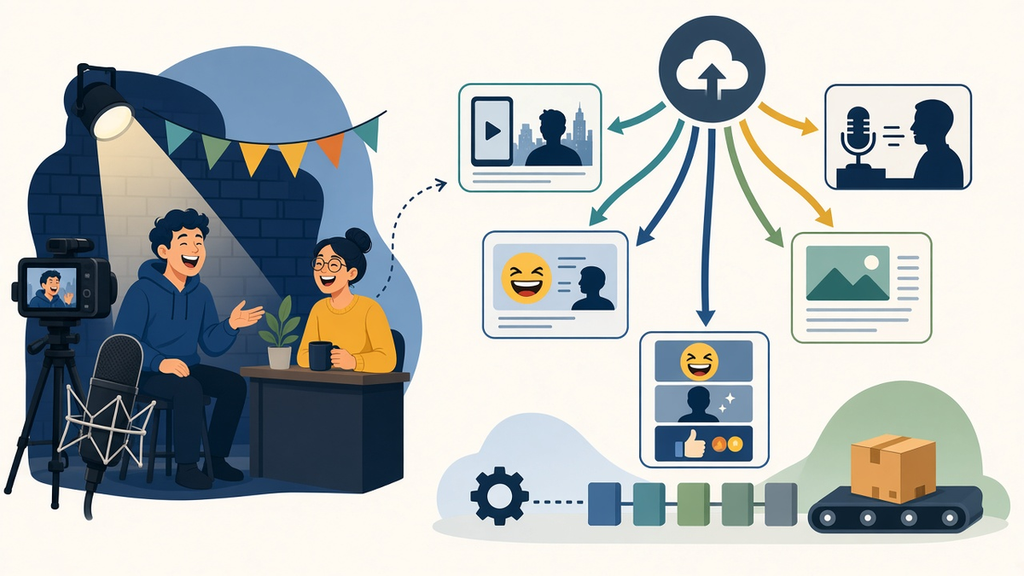
    One of our entertainment clients does something nobody else does: streams live stand-up comedy from one of the most legendary clubs in New York, one of the most legendary clubs in the world. The product is incredible. The marketing challenge? Nobody searches for “live comedy streaming platform.”

    Sound familiar? It should. This is the same problem we solved for cold storage, for luxury lending, for ESG compliance. The product is world-class, but the search demand for the exact product category barely exists. The audience is out there — they’re just searching for something adjacent.

    The Watch Page Engine

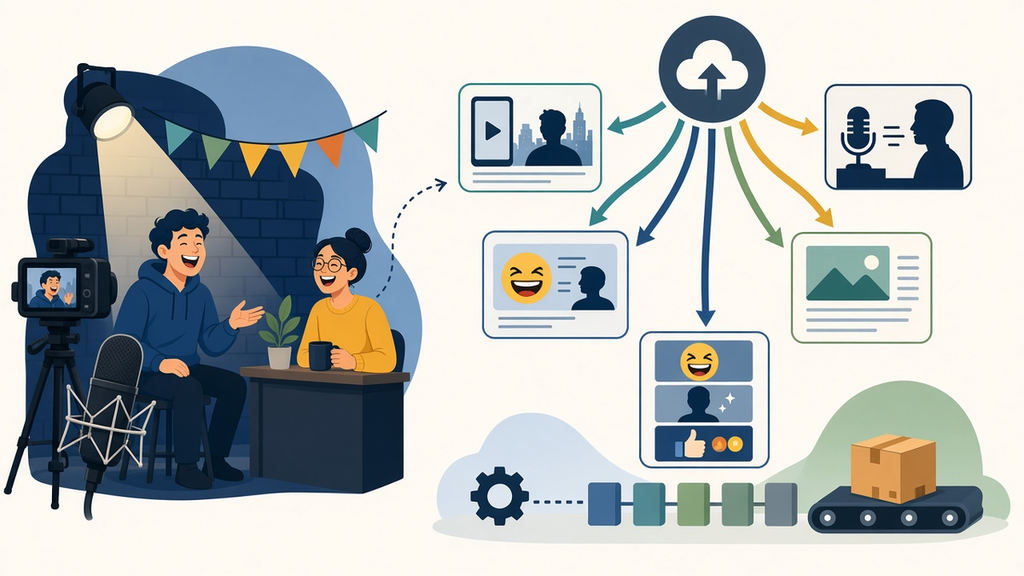
    Every comedian who performs at one of the most legendary clubs via the platform generates a video. That video is a marketing asset hiding in plain sight. We built a watch page system that turns every YouTube Short and clip into a full WordPress page — responsive embed, comedian biography, the venue context, and a the platform call-to-action.

    Each watch page targets the comedian’s name as a search query. When someone Googles a comedian they saw on Instagram, our watch page captures that intent and introduces them to the platform. One video becomes one page. One hundred videos become one hundred pages. The content engine scales linearly with the product.

    Editorial as Authority

    Watch pages capture search intent. Editorial content builds brand authority. We developed a fan-perspective editorial voice for the platform’s “Insider” section — articles that combine genuine enthusiasm for live comedy with professional journalism standards. These pieces target broader queries like “best comedy clubs in New York” and “the venue schedule” that drive discovery traffic.

    The combination — SEO-optimized watch pages for individual comedian queries plus editorial content for category queries — creates a content architecture that no comedy competitor has replicated. Most comedy sites are event calendars. the platform’s site is a content platform.

    Why Entertainment Marketing Is Underserved

    The entertainment industry assumes marketing means social media. Post clips, hope they go viral, repeat. That’s distribution, not strategy. The strategic layer — SEO, AEO, GEO, content architecture, entity authority — is almost entirely absent in entertainment marketing. Which means the opportunity for anyone willing to apply real marketing frameworks to entertainment content is enormous.

    We didn’t know anything about comedy marketing before the platform. We knew everything about content architecture, SEO, and building authority through structured content. The vertical was new. The system was the same.

    {
    “@context”: “https://schema.org”,
    “@type”: “Article”,
    “headline”: “How We Turned a Live Comedy Stream Into a Content Engine”,
    “description”: “How we turned a live comedy stream into a content engine. The Mint Comedy case study in automated content production.”,
    “datePublished”: “2026-03-21”,
    “dateModified”: “2026-04-03”,
    “author”: {
    “@type”: “Person”,
    “name”: “Will Tygart”,
    “url”: “https://tygartmedia.com/about”
    },
    “publisher”: {
    “@type”: “Organization”,
    “name”: “Tygart Media”,
    “url”: “https://tygartmedia.com”,
    “logo”: {
    “@type”: “ImageObject”,
    “url”: “https://tygartmedia.com/wp-content/uploads/tygart-media-logo.png”
    }
    },
    “mainEntityOfPage”: {
    “@type”: “WebPage”,
    “@id”: “https://tygartmedia.com/comedy-club-content-engine-live-streaming/”
    }
    }

  • The Honest Cost of Running a 23-Site Content Operation

    The Honest Cost of Running a 23-Site Content Operation

    The Machine Room · Under the Hood

    Agencies love to talk about results. They don’t love to talk about costs. Here’s the full breakdown of what it actually takes to manage 23 WordPress sites across 10+ industries with a team that’s smaller than you’d think.

    The Infrastructure

    Five knowledge cluster sites run on a single GCP Compute Engine VM. Monthly cost: under . The other 18 sites are spread across WP Engine, Cloudflare, and client-owned hosting. Our Cloud Run proxy — which routes all WordPress API calls to avoid IP blocking — costs pennies per month because it only runs when called.

    The local AI stack — seven autonomous agents running on a laptop via Ollama — costs exactly zero dollars per month in recurring fees. Site monitoring, SEO drift detection, vector indexing, email preprocessing, content generation, news reporting — all local, all free after the initial build.

    The Tool Stack

    Our total SaaS spend is embarrassingly low for an operation this size. Metricool for social media scheduling. DataForSEO for keyword and ranking data. SpyFu for competitive intelligence. Notion for the command center. Google Workspace for the basics. Claude for the heavy lifting. That’s essentially it.

    Everything else is custom-built. The WordPress optimization pipeline. The content intelligence system. The cross-pollination engine. The batch draft creator. These exist as skills and scripts, not subscriptions. Once built, they run indefinitely at zero marginal cost.

    Where the Money Actually Goes

    The biggest expense isn’t tools or infrastructure — it’s the time required to build and maintain the systems. Every custom pipeline, every skill, every automation represents hours of development. But those hours are an investment, not a recurring cost. The SEO refresh pipeline we built three months ago has processed hundreds of posts since then without any additional investment.

    The second biggest expense is content creation itself. Even with AI-assisted generation, every piece of content needs human judgment: is this actually useful? Does it represent the client accurately? Would I put my name on this? The AI accelerates the process dramatically, but it doesn’t replace the editorial function.

    The Takeaway

    You can run a serious multi-site content operation for less than most agencies spend on a single client’s tool stack. The trick is building systems instead of buying subscriptions. Every hour spent on automation pays dividends across 23 sites. Every process that gets encoded into a reusable pipeline removes a recurring cost from the ledger permanently.

    The agencies that survive the next five years won’t be the ones with the biggest tool budgets. They’ll be the ones with the most efficient systems.

    {
    “@context”: “https://schema.org”,
    “@type”: “Article”,
    “headline”: “The Honest Cost of Running a 23-Site Content Operation”,
    “description”: “The honest cost of running a 23-site content operation. Every dollar, every tool, every hour – fully transparent.”,
    “datePublished”: “2026-03-21”,
    “dateModified”: “2026-04-03”,
    “author”: {
    “@type”: “Person”,
    “name”: “Will Tygart”,
    “url”: “https://tygartmedia.com/about”
    },
    “publisher”: {
    “@type”: “Organization”,
    “name”: “Tygart Media”,
    “url”: “https://tygartmedia.com”,
    “logo”: {
    “@type”: “ImageObject”,
    “url”: “https://tygartmedia.com/wp-content/uploads/tygart-media-logo.png”
    }
    },
    “mainEntityOfPage”: {
    “@type”: “WebPage”,
    “@id”: “https://tygartmedia.com/honest-cost-running-23-site-content-operation/”
    }
    }