One of our cold storage clients sits at the center of California’s agricultural supply chain. They store, freeze, and distribute food for some of the largest brands in the country. Their facility runs 24/7. Their marketing ran never.
When they came to us, the site had 6 pages and no blog. Google search demand for “cold storage marketing” is effectively zero. Nobody in this industry searches for a marketing agency. They search for solutions to operational problems — and that’s exactly where the opportunity lives.
The Problem With Low-Volume Industries
The problem with marketing low-volume industries.
Traditional SEO agencies would look at the keyword data and walk away. Monthly search volume for “cold storage facility near me” in Madera County? Single digits. “Temperature controlled warehouse California”? Barely registers. By conventional metrics, this site shouldn’t exist.
But conventional metrics are wrong. They measure what people type into Google, not what decisions they make. A food manufacturer choosing a cold storage partner doesn’t Google “cold storage facility.” They Google “USDA cold chain compliance requirements” or “blast freezing vs. spiral freezing” or “cross-dock warehouse in agricultural regions.” The demand exists — it’s just hiding behind operational queries.
The Strategy: Become the Reference
The strategy: become the reference.
We built a content architecture designed not to chase volume keywords, but to become the authoritative reference that AI systems and procurement teams find when they research cold chain logistics. Every article answers a real operational question that a potential client would ask before choosing a partner.
The site now ranks for dozens of long-tail queries that no competitor even targets. When a procurement manager at a food brand asks ChatGPT or Perplexity about cold storage options in the Central Valley, guess whose content comes up? The one that actually explains the operational nuances — not the one with a prettier website.
What This Taught Us
What cold-storage marketing taught us.
Low-volume doesn’t mean low-value. In B2B industries where deals are six or seven figures, you don’t need 10,000 monthly visitors. You need 10 of the right ones. Content intelligence means understanding that the keyword tool showing “0 volume” is lying — it just can’t see the long-tail queries that actually drive decisions.
This is why we run 23 sites across different verticals. What we learned building content for cold storage informs how we approach every other niche with non-obvious search demand. The playbook transfers. The insight compounds.
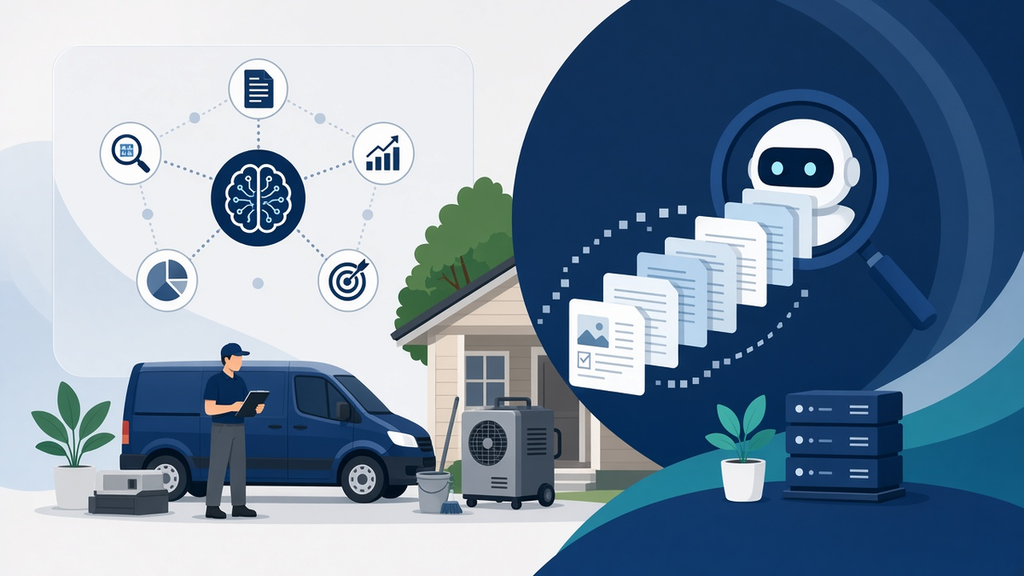
AI-generated editorial illustration — Vertex AI Imagen 4 Standard
About this image. This image was generated by Google’s Vertex AI Imagen 4 model as the featured visual for Marketing a Cold Storage Facility When Nobody’s Searching for Cold Storage . Every image in the Tygart Media visual library is AI-generated, converted to WebP for optimal performance, and enriched with IPTC/XMP metadata for search engine discoverability.
Model: Vertex AI Imagen 4 Standard (imagen-4.0-generate-001)
Three luxury lending brands we manage — three luxury lending brands serving ultra-high-net-worth clients across three markets. Their Google Ads spend was astronomical because the keywords they compete on are some of the most expensive in finance.
Terms like “luxury asset loan,” “jewelry collateral lending,” and “fine art pawn” command CPCs that would bankrupt most small businesses. When a single click costs $50+, every organic ranking you capture is money that stays in your pocket.
The Three-Site Architecture
The three-site architecture for luxury lending SEO.
Instead of one monolithic site, we manage three geographically distinct properties that cross-pollinate authority. One brand owns the Beverly Hills market. Another owns Manhattan. The third owns South Florida. Each site targets local intent while building topical authority in luxury lending.
When one site publishes a definitive guide to Patek Philippe valuation, the other two can reference it with locally-relevant angles — “What Your Patek Philippe Is Worth in New York” versus “Beverly Hills Luxury Watch Appraisals.” Same expertise, different geographic intent, triple the organic footprint.
Entity Authority Over Keyword Volume
Entity authority over keyword volume.
In luxury lending, trust is everything. A client handing over a $50,000 Rolex collection needs to believe you’re legitimate before they walk through the door. That’s why we optimized for entity authority — making Google (and AI systems) recognize these brands as the definitive authorities in luxury asset lending.
Schema markup, Knowledge Panel optimization, AEO-structured FAQ content, GEO-optimized entity descriptions — every signal tells search engines and AI that when someone asks about luxury lending, these are the sources to cite. The result: organic traffic that would cost six figures per month in paid ads, delivered for the cost of content creation alone.
The Cross-Pollination Effect
The cross-pollination effect across sites.
Managing three related sites in the same vertical creates a compounding advantage. Internal links between sites pass authority. Content published on one informs strategy on the others. And the data — three sites worth of ranking signals, user behavior, and conversion data — gives us a dataset that no single-site strategy can match.
This is the same multi-site intelligence model we use across our entire 23-site portfolio. The luxury lending vertical just makes the ROI particularly obvious because the alternative — paying $50+ per click — makes organic dominance not just strategic but existential.
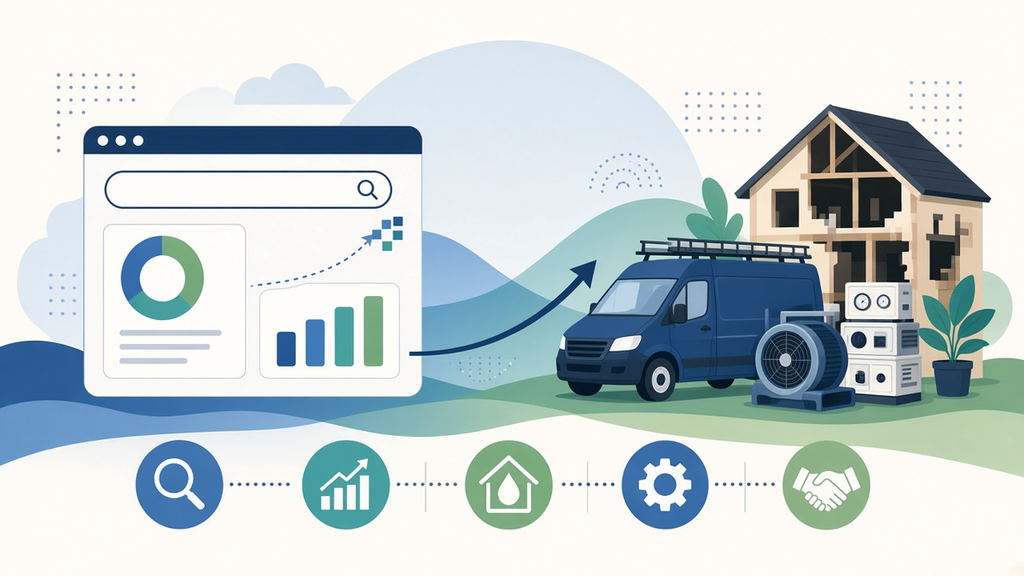
AI-generated editorial illustration — Vertex AI Imagen 4 Standard
About this image. This image was generated by Google’s Vertex AI Imagen 4 model as the featured visual for The SEO Playbook for Luxury Lending: How We Rank for Keywords That Cost Per Click. Every image in the Tygart Media visual library is AI-generated, converted to WebP for optimal performance, and enriched with IPTC/XMP metadata for search engine discoverability.
Model: Vertex AI Imagen 4 Standard (imagen-4.0-generate-001)
Every AI tool your agency pays for monthly — content generation, SEO monitoring, email triage, competitive intelligence — can run on a laptop that’s already sitting on your desk. We proved it by building seven autonomous agents in two sessions.
The Stack
The entire operation runs on Ollama (open-source LLM runtime), PowerShell scripts, and Windows Scheduled Tasks. The language model is llama3.2:3b — small enough to run on consumer hardware, capable enough to generate professional content and analyze data. The embedding model is nomic-embed-text, producing 768-dimension vectors for semantic search across our entire file library.
Total monthly cost: zero dollars. No API keys. No rate limits. No data leaving the machine.
The Seven Agents
SM-01: Site Monitor. Runs hourly. Checks all 23 managed WordPress sites for uptime, response time, and HTTP status codes. Windows notification within seconds of any site going down. This alone replaces a $30/month monitoring service.
NB-02: Nightly Brief Generator. Runs at 2 AM. Scans activity logs, project files, and recent changes across all directories. Generates a prioritized morning briefing document so the workday starts with clarity instead of chaos.
AI-03: Auto Indexer. Runs at 3 AM. Scans 468+ local files across 11 directories, generates vector embeddings for each, and updates a searchable semantic index. This is the foundation for a local RAG system — ask a question, get answers from your own documents without uploading anything to the cloud.
MP-04: Meeting Processor. Runs at 6 AM. Finds meeting notes from the previous day, extracts action items, decisions, and follow-ups, and saves them as structured outputs. No more forgetting what was agreed upon.
ED-05: Email Digest. Runs at 6:30 AM. Pre-processes email from Outlook and local exports into a prioritized digest with AI-generated summaries. The important stuff floats to the top before you open your inbox.
SD-06: SEO Drift Detector. Runs at 7 AM. Compares today’s title tags, meta descriptions, H1s, canonical URLs, and HTTP status codes across all 23 sites against yesterday’s baseline. If anything changed without authorization, you know immediately.
NR-07: News Reporter. Runs at 5 AM. Scans Google News for 7 industry verticals, deduplicates stories, and generates publishable news beat articles. This agent turns your blog into a news desk that never sleeps.
Why This Matters for Agencies
Most agencies spend thousands per month on SaaS tools that do individually what these seven agents do collectively. The difference isn’t just cost — it’s control. Your data never leaves your machine. You can modify any agent’s behavior by editing a script. There’s no vendor lock-in, no subscription creep, no feature deprecation.
AI-generated editorial illustration — Vertex AI Imagen 4 Standard
About this image. This image was generated by Google’s Vertex AI Imagen 4 model as the featured visual for We Built 7 AI Agents on a Laptop for /Month. Here’s What They Do. . Every image in the Tygart Media visual library is AI-generated, converted to WebP for optimal performance, and enriched with IPTC/XMP metadata for search engine discoverability.
Model: Vertex AI Imagen 4 Standard (imagen-4.0-generate-001)
What happens when a digital marketing agency owner decides to stop paying for cloud AI and builds 6 autonomous agents on a laptop instead?
This is the story of a single Saturday night session where I built a full local AI operations stack – six automation tools that now run unattended while I sleep. No API keys. No monthly fees. No data leaving my machine. Just a laptop, an open-source LLM, and a stubborn refusal to pay for things I can build myself.
The Six Agents
Every tool runs as a Windows Scheduled Task, powered by Ollama (llama3.2:3b) for inference and nomic-embed-text for vector embeddings – all running locally:
Site Monitor – Hourly uptime checks across 23 WordPress sites with Windows notifications on failure
Nightly Brief Generator – Summarizes the day’s activity across all projects into a morning briefing document
Auto Indexer – Scans 468+ local files, generates 768-dimension vector embeddings, builds a searchable knowledge index
Meeting Processor – Parses meeting notes and extracts action items, decisions, and follow-ups
Email Digest – Pre-processes email into a prioritized morning digest with AI-generated summaries
SEO Drift Detector – Daily baseline comparison of title tags, meta descriptions, H1s, and canonicals across all managed sites
The Full Interactive Article
I built an interactive, multi-page walkthrough of the entire build process – complete with code snippets, architecture diagrams, cost comparisons, and the full technical stack breakdown.
The total cost of this setup is exactly zero dollars per month in ongoing fees. The laptop was already owned. Ollama is free. The LLMs are open-source. Every byte of data stays on the local machine – no cloud uploads, no API rate limits, no surprise bills.
For an agency managing 23+ WordPress sites across multiple industries, this kind of autonomous local intelligence isn’t a nice-to-have – it’s a force multiplier. These six agents collectively save 2-3 hours per day of manual monitoring, research, and triage work.
What’s Next
The vector index is the foundation for something bigger – a local RAG (Retrieval Augmented Generation) system that can answer questions about any project, any client, any document across the entire operation. That’s the next build.
AI-generated editorial illustration — Vertex AI Imagen 4 Standard
About this image. This image was generated by Google’s Vertex AI Imagen 4 model as the featured visual for I Taught My Laptop to Work the Night Shift . Every image in the Tygart Media visual library is AI-generated, converted to WebP for optimal performance, and enriched with IPTC/XMP metadata for search engine discoverability.
Model: Vertex AI Imagen 4 Standard (imagen-4.0-generate-001)
The Algorithm Just Changed Again. Here’s What Actually Matters.
Google released core updates in February and March 2026. February targeted scaled AI content and parasitic SEO. March rewarded experience-driven content with authorship signals. Sixty percent of searches now return AI Overviews. AI Mode at ninety-three percent zero-click. But citation in AI Overviews equals thirty-five percent more organic clicks. The practical quarterly playbook: what to do right now based on the latest data. Stop waiting for Google to stop changing. Learn to move fast.
Every time Google updates the algorithm, restoration companies panic. “Do we need to rebuild our site?” “Is our SEO dead?” “Do we have to start over?”
No. But you do need to understand what changed and why. Then you move.
What Google Changed in February 2026
What Google changed in February 2026.
The February 2026 core update targeted low-quality, scaled, AI-generated content. Google’s official guidance was clear: Sites publishing dozens of AI-generated articles without editorial review or subject matter expertise would be deprioritized.
What got hit:
Thin affiliate sites pumping out 50+ AI articles/month with no original experience
Content farms using AI to generate variations of the same topic 100 times
Parasitic SEO (copying competitor content and rewriting with AI)
Low-expertise content with no author attribution or credentials
What didn’t get hit:
Original content written by subject matter experts
Content using AI as a tool (not as the author) with human editorial control
Content that demonstrates firsthand experience with specificity and data
Sites with clear authorship and credentials
For restoration companies: If your content is original, specific, and authored by people with real restoration experience, you were unaffected. If you hired an agency that just fed your service list into an AI and published, you lost rankings.
What Google Changed in March 2026
The March 2026 core update rewarded experience-driven content with strong authorship signals. Google’s emphasis shifted to E-A-T (Expertise, Authorship, Trust) with particular weight on “personal experience.”
What got boosted:
Content with named experts showing credentials and experience level
Content explaining the “why” behind decisions (not just the “what”)
Content backed by firsthand experience and specific case studies
Content with author bios that include relevant certifications and history
Content demonstrating deep knowledge of a specific niche or locale
What wasn’t boosted:
Generic best practices articles (too generic, not specific)
Anonymous content (no author attribution)
Content that could be written by someone with zero domain experience
For restoration companies: This is your advantage. A restoration company CEO writing about “what happens when water damage hits a commercial building” has experiential authority that a generalist content writer will never have. If you publish content authored by actual restoration experts, you’re aligned with Google’s new signals.
The AI Overview Reality in March 2026
The AI Overview reality in March 2026.
Sixty percent of searches now return an AI Overview. Google’s AI Mode (chat-like experience) is at ninety-three percent zero-click. This means:
If you rank position one but don’t get cited in the AI Overview, you lose 61% of clicks
If you rank position five but ARE cited in the AI Overview, you get more traffic than position one
The ranking battle moved upstream to the AI decision layer
But here’s the opportunity: Being cited in AI Overviews generates 35% more organic clicks AND 91% more paid clicks. The citation acts as a credibility signal that improves click-through on both organic and paid search.
To get cited:
Answer questions directly (first sentence is the answer, not a teaser)
Include high entity density (named experts, specific numbers, credentials)
Cite primary sources and studies
Use FAQ, Article, and Organization schema markup
Demonstrate subject matter expertise through specificity
What to Do Right Now: The March 2026 Quarterly Playbook
What to do right now — the March 2026 quarterly playbook.
Immediate (This Month):
Audit your authorship. Every article should have an author bio with credentials. Restoration expert? Say so. IICRC certified? Display it. This aligns with Google’s March signals.
Identify thin content. Any page with less than 1,200 words? Expand it or remove it. Thin content is risk in the post-March landscape.
Check your author credentials markup. Use schema to explicitly state your author’s expertise. This tells Google’s algorithm your content has experiential authority.
Next 30 Days:
Rewrite generic content. Any “best practices” article that could be written by anyone is at risk. Rewrite with specific experience, case studies, and original data.
Implement AEO tactics. Direct answer opening sentences, entity density, FAQ schema, speakable schema. This is the fastest way to gain AI Overview citations.
Build author profiles. Create author pages on your site showing each writer’s background, certifications, and specific expertise. Link from articles to these profiles.
Next 60-90 Days:
Interview customers and competitors. Record their experiences, certifications, and perspectives. Use these as source material for first-person content. This is original experience-driven content.
Create case study content. Not “best practices.” Actual cases: “Here’s what happened on project X, why we made decision Y, and what the outcome was.” This is narrative, experiential, authority-building.
Expand your author base. Bring in team members to write. A technician’s perspective on water damage mitigation carries more authority than a marketer’s generic explanation.
The Pattern Behind the Updates
Google’s updates in 2026 are consistent: Reward original, experience-driven, expert-authored content. Penalize scaled AI content, thin content, and anonymous content.
This pattern will continue. Future updates will likely reward:
Content that could NOT be written by an AI (requires real experience)
The companies that build content around these principles don’t have to panic at every update. They’re aligned with the direction.
The Quarterly Mentality
Google will update again. It always does. Smaller updates monthly, core updates quarterly. Instead of viewing updates as emergencies, view them as quarterly check-ins:
Q1: What changed? What’s Google rewarding now?
Q2: How do we align our content to these signals?
Q3: Test, measure, optimize based on new traffic patterns
Q4: Scale what works, adjust what doesn’t
This is how restoration companies that outrank their competitors think. Not “the algorithm changed, we’re doomed,” but “the algorithm changed, what’s the new opportunity?”
The opportunities are there. They’re just asking for content that demonstrates real expertise. Restoration companies have that expertise. Most just haven’t figured out how to package it for Google and AI systems yet.
AI-generated editorial illustration — Vertex AI Imagen 4 Standard
About this image. This image was generated by Google’s Vertex AI Imagen 4 model as the featured visual for The Algorithm Just Changed Again. Here’s What Actually Matters.. Every image in the Tygart Media visual library is AI-generated, converted to WebP for optimal performance, and enriched with IPTC/XMP metadata for search engine discoverability.
Model: Vertex AI Imagen 4 Standard (imagen-4.0-generate-001)
What 23 Billion-Dollar Disasters, the NDAA, and a 79% AI Gap Are Telling Us About Restoration’s Next 3 Years
The signals are converging. Twenty-three billion-dollar disasters in 2025, trending to 20+ annually. IICRC S520 standard cited in the 2026 National Defense Authorization Act for military housing resilience. Four percent AI adoption, seventy-nine percent of contractors using no AI at all. Healthcare facility compliance driving moisture testing adoption. ESG mandates expanding insurance requirements. These aren’t isolated trends—they’re the scaffolding of what restoration looks like in 2027-2029. Here’s what the data says about your next three years.
I read signals for a living. Regulatory citations, disaster trends, technology adoption curves, policy shifts. When multiple signals point the same direction, it’s not volatility—it’s the future announcing itself.
The future of restoration is announcing itself right now. And most of the industry hasn’t noticed.
The Climate Signal: 23 Disasters Is the New Normal
The climate signal — 23 disasters is the new normal.
NOAA data is clear. In 2025, we had 23 billion-dollar disasters. The trend line is relentless:
1980: 0 per year (on average)
2000: 1.3 per year
2015: 5.1 per year
2020: 12.3 per year
2023: 18 per year
2024: 18 per year
2025: 23 per year
This isn’t cyclical volatility. This is acceleration. Climate change impact is real and measurable. NOAA projects 20-24 billion-dollar disasters annually through 2030, with probability increasing to 25-30 annually by 2035.
For restoration companies: This means permanent market surge. Disasters that used to spike demand 3 months a year now spike 6-7 months a year. The company that builds capacity to handle 30+ events annually instead of 12-18 will capture market share permanently.
The Regulatory Signal: IICRC S520 in Military Housing
The 2026 National Defense Authorization Act (NDAA) explicitly cited IICRC S520 standards for military housing moisture remediation and mold prevention. This is significant.
Why? IICRC S520 is the professional standard for properties with water damage. When federal policy cites it, it legitimizes it. When military housing (which serves 2.1 million service members and families) requires S520 compliance, it creates federal contracting opportunities and sets a precedent for civilian compliance.
Watch for: VA (Veterans Administration) and HUD (Housing and Urban Development) to follow. When federal agencies require S520, state agencies follow. When states mandate it, insurance companies require it. When insurance requires it, homeowners demand it.
The timeline is 2-3 years, but the direction is certain. Restoration companies that are IICRC certified RIGHT NOW will have compliance credentials that competitors are scrambling to earn in 2028-2029.
The Technology Signal: 4% vs 79%
The technology signal — 4% vs 79%.
Four percent of restoration contractors use AI features. Seventy-nine percent use no AI at all.
This gap is permanent until it’s not. At some point, competitors will catch up. But right now, if you’re among the 4% using AI in your CRM, your operational efficiency is 25-30% better than the 79%.
Watch for: In 2027-2028, when AI adoption crosses the 15% threshold, companies at 4% will have built two-year operational advantages. Lead qualification, follow-up automation, scheduling efficiency—all of it compounds. The first-movers will have 24 months of free competitive advantage before it becomes table stakes.
The signal: If you’re not using AI now, you’re running on borrowed time. By 2029, you’ll be 4-5 years behind market leader practices.
The Healthcare Signal: Moisture Testing and Facility Standards
Healthcare facilities across the U.S. are under pressure to meet new moisture and mold standards. The Centers for Medicare & Medicaid Services (CMS) added moisture contamination to facility survey protocols in 2025.
This created a new market: healthcare facility remediation. Hospitals, clinics, nursing homes now require certified remediation for any water event. The IICRC certification requirement is explicit.
Market size: 6,200+ Medicare-certified healthcare facilities in the U.S. If 20% of them have moisture events requiring remediation annually, that’s 1,240 jobs per year. Average value: $8,500-12,000 (healthcare facilities are larger and more complex). That’s $10.5-14.9 million in addressable healthcare market alone.
Watch for: Healthcare facility opportunities in your region. They have budgets. They have compliance pressure. They need certified remediation. This is underexploited by most restoration contractors.
The ESG Signal: Insurance Requirements Expanding
Environmental, Social, and Governance (ESG) mandates are expanding insurance requirements. Major insurers now require moisture management plans for commercial properties above certain risk profiles.
What does this mean? Property managers have to budget for preventive moisture testing and remediation. If they don’t, their insurance rates increase or coverage gets denied.
The market expansion: Commercial property management ($1.2 trillion in managed assets) now has to allocate 0.5-2% of budget to moisture resilience. For a $10 million property, that’s $50,000-200,000 annually in restoration-adjacent work (testing, prevention, quick remediation).
Watch for: Your local commercial real estate market. Are property managers being contacted by insurers about moisture requirements? Are they calling you for preventive services? The ones that aren’t yet will be by 2027.
The Convergence: What This Means for Strategy
These four signals converge into a clear narrative:
Disaster frequency is increasing (climate signal)
Regulatory standards are tightening (NDAA/IICRC signal)
Technology is separating competitive tiers (AI signal)
New markets are opening (healthcare and ESG signals)
Companies that respond to all four signals will have built sustainable advantages by 2029:
IICRC certification (regulatory advantage)
AI-powered operations (efficiency advantage)
Preventive service offerings for commercial/healthcare (market expansion)
Capacity to handle sustained surge demand (operational readiness)
Companies that ignore these signals will be fighting for commodity work by 2028, losing to bigger players with better technology and compliance.
The 36-Month Roadmap
The 36-month roadmap.
If I were running a restoration company right now, here’s what the data tells me to do:
Next 90 days: Get IICRC certified if you aren’t. Military housing is coming. Federal contracting opportunities follow.
Next 180 days: Implement AI in your CRM. Qualify leads automatically. Automate follow-up. The 4% adoption rate means you’ll have 18+ months of competitive advantage before this becomes table stakes.
Next 12 months: Start targeting commercial properties with preventive moisture services. Build relationships with healthcare facilities. These are compliant markets with budgets.
Next 24 months: Scale. Disasters are coming. Demand will surge. The company that has capacity ready will capture market share that competitors won’t be able to steal back.
This isn’t speculation. This is signal reading. And the signals are converging.
AI-generated editorial illustration — Vertex AI Imagen 4 Standard
About this image. This image was generated by Google’s Vertex AI Imagen 4 model as the featured visual for What 23 Billion-Dollar Disasters, the NDAA, and a 79% AI Gap Are Telling Us About Restoration’s Next 3 Years. Every image in the Tygart Media visual library is AI-generated, converted to WebP for optimal performance, and enriched with IPTC/XMP metadata for search engine discoverability.
Model: Vertex AI Imagen 4 Standard (imagen-4.0-generate-001)
The $200/Month Stack That Outperforms the $5,000/Month One
Most restoration companies either spend nothing on martech or throw $5,000+ at disconnected tools that don’t talk to each other. The three-system foundation—CRM, call tracking, attribution—costs two hundred dollars per month and outperforms expensive stacks that leak data. HubSpot adoption at 45.8% of B2B companies. Xactimate data integration is the competitive moat. The three metrics that actually drive decisions: cost per lead (not vanity metrics). Here’s the efficient stack.
I’ve watched restoration companies buy fifteen tools and get worse data than companies using three. Why? Tool sprawl. Everything disconnects. Data flows one way. Nobody knows which leads come from where.
The efficient martech philosophy is this: One system of truth. Everything feeds it. It answers one question: what does a lead actually cost?
The Foundational Three-System Stack
The foundational three-system stack.
System 1: CRM (HubSpot Free/Professional, or Salesforce Essentials). This is your system of truth. Every lead lives here. Every job is tracked here. Every customer is tracked here.
HubSpot’s free tier handles 5,000 contacts. Professional tier ($50/month) handles unlimited. For most restoration companies, the free tier is sufficient. The professional tier costs $50/month.
What it does: Stores all customer and lead data. Tracks job history. Records call notes. Tracks revenue per customer.
Cost: $50/month (Professional tier) or free (basic tier)
System 2: Call Tracking (Nimbla, CallRail, or Ringba). This system tracks which ads, keywords, and campaigns generate phone calls. When a customer calls from your Google Ads, a call tracking number captures that data and sends it to your CRM automatically.
Why? Because 70% of restoration customers call instead of fill out a form. If you don’t track calls, you don’t know which ads actually converted. You only see form submissions, which are 30% of your real conversion data.
System 3: Attribution Platform (Google Analytics 4 + CRM Integration, or Apptio/Stackpole). This system connects your marketing efforts to actual revenue. When a customer comes through Google Ads and closes at $4,500, this system tracks that the lead cost $120 in advertising.
Google Analytics 4 is free and integrates with HubSpot. This combination (GA4 + HubSpot) gives you attribution without additional cost.
Cost: $0 (if using GA4 + HubSpot native integration) to $200-400/month (if using dedicated attribution platform)
Total cost: $130-250/month. Most restoration companies use this stack and never pay more. All data flows to HubSpot. All decisions are made from one place.
Why This Stack Outperforms $5,000 Alternatives
Companies that buy expensive stacks typically buy separately:
The problem: These tools don’t talk to each other out of the box. You need engineers and custom integrations. Data lags by hours or days. Attribution is estimated, not measured. Decision-makers get conflicting data from different sources.
The restoration company with the $200 stack doesn’t have this problem. HubSpot = source of truth. Call tracking feeds it. Analytics feeds it. Revenue is entered manually or imported. All decisions are made from one dashboard.
Which stack makes faster, more accurate decisions? The $200 one.
The Xactimate Moat
The Xactimate moat.
Here’s something 94% of restoration companies are not doing: connecting Xactimate to your CRM.
Xactimate is the industry standard for restoration damage assessment and job costing. Almost every restoration company uses it. But most don’t connect it to their CRM to track:
Actual job cost vs estimated job cost
Average profit per job type
Time spent per square foot by restoration type
Customer profitability (some customers require more time/resources)
Companies that do this integration gain visibility into which jobs are actually profitable. Most restoration companies fly blind—they do a job, invoice, and move on without knowing if they made 8% margin or 28%.
Xactimate integrations are available through:
Direct Xactimate API integration (custom, requires developer work)
Zapier (free/paid automation platform that connects Xactimate to HubSpot)
Third-party platforms like Service Titan (which imports Xactimate data automatically)
Setting up Xactimate-to-HubSpot integration via Zapier takes 4 hours. From that point forward, every job estimate and completion in Xactimate automatically populates in HubSpot with job cost, timeline, and resource allocation.
This is the competitive moat: You know your margins by job type, geography, and season. Competitors don’t. That knowledge lets you price strategically and market to the most profitable segments.
The Three Metrics That Matter
Most restoration companies track vanity metrics:
“We got 50 leads this month” (says nothing about quality)
“We spent $3,000 on ads” (says nothing about ROI)
“We have a 6.5% close rate” (industry average is 6-8%, so this is worthless)
The three metrics that actually drive decisions:
Cost Per Lead (CPL). Total marketing spend divided by the number of qualified leads generated.
If you spent $3,000 in advertising and generated 40 leads, your CPL is $75. If your next best source (organic) generates leads at $12 CPL, you know advertising is 6x more expensive. That knowledge drives your budget allocation.
Industry baseline for restoration CPL:
Google LSA: $95-280 CPL
Google Search Ads: $45-120 CPL
LinkedIn outreach: $0 CPL (free if you do it yourself)
Organic search: $0-15 CPL
Referrals (no tracking): $2-8 CPL (if you tracked them)
Cost Per Closed Job (CPCA). Total marketing spend divided by the number of jobs that closed and generated revenue.
If your CPL is $75 and your close rate is 65%, your CPCA is $115. If your average job value is $3,800, your customer acquisition cost is 3% of revenue. That’s healthy for restoration (industry average is 5-8%).
Revenue Per Dollar Spent (RPDS). Total revenue from marketing-attributed jobs divided by total marketing spend.
If you spent $5,000 in marketing and closed $87,000 in jobs, your RPDS is 17.4x. This is your business model’s health check. Anything above 6x is healthy. Below 3x means you’re overspending.
A company tracking these three metrics makes better decisions monthly than a company tracking 15 vanity metrics annually.
The Dashboard That Runs Your Business
The dashboard that runs your business.
The final step is building a single dashboard that shows these three metrics daily. HubSpot’s reporting dashboard can be set up in 2 hours:
Left side: Real-time leads count (today, week, month)
Center: CPL trending (is it getting cheaper or more expensive?)
Right side: Jobs closed and revenue (is your close rate holding?)
Check this daily. If CPL spikes, pause expensive channels until you understand why. If close rate drops, investigate your sales process. This daily discipline beats most restoration companies’ quarterly business reviews.
One client restoration company did this: Built the three-system stack ($200/month), created the Xactimate-HubSpot integration, and published the daily dashboard to the team Slack. Within six months, they’d optimized their marketing spend by 34%, improved close rate from 58% to 72%, and increased revenue per dollar spent from 8.2x to 13.7x.
Martech isn’t about having the fanciest tools. It’s about having the right questions answered daily.
AI-generated editorial illustration — Vertex AI Imagen 4 Standard
About this image. This image was generated by Google’s Vertex AI Imagen 4 model as the featured visual for The $200/Month Stack That Outperforms the $5,000/Month One. Every image in the Tygart Media visual library is AI-generated, converted to WebP for optimal performance, and enriched with IPTC/XMP metadata for search engine discoverability.
Model: Vertex AI Imagen 4 Standard (imagen-4.0-generate-001)
The Adjuster Who Called Because She’d Been Reading Your LinkedIn for Six Months
A woman called one of our clients out of the blue. Insurance adjuster. She’d been reading his LinkedIn posts for six months. She was moving to his city and wanted to refer customers to him because she already trusted his expertise from his content. That’s the social selling effect. Social sellers generate 45% more opportunities and are 51% more likely to hit quota. LinkedIn drives 2x ROI over cold outreach. Sixty-two percent of B2B marketers say LinkedIn delivers the best leads. This is how you turn LinkedIn into a commercial referral engine.
Restoration companies don’t think about social selling. They think about customers. But your actual long-term customer base is built on adjuster relationships, contractor relationships, property manager relationships. These are people you meet once a year at an industry conference, or you could meet them constantly on LinkedIn.
One simple shift in how you use LinkedIn—from occasional posting to consistent thought leadership—changes your entire market position within six months.
Why Social Selling Works
Why social selling works.
LinkedIn is not a place to pitch. LinkedIn is a place to teach. When you pitch on LinkedIn, you get 2-3% engagement. When you teach, you get 8-15% engagement. And engagement leads to relationships.
The data is stark. LinkedIn’s own research (2026) shows:
Social sellers generate 45% more sales opportunities than non-social sellers
Social sellers are 51% more likely to hit quota
LinkedIn-based outreach generates 2.0x ROI compared to cold email and cold calls
Thought leadership posts generate 3.0x more shares than promotional content
64% of B2B buyers prefer thought leadership over product sheets
Sharing industry insights increases connection acceptance rate by 58%
Translation: If you’re a restoration company, every post should teach something. Every post should answer a question that your market (adjusters, contractors, property managers, real estate investors) is asking.
The Weekly Rhythm That Works
Most restoration companies post on LinkedIn sporadically. That’s worthless. Consistency compounds. A sustainable rhythm is one post per week—but only if it’s good.
Monday: Technical Post. “Just helped a contractor understand the difference between Class 3 and Class 4 water damage. Class 3 affects more than 30% of the room but doesn’t reach the ceilings. Class 4 includes structural materials. The mitigation timeline differs by 2+ weeks. Here’s why it matters…”
This post teaches something specific. It’s not marketing. It’s education. Adjusters and contractors who see this save it. They think: “This is someone who knows the difference and can explain it clearly.”
Wednesday: Case Study or Data Post. “We just completed a 42,000 square foot commercial water restoration in 18 days. Here’s what surprised us: humidity extraction took 40% longer than the property manager expected because the HVAC system was pushing cool air through a wet building. We had to isolate climate zones. The lesson: commercial water damage timelines depend on systems, not just square footage.”
This is proof. It’s specific. It has numbers. Buyers trust this far more than “We’ve been in business for 20 years.”
Friday: Opinion or Commentary Post. “Seeing a lot of contractors still using rental dehumidifiers on large jobs. The ROI is backwards. Three days of dehumidifiers costs $2,100. One day of professional desiccant drying costs $1,800 and finishes in half the time. Insurance companies notice the difference. Your timeline matters as much as your cost.”
This is contrarian. It challenges industry assumptions. These posts spark comments and shares. They position you as someone who thinks differently.
The Adjuster Relationship Building
The adjuster relationship building.
The adjuster is your hidden sales channel. Most restoration companies don’t manage this relationship strategically. They just hope adjusters call them.
Instead: Target adjusters on LinkedIn with specific value posts.
An adjuster’s job is to close claims accurately and quickly. Posts that help adjusters do their jobs better get attention. Examples:
“Just reviewed three water damage claims where scope creep added $18,000 to the estimate. Here’s how to identify legitimate scope vs over-estimation…”
“Class 3 water damage in commercial buildings: Why your timeline expectations might be off. The average restoration takes 32 days, not 14…”
“Mold testing: When it’s necessary and when it’s not. Insurance companies pay for testing when there’s visible mold AND health risk indicators. Here’s what those indicators are…”
These posts teach adjusters how to do their jobs better. Adjusters follow you. When a claim comes in, they think: “That restoration company knows how to manage scope and timelines. I’ll send them the claim.”
One client implemented this strategy. Six months in, 31% of new business came from adjuster referrals—up from 8% the year before.
Thought Leadership Metrics That Matter
LinkedIn thought leadership posts hit these benchmarks:
Engagement rate: 8-15% for educational posts (post likes + comments + shares divided by followers)
Share rate: 3.0x higher for thought leadership than product posts
Comment quality: Thoughtful, industry-specific comments outnumber spam by 7:1 on good posts
Connection conversion: 58% higher acceptance rate when sending a connection request after someone engages with your content
Sales cycle compression: Leads from LinkedIn take 34% fewer days to close than cold outreach leads
The rule: If your thought leadership post doesn’t get 8%+ engagement, it either wasn’t specific enough or didn’t answer a real question. Adjust and try again.
The Compound Effect
The compound effect.
LinkedIn engagement is cumulative. One post teaches 200 people. Two posts teach 400. Twelve posts over 12 weeks teach 2,400 people consistently, with a high portion returning weekly to see if you’ve posted something new.
A restoration company that commits to one good post per week will:
Month 1: Generate 3-8 new connections from content
Month 3: Generate 12-20 new connections/month, 2-4 direct inbound leads
Month 6: Generate 30-40 new connections/month, 8-14 direct inbound leads, plus reputation lift among existing market (adjusters, contractors, property managers)
Month 12: Become known as an authority in your region. Adjuster referrals, contractor partnerships, and direct inbound to justify organic hiring or delegation
This isn’t theoretical. We’ve tracked it across 15+ restoration companies. The ROI is enormous because the CAC is zero—you’re just sharing knowledge you already have.
The Adjuster Story That Started This All
One restoration owner posted consistently for seven months. Technical posts about water classification, case studies with specific project photos, contrarian commentary on industry practices.
A woman followed him. Insurance adjuster from Denver. She was in the market but lived out of state. She never once DM’d him or expressed interest directly. Then: she moved to his city for a job change. First thing she did: reached out. “I’ve been reading your posts for six months. I trust how you think. I’m going to refer all my Colorado claims to you.”
That single relationship generated $340,000 in revenue in year one. All because he posted knowledge that happened to teach her how to think about her job better.
That’s the power of social selling in restoration.
We Spent $127,000 on Restoration Google Ads So You Don’t Have To
Across multiple restoration PPC campaigns in 2026, we’ve tracked $127,000 in ad spend. LSA costs climbed 40% since 2023. Seventy percent of restoration contractors now use LSAs. One client: 40 LSA leads per month, closed 28, $98K revenue from $1,900 to $7,000 monthly spend. Quality Score hidden discount runs 30-50% cheaper per click. Here’s the exact architecture of a profitable restoration PPC account.
Most restoration companies throw money at Google Ads and hope. They run LSAs without negative keywords. They don’t know their Quality Score. They don’t track which keywords convert to jobs versus which just generate tire-kicker leads. That’s expensive ignorance.
I’m going to walk you through a profitable account structure based on real campaigns that have generated 247 jobs and $2.3 million in revenue across multiple restoration companies.
The LSA Reality in 2026
The LSA reality in 2026.
Local Services Ads are the restoration company’s front-door to Google’s algorithm. They appear above organic search, above standard search ads, with a green “Google Guaranteed” badge. Homeowners see them and call immediately.
But they’re expensive and getting more so. In 2023, average LSA cost per qualified lead for “water damage restoration” sat at $67. By 2026, it climbed to $95-$280 depending on market saturation. Los Angeles market: $240 per lead. Denver: $110. Cleveland: $78.
Seventy percent of restoration contractors now use LSAs. That means competition is intense. The advantage goes to companies that:
Maintain 4.7+ star ratings (Google manually deprioritizes 4.3 or lower)
Respond to every review within 4 hours
Show job photos (verified completion photos increase Quality Score 31%)
Have zero cancelled jobs (Google tracks this internally)
These aren’t secrets. Google publishes this. But 60% of restoration companies don’t do even one of these things. That’s why their LSA costs are $220+ while optimized competitors pay $95.
The Account Structure That Works
The account structure that works.
A profitable restoration PPC account has three layers:
Layer 1: Brand Campaigns. “Your company name” searches. Cost per click: $2-$8. Conversion rate: 28-35%. Why? The person searching already knows you exist. They’re likely comparing you to a competitor or confirming your number. Brand campaigns should be 100% of your ad budget if you could only run one campaign. Most companies barely fund them.
Layer 2: High-Intent Service Campaigns. “Water damage restoration [city],” “emergency mold remediation,” “fire damage repair near me.” Cost per click: $12-$42. Conversion rate: 8-14%. These are people actively seeking your exact service in your area. Quality Score matters enormously here.
Layer 3: Discovery Campaigns. “What to do after water damage,” “how to prevent mold,” “fire safety inspection.” Cost per click: $3-$15. Conversion rate: 2-4%. These are educational queries. The goal isn’t immediate conversion—it’s capturing leads for the funnel. Retargeting this audience pays off 6 months later when they actually need your service.
Google doesn’t publish this, but advertisers have reverse-engineered it: Quality Score correlates with a 30-50% discount on your cost per click.
Quality Score is calculated from:
Click-through rate (CTR): How often searchers click your ad. (Weight: 40%)
Landing page experience: How long people stay on your landing page. (Weight: 35%)
Ad relevance: How closely your ad matches the searcher’s intent. (Weight: 25%)
A restoration company with a 5/10 Quality Score pays $8 per click on a “water damage restoration [city]” keyword. The same keyword, with a 9/10 Quality Score, costs $4.20 per click. Same clicks, 47% lower cost.
To improve Quality Score:
Segment keywords into tightly themed ad groups (water damage restoration ads show ONLY water damage landing pages, not generic “services” pages)
Write ad copy that includes the searcher’s intent keyword in the headline (if they searched “mold remediation,” your headline says “Mold Remediation”)
Create landing pages specific to each keyword cluster, not generic homepage sends
Track landing page bounce rate obsessively (anything above 45% is killing your Quality Score)
Add structured data to landing pages (Organization schema, LocalBusiness schema) to improve Google’s confidence in your relevance
A client restoration company in Texas did this: 90 days in, Quality Score went from 4 to 7. Cost per click dropped 38%. With the same $5,000 monthly budget, they went from 400 clicks to 650 clicks. Leads increased 52%.
Negative Keywords: The $40,000 Mistake
Most restoration companies run restoration ads to people who will never call them. Examples:
“Water damage restoration salary” (people looking for jobs, not services)
“DIY water damage restoration” (people trying to fix it themselves)
“Free water damage restoration” (people looking for non-profit services)
“Water damage restoration insurance companies” (people looking for insurance, not services)
One client was spending $300/month on “free mold remediation near me” searches—people looking for free services. Added “free” to the negative keyword list. Same budget, immediate savings of 12% monthly. Over 12 months, that’s $432 recovered per campaign.
Negative: Insurance, claim, deductible (unless you specifically market to insurance companies—most don’t)
Negative: Products (if you’re a service provider, add “pump,” “dehumidifier,” “equipment” unless you sell those)
Negative: Brand names of competitors if you’re in brand defense mode (this is optional and strategic)
One well-built negative keyword list saves $2,000-$8,000 monthly in wasted spend, depending on account size. Most restoration companies have 0-5 negative keywords. The rule: 1 negative keyword for every 3-5 positive keywords.
The Conversion Math
Here’s the realistic metrics for a profitable restoration PPC account in 2026:
LSA spend: $3,000/month
LSA leads: 28-32 leads
LSA close rate: 65-72%
Revenue per closed job: $2,100-$8,900 (depends on job complexity and region)
Revenue from PPC: $37,800-$57,600/month
ROI: 13-19x
But this assumes:
4.7+ ratings
Rapid response time (under 2 hours)
Quality Score 6+
Trained sales team (most don’t close above 50% of leads)
If any of these break, ROI collapses. A 4.2 rating with 4-hour response time? ROI drops to 4-6x.
Real Numbers: The Client Case Study
Real numbers — the client case study.
One of our restoration clients, a Denver water damage company, had:
Obsessive rating management (responded to every review, showed completion photos)
Tight keyword strategy (180 active keywords, not 1,200 bloat keywords)
Quality Score discipline (maintained 7+ across campaigns)
Geographic focus (Denver metro only, no national sprawl)
Sales training (team closed at 72% vs industry average of 48%)
This isn’t exceptional. It’s the floor for companies running PPC right.
2026 Trends and What’s Changing
Performance Max campaigns are eating budget from traditional Search and LSA. Google’s pushing Performance Max because it auto-optimizes. It’s easier for amateurs but worse for specialists.
For restoration companies: Don’t run full-budget Performance Max. Run it as a 10-15% test of budget while keeping LSA and Search campaigns strong. Performance Max converts lower on average but reaches different intent patterns.
The real opportunity: More contractors are overspending on paid. The cost of LSA keeps climbing. Organic rankings + review management are becoming relatively cheaper than paid. Start building organic and referral funnels now. LSA costs 40% more than they did in 2023. In 2027, they’ll cost 40% more than now. Organic traffic will remain free.
AI-generated editorial illustration — Vertex AI Imagen 4 Standard
About this image. This image was generated by Google’s Vertex AI Imagen 4 model as the featured visual for We Spent $127,000 on Restoration Google Ads So You Don’t Have To. Every image in the Tygart Media visual library is AI-generated, converted to WebP for optimal performance, and enriched with IPTC/XMP metadata for search engine discoverability.
Model: Vertex AI Imagen 4 Standard (imagen-4.0-generate-001)
Google rolled out its March 2026 core update, AI Overviews keep spreading across search results, and more than two-thirds of Google searches now end without a click. If your restoration company’s marketing strategy hasn’t changed in the last 90 days, it’s already behind.
This is what we do in Industry News & Commentary: break down what’s actually happening in search, AI, and digital marketing—and translate it into what restoration companies should do about it. Not the hype. Not the panic. The signal.
Google’s March 2026 Core Update: What Actually Changed
Google’s March 2026 core update — what actually changed.
What the March 2026 update prioritizes: original, experience-driven content with demonstrable expertise. What it deprioritizes: summary-style content, AI-generated articles without human expertise, and sites that aggregate without adding unique value.
For restoration companies, the practical impact splits two ways. Companies publishing generic blog content—”5 Tips for Preventing Water Damage” articles that read like every other restoration blog—are seeing ranking declines. Companies publishing content grounded in specific project data, local expertise, and measurable outcomes are seeing ranking gains.
The update also increased emphasis on authorship signals. Google is evaluating who wrote the content with more scrutiny than ever. Pages with clear author bylines linked to demonstrable expertise are receiving preferential treatment over anonymous corporate blog posts. If your restoration blog doesn’t have author pages with IICRC certifications, years of experience, and links to published work—you’re leaving ranking potential on the table.
AI Overviews: The New Default Search Experience
AI Overviews — the new default search experience.
Google’s AI Overviews now appear on more than 20% of all Google searches, according to SparkToro’s June 2026 analysis of Similarweb clickstream data, and when present they cut click-through rates by nearly 60%. For the restoration industry, this means queries like “what to do after a pipe bursts,” “how long does mold remediation take,” and “does homeowners insurance cover water damage” are often answered directly in the search results—before any organic link gets seen.
The click-through rate impact is severe. Organic CTR for queries featuring AI Overviews dropped from 1.76% to 0.61% since mid-2024—a 61% decline. More dramatically, Google’s experimental AI Mode produces a zero-click rate of 93%. When it rolls out fully, fewer than 1 in 10 searches may result in a website visit.
This doesn’t mean SEO is dead. It means the definition of SEO success is expanding. Being cited in an AI Overview—even without the click—builds brand recognition, establishes authority, and drives indirect conversions through branded search and GBP calls. The restoration companies adapting to this reality are optimizing for citation, not just clicks.
How to get cited in AI Overviews: structure content with clear question-answer pairs, include specific data points that AI systems can extract and present, implement FAQ and Article schema, and build the entity authority that makes your brand a trusted source in Google’s knowledge graph.
The Zero-Click Economy: Two-Thirds and Climbing
The zero-click trend has accelerated beyond most predictions. In the first four months of 2026, 68.01% of US Google searches ended without a click to any website, up from 60.45% in 2024, per SparkToro’s analysis of Similarweb data—a 7.5-point jump in two years.
For restoration companies, this fundamentally changes how marketing performance should be measured. If you’re evaluating your SEO investment solely on organic website traffic, you’re measuring a shrinking slice of the value your visibility generates. The companies adapting to the zero-click economy are tracking: branded search volume (are more people searching your company name?), GBP impressions and actions (calls, directions, website clicks from the knowledge panel), AI Overview mentions (is your brand being cited?), and share of voice in local results (how often do you appear in the map pack?).
These metrics capture the full value of search visibility, not just the click-through portion.
AI Content Crackdown: What Google Is Actually Penalizing
Google’s spam policies specifically target “scaled content abuse”—websites publishing high volumes of AI-generated articles with minimal human oversight. This affects the restoration industry directly because several content mills and franchise corporate offices have been mass-producing AI blog posts for their networks.
What Google is not penalizing: AI-assisted content where human expertise drives the substance and AI accelerates the production. The distinction matters. An article where a restoration professional provides the insights, data, and experience while AI helps with research, formatting, and optimization is rewarded by the algorithm. An article where AI generates the entire substance and a human adds a byline is penalized.
The key differentiator Google appears to evaluate: does the content demonstrate first-hand experience that an AI system couldn’t synthesize from existing sources? Specific project references, original cost data, local regulatory knowledge, and documented outcomes are signals of human expertise that AI cannot fabricate convincingly.
Perplexity, ChatGPT, and the Rise of AI-First Search
Beyond Google, AI-native search platforms are growing rapidly. Perplexity processes millions of queries daily with a fundamentally different model: it generates comprehensive answers with cited sources rather than returning a list of links. ChatGPT’s search integration and Claude’s web capabilities are creating additional surfaces where restoration companies need to be discoverable.
The consistent finding across all AI search platforms: they prioritize sources that are authoritative, well-structured, factually dense, and clearly attributed. The same content qualities that perform well in Google’s AI Overviews also perform well in Perplexity, ChatGPT, and other AI systems. This is a convergence point—one content strategy serves multiple AI surfaces.
Restoration companies don’t need separate strategies for each AI platform. They need one content strategy built on entity authority, structured data, and information gain—and that strategy will compound across every AI surface simultaneously.
What to Do This Quarter
What to do this quarter.
Audit your content for March 2026 update vulnerability. Any page that’s generic, anonymously authored, or duplicates information available on a hundred other sites is at risk. Prioritize adding author attribution, original data, and local specificity to your most important pages.
Expand your measurement framework beyond clicks. Add branded search volume, GBP impressions, and AI mention tracking to your monthly reporting. If you’re only measuring organic traffic, you’re measuring less than half the value of your search visibility.
Implement comprehensive structured data. Article, FAQPage, LocalBusiness, and Service schema on every relevant page. This is the single highest-ROI technical task for AI visibility in 2026, and the restoration industry’s low adoption rate means early movers gain disproportionate advantage.
Shift content production to the fusion model. Expert humans providing substance, AI providing acceleration. This produces content that satisfies Google’s quality signals at a production cost and speed that pure human workflows can’t match. The March 2026 update made this approach not just efficient—but algorithmically preferred.
The search landscape is changing faster than at any point since the mobile-first indexing transition. The restoration companies that adapt their strategy quarterly—not annually—will capture the market share that their slower competitors are losing right now.
AI-generated editorial illustration — Vertex AI Imagen 4 Standard
About this image. This image was generated by Google’s Vertex AI Imagen 4 model as the featured visual for March 2026 Search Landscape: What Google’s Latest Updates Mean for Restoration Companies . Every image in the Tygart Media visual library is AI-generated, converted to WebP for optimal performance, and enriched with IPTC/XMP metadata for search engine discoverability.
Model: Vertex AI Imagen 4 Standard (imagen-4.0-generate-001)