Category: Exploring Everett

Everett, Washington is in the middle of something big. A $1 billion waterfront transformation. A Boeing workforce that built the world’s largest commercial jets. A port city with a downtown that’s finally catching up to its potential. A Navy presence at Naval Station Everett. A comedy and arts scene punching above its weight. And neighborhoods — Riverside, Silver Lake, Downtown, Bayside — each with their own identity and story.

Exploring Everett is Tygart Media’s hyperlocal coverage vertical for Snohomish County’s largest city. We cover the waterfront redevelopment, Boeing and Paine Field, city hall, the food and arts scene, real estate, neighborhoods, and everything in between — written for people who live here, work here, or are paying attention to what’s coming.

Coverage categories include: Everett News, Waterfront Development, Boeing & Aerospace, Business, Arts & Culture, Food & Drink, Real Estate, Neighborhoods, Government, Schools, Public Safety, Events, and Outdoors.

Exploring Everett content is also published at exploringeverett.com.

  • Inside the Port of Everett’s Working Waterfront: What That Hat Island Ferry Tour Actually Shows You

    Q: What does the Port of Everett harbor tour actually show you?

    A: The 90-minute tour aboard the 45-passenger Hat Island Ferry leaves the Port of Everett Marina, glides past the Waterfront Place destination side, then pivots into the working seaport — Pier 3, Norton Terminal, and the cargo yards that load oversized Boeing parts (777, 777X, 767, KC-46) onto barges every week. It is a $10 ride that explains why the Port supports more than 40,000 regional jobs and is the No. 2 export customs district in Washington state.

    Wednesday afternoon at 3:30 p.m., the Hat Island Ferry pulled away from the Port of Everett Marina with 45 of our neighbors aboard, and for the next 90 minutes we got the version of our waterfront most of us only ever drive past on Marine View Drive.

    The Port of Everett’s spring Working Waterfront Harbor Tour is back. The tour ran two sessions on April 23, 2026 — one at 3:30–5 p.m. and one at 5:30–7 p.m. — and the spring add to the existing summer harbor series is doing exactly what it should: showing residents what the largest public marina on the West Coast looks like from the water side.

    Why the harbor tour matters more than it sounds

    If you live in Everett and your impression of the Port is the rooftop at Tapped Public House and the public boat launch, you are missing roughly 80% of the operation. The destination waterfront — Waterfront Place, Boxcar Park, the Esplanade, the slips — is the part of the Port everybody sees. The seaport is the part almost nobody sees, and it is the reason the Port’s 2026 budget came in at $70 million.

    Port leadership built the harbor tour series to fix exactly that gap. The boat leaves the marina, runs north along the destination side so you get the rooftop-bar view of Waterfront Place from offshore, then crosses into the seaport where Pier 1, Pier 3, and Norton Terminal handle international cargo. That is where Boeing’s oversized parts get loaded onto barges. That is where Heidelberg Materials offloads aggregate. That is where roughly $21 billion in U.S. exports moves through every year, with combined import and export value north of $30 billion.

    The Boeing connection nobody talks about enough

    The Port of Everett handles 100% of the oversized aerospace parts for the 767, 777, 777X and KC-46 Tanker programs. Every wing skin, every fuselage barrel, every empennage section that comes by water on its way to the Boeing factory at Paine Field passes through the Port of Everett’s seaport facilities first.

    That is a long-term contract relationship. The Port has negotiated a long-term agreement with Boeing that locks the seaport into the aerospace manufacturing supply chain, and the harbor tour goes out of its way to show you exactly which slips and which yards handle the Boeing moves. If you have spent any time around the city wondering what the relationship between the airplane factory and the waterfront actually is — this is the boat ride that answers it.

    What you actually see from the water

    The Hat Island Ferry’s tour route hits the highlights:

    • The Sawyer and Carling apartment buildings — Waterfront Place’s residential anchors, now 95% leased, looming over the marina from the water side.
    • Restaurant Row — Tapped Public House’s rooftop, Fisherman Jack’s, Rustic Cork’s deck. From the water, the buildout reads as one continuous waterfront destination instead of three separate restaurants.
    • The Esplanade and Boxcar Park — including the new Bowen bronze sculpture installed this spring on the Central Marina esplanade.
    • Pier 3 and the cargo yards — where the actual seaport work happens. The contrast with the destination side is striking.
    • Norton Terminal — the Port’s newest cargo yard, a former mill site reclaimed under the Mills to Maritime initiative.
    • The South Terminal area — the Port’s $150 million Seaport Modernization investment over the past decade is most visible here.

    What the seaport actually does for the regional economy

    The numbers are easy to glaze over. They are also the reason the harbor tour exists.

    • 40,000+ regional jobs supported by Port operations.
    • $433 million contributed to state and local taxes annually.
    • #2 export customs district in Washington state.
    • #5 export district on the West Coast.
    • $21 billion in U.S. exports moving through annually.
    • $30 billion combined import-export value.

    And Norton Terminal alone — the cargo yard built on the old mill site — represents one of the most successful contaminated-site reclamations in the region. The Port spent more than a decade and $150 million modernizing and greening its maritime facilities, and the result is the newest deepwater cargo facility on the West Coast.

    What the spring tour adds to the regular series

    The Port already runs a Working Waterfront Harbor Tour series in summer. The April 23 dates are a new spring add — a single-day, two-session experiment that the Port introduced for 2026 to test demand outside the high-traffic summer months.

    If the spring tours sell well, expect the Port to expand the spring offering in 2027. If you missed the April 23 dates, the regular summer harbor tour series and the free community bus tours both pick up later in the season. Registration for the broader harbor tour series typically opens in mid-March; bus tours have separate signup. Tour information lives at portofeverett.com/porttours.

    Why this is a good first look at the working waterfront

    Most Port of Everett coverage right now — including ours — has focused on the redevelopment side. Waterfront Place. The Sawyer and Carling. Millwright District Phase 2. Marina Azul opening soon. Tapped Public House drawing lines on a Saturday night. That is the visible transformation, and it deserves the coverage.

    But the Port is not just a real estate developer. It is a working seaport. It moves cargo. It supports an aerospace supply chain. It runs marina operations for hundreds of pleasure-boat slips and commercial fishing boats. It is the reason aerospace parts can move from European factories to Paine Field on a barge instead of a 747 cargo plane. The harbor tour is the cleanest way to see all of that in 90 minutes.

    If you have lived in Everett for years and never been on the water with a Port staffer narrating what you are looking at, this is the easiest correction to make. We came back understanding the waterfront differently than we left.

    How to ride next time

    The spring tour was a one-day pop-up. The regular Working Waterfront Harbor Tour series runs through summer with multiple dates, $10 per ticket, registration through portofeverett.com/porttours. The free community bus tours of the seaport are a complementary land-side option for folks who would rather not be on a 45-passenger ferry. Sign up for the Port’s email list to get registration alerts.

    Frequently Asked Questions

    How long is the Port of Everett harbor tour?
    The tour aboard the Hat Island Ferry runs roughly 90 minutes, with sessions at 3:30–5 p.m. and 5:30–7 p.m. on tour days.

    How much does the harbor tour cost?
    $10 per person.

    Where does the harbor tour leave from?
    The Port of Everett Marina, near the Hewitt Avenue Trestle entrance to Waterfront Place.

    What does the tour show you?
    The destination waterfront (Waterfront Place, Boxcar Park, the Esplanade, Restaurant Row) plus the working seaport — Pier 3, Norton Terminal, the cargo yards, and the slips that handle Boeing’s oversized aerospace parts for the 767, 777, 777X and KC-46 programs.

    How many jobs does the Port of Everett support?
    More than 40,000 regional jobs, contributing roughly $433 million in state and local taxes annually.

    Is the Port of Everett a real port or just a marina?
    Both. It operates the largest public marina on the West Coast and the No. 2 export customs district in Washington state. Roughly $21 billion in U.S. exports move through annually.

    When are the next harbor tours?
    The April 23 spring tour was a one-day pop-up. The regular Working Waterfront Harbor Tour series runs through summer with multiple dates. Registration and the schedule live at portofeverett.com/porttours.

    What is the Hat Island Ferry?
    The 45-passenger ferry that normally runs between Everett and Hat Island. The Port charters it for the Working Waterfront Harbor Tour series so visitors can see the seaport from the water.

  • The Civic Watcher’s Guide to the 2026 Dual Charter Reviews: How to Track, Engage With, and Shape Both Everett’s and Snohomish County’s Review Processes

    For Everett residents who follow local government closely: 2026 is the year to engage with both charter reviews. The City of Everett and Snohomish County are running concurrent review processes that will produce ballot items shaping local government structure for the next decade. Here’s the civic watcher’s guide to participating.

    The Stakes: Why Charter Reviews Matter More Than Typical Ballot Items

    Charter reviews operate at a different level than typical ballot measures. A standard ballot measure asks voters to approve or reject a specific policy — a levy, a bond, a zoning change. A charter amendment changes the rules under which all future policy decisions get made. That leverage is why civic organizations, advocacy groups, and political parties tend to invest heavily in charter review outcomes. A single charter amendment on council district boundaries can change which council members get elected for decades. A single amendment on citizen initiative rights can change what kinds of policy questions ever reach a ballot in the first place.

    Tracking Both Commissions Simultaneously

    The practical challenge for civic watchers in 2026 is that both reviews are running in parallel, which means twice the meetings, twice the public comment windows, and twice the ballot items. The standard approach among experienced civic participants is to track both commission websites, subscribe to both meeting agenda notifications, and build a calendar of public hearing dates that covers the full year. Most commission meetings are held in the evenings to accommodate working residents. Recordings are generally made available within a week of each meeting — a practical option for watchers who can’t attend live.

    The Coalition Landscape

    Several local civic organizations are actively engaged with one or both reviews. The League of Women Voters of Snohomish County typically publishes educational materials on charter amendments and hosts candidate and issue forums. Local neighborhood associations — including associations in Northwest Everett, Bayside, and the Port Gardner neighborhood — have in past charter cycles submitted joint comments on issues affecting their areas. Watchers who want to amplify their individual voice should consider joining or coordinating with one of these organizations. Coordinated comments from multiple residents on the same issue carry materially more weight than isolated individual submissions.

    Specific Items Worth Watching in 2026

    At the city level, watchers should track any recommendation on council district boundaries, the mayor-council relationship, citizen initiative thresholds, and open meetings and public records language. At the county level, watch for recommendations on council districts, the county executive’s role, civil rights and non-discrimination language in the charter preamble, and any procedural changes to county contracting. Each of these is live in 2026 to varying degrees, and the specific language of whatever amendments emerge will determine how the reforms actually function in practice.

    Writing Effective Public Comment

    Public comment on charter review items is most effective when it is specific, references particular charter sections, and ties the recommendation to a concrete outcome. Comments that say “I support reform” are less useful to commissioners than comments that say “I support amending Section X to require Y, because it would produce Z outcome in my neighborhood.” Comments can be submitted in writing before meetings and delivered orally at public hearings. Both channels are part of the record. For civic watchers planning to submit comments on multiple items, a clean spreadsheet tracking which commission, which section, which hearing, and which outcome you support is a practical organizing tool.

    After the Ballot: The Implementation Phase

    Charter amendments that pass don’t take effect instantly. Each amendment has an implementation timeline specified in the ballot language or derived from state law — some take effect at the next election cycle, some require enabling ordinances from the council, and some require procedural changes at the Snohomish County Elections office. Watchers who engaged with the amendment campaign should plan to engage with implementation — that’s typically where the hardest details get settled, and where civic attention often drops just when it matters most.

    Related Coverage From Tygart Media’s Exploring Everett Series

  • The 2026 Dual Charter Review: How Everett and Snohomish County Are Rewriting Their Constitutional Documents at the Same Time, and What Ballot Items Voters Will See Next

    Quick Answer: In 2026, both the City of Everett and Snohomish County are running active charter review processes — parallel, independent efforts that could reshape how local government works in the Everett area for the next decade. Charter reviews are the mechanism by which the foundational documents of local government get examined and, where voters approve, amended. The Everett review is looking at city council structure, mayoral authority, and citizen engagement processes. The county review is examining county council districts, the executive role, and the charter’s civil rights language. Both processes will produce ballot items that Everett-area voters will decide on in 2026 and 2027.

    What a Charter Is and Why It Matters

    A local government charter is the constitutional document for a city or county — the top-level rulebook that defines how the government is structured, what powers the council and executive have, and how citizens can petition, vote on, and change policy. The City of Everett operates under a charter adopted by voters and amended periodically. Snohomish County is one of only a handful of Washington counties that operates under a home-rule charter rather than the default county commission structure, which means voters there have direct authority to reshape county government in ways that voters in most Washington counties don’t.

    Charter reviews happen on a schedule set by each charter. The City of Everett’s charter calls for periodic review by a commission of appointed or elected residents whose job is to study the current charter, hold public hearings, and recommend amendments for the ballot. Snohomish County’s charter similarly provides for periodic review. In 2026, both review processes are running concurrently — a rare alignment that means Everett-area voters could see charter-related ballot items from both jurisdictions in the same election cycle.

    The City of Everett Charter Review in 2026

    The City of Everett’s 2026 charter review commission is actively working through the city’s charter section by section. The issues most frequently discussed in public sessions include the structure of city council representation (districts versus at-large, and the size of the council), the relationship between the mayor and the city council, the process by which citizens can propose ballot measures, and the charter’s language around open meetings and public records. These are foundational questions: the outcomes could determine whether Everett continues with its current strong-mayor structure, whether council districts are redrawn, and whether new citizen engagement mechanisms are added.

    Practical impact for Everett residents depends on which recommendations make it to the ballot and which voters approve. A charter amendment that restructures council districts could change which council member represents a given neighborhood. An amendment expanding citizen initiative rights could make it easier for residents to put policy questions directly to voters. An amendment changing mayoral authority could reshape how big-ticket decisions like the Everett Transit merger, waterfront development, and public safety policy get made. Residents who want to shape these outcomes should track charter commission meeting agendas and public hearings — both are the primary public input channels before recommendations go to the ballot.

    The Snohomish County Charter Review in 2026

    Snohomish County’s 2026 charter review is running in parallel at the county level. The county’s charter review commission was seated in 2025 and has been holding public sessions across the county — including in Everett, Lynnwood, Edmonds, and Arlington — to gather input on the items under consideration. The issues most often raised include county council district boundaries, the county executive’s role, language on citizen advisory boards, charter provisions for civil rights and non-discrimination, and procedural questions about how the county contracts and procures services.

    For Everett residents specifically, the county charter review matters because Snohomish County delivers services that overlap directly with city life: the Sheriff’s Office provides patrol services in unincorporated areas just outside Everett and contracts for regional services inside Everett; the county court system handles felonies, family law, and civil cases for Everett residents; and county-wide programs like the Assessor’s Office, Public Health, and the Elections Division touch every Everett household. Amendments to the county charter can change the terms of any of those relationships.

    Where the Two Reviews Overlap and Where They Don’t

    The city and county charter reviews are legally independent — neither has authority over the other, and the ballot items they produce will be voted on separately. But the practical effects overlap in important ways. Both reviews are examining citizen engagement mechanisms, so amendments from either or both could change how residents interact with local government. Both are examining district boundaries, so residents could see changes to the geographic units that define their council and commission representation. And both are happening in a political environment where trust in local government, housing policy, public safety, and civil rights are active debates — meaning the charter questions are being asked against a backdrop of real policy stakes.

    Where they diverge: the city charter review is focused on Everett-specific governance questions and its outcomes affect only Everett residents. The county charter review’s outcomes affect all 800,000+ Snohomish County residents. That asymmetry matters for turnout and for which issues get the most attention at public hearings.

    How Residents Participate

    Both charter review processes run on public input. The standard channels are: attending charter commission meetings (both reviews post agendas in advance), submitting written comments through the commission’s public portal, testifying at public hearings, participating in neighborhood-level information sessions held throughout the review period, and, ultimately, voting on whatever recommendations reach the ballot. Residents who want to influence specific outcomes should identify the commissioners representing their area, attend at least one session, and submit written comments on the issues they care about.

    The Timeline: When Ballot Items Appear

    Both reviews are working toward ballot items that could appear in 2026 and 2027 elections. The exact timing depends on when each commission finalizes recommendations and when those recommendations clear procedural requirements for ballot placement. Snohomish County Elections will publish the final ballot composition for each election cycle roughly 90 days before the election. Voters should expect to see at least some charter-related items in the November 2026 general election, with additional items potentially carrying over to 2027 depending on how the commissions pace their work.

    Frequently Asked Questions About the 2026 Charter Reviews

    Are the city and county charter reviews the same process?

    No. They are independent. The City of Everett’s review examines the city charter. The Snohomish County review examines the county charter. They happen to be running concurrently in 2026, but they produce separate ballot items and are decided by voters separately.

    Can charter reviews change everything about local government?

    In theory, yes, within state and federal law. In practice, charter reviews produce amendments — not full replacements. Voters decide each amendment separately.

    How do I know who my charter review commissioners are?

    The City of Everett publishes its charter review commission roster on the city website. Snohomish County does the same. Both include contact information for commissioners.

    What happens if I don’t vote on charter items?

    Charter amendments require majority voter approval to pass. If you don’t vote, you don’t shape the outcome, but the amendments don’t fail automatically — they pass or fail based on votes cast.

    Do these reviews affect Everett Transit, the waterfront, or other current issues?

    Indirectly, yes. Charter amendments can change how the city council and mayor make decisions on these items, which can affect outcomes. They don’t directly legislate on transit or waterfront policy, but they shape the rules under which those decisions are made.

    Related Coverage From Tygart Media’s Exploring Everett Series

  • The EvCC Student’s Guide to Northwest Everett: Housing, Transit, Parking, and Daily Life Around Everett Community College in 2026

    For EvCC students, prospective students, and families of students: Everett Community College sits at the southeast corner of Northwest Everett, and the neighborhood around it is shaped by the college’s daily rhythm. Here’s what students need to know about housing, transit, parking, and daily life in the blocks closest to campus.

    The EvCC Campus Footprint

    EvCC’s main campus occupies roughly 40 acres at the southeast edge of Northwest Everett, bounded by Broadway, Tower Street, and Wetmore Avenue. Key buildings students use daily include Whitehorse Hall for student services, the Jackson Conference Center for major events and some classes, the Parks Student Union for food service and study space, and Gray Wolf Hall for most humanities classes. The campus is walkable end-to-end in about 10 minutes. For students who haven’t visited, the practical orientation point is the intersection of Broadway and Tower — that corner is the campus’s main student gateway.

    Housing Near Campus

    EvCC does not operate traditional on-campus dorms for most students, so off-campus housing is the norm. The most student-dense blocks are the 2000s and 2100s of Rucker, Colby, and Lombard — walkable to campus, on bus routes, and priced well below the Grand Avenue historic stock. Shared rental houses in these blocks typically run $600–$900 per student per month for a room in a four-bedroom house. Studio and one-bedroom apartments closer to downtown Everett run $1,200–$1,600. The EvCC Student Life office maintains a roommate-matching board and periodic rental listings; checking it weekly during transition periods is standard practice.

    Getting to Campus Without a Car

    The Rucker Avenue and Broadway bus corridors connect EvCC to downtown Everett, Everett Station (Sounder, Amtrak, Greyhound), and the Community Transit network into Lynnwood and Edmonds. With the Community Transit merger phasing in through 2027, students can expect unified fares between Everett and the rest of Snohomish County — a measurable savings for commuters coming from further south. The EvCC student ID functions as a transit pass on qualifying routes through the ORCA program. For students considering whether a car is necessary, the short answer is: if you live in the 2000s blocks near campus, no; if you commute from Lynnwood, Mukilteo, or further, a car remains useful but not mandatory.

    Parking and Daily Costs

    Student parking at EvCC requires a parking permit, sold per quarter through the campus parking services office. Permits fill quickly at the start of each quarter, and students who don’t secure one typically use street parking on Rucker, Lombard, and the side streets east of Broadway — most of which remain free and unmetered, but residents have lobbied for a residential parking district, so students should watch for signage changes. Daily costs for a student living near campus generally run: rent $600–$1,200, transit pass (if bought separately) included with student ID, books and supplies $300–$500 per quarter, and food $400–$600 per month. Running Start students attending through Everett Public Schools don’t pay tuition directly.

    Study Spaces Beyond the Campus Library

    The EvCC campus library is the obvious choice, but students should know the neighborhood’s off-campus options. The Everett Public Library main branch at 2702 Hoyt has longer hours than the campus library during some periods and is walkable from the 2000s blocks. Local coffee shops along Grand Avenue and the north end of Rucker are the standard fallback. Clark Park at 24th and Lombard is a good warm-weather option. For quiet study with reliable wi-fi, the Parks Student Union on campus and the main Everett library are the two most reliable options.

    What’s Changing for EvCC and the Neighborhood

    Three changes are worth tracking. The Community Transit merger is phasing through 2027 and will change fare structure for commuting students. EvCC’s continued program expansion — especially in aerospace manufacturing and nursing, which have active Boeing and Providence partnerships — is driving both enrollment and facility investment. And the Everett Charter Review process could affect how the city’s relationship with the college is governed, especially around housing policy and transit routing. Students planning multi-year stays in the neighborhood should keep an eye on all three.

    Related Coverage From Tygart Media’s Exploring Everett Series

  • Relocating to Northwest Everett in 2026: The Complete New Resident Guide for Buyers Moving from Seattle, King County, or Out of State

    Thinking about relocating to Everett, Washington? Northwest Everett is one of the strongest choices in Snohomish County for buyers coming from Seattle, King County, or out of state who want a walkable, historic neighborhood with water access and a price point 30–40% below comparable Seattle neighborhoods. Here’s what new residents need to know before making an offer.

    Why New Residents Choose Northwest Everett

    The calculation for most relocating buyers is straightforward: pre-1920 Craftsman and foursquare homes, a walkable grid, direct views of Port Gardner Bay and the Olympic Mountains, and entry-level prices roughly half of comparable Seattle neighborhoods like Queen Anne or Ballard. A fully restored Grand Avenue home with water views runs just over $1 million in 2026 — a figure that would buy a 1,200-square-foot Ballard condo. That price gap, combined with the neighborhood’s intact historic character, is the single biggest reason transplants pick Northwest Everett over alternatives further south.

    What to Budget Beyond the Purchase Price

    Older homes carry older systems. Buyers coming from newer construction should budget for knob-and-tube electrical remediation if the home hasn’t been rewired, asbestos testing in basements and original ductwork, lead-based paint disclosures on any home built before 1978, and chimney and foundation inspections on the oldest Grand Avenue stock. Home inspectors in Everett who specialize in pre-1920 housing are a known short list — ask your agent for the three or four names they trust on historic homes before scheduling an inspection. Rehabilitation loans, including FHA 203(k) and similar products, are actively used in the neighborhood and worth understanding before writing an offer on a fixer.

    Commute Realities for New Residents

    Commuting from Northwest Everett depends heavily on where you work. For Boeing Everett and Paine Field workers, the drive south on I-5 to the 526 interchange is a 15–20 minute commute outside peak hours. For downtown Seattle commuters, the Sounder commuter rail from Everett Station is the practical option — a 10-minute drive or bus ride from the neighborhood, then a 60-minute train ride to King Street Station. Commuters who rely on buses should pay close attention to the Community Transit merger timeline, which is phasing through 2027 and will eventually unify Everett Transit and CT service under a single fare system. For new residents the takeaway is that the commute picture is actively improving, not deteriorating.

    Schools for Relocating Families

    Family buyers should map their exact block against Everett Public Schools boundaries before making an offer — elementary boundary lines for View Ridge and Hawthorne run through the neighborhood and can change which school a child attends within a single street. Middle school is North Middle School. High school is Everett High School, the 1910 historic building on Colby that serves as the neighborhood’s most visible civic landmark. Running Start at EvCC is a practical option for high-schoolers who want to start college coursework early on the adjacent campus.

    The First 30 Days: What to Set Up

    New residents should plan to set up Snohomish County PUD electric service, Puget Sound Energy natural gas (most older homes are gas-heated), Everett water and sewer billing, and Waste Management trash and recycling. The Everett Public Library main branch at 2702 Hoyt issues library cards same-day with a utility bill and ID. Voter registration through Snohomish County Elections is straightforward online. For residents coming from out of state, Washington driver’s license conversion needs to happen within 30 days of establishing residency — the nearest Department of Licensing office is on Broadway.

    The 2026 Civic Picture

    Two local civic decisions are worth watching as you settle in. The Everett Charter Review process is actively evaluating changes to city government structure, and the outcomes could affect everything from how city council districts are drawn to how the mayor relates to the council. The parallel Snohomish County Charter Review is doing the same at the county level. New residents should subscribe to city council agendas and attend at least one charter review session in their first six months — the decisions being finalized in 2026 and early 2027 will shape the neighborhood’s civic environment for the next decade.

    Related Coverage From Tygart Media’s Exploring Everett Series

  • Living in Northwest Everett: The Complete 2026 Neighborhood Guide to the Historic Bluff, EvCC, Grand Avenue, and the Streets That Define Everett’s Oldest District

    Quick Answer: Northwest Everett is the historic bluff neighborhood north of downtown Everett, Washington, anchored by Everett Community College (EvCC), Grand Avenue’s century-old homes, and sweeping views of Port Gardner Bay and the Olympic Mountains. It’s one of Snohomish County’s most walkable, civic-dense neighborhoods — roughly 1.5 square miles bounded by Broadway to the east, the Port Gardner waterfront to the west, and Interstate 5 to the south — and in 2026 it sits at the center of Everett’s identity: an aging housing stock being rehabilitated, a community college serving thousands of students, and a streetscape that has held its scale for more than a hundred years.

    Where Northwest Everett Is and What Defines It

    Northwest Everett is the neighborhood most outsiders picture when they think of old Everett: tall Craftsman and Queen Anne homes lining Grand and Rucker Avenues, the bluff dropping off to Port Gardner and Jetty Island, and a cluster of anchor institutions — Everett Community College, Providence Regional Medical Center Pacific Campus, Legion Park, and the Everett Public Library — all within a short walk of each other. The official Everett neighborhood boundaries put Northwest Everett roughly between Broadway on the east, Pacific Avenue on the south, the waterfront on the west, and East Marine View Drive on the north, a footprint of about 1.5 square miles that includes most of what historians call the original 1890s townsite.

    What makes the neighborhood distinct in 2026 is the combination of three things that rarely coexist: an intact historic grid with dozens of pre-1920 homes, a full-service community college campus, and direct waterfront access. Grand Avenue Park runs along the bluff with some of the best sunset views in Snohomish County. Legion Memorial Park, a block north, has Legion Memorial Golf Course and the city’s largest public green space north of downtown. And Everett Community College, the anchor at the southeast corner of the neighborhood, brings a flow of students, faculty, and programming that keeps the neighborhood activated year-round.

    Everett Community College: The Anchor Institution

    Everett Community College is the neighborhood’s largest employer and biggest driver of daily foot traffic. The college’s main campus occupies roughly 40 acres at the southeast edge of Northwest Everett, bounded by Broadway, Tower Street, and Wetmore Avenue. EvCC offers associate degrees, professional-technical certificates, and a growing set of four-year partnership programs through Washington State University North Puget Sound and Central Washington University. Programs in aerospace manufacturing, nursing, welding, and early childhood education draw students from across Snohomish County and the broader Puget Sound region.

    The college’s presence shapes the neighborhood in ways that go beyond enrollment. The EvCC campus includes the Russell Day Gallery, the Jackson Conference Center, and the Whitehorse Hall student services building — all open to the public. The college also partners with Everett Public Schools on the Running Start program, bringing high school juniors and seniors onto the campus. And EvCC’s Corporate & Continuing Education arm runs workforce training programs that Boeing, Providence, and the Port of Everett use for their employees. For neighborhood residents, that translates into a steady daytime population, a calendar of free lectures and gallery openings, and a campus that doubles as neighborhood open space.

    Housing Stock and Historic Character

    Northwest Everett has one of the densest concentrations of pre-1920 single-family homes in Snohomish County. Walk Grand Avenue between 19th and 26th Streets and you’ll see dozens of Craftsman bungalows, foursquares, and the occasional Queen Anne still on their original lots. The neighborhood was platted in the 1890s when Everett was being marketed as the “City of Smokestacks,” and many of the homes were built for mill superintendents, sea captains, and professionals working in the early timber economy. That layer of housing is largely intact, though decades of deferred maintenance have made rehabilitation a running project for owners.

    Home values in Northwest Everett have climbed steadily since 2020, pulled up by a combination of the historic housing stock, waterfront proximity, and the neighborhood’s walkability score. Typical single-family homes in 2026 run from the mid-$600,000s for a fixer-upper to over $1 million for fully restored Grand Avenue homes with water views. Condos in the 1900–2100 blocks of Rucker and Colby are a more accessible entry point, often in the $350,000–$500,000 range. For buyers moving from Seattle, King County, or out of state, the draw is clear: walkable, historic, water-adjacent, and priced 30–40% below comparable Seattle neighborhoods.

    Parks, Waterfront, and Daily Life

    Three parks define the neighborhood’s public life. Grand Avenue Park runs along the bluff between 19th and 22nd Streets, with sunset views, a small playground, and a walking path that ties into the larger bluff trail system. Legion Memorial Park at the north end of the neighborhood is the largest, anchoring Legion Memorial Golf Course and American Legion Memorial Park with its baseball fields and the historic Totem Pole. Clark Park, in the middle of the neighborhood at 24th and Lombard, is the walkable one — a gathering spot with playground equipment, a small shelter, and the neighborhood’s highest concentration of weekend foot traffic.

    Daily life in Northwest Everett revolves around a short list of local anchors. Grand Avenue between 19th and Hewitt is the neighborhood’s main walkable corridor, with a handful of coffee shops, the Everett Farmers Market on summer Sundays, and Everett Public Library’s main branch at 2702 Hoyt. Rucker Avenue runs parallel one block east and carries the neighborhood’s heaviest bus traffic. For groceries, residents typically head south to downtown Everett’s Safeway or east on Broadway to Winco. Restaurants are concentrated near the EvCC campus and along Pacific Avenue at the neighborhood’s southern edge.

    Schools and Family Considerations

    Northwest Everett families feed into Everett Public Schools. Elementary-age students typically attend View Ridge Elementary or Hawthorne Elementary depending on the exact block. Middle school is North Middle School, and high school is Everett High School — the historic 1910 building on Colby Avenue that sits at the southern edge of the neighborhood. Everett High’s academic reputation, its marching band, and the historic building itself are significant draws for families considering the neighborhood. The proximity to EvCC also means Running Start is a practical option for high school juniors and seniors who want to take college classes on the adjacent campus.

    Transit, Access, and the 2026 Community Transit Merger

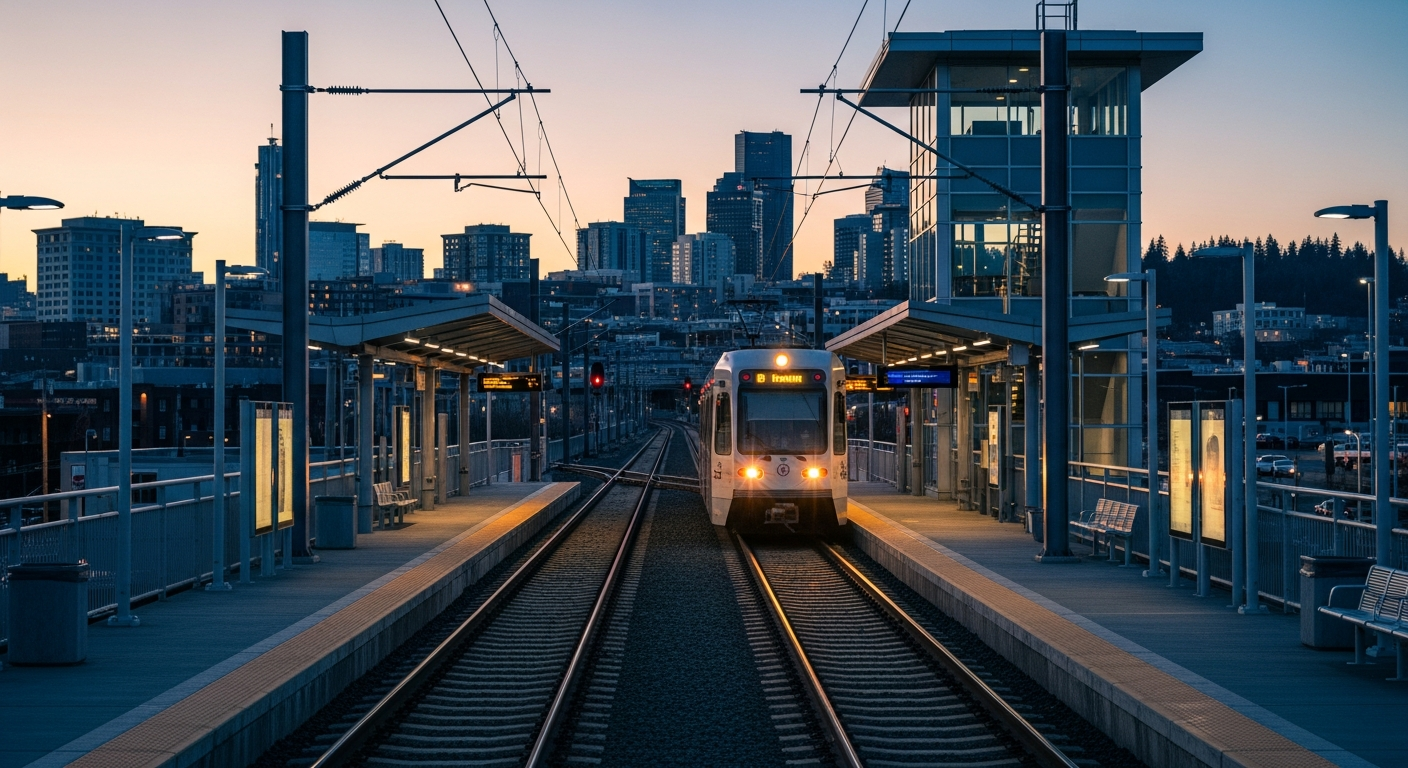
    Northwest Everett’s transit picture is undergoing its biggest change in decades. Everett Transit — the city-run bus system that has served the neighborhood since 1969 — is in the process of merging into Community Transit, the Snohomish County–wide Public Transportation Benefit Area. The merger, scheduled to complete in phases through 2027 and beyond, means that the routes running through the neighborhood on Rucker, Broadway, and Pacific will eventually be operated by CT under a single unified system. For Northwest Everett riders, the practical effects include unified fares between Everett and the rest of the county, extended service hours on key routes, and direct connections to the planned Sound Transit Link light rail extension to Everett Station.

    Car access is straightforward. Interstate 5 runs along the neighborhood’s southeast edge with entries at Pacific Avenue and Broadway. The Port Gardner waterfront is a 5-minute drive or a 15-minute walk. Downtown Everett is a 10-minute walk from the southern edge of the neighborhood. Paine Field — where Boeing builds the 777X and where commercial flights operate — is a 15-minute drive south.

    Frequently Asked Questions About Northwest Everett

    Is Northwest Everett a good neighborhood for first-time homebuyers?

    It can be. Condos and smaller homes in the 1900–2100 blocks of Rucker and Colby are some of the most accessible entry points in Snohomish County, often well below the county median price. The tradeoff is that older homes often need significant maintenance investment, and buyers should budget for a thorough inspection.

    What’s the walkability like compared to downtown Everett?

    Northwest Everett is more residential than downtown and less dense with retail, but Grand Avenue and Rucker carry most daily needs within a 10–15 minute walk. The EvCC campus adds a significant pedestrian activity layer that makes the neighborhood feel more active than a typical residential district.

    Will the Everett Transit merger change my commute?

    Yes, though changes will roll out in phases through 2027. Residents should expect unified fares with Community Transit, extended service hours on primary corridors, and eventual direct connection to the Sound Transit Link light rail extension once it reaches Everett Station.

    Are there historic district protections for Northwest Everett homes?

    There are no formal local historic district regulations covering the whole neighborhood, though individual properties can be listed on the National Register. The City of Everett’s Historic Commission reviews significant properties and offers guidance to owners of older homes.

    What’s the biggest upcoming change to watch?

    Three things: the Community Transit merger completing through 2027, the Everett Charter Review process that could restructure city government, and EvCC’s continued program expansion. Any of the three could measurably change the neighborhood’s daily rhythm in the next 24 months.

    Related Coverage From Tygart Media’s Exploring Everett Series

  • The Boeing 777X’s FAA Phase 4A Milestone at Paine Field: A Complete 2026 Guide to the Certification Gate, the Lufthansa Delivery, and What Comes Next

    Q: What did the FAA approve for the Boeing 777X in March 2026, and why does it matter for Everett?

    A: On March 17, 2026, the Federal Aviation Administration approved the Boeing 777-9 to enter Phase 4A of Type Inspection Authorization (TIA) flight testing — the gate that puts FAA pilots directly on board production-standard test flights. The approval is the most significant 777X certification milestone since the TIA process began and is a direct precursor to the first flight of the production-standard 777-9 destined for launch customer Lufthansa, which is currently undergoing ground and fuel system testing at Paine Field in Everett. Boeing has publicly confirmed a 2027 first delivery to Lufthansa. For Everett, this is the moment the 777X stopped being a test program and started being a certification-grade production program at Paine Field — after more than seven years of delays and roughly $15 billion in charges against the program.

    What Phase 4A actually means in plain English

    Type Inspection Authorization (TIA) is the FAA process by which a new aircraft earns its Type Certificate. Phases 1 through 3 are largely paperwork and component-level validation. Phase 4 is the in-flight testing phase. Phase 4A, specifically, allows FAA pilots to ride along on test flights and evaluate handling, systems, and safety margins firsthand. Entry into Phase 4A is an FAA judgment that the aircraft has reached sufficient maturity to expose federal regulators to it in flight. For a program that has spent years in ground testing and engineering test flight, that judgment is a de-risking moment — the FAA effectively saying “yes, this airframe is ready for us on board.”

    The Paine Field airframe at the center of this

    The aircraft doing the heavy lifting here is the first production-standard 777-9, built to Lufthansa’s configuration and parked on the Boeing Everett ramp at Paine Field. It is distinct from the 777X test fleet Boeing has been flying since 2020. Test aircraft are built with instrumentation and modifications that will never ship to a customer. A production-standard airframe is configured exactly as airlines will receive it — same interior, same systems, same weight-and-balance profile. Flying the production-standard jet through TIA is the step that converts accumulated test learning into a certifiable aircraft type.

    Why 2027 delivery is the number that matters

    Boeing’s Q1 2026 earnings commentary explicitly anticipated a 2027 first delivery to Lufthansa. Seven years late relative to the original timeline, the program has absorbed roughly $15 billion in charges since 2018. Certification in late 2026, first delivery in 2027, and a gradual ramp of deliveries to Lufthansa, Emirates, Qatar, Singapore, British Airways, and Cathay Pacific through the late 2020s is the current public trajectory. Every major milestone — Phase 4A, Phase 4B, Phase 5, F&R testing, ETOPS — is gated by FAA approval and can still slip. But Phase 4A being granted is the highest-confidence signal in years that the program is moving.

    The Everett factor: why Paine Field is the 777X story

    Every 777X that has ever flown has flown out of Paine Field. The entire production line is in Everett. The flight test program is based at Paine Field. The production ramp, when it happens, happens in Everett — including the reopened 40-26 final assembly building at the north end of the factory. The economic footprint of a moving 777X program is Everett’s single largest aerospace variable for the next decade, outside the 737 North Line activation. Hiring, supplier workflow, and the overall density of aerospace activity on Airport Road and Seaway Boulevard all move with 777X certification progress.

    What comes after Phase 4A

    Phase 4B: additional FAA-on-board testing, deeper into the envelope and into specific flight regimes. Phase 5: the final phase of TIA, leading up to Type Certificate issuance. Functionality & Reliability (F&R) testing: a grueling cycle in which the aircraft flies a realistic airline-duty pattern to prove operational maturity. Extended Operations (ETOPS) certification: required for the long over-water routes the 777-9 is designed to fly, including Lufthansa’s Frankfurt-to-Asia and Frankfurt-to-the-Americas profiles. Each gate is an FAA decision.

    The certification timeline Everett residents should track

    Q2 2026: first flight of the Lufthansa production-standard airframe from Paine Field. Summer–fall 2026: Phase 4A and 4B in-flight testing. Late 2026: Phase 5 and Type Certificate decision. Late 2026 through 2027: F&R and ETOPS testing. 2027: first customer delivery to Lufthansa. Late 2020s: ramp to cruise-rate production of the 777-9 and 777-8 variants.

    Frequently Asked Questions

    When exactly did the FAA approve Phase 4A?

    March 17, 2026. The approval was reported by The Air Current and widely covered by aviation press, including Simple Flying and Aviation A2Z.

    Is this the first flight of a production 777X?

    No. The first flight of the production-standard Lufthansa aircraft is the next upcoming milestone, publicly anticipated for April 2026. Earlier 777X flights used test-fleet aircraft with instrumentation not present on customer jets.

    Will this aircraft be delivered to Lufthansa?

    Yes, that is the plan. Lufthansa is the launch customer of the 777-9 and is scheduled to receive its first aircraft in 2027 per Boeing’s Q1 2026 commentary.

    How many 777X orders does Boeing hold?

    As of early 2026, Boeing’s order book for the 777X family includes Lufthansa, Emirates, Qatar Airways, Singapore Airlines, British Airways, Cathay Pacific, ANA, Etihad, and others, totaling several hundred aircraft. Exact figures are updated in Boeing’s monthly orders and deliveries reports.

    What’s the difference between Phase 4A and full certification?

    Phase 4A is one in-flight testing sub-phase within the Type Inspection Authorization process. Full certification requires completing Phase 4A, Phase 4B, Phase 5, Functionality & Reliability testing, and Extended Operations certification — and receiving a Type Certificate from the FAA.

    Has Boeing quantified the total 777X program cost to date?

    Boeing has disclosed roughly $15 billion in program-related charges since 2018 through public earnings materials. That figure is the publicly cited reference point for the program’s cumulative financial delay cost.

    Does this affect the 737 North Line or 767/KC-46 programs in Everett?

    Not directly. All three programs share the Everett factory complex but are separately managed. 777X certification progress is, however, a positive signal for overall Boeing Everett capacity planning and hiring.

    Related coverage

    See our source brief on the FAA Phase 4A clearance at Paine Field, our earlier Boeing 777X production-standard first flight guide, and our aerospace worker coverage of the IAM 751 Machinists Institute.

    Related Coverage From Tygart Media’s Exploring Everett Series

  • For Boeing Everett Workers: What FAA Phase 4A on the 777X Actually Means for the Line, the Schedule, and Your Job in 2026

    Q: I work at Boeing Everett — on the 777X line, in the 40-26 building, on quality, on tooling, in the supplier chain. What does the March 17 FAA Phase 4A approval actually mean for me?

    A: For workers on the 777X program at Paine Field, the Phase 4A approval is the single strongest demand signal the program has produced in years. It means (1) the Lufthansa production-standard aircraft parked on the ramp is on a credible path to its first flight and to Type Certificate later in 2026; (2) Boeing’s Q1 2026 earnings commentary confirmed 2027 first delivery, which converts into a real production ramp through the late 2020s; (3) hiring and training pipelines — including the IAM 751 Machinists Institute across the street — that exist specifically to staff the 777X line have a firm program timeline to build against; (4) the full factory workflow in Everett (40-26 final assembly, the flight line, the fuel dock, the paint hangars, the delivery center) now has a certification-gated cadence to plan around, instead of a dateless test program. The short version: the program just got meaningfully more real.

    What Phase 4A changes on the factory floor

    In the test-program phase (which 777X has been in since 2020), every flight is essentially a one-off engineering event. Parts and configurations change between flights. Documentation burden is high. The line through the factory is a test-build line, not a production-build line. In the TIA Phase 4A phase, and moving toward Phase 5 and Type Certificate, the factory shifts. The Lufthansa airframe on the ramp was built to production-standard configuration, meaning it uses production tooling, production drawings, and production specification sheets. Parts coming in from suppliers get traceability assurance against the TC baseline. That standardization is what lets the line actually build airplane 2, airplane 3, airplane 4 at ramp rate instead of as engineering one-offs.

    The production ramp in numbers

    Boeing has not published 777X ramp-rate numbers for 2027 and beyond — ramp rates are sensitive competitive data. What is public: Lufthansa first delivery in 2027, plus an order book of several hundred jets across Lufthansa, Emirates, Qatar, Singapore, British Airways, Cathay Pacific, ANA, Etihad, and others. That order book converts to a multi-year production plan that sets your shift schedule, your overtime profile, and whether the line runs three shifts or two.

    Hiring: what Phase 4A unlocks

    Boeing publicly confirmed in early 2026 that it is pulling 100 to 140 new factory employees per week across its production network. A meaningful share of that hiring is directed at Everett — including staffing the 777X production line and the 737 North Line activation. The IAM 751 Machinists Institute, 23,000 square feet directly across the street from the factory, is the primary union-adjacent pipeline feeding new mechanics into the line. A firm 777X certification-to-delivery timeline gives HR, training, and the union a real number to hire against.

    Shift work, overtime, and what to watch

    Three-shift operation on the 777X line has been on-and-off during the test program. A certification-gated production ramp usually means three shifts come back as the ramp rate climbs. Watch for IAM 751 communication on overtime policy, the shift differential schedule, and any mid-year contract updates tied to production volume. Watch Boeing’s monthly orders & deliveries reports for the 777X section — those are the public leading indicators of your shift intensity.

    The cross-program picture at Paine Field

    777X certification progress does not exist in a vacuum. The 737 North Line is activating in Everett. The 767/KC-46 line is transitioning (see our 767 sundown coverage). The 777F Freighter is still shipping. All four programs share factory space, shared services, crossover mechanics, quality engineering, and supplier relationships. A healthy 777X certification schedule takes pressure off the overall Everett labor plan and keeps the factory dense.

    Frequently Asked Questions

    Will 777X production actually ramp in 2027?

    Boeing’s Q1 2026 commentary anticipates first delivery to Lufthansa in 2027. Actual ramp rate depends on Type Certificate timing (late 2026 target) and subsequent F&R/ETOPS testing. Public statements from Boeing and Lufthansa are the source of truth.

    Is the 737 North Line activation affected by 777X progress?

    They are separate programs but share Everett factory resources. Healthy 777X certification is a positive signal for overall Everett hiring and capacity planning, including 737 North Line staffing.

    Where do I find open positions tied to the 777X ramp?

    Boeing’s careers site at jobs.boeing.com lists open positions. The IAM 751 Machinists Institute (iam-machinistsinstitute.org) is the union-adjacent training pathway most relevant to production mechanic roles.

    Will there be overtime on the 777X line as the ramp accelerates?

    Production ramps typically drive overtime. Overtime policy and volume depend on the union contract and Boeing’s production plan, which are not publicly disclosed for forward windows.

    Do I need 777X-specific training if I’m currently on another line?

    Program-specific training is standard for moves between programs. The Machinists Institute across the street offers aerospace fundamentals and some program-specific pathways; Boeing’s internal training handles specific line credentials.

    Related coverage

    See the complete 2026 Boeing 777X Phase 4A guide, our earlier coverage of Boeing’s 100-140/week hiring pace, and our aerospace worker guide to the IAM 751 Machinists Institute.

    Related Coverage From Tygart Media’s Exploring Everett Series

  • For Snohomish County Aerospace Suppliers: How to Read the 777X Phase 4A Milestone and Plan for the 2027 Delivery Ramp

    Q: I run or work at a Snohomish County aerospace supplier with exposure to the Boeing Everett 777X program. How should I read the March 17, 2026 FAA Phase 4A approval, and how does it change my planning horizon?

    A: For suppliers with 777X content — machine shops, composite fabricators, wire harness shops, electronic sub-assemblies, systems integrators, and tooling providers operating out of Everett, Mukilteo, Marysville, Arlington, and Lake Stevens — Phase 4A matters because it converts a dateless program into a gated one. That means (1) a credible 2027 first delivery to Lufthansa and a multi-year ramp behind it, per Boeing’s Q1 2026 commentary; (2) production-standard configuration is now the baseline for 777X-destined parts, not test-fleet specials; (3) supplier capacity planning, tooling investment, and hiring inside your shop now has a real program curve to build against rather than the test-program pacing of the last several years; (4) the ~$15 billion in charges Boeing has absorbed is the sunk cost — the forward story is production volume, and your exposure to that volume is a planning asset, not just a risk. The short version: if you are a Snohomish County aerospace supplier, this is the milestone that changes your 2026–2028 forecast from scenario-based to program-based.

    Why the TIA gate matters to your tooling and your tier

    Type Inspection Authorization gates the configuration your parts get built against. In Phase 3 and earlier, suppliers were often fielding engineering changes, running one-off test-fleet builds, and holding back on dedicated tooling. Phase 4A sends a signal that the airframe is mature enough for FAA on-board testing — which means the configuration your parts are being certified against is close to the configuration that will ship for the next decade. Dedicated tooling, fixture investment, and second-source qualification all become easier to justify against a certification-gated baseline than against a moving test target.

    What the 2027 Lufthansa delivery unlocks on your side

    First delivery is the starting gun for the ramp, not the ramp itself. The public order book — Lufthansa, Emirates, Qatar, Singapore, British Airways, Cathay Pacific, ANA, Etihad, and others — implies a multi-year production plan that translates backward into your purchase orders. Ramp rates aren’t publicly disclosed but the PO cadence into your shop is the leading indicator. A Phase 4A approval tightens the confidence band on those forward POs.

    The Snohomish County supplier density picture

    Washington state hosts hundreds of aerospace suppliers. Economic Alliance Snohomish County maintains a supplier directory. A significant share of those have 777X content, 767/KC-46 content, or both. The 767-to-KC-46 transition (covered in our Run 7 supplier guide) is a separate book to plan against. The 777X ramp is additive — it is the program most likely to grow Everett-area supplier demand through the late 2020s.

    What to do now

    Book a capacity review. Re-run your forward PO model against a 2027 Lufthansa first-delivery assumption and a conservative ramp curve through 2028 and 2029. If you have 767 content winding down, build the 777X ramp assumption into your Everett-market hiring plan. Re-qualify your second sources against the production-standard TC baseline. Talk to your Boeing SCM contact about long-lead tooling investments you deferred during the delay years. And watch Phase 4B and Phase 5 milestones — those are the gates that could move your PO profile forward or backward.

    Workforce considerations for suppliers

    Aerospace hiring in Snohomish County is regionally tight. Boeing’s 100-to-140 per week hiring pace competes directly with suppliers for the same production-mechanic and technician talent. The IAM 751 Machinists Institute is building a pipeline that suppliers can tap into, not just Boeing. Supplier-side apprenticeships and community college partnerships with Everett Community College and Edmonds College matter here — in a tight labor market, the supplier that built the pipeline early is the one that staffs up on time.

    Frequently Asked Questions

    Is Phase 4A a hard commit to 2027 delivery?

    No milestone in an aircraft certification program is a hard commit. Phase 4A is a strong FAA signal that the airframe is mature; actual Type Certificate timing depends on Phase 4B, Phase 5, F&R, and ETOPS results. Boeing’s public 2027 Lufthansa first delivery stands as the current public commitment.

    Where can I find Boeing’s current 777X order book?

    Boeing’s monthly orders & deliveries report on boeing.com is the official public source.

    What’s the difference in supplier demand between 777X and 767/KC-46?

    The 767-300F commercial line is in sundown (see our Run 7 coverage); KC-46 tanker deliveries continue through the decade. The 777X is a forward-ramping program with a multi-year growth trajectory through 2030. Different order profile, different forward curve, different risk-exposure mix.

    How do I become a 777X-qualified supplier if I’m not already?

    Work through Boeing Supplier Management. Economic Alliance Snohomish County and the Washington State Department of Commerce both maintain aerospace supplier onboarding resources.

    Are there state or county incentives tied to aerospace supplier capacity expansion?

    Yes — see Washington State Department of Commerce and Snohomish County economic development programs. Specifics change annually and should be confirmed directly with those agencies.

    Related coverage

    See the complete 2026 Boeing 777X Phase 4A guide, our 767-to-KC-46 supplier transition guide, and our aerospace worker coverage of the IAM 751 Machinists Institute.

    Related Coverage From Tygart Media’s Exploring Everett Series

  • What Everett’s Transit Merger Means for You as a Rider: A 2026 Resident’s Guide to the Community Transit Annexation

    Q: I ride Everett Transit or Community Transit today. What actually changes for me if the merger goes through?

    A: If you live inside Everett city limits and use the bus, four practical things change after the Everett Transit → Community Transit annexation is approved and phased in: (1) one agency, one fare structure, one app, one schedule for every bus you ride inside the city; (2) your sales tax rate on purchases in Everett goes up by roughly 0.6 percentage points, reflecting Community Transit’s 1.2% transit tax replacing Everett Transit’s ~0.6%; (3) existing Everett Transit passes will be honored during an approximately one-year transition per public statements from both agencies; (4) route changes inside Everett will be evaluated as part of Community Transit’s regular service change cycle — potentially more coverage from the higher tax base, potentially some consolidation where Everett Transit and Community Transit routes already overlap.

    The rider’s cheat sheet

    Today: Two agencies. Everett Transit runs local Everett routes and some downtown circulators. Community Transit runs Swift BRT, commuter buses to Seattle and Lynnwood, and the rest of Snohomish County’s network. After the merger: One agency. Community Transit operates all of it. Your OneBusAway, your ORCA tap, your transfer from a Swift Blue Line bus to a local Everett route — all in one system.

    What happens to your pass

    Both agencies have publicly committed to honoring existing Everett Transit fare media during the transition. The interlocal agreement (the legal document the two agencies are drafting through summer 2026) will spell out exactly how long. Expect a unified Community Transit fare structure to phase in over approximately a year after the agreement is signed. If you buy monthly, watch for official notice before making your next annual commitment.

    Your bus route, specifically

    Everett Transit routes 2, 3, 6, 7, 8, 12, 18, 29, and 70 are the most likely to be reviewed for integration with neighboring Community Transit service. Some may keep their current alignment under new numbers. Some may consolidate with overlapping Community Transit routes. And some may actually expand frequency or span of service — the stated goal from both the mayor and the Community Transit CEO is to grow service using the higher sales tax revenue, not cut it. Specific route decisions happen in the interlocal agreement and the first post-merger service change cycle.

    The sales tax change

    Inside Everett city limits, the transit portion of sales tax would rise from ~0.6% to 1.2% — a 0.6-point increase. On a $100 purchase in Everett, that is an extra $0.60. On a $25,000 car purchase, that is an extra $150. It does not apply to groceries, prescription medication, or most services. It does apply to most retail and restaurant transactions inside the city.

    Why this isn’t going to your ballot

    The 2025 state law (amended in 2026) that made this pathway available treats transit annexation as a government-to-government action between two PTBAs (Public Transportation Benefit Areas). The legal trigger is a public hearing plus approval from both boards, not a voter referendum. If you want to weigh in, the public hearing(s) — expected in the September to October window at City Hall and at Community Transit board meetings — are the formal venue. Council member contact information is on everettwa.gov.

    What to do now if you’re a rider

    Keep riding. Nothing changes until the interlocal agreement is signed, which is targeted for late 2026, and then the phase-in takes roughly another year. Watch for official service change notices from Everett Transit and Community Transit, sign up for Community Transit’s rider alerts, and if you have strong feelings about specific Everett Transit routes, attend the public hearings when they are scheduled.

    Frequently Asked Questions

    Will Swift bus rapid transit change?

    No. Swift is already Community Transit and continues as-is.

    Will my commuter bus to Seattle change?

    Sound Transit Express buses and future Everett Link light rail are operated by Sound Transit, a separate regional agency, and are not part of this annexation.

    Will fares go up right away?

    No. Existing Everett Transit fare media will be honored during transition per public statements from both agencies. A unified Community Transit fare structure will phase in over approximately one year after the agreement is signed.

    Will routes inside my Everett neighborhood be cut?

    Not automatically. Route decisions happen in the interlocal agreement and the first post-merger service change cycle. Both the mayor and Community Transit CEO have publicly stated the goal is service expansion funded by the higher sales tax — not cuts. The public hearings in the fall are where specific neighborhoods can weigh in.

    Do I pay more in property tax?

    No. This is a sales tax change inside Everett city limits only, not a property tax measure.

    Related coverage

    See the complete 2026 Everett Transit merger guide, our original coverage of the April 22 announcement, and our resident guide to Everett’s 2027 budget deficit.

    Related Coverage From Tygart Media’s Exploring Everett Series