Tygart Media · Insurance Claims Guides · Denied claims
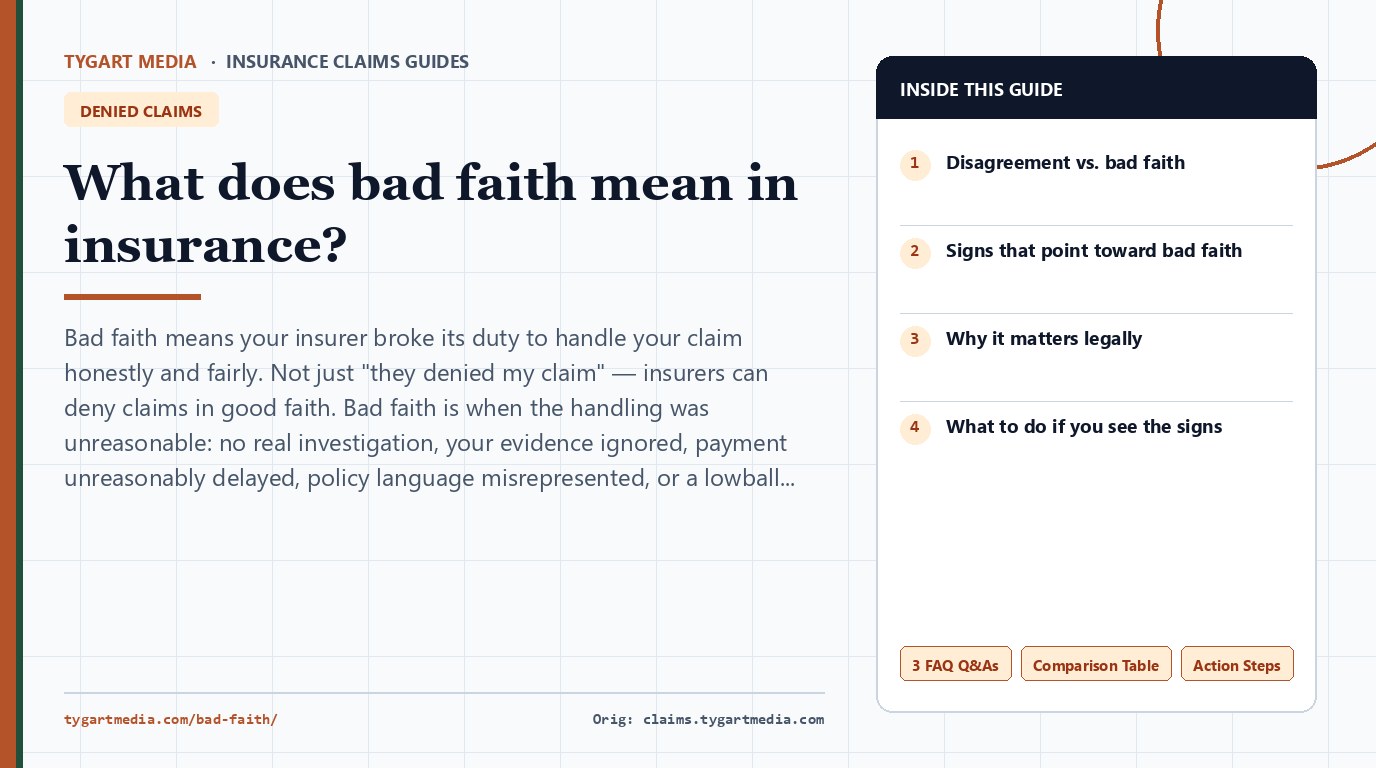
Disagreement vs. bad faith
This distinction matters, because the word gets thrown around loosely. A disagreement is: the insurer investigated, applied the policy, and reached a conclusion you don’t like. That’s what appeals, re-inspections, and appraisal are for. Bad faith is about conduct: the insurer didn’t investigate, or investigated only enough to justify a no, or sat on your file for months, or told you the policy says something it doesn’t say. The difference is usually in what the company did, not just what it decided.
Signs that point toward bad faith
- Denial without investigation. No adjuster visit, no expert consulted — a decision made from a desk.
- Evidence ignored. You sent photos, timestamps, a contractor’s statement; the denial letter addresses none of it.
- Unreasonable delay. Weeks of silence past your state’s response deadlines, with no explanation. How long they have to respond →
- Misrepresented policy language. The denial cites an exclusion that doesn’t say what they claim it says — compare the letter against your actual policy.
- Shifting reasons. The reason for the denial changes each time you answer the last one.
- A lowball the file can’t support. An offer so far below every estimate that it reads as pressure, not valuation.
Why it matters legally
Bad faith isn’t just a stronger complaint — it’s a separate legal claim. In many states, a successful bad-faith case can mean damages beyond the original claim amount, and several states let the policyholder recover attorney fees. That’s exactly why insurers take the word seriously, and exactly why you shouldn’t use it in an appeal letter. Keep appeals factual → Save the legal conclusions for the attorney.
What to do if you see the signs
- Document everything. Every delay, every unanswered message, every shifting explanation. Your timeline is the evidence.
- File a DOI complaint. Regulators track exactly this kind of conduct. How to file →
- Talk to an insurance-dispute attorney. Bad faith has state-specific rules and deadlines — this is not a DIY rung. Many offer free consultations. Public adjuster vs. attorney →
Disagreement vs. misconduct
| Disagreement (not bad faith) | Misconduct (possible bad faith) |
|---|---|
| Adjuster values damage lower than you do | Refusing to investigate your documented damage |
| Slow but communicating | Going silent for weeks with no explanation |
| Denying based on a plausible policy reading | Misrepresenting what your policy says |
| Asking for more documentation | Moving the goalposts on documentation repeatedly |
Bad faith is a legal conclusion, not a feeling. When the pattern looks like the right column, stop writing letters and talk to an attorney.