Author: William Tygart

  • Five Years of Deferral, Ten Years to Tax-Free: The New Opportunity Zone Math

    Five Years of Deferral, Ten Years to Tax-Free: The New Opportunity Zone Math

    This is part of the series that starts with Inside the Line: Puyallup’s Opportunity Zone, Explained Like It Matters — the hub page for Puyallup’s nominated Opportunity Zone tract. This piece is the money: how the tax incentive actually computes.

    Opportunity Zone coverage usually dies in one of two ways: it waves at “tax benefits” without ever doing arithmetic, or it drowns in fund-manager vocabulary. Here is the middle path — the actual mechanics of Opportunity Zones 2.0, with numbers, using the same example throughout: a $1,000,000 capital gain, and a top federal rate of 23.8% (20% capital gains plus the 3.8% net investment income tax). Federal only; your rate and your state picture will differ. Illustrative, not tax advice.

    First, what changed: 1.0 versus 2.0

    The first Opportunity Zone program (2018–2026) had a design flaw baked in: its benefits expired on a fixed calendar. Deferral ended December 31, 2026 no matter when you invested, so every year the program aged, the incentive got weaker. The step-ups withered to zero. Rational money waited.

    The 2025 law (Public Law 119-21) rebuilt it as a permanent program:

    • Rolling deferral. Invest a gain on or after January 1, 2027, and the tax is deferred five years from your investment date — not to a fixed year-end.
    • The step-up is back, simplified. One step-up: 10% of the deferred gain is forgiven at the five-year mark. (The old 5-year/7-year ladder is gone. Qualified rural funds get 30% — Puyallup’s tract is urban, so 10% is the local number.)
    • The ten-year exclusion survives intact. Hold the fund investment at least ten years and the appreciation is excluded from federal tax — with a fair-market-value basis step-up available on sales up to the 30-year mark.
    • The map renews. New zones every ten years, tighter eligibility, and — new in 2.0 — real fund-level reporting, so the public can see what the money did.
    • The bridge rule that matters this winter. Which program you get depends on when the gain goes into the fund. Invest by December 31, 2026 and you are under the dying 1.0 rules, with the deferred gain taxed almost immediately. Invest the same gain on January 1, 2027 and the full 2.0 runway opens. One day, two different programs.

    The three clocks every investor is actually running

    Strip away the vocabulary and an Opportunity Zone investment is three clocks:

    Clock one: 180 days. From the day the gain is realized — the sale closes, the K-1 arrives — the investor has 180 days to place the gain in a Qualified Opportunity Fund. Miss it and the incentive is gone; this deadline, not the tax code’s fine print, is what kills most would-be OZ deals. (Partnership gains have their own start-date wrinkles — one of several places a CPA earns their fee.)

    Clock two: five years. The deferred gain comes due at the five-year anniversary of the investment. By then the step-up has applied, so the tax is computed on 90% of the original gain.

    Clock three: ten years. Cross ten years in the fund and the appreciation on the QOF investment itself becomes excludable. This is the clock that aligns the investor with the place: the full benefit only exists if the money stayed, worked, and grew inside zones for a decade.

    Three investors, one $1,000,000 gain

    Investor A pays the old-fashioned way. Sells in 2027, keeps the gain, invests wherever. Tax on $1,000,000 at 23.8%: $238,000, due with the 2027 return. Investable remainder: $762,000.

    Investor B uses the zone but leaves at year three. The $1,000,000 goes into a QOF inside a designated tract. Selling the fund interest early is an inclusion event: the deferral ends and the deferred gain is recognized — with no step-up yet and no exclusion. B got three years of float on the tax money and nothing else. The lesson is structural: this program does not reward tourists.

    Investor C stays for the whole design. Year five: the deferred gain is recognized at $900,000 after the step-up — tax of $214,200 instead of $238,000, a $23,800 saving, plus five years of deferral on the balance. Year ten: suppose the fund investment has doubled to $2,000,000. The $1,000,000 of appreciation is excluded — at the same rate, roughly $238,000 of tax that simply never happens. Combined effect versus Investor A: about $262,000 of federal tax avoided or deferred, before counting what five years of full principal working (instead of $762,000) did to the returns themselves.

    That last point is the quiet one. Deferral is not just a later tax bill; it is the government’s share of your gain working in your project for five years, interest-free.

    Who around here actually has a gain?

    The investor in these examples is not a caricature from a coastal fund brochure. In Pierce County, the people holding seven-figure gains in any given year are ordinary:

    • Business sellers. The owner who sells the company they built for thirty years — the single biggest gain most families ever realize, and it arrives all at once.
    • Real estate sellers. The family that sells the rental portfolio, the commercial building, or the development parcel.
    • Partners and shareholders. Anyone whose K-1 carries a share of a partnership’s sale gain — often people who never chose the timing at all.

    Each of them faces the same 180-day clock and the same fork: pay the tax and move on, or route the gain through a fund into places like tract 53053073405 and let the clocks run. Puyallup’s designation matters to them because a fund needs projects; projects need to be findable, packaged, and ready when somebody’s clock starts ticking.

    What a fund is, minus the mystique

    A Qualified Opportunity Fund is an investment vehicle — a corporation or partnership — that self-certifies to the IRS (Form 8996) and must hold at least 90% of its assets in qualified zone property: zone real estate being built or substantially improved, or stock and partnership interests in qualified zone businesses. Investors report their deferrals annually (Form 8997). Funds can be national platforms, regional specialists — Pierce County has already seen both models build real projects — or single-project vehicles formed around one development.

    Two cautions belong in any honest version of this piece. The tax benefit never rescues a bad project; a failed building with a step-up is still a failed building, and the incentive’s size (roughly a quarter of the gain, best case) is smaller than the swing between a good deal and a bad one. And Washington investors have a second layer to model: the state’s own capital gains excise tax is a separate system from the federal one, and how the two interact on a given gain is a question for your tax advisor, not a blog post.

    Why this matters before January 1

    The Puyallup tract’s designation, if Treasury certifies it as expected by late November, opens for 2.0 investments on January 1, 2027. Gains realized in late 2026 will hit their 180-day windows in the first half of 2027 — which means the investors who could fund the tract’s first projects are, right now, in the middle of the sales that create their gains.

    That is the real deadline pressure in this story. Not the tax code. The calendar of other people’s closings — and whether Puyallup has projects ready to be found when the clocks start.

    Next in the series: the map — an anatomy of tract 53053073405, between the Downtown and South Hill growth centers. Sources: P.L. 119-21 §70421 and IRC §1400Z-2 as amended (rolling five-year deferral, 10%/30% step-ups, 30-year exclusion window); 2026 Opportunity Zones Handbook; Federal Reserve Community Development, “Opportunity Zones 2.0 will offer place-based investment in low-income communities”; OZ HQ 1.0-vs-2.0 transition guidance (investment date determines the regime; Notice 2026-40). Figures are illustrative simplifications, not tax advice.

  • Inside the Line: Puyallup’s Opportunity Zone, Explained Like It Matters

    Inside the Line: Puyallup’s Opportunity Zone, Explained Like It Matters

    On October 14, 2026, the City of Puyallup announced that Governor Bob Ferguson had selected one of our census tracts — tract 53053073405 — for Washington’s Opportunity Zones 2.0 program.

    One tract. Ten years of federal tax incentives, if the Treasury Department certifies it. Almost nobody in town has heard about it yet, and almost everything written about Opportunity Zones is written for fund managers, not for the people who live inside the line.

    This page is the fix for that. It is the whole map: what the designation is, what stage it is actually at, how the money works in plain English, what it could build here — with real projects, not brochure language — and what it honestly cannot do. This is the first piece in a series, and this page will be updated as the story moves.

    What happened — and what still has to happen

    The City submitted this tract for consideration earlier this year, following direction from the Puyallup City Council. The Governor’s office then chose Washington’s slate: 99 nominations drawn from 152 applications, spanning 27 counties and 17 tribal lands.

    Here is the part the press releases compress: a nomination is not a designation. The nominations now sit with the U.S. Treasury Department, which certifies them under its published procedure. Treasury’s review window closes by November 27, 2026 at the latest, and as of this writing no certified list has been published for any state.

    If certified — and nominations that cleared a competitive state process are the strong favorites — the designation takes effect January 1, 2027, and runs for ten years, through December 31, 2036.

    Mayor Ned Witting called the selection “a major step forward in our ongoing economic development efforts” and said the designation “gives us another valuable tool to attract investment, create jobs, and encourage thoughtful redevelopment.” The City has already named its next phase: outreach to the property owners, developers, investors, and businesses inside the designated area.

    The tract: between two growth centers, next to a hospital

    Geography is the story here. Tract 53053073405 sits between two designated Regional Growth Centers — Puyallup Downtown and Puyallup South Hill — and near MultiCare Good Samaritan Hospital, the city’s anchor healthcare employer.

    The City’s own application made the pitch in plain terms: an area with underutilized and vacant properties that could benefit from new investment, close to major employment centers, healthcare facilities, transportation connections, and established commercial areas.

    It also qualified under tightened rules. Opportunity Zones 2.0 shrank eligibility — a tract now needs a median family income at or below 70% of the area median, or a poverty rate of at least 20% — and killed the old rule that let merely adjacent tracts in. Nationally, roughly 6,500 tracts are expected under 2.0, down from 8,764 in the first round. This line was drawn around a place that meets the stricter test.

    This is a town in motion on several fronts at once — the same month brought a new farmers market filing with 134 vendor spaces a short drive away. The zone is the biggest of the currents, and the least understood.

    How the money works

    An Opportunity Zone is not a grant. Nobody sends Puyallup a check. It is a tax incentive aimed at private investors who have capital gains — from selling a business, a building, or a portfolio — and it pays them to put those gains to work inside the line for a long time.

    The mechanics, in order:

    • The 180-day door. An investor who realizes a capital gain has 180 days to reinvest it in a Qualified Opportunity Fund (QOF) — a fund that holds projects inside designated zones.
    • Five years of deferral. For investments made on or after January 1, 2027, the tax on the original gain is deferred for five years from the investment date. Unlike the first program, there is no fixed cliff date — the clock rolls with the investor.
    • A 10% step-up. Hold five years and 10% of the deferred gain is forgiven — only 90% is ever taxed. (Rural funds get 30%; Puyallup’s tract is urban, so 10% is our number.)
    • Ten years to tax-free growth. Hold the fund investment ten years and the growth on it is excluded from federal tax when sold — the program’s real prize, capped at the 30-year mark.
    • Substantial improvement. To renovate an existing urban building, a project must invest at least 100% of the building’s value (excluding land) — the rule that decides which of the tract’s buildings are renovation candidates and which are new-build sites.

    The worked example. Sell a business in 2027 with a $1,000,000 gain. Put the gain into a Qualified Opportunity Fund building inside the Puyallup tract within 180 days. You owe no tax on that gain until 2032 — and then on $900,000, not $1,000,000. Hold the fund for ten years; if the project doubles the money, the second million of growth is never taxed at all. At a 23.8% top federal rate, the step-up alone is worth roughly $24,000, and the exclusion can be worth several times that. The price of all of it is patience: the money works here, for a decade. Illustrative only — not tax advice.

    The 2025 law (Public Law 119-21) also made the program permanent, with a fresh map drawn every ten years, and added the fund-reporting requirements the first round lacked. This is not a pilot anymore. It is a standing feature of the tax code that Puyallup now gets to use.

    The plays: what this could actually build here

    1. The hospital play

    The tract’s anchor is mid-expansion. MultiCare’s Good Samaritan campus is working through a 20-year master plan: a patient care tower budgeted at more than $430 million with 160 new licensed inpatient beds, plus 30 observation beds and a shelled floor for 40 more. The City Council authorized the development agreement for it on January 27, 2026. MultiCare projects the region will need 249 additional beds by 2036.

    The hospital is a nonprofit; its own tower is not an Opportunity Zone project. The play is everything a decade of hospital growth makes necessary around it — medical office space, housing for the staff being hired, childcare that works on shift schedules, support and rehab services, parking. Those are exactly the kinds of projects and businesses QOF money can fund, sitting next door to a guaranteed demand engine.

    2. The housing play

    This is not theoretical. Ten miles away, Qualified Opportunity Fund money has already built housing in Pierce County:

    • The Astor, downtown Tacoma. Unico Properties and Pinnacle Partners — a Qualified Opportunity Zone investment firm — converted the historic 1925 Washington Building into 156 apartments, delivered in 2022.
    • The Moraine, Tacoma’s Hilltop. Ethos Development and Catalyst Opportunity Funds built 160 units of workforce housing, which won CoStar’s 2025 Multifamily Development of the Year for the Seattle market.

    And Puyallup itself just proved it can absorb structured housing capital: Addison Grove, 102 apartments for families earning 50–80% of area median income, closed its financing in 90 days through the Ballmer Group–backed Washington Family Housing Fund. That is a philanthropic model, not an OZ deal — but it shows the development capacity, the permitting path, and the demand are all real here. The tract’s underutilized and vacant properties are the obvious next sites; the substantial-improvement rule sorts them into renovations and new builds.

    3. The business play — the one everyone misses

    Opportunity Zone capital is famous for real estate, but the statute also funds operating businesses inside the zone — Qualified Opportunity Zone Businesses. A growing company in the tract can, in principle, raise equity from a fund that wants ten-year money deployed locally, instead of borrowing from a bank that wants it back in five.

    For a corridor anchored by a hospital, the candidate list writes itself: medical suppliers and services, childcare, food, trades, rehabilitation and home-health support. The rules have real tests — where the assets sit, where the income is earned — but the door exists, and almost no local coverage of this designation will mention it. We will, in its own piece.

    4. What it won’t do

    The honest ledger matters, because the first round of Opportunity Zones earned both its results and its criticism. Nationally, the 1.0 program drew an estimated $100 billion into some 5,600 neighborhoods — and a visible share of it landed in places already rising, in luxury product, and in self-storage.

    Version 2.0 answers some of that: tighter eligibility, no adjacent-tract entries, mandatory reporting, a map that resets every decade. But no tax incentive decides what gets proposed, permitted, or built. That part is local — it runs through the City’s outreach phase, the planning process, and which projects owners and developers actually bring forward. The incentive pays investors who have capital gains. The community’s return depends on the quality of what gets built with their money. Both halves of that sentence stay true for ten years.

    The clock, and the four seats

    • By November 27, 2026: Treasury certification decisions due — the next news beat, and this page will be updated when it lands.
    • January 1, 2027: the designation takes effect; OZ 2.0 investments begin earning the new deferral.
    • December 31, 2028: the original 2018 zone map expires.
    • December 31, 2036: this designation ends. Projects funded under it play out on their own timelines.

    Property owners inside the line have the first move: know your tract status and your building’s basis before investors come calling — it determines whether you’re a renovation or a new-build conversation. Investors with gains have a timing decision: the dying 1.0 rules versus the 2.0 runway that opens January 1, and a 180-day clock either way. Businesses have homework: the operating-business tests, read with counsel before restructuring anything. The city has the outreach it already announced — the quality of the public pipeline it builds will shape what the money finds.

    The scoreboard

    Projects announced inside tract 53053073405 under this designation: none yet. The designation is not yet certified, and the starting gun is January 1. That empty space is the reason this series exists — to be the record, kept in public, of what a ten-year incentive actually builds in one American town of 43,730 people.

    Read the series so far: Five Years of Deferral, Ten Years to Tax-Free — the new Opportunity Zone math, with real numbers; and Between Two Growth Centers — the anatomy of the tract itself; and The Hospital Play — what a $430 million expansion builds around itself; and The Housing Play — three real Pierce County models; and The Business Play — the door nobody walks through; and The Honest Caveats — what 1.0 got wrong and what 2.0 fixed; and The Playbook — four seats, one deadline. The series is complete; this page now lives as the record — updated when Treasury certifies the list and as the scoreboard fills.

    Sources: City of Puyallup news release, October 14, 2026; Washington State Department of Commerce Opportunity Zones 2.0 nomination records; Rev. Proc. 2026-14 certification timeline; Opportunity Zones 2.0 provisions under P.L. 119-21 (Federal Reserve Community Development summary; 2026 Opportunity Zones Handbook); Puyallup City Council action on the Good Samaritan development agreement, January 27, 2026; Unico Properties (The Astor); Catalyst Opportunity Funds (The Moraine); Puget Sound Business Journal via Propmodo (Addison Grove). This article is general information, not tax, legal, or investment advice.

  • 134 Vendor Spaces: A New Puyallup Farmers Market Is in Permitting

    134 Vendor Spaces: A New Puyallup Farmers Market Is in Permitting

    On October 20, Pierce County filed the environmental paperwork for a new farmers market in Puyallup: 4.77 acres, roughly 134 vendor spaces, a 136-stall parking lot, and a comment window that stays open until November 19.

    It is not approved yet. It is not a done deal with a ribbon-cutting date. It is a proposal at the start of the public process — which is exactly when it is worth paying attention, because this is the stage where the shape of the thing can still change.

    And the shape matters. A market with 134 stalls is not a quaint Saturday event. It is 134 small businesses standing in a field, each one needing the same three things every business in 2026 needs: to be findable, to be payable, and to be remembered after the customer walks away.

    What the filing actually says

    The proposal, filed under SEPA record 202604433 with Pierce County as lead agency, describes a weekend farmers market operating no more than 90 days per year.

    • The site: 4.77 acres in Puyallup (the register notice describes the property by size, not by street address).
    • The market: approximately 134 vendor spaces.
    • The parking: a 136-stall lot built with pervious asphalt — pavement that lets rain drain through instead of running off.
    • The facilities: a bathroom trailer served by an onsite septic system.
    • The applicant: Mitchell Brells of Momentum Civil.
    • The deadline that matters: public comments on the filing are due November 19, 2026.

    SEPA is Washington’s State Environmental Policy Act — the review that asks what a project does to traffic, drainage, noise, and neighbors before anyone approves it. The comment period is the public’s seat at that table.

    Where it sits in the process

    Right now this market exists as a description in a state register. Between here and opening day there are findings, conditions, and permits, and any of them can reshape the project.

    That is not a reason to shrug. It is the reason the comment window exists. Puyallup residents who care — about the traffic on their street, or about the chance to sell what they grow two miles from home — have until November 19 to say so on the record.

    The full filing is public. Anyone can read it, and anyone can comment on it, at the state’s SEPA register: SEPA record 202604433. Local coverage of the filing is at The Puyallup Wire.

    134 stalls is 134 small businesses

    Here is the part I keep coming back to. Puyallup already knows how to run a market — the Saturday market at Pioneer Park ran April through October this year, like it does every year. Market culture is not the risk here.

    The risk is quieter. A vendor can have the best jam, the best flowers, the best sourdough in Pierce County, and still be invisible — no page a search engine or an AI assistant can read, no way to take a card when the cash runs out, no way for a happy customer to find them again in February.

    Findable means there is a real page somewhere with your name, what you sell, and where you will be — written plainly enough that Google, Bing, and the AI assistants can quote it. When somebody asks their phone “who sells sourdough at the Puyallup market,” the answer comes from what is written down about you. We tested this on a local question recently — we asked AI who to call for water damage in Puyallup — and watched exactly how those answers get built.

    Payable means the money part is settled before the first customer shows up: tap-to-pay working, prices posted, no fumbling. A market stall is a storefront with a four-hour day. Everything has to work the first time.

    Remembered is the one most vendors skip. A customer who loves your product at a market in July is worth ten strangers in December — if you gave them a way to stay in touch. An email list, a follow, a card with a real link on it. Reviews and mentions are the new word of mouth, and they only accumulate for businesses that can be found again.

    If you want one of those stalls, start now

    Nobody knows yet when — or whether — this market opens. Permitting will decide that. But the vendors who will be ready are the ones who treat the wait as lead time:

    • A name and one plain sentence about what you sell, the same everywhere it appears.
    • A findable page — even a simple one — with your market days, your products, and a way to reach you.
    • Payments sorted: card and tap-to-pay tested before opening day, not during the first rush.
    • A way to be remembered: an email signup, a stamp card, a QR code that goes somewhere real.

    And if you have an opinion about the market itself — for it, against it, or about the traffic either way — the county is taking comments until November 19. That window is the story right now. The stalls come later.

    Sources: Washington State SEPA Register, record 202604433 (Pierce County, issued October 20, 2026); The Puyallup Wire, “Puyallup Farmers Market SEPA Filed” (October 2026).

  • Storm Updates: Four Corners Flood — Oct 22 Morning

    Storm Updates: Four Corners Flood — Oct 22 Morning

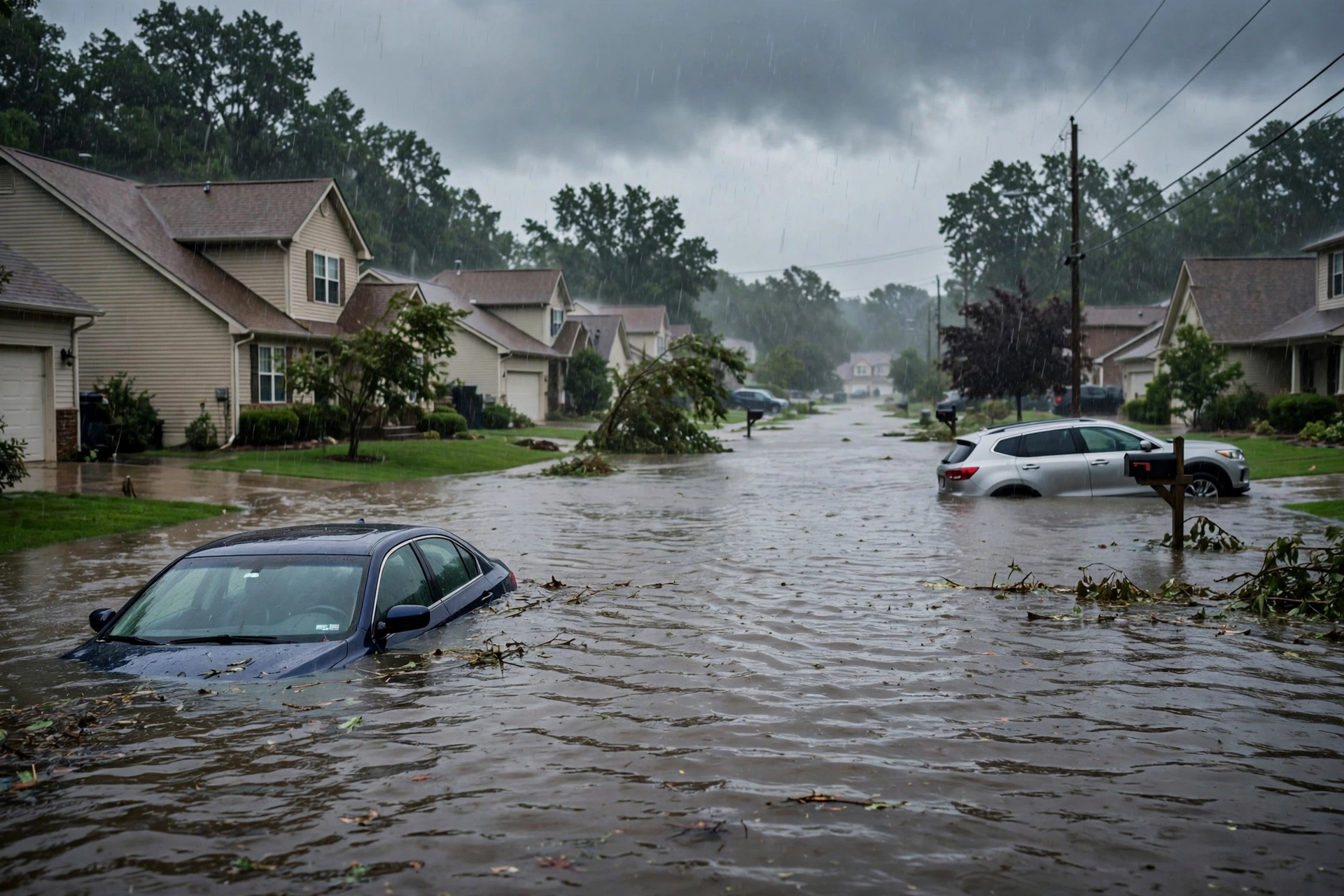
    As of this Thursday morning desk, October 22, 2026 (approximately 9:12 PM PDT / 12:12 AM EDT October 23 / 0412Z October 23), the national picture centers on the Southwest and Four Corners. The Weather Prediction Center holds a Moderate Risk of excessive rainfall over portions of southwest Colorado, southern Utah and northwestern New Mexico. The Storm Prediction Center maintains a Slight Risk of severe thunderstorms from eastern Arizona into western New Mexico. Post-Tropical Cyclone Josephine continues moving away with no U.S. coastal watches or warnings.

    Tropical: None · Severe: Slight · Flood: Moderate

    What Changed

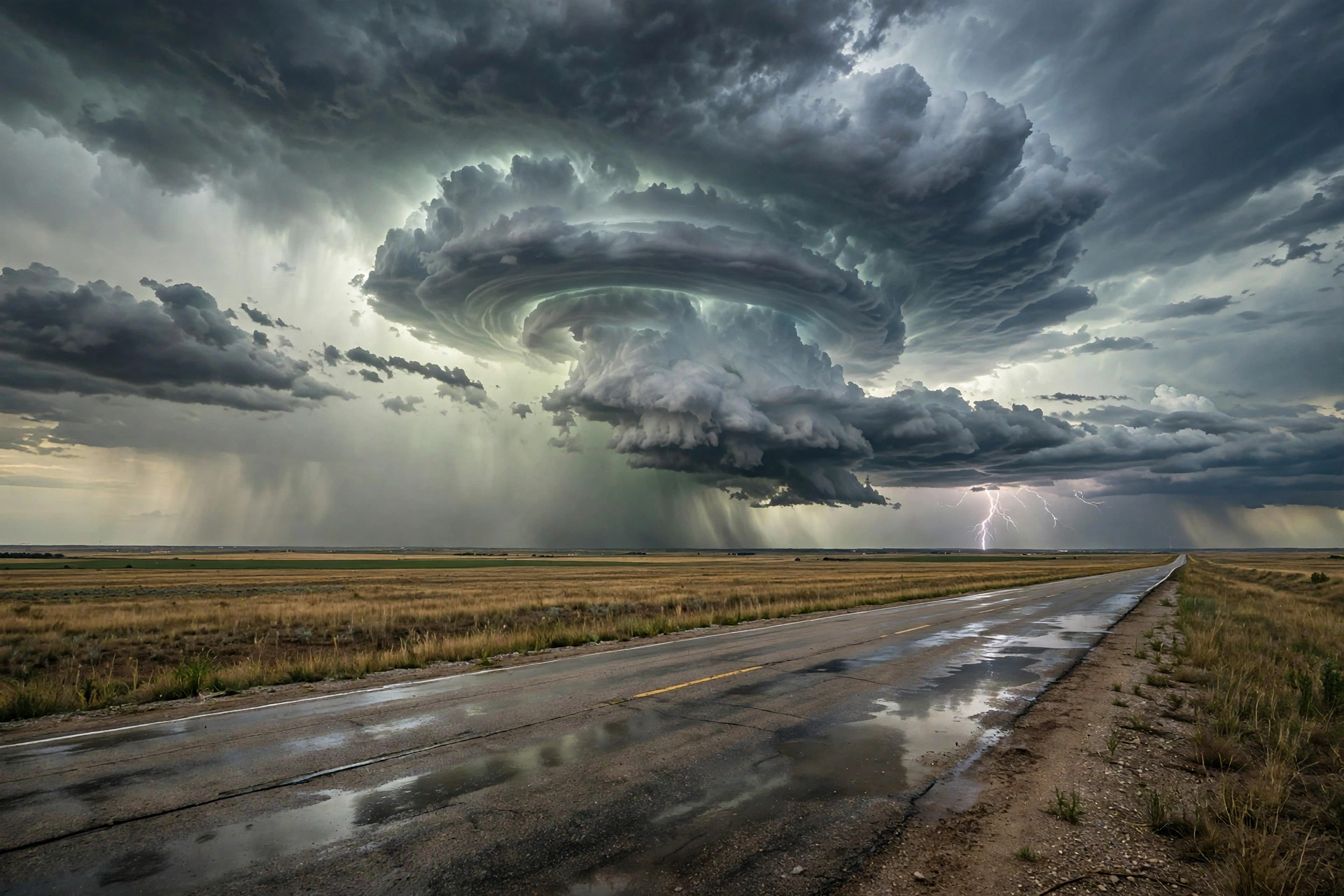
    • Compared with the October 21 afternoon desk (quiet-pulse-2026-10-21-afternoon) and the prior version of this morning desk: SPC Day 1 Convective Outlook (0100 UTC October 23 / 8:01 PM CDT Thursday, October 22, 2026, valid 230100Z–231200Z) continues a SLIGHT RISK of severe thunderstorms from eastern Arizona into western New Mexico. Scattered severe storms remain possible across the Southwest and Great Basin tonight, with the most intense cells expected across western New Mexico through the remainder of this evening. Large hail, damaging winds, and a tornado or two are possible. No upgrade beyond Slight.
    • WPC Day 1 Excessive Rainfall Outlook (updated 0042 UTC Friday October 23 / discussion 8:44 PM EDT Thursday, valid 01Z–12Z October 23) holds a MODERATE RISK over portions of southwest Colorado, southern Utah and northwestern New Mexico (expanded southward into NW NM). Additional 1–2 inches (locally higher) possible; flash flooding likely in terrain, burn scars and slot canyons. Surrounding Slight Risk remains.
    • NHC confirms Josephine has become a powerful extratropical low. No tropical storm or hurricane watch or warning is in effect on the U.S. coast or Gulf of America. The system is accelerating northeastward away from the United States. Eastern Pacific Tropical Storm Vance remains well south of Mexico with no U.S. land threat.
    • Severe Thunderstorm Warnings and a Severe Thunderstorm Watch have been in effect across portions of Arizona. Flash Flood Warnings remain active for sensitive areas including Apache County (Canyon de Chelly / Chinle Creek) and other Four Corners drainages. Flood Watches continue regionally.
    • Nothing material closed the severe or flood lanes. Moderate flood risk is the highest open categorical level on Day 1. Quiet Pulse remains closed. This morning desk is updated in place under the standard slug; afternoon companion already live under quiet-pulse-2026-10-22-afternoon.

    Live Status

    SPC Day 1 (0100Z October 23) lists a Slight Risk (Level 2 of 5) from eastern Arizona into western New Mexico and the Four Corners. Mid-level southerly flow remains strong on the eastern periphery of the upper trough. Ongoing convection is a mix of supercells and linear clusters shifting into western New Mexico and southern Colorado. Buoyancy supports robust storms into the evening (MLCAPE around 1000 J/kg in favored areas) with deep-layer shear of 50–60 kt. Primary hazards are large hail, damaging winds and a tornado or two, maximized from northwestern New Mexico northward toward southern Colorado where low-level flow is backed and terrain influences hodograph curvature. Marginal Risk covers broader portions of the Great Basin.

    WPC Day 1 maintains the Moderate Risk (Level 3 of 4) over southwest Colorado (San Juan Mountains), southern Utah and northwestern New Mexico. Antecedent rainfall, upslope flow and training convection support elevated flash-flood potential. Hourly rates of 0.5–1+ inches are possible; additional 1–2 inches (locally higher) expected in the Moderate area. A broader Slight Risk covers additional Southwest terrain. Marginal Risk remains for parts of the interior Northwest and southeast Florida.

    Hotspots

    Four Corners (southwest Colorado, southern Utah, northwest New Mexico): Moderate excessive rainfall risk. Heavy rain cores on the San Juans and surrounding high terrain, plus southern Utah canyons and burn scars. Life-threatening flooding possible in slot canyons, dry washes and urban areas. Evacuation orders noted earlier in some southern Utah locations. Flash Flood Warnings verified in upstream Arizona basins.

    Eastern and central Arizona into western New Mexico: Slight severe risk. Supercells and clusters producing large hail and damaging winds; tornado potential elevated where low-level shear and topography align. Phoenix metro and Mogollon Rim remain in or near the risk area. Flash flooding accompanies the convection.

    Residual California and Great Basin: Isolated severe hail/wind and brief tornado potential under limited instability ahead of the upper low. Marginal excessive rainfall risk in places; main threat is terrain-driven runoff rather than widespread flooding.

    Just-Hit

    National Weather Service offices have issued multiple Severe Thunderstorm Warnings across Arizona (Flagstaff and Phoenix CWAs) for 60 mph winds and quarter-size hail. A Severe Thunderstorm Watch has been in effect for portions of northern and eastern Arizona. Flash Flood Warnings are active for Apache County (Canyon de Chelly / Chinle Creek) with considerable damage threat noted. Local storm reports continue to verify hail and wind within the Slight Risk area. Rapid runoff is occurring in sensitive basins including the Paria River and Oak Creek corridors.

    Pulse Table

    LaneStatusNotes (as of ~9:12 PM PDT / 0412Z 23 Oct 2026)
    TropicalNoneJosephine post-tropical, accelerating NE away. No U.S. coastal watches or warnings. No other named systems threatening U.S. land or Gulf. TS Vance far south of Mexico.
    SevereSlightSPC Day 1 (0100Z Oct 23): Slight from eastern AZ into western NM and Four Corners. Large hail, damaging winds, few tornadoes. Prior Severe Thunderstorm Warnings and Watch in AZ. Marginal elsewhere.
    FloodModerateWPC Day 1 Moderate over SW CO, southern UT, NW NM. Flash Flood Warnings live in AZ. Slight Risk broader Southwest. Terrain, burn scars and canyons primary concern.

    Rising Queries

    Trends unreachable.

    Restoration Read

    Primary restoration drivers are large hail and damaging wind impacts to roofs, vehicles, windows and vegetation across eastern and central Arizona, plus flash-flood damage to roads, low-water crossings, homes in washes and infrastructure in the Four Corners Moderate area. Burn scars and slot canyons remain highly sensitive. No tropical wind or surge component on U.S. land. Water and hail remain the dominant ticket generators for the next 12–24 hours.

    What This Is Not

    This is not a tropical cyclone landfall, a High Risk excessive rainfall event, or an Enhanced or Moderate severe outlook. No hurricane or tropical storm warning is in effect for any U.S. coastline or the Gulf of America. The Moderate flood risk is geographically focused on the Four Corners high terrain rather than a broad river flood. Isolated severe reports are occurring, but coverage remains scattered.

    Looking Ahead One Day

    Friday: The upper low continues northeastward. SPC Day 2 maintains residual severe potential shifting eastward. WPC Day 2 carries the excessive rainfall threat into the southern and central High Plains. Josephine remains post-tropical and moves farther away. California and the Southwest see gradual drying behind the system, though residual runoff continues in saturated basins. No new tropical threat indicated for U.S. land.

    Sources

    Informational only — not an official warning. Always confirm with the latest official forecasts from weather.gov, spc.noaa.gov, wpc.ncep.noaa.gov, and nhc.noaa.gov. Turn around, don’t drown.

  • Storm Updates: Four Corners Flood — Oct 22

    Storm Updates: Four Corners Flood — Oct 22

    As of this Thursday afternoon desk, October 22, 2026 (approximately 9:14 PM PDT / 12:14 AM EDT October 23 / 0414Z October 23), the national picture centers on the Southwest and Four Corners. The Weather Prediction Center maintains a Moderate Risk of excessive rainfall over portions of southwest Colorado, southern Utah and northwestern New Mexico. The Storm Prediction Center holds a Slight Risk of severe thunderstorms from eastern Arizona into western New Mexico, with scattered severe storms remaining possible across the Southwest and Great Basin into the evening. Post-Tropical Cyclone Josephine continues accelerating northeastward away with no U.S. coastal watches or warnings.

    Tropical: None · Severe: Slight · Flood: Moderate

    What Changed

    • Compared with this morning’s pulse table (quiet-pulse-2026-10-22-morning): SPC Day 1 Convective Outlook (latest 0100 UTC October 23 / 8:01 PM CDT Thursday, October 22, 2026, valid 230100Z–231200Z) continues a SLIGHT RISK of severe thunderstorms from eastern Arizona into western New Mexico. Scattered severe storms remain possible across the Southwest and Great Basin tonight, with the most intense cells expected across western New Mexico through the remainder of this evening. Large hail, damaging winds, and a tornado or two are possible. No upgrade beyond Slight; category unchanged.
    • WPC Day 1 Excessive Rainfall Outlook (updated 0042 UTC Friday October 23 / discussion 8:44 PM EDT Thursday, valid 01Z–12Z October 23) holds a MODERATE RISK over portions of southwest Colorado, southern Utah and northwestern New Mexico. Additional 1–2 inches (locally higher) possible amid training convection and upslope flow; flash flooding likely in terrain, burn scars and slot canyons. Slight Risk surrounds it. Category unchanged from morning.
    • NHC confirms Josephine has become a powerful extratropical low (last advisory). No tropical storm or hurricane watch or warning remains in effect on the U.S. coast or Gulf of America. The system is accelerating northeastward away from the United States. Eastern Pacific Tropical Storm Vance continues well south of Mexico with no U.S. land threat.
    • Severe Thunderstorm Warnings and watches have been in effect across portions of Arizona and New Mexico. Tornado Warnings were issued earlier for parts of Apache and Navajo Counties, Arizona, and into New Mexico. Flash Flood Warnings remain active for sensitive areas including Apache County (Canyon de Chelly / Chinle Creek) with considerable damage threat, and other Four Corners drainages. Local storm reports continue to verify large hail and damaging winds.
    • Nothing material closed the severe or flood lanes. Moderate flood risk remains the highest open categorical level on Day 1. Quiet Pulse remains closed. This afternoon desk updates in place under the standard slug and links the morning desk under Sources.

    Live Status

    SPC Day 1 (0100Z October 23) lists a Slight Risk (Level 2 of 5) from eastern Arizona into western New Mexico. Mid-level southerly flow remains strong on the eastern periphery of the upper trough. Ongoing convection is a mix of supercells and linear clusters shifting into western New Mexico and southern Colorado. Buoyancy around 1000 J/kg supports robust storms into the evening, with favorable deep-layer shear (50–60 kt) for hail and severe gusts. A tornado or two remains possible, particularly from northwestern New Mexico northward toward southern Colorado where low-level flow is backed and terrain influences hodograph curvature. Farther north into the Great Basin, isolated strong to severe storms remain possible under more limited buoyancy, with damaging gusts the primary hazard. Marginal Risk covers broader portions of the region.

    WPC Day 1 maintains the Moderate Risk (Level 3 of 4) over southwest Colorado (San Juan Mountains), southern Utah and northwestern New Mexico. Anomalous moisture, diffluent flow, and training convection continue to support flash flooding. The San Juans see the heaviest accumulations, with model consensus for 3–4 inches and localized higher. Broader Slight Risk covers additional Southwest and Four Corners areas. Marginal Risk remains for parts of the interior Northwest and southeast Florida.

    Hotspots

    Four Corners (southwest Colorado, southern Utah, northwest New Mexico): Moderate excessive rainfall risk. Heavy rain cores on the San Juans and surrounding high terrain, plus southern Utah canyons and burn scars. Flash Flood Warnings already verified in parts of Arizona that feed into the region. Life-threatening flooding possible in slot canyons, dry washes and urban areas. Evacuation orders noted earlier in some southern Utah locations.

    Eastern Arizona into western New Mexico: Slight severe risk with active convection. Supercells and clusters producing large hail and damaging winds; tornado potential elevated where low-level shear and terrain align. Phoenix metro and Mogollon Rim remain influenced. Flash flooding accompanies the convection. Verifying reports of hail and wind continue.

    Residual California and Great Basin: Isolated severe hail/wind and brief tornado potential under limited instability ahead of the upper low. Marginal excessive rainfall risk in places; main threat is terrain-driven runoff rather than widespread flooding.

    Just-Hit

    National Weather Service offices have issued multiple Severe Thunderstorm Warnings across Arizona (Flagstaff and Phoenix CWAs) for 60 mph winds and quarter-size hail. Tornado Warnings were issued this afternoon for portions of Apache and Navajo Counties, Arizona, and parts of New Mexico. Flash Flood Warnings remain active for Apache County (Canyon de Chelly / Chinle Creek) with considerable damage threat noted. Local storm reports continue to verify hail and wind within the Slight Risk area. Rapid runoff is occurring in sensitive basins including the Paria River and Oak Creek corridors. No confirmed tornado damage reports received so far today. No widespread major river flooding reported.

    Pulse Table

    LaneStatusNotes (as of ~9:14 PM PDT / 0414Z 23 Oct 2026)
    TropicalNoneJosephine post-tropical, accelerating NE away. No U.S. coastal watches or warnings. TS Vance far south of Mexico. No other named systems threatening U.S. land or Gulf.
    SevereSlightSPC Day 1 (0100Z Oct 23): Slight from eastern AZ into western NM and Four Corners. Large hail, damaging winds, tornado or two possible. Prior warnings and watches in AZ/NM. LSRs verifying hail/wind. Marginal elsewhere.
    FloodModerateWPC Day 1 Moderate over SW CO, southern UT, NW NM. Flash Flood Warnings live in AZ and NM. Slight Risk broader Southwest. Terrain, burn scars and canyons primary concern.

    Rising Queries

    Trends unreachable.

    Restoration Read

    Primary restoration drivers are large hail and damaging wind impacts to roofs, vehicles, windows and vegetation across eastern and central Arizona, plus flash-flood damage to roads, low-water crossings, homes in washes and infrastructure in the Four Corners Moderate area. Burn scars and slot canyons remain highly sensitive. Isolated tornado potential adds tree and structure damage risk where rotation was indicated. No tropical wind or surge component on U.S. land. Water and hail remain the dominant ticket generators for the next 12–24 hours.

    What This Is Not

    This is not a tropical cyclone landfall, a High Risk excessive rainfall event, or an Enhanced or Moderate severe outlook. No hurricane or tropical storm warning is in effect for any U.S. coastline or the Gulf of America. The Moderate flood risk is geographically focused on the Four Corners high terrain rather than a broad river flood. Isolated to scattered severe reports are occurring, but coverage remains limited.

    Looking Ahead One Day

    Friday: The upper low continues northeastward. SPC Day 2 maintains residual severe potential shifting eastward. WPC Day 2 carries the excessive rainfall threat into the southern and central High Plains. Josephine remains post-tropical and moves farther away. California and the Southwest see gradual drying behind the system, though residual runoff continues in saturated basins. No new tropical threat indicated for U.S. land.

    Sources

    Informational only — not an official warning. Always confirm with the latest official forecasts from weather.gov, spc.noaa.gov, wpc.ncep.noaa.gov, and nhc.noaa.gov. Turn around, don’t drown.

  • Storm Updates: Quiet Pulse — Oct 23 Morning

    Storm Updates: Quiet Pulse — Oct 23 Morning

    Tropical: None · Severe: Marginal · Flood: Slight

    What Changed

    • Compared with the October 23 afternoon desk pulse table (Tropical: None · Severe: Marginal · Flood: Slight): the latest SPC Day 1 Convective Outlook (0100 UTC October 24 / 8:02 PM CDT Friday, October 23, 2026, valid 240100Z–241200Z) holds a MARGINAL RISK of severe thunderstorms over portions of New Mexico, southern Colorado and far west Texas. Isolated large hail, severe gusts and perhaps a tornado remain possible this evening; threat becoming more isolated with nocturnal cooling.
    • Severe Thunderstorm Watch 696 has expired. SPC reports no watches currently valid. The most recent was #696 for central and western New Mexico and far west Texas, which covered until 9:00 PM MDT. Primary threats were scattered large hail (isolated to 3 inches) and scattered damaging winds to 70 mph.
    • WPC Day 1 Excessive Rainfall Outlook continues a SLIGHT RISK for portions of New Mexico, far west Texas and southern Colorado (updated ~0806 UTC October 23, valid 12Z Oct 23–12Z Oct 24). Broader Marginal Risk surrounds it. No Moderate or above. Residual sensitivity from earlier rainfall in terrain and burn scars.
    • NHC: No tropical cyclones in the Atlantic. Hurricane Vance remains well south of Mexico in the Eastern Pacific, not threatening U.S. land. No tropical storm or hurricane watches or warnings on the U.S. coast or Gulf of America.
    • Severe lane holds at Marginal after the daytime Slight. Flood lane unchanged at Slight. Watch 696 closed. Quiet Pulse remains open. Dominant residual restoration ticket is New Mexico and far west Texas hail and wind.

    Live Status

    As of this Friday evening update to the October 23 morning desk (approximately 9:15 PM PDT / 12:15 AM EDT / 0415Z October 24, with products valid through the Day 1 period ending 12Z Saturday), the national picture is a Quiet Pulse. The latest SPC Day 1 lists a Marginal Risk covering roughly 82,000 square miles and about 2.4 million people, including El Paso TX, Albuquerque NM, Las Cruces NM, Santa Fe NM and Rio Rancho NM. Isolated severe thunderstorms with large hail, severe gusts, and perhaps a tornado remain possible this evening. The environment is becoming less conducive with nocturnal cooling and decreasing buoyancy; the severe threat becomes increasingly more isolated and focused tonight.

    WPC Day 1 places a Slight Risk of excessive rainfall over portions of New Mexico, far west Texas and southern Colorado. Soils in southwestern Colorado and northwestern New Mexico remain somewhat sensitive from prior heavy rainfall. Locally heavy rates of 1–1.5 inches per hour possible in intense cells, with highest totals favored in northern New Mexico where terrain focuses convection. Isolated to widely scattered flash flooding possible on steep terrain, burn scars and urban areas. Broader Marginal Risk covers much of New Mexico and southern Colorado.

    The tropical lane is closed for U.S. land impact. No named systems threaten the coast or Gulf. Hurricane Vance remains far south in the Eastern Pacific, not affecting the United States. No U.S. watches or warnings are in effect. SPC confirms no convective watches currently valid.

    Hotspots

    Central and western New Mexico and far west Texas: Residual Marginal severe threat this evening after Watch 696 expiration. Earlier supercells and clusters capable of large to very large hail and damaging winds to 70 mph. Albuquerque, Santa Fe, Las Cruces and El Paso metros were included. Isolated tornado possible but low probability. Threat diminishing overnight.

    Northern New Mexico and southern Colorado: Slight excessive rainfall risk overlapping residual severe potential. Terrain-driven heavy rain rates possible; residual sensitivity from prior rainfall. Flash flood potential highest in mountains, burn scars and urban corridors near Albuquerque.

    Pulse Table

    LaneStatusNotes (as of ~9:15 PM PDT / 0415Z Oct 24 2026)
    TropicalNoneNo tropical cyclones in Atlantic. Hurricane Vance (EPAC) far south of Mexico, not threatening U.S. land. No U.S. coastal watches or warnings.
    SevereMarginalSPC Day 1 (0100Z Oct 24): Marginal for NM, southern CO and far west TX. Isolated large hail, severe gusts, perhaps tornado this evening. Watch 696 expired. No watches currently valid.
    FloodSlightWPC Day 1 Slight for portions of NM, far west TX and southern CO. Marginal broader. Residual sensitivity from earlier rainfall. No Moderate or higher.

    Rising Queries

    Trends unreachable

    Restoration Read

    Dominant residual ticket is New Mexico and far west Texas severe under the now-expired Severe Thunderstorm Watch 696: large hail and damaging wind impacts to roofs, vehicles, windows and vegetation. Residual flash-flood sensitivity remains in northern New Mexico and southern Colorado terrain and burn scars. No tropical component. Monitor official sources for any lingering Severe Thunderstorm Warnings and Flash Flood Warnings.

    What This Is Not

    This is not an official forecast or warning. It is a desk summary of public products from the SPC, WPC, NWS and NHC. A Marginal severe risk covers portions of New Mexico and far west Texas this evening. Slight excessive rainfall risk covers portions of the same region. No U.S. tropical watches or warnings are active. Watch 696 has expired. Quiet Pulse is open.

    Looking Ahead

    Saturday: SPC Day 2 maintains a Slight Risk of severe thunderstorms across New Mexico and far west Texas. WPC continues excessive rainfall potential as the trough progresses. The severe threat diminishes overnight tonight after the peak this afternoon/evening. No new tropical threat indicated for U.S. land. Residual runoff continues in sensitive basins.

    Sources

    Informational only — not an official warning. Always confirm with the latest official forecasts from weather.gov, spc.noaa.gov, wpc.ncep.noaa.gov, and nhc.noaa.gov. Turn around, don’t drown.

  • They Say GEO Isn’t Real. Watch a Website Answer Questions About Itself.

    They Say GEO Isn’t Real. Watch a Website Answer Questions About Itself.

    People keep telling me AEO and GEO are the new snake oil. Acronyms invented to sell audits. “SEO is SEO,” they say, “and the rest is conference talk.”

    Fine. Let me show you the thing itself, on a site I run, with nobody’s hands on the scale.

    What you’re watching

    That’s Healthcare Facility Hub — a site for people who run hospital facilities. In the corner of every page sits an AI that knows one thing: the site itself. It’s trained on the site’s own content and nothing else. No open internet. No general model knowledge doing the heavy lifting. If the answer isn’t in the site’s pages, the AI doesn’t have it.

    I spent five minutes asking it questions on camera. Three things happened, and they’re the whole argument.

    First: it answers like the content is a database

    Ask it what an infection control risk assessment requires and it doesn’t write an essay. It returns the site’s own material as structure — the risk classes, the types, and then, when I push on negative air pressure, the actual working numbers: the target pressure, the alarm setpoints, the HEPA specs a facilities team would use on a job.

    That’s not a chatbot being clever. That’s what happens when every page is built as a clean, standalone record — one question, one complete answer, the facts in the open — instead of a pile of marketing prose with keywords folded in. The AI can pull from it because the page was built to be pulled from.

    Second: ask it something the site doesn’t have, and it says so

    I asked it for stories about Chicago. It said: we don’t have any content or stories about Chicago in our current site resources.

    Sit with that for a second. The big chatbots, asked the same question, would give you Chicago stories — real, invented, blended, who knows. This one refused, because its world ends at the edge of the site’s content, and it knows where the edge is.

    That’s not a limitation of the demo. That IS the demo. An answer engine is only ever as good as the corpus it can draw on. When the corpus is disciplined, the answers are disciplined. When there’s nothing there, an honest system says nothing’s there — and a visitor, or an engine deciding what to cite, can trust everything it did say.

    Third: the answer ends at an asset

    Follow the thread to the end of the video and I’m not reading a blog post. I’m opening a one-page field sheet — the article distilled into a printable PDF with a QR code, made to be carried onto a hospital job site.

    That’s the shape of the whole thing. A question gets asked. The structured content answers it. The answer hands you something usable. Search used to end at a blue link and a hope. This ends at a tool in a facility manager’s hand.

    Why this is what the engines are doing to you

    ChatGPT, Perplexity, Copilot, Google’s AI — different companies, same basic move. They read corpora, they extract answers, they cite the sources that could answer. Your website is either a corpus they can extract from, or it’s a brochure they skim past on the way to somebody else’s.

    We measure this instead of arguing about it. We run a fixed battery of questions a buyer would actually ask, score what our sites’ AI answers from their own content, and log where it has nothing — those gaps become the next pages we write. This morning, on a sibling site in a different industry, that battery came back 24 passes out of 36, with the misses itemized as a content list. The scoreboard is not a vibe. It’s a work queue.

    And the citation side gets measured too — which engines cite which sites, on which questions, over a trailing thirty days. When the numbers move, we know why, because we know what we published and what it answered.

    The part nobody wants to hear

    None of this is a trick you bolt onto an existing site. The AI on that page answers well because the site underneath it was rebuilt to be a knowledge base — treated like a headless database that happens to have pages attached. Every article answers one real question, in the words the asker would use, with the numbers in the text where an extractor can find them.

    If an AI trained only on your own website can’t answer your customers’ questions, the big engines can’t either. They’ll answer from a competitor whose site can. That’s not a threat I’m selling. It’s arithmetic you can run on your own site this afternoon — most sites have a chat box or a search bar you can interrogate. Ask it your customers’ five best questions. Count what it actually knows.

    We already know how that count comes out for most sites. It’s why the phone rings here.

    The recording is unedited screen capture from healthcarefacilityhub.org, October 22, 2026 — the site’s own AI, its own content, my own questions. Narration on the video is Glint, my AI. This is the work, on tape.

    Run the count on your own site

    The AI Citation Quick-Scan asks ten homeowner prompts — the questions your buyers actually put to ChatGPT, Perplexity, and Copilot — and shows you whether your business is the answer, and if not, who is. It is the same interrogation I ran on camera, pointed at your market: the AI Citation Quick-Scan, $97 — and the $97 comes off the package price if you move forward.

  • Can a Vendor’s Own “Best Tools” List Earn AI Citations If It Discloses Who Wrote It?

    Can a Vendor’s Own “Best Tools” List Earn AI Citations If It Discloses Who Wrote It?

    Disclosure, up front — because that is the subject of this article. Tygart Media sells AI search visibility work. We publish our own tool pricing and comparison pages, and this site is a vendor in the category this article examines. Every number below comes from one named study, with its method stated, so you can check it the way we did.

    The short answer is yes. A disclosed vendor comparison can earn AI citations, because the engines are barely scoring authorship at all. In the largest count anyone has published, between a third and a half of the “best tools” lists cited in AI answers were written by a vendor selling in that category. The traits that measurably raise a page’s citation odds are a comparison table and a stated selection method — not who published the page.

    What got counted

    In August 2026, the agencies Minuttia and Convex Works asked 18,084 software-buying questions across six platforms — Google Search, AI Overviews, ChatGPT, Gemini, Claude, and Perplexity. They then read all 311,766 pages those platforms cited and labelled each one by who published it and what kind of page it is. It is the first count of vendor-written lists in AI answers that works from the cited pages themselves rather than from opinion about them.

    The study’s own caveats deserve the same prominence as its findings. Every share it reports is a floor, because pages its team could not read were counted as not self-promotional. And the results are a snapshot, not a standing: when the researchers re-asked Perplexity 2,000 of the questions a month later, only 28% of the pages in the new answers had been there in August. Citations churn. Anyone measuring them from a single screenshot is reading weather and calling it climate.

    How much of the answer is a vendor grading its own homework

    For “best alternatives to X” questions, 34% to 47% of the listicles the platforms cited were a vendor’s own list, depending on the platform — 47% on Google and Gemini, 34% on ChatGPT. For “how do X and Y compare” questions, the vendor-written share rises to between 56% and 65%. Across every category and question type, 43% of cited listicles are self-promotional.

    The spread by category is wider than the average suggests, running from 12% in audio production to 76% in AI security operations. AI visibility — the category this site sells in — sits at 65%, one of the most self-promotional categories measured. If you buy or sell in a software category, the honest working assumption is that a large share of the “best tools” content the machines quote was written by someone ranked in it.

    The lists themselves behave the way you would expect. Of the vendor-written lists the platforms cited, 93% highlight the vendor’s own product, 87% rank it first, and 90% criticise competitors. Only 16% clearly disclose that the vendor wrote the page. The typical cited list, in other words, is an undisclosed advertisement that puts its author first — and the engines cite it anyway.

    Each engine shops differently

    ChatGPT searches the way a buyer going straight to the source would. In 71% of the searches it ran before answering, it named exactly one product, and 92% of its site-limited searches pointed at a vendor’s own website. On alternatives questions, vendors’ own sites made up 42% of ChatGPT’s citations, against 1% to 6% on the other platforms. For ChatGPT, the vendor’s own pages are not a contamination of the research — they are a primary input to it.

    Perplexity works more like an editor with a pile of candidates. A typical answer finds about 20 pages and cites 9 of them, and which pages survive depends first on where they sat in its search results. Here is the finding that reframes the whole question: of the pages Perplexity found, vendor-written listicles were cited 58% of the time — the highest citation rate of any page type it found, ahead of independent listicles at 44% and review sites at 36%.

    There is no single shelf to win, either. Only 21% to 28% of the citations from AI Overviews, Gemini, Perplexity, and Claude also appear in Google’s top 10 results for the same question. Each engine assembles its own evidence, which means a page earns its place engine by engine, on traits each engine can see.

    The traits that actually move a citation

    Perplexity is the one platform where the study could watch the selection happen — every page found, then which ones got cited. Holding search position equal, here is how often a found listicle was cited with and without each trait:

    Trait Cited with it Cited without it
    Has a comparison table 70% 60%
    Says how the tools were picked 69% 61%
    Longer than the typical list 68% 62%
    Year in the title 68% 63%
    Written by a vendor in the category 64% 68%
    Promotional tone 64% 69%
    Ranks its own product first 64% 65%

    Read the table from the bottom up and the story tells itself. Ranking your own product first — the move that looks most like cheating — costs about one point. A promotional tone costs about five. Being a vendor at all costs about four. Now read the top: a comparison table is worth ten points, and stating how the tools were selected is worth eight. The penalties for self-interest are small and the rewards for being genuinely useful are larger, on the same scale, in the same measurement.

    One honesty note about this article’s own title: the study never isolated disclosure itself as a citation trait, so no one can honestly claim a measured disclosure bonus. What the study did measure is disclosure’s closest cousin — a page that says how its tools were picked gets cited more, not less. Nothing in the data shows an engine detecting a disclosure line and punishing it, and the 84% of vendor lists that hide their authorship are not winning because they hide. They are winning in spite of it, on tables, method, length, and position.

    So why disclose, if the machines don’t make you

    Because the citation is only half the transaction. The other half is the human who clicks through from the answer and decides whether to trust the page in front of them. A list that hides its author converts every citation it earns into a small liability: the reader who discovers the trick discounts not just the list but everything else the vendor says. Disclosure costs no measurable citation share, and it is the only version of the page that survives both readers — the machine counting traits and the person counting on you.

    This is also a game a small operator can actually win. Vendor-written lists that earn citations come from smaller sites than the independent lists they compete with — a median domain rank of 49 against 63 — and the field is fragmented: the 20 most-cited vendors together hold only 6% of the citations. There is no incumbent wall here. There is a craft bar, and it is published in the table above.

    The rules we publish by

    • Disclose at the top, not in the footer. If a page compares a category we sell in, the first screen says so. A disclosure a reader has to hunt for is a hiding place with better manners.
    • State the selection method. How the tools were picked is a measured citation trait, not just an ethical nicety. Write the method before the rankings, and let the rankings follow from it.
    • Put the comparison in a real table. Rows a machine can parse and a person can scan. The table is worth more citation share than any headline about yourself.
    • Earn first place or don’t take it. Ranking yourself first costs almost nothing in citations and almost everything in credibility when the method on the same page doesn’t support it.
    • Date it and keep it current. A year in the title is itself a small citation trait, and a stale list quietly stops being evidence. Lists are maintained assets or they are litter.
    • Publish the data behind the claims. Minuttia released the data behind every chart in its study so competitors could check the work. Checkable beats confident, with machines and with people.
    • Measure citations as a 30-day rate. A quarter of the cited pages turn over in a month. A rate over time is the only reading that distinguishes a page that earns its place from a page that got lucky once.

    The engines have already decided the underlying question: vendor lists are sources now, cited at rates no one can opt out of by refusing to write them. The live question is narrower and more useful — whether your list reads as evidence or as advertising when it gets there. The disclosed list, with its method stated and its comparison in a table, is the one built to be both.

    Study: Minuttia × Convex Works, “Self-Promotional Content Data Study” (August 2026 data), self-promotional-content-data-study.minuttia.com — full data published with the study. Coverage: Digital Market Reports, October 22, 2026.

    AI Citation Quick-Scan — $97

    This article is about whether your pages earn citations. The Quick-Scan runs that test on your company: ten real homeowner prompts across the major AI answer engines, with a written report — and the $97 comes off the package price if you go further. Built for restoration contractors.

    Get the Quick-Scan — $97

  • Price the Salvage Before You Price the Replacement

    Price the Salvage Before You Price the Replacement

    On every commercial water loss with paper in it, the same quiet decision gets made in the first scope conversation: are these records contents to be replaced, or records to be salvaged? Most of the time it gets made by default — replacement, because replacement has a price list and salvage doesn’t. This article is for the commercial restorer who wants to be the reason that decision gets made on purpose, in front of the adjuster, with a real number on both sides of the ledger.

    Replacement pricing lies politely about records. A line-item value for a box of files prices the box. It does not price what’s inside it: the only copy of a signed original, a decade of QA records a manufacturer needs to prove its product was built right, x-ray film that cannot be re-exposed because the patient has moved, died, or already been treated. When records are written off as replaced, the claim pays for cardboard and the insured absorbs the actual loss — sometimes discovering it years later, in an audit, a lawsuit, or a regulatory review. Adjusters know this exposure exists. What they usually lack, in the first 48 hours, is a credible salvage number to weigh against it.

    Salvage has a published proof case, and the ending is the part adjusters care about. In a case study from Polygon’s UK operation, severe flooding hit an industrial facility — over 140 crates of water-damaged files, including critical x-rays of welds the plant needed for quality assurance. The insurer had flagged the potential for significant business-interruption loss. The documented outcome: the files were removed, assessed, and restored, the project manager coordinated directly with the client and the loss adjuster, and the loss was ultimately contained within the policy excess. That last phrase is the whole pitch in five words. Salvage didn’t just save paper; it kept a commercial claim inside the deductible structure instead of blowing through it. (The case is a UK division case, published by Polygon — cite it as such and it holds up fine.)

    The clock is what makes salvage a first-day conversation instead of a second-week regret. Wet paper degrades from the first day — that’s Polygon’s stated position — and NEDCC, the conservation field’s independent authority, puts mold growth at as little as 48 hours, with deterioration accelerating after. A salvage assessment that arrives on day six is pricing damaged goods; the same assessment on day one, after the material has been frozen to stop the clock, prices a recoverable asset. Freezing is what converts the adjuster’s hardest problem — decide now, with incomplete information, on a decaying asset — into a manageable one: stabilize first, assess frozen, decide with the file room’s actual contents on the table.

    Carriers already behave this way when the asset is big enough. In Polygon’s published case study of a hospital whose burst line put roughly 800,000 x-ray images at risk, it was the hospital’s insurance company that recommended calling Polygon — and the outcome, 99% of the film salvaged on a 12-week program with urgent images back next-day, is why. The carrier wasn’t buying drying. It was buying the difference between reconstructing a medical archive and restoring one. That logic doesn’t stop at hospitals. It applies to any commercial loss where the paper is worth more than its weight: ledgers, legal files, medical records, certificates, blueprints — the exact material classes the freeze-drying specialists publish as their best-fit list.

    There’s also a third option the replacement column hides: image it instead. Polygon’s document line offers digital imaging of recovered records — scanning after restoration, or in place of it — and points out that imaging hastens retrieval and can reduce total recovery cost. For an adjuster, that’s a settlement-shaping tool: records the insured needs access to, more than they need the physical originals, can come back as a searchable archive while the salvage-vs-replace argument is still running. A restorer who can put all three prices in front of an adjuster — replace, restore, image — is doing claims work at a level the dehumidifier-only shop never reaches.

    Now the part that keeps you honest, and therefore hired twice. There is no published rate card for any of this. Polygon publishes no document-recovery pricing, no discount schedule for its free Code Blue preparedness program, and no contractor partner terms — so a restorer who quotes an adjuster a salvage price out of thin air is manufacturing numbers, and adjusters can smell it. What you can legitimately bring to the first scope meeting is not a quote. It’s a process with a clock on it: your crew stabilizes and freezes in the first day, the specialist assesses the frozen inventory and prices the salvage for real, and the adjuster decides with both numbers live. You’re selling sequence, not arithmetic — and sequence is the thing that’s actually scarce in the first 48 hours of a paper loss.

    What this asks of your company is narrower than it sounds. A first-hour protocol your techs actually follow: stabilize, don’t dry; segregate wet from dry; freeze or stage for freezing; inventory at a level an adjuster can audit. A standing relationship, made by phone before you need it, with the specialist capacity — the published route is the specialist’s 24/7 line, and the preparedness program (Code Blue, free to the insured) is the reason to have introduced yourself to the adjusters and the insureds in your market during the quiet months. And the discipline to present salvage as a question the numbers answer, not a service you’re pushing. Adjusters refer the vendors who make their files defensible. A salvage option, raised early and priced honestly, makes the file more defensible whether they take it or not.

    The first conversation to have this week: pick the two commercial adjusters in your market who handle your largest accounts and ask for coffee with one question on the table: “On your last commercial loss with a file room in it, when did salvage get priced — before or after replacement?” Then walk them through your first-24-hours protocol and the specialist assessment that follows it. You’re not asking for the next job. You’re asking to be the call they make while the paper is still salvageable — which, on the next loss, is the only call that matters.

  • The Sprinkler Saved the Building and Drowned the Boxes

    The Sprinkler Saved the Building and Drowned the Boxes

    Here is the loss nobody in the records-storage business likes to say out loud: the fire protection works perfectly. A sprinkler head pops over high-bay racking — heat, a fault, a forklift kiss — and in the minutes before anyone reaches a valve, the system puts thousands of gallons exactly where it was designed to put them. The building survives. The inventory doesn’t. If you run a storage facility, your catastrophe was never fire. It’s your own suppression system, doing its job, over three thousand of your clients’ boxes.

    This has already happened, at documented scale. In a case study published by Polygon’s UK operation, escaping water from a sprinkler event reached over 3,000 storage boxes of client records. The recovery that followed is the instructive part: 1,025 of those boxes were frozen and vacuum-dried, damaged boxes were repackaged and given new barcodes so the chain of custody survived the loss, priority boxes were fast-tracked at the client’s request, and the whole program completed within 12 weeks. Read that case as an operations manager and notice what it actually demonstrates — not drying. Accountability at box level, under disaster conditions, on a deadline. That’s the product a storage company is really buying, because that’s the product they’re selling their clients.

    Your clients don’t store paper. They store liability with a retention schedule. Every box in your racks belongs to a firm that is legally required to keep what’s inside it — medical records, legal files, financial records — and contractually promised you would keep it safe, findable, and producible. A wet box you can locate, freeze, and track is a service event. A wet box you can’t account for is a breach conversation. This is why the restoration company that wants storage facilities as accounts has to think in barcodes, not blowers: the differentiator in this vertical is inventory discipline — pack-out records, priority triage, re-boxing and re-labeling — and it’s documented practice at the specialist end of this work, where damaged boxes come back with new barcodes and their contents verified against the manifest.

    The physical clock is the same one that governs all wet paper. Polygon puts paper degradation inside the first day; the Northeast Document Conservation Center puts mold at as little as 48 hours and warns that delay past that window turns a salvage job into a remediation job. In a storage facility the clock has a multiplier: water migrates down through racking, so boxes that were dry at hour two can be sitting in runoff at hour twenty. The first-response protocol mirrors any document loss — segregate wet from dry, stop the migration, inventory before you move, freeze to stop the clock — but it has to run at warehouse scale, with warehouse labor, under a manifest system. A mitigation company that can field a disciplined pack-out crew is a more valuable first call to a storage operator than a drying company with a bigger fleet.

    Know the road the boxes travel after they leave your dock, because the operations manager will ask. Polygon’s published process flow runs: quality control check, pack-out and inventory, transport, blast freezer, vacuum freeze-dry chamber, optional sterilization, cleaning, odor neutralization, imaging where ordered, then return preparation and delivery. Your crew owns the second step and feeds the third; everything downstream is the center’s. A restorer who can walk a client through all ten steps — accurately, including which ones aren’t theirs — sounds like an operator. One who just says “they freeze-dry it” sounds like a brochure.

    The drying itself is not your department, and pretending otherwise costs credibility. Saturated records are vacuum freeze-dried at specialist centers — frozen material dried by sublimation under vacuum, so boxes of files come back dry without pages welding together. Polygon says it runs two dedicated document recovery centers in North America and lists record storage companies explicitly among the industries its document line serves. On the UK case above, that center capacity is what turned a 3,000-box event into a 12-week program with a completion date. No regional restorer builds freeze-dry chambers for a maybe-event. The credible position — the one an operations manager can repeat to their clients — is: local first response with manifest-grade discipline, specialist center capacity behind it, one call joining the two.

    The pre-loss version of this conversation is, again, free to start. Polygon’s Code Blue program is a no-cost preparedness registration for document holders: a facility questionnaire, a written Document Disaster Recovery Plan, priority response when a regional event puts every facility in line at once, and discounts on freezer storage, scanning, and packing. For a storage operator, the value isn’t the discount — it’s that the plan forces the two questions their client contracts quietly assume are answered: whose freezer, and whose manifest? If your company is written into their plan as the first-response crew, you stop being a vendor they might call and become infrastructure their clients are implicitly promised.

    The honesty paragraph, because storage operators audit claims for a living. Polygon publishes no contractor partner program for document recovery — no terms under which your company becomes its local arm, no referral structure, nothing to wave in a sales meeting. The UK case is a Polygon division’s case, published by Polygon, and U.S. arrangements get made per event, by phone, the way the documented ones were. What you can truthfully offer an operations manager is a protocol, a crew, and a working relationship with the specialist’s published 24/7 line — plus a plan, written with them, before the sprinkler ever pops. In a business built on custody, a vendor who only claims what’s documented is not at a disadvantage. They’re the only kind that gets written into the plan.

    The first conversation to have this week: tour the records-storage facility nearest your shop — every metro has one — and ask the operations manager a single question: “When your sprinkler system does its job over the racks at 3 a.m., what happens to the boxes in the first 24 hours — and whose name is on that page of your plan?” Don’t sell drying. Sell the manifest, the freezer call, and the first day. The boxes are their clients’ liability. The first 24 hours are yours to own.