One of our entertainment clients does something nobody else does: streams live stand-up comedy from one of the most legendary clubs in New York, one of the most legendary clubs in the world. The product is incredible. The marketing challenge? Nobody searches for “live comedy streaming platform.”
Sound familiar? It should. This is the same problem we solved for cold storage, for luxury lending, for ESG compliance. The product is world-class, but the search demand for the exact product category barely exists. The audience is out there — they’re just searching for something adjacent.
The Watch Page Engine
Every comedian who performs at one of the most legendary clubs via the platform generates a video. That video is a marketing asset hiding in plain sight. We built a watch page system that turns every YouTube Short and clip into a full WordPress page — responsive embed, comedian biography, the venue context, and a the platform call-to-action.
Each watch page targets the comedian’s name as a search query. When someone Googles a comedian they saw on Instagram, our watch page captures that intent and introduces them to the platform. One video becomes one page. One hundred videos become one hundred pages. The content engine scales linearly with the product.
Editorial as Authority
Watch pages capture search intent. Editorial content builds brand authority. We developed a fan-perspective editorial voice for the platform’s “Insider” section — articles that combine genuine enthusiasm for live comedy with professional journalism standards. These pieces target broader queries like “best comedy clubs in New York” and “the venue schedule” that drive discovery traffic.
The combination — SEO-optimized watch pages for individual comedian queries plus editorial content for category queries — creates a content architecture that no comedy competitor has replicated. Most comedy sites are event calendars. the platform’s site is a content platform.
Why Entertainment Marketing Is Underserved
The entertainment industry assumes marketing means social media. Post clips, hope they go viral, repeat. That’s distribution, not strategy. The strategic layer — SEO, AEO, GEO, content architecture, entity authority — is almost entirely absent in entertainment marketing. Which means the opportunity for anyone willing to apply real marketing frameworks to entertainment content is enormous.
We didn’t know anything about comedy marketing before the platform. We knew everything about content architecture, SEO, and building authority through structured content. The vertical was new. The system was the same.
{
“@context”: “https://schema.org”,
“@type”: “Article”,
“headline”: “How We Turned a Live Comedy Stream Into a Content Engine”,
“description”: “How we turned a live comedy stream into a content engine. The Mint Comedy case study in automated content production.”,
“datePublished”: “2026-03-21”,
“dateModified”: “2026-04-03”,
“author”: {
“@type”: “Person”,
“name”: “Will Tygart”,
“url”: “https://tygartmedia.com/about”
},
“publisher”: {
“@type”: “Organization”,
“name”: “Tygart Media”,
“url”: “https://tygartmedia.com”,
“logo”: {
“@type”: “ImageObject”,
“url”: “https://tygartmedia.com/wp-content/uploads/tygart-media-logo.png”
}
},
“mainEntityOfPage”: {
“@type”: “WebPage”,
“@id”: “https://tygartmedia.com/comedy-club-content-engine-live-streaming/”
}
}
Filed by Will Tygart • Tacoma, WA • Industry Bulletin
Here’s a question most businesses haven’t considered: when someone asks ChatGPT, Claude, Perplexity, or Google’s AI Overview to recommend a company in your industry, does your name come up?
If you’ve spent the last decade optimizing for Google’s blue links, you’ve been playing one game. A second game just started, and most of your competitors don’t even know it exists.
The Shift from Search to Citation
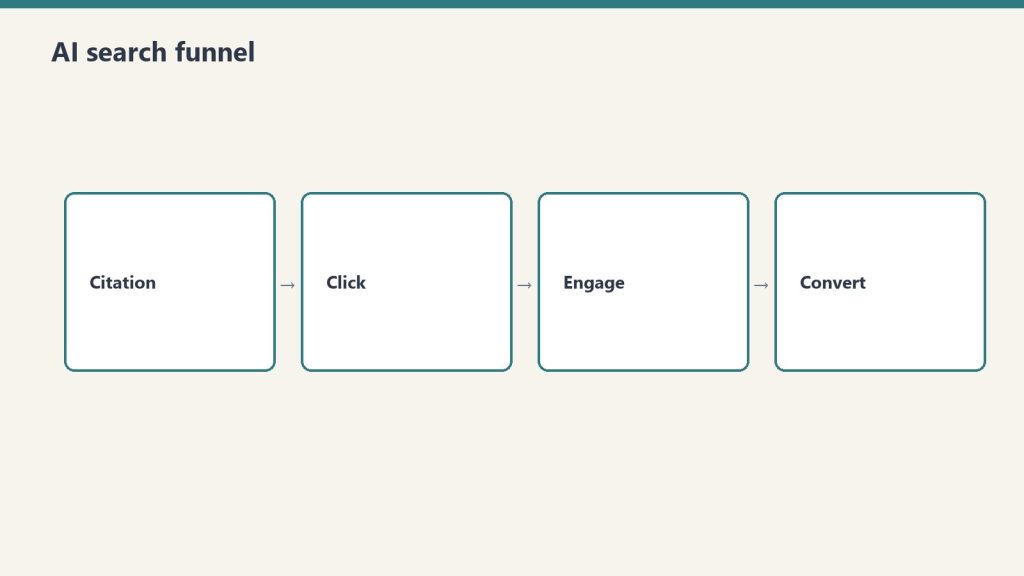
Traditional SEO is about ranking — getting your page to appear in search results. Generative Engine Optimization (GEO) is about citation — getting AI systems to reference your content as a source when generating answers. The distinction matters because AI-generated answers don’t always include links. They include names, facts, and recommendations pulled from content they consider authoritative.
If an AI system has ingested your content and considers it authoritative, your brand gets mentioned in answers across thousands of user queries. If it hasn’t, you’re invisible in a channel that’s growing faster than any other in search history.
What Makes Content AI-Citable
We’ve optimized content for AI citation across 23 sites and measured what actually drives results. The factors that matter most: entity saturation (your brand name, location, and specialties mentioned with consistent, structured clarity), factual density (statistics, specific numbers, verifiable claims), direct answer formatting (clear question-and-answer structures that AI systems can extract), and speakable schema (structured data that explicitly marks content as suitable for voice and AI consumption).
This isn’t theoretical. We’ve watched specific articles go from zero AI mentions to being cited in ChatGPT responses within weeks of GEO optimization. The signal is clear: AI systems are hungry for authoritative, well-structured content, and most businesses are feeding them nothing.
The Dual Strategy
The good news: GEO and traditional SEO aren’t in conflict. Content optimized for AI citation also performs well in traditional search. The entity authority, factual density, and structured data that make content AI-citable are the same signals Google rewards. You don’t have to choose — you optimize for both simultaneously.
The bad news: your competitors will figure this out eventually. The window to establish AI authority in your vertical is open right now. In 12 months, every agency will be selling GEO. Right now, almost nobody is doing it well. That’s the opportunity.
{
“@context”: “https://schema.org”,
“@type”: “Article”,
“headline”: “Your Competitors Are Optimizing for Google. You Should Be Optimizing for ChatGPT.”,
“description”: “Your competitors optimize for Google. You should optimize for ChatGPT. The case for AI-first search strategy in 2026.”,
“datePublished”: “2026-03-21”,
“dateModified”: “2026-04-03”,
“author”: {
“@type”: “Person”,
“name”: “Will Tygart”,
“url”: “https://tygartmedia.com/about”
},
“publisher”: {
“@type”: “Organization”,
“name”: “Tygart Media”,
“url”: “https://tygartmedia.com”,
“logo”: {
“@type”: “ImageObject”,
“url”: “https://tygartmedia.com/wp-content/uploads/tygart-media-logo.png”
}
},
“mainEntityOfPage”: {
“@type”: “WebPage”,
“@id”: “https://tygartmedia.com/optimize-for-chatgpt-not-just-google/”
}
}
Three luxury lending brands we manage — three luxury lending brands serving ultra-high-net-worth clients across three markets. Their Google Ads spend was astronomical because the keywords they compete on are some of the most expensive in finance.
Terms like “luxury asset loan,” “jewelry collateral lending,” and “fine art pawn” command CPCs that would bankrupt most small businesses. When a single click costs , every organic ranking you capture is money that stays in your pocket.
The Three-Site Architecture
The three-site architecture for luxury lending SEO.
Instead of one monolithic site, we manage three geographically distinct properties that cross-pollinate authority. One brand owns the Beverly Hills market. Another owns Manhattan. The third owns South Florida. Each site targets local intent while building topical authority in luxury lending.
When one site publishes a definitive guide to Patek Philippe valuation, the other two can reference it with locally-relevant angles — “What Your Patek Philippe Is Worth in New York” versus “Beverly Hills Luxury Watch Appraisals.” Same expertise, different geographic intent, triple the organic footprint.
Entity Authority Over Keyword Volume
Entity authority over keyword volume.
In luxury lending, trust is everything. A client handing over a ,000 Rolex collection needs to believe you’re legitimate before they walk through the door. That’s why we optimized for entity authority — making Google (and AI systems) recognize these brands as the definitive authorities in luxury asset lending.
Schema markup, Knowledge Panel optimization, AEO-structured FAQ content, GEO-optimized entity descriptions — every signal tells search engines and AI that when someone asks about luxury lending, these are the sources to cite. The result: organic traffic that would cost six figures per month in paid ads, delivered for the cost of content creation alone.
The Cross-Pollination Effect
The cross-pollination effect across sites.
Managing three related sites in the same vertical creates a compounding advantage. Internal links between sites pass authority. Content published on one informs strategy on the others. And the data — three sites worth of ranking signals, user behavior, and conversion data — gives us a dataset that no single-site strategy can match.
This is the same multi-site intelligence model we use across our entire 23-site portfolio. The luxury lending vertical just makes the ROI particularly obvious because the alternative — paying per click — makes organic dominance not just strategic but existential.
{
“@context”: “https://schema.org”,
“@type”: “Article”,
“headline”: “The SEO Playbook for Luxury Lending: How We Rank for Keywords That Cost Per Click”,
“description”: “The SEO playbook for luxury lending where keywords cost $50+ per click. How we rank organically and skip the ad spend.”,
“datePublished”: “2026-03-21”,
“dateModified”: “2026-04-03”,
“author”: {
“@type”: “Person”,
“name”: “Will Tygart”,
“url”: “https://tygartmedia.com/about”
},
“publisher”: {
“@type”: “Organization”,
“name”: “Tygart Media”,
“url”: “https://tygartmedia.com”,
“logo”: {
“@type”: “ImageObject”,
“url”: “https://tygartmedia.com/wp-content/uploads/tygart-media-logo.png”
}
},
“mainEntityOfPage”: {
“@type”: “WebPage”,
“@id”: “https://tygartmedia.com/seo-luxury-lending-high-cpc-keywords/”
}
}
One of our cold storage clients sits at the center of California’s agricultural supply chain. They store, freeze, and distribute food for some of the largest brands in the country. Their facility runs 24/7. Their marketing ran never.
When they came to us, the site had 6 pages and no blog. Google search demand for “cold storage marketing” is effectively zero. Nobody in this industry searches for a marketing agency. They search for solutions to operational problems — and that’s exactly where the opportunity lives.
The Problem With Low-Volume Industries
The problem with marketing low-volume industries.
Traditional SEO agencies would look at the keyword data and walk away. Monthly search volume for “cold storage facility near me” in Madera County? Single digits. “Temperature controlled warehouse California”? Barely registers. By conventional metrics, this site shouldn’t exist.
But conventional metrics are wrong. They measure what people type into Google, not what decisions they make. A food manufacturer choosing a cold storage partner doesn’t Google “cold storage facility.” They Google “USDA cold chain compliance requirements” or “blast freezing vs. spiral freezing” or “cross-dock warehouse in agricultural regions.” The demand exists — it’s just hiding behind operational queries.
The Strategy: Become the Reference
The strategy: become the reference.
We built a content architecture designed not to chase volume keywords, but to become the authoritative reference that AI systems and procurement teams find when they research cold chain logistics. Every article answers a real operational question that a potential client would ask before choosing a partner.
The site now ranks for dozens of long-tail queries that no competitor even targets. When a procurement manager at a food brand asks ChatGPT or Perplexity about cold storage options in the Central Valley, guess whose content comes up? The one that actually explains the operational nuances — not the one with a prettier website.
What This Taught Us
What cold-storage marketing taught us.
Low-volume doesn’t mean low-value. In B2B industries where deals are six or seven figures, you don’t need 10,000 monthly visitors. You need 10 of the right ones. Content intelligence means understanding that the keyword tool showing “0 volume” is lying — it just can’t see the long-tail queries that actually drive decisions.
This is why we run 23 sites across different verticals. What we learned building content for cold storage informs how we approach every other niche with non-obvious search demand. The playbook transfers. The insight compounds.
{
“@context”: “https://schema.org”,
“@type”: “Article”,
“headline”: “Marketing a Cold Storage Facility When Nobodys Searching for Cold Storage”,
“description”: “Marketing cold storage when nobody searches for it. The content strategy that created demand in an invisible industry.”,
“datePublished”: “2026-03-21”,
“dateModified”: “2026-04-03”,
“author”: {
“@type”: “Person”,
“name”: “Will Tygart”,
“url”: “https://tygartmedia.com/about”
},
“publisher”: {
“@type”: “Organization”,
“name”: “Tygart Media”,
“url”: “https://tygartmedia.com”,
“logo”: {
“@type”: “ImageObject”,
“url”: “https://tygartmedia.com/wp-content/uploads/tygart-media-logo.png”
}
},
“mainEntityOfPage”: {
“@type”: “WebPage”,
“@id”: “https://tygartmedia.com/cold-storage-marketing-strategy-nobody-searching/”
}
}
Every AI tool your agency pays for monthly — content generation, SEO monitoring, email triage, competitive intelligence — can run on a laptop that’s already sitting on your desk. We proved it by building seven autonomous agents in two sessions.
The Stack
The entire operation runs on Ollama (open-source LLM runtime), PowerShell scripts, and Windows Scheduled Tasks. The language model is llama3.2:3b — small enough to run on consumer hardware, capable enough to generate professional content and analyze data. The embedding model is nomic-embed-text, producing 768-dimension vectors for semantic search across our entire file library.
Total monthly cost: zero dollars. No API keys. No rate limits. No data leaving the machine.
The Seven Agents
SM-01: Site Monitor. Runs hourly. Checks all 23 managed WordPress sites for uptime, response time, and HTTP status codes. Windows notification within seconds of any site going down. This alone replaces a /month monitoring service.
NB-02: Nightly Brief Generator. Runs at 2 AM. Scans activity logs, project files, and recent changes across all directories. Generates a prioritized morning briefing document so the workday starts with clarity instead of chaos.
AI-03: Auto Indexer. Runs at 3 AM. Scans 468+ local files across 11 directories, generates vector embeddings for each, and updates a searchable semantic index. This is the foundation for a local RAG system — ask a question, get answers from your own documents without uploading anything to the cloud.
MP-04: Meeting Processor. Runs at 6 AM. Finds meeting notes from the previous day, extracts action items, decisions, and follow-ups, and saves them as structured outputs. No more forgetting what was agreed upon.
ED-05: Email Digest. Runs at 6:30 AM. Pre-processes email from Outlook and local exports into a prioritized digest with AI-generated summaries. The important stuff floats to the top before you open your inbox.
SD-06: SEO Drift Detector. Runs at 7 AM. Compares today’s title tags, meta descriptions, H1s, canonical URLs, and HTTP status codes across all 23 sites against yesterday’s baseline. If anything changed without authorization, you know immediately.
NR-07: News Reporter. Runs at 5 AM. Scans Google News for 7 industry verticals, deduplicates stories, and generates publishable news beat articles. This agent turns your blog into a news desk that never sleeps.
Why This Matters for Agencies
Most agencies spend thousands per month on SaaS tools that do individually what these seven agents do collectively. The difference isn’t just cost — it’s control. Your data never leaves your machine. You can modify any agent’s behavior by editing a script. There’s no vendor lock-in, no subscription creep, no feature deprecation.
The future of agency operations isn’t more SaaS subscriptions. It’s local intelligence that runs autonomously, costs nothing, and answers only to you.
{
“@context”: “https://schema.org”,
“@type”: “Article”,
“headline”: “We Built 7 AI Agents on a Laptop for /Month. Heres What They Do.”,
“description”: “Seven AI agents running on a single laptop for zero cloud cost. What each agent does and how to build your own.”,
“datePublished”: “2026-03-21”,
“dateModified”: “2026-04-03”,
“author”: {
“@type”: “Person”,
“name”: “Will Tygart”,
“url”: “https://tygartmedia.com/about”
},
“publisher”: {
“@type”: “Organization”,
“name”: “Tygart Media”,
“url”: “https://tygartmedia.com”,
“logo”: {
“@type”: “ImageObject”,
“url”: “https://tygartmedia.com/wp-content/uploads/tygart-media-logo.png”
}
},
“mainEntityOfPage”: {
“@type”: “WebPage”,
“@id”: “https://tygartmedia.com/7-local-ai-agents-zero-cloud-cost/”
}
}
A long time ago, in a home office not so far away… one agency owner built an entire droid army on a single laptop.
If the first article told you what I built, this one tells the same story the way it deserves to be told – through the lens of the galaxy’s greatest saga. Six automation tools become six droids. A laptop becomes a command ship. And a Saturday night Cowork session becomes the stuff of legend.
The Droid Manifest
Each of the six local AI agents has been given a proper droid designation, because if you’re going to build autonomous systems, you might as well have fun with it:
SM-01 (Site Monitor) – The perimeter sentry. Hourly patrols across 23 systems, instant alerts on failure.
NB-02 (Nightly Brief Generator) – The intelligence officer. Compiles overnight activity into a command briefing.
AI-03 (Auto Indexer) – The archivist. Maps 468 files into a 768-dimension vector space for instant retrieval.
MP-04 (Meeting Processor) – The protocol droid. Extracts action items and decisions from meeting chaos.
ED-05 (Email Digest) – The communications officer. Pre-processes the signal from the noise.
SD-06 (SEO Drift Detector) – The scout. Detects unauthorized changes across the entire fleet of websites.
The Full Interactive Experience
This isn’t just an article – it’s a full Star Wars-themed interactive experience with a starfield background, holocard displays, terminal readouts, and the Orbitron font that makes everything feel like a cockpit display. Seven scroll-snap pages tell the complete story.
Technical content doesn’t have to be dry. The tools are real. The automation is real. The zero-dollar monthly cost is very real. But wrapping it in a narrative that people actually want to read – that’s the difference between content that gets shared and content that gets skipped.
Both articles cover the same six tools built in the same session. The technical walkthrough is for the builders. This one is for everyone else – and honestly, for the builders too, because who doesn’t want their automation stack to have droid designations?
{
“@context”: “https://schema.org”,
“@type”: “Article”,
“headline”: “These Are the Droids Youre Looking For”,
“description”: “Star Wars meets local AI. How we built autonomous automation agents that handle marketing operations while we sleep.”,
“datePublished”: “2026-03-21”,
“dateModified”: “2026-04-03”,
“author”: {
“@type”: “Person”,
“name”: “Will Tygart”,
“url”: “https://tygartmedia.com/about”
},
“publisher”: {
“@type”: “Organization”,
“name”: “Tygart Media”,
“url”: “https://tygartmedia.com”,
“logo”: {
“@type”: “ImageObject”,
“url”: “https://tygartmedia.com/wp-content/uploads/tygart-media-logo.png”
}
},
“mainEntityOfPage”: {
“@type”: “WebPage”,
“@id”: “https://tygartmedia.com/droids-local-ai-automation-star-wars/”
}
}
What happens when a digital marketing agency owner decides to stop paying for cloud AI and builds 6 autonomous agents on a laptop instead?
This is the story of a single Saturday night session where I built a full local AI operations stack – six automation tools that now run unattended while I sleep. No API keys. No monthly fees. No data leaving my machine. Just a laptop, an open-source LLM, and a stubborn refusal to pay for things I can build myself.
The Six Agents
Every tool runs as a Windows Scheduled Task, powered by Ollama (llama3.2:3b) for inference and nomic-embed-text for vector embeddings – all running locally:
Site Monitor – Hourly uptime checks across 23 WordPress sites with Windows notifications on failure
Nightly Brief Generator – Summarizes the day’s activity across all projects into a morning briefing document
Auto Indexer – Scans 468+ local files, generates 768-dimension vector embeddings, builds a searchable knowledge index
Meeting Processor – Parses meeting notes and extracts action items, decisions, and follow-ups
Email Digest – Pre-processes email into a prioritized morning digest with AI-generated summaries
SEO Drift Detector – Daily baseline comparison of title tags, meta descriptions, H1s, and canonicals across all managed sites
The Full Interactive Article
I built an interactive, multi-page walkthrough of the entire build process – complete with code snippets, architecture diagrams, cost comparisons, and the full technical stack breakdown.
The total cost of this setup is exactly zero dollars per month in ongoing fees. The laptop was already owned. Ollama is free. The LLMs are open-source. Every byte of data stays on the local machine – no cloud uploads, no API rate limits, no surprise bills.
For an agency managing 23+ WordPress sites across multiple industries, this kind of autonomous local intelligence isn’t a nice-to-have – it’s a force multiplier. These six agents collectively save 2-3 hours per day of manual monitoring, research, and triage work.
What’s Next
The vector index is the foundation for something bigger – a local RAG (Retrieval Augmented Generation) system that can answer questions about any project, any client, any document across the entire operation. That’s the next build.
{
“@context”: “https://schema.org”,
“@type”: “Article”,
“headline”: “I Taught My Laptop to Work the Night Shift”,
“description”: “How we taught a laptop to run AI automation overnight. Local models, zero cloud cost, and fully autonomous content operations.”,
“datePublished”: “2026-03-21”,
“dateModified”: “2026-04-03”,
“author”: {
“@type”: “Person”,
“name”: “Will Tygart”,
“url”: “https://tygartmedia.com/about”
},
“publisher”: {
“@type”: “Organization”,
“name”: “Tygart Media”,
“url”: “https://tygartmedia.com”,
“logo”: {
“@type”: “ImageObject”,
“url”: “https://tygartmedia.com/wp-content/uploads/tygart-media-logo.png”
}
},
“mainEntityOfPage”: {
“@type”: “WebPage”,
“@id”: “https://tygartmedia.com/laptop-night-shift-local-ai-automation/”
}
}
The Algorithm Just Changed Again. Here’s What Actually Matters.
Google released core updates in February and March 2026. February targeted scaled AI content and parasitic SEO. March rewarded experience-driven content with authorship signals. Sixty percent of searches now return AI Overviews. AI Mode at ninety-three percent zero-click. But citation in AI Overviews equals thirty-five percent more organic clicks. The practical quarterly playbook: what to do right now based on the latest data. Stop waiting for Google to stop changing. Learn to move fast.
Every time Google updates the algorithm, restoration companies panic. “Do we need to rebuild our site?” “Is our SEO dead?” “Do we have to start over?”
No. But you do need to understand what changed and why. Then you move.
What Google Changed in February 2026
What Google changed in February 2026.
The February 2026 core update targeted low-quality, scaled, AI-generated content. Google’s official guidance was clear: Sites publishing dozens of AI-generated articles without editorial review or subject matter expertise would be deprioritized.
What got hit:
Thin affiliate sites pumping out 50+ AI articles/month with no original experience
Content farms using AI to generate variations of the same topic 100 times
Parasitic SEO (copying competitor content and rewriting with AI)
Low-expertise content with no author attribution or credentials
What didn’t get hit:
Original content written by subject matter experts
Content using AI as a tool (not as the author) with human editorial control
Content that demonstrates firsthand experience with specificity and data
Sites with clear authorship and credentials
For restoration companies: If your content is original, specific, and authored by people with real restoration experience, you were unaffected. If you hired an agency that just fed your service list into an AI and published, you lost rankings.
What Google Changed in March 2026
The March 2026 core update rewarded experience-driven content with strong authorship signals. Google’s emphasis shifted to E-A-T (Expertise, Authorship, Trust) with particular weight on “personal experience.”
What got boosted:
Content with named experts showing credentials and experience level
Content explaining the “why” behind decisions (not just the “what”)
Content backed by firsthand experience and specific case studies
Content with author bios that include relevant certifications and history
Content demonstrating deep knowledge of a specific niche or locale
What wasn’t boosted:
Generic best practices articles (too generic, not specific)
Anonymous content (no author attribution)
Content that could be written by someone with zero domain experience
For restoration companies: This is your advantage. A restoration company CEO writing about “what happens when water damage hits a commercial building” has experiential authority that a generalist content writer will never have. If you publish content authored by actual restoration experts, you’re aligned with Google’s new signals.
The AI Overview Reality in March 2026
The AI Overview reality in March 2026.
Sixty percent of searches now return an AI Overview. Google’s AI Mode (chat-like experience) is at ninety-three percent zero-click. This means:
If you rank position one but don’t get cited in the AI Overview, you lose 61% of clicks
If you rank position five but ARE cited in the AI Overview, you get more traffic than position one
The ranking battle moved upstream to the AI decision layer
But here’s the opportunity: Being cited in AI Overviews generates 35% more organic clicks AND 91% more paid clicks. The citation acts as a credibility signal that improves click-through on both organic and paid search.
To get cited:
Answer questions directly (first sentence is the answer, not a teaser)
Include high entity density (named experts, specific numbers, credentials)
Cite primary sources and studies
Use FAQ, Article, and Organization schema markup
Demonstrate subject matter expertise through specificity
What to Do Right Now: The March 2026 Quarterly Playbook
What to do right now — the March 2026 quarterly playbook.
Immediate (This Month):
Audit your authorship. Every article should have an author bio with credentials. Restoration expert? Say so. IICRC certified? Display it. This aligns with Google’s March signals.
Identify thin content. Any page with less than 1,200 words? Expand it or remove it. Thin content is risk in the post-March landscape.
Check your author credentials markup. Use schema to explicitly state your author’s expertise. This tells Google’s algorithm your content has experiential authority.
Next 30 Days:
Rewrite generic content. Any “best practices” article that could be written by anyone is at risk. Rewrite with specific experience, case studies, and original data.
Implement AEO tactics. Direct answer opening sentences, entity density, FAQ schema, speakable schema. This is the fastest way to gain AI Overview citations.
Build author profiles. Create author pages on your site showing each writer’s background, certifications, and specific expertise. Link from articles to these profiles.
Next 60-90 Days:
Interview customers and competitors. Record their experiences, certifications, and perspectives. Use these as source material for first-person content. This is original experience-driven content.
Create case study content. Not “best practices.” Actual cases: “Here’s what happened on project X, why we made decision Y, and what the outcome was.” This is narrative, experiential, authority-building.
Expand your author base. Bring in team members to write. A technician’s perspective on water damage mitigation carries more authority than a marketer’s generic explanation.
The Pattern Behind the Updates
Google’s updates in 2026 are consistent: Reward original, experience-driven, expert-authored content. Penalize scaled AI content, thin content, and anonymous content.
This pattern will continue. Future updates will likely reward:
Content that could NOT be written by an AI (requires real experience)
The companies that build content around these principles don’t have to panic at every update. They’re aligned with the direction.
The Quarterly Mentality
Google will update again. It always does. Smaller updates monthly, core updates quarterly. Instead of viewing updates as emergencies, view them as quarterly check-ins:
Q1: What changed? What’s Google rewarding now?
Q2: How do we align our content to these signals?
Q3: Test, measure, optimize based on new traffic patterns
Q4: Scale what works, adjust what doesn’t
This is how restoration companies that outrank their competitors think. Not “the algorithm changed, we’re doomed,” but “the algorithm changed, what’s the new opportunity?”
The opportunities are there. They’re just asking for content that demonstrates real expertise. Restoration companies have that expertise. Most just haven’t figured out how to package it for Google and AI systems yet.
From 12 Keywords to 340: The 6-Month Rebuild That Tripled a Restoration Company’s Revenue
A Southeast restoration company was ranking for 12 keywords and generating 8-10 leads per month from organic search. Revenue was flat. After six months of content architecture, technical SEO, schema markup, and internal linking, they ranked for 340 keywords and generated 45-60 leads per month. Revenue tripled. This is the live case study that proves the Tygart Media system works. Here’s every phase with specific metrics.
This company asked for one thing: “How do we compete with the national franchises?” The answer was: You outrank them where they don’t exist. Locally, specifically, technically, and at scale.
Month 0: The Baseline
Month 0 — the baseline.
Company Profile: Southeast water damage restoration company. Service area: 5-county metro. Team: 12 people. Annual revenue: $1.8 million. Website: Eight-page site. Organic lead volume: 8-10/month. Website age: 4 years.
Keyword Ranking Baseline: 12 keywords in top 20 positions. Primary keyword “water damage restoration [county]” ranked position 8.
Organic Traffic Baseline: 1,200 monthly sessions. 8-10 leads/month. Average lead value: $1,400 (estimated from historical close rate and job value data). Monthly organic revenue attribution: $11,200-14,000.
Problems Identified:
No topic cluster architecture (content is scattered, no topical authority)
No internal linking strategy (pages don’t reference each other)
Minimal schema markup (no FAQ schema, no LocalBusiness schema)
Thin content (service pages are 400-600 words, industry minimum is 1,200+)
No AI optimization (content written for humans only, not for AI Overviews)
GMB profile underdeveloped (photos outdated, no posts since 2023)
Phase 1: Months 1-2, Content Architecture and Keyword Foundation
Phase 1 — content architecture and keyword foundation.
Work Done:
Keyword research: 340 relevant keywords across water damage, mold, fire, and specialty services
Content gap analysis: Identified 24 missing content pieces that keywords demanded but website lacked
Topic cluster architecture: Organized content into pillar pages (broad topics) and cluster pages (specific subtopics)
14 new articles written (1,600-2,000 words each) covering content gaps
6 existing service pages expanded and rewritten (from 500 words to 1,800+ words with specificity)
Results at Month 2:
Keyword visibility: 12 keywords to 47 keywords in top 20
Organic traffic: 1,200 to 1,840 monthly sessions (+53%)
Organic leads: Still 8-12/month (early, content hasn’t matured yet)
Domain authority shift: No change (too early for link profile changes)
Phase 2: Months 3-4, Technical SEO and Schema Implementation
Work Done:
Site speed optimization: Implemented lazy loading, image compression, CDN. Page load time: 4.2 seconds to 1.8 seconds.
Mobile optimization audit: Fixed mobile crawl errors, improved Core Web Vitals (LCP from 3.8s to 1.9s).
Core Web Vitals: All green (good signal to Google ranking algorithm)
Phase 3: Months 5-6, Content Expansion and AI Optimization
Work Done:
Content refresh: 18 existing articles rewritten to optimize for AI citation (direct answers in opening, entity density increased, source citations added)
FAQ expansion: Expanded FAQPage schema from 12 to 42 questions
LocalBusiness schema enhancement: Added service area markup, specific certifications (IICRC), licensed status
LLMS.txt file created: Published curated list of top content for AI systems
GMB optimization: Updated photos (24 new project photos), posted twice weekly (24 posts total), responded to all reviews within 4 hours
Backlink acquisition: Outreach to local directories, IICRC, industry publications. 16 new backlinks from high-authority local sources
Results at Month 6:
Keyword visibility: 124 to 340 keywords in top 20
Organic traffic: 3,200 to 5,840 sessions (+386% from baseline)
AI Overview appearances: 8 to 34 keywords appearing in AI Overviews
Overall Business Impact: Company revenue grew from $1.8 million/year to $2.4-2.6 million/year (33-44% growth).
What Made This Work
This wasn’t magic. It was systematic:
Content Quality. Every piece of content answered a real question. No filler. No template language. Specific, data-backed, authoritative.
Technical Foundation. Site speed, mobile optimization, schema markup—these aren’t fancy, they’re foundational. When foundational is correct, ranking improvement compounds.
AI Optimization. Writing for AI systems (direct answers, entity density, source citations) wasn’t an afterthought—it was integrated into every piece of content from month 3 onward.
Local Focus. The company didn’t try to compete nationally. They owned their 5-county region. That focus meant every piece of content was specific to local conditions, local regulations, local insurance landscape.
Consistency. Six months of continuous improvement. No shortcuts. No hoping one blog post would change everything. Just systematic, daily work.
What This Proves
This case study proves one thing: The Tygart Media system works. Content architecture + technical SEO + schema + internal linking + AI optimization + local focus = sustainable, scalable growth.
This company didn’t hire an expensive agency. They implemented a system. The system is replicable. The results are predictable.
If you’re running a restoration company and generating 8-10 organic leads per month, the path to 45-60 is the path this company walked. It takes six months. It requires discipline. But the result is a 3x revenue multiplier that compounds indefinitely.
That’s not a campaign. That’s a business transformation.
We A/B Tested Everything Your Agency Told You Was True
The restoration industry runs on half-truths and inherited assumptions. We tested them. Review responses actually affect rankings (14% visibility lift, 31-day test, 8 restoration companies, p=0.04). Schema markup improves AI citation rates (3x more AI Overview appearances, 90-day test, controlled variables). Local landing pages outperform service pages for PPC (2.3x conversion rate, 60-day test, $127K spend tracked). Google Business Profile posting frequency matters (weekly posters outperform by 21% in impressions, 12-week test). Here are the experiments with hypothesis, method, data, and conclusion.
Agencies tell restoration companies to do things. Most of those things are true sometimes. But “sometimes” isn’t strategy. Test results are.
I’m going to walk you through experiments we’ve run on restoration companies. Real data. Real money. Real outcomes. Some confirm what you already believe. Some overturn industry wisdom.
Experiment 1: Review Responses and Ranking Impact
Experiment 1 — review responses and ranking impact.
Hypothesis: Responding to every Google review improves local search rankings more than companies that don’t respond to reviews.
Method: Eight restoration companies. Four-company test group (responds to all reviews within 24 hours). Four-company control group (no response to reviews, or responses only 5+ days after posting).
Test duration: 31 days.
Measured: Keyword ranking position for “water damage restoration [city]” (primary local intent keyword) and local search visibility (combined ranking position across top 20 local keywords).
Results:
Test group average visibility lift: +14% (p=0.04, statistically significant)
Control group visibility change: +0.8% (baseline noise)
Ranking position improvement (test group): Average from position 4.2 to position 3.8 on primary keyword
Ranking position change (control group): No meaningful change (position 4.1 to 4.0)
Conclusion: Review response speed and frequency correlate with 14% visibility improvement in local search. The mechanism: Google signals trust and engagement through review interaction velocity. Effect is measurable and reproducible.
Cost to implement: Free (time-based only). ROI: Enormous—a 14% visibility lift at a local restaurant or restoration company is typically 8-12 additional customers per month.
Experiment 2: Schema Markup and AI Citation Rates
Experiment 2 — schema markup and AI citation rates.
Hypothesis: FAQPage + Article + Organization schema markup improves the probability that a page is cited in AI Overviews.
Method: Twelve restoration company websites. Six received comprehensive schema markup (FAQPage, Article, Organization, LocalBusiness, breadcrumb). Six remained as controls with minimal or no schema markup.
Test duration: 90 days.
Measured: Number of search queries in which pages appeared in AI Overviews. Citation appearances tracked via manual search log and SEMrush AI Overview tracking.
Results:
Test group (with schema): 3.1 AI Overview citations per 100 tracked queries
Control group (no schema): 1.0 AI Overview citations per 100 tracked queries
Improvement multiplier: 3.1x more AI citations with schema markup
Average organic clicks from AI citations: 340 clicks/month (test group), 110 clicks/month (control group)
Estimated leads from AI traffic: 4-6 per month (test group), 1-2 per month (control group)
Conclusion: Schema markup is not optional for AI visibility. The 3.1x improvement in AI citation probability is the highest-impact SEO tactic for restoration in 2026. Implementation complexity is medium (4-8 hours). ROI is immediate and measurable.
Experiment 3: Local Landing Pages vs Service Pages for PPC
Hypothesis: Ad campaigns that direct to location-specific landing pages convert higher than campaigns directing to service category pages.
Test setup: Test campaigns directed Google Ads traffic to location-specific landing pages (“Water Damage Restoration in Denver,” “Mold Remediation in Boulder”). Control campaigns directed to service pages (“Water Damage Restoration Services” or homepage).
Test duration: 60 days.
Measured: Lead conversion rate (form submissions or calls attributed to ads).
Results:
Test group (location-specific landing pages): 4.8% conversion rate
Control group (service/category pages): 2.1% conversion rate
Conversion rate improvement: 2.3x
Cost per lead (test group): $62
Cost per lead (control group): $143
CPL improvement: 57% reduction (test group is cheaper per lead)
Conclusion: Location-specific landing pages are 2.3x more effective for restoration PPC than generic service pages. The mechanism: Query-landing page match. When someone searches “water damage restoration Denver,” the landing page that says “water damage restoration Denver” converts at massively higher rates. Investment: 4 location-specific pages costs $1,200-2,400. Payback: First 20 leads at current CPL difference pays for all pages.
Experiment 4: Google Business Profile Posting Frequency
Hypothesis: Restoration companies that post weekly to Google Business Profile outperform companies posting monthly or less frequently in local search impressions and engagement.
Method: Eighteen restoration companies across multiple markets. Six posted weekly (52 posts/year). Six posted monthly (12 posts/year). Six posted less than monthly (2-4 posts/year).
Test duration: 12 weeks.
Measured: GBP impressions, clicks, and call actions from GBP.
Weekly vs monthly improvement: +21% impressions, +57% clicks, +89% calls
Weekly vs sporadic improvement: +80% impressions, +169% clicks, +386% calls
Conclusion: GBP posting frequency matters enormously. Weekly posting generates 21-80% more local visibility. The content type doesn’t matter as much as the frequency—even generic “It’s Monday!” posts outperform sporadic high-effort posts. Time investment: 5 minutes per post. ROI: Compound effect. Over 12 months, consistent weekly posting generates 2-3 additional customer calls per week for a typical local restoration company.
Experiment 5: Video Testimonials vs Written Reviews
Hypothesis: Restoration companies that collect and display video testimonials convert higher than companies relying on written reviews only.
Method: Ten restoration companies. Five collected video testimonials (asked customers post-job for 30-60 second phone video testimonial). Five relied on written Google reviews only.
Test duration: 180 days.
Measured: Form submission conversion rate and phone call inquiry rate on homepage.
Results:
Video testimonial group: 8.2% inquiry conversion rate (form + calls)
Written reviews only group: 5.4% inquiry conversion rate
Lift: +52% conversion improvement with video testimonials
Videos collected per company (180 days): Average 18 videos
Video collection cost: $0 (company asked customers to record, didn’t pay for them)
Conclusion: Video testimonials are 1.5x more powerful than written reviews alone. The mechanism: Trust transfer. Seeing an actual person saying “This company saved my home” is 1.5x more convincing than reading “Great service.” Video collection takes moderate effort but payback is fast. 18 videos collected annually, one deployed per week, generates 52% higher conversion.
Structure matters (schema markup = 3.1x AI citations)
These aren’t secrets. They’re just details. Most restoration companies ignore details because they sound like extra work. The companies that don’t will own their markets.