Everything you need to know about Anthropic’s new frontier tier — pricing, context window, model comparisons, and how to route the right work to the right model.
What Is Claude Fable 5?
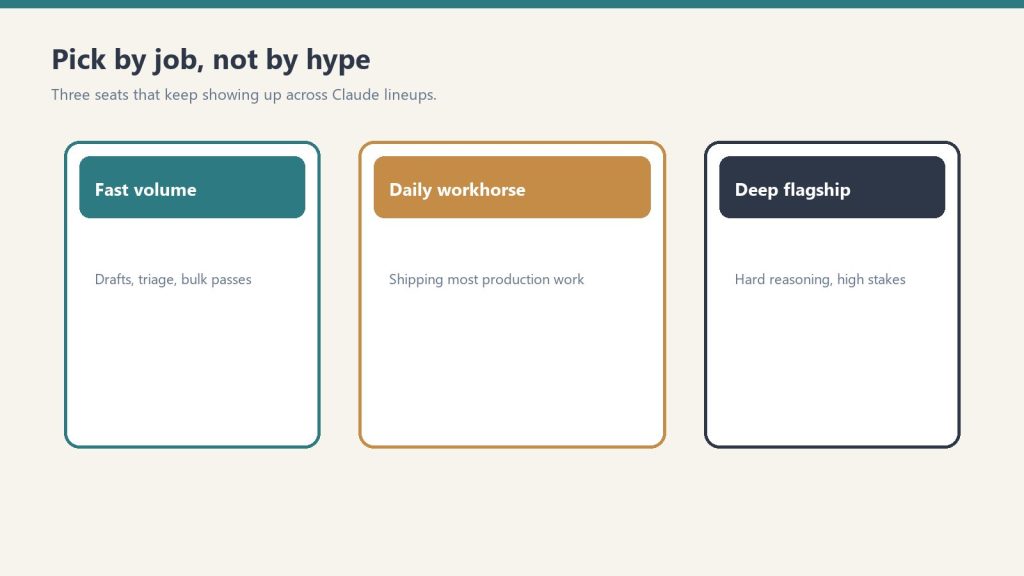
Claude Fable 5 is Anthropic’s new frontier model tier — positioned above Opus in the lineup and designed for tasks where raw capability, extended reasoning depth, and massive context handling matter more than cost. Where Opus 4.8 set the bar for complex multi-step reasoning, Fable 5 raises it with a 1-million-token context window, enhanced agentic autonomy, and improved performance on long-horizon software engineering, research synthesis, and cross-domain analysis tasks.
The “Fable” naming signals a new generation of model architecture rather than an incremental update. Anthropic positions it as the model you reach for when a task exceeds what Opus can do reliably — not as a replacement for Opus, Sonnet, or Haiku in their respective cost tiers.
Quick Facts — Claude Fable 5
Full Model Lineup Comparison
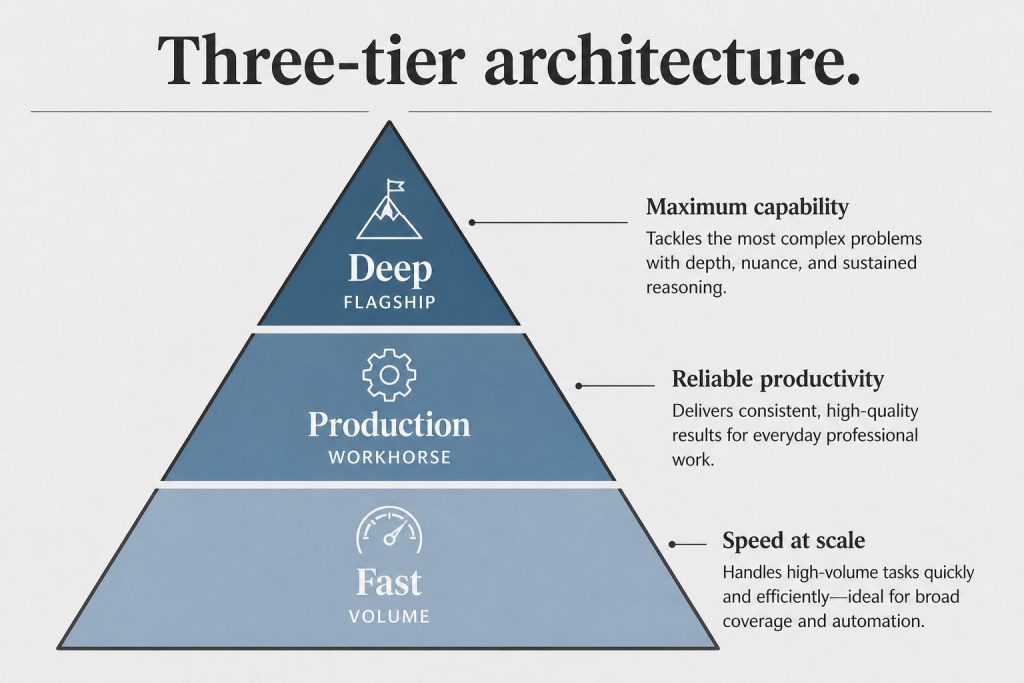
Here’s how the complete 2026 Claude lineup stacks up across every dimension that matters for production usage:
| Model | Input $/M | Output $/M | Context | Max Out | Vision | Tool Use | Extended Think | Best For |
|---|---|---|---|---|---|---|---|---|
| ◆ Fable 5 | $10 | $50 | 1M | 32K | ✓ | ✓ | ✓ Deep | Max-capability tasks, 1M+ context |
| ◆ Opus 4.8 | $5 | $25 | 200K | 32K | ✓ | ✓ | ✓ | Complex reasoning, agentic workflows |
| ◆ Sonnet 4.6 | $3 | $15 | 200K | 16K | ✓ | ✓ | ✓ | Production apps, content at scale |
| ◆ Haiku 4.5 | $1 | $5 | 200K | 8K | ✓ | ✓ | — | High-volume, latency-sensitive tasks |
Prices are per million tokens. Cache read is 90% cheaper than standard input across all models. Batch API provides an additional 50% discount on both input and output.
Capability Matrix — What Each Model Can Do
| Capability | Fable 5 | Opus 4.8 | Sonnet 4.6 | Haiku 4.5 |
|---|---|---|---|---|
| Full codebase analysis (>500K tokens) | ✓ Native | ⚠ Chunked | ✗ | ✗ |
| Extended thinking / chain-of-thought | ✓ Deep | ✓ | ✓ | ✗ |
| Multi-step agentic orchestration | ✓ Best | ✓ | Good | Limited |
| Computer use | ✓ | ✓ | ✓ | ✗ |
| MCP tool integration | ✓ | ✓ | ✓ | ✓ |
| Prompt caching | ✓ | ✓ | ✓ | ✓ |
| Batch API (50% discount) | ✓ | ✓ | ✓ | ✓ |
| PDF / document analysis | ✓ | ✓ | ✓ | Limited |
| Real-time streaming | ✓ | ✓ | ✓ | ✓ |
| Structured JSON output | ✓ | ✓ | ✓ | ✓ |
Interactive Cost Calculator
Estimate your monthly API spend across the full model lineup. Enter your token volumes below — the calculator models prompt caching and Batch API discounts automatically.
Token Cost Calculator
Which Claude Model Should You Use?
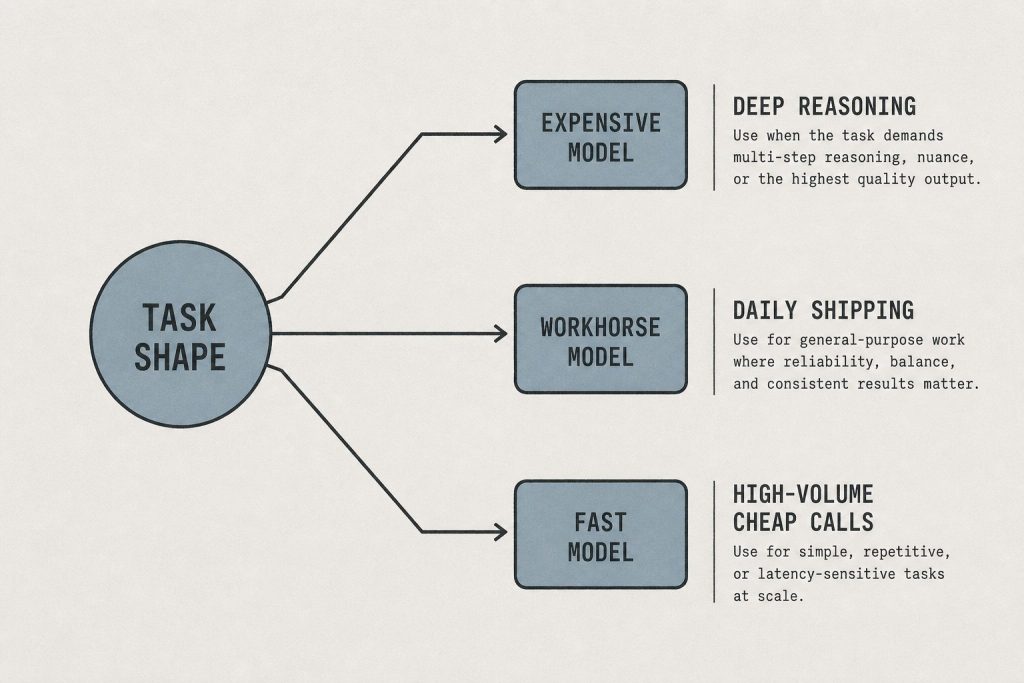
Answer three questions to get a model recommendation tailored to your use case.
How We Actually Use Each Model
These are real production workflows mapped to the right tier — built from running Claude in content operations, publishing automation, and knowledge management at scale. No hypotheticals.
- 25-post-per-day SEO metadata refresh
- Article classification and tag assignment
- Structured data extraction from web pages
- Keyword density checks across large post archives
- Link validation and redirect flagging
- Desk article writing (1,200–2,500 words)
- Content brief execution from keyword clusters
- FAQ and schema markup generation
- Cross-site content adaptation and localization
- Monthly client update drafts and summaries
- Agentic Notion Workers (multi-step pipelines)
- Deep content refresh with competitive gap analysis
- Multi-database synthesis and reporting
- Strategy documents requiring extended reasoning
- Code generation for automation scripts
- Full-site content audits (500+ posts in single context)
- Cross-domain strategy synthesis across large corpora
- Complex multi-agent orchestration at the flagship tier
- Long-horizon planning requiring deep reasoning depth
- Codebase-wide analysis and architecture review
The Economics: Routed vs All-Fable
Smart model routing is where API costs get controlled. Here’s a real-world comparison of a mixed content-and-automation workload at scale — routed vs running everything on Fable 5.
| Workload | Monthly Volume | Routed Model | Routed Cost | All-Fable 5 Cost | Savings |
|---|---|---|---|---|---|
| SEO metadata batch refresh | 750 posts/mo | Haiku 4.5 + Batch | $1.20 | $18.75 | 93% less |
| Article drafting | 90 articles/mo | Sonnet 4.6 | $8.10 | $67.50 | 88% less |
| Agentic worker runs | 200 runs/mo | Opus 4.8 | $22.50 | $45.00 | 50% less |
| Full-site portfolio audits | 4 audits/mo | Fable 5 | $24.00 | $24.00 | — |
| Total | — | Routed | $55.80 | $155.25 | 64% less |
Stacking Discounts: Caching + Batch API
Two discount mechanisms compound independently:
- Prompt caching: Cache your system prompt and shared context once. Subsequent requests pay ~10% of the input price for cache reads. On Fable 5, that’s $1.00/M instead of $10.00/M on cached tokens — a 90% reduction on your largest cost lever.
- Batch API: Submit requests asynchronously (results within 24 hours) for a flat 50% discount on both input and output. Works on all four models. Best for non-real-time workloads like overnight refreshes, audits, or bulk classification.
- Stacked: Caching + Batch combined can bring effective Fable 5 input cost from $10/M to ~$0.50/M on cached tokens — making it economically viable for high-volume tasks that previously only fit Haiku’s budget.
See our Claude context window guide for more on how to structure prompts to maximize cache hit rates.
Related Claude Resources
Claude Fable 5 FAQ
claude-fable-5-20260101 (check the Anthropic documentation for the exact identifier). It supports the same API surface as the rest of the Claude family — streaming, tool use, prompt caching, vision, the Batch API, and MCP server integration. Access requires an Anthropic API account with Fable 5 enabled on your usage tier.
More Claude Guides from Tygart Media
We run Claude in production every day. These are the guides that come from using it, not just writing about it.
Related on Tygart Media: Claude Fable 5 overview · Fable 5 firsthand · Claude pricing.
Leave a Reply