Water damage restoration is a distinct segment of the restoration market. The workflow is moisture-driven — readings, drying curves, equipment logs, IICRC compliance — and the job type demands tools that were built with mitigation in mind, not just general construction project management. This comparison looks at how Albi and Cotality DASH handle water damage work specifically, using only data from each vendor’s own site.
All data sourced from albiware.com and cotality.com, June 9, 2026.
Head-to-head for water damage restoration
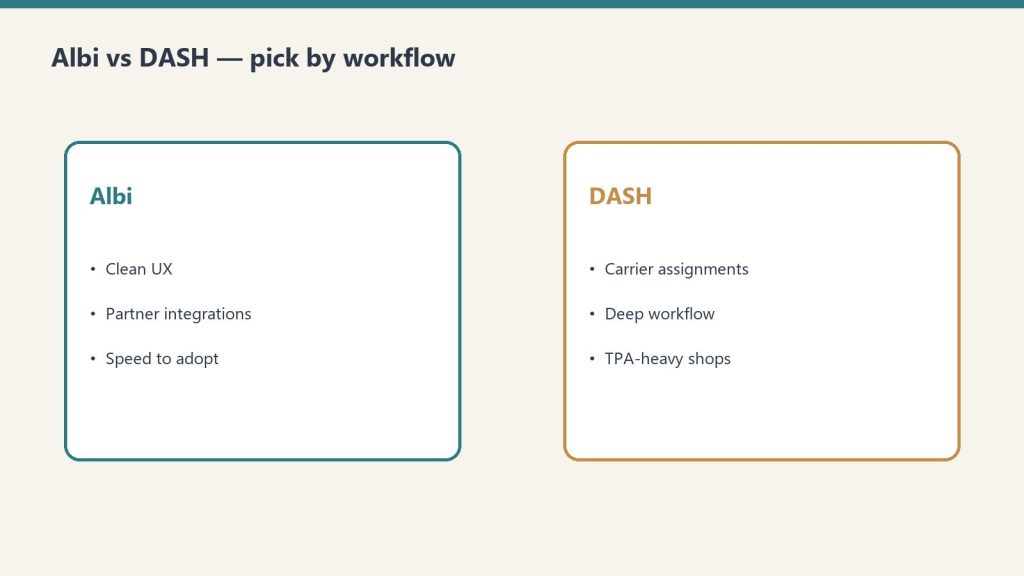
| Factor | Albi | Cotality DASH |
|---|---|---|
| Moisture tracking | ✅ DryBook 2.0 — built in | ✅ Via Cotality Mitigate (native integration) |
| IICRC S500 alignment | Yes (DryBook) | Yes (Mitigate + Compliance Manager) |
| Xactimate integration | Pro seats only ($100/seat/mo) | Yes (native, all plans) |
| Insurance/TPA workflow | Moderate — open API + Xactimate on Pro | Strong — native Cotality ecosystem + Claims Connect |
| Mobile offline mode | Albi Mobile (sync when online) | True offline — saves locally, syncs later |
| Pricing | $60 Base / $100 Pro per seat/month; $6K/yr min | Contact for quote: (866) 774-3282 |
| Minimum commitment | $6,000/year (4 seats) | No public minimum — contact Cotality |
| QuickBooks | Online + Desktop (Pro seats) | Online + Desktop |
| Encircle integration | Yes | Yes |
| CompanyCam | Yes | Not listed on vendor site |
| Support response time | 7-minute average (per albiware.com) | Contact support at cotality.com/support |
| Customization | High — built by restorers for restorers | Moderate — workflow follows DASH structure |
Albi’s water damage strengths
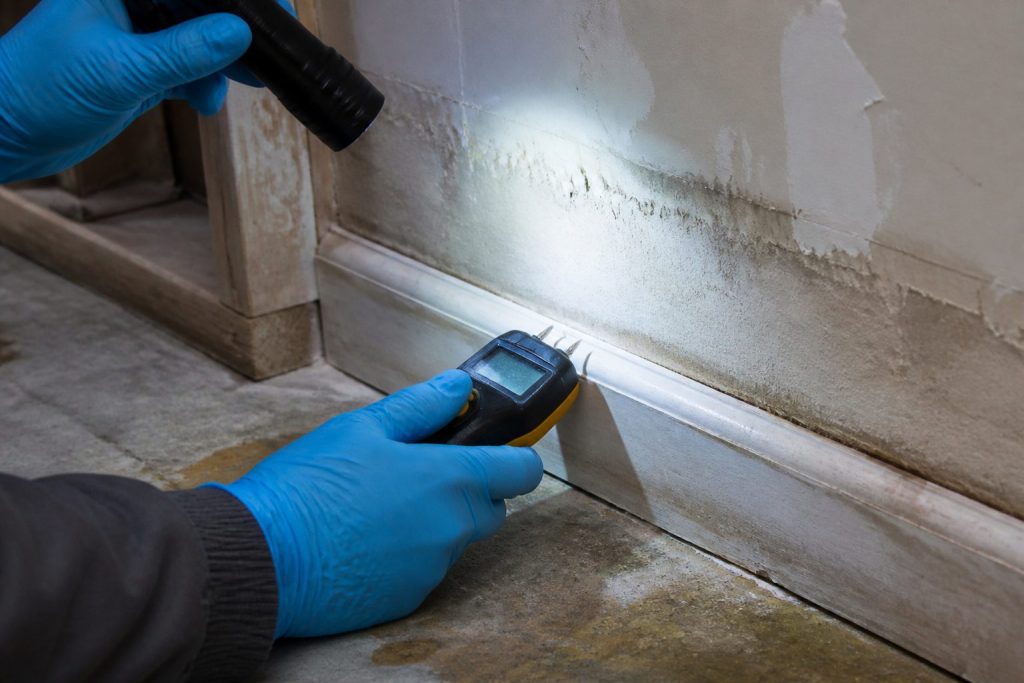
Albi was built by restoration contractors, and the water damage workflow shows it. DryBook 2.0 is a purpose-built moisture tracking tool built directly into the Albi platform — not a third-party integration. Field techs log moisture readings, track drying equipment placement, and document the drying curve without switching apps. This matters because moisture documentation is the core evidence for insurance claims on water damage jobs.
Albi also includes Albi Capture, a newer floor plan tool that’s useful for documenting affected areas precisely. For water damage documentation, accurate floor plans that map equipment placement and affected zones are increasingly expected by carriers.
The customization angle is real for water damage shops with specific workflows. Albi lets you build custom fields, custom report templates, and custom stages that mirror exactly how your company documents a Category 3 water loss differently from a Category 1. DASH enforces more standardized structure.
One hard number: Albi’s published support response time is 7 minutes (per albiware.com). For water damage work where a field tech encounters a documentation question mid-job, that matters more than it would for a slower construction workflow.
DASH’s water damage strengths
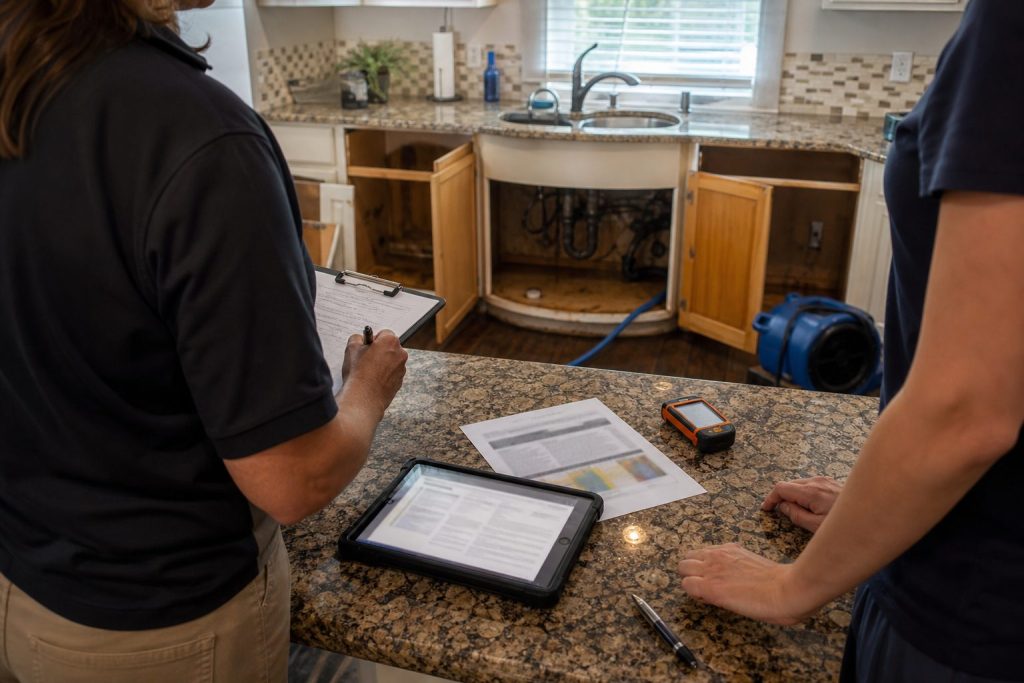
DASH’s advantage on water damage is the insurance side of the equation. The Compliance Manager builds carrier-specific documentation requirements into field checklists — before your tech leaves the job, DASH has guided them through exactly what the carrier needs. For high-volume insurance water damage work (burst pipes, appliance failures routed through Contractor Connection or similar TPAs), this reduces supplement disputes and documentation rejections.
For mitigation-specific workflow, Cotality offers Cotality Mitigate as a native add-on — it handles moisture mapping, equipment tracking, and IICRC S500-aligned drying documentation, and feeds directly into the DASH job file. Running both as part of the Cotality ecosystem means your mitigation data lives alongside your job file without import/export friction.
The offline mobile capability is also a real differentiator for water damage work. Water-damaged structures — flooded basements, saturated wall cavities, HVAC shutdowns — frequently have poor cellular coverage. DASH’s mobile app saves documentation locally and syncs when service returns. Field techs can capture photos, readings, and notes even without a signal.
The decision for water damage operators
If your water damage book is primarily insurance-driven (30%+ of revenue from carriers/TPAs) and you work with Contractor Connection, Code Blue, or Cotality-ecosystem TPAs, DASH is the stronger choice. The carrier integration depth and Mitigate add-on are built for this exact workflow.
If your water damage work is retail-heavy, or you want deep customization in how you document and report mitigation workflows, or you’re a growing shop that values responsive support and transparent per-seat pricing, Albi is the stronger starting point. DryBook 2.0 is purpose-built, and the $6K annual minimum is knowable — you can budget for it without a demo-call sales process.
Frequently Asked Questions
Is Albi or DASH better for water damage restoration companies?
It depends on your revenue mix. DASH (Cotality) is better if you derive 30%+ of revenue from insurance carriers and TPAs — its native Xactimate/XactAnalysis connection and Cotality property data ecosystem give it structural advantages for insurance workflow. Albi is better if you are retail-heavy, want a customizable platform, or need built-in moisture mapping tools like DryBook 2.0. Albi was built by restoration contractors specifically for the water damage workflow.
Does Albi have moisture tracking for water damage jobs?
Yes. Albi includes DryBook 2.0, a dedicated moisture tracking and drying management tool built into the platform. It tracks moisture readings, drying equipment, and IICRC S500-aligned documentation for water damage jobs. This is part of the core Albi platform, not an add-on.
Does DASH have water mitigation tools?
Yes. Cotality offers a separate product called Cotality Mitigate specifically for water mitigation workflow — it is distinct from DASH but integrates natively with it. DASH also connects natively with Cotality Mitigate for contractors who want both job management and dedicated mitigation documentation in one ecosystem.
How much does Albi cost for a water damage restoration company?
Per albiware.com/albi-pricing as of June 2026: Base seats are $60/user/month (field technician features including DryBook 2.0 and field documentation). Pro seats are $100/user/month (adds invoicing, Xactimate/XactAnalysis integration, advanced CRM, accounting integrations). Minimum annual subscription is $6,000 (4 seats required: 2 Base + 2 Pro). Onboarding starts at $1,000 one-time.
What is Cotality DASH’s water mitigation integration?
Cotality DASH integrates natively with Cotality Mitigate, a dedicated software product for water mitigation workflow. Mitigate handles moisture mapping, equipment tracking, and IICRC S500-aligned drying documentation. Running both DASH and Mitigate from the same Cotality ecosystem means mitigation data flows directly into the job file without manual entry.
Does Albi integrate with Xactimate for water damage estimates?
Yes, on Pro seats. Per albiware.com/albi-pricing, Albi Pro seats ($100/user/month) include Xactimate and XactAnalysis integration. If you’re writing Xactimate estimates for water damage jobs and submitting them to XactAnalysis for carrier review, you need Pro seats for your estimating staff. Base seats ($60/user/month) do not include Xactimate.
Which platform has better mobile tools for water damage field crews?
Both are strong. DASH’s mobile app has true offline mode — documentation saves locally and syncs when cellular is restored, which matters in water-damaged structures with poor connectivity. Albi Mobile covers time clock, scheduling, field documentation, moisture readings via DryBook, and photo capture. For crew-heavy water damage shops, Albi’s combined DryBook + mobile workflow is purpose-built for the job type; DASH’s offline reliability is the edge in connectivity-challenged environments.
Leave a Reply