Tag: Washington state tourism

  • What the Cascadia Marine Trail Means for Belfair Lodging, Rental, and Tourism Businesses

    What the Cascadia Marine Trail Means for Belfair Lodging, Rental, and Tourism Businesses


    For Belfair lodging operators, kayak rental shops, restaurants, and tourism-adjacent businesses, the Cascadia Marine Trail is an underused asset sitting right outside your door. Belfair State Park’s CMT site 148 is the southernmost paddler campsite on Hood Canal — and the National Recreation Trail it anchors brings exactly the kind of low-impact, repeat-visit, multi-day visitor that small Mason County hospitality businesses are built to serve. Here’s what’s worth knowing about that economic flow in spring 2026.

    Who Uses the Cascadia Marine Trail

    The CMT visitor is a specific profile: 30s–60s, often a couple or small group, willing to spend on quality gear and quality lodging on either end of a multi-day paddle, and inclined to repeat visits over a season because the trail is cumulative — they paddle a leg this trip, the next leg next trip. This is the inverse of the day-tripper who eats one meal and leaves. CMT users plan around weather windows, tides, and water conditions, which means weekday demand and shoulder-season demand both index higher than typical leisure tourism.

    The trail is managed by the Washington Water Trails Association in partnership with Washington State Parks. WWTA’s site lists more than 55 paddler-only campsites along Washington’s inland marine waters; Belfair State Park is the trail’s southern Hood Canal anchor.

    Lodging: The “Day Before” and “Day After” Opportunity

    A CMT trip almost always involves a non-paddling night before launch and a non-paddling night after takeout. Paddlers want to arrive the day before, prep gear, eat well, sleep on a real bed, and get on the water early. They want the same on the back end after coming off the canal.

    For Belfair vacation rental hosts, that translates into two structural opportunities:

    • Storage logistics: Properties that can accommodate a kayak (covered side yard, garage space, dock access) command a clear premium with paddler guests.
    • Shuttle and launch information: Listings that explicitly mention proximity to Belfair State Park, launch instructions, and Discover Pass tips convert better with paddler searchers than generic “near Hood Canal” copy.

    For B&B and inn operators, paddlers tend to be lower-impact guests — early to bed, early up, often skipping the breakfast service in favor of a pre-launch protein bar — which can pencil better than the typical leisure stay.

    Rental and Outfitter Demand

    North Shore Hood Canal Kayaks at 3959 NE North Shore Road in Belfair operates by appointment, signaling demand exists for paddler equipment in the area without a high walk-in volume. There is room in the market for additional rental, lesson, and guide services — particularly anything that lowers the barrier for first-time paddlers (intro lessons, half-day guided tours, beginner gear packages with PFDs sized for kids).

    Lodging properties along North Shore Road that include kayaks and SUPs as part of the package tend to differentiate well in vacation rental search. If you operate a property within a 10-minute drive of the state park and don’t currently include water craft, the upfront equipment cost is modest relative to the marketing lift.

    Restaurants, Coffee, and Pre-Launch Provisioning

    The CMT visitor’s morning routine: 5:30 a.m. wake, coffee, breakfast they don’t have to cook, on the water by 7. Restaurants and coffee shops along the SR-3 and SR-300 corridors that open early and offer grab-and-go options capture this demand. Same-day takeout dinner reservations on the back end of trips — when paddlers come off the water tired, hungry, and not interested in cooking — are similarly underserved.

    Provisioning for multi-day paddles also creates opportunity for any Belfair grocer or specialty store stocking lightweight, water-resistant, paddler-friendly food: dried meals, bars, electrolyte mixes, no-cook protein.

    The Restoration Story Is a Marketing Asset

    Belfair State Park is the site of a significant ongoing estuary restoration. The Hood Canal Salmon Enhancement Group, in partnership with Washington State Parks, has restored approximately 8.1 acres of estuarine wetlands and removed 2,700 feet of rip-rap shoreline armoring — undoing fill placed between 1952 and 1960. Project documentation is hosted by the Pacific Northwest Salmon Center.

    For tourism operators, this is a real differentiator. Visitors increasingly want their travel choices to align with conservation — and Belfair offers a paddle directly past an active, visible salmon-habitat restoration site. That’s a story you can put in your listing copy, your booking confirmation email, and your guest welcome packet, and it costs nothing.

    Cross-Promote With Other North Mason Outdoor Assets

    Belfair’s outdoor inventory is more than the state park. Tahuya State Forest’s 23,000 acres are 3.5 miles away. Theler Wetlands’ boardwalk and salmon-rearing center is on the eastern side of town. The Skokomish Valley and the broader Hood Canal shoreline extend in both directions. Listings, websites, and concierge collateral that reference the full Tahuya State Forest trail system alongside paddling — rather than treating each as a standalone — close better with multi-day visitors.

    Frequently Asked Questions

    How can my Belfair lodging business attract Cascadia Marine Trail paddlers?

    List your property explicitly with kayak storage capacity, proximity to Belfair State Park, and Discover Pass guidance in the listing copy. Paddlers search for those specifics. Properties that include kayaks or SUPs as part of the package differentiate strongly in vacation rental search. Early breakfast options and quiet pre-launch logistics matter more to this customer than typical leisure amenities.

    Is there room for another kayak rental business in Belfair?

    The current operator, North Shore Hood Canal Kayaks, runs by appointment-only — which suggests demand exists but is being managed against capacity rather than fully met. There is likely room for additional rental, beginner lessons, and guided half-day tour businesses, particularly any service lowering the barrier for first-time paddlers and families with kids.

    What does a Cascadia Marine Trail visitor typically spend?

    CMT users are a specific multi-day, planning-oriented visitor — typically spending on lodging the night before launch and the night after takeout, plus on-trail provisions, plus rental gear if they’re not bringing their own. They also tend to repeat-visit across a season because the trail is cumulative. Total spend per trip varies, but the lifetime value across a season is materially higher than a single-day visitor’s.

    How does the saltmarsh restoration affect business?

    The Belfair State Park estuary restoration project is an active draw for conservation-minded visitors and a genuine marketing differentiator for properties and businesses that mention it in their listings. The park itself remains fully operational throughout the restoration; day-use, camping, and CMT site 148 are all open. The project enhances the visitor experience rather than disrupting it.

    Where can I learn more about hosting paddler guests?

    The Washington Water Trails Association maintains a public site list and trail map at wwta.org with information about each CMT site. State Parks publishes Belfair-specific information at parks.wa.gov. For local outdoor recreation context, our spring 2026 Cascadia Marine Trail guide covers the specifics that paddler guests typically ask about.

    This is a Mason County business-owner companion to our Cascadia Marine Trail / Belfair State Park spring 2026 guide. For related commercial coverage, see our recent Belfair sewer / PSIC business briefing.

  • The West End Is Open: Hoh Rain Forest and Rialto Beach Are Ready for You This Weekend

    The West End Is Open: Hoh Rain Forest and Rialto Beach Are Ready for You This Weekend

    If you’ve been waiting for the right weekend to make the drive to the West End of the Olympic Peninsula, this is it. Two of the most iconic destinations on this stretch — the Hoh Rain Forest and Rialto Beach — are both fully open right now, and one of them won’t stay that way past July. Here’s what you need to know before you go.

    Hoh Rain Forest: The Visitor Center Is Open Today

    The Hoh Rain Forest sits about 31 miles southeast of Forks along Upper Hoh Road, and as of this weekend, the entire area is operating normally — trails, parking areas, restrooms, and the Visitor Center. That last detail matters: the Hoh Rain Forest Visitor Center runs on a Friday through Sunday schedule from 9am to 4pm, which means today is one of only three days a week you can actually walk inside, talk to a ranger, and get current trail conditions straight from the source.

    The two signature trails are the reason most people make this drive. The Hall of Mosses Trail is a 0.8-mile loop through old-growth Sitka spruce hung with club moss so thick it looks like something from a fantasy novel. The trees here are enormous — some over 300 years old — and the light filters through in a way that makes even an overcast day feel dramatic. The Hoh River Trail sets off from the same trailhead and runs deep into the park; you can walk as little or as much as you want, following the braided river through stands of spruce and maple.

    Hoh Campground is currently first-come, first-served, which means you can drive in this weekend without a reservation and claim a site. That window closes June 12, when reservations become required through September 6. If you’ve been meaning to camp in the rainforest, the next six weeks are your easiest shot at a spontaneous overnight. Come prepared for weather regardless of the forecast — the Hoh receives over 140 inches of rain annually, and conditions can shift from sunny to soaked in under an hour. Waterproof layers are non-negotiable. Road and conditions hotline: 360-565-3131.

    Rialto Beach: Open Now, Closed July 8 — Plan Accordingly

    Rialto Beach is accessed via Mora Road off Highway 101, about 14 miles of winding two-lane road through the Quillayute River bottomlands. Right now, Mora Road and Rialto Beach are fully open. Starting July 8 and running through October 5, both lanes of Mora Road will be closed beyond Mora Campground for permanent road repairs — meaning Rialto Beach will be completely inaccessible by vehicle for nearly three months.

    This construction has been coming for a while. Back in 2019, severe winter flooding eroded the riverbank at mile marker 1.25, and the emergency riprap installed at the time was always a temporary fix. The permanent repair is necessary and overdue, but the closure window is real, and if you want to visit Rialto Beach this summer, your window is now through July 7.

    Rialto Beach is one of those places that rewards the effort. The beach is wide and wild, littered with enormous drift logs bleached silver by the salt air. Sea stacks rise from the surf in both directions. About 1.5 miles north along the shoreline, the Hole-in-the-Wall sea arch cuts through a headland — a walk that’s entirely doable at low tide, though you’ll want to check a tide chart before heading out. The Pacific coast moves fast, and sneaker waves are a real hazard anywhere along this stretch.

    Mora Campground, located before the closure zone, is open first-come, first-served through May 14. Starting May 15, reservations are required (available at recreation.gov), running through September 20. If you want to base camp here before the road closes, this coming week is your last spontaneous-arrival window.

    Plan Your Visit

    Both destinations are day-trip distance from Forks, which sits at the crossroads of the West End. For the Hoh Rain Forest, allow at least two to three hours minimum — longer if you want to walk the Hoh River Trail beyond the first mile. For Rialto Beach, budget time for the 1.5-mile beach walk to Hole-in-the-Wall and back if tides allow; check tide tables in advance at tidesandcurrents.noaa.gov (La Push / Quillayute River, station 9442396).

    Current road and conditions for all Olympic National Park areas: call the recorded information line at 360-565-3131. America the Beautiful passes and Olympic National Park annual passes are accepted at both entrance points. The Hoh Rain Forest entrance station is on Upper Hoh Road; the Rialto Beach / Mora area uses the same pass. Day-use fee without a pass is $35 per vehicle.

    The West End is at its best in late spring — crowds haven’t arrived yet, the forest is saturated green, and the beach is still yours for the walking. Don’t sleep on it.

  • FIFA World Cup 2026 Seattle: Why Global Travelers Should Base in Everett

    FIFA World Cup 2026 Seattle: Why Global Travelers Should Base in Everett

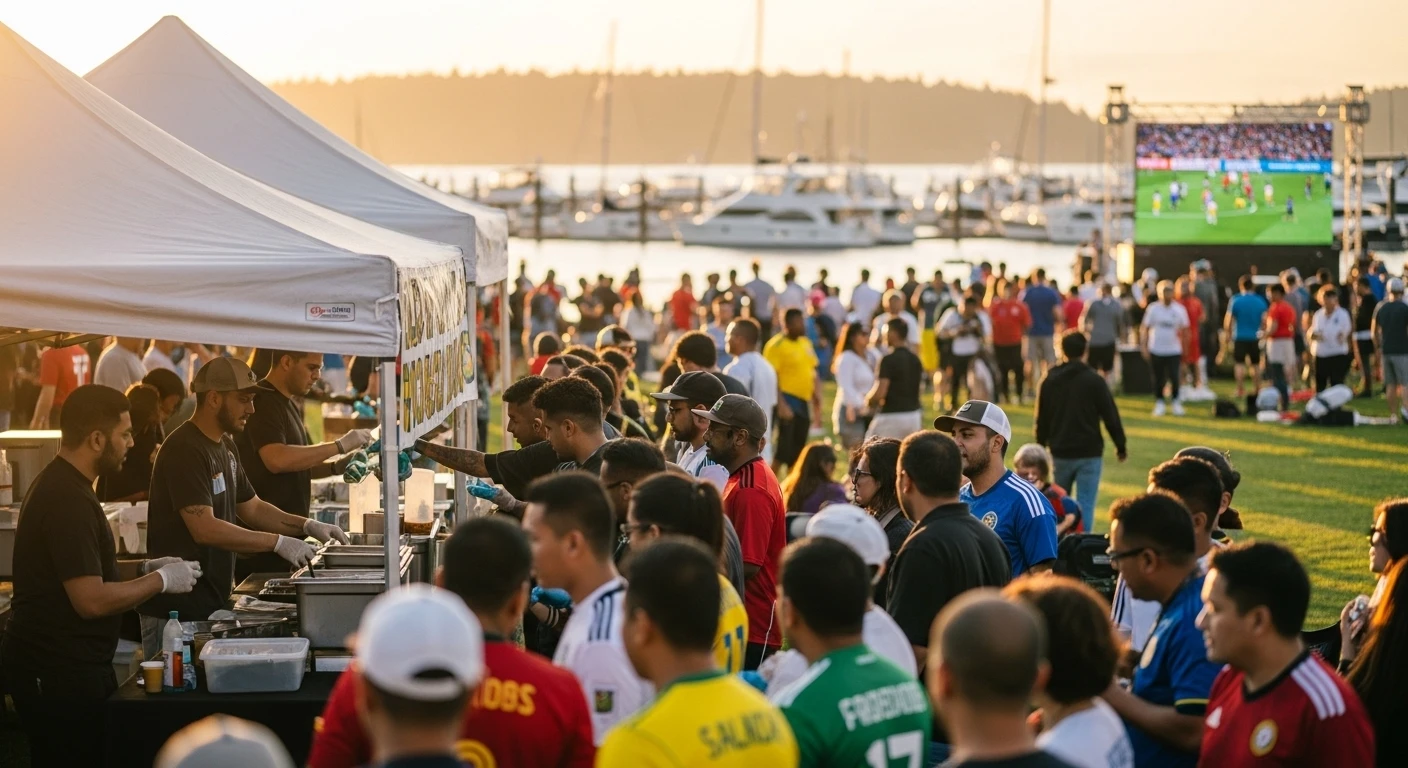
    The 2026 FIFA World Cup brings international soccer to Seattle — and with it, hundreds of thousands of global travelers who will need places to stay, eat, explore, and remember. Seattle’s hotel market will be stretched. Smart travelers are already looking north. Everett, Washington is 25 miles from downtown Seattle, connected by Sounder commuter rail, and sitting on the edge of some of the most dramatic Pacific Northwest scenery on the continent. This is the guide for global travelers who want the World Cup experience without the Seattle price tag.

    Quick facts for international travelers: Seattle is hosting FIFA World Cup 2026 matches at Lumen Field. Everett is 30 minutes north by Sounder commuter rail. The Snohomish County/Everett area offers waterfront hotels, dining, and direct access to the Olympic Peninsula, North Cascades, and San Juan Islands — all within a 90-minute drive.

    Why Everett for FIFA World Cup 2026

    Lumen Field in Seattle is the match venue. But Seattle’s hotel inventory — concentrated in Capitol Hill, South Lake Union, and the waterfront — will be fully booked weeks before the first match. International travelers booking late will find rates at multiples of normal. Everett offers a genuine alternative: a working waterfront city with its own character, direct rail access to Seattle, and a base from which the entire Pacific Northwest is reachable.

    The Sounder North commuter rail runs between Everett and Seattle’s King Street Station. The trip takes approximately 50 minutes and deposits travelers two blocks from Pioneer Square and within a mile of Lumen Field. No rental car, no parking, no traffic. International travelers accustomed to European rail culture will find it a familiar experience.

    Getting from Seattle to Everett

    There are three practical options for match-day travel between Everett and Seattle:

    • Sounder North commuter rail — Direct service, King Street Station to Everett Station. Approximately 50 minutes. Sound Transit operates the line and fares are purchased via the ORCA card system, available at stations.
    • Interstate 5 by car or rideshare — 30 miles, 30–60 minutes depending on traffic. On match days, expect significant congestion southbound. Plan to arrive at least 3 hours before kickoff if driving.
    • Community Transit express bus — Swift bus rapid transit and express routes connect Everett to Seattle with stops at Lynnwood Transit Center, which connects to the Link Light Rail system into downtown Seattle.

    Where to Stay in Everett

    Everett’s hotel stock ranges from major chain properties near the interstate to boutique waterfront options near the marina. The waterfront district — along West Marine View Drive — puts travelers within walking distance of the Port of Everett, restaurants, and the Boxcar Park recreational area. For World Cup visitors, booking 3–6 months in advance is strongly recommended given regional demand.

    The Angel of the Winds Arena entertainment district anchors Everett’s downtown hospitality cluster. Hotels within walking distance of the arena and the Everett Station transit hub offer the most convenient base for rail-dependent travelers.

    Beyond the Match: What to Do in the Everett Area

    The Boeing Future of Flight

    The Boeing Future of Flight Aviation Center in Mukilteo, 10 miles south of Everett, houses the largest building by volume in the world — the Boeing 777X and 787 Dreamliner assembly facility. Tours run daily and offer a genuinely rare industrial experience unavailable anywhere else in the world. International visitors consistently rate it among the most memorable stops in the Pacific Northwest.

    Possession Sound and the Puget Sound Waterways

    Everett sits at the northern tip of Possession Sound, where the Snohomish River delta meets the inland sea of Puget Sound. Washington State Ferries connect Mukilteo (15 minutes from Everett) to Whidbey Island — the largest island in the contiguous United States — with crossings every 30 minutes. A day trip to Whidbey from Everett requires no car if you walk onto the ferry.

    Snohomish River Valley

    The town of Snohomish, 12 miles east of Everett, is a National Register historic district with antique shops, farm-to-table restaurants, and views across the agricultural valley toward the Cascade foothills. For international travelers expecting generic American strip-mall tourism, Snohomish is a reliable corrective.

    Everett as the Gateway to the Olympic Peninsula

    The Olympic Peninsula — home to Olympic National Park, the Hoh Rain Forest, Hurricane Ridge, and the Pacific coastline at Ruby Beach — is 90 minutes to two hours from Everett. The crossing involves the Kingston-Edmonds ferry (20 minutes south of Everett) or the Bainbridge Island ferry from downtown Seattle. World Cup visitors with a rest day between matches have enough time for a meaningful Olympic Peninsula experience: the Hoh Rain Forest and a stretch of Pacific coast can be done in a long day from Everett.

    For International Travelers: Practical Notes

    Washington State has no sales tax on groceries. Tipping is standard at restaurants (18–20%) and for ride services. The US dollar is the currency; credit cards are accepted nearly universally. Cellular coverage in Everett is strong across all major US carriers. The Everett waterfront and downtown core are walkable. Summers in Western Washington are mild — temperatures in July and August (the World Cup period) typically run 65–80°F (18–27°C) with low humidity and long daylight hours.

    Frequently Asked Questions

    How far is Everett from FIFA World Cup 2026 matches in Seattle?

    Everett is approximately 25 miles north of Seattle’s Lumen Field. Sounder North commuter rail makes the trip in about 50 minutes. By car, the drive is 30–60 minutes depending on traffic.

    Is Everett worth visiting during the FIFA World Cup?

    Yes — Everett offers waterfront dining, ferry access to Whidbey Island and the Olympic Peninsula, the Boeing Future of Flight, and lower hotel rates than Seattle. It is a genuine base, not just an overflow option.

    Can I get to Seattle matches from Everett without a car?

    Yes. Sounder North rail connects Everett Station to Seattle’s King Street Station. Community Transit express buses connect to Lynnwood’s Link Light Rail station for an alternative route into downtown Seattle.

    What is the best area to stay in Everett for World Cup visitors?

    The waterfront district and downtown Everett near Everett Station offer the most convenient base for car-free travelers using Sounder rail to reach Seattle matches.


    Also available in: Guía en Español  |  Em Português  |  Auf Deutsch  |  En Français  |  한국어  |  日本語

    Related guides:

  • Hood Canal South: Potlatch State Park Spring Shellfish Season & Hoodsport Ace & Lumber Grand Opening (April 2026)

    Hood Canal South: Potlatch State Park Spring Shellfish Season & Hoodsport Ace & Lumber Grand Opening (April 2026)

    Monday regional beat — Hood Canal South (Belfair, Union, Hoodsport, Potlatch, Skokomish). If you live on the Olympic Peninsula, these are the two things worth your attention along US Hwy 101 this week.

    Potlatch State Park: Spring Low Tides and an Open Shellfish Season

    Potlatch State Park — about 12 miles north of Shelton on US Hwy 101, just north of Skokomish tribal lands — sits on one of the more productive shellfish beaches in Hood Canal. The park runs 5,700 feet of saltwater shoreline with more than a mile of tidelands that drop away at low tide into the kind of gravel-and-mud flats the state built its clam reputation on.

    Here’s the part peninsula residents already know but visitors miss: the recreational shellfish season at Potlatch is open from April 1 through May 31, 2026, per the Washington Department of Fish and Wildlife. Clams, mussels, and oysters are all in play, assuming you’ve got a current shellfish license and you’re checking your limits.

    Two non-negotiables before you go:

    • Call the Washington Department of Health Shellfish Safety Hotline at 1-800-562-5632 (or check the DOH shellfish safety page) before you harvest. Biotoxin closures can flip a beach overnight, and Hood Canal is one of the areas watched closely.
    • Display a Discover Pass on your vehicle. Potlatch is a Washington State Park — day-use requires it, no exceptions.

    If you’ve never tidepooled this stretch, the window is narrow and the reward is big. Check your local tide table, pack a bucket and gloves, and plan to be down on the flats an hour before dead low. The Skokomish estuary is just to the south, and the wildlife traffic along that shoreline during a minus tide is worth the drive by itself.

    Hoodsport Ace & Lumber: Grand Opening Saturday, April 25

    If you’ve driven through Hoodsport in the last year, you’ve probably noticed a new hardware store quietly taking shape at 150 N Lake Cushman Road. That’s Hoodsport Ace & Lumber, and this Saturday — April 25, 2026 — is the official grand opening.

    Here’s what’s on the day:

    • Date: Saturday, April 25, 2026
    • Time: 8:00 AM to 4:00 PM (ribbon cutting at 8:00 AM sharp)
    • Location: 150 N Lake Cushman Road, Hoodsport, WA 98548
    • Cost: Free
    • What to expect: Hourly deals, giveaways, in-store specials

    The store has been operating informally for about a year while the team ironed things out, and management has flagged that an on-site rental center is coming later this year — a legitimately useful addition for Lake Cushman property owners who have, until now, been driving to Shelton or Belfair for weekend projects.

    For a small peninsula town like Hoodsport, a fully stocked hardware and lumber yard that isn’t a 30-minute drive changes the weekend math on almost every home project. If you live anywhere from Potlatch to Lake Cushman and you’ve been waiting for this one to officially open, Saturday is the day.

    Why This Week, Why Hood Canal South

    The Monday rotation focuses on Hood Canal South because it’s the stretch of 101 most people blow past on the way somewhere else — and it’s the stretch where the best peninsula intel tends to hide in plain sight. Shellfish season opening alongside a new hardware store in the same town is exactly the kind of weekend the south end quietly puts together without a press release.

    Next Monday’s Hood Canal South beat will likely circle back to Hama Hama Oyster Rama (the April 18-19 event) for a retrospective if anything newsworthy came out of it. For now — Potlatch tide tables and a Saturday ribbon cutting.

    Sources & Further Reading

  • Port Townsend: Victorian Heritage Festival Countdown & Fort Worden Spring Visit — April 2026

    Port Townsend: Victorian Heritage Festival Countdown & Fort Worden Spring Visit — April 2026

    Port Townsend is gearing up for one of the most distinctive weekends on the Olympic Peninsula — and this year, it comes with a milestone worth circling on your calendar.

    Victorian Heritage Festival Returns April 24–26

    The 30th annual Port Townsend Victorian Heritage Festival lands April 24–26, and this year it carries extra weight: Port Townsend is celebrating its 175th birthday.

    Headquartered at the Cotton Building on Water Street (607 Water St), the festival brings Victorian fashion shows, period dancing, historical education programs, and a special birthday proclamation for the city. If you have never wandered downtown Port Townsend surrounded by hundreds of people in full Victorian regalia, it is one of the most uniquely wonderful experiences on this entire peninsula.

    A practical tip: book your accommodations now. Port Townsend fills up fast for this one, and the inns near the water go first. The festival runs three full days, so plan for at least one overnight if you are coming from outside Jefferson County.

    Fort Worden State Park — Perfect Spring Timing

    If you have not made it out to Fort Worden State Park this spring yet, April is one of the best months to go. The crowds are still light, the tide pools along the beach are active with life, and the old concrete gun batteries jutting up from the bluffs look dramatic in that low spring light. It is the kind of place that feels like you have stepped into a different era.

    The campsite reservation season opened April 1 and runs through October 31. If you have never stayed in one of the historic Victorian officers’ quarters with the Strait of Juan de Fuca right outside your window, add it to the bucket list immediately.

    The Centrum Foundation has spring programming running at the park right now — check their calendar before you visit to catch a workshop, rehearsal, or open event.

    Fort Worden State Park is located at 200 Battery Way, Port Townsend. Day use is free with a Discover Pass.

    Plan Your Visit

    Port Townsend sits at the northeastern tip of the Olympic Peninsula, about a two-hour drive from Seattle via the Kingston or Bainbridge Island ferry. Mid-April through late April is one of the sweetest windows — mild weather, fewer crowds than summer, and the Victorian Festival as your anchor event. Whether you come for the history, the hiking, or just to see the town in full 19th-century costume, this is Port Townsend at its best.

  • Hood Canal North: Mt. Walker Spring Hike & Bald Eagle Kayaking in Brinnon — April 2026

    Hood Canal North: Mt. Walker Spring Hike & Bald Eagle Kayaking in Brinnon — April 2026

    April is the sweet spot for Mt. Walker. The gate on Forest Road 2730 reopened April 1st, the rhododendrons are budding up the slope near Quilcene, and you have a few weeks before the big May crowds arrive. It is 5 miles roundtrip with 2,050 feet of gain — this trail earns its views — but from the north summit you get an unreal look at Hood Canal and the Olympics stretching out beyond. Take US 101 south from Quilcene about 5 miles to just before milepost 300, then turn right on Mt. Walker Road. Go this week if you can. 🌿🏔️

    #HoodCanalNorth #MtWalker #OlympicPeninsula #HikingWashington #ExploreHoodCanal


    This is one of those Hood Canal North experiences people do not forget. Hood Canal Adventures in Brinnon runs Tide Pool Kayak Tours through the spring, and in mid-April you get a bonus: bald eagles are gathering in serious numbers along the canal. Some groups have spotted up to 100 in a single paddle. That is not a typo. 🦅

    Tours launch from Yelvick’s Beach in Brinnon, run about 2.5 hours, and are $105/person. Book with Christina at kayakbrinnon.com or call 360-301-6310 — spots fill fast on clear spring days.

    #BrinnonWA #HoodCanalNorth #KayakBrinnon #OlympicPeninsula #WashingtonWildlife #BaldEagle

  • Casino Road in South Everett: The Complete Neighborhood Guide

    Casino Road in South Everett: The Complete Neighborhood Guide


    Q: What is Casino Road in Everett?
    A: Casino Road is a 2-mile corridor in South Everett, approximately 4 miles south of downtown, home to roughly 13,000 residents from dozens of countries. It is one of the most culturally diverse communities in Washington State — with significant Latin American, Southeast Asian, East African, and Pacific Islander populations — and is anchored by Connect Casino Road, a collaborative network of 24+ community organizations, and The Village on Casino Road, a neighborhood community center.

    Casino Road in South Everett: The Complete Neighborhood Guide

    Casino Road doesn’t give itself up on the first pass. Drive along the 2-mile corridor through South Everett — past the apartment buildings, the strip centers, the food trucks parked on weekends — and you see the surface. What’s underneath is one of the most genuinely community-minded, culturally alive neighborhoods in Washington State.

    About 13,000 people live here. A significant portion were born outside the United States. The demographics of Casino Road reflect Everett’s history as a landing place for people building new lives in the Pacific Northwest — Latin American families in communities going back decades, Southeast Asian communities from Cambodia, Vietnam, Laos, and the Philippines, East African arrivals, Pacific Islanders, and more recent arrivals from Central America and the Middle East. Not a melting pot in the old assimilation-first sense. Something closer to a neighborhood where multiple complete cultures operate side by side and have built real infrastructure together.

    The Geography: Where Is Casino Road?

    Casino Road runs roughly east-west through South Everett, from the I-5 corridor at its eastern end toward the Everett waterfront area to the west. The corridor’s center of gravity is the stretch between Beverly Boulevard and 36th Street, where apartment complexes, commercial strips, community-serving businesses, and service organizations cluster.

    The neighborhood sits within the larger South Everett geography that includes Silver Lake to the south and approaches the Paine Field industrial corridor to the northwest. It’s bounded to the south by the Mukilteo area and to the east by the I-5 corridor. Nearby arterials: Airport Road (SR 526) to the north, and 84th Street SW/Casino Road as the main neighborhood spine.

    Connect Casino Road: The Backbone

    Connect Casino Road launched in 2017 as a collaborative backbone organization — a network of more than 24 community partners working together to deliver services in the neighborhood that residents actually use. The partners include nonprofits, faith organizations, health providers, legal services providers, and community advocates.

    The model Connect Casino Road uses is asset-based: rather than describing the neighborhood primarily by its challenges, Connect Casino Road identifies and builds on the strengths already present — the existing cultural institutions, the informal mutual aid networks, the food systems, the trust between neighbors. Services include free tax preparation and Working Families Tax Credit application assistance, food bank access at The Village on the second and fourth Tuesday of each month, health services navigation, immigration legal assistance, and youth programming — all delivered in multiple languages, inside the neighborhood.

    The Village on Casino Road: The Physical Hub

    The Village on Casino Road is the neighborhood’s physical community center — a dedicated space for classes, services, cultural events, and organizing. Located in the heart of the Casino Road corridor, The Village hosts the Connect Casino Road partner programs and provides a neutral, accessible gathering point that many residents use as their primary resource hub.

    The Village’s programming includes English language learning, youth development activities, health screenings, and cultural celebrations. It also functions as an emergency resource coordination point — during the pandemic, The Village was a critical distribution hub for food, PPE, and information in multiple languages for a community with limited access to traditional digital channels.

    The Food

    The food on Casino Road is evidence of the neighborhood’s depth. On a Saturday afternoon, the corridor offers Mexican taquerias serving Michoacán-style carnitas alongside Cambodian family restaurants, Vietnamese banh mi and bakeries, African grocery stores, and Pacific Islander community gatherings. This isn’t constructed diversity for tourists. It’s a living food culture shaped by the communities that have been here for decades.

    Several spots along Casino Road and its surrounding streets have become genuine neighborhood institutions. The Everett Farmers Market at Everett Farmers Market connects Casino Road residents to the broader food economy, and multiple food truck gatherings serve the corridor on weekends. Quán Ông Sáu on Pacific Ave — three months in and already making a case for best Vietnamese food in Everett — has a Casino Road-adjacent customer base that’s been showing up since opening day.

    Housing Pressure: The 2026 Reality

    Casino Road’s housing reality mirrors what’s happening across Western Washington, but concentrated. The corridor’s apartment-dense housing stock — mostly mid-density multifamily buildings built in the 1970s through 1990s — has seen rents climb significantly faster than incomes for many longtime residents. The median household income in the Casino Road corridor is below Everett’s city-wide median, while rental costs have climbed alongside the broader Snohomish County market.

    Organizations like LISC Puget Sound have been working in Casino Road specifically on community economic development strategies that build wealth and stability for residents rather than displacement pressure. Connect Casino Road partners with housing-focused organizations to connect residents with rental assistance, housing stability resources, and financial empowerment programming.

    Why Casino Road Matters to Everett’s Future

    Casino Road represents the practical question Everett is navigating in 2026: how does a transforming city preserve the communities that have been here longest, especially as waterfront development, light rail planning, and population growth create new pressures on existing neighborhoods? The network that Connect Casino Road has built — two dozen organizations, a physical community center, multi-language service delivery — is the kind of infrastructure that makes the difference between neighborhoods that get displaced and neighborhoods that get stabilized.

    For more on South Everett’s neighborhood story, see our coverage of Casino Road’s original community profile, Lowell, Everett’s oldest neighborhood, and Cascade High School’s new IB Program.

    Frequently Asked Questions: Casino Road, South Everett

    Where exactly is Casino Road in Everett?

    Casino Road runs east-west through South Everett, approximately 4 miles south of downtown Everett. The corridor’s center is the stretch from Beverly Boulevard to 36th Street, within Snohomish County east of I-5.

    What is Connect Casino Road?

    Connect Casino Road is a collaborative network of more than 24 community organizations launched in 2017 to deliver services, resources, and support to Casino Road families. Partners include nonprofits, faith organizations, health providers, and legal services — all working together at The Village on Casino Road.

    What services does The Village on Casino Road provide?

    The Village on Casino Road offers a food bank (second and fourth Tuesdays), free tax preparation and WFTC assistance, health services navigation, immigration legal assistance, youth programming, English language learning, and cultural programming — all in multiple languages.

    What is the population of the Casino Road neighborhood?

    Approximately 13,000 residents, with significant representation from Latin American, Southeast Asian, East African, and Pacific Islander communities. About a quarter of Casino Road residents were born outside the United States.

    Is Casino Road a safe neighborhood?

    Casino Road is a family-oriented, community-dense neighborhood. Like most urban corridors, it has some areas with higher incident reports, but the strong community infrastructure — Connect Casino Road, The Village, faith organizations — reflects a neighborhood that actively invests in its own safety and stability. The Everett Police Department’s community policing unit has established relationships with neighborhood organizations.

    What housing options are available on Casino Road?

    Casino Road’s housing stock is primarily multifamily apartment buildings, ranging from smaller complexes to large-scale apartment communities. Rents have risen significantly in recent years in line with Snohomish County’s broader market. Connect Casino Road partners with housing stability and rental assistance organizations for income-qualified residents.

    Is Casino Road near public transit?

    Casino Road has Community Transit bus service connecting to Everett Transit and connecting corridors. Swift Blue Line BRT serves nearby streets with connections to Lynnwood Link light rail. The neighborhood’s proximity to Airport Road and I-5 makes it accessible for car-dependent commutes to Paine Field, Everett, and south toward Seattle.

  • Moving to Casino Road in South Everett: What New Residents Need to Know

    Moving to Casino Road in South Everett: What New Residents Need to Know


    Q: Is Casino Road in South Everett a good place to live?
    A: Casino Road offers some of Everett’s most affordable apartments within commuting distance of Paine Field, downtown Everett, and (via Community Transit) Lynnwood Link light rail to Seattle. The neighborhood has a strong community infrastructure — Connect Casino Road, The Village — and a rich cultural food scene. It’s a working-class, family-oriented corridor with real community character, not a polished urban center.

    Moving to Casino Road in South Everett: What New Residents Need to Know

    If you’re considering an apartment along Casino Road in South Everett, this is the honest guide that the listing photos don’t give you. What it’s like to live here, what the community infrastructure looks like, what you’ll pay, how you’ll get around, and what makes Casino Road a genuinely good choice for certain types of residents — and not the right fit for others.

    What Casino Road Actually Is

    Casino Road is a 2-mile commercial and residential corridor in South Everett — approximately 4 miles south of Everett’s downtown core. The neighborhood is primarily multifamily apartment housing along and off the main corridor, with a commercial strip serving neighborhood needs: grocery stores, taquerias, salons, laundromats, and community-serving businesses. It’s not a polished neighborhood with boutique coffee shops and weekend farmers markets (for that, you want Everett’s downtown core or the Colby Avenue corridor). It’s a working neighborhood with a genuinely dense community character.

    About 13,000 people live in the Casino Road corridor — one of the highest-density residential areas in Snohomish County. A significant portion of residents have roots in Latin America, Southeast Asia, East Africa, and the Pacific Islands. The neighborhood has a well-established, long-term character shaped by communities that have been here for decades, not a transitioning neighborhood in early gentrification.

    The Cost Reality: Affordable by Snohomish County Standards

    Casino Road is among Everett’s most affordable apartment corridors. As of early 2026, one-bedroom apartments along Casino Road typically range from $1,350 to $1,650 per month; two-bedrooms from $1,600 to $2,100. These are significantly below Everett’s waterfront and downtown core pricing (where two-bedrooms run $2,200-$2,800+) and well below comparable units in Bellevue, Redmond, or Seattle.

    Trade-offs for the lower price point: apartments are older stock (mostly 1970s-1990s construction), parking is often surface lots, unit finishes are typically standard rather than upgraded, and building amenities are basic. If you’re prioritizing cost-efficiency over new construction, Casino Road makes real financial sense.

    The Commute: Who Casino Road Works For

    Casino Road’s location makes the most sense for specific commute patterns:

    Boeing/Paine Field workers: Casino Road sits approximately 5-7 miles from Paine Field’s main Boeing campus. The commute via Airport Road or SR 526 takes 10-20 minutes by car, depending on shift time. This proximity to the aerospace corridor is one of Casino Road’s biggest practical advantages.

    Everett downtown workers: Everett’s downtown core is about 4 miles north on Broadway or Everett Avenue — a 15-20 minute drive, or accessible via Everett Transit and Community Transit bus routes.

    Seattle commuters: Casino Road’s Seattle commute is workable but not easy. Community Transit buses connect the corridor to Everett Station and Lynnwood City Center for Link light rail. Total transit time to downtown Seattle: approximately 75-90 minutes. By car on I-5: 35-50 minutes off-peak, 60-90 minutes peak. This works for occasional Seattle trips but makes Casino Road less ideal for daily Seattle commutes compared to neighborhoods closer to Everett Station.

    What the Community Infrastructure Looks Like

    Casino Road has unusually strong community infrastructure for its density and income profile. Connect Casino Road — a network of 24+ partner organizations launched in 2017 — operates The Village on Casino Road as a neighborhood hub. As a new resident, The Village is worth knowing about even if you don’t immediately need services: it hosts community events, connects residents to resources, and functions as a neighborhood commons.

    Services available through Connect Casino Road and The Village include a food bank (second and fourth Tuesdays), free tax preparation, health services navigation, immigration legal assistance, and youth programming. If you have family members who are recent immigrants or navigating complex systems, this is a genuine on-the-ground resource within the neighborhood.

    Schools in the Casino Road Area

    Casino Road falls primarily within the Mukilteo School District rather than Everett School District — a distinction worth confirming for your specific address, as the boundary runs through the corridor. Mariner High School serves much of the South Everett area, with Cascade High School nearby as well. Cascade High School is adding the International Baccalaureate (IB) Diploma Programme starting fall 2026 — a significant educational development for families in the area.

    For families with younger children, Mukilteo School District’s elementary schools in the South Everett area include Challenger Elementary and Fairmount Elementary. Confirm your specific school assignment at the district’s website with your address.

    Food and Services: What You’ll Actually Use

    Casino Road has strong neighborhood-serving commercial infrastructure. Grocery needs: QFC and Safeway are accessible within 5-10 minutes by car; smaller Latin American and Asian grocery stores are within walking distance for specialty items. The corridor has abundant Mexican, Vietnamese, and Cambodian food options — some genuinely excellent.

    Healthcare: Optum/Multicare clinics serve South Everett, with Providence Regional Medical Center Everett (the main regional hospital) about 4 miles north. Community Health Center of Snohomish County has a South Everett location serving income-qualified patients.

    Parks: Harborview Park and Silver Lake Park are the primary outdoor spaces within reasonable distance of Casino Road. Silver Lake has a county park with boat launch, beach, and trails — a quality of life asset that Casino Road’s central location puts within easy reach.

    For more on what Everett’s neighborhoods offer, read our complete guide to Casino Road’s neighborhood life, our profile of Lowell, Everett’s oldest neighborhood, and what the Sound Transit light rail situation means for people moving to Everett.

    FAQ: Moving to Casino Road, South Everett

    What are average apartment rents on Casino Road in 2026?

    One-bedrooms typically range $1,350-$1,650/month; two-bedrooms $1,600-$2,100/month, depending on building and unit. Pricing is below Everett’s waterfront core and significantly below comparable units in Bellevue or Seattle.

    What school district covers Casino Road?

    Much of Casino Road falls within the Mukilteo School District. Some addresses may fall within Everett School District — confirm at the district boundary lookup with your specific address.

    Is Casino Road close to Boeing and Paine Field?

    Yes — approximately 5-7 miles from Boeing’s main Paine Field campus via Airport Road/SR 526. A 10-20 minute drive depending on time of day and specific destination within the Paine Field complex.

    What community resources are available in Casino Road for new residents?

    The Village on Casino Road hosts Connect Casino Road programming including a food bank, tax prep, health navigation, and legal assistance. The Village is a neighborhood hub accessible to all residents regardless of income.

    What grocery stores are near Casino Road?

    QFC and Safeway are within 5-10 minutes by car. The Casino Road commercial strip has smaller Latin American and Asian grocery stores and markets within walking distance of most apartment complexes.

    How is the transit from Casino Road to downtown Everett?

    Community Transit and Everett Transit bus routes connect Casino Road to downtown Everett and Everett Station. Drive time is approximately 15-20 minutes. For Seattle commutes, the transfer to Community Transit buses connecting to Lynnwood Link light rail is the primary transit option.

  • Hood Canal North: Bald Eagle Kayak Tours in Brinnon — Sculpin Season Draws 100+ Eagles to Hood Canal — Exploring Olympic Peninsula

    Hood Canal North: Bald Eagle Kayak Tours in Brinnon — Sculpin Season Draws 100+ Eagles to Hood Canal — Exploring Olympic Peninsula

    Spring is eagle season along Hood Canal North — and right now, the numbers are extraordinary.

    Hood Canal Adventures in Brinnon is running their Bald Eagle Viewing Kayak Tours through June, and the timing couldn’t be better. The annual Pacific midshipman sculpin spawn draws massive concentrations of bald eagles to the Hood Canal shoreline near the Dosewallips delta. At low tide, the spawning fish become exposed in the shallows — and the eagles follow. Guides routinely spot 40 to 60 bald eagles at once, with some peak days exceeding 100 perched along the banks and overhanging trees. This is one of the most dramatic wildlife spectacles in western Washington, quietly unfolding on the jade-green waters of Hood Canal every spring.

    If you’re craving more intertidal magic, Hood Canal Adventures also runs Tide Pool Exploration tours with an on-water marine biologist — paddle out at low tide to find sea stars, nudibranchs, sea anemones, sea cucumbers, and crab in the rocky shallows. Their Dosewallips Estuary Kayak Tour takes you deep into the 1,000-acre wildlife delta at Dosewallips State Park, where elk sightings are surprisingly common even from the water.

    Spring is the sweet spot to experience Hood Canal North — before summer ferry crowds and before temperatures push visitors toward the mountains. Book at hoodcanaladventures.com or find their full listing and reviews at explorehoodcanal.com.

    Hood Canal North Spring Guide

    • Bald Eagle Viewing Kayak Tour: 2.5 hrs. Running April–June. 40–100+ bald eagles typical during sculpin spawn. Hood Canal Adventures, 306146 Hwy 101 N, Brinnon. (360) 301-6310. hoodcanaladventures.com
    • Tide Pool Exploration Tour: 2.5 hrs with marine biologist guide. Sea stars, nudibranchs, anemones, sea cucumbers.
    • Dosewallips Estuary Kayak Tour: 1,000-acre wildlife delta. Elk sightings common. Connects to Dosewallips State Park trail system.
    • Dosewallips State Park: 1,000+ acres, Maple Valley and Steam Donkey trails, yurts available year-round.

    Sources: explorehoodcanal.com, hoodcanaladventures.com, TripAdvisor 2026 listings, Hood Canal Adventures Facebook