Tag: Snohomish County

  • Everett Public Schools Last Day 2026: 2025–26 Year Recap

    Everett Public Schools Last Day 2026: 2025–26 Year Recap

    Q: When was the last day of school for Everett Public Schools in 2026?
    The last day of school for Everett Public Schools in the 2025–26 school year was Monday, June 15, 2026 (see the district’s District Calendar). The final five weeks — mid-May through mid-June — were among the most event-dense weeks on the calendar, with concerts, field days, PTSA events, AP make-up exams, and graduation ceremonies landing in rapid succession.

    The school year doesn’t slow down in May. If anything, it accelerates. Concerts, field days, PTSA events, AP make-up exams, volunteer recognition nights, and graduation ceremonies all compressed into the final stretch through June 15 — the last day of school for Everett Public Schools in the 2025–26 school year (EPS District Calendar).

    If you’re an EPS family reviewing how that end-of-year stretch ran — or planning ahead for 2026–27 — this is your guide to what was on the calendar, what to plan for, and what you shouldn’t let sneak up on you.

    The Calendar Anchor: June 15, 2026

    The last day of school for Everett Public Schools in 2025–26 was Monday, June 15, 2026 (district calendar). That school year’s final stretch includes the last day of instruction, which means report cards, grade promotions, locker cleanouts, textbook returns, and end-of-year school traditions — all of which vary by school but typically cluster in the final two weeks.

    Mark it. A lot of family planning decisions depend on it: summer childcare start dates, camp enrollment, work schedule adjustments, and summer program registration. Speaking of which — if you haven’t registered for EPS’s summer programs yet, deadlines are approaching. The Summer 2026 Academy Programs guide has the full breakdown of what the district is offering and who’s eligible.

    What’s Happening in May at EPS Schools

    The EPS district calendar for May 2026 is genuinely busy. Here’s what’s on the schedule:

    AP Make-Up Exams — Advanced Placement make-up exams are running through May, giving students who missed a primary exam date a second chance to take the test. For families with high schoolers enrolled in AP courses at Cascade, Everett, or other EPS high schools, this is a critical window. AP scores determine whether students earn college credit — and for Running Start students also enrolled at Everett Community College, the end-of-quarter timing overlaps with EvCC’s spring term wrap-up as well.

    Eisenhower Middle School PTSA 4th Annual Family Fun Fest — May 16. Eisenhower Middle is hosting its annual family community event, one of the more consistent school-community events in the district’s middle school calendar. If your student is at Eisenhower, check in with their PTSA for details.

    Jackson Elementary Festival of Cultures — Jackson Elementary’s Festival of Cultures is a celebration of the school’s diverse student body, with families and students sharing food, music, and traditions from their communities. It’s one of the more genuine community-first events on the district calendar — the kind of evening where the gym feels like Everett in miniature.

    Elementary school concerts — Multiple elementary schools are scheduling their spring music concerts in May and early June. Emerson Elementary’s Kindergarten and First Grade Concerts are on the calendar. Check your school’s specific dates — these tend to fill up the parking lot fast.

    Gateway Middle School Symphonic Choir at Mariners — Gateway Middle School’s Symphonic Choir has a performance scheduled at a Mariners game, one of those events that sounds almost too good to be true until you see your kid singing in a baseball stadium.

    AP Exams and High School Seniors: The Final Push

    For high school seniors, May and early June are a different kind of intense. AP exams, final projects, and senior-specific events are all happening simultaneously. The graduation ceremony dates and venues have already been published — if you haven’t confirmed which ceremony your student’s school is holding and when, now is the time to do that.

    For the Class of 2026, this is the end of a K-12 experience that produced a record 96.3% graduation rate for the district. Whatever comes next — college, Running Start completion, a trade program, the workforce — they’re crossing the stage in a strong district.

    What Families Often Miss: Textbooks, Lockers, and Fees

    Every EPS school handles end-of-year logistics slightly differently, but here are the things that most families forget until the last week:

    Textbooks: District-owned textbooks must be returned. Most schools do a formal textbook collection day in the week before the last day of school. Unreturned books result in a fee. Check with your school about the specific date — it varies by school.

    Library books: School library books also have end-of-year deadlines. Students with outstanding library materials typically receive notices home in the last two weeks of school. Clearing these before June 15 avoids fees that carry into next year’s enrollment.

    Lockers: Middle and high school students need to clear their lockers before the last day. Anything left behind is typically held briefly and then disposed of — not returned.

    Outstanding fees: Student fees, lunch account balances, and device fees (for district-issued Chromebooks or iPads) should be resolved before the school year ends. Most EPS schools use the ParentVUE portal for fee management — if you haven’t logged into ParentVUE recently, doing so now will show you what’s outstanding.

    Kindergarten Enrollment for 2026–27

    If you have a child who will be five years old on or before August 31, 2026, they’re eligible for kindergarten in the 2026–27 school year. Everett Public Schools typically opens kindergarten enrollment in late winter and early spring — if you haven’t enrolled your child yet, contact your neighborhood school directly or visit the EPS enrollment office. Waiting until August means reduced choice in school placement and less time for the district to prepare.

    Families who are new to Everett and figuring out which school their child is zoned for can use the school finder tool on the EPS website. Boundary changes occasionally happen between school years, so even longtime residents should verify if they’ve moved recently.

    Summer Programs: Don’t Miss the Deadlines

    The Summer 2026 Academy isn’t the only summer option for EPS families — it’s the main district-run program, but there are also summer learning options through community partners, enrichment programs at Everett Community College, and summer reading programs through the Everett Public Library system.

    The Everett Public Library’s summer reading program typically launches in June and runs through August. It’s free, open to all ages, and offers incentives for kids who complete reading milestones. For younger students especially, summer reading significantly reduces learning loss — the research on summer slide is consistent across grade levels and income brackets.

    For high schoolers considering Running Start at EvCC, fall quarter registration opens in the summer. Dr. Chemene Crawford’s college is actively enrolling for fall 2026. The earlier a student registers, the more course options are available.

    Volunteer Appreciation and End-of-Year Giving

    May is also volunteer and staff appreciation season across EPS schools. Many PTSAs run end-of-year appreciation events for teachers and paraprofessionals. If your school’s PTSA hasn’t sent out a call for contributions or volunteers for those events, reach out directly — they likely need help.

    Some schools also run end-of-year supply drives, collecting backpacks and school supplies for families who need support at the start of next year. These drives typically run in May and June. Connecting with your school’s PTSA or office staff is the best way to find out if one is happening at your child’s school.

    Frequently Asked Questions

    When was the last day of school for Everett Public Schools in 2026?
    The last day of school in the 2025–26 school year was Monday, June 15, 2026 (EPS District Calendar).

    When are EPS graduation ceremonies?
    Graduation ceremony dates and venues for all EPS high schools have been published. See the full graduation ceremony guide for specifics by school.

    What summer programs does EPS offer in 2026?
    The Summer 2026 Academy is the district’s primary summer program. The summer programs guide covers eligibility, dates, and how to register.

    When does EvCC Running Start enrollment open for fall 2026?
    Fall quarter registration at Everett Community College opens during summer. Students interested in Running Start for the 2026–27 school year should contact EvCC admissions or check everettcc.edu for specific enrollment windows.

    What happens if my child has unreturned textbooks or library books at the end of the year?
    Unreturned materials typically result in fees that carry forward into the next school year. Each school sets its own collection timeline for end-of-year — check with your child’s school directly for specific dates.

    My child is starting kindergarten in fall 2026 — is it too late to enroll?
    It’s not too late, but sooner is better. Contact your neighborhood school or the EPS enrollment office directly. Children must be five years old on or before August 31, 2026 to qualify for the 2026–27 kindergarten class.

    How do I find out what school events are coming up at my child’s school?
    The EPS district calendar at everettsd.org lists district-wide events. Individual school PTSAs and school offices communicate school-specific events through ParentVUE, school newsletters, and their own social media pages.


  • Dr. Chemene Crawford: Everett Community College President

    Dr. Chemene Crawford: Everett Community College President

    Q: Who is the president of Everett Community College?
    Dr. Chemene Crawford has served as president of Everett Community College since July 2023. She brings more than 30 years in higher education to the role, including a prior presidency at North Seattle College, and now leads an institution that serves more than 17,000 students a year across Snohomish County.

    If you want to understand how Everett is building its workforce for the next decade — in aerospace, healthcare, technology, and trades — you need to understand Everett Community College. And if you want to understand EvCC right now, you need to know Dr. Chemene Crawford.

    Crawford has been president of Everett Community College since July 2023. She arrived from North Seattle College, where she had served as president and CEO. Before that, she spent years in the Dallas County Community College District in Texas, one of the largest community college systems in the United States, as associate vice chancellor. In total, she brings more than 30 years of higher education experience to a campus that was founded in 1941 with 128 students and a single mission: give Everett residents a path forward.

    That mission has not changed. What’s changed is how complicated the landscape around it has become.

    What EvCC Is Today

    Everett Community College serves more than 17,000 students per year. It employs more than 800 faculty and staff across multiple locations throughout Snohomish County and online. Its main campus sits at 2000 Tower Street in the Northwest Everett neighborhood — inside the historic core of the city, near the neighborhood that defines Everett’s original identity as a civic and industrial place.

    The college offers 39 fields of study, from transfer programs that send students to four-year universities to professional-technical certificates that place graduates directly into Snohomish County’s skilled trades economy. The Advanced Manufacturing Training and Education Center — AMTEC — opened in 2014 and expanded in 2015 to 54,000 square feet, serving six aerospace and advanced manufacturing programs. It’s one of the few community college facilities in the country built specifically to supply a regional aerospace employer — Boeing — with the kind of technically trained workforce a modern production line requires.

    The EvCC campus guide covers the physical facilities in detail. What it can’t fully capture is what it’s like to run an institution at the center of everything Everett is trying to become.

    The Role Running Start Plays — And the Pressure It’s Under

    One of the programs Crawford is navigating carefully is Running Start — Washington State’s dual-credit system that allows high school students to take community college courses tuition-free, earning college credit while they’re still enrolled in high school. For Everett Public Schools families, Running Start at EvCC has long been a tangible way to reduce the cost and time of a college education.

    State budget discussions in early 2026 raised questions about the long-term funding levels for dual-credit programs statewide. The Herald reported in March 2026 that budget pressures could reduce local dual-credit program access. For a president running a college whose students include a significant number of Running Start participants from Everett, Mukilteo, and surrounding districts, that conversation is not abstract — it’s a direct threat to one of the most cost-effective tools for economic mobility that families in this part of Washington have access to.

    Crawford hasn’t commented publicly on the specifics of the legislative session outcomes — but the college’s investment in its institutional infrastructure, in its AMTEC workforce pipeline, and in its University Center (which allows students to complete bachelor’s degrees on the EvCC campus through partner universities) signals a president who is building depth, not depending on any single funding stream.

    The University Center Model: Two Degrees, One Campus

    About 45 percent of EvCC’s transfer students originally came to EvCC with a bachelor’s degree in mind — and many of them complete that degree without leaving the campus at 2000 Tower Street. The University Center brings partner institutions to the EvCC campus, allowing students to complete their final two years of a bachelor’s program locally. For South Everett and Casino Road families for whom commuting to Seattle or Bellingham represents a real barrier, that model is not a convenience — it’s the difference between a degree and not getting one.

    That’s the kind of structural thinking Crawford appears to be focused on: reducing the friction between aspiration and achievement for people who are already working, already raising families, already embedded in Everett’s communities.

    What It Means for the Neighborhoods

    EvCC’s students don’t come primarily from families with four-year university plans and college savings accounts. They come from Northwest Everett, from the Casino Road corridor, from the neighborhoods of South Everett where community organizations like LETI are building digital access infrastructure because internet access and tech literacy remain real barriers to higher education. Crawford’s institution is the post-secondary stop for the students coming out of Everett’s K-12 system — the same system that just posted a 96.3% graduation rate.

    When EPS sends more graduates across the stage, EvCC gets more enrollment applicants. When the college and career readiness tools that high school students use actually point them toward EvCC’s programs, the pipeline works. When that pipeline is disrupted — by budget cuts, by a lack of information about what’s available, or by the kind of friction that makes the process feel inaccessible — students who could have found their path don’t.

    Crawford is managing that ecosystem. It’s the job her title implies and the actual work her leadership requires.

    A Note on Verifying This Profile

    Dr. Crawford’s role and background are confirmed via EvCC’s official administration page (everettcc.edu/administration/president) and through multiple HeraldNet reports covering her appointment and her college’s programming. Her compensation of $281,000 is a matter of public record, as reported by the Herald. This profile draws only on her public role as president of a public institution — her work for the community college system is the story, and it’s a public story.

    Frequently Asked Questions

    Who is the current president of Everett Community College?
    Dr. Chemene Crawford has served as EvCC president since July 2023. She previously led North Seattle College and worked in the Dallas County Community College District in Texas.

    How many students does EvCC serve?
    Everett Community College serves more than 17,000 students per year across multiple Snohomish County locations and online programs, with more than 800 faculty and staff.

    What is Running Start at EvCC?
    Running Start is Washington State’s dual-credit program that allows high school students to take EvCC courses tuition-free, earning both high school and college credits simultaneously. It’s a key pathway for EPS and Mukilteo SD families looking to reduce the cost of higher education.

    What workforce programs does EvCC offer?
    EvCC’s Advanced Manufacturing Training and Education Center (AMTEC) is a 54,000-square-foot facility offering six aerospace and manufacturing programs. The college also offers professional-technical programs in healthcare, business, IT, and the trades — designed to place graduates directly into Snohomish County jobs.

    Where is Everett Community College located?
    The main campus is at 2000 Tower Street in Everett’s Northwest neighborhood. Additional locations and online programs serve students across Snohomish County.

    What is the University Center at EvCC?
    The University Center brings partner universities to the EvCC campus, allowing students to complete bachelor’s degrees locally without transferring to a four-year school. About 45 percent of EvCC’s transfer students began with a bachelor’s degree in mind.

    How is EvCC handling state budget pressures on dual-credit programs?
    State budget discussions in early 2026 raised concerns about dual-credit program funding. EvCC has not made public announcements specific to program cuts, but the college’s investment in workforce programs, AMTEC, and the University Center signals a strategy built on institutional depth rather than dependence on any single funding stream.

  • Harborview-Seahurst-Glenhaven: Everett Neighborhood Guide

    Harborview-Seahurst-Glenhaven: Everett Neighborhood Guide

    Q: What is the Harborview-Seahurst-Glenhaven neighborhood in Everett?
    Harborview-Seahurst-Glenhaven is an official City of Everett neighborhood on the northwest side of the city, about four miles from downtown. It combines three adjacent sub-communities — Harborview, Seahurst, and Glenhaven — into one neighborhood association area. It’s known for quiet streets, Puget Sound views, and one of the most consistently active neighborhood communities in Everett.

    Ask most Everett residents where Harborview-Seahurst-Glenhaven is, and you’ll get a pause. It’s not a neighborhood that shows up in conversations the way Riverside or Silver Lake does. It doesn’t have a landmark event or a famous street. What it has is something harder to describe until you’ve been there: a view of Possession Sound that stops you mid-sentence, a quietness that still feels like a city neighborhood, and a housing market that has quietly become one of the stronger performers in Snohomish County.

    It’s also the last official City of Everett neighborhood to get its own spotlight on this desk. That ends tonight.

    Three Neighborhoods, One Community

    Harborview, Seahurst, and Glenhaven are three distinct sub-areas that the City of Everett officially groups under a single neighborhood association. They share a western edge along Puget Sound, a school pathway through Everett Unified, and a geography that sets them apart from most of Everett’s other neighborhoods: they sit high above the water, tucked into the bluffs northwest of Casino Road, with views that most visitors don’t expect to find in a working-class Pacific Northwest city.

    The neighborhood sits roughly four miles west of downtown Everett. That distance is real — most daily errands require a car, and residents know it. But the trade-off is a quieter, more residential character than you’d find in Twin Creeks or the area around Evergreen Way.

    What Makes It Feel Different

    Harborview-Seahurst-Glenhaven earns a B+ safety rating from neighborhood data services, which puts it among the safer areas in Everett. Residents consistently describe it using the same words: clean, peaceful, safe, dog-friendly, family-oriented. The neighborhood has a population of approximately 4,700, with an average household income above the national average at around $124,000 — a profile that reflects the mix of longtime owners and newer buyers who have discovered the neighborhood in recent years.

    What drives people here, more than anything, is the water. Stand at Harborview Park on a clear morning and you’re looking at Possession Sound, the Olympic Mountains across the water, and Mount Baker to the northeast. That view is not incidental — it’s the defining feature of this part of Everett, and it explains why a neighborhood that requires a car for most errands has held value the way it has.

    Harborview Park: The Neighborhood’s Anchor

    Harborview Park sits at 1621 W. Mukilteo Blvd. and is open daily from 6 a.m. to 10 p.m. Admission is free. The park is small — a few grassy areas, benches, dirt walking paths, and a viewpoint — but what it offers is disproportionate to its size. On a clear day, you can see across to Whidbey Island, watch ferries cutting through the sound, and, if the timing is right, catch a sunset that lights up the Olympic Range in pink. Dog owners treat it like a local secret, and on weekend mornings it functions as an informal neighborhood gathering point.

    The paths are accessible to walkers and, where maintained, to wheelchairs. It’s not a destination park the way Howarth Park is — but that’s part of its appeal. Harborview Park is for the people who live near it, not for the people driving across town to visit.

    Howarth Park: Your Other Backyard

    Residents of Harborview-Seahurst-Glenhaven are close enough to Howarth Park to claim it as a second neighborhood park. Howarth is a 28-acre park on the bluff above the sound with a playground, picnic tables, a tennis court, trails, and a viewpoint. It’s also where the neighborhood holds its National Night Out Against Crime celebration each August — a picnic with law enforcement that draws families from across the neighborhood association. If you’ve only ever seen Howarth Park driving by on Beverly Boulevard, you’ve missed it. The local’s guide to Howarth Park is worth reading before your first visit.

    Schools: A Complete K–12 Path

    Students who grow up in Harborview-Seahurst-Glenhaven move through Everett Public Schools on a consistent pathway. Elementary students attend View Ridge Elementary, which earns a B+ from Niche and serves kindergarten through fifth grade. Middle school continues at Evergreen Middle School, a B-rated school that offers nine sports teams for seventh and eighth graders. High school diplomas come from Everett High School, which earns a B rating overall.

    This is the same school pipeline that serves much of western Everett, and it’s one of the reasons families with children in elementary school have been drawn to the area. For families considering the neighborhood, the Everett School District’s record 96.3% graduation rate and its range of career and technical programs make the district itself a draw, not just the neighborhood.

    Community Life: Events That Actually Happen

    The Harborview-Seahurst-Glenhaven neighborhood association puts on three annual events that have become genuine community anchors. In the spring, there’s an Easter Egg Hunt and scramble. In August, the National Night Out Against Crime celebration at Howarth Park brings neighbors together with a picnic and law enforcement engagement. And in the winter, there’s an annual holiday potluck at the local fire station.

    These aren’t large-scale events. They’re the kind of neighborhood programming that happens because people know each other’s names and decide to keep showing up. For a neighborhood of under 5,000 residents, three consistent annual events is a meaningful sign of community health.

    The neighborhood association also receives notification support from the City of Everett’s neighborhood alert system, meaning residents get city communications specific to their area — construction notices, utility work, public meetings that affect the bluff.

    The Housing Market in 2026

    The median sale price for homes in Harborview-Seahurst-Glenhaven over the last 12 months is approximately $775,000, up about 10% from the prior year. That’s a significant number in the context of Everett’s overall market — and it reflects what happens when a neighborhood with views, safety, and good schools starts getting attention from buyers who have already been priced out of waterfront markets further south.

    Homes here tend to be mid-century to late-century builds — not the new construction you’d find in Twin Creeks or the townhouses going up near Cascade View. The inventory is tighter because turnover is lower. Residents tend to stay.

    If you’re comparing this neighborhood to its neighbors: Pinehurst-Beverly Park to the south has more transit access and is closer to Casino Road’s amenities. Boulevard Bluffs to the north is more isolated but commands similar views. Harborview-Seahurst-Glenhaven sits between them in price and character.

    Who Belongs Here — And What to Expect

    This neighborhood is for people who want quiet without leaving the city. It’s for dog owners, for families with elementary-age kids who want to stay in the EPS district without being on a major arterial, for retired couples who moved here for the views and never left. It is not for people who need walkability for daily errands — there’s no grocery store you can reach on foot from most of the neighborhood, and the bus routes are limited.

    What it gives you instead is a neighborhood that feels settled. The streets are maintained, the neighbors know each other, and on a clear evening you can stand at Harborview Park and watch the light go down over the Olympics while the sound turns silver below you. There’s no marketing language that makes that sound better than it is.

    Frequently Asked Questions

    Where exactly is Harborview-Seahurst-Glenhaven in Everett?
    It’s on the northwest side of Everett, roughly four miles west of downtown. The neighborhood sits on the bluffs above Possession Sound, northwest of Casino Road and north of Pinehurst-Beverly Park.

    Is Harborview-Seahurst-Glenhaven safe?
    The neighborhood earns a B+ safety rating, which is higher than much of Everett. Residents consistently describe it as peaceful, quiet, and family-friendly.

    What schools serve Harborview-Seahurst-Glenhaven?
    Students attend View Ridge Elementary (K-5), Evergreen Middle School (6-8), and Everett High School (9-12), all part of Everett Public Schools.

    What is Harborview Park like?
    Harborview Park at 1621 W. Mukilteo Blvd. is a free, dog-friendly park open 6 a.m. to 10 p.m. It features walking trails, picnic areas, benches, and views of Possession Sound, the Olympic Mountains, and Mount Baker.

    What is the median home price in Harborview-Seahurst-Glenhaven?
    The median sale price over the last 12 months is approximately $775,000, up about 10% year-over-year.

    Does the neighborhood have an active community organization?
    Yes — the Harborview-Seahurst-Glenhaven neighborhood association holds three annual events (Easter Egg Hunt, National Night Out in August, and a holiday potluck) and is recognized by the City of Everett’s neighborhood association program.

    How does Harborview-Seahurst-Glenhaven compare to other Everett neighborhoods?
    It’s quieter and more car-dependent than central Everett neighborhoods, but has stronger views, higher safety ratings, and a more settled housing stock than most of the city. Compared to Boulevard Bluffs to the north and Pinehurst-Beverly Park to the south, it’s a middle-ground in price and character.

  • Hot Wheels Monster Trucks Everett: 2026 Show Guide

    Hot Wheels Monster Trucks Everett: 2026 Show Guide

    You’ve got 18 days. Hot Wheels Monster Trucks Live Glow-N-Fire is coming to Angel of the Winds Arena in Everett on Saturday May 30 and Sunday May 31 — and if you haven’t locked in tickets yet, this is your reminder. Three shows, a lineup loaded with fan favorites, and a brand-new truck making its debut. Here’s everything you need to know before showtime.

    Show Schedule

    DateShow Time
    Saturday, May 3012:30 PM (matinee)
    Saturday, May 307:30 PM (evening)
    Sunday, May 312:30 PM (matinee)

    Three shows across the weekend, so there’s a time that works for every family schedule. The Saturday evening show at 7:30 PM is the big one — the arena lights down, the glow effects kick up, and the crowd is typically largest. The matinee shows are great for families with younger kids who might be fading by 9 PM.

    The Trucks You’ll See

    This is a stacked lineup. Here’s who’s rolling in:

    • Mega Wrex — the dinosaur-bodied classic
    • Bigfoot — the original monster truck, still doing it
    • Bone Shaker — Hot Wheels’ skull-and-flame icon
    • Tiger Shark
    • HW 5-Alarm
    • Gunkster
    • Skelesaurus
    • Rhinomite — making its live debut at this tour

    Plus: FMX freestyle motocross riders and a transforming robot. It’s not just monster trucks — it’s a full sensory experience built for the full family, even the adults who claim they’re just “taking the kids.”

    The Pre-Show Party

    This is the hidden gem of the Hot Wheels event. The Pre-Show Party gets you floor access 2.5 hours before the show starts — meaning you can get up close to the actual trucks, take pictures, and let the kids see what these machines look like at ground level before the dirt starts flying.

    If you have younger kids (or a big monster truck fan of any age), the Pre-Show Party ticket is worth it. Check Ticketmaster for availability and pricing on pre-show access.

    Tickets and Where to Buy

    Tickets are available now through Ticketmaster and AXS:

    You can also check the Angel of the Winds Arena event page for complete details.

    What to Know Before You Go

    Ear protection is a must for young kids. Monster trucks are loud — like, legitimately ear-splittingly loud — and the arena amplifies everything. Pick up foam earplugs or kids’ ear defenders before the event. They’re often sold at the venue but bring your own to be safe.

    Arrive early for the best dirt-side views. The floor of Angel of the Winds transforms into a legitimate dirt track for this event. Floor seats get you close to the action; upper deck gives you the best angle for jumps and aerial tricks. Both have their merits.

    Parking is at Angel of the Winds Arena at 2000 Hewitt Ave, Everett, WA 98201. The arena is well-signed from I-5. For downtown Everett visitors, you can combine the show with a meal on Hewitt Avenue or at the Waterfront before or after the event.

    The Saturday evening show is a date night option too. Glow-N-Fire, as the name suggests, leans into the pyrotechnic and lighting spectacle. The evening show is the full-throttle version of the experience, with the glow effects doing their best work in a dark arena.

    The Rhinomite Debut

    Worth calling out separately: Rhinomite is making its live debut on this tour. Hot Wheels fans who track the new vehicle announcements have been waiting to see Rhinomite in action at full speed. Everett is one of the first stops. If you’re a gear-head or a collector, that’s a genuine reason to be in the building.

    A Big Weekend at Angel of the Winds

    May 30-31 falls just after the potential WHL Final Games 6 and 7 window (May 17-18 if needed) and about a month before the Washington Wolfpack’s home schedule heats up. After the spring sports season wraps, Hot Wheels rolls in to keep the arena buzzing through the summer.

    Angel of the Winds has had a remarkable run of events this spring — from the WHL playoffs to Washington Wolfpack football to Skate America in November. Monster Trucks fits right in. It’s the kind of event that reminds you why having a 10,000-seat arena in Everett matters.

    Frequently Asked Questions

    When is Hot Wheels Monster Trucks Live in Everett in 2026?

    Hot Wheels Monster Trucks Live Glow-N-Fire comes to Angel of the Winds Arena in Everett on Saturday May 30 (12:30 PM and 7:30 PM) and Sunday May 31 (2:30 PM).

    Where can I buy tickets for Hot Wheels in Everett?

    Tickets are available at Ticketmaster.com and AXS.com. You can also check the Angel of the Winds Arena website directly.

    What trucks will be at the Everett Hot Wheels show?

    The lineup includes Mega Wrex, Bigfoot, Bone Shaker, Tiger Shark, HW 5-Alarm, Gunkster, Skelesaurus, and the debut of all-new Rhinomite, plus FMX riders and a transforming robot.

    Is the Pre-Show Party worth it?

    For families with younger kids or true monster truck enthusiasts, yes. The Pre-Show Party gets you floor access 2.5 hours before the show to get up close to the actual trucks before the event begins.

    Where is Angel of the Winds Arena?

    Angel of the Winds Arena is located at 2000 Hewitt Ave, Everett, WA 98201. Parking is on-site and well-signed from I-5.

    Related coverage: Angel of the Winds Arena May–November 2026 Events Guide | Washington Wolfpack Host Beaumont May 23

  • Everett AquaSox Blow 4-0 Lead, Fall to Vancouver in 10

    Everett AquaSox Blow 4-0 Lead, Fall to Vancouver in 10

    VANCOUVER, BC — The Everett AquaSox played a gem of a baseball game Tuesday night at Scotiabank Field — and still came away empty-handed. The Vancouver Canadians walked off the Frogs 6-5 in 10 innings, stealing the series opener in a game that was in Everett’s control for most of the night. Walter Baker (1-1) picked up the win in relief. Reggie Kelly (0-2, 6.17 ERA) took the loss after the walk-off run crossed in the 10th.

    AquaSox Built a 4-0 Lead — Then Let It Slip

    The Frogs came out swinging in the early innings. Everett scored twice in the third and twice more in the fourth to build a comfortable 4-0 cushion. For five innings, this had all the makings of a convincing road-trip opener in a series the AquaSox need to own.

    Then Vancouver woke up. The Canadians cut it to 4-2 with a two-run fifth inning, and the complexion of the game changed. The big blow came in the seventh, when Vancouver erupted for three runs — flipping the lead to 5-4 and putting Everett on its heels for the first time all night.

    The AquaSox refused to die. Down a run in the ninth, Everett pushed across a run to tie it at 5-5 and force extra innings. That’s the kind of resilience this team has shown all season. Tied in the 10th, in an opposing ballpark, the Frogs had earned a chance to win it.

    It didn’t happen. Vancouver’s walk-off run in the bottom of the 10th ended it 6-5, and the Canadians took the first point in what figures to be a six-game battle at Scotiabank Field.

    By the Numbers

    Final score: Vancouver 6, Everett 5 (10 innings)

    Team12345678910RHE
    Everett0022000010561
    Vancouver0000203001670

    Win: Baker (1-1) | Loss: Kelly (0-2, 6.17 ERA)

    Context: The Series and the Standings

    The loss drops Everett to 18-16 on the season, still in a respectable mid-pack position in the Northwest League. Vancouver, surprisingly, comes in at just 14-20 — a reminder that this is a team the Frogs should be able to compete with over a six-game stretch even after Tuesday’s gut-punch opener.

    The series runs through Sunday at Scotiabank Field, giving the AquaSox five more chances to make up ground. Tuesday’s game — a road walk-off loss in 10 innings where they led for most of the night — is exactly the kind of game a good team shakes off by Wednesday.

    The good news: Everett’s offense showed up. Six hits, five runs, and a two-run burst in the 3rd and 4th innings that established early control. The tying run in the 9th demonstrated that this team doesn’t quit when things get hard. That’s important to remember after a result like this one.

    The Bigger Picture: AquaSox in May

    May has been a grind for Everett. The Frogs went 3-3 at Tri-City, then won five of six at home against Hillsboro — including Bryce Miller’s 5-inning/0-run rehab gem on Silver Sluggers Night — before dropping the Mother’s Day finale 8-5. Now they open the Vancouver road trip with a tough extra-inning loss.

    The prospect pipeline is still humming. Felnin Celesten won back-to-back NWL Player of the Week awards through the Hillsboro homestand. Luke Stevenson took home Mariners April Hitter of the Month honors. Brock Moore won the April Bullpen Award. These guys are developing exactly as advertised — and that development doesn’t stop just because Tuesday’s game ended wrong.

    Up Next

    The six-game road series at Scotiabank Field continues Wednesday through Sunday. AquaSox next home series is against the Tri-City Dust Devils beginning Tuesday May 19.

    Scotiabank Field is a beautiful park in the Nat Bailey Stadium footprint — real grass, classic ballpark feel, and a short walk from the SkyTrain. If you’re making the trip up to Vancouver to watch some Frogs baseball, this is a great week to do it.

    Frequently Asked Questions

    What was the AquaSox score on May 12, 2026?

    The Vancouver Canadians defeated the Everett AquaSox 6-5 in 10 innings at Scotiabank Field on Tuesday, May 12, 2026.

    How did the AquaSox lose the game?

    Everett led 4-0 through four innings, but Vancouver rallied with two runs in the fifth and three in the seventh to take a 5-4 lead. The AquaSox tied it with a run in the ninth, but Vancouver scored a walk-off run in the 10th to win 6-5.

    What is the AquaSox record after May 12?

    The AquaSox are 18-16 on the 2026 season after Tuesday’s loss.

    Where do the AquaSox play next?

    The AquaSox continue their six-game road series against the Vancouver Canadians at Scotiabank Field through Sunday, May 17. Games start at 7:05 PM PT.

    Who is Felnin Celesten?

    Felnin Celesten is an Everett AquaSox outfield prospect and two-time consecutive Northwest League Player of the Week winner. He is batting .295 on the season and leads the team in runs scored.

    Related coverage: AquaSox Go 5-of-6 Against Hillsboro Before Vancouver | Bryce Miller Goes Five Scoreless at Funko Field | Celesten, Stevenson, Moore: AquaSox Prospect Awards

  • WHL Final Game 3: Silvertips Beat Raiders to Take 2-1 Lead

    WHL Final Game 3: Silvertips Beat Raiders to Take 2-1 Lead

    PRINCE ALBERT, SK — The Everett Silvertips stole home-ice advantage on Tuesday night at the Art Hauser Centre, grinding out a gritty 3-2 win over the Prince Albert Raiders in Game 3 of the 2026 WHL Championship Final. Silvertips forward Julius Miettinen supplied the game-winning goal as Everett clawed to a 2-1 series lead. The next game of the Ed Chynoweth Cup is Wednesday night at 6:30 PM PT — same building, same hostile crowd — and the Silvertips now have the pressure.

    The Rudolph Factor

    The storyline going into Game 3 was the suspension of Raiders defenseman Daxon Rudolph, one of Prince Albert’s most important offensive contributors and one of the top NHL draft prospects in this year’s class. The TSN-reported one-game ban took a key weapon off the Raiders’ blue line — and the Silvertips made them pay.

    Rudolph had been a presence all series for the Raiders, and losing him for a road game in a building that’s become a Silvertips fortress was a serious blow to Prince Albert’s chances. Whether the suspension carries over to Game 4 will be worth watching closely heading into Wednesday’s matchup.

    Miettinen: The Finnish Record-Setter

    Julius Miettinen continues to write himself into WHL playoff history. The Silvertips forward has now set the record for the most playoff points by a Finnish player in WHL history — a remarkable accomplishment for a player operating at peak level in the biggest games of the year.

    His game-winning goal on Tuesday was another chapter in what has been an incredible 2026 playoff run. In a tight game that could have gone either way, Miettinen came up with the decisive marker. That’s what elite players do. That’s why the Silvertips are in this series.

    The WHL also honored Miettinen in the WHL Championship Edition of its Weekly Awards — recognition that came alongside defenseman Brock Cripps of the Raiders and Silvertips goaltender Anders Miller. Even in a week where Everett won a game, the league acknowledged how good both teams have been.

    Miller on the Road

    The Art Hauser Centre in Prince Albert holds roughly 2,800 fans and it gets loud. Really loud. The Raiders faithful showed up expecting to see their team take a 2-1 series lead, and instead watched Anders Miller stand them up.

    Miller came into Game 3 with a .936 playoff save percentage across 13 playoff games — the best playoff numbers in WHL history for a goalie who has played that many games. He had already gone 8-0 on the road in these playoffs before Tuesday, and he backed it up again at the Art Hauser. Silvertips fans have spent all spring watching Miller make impossible saves in impossible buildings, and it’s starting to feel inevitable.

    This is now a 15-2 playoff record for the Silvertips. They have lost exactly two games in two months of playoff hockey.

    How the Series Looks Now

    The series narrative has shifted decisively. Here’s where things stand:

    • Game 1 (May 8, AOTW): Raiders 4, Silvertips 2 — Orsulak and Cootes stole home ice
    • Game 2 (May 9, AOTW): Silvertips 6, Raiders 2 — Miettinen’s 4-point night, Bear twice
    • Game 3 (May 12, Art Hauser): Silvertips 3, Raiders 2 — Miettinen GWG, road steal
    • Game 4 (May 13, Art Hauser): Wednesday 6:30 PM PT — series 2-1 Everett
    • Game 5 (if needed, May 15, Art Hauser): 6:30 PM PT
    • Games 6/7 (if needed, May 17/18, AOTW): Back home in Everett

    The Silvertips now have a chance to go up 3-1 with a win Wednesday. A 3-1 series lead in the WHL Final would be historically close to insurmountable. But the Raiders will be desperate, they’ll have their fans behind them, and — presumably — Daxon Rudolph may be back in the lineup. This isn’t over.

    What It Means

    The Silvertips last won the Ed Chynoweth Cup in 2007. That’s 19 years. This team — 57-8-2-1 in the regular season, 15-2 in the playoffs — is the best Everett team since then. Maybe the best ever. And they just took the lead in the WHL Final on the road, in a building they’ve never played a game in before this week, against a team that had home ice advantage.

    Two more wins. That’s all that stands between this group and the Cup.

    How to Watch Game 4

    Game 4: Wednesday May 13 — Art Hauser Centre, Prince Albert, SK
    Puck drop: 7:30 PM MT / 6:30 PM PT
    TV: TSN (Canada) | Streaming: Victory+ (U.S.)
    Games 5 (if needed) also at Art Hauser on May 15. Games 6 and 7 (if needed) return to Angel of the Winds Arena on May 17 and 18.

    If you’re making plans for a potential Game 6 or 7 at Angel of the Winds Arena, tickets are available at Ticketmaster. The building at 2000 Hewitt Ave in Everett holds 10,000+ fans for hockey — and if this series goes back home, it’s going to be electric.

    Frequently Asked Questions

    What is the current series score in the 2026 WHL Championship Final?

    After Game 3, the Everett Silvertips lead the Prince Albert Raiders 2-1 in the best-of-seven series.

    When is WHL Final Game 4?

    Game 4 is Wednesday, May 13 at Art Hauser Centre in Prince Albert. Puck drop is 7:30 PM MT (6:30 PM PT). Watch on TSN in Canada or Victory+ in the U.S.

    Why was Daxon Rudolph suspended for Game 3?

    Rudolph received a one-game WHL suspension that was first reported by TSN. The specifics of the infraction were not disclosed, but it kept the Raiders’ top defensive prospect out of Tuesday’s game.

    Who scored the game-winning goal in Silvertips Game 3?

    Julius Miettinen scored the game-winning goal for the Silvertips in the 3-2 win.

    What is Anders Miller’s WHL playoff save percentage?

    Miller entered Game 3 with a .936 save percentage across 13 playoff games — the best playoff SV% in WHL history for a goalie with that many games played.

    Related coverage: Tips Even the Series With 6-2 Game 2 Win | Anders Miller’s Road Test | WHL Final Heads to Prince Albert: Full Schedule

  • NAVSTA Everett Housing Crisis: VOAWW Shelter & Resources

    NAVSTA Everett Housing Crisis: VOAWW Shelter & Resources

    For NAVSTA Everett families: The new VOAWW Pallet Shelter Village on Sievers-Duecy Boulevard — 20 units for women and children, opened April 27, 2026 — is part of a growing Snohomish County civilian safety net that Navy spouses and dependents should know exists. Military families experience housing crises at rates above the civilian average, often triggered by PCS transitions, deployment, separation, or financial hardship. The civilian resources described here do not require active-duty status, rank, or command referral to access.

    Military families understand housing pressure in ways the civilian world rarely talks about openly. PCS orders arrive with 30 days notice. Base housing waitlists run months long. A deployment can change the calculus of whether a family stays in Everett or moves back to extended family. A separation — whether from the military or from a spouse — can leave a Navy wife with children in a city she didn’t choose, navigating a rental market where Snohomish County’s April 2026 median home price is $750,000 and rental vacancies are tight.

    Everett’s civilian safety net has grown significantly in the past two years. The newest addition — VOAWW’s 20-unit Pallet Shelter Village for women and children, which opened April 27, 2026, off Sievers-Duecy Boulevard — is the piece most military families haven’t heard about yet. This guide maps the full picture. For the complete guide to the shelter itself, see the VOAWW Pallet Shelter complete guide.

    The VOAWW Pallet Shelter: What It Is

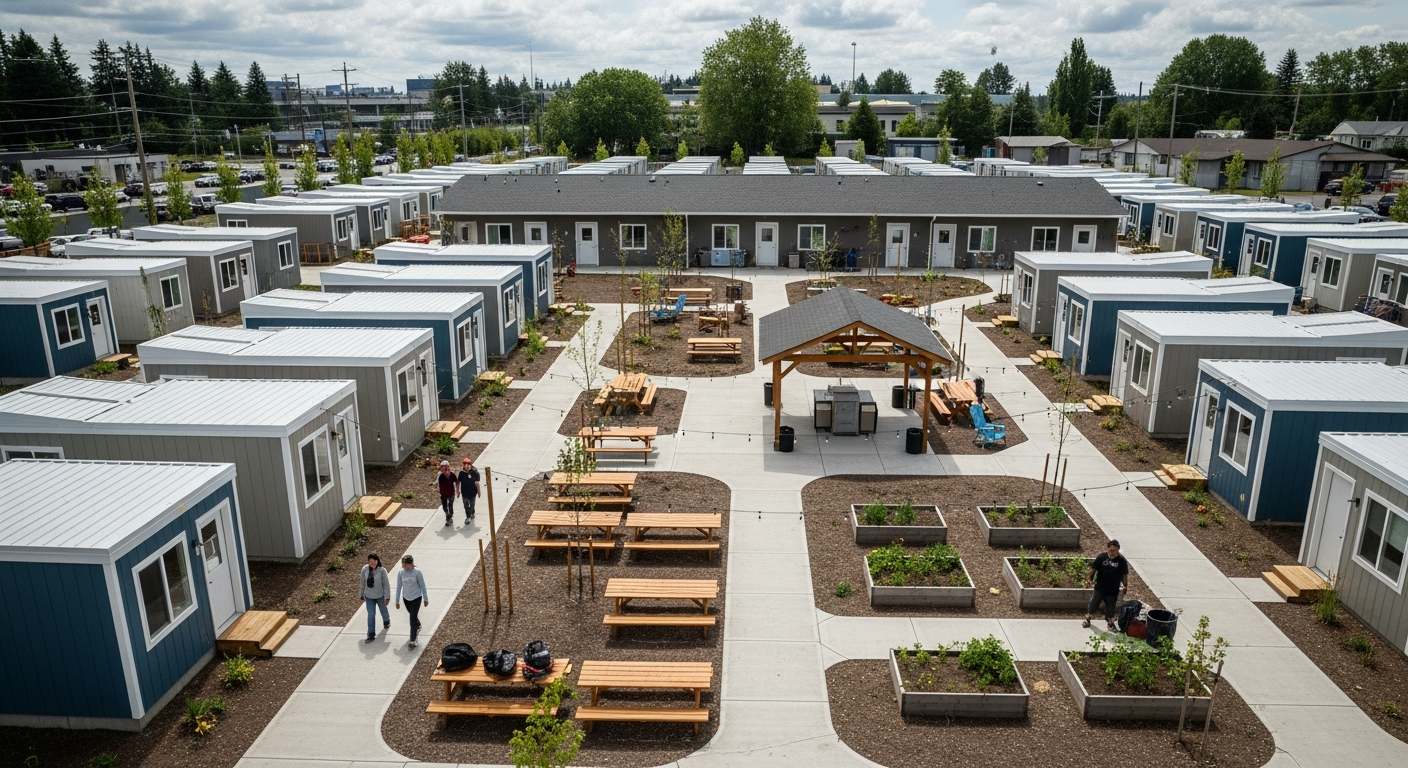
    VOAWW operates the new Pallet Shelter Village on city-owned land off Sievers-Duecy Boulevard in west Everett. Twenty units, each housing one woman and up to three children, opened April 27, 2026. Each unit has a lockable door, climate control, and secure storage. The surrounding village has a community kitchen, showers, restrooms, and a playground. Stays are up to 12 months, with wraparound recovery and job support from VOAWW. Funding came from City of Everett ARPA dollars and a $250,000 Snohomish County match — total project cost $2.7 million.

    Who can access it: any woman with children experiencing homelessness in Snohomish County. There is no military-specific restriction, but also no military-preference track. Referrals through VOAWW or 211.

    Why Navy Families Should Know This Exists

    The NAVSTA Everett Family Support ecosystem — Fleet and Family Support Center (FFSC) at 425-304-3735, the Command Financial Specialist program, unit ombudsmen, and Military Family Life Counselors (MFLCs) available without referral — is the first-line support system. Use it. But when a Navy spouse finds herself in a housing crisis that extends beyond what the military support chain can resolve — particularly if a marriage has ended, if a sailor is deployed and the family’s housing situation has collapsed, or if financial crisis has made the current arrangement unworkable — civilian resources become the path forward.

    The Full Snohomish County Resource Map for Military Families in Crisis

    VOAWW Pallet Shelter Village (Sievers-Duecy) — Women with children, transitional, up to 12 months. Referrals through VOAWW (voaww.org) or 211.

    Everett Gospel Mission — West Everett, with a $30 million expansion underway adding 172 shelter beds. Emergency shelter, meals, recovery support, transitional housing. See the complete Gospel Mission guide.

    211 Snohomish County — Dial 2-1-1 or text your zip code to 898-211. 24 hours, multilingual. Real-time referrals to all housing resources in the county.

    Snohomish County Veterans Assistance Program — 3000 Rockefeller Avenue, Everett. Emergency financial assistance for veterans and families, including rent and utilities. County-funded, not VA benefits. Does not require service-connected disability.

    Everett Vet Center — 3311 Wetmore Avenue, Everett. Counseling, readjustment support, and referrals. Specific expertise helping veterans and military families navigate civilian systems after separation or during family crises.

    HousingHope — Snohomish County’s largest homeless services and affordable housing nonprofit. Family housing programs, rapid rehousing assistance, transitional units. No military restriction.

    FFSC Everett (Fleet and Family Support Center) — 425-304-3735 at NAVSTA Everett. Financial counseling, crisis intervention, relocation support, and civilian resource referrals. Works with Navy spouses even during deployment. No command referral required.

    For the broader 2026 NAVSTA mental health resource map, see Mental Health Awareness Month at NAVSTA Everett 2026.

    A Note on Privacy

    Military families sometimes hesitate to access civilian resources out of concern it will be visible to the chain of command or affect a service member’s career. Civilian resources — VOAWW, Everett Gospel Mission, 211, Snohomish County Veterans Assistance, HousingHope — have no connection to the military reporting chain. Accessing them is confidential. The FFSC also operates under client confidentiality rules and does not report to command except in specific safety situations. If you are unsure, ask the FFSC intake counselor about their confidentiality policy before sharing information.

    Frequently Asked Questions for Navy Families at NAVSTA Everett

    Can a Navy spouse access the VOAWW Pallet Shelter if her service member is deployed?

    Yes. The shelter serves women with children experiencing homelessness regardless of military status. Deployment status of a spouse does not affect eligibility.

    Does accessing civilian housing resources affect a service member’s security clearance?

    Accessing civilian homelessness resources is not a reportable event for security clearance purposes. Consult with a JAG officer or legal assistance attorney if you have specific clearance concerns.

    How long can a family stay at the VOAWW Pallet Shelter?

    Up to 12 months, with wraparound services from VOAWW. This is a transitional shelter, not emergency overnight housing.

    What if the shelter doesn’t have availability?

    Contact 211 (dial 2-1-1) for real-time referrals to other available resources in Snohomish County. The FFSC can also assist with emergency housing referrals.

    Does the Snohomish County Veterans Assistance Program serve active-duty families?

    The program primarily serves veterans. Active-duty family members in crisis should start with FFSC, which can facilitate access to emergency funds and make civilian resource referrals.

    Is the FFSC confidential?

    The FFSC operates under client confidentiality rules and does not report to command except in specific safety situations. Ask the intake counselor directly about their confidentiality policy.

  • Everett Pallet Shelter: VOAWW Guide for Mothers & Children

    Everett Pallet Shelter: VOAWW Guide for Mothers & Children

    Quick facts: On April 27, 2026, the City of Everett and Volunteers of America Western Washington (VOAWW) opened a 20-unit Pallet Shelter Village for women experiencing homelessness with their children, on city-owned land off Sievers-Duecy Boulevard in west Everett. Each unit houses one mother and up to three children. Residents can stay up to 12 months with wraparound recovery and job support. Funding: City of Everett ARPA dollars plus a $250,000 match from Snohomish County. Total capital and grant operational expenses: $2.7 million. This is Everett’s third Pallet shelter project and the first built specifically for families with children.

    On April 27, 2026, a ribbon was cut on a piece of city-owned land off Sievers-Duecy Boulevard in west Everett, and 20 addresses came into existence. Not mailing addresses. Living addresses — places where a mother and her children now have a lockable door, a bed, a community kitchen a short walk away, and up to 12 months to work on what comes next.

    This is VOAWW’s third Pallet shelter project in Everett. It is the first one built specifically for women and their children. Here is what is on site, how a family qualifies, who paid for it, and what this means for Everett’s broader effort to address homelessness among the most vulnerable households in Snohomish County.

    What Is On Site at Sievers-Duecy

    Twenty Pallet structures are installed on the enclosed, managed site. Each unit is a modular shelter built by Pallet Shelter, the Everett-based company whose structures have been deployed in more than 70 cities. Each unit is designed for one mother and up to three children — a sleeping space with climate control, secure storage, and a lockable door. The lock matters more than it might seem: most emergency shelter beds available to families in Snohomish County prior to this opening were in congregate settings with no private door.

    • Detached restrooms and a separate shower facility — enclosed, year-round
    • A community kitchen and gathering space — hard-walled, where residents can cook and meet with case workers
    • A playground — the feature that signals most clearly who this village is for

    The site is enclosed and access-controlled. VOAWW manages the site and provides on-site services.

    Who It Serves and How Long Residents Can Stay

    The shelter is for women and their children. Residents can stay up to 12 months — transitional, not emergency. The distinction matters: emergency shelter is measured in days or weeks. Transitional shelter at 12 months gives VOAWW’s case managers enough time to work with a family on housing search, employment, recovery support, and the practical paperwork that reconnects people to stable housing.

    VOAWW provides wraparound services including recovery assistance and job support. Their 2026 service footprint includes more than 315,000 service requests annually across their full program portfolio. Referrals go through VOAWW directly or through the 211 system. For a broader look at VOAWW’s full Everett service map, see Where to Get Help in Everett in 2026.

    Who Paid For It

    Funded through City of Everett American Rescue Plan Act (ARPA) dollars, with a $250,000 match from Snohomish County. Total capital and grant operational expenses as of end of 2025: $2.7 million. The city provided the land — city-owned property off Sievers-Duecy Boulevard. The ribbon cutting was attended by Everett City Council President Don Schwab, VOAWW Executive Director of Housing Services Galina Volchkova, VOAWW CEO Brian Smith, and Everett Mayor Cassie Franklin.

    Everett’s Third Pallet Shelter: The Full Picture

    Everett has now opened three Pallet shelter projects. The Sievers-Duecy village is the first built specifically for women and children. The Pallet company itself is an Everett story: founded here, with structures deployed in more than 70 cities nationally. The Pallet model — modular structures, enclosed sites, transitional time frames, wraparound services — has become a consistent component of Everett’s homelessness response strategy.

    The Sievers-Duecy location matters geographically. West Everett — the corridor around Casino Road, Sievers-Duecy Boulevard, and the neighborhoods running toward Merrill Creek — has a significant concentration of low-income households and historically has had the highest demand for human services access in the city.

    What This Means for Snohomish County’s Homelessness Response

    Single mothers with children are among the most difficult households to serve in the existing shelter system. Congregate shelters frequently can’t accommodate families. Hotel diversion programs are expensive. Rapid rehousing requires affordable rental vacancy — which Snohomish County’s market, with its $750,000 April 2026 median and tight supply, frequently doesn’t offer. A 20-unit transitional village gives 20 families a stable enough platform to work on the next step.

    For the broader network, the $30 million Everett Gospel Mission expansion underway adds 172 additional shelter beds. For NAVSTA Everett military families who may need these resources, see the Navy family housing resource guide. Also see the complete Everett Gospel Mission guide.

    Frequently Asked Questions

    Where is the VOAWW Pallet Shelter in Everett?

    On city-owned land off Sievers-Duecy Boulevard in west Everett. The site opened April 27, 2026.

    Who is eligible for the VOAWW Pallet Shelter?

    Women experiencing homelessness with their children. Each unit accommodates one mother and up to three children.

    How long can families stay?

    Up to 12 months, in a transitional model with wraparound recovery and employment support provided by VOAWW.

    How do families get referred to the shelter?

    Through VOAWW directly (voaww.org) or through the 211 system — dial 2-1-1 or text your zip code to 898-211.

    How was the shelter funded?

    City of Everett ARPA dollars plus a $250,000 match from Snohomish County, on city-owned land. Total capital and grant operational expenses: $2.7 million as of end of 2025.

    What is the Pallet Shelter company?

    An Everett-based company that manufactures modular shelter units deployed in more than 70 cities nationwide. The Sievers-Duecy units were built by Pallet Shelter and installed on the city-owned site.

    Is this Everett’s only shelter for families with children?

    It is the first Pallet shelter village in Everett built specifically for mothers and children. Other resources for families in Snohomish County include Everett Gospel Mission, Cocoon House (youth), and 211 for referrals to all available resources.

  • Everett EMS Levy 2026: Costs, Impact & Initiative 747

    Everett EMS Levy 2026: Costs, Impact & Initiative 747

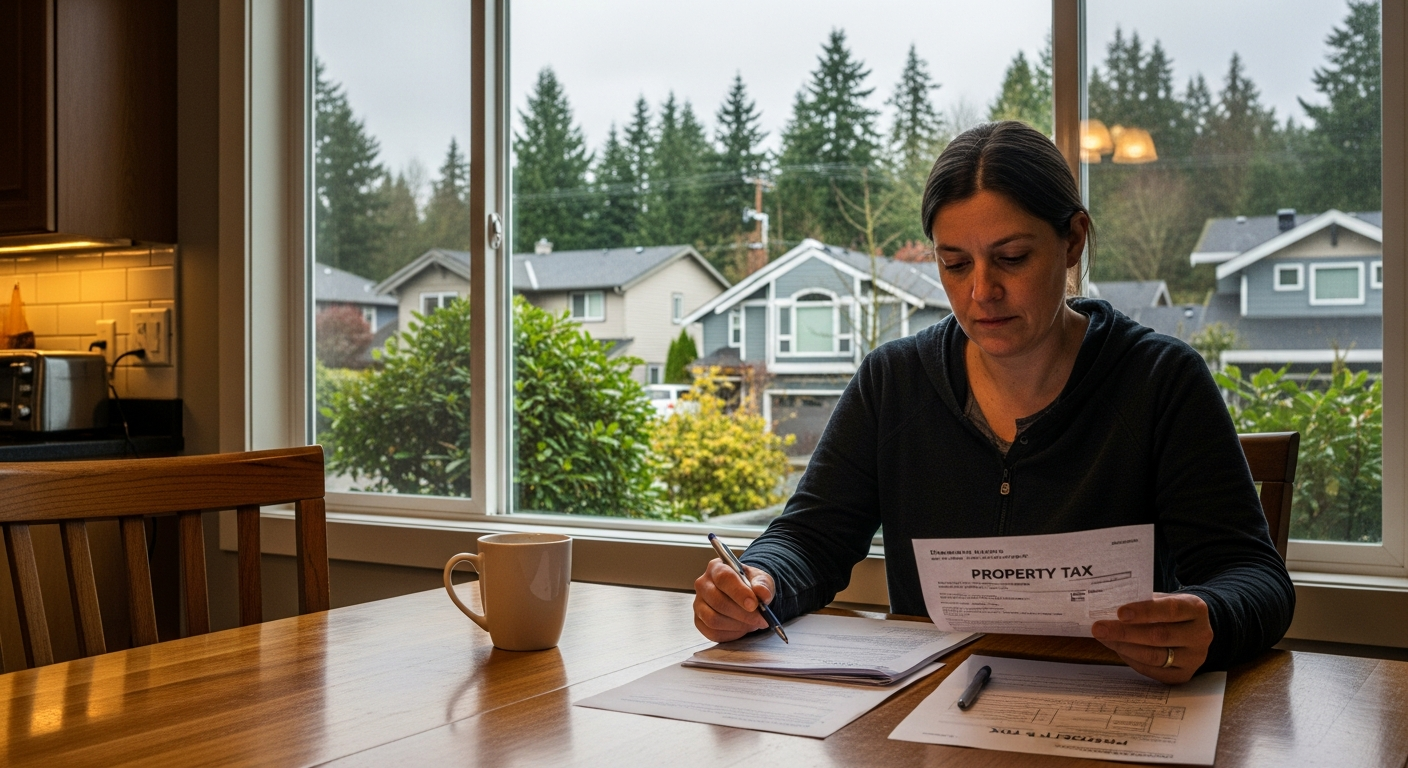
    The bottom line for Everett residents: The EMS levy lid lift on the August 4, 2026 primary ballot would raise your EMS property tax rate from approximately $0.36 to $0.50 per $1,000 of assessed value — about $80 per year, or $6.67 per month, for a $500,000 home. If it passes, it funds approximately 78 firefighter-paramedic positions at Everett Fire. If it fails, the levy rate stays where it is and the funding gap for EMS services widens further. The reason this is on the ballot is a 2001 state law called Initiative 747, which caps how much property tax revenue cities can collect per year at 1% growth.

    You are going to get a Voters’ Pamphlet in mid-July. It will include a measure for the August 4, 2026 primary asking you to approve a levy lid lift for Emergency Medical Services. Here is everything you need to make that decision — including the part most explanations skip, which is why this keeps ending up on your ballot. For the full structural explanation of Initiative 747, see the complete Initiative 747 guide.

    What You’re Actually Being Asked

    You are being asked to restore the EMS property tax levy rate — not raise it above what was originally voter-approved, but restore it to that level. The rate has drifted down from the original voter-approved figure over the past 25 years because of a state law (Initiative 747, RCW 84.55.010) that limits how much cities can collect. The lid lift would bring the rate back from approximately $0.36 per $1,000 of assessed value to $0.50 per $1,000.

    In dollars: for a home assessed at $500,000, the difference is about $70 per year. For a home at $750,000 (near the current Snohomish County median), it is about $105 per year. To calculate your exact increase: multiply your assessed value by $0.00014. Find your assessed value at snohomishcountywa.gov.

    What the Money Funds

    EMS levy funds go specifically to Everett Fire Department’s emergency medical services operations — the firefighter-paramedics who respond when you call 911 for a medical emergency. According to the City of Everett, the lid lift funds approximately 78 firefighter-paramedic positions. EMS calls make up the majority of Everett Fire’s call volume. Unlike fire suppression, which can be partially handled by mutual aid agreements, medical calls require local personnel on scene fast.

    Why This Is on the Ballot: Initiative 747

    Initiative 747, approved by Washington voters in 2001, limits how much property tax revenue any local government can collect from existing properties each year to 1% growth. EMS costs — paramedic wages, pension contributions, ambulance equipment, fuel — grow at 3% to 7% per year. The 1% limit does not keep up. Over 25 years, the gap has grown large enough that a lid lift is needed to restore the funding relationship voters originally approved. This is why you have also seen library levies and fire service questions — same mechanism, same law, different service. For the current Snohomish County fiscal context, see the Everett $14 Million Budget Deficit Guide.

    If You Vote Yes

    The EMS levy rate restores to $0.50 per $1,000 of assessed value. Approximately 78 firefighter-paramedic positions are funded at Everett Fire. Your annual property tax bill increases by the difference between $0.50 and your current EMS levy rate, multiplied by your assessed value divided by 1,000.

    If You Vote No

    The rate stays at approximately $0.36 per $1,000. The funding gap between EMS levy revenue and EMS costs continues to grow. The City would need to address that gap through general fund allocations, service reductions, or a future ballot measure.

    Key Dates

    • Mid-July 2026: Voters’ Pamphlet mails to all Snohomish County households
    • August 4, 2026: Primary election ballot due (Washington is a mail-in state; ballots arrive approximately 18 days early)

    Frequently Asked Questions for Everett Residents

    How much will my property taxes go up if the EMS levy passes?

    Approximately $80 per year for a home assessed at $500,000. Multiply your assessed value by $0.00014 to get your specific annual increase.

    Is this a new tax or a restoration of an existing one?

    A restoration. Voters approved the original EMS levy rate. Initiative 747’s 1% cap caused the rate to drift down over 25 years. The lid lift restores it to the voter-approved level.

    What happens to EMS if the levy fails?

    The rate stays at approximately $0.36 per $1,000 and the gap between EMS revenue and costs continues to widen. The City would need to address the gap through general fund allocations or a future ballot measure.

    Why can’t the City Council just fund this without a vote?

    Because Initiative 747 (RCW 84.55.010) requires voter approval to raise the levy rate above the 1%-cap-adjusted level. The Council does not have the authority to lift the lid on its own.

    When does my ballot arrive?

    Approximately 18 days before August 4. Washington is a mail-in state; ballots mail automatically to all registered voters at their registered address.

    How do I find my home’s assessed value?

    At the Snohomish County Assessor portal, accessible through snohomishcountywa.gov.

  • Initiative 747: Why the Everett EMS Levy is on the Ballot

    Initiative 747: Why the Everett EMS Levy is on the Ballot

    Why does Everett keep putting things on the ballot? Because of Initiative 747, a 2001 Washington voter initiative (RCW 84.55.010) that caps how much property tax revenue any local government can collect from existing properties each year — at 1%. Since fire, EMS, library, and city services cost more than 1% extra each year, the gap between what the levy produces and what services cost grows continuously. When the gap becomes large enough, cities and districts ask voters to restore the original rate in a “lid lift” election. Everett’s EMS lid lift on the August 4, 2026 primary ballot is the third such vote for emergency services since the original EMS levy passed in 2000.

    If you live in Everett, you have noticed something: the city keeps asking you to vote on funding for services that already exist. The EMS levy on the August 4, 2026 ballot is the latest. Before it was a library question. Before that, fire services. The question most residents ask is: why does this keep happening? Why can’t the City Council just fund these services without going back to voters?

    The answer is one law: Initiative 747. Understanding it takes about ten minutes, and once you understand it, every levy on every Everett ballot for the rest of your life will make immediate sense.

    The 1% Problem

    In November 2001, Washington voters approved Initiative 747 by a wide margin. The law is codified at RCW 84.55.010. Its core rule: cities, counties, fire districts, library districts, and other taxing districts may not increase the amount they collect from existing properties by more than 1% per year without going back to the voters for approval.

    That seems reasonable until you look at what cities actually spend money on. The Everett Fire Department’s biggest costs are firefighter wages, paramedic salaries, pension contributions, health insurance, fuel, and ambulance equipment. Those costs do not grow at 1% per year. They grow at 3% to 7% per year, sometimes more. The arithmetic is relentless. If your revenue is capped at 1% growth and your costs grow at 4%, after ten years you have a 30-point gap. After 25 years — which is roughly how long Everett’s original 2000 EMS levy has been in place — the gap is enormous.

    The EMS levy rate has dropped from the original voter-approved rate to approximately $0.36 per $1,000 of assessed value today. The lid lift on August 4 asks voters to restore it to $0.50 per $1,000. For the average Everett homeowner, that is roughly $80 per year. That restoration funds approximately 78 firefighter-paramedic positions at the Everett Fire Department. For more on what this means for your specific tax bill, see the Everett Resident’s Guide to the August 4 EMS Levy.

    A Brief History of I-747

    Initiative 747 emerged from a sequence of Washington property tax limitation measures. In 1971, the legislature set the regular levy cap at 6% or inflation. In November 1999, Initiative 695 changed the levy limit. In November 2000, Initiative 722 rolled back some levy increases. Then in November 2001 came I-747, which set the 1% cap that has governed Washington property taxes ever since.

    In 2007, the Washington Supreme Court ruled I-747 unconstitutional on technical grounds (Washington Citizens Action of Washington v. State). But the legislature reinstated the 1% cap in a special session within weeks of the ruling. It has been in state code ever since. Most recently, Senate Bill 5770 in the 2025 session would have raised the cap to 3%, but it did not pass. The 1% cap appears stable for the foreseeable future.

    How the Lid Lift Actually Works

    When a taxing district wants to raise its levy rate above the 1%-cap level, it must ask voters to approve a “levy lid lift” under RCW 84.55.050. A lid lift can be temporary or permanent. Here’s the specific mechanism: each year, a district’s maximum levy is the higher of (a) the prior year’s actual levy plus 1%, or (b) the “highest lawful levy” — the highest rate the district was ever authorized to collect. A lid lift restores it from the current depressed rate back up to the voter-approved rate.

    Two important nuances: First, the 1% cap is on revenue from existing properties, not on individual tax bills — your bill can rise faster than 1% if your assessed value increases faster than the average. Second, new construction is excluded from the 1% limit, which means growing cities collect more from new buildings without a vote. In a built-out city like Everett where most development is infill and renovation, the new-construction exception doesn’t close the gap by much.

    The August 4, 2026 Vote

    The measure on the August 4, 2026 primary ballot would restore the EMS levy rate from approximately $0.36 per $1,000 of assessed value to $0.50 per $1,000. For a home assessed at $500,000, that is about $80 additional per year — roughly $6.67 per month. The Voters’ Pamphlet goes to Snohomish County mailboxes in mid-July. For the electoral context alongside other August 4 races, see the Snohomish County 2026 Primary Voter Guide.

    Why This Will Keep Happening

    Even if voters approve the August 4 lid lift, they are not solving the underlying structural problem — they are resetting the clock. The new $0.50 rate will begin eroding again at 1% per year while costs continue to grow at 3-7%. In another 15 to 25 years, the gap will be large enough to require another lid lift vote. That is not a criticism of the levy or the city. It is simply what Initiative 747 produces: a permanent structural gap between revenue growth and cost growth for every taxing district in Washington.

    Frequently Asked Questions

    What is Initiative 747 and what does it do?

    A 2001 Washington voter initiative (RCW 84.55.010) that caps how much property tax revenue local governments can collect from existing properties at 1% growth per year without voter approval.

    Why does Everett keep putting levies on the ballot?

    Because service costs grow faster than 1% per year, so the gap between what the levy produces and what services cost expands continuously. When it becomes large enough, the city asks voters to restore the rate in a lid lift election.

    What is a levy lid lift?

    A voter-approved measure that restores a taxing district’s levy rate from the I-747-reduced level back to the voter-authorized maximum. It does not raise taxes above what voters originally approved; it restores them to that level.

    What does the August 4, 2026 EMS lid lift specifically do?

    Restores Everett’s EMS levy rate from approximately $0.36 to $0.50 per $1,000 of assessed value — about $80 per year for a typical Everett homeowner — and funds approximately 78 firefighter-paramedic positions at the Everett Fire Department.

    Was Initiative 747 ever overturned?

    The Washington Supreme Court ruled it unconstitutional on procedural grounds in 2007, but the legislature reinstated the 1% cap in a special session that same year. It has been in state code ever since.

    Will the EMS levy raise my property taxes permanently?

    A lid lift restores the voter-approved rate and holds it there. Under I-747, the restored rate will then be subject to the 1% growth cap going forward — meaning it will begin to erode again over time.

    Where can I read the Voters’ Pamphlet?

    Via the Snohomish County Auditor at snohomishcountywa.gov/190/Elections and the City of Everett at everettwa.gov. The pamphlet mails to all Snohomish County households in mid-July 2026.